
In short
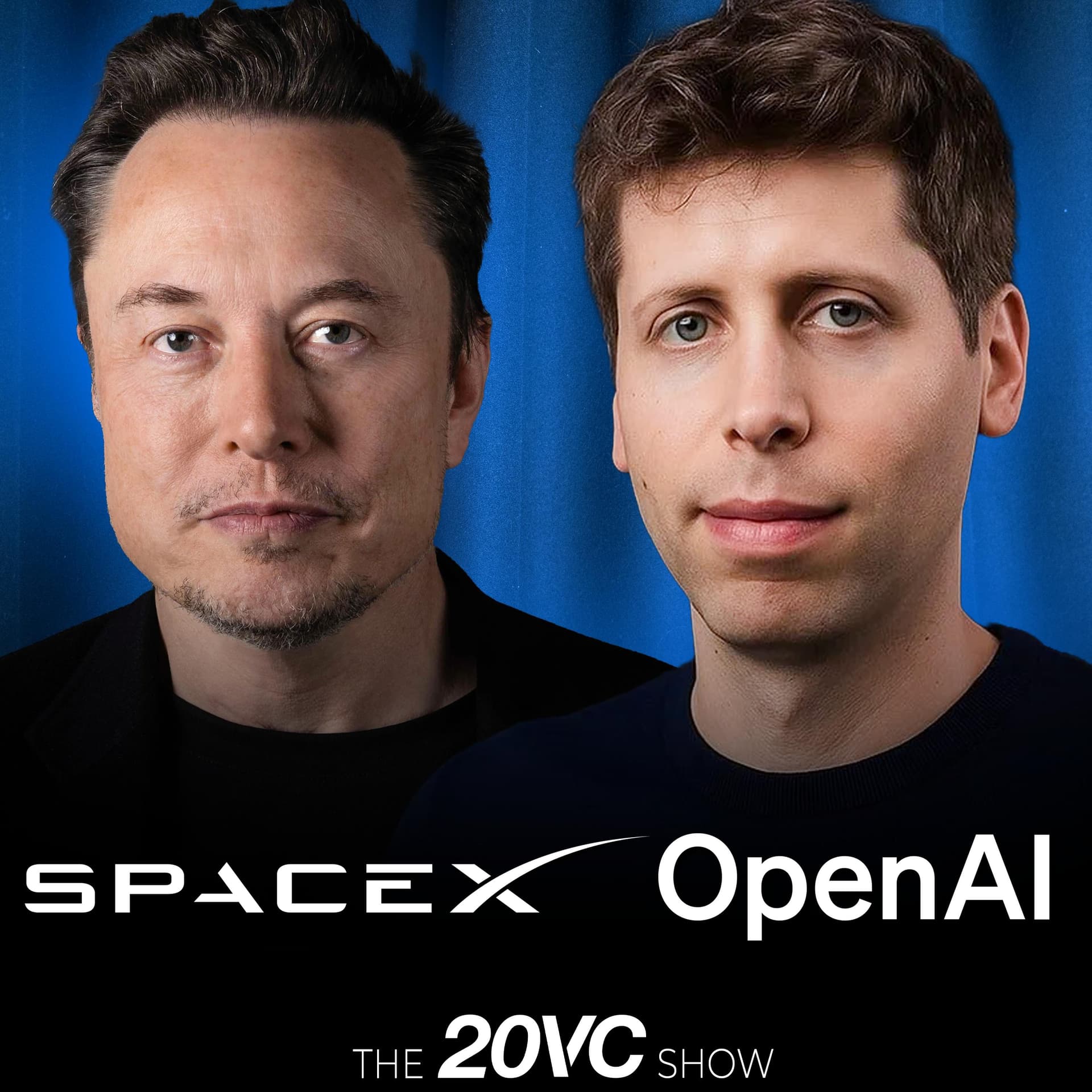
Venture and public-market roundup focused on AI infrastructure and enterprise adoption. Main segments: Anthropic’s $30B raise at ~$900B valuation and Andrej Karpathy joining; market moves in Datadog, Figma, and Cerebras; SpaceX’s planned IPO; and debate on whether AI-driven token spending and mass layoffs are sustainable. Guests/hosts: Rory O’Driscoll and Jason Lemkin join host Harry Stebbings (20VC).
Guest backgrounds
Rory O’Driscoll is a tech investor/analyst (20VC co-host). Jason Lemkin is a SaaS founder/investor (founder of SaaS-focused venture; frequently advises public SaaS).
Key claims
Anthropic’s valuation is framed as “best deal” if ARR multiples still matter; risk is mainly valuation, not IPO timing. Token spend is becoming a major OPEX line: Salesforce’s reported $300M Anthropic tokens/year is estimated as ~$15k–$20k per engineer (~1.2–1.3k/month), “table stakes.” To justify trillion-dollar token revenue projections, token spend may need to reach ~5–7% of knowledge-worker salary and ~20% of engineering salary. Public software “AI veneer” may not return to prior peak multiples; companies must prove growth.
Notable examples
Figma re-accelerating (NDR ~139%, ~50% growth cited); Datadog up ~31%; Cerebras IPO above $300; SpaceX IPO targeted June 12 at ~$1.75T market cap; Klaviyo’s CEO Andrew Bilecki claims agent costs can be ~$250 to run agents (not $8k–$10k).
Written by AI. May contain mistakes. Listen to the episode to check what was said.
Chapters
Tap a time to open that second in VOAnthropic's New Valuation
0:45 to 1:12
Discussion on Anthropic's $900 billion valuation and implications.
“a$900 billion valuation for their latest fundraise.”
Analyzing Anthropic's Business Strategy
3:59 to 9:50
In-depth analysis of Anthropic's funding strategies and investor relationships.
“So we're going to kick off with our This Week in Anthropic.”
Salesforce's AI Spending
9:50 to 14:00
Discussion on Salesforce’s $300 million investment in Anthropic tokens and future implications.
“You're going to send me an email confirming you're in, and then we'll collect the money.”
Evaluating R&D Spend in AI Companies
14:00 to 16:27
Learn about the implications of R&D spending on AI company valuations.
“R &D spend is roughly 20%,$240 billion, right?”
Insights from Klaviyo's Approach to AI
16:27 to 19:45
Discover how Klaviyo integrates AI into every employee's role.
“And so my point is he knows his stuff, right?”
Public Companies and the SaaS Market Recovery
19:45 to 22:46
Examine the current state of public software companies and their growth prospects.
“So yes, I'm optimistic, but my flip side is you've had 18 months and you've had since December, since the Claude Fours to destroy your space.”
Figma's Position in the Software Explosion
22:46 to 26:34
Analyze Figma's role in the current software development landscape and its AI tools.
“And I think it's the tragedy of folks being slow.”
The Threats Facing Wix and Squarespace
26:34 to 28:00
Understand the challenges Wix and Squarespace face from evolving market dynamics.
“The pre-AI business is no longer growing, right?”
The Rise and Fall of E-commerce Competitors
28:00 to 29:00
Explore how Shopify outpaced competitors like Wix and BigCommerce in the e-commerce space.
“The other thing that we kind of forget is that Wix and Squarespace for the last five years, they were low end Shopify competitors.”
The Impact of Stock Buybacks on Business Strategy
29:00 to 30:20
Understand the implications of stock buybacks and their effectiveness during downturns.
“I mean, I think BigCommerce right in the strikes on a Shopify.”
Show all 30 chapters
The Risks of Mismanaged Capital During Crisis
30:20 to 32:20
Learn about the challenges of managing capital and shareholder expectations in tough times.
“And sometimes it pays to keep the money in your back pocket because the stock will go even lower.”
Navigating Growth and Investment Decisions in SaaS
32:20 to 34:00
Discuss the strategic choices SaaS companies face during periods of economic uncertainty.
“And look, if there's nowhere better you can put the money and the stock is cheap, then it pays to buy it back.”
Potential of AI in Established Software Companies
34:00 to 36:00
Examine how founder-led software companies can leverage AI for revitalization.
“I'd say higher just because at 1x revenues for any, unless you, I would like to look at their churn numbers.”
Compute Demand and Future of AI Startups
36:00 to 37:20
Investigate the relationship between compute demand and the viability of AI startups.
“I just need you to build a better version, stay out of it and ship it.”
The Current Landscape of Technology Investment
37:20 to 39:20
Evaluate which sectors are thriving and the potential pitfalls for traditional software.
“And let me make the captain obvious answer, as Jason would say, if compute continues to be starved, then they will continue to be good businesses.”
Long-term Predictions for AI and Software Markets
39:20 to 42:00
Explore the forecast for AI and software markets amidst rapid changes and challenges.
“short it there's an argument that that is just surplus there's not enough capacity in the market but how far in the future can you short these things?”
Evaluating Seed Investments in Startups
42:00 to 43:40
Discusses the challenges and considerations of investing in seed-stage startups.
“But if you saw his latest releases on his latest filings, he put puts across everything.”
The Importance of Feedback to Founders
43:40 to 45:40
Explores the nuances of providing feedback to startup founders and its impact.
“Roy, do you always give detailed explanations to founders?”
Cerebras IPO: Implications and Insights
45:40 to 47:20
Analyzes Cerebras' IPO and its significance in the tech market.
“I want to talk about Cerebris, the biggest US tech IPO since Snowflake, priced at$185, which was a big expansion from where it started.”
SpaceX's Upcoming IPO and Its Market Impact
47:20 to 51:00
Discusses the expected impact of SpaceX's IPO on the market and investor sentiment.
“For a market that's starved of ways to bet on OpenAI and Anthropic, they really only have things like CoreWeave and obviously you have NVIDIA.”
Market Sentiment and Investment Strategies
51:00 to 55:40
Examines the current market sentiment and strategies for investing in high-profile IPOs.
“So in one sense, I'm looking forward to reading the S1.”
Market Insights and Predictions for AI Stocks
56:00 to 57:29
Learn about the market dynamics and valuation challenges facing AI companies.
“The reason I made that comment is, and I know it sounds like, again, I go back to Facebook.”
Y Combinator's Token Offer and Its Impact
57:30 to 1:01:09
Explore how Y Combinator's offer of OpenAI tokens affects startups and valuations.
“What are you doing in venture in AI then?”
Token Utilization and Marketing Strategies
1:01:10 to 1:03:10
Understand the strategic use of tokens for marketing and product development in startups.
“What if you're building a Legora or a Replit?”
Elon Musk vs. Sam Altman: The Legal Battle
1:03:11 to 1:09:40
Delve into the implications of legal challenges between Elon Musk and Sam Altman.
“That's 300 million you're giving up every three months.”
Complexities of OpenAI's Structure and Leadership
1:10:00 to 1:11:40
Explore the intricacies of OpenAI's business model and leadership challenges.
“he set up a venture fund on the side, probably without telling the board.”
Public Perception of AI Leaders
1:11:41 to 1:13:40
Discuss how public sentiment towards AI leaders is shifting negatively.
“But we did our job and we followed the law.”
Impact of AI on Job Markets
1:13:41 to 1:15:40
Analyze the implications of AI on employment and the tech job landscape.
“But most people are now trying to emphasize the positive.”
Future of Tech Employment Post-AI
1:15:41 to 1:17:50
Examine potential future scenarios for employment in a tech-dominated world.
“There is a scenario, I just want to put it out there, whereby people are overestimating what AI can do.”
OpenAI's Upcoming Financial Moves
1:17:51 to 1:18:40
Learn about OpenAI's plans to file for funding amidst changing market conditions.
“It has always been a scarlet letter to be laid off from a tech company, but it is a double scarlet letter today.”
Transcript
Automatic transcript. May contain errors.0:00Harry Stebbings:As it's becoming painfully clear now, no one in America, other than us here in California, likes the AI trend. We have people who are brilliant scientists who politically are utter morons. And the people who are utter morons at AI but brilliant at politics are going to have us for lunch. At least when Meta was busy destroying the world, they were smart enough to pretend it was all about bringing friends together and not destroying democracy. We're going to have to reflate and hire thousands and thousands of people per tech leader to avoid social unrest. We see no signs that there's a short-term crash coming.
0:32This is 20VC with me, Harry Stebbings.
0:34Harry Stebbings:It's my favorite show of the week. Rory O'Driscoll, Jason Lemkin, analyzing the biggest news in tech. Starting off, Andre Kapathy joins Anthropic and Anthropic Eye, a$900 billion valuation for their latest fundraise. Then we dig into the public markets. Datadog up 31%, Figma up 12%. What happens from here? Next, we have Cerebrus IPO smashes expectations and breaks the$300 mark. And then finally, SpaceX, they set June the 12th for the largest IPO in history, $1.75 trillion market cap, raising$75 billion. But before we dive into the show today, let me tell you about Omni. It's an AI analytics platform and it solves a problem every scaling company hits.
1:19Harry Stebbings:Your team needs insights, not just data lookups, the stuff that really matters. and it's critical to get it right, like CAC payback periods and net dollar retention. For AI agents to act on your company data, they need your business context, your definitions, your logic, your permissions, and that's what Omni's governed context graph provides. Your data team defines it once, then anyone, your ops lead, your CFO, your PM, can ask a question in English and get an answer in seconds. Perplexity, Mercury, and DBT run on Omni, and 20 VC listeners get a free three-week trial. Three-week, very specific, not a month, but three weeks.
1:56Harry Stebbings:Go to omni.co forward slash 20VC. That's omni.co forward slash 20VC. After Omni helps you find the right customers, checkout helps you close them. Over the past 15 years, Guillem-Pozaz has led checkout.com through what he calls the velocity years, a period of hyper growth with relentless product building. The lesson, high growth is a gift, but it demands ruthless focus. As his mother put it, play the game you're good at. For Checkout.com, that game is digital payments, obsessing over data, chasing basis points, and compounding learnings over time. And that discipline is paying off. 2025, Checkout.com processed over$300 billion in total volume, up 64 % year over year, and returned to full-year EBITDA profitability.
2:39Harry Stebbings:They now support over 1 ,000 enterprise merchants globally, including 63 that process more than a billion annually, with brands like eBay, Vinted, Amex, ASOS, and Tmue. Guillaume's message, though, it's pretty clear. They've earned the right to win anywhere. Now, they're investing in innovation across marketplaces, issuing financial experiences and agentic commerce. If you want payments built for what's next, talk to the team at checkout.com. That's checkout.com. While checkout powers the moment money changes hands, invisible powers the people behind the work. Why don't we hear more real AI success stories from big companies?
3:14Harry Stebbings:The models are insanely good, but implementation's the problem. It's really, really hard. There's data all over the place. There's legacy tech and manual workarounds. It's a Ferrari engine in a shopping cart. Meet Invisible. Invisible trains 80 % of the top models and then adapts them to the messy reality of your business. Take the Charlotte Hornets NBA team. Invisible took years of game tape and analog scouting notes to go from uncertainty to a draft pick and summer league championship win in weeks, not seasons. Get the data in order first, and suddenly AI can do almost anything for you in the enterprise.
3:52Harry Stebbings:If you want AI that hits the P &L, go to invisibletech.ai forward slash 20VC. You have now arrived at your destination. Boys, it is so good to be back. So we're going to kick off with our This Week in Anthropic. We have two. We have Anthropic in talks for$30 billion at above a$900 billion price, nearly tripling from$380 in February. Green Oats Sequoia Altimeter Dragonair. And then yesterday, we had Andre Kapathy announcing that he was joining Anthropic. Over to you. How did we read this news? Well, I did divide up the two. I mean, the financing, yes, they can pick their price. They can pick their investors.
4:31Harry Stebbings:They can tell the amount. And they can tell Evan to jump and Evan will say, how high, sir? It's all happening. They're going to raise 30 billion, we discussed. Obviously, the question is, you know, how those folks pencil out the return. And so, Rory, I don't mean to be old school here, but I'm feeling old school. Do you think ARR multiples still matter? I mean, if Anthropic is, if$900 billion is 18 times June revenue, it still feels like a better deal than any of the ones I did last year. Yeah. I mean, there's no doubt that statement is correct. Agreed. No, I mean, just to put it really simply for listeners is that, you know, you're writing checks in the private market for companies of$10 million in revenue.
5:07Harry Stebbings:You might be paying 20, 30, 40, 50 times ARR. Maybe it's 3-5xing, but it's five years away from an IPO. And here's, for the last three rounds, really for the 150 billion round at Anthropic all the way on, there have been so post-IPO that you can assume there can be an IPO. So there's no, it doesn't make an IPO risk. There's no, it will go away risk. Typically, when those risks don't exist anymore, the only risk you're taking is valuation risk. And the truth is, every time the multiple on this has been significantly lower than the multiple on your median series A or B or series C for a higher growth rate.
5:42Harry Stebbings:So it's been the best trade out there. The meta question is, listen, at some point, everything's DCF, right? At some point, it has to be, I guess. I'm not even sure I believe that anymore, but certainly that's public markets, Act 201. Everything is ultimately the discounted present value of your future cash flows. But every growth, I haven't been a part of any of these anthropic rounds, unfortunately, but every growth I've been a part of, it's still AR multiples at the end of the day. No one's really doing discounts for lower gross margins like we did until, say, 2021 or 2022. I guess the meta question is, is this a fair metric for Anthropic?
6:17Its margins are improving, right? And so if 18x really is fair, geez louise, I think everyone desperate to get in is right because it's the best deal going. If an AR multiple is still fair.
6:30Harry Stebbings:You were asking, and sorry, it took me a while. The coffee's gone. By the way, we're doing this early at 8 o 'clock this morning. So I've been up since five, but the coffee's only kicking in. If ARR multiples are the right metric, then you should buy the one that's at 18x ARR, growing 10x year on year. That's already so freaking large, it will clearly invisibly go public. If ARR multiples are the proxy for value, then this is the best value in the venture universe, which is why I'm going to say very smart capital allocators whose mandate isn't kind of sector specific, but kind of range anywhere, stick your money in.
7:02Harry Stebbings:And, you know, people like Green Oaks, people like Altimeter are doing this deal because they're like, yesterday I can do a 20 million ARR deal. Today I can do a 50 billion dollar ARR deal and the multiple is better. When it's so obviously a good deal, as we mentioned, given the trade for investors, why would Dario and Anthropic do it at that price if it is so obviously a good deal? because you're giving away 30 over 900, which is like, let's see, 3 % of your business, to de-risk it for another year of monstrous burn, where you're committing to, I don't know, five gigawatts this year. And the mental rule of thumb is the total cost of gigawatt of high-end compute is 40 or 50 billion.
7:41Harry Stebbings:So now you're not spending 40 or 50 billion. You're persuading hyperscalers to spend on your behalf. But you have to have, I mean, this is a big-ass balance sheet war. So it's a no-brainer to do it. They're going to raise, and they're going to raise again, and then they're going to raise again. Do you think they'll raise again before they go public? I doubt it just depends on the trajectory now because they're saying they're going public in November. When you stop having to raise, that's a disaster. Why are you raising? You're raising for CapEx and you're raising for growth. Once that hyper-growth stops, you don't have a CapEx need, you also don't have a growth story and that'll be a very different place to be.
8:11Harry Stebbings:I mean, right now, this is the highest ROI on equity dollars. So that's why they're getting it. So they should just keep raising it well in advance of the need because the needs are so great. My actually read is that Sam has been pushing the valuation to the absolute max as long as he could on the thesis he needed infinite capital, right? He's always been clear on that, right? So the last OpenAI round was more expensive than almost the contemporaneous Anthropic round, even though Anthropic appeared to be out accelerating them because Sam just pushed it to the max, which you can if you're a great salesman and have demand of one more dollar than supply, right?
8:46It seemed to me Dario is the opposite. I mean, he actually does own shares in his company, right? rather than indirectly through a VC fund. But it's pretty diluted. He's giving away 90 % to charity. So he just wants to get a deal done in a week that is fair. He does this deal at 380. It seems fair. And all of a sudden he turns around, Sam's done a deal at twice the price. So he does this at 900. I think when Anthropics were two to 3 billion, he'll do a round at like one six in 48 hours to get it done. He'll just do it. He won't push it to the max like Sam does and create stress. But I actually think these rounds, ironically the last two intentionally traded at a discount in order to not rip people off and get it done low drama in days i actually think that was the trade-off of and we've all worked with founders like this that enjoy maximizing every penny from the round and others who wanted a 70 deal and they truly it's not just in the email they truly want it done in a week right that's not just a game to get the money they just like give me a 70 deal in 72 hours it's a super point jason because i'm
9:45Harry Stebbings:remembering now the details. It's so revealing. Compare the last two rounds. The Anthropic round is we're going to raise 30. It's going to be cash. You're going to send me an email confirming you're in, and then we'll collect the money. End of conversation. The OpenAI round is, well, Amazon, you're going to give us 50 billion, but 20 billion is going to be up front. The other 30 billion is contingent on us going public, our AGI. And Massasat, you're going to give us 40 billion from SoftBank, but you've got to borrow 30 billion to get that 40 billion. So we're going to give you $110 billion of which$20 billion is clearing now,$30 billion in six months' time, depending on the lending market.
10:20Harry Stebbings:It's like, Jesus, give me a break. You're right, Jason. I think philosophically, the Anthropic team seems to operate on there. If I want to raise$30 billion, I should probably get a check for$30 billion and call it a day. Speaking of getting a check for$30 billion, Jason, I really wanted your thoughts on this one. Benioff was on All In, and he said that Salesforce spent$300 million on Anthropic tokens this year, almost entirely coding. The question I have for you is, when you look at your usage and how you use it today, is that about right and what you would have thought? Is that way more? Is that way less?
10:52Harry Stebbings:And how do you think that will change for Salesforce over time? It's actually not that much per engineer. I think that works out to about$15 ,000 to$20 ,000 per engineer per year. I think that's just table stakes today. What's its fully burdened cost for a developer at Salesforce? probably 500K for an engineer, all in, all costs with their share of the building and snacks. So 20 grand a year is 4 % additional. Cheap, man. Good. First of all, I did the math this one, because I actually think this is the most important question. And actually, I'm going to give you, God, I sound patronized. I'm going to give you an A, Jason, for math on the fly, which is, I think, very hard to do.
11:26Harry Stebbings:I couldn't have done it on the fly. I did it this morning. And it turns out 300 million is eh, which is astonishing, first of all, right? So the numbers are Salesforce spends$5.8 billion a year on engineers. So it's roughly 4 % of the spend. If you want it per head, they have 20K developers out of their total 83K heads. So it's 15K per head per year, which is 1.2K per head per month, right? 1 ,200 per month. We did a survey on, 40 portfolio companies and external companies. What are you spending per year, per month, per developer. And the average was 1.2, 1.3K. And the median was lower, right?
12:03Harry Stebbings:So obviously, you have some token maxing and then wider dispersion. So first of all, you're exactly right. It's in the strike zone of normal. I mean, it's only the big number because they obviously have so many developers, right? So that's the first thing. So your kind of rough estimate match exactly right. And then the question is, what does all this mean? Where is it going? This is probably the only vendor line item other than maybe rent that comes anywhere close to this amount. So from nothing two years ago. This is the larger single external spend that every software company is making. That's the first big aha, right?
12:32Harry Stebbings:Yeah. It's both nothing and it explains Anthropic's mediocre rise. It explains everything. It's both at the same time, right? And then you got to say to yourself, because remember, I kind of said it when it comes to valuation, Anthropic, is it good or not? When you try and figure out how much money these companies can make, what you figure out is trying to come up with some kind of heuristic relative to R &D spend is the key, right? In other words, how much of every knowledge worker wage and how much of every coding wage is going to get translated into tokens, right? And we did a rough and tough estimate and we're finding it more is that if you start thinking about a trillion dollars worth of token revenue across Entropic and OpenAI, which is the four-year projections are saying, and they better get it because otherwise that CapEx is going to look pretty sick.
13:17Harry Stebbings:If they're going to get a trillion dollars, right, my rough math says it's something roughly like 5 % or 7 % of every knowledge worker salary and 20 % of every engineering salary. If that math is correct, that's kind of what it takes to get a trillion. So in other words, Salesforce might only be a quarter of the way there. Now, one of two things is going to happen. Either they stay at$300 million, in which case for some of these kind of token businesses like Open AI and Tropic will have been overestimated and there'll be a real correction. Or they keep going. They forex their token spend from here in two years' time.
13:49Harry Stebbings:Benioff is on saying we spend a trillion dollars, sorry, a billion dollars on tokens. And we'll talk about the people consequences for that in a second. But one of those two things has to happen. Because even on the macro level, worldwide software business across everyone is about $1.2 trillion. R &D spend is roughly 20%,$240 billion, right? The interesting thing is if you get 20 % of that, you want to get$50 billion. So to justify these Entropic valuations and these OpenAI valuations, you're really going to have to eat a shit ton of what is otherwise OPEX. You've got to replace 20%. Out of those valuations, Aron Benioff is only a quarter of the way on the journey, and he's probably ahead of most.
14:28Harry Stebbings:The numbers for OpenAI and Entropic are so large that you really have to start thinking about what percent of the total wage bill of engineering in the software development market do you get. And if you're not tracking to 20 % across most R &D spends, then the three and four year projections for some of these companies will be a bit lofty. At a meta level, you have to be a bull, right? Because the trend has just begun. Mark's 300 million is just the start of what he's going to spend. On the other hand, I hate to use myself as an N equals one case case, but it's Sass for itself. Amelia and I have now, we have 21 agents of which three are autonomous, okay?
15:02The direct token costs that we spend, the direct AI altogether for both of us is about two grand a month. And that's going to go up, but the bear case is the models will get better and they will get more efficient and we will get more efficient. The bear case is 1K for each of us. And listen, this doesn't include third-party apps. It doesn't include tokens we buy inside a Salesforce. So it's higher. If you think about it, there is a bear case there that everybody is using, every knowledge worker has this attached, but the numbers Mark are throwing out is about right for folks not at the bleeding edge of token maxing.
15:35This is the bear case. It's not today when SAP and Uber CIOs have said we're out of tokens for the year, but I do think we're ahead of most, right, at our little team, and we're only spending 2K a month in direct token costs. That's a bear case on the next Anthropic round, I think. I'll give you another example. We had Sastra Annuals last week. Rory Rory was a celebrity, Harry. We could talk about it. He was literally mobbed. You saw the pictures. But our very last speaker, it was kind of him to come because it was the last one. People are tired. It was Andrew Bilecki, who's the co-founder and CEO of Klaviyo.
16:04Very interesting because he's a true engineer and turned B2B founder. He requires every single employee at Klaviyo, if they're anywhere close to product, to be committing code. Anyone in product, anyone in design, anyone there. And every single person has to be running AI or agents to do their job. I couldn't believe it was 100%. And they built their own custom framework to require it. He went through it all. It was very cool. And so my point is he knows his stuff, right? And we built this AIVP marketing, AIVP customers. Everyone thinks it costs like$8 ,000,$10 ,000 to run these autonomous humans.
16:37I go backstage with Andrew. We're talking about it on my phone. He's like, how much do you think it costs to run an AIVP marketing? Because he's done it. He's like, maybe$250 for both of them. The answer is$257 just to run the agents. And his point was at the end is this, a lot of this stuff is not as expensive as we think. We do not need to worry about token maxing at Klaviyo and everything we're doing is agentic. We have our own agentic framework. Every single person has to be doing this. We have to manage it. And they have a harness that manages the model and gets it thoughtful. But he's like, if you do this right, it's not as expensive.
17:08And the fact that he guessed it, he was the only person that got it right because he's doing it. The only one that got this number right because he's doing it. And so this is the bear case. We need a half or a third or a quarter as many tokens as we think we do outside of the folks running massive workflows 4814, right?
17:28Harry Stebbings:At 1 % of R &D spend, it's lost in the noise. At 5%, it's real. That's a layoff. At 20%, which, let me repeat, is what it takes to get to for these overall models to work, right, for these overall TAM analysis to work. That's huge. It's one-fifth of your payroll costs in engineering. Jason, every public company CEO wants your advice on agents and AI. Are you more bullish on Klaviyo post seeing the inner workings of Andrew? And is he a top 1 % public company CEO on AI? It's a good question, right? The one thing I've been thinking a lot recently, when we kind of bounced off the lowest of the SaaSpocalypse, right?
18:08You think about Atlassian, Figma, a few others that have seen, at the end of the day, compared to their highs, very, very modest bounces off the hard deck, but more importantly, growth is re-accelerating there. That's the most important. So when you see Figma re-accelerate to almost 50 % growth, when you see Atlassian seemingly struggling when Mike was on the show, re-accelerate north of 30. With Atlassian, it's definitely from Rovio, their agent. With Figma, it's a mix, right? But when you see these, when you see Twilio come back from the dead to 20 % growth, you have to ask yourself, is there a little more time than we thought?
18:39A little more time. The whole world is not in San Francisco of all the buyers, of all the users. So it's both the question for Andrew and for Mark Benioff and others, these founder-led companies that are iconic with great CEOs. At the end of the day, maybe they have enough time, maybe another year if they're just getting going on their gentrically journey. And Salesforce is further along than Klaviyo. I am not sure that means their stock will re-accelerate until it is proven. I think that's what we learned from last quarter. Monday did sort of beat expectations and bounced. HubSpot said Q2 is going to be tougher and it got hit hard.
19:11So you got to show me the growth. That's the mantra. But I am somewhat more bullish than 90 days ago that there's just time. Klaviyo is arguably the single most beaten down public company software stock because of the delta from Shopify. Like it's trading at three something times revenue and Shopify is at what, 12 or 14? I got to look it up. So if we were a long, short team, I might propose that one on Monday, but you got to show the growth, man. And even though he's ahead of the internal agent, they're not way ahead of the game for the external one. And that's the bear case, right? If your competitors are there, why aren't you there today?
19:45So yes, I'm optimistic, but my flip side is you've had 18 months and you've had since December, since the Claude Fours to destroy your space. Why do you let these dumb little startups out hustle you? You've got 2000 engineers spending$300 million a year. That's the bull case. Like you've had time, but I'm getting more optimistic that if the leaders build the best agents in the space, 2027 could be good for them. I'm getting more optimistic and I was pretty bearish a couple of months ago.
20:13Harry Stebbings:I am in the same place. And I made some comment about that. And, you know, positive reinforcement from Datadog and Figma. And everyone's like, but they'll never get back to 21 prices again. And I commented on that because, of course, they won't. I said in my comments, they'll never get back to 21 prices and I'll never be 21 again. Yeah, I like that. There's nothing you can do. Every tech cycle has a set of industries that for the once in their life get valued on prospects and futures. It's like being 21. It literally is like being 21. And people will believe everything about you. Five years ago, that was SaaS.
20:45Harry Stebbings:Today, it's AI. Once you lose that veneer, you are going to be valued for the rest of your life on some variety of revenue, revenue growth and cash flow. And what that means is it's almost impossible to ever get back to 50 times ARR again. All these companies, and everyone goes, it's the Figma thing. It's so annoying for them. I feel so bad for them. Everyone's, oh, but your stock's down 80%. Yes, from the idiot price that idiot people price to that, right? In terms of objective performance, which is how you've got to measure these companies, you're right, Jason. Somebody's like Figma's re-accelerated.
21:15Harry Stebbings:Datadog's doing really well. And you're going to be in a bound from, I mean, the outer edge is probably Datadog at 17 or 18 times sales. Your good performance, Figma, 6 to 10 times sales. And your crappy is three times. So you have time to become a good, normal company. I mean, the big comment is the SaaS businesses are amazing, but the AI businesses are an order of magnitude of maybe two order of magnitudes larger and are at earlier in the growth lifecycle. So you're never going to get the attention back on you again. That's the deal for SaaS. But you can still be worth$10 billion and, you know, as a company, do a billion in revenue and growing nicely.
21:50Harry Stebbings:Just to provide context, Datadog had their first billion dollar revenue quarter, 32 % up, all time high, error across 4 billion. This was a great quarter. Ollie and team crushed it. So to the point, it's now more realistically priced from its exuberant pricing. Is that the summary? Yes, the summary. Exactly. And in that context, it's worth trying. I mean, the difference between being in the shadow and not getting out and being in the penalty box and then getting out is quite significant. You've got to like where you are, as Jason said, if you're Teams. At last thing, you've got to like where you are a lot.
Read the full transcript
22:26Harry Stebbings:If you're a Datadog or a Figma, you've got to be pretty depressed about where you are if you're Wix, given, you know, you did the buyback and it hasn't worked. So we're going to discuss this. I just want to cover Figma first. So, Jason, you're always rather opinionated on. Yeah. But accelerating for the second straight quarter, NDR 139%, two-year high. This was a great quarter results. fucking sold all of mine at the end of last show well you're still ahead that was the right time to sell the rory's point i'll tell you what i got wrong on figma for sure like the dumb lemkin okay i got to come up with something assonance with the l right a limited lemkin or something like loser lemkin loser lemkin i like limited can we go with limited can we be a little kinder i was completely right that make is the worst vibe coding product i've used since i've been on this journey and i'm right that it was not important to the senior management and i'm right that they left 500 million or more on the table by not building a rep letter level looking better.
23:21I'm 100 % right. And I think it's the tragedy of folks being slow. However, Limited Lemkin, I missed the Captain Obvious point. Figma is a building software. So everyone that is in the business, there is an AI explosion, but part of the AI explosion is a software explosion. And you can see it in companies that Harry and I have invested on, like WorkOS and RevenueCap that have exploded because there's a software explosion going on. And even though Figma lost the vibe coding race so far, it is a beneficiary of the software explosion, one, right? And two, it has internal AI tools like Andrew from Klaviyo was talking about.
23:58So one, it's selling credits to make your product a little better. That almost sounds cynical, right? But what it's really rolling out now is the ability to internally vibe improvements to your Figma designs. Like the agent can look at your Figma design. It actually officially rolled out. I think today it's been in beta for a while, but it rolled out while we record this. and instead of just designing something, it can say, hey, let's update the workflow in here. Let's update the journey. This is not like incredibly difficult, but it is difficult at Figma's scale. So even if they're not going to help you vibe products, the fact that they are making the building of software more efficient for their audience, you know, it's like Atlassian, not adding massive new customers because of AI, but adding massive more value for their base.
24:39So I got, they were a little slow to that. It's in beta today. I mean, it's, you know, it's getting to be summer, but it looks like it's pretty good. And I utterly limited Lemkin mist. Anyone like Figma should be modestly accelerating today because we're building more crap. If you're in the tooling for software and you're decelerating, you've lost product market fit because everyone's just building more crap. Like they're just building more crap. Their new ability to agentically improve design likely will be a big deal for their customers. They likely can get another 50 % or more of revenue out of their base.
25:13Harry Stebbings:The question is, to the extent that folks who would have been using Figma are now doing mock-ups for software products using Lovable, which you hear a lot about, which is using it as a way to describe your product rather than doing a Figma, that's actually a work stream that you would want to own if you're Figma. Because what you don't want to have is people going around your product flow. So I do think you're right, Jason. I think it's not just the extra 500 million. They probably have an imperative to make sure that their customer doesn't leak out to a design flow that's do your actual design and something like Lovable, where you have a working prototype, not just a Figma design.
25:48Harry Stebbings:I think so. That one for the moment appeared to be more of a Twitter mania overstated. And I defer to you, I'm not a designer. The design capabilities in Lovable, which is a little bit ahead of Reply, they're pretty limited for anything that's professional grade. Like for a Figma person, they're still pretty early. What Figma missed is I create this design. It's beautiful. I loop in the product team to approve it. And then I click a button, which just says push into full production prototype. And it just works. It works. And the irony is Replit and Lovable both have that as a native insertion point for a reason.
26:20Like if you use these products today, they have right in the prompt, upload a Figma design because they know like this is their number one icp wants to take that static design and put it into production why you know i mean um why figma doesn't have that natively is a loss of uh 500
26:36Harry Stebbings:million dollars and going up totally is on on the flip side of these two great great quarters and kind of exciting happy news uh weeks down 45 since the stock repurchase rory you mentioned it and touched on it they're now a 2.2 billion dollar market cap base 44 announced last night actually that they hit 150 million of ARR, which is - That's because the core business isn't growing. The pre-AI business is no longer growing, right? Maybe it's not. I think it says the pre-AI business is terminal. That's what the public markets are saying, right? And they don't think that the AI play is enough to rescue it from terminology, right?
27:09The 150 from base 44 is very impressive, but it's substitution revenue at a high level, isn't it? Because it hasn't materially grown the ARR, the revenue. It's substitution.
27:18Harry Stebbings:If you would assume then that it's a terminal business in terms of the core business that's existing for getting base 44, Surely you would then ascribe the same to a Squarespace, which I think it's terminal as well. I think Wix and Squarespace, one thing people forget, this is that if you look, it's true. Not only they're being terminated by two vectors. One is obvious, one is less obvious. The obvious one, but is more true than people think is in many cases, it's already better to vibe code your own website because you get what you want. And they already have templates and they already have integrations.
27:46Not for folks that are truly tech fearful. They should still use Squarespace and Wix. They're great products, but they're so limited and you can build something in a vibe coded platform so nicely in 10 minutes. Anyone that's not tech phobic should use these products. The other thing that we kind of forget is that Wix and Squarespace for the last five years, they were low end Shopify competitors. That's where their growth was from merchant services, payments, e-commerce. And there was a whole world four or five years ago where you had WooCommerce from WordPress, you had Wix, you had Squarespace, and you had BigCommerce who all were viable.
28:21competitors to Shopify. The other thing happened, Shopify destroyed them all. There's no reason to use, this is another category where the low end was destroyed by Shopify who amazingly went up market and down market successfully at the same time. And there's just, it's not worth it. You can't save enough money to not use Shopify for your store. So, so the folks that are trying to save$14 a month have just kind of evaporated for the low end of the market. They don't need these, sub-Shopify's. And BigCommerce, even though it's not low, it got destroyed too, right? The most visceral competitor was just dead.
28:54It's dead in the water. So they got hit both ways. It's too bad currents hitting them.
28:59Harry Stebbings:Broadly agree. I mean, I think BigCommerce right in the strikes on a Shopify. I don't know the Wix mix between, think of it as kind of information-only sites versus e-com sites, but you're right, Jason, it really matters. And if it is high on e-com sites, then you have that vector to think about. And it was all the growth. It was all the growth. Got it. It was all the growth. Interesting. A lot of those businesses have to be customer. It's super low-end SMB, especially for the non-ecom sites. If your core acquisition engine works, you should have been able to. It is still possible that if you can convert most of your customers to the new product, then over a couple of years, you can maybe make the math work, right, if you are a Wix.
29:38Harry Stebbings:At least they have a new product. They did do the acquisition, right? It is possible to, you know, you get this weird compounding because when the new product is 100 million and it's doubling and the existing product is a couple of billion and it's flat, for the first kind of year or so, it's really hard to move the overall aggregate gap revenue growth rate. But if you can compound quickly enough on the new product, it does move it up. And that's on the revenue side. I want to separate the stock buyback from that. That's on the revenue side. But separate comment, on the stock buyback, that sucks because it's like you do the classic investor banker thing of, oh, if you buy back the stock at four times, it's cheaper than it's ever been and that'll be good for the stock.
30:16Harry Stebbings:And it sounds like it makes sense. But when shit's going wrong, things can go lower than you ever think. And sometimes it pays to keep the money in your back pocket because the stock will go even lower. And I think that's just a strategy that didn't work right now. You took on a bunch of capital, you bought the stock back, and you didn't, by definition, if the stock is 45 % down since that moment, that buyback strategy didn't work. And it's better to have bought it back cheap than bought it back at even the crazy high prices that some people are doing stock buybacks in the past. But when your business is in trouble, things that are bad can get worse.
30:50Harry Stebbings:And the actual ability to have another billion dollars on your balance sheet to maybe make an even bigger acquisition, in my view, has worked more than trying to juice the stock for the short term. So I think they look back on that stock buyback and go, that wasn't the best move to make. We optimize for the short-term value of the stock, not the long-term destiny of the business. The flip side is Mark Benioff, they did a buyback. What did he borrow? 20 billion or something like that to do it? Not even at the lowest interest rates. But he said, I did it to offset Slack and Tableau. I did it to offset the dilution.
31:18I got it back. Right. My theory. What does that mean?
31:21Harry Stebbings:What does that mean? I actually challenge that. And I hear him saying that and I hear them saying we're doing it to offset stock based compensation. And I want to beat my head off the fucking wall. The only reason you buy stock back is because you think it's way cheaper than it should be. The whole if the stock was trading at a trillion dollars? Would you buy it back at a trillion dollars to quote offset slack dilution? I think it's a bogus bullshit answer for people who are just trying to manage some second order metrics when it just doesn't make sense. I've been on boards where people pitch, bankers pitch to do a buyback to offset stock based comp, and I literally want to bludgeon them to death.
31:56Harry Stebbings:Buying stock at high prices is stupid. Buying stock at low prices is clever. End of analysis. I think a lot of these deals, and even Salesforce, maybe, it's really just to hold off shareholder activists because that's their first play that's their first play so when you are down in the dumps that what you got it you know you and you've where you've been on boards of this you've watched it you want to to the extent you can you want to placate the shareholder activists without giving them what they want and the simplest thing you can do is use all your cash to buy back shares because that's their play so if you take them out of the game you've given them what they've asked for and they don't really have a play if they buy you especially if you're also doing layoffs so if you're doing layoffs and you're and you're doing the buybacks maybe you keep starboard and friends away because their playbook has already been used up by the management team.
32:41Harry Stebbings:That is actually the thing. And look, if there's nowhere better you can put the money and the stock is cheap, then it pays to buy it back. And I do get the comment that you're always afraid of management with big amounts of cash that they'll waste it on a bad acquisition. On the other hand, in these times of change, hyper change, you probably have two choices as a SaaS company, you want to decide I am the old thing and the old thing is good enough. I'm going to optimize for 30 % operating margins and 10 % growth. And I'm an economic machine. It is what it is. And if I have excess capital, I should buy the stock back, give it back, do whatever.
33:16Harry Stebbings:Or you say to yourself, I might have to do something more than that. I don't know what it is, but at least for the next 12 months, I'd like the option value of knowing if I want to do, what was it, a base 44, whatever it is, acquisition, I have the money. But I agree, Jason, cynical comment. You're right. People do it because it's one of the least disruptive activist moves that you can do. And normally you get brownie points for it. But the odd thing is, if you do a buyback of the stock to appease the beast, and then the stock goes down 40%, they won't remember that they wanted you to do a buyback.
33:46Harry Stebbings:They'll just say you're an idiot for doing it. In the end, you're paid to be right. And when you buy and then it goes down 45%, unfortunately, you can't say to yourself, you were right. Today, they're trading at 1x revenue. In a year's time, will they be higher than they are today or lower than they are today? I'd say higher just because at 1x revenues for any, unless you, I would like to look at their churn numbers. I haven't spent enough time. Unless the revenue is absolutely evaporating, you can get from 1x revenues, especially if you had the wit and the intelligence, which they did, to buy a kind of replic competitor.
34:19Harry Stebbings:So this is the thing. Most mature software companies that aren't growing can easily operate at 20 % operating margins. So you're now down to saying you've got your cash. And do you think you can last four or five years before you go to zero? I mean, you can't calculate the terminal value here, right? At 1x revenues, you are nearing terminal value for a product that has high gross margins and is relatively sticky. So yes, I think you can create more value. You will regret deeply buying a whole bunch of shares at three times revenues or two and a half times revenues thinking it couldn't get any worse.
34:46Harry Stebbings:Fatal next sentence, maybe now it can't get any worse. And if it's a 0.5x a year from now, or the revenues have gone down by 50%, then you can call me an idiot then, Harry, which I know you're dying to do. No, no, it can't get any worse. I'll go and buy a load of Wix and then remind you of it every week. Remember, can't get worse is not the same thing as it will get a lot better. I mean, you know, the question, I totally separate. I think Jason's right about the upside in these stories. Again, it goes back to the same thing. Your range of outcomes has compressed markedly. It's not clear to me.
35:13Harry Stebbings:If someone said, what would you do to get a company? Let's not pick on Wix, Squarespace, to make any of these things get 30 % growth and be worth 5x revenues. I'm not sure I have a single idea. I think Jason's right. You're dealing with managing, as he used to say about the British empire, Harry, you're managing decline. It's okay. It's history. You wouldn't understand. I do think one of the downbeaten that we think is truly downbeaten, public software companies, in the next year will become upbeat. And what I mean is as slow as they've been to react to AI changes, they have the installed base.
35:46And so someone that is still founder-led, it won't be anybody that isn't founder-led. One of these founder-led guys will put his best 50 folks in a room and say, listen, I don't even need you guys to innovate. I just need you to build a better version of especially prosumer AI app. I just need you to build a better version, stay out of it and ship it. We're going to sell it the hell out of their base. Arguably, that's what Canva is trying to do with 2.0. It's complicated. The startups are moving faster. The models are moving, but someone's going to pull this off with their best 50 people because they have 300 ,000 customers.
36:17Every time I'm pitching these AISDRs and I'm looking at HubSpot with 300 ,000, I'm like, hurry up, Breeze, because you got 300 ,000 HubSpot customers just waiting to buy an AISDR from you. And if HubSpot could actually make this as good as a startup, they're going to sell 150 ,000 Breeze AISDR agents. It just isn't in market today. So I just think there's so many challenges it's hard to predict, but someone's going to, you're going to turn around and you're going to be like, holy cow, Drew pulled it off. drew went from zero percent growth he got his last 50 got last 50 soldiers holding back the the castle put them together and holy cow he built this thing and um but i don't know that
36:53Harry Stebbings:we can predict who it is on the flip side of challenge we have nebius growing 684 percent accelerating faster than ever my question is is it justified is this absolutely the sign of just compute starvation and a buy? Or is this bluntly further signs of a bubble and concerns that this is over market exuberance? You know, it's a it's a mini core weave. And those have been great businesses because you're right now everyone's compute starved. And let me make the captain obvious answer, as Jason would say, if compute continues to be starved, then they will continue to be good businesses. If it's not, if compute becomes plentiful, they will be there will be commodity businesses and the guys who are over levered will go bust.
37:34Harry Stebbings:So it's just that simple. Now, I actually think Gavin is a Gavin Baker who had a very articulate comment is, ironically, the slowness of permitting and the inability to bring on data centers at near the speed that people want to bring them on might save us all from ourselves. The disaster scenario is if all the data centers people want to build could be built. And then at the same time, we do the Entropic and OpenAI math that we just discussed. And that trillion dollars of token revenue turns into half a trillion dollars. Then you get a trillion dollars of CapEx and a half a trillion dollars of revenue and you're fucked.
38:05Harry Stebbings:But if, on the other hand, the half a trillion dollars of revenue stays, but the just inertia of building data centers means you only get half of them built, then you're saved by the bureaucratic inertia of the great American state. And you only build half a billion dollars. Compute remains relatively scarce. And people like Nebius and Corwin who have that compute do really well. Does Benioff spend grow faster or slower than data center capacity? That's it in a nutshell. With OpenAI and Entropic in the middle, collecting the money from the first and giving it to the second. That is the bet. You know, I was driving back.
38:38We had a little Napa retreat break after Sastry AI and the Tesla took us the long way through the South Bay, which I haven't done in a while, rather than the bridge. And I'm passing Marvell Semiconductor, SanDisk, all these folks, all these superstars of the 90s. They're on effing fire today. The only thing that isn't on fire today is traditional software. Every other category, optical connects. everything the old the south bay where harry's probably never been like he probably has never been south of mountain view or palo certainly palo he's like why would you go there there's like trillions down there man look at the skyscrapers okay and i was thinking i was thinking you know that the only thing that isn't inflating today is old school software everything else is on fire so my point on nebius is and rory made this point listen there's an argument to short it there's an argument that that is just surplus there's not enough capacity in the market but how far in the future can you short these things?
39:28Sure, you can short SanDisk and memory and we've passed Micron on the drive. Like you can make fun of Micron, right? Micron's had more booms and busts than a California prospector from the 19th century. But you can't short three years into the future effectively. Certainly I don't have the skills to do so. So we can take potshots at Nibias and Corweave and Friends, but what's the point? We see no signs that there's a short-term crash coming And it's interesting, but anything but traditional software, it's just on fire, right? Cisco, Cisco's back. I should have mentioned Cisco coming up south first or Zanker.
40:05I mean, geez, every software, every technology company except traditional software is on
40:10Harry Stebbings:effing fire. Okay, going back to the big simplistic picture here, all these companies are on fire because the hyperscalers and the model companies have decided to spend roughly three quarters to a trillion dollars a year building shit, and 50 % of that goes to NVIDIA, 10 % of that goes to power, 10 % of that goes to network. And you're right, everyone just gets pulled along in the bubble. Everyone. Right? One of two things has to happen. Either corporate America has to digest a trillion dollars worth of tokens without any intermediate software layer. And I think it can do some, but I don't think it can do all.
40:42Harry Stebbings:Or second, software has to start working, because only if software starts working does corporate America get to spend that kind of money. And if Sierra doesn't grow, let me put it bluntly, if Sierra doesn't grow, then at some point, OpenAI and Tropic will stop growing because their customers today are primarily software companies for coding and selling through software companies to corporate America to use tokens for business purpose. So in a weird kind of, at some point, this all has to level out. I just think when we started this show, I think CoreWeave had just IPO'd or was about to IPO. And it was easy to mock CoreWeave.
41:16It's like, okay, well, this is just round trip revenue to create a little supplemental capacity that we won't need in a year, right? Fast forward a year, we need everything possible. So I do think at some point, Sandisk and Nebius and Core, we've all have to crash and Marvell and even Broadcom. At some point they have to crash at some level because they always, I think AI can grow infinite. We all approach the singularity, but eventually capacity will catch up. Things will catch up. I just don't know it's going to be near enough to the present that it matters at some level. That it matters, right?
41:53Harry Stebbings:This was the first, I don't know if you followed Leo Aschenbrunner, who's the famous. Yeah, he doesn't have to worry about 10 years out, does he? He'll just trade in and out of it. But if you saw his latest releases on his latest filings, he put puts across everything. The guy for the first time added very little and actually showed his first real signs of concern. He's smarter than me. He's making the opposite point I'm making, that this future is coming much sooner than I think it is. The tough one is, would you invest in a Corio Vernebius at the seed level today? That's the tougher event. This is still 20 VC, right?
42:23As a public investor, you can say, hey, Sandus looks pretty good for the rest of the year, right? As a startup investor, would you do one of these deals?
42:30Harry Stebbings:I'll answer that. I saw a really excellent one with a superb team, a very good seed investor. I'm not going to name it. And I really consider it long and hard. It was still a seed round. We tend to be A investors. He was a really talented team. I didn't do the seed. But I always try and give a good answer to people when I turn it down, especially when I think they're A-class teams, because I say, hey, look, here's my thinking, because hopefully they'll remember my thinking. And if they prove me wrong, they'll come back for the A. And I will admit, when I wrote out my thinking on why I'm not doing this, and he responded, I thought he won the argument.
43:00Harry Stebbings:So I'm actually sitting here going, Rory, was I an idiot? Because he had a compelling at-the-margin story around capacity that I thought was interesting. So I literally ran. I did. To answer the question, Jason, logically, I chickened out. I didn't want to be that marginal capacity three years into the deal, three years into the CapEx boom. But there's a little part of me thinking, Rory, that might be a dumb decision. That was a clever story with a clever team. And yeah, you are relying on the capital markets being there for the next three years and being able to access them. The sobering numbers is half a billion to a billion dollars to build the capacity.
43:34Harry Stebbings:But maybe it could have worked. So I get the temptation. I literally had that. That was last week. Roy, do you always give detailed explanations to founders? I remember Jason once saying to me, actually, about founders will always kind of argue back. And actually, it's easier to be like, hey, keep a trash more vanilla. Yeah. I think it depends, honestly, because you can't do it to everyone, right? I think to some extent, it depends on how much time you spent with them. It depends on two things, right? How much time you spent with them. If you've taken one meeting and you're a no, just give a clear no.
44:03Harry Stebbings:I mean, maybe minor feedback. You can't write a long email, right? If you've taken two or three meetings and you felt you're almost there, and sometimes I like to do it because I think it's helpful for your own self. Some CEOs don't respond well to detailed feedback, and they are. Some of them are really professional about it, and I like them. I'm like, yeah, I see what you're saying. If I'm right and you're wrong, I'll be back in 12 months, and I'll say to you, I told you so, and you'll pay three times as much. And I'm like, and I'll be glad to. For any deal you spend a lot of time with, it's actually very helpful to write out your conclusions and keep them internally.
44:33Harry Stebbings:I do that because then you can test your thinking and you look back and you look back to you and go, my God, I turned down that for that reason. I was an idiot. I nearly did that deal and I was totally wrong on the market. It's a lot of remember in a model that only gets trained in eight or 10 year increments based on the two deals you do a year. You get a lot of additional feedback from the 20 or 30 deals you nearly did that you just don't want to lose. So I do try and write it out for myself. And then sometimes I share it with the team, especially if I think it might be of interest. I did say that to Harry years ago.
45:02I stand by it. Like if you've had between zero and one meetings with the founder, there's no upside in providing feedback. It's just an endless like, wait, Jason, that's wrong. You misunderstand. Like I just, it's, it's, if you, if you've gone deep on a deal, you should share the real reasons why it's generally appreciated. If they haven't already closed around, it's helpful to them to see the other side after two to three deals, but it's gotta be at least two meet too. You have to have gone deep enough to actually be able to write that email. It can't be because I just don't see it. Just don't.
45:33Then there's got to be a one line, right?
45:35Harry Stebbings:I think I know the deal that Rory is talking about. But we shall move on. I want to talk about Cerebris, the biggest US tech IPO since Snowflake, priced at$185, which was a big expansion from where it started. I believe it was$110,$120 in the early days, which went to$150 and then$185. It popped 68 % on day one. It was a fantastic IPO, an amazing story. Does this open the window for many more companies of that size? And not the$2 trillion companies, but does this open the window for many more companies to go out and IPO? I think it's good for SpaceX. I think it's good for anyone above their level.
46:17It just shows anything that is that or better, and better in air quotes, the demand is infinite. it. I'm not sure if this is really going to help folks that are below that level. I doubt it. Even you're looking at Figma and you're like, I mean, I don't think anything sub Figma can IPO and have a decent IPO. This is the new grade better than Figma, BTF. Cerebus arguably is a different category. If you look at the backlog of 24 billion and you're Pollyann about it, right? What's Figma's backlog? I don't think it's 24 billion, right? So I'm oversimplifying it, But I think it's got to be better than Figma.
46:49And if you're better than Cerebus, then it's a good time to IPO.
46:53Harry Stebbings:This is very much an N of one bet. It's an extraordinarily complex technological product that they've brought to fruition just at the time when demand for that product has exploded. And unlike when they pulled an IPO two years ago, they were able to line up arguably the marquee customer for that product, OpenAI. So it's a semiconductor. It's a hot. They're a semiconductor company. Inference is hot. They're an inference company. OpenAI is hot. They're selling to OpenAI, right? It's an end of one positioning. For a market that's starved of ways to bet on OpenAI and Anthropic, they really only have things like CoreWeave and obviously you have NVIDIA.
47:31Harry Stebbings:This was a chance to play. So yeah, I'm not surprised it went. If you remember last week, you asked, is it going to go really well? And we recorded before the IPO and we appeared after the IPO. And I was like, of course, it's going to go really well. They've already raised the range. They're not idiots. And it went exactly like that. They went beyond even the range. They went to the max they could do without refiling. It was an obvious winner category. And worth pointing out how fickle the world is. Two years ago, they couldn't get this deal done. So I think you're right, Jason, actually. It is at the margin.
47:59Harry Stebbings:It's a positive tell for SpaceX. People are willing into, you know, people are very much risk on for the kind of things that look like they have the kind of upside. Roy, would you add it to your public book at 300? Probably not. I go back to the base rate. The base rate return on IPOs, not from the day of pricing, but from the first day's closing price, which is typically way above it, the base rate return on that is negative. Six months, 12 months, one year, two years, right? In other words, across 1 ,000 or so of them, if you buy on the pop, you tend to be on a happy camper. Is it a company at the right price you believe can be a long-term enduring company?
48:35Harry Stebbings:Absolutely, yes. It's got technological differentiation like no one else. So just blindly buying the day every other retail idiot on the planet is buying is probably not the best way to make money, just statistically. And base rates matter. We said it's good for SpaceX. And SpaceX sets June 12th for the largest IPO in history. It was suspected$1.75 trillion valuation,$75 billion raise. My word, this would be epic. It will. That's one word for it. And, you know, again, back... How does this go? I don't know. I mean, I think it's funny. We're recording this the day they're due to file the S1, but I haven't seen it.
49:14Harry Stebbings:I checked before I came on. The interesting thing about the S1 is, in one sense, you really want to read it. In the other weird sense, there's actually going to be very little in it that actually matters at the margin. What do I mean by that? Is that the S1 will tell us, and I'm really curious to read it because it got through the SEC really quickly. The S1 will tell us everything about SpaceX as it existed in December of this year, which was without X.AI, without the cursor deal, without the Antropic deal. Because if you think about it, the most recent, I presume their year end is December. So they'll have last year, which is SpaceX and Starlink standalone.
49:48Harry Stebbings:The leaked figures are 15, 18 billion in revenue, 20, 30 % growth rate, EBITDA positive. We'd like to see the CapEx before I comment, but pretty much a bounded, understood company. In February of this year, they closed on X.ai, which brought them a pitiful amount of revenue and a burn as big as Croceus. You know what I mean, right? So that's going to be prorated into the S1 for maybe one quarter. So you literally have half a quarter's information on something that's kind of taking you from a profitable company to a loss-making company. Then the other two big deals, the Entropic deal won't even be in the financials because it's a signed deal.
50:25Harry Stebbings:And then the Cursor acquisition won't even be in the financials because it's not closed yet. So you're literally going to be reading this S1 going, and no forward projections are allowed in an S1. You're going to read this thing that says, here's the company we used to own on December 31st of last year. Pretty nice fucking company it was too, dude. However, we've since got AI pilled and now it's totally different. By the way, we can't tell you much about that. You'll have to talk to our bankers. It's going to be the funniest S1 ever in one respect. 30%, 40 % of the revenue isn't in the S1. All the loss isn't in the S1 except for half a quarter.
50:58Harry Stebbings:Some of the bankers are going to be having to tell the story via the roadshow. So in one sense, I'm looking forward to reading the S1. In the other sense, that's the first comment is the storytelling around these acquisitions are not going to be in the S1, and it's just going to be interesting how they get that across. There are other markets and other times where people will look back and go, you must have been mad to buy the stock on that little information. So I think the probabilities it gets done extraordinarily well and the excitement is amazing because the market is in the mood for excitement.
51:25Harry Stebbings:We're selling the most exciting company on the planet at a time when the market wants excitement. If the market ever wakes up and says it wants cash flow, it's going to be a totally different story. Right now, we're into excitement. June 12th, this goes out. It's Elon the pump machine. Does this have the mother of all pops with retail getting behind Elon in a way that we haven't seen before? Gotta do better than GameStop. No. Yeah, I think there's a reason it's 30 % retail. I think some of it is being Robinhood and Democratic, right? He's selling nothing, 30 % to retail. I just think the Robinhooders and the GameStoppers have got to be more excited about Rockets than plushy toys at GameStop.
52:05To me, it's more exciting.
52:06Harry Stebbings:I agree. I think everyone will want to own some of this, which means retail will buy a lot of this. You're exactly right. I'm going to put$2 ,000 on my iPhone into this thing. And the reason I said no is because, remember, GameStop, again, I'll go back to numbers. GameStop, I think, pops 10, 30, 20x from low to high just based on retail. When you start at$1.7 trillion and the largest market cap company on the planet is$5.5 trillion, NVIDIA, it's going to be hard to 10X from here. Are you sure? That's what I meant. But you're right. The excitement on retail will make this a super interesting story.
52:39Harry Stebbings:And then the other thing is, as you all— Do you know, literally, Rory, I'm completely ignorant. Obviously, it's going to be a huge float mathematically. Could the GameStoppers and the Robinhoods—I'm admitting my ignorance. If they could believe it, go 10X. They're not doing any DCF analysis. This is their trading. Is it possible for them to trade enough shares to create a 10x pop? Is it mathematically possible to influence the float that way? I just, because sometimes it's a thin float when you're able to manipulate it, right? The float isn't that small. It's 75 billion. I think the interesting thing is if it's already healthily priced at 100 times revenues, it will be interesting to see what happens when these things, and how you can go on a comment at this point, when institutions take shares in an IPO, they have a price target.
53:22Harry Stebbings:And, you know, if that price target gets achieved on the first day, you tend to see additional trading. I mean, it would be, you know, the 70 percent. If BlackRock spends$10 billion on buying in the IPO, as has been Moon, but again, I have no clue about the facts, right? They run an internal analysis and they say, we think we should buy$10 billion because we think over the next 12 months we can make 40 percent on our money. And if at the end of the first day it's up 40%, it'll be sorely tempting to have another $10 billion come back to market because you'll be looking at your price target and going, I have a price target.
53:55Harry Stebbings:I've achieved it. Time to go. And you see that phenomenon when IPO pops. The institutions, and I used to think, oh, my God, they're disloyal. They'll leave. But in fact, it's just we bought. We wanted to be a holder, but we had a price target and you've achieved it. So it will be interesting to see that price actually if it does, in fact, do a GameStop type of price. You could also have the Facebook effect where the IPO was, frankly, a dismal failure. Early on, it hung around its price for a day or two. And then look it up in 2012. And then it dropped at 1.40%, 50 % below its IPO price. It was a horrible IPO.
54:25Harry Stebbings:It's going to be wild. I genuinely hope it succeeds because I think the damper effect of it not succeeding and trading well would be pretty profound. I think it'll trade up to$5 trillion. I'll take this bet. I think there will be enough sitting in Brickell in Miami, day traders, yahoos that love the brand folks hate the brand that's why he lost the the trial in oakland i think they hate the brand too but enough folks love the brand that it can float up three to five x based on partially influenced the float there's not enough there isn't enough demand this could be limited lemkin speaking but i'm gonna take this bet that it's gonna trade up three x in 2026 just based on game stoppers driving it up i think it's gonna go to three trillion i don't discount the fact that it goes down.
55:08Harry Stebbings:I don't discount the fact. I didn't say it's likely. I'm just pointing out here. You're paying 100 times revenues. You boomer. You boomer. I am a boomer. Boomer. Five trillion three internet. I think it's going to go down. I didn't say, hang on. I didn't say it will go down, Harry. You've got to be able to live in probability. Did I tell you when I got into Bitcoin? Yeah. I've made billions on my Bitcoin. This is going higher than Bitcoin. Okay. Good for you. You do realize that space is bigger than Bitcoin, right? There's a trillion stars just in our own galaxy and there's a trillion galaxies.
55:41That is larger than all the Bitcoins out there. You have this completely wrong. Did I tell you when I got into Bitcoin? Did I tell you guys when I got into Bitcoin? Okay, okay.
55:48Harry Stebbings:I'm just trying to be serious. That's an instant pass on a founder and a pitch telling you when they got into Bitcoin. That's my flip side of too much feedback after zero. Like if all they tell you in the first 20 seconds, I tell you about when they got into Bitcoin, tell them to stay in Bitcoin. The reason I made that comment is, and I know it sounds like, again, I go back to Facebook. I remember the IPO. It was the defining company of its generation. It was far more attractively priced than here. It was profitable, but they pushed the limit on price, and they just hit that point where the initial trades went the other way.
56:18Harry Stebbings:There was a little worry about mobile. They hadn't managed a mobile transition, and it really traded down over the next six months. When everyone thinks something is guaranteed, that's just when it blows up in your face. Do I think it's the likely outcome? No. It's probably two-thirds positive, and of that, at least 30 % of it is adjacent outcome, which is it pops amazingly because of retail. But again, I go back to its fundamentals. It's trading at 100 times revenues. They've effectively decided to be a Nebius, not a Entropic, by virtue of selling their computer to Entropic. So that whole, the AI story ain't there.
56:50Harry Stebbings:It's Starlink as the growth engine with a core we've attached. It's been a while since we had a bet, Rory. This is great. Jason's five, I'm three, and you're negative. No, there's probably some kind of spread betting I can take on that. I'm comfortable below three. I mean, I'll totally take that bet. The price is right bet. I mean, you basically, guys, you said three. Jason said five. I do not think, let me, at the end of a month, I do not think this company will be valued at$3 trillion or more. Neither do I. No, no, this is a meme and this is a casino. We're seeing the casinoization of public markets.
57:24Harry Stebbings:This will go fast to three and it will come fast back down. I don't do casino betting, but thank you. But duly noted that over the, okay. What are you doing in venture in AI then? Yes. Okay. Keep rolling. Keep rolling. Okay. Keep rolling. News last night. Mic drop moment with Y Combinator. And I do think it's actually important. Sam Altman just offered$2 million in open AI tokens to every YC startup in the current batch in exchange for equity. It reminded me of Yuri Milner and DST doing the exact same with the very early YC batches. What do we think about this? And does that impact the valuations that we ultimately get it at if they can get$2 million in OpenAI tokens from Sam?
58:07Harry Stebbings:First of all, it's all smart. You know, you have let Anthropic steal a march on you, more than a march, many marches on people, on mindshare, on respect. And you got to do all you can to earn it back. And that's just one more thing, developer hearts and minds. So smart. Second, I'm assuming it's not transferable. Because if it's transferable, then it's money. Because let's be real, compute is money. But so I'm sure they've thought of that. So it's not transferable. To your comment on does it impact pricing, maybe at the margin. But if you're a compute intensive, it does. But probably if you're compute intensive, you're raising$200 million anyway.
58:44Harry Stebbings:I mean, if I think of the last YC batch and I said to it, most of them are building software on top of AI, but where agentic spend would be, you know, token intensity would be 10 % of revenue. So it's valuable, but it's not going to replace the need for humans. You're still going to need four or five humans to build the code, to build the agent for call centers or whatever. So at the margin, it takes a little bit of the edge off, but it's not like any of them can build a next generation, whatever with it. It's nice at the margin. I think it'll increase the valuations for sure. A little bit. Yeah.
59:13If nothing else, even if you don't view it as inflationary, they have 2 million of tokens now. Agreed. That's a real investment. Like, let's take this seriously. Like, we all can use the tokens. So that is$2 million of de-risking that investment,$2 million more that they can use to add value to the deal. There's plenty of YC companies that don't raise$2 million at Demo Day, right? So now they've raised another. Now they've radically de-risked these investments. It would make sense that typical post might go up to$60. There's some correlation I'm not smart enough to do. It may even game stop at higher since they're investing at$100.
59:46It's hard to predict. Harry, if you do the deal a month before Demo Day, it's$20. If you do it the week before, it's 40. If you do it after, you're at the open AI price. It's 100. But you are welcome to come in at the open AI price. And it's not even a premium, okay? We'll do it because we love the pod. We'll let you, Harry and Jason, all in and no premium, just at the, no, no, no, nothing. Just at 100.
1:00:08Harry Stebbings:You're right, Jason. If you navigate on optics, it probably causes an anchoring effect. You know, I got 2 million at 100. Why would I take another four at 50? It may shrink the size of the rounds, too. Like it may make it even harder on VCs to invest in YC rounds because they've, you know, the average ownership for VC rounds has already been sliced to like five or six percent at YC. This could slice it to two or three just because you just don't need as much capital. That might even be the bigger impact potentially, right? In fact, yeah, depending on how much of your, remember, at scale, if you're successful, any software company can use up 2 million in tokens without blinking.
1:00:42Harry Stebbings:The question is, yeah, the interesting question is how much leverage in that. I'd love to know, in the first 12 months of the typical YC company's life, how much of their spend is either today, is either tokens to serve customers, tokens to build product, and our engineering spend that can now be replaced by tokens. It all goes back to that 20 % number. Can you replace, out of the gate, you're probably not selling so much that you're reselling, that you're kind of using those tokens to serve customers. Most of what you're probably doing with those tokens is building your product. So if you can replace - Maybe.
1:01:14What if you're building a Legora or a Replit? you could burn through all those tokens in 12 months.
1:01:17Harry Stebbings:Yes. Serving customers. But if you are, can I make a comment? If you are, given that token intensity for a Harvey Lago is probably 20 % in terms of revenue, that probably means, so to burn through 2 million, you're going to be at 10 million in ARR. If you're at 10 million in ARR in today's world, you're going to raise at 500 million anyway, right? Well, hold on with love that. I don't think that's the early stage math. The early stage math might be token spend is marketing spend. So I'm going to give away 20, $30 ,000 a month of video creation, of audio creation, of my Suno competitor, of my Repli competitor.
1:01:48Now I can give away$50 ,000 a month of tokens my first 12 months, where it would have been stressful AF before this deal.
1:01:55Harry Stebbings:Jason, you're exactly right. I was mentally putting in two categories, which was token spend for engineering and token spend for full price customers. You're exactly right. The minute you said it, I agree with you. What you'll now do is everyone will have destructive free token programs because you want to try them out. There'll be a bunch to freemium products you're exactly right that's how it manifests and if sam increases it to like four or eight or ten as open aggros then think about how how much that could change the game if as a startup you get 10 million of tokens to build another lagora or replet for your for your first year then you're just be to the wall because you don't have to worry about anything except shipping the best opus yeah five point i mean not opus sorry a 5.7 codex product if you can because there's no issue the first year.
1:02:39It's all about mark because for so many of the startups we invested now, tokens are marketing. Their tokens are marketing because poor Michael Cannon Brooks, he's built an iconic company, but he can't afford to spend the number of tokens a startup can per customer. Twos just could just be the start. I just think this is already disruptive to 200 startups and it could, why couldn't it go up?
1:02:58Harry Stebbings:It can, if you have spare capacity, it's also very telling. It says at the margin, at the margin, if you're tapped out on capacity, that's two times 150. For Anthropic, if they really are capacity constrained, that's 150 stuff. That's 300 million you're giving up every three months. That's 1.2 billion a year. If you say four YC batches, 1.2 billion a year at 18 times valuation is about, you know, it's a 20, 30 billion dollar hit the valuation. That's real money. But if you, on the other hand, you have spare compute, then it leaves off your vest. So to some extent. Yeah, but if you believe in the open AI model, I mean, the YC model.
1:03:34So worst case, you're going to hold it at like once cash is less of an issue, you're going to at least be able to hold these investments at 1x. It's not going to cost you anything. Because if the average, if allegedly the average batch does 3x to 4x, but you're paying 100 million, then at least I don't have to mark it down from my balance sheet.
1:03:50Harry Stebbings:Respectfully, up until then, you were more right than me on that. You're wrong because OpenAI's investments will be valued at 1x and no one will give them any credit. But if to make that investment, they gave up on revenue from selling to Bank of America, those tokens. Of course, you're right on that. Yeah. It only sort of works if the tokens are surplus or leftover or something like that. And therefore, my conclusion is OpenAI has surplus tokens and Antropic does not. I mean, I think that's a good conclusion, right? But it's also a thoughtful bet, right? It's a smart way to use them. It beats the shit.
1:04:20Harry Stebbings:Yes, it's a smart way to use them. Okay. What else, Harry? I just want to hear before we do a rage bait, but real. Jason, Rory is a celebrity at Zasta they loved him L-O-V-E-D he was like 10 rows standing room only deep to hear from this guy they love him did he get selfies? he did the one on stage with me he wasn't that into the selfies I hate this shit, keep going it's okay in all seriousness I do think it's a reminder that there's a large threat of Rory super fans, right? They like the thoughtful deep dives. Rory's got a few skills. Harry and I are self-aware. We're not claiming we're something we're not.
1:05:01Rory has a set of insights and skills that I'm very self-aware. I would say to the LPs listening, at least justify a 6x fund, I would say, at a minimum. Oh, I agree. I'll give him 5 million. At least. At least justify premium carry at a bare minimum, right? At least a 199 fund. At least a 199 fund.
1:05:19Harry Stebbings:I'm cutting this out. We're going to move on to Rage Bait in a second. A real celebrity. I just want to point out in passing, we did call the OpenAI Musk lawsuit correctly, not just dismissed, but dismissed on the technicality. Exactly what I said last week. The jury said - Yeah, they just said, and my wife used to be a public defender, and one of the real tells was how quickly the jury came back. They went in, had lunch, picked the foreman, said, look, we can decide on the technicality of statute of limitations. We can be done in here half an hour, Or we can waste a whole bunch of time arguing facts beyond that.
1:05:55Harry Stebbings:What does the vote say? We're done. And I think in this case, the real truth is this. Elon knew that they were talking. I mean, so stepping back for people, the question came that conversion had already been blessed by Delaware and California. You can't say the conversion is legal. So the case you were making was fraudulent. In other words, that the other two guys were fraudulent when they didn't tell Elon about the planned future conversion and they took his money on a false pretenses. So they were alleging fraud, right? And that fraud took place in 2016, 17, 18. But there's a statute of limitations on a fraud claim.
1:06:31Harry Stebbings:So if Elon only found out about the conversion to for-profit when it happened in 2023 or 24, then it's within the statute of limitations and his claim could proceed. But it was obvious to anyone with the brain of a pea that given that he was discussing a conversion to for-profit back in the day. And therefore, it was a ludicrous allocation that he didn't know. That's why they took... The reason it went to a jury and also to a judge versus just being a black and white thing is that it was about knowledge. When did you know? In the case of fraud, it's when did you know you were defrauded is when the clock starts for statute of limitations.
1:07:08Harry Stebbings:But it's pretty clear he knew. I think the real truth is anyone sane wouldn't have taken that, wouldn't have been the plaintiff. Elon just didn't care. He didn't do it based on probability of winning. He did it because even if he doesn't win, he can damage the other side. He's really angry and pissed off about what happened. And if you worked$800 billion, so what if I wasted$40 million on a bullshit case? I yanked everyone's chain. I'm happy. So my take on this one is justice was served. Elon got his pound of flesh for the$40 million or whatever he spent on legal fees. He's going to appeal it.
1:07:40Harry Stebbings:It won't get a second past appeal and it'll go away. So I actually think it came out exactly as planned. But Jason actually found one of the news stories that came off the back of this, which I didn't actually, which is that Elon spawns dozens of other investigations into Sam Altman's finances on the side, creating more problems for Sam. I think that's true. I think the separate comment is that, and I feel, okay, words I never thought I'd say. I feel empathy for Sam Altman in the sense that he hasn't taken any equity in OpenAI, and he's been asked about that. And he said he's had no economic interest in open AI.
1:08:16Harry Stebbings:And we probably all talked to him and he doesn't own any equity. But what's going to happen now is a whole bunch of people, including in a congressional testimony, are going to say, but you have an ownership interest in Y Combinator that has an ownership interest in open AI. You have an ownership in these companies that are selling to open AI and therefore you're nefariously trying to get the money. And in one sense, he may have been factually incorrect to say that. In the other sense, it's obviously bullshit. But he's not because if Sam wanted to get 4 % of open AI, the board would have given him 4 % of open AI.
1:08:43Harry Stebbings:So whatever he gets indirectly is minuscule compared to what he could have gotten. Had he not been so. And the reason all this is binding him in the ass is this whole. We're doing it for the good of the world. I'm not getting paid. It's all what I. The enjoyable part is all these bullshit good intentions are binding him in the ass. It's kind of unfair. Right. Had he been a had he been Larry Ellison and saying I'm doing for the money would all have been clear. So yes, Elon is going to get, he's going to continue to make OpenAI's executive team life a misery, which clearly makes Elon happy. And not only that, but other people are going to be able to pile on too because of the complex nature of OpenAI structure in a world where a much simpler structure wouldn't attract any attention.
1:09:24Harry Stebbings:I mean, if he owned 20%, to be fair to some of them, he was the founding idea behind OpenAI. He convened that meeting. If he'd taken 10 % ownership day one or 10 % ownership when the conversion, no one would blink an eye. So it's one of those things, good intentions bite you in the ass. Let me add just two final thoughts. We'll go forever. One, I've said I'm on team Sam now. More importantly, I'm on team OpenAI. Okay. But he did not have no consideration. He set up an entire venture fund where he got all the carry and claimed it was OpenAI. If Elon keeps this going, this will reverberate forever.
1:09:57The idea that Sam took no consideration from OpenAI is the biggest load of malarkey because he set up a venture fund on the side, probably without telling the board. This is probably why he got fired and kept all the carry.
1:10:11Harry Stebbings:And you know why he did this? Because he didn't think OpenAI would be worth anything as a nonprofit. So he said, I want to do this. I'm deeply passionate about it, but I also want to monetize it. And how do I do this? Do what I did at YC, set up a fund on the side and keep all the carry, call it OpenAI Venture Fund and make all the investments and keep all the carry. That way I can at least make 800 million like I did on Stripe. But that's what happened. Ironically, if in fact, just as a commenter, if in fact you're correct, it's evidence of a belief that open AI is not going to make any money, which ironically would actually have helped his case.
1:10:44Harry Stebbings:He could say, hey, I mean, I think what it really points, genuine commentary, what it really points to is complex arrangements, especially complex arrangements bite you in the ass. Because I go back to my comment that once it became a for profit, if you wanted to just be a paid CEO, you could have got your ownership. You didn't need to do all this other stuff. And you're right, Jason. When you do all this other stuff and then you make an enemy of the richest man on the planet who is clearly malevolent and willing to go to the mat for this over and over again, you're in trouble, then add to that on top something we haven't talked about, but I think goes back to where you're wrong in your comment on the jury, right?
1:11:17Harry Stebbings:They didn't find for open AI because they found open AI more sympathetic than Elon Musk. I think as it's becoming painfully clear now, no one in America other than us here in California likes the AI trend. And I think probably if you asked the jury what they thought of all the people involved, they would say a curse on all your houses. What a nasty, obnoxious, arrogant, entitled bunch of shits. But we did our job and we followed the law. And I hope I never see these buffoons again and only bad things happen to them. My guess is that was the jury. Yeah, that's probably the jury. Right. And now can we get our lunch and our daily stipend?
1:11:55Harry Stebbings:And are we done? Did you guys see the Eric Schmidt? Yeah, Eric Schmidt got booed. I think that, again, go back to my comment here. We have the leaders of this thing spending three years telling us how it might destroy humanity and it's going to put us all out of jobs. And then we're shocked to discover that people don't like us. Oh, and by the way, your electricity is going up in the meantime. But have a nice day. We have people who are brilliant scientists who politically are utter morons. And the people who are utter morons at AI but brilliant at politics are going to have us for lunch. That's the movie in the next three years.
1:12:25Harry Stebbings:They're going to have Sam for lunch because he's lied to them, as far as they're concerned. And they're going to have the AI industry as a whole in the nudge because we're firing people left, right and center. And the politics are going to be brutal. At least when Meta was busy destroying the world, they were smart enough to pretend it was all about bringing friends together and not destroying democracy. We will regret that lack of transparency. Yeah, this is why I'm on Team Sam. I think he's doing the best balance he can here. I think it's mostly a positive image. He's not doing the Dario thing.
1:12:51And people still shot at his house. Because I don't believe it's funny. It's not funny.
1:12:56Harry Stebbings:Eric Schmidt got off light. And it's very telling because actually three years ago, maybe four years ago, I was at my son's graduation the first year after ChatGPT. And it was the exact opposite. Someone with the speakers made a kind of a semi-nice reference to ChatGPT. And all the kids clapped in a totally knowing fashion that basically exuded, we've all cheated for the last year using this product. We fucking love it. And it was a really sweet one, including my son. And I'm like, oh, I get what just happened here, right? And we've gone in three years from graduations clapping about open AI because it was like, oh, my God, that got me my final essay done in 24 hours when I didn't do it, to we now boo Eric Schmidt.
1:13:34Harry Stebbings:You might want to think about the trend here and the direction of travel if you're representing AI. And that's why there's been a message shift that Dario hasn't got. But most people are now trying to emphasize the positive. But it's going to be hard to do that because as we speak today, you know, Meta are laying off 8 ,000 people. That's 8 ,000 lives impacted because he wants to put it all into CapEx. So I think the politics are going only one way. Harry knows the British stuff. What did the CEO of Standard Charter Bank says? We're getting rid of 8 ,000 jobs, but we don't have job losses. We just have job reductions in favor of the machines.
1:14:07This is the greatest graduation speech of all. No job losses at Standard Charter, 7 ,800 reductions. We just have job role reductions in favor of the machines. This is a level of honesty that I think is just as disingenuous as we get. He's not even seen them as job losses because they're no longer necessary. They're just in favor of the machines. This statement should echo through history.
1:14:29Harry Stebbings:I don't want to end on a negative, but Cisco cuts 4 ,000. LinkedIn cuts 875. Meta cuts 8 ,000. I will give LinkedIn credit. They specifically said it's not caused by AI. realignment. But yes, the trends are tough here. Intuit's a big one too. Old school. Intuit's 16 ,000. Yeah. Wow. The politics here are going to be interesting. We will need to create policies in tech to rehire these people. I think we need to reflate. First, we're going to get fit. We realize reskilling doesn't work. We're out of time. Okay. We've got to be better than Figma. We can't screw around anymore. So we're going to get fit.
1:15:04We're going to replace our workflows. We're going to have AIs. And then we're going to have a social obligation. The Eric Schmitz can't just go to graduation and say, F you. We're going to have to reflate and hire thousands and thousands of people per tech leader to avoid social unrest. We're going to have to do it. I've had this conversation with a number of high-flying AI CEOs. And at first they think I'm ridiculous. And then they think about it. And then they're like, well, maybe, maybe we need to go. We need to have a 2021 social charter where we just double our headcount and we just, they have nothing to do but play on chat GBT all day.
1:15:36Harry Stebbings:No, I just want to flag that's only the case if, in fact, AI is capable of replacing these jobs. There is a scenario, I just want to put it out there, whereby people are overestimating what AI can do. And maybe it's not 20 % of R &D headcount, it's 5%. And therefore, the amount of efficiency that AI creates might be less. In which case, you have yourself, are these people being really laid off because they were surplus to voyage all along? Are they being laid off? Again, we talked about this because you just spent all your money on CapEx. or your shocker, have you cut too deeply and you have to do a Klarna and wind some of it back?
1:16:09Harry Stebbings:Jason, let me be clear. If the reality is, as you articulated, then you're correct. If the tech industry really does put, let's say Dario is correct. If we put 20 to 50 % of white collar jobs out in the next five years, then you're going to have to do something massive on the social thing. Otherwise they will be forming the guillotine in the square in San Francisco. And then I have a long list of people that I would suggest to bring up in the tumbles. I actually don't think that'll happen. I think we're over-exaggerating the impact of it. But you are right. What you can't do is say to half, what you cannot do is what's happening right now, laying off a whole bunch of people saying it's AI and then acting surprised when it bites you politically in the ass.
1:16:47Harry Stebbings:I mean, I wonder, genuine comment, going back to something you said, how do you think those 8 ,000 ex-Facebook employees are going to vote on the wealth tax next week? They're going to vote, you know, it's worse because first of all, two things. Let me see, we can take 5 % of fucking Zuckerberg's money and he might leave the state. I'm in. I agree. That's why I think we have to have this reinflation of hiring. First of all, one thing. I know it's N equals one. You won't do that. He'll just leave. He may have left. He may be a citizen of Nevada. You're right. My point is politics, when you're calm and rational, and you can talk, I think it's a horrible idea.
1:17:21Harry Stebbings:You can talk about it very rational like this because if they leave, you lose all their tax, right? But politics, when you've been laid off by email at four this morning because the CEO of your company has decided he'd prefer to buy, to Jason's point,$100 million of machines than$100 million of people, that politics becomes very different. And I don't think you think as much. I think you are pretty pissed off. That's my point. I actually think it's worse than that, Rory, because I think these are going to be by far, the layoffs that Harry just rattled off and the ones for this year, I believe are going to be far worse than any layoffs in our lifetimes.
1:17:54And I'll tell you why. And I know this is brutal. No one's going to hire these people. No one wants. It has always been a scarlet letter to be laid off from a tech company, but it is a double scarlet letter today. And these people are going to be angrier.
1:18:06Harry Stebbings:No, I'm going to interrupt. I'm interrupting because late breaking news, I just saw a headline come in that says OpenAI might file as soon as Friday. What this says to me is they have figured out that the last trains are leaving for money station. I don't know if it's true or not. I mean, I'm literally responding in real time here. But I think when you look at the service market, you say to yourself, go, go, go, go, go. So when Sarah said we need another 12 months to start the process, what we really meant was we're going today. So yeah. If it does happen tomorrow, we might have to do another supplemental podcast like Cursor.
1:18:38We'll find out.
1:18:39Harry Stebbings:It'll only be a filing. It'll be a closed filing. You'll learn nothing. All you learn is what we've just learned, which is that the point to start the process. It's the April period for SpaceX, not the flip. What really counts is the flip. And the flip is happening for us. We'll see SpaceX tomorrow. We'll know open AI is filed. Two months from now, they'll do their flip. But there you go. What an ending, Rory. There you go, man. My God. I got to go to just a little board meeting and try and make a buck. Goodbye. Good luck. But before we leave you today, let me tell you about Omni. It's an AI analytics platform and it solves a problem every scaling company hits.
1:19:14Harry Stebbings:Your team needs insights, not just data lookups, the stuff that really matters. And it's critical to get it right, like CAC payback periods and net dollar retention. For AI agents to act on your company data, they need your business context, your definitions, your logic, your permissions. And that's what Omni's governed context graph provides. Your data team defines it once, then anyone, your ops lead, your CFO, your PM, can ask a question in English and get an answer in seconds. Perplexity, Mercury, and DBT run on Omni. And 20 VC listeners get a free three-week trial. Three-week, very specific, not a month, but three weeks.
1:19:50Harry Stebbings:Go to omni.co forward slash 20VC. That's omni.co forward slash 20VC. After Omni helps you find the right customers, checkout helps you close them. Over the past 15 years, Guillem-Puzaz has led Checkout.com through what he calls the Velocity Years, a period of hyper-growth with relentless product building. The lesson? High growth is a gift, but it demands ruthless focus. As his mother put it, play the game you're good at. For Checkout.com, that game is digital payments, obsessing over data, chasing basis points, and compounding learnings over time. And that discipline is paying off. 2025, Checkout.com processed over$300 billion in total volume, up 64 % year-over-year, and returned to full-year EBITDA profitability.
1:20:33Harry Stebbings:They now support over 1 ,000 enterprise merchants globally, including 63 that process more than a billion annually, with brands like eBay, Vinted, Amex, ASOS, and Tmoo. Guillaume's message, though, is pretty clear. They've earned the right to win anywhere. Now, they're investing in innovation across marketplaces, issuing, financial experiences, and agentic commerce. If you want payments built for what's next, talk to the team at Checkout.com. That's Checkout.com. While Checkout powers the moment money changes hands, Invisible powers the people behind the work. Why don't we hear more real AI success stories from big companies?
1:21:08Harry Stebbings:The models are insanely good, but implementation's the problem. It's really, really hard. There's data all over the place. There's legacy tech and manual workarounds. It's a Ferrari engine in a shopping cart. Meet Invisible. Invisible trains 80 % of the top models and then adapts them to the messy reality of your business. Take the Charlotte Hornets NBA team. Invisible took years of game tape and analog scouting notes to go from uncertainty to a draft pick and Summer League Championship win in weeks, not seasons. Get the data in order first and suddenly AI can do almost anything for you in the enterprise.
1:21:46Harry Stebbings:If you want AI that hits the P &L, go to invisibletech.ai forward slash 20VC.
From the publisher
AGENDA:
00:00 – Anthropic Eyes $900B Valuation & Andre Karpathy's Shock Move
04:46 – Unpacking Anthropic's $30 Billion War Chest
10:52 – The True Cost of AI Tokens: Is Salesforce Spending Too Much?
15:59 – The Bear Case for Token Growth & Why Software Leaders Must Adapt
22:56 – Public Tech Rebound: Figma & Datadog Crush Expectations
26:59 – The Death of Traditional Web Builders? The Decline of Wix & Squarespace
36:59 – Compute Starvation: Is the Semiconductor & Hardware Boom Sustainable?
45:59 – Cerebras IPO Smashes Day One: The Biggest Tech Public Debut Since Snowflake
48:17 – SpaceX Sets Date For the Largest IPO in History
57:28 – Y Combinator's Mic Drop Deal & The Drama Behind Elon Musk's OpenAI Lawsuit
01:11:57 – The Looming Backlash: Mass Tech Layoffs and the Politics of AI
20VC:


