In short
```markdown
Podcast Summary
The Twenty Minute VC (20VC)
Episode Title
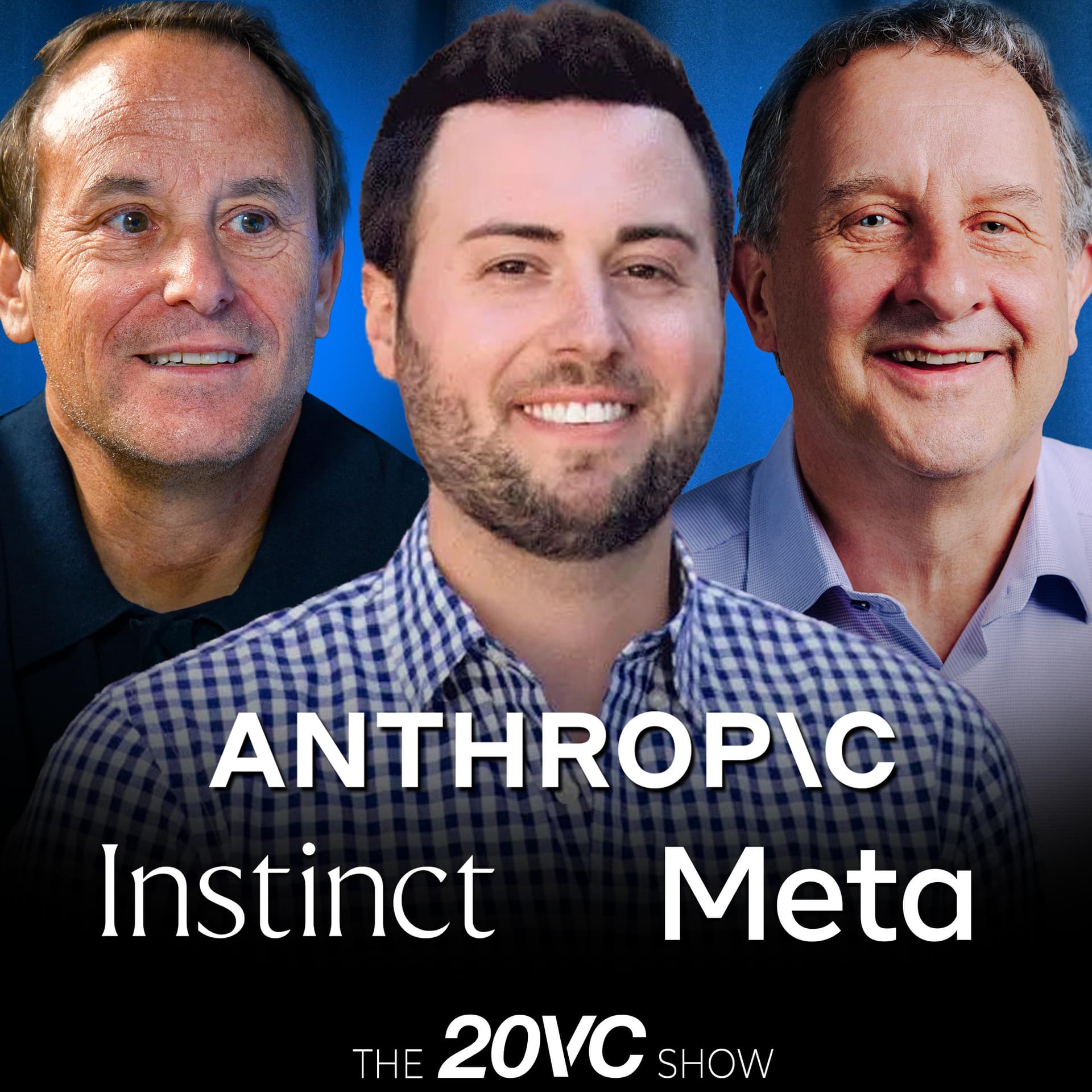
20VC: Benchmark's Eric Vishria on Where is the Value in AI: Chips, Models or Apps | Why Nvidia Will Not Be The Only Game in Town | The Commoditisation of Foundation Models | Which AI Apps Have Sustaining Value vs Hype and Short Term Revenue
Guest
Eric Vishria, General Partner at Benchmark Capital
Episode Highlights
- Understanding Value in AI Investments:
- Investment Layer Discussion:
- Chips, Models, or Applications: Eric discusses the accruing value across these layers of AI.
- Foundation Models: He believes that foundation models are the fastest commoditizing asset in history.
- Nvidia's Future: Eric argues that Nvidia will not remain the sole leader in AI technology in the next 3-5 years.
- Successful Investment in AI Applications:
- Evaluating Application Quality:
- Differentiating between standalone deep products versus those that will be commoditized.
- Analyzing competitors in customer service and sales tools markets.
- Revenue Analysis:
- Eric describes certain revenues as "sugar high," emphasizing the need for sustainable revenue streams.
- Decision-Making at Benchmark:
- Investment Process:
- Insight into the voting process for new deals within the firm.
- Notable contentious deals and lessons learned from them.
- Evolution Over Time: Changes in Benchmark’s decision-making process over the last decade.
- Impact of AI on Venture Capital Models:
- Discussion on whether AI pricing and deal sizes challenge existing investment models at Benchmark.
- The potential acquisition of foundation model companies by larger cloud providers.
- Speculation on venture class sustainability amidst market dynamics.
Key Concepts Discussed
- Commoditisation of Foundation Models:
- Eric emphasizes the speed at which foundational AI models are becoming standardized and widely accessible.
- Quality vs Hype in AI Applications:
- Distinction is made between genuine AI app value and those riding on short-term trends or hype.
- The Importance of Distribution:
- Eric reflects on the significance of having a strong distribution strategy for startups, drawing on his experiences as a former CEO.
- Empathy in Venture Capital:
- His past experiences as a startup founder give him a deeper understanding of the challenges faced by entrepreneurs today.
- Learning and Insight Development:
- Eric discusses the importance of insights that drive differentiation in a competitive market.
Notable Quotes
- “The foundational models are the fastest appreciating asset in human history.”
- “Startups are really hard, and it makes you really empathetic."
- “We need great entrepreneurs who are constantly updating their mental models.”
Conclusion
- This episode underscores the complexities of investing in AI, the rapid evolution of technology, and the nuances of venture capital decision-making. Eric Vishria shares invaluable insights from his experience, highlighting the critical role of understanding both the market dynamics and the entrepreneurs behind new technologies.
- ```
Written by AI. May contain mistakes. Listen to the episode to check what was said.
Transcript
Automatic transcript. May contain errors.0:04The foundational models are the fastest appreciating asset in human history. I don't believe Envigias is going to be the only end in town. Oh, and infrastructure. We have a major major shift in AI, which could be bigger than any of these other shifts maybe combined. It's simultaneously the most exciting and most disorienting time in my 25 years in technology. There's a lot of uncertainty, but we've been more active than we've been since 2010 and 2011. This is 20VC with me Harry Stebings and today we have Eric Vissri, a general partner at Benchmark joining me in the hot seat. Now what is amazing about Eric is the breadth of his investing success, from Benchling to amplitude to cerebrus to confluent.
0:44These are incredible companies but in totally uncorrelated and different industries, a once in a generation investor, a true picker and one of the greats. But before we dive in today, all of you listening use tons of software every day, sometimes Sometimes it fills us with rage. You can't figure something out. The chatbot in the bottom right is useless. You keep getting bombarded with these useless pop -ups. And for those of you who build products, no one wants their product to feel like this. Thankfully, a company exists to help users without annoying them. Command bar. It does a couple of very helpful things.
1:16First, it's a chatbot that uses AI to give users extremely personalized responses and deflect tickets. But it can be beyond just text. It can also co -brows with the user and and show them how to do things inside the UI, magic. But it can also detect when users would benefit from a proactive nudge, like a helpful hint, or an invitation to start a free trial. Command Bar is already used by world -class companies like Gusto, HaschaCorp, Yachtpo, and Angelist. If you're a product CX or marketing leader, check them out at commandbar .com slash Harry. And talking about incredible companies with Command Bar, I want to talk to you about a new venture fund making waves by taking a very different approach.
1:54It's a public venture fund anyone can invest in, not just institutions and accredited investors. The Fundri's Innovation Fund is democratising venture capital, which could have big consequences for the industry. The fund is already off to a good start with $100 million into some of the largest most in -demand AI and data infrastructure companies, companies like OpenAI, Anthropic and Data Bricks. Check out the Innovation Fund's impressive list of investments for yourself by visiting Fundrise .com slash 2 .0 VC. Carefully consider the investment material before investing, including objectives, risk charges and expenses.
2:31This and other information can be found in the Innovation Funds prospectus at Fundrise .com slash innovation. This is a paid sponsorship. And finally, let's talk about Squarespace. Squarespace is the all -in -one website platform for entrepreneurs to stand out and succeed online, whether whether you're just starting out or managing a growing brand. Squarespace makes it easy to create a beautiful website, engage with your audience, and sell anything from products to content, all in one place, all on your terms. What's blown me away is the Squarespace Blueprint AI and SEO tools. It's like crafting your site with a guided system, ensuring it not only reflects your unique style, but also ranks well on search engines.
3:11Plus their flexible payment options cater to every customer's needs, making transactions action smooth and hassle free and the Squarespace AI, it's a content wizard helping you whip up text that truly resonates with your brand voice. So if you're ready to get started, head to squarespace .com for a free trial and when you're ready to launch, go to squarespace .com slash 20vc and use the code 20vc to save 10 % of your first purchase of a website or domain. You have now arrived at your destination. Eric, I am so excited for this man. We've been waiting like so I think it was like five or six years since our last one at least so Thank you so much for joining me today You look older Harry.
3:50The Botox isn't working, but I was I was just listening to you on another show actually Not nearly as good as mine by the way You said that as a CEO you felt you fell short and they didn't really go anywhere from there in that conversation And I wanted to understand why as a CEO you think you fell short as specifically as possible When I reflect on a rock melt, which was, which has started up, I found it in the CDO of my reflection is that we fell short like far short of my hopes and dreams for the company like my expectations for the company and my hopes and what I thought we could accomplish.
4:25We fell really, really far short of it. You know, and I think there's a few ways to think about it. One of the reflections and has been really useful now as a venture capitalist is good teams with an interesting idea. It's not necessarily enough. The real lesson from it for me is like, hey, you can put it together a great team and I think we did. You can have an interesting or provocative idea. We were rethinking the browser and this is circa 2010. I think we had some of the right ideas. We had some of the right execution even, and a great team, but distribution for a browser brutal. But the big takeaway, the big lesson from that actually I think is just that, startups are really hard and I think it makes you really empathetic.
5:11It makes me really empathetic as a venture capitalist now when I meet entrepreneurs and you kind of understand, like, well, you know what? The stuff is really hard and there's a whole bunch of stuff you can do and there's a whole bunch of stuff you can't. But something is wrong there. If you think about that as an investor today, you're like, it's either wrong team, wrong market, wrong product, wrong time. Something is the inhibits of that. Yeah, I think the question is whether it's deterministic or not. It's just like, is all of that noble? We're all taking calculated, whether you're not familiar with an investor, you're taking a calculated risk of certain probabilities.
5:47And so I don't think it's deterministic. If you kind of like perfectly evaluate the team, the timing, the product, and everything at the beginning, you can actually determine what certainty whether it's going to work or not. And that's just like that's part of it because there's too many things that change along the way as those things change the probability of potential outcomes changes a lot and so like I think that's the part of it that that's why startups are hard and fun Is there anything you would have done differently about your CEO ship now you've worked with some of the best CEOs the best founders Oh, I do a million things differently like I and I say this to to the CEOs I work with now know, some of the big mistakes that I made were definitely not thinking about distribution enough.
6:33That's always a big thing too. You really, there were a couple times where two people, specifically that I think about, where what they wanted in comp and what I was like willing to give were separate, like they were just off and they were so far out of market in terms of what their ask was. At least for one of them, I would have just broken and all the rules and thrown it out and hired them. Those are two examples, but I think those things, you know, you can get into real trouble if you kind of keep doing something like that. And see, it's always a balance. Can I ask, on one, in terms of the distribution element, how do you dig into that as an investor's day, evaluating whether a founder has thought that through comprehensively enough for you to get comfortable on that?
7:16I'm not looking for an answer or a right answer. What I'm really looking for and trying to figure out is, has the person thought about it deeply and is constantly learning or constantly applying and adding new mental models to their framework to figure out what the right path is and they're navigating it. It isn't like, hey, I'm a boat captain and I'm looking and like, this is where we're going to go, you start going and then conditions change and you get more information and you have to constantly constantly change. And so what you're actually trying to evaluate isn't they're not going to have all the answers and that's okay, you can have theories and hypotheses and then evaluate and change as time goes on and you get more information.
7:58And I think that's really what you're looking for versus this is how it's gonna work. And that could be bad in its own way. It's behavior like changing tides, being that kind of captain of the ship and moving with the tides. You then become an investor, very different role than being a CEO. And you said something that I very much agreed with before, but I loved it and I wanted to dig into why. You said career investors, ah, they're all better. They're always better. They're better investors. I agree. Well, also not necessarily better board members, not necessarily better advisors, not necessarily a better bunch of things, but definitely better investors.
8:34Why do you think they are better investors? Practice in reps matter. And so if you're kind of, if you take somebody to use 15 years into their career as an example and there were an operator on that time, they may have seen three to five companies that they worked on and know them really deeply and know that ends it out. If you're a career investor over 15 years, you'll have seen 30 or 35 companies and hundreds and hundreds, thousands of of pitches. And then in those pitches, you'll be thinking about, well, like, I saw this one and this This is what it looked like then, and 15 years from now, or 10 years later, or five years later, you've run this very long -term, long -tissued experiment, and you have data and mental models around that.
9:23So I think that's really helpful. It can actually hold people back to, but I think that's really helpful for investors. So that's why I think the career investors tend to be really better investors. Why are they not the best board members? They haven't actually done these things at depth. they haven't done them themselves. They often lack empathy and understanding. I think they often think that things are more deterministic than that I think they actually are. Like all of those things I think actually really can get in the way. And I was talking to my partner yesterday about it kind of we were talking about a board member and he's at a different firm who is on a couple boards with us and it's like the challenge with that career investor is they They think if a company has a plan and they miss the plan, that's because the company messed up.
10:13And if the company had a plan and they exceeded the plan, it's because the company did great. And like, you know, their executive management did great, their management messed up. And it's just like, there's about 47 other ways that could go wrong. Like the plan could just be gobbling up from the beginning. It could be totally wrong and messed up. There could be external reasons for it. and the whole job that we have is to try to figure out root cause on those things and help them figure out root cause on them and then fix it. You're not helping your three -year -old fall or not fall or teach them a lesson.
10:46That isn't the job. It's quite a different actual mental model in terms of what the engagement with entrepreneur is. My question to you is, you mentioned some amazing companies there that are often completely detached in terms of sector. There are very different companies there from conflict, contentful to Syrubrus. I spoke to Bruce Dunlavi before the show. He said that bluntly, your breadth of sector mastering is completely unparalleled as an investor. He asked a great question I thought, which was, what is your learning process for entirely new categories and how do you break it down and learn so fast?
11:28I'm not a sector specialist and nobody at benchmark is and I think the Fundamental idea with benchmark is there's a small group of people, small group of partners who are all equal and Right now it's five of us, but sometimes it's four sometimes it's six, but it's basically four to six who Cover technology and a challenge with that if you kind of think about it is we can't be sector specialists The sectors that have the most disruption and things are changing the fastest, like are changing. That part is constantly changing. So you have to be, as a group of investors, you have to be moving. You have to be looking at new stuff because that's where the disruption is happening.
12:10So then the question is, I can't be a sector specialist. I can't be a semi -conductor specialist or I can't be an open -source specialist. Of course, we each have preferences and things that we like and delve in lessons that you can apply, but it's not a specialty model. And I think about this a lot, and we should talk about it in the context of AI, but you can't have it. So then the question is, well, what can you evaluate on? And I think this is it for me, which is, you can say, hey, this is an extraordinary entrepreneur. That's an evaluation that you can try to make. There's a second thing, which is, this entrepreneur has a very interesting and unique insight.
12:50Like that's a really important thing for me. And then you can say this market can sustain a big company. Like, those are three things which I think even coming without sector specialists, without being a sector specialist, you can try to come to a belief or a probability distribution for each of those things. And I think if you have those things and then you add on top of all of it, I have chemistry or want to work with this company or want to work on submission or whatever, then I think you have like the basis for an investment. And I think one of the maybe contrary and things around that is I think that a lot of venture capital in the SaaS era and certainly a lot of growth venture capital got to be like a very spreadsheety investor bankery type of approach, which is like it's kind of the models figured out we plug these things in and we kind of know when we figured it out that way.
13:44And I think that doesn't work. like I think there was a period of time where it might work for a bit, but I think it largely doesn't work. I think the AI stuff is going to wipe out those that breed of venture capitalists, can you really challenging? Because you really have to make these other kind of fundamental assessments. And... Can I pose an alternative to you there? Which is actually those are generally vertical SaaS companies with deep data reserves, which will then be able to leverage foundation models that are relatively commoditized to build much better vertically specific apps and become stronger.
14:19It could be not possible, but I would tell you this, we were talking about a company yesterday and it has every possibility that you just said, the entrepreneur in that case is one of the challenges with these platform shifts is some form, some variant of the innovator's dilemma, it's not quite the innovator's dilemma, as Christensen articulated it, But it's some form of the innovators dilemma, which is like you have to make the platform shift and in order to make the platform shift for a company like what you're articulating you have to kind of be willing to burn down the existing business and at least in short order.
14:53There's a whole bunch of entrepreneurs who don't do that. And so like this, this is what I just go back to if you have a learning entrepreneur who is constantly rethinking how they're navigating the ship, then that makes a really really big difference in the probability of outcome as you're working to replace them. I've got to take this one by one because otherwise I'm just going to go all over the place. You said like the insight development. I agree and I love that. I actually ask it. My maple's always taught me to ask like, what is your insight development? How do you view the world in a way that others don't agree?
15:25I asked Pat Grady on the show who says, hi, by the way, but I asked Pat Grady on the show and I said, do you have to be contrarian and right? What if an founder says, I think that actually the world is moving to cloud, duh, and I'm going to facilitate that much quicker. There's not really an insight. Does that matter? Do you have to be contrarian and right in your insight? You know, there are levels to it. Like, yeah, you can say, like, hey, we're going to cloud and we're doing this. But normally there's an insight. I would say, like, if you look at most of the successful companies, there's an insight, like there can be an insight underneath that, right?
16:01which is like, yeah, it's going to cloud, and this is the right way to attack it. Or it's going to cloud and the core differentiation is going to be here, not here. Like normally there's an insight there. I think there's a couple cases where, you know, you really have to think about it. There's a couple cases where just like violent execution by a determined team in a hyper competitive market where like nobody has an insight has worked. But even now actually you could argue that say like in an Uber lift case, which is exactly what I was thinking. The insight, I think, would be that broad is better than narrow in terms of market expansion and being everywhere is more important than honing one.
16:42Yeah. I think you could say that that's a good case of violent execution by determined team. And so I think there are insights there as you said. There's little execution detail insights in your point. And so it doesn't have to be some pie in the sky insight. That's like, oh my god, you know, like AGI is coming in Q3 of 2025. Like that's not the kind of insight that we're talking about. We're talking about actual things that are nuances that help like that build the company. And so yeah, they think they come at different levels. I would also say there, and you know, this is a difference that I've been fortunate to work with Pat on board and work with the larger squad team on a number of companies.
17:20And there is a difference also in stage, right? They're growth investors like our least patent history or growth investors in world early stage. and so there's also a stage difference in terms of how we evaluate things. You said about markets being large enough to support massive companies. How do you think about market creation? I think you have to say, and this goes back to the insight thing, if this thing, whatever the product is, accomplished what it was supposed to and what the entrepreneur said it could do, would there be market creation there? And so you mentioned Uber, Uber's a good example of this, And this goes back to the whole like that professor, the taxi cab analysis that was done like in the early days of the week where it was like, oh, the entire market's this big and it's like, well, if you can imagine everybody has a smartphone in their pocket and if you could actually request a rod instantly and pay for it easily with not having with shorter wait time and much more accuracy and much less cumbersome communication could a market be created?
18:24Yeah, and I think that was a huge part of, you know, girly and the rest of the benchmark teams at that time predates me. It was a huge part of their insight in terms of the investment thesis. And so, like, when you kind of think about a situation like that, okay, that's market -created, that's a good example of market creation. And we have those all over. Like, if you... Like, I'll give you another one that's kind of like really interesting right now, which is AI medical scribes. And so you're like, you go to the doctor and you talk to your doctor and then I have to do a bunch of notes and everything else.
18:57And so there's a bunch of these AI medical scribes. You kind of like look at it and you look at the proposition and I've looked at it now, I've met several of these companies over the years and we haven't invested in any. But going back, I don't know, five years when I met the first one, it's like, if this exists and works, like, yeah, that's a better way. Like it is a better way. So there will be market created there. It's going to take away from the other from the actual human scrub business, but it will be a new, but it is a new market in a way. And like you can imagine, like it's not hard to imagine that exists.
19:30And we often say this when we're talking about companies, which is like, if you fast forward three years, is this a thing? Like is it a thing? It's like often a good sign when you're like, yeah, like that's a thing. Like it's going to be a thing. Like we We believe that. I totally agree with you. But one earth you do in this, and we're totally switching to ask to say, AI companies. But in this sea of AI companies, we're both in 11x together. Great, love her son, fantastic. But there's a lot of other competitors to 11x. I'm with you, I've met five medical scribe companies. I thought Nabla was the best, but there were like 20.
20:04And I don't have a freaking clue who's gonna win. So how do you filter when everyone does the same, says the same? I think this is where we go back to where we're starting. Do we have an extraordinary entrepreneur that you believe in? Do you think they have an insight that is codient? And I would say this maybe this is a more useful way to say it. The more competitive the market is, the higher the bar, you have to hold on those two things, I think. And so like in a hyper competitive market, you have to really believe in an entrepreneur and really believe in the heart of the insight and their executionability.
20:43And in a less competitive market, it's just misery and life to work as a venture capitalist and serve on the board. If you don't really love the entrepreneur and really love the area, so that's a thing for me, which is I think about a lot when I'm kind of looking at a company is like, am I gonna be able to authentically help this entrepreneur or close great talent. Like, am I gonna be able to talk to them and tell them why this should be, like this should be an amazing, like this is an amazing person that I can tell somebody that like this should be their life's work, like and help convince them to join a company, right?
21:28Like that's, yeah, which is a big part of what we do. And like, and so when you look at that, I ask myself that question. And if I, if my answer is like, you know what? I think it's a cool business. It'll probably work, but like, I just don't understand how I can make that pitch, then I don't do it. Like that's my, like I just, I don't do it. And so, and so like there's this balance there, but like I think that's a big important part of it. And the more competitive the market, the higher the bar has to be. I totally agree. My worry is in a lot of these cases, the quality of product does not matter as much as the existing distribution modes that incumbents have.
22:08Should be. Like AI medical scribes, great example. Microsoft have such large end problems. Yeah, nuance to just crush everybody. Just crush everyone. You're a, you're a 10 % better product. Agreed, better product. But they just crush everyone with bundled packaging. Yeah, today's incumbents are paranoid and on top of things and like is Microsoft and nuance gonna move slower and whatever, than your average AI medical squad company, of course. But they're not dopes, and they don't have their head in the sand. And so, like, yeah, I mean, I think that is, like you do have to factor that in for sure.
22:39All right, does AI allow companies to charge more price per seat and have better revenues? Or does it merely denigrate their margins because of the increased cost of implementing AI? The answer is for sure both. I would maybe tweak your question, which is to say, I don't know that it's going to be like the price per seat model, but I'll give you a simple way to look at it Let's take the AI coding area, right? We've seen like tremendous amount of capital go into AI coding and copilot and AI software engineers and whatever Let's say you're fully loaded IT or software person is 200 grand for just for argument sick And if you think about that 200 grand there is just call it $10 ,000 for every one of these software engineers or IT people.
23:24There's $10 ,000 of tool spend. In that I would put like JIRA, which is a Lassie and GitHub service now, you know, a computer, whatever, development environment, get whatever. So all of that's called 10 grand a year, roughly. On that 10 grand a year of spend, how many hundreds of billions of market cap has been created? like 300, 400, 500, some big number of market cap has been created on $10 ,000 worth of spend for each of these like software engineers. So if the AI, if you can get AI good enough to eat much more of the $200 ,000 of value attributed to your software engineer at E person, it just follows that there's like 20x more value creation and we giant, giant outcomes.
24:15So in this way, and this is the challenge with it, which is it's simultaneously the most exciting and most disorienting time in my 25 years in technology because that is a really challenging situation where in some ways the prize is so big that you could very easily say, you can justify really ridiculous prices on any fundamental spaces. You can justify really ridiculous investment again on any fundamental spaces because it's like, well the prize is so big. So like that's one part of it. And then on other parts of it, it's like, wait a minute. We're a little ways away from like from replacing the software engineer right now.
24:53We're like a bit away from that. And like we haven't actually captured that much market value yet. And really, no one's demonstrated anything close to that level quite yet. Although the trajectory is like really quite good. And so that's the tension and challenge with it. You know, and this is the kind of thing that we have to like navigate through every day. Those companies in that trajectory are scaling revenues faster than ever. I remember when I was like, oh my gosh, they got to 10 million error in such a, now it's just completely different in terms of revenue scaling. How do you determine and think about analyzing revenue quality?
25:27And I've heard you said before sugar high revenue versus sustainable revenue. I've talked into a team that had gone on like a four person team, zero to four million and four months. Amazing, like just an amazing kind of revenue trajectory. But I put like almost no value on that, like going zero to four million. And I think one of their things was like, well, like why are you giving me credit for that? And I was like, well, the thing that I take away from that is that whatever you're selling, and this is true for a lot of these AI companies, customers want to buy, customers want to buy it. And so, and I think part of it is just like the products to a lot of these customers, the products are magic, like they feel like magic to the customer.
26:10And so the customer and ROI on those products is just tremendous. And they know that they have to experiment with it or they have to try it or they wanna try it because they see so much potential value and they feel it. So the demand side is very clear and it's just point. And I think that's probably the biggest thing that we can take away with these early stage companies and the attraction, which is like, okay, there is demand. And then you have to kind of evaluate and figure out, like, okay, do we think that whatever the product, the company's building, entrepreneur, let me go back to the same things, like has sustainable advantage over time.
Read the full transcript
26:45And that's a really, you know, that's a really difficult judgment right now. But I think it's like one of these things that we have to do. But I totally agree with you, the quickness of the scale is unlike, it's like three, four, five years of what SaaS company, like your traditional SaaS companies were doing, we're seeing it under a year. And we have a whole portfolio of companies that are like this, like it's amazing. But this is, I find it kind of paradoxical because you've got two questions. I do. Which is the $600 billion AI question. Thanks David Khan. The CapEx spend is so much and the revenues are trading so far behind.
27:18And then you also have the speed of revenue scaling as fast as never. Oh my gosh, they almost seem the odds. I don't worry about the 600 billion thing. Do you think that's the right question to ask was really my question? You know, I don't, like I go back to my software engineer example. Like the prizes, like forget about AGI for a second. The prize is so big, even without AGI. Like the prize is so big. And so like, yeah, the revenue will materialize. There's a lot to figure out. I was talking, we had a dinner guest yesterday. We do these dinners as a partnership with the guests on Mondays. And you know, one of the kind of conversations around it was, we were kind of unpacking is like if you think about search.
27:55So search, we started first seeing the search, the first search engines call it 1995 is when you started to see the first search engines. And then Google series A was 1998, I believe, and you know, and like immediately was like a better search engine and a better trap and everything else. What I think is lost in time is like Google didn't figure out the monetization. Of course, they did it through an acquisition. They didn't actually figure it out themselves. Like they didn't figure out monetization of search into like a one I think and so like or late 2000 and so we had like five or six years of these search engines which anybody at that time was using them every day.
28:36There were crappy display ads all over them and like all kinds of stuff that was just totally like people that I think sure they were like paid search engines like people tried to do all kinds of things to figure out the monetization model and so I don't know that we figured out the monetization model, but I think what we can say very clearly, customers perceive a lot of these products, not all of them, but a lot of these products is magic, which they are basically magic. And like they want them, there's a bunch of monetization that needs to be figured out, but I kind of don't worry about it. It's like we will figure it out.
29:09That's just the delay. And so I feel like, you know, and the reason the parallel to surf is interesting is because it's like, hey, there was a new technology that was really powerful search, web search. and it took a while to figure out monetization and we have a new technology, all of those that are really, really powerful and we got to figure out monetization on them and it's not gonna be a $20 a month subscription, that's not the right way and it's not gonna be just like bundle baby. I thought there's gonna be much, much more sophistication and interesting models on that. How do you think about value in the stack?
29:42When we think about where value in the stack is today, it's obviously in compute and video has seen that. And it's also in models with OpenAI. Ever, you know, your partner Sarah wrote that models are the fastest commoditizing technology ever, which is a great statement. I've used it a couple of times in shows. How do you think about where value accrues in the stack and where you need to spend most time aligned to that? Foundation on models are the fastest appreciating asset in human history. I think it's turned out to be largely true. Does that mean there's still great value in OpenAI? I think that's a good question that is really interesting because if you think about open AI and athropic in Meta, Angugle, and you know, and then there's a whole bunch of others coming, XAI and Mistral and so forth SSI now, you know, I think the foundational model war benefits us all in a way.
30:32Like it's just it's really really good for consumers and people around it because it's just like they're pushing the state of the art so much. In terms of value accrual like for benchmark, we have no foundational model investments. And then to, we have a set of infrastructure investments, which I think are really interesting. So we have Cerebrus, which is a semiconductor and systems company for AI that we invested in and led their series day in 2016. So we've been working on it for eight years. We have companies like Fireworks, which are an inference service, and others kind of let that infrastructure software layer.
31:07And I think those, again, they're growing very, very quickly, like, astoundingly quickly and doing really cool things, but at the same time, you kind of have to ask, like, okay, what are the foundational models going to do and how are they going to move up the stack? And so this is again where I go back to, you need great entrepreneurs who are constantly updating their mental models and re -navigating and, um, and when it fireworks. No, I think we just see all the foundation model companies just get acquired by the big players. We've seen character and flash and adapt. I don't think all the foundation model companies will be acquired by the big players.
31:39some may, but if you are not, how can you fund survival? Well, I think this is a question, right? And they're going to do it, but I think there's a set of people who certainly believe in the size of the prize, and so they continue to be able to raise really tremendous amounts of capital to train bigger and bigger models. Just to put it in perspective, like a hundred billion, even for the oil state companies of technology, you know, doing a hundred billion dollar acquisition is unprecedented. But doing a 30 billion's not and you only need to acquire the liquef. Yes, I mean, I think there's two things which is like if $30 billion acquisitions are not unprecedented and maybe you could say like in this world, you know, therefore 100 also is not like that big of a stretch, like that isn't that huge multiple, but it does feel like a big number to me.
32:27It would also never get through antitrust. Well, I think the antitrust thing is a big is a big question. Does AI today, to AI rounds, break the benchmark model? And I mean, that's slightly deliberately provocatively. But your fun size is very disciplined. You are hailed as the boutique provider of venture, very tailored for your son. But these rounds often, you mentioned some of the software creation AI companies. Is there else like 50 million starting price? I don't think so. And I don't think so for two reasons. One is through 30 years of performance. I think we have unprecedented flexibility in what we do and so if we want to write a $50 million check We write a $50 million check and we have and if we want to write a hundred fifty million check We can write a hundred fifty million check if we deploy a fund in 18 months or a year like it's fine We can do whatever we want so like don't the fun thing is almost like irrelevant or effective history and Accounting and so I don't worry about it there so like that's one part of it the second part of it is Does it not just impact you?
33:30You know, I think it would be a good decision. You mentioned the love and acts. Does it not just impact your decision making? I totally get you. Of course you could. Like every LP wants to be in bunchbox. So one fund that every LP is like, oh, I want bunchbox. I totally get it. Of course they do. But if you have a 500 fund, you're just not as likely to write a 50 or a 75 million dollar check. You know, I think one of the things that we maybe think about almost not at all is we almost never think about like fun cycle or fun timing or anything else and we almost never think about or talk about portfolio construction or anything else like we it does not come up.
34:05It's really interesting because when I talked to other venture capitalists they're like well how do you think about the portfolio construction and how do you think about check diversity and company and just like you never ever talk about it and so it isn't a thing genuinely isn't a thing that's a bunch of inherited goodness and flexibility. I think there's this amazing monger quote and he said, you know what, finding good investment ideas is hard enough. Finding great companies is hard enough. Let's not over -constraining. Basically. Let's not over -constraining. Let's not add a bunch of things to it.
34:37So what I say back is like in the benchmark view and approach, what we're looking for is these exceptional opportunities led by these exceptional people that can turn into something extraordinary at things work. like that combination is hard enough. Do you not think it helps provide a lens of focus to narrow your examination of where to spend time? You know, we very, very openly, regularly talk about things that are just, hey, that's way off. Like that's a $50 million check for 10 % ownership. It's not something that's not the core model, obviously. But the flip side is, I look at, you know, you mentioned the LeavenX, that's like an amazing company we're super lucky to be part of.
35:17I think about Brett Taylor, Sierra, I think about Lin's fireworks. You know, I go through and I like to look at these companies and I'm like, I like that AI portfolio. It's a bunch of infrastructure software companies. It's a semiconductor company in Cerubis. It's a few application companies as well. And like the foundational model rounds and some of those things have gotten like really, really large, but you kind of look at some of the things that are happening on the ground in the early stage in AI and it's like, yeah, it's totally doable, totally manageable. Do you think that you always need to play the game on the field?
35:48Bill Gurley, your partner, said that once. Yeah. I also like... I mean, to some extent, you always have to play the game on the field, or you always have to maybe, maybe, a different way to say it, so you always have to be aware and cognizant of the game on the field. So, like, that it is the game as the game. You can always choose to play more or less. You can choose to play more or less. So, I don't know, give you a really concrete example. 2021 was, like, sass -crazing it. Everything craziness, right? like everything was running and everything else. In 2021, we made like three new investments as a firm.
36:19Three. That was the game on the field and just saying, that's okay, I'm okay not playing that game. And that's great and I have no regrets on that at all. I think that's fabulous. This year, 2024, the game on the field is, we have a major major shift in AI, which is like, could be bigger than any of these other shifts maybe combined. It's really big. There's a lot of interesting work happening. There's a lot of uncertainty without a doubt, but we've been more active than we've been since 2010 and 2011 what was happening in 2010 2011 mobile shift to what what is that with AI? Do you think we are over estimating what we can do in one year and we're all getting ahead of our skis one of the beauties of this in our model like I think about if I go back to 2010 and 2011 for a second you know, in that timeline, that's when Snapchat, Uber, Twitter, Instagram, that's when we did the series A's and Instagram, Snapchat, Uber, whatever, a weird round in Twitter.
37:19The round that Peter led in Twitter at that time was like technically a series C or series D at like 200 pre because the company had its history right with ODO and everything else and so it was, it was a rule breaking rounds, a good example of exactly what we were talking about earlier. Yeah, you kind of have your norms and then every once in a while you just have to be like throw it all out and just do it. And that was a good example. But you think about that body of work, which was obviously tremendous towards a returns perspective. And fast forward to today, you're looking at the game on the field here.
37:53We have to kind of ask ourselves like, hey, are there extraordinary opportunities, extraordinary companies getting built here? And if so, you just got to do it. But I heard you say once when it came to cerebrus that Peter's role as your partner was to help enhance your instincts. Yeah, he did. He's amazing. I have such a man crush on Peter. I haven't told him and so it's lucky that this is in the podcast. My question to you there is, is that not dangerous? Should a partner not be the counterbalance, not the jurorous albaltry to your energy? Well, I think both are true. My partners have kept me out of countless companies.
38:33It's amazing. You asked this sector question earlier, we were talking about it is like, I spend a lot of time trying to understand chemistry, my chemistry with an entrepreneur and try to figure out, like, am I gonna love working with this person? Do I believe this person is a learning machine or not? So I spend a lot of time on that. I spend a lot of time trying to believe, like, do I think that inside is cogent or not cogent? Does it hold together? and I spend a lot less time on like the sector specifics because I just feel like if I'm an F on a sector with best effort I can get to a D plus, like that's not good enough.
39:08And so I just rather like not. And I actually think this is maybe contrary and total aside, I think this is why the memo writing culture and a lot of firms gets you in trouble because you put a lot of information. It encourages putting a lot of information that is like third and fourth order stuff into document as if that is impacting your investment decision where like most of these investments, there's really like one or two questions that really matter. All energy should go to those and everything else is kind of like unknowable, non -deterministic or irrelevant. So what Peter did in the case of Cerebrus was, I remember it really distinctly, I met the company first on a Wednesday and I was like, well, am I meeting a study and Dr.
39:53Cumbi like this so so stupid like I shouldn't be doing this like we don't make seven conductor lessons. This is maybe February, March 2016 and I came out of the meeting and was like wow and so like the team was amazing and then the insight was really keen and really sharp and it's now totally accepted but at the time it was like so it was so sharp and so contrary and or so not contrary contrary it's not the right word actually what it was is It was unique in novel, like that's what it was. It was unique in novel. And so I came out and I was like, this is interesting, we met again. So I called in a bunch of partners to meet on Thursday.
40:31And so a whole bunch of us, including some of the founders and Cruelling Bruce, if you mentioned earlier, like he came in because like, you know, like what do I know about semiconductors, all of this, nothing. Well, really, probably nothing. Colin Bruce, he would actually done semiconductor investments in discussion. So if that was on Thursday, I spent time one on one with Andrew on Friday, Bill and I had lunch with Andrew on Sunday. I'm talking to Peter about it on Sunday night. He's just totally discouraging me from doing the investment. He's like, this goes against everything I've learned in the industry, totally discouraging.
41:04He hasn't nothing company yet, just based on my articulation of it. Monday, so I bring the company in, Peter was like, I was like, just having an open mind on it, just having an open mind. And so comes in on Monday, Andrew pitches and he had a he had a term sheet already so we were we were running obviously and he pitches at the end of the pitch We're like debriefing and you know and we have a system where we're like we talk and then like you can call like the sponsoring partner Basically you can call for a vote and Peter said call for the vote He told me he's like call for the vote and he pushed me so he like pushed me to call for the vote and and to like push over the line after are spending literally 16 hours before trying to talk me out of it.
41:44And so the answer is, yes, my partner has kept me out of a lot of stuff, but what he was doing in that moment is he had updated his own evaluation of the opportunity and the idea and was like, yeah, it makes sense. Also, Eric clearly really wants to do it and see something here. And so I'm 18 months into being a venture capitalist and I have one of the greats of all time 16 hours before telling me this goes against everything like don't do it like blah blah blah and you know and so I think that that encouragement of like hey there you saw something there and then like the rest of the group saw it and was like yeah there's something there and like and so I go back and think about that a lot because each of us in a good partnership each of us brings our own points of view and our own biases and baggage but our own insights as well and so you do that well, that's like that's these partnerships at its best and I've seen that a whole bunch of targets.
42:41In the deals where your partners have saved you, as you mentioned many times, what did they see that you did not see most often? I'll give you a great example where Sarah saved me. We were looking at a company and she's like Eric, that indiscos back to your sector thing. It's just like a perfect example that ties this thing together is like she's like Eric, I'm telling you You're used to looking at software companies. At this company, gross margin, and like these unit economics really, really matter, and they suck. There isn't a path to get better, and the entrepreneur is not engaged on the topic.
43:15It was just like a great insight, because like for us, you know, as your kind of traditional software and investor and like doing things, it really doesn't matter. Like it's just like all these things end up, you know, your SaaS companies are gonna end up in between 75 and 83 % gross mark. They're just going to end up there. It's fine. It works itself out. A company that starts there way less than that, it's just like whatever. You'll fix that. I think it was a great insight that kept me out of it because there were a ton of things that I loved about the entrepreneur. It was really a compelling individual.
43:50I think her point on the nature of the business and the fit between entrepreneur and the nature of that business and Pacific was spot on and Sarah saved my bacon. So I was going to my partner the other day who comes out of DST and so he's like trained on like Gross margin and like real numbers guy. And he's like, oh, it's a Gross margin of 3 million in A .R. And I'm like, dude, no one gives a fuck. No one gives a fuck. It's 3 million in A .R. The Gross margin in 10 years. I would no idea what it will be like. And even then if it's still a shit Gross margin and it's go -go times, we can still get a great multiple.
44:27and if it's amazing in shit times, the IPM obviously, there's so many fucking variables. I don't have a clue. I totally agree. I think this goes back to the spreadsheet conversation and why I think spreadsheet investors are gonna get wiped out or have a really hard time in this era. And I think SaaS was such a boon and gift to the investor bankery spreadsheet investors, plug your stuff in and you figure it out at scale, right? At the early stage though, I totally agree with you. People come in and they have a million and a half and they're like talking about their net dollar retention or whatever.
44:58It doesn't matter. And none of that stuff, and not a single company, I think I've worked on five companies that have gone from zero to more than 200 in revenue. And like, and not a single case did the economics at the very early stage extrapolate all the way. Like it's just not a thing. Not even the economics when they were at 30 or 40 or 50 extrapolated to 200. Like, it just, it isn't how it works. There's so much change that happens at these companies. And so, like, it just false precision around that is just dumb. And I think you can say, like, let's take the flip side of it, which is the flip side is, there are things that you can see at those stages, which would tell you that this thing is like going into a wall or is going to have to undergo a major transformation or like, like, I think there are problems that you can see, but I think the positives are not really notable that way.
45:54Can I ask you in terms of how you spend your time? I spoke to Victor on your team, and he said, Eric is so unlike most other VCs. He spends like 70 % of his time with his portfolio. Yeah, at least. I would love to understand how you think about the makeup of your time between sourcing, picking, and doing diligence, and doing references, and then servicing, helping portfolio. What does that look like? I'm probably, at this point, probably 80 or 85 % on working on on the portfolio. I mean, it's a lot. And part of that's because whatever, I'm on 12 or 13 boards. I can't remember. But a huge part of it is that is our model.
46:32Like that is the benchmark model. And since the benchmark model is a concentrated portfolio of like very high conviction to magnets. Like we're making commitment song to words. It's like it's very high concentration and very high conviction. That is the nature of our model and I think that is... Are you on too many boards? 12, 13 is not. It is a lot, but I think they're all at different stages, so it isn't as not as you... It kind of seems on the surface because like four or five of them are really young companies, right? That are in their very early days. And like you said, spend 80, 85 % of my time on them.
47:10So it's not like, if I spent 60 % of my time looking for new companies, and of course you wouldn't be able to spend that much time on it before fully. Final 140, you said about cool the vote. What is the vote that like? Our vote system, which is somewhat irrelevant, but it's a way to kind of quantify people's feedback. So a company comes in, we all talk about it. You know, at this point in time, most of the time, like there's only five of us, right? So at this point in time, you know, we would have chatted about the company and at least two or three partners would have met typically. And so there's a decent amount of institutional knowledge about the company and then at the end we you kind of quantify Your feedback and so it's a way for partners to quantify their feedback to others And so our voting system is you vote one to ten you can't vote five six and above is yes four and below is no And it's kind of strength of conviction right if you if you get a bunch of tens Amazing that that that never seen that happen, you know if you get a four like partners telling you they didn't really like it but it's not whatever.
48:12If you get a two, your partner's telling you they're really discouraging you from doing it. Have you ever had a one? I don't know. If you're going to, if your next question is what happens, if you don't have the vote and you still want to do it, I have no idea. I don't know what happens. Does that not go against being non -consensus, seeing the beauty which others don't? Then I'm certainly denied. I think there's... Because you have to get a core, and you need to get three out of the five. I don't know that you have to get three out of five. Like I said, I don't know what happens. It's a very, Ben Tworkin's a very high trust, like high confidence in each other, model and structure, right?
48:46Is it always five people saying yes? No, I'm just saying nobody knows what the votes are, except the sponsoring partner. And if a partner wants to do something, I think they can do it. You're getting feedback from your partners who you trust and how confidence in. Why do the voter tool? I think it is actually useful to quantify things. You get all of this feedback, right? And anybody who votes six on an investment does it apologetically. They have to be truly conflicting. It's there's nothing strategic. That's managing politics. That's not managing making the best investment decisions. Do you not think it's about kind of being all in or like hell, no?
49:24Well, I think the sponsor, your sponsoring partner, the kind of advocate probably needs to be that. But your other partners who are looking at it and trying to help you make a decision, and I don't know that they have to be that way. They have less information necessarily. And so having their strength of conviction doesn't need to match yours. Okay, we're gonna do two types of quick fire. One's a short, quick fire, one's a slightly longer one. Quick fire on people. You've got one takeaway from working with girly, phantom and matcola. Okay, I'll just chose them because that my favorite. So what's the biggest takeaway from working with girly?
50:01Even great companies can be overvalued. And one of the things that Bill is really good at is like thinking about fundamentals, right? He came from public marketing investing way, way back when at the beginning of his career, he has that mindset, that analytical mindset. And so he thinks through that and says like, hey, on a fundamentals basis, like you will trade sometime at under 30 times free cash flow. And so like that's a thing, right? Like we're all, you and I were talking about like what's the AR number or the revenue and all this stuff, but ultimately, you talked about the four areas, which is sourcing, picking, winning, helping build.
50:40There's a really important fifth stage that nobody talks about, and not every venture capital it gets to you, which is exiting. Ultimately, our job is to return money back to our investment partners. When you think through that, you do have to, ultimately, hopefully, everyone gets to a place where they're thinking about this fifth step, not everyone does. And like in that place you do have to kind of think about these fundamentals. And so occasionally you have an amazing company on the Erupe Leaven, but it can be overvalued too. Okay, Fenton, what's the takeaway from Peter? The insights around people and motivations that Peter has ever unparalleled.
51:20And I've described this before, but like Peter and Bill, one of the things that's amazing about the two of them is they are very, they're very, very different style investors. Like almost die naturally opposite in a bunch of ways. And obviously they have a lot of common ground, which is how their partnership was so effective for so long. Peter is very much like people first, Bill is very much, I would say like market first. It's a different mental model and looking at these things. Totally agree with you. I remember Peter once told me price is a mental trap. He told me a version of that on one of the first investments.
51:51I looked at at Benchmark in 2014, in summer of 2014. The discussion was like, well, could you do it at 40 or 60 or whatever, so you're gonna have some price? I was like, well, I'd do it at 40 and not 60 and he's like, no, that doesn't work. No, it can't do that. And I've said this now subsequently to the new partners who joined in my way where like, yeah, that's not, you can't not a lot to make that claim. I remember also when I was debating whether I should get more operating experience before becoming an investor. He was like, do you wanna be an investor? And I said, yeah, he said, then invest.
52:24And being an investor here. Yeah. Final one, Cola. What have you learned from Matt? Matt is the best at understanding the insight and the depth of an entrepreneur's insight. That is Matt's superpower, understanding the depth of the insight. Is the insight bullshit? Is it authentic? Is it really deep? He's six sigma on that. Matt says very little and it is always insightful. The normal quick fire. What do you believe that most around you disbelieve Eric? I don't think Nvidia is going to be the only game in town. I don't believe Nvidia is going to be the only game in town. Oh, and for social wear.
53:03Like, I just, and I think that entire setup right now is an assumption that if AI is real in here's day and there's real ROI, then Nvidia just continues to run at this level and I don't believe that. That's a good one. Creditity, that's fantastic. which venture investor outside of benchmark G most respects. They're so, so many. Good, you've got one. I've got one. You know, I think you'd have to say, I'd have to say, I'd have to say Gets and Jim Gets. In the reason I would say Jim Gets, what one Jim is the one who first told me I should get into venture in someone, it's only grateful to him for that.
53:44He said that to me in 08. It took me six years to figure out that he was right, but I'm super grateful for him for that. But two, you know, we talked about this, like, there's almost nobody who's had wins in consumer land at the scale of like, what's up and wins in enterprise land and he's done it over and over. So to have like, pal, the networks and what's up is just insane and obviously he's had many, many other wins and so he's been a spectacular, spectacular investor and I'm eternally grateful to him. Why did you not join Sequoia? I just like at that time so in OA when I talked to them I really had in my head that I wanted to be a founder and I'm super glad I did I had so conversations but came up with the idea for rock melt and so Tim Hals and I who was my co -founder pursued rock melt and then Five years later, you know rock melt with the Arabs and downs.
54:35We were bought by Yahoo in 2013 and then you know You're later I joined that rock and he didn't go back to them. I did not No, different time. I think square like a lot of firms Hires people quite early in their careers and like grows their own. Are you ready for my hardest one? Okay, I'll schedule this is like for true pro Right. All right. So good the heaviest things in life are not iron or gold but unmade decisions What unmade decision do you have that weighs on you most? I don't know I can think of several little things that I would have done but I don't know. We had early acquisition interest in Rockwell.
55:18That was probably something that I should have leaned into more in retrospect. That's an example and that would have been a very different. But in the scheme of things like looking back now, it's 2024. Would it have changed anything? Probably not. This is the whole, what's that children's story about the the horse rider and the soldier and the conscription? Have you heard of the soldier? the story. It's really amazing. The summary of it is, it's like ancient China and there's a draft. In the first part of it is, there's a family in rural China and they get a horse. This kid finds a horse. The villagers are like, oh my god, he's so lucky, he's so lucky, he's so lucky, and the wiseman is like, we'll see.
56:01And the kids riding the horse and breaks his leg. And then the villagers are like, like, oh my god, it's so unlucky, it's so unlucky, it's so unlucky. And the wise man is like, we'll see. And then there's a draft, a military draft. And the draft people come to this rural village. And they draft everyone except the kid with a broken leg because he has a broken leg. And the villagers are like, we're so lucky, he's so lucky. And the wise man's like, we'll see. And so I say that because it relates to my rock melt experience and kind of where we started, which is founding and building companies really really hard and you have to have a lot of determination in order to do it and you go on these ups and downs and I certainly did and ultimately we didn't realize the potential of what we wanted but you know did it work out or did it not and in the fullness of time I'm like I couldn't be happier where I'm at and thankfully those team members they're at great places and great companies a whole bunch of them work inside of the portfolio that I work on which I'm super grateful for.
57:00And so we'll see. Reminds me of the businessman in the fisherman. I didn't if you've had that one. I've heard it. Oh yeah, I have heard of this one. We're just like, well, what would you do with all that money? Well, I retire in a small fishing village, yeah. Drink, bear, and show it. Yep. Pretty much. An ultimate one. You can cool yourself up before the birth of your first child and say, Eric, you should know this. What would you say? Man, in a toward. I'm sorry. I'm sorry. What's the hardest? I think the big thing in the first few years, and we went from zero to two, so it was particularly challenging, but not as challenging as people who went zero to three, zero to four, but I think the hardest thing is your time goes away, it inverts.
57:47It used to be, you know, on a typical like for you, or for me now, my kids are a little bit older, is like Friday is like the day you're the most tired, and then you have Saturday and Sunday to recover. This totally inverts, right? For me, like when we had kids at the end of the work week, was that was the most rested I was gonna be, and Monday morning was the most tired I was gonna be. And like it just like completely inverted because the weekend, we was just so hard with little babies. I'm so well trained then. In the week I have Venture, which is the easy part. And on the weekend I have just back to back to back media stuff and stuff on Sunday.
58:23And so I'm knackered coming into Monday. Okay, okay. Yeah, you're in good shape then. At kids and I'm totally fucked. Is that yeah? Final one for you. When I ask you for a memorable moment from your time at Benchmark, what's the one that you tell ground children? That one for me would be when the founder was a confluent J .A. Hanjun called me and said they were going to go with Benchmark for their series A. That was my first investment. It was three founders. You know, the company's gone on to wild success. That was a huge development for me. And really memorable. I remember where I was and it was a big deal.
58:59All right, dude. I've absolutely loved doing this. Thank you so much for everything. I really want to do it. This has been amazing. So fun. What a man. I absolutely love doing that. Sure. If you want to check it out on YouTube, you can by searching for 20 VC. There you'll find all of our episodes in video. I'd love to your thoughts and feedback. But before we leave you today, all of you listening use tons of software every day. Sometimes it fills us with rage. You can't figure something out. The chatbot in the bottom right is useless. You keep getting bombarded with these useless pop -ups. And for those of you who build products, no one wants their product to feel like this.
59:33Thankfully, a company exists to help users without annoying them. Command bar. It does a couple of very helpful things. First, it's a chatbot that uses AI to give users extremely personalized responses and deflect tickets. But it can be beyond just text. It can also co -brows with the user and show them how to do things inside the UI, magic. But it can also detect when users would benefit from a proactive nudge, like a helpful hint, or an invitation to start a free trial. Command bar is already used by world -class companies like Gusto, HaschaCorp, Yoppo and Angelist. If you're a product CX or marketing leader, check them out at commandbar .com slash Harry.
1:00:09And talking about incredible companies with Command Bar, I want to talk to you about a new venture fund making waves by taking a very different approach. It's a public venture fund anyone can invest in, not just institutions and accredited investors. The Fundrise Innovation Fund is democratising venture capital, which could have big consequences for the industry. The fund is already off to a good start with $100 million into some of the largest most in -demand AI and data infrastructure companies, companies like OpenAI, Anthropic and Databricks. Check out the Innovation Fund's impressive list of investments for yourself by visiting fundrise .com slash 2 .0 VC.
1:00:49Carefully consider the investment material before investing, including objectives, risk, charges and expenses. This another information can be found in the Innovation Fund's prospectus at fundrise .com slash innovation. This is a paid sponsorship. And finally let's talk about Squarespace. Squarespace is the all -in -one website platform for entrepreneurs to stand out and succeed online. Whether you're just starting out or managing a growing brand, Squarespace makes it easy to create a beautiful website, engage with your audience, and sell anything from products to content, all in one place, all on your terms.
1:01:23What's blown me away is the Squarespace Blueprint AI and SEO tools. It's like crafting your site with a guided system, ensuring it not only reflects your unique style, but also ranks well on search engines. Plus, their flexible payment options cater to every customer's needs, making transactions action smooth and hassle free. And the Squarespace AI, it's a content wizard helping you whip up text that truly resonates with your brand voice. So if you're ready to get started, head to squarespace .com for a free trial. And when you're ready to launch, go to squarespace .com slash 20vc and use the code 20vc to save 10 % of your first purchase of a website or domain.
1:02:00As always, I so appreciate all your support and stay tuned for an incredible episode coming this Friday with the OG of sales and customer success at HubSpot on 20 sales.
From the publisher
Eric Vishria is a General Partner @ Benchmark Capital, one of the world's leading venture firms. At Benchmark, Eric has served on over 10 boards including Confluent (CFLT), Amplitude (AMPL), Benchling, Contentful, Cerebras and several other private companies. Prior to joining Benchmark, Eric was the Co‐Founder and CEO of RockMelt, acquired by Yahoo in 2013.
In Today's Episode with Eric Vishria We Discuss:
1. How to Make Money Investing in AI Today:
- How does Eric think through where value will accrue in the stack between chips, models and applications?
- Why does Eric believe foundation models are the fastest commoditising asset in history?
- Why does Eric believe that Nvidia will not be the only game in town in the next 3-5 years?
2. How to Invest in AI Application Layer Successfully:
- How does Eric analyse between a standalone and deep product vs a product that foundation model will commodities and incorporate into their feature set?
- How does Eric differentiate between the 10 different players all going after customer service, or sales tools or data analyst products etc?
- How does Eric analyse the quality of revenue of these AI application layer companies? What does he mean when he describes their revenue as "sugar high"?
3. How the Best VC Firm Makes Decisions:
- What is the decision-making process for all new deals in Benchmark?
- As specifically as possible, how does the voting process inside Benchmark work?
- What deal was the most contentious deal that went through? What did the partnership learn?
- How has the Benchmark decision-making process changed over 10 years?
4. Does AI Break Venture Capital Models:
- Does the price of AI deals and size of their rounds break the Benchmark model?
- Will foundation model companies all be acquired by the larger cloud providers?
- Unless multiples reflate in the public markets, does venture as an asset class have hope?
- Why does AI make paying ludicrously high prices potentially rational?