
In short
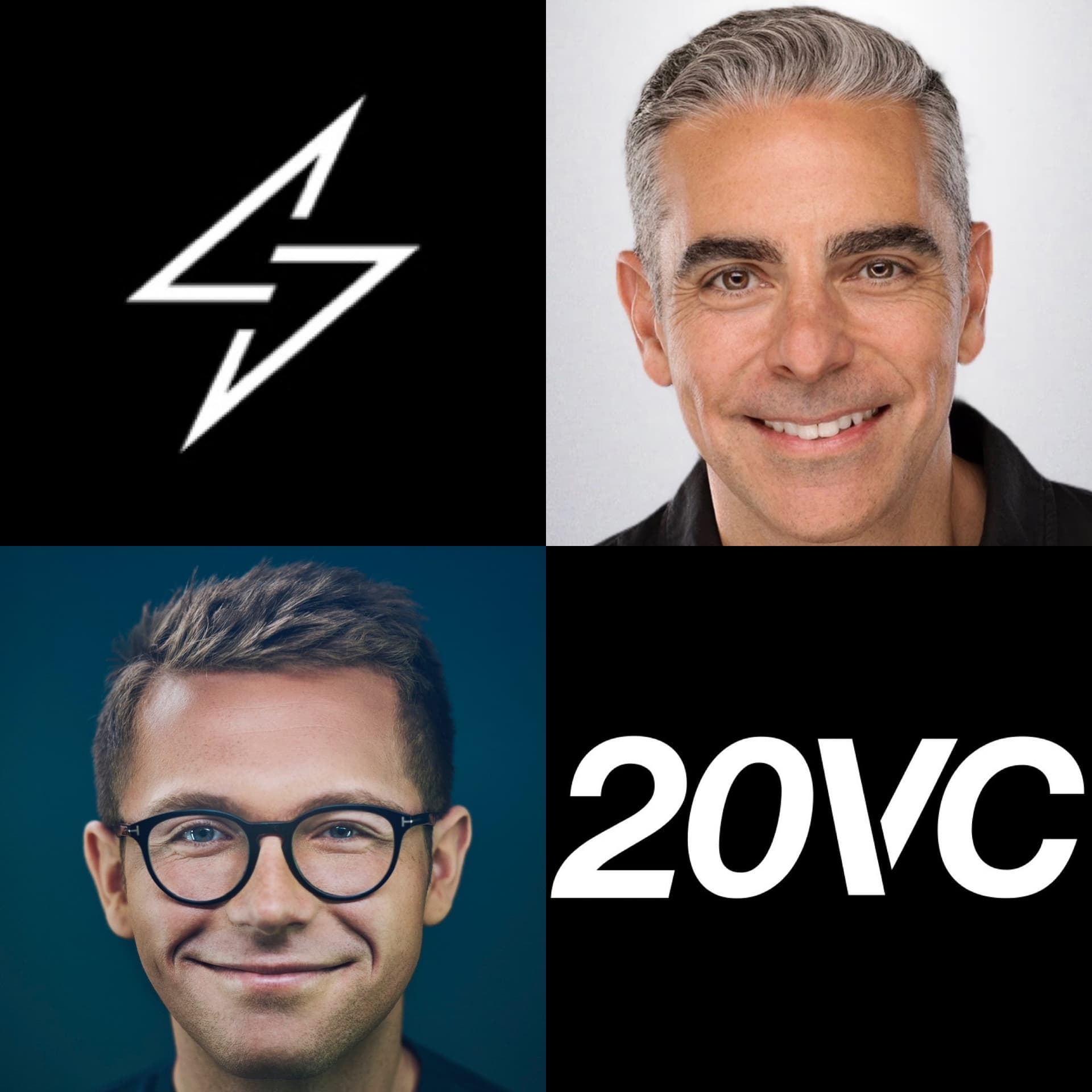
Podcast Summary: The Twenty Minute VC (20VC) - Episode with David Marcus
Episode Details
- Title: 20VC: Biggest Challenge Facing Crypto Today & The Winners and Losers of the Next 10 Years | Why AI Will Lead to More Wealth Equality Than Inequality | Why The Current State of the US Feels Like the End of an Empire
- Guest: David Marcus, CEO of Lightspark
- Host: Harry Stebbings
Background David Marcus is a prominent figure in the fintech and cryptocurrency space, previously holding significant roles at Facebook including scaling Messenger to over 1.5 billion users and founding several technology companies. He is now the CEO of Lightspark, which focuses on enhancing Bitcoin's capabilities.
Key Themes Discussed
- Personal Journey and Entrepreneurial Mindset
- Impact of Personal Loss: Marcus shares how witnessing his family lose everything instilled a determination in him to succeed, driving him to start his first company, GTN.
- Naivety in Entrepreneurship: Marcus argues that a certain level of naivety is beneficial for entrepreneurs, allowing them to pursue seemingly impossible ventures without being hindered by conventional wisdom.
- Lessons from Silicon Valley and Corporate Experiences
- Cultural Shifts at PayPal: He discusses how he underwent a brutal cultural transformation when joining PayPal, shifting from a more traditional corporate culture to one focused on innovation.
- Insights from Mark Zuckerberg: Marcus emphasizes Zuckerberg's unique approach to leadership, particularly his ability to listen and learn from others.
- Current Challenges and Future of Crypto
- De-banking of Crypto: He discusses the implications of the de-banking trend affecting crypto companies, indicating a potential push toward peer-to-peer transactions.
- Regulation and Innovation: Marcus argues for clearer regulations from the SEC to foster innovation while protecting consumers, advocating for a cooperative approach between the crypto industry and regulators.
- The Role of AI in Future Economies
- AI as an Equalizer: Marcus posits that AI has the potential to enhance income equality by empowering individuals who previously lacked access to resources.
- Integrating AI in Business: At Lightspark, the integration of AI is viewed as a way to enhance product capabilities and streamline processes.
Key Takeaways
- Importance of Resilience: Personal experiences can shape entrepreneurial resilience and determination.
- Cultural Transformation: Significant changes in corporate culture can lead to improved innovation and effectiveness.
- Regulatory Clarity Needed: The crypto industry requires a clear and supportive regulatory framework to thrive.
- AI's Potential: AI is positioned to be a transformative force in promoting both economic equality and innovation.
Conclusion In this episode, David Marcus shares his extensive experience and insights, highlighting the intersection of personal journey, corporate leadership, and the evolving landscape of technology and finance. His thoughts on resilience, the need for regulatory clarity in crypto, and the transformative power of AI provide a nuanced perspective for entrepreneurs and innovators navigating these dynamic fields.
For more information, visit [20VC](http://www.20vc.com).
Written by AI. May contain mistakes. Listen to the episode to check what was said.
Transcript
Automatic transcript. May contain errors.0:00Look at the tea leaves right now, it's really not looking great. It feels a little bit like we're on the path of an end of an empire of sorts. And that's probably reversible if there's concerted effort to actually really focus on what America's done the best at. This is 20VC with me, Harry Stemings, and stay. I'm so thrilled to be joined by an OG of the industry in the form of David Marcus. Now, David is the co -founder and CEO of LightSpark. Light's book is building the infrastructure that extends the capabilities and utility of Bitcoin. Prior to Light's book, David led all payment and crypto efforts at Facebook and helped scale Massendjuk to 1 .5 billion users.
0:39Before Facebook, David founded three other companies, Zong, which was acquired by eBay, for $240 million, and two other companies, which were both successfully acquired. I do also want to say huge thank you. The schedule stay was a real team effort. Shack, Hugo Barr, Daniel Eck, Dana Ramaytra, it's Fredericka Felix, some amazing questions to ask and I so appreciated that. But before we dive into the show's Dave, help me talk about Coda. Coda is the doc that brings it all together and how it can help your team run smoother and be more efficient. I know this because Coda helps me. At 20VC, we use Coda for all of our research for every episode, so all team members essentially can work on the schedule all in one doc seamlessly built by Coda.
1:19And here's how Coda can help your team run smoother and be more efficient. Coda allows your team to operate on the same information and collaborate like my team does all in one Coda place. By putting data in one centralized location, regardless of format, it eliminates so many road blocks that can just stop your team in their tracks. This is really what slows down productivity and collaboration. With Coda, your team can operate on the same information and collaborate in one place to get projects across the finish line faster. help your team run more smoothly, more efficiently with Coda. Get a started stay for free.
1:51Head over to coder .io slash 2 -0 -VC. That's coder .io and get a started stay for free. Coda .io slash 2 -0 -VC. And to be of tools we cannot live without, Angel List is fast becoming the center of the venture ecosystem. So for startups, Angel List reduces the friction of captable management, banking and fundraising all in one place. Teams can focus on scaling and let Angel List handle the rest. Thousands of startups have moved their cap tables to Angelist in the past year. Angelist also supports large venture funds and their teams with an automated software first approach and the best customer service in the industry.
2:26Farm managers can focus on making great deals, while Angelist handles reporting taxes, compliance and more. What's more, with the recent release of Angelist Network banking for farm managers and investors, your deposits are secure with the most trusted banks for maximized FDIC coverage and mitigated single bank risk. If you're ready to scale your startup or fund with the platform of the center of it, visit angelless .com forward slash 20VC to get started and finally Brexit. Since its founding, Brexit has been committed to helping start up an launch and scale faster at every stage of growth, from MVP to IPO.
3:00Today, Brexit's all -in -one financial stack is used by one in four US startups and counting. I get to speak to founders all day and I know how crucial it is for them to have the right financial stack. Bracket gives you fast access to a high -eal business account where you can safely store and move your cash while getting up to 6 million in FDIC protection. Lately, it's been all too clear how important that is. Plus, you get high -limit corporate cards, easy -spensed tracking and automated bill pay. To learn more about the all -in -one financial start for start -ups. Visit brex .com for slash 20VC.
3:33That's B -R -E -X .com slash 20VC. Flink, flink, flink, wand, jibbo. You are now arrived at your destination. David, I am so excited for this. I heard so many great things from Dana at Matrix, from Shark of Course, Frederick at Felix, but thank you so much for joining me today. Thank you for having me. It's great to finally connect. I loved to go back to the very beginning. You founded your first company. I didn't know whether to say this. In the year I was born 1996 How did you come to found your first company David? Well, I think it was a series of events in my personal life as well as a deeply rooted frustration about Monopoly one of telecom and internet service providers in Switzerland where I was at the time basically I I was forced to drop out of college because of a family situation where the family lost everything and then I had to go try to figure out how to make money which took me to working in a bank which I really didn't like but that's what you do when you're in Switzerland.
4:41And then after a year at that bank I decided I was frustrated enough with the state of the telecoms industry in Switzerland that was monopoly basically at the time and decided that knowing almost nothing about the telecom's business, I was going to try to go and build a company to compete with the incumbent at the time. And that's how I started. David, there are so many things for me to unpack there. You said about losing everything. I hope it's okay for me to ask. My family did too and it really, it gave me a ferociousness that I would never ever let that happen again. How did it impact you seeing your family lose everything?
5:15The same deal here, I think that I'm actually thankful that this happened in my life because I think it put me on a very different trajectory that I would have been otherwise, so it definitely pushed me to rebuild from scratch at a perfect age actually, so I'm actually thankful that this happened to me. Can I as you also mention not knowing issues you're man about? How did it come before diving in? Do you believe that naivety is good for entrepreneurs? Oh, of course, it's essential, because if you know too much for your own good, then you know all the things that are not possible. And that basically prevents you from doing the things that everyone else think are impossible, and that's one of the hallmark of entrepreneurship.
5:56I spoke to Frederick Court before the show, and he said, I'll say to David about how that experience found in GTN and the rights post that being acquired, impacted how he's thinking can operate today and if there are applicable lessons to the downturns, say. Yeah, I mean, it was kind of a really crazy roller coaster at the end of GTN. We basically got like a very respectable investment bank pitching us to go public at multiples of billions of euros of market cap at the time. And then a year later and more or less, we sold the company to a company that was listed on the NASDAQ was worth about $34 billion, which at the time was a lot.
6:37We did that deal. We took stock payment for the acquisition and I had a 12 months lockup to get my stock basically unlocked so I could sell it and be liquid. And the company went belly up on months 11 of that 12 months lockup. So the first lesson that I got there was actually, you know, next time I'm selling a company I'm definitely taking cash. So that was good for the the following one. But I think there's a real lesson in timing here and really, really being cognizant and eyes wide open about the timing and the luck that is involved with being at the right place at the right time and not missing the turn.
7:15That's a lesson that I think became really, really helpful as I started building ecobox that then became zone. Gosh, when you say missing the tan, what do you mean by that David? I feel like we were in a pretty good position to exit probably a year before, but we decided to continue writing that market that was red hot at the time. This was the time where everyone was rolling fiber optic everywhere in Europe and telecoms were red hot and everyone was really excited about incumbents being disrupted and newcomers in the space. And we just missed the turn by a little bit. had we sold six months, nine months before, I wouldn't have been in the situation I ended up being it.
7:58You then found in Zong in 2008 and you moved to the valley. Why did you decide to move to the valley and can great companies not be built from Europe, David? Well, first of all, I sold the company and then a couple of months later I started a new company which was called Echovox which was basically the same company as Zong ended up being we just pivoted at I think the right time this time around. And basically, EchoVox was doing premium SMS products, so voting for pop idol and all of the TV shows, downloading ringtones and wallpapers and games on mobile phones. And it did quite well. The year that I had this big push with my board to move to Silicon Valley, I think we were on track doing about $30 million of revenue.
8:43And it was 2007, and basically the iPhone came to the market. I came to the realization that, you know, if you have an iPhone that has access to the internet, all of the things that we were offering We're going to be disrupted greatly. I mean, no one was going to actually pay two dollars to download a ringtone or a wallpaper for a feature phone when you have access to the internet on a smartphone. And that's what made me want to push really hard on my board that wasn't very favorable or favorable at all to move to Silicon Valley and try to convert all of the connections that we had with all of these mobile operators into a payments product which Zong ended up being the result of.
9:25Can great companies be built in Europe, David? Of course, but it's a lot harder, but the reason I think it's harder is because if you start, let's say in France, then you have an addressable market that is basically the worst size, right? Because it's actually too big for you to branch out early, but too small for you to build a global defining company. And so you're kind of stuck in this world and every time you need to branch out and go to another market, it's a different culture, a different language, definitely at the time a different set of rules. And you know, it's hard enough to build a very successful tech company and then also advantages if you're building in Europe, you have less competition, less competition for talents.
10:07And so there are advantages, but it's definitely harder. I always think we learn from all mistakes. What are the biggest fuck ups you made with Zong and how did they impact your mindset? One of the things that we did is we tried at some point to branch out of carrier billing of mobile operator -based payments and basically enable people to basically link a credit card or debit card to their mobile number so they could do mobile payments and mobile operators would actually take a smaller cut. And that was a bold move, but it backfired at the time, and we almost lost the company if it wasn't for a very fortunate breakfast at the time, the head of that platform at AT &T because we were competing head on with a company that was called Boku that had raised way more money than we did that was way more connected than we were.
10:58This push that we made at that time was actually a little tone -deaf because of course they leveraged debt to try to get us canceled from the programs that we were part of and that were essential to the company actually serving their customers. And Facebook was actually one of our biggest customers at the time. And so we almost lost it all because I didn't read the room the right way at the time. And thankfully I was able to save the company, but that was a lesson. It's like you need to read the room and don't get over your skis, especially when you're dependent and on third parties. I'm hoping, and so I'm sorry for kind of hoping to root for his.
11:37But zone was then acquired by PayPal in 2011, and you joined as a VP. When you think about like one, two of the biggest takeaways to you from that experience that really impacted your mindset stay, are there some that stand out? The first thing is I was actually really passionate about PayPal. When the acquisition closed instead of staying in our office in Menlo Park, at the time, I asked to have a desk at PayPal and I moved immediately first day, which is an unusual thing to do. Like typically if you're acquired, you're trying to preserve the units that you've built. But again, like I didn't know what I was doing, I had never worked in a large organization like that before.
12:13So I went there and it became really obvious that the company really needed to innovate on mobile aggressively. And it didn't have a card presence terminal at the time where Square was actually really capturing market share in the offline market. And so I decided that I needed to try to do something about it. And in the span of six months or less, we basically had our product in the market, which was the first hardware product that PayPal had shipped. That changed the trajectory, I think, of what followed, because a few months after with Scott Thompson, who was leading PayPal, the time left to become the CEO of Yahoo.
12:52And of all of the people who were on that leadership team at the time, I was probably the one really not wanting that job. I was like, okay, now I'm going to go back to start a plan. But John Donahoe, who was leading eBay at the time, asked me to actually take over the leadership role at PayPal, which was an insane, steep learning curve for me going from, you know, managing 200 people at most to 16, 17 ,000 people literally overnight. The hardest thing in that transition. The hardest thing was actually the frustration of seeing so many people who were there, not because they believed in the mission, or because they were passionate about a specific product or solving a specific problem, but just coasting there and at the company and taking their paycheck home and you know, punching in.
13:40And that was really hard for me. The culture of the company as well at that time, like it had lost a lot of its Innovation Mojo and a lot of their best engineers were gone. It's so big then. Can you change culture then? Well, I think we did. It was very brutal. I started changing everything basically in a fairly brutal way and the reason I Proactively decided to do it in a brutal way as I wanted it to be a shock to the culture so that it became uncomfortable to the people who wouldn't be a cultural fit for the company. And so we changed everything and symbolical things like we broke every single, we still had cubicles at PayPal at the time.
14:18And so we broke down every single cubicle to make big open spaces everywhere. We brought back a lot of technological talents, good engineering teams, and started rebuilding the platform and the underlying infrastructure to enable fast -paced innovation again. And then it was That's kind of an interesting time because I gave the teams a goal to be more relevant and at that time, nascent space of developer -facing payment solutions, stripe and braintree at the time. I basically gave the team about a year. And a year later, they had built something that was decent, but the others had basically accumulated a five -year leap in that one year that we were catching up.
15:00That's when we basically acquired Braintree and Venmo and try to bring that talent and that energy into the company. You tweeted recently and I love this as a tweet, America will remain in the lead if it stops getting its own way. You can feel nations pulling away from the US dollar. How could America stop getting its own way? And what would that look like David? It's important to get back to why people like me and before me and after me came to this country to build innovative companies. The first one is the rule of law and a level playing field. But the most important one is actually the fact that if you're innovating and you're solving a real problem, then basically you have an option of doing that and no one's going to stand in your way.
15:46So this meritocracy of you're coming to this country, you're innovating, you're building something great and you're creating jobs in the process that requires a certain set of conditions to be met. And I feel like right now you need to come up with clear regulations that protect consumers, but also that enables innovators to go build the things that are going to continue keeping the country ahead. But when you look at the tea leaves right now, it's really not looking great. It feels a little bit like we're on the path of an end of an empire of sorts. And That's probably reversible if there's concerted effort to actually really focus on what America's done really the best at.
16:32It's actually getting innovators to come here and innovate and build things. What are the most significant signs of the tea leaves not looking great? You look at a number of companies that are now not being built in the US. One good example is actually the first customer that we announced at Lights Park, which is a bank, a European bank now, which is called Exapo, that company was actually in the US and they left the US because they didn't feel like they had the regulatory clarity that they needed to continue investing here. That's just one example. But there are many more that have left or decide to avoid the market because there's just no clarity of rules of engagements.
17:13I think, you know, on the geopolitical side, you can see all kinds of countries that used to be allies of the US, trying to pull away from the dollar and the magnetic force field so to speak of the dollar. And I think that's the result of overuse of sanctions and misalignment internationally between the US and its former allies. And I think that's also a typical telltale of what's to come when you have the reserve currency of the world and people are trying to pull away from it. David, I think we're all going nuts. We're all focused on the minutiae and it's like hang on a minute This audio -iron deal that was struck in the last few weeks means that the US dollar has kind of been unpacked This is a reserve currency for oil that it's had for so many years De -stabilizing the power and prominence of the US dollar and they won't release talking about it Yes, I think you bring up a good point which is it's not only you know losing the competitive edge that the US has with Bringing the best innovators and the best minds to the country and keeping them here It's also really pulling away from the dollar, but it's also China and a bunch of other countries trying to Resets the world order the way it actually has been in our lifetimes for sure How do you see them trying to reset the world order?
18:26The reality is the US was the main broker of the world order and you know The giant at the table and you know Dave left a certain vacuum I think you know we've left as a country a certain vacuum that is now trying to be filled by other nation states that are vying for this position of being an elite. Clearly I'm a fanboy of your Twitter stream, but you said so much of entrepreneurship is believing what is unbelievable to others and then doing whatever it takes to manifest into reality. Let's put that on you and LightSpark. What do you believe with LightSpark? This unbelievable to others. Well, I think that what we believe here is that the world desperately needs a protocol for payments or for money on the internet.
19:08But when you think about the early days of the internet, you actually had this HTTP 402 protocol that was supposed to be a request for payments and was supposed to be built, but never was. Our core belief is you need an open, interoperable, dirt cheap protocol for payments or money on the internet that settles in real time and enables people to move value around the world on the internet the same way that they sent an email or text message. That's what we believe in. There is a point in entrepreneurship when something is just not working. How do you think about the balance and for entrepreneurs advising them?
19:40The balance between sticking to your vision and believing what others don't versus actually it's not working and they don't believe for a reason. The first one is you need to feel good about having tried everything when you pull the plug. But you also need to be able to read the room, read the metrics, understand if you've launched a product that doesn't find product market fit and you've iterated on it for a long while. You need to change what you do or stop. In our case, when I think about the Facebook adventure with Libra, I still call it Libra because it's a better named NDM. I basically decided it was not worth fighting for it anymore.
20:16I felt really good, like really really good, that we had tried everything in our power to convince regulators and world powers, basically, that this was something of merit and that the world needed, but it just wasn't going to happen. What was the cool reason it wasn't going to happen? It was just really hard for regulators and others to accept that Facebook would be at the center of a protocol for money for the internet. And actually that any private company would be at the center of that. And that's why we devolved so much power into this consortium that we didn't control that we were just a member of.
20:54But that wasn't enough. It was very political to be clear. And I think the political pressure on regulators to not enable a company with the reach of Facebook to actually be at the helm of such a project was Untermountable. In terms of choke points that that was a choke point for Libra What do you think of the single biggest choke points for crypto today on one side for crypto and then on the other side for the Regulators, you know as far as crypto is concerned that the industry has lost a number of banks that were providing services to crypto companies that were essential. So the on ramps between the Fiat or legacy rails to crypto is absolutely essential and a lot of these banks are now gone.
21:39That's a problem, that's a very significant problem for the entire industry. What happens as a result? What's the fallout from the deep banking of crypto? So I think that this can go two ways. One is there can be new institutions that appear and there are a number of new banks that are coming up. One is called Lead Bank that is led by Jackie Reese's actually. And Gina, who asked this question, David? No. Jackie Reese's. Well, there you go. So leading question and leading and resulting a desired answer, which is that you have new institutions that are seizing the opportunity of serving the crypto industry.
22:18And I think that'll happen. I think the alternative is actually that you push the entire industry to be on the fringe and on the margin and all of these transactions become peer -to -peer and more opaque to regulation, which is absolutely the worst outcome for everyone involved, including consumers and others because it basically gets out of the purview of the regulators. So I think it's important this industry works hand in hand with the rest of the industry and with regulators to actually reach the right outcome. That was kind of my point though, when you lift it coinbase receiving notice from the FCC, and all they've done brilliantly to be partners to the FEC and collaborates, why would you bother us here in entrepreneur?
23:01Why not go to the outskirts? Is there a benefit to holding hands with regulators anymore? Well, I don't know about holding hands, but engaging in earnest and trying to reach the right outcome, the right balance between protecting consumers and stimulating innovation, I think is absolutely essential and I think you know Brian Armstrong has done a really really good job at balancing this and from the get go decided that he wanted to play by the rules and has been desperately demanding clear rules from the various regulators. Certainly I think over the long run if you're playing the long game that's the only way they're going to be a very successful company because they think about it over the long run they're not taking shortcuts so I think that's the right -wing build a longstanding company.
23:48David, if you're in charge of the SEC state, you're setting the regulation. What would you do? The clarity is the most important thing. You need to give clear rules so that companies that are playing in the industry know exactly what is OK and what is not OK. And right now, basically, it's regulation by enforcement. And it doesn't help because there's just not a clear rule set of what is OK and what is not. Do you think they're close to providing clarity? Do you think we will see that? I certainly hope so, but if we're staying on our current path, I don't think it will happen soon. Guess what worries you most for the next one to three years when you project forward in times of kind of the crypto industry that you operate in?
24:30So let me turn to question a little bit. I think what I'm enthusiastic about is actually the fact that we have gone out of that speculative phase where it was really easy for anyone to create a token out of thin air and go for these, you know, get rich quick schemes, right? I think we're done with that or almost done with that. And I think that's why you see a lot more innovation coming back to Bitcoin as well because people have come to realize that actually building real products that solve real people's problems is the way to leverage the technology and build something of value versus taking a shortcut and listing a token and dumping it on the public retail market.
25:12I'm actually really enthusiastic that we're in this new phase and I think a lot of really good innovation and products will come out in the next few years. I think when I'm projects that as one other thing I have to talk about which is kind of the future of AI and you've tweeted a lot about this again. What are you most excited for with it? Well I think that this is the beginning of a new compute era. It's a new computing platform. I don't think a lot of people are talking about it that way but it is exactly that. It's a new computing platform that will enable a new wave of innovation to be unleashed and a new new wave of companies to be built around it.
25:49And it's really, really very exciting. I think the ability for you to basically have these superpowers at your fingertip is really remarkable and it's a non -linear step change here. Can I ask how are you integrating into your team's new products with LightSpark? There are a number of things that we're thinking about, notably around plugins, how do we make our documentation and integrations a lot simpler. Right now, it's not great at coding. It's good at coding, but not great. The next few versions will be really great at coding, which is also where potential problems might come from, but the ability of those large language models to actually build themselves into other products and leverage other APIs is going to be a fascinating thing.
26:36And a potentially scary thing as well, but I'm more on the fascinating site for now. One thing that I think everyone's kind of agreeing on is plenty of the ability for 10 people to create billion dollar companies again with the leverage that AI and kind of co -creation that will be enabled by AI. How do you think about income equality and how that will be impacted by the future in the next three years of AI? I think it cuts both ways. I feel like on the inequality, it's also going to be a great equalizer because think about all of the people out there that can't even defend themselves or have the ability to write the right letter to be sensed to the right governmental body or company to look after their own interest right now and typically get steamrolled over and over again by the system.
27:24Now they have an ally that can write these letters and fight for them and do all these things. That's just one example, right? But there are millions of others. I think that actually a lot of people who didn't have access to fancy attorneys and the likes will find a lot of value here. And I also think that by the way, if you have an idea of a product that you want to build to your point, having those superpowers at your fingertip is going to enable many more people to start companies and build new things that wouldn't have been possible for them to build before. The last number I saw was that Chad GPT had over a hundred million users and got to this number without network effects, like direct network effects, which is stunning.
Read the full transcript
28:08And that shows that it's a mass market product. How do you think about your relationship to money? I know it's a bit of a weird one, but you mentioned losing it earlier. I think it's a very important question to ask. And we spoke about income and quality there and your positive attitude on life. And just in truth, how do you think about your own relationship to money now? Well, I mean, when you ask that question, the first thing I think about is I'm dedicating the rest of my life to making money work better and move the way it should move, like bits and bytes on the internet. So definitely a fusion relationship with trying to make money work better.
28:40On the more personal side, you know, I'm a capitalist and I think that if people solve big problems for a large number of individuals or companies, they do so through a great deal of sacrifices and efforts that they should be rewarded for that. And I think it's great that people come from nothing and build very successful lives by trying to be focused on solving these problems. I think it's inspiring and it's a virtuous cycle that I hope continues way after we're all going. I was trying to find an easy way to fit that in but I thought, fuck it, just go direct. I want to move into a quick fire, David.
29:16I say a short statement, you give me your immediate it for us to sound okay. Yeah, sounds good. So will we be in a better or worse map or position at the end of this year? Worse, we're in this situation where you have to land a plane that is full of jet fuel and it's coming in heavy when it comes to balancing the runway inflation risks and not blowing up our entire long tail of banks that are absolutely essential to the economy. And I think it's going to be a really tough balancing act for the Fed. The chances are greater that we will end up being in a recession. Is it going to be a long -standing one or a short one I don't know?
29:57We're not out of it by any stretch of imagination. The rates go even higher. I think the rates will go a bit higher before they'll stop raising them. How do we stop more bank runs? They did the backstop provisions that should calm the markets. It's hopefully it holds, I think, you know, the psychological effects of people learning in an accelerated fashion about fractional reserve banking is I think a long -term benefit, but a short -term risk to the system. Why make the move to LA to build light -spot rather than Silicon Valley? Well, I think, you know, after 16 years in the Bay Area, it was time to be here, and it's great.
30:33Honestly, I didn't know whether it would actually work out, but we've been able to convince amazing talent to move here. A lot of talent actually left the Bay Area during the COVID years and felt even more compelled to come to LA versus Going back to the Bay Area. It's more vibrant city. There's a lot more to do and I think it's a differentiating factor for us and on the personal front I think a much better place to live than Silicon Valley was the biggest lesson you have in terms of hiring the best talent across many different companies It's really not to compromise. I've seen many young entrepreneurs They need to fill a role instead of taking another month or a couple of months to find the right candidate Just hire the person in front of them because they need someone to do the job And I think that compounds to a pretty mediocre place really quickly And so I think not lowering the bar no matter how long it takes to find the right talent is a really key lesson for me How much damage most is a leader over time?
31:32I'm kind of an unusual animal in the sense that I started as an entrepreneur. I went into corporate stuff and I stayed in it for a decade. And some of my friends joke that they thought I would be in and out in a year. I stayed in PayPal for almost four years and I stayed seven plus years at Facebook, which was an incredible, incredible run. So many amazing lessons and amazing people like Mark to work with and others. What was the biggest lesson from working with Mark at Facebook? I mean, I think the lesson for the world is Don't Bet Against Him. He is one of the smartest, instinctive people I've ever worked with.
32:15And he also is very competitive. The one lesson as a leader, I think, is that he is the best listener that I've ever worked with. he's never touching a phone in a meeting. He will always listen intently to whatever people are saying. He will rarely interrupt people, and he's never afraid of asking questions, even if they may come across as things that he should know. Because of that, he's one of the fastest best learners out there. And so he can learn about a space better than I think anyone I know. Final one for you. We do this show in 2028. Where are you and Wes Lightspark then? Nice five years.
32:58In five years, we're here in LA, so we haven't moved. And I think, you know, Lightspark is a successful entry point to this global and now thriving open protocol for money on the internet that the Lighting Network is going to be. David, I want to apologize for jumping around. Quite so heavily as I did that. You've been fantastically patient with me. Thank you so much for joining me. and I can't wait to meet in person having heard so much from Shaq. Likewise, thanks Harry. I mean, my word, I think we deserve an award for an array of topics covered there. Everything from crypto to the future of America to lessons from Facebook.
33:37I want to say huge thank you, David, for being such a fantastic guest. If you'd like to see more from us, of course you can on 20vc .com, or you can add over to YouTube and search for 20vc. But before we leave you today, you've hurt me talk about Coda. Coda is the doc that brings it all together and how it can help your team run smoother and be more efficient. I know this because Coda helps me. At 20VC, we use Coda for all of our research for every episode, so all team members essentially can work on the schedule all in one dog, seamlessly built by Coda. And here's how Coda can help your team run smoother and be more efficient.
34:10Coda allows your team to operate on the same information and collaborate like my team does all in one Coda place. By putting date in one centralized location, regardless of format, it eliminates so many robots that can just stop your team in their tracks. This is really what slows down productivity and collaboration. With Coda, your team can operate on the same information and collaborate in one place to get projects across the finish line faster. Help your team run more smoothly, more efficiently with Coda. Get started, stay for free. Head over to coder .io slash 20VC. That's coder .io and get started, stay for free.
34:44Coda .io slash 20VC. And to be The EU tools we cannot live without, Angel List is fast becoming the centre of the venture ecosystem. So for startups, Angel List reduces the friction of captable management, banking and fundraising all in one place. Teams can focus on scaling and let Angel List handle the rest. Thousands of startups have moved their captables to Angel List in the past year. Angel List also supports large venture funds and their teams, with an automated software first approached and the best customer service in the industry. Fun Managers can focus on making great deals, while Angelist handles reporting, taxes, compliance and more.
35:19What's more, with the recent release of Angelist Network banking for fun managers and investors, your deposits are secure with the most trusted banks for maximized FDIC coverage and mitigated single -bank risk. If you're ready to scale your startup or fund with the platform of the centre of it, visit angelist .com forward slash 20VC to get started and finally, Brex since its founding, Brex has been committed to helping start -ups launch and scale faster at every stage of growth from MVP to IPO. Today, Brex's all -in -one financial stack is used by one in four US start -ups and counting. I get to speed to founders all day and I know how crucial it is for them to have the right financial stack.
35:58Brex gives you fast access to a high -eal business account where you can safely store and move your cash while getting up to 6 million in FDIC protection. Lately, it's been all too clear how important that is. Plus, you get high -limit corporate cards, easy -expanded tracking and automated bill pay. To learn more about all in one financial start for startups, visit brex .com for slash 20VC. That's B -R -E -X .com slash 20VC. As always, I so appreciate all your support and we have one of the best and most vulnerable I've ever been in an episode episodes on Monday with the one and only Scooter Braun so stay tuned for that.
From the publisher
David Marcus is the co-founder and CEO of Lightspark, building infrastructure that extends the capabilities and utility of Bitcoin. Prior to Lightspark, David led all payment and crypto efforts at Facebook/Meta and scaled Messenger to 1.5BN users. David previously founded three other companies: Zong (acquired by eBay/PayPal for $240M), Echovox (acquired by MBO), and GTN (acquired by World Access).
In Today's Episode with David Marcus We Discuss:
1. From Losing Everything to Becoming Changing the World of Fintech:
- How did seeing his family lose everything lead to David starting his first company, GTN?
- Does David believe that great companies can be built in Europe?
- What are the biggest mistakes David made with Zong? How did they impact his mindset?
2. The Secret to Building a Great Company from Mark Zuckerberg's ex-Right Hand Man:
- Where does David think Paypal lost its way?
- How did David "brutally" change PayPayl's company culture when he came in?
- What worked and what didn't in scaling Messenger to 1.5BN users?
- Why did Diem (formerly Libra) fail? How did David know when to give up that fight?
- What is David's biggest lesson from working with Mark Zuckerberg?
3. Crypto & AI's Ripple Effect on The Rest of The World:
- What will be the fallout from the de-banking of crypto?
- How does David think the future of AI will impact income equality?
- If David was in charge of the SEC, what would he do first?
- What worries David most about the next 1-5 years in the crypto industry?
- What are the most significant signs that the tea leaves not looking great for the US dollar?
4. How The Best Leaders Hire The Best Talent:
- Why does David believe that naivety is good for entrepreneurs?
- Does David believe we'll be in a worse macro position by the end of the year?
- How has David changed most as a leader over time?
- What is David's biggest piece of advice in regard to hiring across many different companies?


