In short
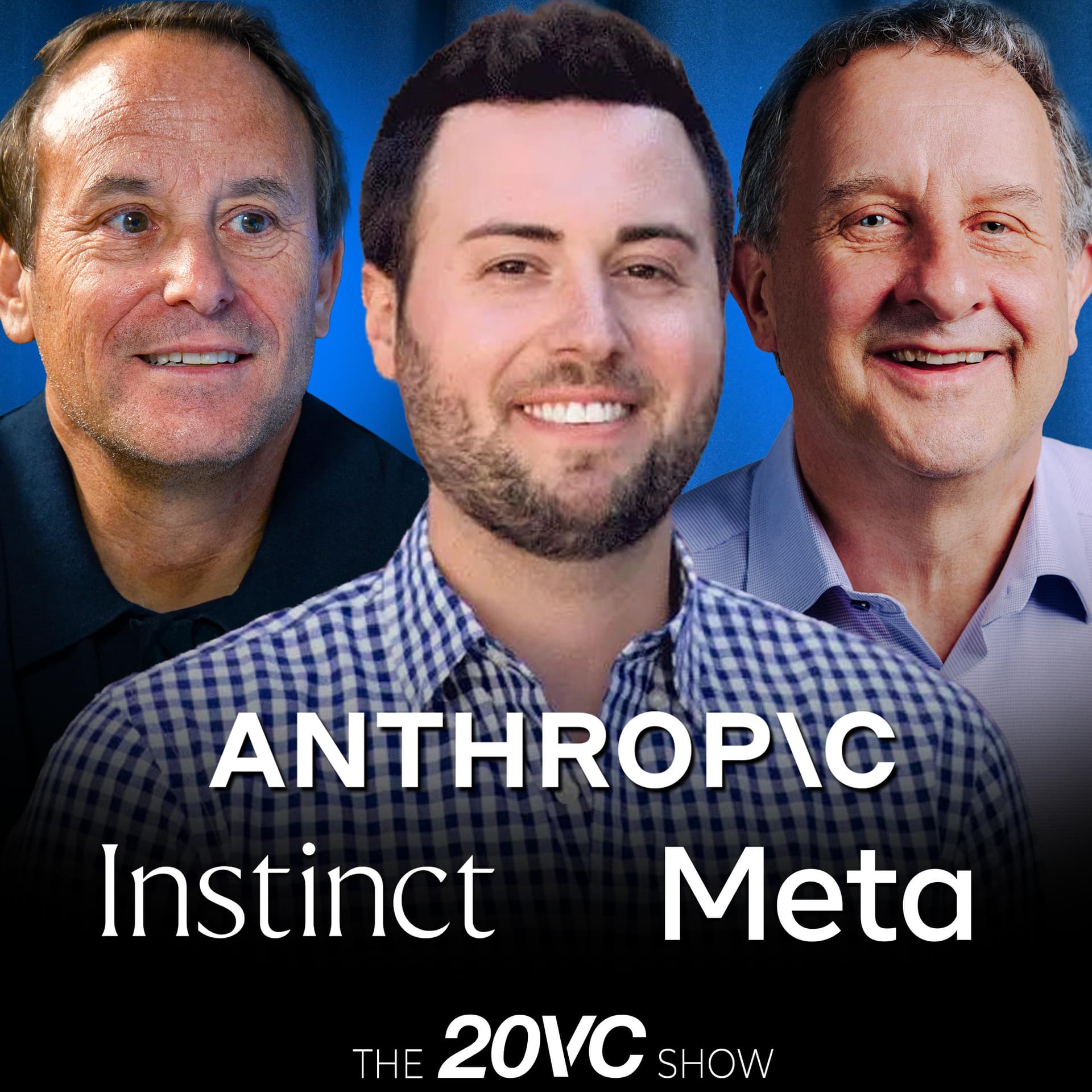
Podcast Summary: The Twenty Minute VC (20VC) Episode Featuring Doug Leone, Bill Ackman, Bill Gurley, and Orlando Bravo
Episode Title
20VC: Doug Leone, Bill Ackman, Bill Gurley, and Orlando Bravo on "Does Price Matter"; When to Pay Up vs When to Stay Disciplined, The Biggest Lessons on Price Discipline from 8 of the World's Best Investors
Episode Description
In this episode, host Harry Stebbings discusses the critical topic of pricing in venture capital, featuring insights from esteemed investors including Doug Leone (Sequoia Capital), Bill Ackman (Pershing Square Capital Management), Bill Gurley (Benchmark), Orlando Bravo (Thoma Bravo), and others. The conversation delves into when price sensitivity matters, the implications of market dynamics, and the lessons learned from price discipline.
---
Key Themes and Insights
The Importance of Price in Venture Capital
- Price Awareness: All investors agree that price matters, albeit in different contexts and stages of investing.
- Price Discipline: A recurring theme is the need for discipline in pricing, especially in a volatile market. Failure to maintain price discipline can lead to long-term detrimental effects on investments.
Frameworks for Assessing Price Sensitivity
- Doug Leone:
- Cautions against the "deploy, deploy, deploy" mentality, emphasizing that this can lead to trouble in a downturn.
- Advocates for being price-aware, especially when moving down the funnel from seed investing to later-stage investments.
- Marcelo Claure:
- Discusses the importance of understanding market size. In cases of large market opportunities (e.g., Alibaba, Facebook), price may be less critical initially.
- Emphasizes a disciplined approach where the distinction of when price matters is established prior to investment.
- Geoff Lewis:
- Suggests less price sensitivity for initial investments but stresses the need for diligence when doubling down on a company.
- Warns that significant differences in multiples (e.g., 100x vs. 150x) can be minimal if there's high conviction in the company's future.
- Bill Gurley:
- Highlights the reality of market-driven pricing and the dangers of trying to time the market.
- Encourages a long-term investment perspective rather than focusing solely on immediate pricing.
- Bill Ackman:
- Discusses risk assessment in pricing investments, using Universal Music as an example of assessing risks based on market position and capital structure.
- Cyan Banister:
- Warns of an impending reckoning in the market where inflated prices may lead to poor returns, stressing the need for price sensitivity.
- Orlando Bravo:
- Shares that while early-stage investments might have less data, the principles of investing (including price sensitivity) remain consistent across stages.
- David Tisch:
- Advocates for a portfolio-level understanding of price rather than strict deal-by-deal discipline, allowing for flexibility when investing in high-conviction companies.
---
Key Takeaways
- Price Sensitivity Varies by Stage: The discussion reveals that the importance of price varies significantly depending on the investment stage (seed vs. later rounds).
- Market Dynamics: Participants emphasize the impact of market conditions on pricing discipline, suggesting that economic cycles should guide investment strategies.
- Long-term Focus: Many investors highlight the importance of looking beyond immediate valuations and focusing on long-term growth potential.
- Mistakes in Price Judgements: Several investors recount past mistakes in price sensitivity that ultimately affected their investment outcomes, reinforcing the necessity of disciplined valuation practices.
---
Conclusion This episode of The Twenty Minute VC not only highlights the varying perspectives on price discipline among leading investors but also serves as a reminder of the importance of careful consideration in investment decisions. The insights provided encourage a balanced approach to pricing, emphasizing the need to remain diligent and disciplined in an ever-evolving market landscape.
For more information, visit [20VC](https://www.20vc.com).
Written by AI. May contain mistakes. Listen to the episode to check what was said.
Transcript
Automatic transcript. May contain errors.0:00Price matters. Price really matters. Everyone who says price doesn't matter, hasn't been around long enough. So, experience that it doesn't matter, Rich. The keys to determining in advance, if it's a company or price matters. It is important to be price aware on a portfolio basis, and I don't think on a deal -by -deal basis, price is a determinant of making a decision. One of the cool questions in venture capital and investing is when should I as an investor Pay up for an asset or company. When do I stretch and given the size of outcomes in venture? When does price matter and when does it not?
0:36Today we sit down with the best investors in the world, from Doug Leone, Bill Ackman, Orlando Bravo and more, to unpack price. When it matters, when you should pay up, and the right way to think about it as an investor today. But before we dive into the show's day, there's no shortage of helpful AI tools out there, but using the mean switching back and forth between yet another digital tool, what was supposed to simplify your workflow just made it way more complicated, unless of course you're in notion. In notion you can automate the tedious task, like summarising meeting notes or finding next steps, really freeing you up to do the deep work that we all want to do.
1:15And that's why notion is used by over 50 % of Fortune 500 companies and teams that use notion send less emails, else, cancel more meetings and reduce spending on tools. Try Notion for free when you go to Notion .com slash 20VC. And speaking of amazing products like Notion there, I'd like to talk to you about a company called Digis. There are full service AI accounting company, and if you're in need of an accountant or looking switch, there's no better solution than Digis. Starting at just $350 a month, which is less than half of what you'd pay a traditional or firm, digits is the most accurate, most efficient solution on the market.
1:54They've developed proprietary AI technology that automates tedious financial tasks and delivers reports of the actual close of the month, not two to three weeks later as always. And they also allow you to keep track of key metrics like revenue, burn, cash flow and runway in an incredible live dashboard. The best part of all of it, this is vetted and signed off by their in -house CPAs. If you're interested, visit digits .com -4 -20VC to claim your special office day that's digits .com -4 -20VC. I'm finally travelling in the expense and never associated with cost savings, but now you can reduce costs up to 30 % and actually reward your employees.
2:35How? Well, the van rewards your employees with personal travel credit every time they save their company money when booking business travel under company policy. Does that sound too good to be true? Or Navan is so confident you'll move to that game changing all in one travel corporate card and it spends Super app that they'll give you $250 in personal travel credit just for taking a quick demo. Check them out now at navan .com -4 -2 -0 -VC. You are now arrived at your destination. Let's change the question. In the world where the breasts of opportunities has never been as broad, if you look at the number of $1 billion market cap companies or $10 billion or $100 billion market cap companies and you compare 2005 to now, it's a drastic number to address a increase and furthermore the largest increase in the number of largest companies in percentages.
3:27Okay, so you have to recognize that the opportunities are getting broader, but at the same time you have to recognize competition as gotten greater and we face irrational type of competitors. And so it does become a pick -up business, meaning deploy deploy deploy. It's a pick -up business. The further you are to the funnel, seed investing in the top of the funnel, the broader you can be. At the end of the day, what is seed investing is a smart person in a generally interesting area. That's it. There's no need to overthink it, because they're going to zig -zag in ways that you can predict. As you move down the funnel, venture, grow, pre -IPO, the checkskit large, The valuations get a lot higher and the further down you come the better you have to get a picking them And if you go broad there you're gonna get stuck and so the further up you go the Looser you can be in your aperture because that's part of top of funnel That is the the mandate of top of funnel But as further down the funnel you go further than the river you go the better you have to get a picking them And if you pick them right you'll be rewarded at the end because of the large market cast being created But if your attitude is invest, invest, invest, price don't matter, don't matter, no matter.
4:41That is going to serve you well in a momentum driven economy and may serve you well for one fund cycle, maybe two fund cycles, as long as the momentum increases. You've got a public market adjustment after a 12 year bull market or soon to be a 14 year bull market and prices are just by 40%. You're in a world of hurt. So I think you've got to go during these times the further down the funnel you go the more Attached to quality you have to be if we flip over now to Jeff Lewis founder and managing partner at bedrock Jeff How do you think about and reflect on your own framework for price and so my framework on price is for point of entry for one's Initial investment less price sensitivity.
5:23I think is okay. I think if you're doing a smaller ticket you're getting into a company, you can be a little bit less price sensitive, where I think there's more potential to get tripped up as in this situation. When you're already high conviction, you already know the company, and you really want to double down, getting that pricing right is actually really important. But I will say that you're already paying 100x AR multiples, the difference between 100x AR multiple and 150x AR multiple, three -alodies, those are both insane. And so you have to have extremely high conviction And to have done your diligence and really believe this set of entrepreneurs this company is going to transcend and if you feel that way I would go for it at 300 versus 200 if you don't I would do zero What if we hand over now to Mochello, Clau, co -founder, bicycle capital, formerly of soft bank?
6:10The keys to determining in advance if it's a company where price matters or idosa for some companies with an immense opportunity Think of Alibaba, think of Facebook, think of Google, think of Amazon, whatever It was forthcoming in at almost any price because the market was so large because the size of the pie is so large that it really doesn't matter What you're paying at the beginning other times when the market size smaller or the port to smaller than you have to be a lot more Discipline so the most important part that we do is we make that distinction in advance I'll give you an example I passed on new bank because of the price at the beginning when we started the fun And it was a wrong decision because the opportunity was huge now.
6:48I made that mistake I said, oh my god, it's too expensive, but I didn't realize that the size of the pie was so large that it really didn't matter. Now, in other companies, we've done incredibly well because we've learned to make that distinction where price matters and where it doesn't. Can I ask where it doesn't matter? Do you still want to get involved? Because you can still make a lot of money where it does matter. You just know that it's kept at 5 to 10 billion because you're still getting in at 500. You can still see a 10x on your 100 million check, which is a billion back. Do you want to engage while price does matter?
7:19Yeah, that's 95 % of our investments. There's a 5 % where price doesn't matter. And those you cannot afford to make a mistake. Perfect example of that is Kabak in Mexico. The size of the used car market place in Latin America, especially in Mexico, is gigantic. So therefore, at the beginning, the environmental price was 200, 400 million. It really didn't matter because the size was so large. And we have 50 companies like that that we've done that. There are others where the size of the market is not that big. so we have to be a little more disciplined. That's what we do. Wouldn't it be great to hear Bill Gurley from Benchmark talk about how he thinks about price and reflects on his own price sensitivity today?
7:54Well, that's hand over to Bill Gurley. Well, part of why I was smiling so much when I said, okay, Boomer, Harry, is like we can sit here and complain or be worried about a reset or a bubble and it has absolutely no impact on what's happening out there day to day. And the problem is it's a highly distributed field of players. There are thousands and thousands of ECs and way more of that of entrepreneurs and we don't get to decide the market does that via supply and demand. And so you have to play the game on the field. I think I told you this on a previous call but it had this amazing meeting with Howard Marx where he asked me to explain the venture industry to him.
8:32And he afterwards he told me, well that sucks. I said, what's good he mean? What's wrong with it? He goes, you're gonna have resets all the time. There's no way to invest across the cycle. And I had seen supporting data out of Horsley Bridge, I believe, who's one of the largest fund funds, where if you looked at like a 20 year window that included the dot com boom, if you took out 96 to 99, like you took out the majority of the return. And so I think you have to invest as a venture capitalist over the cycle, like over a 20 or 30 year period. And the biggest mistake you could possibly make is trying to call the top.
9:06And so unfortunately, I think you know, have a little, I call it the Delma and Louise attitude, where you just push the gas pedal and run it to the end. Despite that, I fundamentally believe in conservatism and capital cost and all the things that you're talking about. I just don't know as events or capitalists that you have an alternative. There were several firms in Silicon Valley that in the 96 -time frame said, this is all crazy, this is too expensive and they pulled out and they missed the best three years in a 20 -year window over turn. It was in Shinkitra Boy, actually, said one of the different podcasts.
9:39The only firm to retain price discipline, the only firm, was Banshmock. How do you feel about that? I think he's misinterpreting price discipline for stage discipline. So we have notably state focus on early stage investing, whereas most people have moved to multi -stage. I think that makes the impression look like that your price discipline, because you're not doing the billion dollar rounds that are in the series C and D. But when we're competing for our great series A deal with a great founder, you know, we're paying market for sure. We'll mention the early stage point. The thing at Olive that guides us, which, you know, one of the things I learned at Best Marigas, that ownership still matters a lot.
10:15One of the things I hear a lot of people talking about, which is, is mixed up with price discipline, is how much you own. And I still think because there are so few buyers, the ownership really matters. So what we're doing is, even if we have to pay more, where we're optimizing for ownership and we'll continue to do that. And then the second way I think about this, if I need to be the highest priced bidder on the company, on the founder of CO, I'm doing something wrong. If I'm forced to pay the highest price, it means I'm not doing my job well. I'm not building a good relationship with the founder.
10:44I'm not adding enough value prior to him taking my capital and I'm certainly not accelerating the business into the next round. Whether by the way, it's reputation, so the next round funders will pay a higher price or just follow on and make sure there's capital there, or business development partners. And what they have been saying a lot recently, I prefer to optimize long -term reputation rather than optimizing on dollars. And I think that matters. So from one legendary bill to another legendary bill, we move from Bill Gully to Bill Ackman. So the way we think about it is we're willing to risk a certain amount of capital on any one investment.
11:19If you're investing in the world's most dominant music company, Universal Music, it has very little debt. it has a great market physician. You can predict the business with a very high degree of confidence, and you're buying it at a fair price. You can assess what's the chance of our losing 25 % of our investment over a several year holding period. And if the answer is very close to zero, which is our assessment, we can make an investment like that quite large. Let's say the most we could lose an R view on that, not daily market loss, but permanent impairment. What would have to happen for us to be permanently impaired to lose 25 % of our capital in that investment, something pretty extraordinary.
11:52That kind of investment can be 25 % of our assets because it's something where the risk of loss is very diminished by virtue of the capital structure of the company. Whereas you're buying an interest rate derivative, we bought an effect way to think about it is we bought a call option that paid off when two year interest rates went above 93 basis points and we had about an 18 month term and at the time we bought that instrument two year rates were at 12 basis points. So it's a bit like buying a call option on a stock. The stock is 12 and the strike price of the call option is 93. It looks massively out of the money.
12:22And there's a fixed time frame. So on something like that, the risk of loss is high because just to break even, the yield, if you will, has to go up 9x or something to get into the break even territory. And so something like that, we make quite small. It was less than it was about a point and a half of our little under 2 % of our capital. But could it have been 3%, could have been 4 % for sure. And so when I look back at something like that, I would have been willing to lose more, but we had not been an active participant in the interest rate derivatives market. So we're a for sure. What's interesting about those kind of bets is when you find a hedge that will protect you if rates rise, but it's also a really interesting investment on a standalone basis.
13:01You'd make it even if you didn't own an portfolio because you said, look, on a standalone basis, the payoff here is massive. If our views on rates kind of hold, you can make those larger than just a pure hedge. You don't want to spend too much money on insurance, otherwise it's too expensive to live in your home. You don't want to the payoff on your insurance policy. If the storm comes, you collect 10 million for your $2 million home. You can't even do that today, but let's assume you can. If you knew that there was a storm coming, the insurance company was still going to sell you that homeowner's policy at the same price as the Redo Storm, you should overensure.
13:29And so I think our only mistake there is we could have overensured Bitbore, because we knew a storm was coming. I want to move to a different part of the funding environment now to insight and devon Parac at Insight Pultonness. When we do our analysis of the deals that worked, the deals that didn't work, we often find is when we did something that we thought was cheap, those didn't work particularly well either. And I think that where we've generally had misses, they've been more because we said no on valuation and the company actually executed incredibly well that a very, very large market. So I'm not going to sit here and tell you that every company that raises money at a one and a half billion dollar valuation of four million of ARR is going to work.
14:04But you're going to have a subset that are definitely going to work. Our job is to make sure that we're getting in the right ones and the ones that we're paying up for or the ones where our long -term growth underwriting is correct. And we won't always be correct, obviously. But we need to be correct enough. Let's stay in the world of latest stage financing, and I want to move to one of the biggest general Atlantic and their president, Martin Eskibari. Price matters, especially in the later stages. Everyone who says price doesn't matter has been around long enough, so I've experienced that it doesn't matter which.
14:31In negotiating price with an entrepreneur, it is often that the investor has a lot more information than the entrepreneur. And it is often that the investor has a lot more experience negotiating terms than entrepreneur. One of the things I have done as a beginning of time is I believe in paying the fair price and I start with the fair price and I don't really move very much to the fair price And if it works, it doesn't work. The fair price is the price that allows me to get at least a 25 % return in five years Based on a p multiple exit by the time I think and I backtracking to what I can afford to pay today on a base case Or something to scenario is because it's a weighted average base case and that's the price I'm willing to pay and it's hard Sometimes to negotiate and sometimes it's not hard, but I think that's the point at which a partnership starts and the partnership with the investor and then topreneur, she started a fair position.
15:16If we move from one funding powerhouse in the form of General Atlantic to another in the form of Toma Bravo, I'd love to hear your thoughts Orlando Bravo on how you think about price today. Price matters. Price really matters. It's interesting because many of the principles, even if you're doing a seed stage and you're doing a buyout, many of the investment principles are the same. You may have in the early stage less data, of course, than you have in terms of being able to see trend lines and being able to see put your equity check. It's small, so you're diversifying the risk. In a buyout, you could be writing a $10 billion equity check with your partners and you can not get that wrong.
15:55That would be really fatal, making a mistake on something that big, which is an interesting disconnect sometimes between the technology world and technology executives and buyout. The risks that company can take with an investment of that size and the chances they can take on different things and experimenting in different ways are very different than when somebody's invested 10 million and there could be some behind it and the expectations are different as well. Let's move back to the early stages of venture to earlier maybe seed series A, B and we're going to talk to Justin Fischer and Wolfson now at 137 so Justin how do you reflect on your own price sensitivity and relationship to price today.
16:37Yeah, I think this is an interesting question because my answer is oftentimes price doesn't matter unless you're off by 5x in which case then price is the only thing that matters. You think about it in two ways, right? One, if you're wrong about the company it goes to zero, the price doesn't matter. So it only matters when things go well. And so then the question is can you invest at prices that ultimately hit your cost of capital because as venture investors, if we don't put up returns, eventually all of our investors will fire us. So it doesn't make any sense to insanely overpay for things. Because we're in venture and because the companies that we're investing are high -growth companies, there's a lot of uncertainty.
17:11It's very hard to have exact precision as to what evaluation should be. So you know, whatever, if you're off by 20%, heck, maybe you're off by 30%, like you can sort of overcome that with a high growth company. On the other hand, if you look at companies that are just overpriced by a factor of 10, then it's very hard to make money over almost any period of time. That's just a very hard thing to overcome. Only is especially when you're off by that magnitude, I think you do. This leads to the discussion on ownership and you do. A lot of these things are very centered around ownership. But often, you know, the more traditional I was seeing, kind of a relic of that with new firms.
17:44But the more traditional deathly with what was 20 now, more 15. Before they you've sent in meaning, before you've said to other people, in terms of like concentration of capital on my ownership, these you should care more about that cost of capital and the less about their ownership percentage. Why do you think that is when so much of the industry is predicated on ownership percentage? I think a lot of this has to do with heuristics that were created, you know, a long time ago. They make sense, but only when you view them in the context for which they were made. You know, look back at the Facebook investment that Peter did, right?
18:15So a lot of firms looked at that and a lot of people just decided that they were unwilling to do it if they couldn't get their 20 % right? And then the question is, where does this magical 20 % number come from? And what it effectively comes from is people are thinking about potential exit values, fun sizes, and same. I need to own a certain percentage of a company based on some assumption of exit values to return my funds. So that way, if I have a couple of winners, I can generate fun -level returns that are attractive to my investors. And like that all makes sense. And then when you run that math, you sort of edit out the something that approximately 20%.
18:45The reason why it's important to not just use heuristics, but to understand where they came from is, you know, what happened with Facebook is Peter ended up investing half a million dollars for like 10 % of the company. Well, who cares if you only have 10 % of the company when the company ends up being a hundred billion dollar IPF? Whether that you own 10 or 20, well, if your options were, you know, 10 or zero, you pick 10. And so focusing strictly on ownership percentage, really I think blinds people to opportunities that may be much larger and they just can't get over the hump from the profits perspective to make those investments.
19:16Let's go even earlier. Let's go to one of the best angel investors is in Silicon Valley history and now running long journey ventures. And let's join Sihan, Bannister, and discuss how she thinks about price today. Well, what's going to happen is there's going to be a reckoning and there always is one market will work itself out where people look at their returns seven, eight years from now and they're not going to be great. I think that will create some discipline in the market. So one of the things I love about my partner, Leigh Jacobs, is he's incredibly disciplined. I can become irrationally excited about a deal, but the price can be out of whack.
19:47And then you have to sort of did the economics, okay? And you just say, like, okay, well, how much dilution am I going to take on? Am I actually going to do my prerada? How does this play out of this company becomes a billion dollars, 10 billion dollars, et cetera? Because everything has a ultimate in point value. It's not infinite. And I think some people think that things are infinite, but if you actually count how many companies in the last 10 years have been worth over 10 billion dollars, it's very few, right? So to be able to get those kind of returns, you've got to be more price sensitive.
20:13And the other thing is that I think that people have FOMO, they don't want to miss the deal of the century. And the deal of the century may look good on the outside because you see only valuations being posted. But what you don't see are the returns that people are making on those valuations. Somebody pointed out the other day and it was very wise, which is a company that exits for $250 million that you have better economics on is a better return profile than a company that exits for a billion dollars that you don't. So if you're in the returns business, you should definitely care about these things and that's the business I'm in.
20:42And so I I think that at Long Journey, we're often the first check -in. We have lead deals now that we're excited about, and we have to get our target ownership. People who are not conscientious of this, what's going to happen is at the end of the road, LPs at the end of the day, look at returns, and then the fund managers that have the best returns will continue and the ones that don't will probably have to hang up their hat. We're jumping around the funding star's day, but now we're going to join Altimata and they're found a braggess on how he reviews and reflects on his own relationship to price.
21:10Listen, if somebody comes to me and they want me to invest in a company that is at a price higher, then I in my own underwriting and all my research, right, assuming the things go well, I can't get to that price that I'm not investing. That is just momentum. What has happened over the last 24 months has been a great disservice to founders and is the worst example I think of lack of discipline and listen, we get caught up in it too. There is an entire body of work in behavioral economics around the lemming effect, groupthink, etc. And boy, was this industry caught up in it over the course of the last 12 to 18 months.
21:48Dave Tish, we always have slightly different views around portfolio construction and pricing. How do you think about price and price and sensitivity stay both at a company level and then at a portfolio level? It is important to be price aware on a portfolio basis and I don't think on a deal -by -deal basis price is a determinant of making a decision. Pretty simple. If you love a company and you want to invest and the deal is what the deal is, you make a decision to invest or not invest. I don't control price. The market controls price. Now on a portfolio basis, right, if I look at a fund and I say our entry point is up 3x from our last fund, that's a problem.
22:28So I need to have some understanding of the portfolio price, but I don't need to have rigid discipline on a deal price. I have a hundred plus million dollars that I manage. I know what returns I have to make in order to succeed without much money. The founder doesn't need to care about that. If they build a great company, I can figure out the map. I promise you, if we invest in unique outlier companies, are math works. Every VCs math works if you fund great companies. And so it's not about this like ownership threshold. If anybody owned 1 % of Facebook, 1 % Uber, 0 .1 % of Coinbase. Your math works.
23:05Your math works really well. And it scales. Let's do one more. So let's hear from David George who runs Andrewsons Growth Fund. David, how do you think about price and price sensitivity today? I wrote a piece about this called Win Entry Multiple's Don't Matter. I'll just talk to you about our process and then I can address the valuation point. So we first start, we assess the company, we assess the market, we assess, you know, founder, all independent evaluation. If those check out, then we spend a lot of time on valuation and scenarios and making sure that we see our way to to target returns.
23:36So the best thing that we can do is invest in great companies that are growing very fast because those afford you more degrees of freedom on valuation. They're the ones that are more likely to deliver upside scenarios. So one of the frameworks that we use and talk about a lot and it's, you know, this is relevant for evaluation because it speaks to the flavor of companies that we tend to match with is you know we look for what we call our culinary Glen Ross market structures so you know the famous movie you know we can't get this wrong like this is like independent evaluation we just absolutely can't get this this piece wrong so what that means is there's a scenario have you seen the movie?
Read the full transcript
24:10I haven't so explain it for me. Oh okay all right it's sort of like a boiler room sales old school movie. So there's a scene where Alec Baldwin is presenting to his team their monthly sales competition. It's his famous line where he says, okay, here's the prizes. First place gets a Cadillac. Second place gets a set of steak knives and third place gets fired. And so we actually think most many or most tech markets play out in market cabin a similar way. Where the leader captures the vast majority of the market cap creation. You know, if you're not the leader, it's going to be a challenge situation.
24:43So we look for those kinds of market structures. You know, this is very well known and well covered in, you know, consumer land companies like Google and Facebook that have clear network effects. But surprisingly, you can see it actually in a lot of industries that don't have network effects, but play out in a similar way. So in B2B, you know, Salesforce, Workday, ServiceNow, they command almost all the market cap in their respective markets. So the way we approach the valuation question is, you know, if we can get that point right and the company wants to work with us. You know more often than not we can reach an agreement on valuation now You know the biggest point is you know in a market where valuations are higher than they used to be you have to think long -term So we think in five to seven -year terms and try not to worry if we're off by a year or two on the valuation like that's a risk That I'm willing to take if we underwrite something five years and it takes us seven years.
25:31I'm okay with that But the last piece is just tech markets are bigger than ever and there's going to be a lot of market cap creation. And so if we're long term oriented enough, we should be okay. You know, tech's about a quarter of US market cap and that's just going to grow fast. So I need your help. I want your feedback on how we can make the show better for you. If you liked compilation episodes like this, let me know. If you didn't, let me know. I want your feedback to make it as good as possible for you. But before we leave you today, there's no shortage of helpful AI tools out there. but using the mean switching back and forth between yet another digital tool.
26:07What was supposed to simplify your workflow just made it way more complicated. Unless of course you're in notion. In notion you can automate the tedious tasks like summarizing meeting notes or finding next steps really freeing you up to do the deep work that we all want to do. And that's why notion is used by over 50 % 50 % of Fortune 500 companies and teams that use notion send less emails, us, cancel more meetings and reduce spending on tools. Try Notion for free when you go to Notion .com slash 20VC. And speaking of amazing products like Notion there, I'd like to talk to you about a company called Digis.
26:44They're a full service AI accounting company, and if you're in need of an accountant or looking switch, there's no better solution than Digis. Starting at just $350 a month, which is less than half of what you'd pay a traditional or firm, digits is the most accurate, most efficient solution on the market. They've developed proprietary AI technology that automates tedious financial tasks and delivers reports of the actual close of the month, not two to three weeks later as always. And they also allow you to keep track of key metrics like revenue, burn, cash flow and runway in an incredible live dashboard, the best part of all of it.
27:20This is Vetted and signed off by their in -house CPAs. If you're interested, visit digits .com fordslash20vc to claim your special office day, that's digits .com fordslash20vc. I'm finally traveling in these bents and never associated with cost savings, but now you can reduce costs up to 30 % and actually reward your employees. How? Well, the van rewards your employees with personal travel credit every time they save their company money when booking business travel under company policy. Does that sound too good to be true? Or Navan is so confident you'll move to their game changing all in one travel corporate card and it spends Super app that they'll give you $250 in personal travel credit just for taking a quick demo.
28:05Check them out now at navan .com forward slash 20VC. Now stay tuned for an incredible episode this coming Monday with Alex Towsie get light speed and Thomas CEO at Vinted, one of the fastest growing companies in Europe and it's an Awesome combination with the investor and founder blend, so stay tuned for that on Monday.
From the publisher
Doug Leone is the Global Managing Partner @ Sequoia Capital, one of the world’s most renowned and successful venture firms with a portfolio including the likes of Google, Airbnb, Whatsapp, Stripe, Zoom and many more.
Marcelo Claure is the Founder & CEO of Claure Group, a multi-billion-dollar global investment firm. He is the Executive Chairman and Managing Partner of Bicycle Capital, a $500M Latin America-focused growth equity fund, and was appointed Chairman in Latin America of SHEIN, the global #1 on-demand fashion company in the world. Claure was also the CEO of SoftBank Group International where he launched SoftBank’s $8B Latin America Funds, and had direct oversight for SoftBank’s operating companies.
Geoff Lewis is a Founder and Managing Partner of Bedrock, one of the breakout and new venture firms of the last decade, famously in search of narrative violations. He serves or has served on the Board of Directors for companies including Lyft (NASDAQ: LYFT), Nubank (NYSE: NU), Epirus, and Vercel.
Bill Ackman is the CEO of Pershing Square Capital Management, L.P., an SEC-registered investment adviser founded in 2003. Pershing Square is a concentrated research-intensive fundamental value investor in long and occasionally short investments in the public markets.
Martín Escobari is Co-President, Managing Director and Head of General Atlantic’s business in Latin America. Martín is Chairman of the firm’s Investment Committee and also serves on the Management and Portfolio Committees.
Orlando Bravo is a Founder and Managing Partner of Thoma Bravo. He led Thoma Bravo’s early entry into software buyouts and built the firm into one of the top private equity firms in the world.
In Today's Episode on Price Sensitivity We Discuss:
- Doug Leone: Why the attitude of "deploy, deploy, deploy will get so many in trouble"?
- Marcelo Claure: How to know when price matters and when it does not?
- Geoff Lewis: What is the right framework to assess price at an early stage?
- David Tisch: How does the importance of price change vis a vis company vs portfolio?
- Orlando Bravo: What have been Thoma Bravo's biggest lessons on price?
- Cyan Banister: Why does Cyan believe there will be a reckoning?