
In short
Podcast Notes: The Twenty Minute VC (20VC)
Episode Title
20VC Exclusive: Keith Rabois on Rejoining Khosla Ventures
Host
Harry Stebbings
Guest
Keith Rabois - Managing Director at Khosla Ventures
Episode Summary In this episode, Keith Rabois discusses his decision to rejoin Khosla Ventures after a successful five-year tenure at Founders Fund. He shares insights on the differences between the two firms, his investment philosophy, and what it takes to succeed in venture capital in 2024.
---
Key Topics Discussed
- The Decision to Rejoin Khosla Ventures
- Motivation: Rabois missed the rigorous partner meetings and collaborative environment at Khosla Ventures.
- Personal Connections: He maintained close relationships with former colleagues at Khosla while at Founders Fund and felt a strong pull to return.
- Impact on Delian: Keith addresses how his partner Delian responded to the news of his return to Khosla.
- Comparing Two Great Firms: Founders Fund vs. Khosla Ventures
- Investing Style: Discussed the different approaches to investment decisions at both firms.
- Price Discipline: Khosla is noted for its price discipline, while Founders Fund is considered more flexible.
- Mistakes: Rabois shared personal mistakes related to pricing decisions and their impact on his investment strategies.
- Winning in Venture Capital in 2024
- Lessons on Liquidity: Timing for selling positions is crucial.
- Capital Planning: The effective use of reserves is essential for supporting companies throughout their lifecycle.
- Competitive Landscape: Not winning some deals can indicate that an investor is not targeting the right opportunities.
- The Best Places to Invest
- Seed Investments: Rabois believes seed rounds offer the best risk/reward profile currently.
- Series A Concerns: He is skeptical about investing in Series A due to increased competition.
- Market Predictions: Discusses the potential for growth investing and the M&A market in 2024.
- AMA (Ask Me Anything) with Keith Rabois
- Starting His Own Fund: He expresses hesitance about starting his own fund despite prior considerations.
- Lessons from Industry Leaders: Shares key takeaways from working with Vinod Khosla and Peter Thiel.
- Bitcoin Perspective: Rabois shares a nuanced view of Bitcoin's future based on geopolitical stability.
---
Key Takeaways
- Strategic Partnerships: The culture and decision-making processes within investment firms significantly influence outcomes.
- Learning from Mistakes: Rabois emphasizes the importance of understanding past investment missteps to inform future decisions.
- Market Awareness: Continuous assessment of market conditions is crucial for successful investment strategies.
- Impact of Personal Connections: Relationships within the venture community can play a pivotal role in investment opportunities and firm dynamics.
---
Closing Thoughts Keith Rabois's insights shed light on the complexities of venture capital, especially in the current economic landscape. His return to Khosla Ventures and reflections on his experiences at Founders Fund provide valuable lessons for both new and seasoned investors in navigating the challenges of the industry.
---
For more information, visit [The Twenty Minute VC](https://www.20vc.com).
Written by AI. May contain mistakes. Listen to the episode to check what was said.
Transcript
Automatic transcript. May contain errors.0:00There's certain things about KV that led to that successful track record in KV45 and 6 that I kind of miss and then there's several personal things that just were compelling to me as a human, you know, aside from my professional aspirations and goals and ambitions. And so the combination made a lot of sense. This is 20VC with me Harry Stebings and this Wednesday we had some of the biggest ventures in a long time. Keith Roboy, legendary Founders fund investor, who'd back the lights of Stripe, Fair, Ramp and others was leaving Founders Fund to rejoin Vinor Kostler and Kostler Ventures. In this exclusive, we dig into the motivation behind the move, the plans ahead for both teeth and Kostler with their $3 billion in new funds and then dig into some of his biggest lessons, investing from now over 11 years as a professional investor.
0:47But before we dive into the show's day, there's no shortage of helpful AI tools out there, but using the mean switching back and forth between yet another digital tool, what was supposed to simplify your workflow just made it way more complicated, unless of course you're in Notion. In Notion you can automate the tedious task, like summarising meeting notes or finding next steps, really freeing you up to do the deep work that we all want to do. And that's why Notion is used by over 50 % 50 % of Fortune 500 companies and teams that use Notion, send less emails, cancel more meetings and reduce spending on tools.
1:24Try Notion for free when you go to Notion .com slash 20VC. And speaking of amazing products like Notion there, I'd like to talk to you about a company called Digis. There are full service AI accounting company, and if you're in need of an accountant or looking switch, there's no better solution than Digis. Starting at just $350 a month, which is less than half of what you'd pay a traditional or firm, digits is the most accurate, most efficient solution on the market. They've developed proprietary AI technology that automates tedious financial tasks and delivers reports of the actual close of the month, not two to three weeks later as always.
2:00And they also allow you to keep track of key metrics like revenue, burn, cash flow and runway in an incredible live dashboard, the best part of all of it. This is Vetted and signed off by their in -house CPAs. If you're interested, visit digits .com fordslash20vc to claim your special offer today. That's digits .com fordslash20vc. I'm finally travel and expense are never associated with cost savings, but now you can reduce costs up to 30 % and actually reward your employees. How? Well, the van rewards your employees with personal travel credit every time they save their company money when booking business travel under company policy.
2:40Does that sound too good to be true? or Navan is so confident you'll move to their game changing all in one travel corporate card and expend Super App that they'll give you $250 in personal travel credit just for taking a quick demo, check them out now at navan .com -4 -2 -0 -VC. Keith, I am so excited for this. My word, you decided to save some of the biggest VC news for the start of the year, so thank you so much for joining me stay first. It's a pleasure to be with you again. Talk to me Keith, moving back to Coastler. I guess the first question is, why did you decide to make the move back from Founders Fund to Coastler again?
3:21Well, you know, in some ways. So it's been six years just so everybody has some content. It's been six years since 2013, 2019, as an NDA Coastler Ventures. And we had a really successful run together. KD4, KD5, and KD6 were the funds I was partnering. And we produced really stellar returns working as a collaboration team between Benode, Samir, cool David Wyden and Sven. I never really laughed in some senses because after I left a statement really significant contact with the node Samir and David particularly, we co -invested almost every quarter together. So Samir invested in lead -to -financing round in the company I run as CEO, named OpenStore.
3:59Samir led the series A for a company that you're familiar with, Traba. We worked together there. I led a growth round for one of Samir's favorite companies called Ultima, Ultima Genomics. Semeer also led an investment round in Varda, Dellions Company. I worked very closely with David Wyden and a bunch of companies, including Fair, Bungaloo. So I felt like I was actually seeing more of Semeer and David than I did when I was 10kV for six years in the last five years at Gouwers Fund. Basically, when I was at KV, I would see them every Monday for hours at a time. But I didn't really see them Tuesday, Wednesday, Thursday, Friday, so we were all going meeting with founders doing one -on -one with others, 10 -8 board meetings, pitches, etc.
4:39Whereas with the last five years, actually I was working with Samira David, basically every single week. The bridging and bonding got stronger over the last five years, and in the six years we were just debating at partner meetings. The recombination made a lot of sense. I even spoke at the KVCO Summit in the last May. I've stayed in quite close contact with all the partners. At KVI, I even helped recruit Nikita originally to KV, so I'm extremely excited about to work with them. You said there about the things that you missed that were in Aaron and KV4, KV5 and KV6, and then the past, not if we just take those two.
5:13What was it that you missed that was kind of central to the success of those funds that you wanted to reach out to? We had very extensive partner meetings every Monday for hours at a time, and we vigorously debated new investments, as well as the impact and the potential upside of the current portfolio. and these were very unstructured and very good receivables, particularly with Venode and severe David and sometimes spent. And I felt that they made me a sharper investor, a smarter investor, even those ultimately my decision on what to do with companies that I was championing or the companies that I was on the board of.
5:50They made my brain work better by listening to them. And occasionally I made the mistake I'm over listening, but it was always my mistake. I was doing my job better listening to stereo surround the notes perspectives mirrors perspective David's perspective I even carried it with me to have that in my brain for the first year where I can cure their voices In a specimen I hear David whispering about the financial calculation of the contribution margin and here's some you're talking about certain things about the founder They would definitely think about the notes talking about the option value of side and the team and we need to get more data science talents in the company.
6:26So I was like wandering around the voices of my head, but I actually think that made me a better investor inside this app. And then the personal side is, you know, KV is significantly branded successfully in the deep tech hardcore technology and fast thingspace. And even though that's not my forte and it's out my comparative advantage in life, I felt I was learning something new about the world every week. So for example, over six years of education, I learned a lot about robotics, I learned a lot about the Fundamentals of AI are there about liquid biopsided to tech cancer. So I've learned so much and I felt like I was becoming broader as a person.
7:01Even if it didn't really translate to the day -to -day investment decisions I was making, I really missed that. It was like getting a free education in the world of technology every week, learning by going to further meetings. And so that was like a free benefit of doing my job. You mentioned that the Monday partner meetings are in the rigorous debate. That's what kind of we think of with venture partnership discussions. That's not the way that Founders Fund's structure is it? No. Founders Fund, especially when I joined, was very much people running their own investment strategies, think of it as like a PM, running their own investment strategies, and there's a way of thinking and getting a certain number of critical assets and votes to support an investment of different thresholds of dollar figures.
7:42But it really wasn't designed for the most part for that kind of analytical rigor. But KV had the conventional paradigmatic old school partner meetings, things every week, they were quite substantive, quite dense. Even the preparation for those meetings on Sunday, Sunday for me used to be when I was operating executive and let's say square or LinkedIn. Sunday would be the day that I would kind of do brainstorming and strategy, plum, I'd be able to large notebook and kind of redesign or charge and things like that. Sunday at KB was a full, dense day of writing substantive memo emails, reading other people's daxed and analysis.
8:20I didn't have time to let my brain wander at all on Sundays because there was so much preparation that there was going into each Monday partner meeting. You also didn't have time to do barries, my friend. I don't know, I definitely did barries. Don't worry about that. Can I also, I obviously spoke to Vinod before this and he said in particular, no one really runs the firm partners work closely together. Each MD can decide to make an investment even if the others disagree. How do you think about listening to people at KV without letting it impact your mindset and decision making process negatively to the extent where you could say no to something that could be great?
8:56The way it really works in the way the rubber kind of beats the road is sort of like a certain amount of social capital. So I have a certain amount of social capital within the firm. If I want to do something that's very nonstandard or very controversial or not expected, I'm kind of learning and consuming some social capital. Now they make the right call that Now, it's paid back with interest and you know the next time I want to make a cultural original decision, it's actually even easier. But the notes right in the sense of there were times at KD where I wanted to do x, y, or z in my six years there and there was some critical feedback and maybe I listened to it, but there's always my decision to listen to it.
9:35So there are times that maybe I regret being like actually listening to it. That I should have had more confidence and more conviction. And then there's times actually countertutively and people sometimes forget this. There are times that I would actually champion an investment, a champion, a company. And the reaction afterwards would not be critical of the more enthusiastic than even I was. The reaction in the room was like, do not lose this investment. It doesn't matter if you have to invest in a higher valuation than we normally typically would. This is actually really good. So sometimes it would actually cut the other way.
10:04It wasn't just like critical, like what the hell are you thinking? It was like, oh no, this one's really special. You're right and double down right now. Like sign that service, today. I remember when we were considering the first institutional investment in Max Luchin's company at a firm. And their uniform reaction was Keith, make this happen. And then so then the only question was, Max and I had to work out like, what a fair evaluation would be. But the reaction was like, oh, or when I brought in an open door, we're in committee open door. And Eric came in to present, people were familiar, and people knew that I wanted an incubator.
10:37So there was, you know, it's a false kind of like leaning in. But afterwards, everybody was like, this is a no -brainer. We absolutely should do this. Close this. Is there an example where they persuaded you not to and you regress it? I knew that I was on the edge of consensus and I was gonna burn a lot of social capital. Mostly on, should I increase the valuation of a particular offer? So it wasn't like should we proceed or not? It was like these terms feel rich, you know, and make sure the risk rewards there. So for example, I can think of two or three where I knew that I was at the edge of the valuation range of what coastal ventures would typically accept.
11:19And there was enough criticism and concerns about the company that really was taking a lot of liberties to go further. And once a while I did decide to pay, you know, whatever the valuation was required. And once a while I went out one of the examples and probably you know the one I lose most sleep about You know after almost 11 years being in the sea is Rickling so Rickling came in Parker came in and we gave a trip sheet You know obviously controversial time for the seed and Gary Tannenish was also gave a trip sheet and at the time There was about a $10 billion gap. I probably offered five to 25 plus or minus from memory and I think Gary was at like 35 and Parker really wanted me to increase the offer and I felt like there was just an consensus to get the offer out that if I really moved the needle that I might be burning a lot more capital than I thought I should and obviously it turned out to be an unlimited disaster for me fortunately it's worked out really well for Parker so you know he probably doesn't care very much and then there was there's a moment also where I had already like walked in a term sheet to read this series Seed for Robin Hood, Chile at 20 post, which was pretty expensive, but they came back and really wanted me to join the board in this seed round.
12:37And this was in maybe my second year at KV. So I asked in a boat and some year at the board reading, can I join the board? And the uniform reaction was like, no way. You can't be joining with all these boards on seed, like that's just what work. So we decided to part ways very family, you know, I just said I can't trade the board and they run up finding other investors. Obviously another sort of omitted disaster, but you know, they were right for the most part that you cannot be an institutional investor in a multi -stage fund, costly joining boards of seed. So you'd be very judicious. So the feed dock wasn't wrong, it was just wrong as applied to that company.
13:12It was totally up to me I would have joined the board. Interesting enough, when the same thing happened four years later, I met another company that I had strong conviction about and I was going to lead the seed. There's a company called Thair. Thair came back and said, Max said to me, I tell him, I go founders and we'll say yes, you have to join the board. And having learned and been burned by the Robin Hood experience, I never really told my partners that I was going to join the board. I just said yes, they're probably happy with me now, but they probably kept that a little quiet for about a year.
13:43So I want to unpack a couple of elements that you said about price sensitivity, especially she was rippling 35 versus 25, which phone would you say is more price sensitive? KV or Founders Fund? And just pulls, is it even good to be price sensitive? Historically, I'd say KV has been more price discipline than Founders Fund, but I think Founders Fund is actually more price sensitive and more discipline than most people give him a credit for. Like I actually noticed this when I joined, the discipline internally was much stronger than I thought from afar in watching the firm. KB has historically been maybe the most price disciplined of any large institutional fund.
14:22I think they have relaxed out of it. When I was at Founders Fund, I actually saw some terms used to KB have said that I was looking back and saying, wow, where the hell is that? You've got a problem like that's up there, and it wouldn't have been by date. But I think of the major firms, maybe KB and Founders Fund, maybe the two most disciplined. I think Sequoia has also historically been very priced disciplined to the credit. they've also relaxed out a bit. I think very top down consciously, but I think historically, those three might be the most price -discipline. Interestingly enough, the more important topic is what should you be, should you care how much care, etc.
14:59And I still remember this episode you recorded with Peter Fetton when Peter said, price is always a trap. You know, this was early in my career when maybe it wouldn't be recorded before I started this VC, but I listened to it. And I didn't totally grok it when I listened to that episode that you recorded with Peter. Over the arc of my 11 years, the wisdom behind Peter is insight, is stubborn even more and more, especially for what I do, which is primarily seed and series A. When Peter when Fendon was saying the price is always a trap, that's really an excuse for not having commissioner. That's basically translated your all episode with him.
15:39The third version of that is he's mostly right that when I'm seed round or a series A round when you're walking away at price, it is a bit of lack of conviction and you really should be looking at the mirror and say, why don't I have conviction? Because if you make the right call at seed, you're going to wind up in a pretty good place of that company is iconic. And even at A, if you make the right call at almost any price, you're going to be pretty happy. Here's B, that's not true. A serious B, you can pick a good company and invest in it, but you made a lot of price. The risk reward is totally out of whack.
16:16You may not even make real money, but I'm primarily leading C, the first institutional around in companies is, you know, my goal in life is to be the first institutional ambassador. So I paid a relatively high price for fair, like 20 million posts was actually high, or anything like 22. But that ended with back and forth since then. I totally agree with you, listen, if it all goes planned, you won't regret it. But when you actually look back at portfolios and see average entry price being 12 and a half, and then five years later, average entry price being 25 or 30, you've just halved your returns.
16:48Well, yes. The people have forgotten this. One thing that Peter Till has really disciplined about is he totally understands this, these dynamics really well, and is always pointing this out internally, sometimes externally, that your returns are not going to be the same as what you expect when that's what's going on in the Macroe environment. And so you can't follow the same strategy with a different kind of entry price on average at all. But you know, once in a while, no one went to Stray. So when I invested in a ramp in the Seed Ground, which obviously proven to be a very good investment, the price on that was extraordinarily high.
17:23First Seed Ground. What was the price? Probably, it might have been 40 posts, but it was more than 30. Wow, I respectfully know I remember Eric did power with before but like it wasn't a huge a unicorn founder. No you know in fact it was quite controversial I sometimes think that it might have been the most courageous investment I've made as a VC because everybody was so addicted to this breast you know nonsense and you know typically not the best strategy to fast follow you know another startup that has traction but I knew I knew that space cold I knew exactly what Brexit is going to do wrong and I knew that if we could find the right founders we could absolutely dominate and that's proven to be the case.
18:03Rap is absolutely going to be the winner probably will be two, three, four, five, ten times more valuable. So when you invest at seed state do you annual concern about price? Do you ask yourself do I really have enough conviction? I'm trying to do that. I really try to apply Peter Fetton's sort of image now much more frequently. I do think about the capitalization over time. You do have to take into account Now, what kind of company is this? How much capital is it going to require to achieve certain milestones? And it depends on what the company is aspiring to do. Because if your capitalization is going to require so much and your first entry price is so high that company may not be set up for success and that may decrease the overall probability of being successful, which is a material problem.
18:48So it's certain variables. Like there may be a step functions that you have to achieve as opposed to a continuous curve of progress and those step -bunker ones that you slightly miss in your valuation and your crisis too high, that company's debt. And that's a real problem. You said that about kind of dilution concerns and sensitivity, the way you protect against that is obviously by continuing to invest. KV obviously have continuous funds now. We'll get into the separate structures. I don't like reserves, they keep, and I don't like reserves and please educate me because it's trash and investing.
19:20If I had done reserves, I would have put money into Hopin Clubhouse, that would not have been a good set of event. So how do you think about that and bluntly proactively allocating ahead of time, especially when you don't know what's coming? There's like three or four things in nature that nobody does super well, honestly. It's much more art and science. How to do reserves is one of those topics. At K2D there is a more discipline, let's say, approach to reserves. It doesn't mean better, by the way. It is more top down like what are our reserves? How much are we going to allocate to company XY and Z?
19:55How much do we have? Do we shape this one, increase this one, etc? Whereas at Thouder's Fund, there's no explicitly a policy of not reserving. And every investment decision is on an ad hoc case by case basis. And there's strong merits to add, actually. Even though most of my investment style, maybe closer to KV, I think I'm closer to the Thouder's Fund style of you probably better than me. better off not resurvey and then making ad hoc decisions based upon the quality of that particular opportunity, which includes who's the investor, what's the structure of the company, what would you believe about the founder, what would you learn about the founders, abilities and traits, and then what's the valuation?
20:35Do you worry that with the second model, being found as funds model, when found to say, hey, what's your approach to reinvesting? And you say, it's a dog fight for it, you've got to prove yourself and it's, you know, it's that to be earned. It's not as enticing and saying, oh, we allocate X amount of reserves when we invest. I worry that I think in theory, there's there might have been some shoots of that, but in practice, just observing observing founders son before I joined working there five years, I never saw it be never translated into a practical problem with a founder. Going back to seed, but before we can move away, you said about kind of risk and serious beaming and challenging face in terms of risk and not being paid for it.
21:12I don't think you'll paid for the risk that we take at Seed Keith. We're not. We're not at all. But the outliers are, I think the seed range, that's a sum of seed range these days, there's, I don't know, 8 million posts to 20. Probably lower on that spectrum now. I still see 5 on 25 daily with Andrew. Oh God. Yeah. So those I would not be doing. Absent extraordinary reasons. So one of the metaphors I learned, I forget you actually taught me this. It might have been someone at KV, but Scott Nolan that Founders Fund also applies this is your basically it's like playing poker and every round is like a card You're being dealt with and there's different informational content and there's a different price point for that round So what's the information you get from that new card and then what's the price?
21:58525 from Shratch that card is very expensive for a certain amount of informational content So that's probably a very rare opportunity that you want to say yes to and now I will say it's not like I Polio now I've definitely done that. As I said, you know, I gave a term sheet to Rippling, you know, with those terms exactly So I will do it But you want to know why you're doing it because that isn't that card price point is not smart Generally speaking the question is how's that five calculated is the found a reverse engineering from a evaluation Expectation which in that case, I'll usually get a bar or is five the correct dose to achieve certain accomplishments so all the author extra out.
22:40And there are some times some markets where really sub -bide you can't achieve those milestones. So you're kind of fooling yourself, you can give a term sheet at two or three, you know, in a lower evaluation, but the company's not going to achieve what it needs to achieve. You said that's what they need. Truth be told, we're seeing a lot of rounds that are 15 to 30, 40 even, especially in kind of AI with pedigree founders. What do you make of those? because when we see those, you probably don't need 15, 20, 30 to get started. Mid -journey is a bootstrapped company. How do you feel about those?
23:12One of the most important pieces of feedback I really good to see can give a fowarder is what do you need to achieve where the rest of the world will appreciate you? So that CalProl is on lock. Something like CalProl will be easy to raise. But one of the things I try to do is calibrate that right away. Okay, for this kind of company with this team, if we let's see two of the following three things, people are going to appreciate us, whether it's my firm or someone else's firm. Let's dial in how much fine and how much money is it going to take to get there. And that's make sure you have the citizenship resources.
23:43It's a little bit like the driving the car metaphor of like there's some destination you need to get to. Just run about a few of this required to get to that destination, but I don't want to overfuel you. That doesn't work. It's like playing with the overfuel. You're just like bogging the plane down and it sort of creates more resistance. Thanks to, for example, let's start about open dorm. We raised 10 of the seat for open dorm. That was actually the correct dose. Buying homes and you really can't prove that you can buy cohorts of homes accurately, like priced accurately and resold properly, for less than about 10 million.
24:13Maybe you can make it eight, but eight to 12. Otherwise, it's really not worth trying for less than 10. Like you're fooling yourself. So 10 million was the proper size round, for that particular shop uncle. Do you think that series A is the best place to be in Basting's day? I think the rich reward can be really strong. It's hyper competitiveness. So one of the other lessons you take from 0 to 1 is globally true. You want to be careful about my hypercompetition. My belief is I like to be seed rounds. The reason why I like to see droughts is they're less competitive, first and all, because what I'm working with typically is a keynote deck and a tea.
24:51Most investors are terrified of us testing a team in a keynote deck and handing over 1, 2, 3, 4, 5, $1 ,000. I actually think that's my comparative advantage just doing that, so I want to do it as often as possible. Secondarily, because I believe I can have some impacts in the company, the earlier I get involved, the less I inherit things that might have been avoidable. You know, I've used this metaphor with you about Cawcrete. Early stage companies, it's kind of like liquid Cawcrete, it's very valuable. and then solidifies post -series B, it's totally solidified. And if you want to change something that's concrete, you have to bolt this jackhammer, which is incredibly painful, expensive, noisy.
Read the full transcript
25:31So I don't want to be manipulating solidified concrete. I want it to be a null it wants. So the grue there I can get involved the better. That's where I want to be competing. Series A and the risk reward generally speaking can be pretty strong, but you're competing with other people who are very good at what they do. Thanks Marks, pretty good at what they do. So, Koyas be, you have to start with be very good at what they do. You know, you're running right down the middle of some of the bastion bastards on the planet, versus seed you're not, and see you be maybe you're not. Do you think that's still there when you see the multi stage firms move so aggressively into seed?
26:02And then you look at a lot of the partners who led $20 million series HX in years prior ago, oh, I'm underwater with ball commitments. I need to fire sell a load of shit companies. Like I don't want to do new deals. I almost think A is better because they're just saying to all the young ones go do seed. I think when you get, I do think a long fun is getting nervous and risk of burst in the let these go when the market's not going to attract it. But I think the really best investors, which are really the people I compete with, don't do that. The world of adventure is more stratified that two or two investors are very different than two or one.
26:34And I think this is true of a series A dimension. You don't want to pull your foot off the gas in series A if you're really strong investor, but the natural reaction of most firms and most partnerships is to do that, which is a genuine mistake. I think in series A, if the price, if you think about the pricing, let's assume that the median valuation for C -Round is between 10 to 20 these days. And let's say a series A, it's like 30, 40, maybe 50. I agree with you that I'd rather pay 30, 40 for all the learnings. Yeah. Verse 15 to 20 for no learnings often, but then I have to compete with more people.
27:12Like, so, you know, one of the other things I've pointed out is, in about 11 years of doing this, I think there's somewhere between five or six or so terms, you know, I've extended where I didn't close them, like I lost to somebody. And the reality is that four of the sticks are two thirds of them are the same, or it's the same people. So I look like it's a very hyper competitive world, but at the end of the day, I was competing with like one or two other people. And so if I wait to this year is that, I know that there's a decent chance that these people have taste like my taste, and they're actually pretty good at what they do, and they can float, they know how to close, and they have good references to all this things.
27:48So if I go see most of these people do not love to do seeds, and I can get involved before they figure out what the hell's going on, that's much better for me, even if I have to pay a slightly disproportionate It's a huge price to do that. Keith, you know I love you and think the world of you. You're a competitive motherfucker. Why didn't you just beat them at A? Like, if you must reflect. Well, I tried, but like even if you're great at what you do, you're gonna win, call it 50, 60, 70%. You're not gonna close out a hunt right? At C, you're not gonna probably close 100 % of the things I want to invest in, if I want to.
28:21There's no way that go ahead to head with the top two or three other investors. At C, you're gonna have 100 % win, right? You're in. We mentioned the seed there being less competitive but harder and people showing away We mentioned a being the best risk reward growth is pretty dead as I think we're both seeing Do we think it'll stay that way any excited to be more active in growth or not? I think that growth is pretty broken and I think most growth funds were pretty bad at what they were doing Why were they bad because they were just price insensitive? Chasing moment not really understanding fundamental company building thinking spreadsheets to take results It's like, you know, not understanding the inputs, first the outputs that these companies are built by people, not by math.
29:00At the end of the day, so I think most growth funds are your debt or die. So I think there's a zone there that's pretty not competitive. Is that what I do for a living? You know, you have to figure out what your comparative advantage is in life, and I don't think growth and blessings might. I've made a few growth investments over the last three years and three or four years of forced to, they worked out, but I'm extremely careful if I'm leading a growth route Then I think I have some alpha some comparative advantage like so for example back in my KB days What are the better investments I made was co leading the series C for strike?
29:31You know, I worked at PayPal Square understood financial services pretty well There's a reason why I was dialed into that price being willing and comfortable investing at that price at the time at KV When we invested in Stripes series C it was an order of magnitude more expensive than the entry price for any investment in the history of KV Back to the point though about the partner meetings being sometimes counterintuitive. One of the things that was most valuable was Samir was pushing me. He's like, you should do this. And then David said to me, look, I know this is not normally my style to be like price insensitive, but you need to be able to make this call.
30:08Like you should be better situated to make this call to anybody else in the planet. Just decide. Don't worry about what might my my normal feedback is. So Samir and David being very enthusiastic that I should be in if I wanted to gain more or courage and work with Xion because this is pretty early in my career as either the first or second year of air. So that's why sometimes the Fardner meeting can be exciting and like give you more conviction and confidence. I don't know that I wouldn't have proceeded how they'd be more cynical actually because it was so early like trajectory but they were like, nope, this is what we hired you to do.
30:38This is the area you should know better, make a call. Translating's back, that was fun. It could be very successful. because I think most other growth funds are basically not able to compete and founder of some has great talent in the growth side. When I put on Twitter that we were doing this show I got a load of DMs and they were saying three billion dollars in KV fund how can you make money on a fund that size? So I'd love to put that to you so you can kind of break that down and debunk that. Properly sizing a venture fund is one of these other complicated arts in the industry. I think the key is there's a couple of inputs.
31:14One is what stage are you investing? How many opportunities are there unlikely to be? And then see what's the team composition, your internal team. So let's walk through. So KDE, although that sounds like a big number, 415 million of that is for seed investing. 1 .5 billion or so is for venture, and only about 800 or 900 million is for growth. So, as a firm and a set of partners that really enjoy seed investing, that's the note right down the middle, smear right down the middle of what he likes to do, probably my comparative advantage in life, you have three to five partners that all really strongly like to lead seed grounds.
31:56So, $400 million isn't unreasonable at all for a seed fund, the high conviction, high over -ship seed bud. Then you go to the Venture Style, okay? You have $1 .5 billion. If you're really doubling down paradas and reinvesting or leading aes in the portfolio of seed, you can consume a decent amount of that. And let's say you compete in an external world for another half of it. It's not that far off the sizing when you have five M .D .s plus a seed of partners like Nikita and Alex Morgan, we're really good at what they do. You could see with like seven, eight kind of lead investors $1 .5 billion venture fund being moderately appropriately sized, actually.
32:34You have to combine all these and try and get a bit. When you look at $400, Keith, take out fees for a 320 investible, so we can do 100 checks and put all in 3 .2. Yeah, well, I think if I want to be a little less than a hundred, a hundred might be a little bit much to make a little bit more dollars per minute. But if we're doing reserves to initial, you could do 50 and still have a one to one. 50 is a pretty diverse portfolio. That's what you want. I mean, the guidance I learned, and I don't know, this is as rigorous as many things, but, whilst we have good portfolio for a fun one, it should be about 50, 30 to 50.
33:12So you're in this zone of like what most people would advise, you're certainly not outside of it, but it does come down to how many barrels are shooting through. Like, I have this metaphor, I use company building about barrels and ammunition. Make sure it works that way too. how many people are gonna be high quality investors? Do you have at any given time in a fund? It's usually a small number than you think. Almost like a micro parallel with it a parallel. And so if you have two, three, four, five, six quality investors, you can size the fund significantly greater than if you have two or three.
33:42Ultimately, your fund size does affect your strategy or should. It has to be a recursive dialogue. So, a founder's fund, which has more total assets of the management, let's say, or more current funds are probably closed to four bill than three. The allocation is very different though. It's 900 million or so in that's that's eight. In about 3 .2 billion I think in the growth fund growth two. It's a different waiting. So you need to have a strategy that's going here around the people, the team and the waiting of your fund sizes. When we spoke last time and I said what would you change about Farnas Fund?
34:13You said we could be younger. Could Coastal be younger with the same apply here. You know, good question. I don't know yet. The four people that are most senior at RNGs, you know, they official on D's, at KVO, the same people I worked with, when I was there. I haven't worked with most of the people that are not at the partner level at KVO. I have worked with Nikita before, I mean, that's what I was I recruited him. I worked closely with Alex Morgan, lots of interesting dialogues and debates. So I know those two pretty well. They're rest of the team. I don't know very well. I shouldn't really apply yet.
34:48What do you think KV can learn from Founders Fund? I think the rigor around growth investing, I actually, I learned this personally, I think FF is very strong at figuring out how to value a growth stage opportunity. And that translates to the reason why I care. What makes them good at it, whether growth investors we mentioned before sucked? That's a great question actually. And I'm not sure I know the answer other than just watching who produced this for investments or not. But the one thing that was most relevant to me to learn is you have to make all these pro -rata decisions in your best companies.
35:23So you know how to say I need a seed for DoorDash and the series A, ProRotter, that's easy, not different all. But then CD, E, you know, at different prices or Open Door, or 100 ,000, 500 ,000, 600 ,000, do these routes? How do you think about them? And I don't think back in my day at KB that we had a lot of analytical rigor to those late -stage parrata decisions. Whereas if Felters fun, the growth team is very dialed in to evaluating those opportunities. And so I felt like I learned a lot about how they do their work. That would make me sharper about my own parrata decisions on the company's numbers.
35:58Peter Till often says about the decision not to do. I think they'd be a Facebook or the A .F. Facebook being his most costly. Yeah, it's easy to make a mistake. I actually think that I, you know,
36:12I I only said abused about whether or not to do piranhas, like to the companies I'm involved in, but I'd learned a lot from like working with deploy and his team at Fowler Sun. I spoke to Mike, but you'll like, how the fuck did he speak to so many people before this show how I re -agreed it last night? But I also spoke to Mike at the trouble. And he had a question, why would founders prefer working with one firm versus another? Yeah, well, I think it's a matchmaking exercise at the end of the day. The rate failure paired with the rate of master increases the probabilities of success for the company in my view.
36:43And so every founder who's successful, every founder of hasn't shot at being really successful is different. Like Mike is definitely different than other founders. Mike and Jack Dorsey, for example, very, very different. Both extreme going to be extremely successful. The correct pairing for different founders is who's complimentary to you. Who can you work with and add value but be on the same page with? So for example, Mike has very strong views on culture, how to run a company, how to build a company. Being in line with his views allows me to be more effective because when I'm channeling feedback, we're not debating first principles ever.
37:19But once in a while, I may see something where, you know, in this cartoonish mirror, I can play it back to him, his decisions, or what I see, and say, hey, just applying your own principles, your own philosophy. Does this make sense? First, he's debating whether his fall, us to be is correct. He would be a hard -earing with someone who doesn't agree with this philosophy. They would just have like constant thoughts should be useless. Or so let's take another example. Jack, Jack is very design driven and he wanted to build swear in a design driven culture, which is, you know, let's say jargonistically like Alphalask, most of them know what that really means, but like fundamentally a design driven culture.
37:55Perry Jack with someone who doesn't appreciate design would be an unmitigated disaster. Like the investment in a design, the quality of design, the thoughtfulness, the crafting, the perfectionism across so many different dimensions, which just be almost unboundedable to someone who grew up in a bottom -up and pureful, you know, everything's not qualified, maybe, testing. So you have to be careful. That's why I think speed dating during COVID was a disaster for everybody. It wasn't good for founders to do zoom based investing. It wasn't good for investors. And so I think it's healthier to take your time as FF outer.
38:28Inside someone who can be insightful but is directly aligned with your ambition, with your prioritization, that's when you get a match that really works for like a decade. Do you think FF and Kavi have the same type of founder? When I look at Mike, he fits the founder mold for what I think a founder's fund founder would be. Run through walls, very opinionated, very good hard, and shares a lot of traits with him and a lot of other FF I found as I know. Do you think KV has an archetype like that? Yeah, I actually do. I mean, I think one reason why you see such a high portfolio overlap is like the proof of the story.
39:02KV and FF have almost exactly the same ownership in Tromba. I believe in OpenStore, we have the same preferred ownership, KV and FF. I think in Avan, FF and KV have very similar ownerships. A lot of people like KV are founder driven. I wouldn't say this is only criteria at KV. Sometimes KB can be technology driven, innovation driven, whereas FF is mostly founder driven, but the then diagram overlap of a successful founder is pretty high, which is why the portfolio overlap H sleep, you know, more portfolio overlap, VARDA, more portfolio overlap, high portfolio overlap. So obviously the criteria is clearly similar because you're seeing the manifestation of that in the portfolios.
39:47When you were thinking about just this option, always other options come to mind. Did you consider other options? Not with a pre -existing fund. It felt that I gave the new why we were successful. We were successful. I knew why or at least I think I know why. And I thought that that would be helpful. I think every other fund that grants me a little bit greener kind of problem of like they have their own bodies. There's more mess somewhere else than one of fixed other people's messes. kind of like flushing, you know, over the years, and I'd say over the 15 -year time prize, and last 15 years of my life, I have occasionally thought about should I start a fund.
40:24There's downfully a lot of drug coefficient associated with that that I was not particularly excited with, which is why, sort of, my definition. I have a start in the fund. I did look at it very seriously in 2010 or so, in 2013 for Journey KB. I had a pretty specific idea about a fund, but for lots of reasons, what I like to do is most importantly, find undiscovered founders, give them the opportunity to be the successful with advice, counsel, and capital, and then work with those founders and help them shift the probabilities of success so that they can achieve the admissions for their company.
41:00That's what I want to do. Everything else is drag coefficient to me. Why did you not think you'd get rid of the drag coefficient? I was the same. I don't think you can get rid of the drag coefficient, certainly from scratch. I mean, they say the first six months, let's say, heavy drag coefficient. Can you later review it? It's like a high fixed cost away. One very successful founder, it's a little bit of ice. The fixed cost is very high. I want you to get over the fixed cost. Maybe the marginal cost is more tolerable. But that first fixed cost is really painful. And I like what I do. The reason why I work is I really enjoy meeting these founders, discovering these people and saying, yeah, this person's got shot and they're working with them in helping unlock the brain once in a while.
41:44And watching the eyes light up, that's what motivates me every day. Do you ever think about money? No, not really, honestly. This was another question I have which is you have more cash than Rockefeller. So like, what motivates you today? What are my good friends that I work with? How does 30th birthday recently? And at the dinner of first 30th birthday, the question up to table is what do you want people to kind of say it, or you know, you would use someone more bit, but whatever. And I thought about it. And it occurred to me when I want to say, what I want people to say is, I can't imagine my life without keeping it, you know, like that has that much impact in some ways.
42:20And there's different ways you have impact, obviously. But I was like fundamentally, I really want to have impacted people's lives. And then they really think about it that it is that impactful that their life would have been completely different. And so this is the business version of that, you know, the entrepreneur's version of that. You've definitely had a huge impact on Dallion's life. How did Dallion take it? Well, you should ask him, I shouldn't speak for him. Yeah, I think I will. You can ask him, he's opinionated lots of things. He's very strong -wilded, very opinionated. He's certainly opinionated.
42:55Can I ask a spoochess Samir before? And he said, what does it take for an investor and a firm to win today? after 10 years of bull run. First of all, I said this several years ago on your 20 minute EC, you have to have a compared advantage. Sure, and you need to isolate it for you and your fun. Like, why me and why us? So for example, like our mutual friend Mike, when he meets a new investor, he always asks him this question. He loves doing this, he's great at it. Why should it top to your founder like me, take your money? And you need to have a sharp, differentiated answer to be successful. And the more differentiated the more true that is the better.
43:32And I think most investors either don't have an answer or forget and so you don't want to be a commodity You need to be special and you need to be treated so you need to have you know, either difference like compared to the advantage somewhere I remember I posted publicly my investment criteria probably 2017 and you know Twitter and the last one that confused a lot of people was the last question was Do I have a comparative advantage and I take that pretty damn seriously that why me why am I investing in this company? Because the general returns of measure are not strong at all. The general returns in 75, 80, and if you normalize against the two hot periods of the last 50 years, like 1996, 1989, and Tikal, like 2019, and 21, the returns are horrific, except in maybe the top two to five, maybe 10 % of measure.
44:21If you don't have a strong answer to why you have a comparative advantage, you're going to regress to the middle of the bell curve, and the middle of the bell curve returns are just not acceptable. Period. And so I always take that very very very seriously. It will often pass if I can't look in the mirror and say this is what I would wear a band so like we talked about a couple of companies. Fair. The CEO and CEO worked for me. I used to be able to assess their abilities better than the name of the else in the planet. Period. And I can't do that on the YBDC. As strike we talked about you know I helped build PayPal I ran a large fraction of square.
44:53I need to be able to understand strike for a lot of pretty good while or it shouldn't be a DC. You know, Mike was my best friend. He was the... And was my best friend before he started the company. I definitely knew the traits that would be to the way he runs this company, intentional culture, the tenacity, the resourcefulness. That was all there from like, damn, Adam. What if you're not the best for it, but you know it is incredible. Are you not gonna do that, Dale? Gray question. I think at a fund, the first instinct is to have a partner who would be a really good pair. And at KV we did do this.
45:27I would consciously think like oh David Whiting maybe a really good partner for this specific both market and founder or Samir might be there are ties when Samir would be a much better partner for example Then I would be to a specific founder to the hands again or Vinote Vinote me or send really depends what the company's doing and the founder skill set So the first thing so you could be okay I don't really feel I have a compared advantage but our fun may or someone also the fun maybe Let's introduce them and see if that kind of partnership can work really well And so this does work now the answer may be within our fund whether it's found I'm actually doing that.
46:07I mean, we know we know might as less the phone by the We definitely we absolutely do that all the time like like every week like instantly a Founders fund we do we did it too But more on an ad hoc basis not systematic, but a KBS very systematic like topped out even Vinod sometimes to say, let's say something came into me, he might say, hey, don't you think like Sven or Samir or David would be a better partner? The way we usually resolve it, if like for example, wasn't clear, sometimes we'd actually tell the founder, hey, you get a choice. I don't just find it like we might say, hey, get a choice to watch me with three or four people and see who you think would be most useful.
46:46And who's the right pairing? So that's my normal default is, If that means there's somebody else I have conviction about and then if not our fun That is some wise work complicated decision of what to do. Do you worry about the weight of your words? You look at and I loved Mike and I think he's great But like you look at someone like Mike he's younger than you He's a lot less experienced than you when you say no. This is what I think do you worry that you have too much impact at points? You have to be thick well, I'll say globally a DC and a board member I absolutely need to worry about this all the time.
47:19I've learned from some of the best video, Roll Off taught me some lessons, I'll articulate a few, Pierre Levant taught me early in my career, how did you do some of these things? So I think Roll Off taught me as a board member, one of the best ways to ask things in terms of questions, not in terms of answers. So you've pro -by -questions, because then you're never leading, you may be leading a little bit, but you're never prescribing, and it's a very big difference. So try to get you down. The second thing I've learned is to describe intentionally, carefully, and calibrated your level of conviction.
47:52So I will sometimes say to you something like Mike, like my instinct is to do acts, but actually I don't have that much confidence that I'm right. Like if you forced me to make a decision, this is how I would make a decision here, why, but it's a close call on my mind, I'm not sure. Or sometimes when I might say to somebody, whether Mike or someone else, I have about 80 % confidence. I know the right answer here. So, you know, be able to communicate the level of connection, help them just challenge or, you know, solve it. Sound founders also, the other thing I do pretty well is reverse engineering the logic.
48:25Not always, but sometimes it's actually hard to understand how you're about to conclude it. And then you have this intuitive reaction and then trying to decompose, okay, what's the logic behind that decision? For example, I work with Sadi and Avin. He's a really great company. He's a phenomenal founder. He always wants to know the why. It's always y, y, y, y, y, y, and he does that internally. He does that with me. It's great. So I can walk through the logic underneath it and then he could say, oh, that I buy that logic or a gold buy that logic That's another, you know, sort of in San T. You know it and the final point is and I'll give you a kind of amazing attitude about this I almost never ever tell a founder what they really should do Like I almost never say you must do this That the one example that always occurs to me is there was a time when Mike was building his company in Miami That he's incredibly fruitful the company's incredibly financially good something and in Miami the buildings charge a search Charge for running air conditioning past their hours and he was hesitant to pay the air conditioning Either that they're working by night like night plus and there was one point of time when I said to him like well How much is the incremental air conditioning was like $6 ,000 or something?
49:35I'm like, I might be stupid here. Yes, no. That's about the most direct, I've ever been with a soundtrack. You mentioned there about Vansion not being like, necessarily a great asset class in terms of returns. I totally agree with you. Actually, when you look at the historical data on distributions, there's very small windows where liquidity is apparent and strong. And if you don't take advantage of them, it's quite crap, even for the best. How do you think about when to sell? Unless you have a great answer to this, by the way, in one of the benefits of being a super -released the stage investor is, you don't have to be perfect.
50:04I've watched other people make these decisions and I've seen brilliance sometimes. So for example, KV before my days invested $10 million or roughly $10 million in the seed grounds for Square. And after I joined KV, there was always a question after I'm just a Square on Pub, but when sell, the market didn't really appreciate Square fairly for a long time. So there's lots of domain internally. And Vinod had a very strong perspective it that proved out to be incredibly valuable, incredibly prostate, predicated a couple key dimensions, and I want to show the exact logic, but fundamentally, he had a very strong view that KVC absolutely not sell period.
50:42And it turned out to produce meaningfully different results based upon his insight. And I remember listening to those debates, I wasn't able to just fake because I had my own shares, you know, as an executive, so it's completely recused from deciding what to sell. But the logic in his insight was incredibly penetrating and it led to significantly better returns for KB3. Understanding how to think about that is the real superpower, but I think it's very rare, and I started having mastered it. Kass, what makes Vinod so special? Him and his brown delight on the Ascent again. There's a couple, there's a couple of ingredients.
51:22First, he is the technologist at heart. He really does see the implications of a new technology way before other people do and can see the implications of society, the implications of business, the disruptive elements, a decade often before the people. He was on the AI crusade before I even joined KV in 2013. He published papers about how AI was going to replace doctors and medicine. This is like before I joined KV. So way ahead of the curve really understood the implications, potential of AI and really masters like how the dots enact and spends lots of time with all the leading practitioners is both an academic academia and on the ground, you know, companies.
52:01So that's what second thing is just pure input. He still works hard. He loves his craft. He loves working with founders. I've seen him work 8 a .m. to midnight on Sundays. Sometimes like taking meetings. You do that for 50 years and that's up. So like, if a note still takes meetings, still our works, most people over less than half of the age. What do you think drives Vinod? He really does love changing the world to technology. It really motivated. Sometimes you're so good at seeing the implications that you have to find the founder can actually take advantage of the insight, which is dumb. There's only so many founders who are amazing.
52:33Sometimes you can't take all your ideas to get them in the ends of World's House founders. That's probably going to be a waste of words. When you think about kind of reflecting on your time with Founders Fund before we do a quick thought, what's your biggest takeaway from that time and how it impacted your investing style? I think you were well, I mean, I've had the advantage of being a senior person at two different funds and I think what you learn from that experience is what's in Demick to venture there are fundamentals about our business that are basically baked into the business and then what are what are optional decisions around culture decision making hiring and then how can you tease those out to be more successful.
53:09So I think having two different advantage points, I hopefully will lock in my brain. It allows me to manipulate either those decisions to be ideal, you know, ideal to reduce the best possible outcome and produce the best possible happiness for me. It's very rare to have like those kind of unique advantage points. So that's my takeaways. I mentioned like for example, I learned significantly more about growth investing and how to be disappointed about figuring out the valuation for a high potential company, etc. That'll take with me. But just how do you make decisions was the best way to make decisions how much time you spend in a partner meeting versus not.
53:45One of the benefits of spending eight hours a week in a partner meeting versus spending 30 minutes a week. Where's that client? Where's the dependency margin over turns, etc. Did kids change your mindset, Keith? Becoming a father. I think there's a couple of piffinis I have at the minimum. I strongly believe but have watched it already. my case, or two and a half years old, that people are much more baked and impressionable at earlier ages that dictate how they are when they grow up at much earlier ages than people realize. They absorb so much. And even if they can't communicate back to you what they're absorbing, they are absolutely absorbing.
54:25The brain is like, you know, in any of the world, their inputs are kind of like training their brain in a kind of machine -printing sense. And so you ought to be very careful, very thoughtful about what those inputs are, even though most parents are not. Incredibly conscious about that and just watching what they've already been able to learn and absorb that started almost like from day one. Do you feel the weight of that responsibility? Oh, absolutely. Like for example, the downside of having access to resources, like you know money, etc. Is I feel the weight of of anti -entitlement. I think about this every day of how do we have kids that are not entitled, because it's natural, like they have a lot of benefits.
55:08I want them to have the work ethic of someone who has nothing. How do you think about doing that? I chatted David at New Bank and he was like, it's the hardest thing I think I have to deal with. I've actually discussed this with a lot of people who have seen people that have watched race kids, so I think are really successful and inspiring and ask them very specifically, what you do, what you not do, what you think about what you're not, and try to borrow some ideas. But it's a complicated topic, but I'm stressed out about it. It's a good day. I worry with kids that I will not be present. Like, if I want to do what I do to the best and I want to win, just like you, you have to fucking give it everything and you have to be an absolute monster.
55:48Well, I think there's definitely important ingredients to success. You need to be thoughtful about what's most important to you and achieving success, but people have irrational success. Top 10 basis points, one basis point in any field are absolutely making tradeoff decisions hopefully intentionally. You can be like eight out of 10 good and be there for dinner I think, but if you wanna be like 9 .9 out of 10, which you have to be in venture, I don't need to be home for dinner every night. I think there are some pieces from Biden if it's somehow do that, but I think they've been offset it at other times and other ways.
56:24and I don't believe there's shortcuts to success. One of the benefits of just, you know, people knowing me in other fields is I get to watch really successful people in music, politics, sports, and the traits of each success are shockingly common and a lot of it is just pure input. Right, are you ready for a quick find, my friend? Let's go. Okay, so one from somewhere. What do you think about Bitcoin going forward? Major question. So my theory was always from 2013 or 2014 that adoption of Bitcoin would globally be inversely correlated to the rule of law in a specific market or specific country.
57:02I think that's proven to be true. In fact, I think even in the United States, Bitcoin really took off in terms of valuation, market cap, etc. after the election of Trump. And that was preceded by the market as instability or less real law. It had to be way that's your cause, but there's perception. And so I think what happens is in 2024 is somewhat dictates answer. And people believe the world is more stable than all of laws likely to be more robust. Bitcoin doesn't appreciate it. But if the world is more tumultuous, the rule of law takes steps back in major markets, then I think Bitcoin appreciates.
57:41Okay, which way do you think the world is going to get? Well, I think 2024 is going to be pretty tumultuous. It's sort of way off to that start. is Trump gonna win? No, you know, as you probably see in Australia, I don't even believe he's gonna be the Republican nominee for president. Okay, cheating could get a president. I don't know. You know, one of the things you learn to do when you focus your time, and I focus my time on investing and working with founders and Gary's, I've had to you subtract out of my brain a lot of legal interests. Like I used to be a pretty damn good lawyer or a litigator and I used to have intellectual curiosity about a lot of topics a lot.
58:12I haven't read all the complaints, I mean, Simon focused on them. I know it exists, X -Fatter, I know the general arc of them, but I don't have a strong opinion about the quality of the cases and the likely outcome. Did Figma kill M &A in 2024? Well, I don't think it's Figma -Claw. Figma, I think Figma in some ways was easier case for the government in the FTC, which has been very aggressive than many other cases. Figma is competitive with Adobe's products. Like at the end of the day, that's not like a stretch where the FTC has been taking some crazy positions based on 50, 60, 70, 80 years of American jurisprudence.
58:48They've been really confronting some acquisitions that really don't have market overlap. This one seems down, what's more down the middle? I was implied in visa. I think that one, a normal conservative and a trustable, they were like me, like I grew up as an trust lawyer. I could see bringing that case. I can also see bringing the Adobe Figma case. Most of the other stuff the FTC does, seems like ridiculous. Will IPO Windows open again in 2024? Oh, absolutely. So I don't believe that I've hear Windows really close or open. I think just the criteria for success is different in that, you know, what the bar is on, let's say revenue or what the bar is on your unit economic.
59:29It is a sound that you think you want to go out. You mentioned, Jon, I'm like, there's a stripe. Why would I go out in 2004? I'm going to get on. I believe most companies are better off going public early period. And so I still prescribe that I still advise that I hope you know a lot of the companies that work with will take advantage of that advice Why would you could you get better as an domestic youth? Oh, oh, so my biggest while You know if you have any solutions I'm all yours because it's very persistent is the hardest part for me is deciding which first meetings to take And you get a large amount of inbound interest introductions, etc.
1:00:04And deciding of that pool, you can't take them all. It's like not possible in like seed to literally meet every company. Whereas the growth people can meet every company that's ready for growth growth. Yeah, up to this time and I have made several bad mistakes historically as an angel master as a professional of the scene to clienting some meetings. Once you get me in the room with founders, I've made those calls really really well. Like I was basically the other day that I'm not sure I've ever passed on somebody that's turned out to be building a multi -billion dollar company, but I have definitely to climb meetings for companies that turned out to be good.
1:00:41I don't know how to solve this, like that's the problem is you can try like take more meetings but then as your brain really sharp you can try to delegate it but if your founder tastes is off like the person you delegate to isn't really helping. I say yes for two things. One like I mean this is the nicest way. If someone I hugely respect to or like sends me something I'll jump on it that day and do it myself or if it's something where I love it, where like you may do with a fit of payment or whatever that may be specifically related to your experience, I'll jump on it and kind of everything else.
1:01:11I just have this sounds awful, but like a person in the team who just means everything else. That way I feel no guilt on like will we miss it because if it's great, yes, back to me. But I have guilt, I definitely try to find, I'm trying to find like a better way to do it. But you know, and Rohroff mentioned this to me. I remember her talking to me a year after he joined Sequoia as far as 2004 and we had coffee and I said what's the hardest part of the job and he said deciding which first meeting to take. Why would you send your kids to college some year again? I would tell fellowship. We're definitely on the tell fellowship crusade that you know I've been tweeting about it.
1:01:48I mentioned Peter recently that I think that was probably the most important thing he's done. I think hopefully they want to achieve in their own way and I think tell fellowships a great way to cultivate those values. Do you think Europe is descending into a retirement home? And, you know, Lyrus Delver's quote is still pretty good that Europe's a museum. I think that's probably pretty apt. Is that anything I could do about a Keith, even though me for a few years? Oh wow, it seems like the combination of, you know, content plus investing is working really well. It is different. It is what we talked about.
1:02:25There's not that many people who do it period. and so it's a cohesive coherent and unique strategy, which is I think how you get alpha in venture. So that's great. The guest quality is obviously awesome. So yeah, now I'm keep going. Like if you have a strategy, keep doing, you know, keep tasting it. Eventually all strategies and venture people learn that they're effective and can reverse engineer them, but you may have a five or 10 year window before that's the case. Final one for you, my friend. Everything about Keith 10 years out. Is Keith at KV, then? is keep thing as I'm fun then, is keep chilling.
1:02:59What's key? I think the two most obvious components to answer are I would definitely not be silly and I will not do my own fun. Will I do something outside technology? That's an open question. Should I when I, will I when I one day do something that's very different? At some point in my life, maybe. Did the KVLP know that you were joining when they invested? Oh, definitely not. The funds were all closed. Oh, they must be happy then. Hopefully. I don't know them all, but obviously there's a good group from six years ago. There's a good overlap. Actually, with that FFL piece, I know pretty well to you.
1:03:36So hopefully they're happy. I actually enjoyed meeting with LPs and brainstorming with them. Keith, I so enjoyed this. Thank you so much for doing it. And my always love our chas. Pleasure to be back. I mean, what a fantastic discussion that was. Because if you want to see the full video you can check it out on YouTube by searching for 20VC, I always love to see you there, but before we leave you today, there's no shortage of helpful AI tools out there, but using the mean switching back and forth between yet another digital tool, what was supposed to simplify your workflow just made it way more complicated, unless of course you're in Notion.
1:04:10In Notion you can automate the tedious task, like summarising meeting notes or finding next steps, really freeing you up to do the deep work that we all want to do. And that's why notion is used by over 50 % 50 % of Fortune 500 companies and teams that use notion, send less emails, cancel more meetings and reduce spending on tools. Try notion for free when you go to notion .com slash 20VC. And speaking of amazing products like notion there, I'd like to talk to you about a company called Digis. There are full service AI accounting company. And if you're in need of an accountant or looking to switch, there's no better solution than Digis.
1:04:49Starting at just $350 a month, which is less than half of what you'd pay a traditional firm, Digis is the most accurate, most efficient solution on the market. They've developed proprietary AI technology that automates tedious financial tasks and delivers reports of the actual close of the month, not two to three weeks later as always. And they also allow you to keep track of key matrix like revenue, burn, cash flow and runaway in an incredible live dashboard. The best part of all of it, this is vetted and signed off by their in -house CPAs. If you're interested, visit digits .com -4 -20VC to claim your special office day, that's digits .com -4 -20VC.
1:05:30I'm finally travelling in these bans and never associated with cost savings, but now Now you can reduce costs up to 30 % and actually reward your employees. How? Well, the van rewards your employees with personal travel credit every time they save their company money when booking business travel under company policy. Does that sound too good to be true? Well, the van is so confident you'll move to that game changing all in one travel corporate card and it spends super app that they'll give you $250 in personal travel credit just for taking a quick demo, check them out now at navan .com -4 -20VC.
1:06:06As always, I so appreciate your support and stay tuned for an incredible episode this coming Monday with Hubsport co -founder Brian Halligan.
From the publisher
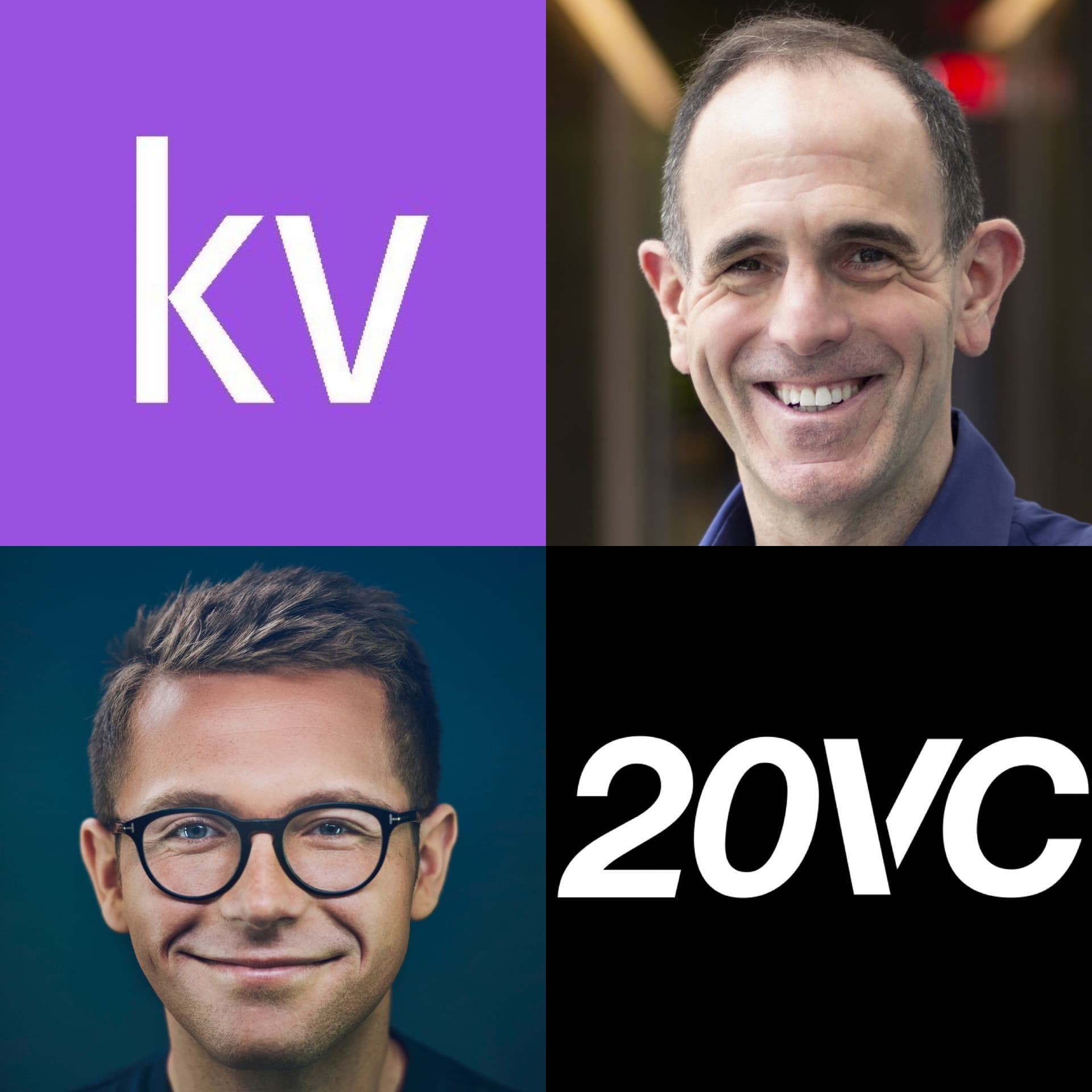
Keith Rabois is a Managing Director @ Khosla Ventures and one of the most respected venture investors of the last decade. Keith has led investments in Stripe, Faire, Ramp, Affirm and many more. Just last week, Keith announced he would be rejoining Khosla from Founders Fund, where he spent an immensely successful 5 years as a General Partner. Prior to Founders Fund, Keith started his career at Khosla where he spent 6 years and led investments in DoorDash, Opendoor, Webflow and more.
In Today's Episode with Keith Rabois We Discuss:
1. The Decision to Rejoin Khosla Ventures:
- Why did Keith decide to rejoin Khosla Ventures from Founders Fund?
- What did Keith miss most that Khosla did, that Founders Fund did not?
- How did Delian take the news?
2. Comparing Two Great Firms: Founders Fund vs Khosla Ventures:
- Investing Style: How does Keith compare the investing styles when analyzing FF and KV?
- Price Discipline: Which firm is more price-disciplined? Does price discipline even matter?
- What are the single biggest mistakes Keith has made on price? How did it change how he invests?
- Founder Type: What sort of founder would choose KV? What founder would choose FF?
- How did the depth & quality of investment decision-making compare between KV and FF?
3. What It Takes To Win in Venture in 2024:
- Liquidity: What have been Keith's biggest lessons on when is the right time to sell positions?
- Capital Planning: What have been Keith's biggest lessons on the most effective use of reserves?
- Why does Keith believe if you do not lose some deals as an investor, you are not competing for the right companies?
- Khosla Ventures recently raised $3BN. How important is the ability to support companies across their lifetime in 2024 vs stage specific?
4. Where is The Best Place to Invest:
- Why does Keith think seed is the best place to be investing today?
- Why despite the better risk/reward profile, does Keith think Series A is not the best place to invest?
- Does Keith believe we will see the return of growth investing in 2024?
- What does Keith predict for the M&A market in 2024? Did Figma kill all activity?
- When will the IPO windows open again? Why would Stripe go out this year?
5. Keith Rabois: AMA:
- Why did Keith not want to start his own fund? Will he ever?
- What have been Keith's biggest lessons from working with Vinod Khosla and Peter Thiel?
- What were Keith's biggest lessons from Roelof Botha on what it takes to be an effective board member?
- How does Keith think about bitcoin in 2024?