In short
Podcast Summary: The Twenty Minute VC (20VC) - Episode with Martin Mignot
Episode Details
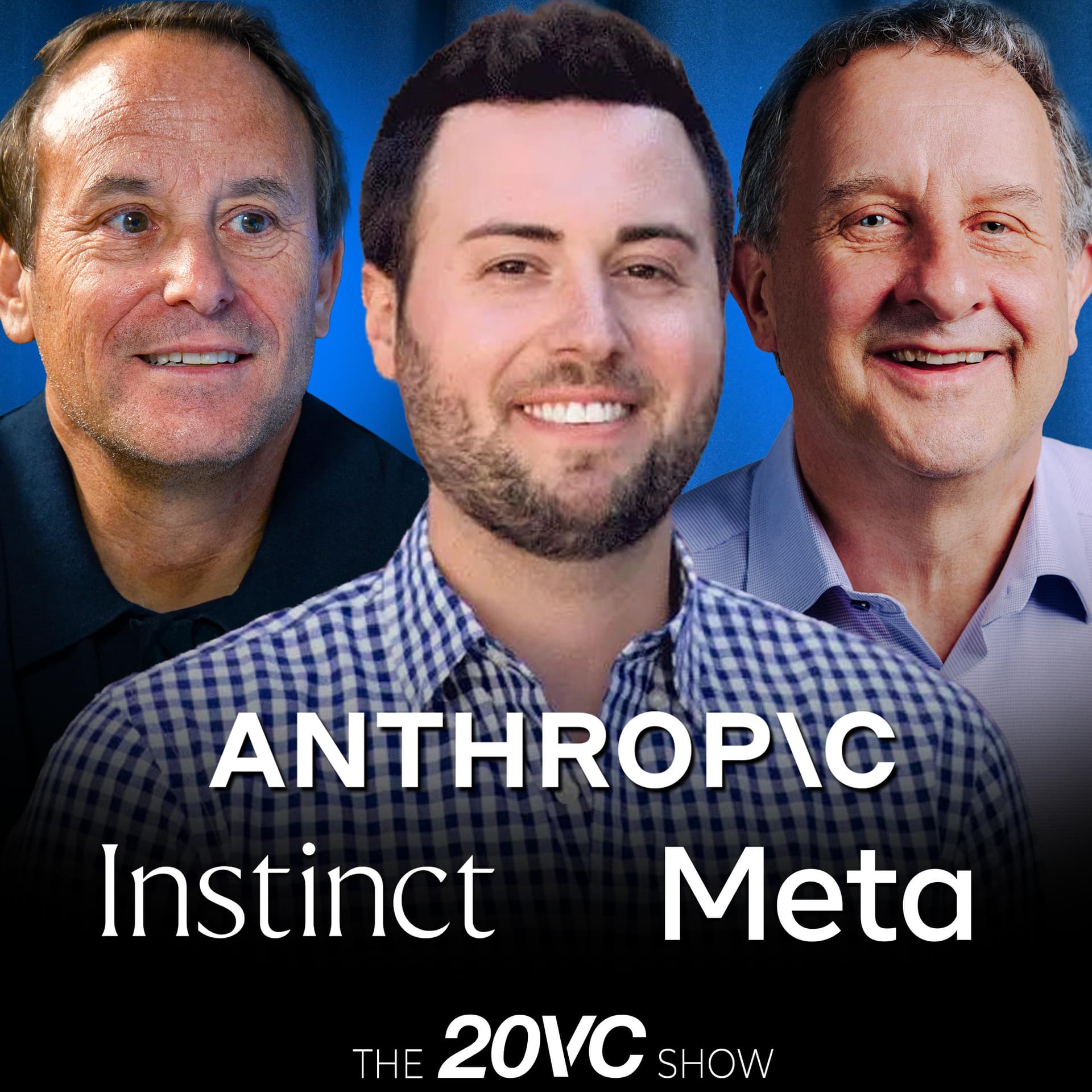
- Title: 20VC: Figma, Scale, Wiz: Inside Index's Decacorn Factory
- Host: Harry Stebbings
- Guest: Martin Mignot, Partner at Index Ventures
- Podcast Description: The Twenty Minute VC interviews leading venture capitalists and founders to explore the intricacies of startup funding, investment processes, and the evolution of the venture capital landscape.
Key Highlights & Takeaways
Introduction to Martin Mignot
- Martin Mignot is a partner at Index Ventures, which has seen remarkable success recently, including:
- The sale of Wiz for $32 billion.
- The sale of Scale for $14.9 billion.
- The IPO of Figma as a primary investor.
- Index Ventures is one of the best-performing funds globally, with significant holdings in companies like Roblox, Revolut, Adyen, and Datadog.
Major Themes Discussed
- Gross Margin Considerations
- Mignot emphasizes that gross margin shouldn't be a primary concern in the early stages of a startup.
- Startups often struggle with growth margins initially, particularly in the AI and LLM sectors.
- The focus should be more on growth and product development than on optimizing margins too early.
- Tourist VCs vs. Committed Investors
- The emergence of “tourist VCs” who engage in venture capital for prestige rather than a true passion or calling.
- True venture capital should be a long-term commitment, focusing on support for founders and their ventures.
- Investment Strategies and Decision-Making
- Mignot argues against the binary view of the future of VC being either boutique or mega funds, presenting Index Ventures as a middle ground that balances scale and founder support.
- He outlines the firm’s decision-making process:
- Uses a voting system for new deals, requiring consensus for approvals.
- High conviction investments are prioritized, allowing rapid decisions on promising startups.
- Founder Traits and Market Insights
- The most critical trait in founders is having unique insights that can drive innovation, which often trumps market size considerations.
- Mignot shares learnings from prior experiences, notably how industry biases can lead to missed opportunities (e.g., passing on Spotify due to existing industry challenges).
- Navigating Market Timing Risks
- The importance of timing in investing, with examples of how past mistakes influenced current decision-making.
- Mignot acknowledges the necessity of maintaining a “beginner’s mindset” to avoid being overly influenced by previous experiences.
Controversial Deals and Lessons Learned
- Discussion of controversial deals, specifically highlighting Revolut, which faced skepticism during its early stages due to its low growth margins and business model.
- Mignot emphasizes that initial perceptions can often cloud judgment, and it’s crucial to maintain an objective view of the potential a startup holds.
Future of European Startups
- Mignot advocates for the potential of European startups, particularly in AI.
- He argues for the need for European giants in the AI space, emphasizing the importance of local providers due to geopolitical realities.
Personal Insights and Reflections
- Mignot shares his views on the importance of founder relationships and how they can impact business success.
- He reflects on the significance of ambition in venture capital and how it drives both personal and industry growth.
Closing Thoughts
- The conversation highlights the dynamic nature of venture capitalism, the importance of understanding market complexities, and the value of supporting visionary founders who challenge conventional wisdom.
- Mignot's insights reflect a commitment to fostering innovation while navigating the inherent uncertainties of investing.
Resources Mentioned
- Index Ventures: [Index Ventures](https://www.indexventures.com)
- Coda: Collaborative workspace tool for project management [Coda](https://coda.io)
- Acuity Scheduling: Scheduling software for managing appointments [Acuity Scheduling](https://acuityscheduling.com)
- Vanta: Compliance automation tool [Vanta](https://vanta.com)
---
Feel free to explore the full podcast episode for a deeper understanding of these themes and insights from Martin Mignot.
Written by AI. May contain mistakes. Listen to the episode to check what was said.
Transcript
Automatic transcript. May contain errors.0:00beware of growth margin in the early days. And I think that's a mistake we've made a couple of times. You have a lot of businesses that in the early days have really bad growth margin. All the LLM providers were very clear examples of that. I think if that's the only thing that's holding you up, in most cases, I would totally ignore it. We never pass and we never lose a deal or pass on the deal because of price in the early stage. So we've been around for 30 years. We invested, I think 11 .5 billion dollars. We've returned about close to 30 and we still have 20 plus in holdings. Most of that is concentrated in eight, nine companies.
0:39We've invested in close to 400 companies over the years. You all listening to 20 VC with me Harry Stabbings. Now, I first met this guest nine years ago. Their fund has been flying for the last six to 12 months. I mean, oh my god, they sold whiz for 32 billion. They sold scale for 14 .9 billion. They IPO'd Figma as the largest investor. Can you guess the fund? You got it. It's in -dex vanches one of the best performing funds on the planet I'm so thrilled to welcome Martin Minio partnered in that's vanches and in addition to the crazy success names that I mentioned They're also the largest or second largest shareholders in check this out Revolute roadblocks at the end data doc, let's go on such an incredible conversation here and so much fun to have Martin back on the show after nine years.
1:32But before we dive into the show's day, I love seeing the team come together to make this show happen. What I don't love is trying to keep track of all the information, the data and the projects that we're working on across dozens of platform products and tools. That's why we use Coda, the all -in -one collaborative workspace that's helped 50 ,000 teams all over the world get on the same page, offering the flexibility of docs with the structure of spreadsheets, Coda facilitates deeper teamwork and quicker creativity, and their turnkey AI solution, the intelligence of Coda Brain, is a game changer.
2:05Powered by Grammily, Coda is entering a new phase of innovation and expansion, aiming to redefine productivity for the AI era. Whether you're a startup looking to organize the chaos, while staying nimble, or an enterprise organization looking for better alignment, Coda matches your working style. It's seamless work, it's based connects to hundreds of your favorite tools, including Salesforce, Gira, Asana and Figma, helping your teams transform their rituals and do more faster. Head over to coder .io slash 20VC right now and get 6 months off the team plan for start Startups for free. That's codacoda .io slash 2 .0 VC and get six months off the team plan for free.
2:50codacodacoda slash 2 .0 VC. And while codac keeps our team aligned, a QT scheduling ensures our time stays on track. This show is brought to you by a QT scheduling. The flasable scheduling software that helps you focus on what matters most. Growing your business with a QT, you can manage your calendar. you can accept secure payments, offer clients a seamless booking experience that reflects your brand. I've been using my complimentary subscription and it's been a game changer for staying organized and saving time. I especially love online booking. Clients can book, reschedule or cancel anytime, and the booking page looks fully branded with my logo and colors.
3:27The calendar management tools let me set buffer times and sync with other calendars, so I never feel overbooked. And with secure payments I can collect deposits or full payments up front through Stripe or PayPal, making the process smooth and professional. Head over to acuityscheduling .com, forward slash 20VC for a free trial, and when you're ready to launch, use the offer code 20VC20 to save 20 % off your first acuity scheduling subscription, and speaking of incredible companies, don't forget what really keeps those customers coming back. Trust is the ultimate currency in business and today customers expect it faster than ever.
4:05And that's why over 10 ,000 global companies trust Vanta. Vanta automates up to 90 % of the work for in -demand compliance standards like SOAP2, ISO 27001 and more, using smart AI to centralise workflows. Manage risk and get you audit ready in weeks, not months. So you can stop chasing paperwork and start closing deals. And in new IDC report found that Vanta customers achieved $535 ,000 per year in benefits. That's insane and the platform pays for itself in three months. I had no idea about this. Whether you're growing fast or just getting started, Vanta connects you with trusted auditors and experts, support to help you build trust with customers.
4:49Get a thousand dollars off your first year at Vanta .com, forward slash 2 .0 VC, that's Vanta .com forward slash 20V scene. You have now arrived at your destination. Martin, it's been eight years since our last show. We lasted it on Skype. A lot's changed, man. You still look just as young. But thank you so much for joining me, dude. Thanks for having me. I want to start with a statement that you've said before and you said actually an accountman follows a vent. You said, ventures about playing the right game. And I love this statement. And I wanted to turn it back on you and say, what is the right game then for you?
5:25The way I put it for this particular statement was, you know, very much playing the long game. The fact that if you are to get into this industry and this job, you've got to commit for 10, 15 years at least and focus on not only outside reward or not on the external, progressing as a career, but very much more on the internal and doing it for the right reasons, which is investing in great companies, supporting great founders. That was what I really meant by that. I think in the last cycle we added a wave of tourist vCs, who like the events, who like the idea of being a VC, do you agree that we have this wave of tourist vCs and has it cleared?
6:03I don't know if I would say tourist vC, but I would say it's the asset class as institutionalized. The funds have become larger, there's more people in general by and large. And so you bring people who may sometimes want to have a career, choose it as a career, more than as a calling. Me personally, I think I said in the XC this job as a calling. Do you agree with that statement? Not entirely. No, I know there is a meme which is the industry is diverging into two camps. You either have the mega fans, the asset gatherers or you have the tiny boutique shops. And I don't truly believe in that. I think there is a third way and index is in that third way where you need enough scale to help support the founders and we think always from the founders point of view what is how to can we best serve them and you need a minimum size to really help them to kind of invest across stages support them from inception to IPO you need a minimum size but also don't think you need a giga size to really support them I think this pushed towards larger asset gathering is very good for VCs who do it.
7:20It can make a lot of sense financially, it can make a lot of sense for them. I'm not sure it makes so much sense for the entrepreneurs themselves. So I do believe there is a third way. What do you think that minimum size is then? Exactly where we are. How big are the latest funds? We have a $300 million seed fund, $800 million venture fund and $1 .5 billion growth fund. That's the latest. And that is the minimum for you need. Perfect. I wouldn't say that's the minimum. We see that as the right size to both support entrepreneurs with the right amount of capital, and then have enough to pay for the infrastructure that we have.
7:55So my mind has changed on this. I thought that the mega AUM gatherers would see denigration of returns and actually would bluntly just fake accumulators. And actually now when you see the expansion of outcome sizes and more trillion dollar companies never, and a very few number of people being able to write a billion dollar check, I think actually they will do incredibly well Investing in your open AI's at 300 million in your anthropics at 60 billion and see venture light returns at scale in a way that I really changed my mind on Do you think I'm wrong to have changed my mind in that way? I'm not sure you're gonna have venture like returns at 300 billion.
8:31I think you can have amazing returns You know can you have you could five that you could five that you can do it in a check? Yeah, yeah, no absolutely the math makes sense Do you need dedicated funds to do that? Or can you do it in more ad -hocware? You know, I think that's a question. That is on the later stage set up thing, obviously. We, you know, on the early stage, you know, the seed or early venture or early growth, I don't think you need, you know, those mega assets. And I think they distract you and they tend to pull you towards the later stage. And you know, if you have so much capital to deploy, obviously you will tend to focus more on the later stage on the very big checks.
9:06and I think if you want to help and support at the earlier stage, you know, it can be an impediment. For the AUM Gatherers, is seed simply an entry ticket to the real product which is moving 100 to 500 million at the CD? That is not our model, so I don't want to comment on the astrology. That is such a coffaw. I totally think it is. I think I would have missed it if I was saying, I always walk around London with my mother and I always say the same thing which is like, I have to give an analogy. She's like, you know, when you weren't clubbing and you have to pay the entry fee at the door, that's like seed for the AUM galleries and the table is the C and the D.
9:42This is not how we see seed at all. Every check is high conviction. We don't make as many as a result, but we have high conviction checks and we work closely with the sponsors even at the seed stage. It's the same as if you were a series there. Our goal is very simple. We want to be as early as possible, become the largest shareholder and become the most valued in most reference investors in those companies. I chatted to Danny before the show and he said that Martin didn't always have this perspective on where funds would win and this kind of third path being the middle and big your path today.
10:15What did you believe and what caused you to change your mind? What I've changed my mind on is if you start from the funder and if you really think through how can you best help them? What is the most helpful way that you can interact with them? at the early stage, especially, how does that help them that you have 10 different products? You know, that you do LBO, you do credit, how is that helpful to an early stage founder? It's not. And so, if you really think from that first principle of, okay, what are the resources you need to be really helpful in those early stages? And again, in the service for us of building both the biggest ownership and the best reference from those founders, it's not this super loud scale multi -product.
10:55It's a you need enough again to support them, but you also need to be small enough to kind of keep that Interpersonal relationship and that close support where they know they can call 10 people at index You know get help on anything that that may happen to them and you don't necessarily have that in such a personal and trusted way in a much larger Company where people move around a lot more a lot of our people have been around for 10 year plus even in our strategist team and that creates a a level of trust and competency that it's really hard to replicate in much larger on metallurgy organizations.
11:28I love it. Well, to team turnover has been high. There's a lot of team turnover. Like surely it's not that. Like we don't have much consistency in that team. Do you have a short of you? Yeah. And if you look at the principal rank, you know, we have a lot of people who've been around for a long time. If you look at the strategy's rank, we have a lot of people who've been here for a long time. So there has been turnover in the industry at large. Interesting question. Do you think consistency of team correlates to venture returns? I was chatting with Iliad Quantum Light about it the other day and they said the number one factor that the notice was a good predictor of future returns was whether a partner was on the on the madest list.
12:07A partner, an early stage investor in the company was on the madest list. We kind of tend to show that there is a persistence of returns in terms of proven investors. You buy the mindest list. Again, you're like, Jesus, how are you? I thought this was an easy interview. But I just look at the mindest list. None of the people on that did the deals that they said they did. I'm like, guys, come on. Two things. One is I didn't investigate, I think, as much as you did. But my view on the mindest list is it's a really good list for who was a great investor 10 years ago. That's kind of how I would describe it.
12:39Because if you look at a lot of these companies, there were deals that were made 10 years ago. And so I think it's really accurate to show you who made great investment 10 years ago. Is it very accurate to see who is a great investor today or in the future? I think there is some persistence of returns and there's a lot of studies that I've shown that, but it's not. Definitely there are a lot of great investors today who are not yet on the list, but will be in the future that should be on it. Yeah, I'm going to leave some names out. I'm like, really? That's interesting. We have different memories on that one.
13:08You mentioned about service and help a lot. Keith, your voice is on the show before the best founders don't need your help as an ambassador. Do you think the best founders need your help? They don't necessarily need your help. The best founders I've seen are very good at reaching out to investors and people around them on very specific topics. When these people, it's leveraging the right people at the right time, being very specific about that versus going to, I think that's a little bit the, a lot of the approach that we see in the market is like, it's a one -stop shop for everything. I don't think the best founders use their investor or their supporters that way.
13:43Okay, so when we think about like New Deals, yeah, there's two types of founders. There's ones that come to an industry fresh and with the joys of naivety and open eyes and then there's ones that come to it as an industry insider. How do you think about which founder type you prefer and lessons from them? I don't prefer any of those types. The way I think about it is slightly different, you know, what I love in founders is unique insights. And that unique insight can come, so the unique insight can come from two places is one experience and knowledge of an industry. The other one is just share intelligence and an ability to break down complex problem into very simple ones.
14:23And you know, if you think about all the best founders, you know, I've worked with and you know, you have worked with, I think that they tend to have this one similarity which is they can come up with a very simple insight something that sounds very simple They're actually incredibly deep and profound and defensible and they typically come at it from first principle thinking I mean, I think first principle thing gets thrown out a lot, but the very best founders They have that and if you take you know Nika travel it you know as an example of that a lot of his decisions and a lot of his Coinsides were just linked to that first principle thinking so he thought about a KFX for example effects for large corridor where you have a lot of volume of transfer cost nothing.
15:06So it should be given for free, you know, to the market. And then once you have that, that's a really good hook and then you can build something else. And if you think about most of the great companies, they have one simple insight, but that is very deep, you know, that's the core of what I look for in founders is, and I want to sit there and then they will teach me something that they have come up with either thanks to the experience and but more you know usually from that deep thinking that they've done and where they've solved this problem. Look at you know we let delivery for example. His insight was very much the product is the delivery which sounds obvious but it's not a digital experience and it's the speed and quality of the delivery and if it has to come below 20 minutes that's the if you can get that consistently that is the product everything else is a distraction that's the core product and that's what we should entirely focus on.
15:56It's funny, I had me share the founder of Fiverr on the show recently and he said a fascinating thing which is like the most important thing that's changed is time to copy how long it takes for someone else to copy your product. When you see a dramatically reduced time to copy, does the value of unique insight go down? You could have a great idea but I see it and bluntly with tools that we have available I can copy it super fast and I'm better at branding and marketing than you so I'm going to crush you. Does the value of unique insight go down? I think it goes down without great execution that comes with it.
16:25I think that on its own is not enough. I still think it gives you an advantage, but then I agree. I think it's all about execution. When you think about market timing risk, it's something where I've got burned before. How willing are you to take market timing risk when you think about unique insights? What were you mean by market timing? Hey, I believe this. I don't know how long it's going to take for the market to see what I believe. Versus, hey, I have a product that's super fucking great right now and is going to fly off to shelf. That's a typical, you know, that's a very common way of making mistakes and you can look at my cowboy and say like, hey, actually in a world today everyone appreciates the importance of like innovation on transportation, the benefits of cycling and cities.
17:07Yeah. Well, it would very different five or six years ago. So I think market timing is a real thing. You know, you can be right, but it can be that, again, if you look at food delivery, it's interesting. People try to do delivery 5 or 6, there was a French company in Africa, the name. It was doing delivery, but what they didn't have, they didn't have smartphone penetration. So they had to call drivers to tell them where to go and where to deliver. And obviously that didn't scale. And there was no efficiency and they would take 50 minutes, it would be very expensive. And so you needed to have not only the invention of the smartphone, we need to have everyone, including drivers having smartphones for something like the LiVroo2 exist.
17:49So clearly here it's true, you know the concept was there but the technology just didn't follow. I think in the case of Cowboy and micromobility in general, I think the timing was absolutely correct. The challenge here in this industry is that if you are selling the hardware, it's mostly a hardware product and hardware is really hard. If you don't sell software on top, You rely on a very complex supply chain, which has suffered a lot over the past years, obviously. It's a volume game. You need to have distribution, you need to have relationships. You need to raise a lot of money to build all of those assets.
18:25The return on that capital is not as good as on pure software businesses. If you're selling a service, so lime and bird and those, I think you can have a large scale, but it is so operationally complex. and you're also competing with a lot of subsidized transportation. So you're charging full price for a service that is offered at a discount by a lot of municipal services and you're fighting against a lot of regulation, a lot of changes. I still think that some companies will do well actually in that space. I think Lime is doing well, I think Dott is doing pretty well at the time. They will be okay at the end, but it's clearly, it's been a really, really difficult space.
19:05I had the CEO of Lymon and he said that at one point they had a 33 % break rate every month one in three break Like every month like destroyed. I mean a hard fucking business. We mentioned cowboy. It's it's a hard deal Being direct. Yeah, how do you prevent hard deals or losses? Impact future decision making so many deals I've met so many great FinTech investors who never did stripe because that like I thought it would be commoditized I thought it was a race to bottom. They let the past dictate the future. How do you not do that? Yeah, that's probably the hardest, the hardest one. And actually, it's funny, it's not only the bad investments or the media current of soil.
19:46Any investment gives you some form of bias. If it's a great investment, then everything else may look not so great in comparison. And I've suffered certainly from that, on the Fintech site, for example, where I was looking up to be early in revenue, and then I looked at a lot of other Fintech investments were like, well, where would it be? So, I think it goes both ways. And you've missed out because of that. Yeah, exactly. What did you miss out on because you thought Ravoli was great? We could have invested in a lot of other Neo banks. Contour would be a really good example of that. A lot of remittance and certain corridors.
20:21And so there's a lot of work there. And the nicest way, do you actually regret that? I didn't mean this horribly or to single out any players. I'm not a dick journalist, but it's just like, I just think so much that value accrues to the number one. In most markets. I get it, but you're in the number one who gives a fuck. I didn't mean it that bluntly, but it's so demonstrably different in terms of value accretion. Yeah, that's absolutely a position. There are still some really good companies that we could have invested. I would say, so going back to your original question, this idea of keeping a beginner's mindset is absolutely essential for any investor.
20:53It's really hard to do. The example we always use at index is Spotify. And to your point, it wasn't because of a bad investment. It was because of a mediocre investment, which is different. No, we had just invested in last FM, but totally reasonable outcome. But we saw how the sausage gets made in that industry and the power of the labels. And we're like, gosh, this is impossible to make money. And we really love Daniel. And we saw that the product was phenomenal. There was some early traction. But we had this bias of the music industry is so hard. You know, it's never going to happen. And that's why we passed multiple times.
21:25And when we wanted to come back, it was too late. And so I think you might not too late. I love Daniel. I love Daniel. I love Daniel. And Daniel wanted Danny every freaking round. But you know, so I think the learning here is when you have, again, it goes back to the founder when you have, and we knew because you know, Daniel was working at one of our companies. So we knew the guy was incredible. And so when you have such a unique founder, that again, does have a unique insight about about their industry and has the ability to execute on it. And also in this case, you see real signs of execution, don't over thinking.
22:03I think that's a problem that we have. And I'm chattwelled a lot of this, you say, it's kind of pretty widespread in the industry. Like you think you want to be very smart, you want to be very diligent, you want to, and today's a tendency to overthink. And when something has a fantastic founder and has real movement, then sometimes you just need, even if it's an industry like, oh my God, I've been burnt in the past, don't over think it. I'm early so just like a CDNA. If I have a world class founder, I didn't give a shit what they're doing. Genuinely, do you know? There's this brilliant curve. I didn't know if you've seen it.
22:33Wait, you start your career? Yeah, you're exactly all about team. You then go three, five years in, you're like, oh, I'm smart. I should analyze markets. And then 10 years in, you're just team again. Yeah, I remember, I think Matt talked about that meme at some point. And I'm getting there too. And back on the other side of the curve. Okay, you have team, you have traction, you have market. 1 -3 -3, most important. Team, team, team, and team. I would say that's that's, you know, I'm back to that as the number one. But, you know, I would say, you know, I probably used to think, you know, market, team, and traction.
23:06Now I'm kind of putting the other around, so kind of, team, traction, and market. Given revenue scalings being so unparalleled today for so many companies, does revenue mean less? Does traction mean less? Given zero to 10 million narrows kind of commoditized hours as awful and try to start sounds. Does it mean less? I don't think it means less. Finding product market fit is the harder thing in any business and tons of funders work around in the desert for years without ever finding it. So I think we shouldn't minimize or trivialize finding real traction and having real revenue traction. I think this is remarkable and it should be celebrated.
23:41Obviously, if you're talking about AI, auditing the quality of that revenue is critical. That's what we spend a lot of our time doing. is that revenue long -lasting, is it sticky? The more cohorts you have, the more you can see the numbers. If you don't have that, then it's going to be talking to customers. And also really trying to understand their use case. If it's something that's more like project based, and then they want to use it once, and then they will switch to something else potentially, or it's something that especially if it's inserted inside their workflow, you know, cursor is a good example, we've made a bunch of those type of investments.
24:16then even in the number of the enjoyed yet, in all likelihood, the stickiness of that product is going to be a lot higher. Can I ask you, we said about keeping that pure mindset. Partnerships can help in terms of preventing mistakes on, oh, I've done it before and it's lost money, which is a very dangerous, heuristic, obviously. When you think about decision -making internally, how does decision -making look on net new deals and how does that differ on size of check? We have a different size of quorum depending on the size of the checks, so if we need to be there, it always folks from each office.
24:44So it's very important because we work as one team across offices. And then we vote. We vote one to ten. You can't vote five and six. So you have to be four against. And then it's kind of a, so it's a qualified majority essentially. So if the average is above six, the deal is approved. And so that mechanism is the same. And then there's also some latitude if you have a very high conviction on the deal, at the early stage. I think we have a bias for two action. and again, going back to having a beginner's mindset, the person who spent a lot more time with a certain team is obviously better placed to make a gentleman call on that team and so there is a collective trust into the partners' judgment.
Read the full transcript
25:26But if you want to ride a $5 million check on the spot, you can do it. Not exactly on the spot, but you can definitely make the deal happen. What was the most controversial deal that got through? I'd say, you know, Reblet was pretty controversial, actually. Of all the deals. Yeah, it's funny. It sounds, you know, in retrospect, it sounds bizarre, but it meant that being one of the most successful or maybe the most successful, but it was definitely one of the most controversial. The reason for that was that, and it was quite a few fold, the first one is it was a very European product, you know, and I think the product made a lot of sense for the European audience.
25:59didn't make as much sense in the US context where FX frankly is not a big topic. So I think there was one element where the US -based folks were less familiar with the product and didn't resonate as well. The other issue we had is it was especially in the early stages, it was a negative growth margin business. They were deeply giving away FX, weren't charging for anything else. You had a little bit of interchange but not that much. And so you had very low growth margin business and obviously that wasn't that attractive in the more the scale and the scale very fast organic and water mouth, the more they were burning capital.
26:32So it wasn't a nervous one. And I think I thought in your Nick at the time, wasn't a natural story teller and fundraiser. So I think all those reasons, it wasn't a nervous deal. Which by the way, I think that's one of the learning is beware of growth smart in the early days. And I think that's a mistake we made a couple of time. I think Snowflake was a similar story. What do you mean by that? Well, it means that you have a lot of businesses is that in the early days, I have really bad cross margins, very low cross margins. So, you know, gravity is an example. Snowflake was an example. Televary is an example.
27:05Televary was an example. All the LLM providers were, you know, very clear examples of that. And I think a lot of the LLM, you know, all of the AI apps have similar characteristics. I think if that's the only thing that's holding you up, in most cases, I would totally ignore it. Because the reality is, you know, when you're getting started, you know, optimizing for for high -gross margin is the last thing you should be doing. You are entirely focused on growth and building the product. But in most cases, especially in pure software businesses, you will find ways to optimize your growth margins and the cost, whether it's the underlying cost of technology you're using is going down.
27:42I mean, the AI app is a good example of that, whether the cost of the price per token keeps on going down. Or you can just optimize your infrastructure a lot better when you have a lot more volume. And that's what happened with Revolute. It's so funny how you say statements a year ago and you look back now and you're like, what was I saying? And the speed of the industry transition is so significant when we look at like cost of tokens where it was 18 months ago, it's like 99 % cheaper. And that actually is even more conversation. So if you judge your, you know, if you made your judgment based on gross margin at that time, on the price of token at the time, you would have missed on, you know, really, you know, I'm great companies and great investments.
28:16And honestly, that was my take on LavaPulse gross margin, which is like what it is today, not what it will be in the future. European stack rank was what I wrote down here, which is like if I was in the Europe team I would honestly be a little bit perturbed by the dual structure of having US people on my decision -making Because I'm stack ranked against the growth of Silicon Valley companies. I'm never gonna get a deal done I'm not saying they're worse, but they grow slower The execution speeds are often slower if you stack rank them It makes it harder for European teams to get deals done It may, it's not really what we see.
28:50We consistently invest about half in Europe and half in the US, and we have a global one global bar, and I think that's the way we see the world. We're not fighting for local maximum, we're fighting for a global maximum. We want to be in the very best businesses globally and be the reference investors in those. It's a culture challenge in presentation. What I mean by that is Americans are brilliant at marketing and storytelling. And I mean that nicely, not badly, but respectfully to your fellow Consumption French people, you know, I'll meet them and I'm like, you know, they're like, are we doing 50 million in ARR?
29:27And I'm like, wow, that's amazing. Yes, okay. And I'm like, you mean, yeah, if this was American, it would be great. And so my question is, is there a culture chasm that doesn't carry with European founders to your American partners? Yes, I think the answer is yes, by and large. So, you know, if there's one team that is aware of those differences, I would say it's index. We are very well aware of it and we take it into account when we vote on deals and that's also why we leave a lot of latitude, especially in the... When you have data and it's different because you know data can speak for itself.
30:00But I think when at the earlier stage to your point, the presentation may have a lot more and that's where leaving more latitude to the partner or the investor So with closer to the founder and spend more time with them, it's super important because yeah, I mean, we've had that in the past, for sure. Peter Fountain said on the show that price is a mental trap, interesting statement. How do you think about your own price and stability today? Yeah, I think it's absolutely right. You shouldn't lose, you shouldn't lose a deal on price, especially, I think it's especially through in the early stage.
30:33We never pass and we never lose a deal or pass on the deal because of price in the early stage, I think that is absolutely correct. You know, where does it stop? Or I mean, is that all prices too high? Like I will also, are we being paid for the rest that we're taking? That's not really how we think to be honest. In the discount of risk reward, profit, you don't know, right? Because you don't really have a good sense for the size of the reward and the thing in general. By and large, we've been in the industry has even kind of underestimated the size of the outcome. I mean, you mentioned the scale of the revenue growth, the scale of the market caps of these businesses, we didn't think that that would be the case even 10 years ago.
31:12So at the early stage, if you had known at the time that the outcomes could be so large, well then maybe it was a very fair reward for the risk you were taking. So I think in the early stage, I think it's absolutely right. The only question is how far does it extend in valuation? When you're, you mentioned, you're a pennex, 100 billion, is one trillion still a mental triple. I don't know. So there must be some moment where you get into a slightly different real man where the distribution of outcomes becomes narrower and the likelihood of, you know, so you have a better understanding of where the company will, you know, the closer you get to IPO, the closer you should have a sense for what is the value vision.
31:54And so you have a better sense for that risk reward profile that you that you're mentioning. In the early stage, this is so far out, you don't really know. So I think again, if you go back to the first principle of if you have this extraordinary founder and there is real traction, then don't ever think it. Have you done deals at high prices that in hindsight there were two high prices and it negatively impacted the company? Oh yeah, for sure. Definitely. And there is the two high price. Yeah, there is a price, there is the amount raised and there is the maturity of the business. Where we've all seen these companies that raised terms of capital at the very high price before they had proper, you know, product market fit.
32:36They thought they had it, but a lot of it was subsidized by investments. And then when they stopped investing because they realized, well, you know, it's not customers were acquiring on the profitable. So we need to stop it. It doesn't really make sense. Then they realized that having all this money and all this team, they had to spend, especially in Europe, it takes a long time. They had to spend a year or two reducing the set of the team, going back to the basics. And so trying to find product market fit after you've grown so much and had so much capital and at such a high valuation, makes it really, really tricky.
33:05Do you not find that the fault that is dangerous? I find that the fault of a mass is like, A is so competitive. I mean, with someone on our team, Jotyece said, how soon after doing the seed, is it okay to preempt the A? Like, is the next day okay? Because it's so competitive today. I have to stuff you with cash as soon as possible. And like, fuck it, I'll take the risk on you getting PMF, because if you have it, it's too late. Yeah, we've done it in some occasions. You know, again, when we found, you know, extraordinary founder with revenue traction or open source traction and we've done that in a couple of open source companies.
33:35Then it can't totally make sense and you can really, you know, you can get amazing rewards for them. When you think about ownership, how do you think about ownership internally? Is it kind of the age old 15 % has times changed around ownership percentages? I mean, the time has changed for sure. You know, I started 15 years ago and we're, you know, all aiming for 20 % was going to have the minimum bar. This is, you know, you can still, we still have some 20 % ownership, but it's obviously getting a lot harder for us. The goal is to get double digit ownership at exit. That is typically where we look at the performance of the fan.
34:07Most of our returns have been generated by companies where we own close to or more than double digit ownership at exit. That's what we're trying to inform. Do you have more elasticity on ownership because you're able to do multi -stage enlasting? Yeah, in the earlier stage for sure. I mean, I think for us especially at seed stage, Our approach to seed is much more collaborative. The idea is we don't want to compete with people like you and other seed funds and angels. We want to bring them along, we want to work together. It's conviction investing, and we're going to pull our weight and be super involved.
34:40But this is not the stage where we want to maximize ownership and we're not going to have sharp elbows at that stage. Later on, especially at Series N and Bees, that's where we really want to, because of the time we're going to spend helping these companies and spend time on the board and be hopefully the reference investor. That's where we need a minimum ownership. Do you have investments in any of the LLM providers? We do. Which one? Co here and we have a seed investments in Vistra. Do you think about dilution sensitivity down the road? We mentioned delivery, that's kind of V1 of dilution sensitivity if you want, and LLM is the latest version.
35:18There's a fundamental question of, is it actually a good venture product? because the dilutive nature of the business is so high. We'll see at the end of the journey. I think it's the pure venture multiple will likely be lower than some of the other categories in the past. I think that is clear. The difference is that the size of the outcome and the speed, very importantly, the speed at which the size is going to get reached means that you can have, especially if you can deploit a lot of capital, you will still be able to generate a lot of absolute returns. So in terms of performance will still be very high in terms of pure multiple on early state investments It may be maybe slightly lower because of the evolution.
35:56Do you worry about the distribution of value in the LLM market when you think about You know the two terabytes of CBing Open AI and anthropocomot we said earlier about the importance of being number one How much value accrual that she goes to the long tail with other providers? I really question. Do you worry about that? Yeah, of course, of course I worry about that. I does Europe need an LLM provider. Yeah, I think it does Can you paint that case for me? I'm not asking you as a journalist, I'm asking you as a student. Why? Well, the notion of sovereignty and tax sovereignty is a real notion. I think it's important.
36:29You have to recognize that there's a big part of the economy that has to think that where you have geopolitical realities that matter. And so if you're a government entity, if you are a quasi -government company, you may want and all even have to use local providers eventually at some point. So I do think there is a large part of the market that needs and want local providers, especially assuming that they are close to the frontier or at the frontier. And so I think there is a real market case for that. There's also a lot of, I think, localization, customization that can and need to happen. And so I think there's going to be a great enterprise market for those providers.
37:11So yeah, I think there is a market. Do you think it's going to be smaller than OpenAI? Yes, for sure. Do you think we need government intervention in AI? I spoke to Danny obviously, Paul is saying he said he was the only one such as he said he should ask him about China. Do you think we need government intervention in AI pushing you to use one model over another, shutting off access to certain providers? I do believe that having government entities or quasi -government entities support local innovation is important. I think the way to do it is not necessarily to... I think they should be customers.
37:43I think they should buy those products and they should help them as customer or as investors, necessarily. Cheating tech tools should be allowed there, for example. I think it should be allowed, but there should be a bigger conversation about social networks and about the openness of algorithms, which then only apply to TikTok, but apply to X, apply to Facebook. I think those algorithms should be public, should be able to be audited by anyone, but also including independent auditors. They are nuts, regular companies, they are utilities, they are critical infrastructure for the economy and for our political systems.
38:22And as such, I think they require treatment that is different from any random startup. When we look at the different players today, we're seeing this kind of real concentration of value almost like never before you mentioned it up. Open AI are going to be bigger, but you open AI's, your answer, your cursor's, and there's probably five to ten in this kind of ilk. The concentration of value within startup seems to be more pressing or dominant than ever before. Do you worry about this concentration of value and bluntly the platform player that comes from that meaning it is just much more concentrated and makes it more difficult for us, investing in smaller players?
38:58I don't think it's that different from before. If I look at index, you know, I was looking at the numbers So we've been around for 30 years. We invested I think 11 and a half billion dollars We've returned about close to 30 and we still have you know 20 plus in you know in in holdings Most of that is basically concentrated in eight nine companies We've invested in close to 400 companies over the years. So you know, it's like so the concentrate the power low and the concentration of returns in a small number of names. I mean, we've experienced it ourselves at our level. And so I don't think it's that different than it was before.
39:39I mean, I don't see anything that indicates it's going to be that different. And that's why making sure you are in those category leaders early enough to have big enough ownership and also earning the reference from the founder of being the reference investor is the most perfect, it's the only thing that really matters. What did you miss at the early stage that you were like, oh fuck it, we just have to be in this and then came in later. That was just before I started, but we did that with Zendesk, for example, where we passed on the CDN on the A especially. If you look at the memo and the various times of the time, it's quite funny in which I don't remember exactly what it was, but very different from where it is today as you can imagine.
40:17And we came in later with our growth fund. Do you worry for your companies about the concentration of talent? We are in a war for talent and say like we've never seen before. Yeah, and the compensation packages truly are like we've never ever seen before. I speak so many of my companies like, what company has matter in OpenAI? Like, what do you expect? Do you worry about that for your companies? For sure. I mean, you have to worry. I mean, having said that a big part of the compensation for these early stage companies is around options. That's the only way for startups to really compete with these large established players.
40:48Whether it's OpenAI or whether it's Google and Microsoft often and the established, publicly listed large -day companies. So I think with that, if you can tell a good enough story about this future value creation, there is no amount of package and compete with that. To him, European founders competing. I obviously posted about the importance of working seven days a week and then increased intensity world where we are competing against China and the US and that being the new normal, you know, I think very rightly said the same and then I got all the blowback. And you avoided it. Oh, my question to you is, why do you think that we are in a new world of work intensity and that a new caliber of work is required to build a timbre in all the business?
41:38I'm not sure it's changed so much. If you look at the most incredible companies in the past, you look at Revolute, you look at Deliveroo, all of these companies, the amount of work that these founders and these early teams put in was tremendous. I mean, it was seven days a week. You know, it was night and weekends. I mean, that's what it was. And I think that's why it takes. When you are going into those hyper growth node, and you go for the venture -backed route, that is part of the journey, that is kind of, in many ways, what you're saying for. You need to have two things. One is you need to make a lot of experimentation, or be iteration and so that typically means, you know, the longer you work, the more things you can try.
42:22And then you need to have a very high growth curve and be able to learn very quickly from those experimentation. I think the main change to me is how open people are. And I think it's good because then there is no mismatch of expectation. You know, you're not joining a company in every other shit, you know, they're working so hard that this is, I can't do this is not for me. There's a real alignment between, you know, what you're saying and what you're doing. And I think that's actually positive. When you think about the world liquidity, what do you pay your slasers on one the right time to sell?
42:49You talked about market timing and we don't try to time the market at entry and we don't try to time it at exit either. We were not public market investors. We tend to have a very standard liquidity program when the company goes public, where we sell every quarter of our three years in a very recurring, regular, preset way in many Anyways, we obviously have, we set up exit committee with where you have four people on, including the partner who let the deal and another partner who didn't lead the deal and is not as close. So we always have healthy debates and we can just add the margin, but by and large, viewers don't try to be too smart.
43:30And then it's always the same. Then when things go really well and you've sold to a little shit, but then you also have the opposite where if you hadn't done that very systematic approach, you wouldn't have realize a lot of liquidity. So all in all, what did you sell to early and your most OSH at about? I mean, you know, we were very large in the vessel in Robinhood. We sold quite a bit at a lower price than the worries today. We still have a large stake, but there's always there's always going to be control examples that's the clear one given the you talked about their their recent price price action.
44:02Do you think it is the right strategy to do that? To sell in these quarterly increments for Nego Public? Given the information that you have. Are you not in a place of asymmetric information where you are better placed? And I actually look at like a Shopify of the world. Yeah. Well, shit, you would have lost 98 % of the value. Yeah, you know, they all control examples for sure. When we ran the analysis and we did run the analysis, obviously we didn't, you know, come up with it, you know, random me. It came out that that was the decision we did. I'm okay, that works. And obviously, you know, it's hard to do the counterfactual because you can never have settled only at the top.
44:37I mean, I wish we could, but that's not going to happen. So, but if we looked at if we had taken different schedules, we would have been worse off. And so we felt that overall, if you look across a basket of portfolio, and again, it's a portfolio approach. So you may be wrong on one or two, but if you take a portfolio approach and you do it for long enough and consistently enough, then we realized that that was the best outcome. Does the extension of private markets change that perspective? You know, when you look it say a revolution of the world. Now, I think it's like $75 billion in private markets, whatever it is.
45:11But it's just an example. The extension means that actually, secondaries are so much more really have the chance so much earlier. And actually, that public profile is delayed a lot longer. Do you engage in proactive selling in secondary markets? We may, again, we may over time in certain situations, like a revolution we've been for 10 years. So you're kind of getting to the end of a fan cycle. So yeah, we're not entitled. I mean, by and large, we didn't share that. But we're definitely not opposed to it, in general. I think in, I wish I could buy both. I'm trying to buy and large. We tend to hold pretty much everything until IPO.
45:50We, again, it will change. It's mayor. We don't have any, We don't have any taboo. We may have fans that are just, you know, I didn't have their lives life cycle and we want to realize some level of liquidity. I don't think we'll ever sell a lot. And again, it goes back to my first point about the returns being so concentrated in a small number of names. When you're fortunate enough to be a big owner in one of those names, you want to, you know, I think you want to write it to, you know, for as long as you can. and also get the best price discovery is on the public market. And so you want to get access to that price discovery by and large, we will keep until I PO and after.
46:31When we think about our own ship accumulation across around the thing that I find hard is Figma is a great example of an incredible business that wasn't maybe obvious for quite a few years actually. It took a while for Dylan to actually come out with any products. And it just wasn't as it wasn't up until the right from day one. Let's put it that way. Well, it was nowhere for many years because you was just building the product. Okay, so there we go. But my point being, I do not believe your winners are instantly obvious. No. Which means that I think you will often misallocate your reserves and your ownership concentration desires.
47:05Do you agree? Yes. It's inevitable. So we are not able to accurately predict our winners. No, definitely not. So then we should just do the same thing. It's funny, you know, like Figmaizer is a great example of that. I mean, you picked a really good one where, you know, Dylan, I was telling Zanick that where he would, you know, we have his CEO retreat every year and he would come on and he would keep on coming back, you know, your one, your two, your three or four and he would still not long. So like, where are we still inviting him? Like what is, you know, and Danny, you know, to this is absolute credit.
47:38Danny's level of conviction behind Dylan at Figma is unparalleled. I don't think there are many examples in the business of an investor that has had that level of conviction for so long. We're doing years. I was like, no, I really believe in, I think this founder is really special. I think the fact that actually is not launching, that he wants to build all those, the right for the good reasons, not the one who launched, that he can't launch. He knows that he needs to have that minimum level of feature set to be competitive and for it to work. And then it was always a massive supporter, even in that long period where there was just, you know, not even a product out there.
48:19With respect then, why not grow a lot of lead to A? It's the same with every company. Like, you don't invest in every single run on every single one of your companies, so I don't think it's any different. But we invested in, you know, every run. Is that one way you really backed up the truck? Where with the benefit of hindsight you go, wow, I got a bit ahead of my skis, Seth. No, we never felt that way. No, because as soon as the product was launched, the traction was undeniable. Of course, the whole portfolio. Oh, you mean, okay, I thought you made a bad figment. Oh, you made a bad figment. Yeah, fuck me.
48:49No, no, I thought the portfolio... Yeah, of course. Yeah, we made that mistake before. But again, it evens itself out. What did you not see? You were shooting. You didn't need to sell the company, but... I think there were times. And I think especially in high -value, you're going to frothy time, you have moments where you dart yourself for you, you run your analysis, your own analysis, and you come up with a valuation and a potential for the business, and then someone comes on and says, well, I'm gonna pay two X the price. I'm gonna put two X the money that we thought we would put. And with an incredibly high level of conviction and speed, and you're like, fuck, did I, you know, did I know something?
49:31I don't. Like did I miss something? Also, I think we have a, there is a tendency where sometimes you talk about a symmetry of information, but it goes both ways. When sometimes you're so close to a business, you really see how the sausage gets made, and you can end up being more negative, or more focused on the negative than the positive. And so having external validation of people who are new to the business, just look at the data, look at the team, and say it's worse X, and that X is 2X, what you think it's worse. So sometimes you may think, well, maybe I'm being too negative, because I see some things, but actually, if I were a new investor, I may be willing to pay to ex -deprize.
50:11And so, there are some moments where I say, well, let's do a prerada and be part of it because maybe we're missing something. It's clearly it's a different trajectory, and sometimes in that was the wrong call. Do you do outcome scenario plans? I mean, the biggest mistake is adventure when we underestimate the size of our winners, which is so common. Do you do outcome scenario plans? And is it worthwhile while there's an activity. We don't waste cycles going incredibly detail into the ones. I think we focus more on, you know, since TV analysis, so we focus on what are the few levers that really matter for this business?
50:46And where do we think they're gonna go? But we focus much more on the funder, the funder dynamic, the talent that they bring to the team, much more than doing in number crunching. We imagine Ravoli quite a few times. Yeah, I do have to ask about just the story. I don't actually know the story. How did you first meet Nick? Can you just take me to the site? Who and she's you? Why did you meet him? Just tell me the story. I think I saw them pitch at sit camp at the you know one of the demo there. You know, I think that's one interesting thing is typically when you have exceptional companies, one of the indicator is that you will have multiple touch points about that company over a very short amount of time.
51:25So you will, I will see them at sit -cam, but someone will, you know, I will see an ad or I will download the app and someone will mention it to me, a friend and then another. So in general, you have three or four touch points and for me that's a big signal. Oh, there is something happening here. If I hear a lot about something in a very short amount of time, like they've caught, you know, they're all in the side guys, they've really hit a nerve. I think that's what happened with Revolut, where I saw them at sit -cam, but somebody has mentioned them to me and I was using the app and one of my partners, you know.
51:53So I think it was a multiple, it was a multiple signals, but I think the system one was the first one. And so then you paying like an answer or meeting? Yeah, I think I don't exactly remember how I got introduced. I think I just have gone to him after the pitch. And also I think we also had been introduced through another source. I think one of my partners I also been introduced. Again, I think typically there are multiple touch points when some of these companies, but the reasons why I had a lot of conviction and I came in with a prepared mind, meaning that I had been looking at the space for a little while.
52:28I had looked at a company in the US called Simple. You probably wanted Bond and but, you know, it was the first real new bank. It sold to BBVA. Yeah, exactly. Yeah, did. There you go. I'm a student. Yeah, no, I'm a student. But yeah, so, you know, Simple had been around. And, you know, again, interestingly, going back to Beginners mindset, a lot of people who had backed Simple were like, well, it doesn't work. It can't work. Look at this. You get bored. At the best case scenario, you get bored by an incumbent. And it will never work because people know, and the main reasons was people don't want to switch bank accounts.
53:04It's a bank. Like, why would you switch bank accounts? It's like, oh, it's going to be on mobile. But like, well, my bank has a mobile app. Why do I care? And so I had met, you know, I looked at simple, I had met Monser as well, actually. I was looking for a trigger. Like, what would convince people to switch bank accounts? which is such a pain. And what I really love with Revolute was a simple trigger with effects. And like, you don't, you know, in the day, they didn't sell people, oh, you're gonna switch bank accounts. So all your travel, you're a great traveling to Portugal for a stack weekend.
53:35You know, you're gonna get fleas by your bank. Why don't you get a Revolute Cobb? And I thought I was such a clever insertion point. And then from that point, NixVue was from the beginning was that he wanted to be the global money app of her every product. But the insertion point, I thought was really effective and that's how they managed to grow so quickly and organically for the longest time because they had this very clear value proposition. There was a lot easier than saying, oh, you need to sign up with a new bank, which no one wants to do. I remember chatting to Antoine L 'Onel there and he was like, you know, we won in many respects because we offer snacks to start.
54:10So don't try and convince you for the main meal, just have a little snack and come back for some more and then suddenly you want the main meal. Totally agree with you there. Okay. And so you saw that. Do you think Ravoli won in large part because of the lack of banking license that allowed them to move so much quicker? You know, if you ask Nick, I think he will say the opposite, which is if you were to do it again, he would probably go for banking lessons earlier. I love the bell. No. Seriously? Yeah, I mean, I heard it said that a couple of times because and you see today, it's a lot easier to get a banking license when you were before you have scaled and then after you have scaled.
54:49But you would have been making it. But you would have been making it from most of his production expansions. Yeah, so exactly. I think that we don't know the, we don't know the contractual. So it may have been the case. Look, I think the reality, I think they had the right strategy. It's hard to argue with the, I mean, if you look at the outcome and you compare with all of the other players in the space, they clearly had the best strategy based on the outcome. But it is true that it's harder to get the banking license later when you have a very large scale. I think what was really interesting with Revolute though, and which I think is more important than the banking lessons, is the global approach to the business.
55:24And I think again, that's something that was very contraire and at the time. And again, it came from his first principle thinking. The conventional wisdom at the time was banking is highly local, massive regulation. And so you have to go very deep in one market. And once you've won that market, then maybe you'll expand to a second market or third market. But that was the conventional wisdom at the time and his view was the opposite was like, look, banking is a digital service Meaning a single unified platform Can deliver the exact same experience across every market in the world. There is no different Product is required in Indonesia versus in Poland or in Estonia and the same app can do it all the Regulation in the compliance the front end which products you can offer to humans and all of that varies But the underlying principles of storing money, lending money, transferring money, all of that, this is just a software and a data play, which is the same.
56:21So you can have a single piece of code that works across the globe. So that was his vision. And so from the get -go, he started multi -multi -country, as well as multi -pro, we really started multi -country. One of the decisive factors in revealed success is the ability to passports across the European Union. and having a license in Lithuania that you can then export and serve the entire European Union without having to go market by market. I mean, they had to go market by market eventually to give local I bands and go deeper, but they could start offering the basic product across Europe with just that one license.
56:56That's what really gave them the scale and the geographical expansion to keep growing and growing faster and compound over time. And I think that's why is it important? I think it shows that when you give European founders one unified Market to compete on they can be as big if not bigger than anyone in the world And I think Rebels is probably you know one of if not the best new bank in the market in many ways It's it's I think better than anything in the US I think I always find quite funny which is like the US was funny loves the size of our companies and I might well Banking one of the biggest industries in the world.
57:31We shit on you in the airbags Yes. The European Union should look and really study that example. So, okay. And what are the ways we could replicate that and really have a unified market. And obviously we're very involved with EU Inc, which is this initiative to have one kind of single unified status and a super simple way for companies to expand across Europe. And I think that could be an absolute game changer. Do you think Ravoli will win the US? I think the pathway to 500 billion will be largely detected by US expansion. Do you think they will win the US? I don't know what winning the US means.
58:06That's... Gain meaningful market penetration in a way that others haven't in the past. I think they will. My bet is never bet against Nick. Exactly. They're not into you. That's the other way. I'm the same. What do you think makes him so special? I've interviewed him several times. Not nearly as well as you have done. So I don't mind. Why do you think he is? I would say it again. It's the first principle thinking. It's the fact that he never takes anything for granted. He never listens to conventional wisdom. If you tell him, oh, that's how it's done, it will challenge that. Why? And then he will think about it himself, really break it down into small pieces, solve that problem.
58:47And then he will come up with his own answer. He will use experts to kind of inform his thinking. But he will never just take things at face value. And the result of that is that he then comes up with very original ideas and original ways of working I mean he does have some inspiration. I mean, you know, Red Alio is obviously one and the way he runs revolutes is as a lot of similarity with Bridgewater, but I think that's that's what's made him so special and then you add that to an incredible, you know, intensity and ability to maintain that intensity over time over very long period of time and very difficult situations That's what really sets him apart.
59:26And then the scale of the ambition. I think that's something that a lot of founders, they want to win something small and he doesn't. There is nothing that is too big or too complex. Eventually he thinks he's convinced there will be one global money up and that he can be that one global money up. That could be better, bigger than when we first met. He wanted to be bigger than JP Morgan. right? There's still some way to go for sure, but that's how big he thought from the get -go. It wasn't something that came over time. That was because he thinks about it rationally. It's like, why wouldn't it?
1:00:03There's no reason. There's no lower physics that says that it can't be as big. Final one for video quick fire. When you think about your investor self or tool in the investor to army, do you not have or do you feel weak on that you would like to have will be better on? That's a great question. I think about a lot for myself. And for us as a fun, like why did we hire JC? Because our customers are founders and some founders want people who've scaled products to millions of people and thousands in team members. We didn't have that as a fit in the team before and he brought a very different customer product that we didn't have.
1:00:41Yeah. No, I'm a generalist in terms of sector focus. But if you're going very deep on the specific sectors, nuance, that's not my strengths. And also, you know, I haven't been an operator on a founder. So I won't try to, you know, I will never be on the board, on the board meeting and kind of go super deep on your product. I will try to, again, go to the level that is generalizable and help share what I've seen in other places instead of just going super deep and owning that one thing. When has not been deep hurt you? I think there are some certain investment decisions that had I known more about a certain industry, I probably wouldn't have made the investment.
1:01:23Yeah, I figure it's been tough. Yeah, no one got that money out of Africa. It's that leader's nation's. No, yet. No, yeah, at least now I want to do a quick fire round. So I say a short statement, you give me your immediate thoughts. That's fine. Okay. Let's do it. So what one thing do you believe about ventures that other people will think is crazy or strange. I don't think people should want to have a career adventure. I think that's the wrong motivation. I don't think it is like an investment bank or like a consulting firm where you join and you can move up the ranks and that's kind of a well -established thing.
1:01:55I think there is a part of... Do you think I was wrong then? And I didn't mean that badly, but I watched the social network when I was 13, saw this intersection of finance and technology that I loved and thought that is something that I have to be a part of. No, I think that's exactly the right reason to do it. What I'm saying is not that, what I'm saying is people shouldn't join venture for the status that it brings. That's what I mean by that. You didn't do it for the status. You did it because you thought this, you were extremely excited by the technology by working with founders to your point, being part of it.
1:02:28And whether the, which titled and which fan and which didn't matter to you, and what matter to you was working with the founders and being part of that movement because you couldn't think of anything else to do in your life. That's the right motivation to do it. It was 11 years ago in Europe, it was not like a status game being in the... Exactly. Exactly. It was the same for me 15 years ago. Totally agree. Okay, you can choose one partner who is the best picking partner in index. Who is that? I don't want to hurt anyone's feeling. You won't hurt anyone's feelings. No, I think I'd say Jan is probably the strongest.
1:03:03Yeah, I mean, if you look at his track record, you know, the consistency and some of the incredible winners that he has, I think is a great picker. Which compaster, Jim Hersch respect, and why them? So like for me, it would be 0 .9 with Christoph. I think the discipline, the focus, how incredibly articulate they are around what isn't as a type of deal. Yeah, you know, historically I've always admired USB. Fred Wilson's blog is the reason why I joined Ventura, to be honest. I think what he did there in terms of educating people, like explaining how venture works, explaining how entrepreneurship works is level of sophistication in understanding and explaining business models in picking the right themes early.
1:03:47So I think historically I would say Fred and USV, they were huge inspirations and I spent time with them that I'm in New York and the way they operate, very unique way, very collegial the way that they decide to stay small against the grain and of the industry always being against the current. I really admire them. You can invest in one seed fund, which seed fund you invested? I like Nico at Edgesons a lot. I invested personally and I think it's a very unique investor. I totally agree. I love Nico. What's the single most memorable first fund meeting? I still remember meeting Hano at Perzonio, that first meeting.
1:04:29I think it's actually the case with most investments, where it's a yes immediately. Like, you meet the person, you hear them talk for five minutes, like, yeah, we should do the deal. If I had done that with every investment, I would probably done a lot better than I have, and not overthink it, but yeah, like the... Did you know the issue? Did you know the issue? I'm interrupting. You know my biggest lesson is I didn't meet many companies. And so if I had said yes to every company I invested in, I would have made more money because I would have done the deal precede the van to precede in the Flashboard.
1:04:58Yeah, exactly. I mean, and we had the same and that we brand the same analysis where if we had said yes to every single company that had come to present at the FarnosTech, we'd had done a lot better than we have. Simply because it goes back to the parallel. Like you miss one, you know, and we missed a few, I mean, just imagine just Spotify, you know, that's it. Is that the one in the firm that everyone goes, oh, that's the thing. Yeah. Yeah, yeah, listen to this only 148 billion. So you know, it's the mess out on a double digit so in ship it's fine dude. Yeah, exactly. But you know what you would have sold in your order.
1:05:29So if not a hundred and forty. Absolutely. What's one book that you really freaking loved? And you just have everyone should read this. Well, I would say a reason why I finished a gambling man about Massa, a soft bank. Oh, this was what's his face from the FT? Yeah, I forgot the name of the line all. Barbara? No. Yes. I know. Barbara. Yeah. Well done. Was it good? It's amazing. It's such a unique, I mean, it's bigger than it's bigger than fiction. He's a underground golf course. Yeah. Like everything is just it's alive at his bigger than fiction. But then what's what's amazing with him is this ability to again, talking about ambition.
1:06:10He could have been the king of Japan and you know, just around a very successful company there. but no, he thought global from the one. It was nothing that was too big for him. He went out to raise 10 billion, and then on the go, he said he'd raise 100 billion and become the biggest and most successful target to be the biggest and most successful investor in the world. So he had no limits. He took very, he keeps on taking extremely big bets, and he lost it all multiple times, but never stopped and just went back at it. And I think when you read these kind of stories, It shows you that a lot of the limits, you make your own limits.
1:06:50You fail, oh my god, I'm bad, it's never gonna work. He never thought that way, okay, let's get back on and move on to the next one. Let's focus on, let's launch the next business and make it all back. He came from NotMuch, and it's just the story is incredible. such a lesson in the power of ambition and hard work and thinking big. I thought it was really inspiring in a fascinating story. Everyone told me about your marriage and your weddings. Not to different women to be clear. The same was the multiple events. This is very clear. That sounds terrible. What's your biggest advice? What's that terrible?
1:07:32I would enjoy it. What I mean having several like a portfolio approach in a short period of time might be challenging. But what's your biggest advice on marriage and having a great marriage? When I met my wife, I was anti -wedding. I wasn't sure I wanted kids. So it took me a long time when I only got married, I think 11 or 12 years in. So it took me a little while and we already had kids. Do you like it? I've already seen it. I'm not exactly. Yeah, so it took me a little while. I absolutely love it and recommend it. The thing it brings a level of commitment that is amazing. It kind of grounds you.
1:08:06A level of commitment that you don't have with not being married. Yeah, exactly. And we've seen having kids is part of, like really helps with that. And you start thinking as a family instead of as an individual. And I think that that is so powerful, you know, change your relationship with your parents. You know, the spotlight is not on you anymore. You know, you start to think in a longitudinal way. you start thinking generation, which is very deep, in much more long term, which I think is incredibly powerful. In terms of getting married, we are very, very different. Very different. We come from very different culture, very different family.
1:08:42I'm an only child. She has three brothers and sisters. She comes from Congo originally, so it's very communal. There's always a lot of people. Mine is very different. And so at first, I was pretty judgmental. And I was like, oh, it's different from what I know. And I have the truth, and that's how things should be. And it was so different. And I didn't fully appreciate it. And then now I've learned to appreciate and value those differences a lot. I think she's right on most things. And I think we're trying to build a culture in our family. It's going to be a mixture of both of our respective cultures.
1:09:22Yeah, I think that that lessons of appreciating people's differences and how they make you better and challenge your set minds, I think it's great. And I thought that's what I love with this job. And in some way what do you mean to challenge about you that was maybe uncomfortable for you to appreciate? The importance of family is a big one. The importance of the beauty of having large family, the beauty of having kids. I mean, I was close to my parents, but I never thought as a, you know, in such a communal way. I worry about kids that I will be less on it and like obsessed, but what we do, how did having kids change how you are as an investor?
1:10:01It is true that it has an impact. I think you should then, you know, we should then lie. I mean, I mean, you're obviously more focused and again, you're more long term thinkers in many ways, but it is true that you don't have as much time. You have to limit what you do and really, really, you know, prioritize. It makes you... Well, I think the first thing that's amazing is that it means that whenever you come home, you have this unlimited amount of love and purity and so no matter... So it makes you... You become a lot more relativist versus what's happening at work, you know, where you come home and you know that there is these people who don't care about any investment.
1:10:39Like, it's so... Especially when you talk to young kids and you try to explain what you do as a job. Like, my oldest is eight. It's going to turn eight soon and she's still done fully understand what I'm doing. So for 10 years, they won't understand. Then you realize if you can't explain it to your child and they don't fully get it, then it's quite abstract. And it's not really, you know, it's not the true reality, you know. It doesn't really impact people's life so much on a concrete basis. So it makes you just a lot more, I think it's easier to distance yourself in many ways. I was going to a hundred billion dollars a day and he said, you know, the thing I love about kids is like, you know, in my day job, I'm a hundred billion dollars a day.
1:11:17Yeah. When I come home, one, my baby does not care, and two, my baby shit's on me. Exactly. So it is very humbling. You don't, yeah, you don't waste time. You know, you have, you have, even, I know you are very good at prioritizing and imagining your time, but I think having kids makes you even less tolerant of wasting time. Because any moment you spend on the road at a conference, at an event that you shoot them beyond, it's time you're not spending with the most simple and people in your life. Final one for you, dude. It's kind of a horrible one in some ways, because it's just like obvious in shit, but we spoke about people's ambition, next ambition, what's your actual ambition?
1:11:56That you want to run index when Danny hands over the mantle? Well, first of all, there is no one running index, and Danny doesn't have a mental, purely equal partnership. If you look at it, I was looking at the data. So we are. Is it an equal partnership? Like, yeah, it's a very equal partnership. And you know, even in terms of performance. So I mentioned there's like eight companies that represent the largest share of return. There has been involvement from seven partners for these eight companies. The performance is totally spread across the partnership and responsibilities are totally spread across the partnership as well.
1:12:28We don't have a CEO, we don't have a managing partner. So we do make, you know, collegial decisions. So I have no ambition of becoming indexio because there is no indexio for me Don't you see when you look at the eight nine. Sorry, you were roughly fake my way scale. I need a yeah The dog roblox Pretty much it's pretty nuts. Yeah, well done. Yeah, I don't know if that's eight But that's I think that there should be you know and in 30 years time I so hope that we can have a poor further life But they're all from seven different parts and from five different locations too. They are not all in the valley.
1:13:05That was always the key focus at index as I was saying. That is the best time. The rest of the news can come from anywhere. There is Amsterdam, there is London. But the distribution of value across the partnership is really rare. I think we know the construction value. That's nuts. So that's definitely not my ambition. I will keep doing this job. Who did Roblox? Neil. Yeah, I will keep doing it as long as I end for as long as I can to be honest because I love it for two main reasons When is the people? I mean again, you know indexes all about the people and people is both the founders I work with them.
1:13:41It's obviously pretty incredible to see them think Nick at seed versus Nick now You know, we let's see then we'll now like that. Oh, it's just I love seeing them becoming so successful and wealthy and established and transformed as leader. It's just incredible to witness. And I learned so much from them, and I'm so grateful to be part of that. But it's also the people that index and the good thing when you've been around for a long time is that pretty much everyone who works at index have had a part in hiring at some point. So it's only people I really enjoy being with. And it's also just people in the ecosystem.
1:14:14I think what's very special about Venture and that there's a lot of beef on Twitter and so on and so forth. But if you compare with any other industry, It's nothing and most of our relationships are very cordial and they are very cooperative because we're creating value There's so much value creation that happens that you don't have to of course you compete to win a deal But then you can still go on at the next round and it's it's okay You can still make you're a really good return and and you and you will end up working closely with so many different people And I enjoy most of the people in the industry that I work with and then the second thing is more philosophical.
1:14:48I'm kind of a techno -humanist in many ways, where I think, I don't think, I think it's a fact that technology is so critical to alleviate human suffering and pain and disease. Imagine our life without technology, how exposed you are to wild animals, to the elements, to, we forget about that, but our life was shit. We would get sick, we would get eaten alive, we would get and everything that we've done is to extract ourselves and escape that condition. And to me, that's still what we're doing today. We're building the tools and in our cases, investors who are helping funders build the tools that will make our lives less painful, longer, happier, more meaningful.
1:15:34And every technology will come with its downsides. But then you have more technology to solve the downsides and then keep that will going and I think that's an incredible human adventure And I love being you know, very small part of it. Dude, I cannot thank you enough for being a friend for many years. I so appreciate you. I so appreciate index paving the way for fun hopefully like mine and like Niko's and so just so grateful to you and thank you for doing this man. Yeah, thanks so really appreciate it. I have to say that show is a real symbol of why I love what I do so much. You can find the full show on YouTube by searching for 20VC, that's 2 -0VC on YouTube.
1:16:14But before we leave you today, I love seeing the team come together to make this show happen. What I don't love is trying to keep track of all the information, the data and the projects that we're working on across dozens of platforms, products and tools. That's why we use Coda, the all -in -one collaborative workspace that's helped 50 ,000 and teams all over the world get on the same page, offering the flexibility of docs with the structure of spreadsheets, Coda facilitates deeper teamwork and quicker creativity, and their turnkey AI solution, the intelligence of Coda Brain, is a game changer.
1:16:46Powered by Grammily, Coda is entering a new phase of innovation and expansion, aiming to redefine productivity for the AI era. Whether you're a startup looking to organise the chaos while staying nimble or an enterprise prize organization looking for better alignment. Coda matches your working style. It's seamless work, it's based connects to hundreds of your favorite tools, including Salesforce, Gira, Asana, and Figma, helping your teams transform their rituals and do more faster. Head over to coder .io slash 20VC right now and get six months off the team plan for startups for free. That's coder .coda .io slash 20VC and get six months off the team plan for free, coder .io slash 2 .0 VC.
1:17:34And while coder keeps our team aligned, a QT scheduling ensures our time stays on track. This show is brought to you by a QT scheduling, the flasable scheduling software that helps you focus on what matters most. Growing your business with a QT, you can manage your calendar, you can accept secure payments, offer clients a seamless booking experience that reflects your brand. I've been using my complimentary subscription and it's been a game changer for staying organized and saving time. I especially love online booking. Clients can book, reschedule or cancel anytime, and the booking page looks fully branded with my logo and colours.
1:18:09The calendar management tools let me set buffer times and sync with other calendars, so I never feel overbooked, and with secure payments I can collect deposits or full payments up front through Stripe or PayPal, making the process smooth and professional. Head over to acuityscheduling .com, forward slash 20VC for a free trial, and when you're ready to launch, use the offer code 20VC20 to save 20 % off your first acuity scheduling subscription, and to be here with incredible companies. Don't forget what really keeps those customers coming back. Trust is the ultimate currency in business, and today customers expect it faster than ever, and that's why over 10 ,000 global companies trust Vanta.
1:18:50Vanta automates up to 90 % of the work for in -demand compliance standards like SOAP2, ISO 27001, and more, using smart AI to centralise workflows. Manage risk and get you audit ready in weeks, not months. So you can stop chasing paperwork and start closing deals. And a new IDC report found that Vanta customers achieved $535 ,000 per year in benefits. That's insane and the platform pays for itself in three months. I had no idea about it. Whether you're growing fast or just getting started, Vanta connects you with trusted auditors and experts, support to help you build trust with customers. Get a thousand dollars off your first year at vanta .com, forward slash 20VC, that's vanta .com, forward slash 20VC.
1:19:39As always, I so appreciate your support and stay tuned for a fantastic panel and will coming on Thursday with Rory O 'Dress School and Jason Lampkin shooting the shit about the biggest news in tech.
From the publisher
Martin Mignot is a Partner at Index Ventures, the best-performing fund in the world right now. In the last three months, they have sold Wiz for $ 32 billion, sold Scale for $14.9 billion, and IPO'd Figma as the largest investor. In addition to this, they are the largest or second-largest shareholders in Roblox, Revolut, Adyen and Datadog.
Agenda for Today:
00:00 – Why Gross Margin is the Biggest Sin in the Early Days
04:50 – Why Most People Shouldn’t Become VCs
07:40 – Why it is BS to Suggest the Future of VC is Boutique vs Mega Fund
09:10 – Do Multi-Stage Funds Really Give a S*** About Seed
13:50 – The Founder Trait That Trumps Market Size Every Time
18:45 – How Spotify Still Haunts Index Ventures & What They Learn From It?
28:50 – The Brutal Truth About European vs. U.S. Founders
34:20 – The Case for a European AI Giant (and Who Might Build It)
40:50 – The Return of the 7-Day Founder Work Week
52:10 – Biggest Lessons from Leading Revolut’s Series A
56:40 – Betting Against Nick Storonsky? Don’t.
1:03:10 – The One Competitor Index Ventures Admires