
In short
Podcast Summary: The Twenty Minute VC (20VC) - Episode with Solly Solomou
Episode Information
- Title: From Penniless Printing Shop Offices to Public Company: The Story of LADbible
- Host: Harry Stebbings
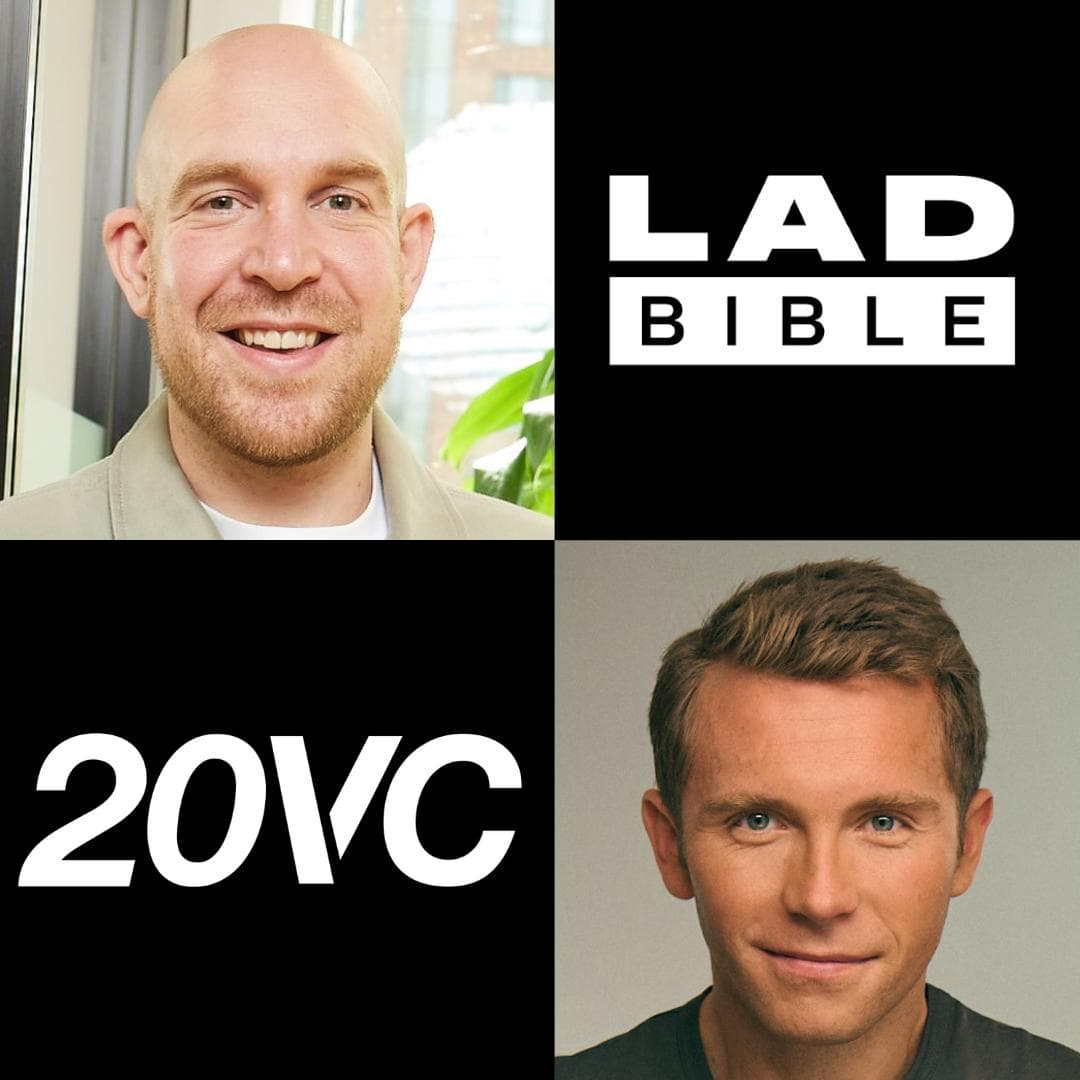
- Guest: Solly Solomou, Founder and CEO of LADbible Group
- Date: [Insert Date]
- Podcast Website: [20VC](http://www.20vc.com)
Overview In this episode, Harry Stebbings interviews Solly Solomou, the founder and CEO of LADbible, a leading digital media entertainment company that has reached a massive audience globally. The discussion revolves around Solly's journey from starting LADbible in a humble setting to establishing it as a public company with a substantial following.
Key Topics Discussed
- Origin Story of LADbible
- Founding Without Funds: Solly began LADbible without external funding or prior experience, driven by a profitable mindset.
- The Start: Initiated from a small office above a printing shop, he focused on creating an online community for students, which was the precursor to LADbible.
- Initial Marketing Strategies: Employed creative marketing tactics including flyers and collaborations with local businesses to gain traction.
- Defining Moments
- Encounter with Celebrities: A pivotal moment for Solly was when he secured a collaboration with celebrities like Kevin Hart and Ice Cube, showcasing the potential of LADbible.
- Business Evolution: The transition from a simple online community to a multifaceted media enterprise, expanding into various verticals like SportBible and GamingBible.
- Lessons Learned
- Failures and Growth: Discussed failures in product expansions and the learning experiences derived from these setbacks, particularly the importance of perseverance.
- Advice for Entrepreneurs: Solly highlights three key pieces of advice for emerging entrepreneurs:
- Focus on building a solid brand identity.
- Understand and adapt to market needs.
- Prioritize profitability from day one.
- Future of Content and Social Media
- Impact of Wearables: Solly believes wearables will revolutionize content consumption and interaction on social media.
- The Rise of TikTok: Expressed interest in TikTok's business model and the potential for social commerce, particularly through TikTok Shop.
- Concerns About Competition: Discussed the challenges traditional media faces against new digital platforms and the evolution of audience engagement.
- Differences Between US and Europe
- Market Dynamics: Solly shares insights on the contrasting business environments between the US and Europe, highlighting the larger market potential in the US.
- Going Public: Explains the rationale behind choosing to list LADbible on the London Stock Exchange and the accompanying challenges.
- The Role of Technology
- AI in Content Creation: Discussed the future of AI in media, emphasizing its potential to enhance creativity and streamline production.
- Democratization of Content: Explored how technology enables content creation for a wider range of individuals and the implications for traditional media enterprises.
- Personal Insights
- Being a CEO and a Dad: Solly reflects on how fatherhood has impacted his leadership style and decision-making, emphasizing the importance of being a role model.
Conclusion The episode offers valuable insights into Solly Solomou's entrepreneurial journey, the challenges faced in building LADbible, and broader discussions on the future of media in a digital age. The combination of personal anecdotes and professional experiences provides a rich perspective on navigating the ever-evolving landscape of content and social media.
Key Takeaways
- Perseverance and Adaptability: Key traits for success in entrepreneurship.
- Valuing Profitability: Importance of maintaining profitability from the outset.
- Leveraging Technology: Understanding and adapting to technological advancements can drive growth.
- Cultural Insights: Recognizing differences in business practices between regions can inform strategic decisions.
For more insights and discussions, visit [20VC](http://www.20vc.com).
Written by AI. May contain mistakes. Listen to the episode to check what was said.
Transcript
Automatic transcript. May contain errors.0:00All I knew was I had to make more money than I spent. And that was what I had to create. I didn't really understand the concepts of taking on investment and growing a business. So from day one, we were profitable. If I was to rewrite the scripts, I definitely would have started the business in the US. The size and scale of the market. It's huge. As we grow and build our US business, a dual listing might be the way to go. I mean, I am so excited for this episode today. Our guest has gone from founding the company with a small office above a printing shop with no money to being one of the largest and most engaged digital media entertainment businesses in the world and a public company.
0:43Sully Solimew is the founder and CEO of LandBible, which under his leadership has grown to reach two thirds of 18 to 34 year olds in the UK with a global audience check this out of almost half a billion followers. including 141 million in the US, the company's content now has a total reach of over a billion people worldwide. This is such an incredible success story. But before we dive into the show today, Secureframe empowers businesses to build trust with customers by simplifying information security and compliance through AI and automation. Thousands of fast -grown businesses including Nasdaq, Angel List, Doodle and Coda trust secure frame to expedite their compliance journey for global security and privacy standards, such as SOC2 and ISO27001, CMMC, NIST standards and more.
1:34Battened by top tier investors and corporations like Google and Client Perkins, the company is among Forbes' list of the top 100 startup employers for 2024. Cheetu's best software awards for higher satisfaction products and a recipient of the 2024 or cyber security excellence awards. Something I definitely never got in school myself. Learn more today at Secureframe .com. And speaking of trust and intelligence, let me tell you about Harmonic. Did you know that half of the 27 companies started last year by OpenAI alumni are still in stealth? I discovered this on Harmonic, the complete start -up database used by Excel, Insight Menlo, and hundreds of other leading VCs, as well as go -to -market teams from the lights of notion, and Brax and Google to find the best startups and founders, even in stealth.
2:19Few things annoy me more than missing around, where we know the founder and should have led the round. But now, this is a problem of the past. Harmonic maps everyone your team has ever met, emailed or connected with, to the source of truth for startups. So when that company that was just a little too early suddenly gains traction, you won't be too late. Or when you find the perfect company for your thesis or product, you'll know that Sarah Sarah just happens to know their CTO. How does Sarah know everyone? Who knows? She's a genius. Learn how VCs and GTM teams find the best startups six months ahead of the competition on harmonic .ai.
2:56And what's staying ahead of the curve is crucial. So is capturing high quality content. So let me tell you about Riverside. Did you know that every virtual 20 VC interview you listen to, yes, including with incredible guests like Mark Benioff and Sam Altman is actually recorded using Riverside .fm? It's the one tool I genuinely cannot live without. Riverside delivers incredible audio and video quality and it's just ridiculously easy to use. And the best part, my guests love how simple it is. They don't need an account or software. Just a simple click and they're in. When you're hosting someone like Mark or Sam, it kind of really matters that it's also really reliable, which it is.
3:33And Riverside doesn't just stop at recording. Their AI editor is a personal favorite. they make it so easy to create shareable clips, turning an epic interview into bite -sized moments to go viral on social media. If you're thinking about starting a podcast or upgrading your current setup, trust me, this is the way to go. Check it out at Riverside .fm4 -20VC and see why I can't live without it. You have now arrived at your destination. Solly, this is so special for me to have you in this studio. You've become a friend, I'm in awe of the lamp Bible journey. Thank you so much for joining me today.
4:08Thank you for having me on I feel very privileged This is my first an exclusive episode on a podcast So I feel very privileged on that basis that you've hubbed me on and I'm very pleased it's with you Dude, I'm so excited that you made us your first Tell me I want to start you know, it's 12 year journey and I read that it started a bother printer shop in a tiny tiny office So can you just take me to that? How do you come up with the idea for that Bible? I guess if I tell you back to me growing up, I was the kid who was selling sweets at school. So I was the guy who understood exactly which sweets were going to sell and which ones were going and then I went and negotiated with the news agent or the different places which I'll buy this week and buy them in bulk and then bring them into school and sell them.
4:52So I was that kid growing up. I also had clothes that I would buy and sell. Sometimes I'd have a knock on the door. If you want, my friends' parents coming around to buy some clothes. And so growing up, I always had this urge to do business, I guess. I didn't even know what the word entrepreneur was, but I had this urge to go into that avenue. It felt natural to me. I followed the course of going to university where I started the business. I was going down this path of, I'm going to go and do business management course. I'm going to go and work for a big business. And that's my career. This thing I was doing before university, the sweets, the clothes, all of this kind of stuff, you know, maybe that's not quite the career.
5:36Exactly. I need to be serious. So that was the mindset I had going into it. Coming into my third year of university, we had to go and pick a business to go and do a year in an industry. As we got closer and closer to it, I had all of these ideas of different businesses that maybe I wanted to do and I was chatting with my enterprise department professor Nigel Lockett, absolute legend. And he said, I've got this idea that I would like to potentially give people like you the opportunity to start your own business in a year in industry. Would you be my guinea pig? Which was completely exciting for me because obviously I can take this idea that I have, bring it to life, the university supported me with mentorship, funding and other things like that.
6:23If it didn't work out, I'm going back to university, which just felt like the dream. I've got this opportunity to start something without the risk of not knowing where I'm going to go afterwards at such a young age and with Nigel's brother as a mentor and a load of other support around it. So this was just amazing to me. In terms of actually trying to explain it to my parents, that I was going to go and try and start this online student community, recommending different bars, clubs, cafes, all of this kind of stuff was a bit like, you're what? You've kind of gone down this path of education, gone to university, we kind of thought you were going to go down this route.
7:01We got over that hump and if fairness to them, they were completely supportive. Do you think you would have taken the risk if you hadn't had the mentorship, the funding, that year of bluntly kind of guardrails around you to allow yourself to do it without the risk. I believe I would have found my way into that path. At the time I didn't know, but you just find your place, your natural place. And for me, ideas creating something, building something was something that I was passionate about. Before I knew it, this online shoot at community was something that I had to bring to life. So we started, okay, on day one.
7:37Do we have any money? Who funds this? And how do we actually start it? Yeah, so I guess through my endeavours early doors, I'd made a decent sum of money. So I had some money that I'd saved up from, not the sweet start, that was probably smaller play, but certainly the clothes and a few other endeavours. And I invested that into it. I also got some funding from the university. Can I have you bluntly, how much did you invest? Straight away, I probably had to outlay about £3 ,000 ,000 to facilitate doing the year in industry. So obviously I had a accommodation and I decided to get an office space straight away Which was above a printer shop and it did look like a prison because it had like prison bars across it But all in you are paying about a grand year for it Exactly exactly I had to keep the cost base low I didn't understand the concept of getting investment all I knew was I had to make more money than I spent And that was what I had to create and that was my mindset from the off I didn't really understand the concept of taking on investment and growing a business.
8:39So from day one, we were profitable, even with the first business which the online shooter community was rating these different bars, clubs, cafes. So that was the first product for lab Bible. It was the gateway to lab Bible. So I was doing all sorts of crazy things to market this thing. It was like chicken and egg way you've got, I need audience members to come to my website and consume this from leads. And I then need customers to advertise different cafes, bars, clubs, et cetera. So I needed to get the traffic, which I was doing all of these. I was utilizing the printer shop by getting these bugs printed off with the logo, sending them all around the different takeaway companies, I was doing flyers, all of that kind of stuff.
9:20And then I was going around the cafes, bars, clubs, and selling them advertisement space. So I had to kind of get both of these sides operating. and my granddad, who's an important figure for me, this is a funny story, he bought me this suit. I think he always wanted me to go into business and... And what I said... ...it was where they sit and it was a big suit, like sort of drain pipes, the kind of old school suit. I remember for the first couple of weeks wearing that suit to go and see the bar's club's cafes, quite quickly, I realised it probably wasn't a good idea. And I should put it away.
9:55I guess I was just figuring it out, it was so raw. You know, I was trying to figure out how do you start a business? I remember sitting there thinking, what do I do with a whiteboard out, you know, sort of try to work out? What's a business plan? How do I write this thing? How am I going to get that traffic? How am I going to get this advertisement money? I guess we're really kicked on his I was exploring different forms of marketing to really ramp up the traffic and Around the time everyone our ragers on Facebook. So this was 2012 Facebook at the time. I hadn't even listed It was still the dot com and you remember the old website, the blue and white and I think it had moved past the Facebook to Facebook.
10:34However, it didn't even really have a mobile app. Everyone was on Facebook. I explored email marketing, TV marketing, magazine market. It was all too expensive. Then I came to Facebook. Everyone was following this page called the lab bible and it had half a million people on it and I thought, do you know what? This is interesting because it's mainly based around students and it's got half a million people. This could be a really interesting angle to market this website over here. So I got chatting to the person who created it, Alex Partridge. We were chatting away, and I thought I'm going to offer to buy it.
11:08So I did. We had a bit of back and forth. He accepted, bought the lab Bible. How much did you buy the lab Bible? So he's in the low thousands. I wouldn't say specifically how much, but he's in the low thousands. Well, you know this because now it's a great deal, but I'm sure at the time. So for whatever reason and fair play to my mum, I couldn't transfer that amount of money from my bank. I don't know why, I just couldn't. I used my mum's bank and I had to explain this to her. She was like, what is Facebook? What is this thing? I was like, don't worry about it. It's all good. So she transferred the money, we got access or kind of came across and I remember just lay there on my bed thinking in what the hell of I just done.
11:52What the hell of I just done, I've just spent a huge amount of money, you know, sort of at this point, I'll be earning free maybe like 60, 70 % of the money that I'd saved up from previous endeavors, the funding, et cetera. And I remember sitting there thinking, I've really got to make this work. I don't know how I'm going to make this work, but I need to make this work and need to figure it out. Before we go to the next step, I do just have to ask, when you think about, I have to make it work. It's in stock contrast to that. I had the guardrails of a year. I had the mentorship the funding. Do you think you operate and do you think entrepreneurs operate better in environments where there is a Downside protection or in a do -all -die you have nothing if this goes wrong completely I believe entrepreneurs are creatives at heart and I think if you have too much to go up if you have no Constraint that creative process is ruined for me I believe in that pressure that creates the output.
12:47So I'll never forget about a year down the line. We'd shifted focus to Lod Bible as the business. So one day I woke up. Our Facebook page went down. It just disappeared. No email, no nothing just disappeared. Obviously my heart sank. So Went to work on thinking right how am I gonna speak to someone in Facebook? How am I going to speak to someone who can help me sort this out? And in fairness, it wasn't too accessible to speak to them. And I remember going across LinkedIn, messaging all sorts of different people. We managed to get through to the CTO. We spoke to the CTO who very kindly spoke. He didn't have to take the call.
13:30He took the call and a week later he was sorted. A week later he explained what it was. We sorted out some paperwork, it ended up being verification and the funny story on that it was actually my dad's account was also linked to the Facebook account and we were using that to post as well as others So we just had this extra account to post from and we had to verify Some of my dad's friends that he went to school with about 40 years ago to get the account back and I remember being on the phone to my dad said, Dad, can you see this picture? Is that person this name? It was that multiple choice. I don't know if you remember these kind of security checks and all that kind of stuff.
14:09It felt like the future of the business was hinged on this moment. On my dad being able to record this random person who is not in touch with anymore from school and get it right. Thankfully, we got it right. So we went through all sorts of challenges along the way, whether it was figuring out how to get the account back by the CTO, go through this verification process, or trying to figure out how to deal with that level of traffic that we would generate, because we'd have these huge spikes. Well, I just want to go to that because you, you know, you require it from Alex, and you know, it's already got half a million, but now you're in charge, you have to make sure that you can maintain traffic and grow traffic.
14:50How did you do that? We very early doors brought in some brilliant people at university. They send bulk emails sometimes accidentally to everybody in the business school. What I did is I took all of those emails, sent a note round saying who would like to do some work experience. I had a huge amount of applicant. So even in the early days where we had this office above the printer shop, I had like five people at a time on rotation coming through doing work experience. These are really smart people helping grow the business. I guess as we got further along, we then started to find out people who had created their own accounts on social.
15:31So as we started to grow the business, we started to get more advertisers, generate more revenue from the website, which happened really quickly. How did you first start to make money? It was through two means, so the first was consultancy. So we had all sorts of people getting in touch with us saying, can you help us grow our Facebook account. If you remember that time, everyone was saying, it's a Facebook like worth a pound. Is it worth 50p? Is it worth two pounds? I always remember those conversations. So everybody knew it was a thing that they needed to be on to reach millennials and young adults.
16:03However, no one fully understood where it was going to go. And so we had a few companies that approached us. We put deals in place that said, okay, if we help you grow your Facebook account to this, we would get this fee. And we did that and we did it a number of times. And again, back to that profitability since day one, that was always important to us. And we got some annual deals in place. Do you think that's a good thing? Because if I was at your investor, I'd say, were you sacrificing the growth of lab Bible court channel for consulting on the side to grow someone else's channel? Even our business model today has a big aspect of consultancy.
16:40You should have worked with Jaguar. I mean, no comment. No comment. I mean, you can't, I mean, you can't. It is terrible. I'm sorry. You know what? My black, I'd have it. My black, you'd have it. I would have it. My black. I'd take it in my black. Maybe famous slash words, but. That's the other thing. If they show reaches 10 million views, I'll buy it for you in my black. Okay, okay. Deal. Deal. That is amazing. So it goes back to those early days so we have consulting there and then we also have the advertising. And that's on the core channel. When did it really hit? When were you like, oh my god, we have something that could be very big.
17:19I remember this moment, so Remanchester. Our team was probably about 25. We had the best, best people who understood how to create the best Twitter accounts, Facebook accounts in the country I'd say. We had a group of them working in Manchester, some moved up, some were based in the North. How do you hire them? It is really hard to find these people. That is probably my single hardest job in the media company to find people who truly understand social. We all knew each other. It was like a community. So back then we were like DM in each other on Twitter, chat with each other on different messaging platforms, etc.
17:52We were in groups together and we all knew each other. One was in a call center, either was working in a nightclub and all of these different places. So this was super early doors where don't forget Facebook was launched in 2004. YouTube was launched in 2005. Facebook could only just listed in 2012. TikTok came in 2016, Snatchup 2014. So this was early doors where people were not making a living out of something that they loved doing. For us, we brought them in, gave them a career. They loved it. They still love it. Lots of them still work for us today, and we've continued that on you. I think that's why this is tough for them, because bluntly, anyone who is really, really freaking good at content creation can create it themselves and make a lot of money.
18:34Absolutely. And this is the hardest thing, why would you go and work in social media for net west or Halifax or BT or any of these companies when it's like I can go and create my own like how I am, what I do in a day, food reviews, you name it. Oh yeah, absolutely, Spawn. I mean, I saw a statistic that said that 11 % of the US population classify themselves as content creators. 11 %. So obviously people who create content is much higher, but 11 % and that's because of the democratization. still for a lot of them, unless they get lucky with a big brand deal or have a partnership in place. For a lot of people of that 11 % it's not a career, a lot of them fail.
19:13But just going back to the question that you asked me on that moment. So I remember being sat in Manchester in the McDonald Hotel, we managed to get ice cube, Kevin Hart and Stormzy who's not big at the time in a hotel room doing a rap battle. So we had Kevin Hart and Stormzy doing a doing a rap battle going by ice cube the one and only and it absolutely went off. So I think for me that moment when you say it went off like when you released it, I mean I think it's on my 10 million views. But this was before Stormzy was big before well, Kevin Hart and Ice Cube were obviously massive but Kevin Hart has become huge.
19:54For me that moment have been sat there in a hotel in Manchester getting two huge names in a room, having a rap battle with this up and come in UK star and them doing it for love Bible was a big moment. We have like 25 people, but from an all -need's perspective, it was huge. And after that we started to really build out the portfolio. So we built out sport Bible, we built out gaming Bible. Talk to me about the thinking behind that. Like was that like a okay wow, we see the audience growth on the back of this, audience growth aligns to the stature of people, we need to have ballers on our platform and that's what we should focus on.
20:32We didn't realise it at the time but we run this cusp of a massive wave that was forming. Magazines, newspapers, even traditional .com as we know it was changing. Facebook, Instagram, TikTok, Snapchat, YouTube and the emergence of these platforms over time. we understood better than anyone how to interrupt with at the time millennial audiences give them what they want. For us, it's understanding culture, understanding those audiences, understanding how to connect with them in an authentic way. I mean, it's just like getting a tree of options of where I can go, which I want to do every branch of this tree.
21:08So we're going to take one by one. You mentioned kind of a sport Bible in different verticals. Did each of them work very quickly? Because I think the biggest mistake that people make with content is they don't give it enough time. They start two months in, they don't have that many followers and they're like, no, no one wants it. And it's like, no, no, no, it takes time. Did each of them work very quickly? It took time and investment. So first things first, get the right people. The people who are living and breathing those different passion points, whether it's game in sport, tech, whatever it may be.
21:35Get the people who understand those audiences inside out, understand the platform and how to speak to them. Then empower them with tech and tools and dashboards and data that helps them make better informed decisions So very early on we had a tech team from the beginning of the company So we had a couple of person tech team. I think it was our fifth hire that we made We grew that and built it our data insights and tech tools empowering these creatives which I guess in a traditional world You'd have the creators on one side of the room and then you'd have the data people on the other side of the room and they would just put ads.
22:10For us, we very much encouraged and actually hired people who embraced creativity and data as one. I mean, you know this, a good thumbnail can be the difference between a million views or thousand views. Really mastering that art. And it's the same on every single platform. If you put the content forward in the right way, it can make a huge difference. So getting those people who understood those passion points, understood the platforms and really scaled it out. and we have just been relentless at this. And I often say in our world you've got the legacy brands, then you've got the mean players.
22:43In between here, you've got a few successful people who've created brands that people resonate with, know and love. Did any of the verticals not work when you look at the expansions that you made? Yeah, we definitely had failures. Which one, what happened? I forgot. I forgot the failures. That's it for me. I always think that you learn from... My biggest fail on a C and this is terrible as we waited eight years to YouTube. And that is criminal. We've had a ton of failures. What was the biggest? Probably not going into the US sooner. If I was to rewrite the scripts, I definitely would have started the business in the US.
23:21The reason for that is the size and scale of the market. You're talking a $400 million market versus a $70 billion power market here. It's huge and we've been very successful here. and the UK market is integral. We want to be market leaders in entertainment in the next five years. However, if we did the same thing in the US, different scale. So we've corrected that and a couple of years ago, started our office out in the States, someone who's been with us for 10 years went and started it organically. And then through being a list of business and having access to capital, which we did three years ago, it really gave us the firepower to accelerate that journey.
24:00So I would say if I could rewrite the script and do something slightly different. I did the other way round Do you think you would have won in the US like you have done in the UK? We are actually in a round to be similar position I often think back when I was 18 I was offered jobs in the valley I would be surrounded by very different people and very different types of companies and the honest truth is I don't know if I would win though this competition is so different the multitude of players is so different I can win Europe. I don't know if I can win the US you come Well now I really regret it.
24:34I believe that we could, yes. And the reason for that in the UK we're very conservative, but we have a nice chart before we talk business. In the US in particular New York, it's straight to it, straight to the hustle and they celebrate success in a big way. If you're hungry, ambitious, willing to roll your sleeves up, what a place that is to do business. Now, I love the UK and sometimes it's a bit much when you go to the States and you go to New York and it's straight down to the business and you don't have those chats. But I believe it's a great environment to grow a business and the culture there is supported.
25:12What did you not expect about expanding into the US? What was the surprise? I mean, it's like a lot of countries in one massive country. Each one has such a different culture. The views are so extreme. Again, butt to it, the left and the right, what you're interested in. And niche is not a niche over there. It's huge. It's huge. My brother has these old school cameras, and I would never see anyone walking around in the UK one of these. It's a niche. We were walking around in New York and we saw like five people over the course of a week who had these same old school cameras. And that really clicked to me that this place is huge.
25:51You really have to pick something and be the best at it, even if that's a niche. So to go in there and think that you could just take the UK style and repeat it in the US, it's not going to fly. In terms of expansion to US, that's what you didn't do that you wish you'd done. Yeah. What did you do that you wish you hadn't done? Over time, I had this mindset that it's all about the vision, it's all about the technical skill set and put no emphasis on culture. and this was early doors, I had no understanding of it. So sometimes what I would do is sometimes hire very, very quickly, bring people in the business and think this person's got an amazing, amazing technical skillset or they've got an experience that we just don't have in the business.
Read the full transcript
26:37Without thinking about, is this person going to gel with that other person to left of them or to the right of them? I'm really taking all of those elements into account Because when you're creating a team, one great individual, for sure, can make a massive difference. But when you've got a team who are working together and trust each other and create something amazing together, that's something else. So for me, putting more emphasis on taking a little bit more time with hiring, being clear on what the culture is, and also accepting that maybe that person with that additional experience or that additional technical skill set is probably not the right person on the basis that they under index on the cultural fit and therefore they're going to create chaos.
27:23So I think from my perspective that learning over time on understanding who we are and what we are and what kind of person works in our businesses probably the thing that I've got wrong a couple of times, well lots of times. When did you realize you hired too fast and how do you correct for that? The pandemic as many talk about is the classic one you went on a hiring spree Yeah, we went on a hiring spree time that was difficult to measure cultural fit I've heard this before I would dwell on this one because Jason the discord was like we went from 200 to a thousand in the pandemic I was like whoa I Put out a tweet this morning that I'm getting a lot of unit love and hate for I said honestly We all just chat shit about culture the only thing that matters about culture is that you have momentum.
28:09You're moving forward and you're successful. I've never met a really successful company with a shit culture. Ravallute is a great example of that. It's not a fluffy culture, but the company is humming. The IPO is in sight, and the culture is on fire. You can have, oh, a lovely culture and the company is going to shit, I don't think so. I think that's it. What you've talked about there, my definition of culture, what we hold of high importance is people that want to grow and evolve. We often talk about whether it's the mountain and the further up you go, the lower the altitude, the less oxygen the harder it gets.
28:42Where we want to go is from, let's say, the quarter of the way up the mountain and guess far as we can to the top and to the pinnacle of the mountain as we possibly can. For us going from quarter of the way up the mountain to as close as we can get to that pinnacle is going to take some serious work and we're going to need people that are ambitious, hungry, want to grow every year their job is not the same. Every year that has gone on, my job has been different, whether that's being a private business, going to a public business to have in an American element to our business, to growing to 500 from 100, each element of our business and the evolution of it has meant that my job has been different.
29:23And we need people that want to embrace that, that are excited by that. But I think values are important and I think everyone gets them wrong because you have to be four against values. Our values is direct is never rude. If I sit down and say, sorry, this is shit, you can't go, oh, that took me so much time and I really feel hurt that you don't. It's never rude. We're all here to win. We're all here to grow. Some people disagree that direct can be too rude. Another one is longer hours leads to more success. The harder you work, you just don't like more likely to be successful. Some people disagree with that too.
29:53Oh, you're more strategic if you have more time off bullshit. all this stuff. I think that's a massive problem, which is like people create values that no one can disagree with. Hit me with a value. Coming back to trust. Do you trust when you pass the ball to that person? They're going to do their part to deliver what they need to. If you trust that and know they're going to do that, that's one aspect to it. The other is, can I be open with you and you take that in the right way? Can I trust you to take that in the right way? and then have an open conversation on how we work together to make that thing better or improve it or change it or whatever it might be.
30:31For me, that trust element is so important. Do you really think we can? We live in such a woke, left culture. Well, you can't say anything without upsetting someone. Yeah, well, I think that's why the US expansion fee is going to go very well. He's going to go very well. It's the perfect environment. Do you worry about that as a leader though? Like constantly upsetting someone? We're a professional outfit. To get to where we need to go, we need to have high standards. And if those standards are not met, we need to address them and change it. So another element of something that I hold of high value is excellence.
31:07Whether that's for the audience who are our customers or a client here are our customers. We have over 500 million followers now, across Facebook, Instagram, Snapchat, YouTube. we generate over 3 ,000 views every second, and in order to produce that, you need to be living and breathing and understanding that audience. To really nail that and grow an audience base of that size and scale, 500 million people over half of UK adults consuming what we do on a monthly basis, two thirds of 18 to 34s in the UK, you have to operate with excellence. When you mention size and scale of audience and then also the excellence of the team, I think to a constant dilemma that I think about which is to a word you said earlier, you said democratization.
31:54And I think about this a lot because I see your Sam Seulux, if anyone who doesn't know he's like, you know, real kind of bodybuilder style, huge, very amateur camera in corner on iPhone, no captions, no beautiful visuals, no nothing. And then there's, you know, we have amazing visuals, amazing video teams, much bigger and much more so, but are we in a world of democratised content where Sam Sula can put a phone up and do what he does, or are we actually in a less democratised world, which is more players like us win because of resources, skills, teams? I think there's different circumstances that require different elements of that, so we recently worked with Tesco, brilliant, brilliant clip of Father Christmas picking up his meal deal at Tesco really quick fire behind the camera Works perfectly and has absolutely flown.
32:47That's a way in which you can weave brands into culture in a way That doesn't necessarily need to be Ridiculous production value TV advert and I think AI is going to be so interesting on this when some Altman came over to the UK He demoed their version of video creation, the ability to pop into chat GPT, a visual and a video that you may want to create, and it is mind -blown where things are going. So for us in an entertainment business, you can imagine a world where we're creating movies and because of that democratization and the access to technology, using an embracing technology like that.
33:29The cost of creating a movie where maybe 25 % 30 % of it is AI generated or assisted. I'm worried that AI will create an infinite supply of content. What happens, obviously if you are an economist, which I'm not for sure, but as a venture investor, I proclaim to be one, it reduces price. Infinite supply will also mean discovery is inherently more challenging. I am worried what happens to discovery in a world of infinite content supply. I'm an optimist. So I'm excited you are not British I'm genuinely excited by the movement forwarding technology with the introduction of the lights of AI Allowing you more time for the creative process.
34:10So there's some things like desk research that I've just become way easier sub editing language translation. I mean some of the tools that are available on dubbing. Oh, yeah, Nathan We actually turn one of our as our sports shows because you know sports show and we turned it with the Australian cricket captain into Hindi They got over 200 ,000 views in a day, which was I thought pretty impressive. Yeah. And I think that's it. I think if you're willing to adapt and embrace it, it's an opportunity. If you're wanting to go against the title, I mean, the world has never changed on that basis. Anyone who has lent into change, I think Meta reports something like $30 billion into AI.
34:47The list goes on in terms of those other players. They were making their big bet in the Metaverse and other areas. What a pivot that is. What do we think is crazy today? It will be like, yeah, sure. But I always think back to like, you know, putting your credit card online. Never do that now, obviously. I never find my husband or wife online. Now, obviously, one and two. What is, do you think, crazy today that will be very standard? Mobile phones. They're going to be this clunky item that we carry around right now. And look back on and go, why did we hold that thing? Why did we do that? We're going to have wearables that are going to make it way more seamless.
35:27So it's not even anything other than extension of things that you'd normally wear, as we're seeing with watches, as we'll see with glasses, maybe 10, 15, 20 years. That's what we may be looking at as wearables become more advanced as you're able to put more process in power into smaller things. I believe that the phone will become something that we look at as a clunky item and look back at, why did we ever do that? I want to go to the IPO. This is an incredibly special moment. The dream of an entrepreneur is to take your business public. Why did you decide to take the business public when you did?
36:04It's coming up to three years in a couple of weeks time, which was a bizarre experience. We were meant to go to the London Stock Exchange and for the whole pandemic, madness that was going on, we couldn't do that. So I remember sitting on the sofa with my wife and little boy ringing the bell on the sofa on this Zoom. It was madness. Not the experience you think. However, in terms of the reasons why we did that, we believed in the opportunity of the US growing our business out there. So we have over a hundred million audience members out in the states and we know that we've done the hard bit. It's done about establishing the business and growing out there and accelerating that.
36:49We believe by being a list of business, having the additional firepower, the paper and the status, it would enable us to accelerate us forward to growing and expanding the business and so far in terms of the Betch's acquisition and also having that firepower and the options and the PLC status, it's definitely given us a leg forward in terms of going after what we believe we can be. How much money did you raise in the IPO? In total, around 120 million. You have 100 million audience members in the US. Why not list in the US? That could be an option in the future as we grow and build our US business.
37:30A dual listing might be the way to go, but we need to build on the success of what we've started with the Betcher's business and our organic business out there and really continue to build, expand and grow that. And as we do have a bigger US business, it may start to make more sense to us to have a dual listing and look at what that might look like. How has being a London listed business been? I know a couple and they say it's bluntly very very hard. Yeah. Talking from personal experience, it was a big learning curve on going from being a private company to being a list of business, having a set of stakeholders that think and want information in a certain way whilst also running your business.
38:16So, adapting to that and learning and growing and understanding how to manage that was a whole learning curve in itself. I'm hungry and ambitious, I enjoy learning. So for me, there was points in which I was challenging. However, the learning curve has been amazing. I would never look back and take any of that away. So, from that experience of going through it, it's been fascinating. Certainly, the benefits that I mentioned before have been brilliant. So, do you think pension and fund support the UK public market like they should do. I had a great chat with Julia Hoggut, CEO of the London Stock Exchange, and she's got some interesting plans.
38:56Those plans are going to take time, but I believe some of the steps that they're putting in place certainly revitalise and rebuild some of that UK investment that maybe isn't there right now, and that is going into US markets and other places. However, I believe the steps have been taken to revitalise. What's the most exciting step? Again, it comes back to it. It's that investment back into the UK market. There's a huge amount that is setting ISIS, that is setting low return pension funds that could be utilized to grow at high rates, but also stimulate and encourage more innovation and more businesses in the UK market.
39:35Here's Tom, that joins us. He is a solid, brilliant public company CEO. Love your advice on what I can do to stimulate growth in the UK economy. What would you say to him? I think we really need to embrace tech in a big way here in the UK and here a bit further. How could we do that? We need to look at the environment and we need to think about why is it that businesses consider moving to the US versus being here in the UK and think about how we can replicate certain elements of it to compete. And there are lots of pros of the UK markets, the stability, the structure, and all of the disciplines that come with the UK market.
40:14However, we probably need to look at the way in which it can evolve. Mentorship. Do you think the best thing is when a building in London? Ten years ago, I mean, when I started, and it was like transfer wise, it was monze, it was revenue, and actually there was a series of financial regulatory, not loopholes, but freedoms that meant that London was a great place to build a Fenteb business. And we've seen the fruits of that. Fantastic. Now, I do not think the developers or great founders want to build businesses in London. And I would like to be changed by my own answer. I think when you start a business, and this is just my personal experience, location isn't even on the mind, it's just survival or moving forward.
40:52So I think we could do more to help along that journey here in the UK. However, I still think it's a fantastic place to grow business. and so many entrepreneurs who have been successful and so many emerging entrepreneurs who have been given opportunity to grow and build. Would they be bigger in the states? Well, you're talking a 300 million population country versus 70 million here. A market that in some ways is nearly five to eight times the size here in the UK. So you do have more opportunity in a place like the States. However, we have been the home of some really successful businesses, whether it's something like Dyson.
41:34And you look at a business like Dyson and the innovation and the products that they've created and the brand globally is phenomenal. Before we do a quick fight, you just have to touch on platforms. TV. We spoke before about kind of like 70 % I think of internet advertising. Water advertising is now online. Is TV dead? TV has its place. I guess it depends what you categorize is that I'm a massive believer in connected TV and the likes of YouTube, Netflix, Amazon Prime, all of these different subscriptions that we have and we've all got too many. I believe that that's the future and where things are going and I don't think that's going to be news to anyone.
42:11Audiences on traditional TV are reducing down. Behaviours are changing where even when you are watching a TV show, whether it is on a traditional broadcasting channel, it's on a Netflix or an Amazon Prime. You're still joulescreening. I don't know how many times I get told off when I'm watching, I showed my wife Jess, I'm just there scrolling on my phone. It's just a habit that we've created. In some ways, whether you're watching sport or whether you're watching some sort of series that you want to connect with with your friends, and you're in WhatsApp, and you're talking about it, and you're talking about a score, or you're talking about something that happened, or whatever it may be, it does enhance that experience.
42:52So I believe that behavior is a change in traditional TV, newspapers, magazines, etc. The number of speed for themselves. That market has gone from being 70, 80 % of the market down to 20 % digital is changing the game. And for a player like Cuzz, that has a huge amount of attention and eyeballs across that young adult demographic. That's a great thing. And for those businesses that adapt, again, that's a great thing. Should take the top of your band. It can be another big question. I feel like there's quite a lot of political questions. Political underneath that. So I think TikTok is a great product.
43:31Great product is just the stickiness of the feed and the understanding of you and serving you content that you love. The inspiration of shops really smart. That is something that I'm fascinated by. In the next five years or less, it's expected to be a one trillion market. the TikTok shop social commerce world overall is expected to be a one trillion market. In China, it's already massive, absolutely massive, but I know so many people now, millennials and Gen Z audience bases who are buying from TikTok shop. It's a really interesting time where to create is an opportunity to monetize through affiliates across TikTok shop.
44:16So one of the things that they've been able to nail is not just selling directly to consumer, they are selling two consumer via creators. So their whole thing, they want to be the next Amazon. I was speaking to a friend of mine who's over at Snap and he was saying, those guys are two steps ahead. They want to take on Amazon and they are paving the way. From my perspective, they are someone you cannot ignore from the quality of the product and what they have on there, but also the innovation through shop and other aspects of that. And I see us showing up in ways around entertainment across that.
44:52I see TikTok shop being a part of our ecosystem and how we play in that in the future. And we've done some experimentation and we can see that being a part of our ecosystem and how it could evolve. That was a very elegant weaving around the actual question of should TikTok be banned. You know, from a product perspective, no. I believe that to China and data. From a product perspective, it's moving things forward. And I'm looking at it through that lens. In terms of is it being abused and the data and information? It's way above my head. I don't know. Do you mind your children having it? So taking it back to my youth now, I was thinking, the minute you tell me you can't do it, I'll find it in a way.
45:31I'm getting it to me. I mean, VPNs weren't a thing back then, but I mean, I am finding a way to get it. So I think that needs to be carefully managed and my kids are two and four. So I think I've got the best years to come where I have to manage that kind of. Would you let your kids have social? I would, yeah. I'm obviously aware of the pros and the amazing things that can come from that. But also the cons, you know, bullying some of the things that you can get access to, but this was no different to when we had dial up. You know, I mean, I remember sitting on the computer and I think my parents are on the phone and I was shouting down the stick, can you get off the, I'm trying to do my MSN and all this kind of stuff, but the stuff that you could access and things that could have been said across MSN, it's no different.
46:17But I think back to this kind of making sure that we're thinking about an environment and how to make it safe is really important. I think people demonize social in the way that a diet can be demonized. So if you're on my TikTok Instagram e -name, there's protein recipes, there's inspirational talks from Tony Robbins and that under bottom and great thinkers. There's baby videos, I think baby videos are hilarious. I have curated a feed that's really happy and inspiring I learn. And just like you can have carrots or don't us, you can curate your own feed or diet. And respectfully, it's up to you.
46:49You're an adult with responsibilities. Completely. And I love to see what your top 10 towels are. I've seen this. What girls think your Instagram is and then what it really is. and what it really is is like protein recipes, you know, sure, a workout routines. Completely. Yeah. Yeah. I'm probably too old now, but like snap for our generation is like, he uses snap. Yeah. What do you see with snap given your purview? Yeah, I mean, they are huge amongst the younger demographic is it's the number one messaging platform. I'm so sorry for word messaging for like a camera or photo messaging? Yeah, like their version of WhatsApp.
47:32They have WhatsApp, but it's also, I message it's their version and that whole disappearing, that privacy element of it, what Snapchat offer is massive for them. It's also the maps. I don't know if you've been on the maps and you can see where all of your friends are in the world on the maps if you've got it turned on. Like there's so many cool features in Snap and they've got some brilliant technology, brilliant innovation. they've always been innovators and quite often you've seen obviously they've been taking some features from other platforms and other platforms have taken features from them but snap have been brilliant innovators I believe snap is an interesting place over the next five to ten years whether it can compete with the TikToks and the matters at this scale I mean these players are huge and we've seen what they've done in AI we've seen what they're doing in e -commerce and these kind of bets that they're making.
48:24They are massive. So I believe it will be a place for innovation, a place for young adults, in particular Gen Z, and we'll see how they connect to a gen alpha. It's an interesting product. If you would have buy and short one of the incumbent social platforms, who would you buy and who would you short? So you've got Instagram, you've got YouTube, you've got TikTok, or WhatsApp, you've got a Facebook. I would say TikTok, I would buy, matter, I would buy on their big bets that they've made. Yeah, those would probably be the two. And you're sure I would sure, can we sure X? It isn't. No, we could ensure X because...
49:03No way! I mean, you go against Elon. So as a product that will evolve and the whole AI product, he's creating and all these other aspects, it'd be hard not to... to back him on that front as a platform, as it is now, I believe it needs to evolve. And as a marketing platform, again, I think it needs to evolve. Listen, dude, I want to move to a quick fly. I say a short statement. None of them are politically leading or like dangerously difficult to navigate. So what do you believe that most around you disbelieve? I believe probably that the impossible is possible. Sometimes I'm sure there's certain things that I say, such as us moving up the mountain, in, getting as close as we can to some of the biggest companies in the world.
49:49I'm sure there's lots of people that probably doubt that. I'm sure there will be lots of people that would probably question the ambition early doors on where we wanted to be and where we are now. So I may hope less optimist in that sense around ambition and what can be done and what humans can do in a chief. So I think maybe that is probably the one sometimes. I do have to check myself, make sure I have the right people around on that from. But what's the hardest thing about being CEO of LabBible? I'd say it's the constant change in evolution. Every year is a new job. It's a new job. I'm understanding how to navigate the US market.
50:28I'm understanding how to navigate a public environment. However, I enjoy that change. I enjoy the variation. I love challenge. And one of these people where if I wasn't in LabBible Group, I'd be trying to climb Mount Everest or Kilimanjaro or something like that. I just need a challenge. For me, La Bible group fuels that. It fuels that challenge. It tests me. It pushes me. It challenges me. But I enjoy that. The heaviest things in life are not iron or gold, but unmade decisions. What unmade decision rests on your mind most? It's a fantastic quote, you're right. Unmade decisions. There's so much emphasis on the importance of making the right decisions in our jobs, you just have to sometimes make a decision.
51:15That is sometimes the paralysis that you can end up where you take too long to make a decision, you aim for perfection, but sometimes you just need to go with the decision, back it, make it quickly, trush you gut, trush you intuition and go for it. And the moment's I regret is not listening to that intuition and leaving it too long, questioning myself too much. So that connection of intuition, gut feel, and making a decision on it generally is a thing that I constantly check and balance myself. What have you changed your mind on the last 12 months? Being a dad is the best thing ever and it can also be the most humbling thing ever.
51:52I guess going from someone who my daughter loves and is obsessed with is a two year old to being someone who she feels, who I feel she hates. And the ups and downs of that roller coaster where you love, you absolutely love this human more than anything. And that experience of the ups and downs of that is mind blowing. I guess taking it outside of business, it's that up and down of being a dad having something then outside of business that humbles you in different ways. That's something that is an emotional rollercoaster in itself, but a very special thing. What's your favorite consumer brand? And why?
52:40Favorite consumer brand? I mean, Apple. I think Apple has to be up there. Let me expand it. I go Apple, Nike, Disney. These kind of businesses. Do you think Nike's lost? No. I think he's a very, very special brand. And I believe it's lost its way and sometimes businesses do. and we work with them, they want to understand Gen Z in a better way and we're working with them on that basis. But I do not, I think it's got too much heritage, too much equity in the brand that is built. You think back to the Michael Jordan advertisement, whatever it may be, but Apple's special. If you look at brand products, the way they've expanded their product, the quality of what they do, that's special.
53:21So for me, I'd probably say Apple, but bunch the others in there too. You can be CEO of any other company for a day. What company you see of? I'd probably say Disney. I'd want to see Inside Disney coming back to Entertainment Powerhouse. Disney have achieved that status and they've managed to evolve from this animation TV show to Disneyland to Disney Plus to Marvel to Pixar to some of the greatest movies experiences that you can possibly experience and the whole feeling that comes off the back of that. So I would like to be inside there to see that magic and how it all takes and go back into the history of what I know and see how it looks underneath the bonnet.
54:07That for me would be a fascinating company. What character trait are you kind of ashamed of, shy of, embarrassed of, that also makes you really quite successful. I am extremely goal focused. I can really lock in on a goal. Everything else moves out the way. The great thing about that is being able to lock into that goal, home in, and go for it. The downsides of that is you miss things on the periphery sometimes. So it's good and bad and I have to check and balance myself on that basis. But I would say that's probably the two sides of the coin to that one. Final one for you. What question are you never asked by employees, by anyone?
54:48Could be a public journalist, could be public marketingists, that you're like, I don't know why no one asked me this. What's it like being a dad and a CEO? No one asked you, huh? No. What is it like being a dad and a CEO? Well, how does being a dad make you a better CEO? Before I had Alfie, I was first boy, I would roll the dice on every decision. put it on the table, no problem. Having Alfie made me think about things very differently that it's more than just me and Jess, it's me Jess and this little human who's dependent on us and what we do and every action that we take, whether it's a mannerism or word that we say they're taking it in and they can replicate it all the way through to safety and making sure they have a life that you want them to have.
55:40And I would guess in terms of the biggest thing for me is pushing me to be a better role model. It makes me think about who I am, how I show up, and I often look at it through the lens of, how would I feel if Alfie did that? So I would say that role model piece and thinking about my actions a little bit more is the good thing from it. Solly, this has gone from inspirational to politically charged, which she did very well on, to inspiring at the end there. Thank you so much for putting up with my kind of meandering pause and this has been fantastic. Amazing, thank you very much, Harry. Really appreciate you having me on.
56:17I mean, I want to say a huge thank you first to Solly for giving up the time. But also for the friendship, Solly has become a dear friend since we met about a year ago or so, and I'm so grateful for the conversations we have for the discussion stay. If you want to check out the episode you can find it on YouTube by searching for 20VC, that's 20VC on YouTube. But before we leave you today, Secureframe empowers businesses to build trust with customers by simplifying information security and compliance through AI and automation. Thousands of fast -growing businesses including NASDAQ, Angel List, Doodle and Coda, trust Secureframe to expedite their compliance journey for global security and privacy standards, such as SOC2 and ISO 27001.
56:57CMMC, Miss Standards and more. Bat by top tier investors and corporations like Google and Cliner Perkins, the company is among Forbes' list of the top 100 startup employers for 2024. Cheetu's best software awards for higher satisfaction products and a recipient of the 2024 Cyber Security Excellence Awards, something I definitely never got in school myself. Learn more today at SecureFrame .com. And speaking of trust and intelligence, let me tell you about Harmonic. Did you know that half of the 27 companies started last year by Open AI alumni are still in stealth? I discovered this on Harmonic, the complete start -up database used by Excel, Insight, Menlo, and hundreds of other leading VCs, as well as go -to -market teams from the likes of Notion, Brax, and Google to find the best start -ups and founders even in stealth.
57:46Few things annoy me more than missing around where we know the founder and should have led the round. But now, this is a problem of the past. Hormonic maps everyone your team has ever met, emailed or connected with, to the source of truth for startups. So when that company that was just a little too early suddenly gains traction, you won't be too late. Or when you find the perfect company for your thesis or product, you'll know that Sarah just happens to know that CTO. How does Sarah know everyone? Who knows? She's a genius. Learn how VCs and GTM teams find the best startups six months ahead of the competition on harmonic .ai.
58:22And while staying ahead of the curve is crucial, so is capturing high quality content. So let me tell you about Riverside. Did you know that every virtual 20 VC interview you listen to, yes, including with incredible guests like Mark Benioff and Sam Altman, is actually recorded using Riverside .fm. It's the one tool a genuinely cannot live without. Riverside delivers incredible audio and video quality, and it's just ridiculously easy to use. And the best part, my guests love how simple it is. they don't need an account or software. Just a simple click and they're in. When you're hosting someone like Mark or Sam, it kind of really matters that it's also really reliable, which it is.
58:59And Riverside doesn't just stop at recording. Their AI editor is a personal favorite. They make it so easy to create shareable clips, turning an epic interview into bite -sized moments to go viral on social media. If you're thinking about starting a podcast or upgrading your current setup, Trust me, this is the way to go. Check it out at Riverside .fm4 -20VC and see why I can't live without it. As always, we so appreciate all your support and can't wait to bring you an incredible episode on Monday with Jonathan Ross at GROC.
From the publisher
Founder and CEO of LADbible Group, Solly Solomou has built one of the largest and most engaged digital media entertainment companies in the world. Under his leadership, LADbible has grown to reach two-thirds of 18-34-year-olds in the UK, with a global audience of over 494 million followers, including 141 million in the US. The company’s content now has a total reach of over 1 billion people worldwide.
In Today’s Episode We Discuss:
From Printer Shop Office to Ringing the IPO Bell:
-
How did Solly start LADbible with no money and no experience?
-
How did a moment with Kevin Hart and Ice Cube show Solly that he had something special with LADbible?
-
In the expansion of the business, what new products did not work? What did Solly learn from the failures of products?
-
Why did Solly always want to build the business without an external funding?
-
What are the top 3 pieces of advice Solly gives to young entrepreneurs starting a business today?
The Future of Content and Social Media:
-
How does Solly see wearables changing the future of media and social?
-
Does Solly agree that the friendship graph has been eradicated by interest graphs?
-
Does Solly think TikTok should be banned?
-
Why does Solly think TikTok Shop is the most interesting product in social today?
Europe vs US: Is Europe F******:
-
What are the single biggest differences between doing business in the US vs Europe?
-
Why did Solly decide to go public in London on The London Stock Exchange?
-
How tough is it being a public company in London?
-
How important are local liquidity markets if Europe is to regain competitiveness?
-
If Solly were advising Keir Starmer on how to stimulate growth in the UK, what would he say and advise?