In short
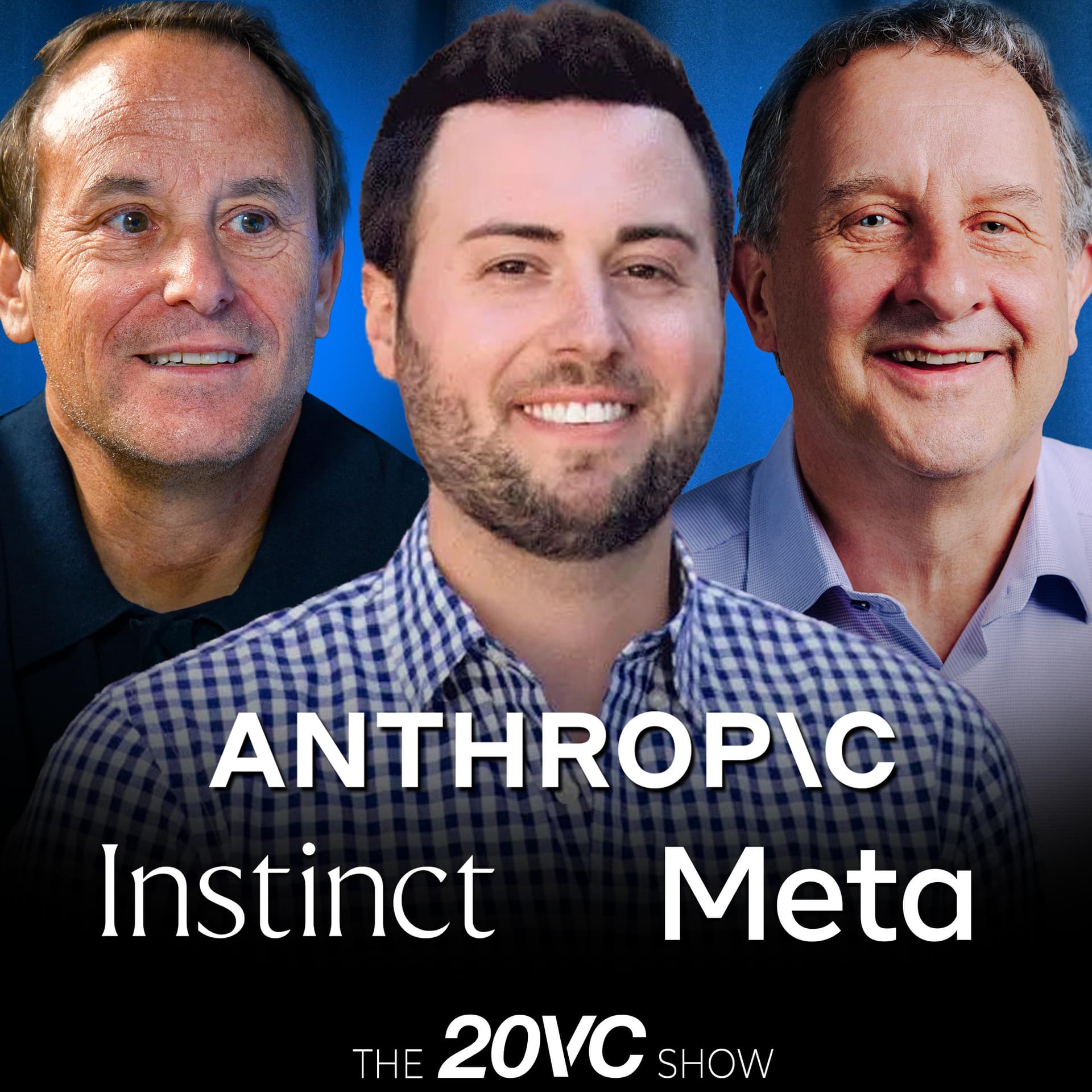
Podcast Summary: The Twenty Minute VC - Episode with Christian Hecker and Johan Brenner
Episode Details
- Title: 20VC: From Selling 75% of Trade Republic for €600K to Raising $1.3BN at a $5.3BN Valuation
- Guests:
- Christian Hecker: Founder and CEO of [Trade Republic](https://traderepublic.com/en-de)
- Johan Brenner: General Partner at Creandum
Episode Overview In this episode, Harry Stebbings interviews Christian Hecker and Johan Brenner, discussing the journey of Trade Republic, its fundraising success, and the challenges faced while scaling in the European market. The episode highlights key fundraising lessons, growth strategies, and insights into the European startup ecosystem.
Key Topics Discussed
- Selling 75% of Trade Republic for €600,000
- Initial Challenges:
- Christian faced difficulties securing funding in the early years, meeting over 200 VCs without success.
- Eventually sold 75% of Trade Republic to an angel investor to secure initial capital, believing it was better to have a small share of something significant than a large share of nothing.
- Advice on Capital Table Construction:
- Christian emphasizes the importance of maintaining a founder-friendly cap table for future fundraising rounds.
- Raising $1.3BN From Renowned Investors
- Fundraising Lessons:
- Building relationships with investors over years is crucial before approaching for funding.
- Christian shared his experience with Doug Leone from Sequoia during the fundraising process.
- The Importance of Fundraising Skills:
- Johan indicates that being a great fundraiser is a vital skill for founders.
- Scaling into Europe's Next Decacorn
- Challenges in Fast Scaling:
- Christian and Johan discuss issues that arise during rapid growth, such as customer acquisition costs (CAC) and the sustainability of marketing channels.
- Christian's shift from paid marketing on platforms like Google and Facebook to influencer marketing reflects a strategic pivot based on customer engagement.
- Europe: A Hub for Innovation or a Retirement Home?
- Cultural Perceptions:
- Discussion on whether young Europeans work hard enough, with Johan highlighting the lack of exit markets as a critical challenge.
- Recommendations for Improvement:
- Christian suggests that Europe must embrace a more ambitious approach toward innovation and support startups with better exit opportunities.
Key Takeaways
- Persistence Pays Off: Christian's story illustrates the importance of perseverance despite rejection from VCs.
- Focus on Core Metrics: Trade Republic prioritizes monthly recurring deposits as a key success metric, emphasizing the importance of building long-term relationships with customers.
- Adaptability in Strategy: Transitioning from traditional performance marketing to influencer marketing showcases Trade Republic's agility in responding to market conditions.
- Building a Supportive Ecosystem: Both guests stress the need for a more robust European startup ecosystem that encourages innovation and facilitates larger exits.
Conclusion The episode provides a comprehensive look at the journey of Trade Republic from its inception to its significant fundraising milestones. Christian and Johan's insights underscore the importance of strategic relationships, adaptability, and an evolving mindset within the European startup landscape.
Written by AI. May contain mistakes. Listen to the episode to check what was said.
Transcript
Automatic transcript. May contain errors.0:00between I think 2015 and 1990, I met over 200 VCs. I was rarely invited and every time we were invited, we almost never saw the partner. Nobody really gets anywhere close to writing a term sheet. And then somebody said, well, you should meet this company in Düsseldorf in Germany. And we met them and they were very eager to invest. But they said, well, I think we have leverage. And so it's either this or nothing. And so we said, well, it's better to have a tiny shareholding of something big than a big shareholding of nothing. And so we did it. and then we raised 600 ,000 euros back then and saw 75 % of the company.
0:33This is 20VC with me Harry Stebings and Trade Republic is one of the most incredible stories in startups, one of the fastest growing companies in Europe. Now, having raised over $1 .3 billion from some of the best including Sequoia, Excel, Founders Fund and Criandum with their last round valuing them at $5 .3 billion and today we sit down with their co -founder and CEO, Christian Hecker and their early lead investor and one of the best Fintech investors in Europe, Job, Johan Brenner, General Partner at Criandum, but before we dive into this incredible discussion. There's no shortage of helpful AI tools out there, but using the mean switching back and forth between yet another digital tool, what was supposed to simplify your workflow just made it way more complicated, unless of course you're in Notion.
1:17In Notion you can automate the tedious task, like summarizing meeting notes or finding next steps, really freeing you up to do the deep work that we all want to do. And that's why notion is used by over 50 % 50 % of Fortune 500 companies and teams that use notion, send less emails, cancel more meetings and reduce spending on tools. Try notion for free when you go to notion .com slash 20VC. And speaking of amazing products like notion there, I'd like to talk to you about a company called Digis. There are full service AI accounting company and if you're in need of an accountant or looking to switch, there's no better solution than Digis.
1:55Starting at just $350 a month, which is less than half of what you'd pay a traditional firm, digits is the most accurate, most efficient solution on the market. They've developed proprietary AI technology that automates tedious financial tasks and delivers reports of the actual close of the month, not two to three weeks later as always. And they also allow you to keep track of key metrics like revenue, burn, cash flow and runway in an incredible live dashboard. the best part of all of it. This is vetted and signed off by their in -house CPAs. If you're interested, visit digits .com fordslash20vc to claim your special office day.
2:33That's digits .com fordslash20vc. And finally travel in the expense and never associated with cost savings. But now you can reduce costs up to 30 % and actually reward your employees. How? Well, the van rewards your employees with personal travel credit every time they save their company money when booking business travel under company policy. Does that sound too good to be true? Or Navan is so confident you'll move to that game changing all in one travel corporate card and it spends super app that they'll give you $250 in personal travel credit just for taking a quick demo. Check them out now at navan .com -4 -2 -0 -VC.
3:13You have now arrived at your destination. Guys, I am so excited for this. I've heard so many wonderful things in doing the referencing for this show. So first, thank you so much for joining me today. Thank you, Ari. It's great to be here. Yes, same. Thanks. Great to hear you here. And we're good listeners, so look you forward to being it. Well, that is very, very kind of you. So I want to start with just a little one minute intro from each of you, just so the audience can get familiar with your voices. So, Christian, why don't we start with you and then you own over to you? Sure. So, it's Christian, one of the co -phones of trade republic.
3:43We saw that journey, I think, nine years ago. Before that, we worked in the investment banking and before that actually started philosophy. So no clue how I ended up here, but it's a little fun. I'm a venture capitalist. I'm a partner at Kriahandam, which is an early stage investor in Premier in Europe. I started my Korean big companies, became an entrepreneur. My first company I started was actually an online trading outfit that I sold to E -Trade 20 years ago. I started my career as an operator, became an entrepreneur and then joined actually Benchmark in Europe 20 years ago, actually to the date, and joined Kriahandam a few years date and been with Kriahandam for 15 years.
4:17I do these schedules and I completely point this because I never states them. So I'm just going to not bother. You mentioned that, just like E -trades, Johan. And like, when you know an industry so well, it's so easy to think that, actually, oh, I know everything in that site, not a good industry, where you have these preconceived ideas. Did you have preconceived ideas when you first met Christian? Well, actually I did. When I met Christian, I fell in love with him and his team and what they were doing. But my colleague came to me one evening in March 2019 and said we have this opportunity to look at a Robin Hood of Germany.
4:50Do you want to take a look? No, I said so I said to myself This has been around for 25 years. I've done this before nothing has happened I wrote me notice coming and Germans they don't save anything else but in the mattresses And then I woke up the next day and I said hey, maybe there is something there But, Björn, why don't we take a corn with a team? And I did, and there's this history. So I did have a preconceived idea. I want to take a couple of years step back, though, Christian, because you know, it started in 2015, so can you just take me to 2015? You decided not to race. If we start that and the early years, why did you decide not to race in the early years from that 2015 to 2018 period?
5:30Well, of course. So I think first of all, it was never a really decision from us, right? So we tried to race. many times. So between I think 2015 and 1990 I met over 200 VCs. I was rarely invited and every time we were invited we almost never saw the partner. The usual story goes they just cancel the meeting five minutes before and then you may meet an intern, you may meet an analyst and then you're pitching to them a very simple idea right that you believe that there's a pension gap, people are going to invest starting in Germany, you're 25 years of age, you're gonna found a bank and then everybody called it bullshit right and says this is not going to work.
6:06As you said nobody wants to invest and it's heavily regulated and the potential is not there. And so nobody really gets anywhere close to writing a term sheet. And so during that time we looked into alternative ways of kicking things off and my co -founder Thomas he's a gifted engineer and at the beginning he would participate in hackathons, you know, those programming competitions and he mastered the skill and he won every one he participated in. And so we won one of Commerce Bank, like the German Bank with the Yellow Sign, and they then invited us to join their so -called Startup Garage, so their internal accelerators, so to say.
6:41And so we moved to Hamburg and we spent one year with them to develop that idea, and they would give us some money, and then one day in early 2017, they would say, well, we will not back this, we settled against it, so we're done. And the 17 and 19 and once we had our banking license and the first 10 ,000 paying customers the VCs were all very excited all of a sudden and wanted to invest. I have so many questions one what a mistake that was there's nothing you know fuck my first question to is when you look back at those early days when bluntly you were getting rejected by every VC and the analysts and the interns and you name it was that your mistake in terms of how you packaged it I think a lot of the things a product marketing challenge.
7:28Should you have packaged it differently or was it a VC class that just didn't like the product? If you fail it's always your mistake, right? So you're not here to blame any other person. So I think in hindsight, obviously we improved a lot about how we present the company, the mission and how we understand our business. Let's travel back in time, right? 2015, antirusex just started, revolved to start it. Right? So the entire idea of doing banking on your phone was quite novel and not really proven. Second, you're entering a market Germany where there's historically a very low quota of people investing in the first place, right?
7:59So only 10 % of German invest. And then third, you have the idea to do commission free investing in a heavily regulated market and you get this huge entry barrier of getting a license in the first place. And I think this three points altogether were a bit too high. But we've been so motivated because we really believe that there is a pension gap. So meaning that the statutory very bad system we have in continental Europe and have broken and that thesis suggests that basically in the next 20 -30 years millions of people are going to start investing. And so that idea kept us going. What did you tell yourself when you got continuous nose?
8:34We have over 700 ,000 founders that listen and I'm sure many of them get many nose. What would you say to them and what did you tell yourself? Well we never tried to think about the big thing. If you would ask me back then, was it my inspiration to build a unicorn no? We always told ourselves that as a brokerage business you can be very profitable meaning with 80 ,000 hundred thousand clients You can be a small profitable salary -paying company and that idea sounded much more feasible than just founding this Behemoth with like multi -million clients and we started very small So we build a trading competition for students So we took our money we bought a few iPads and we went to universities and we will make this training competitions where they could simulate the stock market, right?
9:15And all of a sudden, we had 15 ,000 people using the product overnight. And obviously, these things motivate you and keep you going. Johan, I want to ask you, you know, it's a really hard thing for founders, because like Christians said there, we didn't think about like building the billion dollar business in that way, so aggressively, and it was kind of the next thing, the next thing. But then investors want to hear the billion dollar, the pitch that makes it a huge outcome for everyone involved. How do you advise founders pitching between this is how we accumulate value sustainably versus pitching the big vision.
9:48What do you prefer? I think you've got to have some kind of vision in there, but I like better realistic founders than exuberating founders. But it needs to be a part of the vision there. And I think one of the conversations I Christian will ban me on this, but he says you asked me so many times how I can become a billion -dollar company. And I think I did. That was the most challenging thing, right? How do you make the equation? German stones saves too much in equity instruments, payment for water flow house that's going to be sustained, etc etc. So that was one of the biggest questions. If we fast forward a little bit, unbelievable start here, Christian, that you sold 75 % of the business to an angel investor.
10:27Can you just take me to this? What happened and how did that pan out? Right, so again going back in time a tiny bit. So we started with like comrades bang and they will give us some money, where employees and stuff and then they basically pulled the plug. One Sunday we would lay off eight people unfortunately and we moved to Berlin and we bootstrapped from that onwards and during the time, as I said, nobody would give us really money. But we got this trading competition going the first traction and people would use the app and so we looked for alternative ways of funding the business and then we met many people who again rejected it and then somebody said, well, you should meet this company in Düsseldorf in Germany.
11:02It's like a small high frequency brokerage company called Sino and they are entrepreneurial They understand the thesis and they have the guts to do it and we met them And I think they saw the potential and they were very eager to invest But they said well, I think we have leveraged and so it's either this or nothing and with that okay Well, we're three years in we have the confidence we can build it We've seen in commerce bang what is required and we we can do it and if we get to the point where we have maybe the first 100 ,000 customers who will go somewhere. And so we said, well, it's better to have a tiny shareholder of something bit big than a big shareholder of nothing.
11:38And so we did it. And then we raised 600 ,000 euros back then and saw 75 % of the company. 600 ,000 euros and then 75 % of the company. What happens then? Because that seems like quite a broken cap table that's almost in some... I mean, Johann obviously is both entrepreneurs as like, oh... So what happened was warning. I took that call with Christian and Thomas that morning afterwards. Then they had refined their pitch to word class. It was one of the best pitches I ever saw, but more importantly, they had built a full stack and they've thought about every single banking detail to be able to scale this business and keep to have low transaction costs etc.
12:16All the things that you want. And then we flew down and met them in Berlin and said, hey, first of all they built a great product. They have some, you know, a thousand or a couple of customers are very early, but they're engaging a lot in the app. So the show will the right trends and engagement metrics. And more importantly, I think we realize that, hey, maybe there's a shift in time now. Maybe there's a transition with the new generation of sabers. They are going to have to mind to save the pensions. So we realize that. And then we fell in love with everything that we saw, the team, the product, etc.
12:46And of course, we looked at the captives and say, Jesus, how are we going to manage this. In the end of the day, you want to make sure that you invest in a good as possible cap table. And of course, going from 25 % ownership of the founders to something else is extremely difficult. And most V seemed probably, you know, not take that challenge. But we tried. And so we had several meetings with the seed investor, explaining that I think that's best for this company for you and us as possible investors and for the founders and everybody coming afterwards that we have a cap table that's more founder friendly.
13:18That's what we try to do and eventually it's tough right and I might say who handed all to the angel investor that they accepted to Make that transfer and mechanism work But we did make it work in the end But this was actually a deep breaker for us in the end because we really wanted to see Christian and the team own enough to be able to have sufficient as a founder to stay with the longer company long -term How did they respond that's a difficult conversation to have? Yeah, of course, they didn't like it at all and the first call was rather tough and the second maybe a little bit easier and in the end of the day I think they understood it.
13:52I think if you ask them today, I think they are happy with how we did and the restructuring it because trade republic has been a fantastic story and development for all of us that took part over the company since then. Can I ask you a question on the flip side, on the founder side, having gone through that process? What would be some of your biggest piece of advice to founders when thinking about building out your early camp table, the dangers, what to do, what not to do, and how it changed your mindset. Most of the time you don't have a choice, right? So I think you all see this obvious advice, you want to work with great individuals, the Superstars and broad kept it blah blah blah.
14:23But to be honest, nine out of ten founders don't have a choice at all, right? So basically take what you can. And I think the second one is, I'd say in hindsight, back then we were in for really the entrepreneurial journey, meaning building that product, right? The rest we really didn't care about. So we've never motivated by money. We're never motivated by big numbers. We really want to build this product and to make it work and to have something which is actually there. And that fairytale kept you going through all the ups and downs of that journey. I'd say in hindsight, race as little as you can, at a reasonable valuation, and just really tried to build something which has defensible modes, which is unique, which has a true value proposition.
15:01Because to be honest, the moment we had the banking license, the moment we had the first 10 ,000 customers, There's no investor on that. The ones invested and the ones who didn't invested. Nobody ever questioned product market fit after that. Right? So it was incredibly obvious to everybody if you make trading for free in a great looking app, people will use it. It's going to be successful. But to come to that point where you have all those modes and it's defensible, that took the initial conviction and the initial entrepreneurial journey. And for that, we just wanted to have people who want to set the product and to help us on the journey.
15:29Yeah, Han, what risks were you under icing when you did the deal? When you were analyzing this, what were you like? these are the question marks we have which we are not sure about yet. Mark, it looked great but is it really there? Do you have to steal customers from somebody else or can you get into new generation of savers that will join the platform at scale? Can you build an international product and can work in other countries than Germany which is difficult because it's regulated, it's tax driven in many countries etc? Will payment for order flow be sustainable in Europe over the long term?
16:03If it's in the medium term, it will be okay for the company because we will always find revenue sources. How can we get a satisfied buff in which is one of the toughest FSAs, bank authorities in Europe and they just had wire card which was in a great incident? And how can you build sufficient structure and team in order to make sure that you operate under the regulation? Because it's financial services, it's savings, it's a butt trust. So those were the things that we thought about the most and of course how do you efficiently acquire customers? The CacheLTV is of course a very important subject, but we can come to that later because everything went better than we planned.
16:40Fuck it, let's stay on it now. I love CacheLTV with it. But I always wonder with CacheLTV, does it get cheaper over time to acquire customers as brand increases, as word of mouth increases? Or does it get more expensive as you saturate core market and you expand into ancillary markets which are maybe less obvious customers. Open to everyone. I'm just always thinking about this question. Well, I think initially the idea obviously is that it gets more expensive than on the road, right? The dependent trade in these audience and from that it gets expensive and I think this is where maybe the question mark is coming from and we're at the same obviously.
17:13I think in hindsight what we underestimated is that if your next best competitor is ten bucks per trade and you offer something for free in an app with a German banking license, right? The word to mouth growth is something you can just not predict and imagine. So still today we get 65 % of customers for free through organic growth and work to mouth. It's like a virus of spreads positively. And I think we saw the same. So basically, as you all said, I think we overly underestimated how cheap we can acquire customers and how big the LTV is because another fact, which is a great pro and a contra in the European banking market is it's hard to acquire customers that once you have them, they uncreasably loyal.
17:49Like they don't really churn. So this is why your LTV is always higher than you initially expect. What do you think is your core mat trick for success? Like how do you define a successful user, the number of trades, the amount of times they log into the app? What is that mat trick which determines a successful user? Yes, and I think that's a very, very important question. Fundamentally, a question with Twitter public because many people confuse us to rub it out. And you think you're just a trading company. And if you follow that thought, I would look into trades per customer per month, maybe right?
18:17And actually, we're not looking at it to it at all. So an area product manager comes to me and suggests that we should have an engagement when campaign, helping people to invest more, more often more frequently, we don't do it, we don't. Because we believe we want to help people to accumulate wealth. Now, how do you predict this is by monthly recurring deposits? So basically, we tried to optimize to have as many young people putting in money monthly into the product. And so this is a core metric. So eventually, if we go to the board, the first thing we talk about is assets, total assets. The second number is recurring deposits over time, because we believe that's the biggest predictor for sustainable activity.
18:53Because I'd rather have millions of people doing little business over the next 30 years recurringly, that a lot of business during GameStop and then they're gone with the market flex. When you look at Bluntney, the audience that we have with Trade Republic, it would be on the younger end, I imagine, and the lower wealth and. How does one ever think about getting the 50 to 65, whether depositing millions and millions, and taking them from very high touch prestige services to trade republic. You don't. So basically I think we want to have an incredibly focus, which is basically having the most cost was we can beneath let's say 30, 35 years of age, depositing recurring money.
19:31But why do we do this? Look at Trader Public today. We have 4 million clients. The average Trader Public client is let's say 28, 30 years of age, right? This person already holds an average 8 ,000 euros with the account. Now these people are going to double or triple their wealth in the next 5 to 10 years to come, right? because as everybody knows from themselves during the 30s you accumulate the vast majority of your post of wealth. So if we can just grow with these people you're going to be the chargewap the UBS of Europe in 2030 years. And so basically we have this really incredible focus of the young people recurring deposits and obviously during the journey you get a little of 40 and 50 year old people down the line maybe that's what we're seeing today but the core focus is still the young people.
20:11This is really just going macro analysis for giving me four years but but like you said they're about accumulating wealth in your thirties, certainly in the UK, people used to own homes and buy homes in their thirties. Now, the homes are so unaffordable, people just spend money on designing goods. It's why Bernard Arno is one of the wealthiest man in the world. And so actually, we all know when near as wealthier as our parents, we squander our whole wealth. Do you worry about actually a very different time today, meaning we're less wealthy than ever, and we accumulate wealth less effectively? Yes, and I guess this is a conviction piece you must have in this play, right?
20:45So basically the underlying thesis of Trader Public and I guess coming from the US, coming from the UK You don't understand the problem. We have a content of Europe. So content of Europe doesn't have any incentivized government Incentivized way to do capital markets pension savings So you just depend on the generational pension system meaning you depend on the young people paying money into the system and People getting money out of the system meaning the guaranteed pension from the status falling apart and many many people realize this right now And I think this is a transformation we're believing in and the transformation we currently see in the market that a whole generation of young people Recognizes oh my gosh.
21:22I have a problem in 2030 years I need to save some money now Trade public today has 35 billion euros of assets because of that fact because all these young people deposit money on a monthly basis And so yes, we believe that over time this will happen and maybe think about it differently today a typical 30, 35 feet old is likely not married, likely as not a house, likely as not a car, so the disposable income is pretty high and then to get a fraction of that as savings is not as unrealistic as it sounds. Tony, you find that fucking depressing, right? You don't have a wife, you don't have a car, you don't have a house.
21:57But at least you have a savings account with Drayder, probably. You know, but... That's the advert, Christian. That is the advert. From an investor point of view, if you get the product market fit right, if you have a great product, if you have a product that you deposit regularly and over time is like NRR, there's no churn really. And you just build upon this asset base all the time. If you can deliver great savings products that is cheap and worthy for the consumer, they will join and over time you'll build a fantastic business. How much of your forming in users' members' depositors, how much of that is that primary account?
22:35When we think about saying you're a revenue to your monso, who ain't here very well, that big thing or that core unlock is we want it to be your primary banking account. How much is your primary depositing position for you? When we survey our customers, we see that they have 40 % of their private wealth with us. It's a KPI, no -challengell bank comes anywhere close. So again, like the average account size is 9 ,000, 10 ,000 euros and this is the average Basically if you look at the cohorts, which are with the company for two or three years, the average account size is 25 ,000 euros So imagine that right we have a 30 -year -old who has 25 ,000 euros on his or her true Republic account, right?
23:12So we own a vast majority of the private wealth of these people Maybe we're the first bank account for them when it comes to wealth and I think that's a very very important value proposition for the next year's to come. What's the biggest hurdle? Is it getting them to make the first deposit? Is that the core thing that then locks them in? Because you've said multiple times in Yehren just said they're about the zero churn. I'm just trying to understand why it's zero churn. And is that core hurdle just the first deposit? Well, so the really viral product of trade public is the Sockwood Savings Plan.
Read the full transcript
23:40Right? So as you subscribe to a ETF basket, so to say, and to put in money monthly. And this is something people almost never really quit. You set up 200 or 300 euros per month and you're just a positive money with this savings plan And it's a bit like a fitness club subscription, right? So you feel so guilty by by quitting it. You don't do it, right? So I think this is what we're trying to do We're trying to get people this free savings plan and it comes with no strings attached It's for free. You can't sit at any time, right? But still people don't do it and I think that's the underlying current which is driving the business also revenue per easy today Might not to offside you're allowed to ask that Christian is very sneaky with numbers, but yeah, we don't check this Listen, I thought it was worth a go.
24:22Okay, so we have this, there we have the banking license that comes, we have the clear product market fit and then obviously more VCs see the potential. Now it is $1 .3 billion. Can I ask you, and it's a broad one, so you can take it in any ways. What are one or two of your biggest lessons from raising 1 .3 billion from some of the best, including Johann, but then your Keith to Revoi, Doug Leone, John at TCV? What are some of those big lessons? Well, I mean, so first of all, I think we saw the two sides of venture capitalism, right? So the first four, five years where nobody touches you, where you were rejected all the time, right?
24:55And then I'd say yes to the second half where we had the luxury of choosing with whom to work with, right? And I think any investor which we picked, we've built a relationship for over a year or two years, right? So all of them basically cover the company. We had multiple conversations. We spent a lot of time trying to promise and deliver and then that led to these investments. So we would know the people very well before the end of the cap table. How did the meeting with Doug Lee and I go? I mean the guy is special. How did that go? Just take me to it. So first of all I think it's a peak of COVID, right?
25:27So physical meetings are not happening, right? And then Doug says, well, casually, I'm in Berlin, do you want to meet? And then we would meet on this hotel terrace because the peak of COVID everybody is a bit afraid to meet, right? And so yes, we were sitting down. It was freezing cold on the terrace of a hotel and had this, I don't know, one or two hour initial conversation, which was 50 % trade public, 50 % of my private life and how I grew up and what I'm about to, what motivates me, right? And I think that led then to a very great exchange over the coming month and then luckily it resulted into the investment and obviously very privileged to work with Sequoia, to work with him personally on the board.
26:01And he's somebody who's made you leave your comfort zone for sure. How did the rounds change? When you think about the way that you presented, the vision that you presented, how did that change from round to round and yeah and do chime here in terms of advice on what you coach found is in terms of how they need to alter their presentation from round to round. So I think in hindsight if you usually do it once a year look into the pitch decks over the years you see that our vision really gets bigger and bigger by every funding round, right? So there's a new layer added to it or a new like dimension added to it, right?
26:33I think in hindsight that is a red line through all the pitches and I think then we really found in every funding run the next big thing, right? So obviously Johann was the product market fit and then Sirius B with Founders Fund in Excel was the scaling in Germany, going deeper in the market, get really maybe millions and billions of assets. And then in the series C with Sequoia it was okay, let's take the German successful business to something which works across Europe, to different markets, it could droop of the, the dress of the market for the, for the product. So you find these 10 X reasons every now and then.
27:03And then on top of that I think we really learned to work with many good investors, right? So bit the fight and conquer so not be dependent for anybody individually and then second obviously race as little as you can we try to be thoughtful with evaluation in all the rounds so I think in every round we could have easy raised something much bigger than we did we're trying to optimize the really end journey and not the step along the way we did have the benefit of overachieving the plans you sent me the other day the pitch deck that Christian and I looked at it and you know in 2023, we were 5x, the plan that was presented to me on top line.
27:37And it's very seldom that companies develop that way. We have that momentum, so luck and timing, but Sirus B was raised in 2020, in the back of Covid -fueled business, but that was sustained as well, and then going into 2021, we raised another round. We've always had touchwood, a bit of momentum behind us, and at the same time, I think, we went step by step and refined the pitch on what we wanted to do, so that was all that. And I also want to say that Christian was a very level -headed in terms of how much money to raise and what valuation etc. and over time. There's some US venture investors in particular, you know, you'll read Hoffman who says, you know, raise as much as you can when you can.
28:16How do you think about that? Raise as much as you can versus the more disciplined approach to this is how much we need and this is why we're raising it. Well, that's a difficult conversation, right? Because founders want to raise sufficient capital, have minimum dilution and at the same time they get the advice that you shouldn't get too busy on valuation because it's hard to grow into it. The truth is somewhere in between but I think at the pace where you have a business model that works, business unit economics that works and you have money on the table that you can get some extra cushion and everything else works, why not take that little extra money to be able to execute on a rainy day.
28:54Now if you can do that on valuations, that's okay. Why not? It's not so easy to just say be careful with Valiation just raised in mountain to need. I think there is some merit to racing when you can't. I definitely agree. Are you price -sense to Viohann? I just did a show with TCED Invest in the like, no, the best seed rounds you have to be price - It elastic completely. I think if we look back at all our all our investments and the ones that have been fantastic, they're all been expensive. Or too cheap, no. How expensive was trade republic when you did it, Johan? Well, it was five, six years ago, it was cheap in today's world.
29:28I felt expensive at that time, given a thousand customers in an A -round of ten million. Johan, do you think the best entrepreneurs are also the best fundraisers? I think so. Within fundraising, there's a lot that comes into that trade. It's about, you know, expanding your vision, being a great storyteller, being concise to the point, listen, etc. So there's a lot that encapsulates, you know, great at fundraising. Even though as an investor, when you're on the opposite side of that discussion, it's really frustrating and I tell you, Christian is great at this, but you have to remember then as an investor that next time you're partners and you're on the same time, at the same side.
30:07So, greater fundraising is absolutely number one trade or great founders. Okay, you just said that you're on the same side when the net around comes. most often you're not, if you're also a very reserves heavy model, which is why I don't like reserves heavy models I think that you have a real purity of your relationship by having a one and done with partnered I'm gonna get you your best round next time. How do you think about maintaining that purity of relationship? When also you're a one to one and you're like, whoa, oh Christian on the next round I would like it to still be a little bit lower because I want to put in my ass sure.
30:40Onist answer, we never think about that. If the market tells us this is the valuation, this is the round, we try to participate in the winners. That's honest area. If that ever would come through and be true, we would not be in business. I love it very rare that I get an honest answer on the show, so thank you. That's a great thing. Christian, you then decided to raise around in 2022, putting context Robinhood was down 60 % from their IPO price. I don't think there was a huge amount of love towards the market bluntly. Can you take me to this process and what you decided to raise it, seemingly kind of the worst time?
31:16So I think we've been privileged in the years 2020 -2021 that we raised money where we never needed money, right? So we kind of had a question. But we also recognized that our business model has a so -called double -wemmy. So what does it mean? So if interest rates go down, when the markets go up and so retail people trade more, right? And so your revenue explodes. At the same time, as you know, venture valuations go up and the market is much more interested in having high valuations, right? So that elevator goes up quite fast. And so when I or we saw first cracks in the interest rates and okay, there was like this war situation in Ukraine and it was a very realistic scenario that interest rates would go up quickly.
31:56We knew this elevator goes down quite quickly in the other direction. And so I think that experience kind of made us pretty aware that now's time to just really brace for another two three four years Where you want to have all the money to press your competitors against the wall if you need to and so we went out and Robinhood was out as you said and because they've been a public company you could take the quarterly earnings and We could go to investors very selected a number of investors We saw as very complimentary what we have today and show them that this is Robinhood Everybody thinks we're like Robinhood Europe, but look at the numbers So they are churning month -dictive users at churning assets at churning activity at the same time Traded public has growing active numbers of customers as growing assets and has new savings plans and by the way Nobody is quitting their savings plan during that already struggling market timing and then we ended up with OTPP The interior teacher's pension plan, which is one of the largest pension funds on earth And so they really understood it in a second that this is more of a child swap wealth accumulation game than it is of a trading game.
32:59And so we've been very privileged to do a round with them. And I think that was obviously the cornerstone of then, now still pacing through the last two years and making the company bigger. In terms of Robinhood, there was a lot of rumors that they would come to Europe. How did you answer those? And I mean, they had confirmed plans to come to Europe. I'm not really calling it a spade, a spade. But how did you respond to those questions? How did you feel about that? And what were the thoughts there? Obviously, we had Maya Robinhood, right? I think they opened up the category and they did a tremendous job.
33:25the country were very relevant. At the same time, we never felt that they were so overlapping with what we're doing. I think, yes, if you look from the outside, it might be it. But if you look even on the pricing of trade or public, a trade costs one euro. A savings plan is for free. So I think it's clearly where we want to nudge people. To be honest, our competitors are much more the traditional banks in continental Europe. So we felt that even if they might come, there's reason for those two companies to exist. But then at the same time we knew from own experiences how huge the entry barriers are into the market in terms of regulation, in terms of product market fit, in terms of having a great quality product right for exchange trading.
34:05And so we've been never too nervous that they would come around the corner quickly and take a European storm. And going first to UK is a different thing than taking continental Europe. It's a different, really a lot of our environment. And UK is a completely different comparative environment because there are a lot more competition in the UK. How do you advise founders to think about competition? Grow your own race, or be very aware and be cognizant of them? If you should put a percentage there, it's about 75 % of your own business to keep an eye on competition, but never be too dependent on checking what other people are doing for your own path.
34:39But you have to keep some eye on the competition to learn from etc. So with these rounds, Christian, you accumulate this board of incredible people. As I said, you've got Johan, you've got Doug Vioenie, you've got Keith Rebro, John Doran, Ontario. It's a lot of opinions on a board. In terms of board management, what have been your biggest lessons in terms of how to manage a board effectively? So I think because we had the opportunity to build with each and every member of a personal relationship even before investing, right, I think everybody knew kind of what they're getting. So we stick to the plan, I think everybody appreciates that, which is a bit of an asset game of accumulating, recurring deposits and stuff.
35:16And then again, I think, yes, we have these board meetings, but I have a really vivid relationship with almost all of my board members, like we talk on a monthly basis and we spend time. And so I think there's no surprises. Everybody sees changes coming and we're very transparent about things that work and things that don't work. Should we sound out of that beforehand? Of course, yeah, everybody can comment and should comment. We follow the same structure. It's very predictable. There's a monthly update, which is quite lengthy. And then we're in somebody's questions. We follow up. And wherever he sees something not working, that's the first thing we share with people, right?
35:48So we rarely talk about the things which work well. We most often talk about the things which don't work well. And I guess over the years it just created a lot of trust and reliance. I think also the board is very loyal. I mean every individual is present, they come to the physical meetings, they're prepared, and every board is special and unique, but I think given where people come for all of the know, I think it's really impressive that everybody participates. How do the best founders manage a board, Johan? You've worked with someone the best outside of Trader Republic as well as with Christian.
36:16How do the best managers manage a board of them? How would you advise them if they were listening to this? Christian asked me every time, after every board meeting, how was this board meeting? What should we have done better? And it's always something to do. But I think the key points are to decide on what are the two or three points I want out of this meeting and make pre -reads around that comprehensive so that when the board starts, you have enough information provided to everybody that you can actually have a fruitful discussion and don't two to three points and make a decision on them. That's hard to do but I think that's would be my primary recommendation.
36:51Make sure you decide what you want to discuss and make amper preparation for those subjects. And then I would say making sure that you prioritize time in a way that you have time to discuss and make sure that you don't fall into the trap of a lot of reporting and fact checking etc but rather focus on those subjects. Christian, do you bring your wider exact team into the meeting? Yeah of course so basically how we structure the meeting is we try to share the deck one week in advance likely it's three or four days and then we always start with the founder only section where we talk very openly about what's good what's bad and then we invite the team and then we have like finance, product operations, legal, whatever's like on the agenda and then these people come and present independently and to be frank I prepared the board for what I like about my team and maybe don't like and where we have areas to discuss.
37:39And so everybody can with that context listen to the pieces and then we wrap up again together in a small group without the team and discuss next steps. And that's working always like this for years now. How do you think about ensuring equal waste of voice? And what I mean by that is some people have large profiles, some people have large voices, some people are very opinionated. How European and English can I be and being conservative here? How do you ensure that everyone is hurt, but no one has more weight than another? I think naturally over the years you anticipate the things, questions and points which usual people do, right?
38:14So you try to anticipate this already in the conversation to frame okay, well we see A against B and so you take away a lot of the anecdotal discussions already in the meeting. But it is an interesting question, right? As you evolve a company because I think in this board everybody is professional and allows us each other to hear out everybody's opinion and voices and that's I think also unique of this board but over time boards are mostly you know formed by investors and not maybe what's best for the long -term benefit of the company and very seldom there are some companies that do it well but have yearly evaluations of boards and other contributions and how it really works and everybody sits there as investors that want to keep their board seat or then what's best for the company so I think that's something that founders should, as they grow up, really look at what's the best board that we have and do we have a board that works from the decision -making perspective?
39:05Johan, outside of trade republic, what is the best board that you are on and why? I think Plio is the one, because they do actually that. It's a very diverse board. We have independent board members, not only investor board members, and we evaluate each other every year on the competencies of what the lack of competencies that we have in board. It's very strategic at the same time operational. When do you think is the right time for founders to establish a board? At the earliest stages, a board is just a meeting again, I mean, as you know, you're an imprecid and seed, you don't really have a board.
39:37But in trade republics situation, you need a board from day one because we regularly do the company and make sure that we head here to those regulations. But I think when you've raised 10 to 15 million or 20 million, past your A -round, I think you should have a formal board. because it used some governance around the company and making sure that you have the right decision making qualities. Christian, can I ask you before we do a quick five? When I spoke to some of your team, when I spoke to some other of your investors, this is not Johann, so Johann is excused from this. But if there was a weakness that they gave you, it was actually very similar.
40:11They said that you're brilliantly strong at being on top of everything and being able to go very deep into certain things. But you're also able then to use that as a weakness and in kind of micromanage and jump on things How do you think about that and how do you determine what to delegate versus what to jump on top of and Christian can own again? So first of all we killed the word micromanagement of the company, right? So that allowed anymore. We called hands on right? So you can do decisions on the fight no jokes aside I guess I mean looking left and right to think it's a curse of many Let's say proctor and founders that they want to be close to the product closer decision close to every detail Because that's what you're used to do in the seed and serious A phase where you can decide every button's place, right?
40:51And then that might hold back certain teams and obviously it's very hard to decide which decision is really value adding in which maybe it's just inefficient to do and The more you groom your executive team is the more you get people you want people who actively disagree with you and call that behavior out And so example a machiva staff Julian he now leads all growth right so we're very intimate very great relationship And so he has no problem saying well, I think I got it. Let's do it right And so you want to establish this, but obviously it's hard, but I need to have the final decision because eventually it's a direction I need to give to the company, right?
41:24And so therefore I'd love to stay close. But again, I would resay it's in a company culture Like if I were independent from me, which I try to install really of hands on decision -making like few meetings Everybody in the room and then just do a decision on the fly I think that helps sometimes, but obviously something to work on for myself as you grow up as a CEO Tough question for you to finish for the quick fire, yeah, when we mentioned kind of the reserves pricing earlier and kind of that never being a question There are sometimes misalignments between venture investors and founders What do you think from your you know many years invention are the biggest misalignments between founders and VCs that we should just acknowledge more?
41:59Maybe first -time founders that haven't made any money yet and they come to situation where You have a B .O .C. round that nice valuation and the paper gain of these founders are healthy and they haven't taken much off the table. That's a sensitive question for many investors that why do you want to sell now and what's the story of something we don't know, etc. But I think what investors can really do is be proactive in this matter and making sure that there is an opportunity for founders at some point to get some exited liquidity. and in order to be able to swing the whole way. And I think some investors think it's pretty difficult to understand, but I think yes investors, we have a duty to do that.
42:35Where does that cap out? Is that like five million? Maybe, yeah, yeah, five million. It's about saving some money, buying a house, paying off the mortgage, making sure they have more than that. And then it's at a hundred million probably not. Listen, I would love to do a quick fire on then, Chaps. So I say a short statement, you give me your immediate thoughts. Does that sound okay? Yes, perfect. Okay, so let's start with Christian. What was the most challenging moment in the trade republic journey hiring the first person? I remember like it was like Thomas and me and Marco like three founders and then it's so hard to find the first person which is as crazy as you so basically you don't have any money, you don't have any funding right you just say well it's gonna work out and then this guy was a back -end developer, he had a wife and kid and I think it took like six to nine months I had like twice dinner with the entire family right so that was the thing in hindsight one of the hardest faces because when you have the first person He's like an ambassador for you and then the second third higher gets much easier But I remember like this time was it fuck if we lose this guy now right we start again And I need to meet the family.
43:34So this is very hard. Yeah, what's you know now that you wish you'd known when you started in bancia? All right, it's gonna be a boring one It's that is all about the founders But do you have to remember I came from an operating background big companies and then into my own startup and then I went to angel investing Which is pretty much a hand or hands on and then I joined Benchmark and I thought this is a great product a huge market. There are so, so founders, but I'm going to be able to fix this cos I'm an operator. And that's totally wrong. And I didn't get that. It took me a number of years to really understand that it's all about the founders.
44:06I think the biggest mistake I see operators turn investors make is that they are attracted most to the founders where they feel they can have the biggest impact. And that may not be the best investment. Christian, what if you change your mind on in the last 12 months? Performance marketing. So I think we've been in this trepour rabbit hole right? I think In 2021, we would spend hundreds of millions at Facebook and Google. And then came 2022, we just raised our round, and we thought, OK, how can we focus on economics and just drive down cash consumption? And for one day on the other, we just basically stopped all things performance marketing.
44:39We just killed it to zero. And we saw that almost we get as many customers as before. And I get that totally changed by mine. We had to spend money in growth. We don't spend much on Google, on zero, on Facebook. We do affiliate influencers, ambassadors, brand marketing, benefits for the consumers. But I think one of the biggest surprises I really had like 23 years let all the money we spend at the performance marketing might have been clever investment. Can I ask, how do you think about influencer marketing? Sorry, I know we're in Quickfire, but this is too interesting. So this is something we underestimated.
45:08You thought those chips are incredibly expensive and why would you give them so much money? And now, it's a bunch of ambassadors who redrive your authenticity and are your biggest connection pieces to the audience, to the community, right? especially for product like ours that when you get it once in your hand and use it you tell your friends and family about it. So I guess this is one of the largest marketing channels we have been all. Johan, everyone has an anti portfolio. What's the biggest anti portfolio for you? And what should you have seen? He didn't. Is that question hurts? Conto is one thinking it was too much overlap with Tide.
45:41We Fox was one German insurance play. But the one that I think is interesting and learning from is the couple of hours of the tank, which we could invest at 8 million in their seed round. This is not many moons ago. They were launching a personal finance app in the US from Sweden. And I said, this is not going to work. They're great founders, but I'm sure we can't buy into that idea. And they went over to the US, failed, went back, turned around the business, built a huge open -backing platform business that they sold to Vee several couple of billion. Lesson is, there was a real poor idea that there was, I was asked to back, I didn't.
46:18But they learned from that, went back, pivoted severely, and made it to brilliant success, and I should just invest it in the two great founders. Those are just the worst, aren't they? When the idea changes completely, and it's a completely different proposition, but then it's so hard when you have someone great doing something terrible. Christian, what would you change about the EU tech ecosystem? We have Keith Roboi on your board. Keith famously laughs at me and says, you know, why are you in a museum high? Yeah, there's a point to it, right? No, I think we're bearish in Europe, I need to admit.
46:50So I guess I think we'll offer our investors and it's great to work with them, right? But the me effect that basically when the trade public may exit, then pensioners and Florida get the money, right? That must kill you as a European. We must have people who can really make the big, big checks here. I think it's incredibly important so you can build this ecosystem. You know, I think we do have the people here. they just don't want to take the risk. Because we have big pockets of cash here. Yes, of course, I mean, I think there's a combination of the money and the people who are willing to commit that money to these things.
47:17But for example, take Germany, right, where insurances are forbidden by law, to invest in venture and all this stuff, right? So I think this is all prohibiting quite a lot. And I think we're thinking not big enough. To be very honest, if we really want to hire an engineer here in Berlin, we're seeing large distributed IT systems for millions of customers, we don't find them here in Berlin. We need to go to the UK. We need to go to Sweden to maybe Russia to hire these people, right? And that's a pity that we don't have the talent. So I guess as much to do I mean we pride ourselves that Europe has grown a lot, but still relatively speaking has lost a track with America and China, so much to do.
47:51I'm really bullish about Europe though. I must say. You must mean Please make me feel better because I am not these days. They hit me. Yeah. No, no. There's some police station capital that's appeared, but there's a lot of dry powder on the side night for early stage investing. It is their generation of really really great founders enough to supply a night capital Absolutely, and I think it's just about time we're seeing all these new companies coming out We're seeing new unicorns that coming from 65 cities, you know 10 years ago There came from three cities coming all over Europe much bigger market remote working can put teams together that we couldn't see before I think the one thing that we're missing is exit markets many of the companies go to the US market for IPOs etc I think that's something that we need more.
48:35But I mean, hey, the US ecosystem is 60 years old. We are maybe 20. We just need some more time. The ingredients are there. I'm really bullish. I'm a bit, I think I'm on Kool -Aid, but I'm fine with that. Yeah, and I'm in London. I love London. I want to stay in Europe. I want to buy into it. I'm just struggling. And as my question to you is, then, when you look at the regulatory environment, when you look at Figma, when you look at Giffy getting bloat, when you look at the troubles that happen for activation. The CMA and European regulators are blocking the spigot of cash coming out in a way that's untannable.
49:10Yeah, it's rubbish, right? This is the thing I've sort of changed my mind in the past 12 months. When AI came in all this discussion, I thought that we need more regulations. I think Apple's business practices may be a bit of a question. But in the end of the day, too much regulations are just going to stiff for innovation. And what we've seen here, where they just extrapolate them making up their own opinions with CMA and in first of Figma, maybe competing in the future, I think is totally wrong and it was a different competition. That said, I do think that the big six or big five or whatever you call them have an ecosystem and a platform business that's also also stiffening competition a little bit.
49:45So there has to be something around there but too much is certainly not good for innovation. People say that in Europe also we have maybe younger people who don't want to work as hard. They like life more, they work to live. And in Europe, it's just a very different culture and hunger for work. Do you think that's fair? Yes, no, I think yes. I mean, as Europeans, we enjoy things more. But take it like this, if you're entering a market with some modes, with stepping out of your comfort zone, you can already outcompete, right? And I'll perform. So it's a pro -unicorn. Christian, how do you detect those mindsets when you're hiring?
50:18Those people who want a word, hard. First of all, and I think that's really one of the biggest learnings, right? So I think if you grow up as a company, you go from, I don't know, like 50 to 200, 300 employees. You have the first bunch of people who are really unhappy in your company. And as I found you take it personal, you think like, how can you be unhappy? I try to make every sense of great. So you sit down with these people, you open your book and you write on everything, you try to make it better. And then you do all the fixes, then still people are very unhappy. And then nothing, we recognize that if you cannot hide it, embrace it.
50:44So by now, I think we own our culture, which is very performance driven, which if you don't, decelerate, if you don't push you out, we evaluate you quarterly. So we don't want to be this all, everybody's happy place. We want to be a place where those people who want to achieve something are welcomed. And so how do we let them mind this? I mean, obviously we have a rigorous recruiting process, but give them the labor laws in Europe, we treat the probation period as an extensive form of interviews. So you're going to be evaluated all the time. At the end of your probation period, there's a committee to really that you can stay.
51:12So there's somebody to step in and pitch it for you. takes some time to implement and so for people to love that kind of culture, but I guess it increases talent density a lot and then you create a bunch of people, two or three hundred people, who are really in it, who we love what they're doing, who want to work more than 40 hours a week, and then it's not a fun actually. Speaking to you Christian, that reminds me of like, if Nick, Revolut and Keith were one mind, that would be the outcome in terms of the answer. I totally agree with you and I love that. Can I ask you how you work with some of the best founders is also outside of Christian.
51:41Who's the best found in the EWAT with for hiring? And why? I think I said that I think Jacob the year I did a fabulous job in hiring. He always hired ahead of the curve. He thought about what's not the perfect match right now, but where is this person fitting into my company a year from now? Not being behind the curve. I think that's just one ingredient that I did that I think was extraordinary. At an early stage of the company thinking about that from the beginning. So I think that's one tree that I would admire. I want to finish on the final question, which is to both of you. But it's if we paint the bull case, okay, if a trade republic in 2034, so 10 years out, Christ, I remember when I used to play FIFA when I was a child, it was like FIFA 06, and now it's like 34, 24.
52:25But if we paint the bull case, what is trade republic in 2034? And so, Yo -Han, why did we go with you first and then we'll end with Christian? Can I go with five years? Sure. No, it's crystal clear to me. Trade public is the complete financial partner to millions of Europeans. It has more than 10 million customers, a hundred billion in assets, and a billion or more in revenues. It's publicly traded and it's not only savings platform but also the banking partner for these individuals. Yes, I mean five, ten, fifty years as you prefer, right? So we started with the pension gap, right? With Trade Public and now we have two, three people just employed to think about this a little bit in a no -back than how much of a problem it is.
53:02I'm here and I really say it and it's not found a bullshit. I think it's the largest problem of our society next to climate change. It's going to affect literally everybody's lives. And I think people are going to wake up and people are going to go on the streets when they recognize that their public pension is going to fall apart, meaning in the next 10, 20 years you're going to see millions of people to pause in billions. We're not trillions into capital markets to invest and to build a pension for themselves. They're going to flee into that, right? And so, trade public is not the, but a solution to this trend, I think we're going to go with this wave.
53:31I think you can create a company similar to chargewap in America. America introduced the 401k system, meaning this incentivized savings in the 70s and 80s. And I think by today, you rarely meet an American who doesn't have a chargewap pension. Like almost everybody has a chargewap pension. There's room for a chargewap of Europe, there's nobody who's going for this other than trade public. We have the licenses, the tax, the people and the money to go after that. With four million people who have made the first inning of this race. And so this is what we want to push, right? So I think at any as time you're going to see one generation of Europeans having a part of the pension with the Republic and we're going to grow with them, going to grow the business with them.
54:08Hopefully it's more than 10 million people, hopefully it's more than 100 billion of assets, I think it's unambitious. What we see where that gets us. I love doing this. This has been so much fun. Thank you for entertaining my completely off -script questions and you've been amazing. Thank you, Harry. It's great. Thank you. It's always. I have to say, I just love doing these shows where we have the founder and the lead investor of that company, I think it brings such colour and nuance to the discussion. If you want to see more, you can obviously watch it on YouTube by searching for 20VC, that's 2 -0VC.
54:36But before we leave you today, there's no shortage of helpful AI tools out there, but using the mean switching back and forth between yet another digital tool, what was supposed to simplify your workflow just made it way more complicated. Unless, of course, you're in notion. In notion, you can automate the tedious task, like summarizing meeting notes or finding next steps, really freeing you up to do the deep work that we all want to do. And that's why notion is used by over 50 % 50 % of Fortune 500 companies and teams that use notion, send less emails, cancel more meetings and reduce spending on tools.
55:13Try notion for free when you go to notion .com slash 20VC. And speaking of amazing products like Notion there, I'd like to talk to you about a company called Digis. There are full service AI accounting company, and if you're in need of an accountant or looking switch, there's no better solution than Digis. Starting at just $350 a month, which is less than half of what you'd pay a traditional firm, Digis is the most accurate, most efficient solution on the market. They've developed proprietary AI technology that automates tedious financial tasks and delivers delivers reports of the actual close of the month, not two to three weeks later as always.
55:50And they also allow you to keep track of key metrics like revenue, burn, cash flow and runway in an incredible live dashboard. The best part of all of it, this is vetted and signed off by their in -house CPAs. If you're interested, visit digits .com -4 -20VC to claim your special office day, that's digits .com -4 -20VC. I'm finally travelling in these spents and never associated with cost savings, but now you can reduce costs up to 30 % and actually reward your employees. How? Well, the van rewards your employees with personal travel credit every time they save their company money when booking business travel under company policy.
56:29Does that sound too good to be true? Well, the van is so confident you'll move to their game changing all in one travel corporate record and expends Super App that they'll give you $250 in personal travel credit just for taking a quick demo. Check them out now at navan .com forward slash 20VC. Now stay tuned we have one of the best shows we've ever ever done coming on Monday with the one and only Roger Aaronburg the man famous for doing multiple 10X funds.
From the publisher
Christian Hecker is the Founder and CEO of Trade Republic, the company making it easy and inexpensive for everyone with a smartphone to invest. To date, Christian has raised over $1.3BN for the company from the likes of Sequoia, Founders Fund, Accel and Creandum to name a few. Previously, Christian worked in Bank of America Merrill Lynch’s Investment Banking department.
Johan Brenner is a General Partner at Creandum. Johan has led Creandum’s investments in iZettle (acquired by PayPal for $2.2bn in 2018), Trade Republic, Klarna, Pleo, Neo4J, Vivino and more. Johan was previously a repeat entrepreneur, founding one of the first online brokers in Europe in 1997 (sold to E*TRADE in the US), then JobLine (sold to Monster), Bookatable (Michelin) and Tradera (Ebay).
In Today's Episode with Christian Hecker and Johan Brenner We Discuss:
1. Selling 75% of Trade Republic for €600,000:
- How did Christian come to sell 75% of Trade Republic for €600K?
- How did Johan and Creandum solve this challenge when they invested?
- What are some of Christian's biggest pieces of advice on cap table construction?
2. Raising $1.3BN From the Best Investors in the World:
- What are Christian's biggest fundraising lessons from raising $1.3BN from the best in the world?
- How did Doug Leone and Sequoia come to lead Trade Republic's round? What was the meeting with Doug like? What questions did he ask? How did it go?
- How important of a skill does Johan believe being a great fundraiser is for founders?
3. Scaling into Europe's Next Decacorn:
- What are the single biggest issues that arise when scaling so fast? What breaks first?
- Does CAC increase with time or decrease?
- Why did Christian decide to stop paid marketing on Google and Facebook and stop spending $100M+ there overnight?
- Why is Christian so bullish on influencer marketing? What works? What does not work?
4. Europe: A Hub for Innovation or a Retirement Home:
- Does Christian believe that young people in Europe work hard enough?
- What are the biggest challenges to scaling teams in Europe?
- Why does Johan believe the biggest challenge in Europe is the lack of exit markets?
- What can Europe do to improve and increase our chances of being successful?