
In short
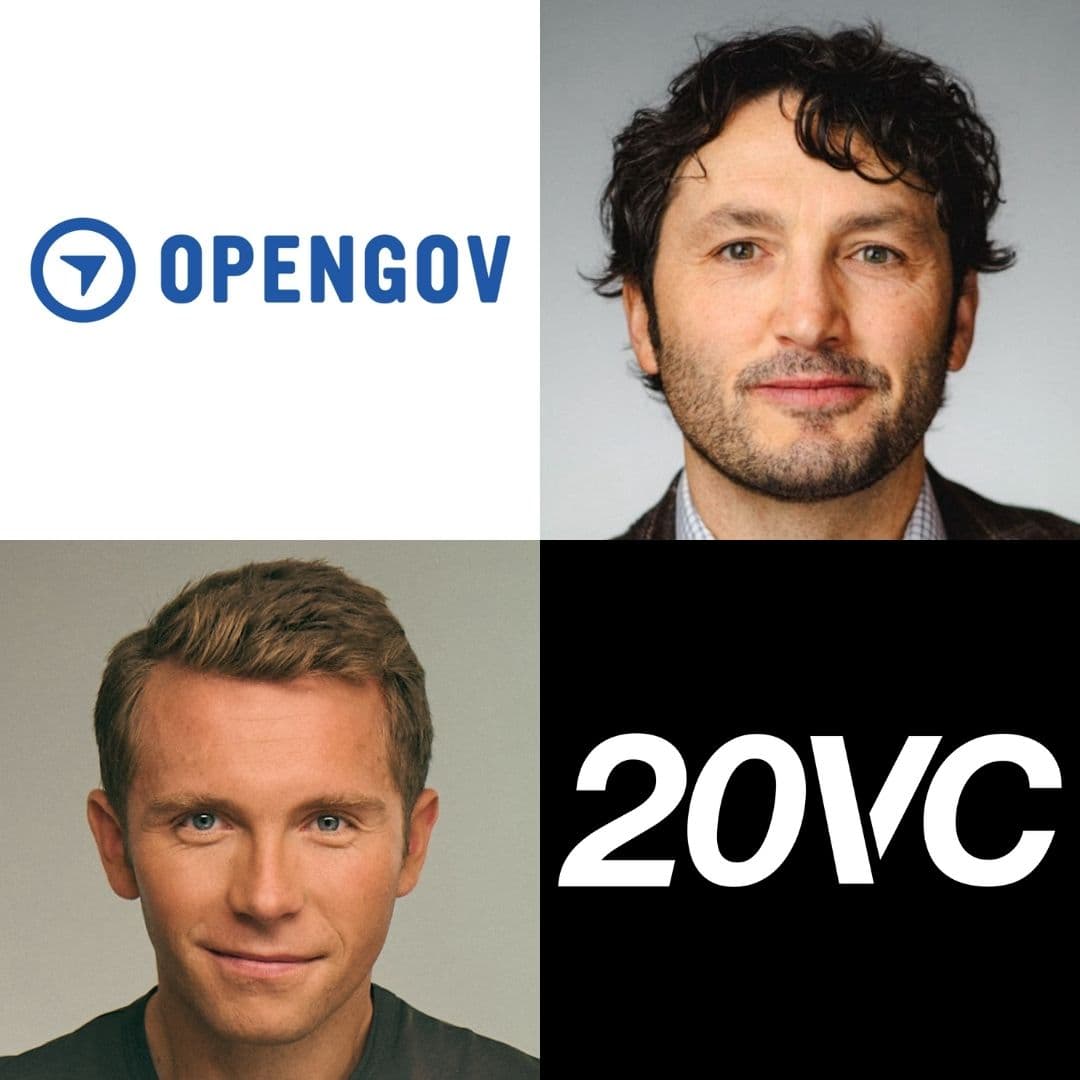
Podcast Summary: The Twenty Minute VC (20VC) - Episode with Zac Bookman, OpenGov
Episode Overview In this episode of *The Twenty Minute VC*, host Harry Stebbings interviews Zac Bookman, Co-Founder and CEO of OpenGov. The discussion revolves around OpenGov's journey to a $1.8 billion acquisition, the dynamics between venture capitalists and founders, and the lessons learned throughout Zac's entrepreneurial journey.
Key Topics Discussed
- Navigating Enterprise Sales and Pricing Strategies
- Enterprise sales can be particularly challenging due to the need for alignment within organizations.
- Higher average selling prices (ASPs) are essential to justify the costly sales efforts.
- Importance of High Gross Retention in SaaS
- High gross retention rates are crucial for success in SaaS businesses.
- OpenGov boasts retention rates in the mid to high 90s, differentiating it from other companies in the sector.
- Investor Relations and the Power Law in Venture Capital
- The venture capital landscape operates on a "power law," emphasizing the need for unicorns (companies valued at $1 billion or more).
- Founders often misalign with investors’ expectations, especially those seeking only high-value exits.
- Product Market Fit
- Product market fit is achieved when a company can repeatedly and profitably make its customers successful.
- Early assumptions about market fit can be misleading, as seen in OpenGov's case when initial sales were lower than expected.
- Mergers and Acquisitions (M&A)
- M&A can be a source of innovation and growth, not just for acquiring customers but also for enhancing product offerings.
- The acquisition process demands careful negotiation and alignment among stakeholders.
- Fundraising Challenges and Lessons Learned
- Zac reflects on the difficulties and lessons derived from his fundraising experiences, especially the necessity for discipline in financial management.
- Misalignment Between Founders and VCs
- There is a significant disconnect between the goals of founders (looking for stable growth and exits) and those of VCs (seeking high-return investments).
- Founders should be aware that investors prioritize high-growth potential over smaller exits.
- The OpenGov Acquisition
- The episode highlights the intricacies of OpenGov's acquisition by Cox Enterprises, detailing the negotiation process and the implications for the company moving forward.
- Critique of the Venture Capital Asset Class
- Zac expresses concerns about the venture capital asset class's performance, highlighting issues like long timelines to realize returns and the prevalence of overcapitalization.
- In-Person Collaboration
- Zac emphasizes the importance of in-person collaboration for productivity and team morale, especially after the shifts caused by the COVID-19 pandemic.
Key Takeaways
- Enterprise SaaS Success: High ASPs and strong retention are key to thriving in the enterprise SaaS market.
- Aligning Expectations: Founders must understand the power law in venture capital and how it affects their business strategy.
- Customer Relationships: Building lasting relationships with customers can provide significant retention advantages.
- Navigating Acquisitions: The acquisition process is complex and can provide strategic advantages if managed well.
- Realities of Fundraising: Founders should be prepared for the challenging landscape of fundraising and venture capital, which often favors high-risk, high-reward scenarios.
Conclusion This episode of *The Twenty Minute VC* provides insightful lessons on the realities of running a SaaS company, the dynamics between founders and investors, and the importance of strategic decision-making in the world of venture capital. Zac Bookman's experiences offer valuable takeaways for both aspiring entrepreneurs and seasoned professionals in the field.
Written by AI. May contain mistakes. Listen to the episode to check what was said.
Transcript
Automatic transcript. May contain errors.0:00I'm an LP in legit funds. Where's the money? Where's the money? How many years has to go by? People think these companies take like 5, 7, 9, 10 years? Not true. They take like 15 to 20. That means your venture fund takes 15 to 20 years to distribute the money. Your business runs on a power law. Your business is about finding the next coin base. Open Gov's been quite successful, but it doesn't move the needle. It's a couple billion dollar type exit? That's not what you're in the game for. This is 20VC with me Harry Stubing. Now stay on the show we have Zach Buchmann. Zach is the co -founder and CEO of OpenGov, the GovTech Cloud software leader that was acquired for staggering $1 .8 billion earlier this year, and they've since blown past the $150 million error or revenue mark.
0:47Now prior to the acquisition, Zach raised over $180 million from some of the best of the best including Mark Andrewsson, Josh Kushner, Joe Launstale and founder collective to name a few. That is also a very successful angel investor with investments in the lights of Flexport, Flux Safety and Adapar. But before we dive into the show today, today I want to talk about Brex. The financial stack founders can bank on. Brex knows that nearly 40 % of startups fail because they run out of cash, so they built a banking experience that takes every dollar further. It's such a difference from traditional banking options that leave your cash, sitting idle while chipping away at it with fees.
1:25To help you protect your cash and extend your runway, Brad is combining the best things about checking, treasury and FDIC insurance in one powerhouse account. You can send and receive money worldwide at lightning speed. You can get 20X -the -standard FDIC protection through program banks and you can earn industry -leading yield from your first dollar while still being able to access your funds any time. Brexit is a top choice for startups. In fact, hey, it's used by one in every three startups in the US. Just check them out now, brex .com -flash -dot -ups. And talking about building trust. Atio is the next generation of CRN.
2:06Setting up Atio takes less than a minute, and in seconds of syncing your email and calendar, you'll see all of your relationships in one place, all enriched with very valuable data. Asia also lets you build ZPS style automations, gives you powerful reports and works perfectly for any go -to -market motion from PLG to sales -led. And Asia is designed for the next era of companies like yours, and companies like yours shouldn't have to deal with inflexible one -size -fits -all CRMs. So join industry leaders like 11 Labs, replicate modal and more, to scale your startup beyond on the next level, head over to attio .com forward slash 20 VC and you'll get 15 % off, that's 15 % off your first year at attio .com forward slash 20 VC.
2:56And if attio helps you stay ahead by streamlining your relationships and operations, today I want to talk about a venture fund making waves with its unusual model. I'm talking about the Fundrise Innovation Fund, which is democratizing venture capital as a public venture fund. For example, most of the AI revolution is being built and funded in the private markets. Companies like OpenAI and Thropic Databricks, these are incredible multi -billion dollar companies, but they're inaccessible to 99 % of investors until they go public. Well those days are finally over. Visit funrise .com forward slash 20 VC to check out the Fundrise Innovation Fund's impressive $150 million portfolio for yourself.
3:38Carefully consider the investment material before investing, including objectives, risks, charges and expenses. This and other information can be found in the innovation funds prospectus at fundrise .com -flash -innovation. This is a paid sponsorship. You have now arrived at your destination. Zack, dude, I am so excited for this. Listen, when we first had our call, it's quite rare to have the report that we did straight off. So first, thank you so much for joining me, Stamon. I'm really happy to be here. Thanks for having me, Harry. Listen, not at all, but I want to dive right in. And I want to start at the company creation point.
4:13You said before when it comes to starting a company, that it takes too long. I want to start with, what did you mean by it? It takes too long in that respect. There's a wilderness period. And some companies come out of the gate and these entrepreneurs They get the kudos rightfully if they just shoot off and there's a lot of companies that just bobble along in the wilderness. We were one of them. As I look back on our first few years, I don't know what we were doing. It was a learning period. It was confusing because we actually came out of the gate selling about a year in, but we were selling $5 ,000 software, $10 ,000 software, transparency reporting.
4:52It was kind of a political sale. Governments would buy it to show off the data in their 30, 40 -year -old ERP green screen systems. And I got tricked into thinking it was 1999, sell it for a loss and make it up on volume. And I realized a year and oh my god, we've got to broaden the suite, we've got to get every selling price is higher. And it wasn't really until probably five years into the company that things started working. You mentioned five to 10K contrast, Aaron, in terms of the sizes. You always said to me before that like five to 25K, It's kind of where like SaaS companies go to die or it's like the heart of segment Why is it such a shit range to have customers in the five to twenty five seconds?
5:34So when you're selling enterprise software you're basically breaking into organizations Organizations are filled with people and people disagree with each other when you're building a business Alignment is the most important thing you can get for execution and when you're looking at a customer How do you get them aligned on buying your product? Well, you have salespeople, you have marketing, you might have customer success or professional services. You're breaking down the walls, you're trying to create alignment and that's expensive. People are super expensive and you're not going to make up the cost of sales and marketing by selling 10k software.
6:08Unless you're like a drop box where you can, you know, or some product -led growth phenomenon. And there are a few of those and I think we all wish we'd had a company like that. If you can do that, more power to you. but even when they get to a certain size, they start trying to break down the enterprise. And that means you gotta have an enterprise motion, which means sales people, which means expensive, which means sales cycles, and the ASPs have to go up. How much do you have to get per customer to really justify that spend? To have the full sales cycle, the outbound motion, is it 50K? Is it 100K?
6:4010 years ago, 25, 50, 75, it used to be like, all right, get to 100K. Now I think kind of big league enterprise salespeople think 100k deals is like tick -tax and we need to be targeting seven figure deals Mark and Dreson Stead to me something along the lines of you want a big company charge high prices You want a medium -sized company charge medium prices you want a small company charge small prices There's a lot to that he actually said there is no upper limit on the price of software It's just the quantity of software and the pain that you're discovering and the value you're creating It's an interesting business from that perspective.
7:18Do you agree with him then, always raise prices? If you can, yeah. I look at like Taniam, I remember when they were like in their major growth curve, they were charging massive prices, you know, five, 10, 20 million dollar prices. Look at Palantir, for instance, I remember Michael Ovid's talking about the first deal they did with JP Morgan. They went into the room, supposedly, I wasn't there, and they discovered a huge amount of pain on a big kind of mortgage program that they were working on and combating fraud, and they said, we think we can save you $100 million. And, Jabin War was like, we want it.
7:51And they're like, great. We'll take 10 % of what we can save you. And Jabin War was like, no, no, no, we'll pay you a few million bucks for the software. And they were like, no. And they got to a stalemate, and they walked out of the room, and they didn't answer the calls for like six months. And then Jabin War was like, five, five, five. And apparently, it was like $100 million deal. You also have like the dockiest market in a fence. Like, yeah, we said that we'd be totally on that. But you sell to governments. This is where investors run away. Your sales cycles must have been horrible. Am I right?
8:20Yes, basically. But look, I've been laughed at since we started the company in 2012. When we were raising money, the number of times people said, basically, you were more artful, but government? No thanks. I came to Silicon Valley to get a wafer from government. Or good luck with that. Or it's always fraud and abuse. No thanks. And that was a little contrary and on our part, we're very, very mission driven. Our mission is to power more effective in accountable government. We're probably naive and a little thick in the head, as you would say, but the customers will partner with you for life if you make them happy.
8:53And that's called stickiness. And the whole game in enterprise SaaS is high gross retention. Let's just be clear. The whole game is high gross retention. You look at a lot of companies that they're in the, 70s, 80s, good luck. I don't want that business. I'll take ours in the mid to high 90s. And so there are a lot of attractive things actually about this little corner of the world. And we were growing steady while everyone was in Zerp, absolutely smashing it with 70, 80, 100 % growth rates. And now those same companies are growing 10, 15, 20 % and we're growing faster than them. And I'm kind of like, hey, just a little, little, little engine that could fit for those that don't know.
9:30What is gross retention and how does that compare to that retention? A customer's paying you a dollar for the software or a cohort of customers a year later, how much are they paying you? That's gross retention of the same amount of software. Net retention is overall increase in dollars, including from upsells and cross -sells. A lot of companies think 80, 85, 90 is good. There's companies in GovTech with 97, 98, 99 percent gross retention. It's almost an annuity if you can really get screwed in and do it right. We won't have the over a 10, 12 year period. Bell's that matter. And I guess the honest question that I'm actually really going at is like, truth be told Zach, venture today with the fun sizes we have.
10:17We need $10 billion companies. There's two areas to take this conversation. I love it. One is durability of growth. The reason I think Cox was so interested in us and a lot of other kind of private equity firms are drooling over this guvtech space. It is the sustainability and durability of the growth. A lot of venture -backed companies, they get to 50, 70, 100 ,000, maybe 200, and they kind of crap out. You see them orphaned as public companies in the post IPO land, and they're growing at 15 % or they're literally bubbling along, not growing because they're selling new business to make up for the churn.
10:56You see a company like Tyler Technologies, which you probably haven't heard of, and most of your listeners probably have never heard of, it's the vertical incumbent, if you will, in GovTech, they do about $2 billion a year in revenue for state and local government software, and they trade at $25 billion on the S &P 500 on the New York Stock Exchange. It's been a Wall Street darling. Supposedly, it's the 10th best performing stock of the last like 20 years. And few people have heard of it, and they print cash, and it's an extremely well -managed and impressive company. We compete against them. And that's an example of what can happen with growth durability.
11:30ability. You know, if you're growing at 25, 24, 23, and you're decreasing at that kind of rate versus you're growing at 50, 60, 70, but then one year oops, we're growing at 15 and the next year we're growing at eight and then we're not growing. And so that's one area to explore and your mouth is open and you're like, wait, I want to know more about that company. The other is the dynamics in your business, Harry, which are totally different than the dynamics in my business. And I'm not here to convince you to invest in open and gov. I'm not even here to convince you to invest in GovTech. I'm not really.
12:00I think some of these verticalized markets are winner take all. I do think there's a lot of room to build big vertical software companies, but not many great companies in single verticals. Your business is so different from my business and something I feel pretty strongly about, because a lot of entrepreneurs and founders want to just love their venture investors. And let's be friends and let's go to dinner and you're going to be my mentor and all this. and there's definitely room for that, but we are conflicted severely. Your business runs on a power law. Your business is about finding the next coin base or the next Uber, maybe the next Pinterest.
12:36The reality is, OpenGov's been quite successful, but it doesn't move the needle. It's a couple billion dollar type exit. That's not what you're in the game for. And it's really hard for an entrepreneur to understand that. When you're starting out from zero, you're worth nothing, you're living on There's no nothing in your bank account and you're like, gosh, if I could get to a hundred million in revenue or two hundred million in revenue If I could get a multi -billion dollar exit or even a billion dollar exit or even a five hundred million dollar exit That's powerful for the entrepreneur. It might be powerful for the company even the industry is in it doesn't do much for 20 VC it doesn't do much for injuries and horror wits and that's a really tough pill to swallow You are incentivized to not care about me.
13:19Did you see that in your interactions with us? Of course I saw it. And as soon as I got to understanding their business and where they're coming from, it all made a lot more sense. And it got a little bit easier. That in recent Horowitz is managing many billions of dollars, lawn sales managing many billions of dollars, they're in a different game. It's about the very, very top 1 % of 1 % companies. It's probably like less than that. I'm an investor as well. And I understand this. It's like, I can't literally spend time on all these investments. It doesn't make sense. It's literally a bad use of time.
13:52Should we be different? Like you as a founder advising me or friend as an investor, should we do anything differently? Well, that is just the rational product of the mechanism that we upgraded. Look, there's a class of investors who almost against, maybe they want to, I was going to say, against their interest, want to love on and coach and mentor all their founders and take them to dinner and get them together and all this stuff. And there's another class of investors who are like, I don't have the time of day. Like I wrote you a check, but I barely remember your name. I think the best thing to do is probably just be open honest and authentic about it.
14:28If you're trying to build a brand as founder friendly, then sure, loving on everyone, maybe that's in your financial interest. I have this, I didn't raise from Sequoia, but I have kind of a respect in the sense that I don't look, if you're crushing it, they're gonna spend a lot of time on you. And if you're not crushing it, wouldn't surprise me if they don't remember your name. That's not a personal commentary. It's just a sense. I did get an anecdote from a friend who was, he had term sheets from Sequoia and Benchmark and he was talking to somebody about which one to take. It was kind of like, do you prefer to be front stabbed or back stabbed?
15:00And he was like, hi, I'd rather be stabbed in the front. And he's like, okay, go with Sequoia. I think there's actually a joy in being unloved, which is I think a lot of investors take your time. You go for dinner. You don't always want to go for dinner. You don't always want to chat as much as they do. you get great freedom from being the unloved one that can shine in the darkness, so to speak. Do the best founders need help? I'm not sure I'd categorize myself in that rank, but from my perspective, the moral support was what mattered a lot. I don't need to go to your house and spend all Sunday afternoon doing strategy sessions on the business, which mostly consists of reminding you what products we have.
15:39When I get a note from Josh Kushner, just saying we're honored to be in business with you, I just walk off and I'm like, gosh, I love that guy. Thank you, Josh. And when I got a book at Christmas with a handwritten note from Joe saying, I admire what you're doing, Zach. It's like, that means a lot. And yes, I'd have lots of strategy sessions with Joe who's a co -founder and chairman. But it's that moral support that just means a ton versus the group that's like, hey, we'd like to come to your office next Tuesday and spend 90 minutes reviewing XY and Z. And I'm like, I can tell him no and like damage the relationship or I can suck it up and waste a bunch of my time on it.
16:13It just starts to be a bad kind of trade. It's not worth it. Something that's challenging for me, by the way, Josh, I think is just the one of the greatest humans out there. So it's kind of a different stuff. One thing that's challenging for me is so many young founders are so magnetized to the big brands and really just see stars and kind of Hollywood, so to speak. What would you say to them knowing all that you do? I don't think it's irrational. The brand, what are the Sequoia guys like amazing investors? they probably are, but it's probably also an incredible flywheel or network effect, where if they invest in your company, it simply helps you recruit better talent and better executives.
16:49Maybe it helps you a little bit get some more press. And if you're selling into commercial or enterprise, maybe it's a stamp of approval for early adopters, but I actually think it's just helpful. So I do think brand name matters. However, for those who can bootstrap, that's the ultimate, in my opinion, to avoid all of the conflicts that come from raising venture capital and to own much more of the company yourself. That's when I'm like tip of the cap and like very jealous. I don't know if you follow the founder collective guys at all. David Clientel is like one of my biggest buddies. First class and they were an open -gove early.
17:24I got into a bunch of trouble in 2019 so I I'd overspent the whole way and I'd raised too much money. I almost lost the company a few times. I'm happy to cry on your shoulder about it. It was 19. I couldn't raise, got one term sheet after 30 Nose and it was an owner -ess pound of flesh. I went through the deal. I said I'm not going to raise any more money I'm going to get religion I'm going to change everything and I started reading all their blogs They're very much on the Rays -less own more of your own company. We want to be not conflicted as seed investors So they want to go in at the seat and I just was like they get and they're right and I know it's marketing for them But they're actually just right and very fortunately before COVID hit or before people got with the program in 21, we started cutting, you saw the law at work, cut more, grow faster.
18:12It was just amazing. It told me one time she 30 knows who is the term sheet from a group in Tampa weather ferd capital. It was at 210 pre -Harry just five years ago. We just got marked in February at 1 .8. What were you doing when you were at 210? I was probably in the 20s and I was burning cash like a drunken sailor. Okay. Why were you burning cash like a drunken sailor? What are some lessons from that? Spend less growth faster. It's a weird law. It's probably my net out. We were single product essentially. And in that August 2019 round, we bought a company in the permitting and licensing space.
18:49And we did probably $90 million of transactions in like 45 days. That worked very well. And as we broadened our products, we think started to work. The economics of the business started to work. Basically, you're paying all this money to market and sell. You're You have more product, more arrows in the quiver. You get higher ASPs for the same essentially cost. Everything started unfolding there. We ended up doing an acquisition one each year basically as we broadened our portfolio suite. I learned this a little bit from John Chambers. M &A can be innovation. It's not just buying for customers or revenue.
19:25We don't even do that. We buy for product quality and adjacency and it jump starts the innovation. How is M &A for innovation? Aminase tradition you've seen in the eyes of basically run out of all fucking ideas and that's why you're buying in companies and you're buying in growth. I get it. It takes years to discover exactly what the product needs to do, particularly for highly verticalized, highly specialized use cases. So we sell software to departments of public works and building and planning and finance and budgeting and procurement. If you're not asleep, Harry, wake up. These are very specialized complex use cases with governmental accounting and like 12 bureaucratic processes that all have to be done and they're regulated and other things.
20:06If you just want to think up these use cases or just unleash AI and think you're going to build the perfect product, you're wrong. You're going to have to go through months if not quarters or years of interactive work with the customers. So getting the first million, two, three, four, five of revenue can take as long as going from five to 25. And if you can catch a company that's managed to get some semblance of product market fit with a beautiful, kind of full multi -tenant stack that is done the years of discovery about what the customer needs and what the product needs to have. You've saved years worth of work and you've captured tremendous subject matter expertise.
20:42And now you can pour engineering or R &D into the product, which is exactly what we've done. So we build organically, but also if we come across a company that we admire, we'll buy it and we'll double the investment in R &D on it. I just want to go back to the investor base before we move on from that we mentioned by the way I think I think the guys are rippling are doing something slightly similar They're they're gathering founders some of these have subject matter expertise some don't they're aquahiring and we're doing product acquisitions When did you and your investor base disagree most side?
21:12I've had a lot of disagreements I'll tell you a few anecdotes one very early on I had this bone -headed idea that we were gonna create a network of governments across the country and we'll have the largest repository of public performance and financial data. And all the governments will learn and share from each other and they'll benchmark and they'll cut waste and improve efficiency. The problem was we didn't have many products and you come for the tool and stay for the network. You don't come for the network, stay for the tool. So I was putting our metrics up and our board meeting saying we're going to get all these logos.
21:43The logos will just magically produce value over time. And Mark and Dreson was like, do you want to be a real company? And I was like, yeah, yeah, I do. I'm like a young entrepreneur. And he's like, cause real companies measure revenue, not logos. And I was like, ah, got it. So I came back to the next board meeting and I'm like, here's our two key metrics, logos and revenue. Gave me the same speech. He's like, real companies measure revenue. And I'm like, ah, that was a fairly, it was coaching. Two was hard times and kind of 15 and 16. We were, we were overspending, growth was slowing. We were learning about our vertical.
22:18or we're not a horizontal SaaS company, we've got to go deeper. And I could see I was kind of losing the faith of my board as in this company has revenue, but this is not gonna be the next Pinterest. That was not a good feeling. And I don't know if I characterized that as a disagreement as much as I was like, hold on, what was the state of your revenue where you are? That, and what was the indications that actually it wasn't gonna be at Pinterest? Between like eight and 20 million growth rates, We went from like 200k and revenue to 2 million and it was like okay like something's happening here And I could go out of the other way 10 next this year or something But then it went like two to four and a half four and a half to eight and a half to like 14 and a half And I was like something this is not I'm spending way too much money to add six million in ARR It's much for you spending to add six because I'm listening to this and that is not bad at she's like We had very high expectations Harry I was, I, we managed to recruit, you know, star -studded board and we'd raise real money.
23:18I'm really worried though, because bluntly, you know, I had this argument stay in the investment committee that I'm in. One millionaire or SaaS company raising 25 on 100. Another raising at 70. You may have AI in your name? No, no. No, no, no, but that's what's ridiculous. Vertical SaaS companies. We do boring shit like OpenGov, no offense. And I said to my team, I mean, this is rich. I mean, it's not it's market. Well, that doesn't mean it's not rich. Look, your business is very difficult to, Harry. It requires judgment and decisions. How are you gonna get a 50X if you're raising at 100 million?
23:55You've gotta have a big company. And by the way, most people don't understand 150, 5 billion, not how it works. They're clearly gonna have to raise more money, which is massively diluted. And by the way, it costs a lot of money to run these companies. It costs equity to run these companies. Public companies are deluding multiple percentage points a year. What do you think some of these startups are deluding? And so it's amazing how much it adds up. So I'm like you, on the other hand, somebody offered me the chance to put some money in XAI and I'm like it's raising at 18 billion, and it's a seed round?
24:24Well, now they're at 50. And it's like, this is a tough game. Some of the hot companies deserve it, and their multiples aren't coming down. I want to go back to that earlier stage. You said the 200 to 200. that we kind of get the feeling that we have product market fed. We've chatted before about it because there is a lot of ambigods here on how people define product market fed. For you, what's your like, yes, this is product market fed. Product market fit is when you can make a customer successful, comma, repeatedly and profitably. A lot of people have different definitions. Marx is great. That's when they call you.
Read the full transcript
24:58It's when your prospects call you. I love that. But we got deceived. We signed up our first hundred customers. These were the five or ten K deals and the company's upside down and I hadn't switched into a multi -product understanding that sweet at least in our vertical sweet the beats best to breed. So it's a classic dialectic and enterprise software. If you want to build a zoom You got a 10x better product. If you have a big enough market, great. You can build an IPO scale company, but in a lot of these verticals, you've got to get to like work day level product or rippling compound multi -product company to get the ASP's working and that's actually how you increase your strategic or total addressable market.
25:37I got totally deceived. Wow, something's happening here. I think this is going to work, but very quickly I felt it in my body. This isn't working. We're going to be totally upside down. How do I reposition the company and repositioning is just brutal. How do you respond? I say this a lot to fans. like a listen, the 5 to 25 game out of that doesn't work. And they go, no, no, that's our entry point. That's just for the state of Florida. When we expand to the other 10, it's going to be 50 or 100 or whatever it is. And I'm like, ah, and then three years later, it's most often not. Yeah. But how do you think about that challenge?
26:10Occasionally it works, you have to build product furiously. And I, in my opinion, getting to a suite or a suite of suites is the way to do it, at least in vertical software. It requires the proverbial pat your head and rub your belly. Like literally you now have a customer base on this 10k, 20k, 30k product and you've got to keep selling it or you're not going to raise your next round, you're not going to have any momentum, the employees are going to know something's wrong and you have to do that while building a new product and a third product. That's the archipelago hack. That's the magic. Before we go to that multi -product talent, which I really want to discuss that, she's so important.
26:43But in terms of like finding that product market fair, what are your biggest pieces of advice to founders in terms of ways they can increase the chances of finding it. Go crazy. So, we're the type of company, still like mad. Getting in front of your customers and prospects, we sing and dance in the aisles of the vendor hall. Most of our competition, they sit back in their chair and they're looking at their phone, watching the prospects walk by and just waiting for someone to come up to them. And we are like maniacal clowns. Like, come look at what we're doing. We're open -gov, we're smiling, we're enthusiastic.
27:16So it sounds a little funny, it sounds a little hokey, but we bring the energy, we bring the passion, we engage with our prospects and customers like crazy. Number two is iterate, iterate, iterate with the customers. This is discovery. You can read about this in the books, but it's just true. It takes time. For me, it's like now, your ICP. Most often people don't mean enough to enough people. And I'm like, hey, make it so tight for a small segment of customers. make it really resonate. You can always expand from that, but make it really fucking hit. I agree. That's advice I tend to give around growth, believe it or not.
27:52I shrink your tam. So guys like you, sorry, I'll pay it back to you since you think our industry is so boring. Guys like you want tam, tam, tam. Like show me the large market so I know you could be a big company. And entrepreneurs actually need to get crazy focused. I wasted one of the many mistakes I made was, okay, we've got a little product market fit on transparency. Let's go to the UK. Let's go to Australia. And I got on planes. I wasted so much time. I went to dinners and I didn't understand my business. My business was state and local government in the United States. I got to shrink the tam and then even shrink it further.
28:29Get to budget sizes under this and over that. And every step we took to shrink the product market fit segmentation and to get more focused on the ICP, the ideal customer profile, are growth rate ticked up. And so we literally, we'll get an inbound, if you gave me an inbound from the central office of the UK, we're not responding. And our sellers, they can't prospect outside the ICP segmentation. And so having real discipline and knowing the only thing you have is time. You have 40, 60, 80, 100 hours a week, that's it. So how much ROI can you deliver on every hour of your time? It goes up if you shrink the tam and the shrink the PMF segmentation.
29:05One way to increase not the tab, but the spend in -tam is what you said, which is the expand product line. The challenge is knowing when the right time is. What's your biggest lessons on when's the right time to add secondary third, fourth, fifth products? The earlier the better. You've got to manage to keep the cart on the tracks. That requires management and requires leadership. Creating new products is part of the magic and pulling the trigger on bold bets, whether So that's a new product direction for the company. And sometimes people are crying in the streets like, no, I thought we were a budgeting company while we still are a budgeting company, but we're becoming a permitting company as well.
29:44It's amazing the internal resistance you'll get, but you got to bake it into the DNA and the culture of the company. Again, that's just like leadership and execution. And some people get left behind. It's all for service of the company and the customers and the mission. How do you think about maintaining that morale internally? when things do feel a little bit flatter. You mentioned kind of feeling a little bit flatter there in the gross from like, 200 to 2, but then growing 80 % or 60 % a year. How do you maintain more on when people feel it's flatter? Was there ever a time when it felt really fucking fly?
30:15Yeah, there's been many and the CEO has to give the energy. It's one of the hardest parts of the job. It's literally how much do you have to give? And you drag yourself out of bed. How do you give to your employees, your teammates, your customers and just give your energy. There have been times where my mother died eight years ago in the middle of very hard times at the company and it was absolutely brutal and I'm having to come to work every day and kind of grieve while also telling people the company it's going to be okay. It's that juggle that people have hard things going on in their lives all the time.
30:49And so Fenmore what's talked about this and the hard thing about hard things. I remember like cradling that book and reading it like it was a Bible. Did you have a doubt whether it would work? The short answer is yes, all the time. I don't know how I kept going because I felt for years like I destroyed my career. I made the worst set of decisions. I came back from Afghanistan in the summer of 2012. I was like, wow, I used to be somebody. I was a lawyer and I was in foreign policy and I was doing things. And now I'm like in this like dank three bedroom apartment style office, hiring and firing and making like a total mess out of everything.
31:26And I was like, what have I done? But it's a burn the boats kind of thing. I've already made the mess. So why don't we keep going? What was the easiest round to race for Yizak? When will you like, I feel this is super easy round to race. Honestly, it got harder all along the way. The easiest rounds were early. You know, Joe had come out of Palantir, tremendous network and credibility. So I'd say the first few rounds kind of came easy. That was a blessing and a curse. It was a curse because we overspat like one of the many mistakes I made was to overspend on sales and marketing before we had the product and you'll probably you probably see this in some of your companies It's very dangerous if we didn't have some of these unfair advantages.
32:02We would have been dead pretty early like in 2014 or 15 as we got further along I think we got more attractive in terms of raising money But I also got way less interested in raising money like I wanted to literally stop raising money for the past five years But just because you hated it so much for the rejection site, why? Well, it's a huge time suck. It's definitely not. It's not fun to get said no to, but that's fine. I sell, you know, I sell every day and that's no big deal. It's just it doesn't actually create that much value. A lot of people talk, oh, I raised this much hundreds of millions or at these valuations, it's literally irrelevant.
32:36You will be, you will be judged and weighed by your exit and by the liquidity that you can provide to people. And so there's these tremendous roller coasters that go on between the time you take the money in and the time You got to give it back and I think a lot of people lose sight of that you over capitalize the company I mean, it's just more you got a that's a higher preface back and it's more dangerous for the comments doc Which is management and employees? So I just found it was kind of like not a great deal in many respects and the tighter we got the better we did So we started to get to cash flow positive and EBITDA positive and it was like great like let's keep this going I don't want to return to those days.
33:14What did you not do in the journey that you wish had done? I would move faster. I'd be more decisive. If I knew now what I didn't know then, I'd probably have saved three years. I would move at a tempo that is a different tempo than I was moving for the first five years. It's removing people that aren't working, product decisions, the sales machine, the enablement machine, the hiring machine, enterprise software rewards, words, intensity and focus. The ampute up article from Slutman and his book, it just feels spot on. It's not one philosophy. It feels like it's kind of like the way these companies are supposed to work.
33:52You mentioned the gray hat. That's kind of what a board's for in many respects and what they often claim to be. Was he the biggest lessons in advice on how to manage boards effectively? I think a lot of experienced CEOs really understand this and a lot of founders and folks that are new to it, which is where I was for many years. I didn't understand the board is for governance. The board is for governance. They're to make sure that there's no fraud and it's a real company, primarily to hire and fire the CEO. They represent the stockholders in the sales process that is fundraising, which goes both ways.
34:24A hot company is being sold to by investors. It's easy to get confused and think, oh, these are my mentors and coaches and friends and we're in this together and we're partners. One thing I learned from Mark and even Joe in the later years is like, We have natural conflicts. My job is to grow the share price. I need to a deliver on the mission and win for our employees and customers, but I need to win for our stockholders. That's my principal job. When you go into the board meeting, you're the chairperson. Whether you think that or you have that actual title, the CEO needs to run that meeting.
34:58The CEO needs to explain the direction. Sure, gather input. But boy, there are times here where Mark would be like, I've seen this 10 times you got to go right and Lawnsdale or somebody else would be like, no, I've seen it 10 times you got to go left. And I'd walk out and I'd be like, what do I do? These are both like people I look up to. And it was through this process, I said, form your own opinion, become a real leader and a CEO, use your independent judgment, you've got more facts than they do, make the call. On the fact of question, you have another company and you can only have one investor, which invested you have.
35:31Me. No. I'm serious. If I was going to do something again, I'm enamored by the bootstrap idea. You just have, you reduce a lot of conflicts, you own way more of it. Could it have opened up, have been bootstrapped? No, no, no. Even the M &A, the reason I executed the transaction we did earlier this year was I looked out and said, we could get ready for an IPO in a couple years, maybe less. and then what happens? We could raise a bunch of money, but to truly live the destiny of this company, we're gonna wanna buy other companies. So you could do secondary offerings, and it just starts, but then you're like, you're on the quarterly game, and I'm like a long -term owner with very deep pockets that's super mission -aligned.
36:15This is how we're gonna build the biggest company that's gonna live its mission. No, probably not, is the short answer. So if I had to pick one investor, definitely be partner specific. I would go for kind of name brand, you know, as good an investor as I could get based on the returns of that Investor but I'd have a very serious chat and say I'm running the company. Are you comfortable with that? So take me to that deal itself. This is when suddenly open golf got sexy as well How much was it for and how did it come about? We saw the company in February for 1 .8 billion to Cox enterprises This is a large family business in Georgia They own the largest private table company in the United States.
36:53They own the largest automotive company outside of the car manufacturers and they're diversifying their 125 year old family business. They understand growth durability. They understand customer acquisition costs. They understand regulated businesses. They understand services. I called them last August. I guess it's almost a year and a quarter ago now and I said, hey, you've been rubbing my thigh and whispering in my neck. If you'd like to put a term sheet down for $2 billion, I think this board would take it seriously They produced a term sheet for 1 .5. I wrote my bike home that night and I got really nervous And I said I might have made a big mistake here I don't want to sell the company for 1 .5 and yet I think this board is probably tired They've been in for a long time.
37:37They might want this. I called a board meeting the next day and they say what do you want to do? Zach? I said I'm a no and they were like whoa really and I said yeah shall we end the meeting? And then they were like, uh, uh, you know, this is pretty serious valuation. A lot of deals aren't getting done right now and this is a good IRR and that, and I said, look, we've talked about going to become a multi -multi -billion dollar company for a long time. Like you and I seem conflicted. You've also incentivized me with a performance plan in 21 to pursue four billion dollar type valuations. So I agreed to study the issue.
38:10We set up a whole, we hired Rock Tell. We set up a whole process. We spent like five months, working on the deal. We got the board aligned and we did price negotiation, we did a management incentive plan, and we put together what I think at the time was the third or fourth largest private software transaction of the last few years. What revenues was the company out at that stage? I mean, when we did the price negotiation, we were probably 110, 115, something like that. Very quickly, we've surpassed 150, you know, near 15X at the time, and we're burning it down. now is an interesting deal in that I left a majority of my stake in the company.
38:49I'll tell you about this. It's a supposedly common -ish structure in kind of telecom and media, and I think it's a little innovative in your classic kind of software tech ecosystem. So I basically went re as management, went into business with the Cox organization, with a new investor. All the existing investors were swept out and cashed out at the 1 .8 valuation. The board was shrunk from 8 to 4, it's me plus the COCs team. Employees vested equity was cashed out, so it was essentially a large secondary for employees. But all equity plans remain in place. We got a large RSU pool to continue to attract great town and cop and same people.
39:30And we have defined liquidity at years 3, 4, and 5. So essentially it's a put right. You can sell a third at year 3, two thirds at year 4, and three thirds at year 5. and Cox has a call right in the out years so that if they want they could eventually obtain 100 % ownership of the company. I'm in very deep on the company. I go to Austin. Do you know what just want the like cash? I mean, this is the nicest way, but like you know, I interviewed Ron from Qualtrics and he's like, yeah, I remember when the cash just went, but you know, I did participate in the secondary. So I took out 49 % of my vested equity.
40:07How much was that? Look, these companies, the investors at growth stage kind of maturity end up owning like 80 % of the company. 75 to 85 % of the company and management and employees and founders own the remainder. So my family's safe, I'm in good position. I can tell you, it has changed my anxiety levels. Those who knew me, I would come in some days tweaking and like, garucci and like, very fearful because 98 % of my net worth is locked up in the company. The last 5 or 10 % of that anxiety is, is got, like I can sleep most nights. I don't wake up at 4 a .m. and like a pit in my stomach and like, you know, like, oh, I'm dead, like we're dead.
40:47That mostly has gone away, but I'm still kind of obsessed. And that was the deal. Cox doesn't want to buy a company and not be in bed with the founder. And this was not just a sell it to Oracle, cash out and buzz off after 12 months. This was a different type of deal. This was going into business with a new owner. Do rich founders make better founders? I don't know. There's an old -school Silicon Valley mentality on like keep the founder poor, don't give him secondary. I had a board member who said, I wanted to sell, I think like 400 grand to like, I mean, I was in my like mid 30s. I'm trying to like paint my house and like get something set up.
41:25I got the, if you're selling, I'm selling. And I'm like, that's pretty harsh. Like, I don't have much, and you do, and that's a weird speech you just gave me. What did you say to him? I mean, I did not say FU, but that's definitely a little bit how I felt. Would you say FU now? No, look, people are entitled to their views, and that was like a common view, and I get the view. I just think I disagree at this point. I'm not less committed now. I'm honestly able to drop back and scan the field and throw passes in a way that I wasn't before. It's actually a decent way to encourage the entrepreneur to play small ball.
42:00For somebody who grew up without a lot, mowing lawns, to go be able to make like X millions or tens of millions, it's like as soon as you get to a certain stage, there's a natural tendency potentially. You're like encouraging the person to grip tight when actually what the VC wants more than anybody is for the person to go long and go really, really big. What is that number? I was talking with my mother the other day about this. and I was like, yeah, like five to feel like safe, five pounds, like $8. Like, that's, and then like 20 to be like, okay, I can really go long. Sure, that sounds right.
42:36I think it depends on what kind of crowd you run with and what you care about in your values and other things. I mean, if you, you know, if you want like a two bedroom in the suburbs, fine. If you want the flat and mayfair overlooking the park, you know, when you get caught up in it, there's always more, there's always something better or a different crowd. Did you accelerate him to that as I? Yeah, of course. You know, I'm starting a family and there's all different levels. So keeping grounded, it's one of the reasons I love our company that you know, you find the end market boring as hell. We find it fascinating.
43:08We're proud of what we do and how did it feel when you signed? Everyone dreams of this for you as in years and years. How does it actually feel? Yeah, so it was really wild. I spent highly the better part of six months on this. It was exhausting and nerve -wracking. In December of last year, I started breaking down. I was like breaking. I got sick three times in December. I got hand foot and mouth disease. I didn't even have a child. I got some Victorian era virus. I'm like breaking out in things. And this is the middle of the price negotiation. I remember Chamber saying, ZAP! Sometimes you've got to play hurt.
43:42And I'm like propped up talking about big numbers while I have 103 fever. That went on. We were supposed to close in January. I had had like a baby moon or a pre moon booked in Hawaii. I went on the trip. The deal got pushed by a month And this is at a point where it's Pushing and you're wondering if it's actually going to happen these things do break and I'm in Hawaii I'm on the phone like two thirds of the time the rest of the time I'm literally like in the gym like trying to manage my adrenaline the deal ended up happening in February and Alex Taylor the chairman CEO of Cox came out and we announced it to the employees I was so amped up, exhausted at the same time.
44:23Very excited, felt like I was making a good decision, but like I wasn't present, if you will. Do you know what I mean? Like I wasn't like living the moments. And in terms of the signing, it was literally just execution. The number of deliverables and the number of variables, and even at the end, the amount of people that have to be aligned and the squirrely things that happen, it just became like tunnel vision execution mode. I've spent a fair amount of the year literally processing and digesting and trying to reset because you know You mean like we're amped up for the next chapter, but like we got to turn the page But it does return money to invest and it gives some a pretty great return and a great multiple I'm pretty worried for ventures in asset class I think 21 will be some pretty bad numbers and a really shitty vintage and I think people are artificially keeping numbers high and I don't think LPs have quite the understanding of how bad it is.
45:19When you analyze the venture asset cost today from your perspective, what summary do you come to? I think overall the venture asset cost, and I don't have all the numbers, you might, but I think the venture asset class is not particularly impressive. Privates as a whole are probably not particularly impressive. I know there's a lot of people who disagree with me are going to tell me, I don't have the stats, you're totally wrong. I'm an LP in legit funds. Where's the money? Where's the money? How many years has to go by? People think these companies take like five, seven, nine, ten years? Not true.
45:51Not true. They take like 15 to 20. That means your venture fund takes 15 to 20 years to distribute the money. Typically, unless you're selling kind of secondary stuff, in which case you're probably taking a discount. I think the asset class, you have a very, very tough job. It's hard to be a first class venture investor in terms of returns. I think the last few years have probably been pretty bad. And there were a lot of people that were like, I'm the best investor in the world, and yours truly made lots of stupid investments, like really stupid investments. What was your most stupid investment?
46:22Oh man, I started writing bigger checks, thinking of course I'm a genius, the checks I wrote in 13, 15, 17, you know, fantastic companies, flock safety and adipar and qually and flex port and other things, and it's like, oh look I'm good, and then I write bigger checks in the earlier stage companies and they go absolutely nowhere, even some frauds. You know, just straight up frauds where it's like, wait, you said the numbers were this. They weren't that. We just lied about it. So I think there are many more frauds than we think. Oh, I think there's loads of these and a lot of entrepreneurs lose.
46:59They either didn't have the kind of morals and the anchor weights or they like lose it in the, you know, intense pursuit of success. Look, I think it's a really hard business and I'm an LP in some of these funds and I'm waiting for distributions. And to me, multiple on invested capital and distributions on paid in seem like a lot more important than quote IRR based on other funds marking things up to impress their LPs. I can tell you post transaction, I'm getting hit up to invest in lots of companies or funds and it's like, maybe I shouldn't be so overweighted on privates. It shouldn't be so overweighted on privates.
47:33How do you think about publics now? Because when you look at the opportunities in publics, that there. Yeah. Well, I wish I obviously wish I'd taken any liquidity I hadn't dumped it into the S &P 500 early this year. I didn't. What did you do with the money? I put it in some money markets and tried to catch my breath mostly. Pay down my mortgage and got back to work. Just stick it in the indexes and go do something else. Extremely hard to beat the market over the very long term. The best advice to me came from founders fund who once told me like, if you want to be in the next Andrew or you want to be in that's open AI, invest in Andrew or open AI.
48:09Don't try and be too smart. Which fund do you not in that you'd like to be in? That's probably that would be one. I have tremendous respect for Ryan and Tray and what they've been. Which fund do you in that you wish you weren't in? Small checks into a few just to kind of support friends or investors in OpenGov. And that to me was overweighting on privates and just unnecessary. Making less investments is probably a good New Year's resolution. This is a fun round. Okay. You see these cards? They look hard, but stylish. Yeah, thank you very much. These cards are each worth a thousand dollars donation.
48:44Wow. And so you can either answer the question and I don't know these questions. So these were submitted by friends of yours and one. No, cool. But a thousand dollars donation, all you answer it. Okay. Okay. Okay. And there's no scouting out of it. So question number one, what was the worst investigating you've ever had? There are two that come to mind. One, I pitched Peter Teal, I was so green and I just gotten back from Afghanistan and I literally would go to work in slacks and leather shoes like a business lawyer looking type person. The founders fun guys at least in those days did not respect people or button down shirts.
49:26Look at that, I laughed at. That hurt number two. I had a few meetings with Mike Moritz. I was very excited I think that would have been great investors. I was on maybe the third or fourth meeting Like to kind of partner level meeting and I thought this was gonna be the one and I walked in I could just see something on his face and and I go through my spiel But I'm like something's not right and I just knew you know He just decided against it and he was like what have I done scheduling this meeting and he walked me out and shook my hand without looking me in the eyes and then just literally turned and walked off and that brought out very bad Feelings in me like high school fist -to -cuffs level feelings those would be two.
50:05Okay tough one. How much in cash did you take out? Thousand dollar donation Boom, what is the worst thing about having more kind recent on your board? He's tough. He's out to ensure governance and investor interests. And I learned a lot from that. But it was not, I had a warm, loving relationship with John, with Katherine, with Mark is a lot of business. He took his role seriously. So it was a, I wouldn't say it was transactional. But I'll give you an example. I scheduled a two hour board meeting. And the board was opening out a lot of giving take, big discussion going on some important issue.
50:45So I decided to let it run at you know, maybe it was 10 a .m. The 12 p .m. At 12 p .m. Mark literally just holds his chair out gets up grabs his briefcase walks out slams the door leaves the building and we see him drive off and everyone's just like What just happened and I text him afterward and he was like you told me the board meeting ended in new and it was like a pretty Star message of like managed the board meeting stay on time run a tight be in control These were the type of, I wouldn't call them a voncular lessons, but like, so it was tough. Dude, I want to move into a quick fight. So I say a short statement, you give me your immediate thoughts.
51:21Does that sound okay? Sounds great. So dude, what do you believe the most around you disbelief? Snap judgments are very valuable. A lot of people tell you, you gotta be thoughtful, you gotta be balanced, you do, especially when as the organization gets larger, but you've gotta listen to your stomach and your gut. I often advise our exacts or others when they've got a big decision whether it's personnel or or something else, go sit in the woods, go sit on the hill, look at the ocean, and what is your body telling you? It usually is telling you an answer and you got to listen to it and sometimes it's telling you that really fast like when you meet somebody or when you walk out of a meeting, you know.
51:58What do you know now that you wish you'd known before you had your child? Everyone tells you that it's a life changer and you want to pick the right partner and you got to be in the right zone and all that and it's washing over me like I've changed my life materially. I've changed it materially. I wanted to go, I think I told you I wanted to go on that trip in November like nope not happening. We have a five -month -old baby and we're not dragging the baby around the globe. So yeah, my life has changed dramatically and like I'm just coming to accept the new reality that I don't think I really understood.
52:34And a lot of learning is like that. It's got to be experiential because at least for me, you know, people just tell it to you, it doesn't, doesn't really sink in. The heaviest things in life are not iron or gold, but unmade decisions. What unmade decision rests on your mind most? You know, if we add and sold the company, what would life look and feel like if we were pursuing IPO? I still feel convicted that we made a great decision and I'm very excited about the future and the vision and mission and the alignment and all of this, but that would be one. You mentioned that like, oh, go go like not sell.
53:09Why does any Stripe Databricks starlink, you name it, go public when there is so much money in private? Look, I think they have to. I'm a little surprised this has gone on the way it's gone on. Databricks supposedly raising the largest private round ever, I think. I guess that's your, that's really the point you're making, but my read is, and what motivated me a little bit is, look, at some point, you got to deliver the money back to investors. They're raising, Databricks is raising most of that to deliver secondary to employees, including to deal with some tax issues. I know that's what Stripe did, and Josh, I think, is doing most of these.
53:45Look, I think that can continue, but no, I don't see how these companies don't go public. I'm sorry. They've raised a ton of money. At some point, people need liquidity. That's going to come. I don't know whether it's in 25 or 26 or 27. If I'm guessing it's probably 26, I think the markets open up and all these companies end up going public. What have you changed your mind on in the last 12 months? I've changed my mind on up and comers. I spent a lot of time hiring bin there, done that. I've grown a little tired of it and I see the value of promoting from within. I see the value of hiring people that are geniuses and want to work.
54:23like all the time and grow their careers and learn and have kind of the growth mindset versus the hey, here's how I did it at my prior companies and hey look, I'm an exec and I've got a playbook. I'm excited about growing and learning and promoting from within and like hiring like fresh talent that wants to get after it versus the bin there done that. If you could be CEO of any other company for a day. What company would you be CEO of? I would understand a company like Workday. What day? No look, I'm an enterprise software. I sell ERP software. We're almost like a verticalized Workday where I'm going with this.
55:00Harry is like to run like a Microsoft. Like I would, it would take me a lot of time to even understand their business. They have so many business lines and so many discourses of revenue. I think what Sat is done there is like, it's kind of incredible because I don't have a clear understanding of that business and how it works and how I would what growth levers I would pull and how to carry it on. Open AI at 160, XAI at 50, which is what is supposedly raising out now, or anthropic at 40, which ones you invest in if you can only do one. Tend to not invest against Elon and if I sat down with him and talked with him and said, are you like, is this real and are you all in?
55:39And he's, I think he clearly is. I think that's probably a perfectly good investment. I think it's similar to the OpenAI investment. I was at an event and Mary Meeker was there and I talked with her and I said, man, what a round that OpenAI said, would you would you do it at 150? And she said to be clear, I'm not in the round, but yeah, I would do that no question. I said, tell me about it. And she said, look, I don't remember exactly, but she said 60 % chance that company crushes it and becomes, you know, a world -changing trillion dollar company. 20 % chance it goes sideways and you get the press stack back or you get 70, 80 cents on the dollar.
56:16And then yeah, 10, 20 % chance it's a big goose egg. And she's like, that's a nice bet. I'm totally with her. I didn't actually think that she had any chance to do this at a goose egg. Maybe it's like a one or two percent. I think the chance that Microsoft actually takes something with it and you get the press stack back at least. By the way, people, you've never seen a $50 billion acquisition. Yes, actually you will do when companies are worth $3 trillion, as a percent of market cap. It's absolutely aligned to what traditional acquisition is worth. So yeah, but I think that's like an 80 % chance.
56:47And then I think you stroke the check. You know this better than probably most hairier or anybody. Certainly, I mean, but when you stroke the check or when you're writing your own money, it's different. I'm writing a check with real money at $150 billion valuation. So I find the investing game fascinating because if you're writing a billion dollar chat like Josh There's very few places where you can see a three to four to five X on that bigger track. Yeah, yeah fair And he's going on on that and data breaks and others and yeah, I mean, I'm in the fun And then so it's just a little exciting and nerve -wracking and I mostly just want to watch an admire what they're doing Find a one for you dude.
57:28What question have I not asked today that I should have asked? I thought you were gonna ask more about the struggles like this super pain and we did touch on some of those But I thought you were gonna get a little more personal with me about how I grew up or my mother or You know this kind of stuff and I've listened to so many your episodes and heard her about some of your background So I'm not begging you to do that. I'm just kind of being I was a little prepared to get like vulnerable and have a cry out with you Is there a tortured child within your eyes? Yeah, for sure. I grew up, you know, a difficult home life.
58:02My mother was severe alcoholic and parents got divorced after kind of years of home war zone. I think there's probably something like this and a lot of entrepreneurs. You would have more experience in it than me talking to so many entrepreneurs as you do. But there's the, you know, wanting to prove that, you know, I'm good enough for where the kind of is part of the drive and some of these companies. This is not just a mercenary activity. This is Mission Plus that personal pursuit. It's selling how you feel more worthy. You know it's funny, yes, on the one hand, and the other thing is, and you often ask guests, like, you know, does money make you happy?
58:44It's helped a lot, and I don't mean that to sound right, and I hope this doesn't sound super pompous, but like, I grew up, I'd never felt safe. I never felt safe. I didn't feel safe at home. I moved lawns from the age of eight. I'd collect $20 bills and count them and go to Literally deposit them and like been pinching penalties in one way or another for like most of my life There's a sense of security that's come from from some of this that like I often will walk around and just try to tell myself like It's you're okay like it's safe. Yeah, I don't know that's that I feel different than I did five or ten years ago No, it's not going to produce happiness.
59:22I still need to probably go to the Hoffman process and visit Estellin and do all the things that your other guests do. I need to get on some of those trains probably. I'm not there yet, but having a little like a touch of security in pieces like helpful. Why are you not there? A maelstrom, I'm still living daily and hourly and working most of the weekends and nights and just cranking to make this thing go to the next level. it's it's it sounds kind of sick, but yeah, it's a total treadmill. We're on it until we're not. I take my job super seriously and there's many hundreds of employees who are depending on me to do that as opposed to like buzz off and play golf in Ireland or something.
1:00:04And so, you know, well, I'm here. I'm completely mission obsessed and I want to deliver for our customers, employees and shareholders. Well, Zach, as a VC, I now have to fuck off to Ireland to go and play golf. You serious or no? No, I'm totally messing with you. I'm running a media company. You have no time to do anything else. It is a knife fight. You have to be one of the hardest working guys in showbiz. That is abundantly clear. I love you. I can't even keep up with your content. It's insane how much you put out. It's not that you cut it through waste from Sunday. It's because you're literally you are at it all the time and you've been doing this hairy now.
1:00:46What eight or 10 years? 10, 10. But the cheat that no one tells you to do is if you start so young that you've never experienced life. If you really live this dark room ever, you don't know what's on the outside. Yeah. No, I'm being serious. I never ever travel. I haven't been on hold in 10 years outside of this country in 10 years. What are you gonna do? You're gonna do this for another 30 years or are you gonna like step back? What are you gonna do? I know one of my dear friends who runs Google Ventures. He's like the thing I love about you Harry is, like you're the only person who thinks they're like mass of some time horizons, which is like absolutely, this is like a 40, 50 year game.
1:01:26You're not going to the islands and you're not taking up golf and... No, because I was talking to mom about life the other day. And like, you know, I have more money than I used to and you know, I'm very grateful for that. Do your guests ever ask you how much money you have? Fuck off, that's personal. That's so rude. No, but I was wondering on my wall, you know, if it's not about the money then, not happiness. What is it about? And the summary that I came to was it was about doing great work with people that I loved. It's the craft, fraternity, or whatever you want to call it. Yeah, I love that.
1:02:02Feeling proud of the work that you do and the people that you do it with. I was talking with my friend David Peterson. I was in New York late last week and I caught up with David and you know Ryan I think probably pretty well and David said his dad was a computer scientist a programmer where we were growing up and his dad retired early and has been retired probably for like 20 years and we were talking about people who don't and don't stop and he said you know what? I think some of these people who are cranking in their 80s actually have a higher quality of life I said, tell me about that. He said, like, I went to on some trip with Nelson Peltz from Triann and this guy's like still with it and he's still cranking and like people want to talk to him.
1:02:44He's like, there's something about the like stimulation, the relevance, the like being in it. He's like, it's not just a need and it's not just vanity. He's like, I think they might have a higher quality of life than if you just buzzed off and like, chewed around in a golf cart. And I thought that was interesting. I want to look into it. 100 % I think you're mentally mental activity continues way stronger when you all continue to put through it It's like there's a structural element in two. It's it's something we didn't talk about the work for work from work stuff But I made a mistake on that I went remote virtual distributed in 2020 I've been getting the crap beat out of me where we were in Redwood City and struggling to hire and struggling to compete and and things started to break before COVID.
1:03:31And COVID hit, I go, you know, move home with your folks or go to the beach, keep your salary, we're remote virtual distributed, and company fanned out. Catherine beat on me, by the way. As she said, the companies they get back to the office first are going to win. What are you doing? And I was like, oh, come on. There's been innovation in the world. You don't know what you're talking about. And the reality is, I was dead wrong. We're getting back into the office. The collaboration, the productivity, like it's not even close. And it's very painful getting back into the office and you know what is worse than that?
1:04:01It's not getting back in the office. It's the disaffection. It's the I don't want to be paternalistic But my my colleague Tiago who one of our key leaders here He said look people think they're happier sitting at home and they're not and they end up quitting like a week later They say no, no, I love working from home and then they go quit Why because they're disconnected? They're not part of it. They're not with people it's not natural just to sit in a room and crank all day without collaborating and whiteboarding and talking. So I'm very excited about the track we're on and I've had to literally stand up in front of the company and say I was dead wrong.
1:04:34I'm sorry. I'm gonna own it, but this is where this is the direction we're going. I wish remote virtual distributed on all of my competitors. Dude, listen, I've loved having you on. I'm so grateful for the new friendship, but this is one of the reasons why I love doing this show so much. But thank you. I, the feeling is completely neutral. I'm a fan, but honored to be a friend too, and I'm really excited to be with you here and this is a lot of fun. I remember what I said there. One of the biggest joys of doing this show is building incredible friendships with incredibly inspiring people. Zach, I so appreciate the time.
1:05:07If you want to watch the full episode you can find it on YouTube by searching for 20VC, that's 2 -0VC. But before we leave you today, today I want to talk about Brex. The financial stack founders can bank on. Bryce knows that nearly 40 % of startups fail because they run out of cash, so they built a banking experience that takes every dollar further. It's such a difference from traditional banking options that leave your cash, sitting idle while chipping away at it with fees. To help you protect your cash and extend your runway, Bryce can buy the best things about checking, treasury and FDIC insurance in one powerhouse account.
1:05:43You can send and receive money worldwide at lightning speed. You can get 20X -the -standard FDIC protection through program banks and you can earn industry leading yield from your first dollar while still being able to access your funds anytime. Brexit is a top choice for startups. In fact, hey, it's used by one in every three startups in the US. Just check them out now, brex .com -fordslash -dot -ups. And talking about building trust. Atio is the next generation of CRN. Setting up Atio takes less than a minute, and in seconds of syncing your email and calendar, you'll see all of your relationships in one place, all enriched with very valuable data.
1:06:24Atio also lets you build ZPS -style automations, gives you powerful reports and works perfectly for any go -to -market motion from PLG to sales -led. Then Atio is designed for the next era of companies, like yours, and companies like yours shouldn't have to deal with inflexible one -size -fits -all CRM's. So join industry leaders like 11 Labs, replicate, model and more to scale your startup beyond the next level, head over to attio .com forward slash 20VC and you'll get 15 % off, that's 15 % off your first year at attio .com forward slash 20VC. And if attio helps you stay ahead by streamlining your relationships and operations.
1:07:07Today, I want to talk about a venture fund making waves with its unusual model. I'm talking about the Fundrise Innovation Fund, which is democratizing venture capital as a public venture fund. For example, most of the AI revolution is being built and funded in the private markets. Companies like OpenAI and Thropic Databricks, these are incredible multi -billion dollar companies, but they're inaccessible to 99 % of investors until they go public. Well, those days are finally over. Visit FunRise .com forward slash 2 .0 VC to check out the Fundrise Innovation Fund's impressive $150 million portfolio for yourself.
1:07:45Carefully consider the investment material before investing, including objectives, risks, charges and expenses. This and other information can be found in the Innovation Fund's prospectus at Fundrise .com forward slash innovation. This is a paid sponsorship. As always, I so appreciate all your support and stay tuned for a fantastic episode with Mark Benning off at Salesforce on Monday.
From the publisher
Zachary Bookman is Co-Founder and CEO of OpenGov, the GovTech cloud software leader that was acquired for a staggering $1.8BN earlier this year. Prior to acquisition, Zac raised over $180M from some of the best of the best including Marc Andreesen, Josh Kushner, Joe Lonsdale and Founder Collective to name a few. Zac is also a successful angel investor with investments in Flexport, Flock Safety and Addepar.
In Today’s Show with Zac Bookman We Discuss:
04:27 Navigating Enterprise Sales and Pricing Strategies
07:49 The Importance of High Gross Retention in SaaS
11:03 Investor Relations and the Power Law in Venture Capital
14:32 WTF is Product Market Fit
18:14 What No One Knows About M&A
20:05 Fundraising Challenges and Lessons Learned
32:51 What Marc Andreesen Taught Me About Boards
34:18 Why Founders and Investors are Misaligned
35:29 The OpenGov Acquisition: Selling for $1.8BN
37:22 What Does It Feel Like to Sell for $1.8BN
43:58 Why Venture Capital is a S*** Asset Class
45:13 Investment Mistakes and Lessons
01:02:05 The Importance of In-Person Collaboration