
In short
Podcast Summary: The Twenty Minute VC (20VC) - Episode with Kevin Hartz
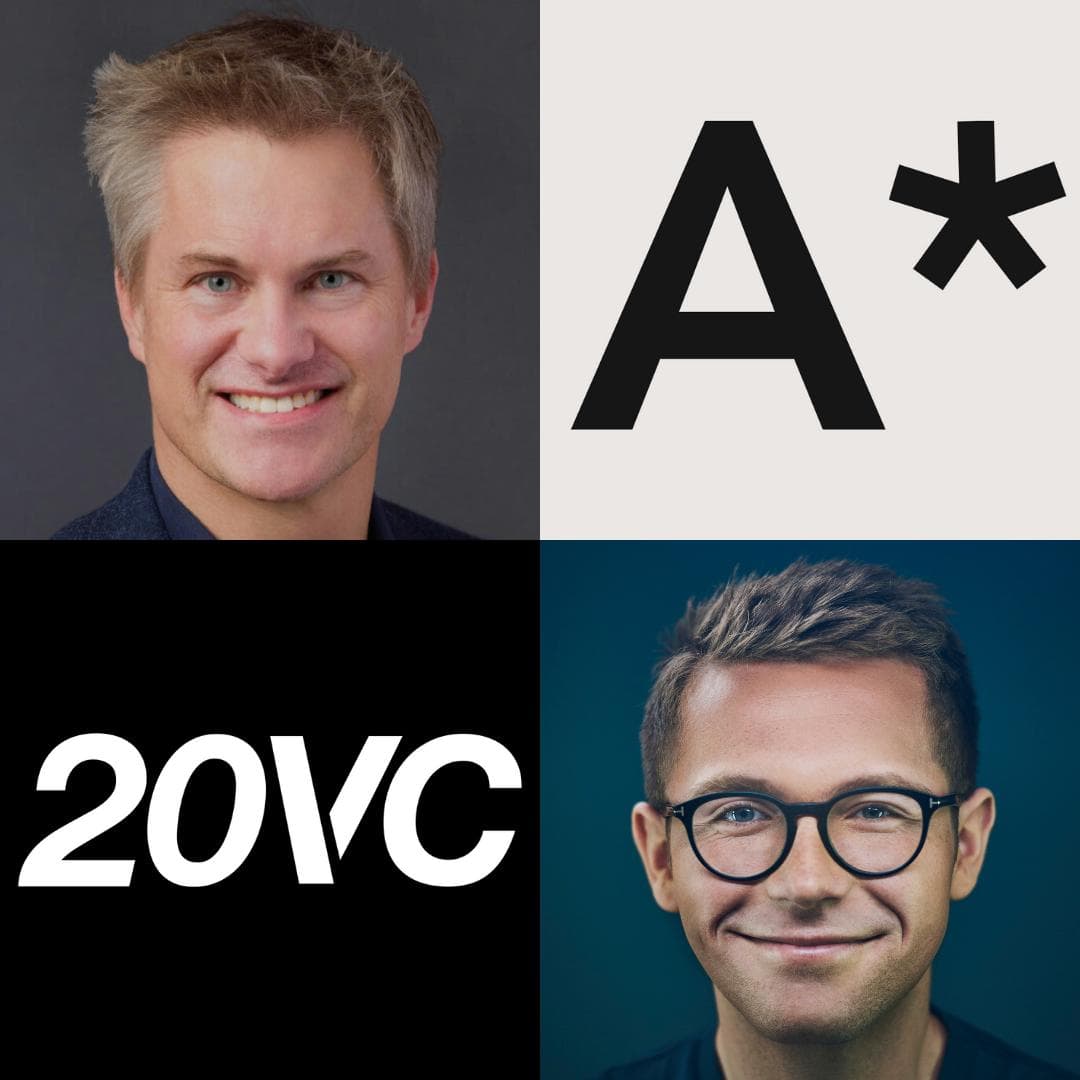
Overview In this episode, Harry Stebbings interviews Kevin Hartz, a Co-Founder and General Partner at venture capital firm A*. Hartz shares his extensive experience in the venture capital space, detailing lessons learned from his previous successes and failures, including his role in early investments in companies like Airbnb, PayPal, and Pinterest.
Key Discussions
- What Makes the Best Founders
- Key Questions for Founders:
- Hartz emphasizes the importance of understanding a founder's background and the obstacles they have overcome.
- He discusses his preference for first-time founders and their unique creativity compared to serial entrepreneurs.
- Mistakes in Judging Founders:
- Hartz reflects on past errors in judgment regarding founders, noting the need to see beyond initial impressions.
- The Exploding Term Sheet That Cost $10BN
- Hartz recounts how an exploding term sheet during Airbnb's seed round resulted in a significant missed opportunity for him.
- He discusses recognizing the potential of ideas that seem absurd at first, likening it to early perceptions of Airbnb.
- From Angel Investor to VC with $600M AUM
- Hartz explains his investment strategy, which includes a barbell approach focusing on Seed and Series C investments while avoiding Series B.
- He argues that the current seed market is saturated with capital, making it increasingly difficult for funds to achieve desired outcomes.
- Learning from the World's Best Investors
- Hartz shares insights gained from his relationships with Peter Thiel and Roelof Botha, highlighting their differing investment philosophies.
- He emphasizes the importance of surrounding oneself with intelligent, experienced individuals in the venture space.
- The Challenges of Today's Venture Capital Landscape
- Hartz expresses concern over the current environment being less collaborative, affecting startups negatively.
- He discusses the impact of too much capital being available too early, leading to poor decision-making among founders.
Key Takeaways
- Investment Philosophy:
- Hartz believes in investing in great founders and supporting them throughout their journey, rather than enforcing overly strict controls.
- Capital Saturation:
- The current influx of capital in the venture ecosystem can hinder disciplined growth and create unsustainable business practices.
- Founder Relationships:
- Building trust and maintaining relationships with founders is pivotal; Hartz stresses the importance of empathy and support during challenging times.
- Market Timing:
- Hartz discusses the importance of understanding market dynamics and encourages investors and founders to look for long-term opportunities rather than chasing immediate trends.
- Mental Health in Startups:
- Towards the end of the episode, Hartz touches on the growing issues of mental health among entrepreneurs, emphasizing the need for better support systems.
Conclusion Kevin Hartz provides a wealth of knowledge on the dynamics of venture capital and entrepreneurship, drawing from his extensive experience in the industry. His insights into founder relationships, investment strategies, and the challenges of current market conditions offer valuable lessons for both budding entrepreneurs and seasoned investors.
For more insights, visit [20VC](http://www.20vc.com).
Written by AI. May contain mistakes. Listen to the episode to check what was said.
Transcript
Automatic transcript. May contain errors.0:00I have strong conviction that we're in the early years of the biggest bubble. Nvidia becoming the most valuable company on the planet is just the precursor towards the bubble of all bubbles. What are your biggest lessons from PETA? He just views the world under different lands. And with that lens, he'll see something very different from everyone else. If you look historically over the decades, if you just sit on all the companies, when most will go to zero, your power law winners will be so massive, of those who just dwarf everything else. I'm not in the practice of selling, I'm in the practice of finding and building companies and sitting on these things for life.
0:35My word, what a 20 VC we have in store few days. We welcome Kevin Hartz to the hot seat. Now, do we think Kevin is the most successful angel ever? Check this out. He did Airbnb Pinterest PayPal, Ram, and Andrew, as an angel. He's now the co -founder and GP of ASTAR, with over $600 million in assets. And before becoming a full -time venture investor, Kevin co -founded Eventbrite, a publicly -trading that he served as the CEO for the first 11 years of the company's lifetime. But before we dive in, when a promising startup files for an IPO or a venture capital firm loses its marquee partner, being the first to know gives you an advantage and time to plan your strategic response.
1:15Chances are the information reported it first. The information is the trusted source for that important first look at actionable news across technology and finance, driving decisions with breaking stories, proprietary data tools, and a spotlight on industry trends. With a subscription, you will join an elite community that includes leaders from the top VC firms, CEOs from Fortune 500 companies, and esteemed banking and investment professionals. In addition to mastery journalism in your inbox every day, you'll engage with fellow leaders in their active discussions or in -person ad exclusive events.
1:48Learn more and access a special offer for 20 VCs listeners at www .themation .com slash deals slash 20 VC. And speaking of incredible products that allows your team to do more, we need to talk about secure frame. Secure frame provides incredible levels of trust to your customers through automation, secure frame and powers businesses to build trust with customers by simplifying information security and compliance through AI and automation. Thousands of fast -growing businesses including NASDAQ, ANGEL list, Doodle and Coda, trust secure frame to expedite their compliance journey for global security and privacy standards such as SOC2, ISO 2701, HIPER, GDPR and more.
2:32Backed by top tier investors and corporations such as Google, Client and Perkins, the company is among the Forbes list of top 100 startup employers for 2023 and Business Insiders list of the 34 most promising AI startups of 2023. read, learn more today at SecureFrame .com it really is a must. And finally a company is nothing without its people and so I want to talk about Cooley, the global law firm built around startups and venture capital. Since forming the first venture fund in Silicon Valley, Cooley has formed more venture capital funds than any other law firm in the world with 60 plus years working with VCs.
3:08They help VCs form and manage funds, make investments and handle the myriad issues that arise through a fun's lifetime. We use them at 20 VC and have loved working with their teams in the US, London and Asia over the last few years. So to learn more about the number one most active law firm representing VC backed companies going public, head over to Cooley .com and also Cooleygo .com. Cooley's award -winning free legal resource for entrepreneur. You have now arrived at your destination. Kevin, I cannot believe that we have not done this in person before. First is wonderful to have you in London.
3:42Second, thank you so much for joining me today. Thank you, Harry. It's wonderful to be here in London. That is so kind of you. And as I said, I loved being this in person. It's so much nicer for me. Dude, I think so much of who we are shaped by our childhood. So I remember when my mother got our mass and it really was hard, but it was very defining moment for me. When you think back to your childhood, what was it really defining moment for you that sticks out and making you the person that you are? Harry, you know, I always look for founders that have overcome some incredible obstacles or moved mountains and my childhood was fairly uneventful.
4:17I just had an idealic childhood all the way through, you know, wonderful parents and went on to Stanford University. I'd say I hit my kind of life crisis or uncertainty post -university. What was that? I would just say I had a crisis of how I wanted to have an impact on the world and very fortunately happened to be in the right place at the right time. and that is in Silicon Valley during this incredible first wave of technology innovation in the internet. Boom, I was lucky. Can I ask you a way of question, but did you think that you would be successful when you were young? Often people have sometimes an inevitability of success.
4:56They knew that they would be successful. Most people I talk to that are founders that have gone on, always knew from the very beginning. And I would look up at my father who is now a retired attorney, and I would say like, wow, how am I ever gonna do better than my dad? He's a partner, it'll offer him. Wow. I love that. And it also goes against the like, what you hear, which is like, I always knew I would be in this inevitability, which is almost quite hard for people listening, because it's sometimes insurmountable. It is. And I think it wasn't a drive for success. It was a drive for learning and really not to be bored.
5:32And that's why Silicon Valley is just so intriguing. so intellectually stimulating to all of us. It's like why we really do this. I think you know, you're childhood shapers, but so do the people around us. And I spoke to Julia before the show. And she mentioned three people in particular, who maybe you shaped a lot of who you are and how you think just from the time that you spent with them. One of them was Peter Teal. And then as I want to start on this, I'm a huge Peter Teal fanboy. What are your biggest lessons from Peter and how did Peter impact your mindset? Yeah, I'm a huge Peter Teele fanboy.
6:06The things he says are indolible. Like you'll say things that maybe don't register at the moment, but then later on you'll really understand, you know, what it meant. He sees the world in a different manner. I would say that Peter like a lot of people that Stanford is incredibly brilliant, but it's also that he just views the world under a different lens. And with that lens, he can kind of tease things apart and interpret things in a way that when you look at an object or you look at one of these tests of an inkblot, he'll see something very different from everyone else. I spoke to Rodolf last night, actually.
6:43He's again, another hero of mine as an ambassador. Both South African, Peter and Rulof. What did you learn from Rodolf? Rulof was just always metered and always has sound advice. I don't mean to make him sound like a boring person, but he is, you know, in the biggest crisis when the ship is being thrown left and right, he is steadfast and calm and, you know, somebody who's such good judgment and insights and so worldly is absolutely somebody you want in your back corner. The final one is Pierre Le Monde. Is it interesting one because it's a different profile to both Peter and Rodolf? Not South African, French.
7:23Totally. And also operator -based. Yes. So Pierre, what was the last in there? Pierre is all about excellence. And how do you up level to be the greatest company in business and operator that you can be? And he always had extremely high expectations of everyone around him and the companies that he's involved with and maybe to give an impression because I think it's very applicable today. When he led the investment for Sequoia, it was Pierre and Rolof. Rolof was the junior partner had just joined from PayPal and invested in Zoom. And when he led that investment, we started to have regular one -on -one meetings.
8:06And in the very first meeting, I'll always remember, he said, Kevin, I want you to go up to the whiteboard, and I want you to write your direct reports down. but I want you to force rank them, you know, one to seven or how many was. And so I go and I write the seven names down. He picks up the marker, walks over to the whiteboard, and he crosses out the seventh name, and he says, fire that person. And it was shocked to me, but I do see what he was trying to get there. And that is that excellence has to be bound in an organization and no room for error. and he was sending a very powerful message by doing that.
8:45Speaking about the talent assessment that you know, Rodolf, your wife, many other people found us that you've backed said that Kevin's greatest trait is his ability to spot truly unique talent very, very early. Just from Rodolf saying like, you're the best in the world when it comes to this. How do you identify true talent from people who are just pretty good at selling? You know, I'll say a few things. I like kind of head -trinking teams and CEOs. I like to learn about their background. I like to hear what hard obstacles they overcome. So I got a little embarrassed when you asked me about my background, because I probably would have never given myself a check for growing up in an easy, wasp white middle class American town with no hard up bringing and a town full of lawyers and real estate people and doctors versus people like Max Lebsch and that escaped from Eastern Europe and tyrannable.
9:38Let's play a game. How did you first make money? Did you ever do anything when you were young in terms of anything entrepreneurial? Quite a bit. You know, I always had like a little stick going and I wonder where that came. In college. How will we? I would say I was always kind of like selling things on the side and like my teens. But in college I actually had a Facebook business pre -internet. Oh my god. That's old. It was called Faces in the Crowd and it was a picture book of students on campus. And you know, we would get all the students' photos and we would get advertising from, you know, all the local places and then we would sell the books.
10:17And I think I should probably go after meta at this point now. Did you do well in school and did you enjoy school? I loved school. I loved learning. I had a ADHD and had to take such a broad variety of classes of every sorts. Okay, so it's interesting. You just said that you wouldn't have given yourself money. But like, like when you actually do the background test, which is exactly what I just did on new on founders, that you would be smacked by in the middle of my, I'll give you a check. Why? Great entrepreneurs always start something early. No one starts something when they're 25, having come out of this MIT or Stanford for the first time, always through entrepreneurial flower early.
10:53Two, you either hate school or you love it. People that are OK tend to not be great, really interesting, the binaries where you get great. And then also like ADHD is another, you know, as well as I do. for the sign of the best founders have it. Can I ask you a weird one? And I had our from service site and on the show last night, I had Daniel from UI Parthen show a couple of weeks ago and they both said if they had got $5 million around in the early days, the business would not be what it is. Yes. And I worry that we have too much capital too early and that great businesses are being destroyed by too much capital too early.
11:28Do you fear the same? We're vehemently in agreement. This is the challenge of our time. I feel there's like Boyle's Law as applied to capital. So if you raise a million dollar round for your seed company, you'll spend it and build a company with that million. But if you raise five million or 10 million, you'll spend it just the same and get to the same milestones. It's kind of like the capital expands to feel like the bank account, but it's used in the same manner. And we're kind of a wash with capital. So this is a period where we have so much capital, so little hands -on assistant in insights.
12:05We don't need the 80s or 90s to come back where venture capitalists would like strangle founders and throw CEOs out of office after two quarters, but there's no checks and balances. And so even the best founders have a lot of trouble when you have so much capital. And so, a little oversight that you kind of drift a little bit, you don't have the same kind of tight discipline that you have if every little penny counts. Do you think these are that bad? And when you say about oversight and governance, I get you from the fraud perspective. But on the trust slide, I'm kind of like, listen, if I invest in you, I trust you.
12:42And I don't feel like that we need to be kind of the overbearing parent being like governance. I'd explain it like on a spectrum, and I'd put my two favorite peeps on each side. So I'd put Rolloff and Sequoia on one side of the spectrum, which is more hands -on, providing services, providing oversight and insights and recruiting and everything else. And then Founders Fund and Peter on the other end of the spectrum that's the belief that, look, if you're in Elon Musk or Azok, you just need the money and go at it and you'll figure it out. you don't need a outsource PR team to help you with these things.
13:21You'll solve these. But given those two extremes, I actually lean more towards the role of Sequoia's side because I've just seen that help in oversight and having that kind of star chamber of great talent cut so many corners of mistakes that would be made. I agree, but that's just the brand. When you get Sequoia Invest, they're off fantastic people who are like, great, this is a stamp of approval. I want to join a rocket ship and so core investing is a leading indicator of that in a lot of talents mind. I don't think it's the talent teams behind it that make great teams for the companies. It's incredibly compelling founders who leverage the support.
13:58The lead director, however, does help that founder match with those areas of, I wouldn't call it weakness, but areas of go to market or growth hacking or engineering or reliability, you know, just help, you know, to shortcut a lot of these areas that, you know, founders will make a few mistakes before they get right. I would argue that very, very few great founding teams really truly stick together for a long period of time. I think Stripe and the Colossans is the greatest on -plum one that has done. What I think that's the most important is, like, the spikiness of the single best person, which is like when you choose that one person, could be Elon, could be Steve Jobs, could be you name it, that the spikiness is so great.
14:39That's fair. It was interesting. I had Matt Clifford from EF. Yeah, I know that. Yeah, and he said the single most important thing actually is not the combined skills of the founding team. It is the spikiest point of the single best founder. That's our single biggest lesson from 10 years of EF. That is a very keen observation. When have you got talent wrong and what did you get wrong with it? Sometimes talent is so raw that you know they run off a cliff or lack maturity and judgment fails. And a founder is kind of always right on the bleeding edge of things going dramatically wrong or dramatically right.
15:17Do you prefer serial entrepreneurs or first -time founders? Because I always favor serial entrepreneurs, which is ironic given my age, but I'm like, you know, you make so many mistakes the first time around that you just avoid the next time. And you can save so many dollars and so many hours learning the second time. What's your preference on serial versus first time? Well, I should be, you know, statistically focused on serial and we back a lot of serial founders. However, I just have a soft spot for first time founders. It's the teens, it's the Bill Gates and his teens, or Mark Zuckerberg and his teens.
15:50It's the first time around that it's so spiky, or they're really swinging hard. It's that age, the army sends the Marines in, and they're 18 year olds because they're fearless, and they just really go for it. But it's also period of creativity, you know, where I have to say I'm Aegis, I'm Aegis against myself, you know, the Nobel Prize winners have all been, you know, I think within a very constrained age range of creativity and insight and genius or the Beatles, you know, they broke up by the time they were 30 years old and my goal is to kind of find the Beatles of the tech world, those great teams and individuals and talents to Paul McCartney's and John Lennings.
16:32Can I ask a weird one? Why did you do Airbnb? At the time it was not obvious. It's famed how many people passed. And it's a weird idea when you can view it in isolation and put it in context of the time, which is people would let other people stay in their homes, they don't know them. And that would be a business. These types of seeds, like the seed of Airbnb, the seed of Pinterest, at the time, even seat of PayPal. You know, we're very non -obvious. And the case of Airbnb, we'd go over to, I think the loft was on, Natoma, that Brian and Joe all lived together, and they were building together, and we'd go over and hang out with them, and they were just working on stop.
17:14And I mean, I like to think about Airbnb as kind of distributed storage, but not for bits or images or sound or video. it's distributed storage for people. You know, you can have a EMC big drive like on -prem in your enterprise or you can have things distributed in its far more efficient cost -effective. And when you think about Airbnb, they built the kind of perfect, massive distributed hotel throughout the entire planet and what a wonderful business and what they conceived in those days in their loft is, you know, what is here today in a massive scale. Can I ask, how big a check did you write into the seed round?
17:53It was a fairly small check. Now granted we made them an offer. It was, I was angel investing and working on Eventbrite and I was angel investing with Keith Revoys and job at Kerem and job at is the co -founder of YouTube and you know we just fell in love with those guys and made them an offer and Sequoia outdid us and got the lead, but they cut us in nicely because Brian Naden Joe seemed to like us and roll off as well. Can I ask you concentrate capital on the way out? And was it an obvious winner from day one? We were able to put some amount of capital in the A that Reed Hoffman led, which thank you Reed, for making some room there.
18:36But then from our perspective, it pops so fast to a billion valuation at that time in you know, 2011 or 12, it just seemed like, okay, it's run away from itself. We never really had the chance to concentrate capital. And mostly because of such an efficient business that just didn't require the rounds that other businesses like, you know, Facebook seemed to be raising quite a bit. And there was a lot of activity and a lot of secondary Airbnb. There was almost zero secondary. Bama. Bama. Well, I'm not the only... Yeah, I'm not the only one. Do you always hold? Do you ever sell? My biggest mistakes the last year, as honestly, you have in Beereal, a clubhouse.
19:18I could have sold in all of them. And I didn't. Any big lessons for you on like selling on the way up? Yeah, you know, I just kind of feel that, you know, if you look historically over the decades, that if you just sit on all the companies, you know, and most will go to zero, your power law winners will be so massive, they'll just dwarf everything else. I'm not in the practice of selling. I'm in the practice of finding and building companies and sitting on these things for life. You mentioned the liquidity word that, and this is the thing that changes when you move from angel to venture fund. You manage other people's money, often the institutions money, they have liquidity needs.
19:55And if it's your angel money, let it ride. You know what, fine. But if it's fund money, sometimes you'll need to show liquidity for the next fund. Sometimes you'll have pressure from LPs to get liquidity back. there is a change in how one views liquidity sometimes, not always, but sometimes. I'm just fascinated Kevin, why did you move from angel to VC? I mean, I like a challenge. Sometimes venture people aren't so nice. You are hairy. Don't get me wrong. I like, I love angel investing, but it's just time to graduate up to the big leagues. And that's kind of the story here. Do you think the current venture product is good?
20:30It's probably not, but we'll have to prove to the world that we're worthy. I love how Sequoia says, we're only as good as our next investment. That's the mindset is you just can't say, oh, back in Airbnb and Pinterest and Jason Calcane, it's love to talk about his investment in Uber. I mean, I didn't know he did it, but that's such a surprise to me, Kevin. Well, I really, that's fascinating. We love doing that when I was running and every time, like, you know, I'd be dying running. And then I'd hear, you know, when I invest in Uber, and I managed to survive to laugh, very funny. But you know, I respect him intensely for his duration.
21:09Like, he taught me one thing that's very important in media. The simple game, you just have to survive longer than anyone else. Oh my God, has he ever? He has done, and it's just incredible. The reason I have to, like, throw him under the bus a little bit with the Uber stuff is he used to call me up at Eventbrite and scream at me. like he had a big rivalry with TechCrunch and when we would ticket things for TechCrunch, he would get really angry and like just call me up and scream at me for doing that. That was very funny. So when we think about A Star today, how big's the fund? We're in our second fund.
21:40We're just starting to deploy it. We're a $300 million fund, $600 million total under management. Okay, so with $300 million fund, where are we in the stack? We're pre -seed, Nate. Pre -seed and seed. And then some B, you know, kind of this 70 -30 mostly seed, but then when we see a great bee, we love getting involved. Okay, so we're kind of this interesting ball -ball approach where we kind of skip the A, but then we're preseed seed and then B. Yes, you've got the ball -ball. How many preseeds do we have? Dozens at this point. We launched about three years ago. Do you do like market sizing analysis?
22:12Do you, Tam, outcomes scenario planning? How do you think about that? There's always this discussion and people say, Oh, tam and tam. This like brute tam analysis is maybe overdone. I'd focus more on the teams. You know, great teams always find their way to slingshot from the small market to the big market or it takes the small market to get into a big market. So I think it's more of a qualitative assessment in most cases. I've gotta be blunt. I think seed market right now is not a good place to be investing. I find multi -stage funds have become so aggressive at seed and provide a good product that actually it's a new enemy or compass in many tries.
22:52We have incredible founders like the Colossans, like Dylan Field, like Daniel Gross who are investing and creating a new class of competition. And then we have all the existing competition from traditional seed funds. And pricing is as high as it's ever been. Am I wrong? It's terrible. Nobody should go in to see. I would just everyone should cease all operations and investing. You joke, but like when 525 is the average entry, which it is for great companies, a great founder spinning out. That's a hard business to be in. Look, you know, without a doubt, we're out of that era where, you know, a active investment for certain traditional funds, you know, they had to own at least 30 % or they couldn't be actively involved, you know, like those days are kind of long gone.
23:41Do you have ownership targets? We do target the double digits, but you know, there's always the exception. As we all know, like we would rather be with a smaller ownership with an extraordinary founder than, you know, high ownership with a company that goes nowhere. That's interesting. Do you worry about accepting smaller checks where you're not leads in rounds because then you'll be known to accept that. We have this internal debate always of like, do we need to lead every round or not? Because if you don't, your competition will use it against you and say, well, Kevin's amazing. You should have him.
24:13But he does take smaller checks. Maybe I'll put a personal check in or something like that, but the fund, we've got a leader co -lead. Do you think we can go back to an environment of corporation? It feels much more sharp, Albert. It's much more sharp, Albert, Albert. But maybe it's referring to the mean because, you know, in times past and 80s, 90s, and and just the extraordinary outcomes that we've had over the last couple decades of trillion dollar business now. So the stakes are very, very high, but it does feel like a period of less cooperation in there needs to be a very specific reason why funds would work together.
24:55One kind of aspect, it's an interesting aspect, is like operators who are also investors. How do you think about whether operating makes you a better or a worse investor? And I think it makes you more empathetic because I invest with a lot of amazing founders And they are hard on founders that much harder than VCs are because they're almost kind of in the chair They're like don't give me that what should excuse for missing your revenue numbers I miss mine to like quit whimpering and I'm like whoa, I wouldn't well I mean, you know a lot of venture investors are sociopathic so that's part of the explanation But I kid sort of But what would I say about that empathetic?
Read the full transcript
25:33Like, you know, look, what we've seen, I want to say that operators are the best and they're used to be a vibe in the valley that said, oh, you've got to be an operator to be an investor, a venture investor. You've had to walk in the shoes and that's changing. You see a journalist become one of the greatest venture investor, Michael Moritz slash Harry Stevings. Thank you so much. So I'm jealous. And then what else have we seen? People just go build early, come from what was banking. Jeremy Levine from Bessamer was always in venture. He never operated and he's been an extraordinary investor over the years.
26:10Talked to me about the B side. That's an interesting one. How do you think about reserve allocations? Is that reserves on the precedes and the seeds? The Bs are separate. These are new investments. For example, we let a B about nine months ago and a 10 months ago in a company called WAP. How big a chat do you write for that, then? Not for that necessarily like the bees if you're leaving a bee 10 to 20 10 to 20 do you have a big enough fund if we say at the average sentence 15 and you need 10 to 15 You're a 175 to 100 on bees. I was told there would be no math But you know perhaps but I guess it's a world -class problem to have to be Constraint on capital like I've always found that it's hard to find good places to cook capital to work And when you find it, you just go for it and you'll find a way to get more capital there.
27:05So it just feels like the capital trickles out because you've got to be very patient and patient and patient and weight and weight for those great companies. Are you finding B a better place to be right now? People often talk about B is dad and C is dad. Oh, God. B is far from... I mean, all the time that, you know, especially 18 months ago when it was crickets, like what a great time to be investing in that area. I mean, it's been great. And so whenever somebody tells you that in areas dead, make sure you heavily canvas that area and go after it hard, because there's great stuff happening there.
27:42Have you found your mindset change on companies that you like moving from angel to VC? And what I mean by that is like, you know, you don't always need the massive outcome when you're an angel, for example, like a billion dollar company, if you get an early enough, great, fantastic. Awesome. But when you're a VC, like, yeah, but actually that might not even return the fund. And sometimes the mindset really changes. Were there any cool changes in how what you found attractive and investment changed between being an angel on a VC? I think I've just been lucky to have always been around people that have extremely high standards, aspirations far beyond just returning a fund.
28:20And I just kind of turn off if it's great if somebody wants to build a nice size business and have a good cash flow and operate things, but we're looking for those extraordinary outcomes. Do you think you can predict them? When you look at Bessima's Mammos, Proko was a $300 million company. It's not a $10 billion. Snap was a $500 million company. Shopify went public at 700, and I think they sold it all at two. Your biggest winners, you always underestimate the size of, if I told you Airbnb is the size that it is today, you'd be like, never expected that. Well, certainly I think that the internet space just expanded beyond our wildest notions.
29:02So these markets think about remittance where Zoom went public in 2013 and PayPal acquired it in 2015, but that market expanded so dramatically since then it's that vote or that reaffirmation that maybe you should stay independent because you can just keep compounding and compounding in the markets. Yeah, it's funny when you look at venture there's sourcing and selecting and servicing kind of three core pillars pre -selling that make a great venture ambassador. If I would ask you what are you best at and what are you worst at? Where would you rank the three? I'm lousy at selling. I can only be kind of sincere in what I offer.
29:41I might be a little hurt when I see somebody like overselling or biasing a lot or trying to find ways to kind of win a deal. I don't think you should win a deal. I think you should earn the right to work with a founder for many, many years. I think not the same. No, they're very different. I see a kind of slick use car salesman kind of mentality, which is almost like a dupe the founder in designing, you know, versus really what's best for their business and so on. And, you know, that's what I maybe offer sincerely. Sorcene is just a factor of, look, as I spend more time in the valley and have a lot of great relationships of founders or other investors or so on.
30:23The network is very, very broad. Yeah, selection. What can I say about that? It's always a sin of omission. You always think about the ones that you let through or didn't pursue. What one did you not pursue that you think of most? What is your subsequent reflection on that? Well, I think of Keith, when I was stepping down as CEO of Zoom, Keith in Rulof held a lunch for me in San Francisco and Keith was talking about this YouTube thing. And I was just kind of burnt out. It was like a very bittersweet shitty time to be stepping out of Zoom. And I'm just like video online. That's so stupid. You know, Chad was a graphic designer.
31:06How would Chad know how to, you know, so just completely miss that YouTube thing, for example, what's the reflection on that? The reflection is very clearly your mindset is always be positive and open -minded. Let's say you're having the worst day of your life and you meet a founder like you still have to believe and You still have to have that view and really really listen because that that mindset if it's off this little casual interaction becomes something really crazy It's the thing I love most about this business actually which is unlike any other job I think in the world one single meeting can change the life of you your family for many generations I say to the whole team, you can never be off with the founder.
31:50I think people forget that. Are you honest with feedback to founders? No, totally dishonest. It sucks. But I seriously, like it's, sometimes it is the founder that is the problem. And you're like, honestly, I just don't believe in you. I don't think it's right to send an email back and say, I don't believe in you. I'm probably wrong. Who am I to say that you're not good enough? But there's always good things to say to that. You could say like, what do you look for some complimentary expertise. Maybe you should bring on board a co -founder that can do this, this, and this or... But once you start explaining too much, you know, it just goes back and forth and back and forth.
32:24Exactly. And time is short. So what do you do? I've just unfortunately have to be very curred. You know, like I always remember seeing Michael Moritz give a talk about Google in the early 2000s and there are all these founders there. And he puts his phone up to his face and pretends to talk and then walks out of the building. And so nobody would bother him. And that's splitting the ocean to get away from that. How do you feel about exploding term sheets? I see them quite a lot nowadays. Well, little known secret is Keith Javit and I gave it an exploding term sheet to Airbnb. And Paul Graham said no bueno and teed off on us.
33:07It worked out. We got cut into that round. but you don't forget things like that. You just do not forget that. I don't think I've ever told that story. Were you nervous when he said no, Boana? I think he posted on it. He didn't call us out. You know, he chided us privately, but he didn't call us out publicly. He called out the practice of doing it. And, you know, really... He kind of understand as well. Explaining in terms, he's have a horrible signalling name. Like, they just sound... But actually, if someone's gonna let you go around and say, Hey, Kevin Hartz has given it to me at 25. does anyone want to do it at 30?
33:40Obviously that's not great. There is a reason for it. There is a reason for it, but you would hope that you found a partner that's not going to shop it, and maybe if they're going to shop it, then it maybe wasn't meant to be. But they're always going to shop it. They're running your process, and you could argue that they're job to run a process to get the highest price. Yeah. But that's my point. I don't want to be in a process. Yeah. Well, the issue is is that you put a term sheet out in it like it explodes on Friday at 5 p .m. but does that mean that at 5 .15 you no longer want to invest? No.
34:19Like the investor will always be there. I think it's fair for founders to go out and assess the market and more importantly assess the partner. And so we just have to unentangle ourselves. There's bad behavior on both sides. There's like the obnoxious shopping, like just give us the term sheet and I promise we're gonna get this done. I just need a couple days. And then you find out that they went and shopped it like crazy. But to the flip side, a fund can lock a founder down. That founder just hasn't done their work or hasn't been able to do the work to speak to other investors and find out how others could be of help.
34:57And so... How do you lock founders down, Kevin? This is something I, again, this is the first time Showers very successful now, because I think I'm very open with my struggles. My struggle in locking founders down. Well, we can't lock them down kind of like silence of the lane. Like handcuffs. Yeah, it sounds like cannibal lector. There's pink fluffy handcuffs that work. Like it has to be a very voluntary, you know, like we just have to use honey, not vinegar or what's a good British expect. I bet there's a very trait. Oh, there's a sun spread. I mean, butter. How quickly do you know when it deals working and when it's not working?
35:31There's some that you know is going to be a struggle. And then others that wander in the woods for, you know, that take a long, long, long, long time and people almost forget about them. Or you got investors telling these founders to return the money and they stick with it. The most important thing is just patience. Certainly you want them to maintain a sense of urgency, but you just have to see patience because you just see time and time again, time as the thing to solve the problems and to get into orbit. And then there's the ones that just work from day one. What have you talked about in your daily drive?
36:08Airbnb Pinterest Bitcoin. I was in Wyoming drinking whiskey with Wenceskassaris in October of 2011. And he started talking about this Bitcoin stuff. and I'm always seriously putting in a bit of that. Good amount. Investors never give you exact answers, you know, and you want exact numbers, but investors always like skirt around it. I mean, you know, I always have a soft spot. It was like a relatively mediocre return because of all the capital, but PayPal going public was like one of my first investments. From a multiple perspective, what was that? Not that great. I'd have to go look at it 20 or so.
36:53But you would think if I'd held it longer because what happened is that eBay acquired it and then eBay had a run in the early 2000s. What's your biggest there and what did you learn from that? Biggest zero. It was like a kind of trying out to be a kind of classic Sequoia Investment that I did with Rulof was in a company called Talkbox to okay B .O .X. And it was early live streaming No, oh, yes, he was there. Yeah, he was there Yeah, and which he went on to go to him. I am a student of this business. My God. Yeah. Wow I actually recruited him for that through because I knew Jack Abraham who started Milo That's so funny.
37:33Wow. I just blew my mind that you came up with that and like the most useless Encyclopedic knowledge of this business. No, that's far from useless like that's incredibly important to know the lineage Of those things history is right. Yes. Okay, it's a top box. So talk box was you know live video before kind of FaceTime and all this sort of stuff. And Rolloff got involved and led the series A, Keith, Javit and I had seated it, very actively involved in it. You know, just kind of everything that could go wrong went wrong, scaling issues, market fits. Tony and we even had Tony Bates join, who was, you know, he had joined the board of YouTube like after Rolloff and so we were kind of like, getting that group back together.
38:18and it just wouldn't take. Now the interesting thing is that, you know, Sukhoew found and, you know, helped it park with I think it was Spanish telecom acquired it for like 70 million. So we got like a small return or like a 2x or something, but just not worth the time and the pain and the broken glass of that. And then it's, you know, the hard part is is that, you know, it was at that time when Sean Parker was doing something with video, what was the name of that? Oh, um, and it was I know exactly the one where people would put their private So it was a different airtime. Play to was another one of his.
38:55Yeah, yeah, but airtime in what was the one where people would Live video and it was this rushing kid and it was it's kind of blew up It was like the earliest live video streaming. We're trivert key not that was actually I was at founders fund and we'd in That was big. That was awesome. That was, yeah. I remember the UK we used to leave work in the UK to be there for Trevor Rajki. Yeah. Somebody should bring that back with you. I think there was a tragic ending. I know. I think there's a real incubator business to be done in looking at pastoral successes that went wrong for reasons that could be mitigated.
39:34Completely. Yeah. Completely. You want to go find that in the UK? I'll put $10 million if you want to do it. I'll match yours. It's not a bad idea. We've got to do it. You actually have product market fit around ideas. The idea of time, dense, concentrated events is super cool. I mean, if you brought each contrivia back, you would also be this nostalgic vibe. But I think the other thing that people forget is just how hard it is to get attention to stay. I always say this to the team, but I say the only thing more competitive than the computer economy is the attention economy. and actually people don't think enough about how do I get like macro headlines.
40:08And actually if you bring back H .utrivia and you and I would put $10 million in each to bring back in incubator that brought back retro hits, you get in some of the biggest publications. You would get to a big number of users pretty quickly. What else would we bring back? I want to bring back harder not. Listen, I think B .Rill was a fantastic publication. Do you go? And so there is quite a lot that you could actually bring back very efficiently. What would you not bring back? Or that's a really good question. You know another one that I would bring back, it was a massive cash cow in London, Mad Bid.
40:39Do you remember Mad Bid? No. You would buy a laptop for about 10 pounds. Oh my god. You're like, how do I buy a MacBook? You have to have 10 pounds. To bid, you have to put down a pound. And so to basically bid 100 times, you have to put down 100 pounds. And so for a MacBook, it has a cell for 10 pounds. It's actually $10 ,000. So for a 2000 laptop, they've been five times that in bits. Amazing. It's a gamified version of like eBay in a really cool way. I'd bring back Friendster. Oh, why? No, I wouldn't. Too difficult now. I'd be a friggin' nightmare. No, I don't. Do you think about market timing when you invest?
41:16Yeah, of course. You know, human nature is to look at things that are working now and think like, oh, let's build something. You know, you see, all of a sudden, everything kind of pop up. being memetically duplicative of something that's doing really, really well. And the response is no. Look, three, five, seven years ahead, not now. That is a big issue, is not looking far enough ahead. Kevin, is it wrong to ask your money back as an investor? It kind of depends on the level. I guess, you know, I'm again focused on more of the big outcomes. And things that aren't going to work, are going to work.
41:55kids the power law winners that are going to really drive the returns. Is there a power law winner that you thought would be a power law winner that didn't turn into a power law winner? You know, I think the jury's still out. There's still a lot of value there in Open Sea. I was just an investor in Open Sea and during the boom of 21 -22 it was valued at 13 .5 billion. Why would you not sell some then? Given doing the seed there, Kevin? Yeah, I you know often think a lot about that and you know my mindset was honestly You know when you see that fast level of growth You're thinking about what the GMV is gonna be you know over the coming quarters and you don't think of it as Drobbing dramatically you think of it as continuing to head up at a rapid pace, but it does I mean I mean this nicely when pushing back it doesn't matter, dude, that you get in at the seat.
42:49That is an astronomical return, that you should at least take some off the table, no? Would you have taken some off the table if you've done it with the fund at the seat? Well, I guess I should say yes, because it only perhooves me to answer yes. But in there is that round, that 13 billion dollar round with... Yeah, was extremely tight. Like they wanted more stock. And so the secondary was there and available. also there was a chance to sell, but you would say the same thing about the $10 billion around that Facebook did with Microsoft should people have sold down? I don't. You did the seed, honestly, which is pause.
43:27Of course you shouldn't have done from a pure quantitative assessment. But if you did the seed and you had the chance to sell 25 % of your holding and return a huge number, 300, 400 X and ride 75%. I don't think many people regret that much selling the 25%. Yeah, I think it depends on what your goals in outcomes are. You know, there's something to letting it ride like in the case of Facebook, which is now worth what, 7 or 800? Here are your 26. You know, you should be just compounding like your winners, just like keep them growing and growing. Do you wish you'd taken more risk when you were younger Kevin?
44:10It's very kind of you to mention the compounding nature in my age. Yeah, I mean, persistent. Or keep not take risk on that you wish you had. Yeah, I mean, it's always around an investment or working with a team. I mean, you know, I talked to Peter at the time he was putting the team together for PayPal. And I had invested in PayPal and I'm like, why would I join PayPal? now, like I'm already an investor and I already have shares, but the answer was go all in. Then when the day that the acquisition of PayPal by eBay was announced, Peter had resigned and I met him up at the Sundec restaurant up on St.
44:49Hill Road and he said, Kevin, I'm working on this business and we're taking the fraud algorithms from PayPal that find these associations between disparate nodes and we're going to use this to catch terrorists. And, you know, you want to get involved. And I said, Peter, you're a libertarian. Why would you want something so invasive of one's privacy? And that was the wrong response. Shouldn't done that. I should have joined Palantir. Can anyone do a deal? Can anyone do a deal? If somebody says with absolute conviction, I want to do this. And I'll put my life on the line for this, you know, than absolutely.
45:29I think it's really important. I got asked by an LP this morning, talking about your voting structure. I think voting structure is a complete bullshit. Seriously, I don't tell your LP just that. Oh no I do. Because I always present them in the outcome scenario, which is, you know, if you're actually strategic, you always vote a six out of 10. Because if it's Uber I was a yes. And if it's a terrible company, I was a weak yes. It was basically a five. It was weak. So it brings politics to a new level into a partnership that just doesn't need to be there. If I've hired you as my partner and I'm giving you equal or really meaningful carry and I dedicate years of my life away with you, if you really want to do a deal, why the fuck would I not like you?
46:07Yeah, yeah. I admire Founders Fund for how individually driven it is around conviction of a single partner. Did you have any big lessons from being there? Oh, endless. What are the biggest things that you took with you? You know, so many. I think it's such a great form of venture that they practice. It is very conviction driven. It is the emanation of the power law. It was Peter and Brian Singerman Napoleon that took what did they take? I think they sold Spotify at the $8 billion price, pissed off Daniel Eck and rolled it all into Airbnb at the two and a half billion. And so they'd doubly like went into things.
46:52And so that kind of going all in is very important. And when you look back at a fund, you just don't want something that's just kind of like blah, you know, a little bit of moisture of everything and it doesn't have its like big parallel winners. Like you just boil funds down to the SpaceX fund and the Facebook fund and the Airbnb fund and the, you know, and so on and so on. I remember Brian singing and telling me the enemy of great venture returns is capital concentration limits on a per company basis. That's so Brian. Yeah, you should be 30 % in on your big winner. We were on Airbnb. We were on Bitcoin.
47:31Whatever that was. Always remember that. I did push them at their AGM around the Airbnb deal. And so I give myself a little credit because I'm a venture capitalist. You're supposed to give yourself credit for all these things. You basically founded Facebook. Yeah, I found it. You know, facing the crowd, that was mine. But I remember really saying, like you guys need to look at this company. But all that is petting on back, Brian's so interesting because he would just, when I was like ready to go with a company, he'd just say, Kevin, he really, really, really believe this will be the one, you know, he just like shakes you, you know, and it used to, you know, agitate me a tiny bit, but I appreciate that now.
48:15Do you ever tell founders when you don't believe anymore? When things are not going well, do you just quiet quit? A rule ofism is when things are going really poorly, that's when you're supportive and nurturing and not hammering, believe it or not. When things are going great, then you dig in and like hit them hard. That was a rule ofism that's been so key. It's incredibly helpful. Really? I know for a fact. So you think when it's not going well, it's okay and your supportive and that's nice, it's better than actually, hey, we need to fucking turn this around. We can do this and that you're much more tough.
48:53Sometimes tough love is needed. Tough love is needed when it's doing extraordinarily well. When things are going terribly wrong and there are the butterflies and stomach, you know, it's like seized up and teammates are quitting and somebody's hacked the site or whatever, you know, all these things like really being a solid productive voice of calmness and support is extraordinary help extraordinarily helpful. I think it's about like Understanding what the person needs in the moment. Some people do need that absolutely and it's unbelievable But some people don't resonate with that and actually they need like for me when it's really hard I've had some shit times Kevin.
49:36It was my mom giving me a kick up the awesome saying He got to wake up tomorrow and fucking stop moaning get on with this. It's so individual left. Kind of a weird one, Kevin, but what are your biggest lessons on what it means to be a great father and what great parenting is today? I have to be careful not to put too much pressure on my grourals to, you know, in this age of so much intensity in the Bay Area and school year's in college. Oh, absolutely. My 16 year old, we found she had a very severe eating disorder at end of December. We caught it luckily because it was fairly early on because of her annual exam.
50:15And so we saw the significant drop in weight. She's dancer. She has something called SIBO, stomach intestinal issues that had been another driver of having her limit her food. She was straight a student. She was under a lot of pressure, dancing 20 plus hours a week, and she just stopped eating, and she's ended up in the hospital now three times. And, you know, it's this multifactorial illness that is so prevalent for this time that we're not aware of, that it comes from social media and dance and all these other pressures, and it's culminated in this terrible illness. So I'm very cognizant of the pressures we put on our kids.
50:57I didn't talk about this too much, but I was blemish when I was young. Most hard, I think, additional problem to deal with. Hard thing with food, you can't just stop eating. You can't stop your interaction with food. I understand and believe me, there is also some gratification post or some endorphins or... 100%. In the recivitism for eating disorders is off the charts. So like everything else, it seems like if you have cancer or diabetes, you know, there's so many different treatments and scientifically focused treatments, but in eating disorders, there's nothing. And so these kids just go over and over and back in the circular motion.
51:37And I'm like in shock of how barbaric the treatments are for the, they're just not existent. There's something called family -based therapy, which is you sit down with your child, meal after meal after meal, and it's agonizing because it's like having a phobia and having to, you know, if you're scared of spiders being from the spiders all day. The hardest thing is they have to be the ones to initiate the change. Yes. Was it your daughter that did that? She, we don't know if she's still ready. She has to, you're exactly right. It's like there is the thrill of the notion of being thin and being a certain way and not wanting, you know, to change.
52:17And that's how we've ended up in the hospital three times. and we hope now she's making that right move and that she wants to get better and understands. She had a withdrawal from school. She is finishing her semester online through online school, which is God's end. It's incredible. It's like the Oxford Tutorial Method online, but she is, yeah, you do have to want it, but I could never imagine like an American kid, like my sophomore year in high school was great years, like so much fun, close friendships. And I don't never knew anyone even withdrawing from our high school before for any kind of medical and then for her For her to go through this is just agonizing with my mother my mother's now Colleague too and it was the hardest thing because for a good few years I just had to watch the person I love more than anything Suffer and there's nothing that you can do.
53:09That is really hard. Yeah, I think there are there are many more treatments that Should be applied you know, that should be more prevalent. I don't know whether it's TMS, if you've heard of trans migral stimulation, if I said that correctly, trans magnetic stimulation, different ways to kind of provoke the area of the brain and correct whether it's an eating disorder or alcoholism or addiction pathways or so on. But before we do a quick fight, two of my biggest concerns is actually like eating sort of thing, also young eating sort of the man is one that's really not talked about as well, especially for boys who seem more evoked.
53:44And then just like depression and loneliness. Hardly is Kevin. Our job is to invest in amazing products that hopefully make the world better, have great impact, I think. I can't find businesses in that calm or headspace of the world, which makes mental wellness help. They're not great businesses. Is this our job? The challenge of this era of our era is neurological issues. Peter always tends to be three steps ahead of us on all of this. He's been after this area for a while, but as we beat back cancer, as we beat back heart diseases, which diseased, which unequipulchally has happened, Alzheimer's, Louis body dementia, you know, all these mental illnesses bipolar, like these are the prominent illnesses of our time, and there need to be therapeutics developed for it.
54:33Yeah, this should be just as I think it was Richard Nixon, and like the 70s said, let's go after cancer, you know, we need to go after these neurological disorders that are becoming I mean, it's still prevalent in our society. I totally agree. I can talk to you all day, Kevin. I love the way I haven't really looked at the schedule. I've been hours, supposedly, doing it. But, okay, so I wanna do a quick fight. So I say, a statement, you give me your immediate thoughts. Does that sound okay? Yes. So what if you changed your mind almost in the last 12 months? The rapid ascension of the defense segment, like how it's gone from zero to 60, certainly palantir than endoral, but now, you know, how the world has dramatically changed and how unprepared the United States is.
55:18What VCG most respects and learn from? You know who I spent some time with when they were getting their first fun going was a group called VY Capital. Yeah, John Herring and Alexander Tamas. Their style and pace and patience and wisdom is extraordinary. I completely agree with you and actually very much aligned to your thinking on upside maximization. Truly focused on the mega outcomes. So I totally agree with that. I mean, a lot of funds and holy mozes that fund one is in Fuego. What's the biggest advice to someone entering Angel and Weston Kevin? That just rope off some money you want to lose because you've got to look at, you've got to like take a lot of swings at bat.
55:58So I think, you know, the node has like a corollary to this that you've got to like burn through like 40 million in venture before you really know what you're doing and you know, Angel is, you just gotta start learning and pattern recognizing you do that by taking risks. I totally agree with you. I'd also say write the same size check every day. Everyone thinks, I get a different conviction level. I'll write 100 care check and I'll write in 25. You're not that smart at pre -seed. Just write 50 care checks every time. Super important. Which VC would you most like to swap portfolios with? Why commentator continues to have this like ideal venture model In every class that comes around, like the whole valley says, oh, now they've really jumped the shark.
56:39They're no good anymore. But like year after year after year, keep producing these incredible companies with these. I think with Gary coming back as well. Yeah, Gary that. That's right again. So totally, if you that. Why is that? I passed on Gary when he was working on Posterous. It wasn't a great outcome. No, I just thought I'd throw that out there. So weird flex. Well, he might have earned billions in. And he's helping San Francisco though. He's doing a good job. I mean, this guy is incredible. Yeah, he's having his day. Yeah, yeah, no, absolutely. Tell me, why is now a good time to be a founder?
57:12We are blessed with the Capitol Gods. Like, this is an incredible period. Like, don't get me wrong. And I haven't, I'm going to say, like, I have strong conviction that we're in the early years of the biggest bubble. And I say bubble because we're in this world of capitalism. The signs that I see and video becoming the most valuable company on the planet is just the precursor towards the bubble of all bubbles of the AI bubble. There's going to be so much made and created and of course there's going to be so much foolishness to come. But then you also have these compounding like add -on bubbles of crypto and fintech and You know, this worldwide economy and tech economy that's emerging, new areas of clean energy, we just got involved in an industrial biotech company called General Biological.
58:03So, there's so many different platforms to build off. I always look for platforms to invest, like the why now question is, in the beginning, the transformers came and Sam created chat GPT and there was plenty full of their fastest growing company. He came out of that and that tells you that the platform is here and build apps on top. And we're going to have so many different opportunities around this. So will Venture numbers be better or what's moving for us? More capital, more platforms, more breakthrough technologies? Well, there'll be much better than that 21, 22 catastrophe that we just saw of, oh my god, that was horrible.
58:42So, yes, I want, I want to say venture returns will absolutely be better because if you index against that, that's not too hard to compete against. Did you fuck up in 21 or 22? Oh, yeah. Who didn't? Final one for you, Kevin. What question are you now? You've had done many interviews over the years. You've been asked so many questions by so many different brilliant people. What question are you never asked that you should be asked? Perhaps it would be just that question that everyone always answers instantarily about with their weaknesses, but like what is your mental illness? Is it depression, anxiety, bipolar, addiction, and to be honest about it?
59:21Kevin listen dude, I so appreciate you. You've always been so kind to me and so supportive of what I was very, very young and I just really appreciate you. So thank you for doing this. You're still very, very young. Less young than I was but you're a strong. You're younger than Harry Styles, right? That's crazy. I mean that was just so much fun to I have to say so much of that show got edited out because it was maybe a little bit less PG rated and utterly hilarious But I wish we had a bloopers edition where you could see behind the scenes for that But sadly not quite yet I want to say huge thank you again to Kevin for being such an amazing guest and that was so much fun to do But before we leave you today all of you listening use tons of software every day Sometimes it fills us with rage you can't figure something out the chat that bottom right is useless.
1:00:09You keep getting bombarded with these useless pop -ups. And for those of you who build products, no one wants their product to feel like this. Thankfully, a company exists to help users without annoying them. Command bar. It does a couple of very helpful things. First, it's a chatbot that uses AI to give users extremely personalized responses and deflect tickets. But it can be beyond just text. It can also co -brows with the user and show them how to do things inside the UI. magic, but it can also detect when users would benefit from a proactive nudge, like a helpful hint, or an invitation to start a free trial.
1:00:42Command Bar is already used by world -class companies like Gusto, Haschicorp, Yachtpo, and Angelist. If you're a product CX or marketing leader, check them out at commandbar .com slash Harry. And talking about incredible companies with Command Bar, I want to talk to you about a new venture fund making waves by taking a very different approach. It's a public venture fund anyone can invest in, not just institutions and accredited investors. The Fundri's Innovation Fund is democratising venture capital, which could have big consequences for the industry. The fund is already off to a good start with $100 million into some of the largest most in -demand AI and data infrastructure companies, companies like OpenAI, Anthropic and Databricks.
1:01:24Check out the Innovation Fund's impressive list of investments for yourself by visiting Fundrise .com slash 2 .0 VC. Carefully consider the investment material before investing, including objectives, risk charges and expenses. This and other information can be found in the Innovation Funds prospectus at Fundrise .com slash innovation. This is a paid sponsorship. And finally, let's talk about Squarespace. Squarespace is the all -in -one website platform for entrepreneurs to stand out and succeed online, whether you're just starting out or managing a growing brand, Squarespace makes it easy to create a beautiful website, engage with your audience, and sell anything from products to content, all in one place, all on your terms.
1:02:06What's blown me away is the Squarespace Blueprint AI and SEO tools. It's like crafting your site with a guided system, ensuring it not only reflects your unique style, but also ranks well on search engines, plus their flexible payment options cater to every customer's needs, making transactions smooth and hassle -free, and the Squarespace AI? It's a content wizard helping you whip up texts that truly resonates with your brand voice. So if you're ready to get started, head to squarespace .com for a free trial. And when you're ready to launch, go to squarespace .com slash 20vc and use the code 20vc to save 10 % of your first purchase of a website or domain.
1:02:43As always I so appreciate all your support and stay tuned for an incredible episode this coming Wednesday with one of the leading AI founders with the co -founder and CEO of DeepL.
From the publisher
Kevin Hartz is a Co-Founder and General Partner at A*, an early-stage venture capital firm. Prior to founding A*, Kevin co-founded Eventbrite, a publicly traded company, and served as the CEO for the first 11 years of the company. Before Eventbrite, Kevin co-founded Xoom, a money remittance company that was acquired by PayPal in 2015 for over $1BN. Kevin is also a prolific angel investor having backed companies such as PayPal, Airbnb, Pinterest, Ramp, Trulia, and Anduril at the seed stage, and was an early investor in Uber, Palantir, SpaceX, Square, Gusto and many others.
In Today's Episode with Kevin Hartz We Discuss:
1. What Makes the Best Founders:
- What questions does Kevin always ask founders in the investment process?
- Does Kevin prefer serial or first time founders? Why?
- Does Kevin prefer founders who are new to a problem or who are insiders and experts?
- When Kevin has gotten a founder bet wrong, what did he not see that he should have seen?
2. The Exploding Term Sheet That Cost $10BN:
- How did an exploding term sheet for the seed round of Airbnb cost Kevin $10BN?
- What did Kevin see in the seed round of Airbnb that so few other investors saw?
- Does Kevin agree that the best businesses often start off as ridiculous or toys?
3. From World's Greatest Angel to VC with $600M AUM:
- Why does Kevin think a barbell strategy of Seed and Series C is best today?
- Does Kevin agree that the Series B and growth stage is dead today?
- Why does Kevin strongly disagree that seed is the hardest stage of the market?
- Why does Kevin think that venture is less collaborative than ever?
- How does Kevin approach when to sell vs when to hold a position?
- What are his biggest lessons from seeding and holding Opensea?
4. Learning From the World's Best Investors:
- What have been Kevin's lessons from his relationship with Peter Thiel?
- What have been Kevin's biggest takeaways from investing alongside Roelof Botha in many deals?
- What have been Kevin's biggest lessons from watching and observing the great Pierre Lamond?