
In short
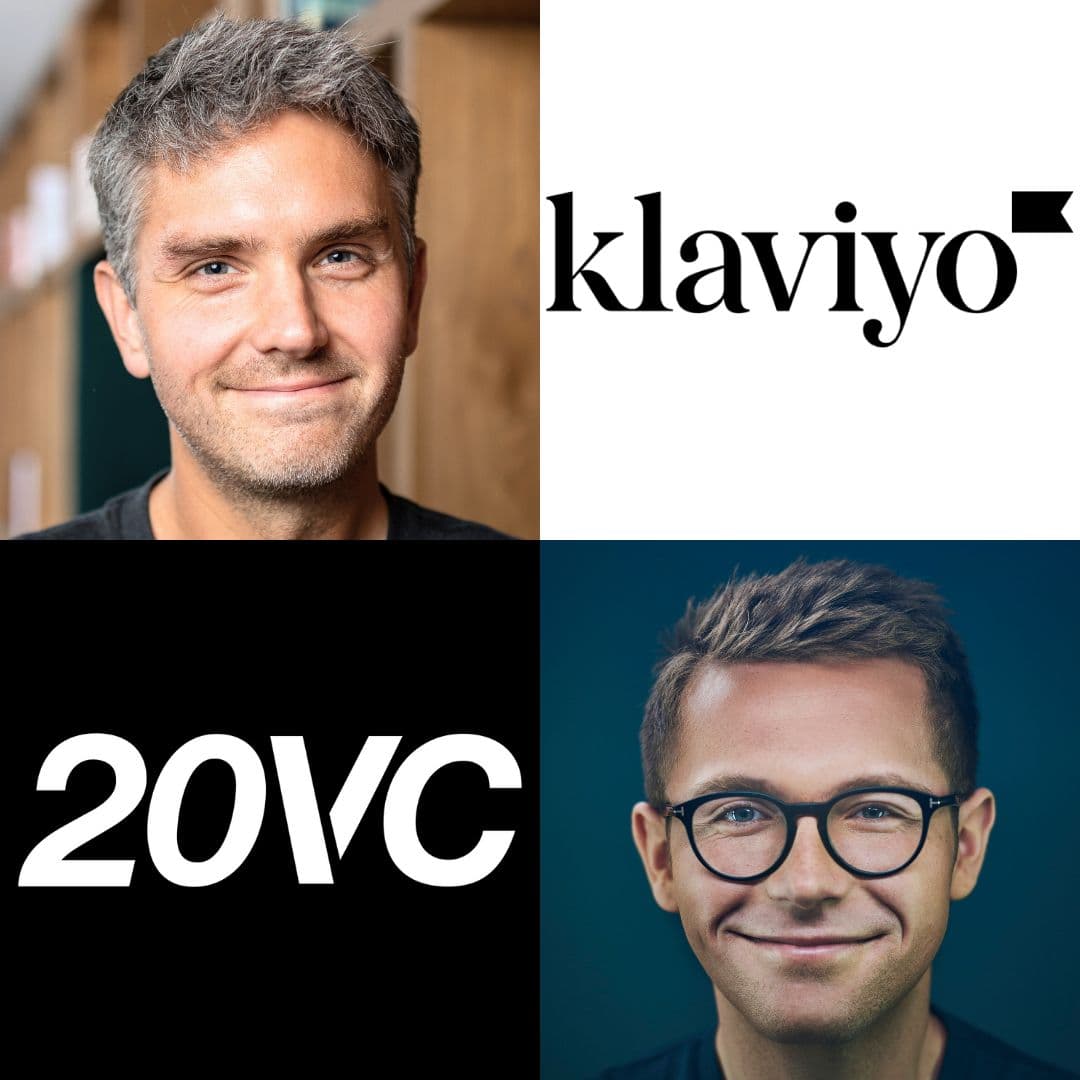
Podcast Summary: The Twenty Minute VC (20VC) - Episode with Andrew Bialecki of Klaviyo
Episode Overview Episode Title: 20VC: Klaviyo's Andrew Bialecki on Going Public in an IPO Winter, Is Klaviyo Under-Priced in Public Markets and Why, Why Every VC Turned Klaviyo Down in the Early Days & How Shopify's Partnership Changed the Game
Host: Harry Stebbings Guest: Andrew Bialecki, Co-Founder and CEO of Klaviyo Release Date: September 2023
In this episode, Andrew Bialecki shares insights on Klaviyo's journey as a bootstrapped company, its recent IPO amidst challenging market conditions, and the significance of partnerships, particularly with Shopify. He discusses experiences with venture capital, product market fit, and the evolving landscape of marketing technology.
Key Themes and Discussions
- Founding Klaviyo: The "Aha" Moment
- Initial Vision: Andrew and co-founder Ed aimed to create a robust platform that would connect businesses with the internet, evolving from an analytics database to a comprehensive marketing application.
- Importance of Vision vs. Pivoting: Andrew emphasizes the balance between sticking to a vision and recognizing when to pivot based on customer feedback.
- Bootstrapping vs. Venture Capital
- Bootstrapping Philosophy: Klaviyo initially bootstrapped due to difficulties securing early venture funding, which shaped their creativity and growth strategies.
- Impact of Capital on Growth: Andrew reflects on whether accepting early VC funding would have changed their trajectory but believes the constraints fostered innovation.
- Navigating an IPO in Challenging Markets
- Decision to Go Public: Klaviyo chose to IPO despite a "bad market" due to confidence in their long-term business model.
- Lessons from the IPO Roadshow: Andrew shares insights on engaging with potential investors and the importance of storytelling in building a compelling business case.
- Partnership with Shopify
- Building the Partnership: Andrew discusses how Klaviyo's partnership with Shopify evolved, ultimately benefiting both parties by aligning their goals and enhancing customer experiences.
- "Tug of War" Metaphor: He likens partnerships to a tug of war, where both sides must contribute and pull together for mutual benefit.
- Market Challenges and Company Valuation
- Undervaluation Concerns: Andrew addresses perceptions of Klaviyo being undervalued despite strong growth metrics, emphasizing the need for patience and sustained performance.
- Market Dynamics: He explains how public market perceptions can differ from operational realities and the importance of focusing on long-term growth.
- The Role of AI in Marketing
- Future of Marketing Technology: Andrew discusses the evolving role of AI in enhancing marketing tools and enabling businesses to optimize their strategies.
- Selling Work vs. Tools: He expresses skepticism about rapidly moving towards selling outcomes instead of tools, advocating for the necessity of quality products.
- Insights on Leadership
- Becoming a Better Leader: Andrew reflects on the importance of clear communication regarding the company’s vision and direction to motivate employees and stakeholders.
- Value of Personal Branding: He suggests that while personal branding can have its benefits, delivering great products and experiences to customers remains paramount.
Conclusion Andrew Bialecki's candid insights on Klaviyo's journey from bootstrapping to a public company illustrate the complexities of modern entrepreneurship in the tech landscape. Themes of resilience, strategic partnerships, and the significance of a strong customer focus permeate the discussion, offering valuable lessons for entrepreneurs and investors alike.
---
Additional Notes
- Guest's Background: Andrew Bialecki is a seasoned entrepreneur with a deep understanding of the SaaS landscape, having led Klaviyo to significant growth and industry recognition.
- Guest's Views on Market Trends: The conversation touches upon broader economic trends and consumer behavior shifts, underscoring the importance of adaptability in business strategy.
For more insights and resources, visit [The Twenty Minute VC website](http://www.20vc.com).
Written by AI. May contain mistakes. Listen to the episode to check what was said.
Transcript
Automatic transcript. May contain errors.0:00In year one, we got to a couple thousand dollars in MRR. In year two, we got to a quarter of million dollars in ARR. And then it was until the end of year three that we got to a million dollars. When we were building Clayfio, we applied to all these, you know, these some of these venture firms had these kind of, you know, we'll give you a $20 ,000. And it's like, you know, no strings attached, no equity. We applied to two or three of these and not one accepted us. I remember going to Ed and saying, let's just try to do this ourselves. This is 20VC with me Harry Stubbings and I am a vertical sass nerd and that means I am one of the biggest fans of Clavio.
0:35I think Clavio is one of the most underappreciated public companies today. Why? They have top tier revenue growth, 39 % year -on -year growth approaching a billion in error. Two, their net new customer growth is up 20 % on $50 ,000 ACV customers where they are up 80%. And number three, they are super capital -efficient with 16 % free cashflow margins. Today, we sit down with their co -found and CEO Andrew Bealecki. But before we dive in, I want to talk about Cooley, the global law firm built around startups and venture capital. Since forming the first venture fund in Silicon Valley, Cooley has formed more venture capital funds than any other law firm in the world, with 60 plus years working with VCs.
1:20They help VCs form and manage funds, make investments and handle the myriad issues that arise is through a fun's lifetime. We use them at 20 VC and have loved working with their teams in the US, London and Asia over the last few years. So to learn more about the number one most active law firm representing VC backed companies going public, head over to coole .com and also coole .com, coole's award -winning free legal resource for entrepreneurs. And speaking of providing incredible value to your customers, travel and expense are never associated with cost savings, But now you can reduce costs up to 30 % and actually reward your employees.
1:59How? Well, the van rewards your employees with personal travel credit every time they save their company money when booking business travel under company policy. Does that sound too good to be true? Well, the van is so confident you'll move to their game changing all in one travel corporate card and it's spent super app that they'll give you $250 in personal travel credit. just for taking a quick demo, check them out now at navan .com forward slash 20Vc. And finally, let's talk about Squarespace. Squarespace is the all -in -one website platform for entrepreneurs to stand out and succeed online.
2:34Whether you're just starting out or managing a growing brand, Squarespace makes it easy to create a beautiful website, engage with your audience, and sell anything from products to content, all -in -one place, all on your terms. What's blown me away is the Squarespace Blueprint AI and SEO tools. It's like crafting your site with a guided system, ensuring it not only reflects your unique style, but also ranks well on search engines, plus their flexible payment options cater to every customer's needs, making transactions smooth and hassle free, and the Squarespace AI? It's a content wizard helping you whip up text that truly resonates with your brand voice.
3:09So if you're ready to get started, head to squarespace .com for a free trial, and when you're ready to launch, go to squarespace .com, slash 20VC and use the code 20VC to save 10 % of your first purchase of a website or domain. You have now arrived at your destination. Andrew, I am so excited for this. You don't know this, but I'm like the biggest nerd on your business. I think it is one of the most fascinating businesses in tech, so thank you so much for joining me today. Awesome, thanks for having me, Erie. Now listen, I was thinking about how to make this show as different as possible. I heard that the Clavio business was not always what it is today, And what I mean by that is I had it was a database for analytics and it's kind of taken a couple of iterations to get where we are.
3:51How do you think about the importance of like early vision sticking to that vision and what you start with not being what you are? Man, what an interesting question. So when we started my co -founder at Ed and I, we wanted to build something that wasn't just kind of a feature or a small app. We wanted to dream big. So I think we kind of had this North Star of, well gosh, wouldn't be really cool if you could take a person, Like the essence of you or me take kind of our Saragent. Now we talk about AI, it's like your agent. And what did you can hook that up to the internet? So, you know, instead of just, you know, the internet being these fiber optic network, you know, where we can pass around images or text or video, what if it's like you could pass around me?
4:29So we knew that that's what we wanted to build. And then it was a little bit of a work backwards, you know, my co -founder Ed is very pragmatic on like, okay Andrew, but like what's valuable to somebody today right here right now? It kind of pulls me out of the clouds. Yeah, and so we mean we started out and we said, Okay, well, you know, if you're gonna connect somebody to the internet, then you probably a better build something that represents their brain. And so that's where we had came with this concept of like, what's a database? And you know, brains are good at both like deep intellectual thinking and analytical thinking, but also like fast, you know, record retrieval.
4:57So we need to build something that's good for that. But then, you know, after we built that, you know, we were just very iterative and we said, okay, well, what is this useful for? And it's kind of infrastructure in the world of software. There's infrastructure and applications. So what application should sit on top of this? and we pulled our customers and a lot of them said, oh, well, I'm using this for marketing. So we said, okay, great. Well, that will be the first application that kind of sits on top. That's how we got there. And that's, you know, it was kind of the bedrock and now we think about like, okay, great.
5:21Well, what other applications could we build that sit on top of this multipurpose database as kind of brain, so to speak, you know, for a business? We passionate about marketing. We're often told, do what you love, let your passions guide you. We passionate about it. You know, I'm a product builder. We want the best products to win. And I remember people telling me, you know, some of the companies I worked at, they're like, Andrew, you know, you could build the best product, but the best product doesn't always win. And in some sense, we built Klavi to say, like, well, gosh darn it, like, we're going to level the playing field.
5:48Let's build software such that everybody can be good at marketing, and now the best products can win. Hey, if we do this right, marketing is a thing we can kind of level the playing field. There are folks that are great at, you know, building, you know, but maybe aren't great at marketing, like, we can help them level up, give them superpowers. The trouble with that, making it democratized, making it available to everyone, wonderful. But VCs, let's be honest, hate low ACVs, high churn, traditionally lower retention rates. Cats are still pretty high. The mechanics of the SaaS business don't work, baby.
6:20And this is why Venture Messers don't like it. And you have a long tail, like a really long tail. What does it take to make a really long tail work with a lot of customers paying, you know, 5K ACVs? So I've always liked the kind of mantra that you can look at marketing as you know kind of scalable sales Well a great product should be scalable marketing, you know It's a little bit the show don't tell a great product will kind of sell itself right or it'll market itself when we started We felt like that's what it's got to do. It's got to be so good that you know if you sign up for our product You start to use it.
6:55It's really obvious where the value is right away. It's easy to get there It doesn't need any marketing. Now the reality is, that's an asymptote. We obviously have marketing, we have sales. But the more you can do that, the more you make it easier for yourself. So, and I used to say, boy, by the time we talk to a customer and we actually say, are actually working on them on a sales process, we want them to be so kind of in love with what we built that we're rolling downhill. And so for us, with Clavio, one of the first things we did was, once we got into marketing, not only we make it easy to get started, I think a lot of people have done it, like how do you build a great UX?
7:28But we also just built attribution like we want you know because a lot of people say like well It's especially an enterprise software. What's the ROI of this product? Why should I buy it and we just built that straight into our product? We put it on the homepage when we would finally pitch folks they'd be like oh, yeah That's alright. I've actually already seen the ROI I've done the calculation and I'm ready to buy this is so obvious So I think there's a lot you can do with product to just you know try to take the things you typically think of as like living marketing or living sales and how can you just pull all of that forward into products.
7:57That lowers your CAC. I think that if you pick a product that's kind of a bedrock, that helps reduce churn. In those two things, you know, all of me ultimately, that's those are the unit economics that matter. So do you think VCs are wrong essentially to hate this segment in terms of the long tail low ACVs because of the higher churn and lower retention? I think it's harder. The reason we got into, we started with SMBs, both my co -founder and I came from enterprise sales and we would sell to huge companies like Starbucks and Bank of America and Marriott and we saw a long it took to get in there so I think you just kind of have to pick your challenge and for us we just thought that would take a long time yeah.
8:34I mean this obviously I was going through your numbers earlier and I'm looking at them now and the really interesting thing I thought was also like the $50 ,000 ACV customers and this is maybe a couple of quarters ago so forgive me for this but it was up 80 % and I was like holy shit that's incredible. But how do you think about serving two masters? You know, HubSpot has always catered to the SMB, for example, and then I'm very much stazed with that as it's home. But when you've got the 50 KACBs growing as quickly as you do, and this incredible long tail, how do you serve two masters at the same time?
9:08So for us, it's a great, great, we've think about this a lot, and we're not perfect at it yet. But I think you just have to think about this almost two different customers,
9:18two We knew what it was like to be just starting out. We knew what that felt like, how your every dollar matters, and you almost anything that I take some of my time but doesn't cost money, that sounds good. Like I'm willing to do it myself. But then we've also worked with big companies where we realized, oh my gosh, there's a process and they've got the security requirements and scalability and reliability matters. And the product's gonna take 12 months for them to execute. So they're trying to de -risk that, and they're just totally different. The funny part is the technology isn't, it's not really all that different.
9:48and the product and technology, it's really just matching up with what are the things that matter most to those folks. And I've always looked at, like, when you walk in a room to a customer, if you can ask them questions that show that you know who they are, that you're one of them, that's the best way to open up the conversation. And they're just very different. So we literally just, I mean, we look at them as two totally different types of customers, and then, you know, we're just lucky that we have a product that, you know, the fundamentals of, like, we'll work for both. There's a very kind of interesting element of the business, which is like, with this incredible love great product.
10:19Amazing customer base. You took the very strange decision not to raise venture money, which really makes my job completely obsolete. Why did you decide to bootstrap when the rest of your generation of entrepreneurs decided to fundraise instead? Well there's two answers to that. There's the one that sounds great, which is in my family, a bunch of my aunts and uncles and my grandparents. They were all, they were entrepreneurs. They ran small businesses and I always felt like well, they from day one they had to make money They had to be profitable. That's kind of the lofty answer the other answer was We were when we were building clay.
10:55You know, we applied to all these You know, these some of these venture firms had these kind of you know, we'll give you a $20 ,000 and it's like you know No strings attached no equity, you know for the summer and so we applied to a bunch of these when we were about six months in and at the time We had real users and customers were like oh, we'll be a layup We applied to two or three of these and not one accepted us. I remember going to Ed and saying, Hey man, if we can't get the $20 ,000 check, why do we believe that we're going to be able to raise a half a million dollars or a million dollars which would have seeded around a lot back then.
11:26So he said, you know what? Like, let's just try to do this ourselves. Do you think Klavio would have been successful if you had raised a five on 25 seed round? And would you have done things differently? I would like to think we wouldn't have done things differently, but my advice to a lot of entrepreneurs don't take more capital than you need because the constraint breeds a lot of creativity. My routine in the early days was I'd wake up, I'd log into our help desk, our support software, I'd answer customer questions for an hour or two or sometimes a couple of hours if there was some real issue.
12:01And then I would get to coding. I always felt like that was a great pattern because if there was some painful problem with our product, some feature that was missing or some bug. I mean, that was obviously the first thing I was going to fix that day because it meant the next day I wouldn't have to spend all my time answering questions about it. And that viral loop of customers to code to back and forth was awesome. So there's things like that that you just learn how to do that I worry if you go too fast and you say, buy for Kate those roles and let's say that engineers never talk to customers.
12:30And all of a sudden you lose all that magic and it probably makes you less efficient. So yeah, I don't know. I'd like to think that we would have done it the same way. And we did once we actually raised some venture capital. At that point, we were just like, look, it's kind of just cushioning our bank account. But yeah, my advice is raise as little as you need, because really good things will happen from that. What part of the business do you think would have been better if you had had money earlier? Honestly, this one thing I would probably do over, we probably would have grew our product and engine in Teen Faster.
12:57I kind of enjoyed writing a lot of the code, building and designing features in the early days. If there was a point at which we knew what we needed to go do, rather than me just keep chipping away at it. I remember when the first couple of clavios, especially on the parking engineering side, started, man, we got a lot more done. So I would have done that sooner. I think a lot of people would have given us advice and I probably was too naive or didn't understand this part yet. There's a real there there. You have product market fit. You probably should invest more in sales and marketing. And I think that probably could have gone a little faster too.
13:29How quickly did you get to a million in an hour? Oh, man. And it was a journey I was telling some folks recently. For us, we started on January 1st of 2012. In year one, we got to a couple thousand dollars in MRR. So say maybe $20 ,000 in RR. In year two, we got to a quarter of a million dollars in RR, which was a huge jump. But we're still, you know, I think that was around the time where we felt like, okay, we could maybe hire one or two people. And then it was until the end of year three that we got to a million dollars. 36 months where 80 % of it was just two of us. And then I think we then had the first couple, couple folks join, join with us.
14:05It's so weird there, you know, I'm friends with Daniel at Uipath and I had him on the show. And I mean, he was not, I mean, slower than you said, I'm like, he was nine years to 480K an Aero. Nine years. Thank God he was in Romania, otherwise there's no way you could afford the cost space. But I'm just going again. I am a venture investor for a living and challenging our assumptions where it's like, hey, the best really hit 10 millionaire or in 18 months. That's kind of the core benchmark of what really great is. And I just look back at some of the best businesses and I'm like, are we wrong completely?
14:39If you know what you want to build and you've got a good plan, the capital is really helpful. You can go faster. And we probably could have gone faster if we had invested more. But I think there's some real magic in taking your time to get the product market fit right, really build up that customer love we talked about, because that really does compound in snowball. I think the most challenging part of say a software business, SaaS businesses, if you rush too fast to try to force revenue growth, sales growth, but the product market fit isn't there, there's a lot of companies that have tried that and you just, you never really get it great.
15:10That's why I think a lot of these companies that, you know, end up, you know, building really, really enduring and build great community and product market fit, it's because they took some time to get it right and then really believed in the laws of compounding that, yeah, Hey, if I can really solve this well for one person, that's okay. I mean, there are thousands or millions of other customers in our case businesses out there that don't look all that different. And yeah, then we can take it to them. How much were you adding revenue when you raised your first money? So, that we raised our first round, right around when we hit 1 million ARR, and the reason we did it was we were self -funding bootstrapping.
15:46We were hiring folks, and Ed and I, we used to look every week at our bank account, and we literally just pulled it up. It's a little bit like looking at your checking account, but it was just for business. And there was this big sawtooth pattern of, you know, we kind of bump up, you know, day by day over the course of the month. And it would drop to almost zero when we paid our server bills and, you know, rampay roll. And so this big sawtooth pattern. And so we would literally forecast out when we could hire the next person based on how much we thought the business would grow like in the next month.
16:14We'd tell people it's like, hey, look, we really like to work together. But I actually need you to wait like six weeks because we may not have the cash on this. That seemed like a really bad idea. So that's when we said, you know, it'd be really nice if we had a seed round at the time was maybe a million, maybe two million if it was bigger. And we said, you know, if we raised a seed round, boy, then we wouldn't have to worry about this problem anymore. And that's the reason that we ended up raising it. How much did you raise? And what was the price? We raised a million and a half dollars. We weren't super formulaic about it.
16:44We made a couple of silly mistakes. I started out with going back to folks that I worked for, CEOs, CTOs, and asking them, it's like, hey, we've kind of built this business. Would you be interested in writing us an angel check? And they said, yeah, of course. And then I asked them, okay, well, and also do you know like who are the good seed stage VCs? Because we hadn't spent any time meeting these folks. They said, sure, so I got introduced to a couple folks around Boston. And from there, we thought like a million dollars sounded good. So we did a million dollars, and there was like a little bit from these angel investors.
17:13And then when we were figuring out the price, Thankfully, like safes had come into existence, you know, maybe a year or two ago. So it's like, okay, we'll just use this, you know, this is kind of new format. And then what I'd heard was, hey, you know, if you were raising a seed rounds, 10X ARR was kind of a lot if you had a little bit of traction. But we felt like because we were profitable, we were like, okay, well, we could double that. So, you know, I remember asking, it's like, hey, look, I know 10X is the normal thing. Can we do 20X? And, yeah, I mean, the seed investor we were working with just said, yeah, sure, that sounds good.
17:42That was it. The silly mistake we made actually, which was, it didn't really matter much, but because we were profitable, we also said, okay, cool, so we'll negotiate the price, but hey, we actually don't need the cash right now, so it's actually okay if you want, like, you can just send it to us in a few months. So we used to laugh about that of like, we should have just, you know, waited another three months, and we would have, I don't know, maybe doubled revenue, we could have raised it a higher cap, but I don't know, we've never tried to be perfect with fundraising, we've always felt like, if you can find people that are value -ad, you know, those are kind of like the best people to have on your cap table.
18:10What was the big cash injection? Was it paying an X out? No, the first big round for us was with summit partners and then Excel the year after, but we raised that million and a half, probably about a year or two years later, we added five more from the same investor. And then we went like a bunch of years where we probably scaled to about, I think it was around 50 million, 60 million in the ARR before we raised our next rounds. That's when we knew that was going to be like, it was just going to be a, I mean, we'd probably a 10X at that point. It was going to be a different order magnitude. What was that round then when you're 50 million there?
18:44How was it priced? Yeah, well, what was the size and price? I think it was around, it was, I think it was a little over 100 million is what we raised. Again, because we were profitable, I think there was a mix of primary capital and there was secondary to existing investors. And I think we actually ran our first tender then. I know that's got more popular, but like, I think we ran a tender for everybody too. Yeah, so that was around 100 million. And I think we sized it based on what we thought, you know, because at the time that the kind of wisdom was like, hey, it has to be around 20 % of the company.
19:14So I think that's kind of how we backed into the size. And the price, it was around, I think around 800 million. You know, the logic was, we always had the same logic with fundraising that, you know, it was kind of like, hey, look, whatever the kind of going market multiple was because we were profitable, we'll be like a little bit ahead of that. But we never really tried to push the price, you know, that much. So I probably got some of those numbers a little bit off. You can't ask, you mentioned there kind of a mixture of primary and secondary. Any big lessons for founders on the importance of secondary?
19:42For founders to take, for team members to take, any advice that you think is important for them to know when they have that option at that disposal? We've always had the thesis that like, if private companies, if there was more liquidity in the stock, we always felt like that was better. I mean, we weren't a public company, but if you just, the more often, you could do that, if there were some cadence that was fine, that was a very healthy thing. So after we did that, I think that was our series B, I think we did bring a couple of others, some were coordinated around fun raisings, and some I think we're just, we had cash on the balance sheet.
20:11I always felt like that was a great way that, you know, for folks that, you know, were really invested in Clavio, it's like, you know, for some of them, I mean, they grew up, their careers at Clavio, and they were sort of like, equity was a big part of, you know, their wealth creation. It felt like to let folks do that along the way. I mean, I heard all sorts of great stories that folks, you know, paying off student loans, right? Putting a down payment on a mortgage. So that was great. I guess my advice is I don't overthink the oh my gosh, well people be demotivated It's a positive thing and then it actually set the way that when we went public I think a lot of folks are like well, yeah now it just feels like when you're public It's like hey, it's kind of what we've been doing But just now the stocks even a little bit more liquid.
20:45Are you ready for some tougher questions, Andrew? Sure. I spoke to some brilliant friends and they gave me some insider tips And they said a big needle mover for the company was when male chimp was kicked out of the Shopify ecosystem and you'd kind of hung around the hoop long enough and were a good enough partner. That when that happened, it was like the golden moment for you. Can you talk to me about that hanging around the hoop and your lessons from being around the hoop and being there when necessary? I think that event, we ran some analytics on this, I think a while, a while ago. And there was a bump, but I think you were surprised at how much there was kind of already these big, huge tailwinds and that accelerated a little bit, but it wasn't the step -changed a lot of people thought.
Read the full transcript
21:29My kind of learnings from that were twofold. One, I think we had kind of shown that in the world of data -driven marketing, and as especially as applies to retail, we had all these folks that loved us. And there were a lot of folks that weren't aware of us. They didn't know who we were yet, but when they found out what we did, it didn't take them a long time to figure out, oh, we've got a really great product. When that happened, you know, we just saw, it was almost like a bump in awareness all of a sudden, you're like, oh my gosh, I have to find something else. So being ready, having a great product, you know, leading with that and then investing in marketing or in this case having the marketing kind of happened to you I think is a good strategy like so make sure you sequence those things the right way The other is I've always felt with partnerships Partitions are such a huge part of our business.
22:10Obviously. We've got a great relationship with Shopify and with others You know, I've always felt with partnerships. It's like a tug of war I mean not in a competitive way But like for string to stay tight my metaphor to our teams has always been you need two people pulling on both ends of the rope That means that there has to be this economic incentives that line up products They have to like work well together or customers care about that in that case You know it felt like we had great alignment with Shopify because you know We were helping their customers drive more sales which was accrued to both our customers to clavio and to Shopify And that was like a great everybody win situation So I think with all partnerships if you can set those of kinds of things up I mean, if it's a win -win win for all sides, like that's the best of all worlds.
22:56And what you want to avoid is things where I think sometimes it's not even like a win lose. There's a lot of partnerships where maybe it's really good for one side, but it's kind of a no -op for the other side or it's not really good for the customer. It's not bad, it just doesn't really matter. And I think those are the kinds of partnerships you can spend a lot of time on that don't go anywhere. So we've always tried to just find things where everybody's pulling to keep the road tight. And if you can find those, those work best. So the rope is tight. I think Toby learned. I think he said this publicly before that maybe he hasn't in which case I might have to edit it out and I'm screwed Can I agree?
23:29I'm out from Toby and the Colossans, but one of his big regrets was actually letting stripe into the Shopify ecosystem and not be more dominant in controlling a relationship there I think he answered that publicly my question to you is they then buy a chunk of the business Talk to me about that process. How do you thought about that? Whether you thought that was just kind of the pulling of the rope? How did that go down? I've always kind of, the analogy I made is it's a, you know, a little bit like when you're, you know, dating and then finally you kind of get, you know, you be formalized, right?
23:58You get, you know, you get married to some degree. It's not a perfect analogy, but it's kind of like that. There's Toby just call you up on there and say, hey, like this is working. Let's make this happen and we want to put in, you know, $100 million. $10. It was more gradual than that. We'd been working with Toby, Harley, and the entire Shopify team, really on the product side for a long time. Then it started to be a little bit on the marketing side. I felt like if you've got this really good partnership, if you can figure out the product side, the go -to -market side, and then the financial side, you get all three of those things lined up, that's the best of all worlds.
24:34You know, we knew they were adding a lot of value for us in terms of just literally recommending Clavio to folks. You know, we felt like we built a great product, but like, hey, I mean, again, we, all people didn't know who we were yet. They were saying, hey, look, you know, what works well, what integrates well, what shop, hey, you should go check out Clavio. So we felt like there's this kind of consummation, but it was always, it was, right, it was a very gradual thing and it was, I think, one day, I remember it was sometime during COVID. And we just said, like, you know, if we're both in this for the long run, why don't we just make this more formal so that we all have skin in the game together.
25:07It was a win -win -win, right? Valuable to Shopify, valuable to us. And I think to our customers showed that, like, hey, these kinds of partnerships can work. There were a lot of great things that came out of that. But an interesting thing that happened was a lot of other partners that we had, both inside and outside of retail, said, wow, we love the way that you've worked with Shopify. That clearly is working. It's a creative to everybody. Can we replicate that? I think partnerships are kind of a newer art form and software. like a lot of these tasks, like how do we work together? Are we complimentary or are we, we're on each other's turf?
25:38I think this kind of helps make it clear that like, no, there's a real, there's a real positive, like kind of symbiosis here. And we've actually started to take that to, you know, other verticals and other industries and use it a little bit of the template. I totally see the alignments you drive more value for that customers, that customers love it and love being on Shopify with that. You get lower cacks. And there are any misalignments. The rope has to be tight. We're both working on keeping it taught. I think partnerships can go sideways when folks just aren't up front with each other. What are we going to be great at?
26:10What are you going to be great at? It's actually okay if there's like a little bit of overlap, but the more you can kind of clarify that, the better. And I think certainly would chop by and in others, I think we've just been very up front. And it leads over a little into our ecosystem. We try to, we have a lot of folks that integrate into Clavio now, and we try to do the same thing. It just be very clear about, hey, these are things that we're not interested in where we need help and these are the things that we think are core competencies and I think if you can just get all that on the table things go a lot better.
26:37I'll never forget when I had Toby on the show and I think Harley said oh you'll have great fun if an IP address was a human it would be Toby and I was like that's a great intro I'll remember that one. Listen with this blossoming partnership you have the ability to go public and And I mean, thank fuck for entrepreneurs like you, Andrew, because as a venture investor, I was sitting there going, God, who's going to go out in this market? And then respectfully is like, I will. And I'm like, great. Why did you decide to go public when you did? When, you know, seemingly it was a bad market? We backed up and, you know, we tried to take a very long view.
27:19You know, I used to tell folks at Clavio, I was like, because people ask all the time, when will you go public? I said, look, I know we'll get to 2030. We'll have grown, we'll build a great business, great products, we'll delight a lot of customers. I know we'll be a public company, but I probably won't really remember what year it was. It's not gonna be a long time, but it's gonna be somewhere in this like early 2020s. We did that and we're like, well, we know it's gonna be at some point and I've always had this belief that if you know something's coming and it's gonna be a bunch of work, like you might as well just do it.
27:47So a big part of it was we were just ready. We knew we were in good shape as a business as we were working with larger customers. We knew there was some value in folks knowing that like, hey, we were in it for the long run. I think that's actually played out. Like, I've talked to a lot of folks now and they said, hey, look, it's great to know your profitable business. Can you talk to me about building the buybook in the process? You've got to go out and you've got to sell to institutions. We mentioned selling and marketing earlier and storytelling. It's a different story you need to tell when you're building that buybook on going public.
28:17How was that process? And what did you learn? So one, everybody talks about a road show, what the reality is is you meet everybody, you know, three or four times leading up to that. It's more like you're seeing people that you already know, since some sense the road show should feel it's a little anticlimactic, hopefully. That's one part of your meeting folks, but then along the way, I've always subscribed to like you, you will get the investors that you deserve. I think if you're clear about what you're gonna focus on both in the short and long run, you'll find folks that, you know, line up with that.
28:45you want everybody to know where you're aiming and there are no surprises. So anyways, I think that's what we thought about building up the book. And then, yeah, it's interesting. You get kind of to the finish line and I mean lots of great folks to work with. And I think there's, it always felt to me like you do this thing where you raise a seed round and there's like lots of people involved. And then for us, you know, when we did our series A, B, C, it was all one investor. By the time you get to the road show, you're kind of back to like these party rounds where there's going to be lots of people you're raising from, it has kind of this weird, you know, back to the beginning feel of, boy, there's, you know, 20 or 30 folks that you're spending time with, you know, and just sharing what you're up to.
29:21How did it feel when you IPA'd? I remember sitting with our general counsel the night before I told him it's like, I think the probably the best analogy is that it feels a lot like, it feels a lot like a wedding, honestly. I mean, two things are true. The advice you get when you get married is like, there's going to be a lot of people there. It's going to go by fast. You're not going to remember much of it. like it'll be fun, but actually it's just a lot of, it's a lot of, you know, pop and circumstance. I remember feeling it's like, boy, that's, that actually is pretty accurate. I think what was important for us was we went to New York, you know, we had a great time, rang the bell, but then we wanted to get back to our office.
29:56And, you know, I always felt like we're like, okay, we're going to have one party. We don't really celebrate fundraising, but this one's probably worth celebrating. We're going to do it that night. That's the end of it. And then we're back to work tomorrow. And I remember going to bed that night. And I think the text message I got for my wife the next morning was, hey, before you go to work, just reminder, just make sure you take out the trash. So, you know, it was very much like, hey, it's a fun day, but you go back to what you were doing. One is a wealth creation moment being the IPO and the other is a wealth destruction moment being a wedding, but I appreciate the alignment.
30:27But yes, absolutely. You're right. Can I ask you, how does your role change? Do you have to do different things when you're a public company CEO versus before? And how do you think about that transition? I'll say the two things that I think have been real positives. One, I think there's a lot of smart folks that have studied a lot of software companies that are public market investors that you just, now they're, again, they're on your cap table. So you spend time with them and learn how they're thinking about things. I think that's interesting. The second is, as a private company, and especially a bootstrapped one, I think the great part about bootstrapping is, you tend to do all these little habits that really help make you successful, like to stay in close to customers, being scrappy, being frugal.
31:06I think some bootstrapped companies, maybe because they don't have, you know, they haven't raised as much capital. Sometimes they're not as rigorous on, you know, they're kind of successful in spite of some other things. Pre -going public, what were you successful in spite of? Oh, man, there are so many things that were under -optimized. I think great products really do sell themselves. Customers will come to them so it can hide a lot of things that you could be better at. The analogy I always use is it's like imagine you're like a sprinter and imagine somebody you know is running the hundred meter dash They run it and they have terrible form, but their time's pretty good or imagine that they run it and their time's good But their form is great You'd rather be the person that has kind of okay Their their arm is kind of hanging out to the side and they could actually probably go faster And I always felt like that was you know We had these opportunities that were right there and it's something we obviously work on now is okay How do we continue to get better and better in better form?
32:00Can I be blunt? I speak to so many very, very smart people and everyone is aligned in thinking that you're dramatically underpriced and they go, I don't get it. The growth is there, the scale is there. And I'm looking at it too and I'm going, I don't get it either. And I guess my question is like, how do you respond to that? There are not many freaking companies growing at 39 % with your revenue. Can you help me a naive person understand why you are priced the way you are and why you see multiple compression when maybe others don't have worst businesses? I don't know the answer to the stock market.
32:35We've always looked at it as the market cab share price all kind of stuff will take care of itself. Companies fundamentally get valued on either revenue growth and then ultimately free cash flow or profitability. If you just keep growing those things, then you're in good shape. we think about, well, what makes us believe that that will be true long into the future? I think there are products that are core to a business. And it's either because for a particular function or for an area, they're kind of a tent pole, or it's because you're core to, you know, how a business drives growth. For our customers, how they drive revenue.
33:13What I've always been excited about for us is we're like right in the middle of both. When you're storing all the data for a business, you know, when you're kind of the center of how they think about marketing. And then if you can tie that back to actual results, customers are going to be pretty happy with that. And then ultimately over time, that's going to lead to more customers, revenue growth. And if we do that, I think ultimately, you build up a track record that folks externally can see and everything kind of takes care of itself. So when we think about the introduction of AI as an exciting new enabling technology, which I think it is in this respect, Do you agree with Sarah Tavill's perspective that we will see a future where you sell the work and not the tools?
33:54If you're playing about current technical tools, now, Kavier being one of them, we sell tools that enable people to do the work. And she suggested over time, you will just sell the work and you will pay for the output. Do you agree with that perception? I think that's generally the right direction. I'm maybe a little skeptical of how fast we get there. When I think about machine learning and artificial intelligence, it's kind of three core principles that we have. The first is being a physics background, the laws, or the algorithms that govern how the world works are discoverable. So the way that we as humans use software, or try to, you know, execute very processes, we can actually define those.
34:33We can codify those. So we can understand those. The second part is, I think for a lot of things that we as humans do, If you look at our algorithms once you've documented them, they're actually really naive and inefficient. That's not anybody's fault. It's just a lot of these things we don't practice that much, or maybe we've practiced a lot, but compared to what a machine could do, there's just a lot of room for optimization. We also believe that if you look at a lot of the algorithms that we use, if you use data and obviously software to then try to understand what would be an even better algorithm for that process, that's very possible.
35:06So, in our case, in the world of marketing, I talked to a lot of marketers and we asked them, hey, how do you spend your incremental hour in the day? Like, how do you decide how to optimize your time if you're using expected value or something like that? Like, how do you decide what to work on next? Which project? And a lot of them say, well, I've kind of got this notion of what I should be doing, but I actually love some advice. We think that's something that's like ripe for machine learning in AI to just say, yeah, here's where you should aim. So, we think we can discover these process, we think through data we can build even better versions of that to say, here's how you really should be doing it.
35:38The third part is we think then that adds up to, you know, at least a two X, right, 100 % productivity boost. And in some cases, it might be infinite where the work just goes to zero. You know, so that's kind of our strategy when it comes to, and then I think you can get to this world where, hey, if you can automate a lot of that way, you can literally just say, hey, here's the output all delivered for you. And somebody can say, great, I want to spend, you know, zero time or very little time on it. Do you think AI actually enables you to make more money from customers? So we'll just provide a better product.
36:06And you know me and Jason Lamkin talk in debate a lot about whether your large enterprise is your box, is your drop box, is your, your, your, your clavios of the world. We'll actually be able to extract more juice out of customers or in a horrible terminology, apologies for that. Or just provide a better product, but they pay the same. And it's just a kind of commoditized technology product that enables them to have a better product but pay the same. I think there are two fundamental forces, is kind of working in opposition. One is all technology. It's fundamentally makes things easier. So there's a deflationary element to it.
36:39And so there's this constantly, you have multiple people build the same tool set that fundamentally should make it better for those customers. On the flip side, as you build better and better tools, better functionality, it is increasingly valuable. So I think for us, we're so far away from the total value that we can bring to our customers. And we know that it's so profitable for them. A lot of the conversations I have with folks are, we're eager to see that next world, and we'd be happy to pay for it, but just how long is it going to take for it to exist? I think in our case, I think there's a lot more value there, and if you index pricing to that, I think there's a lot more there.
37:17With some software categories, I think they're not, if you look at the way they're using AI, and maybe specifically language models, it's more of this, it's kind of this productivity, productivity will help you click the buttons faster, like navigate the UI, or maybe you do it through natural language. I think that's a nice to have, but if you can actually measure the lift, the increase in output, and then you can put a dollar sign on that, that's something that customers really understand, and I think that's another level of value beyond just the, you know, you can do your day job quicker. Final one, we do a quick fight.
37:48I've loved this. You mentioned a deflationary element there kind of with productivity gains. Maybe your out -formed hotspot last quarter. I guess my question to you is like, is the economy less bad than people think? Are people missing something about the economy when you look at how consumers are actually buying, behaving, transacting? I think people are being more thoughtful about how they spend, but interestingly, and we share this step last year, we're finding that more and more consumers are building deeper relationships and more loyal relationships with businesses and organizations and brands they love.
38:21So there's this interesting thing going on where, well, consumers may be more thoughtful about spending overall. They're tending to concentrate it in a handful of companies that they really love. If you're a business, it's really about how do you deliver great experiences to the customers that you have. And once you acquire somebody, how do you make sure you also go deep with them? I've always thought it's interesting. In the world of retailing commerce, it's still, even for digital, for e -commerce online, There's still a very traditional retail mindset of well, I drive traffic. It's not foot traffic.
38:54It's web traffic I convert some fraction of it and that's that's the basic funnel of my business a lot of those businesses are recognizing Well, that's actually it actually can look almost pseudo recurring where I have customers I know who they are they come back. I'm building you know some cadence with them actually makes my business more durable and more Resilience that's the trend that we're really interested in obviously trying to accelerate I get in the office when I hear that. Sudo recurring on consumer transactions on consumer preferences and buying patterns. I don't know, service now is a great business.
39:27It's like three year contracts. And even with shit products, you can't leave. I totally get, I just look at like Peloton as a really interesting example where the customer love is off the charts, but actually business is in the dumps. I've always felt in the stack ranking of business models, the best ones are transactional, obviously hard for the reason you're saying, because there's no commitment to the next purchase. Anything that's subscription or recurring is great, because there's kind of this auto on piece to it. But the really the best model, and this is you have to have a really great product to do this.
39:59And even better model is something that's, I used to think it was like a utility, like, you know, like, you know, like water or electricity. Like, of course, I'm going to buy that. Everybody started calling it consumption, so we can call it that. And yeah, I may fluctuate a little bit, but I've always felt like the best business models out there are. You have a product it's so good you actually want to reduce friction for people to use more of it and you're willing to float a little bit with the ups and downs of the economy broadly. Are you willing to accept some variance for the upside and the downside versus just the straight predictability?
40:29I think the best of when you have customers who are so in love with your product that they're willing to pay a head for it and what the paying a head for it does is allows you so much flexibility and I always think of Starbucks with this. The float that they have from their loyalty cards is probably one of the biggest secret weapons in the financial mechanics of that business. That is true power. I've never been as big a fan of LTV to CAC as a measure. So I feel like it'd be too long term. You can have high upfront costs that sort of takes you a really long time to earn back. When we were bootstrapping, we always thought about the cash cycle.
41:01Like how if we invest a dollar today, how long is it going to take for it to come back? I think it's the exact same, right? So you know, describe Starbucks is if I invest a dollar, how long does it take for me that pay back and obviously the best is like, yeah, folks will pay up front and software or load up dollars for later. Andrew, what did you learn about that cash cycle? Because I find it really hard to try and understand as an investor because it's highly variable. And year one is very different to year three when you have a brand and an ecosystem and maybe the cash cycle is quicker. What were your big lessons from that cash cycle and how it changed over time?
41:34For us, it was always about just understanding it and then trying to do what we can to minimize it. I'll give you one example. When we started working with a lot of marketing agencies, one of the things we found is just from a business perspective, it was actually not only could we help them grow their business in terms of offering services on top of Clavio, but when they'd refer business to us, that was a great model. We could pay them for referring business, but the cash cycle was very fast because it wasn't the same thing where you pay a sales rep and you pay them all up front, and you just have to amortize that out.
42:08But in this case, we could sort of pay them as a customer grew with us over a separate time. So there are all these things where we would look at, what were strategies for marketing or sales, or some of these partner plays that would allow us to minimize that? That's part of when we thought about the capital required to grow cladio. If we could keep that low, we could grow really quickly and wouldn't have these big capital needs in order to fuel that growth. It's funny. I had Aaron Laville on the show recently, and he said that his big, reflection or lesson was that you can be kind of strategic or intelligent around the cash mechanics of your business, which can really allow you a lot of levers in terms of not having to fundraise as much, not taking as much dilution for our own and actually being able to have a much more kind of capital -efficient cash flow business in that, respect through the mechanics of cash flow.
42:57Listen, I wanna do a quick fire, I could talk to you all day. So I say a short statement, you give me your immediate thoughts. Does that sound okay? Sounds all right. You can add anyone to your board. Who do you add and why them? Oh, I've got just tremendous respect for Microsoft as a business. Obviously you study great companies and you know we talk about Clavio being this you know database and application that I always thought about you know Windows and their applications. So Bill Gates or there's a lot of great folks in Microsoft. I think folks that have saw that you know grow up from the 80s and 90s man that'd be awesome.
43:29When I say near death experience with Clavio, what moment comes most of this relief to mind. I remember in year two, we had our biggest customer left us and it was right around the holidays. I remember it was right around Thanksgiving. It was pretty crushing in the moment, but I remember the time that was like a 20 % hit to our $20 ,000 a month MRR and it felt huge. But I think you learn from that like if you just keep focusing on the right stuff, like eventually you get there. Why do you feel you still need to improve as a leader? getting comfortable just explaining why we're all here, why it's worth working so hard, and then how we're gonna get there.
44:08But the number one question I get from folks, both internally and externally is, tell me more about where you think we're going and what it's gonna take to get there. I think telling that story through, you know, metaphor and through examples, tightening that up, it'll work a lot on that. Why do you think Shopify won, where so many others didn't? There's so many players in that market. Shopify rows and everyone else's sank. I've always admired Shopify for two things. One, an extreme dedication to the craft of building great products and delivering really high quality products. I think in the world of e -commerce, if you've ever tried to set up a website or an online business, and it's just, you know, it's your Friday night project, it can feel like a lot.
44:50So making that super simple makes a big difference. Those gains extend not just to folks starting out, but actually folks in the enterprise want the same thing. And then the second is always admired the way they build their ecosystem. Unabashedly, every part of Shopify is going to be extensible. So if you want to develop against it, you can. And when we first started working with them, it was just so easy to share what we built. I remember building a little connector and they just, and they got it right away. So I think if you take this ecosystem matter, they're going to be part of our strategy.
45:25I think we've seen a lot of great companies mentioned Microsoft, Salesforce, Shopify. I mean, they've all had that as a core component that's allowed them to extend what's possible without building it themselves. How important is it for founders to have personal brands? It's never been a big priority for myself or my co -founder, Ed. I think where it's most interesting is if you feel we really believe in paying it forward. I've worked with so many great people that have been mentors to me. I often think of personal brand as you can share what you've learned and then people can decide what they like or don't like, they can borrow from that.
45:58If your goal is to pay it forward to others, that's a great reason to have it. And there's probably certainly a halo effect of folks will say, oh, that's great. Well, I'd love to spend more time with that person and, you know, hey, maybe we'll join forces. But I don't think it's very important. I think it's often overemphasized by founders in terms of being successful. A lot of customers, that's not what matters to them. What matters to them is, you know, can you deliver great experience and a great product? Go on. What have you changed your mind on in a lot of non -Sandry? I've always hated the term OmniChannel because it felt like everything matters all at once.
46:28And so I used to unabashedly think that, hey, when it comes to marketing, there's only a couple of mediums, media types that matter. I've definitely changed how I think about that now. I mean, we added SMS as part of our product set, and now we're thinking of adding a couple of a bunch of other formats and other ways that folks can use Clavio. I think in the future, you know, for consumers, There should be these multiple interfaces that people can touch and feel rather than I used to think there was a big power Love like there's only really like one or two that matter But I think that's changing for a lot of our businesses.
46:59It is money make you happy You know when you wipe you when you build a business like play video you have financial situation changes Does money make you happy? No, I very much subscribe to the the there's sort of a minimum amount of threshold after which wealth stops really mattering. One thing I've loved about my co -founder Ed and I is we've always found joy and simple or non -extraving and things. I think in my personal life with our family, it bleeds over a little bit into Clavio, recognizing that like look people the time you spend together and how you do it. That's really what matters the most.
47:33In some sense I think like the financial side the best thing there is like if it allows you to spend more time with the people that you like spending time with, That's probably the best benefit. Final one for you, Andrew. Tell me, what question are you not asked? Do you think you should be asked more? It's how do you fall asleep at night? By which I mean, like, how do you turn it off? I've asked this of a lot of other founders and mentors is when you get really excited about something, eventually you have to kind of put it on the table and go to bed. I think that's tough. So it's a little bit of how do you compartmentalize where you can have an off switch?
48:05And at least for me, my actual answer or is probably listening to some audio books or podcasts at night, but that or I've always been a big fan of getting outside. I do a lot of running, but whatever it is exercising, into something that kind of forces your brain into a totally different direction. Maybe to tie it all the way back, like this being curious about other things. Yeah, I mean, all often unwind or fall asleep to learning about topics that you just have nothing to do with what I'm working on day to day. Like I've gotten very big into, for whatever reason, European and British history through some podcast.
48:40It totally takes my mind off of whatever the product is yours. Andrew listen, I love this. I so appreciate you kind of going with my meandering thoughts. This has been amazing and you've been such a great guest to have on. Awesome, thanks for having me. I have to say I do just feel so lucky to do what I do. That was such a fantastic conversation. If you want to watch the full episode you can watch it on YouTube of course by searching for 20VC. That's 2 -0VC. I always love to hear your thoughts and feedback there. But before we leave you today, I want to talk about Kooley, the global law firm built around startups and venture capital.
49:13Since forming the first venture fund in Silicon Valley, Kooley has formed more venture capital funds than any other law firm in the world, with 60 plus years working with VCs. They help VCs form and manage funds, make investments, and handle the myriad issues that arise through a fund's lifetime. We use them at 20 VC and have loved working with their teams in the US, London and Asia over the last few years. So to learn more about the number one most active law firm representing VC backed companies going public, head over to Coolee .com and also Cooleego .com, Coolees award -winning free legal resource for entrepreneurs and speaking of providing incredible value to your customers.
49:53Travel on the expense and never associated with cost savings, but now you can reduce use costs up to 30 % and actually reward your employees. How? Well, the van rewards your employees with personal travel credit every time they save their company money when booking business travel under company policy. Does that sound too good to be true? Well, the van is so confident you'll move to their game -changing all -in -one travel corporate card and it spends Super App that they'll give you $250 in personal travel credit just for taking a quick demo, check them out now at navan .com -4 -20VC. And finally let's talk about Squarespace.
50:30Squarespace is the all -in -one website platform for entrepreneurs to stand out and succeed online. Whether you're just starting out or managing a growing brand, Squarespace makes it easy to create a beautiful website, engage with your audience, and sell anything from products to content, all -in -one place, all on your terms. What's blown me away is the Squarespace Blueprint AI and SEO tools. It's like crafting your site with a guided system, ensuring it not only reflects your unique style, but also ranks well on search engines, plus their flexible payment options, cater to every customer's needs, making transactions smooth and hassle free, and the Squarespace AI?
51:07It's a content wizard helping you whip up text that truly resonates with your brand voice. So if you're ready to get started, head to Squarespace .com for a free trial. And when you're ready to launch, go to squarespace .com slash 20VC and use the code 20VC to save 10 % of your first purchase of a website or domain.
From the publisher
Andrew Bialecki is the Co-Founder and CEO of Klaviyo, the platform that powers smarter digital relationships for businesses and their data. To date, Klaviyo has raised over $778M from the likes of Accel, Summit Partners, Sands Capital, and Shopify, and raised an additional $700M after its IPO in September 2023.
In Today’s Episode with Andrew Bialecki We Discuss:
-
Founding a $6.23BN Machine in Klaviyo: The Aha Moment
-
What was the aha moment for Klaviyo?
-
How important does Andrew think it is for founders to stick with their initial vision vs when is the right time to pivot?
-
Does a great product sell itself? If you build it, will they come?
-
Bootstrapping Klaviyo: Would it Have Worked with More VC Cash Earlier?
-
Why did Andrew decide to bootstrap & not take VC money with Klaviyo?
-
Does Andrew think Klaviyo would have been successful if they raised a seed round? What would they have done differently?
-
Why does Andrew believe companies should take their time to find product-market fit? What are the most common mistakes founders make?
-
What is Andrew’s advice to founders on fundraising?
-
When did Andrew decide to raise a seed round when he did?
-
How to IPO in an IPO Winter: Advice & Lessons
-
Why did Andrew decide to take Klaviyo public in a bad public market?
-
How was the IPO roadshow process? What were Andrew’s lessons from it?
-
How has Andrew’s role as CEO changed after taking Klaviyo public?
-
Does Andrew think Klaviyo is undervalued today?
-
What is Andrew’s advice to founders on secondaries?
-
Behind the Shopify Partnership
-
How did Klaviyo’s partnership with Shopify happen? What were Andrew’s lessons working with Tobi Lütke & Harley Finklestein?
-
How does Andrew define a win-win partnership?
-
What does Andrew mean by “Partnerships are like a tug of war?”
-
What does Andrew think are the most common reasons partnerships go sideways?