In short
Podcast Summary: The Twenty Minute VC - Episode with Mamoon Hamid
Episode Overview Title: 20VC: Kleiner Perkins' Mamoon Hamid on Investing Lessons from Leading Rounds in Figma, Slack and Rippling Host: Harry Stebbings Guest: Mamoon Hamid, General Partner at Kleiner Perkins Date: Not specified in the transcript
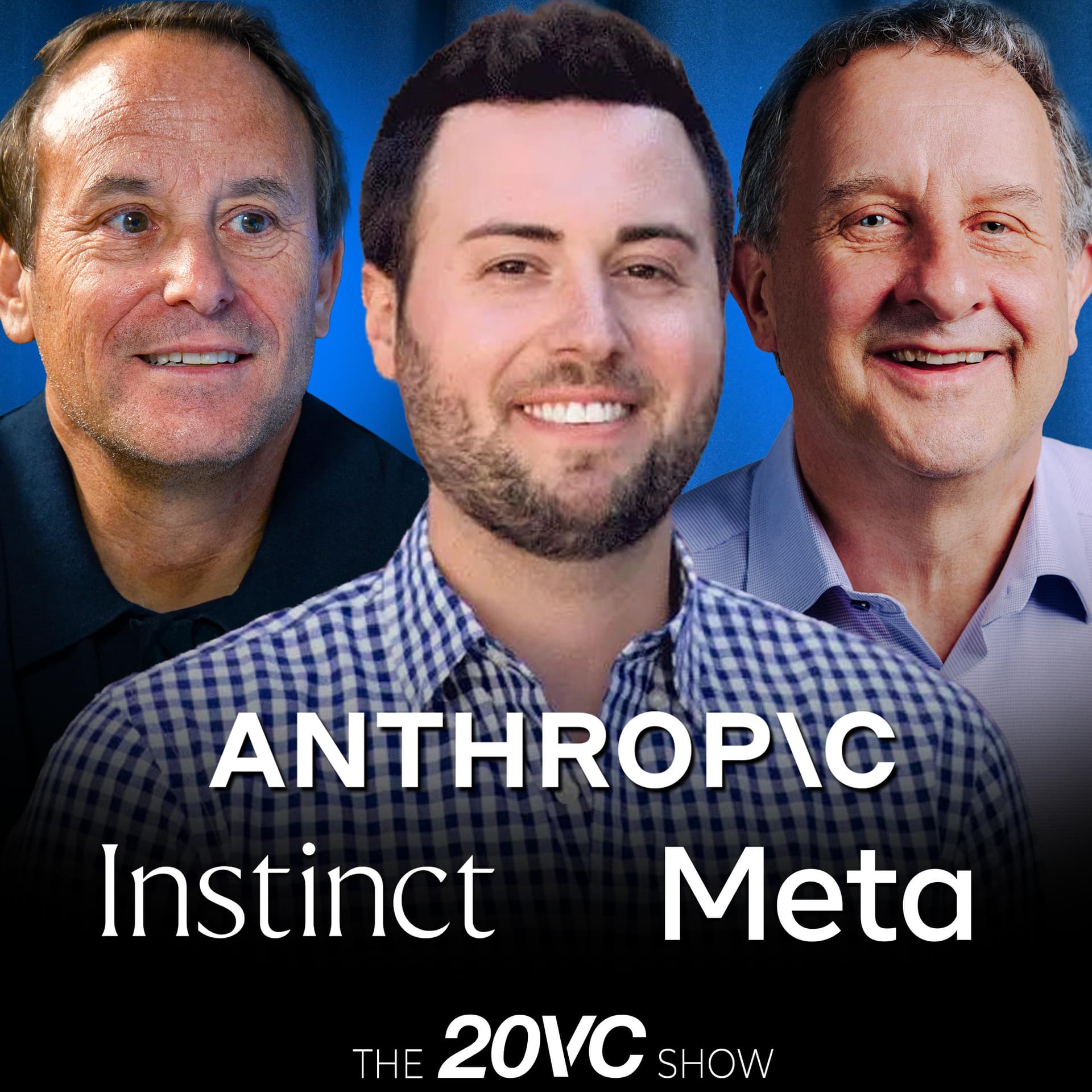
Mamoon Hamid is a prominent venture capitalist known for leading successful investments in companies like Figma, Slack, and Rippling. This episode explores his insight into the venture capital landscape, particularly in the context of the current AI supercycle.
Key Discussion Points
- The Greatest Venture Deal of All Time: Figma or Slack
- High-Return Deals: Mamoon discusses his most successful investments.
- Figma's Early Indicators: Recognized potential in Figma despite lack of revenue and user data.
- Slack's Opportunity: Reflects on what he underestimated in Slack and the rationale behind his investment.
- Transitioning to Kleiner Perkins
- Joining Kleiner Perkins: Details how Mamoon was approached by the firm and what it meant to him.
- Future Aspirations: Mamoon expresses his vision for Kleiner Perkins over the next five years and the challenges faced during the transition.
- Becoming a Generational Defining Investor
- Investment Priorities: Discusses his ranking of market, founder, and product in terms of importance.
- Lessons Learned: Shares significant lessons over his 19 years in venture capital, including insights into the market and personal experiences.
- The AI Supercycle: Investment Opportunities
- Value Accrual in AI: Discusses where he believes the most value will be created in the AI landscape.
- Analysis of Over-Investment: Concerns about the over-investment in certain application layers versus foundational models.
- Scaling Laws: Exploration of whether scaling laws, as seen with AI investments, will continue.
Insights on Investment Strategy
- Market Dynamics: Mamoon highlights the evolving landscape of venture capital where capital flows are unprecedented.
- Differentiation Strategy: Importance of investing in teams with deep technical expertise rather than just market presence.
- Navigating Pricing Environment: Strategies for navigating high valuations and ensuring ownership percentages remain viable.
Notable Quotes
- "I love products that create markets." - Mamoon Hamid
- "We have to back incredible founders who are tackling a hair-on-fire problem." - Mamoon Hamid
Reflections on Venture Capital
- Future of Incumbent Companies: Questions whether large incumbents will dominate AI or if new startups will carve out niches.
- Changing Landscape: Mentions the significant changes in venture capital over the years, particularly the influx of capital and competition.
Lessons on Risk and Management
- Reserve Management: Discusses the balance between investing in new opportunities and managing reserves effectively.
- Decision-Making Process: Emphasizes the need for conviction and discussion among partners rather than strict voting structures in decision-making.
Closing Thoughts Mamoon Hamid leaves listeners with a wealth of knowledge about navigating the complexities of venture capital, particularly in an age defined by rapid technological advancements and AI's transformative potential. He advocates for recognizing and investing in groundbreaking founders who can leverage these shifts to create significant market impact.
Additional Resources For more insights and full interviews, visit [The Twenty Minute VC website](https://www.20vc.com).
Sponsors
- Brex: A financial platform tailored for startups.
- Squarespace: An all-in-one website platform for entrepreneurs.
- Blinkist: An app for summarizing non-fiction books and podcasts.
This summary captures the essence and key takeaways from the podcast episode featuring Mamoon Hamid. It reflects his insights on investment strategies, market dynamics, and the exciting landscape of venture capital in the age of AI.
Written by AI. May contain mistakes. Listen to the episode to check what was said.
Transcript
Automatic transcript. May contain errors.0:00I love products that create markets. Slack created a market. Figma created a market. They get to create the playing field, they play on the playing field, and they win the game. There is more capital in our industry than ever before. That capital at times thinks that everything will be a deck of corn and you're overfunding some companies. There's a lot of time being spent on a lot of the middle layer between the foundation models and the applications. There's just a lot going on there. I feel like perhaps it's over -invested. We've invested in a lot of application layer companies. We took actually the top 20 jobs in the US and its doctors, its lawyers and its developers.
0:36How do we help supercharge these people who are highly scarce, highly skilled and we're not producing enough of them? This is 20VC with me Harry Stebings and today we are joined by one of the greatest venture investors of our time, Mamoon Hamid, general partner at Cliner Perkins. I will tell you why he's the best. He is able to consistently see greatness at moments in a company's lifetime when it is not clear. He did Figma when it had almost no revenue at a $100 million valuation. Similarly, he did Slack when it had almost no revenue at a $250 million valuation. The company ultimately sold for $27 billion.
1:16He also did Ripling pre -inflation point. The man is a master picker. He's also been a dear friend, I met him at Sastan 9 years ago and he's been a mentor to me ever since. This was such a special show to do. But before we dive in, this episode is presented by Brex. The financial stack founders can bank on. Brex knows that nearly 40 % of startups fail because they run out of cash, so they built a banking experience that takes every dollar further. It's a stark difference from traditional banking options that leave your cash sitting idle while chipping away at it with fees to help you protect your cash and Brex combined the best things about checking, Treasury and FDIC insurance in one powerhouse account.
1:57You can send and receive money worldwide at lightning speed. You can get 20X, the standard FDIC protection through program banks, and you can earn industry leading yield from your first dollar while still being able to access your funds anytime. Brex is a top choice for startups. In fact, it's used by one in every three startups in the US To join them, visit brex .com slash start -ups. And finally, let's talk about Squarespace. Squarespace is the all -in -one website platform for entrepreneurs to stand out and succeed online. Whether you're just starting out or managing a growing brand, Squarespace makes it easy to create a beautiful website, engage with your audience, and sell anything from products to content, all -in -one place, all on your terms.
2:39What's blown me away is the Squarespace Blueprint AI and SEO tools. It's like crafting your site with a guided system. ensuring it not only reflects your unique style but also ranks well on search engines, plus their flexible payment options cater to every customer's needs, making transactions smooth and hassle -free, and the Squarespace AI, it's a content wizard helping you whip up texts that truly resonates with your brand voice. So if you're ready to get started, head to squarespace .com for a free trial, and when you're ready to launch, go to squarespace .com slash 20vc to save 10 % of your first purchase of a website or domain.
3:15And finally, before we dive into the show, I want to recommend a book, The Road to Reinvention, a New York Times best seller on mastering change. No time to read? Listen to 20VC now, then download the Blinkist app to fit key reads into your schedule. With Blinkist, you can grasp the core ideas of over 7 ,500 nonfiction books and podcasts in just 15 minutes. Covering psychology, marketing, business, and more, it's no surprise eight Blinkist users. viewers, see themselves as self optimizers and 65 % say it's essential for business and career growth. Speaking of business, blincus is a trusted L &D partner for industry leaders like Amazon, Hyundai and KPMG, UK, empowering over 32 million users since 2012 as a 20 VC listener.
4:00You can enjoy an exclusive 25 % discount on blincusd. That's B -L -I -N -K -I -S -T, just visit blinkist .com slash 2 .0 VC to claim your discount and transform the way you learn. You have now arrived at your destination. Mum, I am so excited for this, man. I can't believe it. You just reminded me the saster nine years ago was our first show. Thank you so much for joining me today. Thank you so much, Harry, for having me. It's so great to be here. Listen, I wanted to start. I started an LP update the other day that I did with. It is the most exciting time to be in venture. It's also the hardest time to be in venture.
4:35would you agree with that statement? It is the most exciting time to be alive. We're in the midst of a super cycle like none we've seen before. The AI super cycle, as you know, it reminds you of the time when I first came to Silicon Valley in 1997. I was 19 years old and it was all just roses all around me. It was the rise of the internet. This time feels much like it multiplied by 10. And that obviously puts us in an interesting spot but as venture investors who get to invest into this cycle. Yeah, the world's not gonna be the same anymore. The thing that's seismically different for me, when I look at the two and I don't mean to age you, I was four in that kind of period.
5:14We didn't have the incumbent spending $100 billion on front -to -modal slurry, Alessons, at the other day. It's gonna be $100 billion to answer the front -to -model race. And you're looking at that going, Christ, that is a different level of incumbent spend than we've ever seen before. How do we think about that as it is a fundamentally different addition? Yeah, we have some very strong incumbents, Google, Microsoft, Amazon, Meta, Oracle, who can all spend hundreds of billions on these fun and models. So you're absolutely right, and layers absolutely right, of course. Does that make it harder for us to venture investors?
5:45With the rise of corporate investors, who maybe have different motives or different incentive structures, does that make it harder for us? It doesn't, because I think the opportunity is still in front of us. I think there are so many things to build on top of this infrastructure, all these frontier models that is going to create so many trillions of value over the next decade. I hate kind of broad and generous questions because they're generally for crap interviewers, but as I said, I've done 2 ,700, so hopefully I have some skills. But when you think about kind of the AI landscape today, how do you think about where the most value will accrue and you want to concentrate most of your time and capital?
6:20Okay, so we just talked about how everyone's over investing right now into the cycle. None of us can miss whether it's the large incumbents or us as venture investors back in companies. And so your question is like, where do we invest as venture investors? And I can tell you, we've invested in a lot of application layer companies and that are solving very specific pain points. The way we looked at it pretty simply is, we took actually the top 20 jobs in the US who makes the most. And it's doctors, it's lawyers, and it's developers. How do we help supercharge these people who are highly scarce, highly skilled, and we're not producing enough of them?
6:58So you try to build software, AI, that helps them do their job better. So we've backed companies that help doctors, lawyers, and developers, co -pilots. So Harvey, Ambiance, Codium. I completely understand that rationale. My question to you when I look at those is fantastic. Trump has 10 alternatives going off to every category. How do you think about differentiation in this world when there are 10 transcribers note taking apps for doses? Yeah, I think it's like any other space any other traditional linear software space I call them It's about teams that will out hustle and will outwork and have in this case actually the technology really does matter The quality of the output of their models really does matter the tuning of of what they've done to the frontier model does matter you can't have a medical transcriber that's 87 % good.
7:52It has to be close to like 99 % good. That actually requires real technical depth and adeptness. I would say all three of these examples I cited are started by founders who are extremely technical and they've been at it. It's not just like some tourist AI engineer. It is like sort of deep ML experts have been doing this before they started these companies and paired up with a very domain expert co -founder who understood the market that they're going after. It's really interesting. You said that. It's very much like investing of old, really backing incredible teams in the right markets, building incredible products.
8:28So many people said, listen, my moon is one of the greatest investors of the last decade when we look at some of the picks from Ripling to Figma. The list goes on as insane. Is AI investing different to traditional SaaS investing. No different than anything else in venture capital. Our job is to invest in early stage companies that make history and are generational in nature. And our job is to recognize the trends and the tectonic shifts in technology and then invest in the right people and the right markets at the right time. And right now I would say the entropy in the system is really high.
9:01It's crazy out there. It is like things are changing left and right. That makes I think the job really fun. I just would say that it's the same as it was 25 years ago. It's also challenging from a pricing perspective. I saw three companies, my moon last week, that raised it over 750 million pre -product. How do you think about navigating the pricing environment when there is such further pitch excitement for these companies? Great question, Harry. I think we all sort of fall victim to those every once in a while, but that can't be the core part of the business. That can be the one like that got away and you have to get into this pre -product company because the founder is so exceptional, that can be, you know, one out of the 20 deals you do this year.
9:42It can't be every single one of them. Because as you know, Harry, we have to get our ownership at the early stages where you're investing $5 to $10 million for 15 to 20 % for the math to work for our funds. And it can't be done if you're investing 25 million at 750 posts out of an early stage fund. My question is then, how do you think about breaking the rules and letting the one that got away not become the norm. Yeah, I think I heard from someone many years ago, you know, 20 % of the strategy should be to not be on strategy. In some ways, we have what we call like a YOLO bucket in our funds, and where you just have this extreme conviction around the founder and the company, where you're sort of willing to break the rules.
10:24Have we ever seen revenue skating like this, either? I brought up in the days of like 18 months, 10 million ARR, it was amazing. This was like the gold sound. And now, when we were in 11X, which is insane revenue scaling, and you're seeing this across the board, how do you think about determining sugar higher revenues on sustainable, but very fast versus sustainable value creating? So in the age of AI, we have to think about, what are we doing? We're not just providing software, we're providing labor, we're providing capabilities that enable people to do 10X to work or 5X to work, and it's helping real labor costs either or multiply your abilities as a developer or a doctor or bring costs down.
11:07You're not just getting paid for seat -based pricing anymore. You're getting paid for labor. So we're seeing right now is that you have seat -based pricing that was $30 a month, $40 a month, and now you're getting $300 a month, $400 a month, even $500 a month. So simple math is that if you go from start to a thousand seats and you got paid $30, you're getting $30 ,000 a month. If you're getting paid $300, you're getting $300 ,000 a month and you're going very quickly from zero to four or five million of revenue. You've seen companies like we said about replacing labor there. We've seen companies like Clarner.
11:43We're going to replace Salesforce and Workday in that specific case. We're going to build it with R &A I2 -Link. To what extent do you think we'll see the nationalization of companies build their own custom tooling and replace existing SaaS solutions? Yeah, well hats off to Clarina for undertaking this. I just remember the time when we built an internal CRM at Clarina Perkins and it sort of cost us many millions of dollars and then ongoing millions of dollars a year to just upkeep. And at some point we realized like there's a great deal. You could just get a finesseo. Exactly, we use affinity.
12:16It's great, okay? It's like three thousand. And you know like we had four engineers on it like working... Why? Why? Exactly why. And now I think it's actually slightly different. That's to broader a brush the paint with is if you think of the people you'd hire for customer support as labor that you would spend money on, now how about you hire developers to do the labor work for you in the form of AI. So I get the rationale perhaps that Sebastian has around doing that internally, but I also get like there will be a company that's going to do it really well for you and you will have to pay for outcomes and you have to pay for the number of tickets resolved by that software or that AI.
12:58So the question is, are you not willing to pay that? In most cases, at the end of the day, you're like, you know, I should just pay stripe 2 .5 % rather than building it all myself. So the question will be, well, how many companies will go down the path of Clarner? The other side of it is that right now, where in this area, you talked about sugar rush, where in this era of doing a bunch of proof of concepts. You're just trying out all this cool stuff that's come into existence in the last two years and seeing what can I do with it? And every CIO, every large company is spending real money doing POCs.
13:27In many cases, you realize, you know, it's hard actually to build this custom thing inside. And this reminds me of like 25 years ago during the internet, everyone is spending a lot of money internally to do things on the internet. And then you hired all these consultants from Razer Fish and Sapient and other companies that came in and tried to help you with the internet. And I think that same thing is happening right now. And you know, history repeats itself. What today do we do or not do? In 10 years time, we will look back and go, that's crazy. So some examples is you would never put your credit card on the internet one, two, you'd never find your partner on the internet.
14:01Yeah. I think we will hopefully never talk to a customer support agent ever again. Like someone you call for the airlines, like, you know, help me my flight and you'd upgrade it or I need to change my seat or can you cancel it because I can't go, So, you know, the bank, things that of that ilk that you still subscribe to your head, why am I still doing this? And it will happen, you know, hopefully just like you provide a text message and it gets resolved on the back end and it's all being done by agents talking to agents and stuff like that happening. I hopefully think the world will not have a way better customer support experience.
14:35Please hold. I think it's been a way on my insurance life. and it's like, please hold, and like 30 minutes later, it's like, they shoo -poo the phone down, and you're like, what? You know, I was in a car, was it yesterday, with one of my CEOs, and he said, hey, can you hold on for a second? He said, sure, got a hold music. From my CEO. You got a hold music? From one of my CEOs. Oh, I think that his was a cheque as well. I was deeply offended. I love the bulls, so to have the professionalization of like, hold music. Where do you think a lot of people are spending time staying the investing world, that you don't understand or don't think they should be?
15:09There's a lot of time being spent on a lot of the middle layer between the foundation models and the applications. And I think in the middle layers, middleware, things that allow you to use those models better, faster, cheaper, and build applications on top. So if you think the application is the top of the pyramid, the foundation model at the bottom of the pyramid, and the middle you've got middle layer, There's a lot of new technologies emerging that allow it, for example, to capture vector databases or waits for fine tuning of models inside of vector databases. And things of that ilk, there's just a lot going on there at the same time, some of the value seems fleeting in nature.
15:47I think in early innings, when things are in such high degree of change, so the rate of change is so high, there is a lot of that investing that happens. I feel like perhaps it's a little over -invested. I do have to ask, you know, when we look at a lot of potential use cases, a lot could be subsumed by the foundational model companies if they are big enough. An example could be talking translators, you know, talking avatars that you could talk to in a friendly enough way. How do you do you worry about an application layer company is being potentially subsumed by foundation model layer if they are such a core competency?
16:20I don't. It's a bit like the hyperscalers thinking they can do everything and they've decided that that's a great business model is to own the electricity and then just charge for by the hour or the kilowatt hour. That's a pretty darn good business model for the hyperscalers that provide the models in opening eye. I was at opening eye maybe a month ago and we're going through all these demos of cool products that are coming out like O1 and strawberry. And realize that their positioning is we can't do everything. We're a 600 person company. We can't build the application layer stuff that we want you guys to build or your company's build.
16:54And so there's a great business to be had in LLMs and in providing the compute and the electricity. And there's a great business to be had by being very vertically focused around applications. Is there really a great business to be had in the LLM layer when you look at the price dumping that's occurring right now. In relatively and the commoditization that we're seeing occurring, you know, you get people at SireTownville who we love is like the fastest appreciating asset in history. Every week is an anthropic, it's better than the OpenAI. Now, how it opened up by the non -thropic. And bluntly, the price dumps are real.
17:26Is it actually a good business? The beautiful thing about just the GPUs getting better and the infrastructure being more performant, models getting better at the, sure, the models are getting bigger too at the same time. So there's, let's maybe draw the difference between, there's all the folks who are providing, there's GPUs, there's a people providing data centers, there's people who've now built LLMs on top of all this compute infrastructure that's there. So what's a clearly Nvidia's a great business? Hyperscalers are investing today for the future and I think ultimately the margins Just like if you look at 20 years later of AWS how great of a business that is that standalone basis would be a top four enterprise software company Same with Google Cloud.
18:10So that's a great business over time and then you look at the LLMS So if you're just providing tokens is that a great business right now given the public profile of OpenAI and financials that we've all seen. Today, it's not a great business, but they're smart enough to figure out how they can get to a gross margin that will allow them to be a highly profitable business over time. Do you think the scaling rules will continue? Yeah, so just the rough math is that in the last 18 months, the price of a token has gone down by 200X. But that's just like the super early innings, right? We're talking about the first two years ago, we didn't have chat GPT.
18:45Today, we have so many different applications that are utilizing this technology. So will it go down 200x or the next two years? I don't know, but it will probably go down by 10x or 20x. Do we expect to see 10x better models or 20x better models? That'd be pretty insane, right? Don't you think that the 20x better model is going to be pretty insane for all of us? David Conn at Sequoia wrote this article, the $600 billion A .I. question, pointing out the calzum as you know between bluntly the costs and the cap X. And then the revenues that are incredibly lacking from AI companies. and that's actually being a 600 bit, a little question of it.
19:19Do you share his concern with that, or do you have a different view? I'd say, if I look at the, do you know what the world's GDP is? No. It's about $100 trillion. Of that, 50 to 60 % is in labor. Technology is roughly like 15 % of it. And over the next decade, if we grow at the more traditional GDP growth rates, it will be anywhere from 125 to 130. What if technology grows from 15 % to 20%, That's like 25 trillion in technology companies up from the 15 trillion today. So 10 trillion of annual spend will get created for technology companies over the next decade. When you think about 200 billion dollars spent on CapEx or 600 billion dollars spent, I think the questions really, the 200 billion should result in 600 billion of revenue.
20:05I think the revenue will be there because again, we're not just tackling software, linear software as I call it. We're tackling labor shortages and things that humans can do, but it's the worst part of our job, or we don't have enough people who can do the job. Again, I go back to the example of doctors. We're not producing enough doctors. We're not producing enough developers. We're not producing enough lawyers. Those types of jobs where we're going to see the immediate more near -term impact. There's a one we spoke before. You said to me that the nature of the landscape is changing so fast and it's kind of all the same but different in terms of the venture landscape.
20:41What's the same then? The same is we're in the business of backing incredible founders who are perseverating on a problem set that maybe a hair on fire problem for lots of folks and they're building the right product at the right time. That's the same. We're in the business of finding those people who are doing that job and trying to build a business and hopefully we can help them a little bit in building their business. So what's different. What's different is that there is more capital in our industry than ever before. That capital at times thinks that everything will be a decaquon. You're overfunding some companies.
21:17Maybe they deserve it because they're the far and away leaders. But at the same time, there's another half a dozen dozen competitors I get funded. When we look at the venture landscape, you have like, in my mind, boutiques, USB benchmark boutique. And you have like capital accumulators, which is Tiger, Co2, Andreessen, General Capitalist, Lightspeeds, Sequoia now. Why does Clinus sit in that? Because you kind of sat in the middle in my mind. How do you think about that? We are primarily early stage focused. We have an $800 million fund for that, and then we have a $1 .2 billion growth fund. This team of seven folks invest out of both of those funds.
21:55I would characterize us as boutique because we're kind of a small team that believes in the We're not scaling through people, but we have the scale of capital. Our growth fund, even half of the dollars, are invested in our best companies from our early stage funds. So it doesn't require us to have a large team, so to say, because we're already involved with some of these companies like Rippling and Gleene and Figma that we're doubling down into out of our growth fund. What have been your biggest lessons? I suck at doing reserves. I think it's a very hot thing to get good at. Give me a wisdom. What have been your biggest lessons in how to do reserves management and concentration of capital well.
22:34Yeah, so reserves is one. It's like when you have an early stage fund and we typically invest in about 35 companies per fund. So how much do you reserve for each one of those investments? We try to invest and we've looked at the math more than half in that first check. So let's say you're doing over the life of the company, you're investing $25 million in that early stage company, but you're starting out with a $15 million check and then you're reserving another 10 for the series B and beyond. And it's gently worked out pretty well. So you're 60 % initial 40 % for subsequent two rounds? That's a rough math.
23:08And then we move dollars around. Some company may get acquired early or a company might shut down and we'll rejigger those dollars around. It's an art and a science. When you don't do it, how do you communicate that to found as well? It is tough. If you're not giving someone, well, I think because we're on the board and there's so much signaling involved in us doing, let's say, nothing. We generally do something and I think that's a lot of getaway with like doing a small amount in a fall on round And in many cases if it's a really attractive round where folks won as much as possible and we're doing a little bit less than Parada everyone's happy But if it's the we need the money and you're not going to invest in this round And while these days there's paid a place so if you don't invest you get wiped out Okay, so don't want that so there are different scenarios here.
23:53Have you ever had a pay to play town around? I said this the other day to the master and they said, okay, I bet if you never participate you will do better off You have wow that's good to hear That's a good company's that are one week away from cash out become public companies Wow, yeah, can you say yeah sure box really yes, wow There's up there was a point in time where we had to do three bridges at box back in 2008 eight, nine, why? What was not working? The market sucked. Nobody wanted to invest in a cloud storage business that would get eaten up live by a Google or a Microsoft. So I mean this respectfully.
24:32We went Warren Buffett, Charlie Munger, say, you know, Mr. Market, don't try and be smart in the market. When the market is giving you signal like that, why do you do it? And how do you get comfortable doing that? When the market is giving you such care, you and I, we're in the risk business, my friend. You believe in the people, it goes back to like these are incredible people. Aaron Levy, Dylan Smith, incredible founders, like legendary to me. And it was just a dislocation in the market where the market did not understand how to, well one, it was just a parade. It was a global financial crisis and nobody wanted to invest in anything because back to your point of reserves, everyone was trying to save money for their own companies.
Read the full transcript
25:12In the same vein, we had to take our reserves and put it into box and we weren't investing in new companies at the time. And that happens in every sort of cycle, down cycle like this. I think we all know, like, some of the best investments come out of that cycle. And so we got to invest more dollars in the box at a $25 million valuation. Every incremental dollar or $23 million in bridge that was being done, done at that valuation. What are the biggest reasons breakout companies plateau in your mind? You've seen some absolute monsters and you mentioned that box was struggled in those times. What are the reasons why breakouts plateau?
25:47So they don't innovate anymore or fast enough. They are big companies become, which is you're trying to protect your turf and you're not disrupting yourself and someone else comes in to disrupt you and starts taking away revenue from you. You mentioned box, that box of the IPOs. A liquidity event is always welcome by LPs and investors. How do you think about when's the right time to sell? It's the age old thing. You look at all of you know, basamers, mamas. You always underestimate the size of your winners. How do you think about one to sell? Great question. Well, I wish there was a bit more selling happening right now or opportunities to sell.
26:22As you know, the M &A markets have been pretty, pretty slow. But to answer your question, Harry, there's a local maxima that I think about sometimes with companies where this is sort of the local maxima in terms of perceived value by the market for a company. And that's a great time to sell. And so you now have to figure out when is the local maximum for a company. And I would say it's like the markets are riding high, but it's also like where people believe that this company is the leader, but there's questions around whether there's there There's a standalone company we built and it's way better off being acquired by a strategic who can do even better things with the company That is again doesn't happen as much anymore.
26:58Have you done well selling? There's one particular example that I think ended up working out pretty well This is when Yammer got acquired by Microsoft It was a 1 .2 billion dollar acquisition at the time. It felt like man We've got so much ahead of us. Yammer can become the next slack. Fortunately for us, Yammer got acquired. A year later, we had a chance to invest in slack. It almost like you had a great outcome, and then you weren't conflicted out of investing in the future slack. Also, you don't have the challenge when it's acquired. Do I hold, do I distribute, do I not? And that awful choice is almost easier when the choice is removed.
27:38In that case, when you get to just cash, you just distribute the cash and you move on. And you know, generally speaking, I would say even when companies go public for us, we've been pretty good about distributing stock. It's tough when you think, sure, before I went public at 700 million. Yeah, everyone, either way, you're gonna get criticized. Yeah, and I would say just here, like again, we have a lot of friends in the industry. In almost all scenarios, when you're returning 10X to fund on a great outcome, or 5X plus, let's say, of a fund through a legendary company. Your LPs are happy, you're happy.
28:14You wish you would have held on and generated another few multiples on that fund. But you have an option of holding it. The LPs do, as do you as a GP. You can hold on to your Google stock forever as John Doer has done over the last 25 years. And that's a great choice you have. What has been your best performing investment on a pure multiple spaces? It's probably Slack, I would say, even at the 250 post with all the delusion over time and take the 27 billion or some other number. That's a great multiple. Figma, the initial investment was done at about 100 posts. Ripling was also the 250 posts when we did it.
28:51There's one investment I remember doing early days of USEP where we did it at I think 10 posts. It was a $3 million dollar check for like 30 % of the company. That company, about a year and a half ago, the founder, CEO, Steve Flagg, they sold it to Siemens for $700 million. And that ended up being 70x. Crazy multiple, right? some ridiculous multiple. But you know when you hold on to something for 15 years, guess what the IRR on that investment was? If you still owned, let's say, 25 % of that company at 700 million, so like, 100 and something 170 million, 3 million becomes 170 million or something like that, or that's a great multiple.
29:27But the IR over 15 years look more like, like, 15%. We're in the multiple business still at the end of the day, but IRRs do take a hit when you hold on something to something for 15 years. But liquidity is tough and liquidity is tough because M &A is not what it used to be. I mean, M &A market's dead. They're in slow, man. Yeah, slow. A lot of the big companies are just gun chai. I hear this all the time, just like not ready too much going on in the regulatory environment. Why would you bother? I feel them. Exactly. You're like, why create headaches? We already have like multiple legal things that we're pursuing and we don't need yet another thing we're questioned about or used as an example in this other thing.
30:11So yeah, why bother? The question is, are there next tier of companies that we'll buy? And we thought obviously with Adobe Figma, Adobe is that next tier. And even that, the story's been told. Well, I think the thing that you are seeing is actually like incredibly high price companies. Yeah, I'm not going to name names because they are too high priced, but they are actually acquiring much smaller companies in only stock deals. And I've had quite a few deals, but I'm getting shares at $10 billion and it's coming to my work's worth too. And that is the kind of acquisition currency that they're going for and they're small enough that regulation wise, they're not getting any done.
30:44That's the only thing I'm seeing. Yeah, you're right. Yeah, there are big private companies looking to buy a small private company. That's happening and I think that was never part of the playbook. What would change the M &A market to say? You know, it's easy to say like regulatory environment, like the people running these organizations. Yeah, is it, I mean, being blunt, Is it like, hey, Lina Collins gets replaced and then we get right, I'm in A back. I don't think so. I don't think a lot of the blame on Lina Khan, poor Lina Khan. In our own experience, that's not that was not the issue for Adobe Figma.
31:13It wasn't Lina or the FTC. There were other issues here in the UK. There's a CMA that was really involved there. IPM market is also like bluntly not easy. Sarah Burst, I think in pronounciate, right? Yeah, but Fald. I think Sariburus. Sariburus, there we go. Fald recently. But that's kind of been it recently. And you can sign by IPO market's being closed. Yeah, I think everyone's just waiting until after the election. Yeah, I think we all thought there's a window of like eight weeks before the election or this year to go out and Just not a lot of activity. I do think that we're gonna have a good year next year.
31:49You do. I do. I think we need to see one of the big ones to go out for it to open. It needs to be a database of Stripe, a stall link. You're not gonna make it on Syriprus. I'm really hopeful. I think next year will be a good year for IPOs. You mentioned the $100 million thing around, for example. I spoke to quite a few of our mutual friends and they said, you've got to ask him about this. Respectfully to Dylan and team. This was pre -any revenue scaling, really. This was pre -any real inflation point in the company. Cash had been in before, you know, Gralot were in already, index were in already.
32:22He saw something that no one else in the market saw. This was like a real pick. What did you see that no one else saw in this round? And why did you? Credit goes first and foremost to Dylan and Evan who'd built an incredible product. It took a while to build. We've heard sort of famously the story around like WebGL, advancing, and finally by 2017, Figma had a product that could work multiplayer inside the browser as a design tool. And that just wasn't the case in 1516. It just didn't have the latency for people like, designers are very high -end in terms of their needs for product naturally, right?
33:02And so lucky for us that we got to see the company when the product started to work and in the metrics for the product, even though the number of users was small, the amount of use, you look at something like a down -mount or look at an L28, you just saw that designers were using the product 15, 16, 17, 18 days out of a month. So effectively every workday, a designer was going in and collaborating inside of or using it to design inside of Figma. And so you saw early indications that the product that was just had just launched and it was just in a few hundred care revenue, it was working. You know, lucky for us that we got to catch it before it.
33:42Can I ask what did you get wrong in your assumptions on Figma? I have to share my memo with you because I love that. Yeah, I know I'll share it with Sometimes it's eerie, how right you can get it. In terms of talking about the adjacencies to product people, so designers to then marketers and to engineers, not just the growth in designers, driving the number of seats that you can sell at Figma, but also adjacent seats. And doing so the math behind what was potentially possible in terms of Figma's TAM, which one would have said, well, it's just like the Invision TAM or the Sketch TAM, which is like not that exciting.
34:16Sometimes you can play this out in diligence or plays out in your head around building a real prepared mind around an investment. And in the case of Figma, you know, sometimes you get it right. Do you like competitive markets? You mentioned Invision, you mentioned Sketch. Invision was bigger than Sketch, quite a while actually. Both Sketch and Invision are way bigger than Figma for a while. And a lot of investors like Pfft, this market's competitive. Do you like competitive markets and say, yes, it's competitive because that's where they're going to price value? Or do you actually prefer my mindset, which is, I don't want to be one -off.
34:48Yeah, and going off to this. Yeah, I don't mind competitive markets, but at the same time, I love products that create markets. Slack created a market. In some ways, Figma created a market. There wasn't a notion of collaborative design software. I love companies that create markets. They get to create the playing field, they play on the playing field, and they win the game. That's a beautiful thing. I speak to Owen, another one I've found as before, who I love, and comes a great story. But he said that you definitely have a type you have It's young and it's not where you're going. It's product oriented Okay, and he said it's very much deeper than that unpack that with him So when you think about your founder type, I know we say we don't have one and me you know everything Probably not true.
35:35Yeah, what is your founder type one of the founder types that I love is the first time founder hyper obsessed about building a product in a sort of new -ish market where it's not obvious and the market doesn't necessarily exist. And that would put Owen from Intercom in that bucket. I'd put Dylan from Figma in the bucket. Owen's alluding to Young Product Centric Founder. And the other bucket for me is actually the repeat founder who had an okay outcome or even a pretty good outcome and is doing it again. And I would put Stuart Butterfield from slack in that bucket. I would put Parker from rippling in that bucket.
36:14He was a repeat founder, as you know. So there's the first time founder going into a market that they're hyper obsessed about. They're building in a beautiful product. Taste is on. The level of grind and grit is there. And then there's a second time founder who wants to surpass anything they've done before. What found a perfect turn you'd like? I don't like the, we looked at the landscape and we discovered this is a great place to build a business. We did a whole market mapping exercise and the TAM is going to be $X billion. It is that sort of like the top down approach to building a company versus the bottoms up approach to building a company.
36:54A UOK paying a premium for the experience. I'm doing a seed now at my main. I so appreciate you being an Alpium Myfons. Price is slightly odd. It's like a 40 million for a pre -seed pre -product pre -another thing. The founders are unbelievable from one of the best companies in the world, and exceptional. I'm paying a premium for experience. You always happy to do that. Yeah, so I mean, I'll just give hard numbers. And when we backed Arvind and Glean, we did it, co -let it with light speed at 35 post. And Arvind is a G. You know, he started Ruberick. He's like, how much did he raise? He raised a lot.
37:29He was like 15 million at 35 post. So it gave up a lot of the company in that round. A 35 post. Yeah, and because that's not crazy for someone who's involved in this profile actually. It's not, I don't think it's high. Yeah. I think, but in today's environment, that would be like, oh, it needs to be 200 post. So would you do that at 200 post? Probably not. Yeah, how a thing. So I think it's not that I'm trying to get a deal. I'm trying to work with people who see the world the way I see it, and they're willing to be partners together and creating a bigger pie for all of us. They're not so short -term oriented around like, well, I need to have this crazy pricing.
38:05Another example is, Sayed Ali at Alif, we did that also at like 35 posts. And Sayed had come off of a company just sold for $6 billion. And do you think he could have raised at a higher price? Probably, but he's just that. This feels fair, it feels right. And so I'm sure a lot of people listening or are thinking, wow, like really jammed them. Or no, these are adults making decisions together around what the right pricing of a company should be at that stage. A lot of times founders are told, listen, your job is to raise as much money as possible at the highest price. Yeah. A great disagree. A disagree?
38:38At that series A seed, it's about the people you're surrounding yourself with. I also think bluntly it can damage you incredibly from that surround. When you don't, and she's scaled into it, and suddenly you have to do a bridge or whatever it is, it makes it so much harder when you've got a hugely high watermark that you have to fill. Do you think you should always be raising? For the CEO, founder CEO, CEO, your job is to make sure you're coming to have rounds out of money. If you have $300 million sitting on your balance sheet, I'm not sure you should be raising at all. So if you're well -capitalized, heads down, go built.
39:09When you've got a found to pick wrong, what do you get wrong? Generally, I would say you get the markets wrong. I would say that counting great found to overcome a bad market. Hard. Yeah, hard. Bad markets, the structure of industries where margins are compressed and customers are bad. Life's just too hard that way. So will you back a really great founder if they're in a ship market? Probably not. Yeah. That's interesting. Yeah. Because like for me, it's like I'm pretty seeding seed generally speaking. We do series as well. They're like generally pretty easy. I'm like, you know what? Great founders find their way to great markets.
39:44And if they're truly great, honestly, they'll pivot, they'll change, they'll make their way. I mean, I think one could have said that about like you would have maybe would have missed a seed at Uber, because what probably not so great economics early on, right? Customer acquisition and like trying to pay the drivers, et cetera. So I think it was a slack and obvious home run when you did it. None of these are obvious home runs when you do them, right? No, it wasn't. It was 500K of ARR at the time and... What price did you do it at? 250 million post. You did it at 500XRR. Yeah, and I think we weren't thinking in those terms.
40:16Why? Was it usage patterns again? Yeah, I think there were enough... At that time, there were 10 ,000 or so users, like a third of them were using the project every day for multiple hours a day. And like, okay, well, we all need something like Slack and you can scale this by 1 ,000X because there are lots of companies that look like this. They use it like this today. Do you think that's the wrong mindset to approach it with? A lot of investors do approach it on a revenue multiple basis. Is that wrong? For early stage companies, yeah, it's, yeah, you can't take a 500K error or a million. But when you're paying 250, it's kind of like a, Some of us see that.
40:49But if you've seen the engagement data on a product that you think can apply to 10 ,000, 100 ,000 of companies, then... The entire workforce. Yeah, then why not? I think it's really a mistake to look at revenue multiples that like half a million, a million. What do you think it's not the VCs do today that they shouldn't be? There's just a big echo chamber and a lot of people live in the echo chamber. Folks think that's information and information is knowledge and knowledge is arbitrage. But when everyone has the same knowledge, then it's no longer arbitrage. Do you think everyone does have the same knowledge?
41:23A lot of big firms say, oh, we built out these amazing data platforms, and that's why we're operating off this proprietary information. I think it's mostly BS. Many have tried and failed at using the very data -oriented approach to investing in startups when, at the end of the day, it's about the founders. And the founders wanting to work with you. Exactly. Yeah, I know. I think... That's what I tell a lot of LPs, though, which is like, you know, I remember speaking to an LPH here about you and I was like the thing that you go to on the sound with my moon is like every in the valley respectfully probably sees the same deals.
41:53But you have to be aspirational capital to the best famers in the world where they say, yeah, I've got 12 term sheets, but I want that one. And that's the only thing that matters. It doesn't matter that you saw it. It means shit. 100%. It's about how do you position yourself so that the founders are choosing us. It's based on reputation of our body of work, our firm's body of work, what the firm represents, what we can offer them once we get involved or even before we're involved. What are people saying about you? What's the folks who you work with before? How do you think about decision making?
42:26One of the things I think is crazy is voting structures in venture firms. I get us as by a lot of LPs which is one of the most voting structures and they kind of seem quite upset when I say, well, there's any four of us and so anyone can write a check and I believe the best deals are often non -consensus and right. So we don't have like four out of 10 or six out of 10. They look quite upset with me when I say this. I think that's not. How do you feel about voting structures in decision making? Yeah, I don't believe in voting structures for early stage venture capital. I think you have to allow every partner to put themselves on the line with their conviction that they've built up over years sometimes, weeks sometimes, but you have to give into the conviction of the person wanting to lead.
43:05And so the way we work is that because we sit around the table, we literally get to see each other's body language, which how someone goes from excitement to less excitement when one of our partners, like, you know, Ilya asked me a question about why I'm so excited about a company and then he asked another question and then I said, well, that's a good question that I don't have a good answer for. Maybe my excitement wanes and then I come back a few days later when we see each other again. It's like, you know what, like we talked about that and, you know, I'm sort of leaning out on the opportunity.
43:31And so I think that's also the magic of being around the same table in the same room. You get to really test each other's conviction. So you don't have a vote. We have a discussion, but there's no vote. If I disagree with you and I say, Mamoon, I don't think we should do this deal. Yeah. I do not see the market. I don't see the upside. The answer prices to my... If you wanted to be told me, you could be told me. But it hasn't happened. No one's ever vetoed. Why did deals get crushed mostly? I'd say it's when questions get asked around or is this a fleeting cycle of adoption for this sort of product or this is going to be gnarly dog fight because there are too many competitors or this is the wrong time.
44:11The risk reward isn't great for this round. That's when your excitement tends to wane. Do you do outcomes in our air planning? We used to and haven't done it more recently. You used to do like what is the probability of this company being a zero, a 500 million rx at a 250 million rx at a billion rx at and a 10 billion rx at you do the percentages. It's such false precision. I always do 25, 25, 25. Thank you so much. It's such false precision that I think it feels like busy work actually. Who's the best picker in the team? Josh is a very precise picker. I would say that Ilya and I, we're almost always on the same page.
44:49We're like two similar actually. It's not too dangerous, Sachi, because you can almost encourage a little bit. It's actually great because if I meet someone, and then I, you know, come on, you know, like I'll see you in the hallway. Can you meet this person for like five or 10 minutes, And he did that to me recently actually and I'll come in and he's like, oh yeah, I see the same thing you do So we are in some ways quite similar, which is awesome. I think we may miss some of the same things then too because of it But I think it's a good lock to get like especially when we're trying to build conviction or like at least like Quickly get to am I seeing the same thing you were seeing?
45:19What was the most contentious deal that you did? You know actually figure out was quite contentious because to your point around like half a million of AR at a 110, 15 posts or whatever it was at the time. The same thing, there's Envision, there's Sketch, this company's been around for five years, it's not obvious to us. It was contentious that there's a lot of questions around the investment. You had a fund that I can't remember the exact vintage, and it was a false deployment. It was like 12 or 18 months. It was a time whenever everyone was deploying fast, but it was fast. How do you think about deployment pace?
45:49Is it a play the game on the field or do you take a much more structured discipline and view towards it? I think the viewers here, We'd loved it deploy over a two and a half, that three year period of time. When we got to KP, I came in 2017, a bunch of the team joined in 2018, so Bucky, Ilya, Annie joined that year. Josh joined the same week I did. So there was a period of time in 2019, so we just raised our first fund as a team together where we deployed that fund within like 15 months. I think it was just a new - The sound of the rip playing fund. It was, rip playing, glean, a bunch of other stuff in there.
46:21We just were a new team. Then at board seats, we had a fund ready to deploy, and so we deployed it fairly quickly. I would say mostly Series A, like real ownership Series A's, the core of the business. And so if I look at that fund, I think it'll be an amazing fund, actually. Unbelievable. You could have said, well, wait a second, guys, in due time to diversify, it was, if you would have deployed over to an after -your -period, you would have missed a high -valuation environment into it lower and yada yada and so I would say that that would be the counterpoint to fast deployment like no you can actually work.
46:55Very damn mutual fund of both forces, kersh kersh and thrive think that bluntly everyone has the plasticity to move between stages or in their fun. Yeah, I don't think everyone but like they're in vases do. I think that is just really hard to do. Which side do you take? I think generally speaking it's hard to have the neuroplasticity to one day think about 10 years ahead and a new infrastructure company that's building on a new open source framework and the next day think about like pre -IPO stage consumer company. While we all have one meeting, one pipeline meeting, one investment team meeting for both early -stage and venture, all of us do venture investing and a few of us will do more that select investing.
47:38because we don't want to burden everyone to bring neuroplasticity to the job every day. You said about putting your name on the line and really believing, when have you put your name on the line most and been wrong? You know, I've just gone through my first sort of bigger loss in terms of capital loss for a while. Come here, just shut down, and come here, call it Tally, and the founder Jason Brown, who I've known for 15 years, I had a lot of sure. Yeah, and how much did he do? 30 million or so. multiples of the largest loss prior to that. So I don't wear this badge of honor of losing a lot. I mean, there's a whole thing in venture.
48:15Like you need to lose so many million dollars before you made it kind of thing. And I think there's a lot more precision one can apply even at the early stage to not put more money in to lose more because our job is to invest 5, 10, 15 up front. And if you lose five on a seed check, all good. That's your job. Is there anything you love from Tali that lending businesses are really hard? Consumer lending is very hard. Did you do Resovs? Yes. And that was where it went wrong. Well, the first check was back to the 6040. It was like 6040, but there's more along the way that went in because they raised subsequent up -rounds from great investors, the round after us, Angela and Andrew St.
48:52Horowitz did it, and it was a great round, great time for the company, and then it didn't win in 2022 with one of our seed investors sway, led the growth round because things were going really well, and then consumer lending just turned. This is when it interest rates went up from you know 0 to 5 % and that really made that business really difficult How have you changed most significantly as an investor over time? I mean obviously there's more experience But actually let's try not to let that weigh me down because I think Job is to stay open -minded and have naivete and dream the dream and too many scars Aren't necessarily a good thing for like being open -minded and thinking about what the next Figma or Rippling will be.
49:33Where do you most need to improve as an investor? I think I'm a dreamer and I want to just believe in the people that I pack. I heard this, I heard that you are such a dreamer that sometimes you believe for too long and you should cut things before. Yeah, how do you think about knowing when is the right time to cut the belief and actually we've had enough time? I agree, I agree that. That is fair criticism. But I think that's just part of the package. That is who I am. I believe in the people and I want to be on that journey you would, um, do you believe in VC value at my moon? But then all Chris's famously said, you know, 90 % of VCs actually just try and find you.
50:08Yeah, I don't disagree with the note that there's destruction of value that happens with the wrong advice, but I think if with the right advice and the right help, we can help supercharge your companies. What makes the, I'm not asking for the name, but what makes the worst bought the worst board, the worst board? It starts with how a CEO runs a board. How do the best CEOs run a board? They start off with a high level of view of how the company is doing and then they give a chance for their leaders. They're very capable leaders to go dive in deep and share and ask questions. And there's a fair bit of cheerleading, but a fair bit of like asking the hard questions.
50:43And I like board meetings where there's one or two things that are talked about in detail. You go deep dive into one or two things because at any given point in time, in a company's juncture, that moment in time, one or two things that really matter, we can help change the trajectory on. And so if we're talking about seven different things that matter, we're probably missing the point. And so I love board meetings where that's sort of the structure. Two more questions. Do you mind super dilutive businesses? Like your door dashes a lot, I know you've been in a door dashed different cash profiles intensely, but still.
51:14Do you mind them? Personally? Yeah. Those are not my kind of businesses. I like more capital efficiency, but I can get behind them. What would you like to find this a little like in 10 years? When I I hate you there, it feels like, actually, there is scope for you to go into the capital of key mulite bucket. Yeah, do you want that? No, I don't. I don't think we want that at all. We love where we are today. We really do. And I don't try to not be a senior, you're a long time friend. And I believe in venture, early state venture being a beautiful asset class, especially if you can follow the power law and being the few companies that matter.
51:46And then you can invest in the very few companies that really matter out of your select fund and then call it a day. I totally agree. We share the love of Vansha and we share the kind of love of the beauty, key nature of Vansha. I want to move into a quick fire. What do you believe that most around you disbelief? Venture is an Easter job. It's clamorous. It's all of that except clamorous. My favorite is the amount of friends I have who are operators who are like, this is the one that's set on the 10. This is so fucking hot. Totally. And you're like, yeah, I totally agree with you that. What's the most memorable first founder meeting you've It has to be Aaron Levy when I first met him.
52:22Why? He brought along with him a wonderful person care and page because he thought he had to bring on an executive or bring an executive to the first meeting. He was like hyper nervous, I felt, coming to a VC from office like in a cotton shirt and but I could tell from that meeting that he had thought about the problem of cloud storage more than, and this is 2007 so like cloud storage was not a thing. More than anyone else. And so for me it was like an instant I need to invest in this founder like right away But it was also just memorable from the other things that were going around the public mall Okay, revenue multiples need to reflect for venture to be a sustainable business I mentioned box that I post like whatever it is a billion in revenue billion in revenue I'm gonna cite four and a half billion market cap.
53:05Yeah, yeah, I think Growth and profitability to my point Do we need to see the reflection for venture to be sustainable or not? I think just getting back to normal historical levels would be good enough. Which branch of invested you most respect and learn from outside of Clienter? You know, one of my favorite investors is Matt Kohler from Benchmark, Hawaii. And London. Got to see you in yesterday. I wish he and I were on more boards together. You can be CEO for a day, my moon. Of any company, which company you see of? Easy. Open AI. I just want to see what's going on. I just want to see how far AGI really is.
53:39What concerns you most in the world? You can be CEO for a day, I mean, of any company, which company you see of. Easy. Open AI. Really? I just want to see what's going on. I just want to see where how far AGI really is. Geopolitics, polarization, even in our own countries. Here, we talked about the UK, we talked about the US a little bit before we got going. There's too much of us versus them, whether it's in our own countries or competing with other countries. This is so unfair, maybe fuck it, I'll go to your hand. You can invest in a seed firm, a series A firm and a growth firm purely on multiple's basis.
54:14Who do you invest in? Seed firm you. Seed A firm us and growth firm us. I was like, he's going to give me a new one here. Come on, hit me. I can tell you mine. You tell me yours first. Well, I mean, like one on the seed I do Gileera Nana at Cyber Starts in Israel. Okay. If you want a pure seed play. Okay. Unbelievable. It would it would either be Clienter or it would either be Benchmark because of the smaller fun size And then growth it would have to be the Pat or Kush. I totally agree penultimate one. What do you know now that you wish you'd known when you joined us VPN 19 years ago? Just that Ventures a grind and Do you still love it as much as he did?
54:55Absolutely. I mean how could you not love living in this like super cycle of AI man like we will not see this at the ground floor level value creation in our lifetimes ever again. Final one, what question are you never asked that you think you should be asked more? Religion and politics are like the taboos obviously and so the question is how does faith impact the way you work? How does faith impact the way you work? It's everything. It starts, it's the beginning of a day, it's the end of your day and everything in between is, is how do you, how does your faith inform how you treat people? How do you treat this earth, how do you show up in a meeting with someone?
55:33It's around how much humility you bring, empathy, care, love for each other for the planet. You know, just like, it's sort of like deeply embedded in you. And it's at a board meeting, you know, everything. My deep faith lies in liquidity.
55:50That's the most like capitalist way to finish the conversation. I mean, I've loved doing this. Thank you so much for joining me and this has been so special. Amazing. Thank you so much, Harry. My word, that was so much fun to do. As I said, I met Mammune at a Saster Conference in 2016. He's been a dear friend and a mental ever since, and that was so special to do in person. You can watch the full interview on YouTube by searching for 20VC, that's 20VC. But before we leave you today, this episode is presented by Brex. The Financial Stack Founders can bank on. Brex knows that nearly 40 % of startups fail because they run out of cash, so they built a banking experience that takes every dollar further.
56:30It's a stark difference from traditional banking options that leave your cash sitting idle while chipping away at it with fees to help you protect your cash and Brex combined the best things about checking, treasury and FDIC insurance in one powerhouse account. You can send and receive money worldwide at lightning speed. You can get 20X, the standard FDIC protection through program banks, and and you can earn industry leading yield from your first dollar while still being able to access your funds any time. Brexit is a top choice for startups. In fact it's used by one in every three startups in the US to join them, visit brex .com slash startups.
57:08And finally let's talk about Squarespace. Squarespace is the all -in -one website platform for entrepreneurs to stand out and succeed online. Whether you're just starting out or managing a growing brand, Squarespace makes it easy to create a beautiful website, engage with your audience, and sell anything from products to content, all in one place, all on your terms. What's blown me away is the Squarespace Blueprint AI and SEO tools. It's like crafting your site with a guided system, ensuring it not only reflects your unique style, but also ranks well on search engines. Plus, their flexible payment options cater to every customer's needs, making transactions smooth and hassle free.
57:45And the Squarespace AI? It's a content wizard helping you whip up text that truly resonates with your brand voice. So if you're ready to get started, head to squarespace .com for a free trial. And when you're ready to launch, go to squarespace .com slash 20vc to save 10 % of your first purchase of a website or domain. And finally, before we dive into the show, I want to recommend a book, The Road to Reinvention, a New York Times bestseller on mastering change. No time to read, listen to 20vc now, then download the Blinkist app to fit key reads into your schedule with Blinkist, you can grasp the core ideas of over 7 ,500 non -fiction books and podcasts in just 15 minutes, covering psychology, marketing, business and more.
58:29It's no surprise eight Blinkist users see themselves as self -optimizers and 65 % say it's essential for business and career growth. Speaking of business, Blinkist is a trusted L &D partner for industry leaders like Amazon on Hyundai and KPMG UK, empowering over 32 million users since 2012. As a 20 VC listener, you can enjoy an exclusive 25 % discount on Blinkist. That's B -L -I -N -K -I -S -T, just visit Blinkist .com slash 2 -0 VC to claim your discount and transform the way you learn. As always, I so appreciate all your support and stay tuned for a very special episode on Wednesday with a brand new firm.
59:08Three partners introducing what will be an incredible new series use
From the publisher
Mamoon Hamid is a General Partner @ Kleiner Perkins and one of the greatest venture investors of our time. In the past, Mamoon has led rounds in Figma, Slack, Rippling, Intercom, Glean and Box. Prior to joining Kleiner Perkins, Mamoon was a Co-Founder of Social Capital, and prior to that a Partner at U.S. Venture Partners (USVP).
In Today’s Episode with Mamoon Hamid We Discuss:
1. The Greatest Venture Deal of All Time: Figma or Slack:
-
What is Mamoon’s highest returning deal?
-
What did Mamoon see in Dylan and Figma when they had no revenue and very little user data?
-
What compelled Mamoon to write Stewart the check with Slack? What did he not see with Slack that he should have seen?
2. Taking Control of the Great Brand in Venture: Kleiner Perkins:
-
Is it true that Kleiner approached Mamoon and gave him the keys to the Kleiner kingdom? How did it go down?
-
Will Kleiner go back to having multiple products, large growth funds, international funds? What does Mamoon want Kleiner to be in 5 years?
-
What was the hardest element of the transition into Kleiner? What did Mamoon not know that he wishes he had known?
3. Becoming a Generational Defining Investor:
-
Market, founder, product, how does Mamoon rank them 1-3?
-
How has Mamoon changed most significantly as an investor?
-
What does he know now that he wishes he had known when he became a VC 19 years ago?
-
What is his biggest loss? How did it shape his mindset and go forward investing approach?
4. AI Supercycle: The Greatest Time to Invest
-
Where does Mamoon believe the value will accrue in this wave of AI?
-
Where are many investors spending a lot of time but Mamoon believes is not worthy of that time?
-
Will scaling laws continue?
-
Have we ever seen an incumbent set spend like this incumbent class? How does that change the game for VCs?