
In short
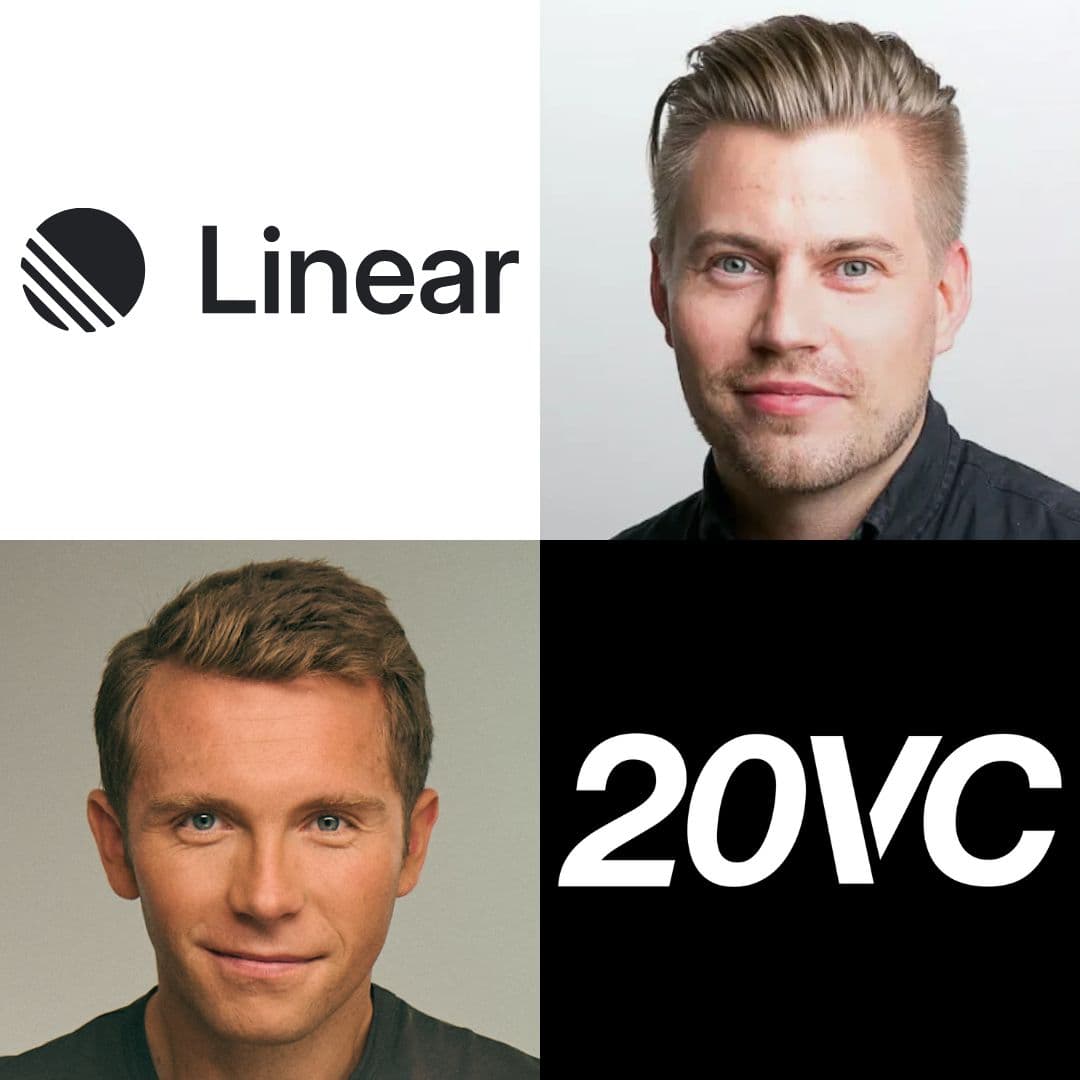
Notes on Podcast Episode: 20VC: Linear's Karri Saarinen
Episode Overview
- Host: Harry Stebbings
- Guest: Karri Saarinen, Co-Founder and CEO of Linear
- Topics Discussed:
- Efficient growth strategies
- Fundraising tactics
- Investor selection
- Insights from former experiences at Airbnb and Coinbase
---
Key Takeaways
- Mastering Fundraising
- Myth of Constant Fundraising:
- Karri argues against the advice for founders to “always be raising” capital, viewing it as poor guidance.
- Minimizing Dilution:
- Founders should aim for low dilution, ideally under 10% per round, to retain control and maximize their stakes.
- Investor Homework:
- Karri suggests giving potential investors “homework” to assess their thought processes and alignment with the company’s goals.
- Quality Growth vs. Hypergrowth
- Quality Growth:
- Karri emphasizes the importance of sustainable growth based on real metrics rather than artificially inflated numbers.
- “Quality growth” is defined as growth driven by product value rather than excessive spending.
- Caution Against Hypergrowth:
- Relying solely on hypergrowth can lead to unsustainable business practices and financial instability.
- Product Development and Release Strategies
- Early Monetization:
- Founders should explore monetizing initial products sooner rather than waiting for a fully developed platform.
- Focus on Early Customers:
- Concentrate on a niche market to develop products that truly resonate, helping to establish a loyal customer base early on.
- Investor Relationships and Meetings
- Effective Investor Meetings:
- The best meetings involve informed investors willing to engage deeply with the startup’s vision.
- Worst Meetings:
- Meetings with passive or disengaged investors are seen as unproductive.
- Hiring and Team Dynamics
- Hiring Philosophy:
- Karri advises against hiring hastily, especially in early-stage roles where every team member significantly influences company culture.
- Quality Over Quantity:
- Keeping teams small and focused often yields better results than scaling the workforce prematurely.
- Insights from Airbnb and Coinbase
- Product Focus:
- Experiences at Coinbase taught Karri the power of small teams achieving significant milestones.
- At Airbnb, he learned the importance of user experience and the emotional connection to the product.
- Personal Reflections
- CEO Insecurities:
- Karri reflects on the constant evolution required in the CEO role, highlighting feelings of insecurity regarding his effectiveness and decisions.
- Impact of Fatherhood:
- Becoming a father has made him more conscious of his influence on both his children and his company culture.
---
Conclusion This episode of 20VC provides a wealth of insights from Karri Saarinen on sustainable business practices, effective fundraising, and the importance of quality growth. His personal experiences at notable companies like Airbnb and Coinbase contribute to his perspective on product development, hiring, and leadership challenges faced by founders today.
For a deeper dive, listeners are encouraged to check out the full episode on YouTube or visit the 20VC website.
Written by AI. May contain mistakes. Listen to the episode to check what was said.
Transcript
Automatic transcript. May contain errors.0:00I've never been happy with a 20 % delusion that was rather see it at like 10 % or less than that. The only real protection you can have as a startup founder in your business is to be successful. If you're not successful, there's a lot of ways investors can exert their control. This is 20VC with me Harry Stubbings. Now the show state is a special one. In a world of fake growth, bullshit fun raises and hype, Carrie Sarenan has built the most most incredible, sustainable and most importantly, capital efficient business in linear, where he prioritizes long term, profitable growth, rather than falling for the raised big, spend big mentality that we've seen so much of, of all the companies I'm an investor in, I would say I get two times the number of intro requests for linear and carry, then all others combined.
0:47That's insane actually. Carry is a star and this was such a joy to do today. But before we dive into the show today, how do you get your users to do what you want them to do? Well that's where Pendo comes in. Pendo is the only all -in -one product experience platform for any type of application. Honestly, Pendo's differentiation is in its platform. Every capability from analytics to in -up, guidance to session replay, mobile feedback management, and road mapping are all purpose -built to work together. But don't take my word for it. 10 ,000 companies use Pendo and Pendo also does mine the product.
1:21The world's largest community of product management professionals. So check out their amazing free product today on Pendo .io forward slash 20 product that's Pendo .io forward slash 20 product hyphen podcast. And talking about AI, Glean is the leading work AI platform that transforms how teams operate. So this is how it does it. AI has the potential to help everyone at work with nearly everything they do. But only if it deeply understands the data, the people, the processes and the context specific to your work. Well, Gleene is the leading work AI platform that does exactly that. So Gleene's powerful AI assistant helps you find answers, generate content and automate work.
2:00You can also build no code and no code custom generative AI apps and agents that scale the power of your company's knowledge anywhere it's needed. That's why hundreds of enterprises, including some of the world's leading technology, telecom, retail, manufacturing, banking businesses, put AI to work with Gleene. Empowering engineers to ship code faster, sales reps to better understand their customers, support agents to resolve cases more accurately, even IT teams to deflect questions and solve issues automatically. Clean is work AI for all. Visit cleanai .com -flash20 -20 -20 to request a demo today.
2:37You have now arrived at your destination. Carrie, I am so excited for this dude. I've wanted to do this since we first started working together, so I'm thrilled that you join me today. Thank you for joining me. Thanks for having me. Now, I was chatting to Miles at Excel beforehand. He said, you've just got to start with Contas. And so I don't want to do like the, oh, how did you come to found linear? He told me I had to ask about potato farming in Finland. Why? This game to be, I think, Gleanair also came to be from my frustration. So I think my frustration living in US or in California at the last decade is that the potatoes here are not very good or there isn't that much of a variety of things.
3:18So when you go through a closest story, usually have four different kinds. You have the large one, the golden one, the small one, and like a red one. And growing up in Finland, that's not the case. Those are the main categories, but then within these categories, you might have different kinds of varieties. And some of them are more seasonal and some of them are more specific to a region in Finland where they're grown. So in doing summer and Finland you go to a crosses store There might be like five different kinds of different varieties of the same kind of potato like the same category And then like some of them might be picked this morning and they're like really fresh and that tastes and the Texture is very different.
4:00It's they're like very buttery that potato flavors much more stronger Even if you just boil them you can taste a lot versus like if you boil normal potatoes. I think you get on a grocery store, they don't generally taste that much anything. I'm so sad that there isn't good potatoes in the US, so at least I haven't been able to find. So I like going to Finland in the summer, to buy some of these potatoes, but I've been also growing my own. We have a little cottage and it has a space to farm things, so I've been growing my own as well. I've never met a potato nerd. That is the nerdyest description of potatoes I've ever heard.
4:39All I say is I hope you didn't use that when you were dating your partner. Clearly you didn't, because it converted well. But moving the potatoes forward, before linear, you worked at Airbnb and you worked at Coinbase. Two of the most transformative kind of product talks in the business. When you think about like, impact, which one had a bigger impact on how you think about product? With Coinbase, I was there much earlier. So it was when I joined, it was only like 12 people or so. And then when I left, there was less than 100 people. also, it was more of their early stage experience. I think the main thing I saw there and learned there that how much you can do with very small teams.
5:18A lot of the features we built and they were used by all kinds of companies and large groups of people or very much revenue went through them and those features were maybe built by one person or two people or three people. For example Coinbase exchange, which is the trading platform they have, that initially was built by one guy. He was in a room and then he was building it for maybe six months, but he was built by one guy. And then when it went live, it already transacted maybe millions or tens of millions of dollars, and today it's probably transacting billions of dollars. That was one lesson I learned there.
5:55And I think with Airbnb is much more about, I think Brian Chesky is very driven or a passion about the experience, like how does this feel and like how we want the company or the product to feel. That was really great to see that you can run company that way, that you can actually focus on the experience and you don't have to focus on some of the other things like metrics or I don't know, something else that people tell you to, but the experience is the most important thing you can focus on. Can I push you? Which one's a better leader? Chaski or Armstrong? I don't know if I want to answer this.
6:30And again, I would say they're very different kind of personalities. I also think that they're probably like a really good fit for the company. They're operating. If both of them would have started company again and you have one angel check, which one would you invest in? If I really had to choose, I would really choose Brian Chesky. I think he's really this power of nature. He can try to do anything. I think Brian Armstrong is as well. If you put Brian Chesky to do something like he will really do it, then he will have all the energy to do it. So I would bet on him. Are you kidding me? Have you seen his weightlifting days?
7:05This is a man who when he sets his mind to something, he goes for it. Unbelievable, totally understanding, get you there. It listening, he was the inspiration behind founder mode. I have to start giving your answer there. I had Zach on from Plaid. And he was like, actually, I think founder mode is gonna be incredibly dangerous for a cohort of founders. And it's gonna allow for a lot of bluntly bad behavior. How do you think about an assessed founder mode given your contacts with Brian and also now being one of the hottest founders in the valley? Yeah, I mean I agree with you, it's a fact that it can be dangerous or the essay itself.
7:40It's not very clear what it means and like the standard advice is like you hire really good leaders in the company and then you let them do the things. The thing with the founder mode I believe was about that you should do that. You should hire some leaders. it's not that like as a as a founder you should be operating everything, like doing everything, operating everything by yourself. But you shouldn't also sit on the bench while everyone else is on the playing on the field. But you are allowed as a founder still be on the field, you can still play some roles in there, like some position there.
8:15You said about kind of sitting on the bench when someone should maybe be on the field. If I would have pushed you and say, where did you sit on the bench too much and you should have been on the field more. Well, the first or the last two years, I was maybe too much on the bench when it came to the quarter market function and the marketing or the sales function. And now maybe last last six months or the last year, I've been focusing on it much more. We have weekly chats about it with the, like, the leadership team there. I think the reason for that is that my background in design and for example Airbnb on Coinbase, they weren't very like Gold and Market driven companies.
8:55You didn't have sales people in the company, but when you are building more of an enterprise business and selling through enterprises, it can be the Gold and Market function can be more complicated or it can be more nuanced or there's something more in there. To me, I have to learn about it, I have to learn about these things and in order to be more effective there. You know, we mentioned kind of growth in different periods of growth there. I have to start. You said something to me before the show about quality growth over hyper growth. What do you mean by quality growth and how does that differ from hyper growth?
9:28So with linear, we've been growing much more this sustainable way or like I like to call it more like a quality growth way. And what it means that the growth is based on something real that is working in the company and it's not something that is artificially choose store or it's not like the crocis on steroids. It's like the crocis coming from the fact that you go to the gym. That's more sustainable than using steroids. You should probably shouldn't use steroids, but maybe you could some people might use it at some point, but it's not sustainable. So similarly, I think startups, we have this culture of growing fast, scaling fast, trying to hack our way to the croc.
10:08And to me, it feels dangerous because it's artificial. Some companies is they put a lot of money into their growth. They can get the growth, but they also spend more than they're making. And eventually, that functions doesn't work. Like, you need to keep raising more and more money, and it might be really hard to actually turn the function now to actually make money versus like spend it. So for us, the quality growth has always been the product that we almost spend no money in marketing. We didn't even have sales for the first three years. We just wanted to see that the growth is coming from the fact that people find out a product better than anything else out there and they will pick it up and they will buy it and that's like what the real cross to me means and not something like you you spend your money on.
10:54Founders listening will be going great I get it but I need to raise money again I need a series A I need a series B whatever that is I am looked at in a comparative stack of companies and if my growth rate is 2x and there are companies who are growing 4 5 6x AI my revenues are unbelievably different to what we've seen before. I'm just not going to raise money. So it almost feels like quality growth is a luxury product. And I need hyper growth because that's the only way I can get the next round. What would you say to that thought process? Well, I think that's exactly right that you need to crawl through to raise the round.
11:33But there is the other option if you just think about this problem is that what if you don't need to raise the round? like what if you can sustain without raising around or you raise some round and then you just try to focus on making the business function work that actually try to make money and not spend that much money and then you're no longer gonna tie to those metrics because you don't need to raise and if you can get to profitability then you probably you don't necessarily need to raise ever again you can if you want to, but you don't have to. So it definitely depends on your market dynamics, like how hard or fast you need to go.
12:13But what I advise founders is that you should think about what game you're playing, what market you're entering, what you need to do there, what's the dynamic there. Like our market, it was kind of clear from the beginning that the way we win in this market, it's not like a fast moving market there. It's basically one solution every company uses. and it's been there for 20 years and it's kind of the legacy solution. And it seems like nothing has happened in the last 20 years. I don't think there's a lot of happening the next five or 10 years unless we make it happen. So for us, it creates this market where we think it's not necessary to go the fastest as we can, but we actually need to focus on being the best as we can.
12:56There is that cost of trying to grow too fast or growing too fast, the cost there or what you sacrifice is the quality or the not actually focusing being the best in class for the product. And for any founders listening, do not listen to Carrie. You should absolutely get on the VC treadmill. Otherwise, I will be unemployed. But no, I completely agree with you. I think the thing is so interesting. You mentioned kind of bluntly making money from your customers as well there and being more proactive in doing so earlier. You made money year one. You were profitable year two. How do you think about shipping feature products that can be monetized quicker versus the founders that say, well, that's fine, but I need to do a platform approach and actually it's not possible to do that until 24 months in.
13:44I think startups should always speak at more focused annual or like some kind of niche that you hit first, like some kind of smaller group of people that you can serve as soon as possible. Even if you have this idea of a platform, you might also find some use case which you can do today with a simple feature that get people into that platform and you can start building the platform with them. So I don't think it's just going to find a way to do it. Either you build a platform or you build this like feature product. There is always a way to focus what you're doing to some group of people, build something really great for them and then expand from there.
14:23And I think generally that's the right approach for any startup. You shouldn't try to boil the ocean. You need to just boil the pot and get someone in the pot and I cook with them. But I think the biggest reason why companies are what would don't find product market for this fund is get really nervous pre -launch. They expand the ICP too much and then it doesn't resonate with anyone. They don't get a thousand true fans and no one really gives a shit about it. Until your point exactly like find the 1000 people who will really care and pay and love it and expand from there. Totally agree with you and get you that profitable in year two.
14:55This is a very rare thing carry being profitable. What is wrong with you? My my my questions around that is the counter argument will be why didn't you spend more on acquisition? Have higher cacks the retention is great people love linear as a product Just pay more and get more people faster. I mean there again like it goes to the Strategy we have is we want to be the best tool and there's sort of certain beliefs what we think get us there one is that the team should be more like smaller and more focused than if I look back to different jobs and different companies I always felt that the smallest teams made the best results not like not all the time but usually when you put put this special team together that are really talented maybe it's only three people or five people or something they could make really big impact in a company very fast that's something we believe in so one of the main sources of expenses is obviously it's hiring.
15:52If you have a large team, you spend a lot of money every month. We took the different approach where let's us find, try to find highest quality people we can, and then not grow the team too much because it can cause additional problems. It can do a little to culture. You spend more time managing things and you have to own board people more. So with generally our growth rate on the team size has been 2x per year. So part of that, the So like, hitting profitability is that the revenue grew faster than we were able to hire the team. And then like, when it comes to the marketing expense or some other expenses, again, part of it, it is that I want to see the growth is there even without the spend.
16:34And then secondly, the product hasn't been ready for everyone from the day one. Again, like going back to the focus of like finding your first group of customers,
16:47like small startups, early -state startups. Those people don't even look at ads. I don't think they big products because they see ads out there somewhere. They big products because they hear about it from their friends or other founders. I think the word of mouth and connecting with those founders is much more important than spending money on ads. By the time of SeriousB, we only had spent like $30 ,000 in advertising and 30 ,000 I think went to I think to your podcast at some point and then it went to another podcast so we basically did two podcasts sponsorships with that money and nothing else.
17:25But now we are spending more money and advertising because now the products is actually working for a wider audience and it's working for larger enterprises, larger companies and those people need we need to influence them a little bit like they need to see that we're there we're around we we're like a serious company so there I think they advertise and makes more sense but in the beginning I don't think it made sense. Do you wish you'd gone more enterprise earlier? Not really the way I look at this is that you have the product and you have marketing and then you have sales in order to move to the next segment of the market each of these functions just gonna have to elevate at somewhat equal pace.
18:04So when you're selling to enterprises, obviously you need to have the sales team to figure out how to do that, how do you work, like an enterprise account, how do you talk to people there more and how do you influence them. And then the marketing has to be there that people have to know about you. They're not gonna engage in a sales process if they're never heard of you and they don't understand what you do or why it's better or something. And then the product has to be there that eventually, to live, they actually buy the product, it actually has to work to them well. So we started getting some of this enterprise customers, like maybe a year ago, like just before our serious B and that was kind of the story there.
18:40It's like, hey, we are seeing now that enterprises are buying this product. It just doesn't happen very often right now. It's a little bit special companies do this that they see the value earlier than some others. And now one year later, we have the switchers every month. So it's like it has gained a little attraction, but we need it this year to figure it out and improve the product and get Few of those customers in so we could see like where the product breaks down and then we can fix it and then we can see like in our sales Conversations, what do we need to do on the marketing side and then on the sales side?
19:13We need to obviously see like what do we need to do on sales side? So I think there's this like you need to kind of keep elevating each of these functions and you can just jump in and like hope for the best You mentioned the series B there. I mean, treat. When you're profitable, why raise another round? Why dilute more? I think it's still something like we have definitely, I would say, like I'm still figuring out or and I've been talking to people about this, like, do we need to raise more money? Like, is that what happens? I think there are some basic reasons. Like, one is that it is useful to mark up the company every now and then like we were, we raise serious B maybe almost three years after the serious A and it's annoying when you talk to candidates and you say like you're a serious A company and they think that your technically a serious A company but technically you're a more like serious B company in terms of your revenue or something.
20:03And then like there's this like disconnect of Hey we can't give you like one percent of the company like a serious A company could because we aren't just like much further along. So there's this like disconnect between the equity value and so marking up the companies is useful. You can do it other ways to you don't necessarily need a round for that but I think there's also like signalling with the customers as well. You're no longer a serious A company. If you are a serious B company, it sounds more serious because there is a lot of C or serious A companies, but not that much serious B companies.
20:36How impactful is having Sequoia for hiring? It's going to hard to tell, but I would say the thing, let's say we didn't have Sequoia or any of them. We didn't have any VCs. We would be just push -strap. I think what you're signaling with VCs or Sequoia is that you are really aiming high. Like you have a high ambition, you want to make this big. And for the candidate, it can feel like it's, I don't think it's a major thing that people big companies just because they have this VC invested in them. But it can be one of those like safety things that at least the company is not horrible. It's only terrible what they do because someone believed in them and like a tier one VC believed in them.
21:15So I have like a little bit of signal there. So I do think it is meaningful. I wouldn't say it's the main driver, but part of this raising around is about the signaling with the candidates and the markets. And then I think there's each time we raised around, there was definitely some level of uncertainty. With the serious B, we raised it at the time when the market was quite bad or looking to be quite bad. Companies were doing layoffs. They were shutting down. It was hard to tell, is it going to get better or worse? It's one of those safety things that we, again, we want to be here for the long term and we want to be a sustainable company.
21:53So raising around now versus waiting until we are kind of the market is really tanked then everything is bad. And we have to then go out there to raise because our revenues drop, then we are no longer profitable and such. How much did you raise in the B? It's about 30 million. Why did you decide that was the right amount? So usually with the rounds, I always focus on the dilution obviously. I think that's like the main thing you want to control ideally and what dilution you happy with per round? Well, I think it changes per round, but I think it's as low as I can get it or as low as it makes sense.
22:30So I've never been happy with the 20 % dilution for example. I was like even in the earlier rounds, I was rather see it at like 10 % or less than that. Can you get the Sequoia for 10%. I mean, I would say, I don't know what you have to ask for that, but I think it's possible if you have the leverage to do that. The thing with Sequoia is that they did invest in seed on serious A. And like one of the reasons we did the serious A with them is that we could push the dilution lower because they already have ownership. So it's like one of those things you can optimize for. But I don't go super hard on optimizing on any of these things.
23:07So often it's a matter of like, what do we think is like reasonable valuation in terms of our progress? So I'm not trying to get the highest valuation possible. I think it's dangerous. And what we've seen in the past couple of years that it can lead to down rounds and those are really annoying or unmotivating to people. So I want the valuation to be good, but not not something that it adds like overly a lot of pressure or like we get ourselves kind of locked into this valuation gauge and we can't do anything anymore. But I rather see like a good progress on the valuation and then like push down the delusion to the level that it makes still makes sense to the investor.
23:45I want the investors still to be engaged in the business and not just like well I bought 1 % I don't really care. But I think it's depending on around it. it should be enough for them to care, but as low as possible we can get it. Should founders have a board from seed from A? I would say like personally I think you shouldn't have a board at seed and I think you can raise a price round. I don't think you need to. You can do a say from that seed. At a series A, you can think about it. I do think it's like we added a board to the series A. I feel like it's It's kind of like a standard thing where I think it's, in some ways it feels good governance to have someone outside or there.
24:24And then I think with the serious B, we added another board member to kind of get two different perspectives in the board meaning so we just don't have us. And then I want to invest there, but we now have two investors and then us. But I would say like on the board, seats, I would definitely think about controlling them or having a little bit more a feel of solo founder. you probably should have more seats or more voting on those seats. We have three founders, so it's been like kind of working out that way. We can have three, we negotiate it. The hub three seats from the beginning and the VZ can have one, and so we can like retain the control of the board.
24:58But me and like even our legal counsel, I don't think some of these tricks don't really work that well anymore, and I don't think I saw this interview from Barker Conrad, and I think he said that the only real protection you can have as a startup founder in your business is to be successful. If you're not successful, there's a lot of ways. It's not about the board control. It doesn't really matter. There's a lot of ways investors can exert their control. They have much more experience in that than you have as a founder. The real protection you can have is to be successful and not overthink these different terms or controls you can have in the legal framework.
Read the full transcript
25:36What was the single best investor meeting that you've had, Kali? To me, it's always if people come in informed and get us and they're willing to go deep, that's something like I do with this fundraising process is that I don't like going very broad with the process. When we see that there's a good time or reason to do a fundraise, I usually have a list of people that I know or heard from folks. How long is the list? The list can be longer, but usually when I start the process, it can be only like five people that I want to talk to. And they can be a little bit different and kind some of them may be our solo investors, some of them are tier one investors, some of them are some specific person I've heard about.
26:18So when you have that list, a lot of people are told, always be raising. You need to continue to see build relationships between rounds. How do you feel about that? I mean, I would say like absolutely not to be always raising. I do think that as a founder or CEO, you should always think about the next round or what would make it good or what would ideally, what would you want to get out of it? like what kind of person would you want get in and then obviously if you if you do need the money, then you also need to think like when is a good time to do that that you still have good amount of leverage and the momentum in the business is good.
26:51So I think like there is this background process that you need to run every now and then like you don't have to think about it every day, but maybe every quarter or every month or something that just think like is there something I should do or think about about the next round when is it going to happen like what should I prepare for that. And I do meet with some of these investors even though I'm not fundraising, but they're often very casual chats and I just want to get to know the person a little bit. So when the time comes that I want to run this process, I already have some level of relationship there.
27:22And then we can just go deeper into the what kind of investor they are and like their questions and my questions and that comes to. Which investors you not work with today that you would most like to work with? There's definitely the question even in my head do we need to raise like it is this it and I'm being kind of like research And are they like a different ways of doing this and and I think like for example if you don't need that much primary capital You could do more like a secondary capital. You can actually build this more into a little bit like public companies Where the teams equity in the business is a little more liquid that you could have more of the secondary opportunities with the team And that could be a good thing for the team that they can actually feel like the equities were something and not Not just like a paper ticket.
28:08They have that maybe one day will turn into something So I think there's that question is like do we even need more investors in the business? We actually have quite a lot than like they're good and so yeah You said earlier about the kind of investor shortlist when we chatted before you said about putting VCs to work and giving VCs homework What did you mean by this? I'm not often given a homework. I make a separate Google Doc for each investor and say, like, hey, here's a memo. At the end of the memo, there's some questions for you that I would like you to think about. And then they should write them down, and then we should talk about those answers.
28:40And to me, what it gives me, it's a little bit like simulating the relationship of working with them. And I can see the answers themselves might not matter that much. It's more about the, I can see how they think and what their style is. Are them more tactical? Are they more high level thinker? What are you looking to see? It's more like, do I like this style? I would say for example what I don't like is overly benchmarking or following like playbooks from other companies. It's templating the business like you are not really thinking about our unique challenges. You are applying this template from somewhere else, so that's one thing I don't want to see.
29:18But in terms of like what they actually do, I think it can vary a lot. In the end it's more just when we go through it, it's more like the feeling I have. Do we speak the same language? Do we think it doesn't mean we have to think about the things the same way and that's not the goal. It's more that does this way of communicating or thinking seem productive. Like do they get our values or what we do things or do they not and did they completely miss that. So I'm just looking for a fit and that fit can look different. And Carrie, what advice do VCs give that founders listen to you that you think is most dangerous?
29:53VCs tend to push you to hire more leadership people, but then it's not always the right time or it's also tough to find the right person. At least for me, I'm again looking for a fit in that leadership role. So I think there's way too much push on like hiring, especially like business roles, like hiring of EBS sales, hiring a CRO or hiring something where I always ask like, like what are they actually going to do? Like what are they actually going to change? And then usually there's no answer because they don't know what they're going to do and that people themselves don't know. They come into company, they start doing some stuff and maybe hopefully they will do something productive.
30:31Are there any questions that you ask when I identify in talent that are common across different functions? And so like I always ask, like, talk to me about your relationship with your siblings. It tends to be the opposite of how they view themselves. I like to ask people like what they're really proud of, like what is something they built that they're real proud of? I think it I get the answer. To see in that answer. First of all, I would like to see that they're proud of something that they actually care about something and they could articulate why they care about it. And then I think again, it's not what it is, but it's about like how they talk about it.
31:05The people who really care about their craft, whatever role they're doing, they always want to go beyond what is expected or want to do it better than unexpected what I'm looking for in that answer. People who are passionate about the craft or want to do it well, usually their answers start to sound more like these projects are almost their children. They start kind of lighting up, they get emotional or they get much more nuance on what they build and why. And the people who don't care about the craft as much, their answers are more flat or more factual where it's more of a, I did this and it worked well.
31:40The impact for stairs is successful. So to me, That's like the interesting thing to look at. Do they want to go beyond? Can they think beyond what is expected or standard in this job or role? Can they come up with something even better? And do they have that motivation to do that? I look for that craft in that question. Carrie, what are the biggest hiring fuck ups you've made? There's only a few people we had to let go. There's only a few people who have left the company in this like five years. It's probably always comes down to hiring someone that you weren't kind of like strong yes about. It's a little bit of that pressure of, hey, this seems good enough, we should go forward with it.
32:20And then usually you end up regretting it. The moments we had to let people go was that we kind of forgot that and just hired someone because they were fitting for the role. But we didn't actually feel the special source in there. What do you say to founders? You say that's great, but like I need the role today. That's super, idealistic world. I need the seat filled. If it's your first 10 people or even like first 15, 20 people, it's much more important in their early stages Every role you hire impacts the culture a lot It potentially sets the standard for the whole function So if you hire your first marketer that first marketer is gonna be the standard of what marketing is in the company And if you hire your first engineer you hire that's that's also sets a culture on engineering I would definitely not ever do that in the very early stages.
33:08Like you just as a founder have to do the job until you find someone who is really good at it or like you find that right person. At the later stages when the team is a little bit more there, it's maybe like less in back full role. I like to think there's more like upstream roles and downstream roles like how much those people might be affecting. Like if they're more upstream, they affect everything downstream. So obviously like leaders or for example product people that are affecting the whole product organization or the whole product quality or direction or something. Those people have a lot of downstream impact on the business or on the company versus someone who is more on the end of the spectrum or like at the end of like the downstream where for example support is it's like we want to do support really well and we want to hire really good support people but it's also the support doesn't impact everything in the company.
33:57So I think there is nuances you can find that like why maybe it makes sense to sometimes feel the role versus like just wait until you find the right person. Ty, where are you insecure in your role today? It comes down to the CEO role that I feel like you can be insecure all the time that role is never the same. You can never be the best at it. The company is always changing. The teams changing the market is changing. Everything is always changing. So what you did, maybe well in the fast and it was good or well done. It's not enough anymore. The company is now bigger. You need to do something differently.
34:32You need to do something better. To me, the insurgurity is always about that. Am I doing enough? Am I doing it well enough? Should I be thinking about the next thing? Should I be focusing on today? Should I be focusing on the future? The answer is both. I think there's this constant, am I doing a good job? Should I be doing something less? Should I be something doing something more? I would say it's just like a nature of the the CEO job that I would say like nothing is ever enough there's always more you could do. Do you think becoming a father changed who you are as a leader? I think there's some aspects probably I think about more is like your influence on your children.
35:09What do you say or do they might learn that same thing and if you do something if you say something you're talking a certain way it might influence them to become something or they kind of like pick it up. I may be more conscious now of what do I say to the company because like the whatever I say or do might influence them in a certain way. It's like I'm telling them to do something. My mother always used to swear in the car and so as a result I have one of the worst mouths ever and I just blame her and perpetuity for it. So I completely agree with you for being concerned about that. Final one, I'm intrigued.
35:45How do you feel about angel investing as a founder? A lot of other founders do it. How do you feel about it? I've done it a little bit and maybe I would like to do it more. I think as many other founders say that it can be very time consuming. It's just like reading the email and trying to evaluate this business. Is this something I should be focused on? So my criteria is now just very simple or clear. Is that do I know this person? Do I believe what they do or is this product category or something? and then I might like invest or might not. But what I like about it is that you can see how the people are doing building their companies.
36:25You get this investor updates, you can see, and sometimes you talk to the founders, learn a little bit of how other people are doing things and that can give you some ideas too. So I like that aspect. I don't like the deal flow filtering or figuring out which companies to invest. So now I just try to focus on, do I already know this person and I wanna support them or do I really believe in, but they're building and I want to support that. And after this, you get a flurry of angel investment requests. Sorry, man. That was a really unfair one. I'd love to do a quick fire on with you, Carrie. So I say a short statement.
36:58You give me your immediate thoughts. Does that sound OK? Let's do it. What are the biggest ways that companies fuck up remote work today? Not thinking that it is a way of operating and just thinking that it's something like you can keep flipping back and forth. like you have to build the whole company around being remote culture and not just decide one day that okay today We are remote and then you're later like we are not no longer remote in the linear journey What did you not do that with the benefit of hindsight you wish you'd done? I actually think like we did the right thing But for example like bringing in sales earlier and this is great it today investors the investors are saying you should bring A sales like this is the time to bring the sales in and for us founders where you're like, no, like I don't think it's right right now.
37:41And I think we had to go through that bane of we started realizing, oh, there's a lot of people actually, a company is wanting to talk to us and realizing, do I want to be the salesperson, like 100 % of the time or should we like hire someone to do that? And then we realized, yes, we should hire someone to do that. So I think in the end, we could have done it earlier, but I think it was important for us to like learn that lesson to bane and not just do it and and constantly think about if the sales is the right thing or not. What do you believe the most around you disbelieve? I think it's that the quality and doing things well still matter.
38:15It seems to me when I look at the market or me personally buying things that today it's really hard to find quality things. A lot of things or products are marketed really well and they can seem like they're high quality but then when they actually use them you're disappointed. it. There is some some kind of power that if you actually do things really well, it is rare and people will notice and people will talk about it. It's like all that viral products on Instagram or something. I think usually there is some quality aspect to them that people get interested about. What thing of quality do you do today at linear that you will not be able to do at scale?
38:52I think one thing is is me personally looking at every project, the design or the when the team is building different features or different projects, I follow along and and when I start seeing them appearing in the app, I internally I start playing around with them, I start trying them out and before we it's like we don't have very complicated processes but usually before we launch anything to everyone, I or the other founders will do some kind of check on it. It's like does this feel good? Does it feel right? Are the animations correct? And like those like little details are correct. I'm not sure if we can keep doing that or it's fully scales and even now it's hard.
39:29So I feel like it might be something hard to do when you scale the company more. What product other than linear do you use and go quality? I think something I use a lot is superhuman. It gets the right things right. It's fast and it has the features that I need. I think it's like the intro thing where you just hit the shift I or something and does the BCC for you and those kind of things that you do constantly in this job is there and no other email client really has it. To me, it's similar to linear, it's more purpose -built, it's purpose -built for people like us and it's not maybe the best email client for every single person out there, but I do think it's like the best email client for me or maybe for you as an investor.
40:14What blog post written post 2000 is your favorite? I like a lot of programs, I think they're the classics and going back to this like profitability I do like his blog post about ramen profitability and this written maybe like a decade ago That's the idea way of building a startup being profitable Get you the highest leverage you can have in terms of when it comes to talking to investors because it gives you the leverage of not Needing them and so that's all the highest leverage if you can walk away from any deal So I was loved that like it wasn't explicit goal when we started to linear But when we started seeing is like oh, this is actually possible and we can kind of project or forecast How is this gonna happen?
40:54We did get excited about it. It's a very motivating and freeing to be in that position What was the worst investment meeting you had? I don't want to name names But I feel some of the larger funds going in there to the beach meeting everyone's silent. The one has any questions. Those kind of meetings, there's maybe 10 people in the room. You don't know who you should be even focusing on. You come to this audience and then that audience is passive and they don't have anything. Like they don't give you any signal, they don't say anything, they don't ask much anything. Why am I even here? Then which makes me think like I shouldn't be here.
41:31It's like this is not where I should be. I don't like those kind of, like I have some of those. I don't them. I'm pushing and prodding here, but I'm enjoying this. Would you sell the company's day for three billion dollars? It's hard to say there's a good chance I would or and then there's probably like a good chance I wouldn't. I think it would depend a little bit of what happens after like who is buying like what is the what's the story there? Can I get excited about that story? But if it's just that okay sell the company shut it down for three billion and I'm No, if I want to do that. So I think the answer today would be by default would be no, but if there would be some reason that we could see that though This is really exciting and we could actually do this thing better or or something with some some other organization It could be like interesting to look at.
42:16I'm asking the really spicy questions I saw that Jira started advertising against linear searches. I think you tweeted it or someone in linear tweeted it Does a company benefit from having a common enemy someone to go like we're fighting against you? It does. Sometimes if you don't have that you're not sure which directions are bad directions. So I think when you have a more of an enemy in the market, you can kind of think like, well, we should do differently what they do. We should actually go the different direction from them. Anyway, I don't think it's worse building the same product again.
42:50So there's this product out there. it's very well used. So what we should do is we should still solve the same problems, but we should do it very differently from them, not everything differently, but some things differently. And that's like where the value can be. The value is not there if we just try to copy what they do and do it slightly better. What question are you not often asked by employees, by interviews, by investors that you feel you should be asked? Maybe a lot of times it's the why I like why questions and I think that the one question I would like to ask more is the why building a product that people want to use in an enterprise is meaningful because there's like a lot of focus in the market or even the buyers or the customers or that there's always like looking at the features or looking at the it's more about the what can I easily see on a website or something or in my comparison chart that some product does more or less.
43:52People don't ask about like, what is the most important thing actually? And to me, I think the enterprise tools or collaboration tools and enterprise that the most important thing is do people actually want to use this tool? Like if they do you want to use it, they will use it more. All of the things will work better if they don't want to use it. Almost like you don't have the tool anymore. Like you, it's the value is not there if no one is using it. So I think people don't ask that why question enough. I think the fastest way a company can lose credibility in a fundraise is when they do the quadrant on what features they have versus competitors don't.
44:24And it's like Microsoft and it's got cross, cross, cross, cross, and then them for green take, green take, green take, green, like, I don't know. It seems like a stretch. Yeah, the last thing is, is I really hate those comparison. Bet you these companies do. We never done those because I feel like it's not honest to do this page. It's like they're never objective, like linear versus X tool. And the X tool is obviously making it. So they're always wrong in even on a factual basis, like the features we have or don't have. And it's this comparison starts, I just feel like it's all dishonest practice in the industry, but everyone is doing it.
45:03That's something like we don't want to do. It's also predicated on the wrong things. like you're not explaining why you should even need them. Maybe you don't have the features because you don't need them and it's feature creep. And so I totally agree with you. Carried it, I so appreciate you working with me now, accepting my money. I know not many people have the luxury of being a linear investor, so I'm so grateful and you've been fantastic. So thank you so much, man. This has been such a joy. Thanks, Harry. It was great to be here. I so enjoyed that with Carried. Wouldn't an incredible story from linear.
45:34If you want to see the full episode you can watch it on YouTube, by searching for 20VC, that's 20VC. But before we leave you today, how do you get your users to do what you want them to do? Well, that's where Pendo comes in. Pendo is the only all -in -one product experience platform for any type of application. Honestly, Pendo's differentiation is in its platform. Every capability from analytics to in -up, guidance to session replay, mobile feedback management, and road mapping are all purpose -built to work together. But don't take my word for it. 10 ,000 companies use Pando and Pando also does mine the product.
46:08The world's largest community of product management professionals. So check out their amazing free product today on Pando .io forward slash 20 product that's Pando .io forward slash 20 product hyphen podcast. And talking about AI, Glean is the leading work AI platform that transforms how teams operate. So this is how it does it. AI has the potential to help everyone at work with nearly everything they do. But only if it deeply understands the data, the people, the processes, and the context specific to your work. Well, Gleene is the leading work AI platform that does exactly that. So Gleene's powerful AI assistant helps you find answers, generate content and automate work.
46:48You can also build no code and no code custom generative AI apps and agents that scale the power of your company's knowledge anywhere it's needed. That's why hundreds of enterprises, including some of the world's leading technology, telecom, retail manufacturing banking businesses, put AI to work with Gleen. Empowering engineers to ship code faster, sales reps to better understand their customers, support agents to resolve cases more accurately, even IT teams to deflect questions and solve issues automatically. Gleen is work AI for all. Visit cleanai .com -4 -20 -20 -20 to request a demo today.
47:24As always, I so appreciate all your support and I cannot wait to bring you an incredible episode this coming Friday.
From the publisher
Karri Saarinen is the Co-Founder and CEO of Linear. The company has raised from some of the best in the business including Sequoia and Accel. Before founding Linear, Karri was the principal designer at Airbnb and the founding designer at Coinbase.
10 Lessons with One of Silicon Valley’s Most In-Demand Founders:
How to Become a Master Fundraiser:
-
Why does Karri believe it is BS advice that founders should “always be raising”?
-
What is Karri’s biggest advice to founders on minimising dilution?
-
What do most founders think they know about fundraising but do not?
-
What is the best way to put your VCs to work? How can you give them homework to do?
-
What has been the single best VC meeting Karri has had?
-
What has been the worst VC meeting?
Product and Growth:
-
What does Karri mean when he says “founder must focus on quality growth over hypergrowth?”
-
How does Karri advise founders on how soon to release and monetise their first product? Wait for platform ready or ship more feature products and monetise?
-
What have been the single biggest product lessons for Karri from Airbnb and Coinbase?
-
What are the most commons ways that growth plateaus? What breaks first?
Karri AMA:
-
Brian Armstrong or Brian Chesky; who would you invest in first?
-
Would you sell Linear today for $3BN in cash?
-
What do you know now that you wish you had known when you started?
-
What did you believe that you now no longer believe?