In short
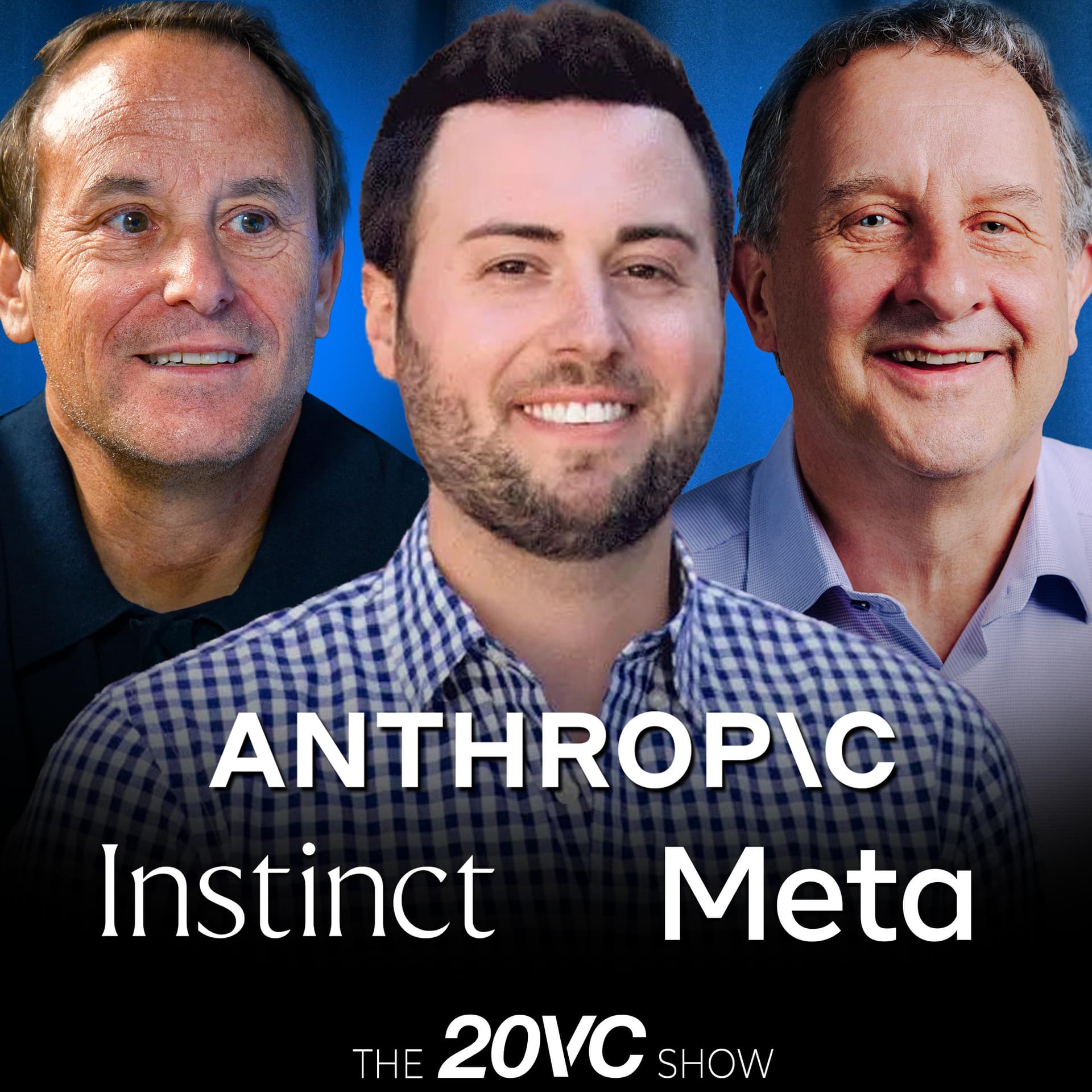
Podcast Summary: The Twenty Minute VC (20VC) Episode featuring Nicolai Tangen
Episode Information
- Title: Managing the Largest Sovereign Wealth Fund in the World: $1.55 Trn of Assets & Owning 1.5% of all Listed Companies
- Guest: Nicolai Tangen, CEO @ Norges Bank Investment Management
- Host: Harry Stebbings
- Podcast Website: [The Twenty Minute VC](http://www.20vc.com)
Key Themes and Discussions
Nicolai Tangen's Background
- Childhood Insights:
- Describes himself as a "loner" with few friends, finding solace in books.
- Reflects on how being introverted shaped his confidence and ambition.
- Early Interests in Finance:
- Developed an interest in making money early on, engaging in various small entrepreneurial activities.
Key Investment Insights
- US Tech Firm Concentration:
- Discusses concerns about the dominance of US tech firms and their unprecedented market power.
- Impact of AI:
- Highlights the transformative potential of AI on productivity and societal structures, alongside a cautious investment approach.
- Bitcoin Perspective:
- Shares his skepticism towards Bitcoin and why he chooses not to invest in it.
- Investment Climate in China:
- Explores the current sentiment towards Chinese companies and what conditions would make investing in China more favorable.
- European Market vs. US:
- Addresses the lagging growth of Europe compared to the US, emphasizing the need for cultural shifts in business.
- Climate Change Investments:
- Emphasizes the importance of climate issues in investment strategies and the need for corporate accountability.
- Long-term Investing Philosophy:
- Advocates for a long-term perspective, focusing on quality companies and contrarian investing in volatile markets.
- Investment Psychology:
- Discusses maintaining a balanced emotional state during market fluctuations, emphasizing the importance of being both confident and self-reflective.
Nicolai's Future Outlook
- Expresses optimism about the future despite the challenges presented by geopolitical tensions and climate change.
- Emphasizes the importance of human qualities like empathy and trust in leadership.
Cultural Insights and Leadership
- Reflects on the significance of organizational culture and communication.
- Stresses the need for transparency within investment firms to build trust and improve decision-making processes.
Advice for Younger Generations
- Encourages young people to think long-term, embrace individuality, and be proactive in their professional journeys.
Conclusion This episode of The Twenty Minute VC offers invaluable insights into the mindset of one of the world’s leading investors, Nicolai Tangen. His reflections on personal growth, investment strategies, and the future of capitalism provide a thought-provoking examination of the financial landscape and the role of ethical investing in addressing global challenges.
Key Takeaways
- Stubbornness and Agility: Successful investors balance being steadfast in their beliefs while being adaptable to new information.
- Long-term Thinking: Investors should focus on quality companies and opportunities that arise during market volatility.
- Empathy in Leadership: Building a culture of trust and openness can lead to more robust organizational performance.
Additional Resources
- For more insights from Nicolai Tangen and discussions on investment strategies, visit [Norges Bank Investment Management](https://www.nbim.no/en/).
- Stay tuned for upcoming episodes and discussions on pressing topics in venture capital and startup funding through [The Twenty Minute VC](http://www.20vc.com).
---
This markdown summary provides a structured and detailed overview of the podcast episode with Nicolai Tangen, encapsulating his insights on investing, leadership, and the broader economic landscape.
Written by AI. May contain mistakes. Listen to the episode to check what was said.
Transcript
Automatic transcript. May contain errors.0:00I truly think there will be much tougher times ahead. I think it would be difficult to generate returns and everybody needs to know that. What I look at is how much fair and how much greediest they're out there. When you look at the best investors in the world, they are stubborn because you need to be stubborn and you need to be able to sit with your positions. The people who fail are people who try to do too many things too fast. This is 20VC with me Harry Stabbings and Stayshow is different. We are not joined by a VC or a founder. We're joined by the CEO of the largest sovereign wealth fund in the world.
0:29with over 1 .5 trillion in assets, they own around 1 .5 % of every listed company. I'm very thrilled and honoured to welcome Nikolai Tanjen, CEO of Norgers Bank Investment Management. This was an incredible show to do live and in person in London, and let me know what you think on Twitter at Harry's Debbings. But before we begin, I need to tell you about Hive. 2024 is shaping up to be a big year for the markets, with a number of iconic unicorns rumoured to be going public, Whether you're a fun manager or invest solo, Hive is the best way for you to access the coming wave of IPOs before they hit the market.
1:05There is no charge to access the platform and it's live trading data on hundreds of late -stage private companies. Best of all, buyers never pay fees on Hive. You heard that right. Buyers don't pay fees on Hive. Create a free account today at hive .com forward slash 20 VC. that's hive with two eyes .com slash 20 VC and see why they're the fastest growing pre IPO marketplace in the world. And if Hive provides incredible levels of access, secure frame, secure frame provides incredible levels of trust to your customers through automation, secure frame and powers businesses to build trust with customers by simplifying information security and compliance through AI and automation.
1:47Thousands of fast growing businesses including NASDAQ, ANGEL list, Doodle and Coda, trust secure frame to expedite their compliance journey for global security and privacy standards such as SOC2, ISO 2701, HIPER, GDPR and more. Backed by top tier investors and corporations such as Google, Client and Perkins, the company is among the Forbes list of top 100 startup employers for 2023 and Business Insiders list of the 34 most promising AI startups of 2023. Learn more today at SecureFrame .com. It really is a must. And finally, a company is nothing without its people. And that's why you need remote .com.
2:26Remote is the best choice for companies, expanding their global footprint where they don't already have legal entities. So you can effortlessly hire, manage and pay employees from around the world, or from one easy -to -use self -serve platform. Plus, you can streamline global employee management and cut HR costs with the remote's free HRIS. And hey, even if you are not looking for full -time employees, Remote has you covered, with contractor management, ensuring compliant contracts and on -time payments for global contractors. There's a reason companies like GitLab and DoorDash trust Remote to handle their employees worldwide, go to remote .com now to get started and use the promo code 20VC to get 20 % off during your first year.
3:09Remote opportunity is wherever you are. You have now arrived at your destination. Nick, I'm so excited for this. I've watched so many of your shows before. So thank you so much for joining me today. Thanks for inviting me. No, I want to start with a little bit on you. So it's a bit of a weird one. What were you like as a child? I think I was unfortunately pretty normal and slightly introvert and read a lot. I didn't have any friends. My brother was really worried that I would perhaps never have any proper future given that I didn't socialize so much. Did you feel you didn't have friends? I didn't have many friends.
3:41No, I didn't. I had my books. I just didn't need that many friends. So my friends kind of came later in life. Did you always have this self -assured confidence? Like I was, no, I'm being serious. I didn't have any friends and I felt like a loner and it was hard. Yeah, I thought it was pretty good to be a loner actually. And so I probably had a bit of confidence there. Did you enjoy school? Loved it. You did. We good at school. I was pretty, I was quite good. I was quite good. How would your teachers describe you? studios, concentrated, probably ambitious. When did you find the love of finance?
4:12Oh, that was early because I was pretty keen on making money, right? So you know what I think? I think a lot of lonesome they are keen to make money to show the world, right? I never felt good enough, and so it was like the way of proving that I was worth something. I think in for your already complex, it should be really celebrated. I think it's a huge thing. That is what drives us pretty much all of us. So I wanted to make some money, and I started to collect the empty bottles, you know, in Scandinavia you get refunds for these kind of things. I sold flowers at restaurants. I did all these kind of things to make you better money.
4:42When did you make your first real money? Well that was really late actually. I did not in my first job, which was in the city. And I did when I joined the hedge fund and that was, you know, in like 97. I was between 32 and 35. Did it make you happy? It gives you some freedom to do what you want. So what I did when I had made some money was to take time off and go back to university and I spent a couple years studying art history. And that made me happy. So it's not the money that makes you happy, but it's just a kind of freedom that gives you. But it wasn't an enormous amount, but I had enough to take a couple years break.
5:14I think a lot of people would say, when I have this, I will be happy. When I have that, I'll be happy. Did you have that, Nguyen? I was a total fallacy. The thing is that if you are not happy now, you will never be happy. They have this study where they ask students at Harvard. So do you have a good life? I know I haven't got a particular good life just now, but I will soon. It's just that now I just have a good new job. There are the same people 10 years later. It's just like no, I'm not so happy now, but I will be soon and 30 years later and the thing is that if you're not happy, you will never be happy and so for you Going back to that child who was a little bit of a loner did that change over time and I hit that okay I don't know what I don't know what happened there But I just became a bit more social and slightly more old going I grew up in a part of Norway, which was really religious, but then I kind of changed a bit and I became more social, good more friends and you know just went out a bit more.
6:04What do you think was the biggest needle moving moment in your career? You mentioned the entrance hedge funds there. Yeah, I think it was when I started at Wharton which is a US university, specializing in finance because that really was a different type of ambitions. You know, no way is the kind of place where you're not supposed to be too ambitious, at least not overtly, then you get to America and it's just like, hey, we want to conquer the world and you are allowed to say it when you are like 22. And I remember in class this guy said, you know, what should I do? How should I succeed? And he's just like, yeah, but what do you want to do?
6:38I just want to conquer the world and everybody applauded. And for me, it was just like a complete unreal situation. Did you adopt that mindset from that? No, I haven't. I don't really have that mindset. There was an element of that, which I thought was pretty cool. So for a child of your own or for a young person asking you for advice, What would you say to them about doing an MBA? Well personally I'm not a big believer in MBAs, except if you have some kind of job and need to change direction and you feel that you know I'm in the wrong place, I just need to complete to do something else. Then an MBA is good, it's good as a kind of shifting mechanism.
7:10But in itself I think not so necessary. When you decided to join your role now, was it an easy decision to leave your prior which you started and join a CEO? Yeah it was so difficult actually because I was on my way to do something else. I had started a hedge fund, been running it for 15 years. The learning curve was a bit flatter and I had decided to kind of move on, pass on the firm to the next generation and then go back to university and study. And then this job came up in the Sovereign World Fund and I thought, you know what, this is just incredible. Combine in my love for as -and -management, organizational development and then do something good for the country.
7:43That was not so difficult. But it wasn't easy to get the job right? What was the process to be seen? You have to have to larger so - Well, you apply and you go through a lot of interviews. And then of course, the local media was a bit skeptical because nobody knew me. And the Harris is a non -guy coming from London and it's a very prestigious position in the country and it's not so. Yeah, it just wasn't so straightforward. Did the enormously of the position hit you? As we said, it is the largest in the world. I don't think it's really ever hit me because it's a very large fund. But I don't think about the size of it because the size is kind of unreal.
8:19So do you know what I love it? It's on your website. You have the ticker. Yeah, and I mean, it's it's insane Yeah, it's insane. So it's so it's a sticker showing the real estate Absolutely, so it's we are there is a ticker on the website. It shows the the real real time value of the fund And I thought before I joined it's just like you know what? This is not a good idea This makes us very short -term in all thinking we should get that this way now if we are taking that away from the website There would have been a revolution in the country that would have hated it it's the most watched number in the country.
8:49It's very, very important. And it's kind of cool. What it also does, it just shows how transparent the fund is. There are no secrets. Everything is open. Everything is out there. I've watched many of your interviews where you've interviewed some and then somewhere you've been interviewed and you've said before that we might have some lackluster returns actually for the next few years because of the environment that we're in. So look, given the importance of that number to the country and it being the most watched number, is there a lot of pushback? Is there a lot of anger about a very kind of open listen, there will be that last of returns and that's what it is?
9:21No, I think they like the fact that we do some expectation management. It's important to manage expectations. I truly think there will be much tougher times ahead. I think it'd be difficult to generate returns and everybody needs to know that. Why is it going to get so much tougher? A lot of people are feeling optimistic. Personally, I think it would take longer for rates to come down. I think there are geopolitical tensions which add to inflation? Why will it take longer for raise to come down? Because there was some underlying wage increases and then when companies have to pay higher wages, they offset that by increasing their own selling prices.
9:56And then you have some climate effects, you know they're worse harvests, you have some geopolitical effects, there is more producing things close to home which is more expensive. So just have a lot of things like that pulling in the same direction. Okay and so these kind of underlying inflation in pressures create a challenging environment going forward. Is that like a three -year period, just like a five -year period in your mind? When does that change? I think it could last for quite some time. Like ten years? I don't know. I think the next five years could be, could be much more difficult. How does one change their investing as a result of that?
10:26I've been coming more long -term by focusing in on quality companies which can compound by looking for marketer gainers and by becoming more contrarian. So taking the opportunities that comes from volatility. I always love wine buffets investing style, which is, you know, I invest in things that don't change over time. People will always love like a Mars bar or ketchup or whatever that may be. Or Coca -Cola. Or Coca -Cola. When you think about market share gainers, what does that mean to you? Because one would say Google, but some would say ChatGPT, you've spoken some challenges that. Yeah, I think so.
10:59I'm not really thinking about technology because that's a bit too complicated for me. I mean, that's because Is that change so fast? And God knows who's going to be the winner in NAI or chips or these kind of things. I'm more thinking about kind of steady -eddy market share gainers. Cosmetics company which takes half a percent market share every year or things like that. Does that not get threatened by technology too? It is a world not becoming... Well, I think some companies and some products are not threatened by technology. I think for instance, look at cosmetics. You know, women have painted themselves in a phase for 2 ,000 years.
11:28Do you think they would stop? Do you think all women would say, listen, now we're going to have a level playing field. nobody's ever going to use any cosmetics. I just don't think there are and I think it's tied into it's tied into vanity. So for instance there I don't think technology will move it. Now an elevator company are we going to invent a way that the way we need to move up in the building? I just don't think so. I think we'll always need elevators. I agree on the elevator. So I got nothing for you on that one. On the makeup, you know TikTok shop enables creators to create their own brands.
11:57Absolutely. Absolutely. Absolutely. Being a really unbundled so much of LVMH or any of the large providers market share. Yeah, well, I just think that when the brands become pretty big, they will be acquired by the very large companies. And you see it, for instance, in a spirits business. So, you know, let's say you're a good looking actor, you launch your tequila brand, Los Amigos or whatever it's called. And when it reached a billion, somebody's going to buy it. You know, I watched one of your shows. I think it was Davos where you were interviewed and you said, yeah, the question I like to ask is, what's on your mind?
12:28And I was like, why don't we turn the tables? What's on your mind? You know, just now I, I've been thinking a lot about, we must not make small problems big. In other words, some really small problems in life, and we are just making them big, but equally there are some really big problems, and we must not make them small. What do you think of the small problems? So just like the everyday small tiddly things which take up too much time, too much of your thinking, not important things, and you should not be spending time on it. And there are some big things. something, climate, big issue, very big issue, and for sure we are not spending enough time on it.
13:03Is the time horizon challenging for you? Because you invest along such a long time horizon. So time is really interesting. I think it's really funny. So let's say you are 20 years old. You are in such a hurry, okay? Like three months, it's at eternity. Now, you get older, I'm 57, I'm soon about to die. Suddenly I'm so patient. Why? I mean, I haven't got that many years left compared to a 20 year old. Yet I'm much more patient than these young person. Why is that? It makes no sense. So your time horizon changes when it shouldn't. It should be opposite. Are you scared of dying? No. Absolutely not.
13:38But the thing about time, I think, is just really interesting. I don't think we haven't really nailed the whole concept of time. And now why are you more impatient when you are 20? Well, three months is a high up percentage of your life than when you are 50. You've seen longer time. You've seen that it pays off to be long -term. But if I would tell myself something my 20 year old self, what should I learn? You know, you've got so much time, you know, just think more long -term. Speed of execution we always told is like the biggest difference between those that win and those that don't. And with that in mind, I very much think that time is crucial and I have to get as much out of every single day.
14:14It was a different from thinking long -term. I completely agree. Organizations which make fast decisions are generally better organizations. I have a countdown clock in my office showing how many days I've got left or my job because this is a five -year job. I've got 580 days left. Now why do I have that? Is it because I don't like my job? No, I love my job. But the thing is that when I got somebody in my office who says, yeah, we can do this next, over the next three months we can do it. I said, hey, listen to that. Look at this. I got 580 days left. We need to hurry up. And they say, oh gosh, yeah, you only have 580 days left.
14:46We need to do it straight away. So you're completely changed the mindset and you get this urgency into thinking Do you think that five year tenure is a good thing or a bad thing? Because it doesn't prevent long -term thinking like you well, I think it has got positive things and negative things I think on balance is probably neutral. Do you feel the pressure? I think I would have felt the pressure even if I had a tenure when you think about like how others in Tov and Well funds do and engage in what they do who do you respect and why there are a lot of very good funds out there, right? You have the Canadians, they are very strong, they are long -term thinkers, they have good organizations, you have something like GIC and Singapore, it's very strong.
15:25I would say what I admire in funds is when they are transparent, the Norwegian fund is the most transparent fund, and I can say that because we won the awards for being the most transparent fund in the world, so I'm not even bragging as much as I'm in fact. It's good to be transparent. Everybody is on the same page. Everybody knows what's the agenda, what we're driving for, what we're trying to achieve, and it establishes trust. I don't know, it assumes everyone has the same IQ and EQ, and actually sometimes people need to be encouraged along and maybe not know the whole truth, because I don't think actually a lot of people are as good as we've given credit for.
16:00Wow, I mean, to disagree here, I think the more people know the truth, the better it is. The more everybody knows all the facts about it is. When you think about, I love this, you asked it with, I think it's Jane, the CEO of And you said, if you would have really have one or two numbers which measure the health of the economy, which one or two are they for you Jane? And I was like, that's a good question. If you have that same question, how do you respond to that? Well, so what I look at is how much fair and how much greediest they're out there. How do you measure that? Well fair, you can measure in the Vix index, the volatile index, you can measure during In COVID, you can measure it in the amount of media on the bad news, to which extent specialists disagree with each other, while other doomsday scenarios and so on.
16:45So you can get a gauge for the fear. And gee, did we have a lot of fear at the beginning of COVID when we didn't know what it was? That's not so difficult to measure, but it's an important one to keep track of. But then, you know, greed, how do you measure that? That's much more difficult to gauge. And frothiness. And to try to get your handle on that, that's really important. And so I'm wondering now, over the last two, three days, the share prices of RM has gone up 150 % or whatever it is, something very, very high number. And what is that? Is that some kind of peak of sentiment for tech shares or what is it?
17:16I don't know, but I'm thinking about that. How do you think about measuring greed then? Well, you just have to look at what's going on in society. When you feel really stupid because you haven't made 100 % return in the stock market because all your friends have. Then you have to start to think. It's just when things start to look really, really simple. Then there is too much greed because it's just not simple to make money. Do you think greed is bad? I'll not per se, not per se. I mean, greed is what drives a lot of people. Greed is a negative word for aspiration and wishes for a better life.
17:50And so the word greed is a negative word. But the wish to create things to make the world a better place, all these kind of things, that's positive. It's supposed to drive. I mean, it's cool that people want to establish things and make things and show the world what's the biggest constraint that you have because of your position. You would like to remove them. What would you do if it were removed? Yeah. I don't feel we have much constraints. So, you know, we're a large fund. We are a public sector fund. For the moment, we cannot invest in private equity, which I think we now have this political discussion and we have arguments back and forth with the Ministry so so we'll see what comes out of that.
18:29How does decision making work around that? It's a political process so the Ministry is asking us for advice, I the board of the Central Bank, then they give advice, then they go through the political process and discuss it with the politicians and then they come back with a white paper. So it's a it's a very thorough and and really solid and impressive work. He said central and I saw on one interview that you said, you hope that central banks change the type of data that they use to inform that thinking. How so? And how would you like that? Yeah, so I need to be a bit careful when I talk about central banks, because we are situated in the middle of central banks.
19:04So when I talk about central banks and never talk about the Norwegian central bank. But I think it's interesting to look at the central banks and I have previously said that I thought they were a bit slow to increase rates. Now I think that's the opinion that many people have and they have admitted it themselves. So I don't think it's particularly controversial to say. And to me, the question is just like what kind of alternative data do you use? Do you speak to the CEO of companies and ask them what they expect for the next 12 months? And historically they haven't necessarily done that. I think they probably will do it or are already doing it more.
19:33And perhaps they will improve for the decision making. I spoke to a couple of mutual friends and they said that your content consumption is extremely voracious. And you mentioned being so engaged in reading when you were young. What is your content consumption that like Stain and Coliseum? you have to be across so many things. The important thing with learning is that you need to be curious and you need to learn as many different things as you can from as many different type of people. When you look at the social psychology studies on this, the more different type of friends you have, the more innovative and the more creative you become.
20:06Very, very important. Now I consume a lot of newspapers, I do listen to podcasts, and I also learn a lot from my own podcast because it forces me to prepare for various industries and various CEOs and so on and it's a very, very important part of learning. Do you do the prep yourself? I get help from the great analysts who I work with but I also prep myself. So I sit during the weekends and I think it's really, really cool, right? That's why to learn, right? I didn't talk so much. Absolutely. So before we had Daniel Egg, who's put a fire on, I have to learn about the music industry. I didn't know so much about it and before we had an VDR CEO, well, I had to learn about microchips.
20:43And so it's just a fascinating learning experience. or Bill Gates, you have to learn about a lot of things because he knows so much about so many things. What was the best guest? He can say it's just... No, I think we've had a lot of really, really good guests. Oh, come on. You can give me one. Is yours? Peter Fenton from Bunchmark would be up there, or Doug Leone from Sequoia Capital. He's run Sequoia Capital for many years. Mark Benioff from Salesforce was fantastic. And why were these people good? Different reasons. Doug Leone really understood the art and science of what makes a great interview.
21:13you. The art is bringing people in with a story. When I was doing this and I felt this, people feel like they're with you. But then he tied it to science. And from that experience, I learned three cool things to change how I think about pricing assets. He tied art, resonance, to science learning in a way that I think was very, very special. That's good. Far enough. When you think we were spoken about kind of Nvidia, you mentioned there, we spoke about Microsoft. How do you think about US tech firm concentration. It is so concentrated. Yeah, I've just loved hearing thoughts on that. Well, it's very concentrated and you know, you have the market cap of individual companies which surpass the market capitalization of all the Swedish companies for instance.
21:55So they are bigger than singular countries. I don't think it's good or bad. I think it's just a function of this being a platform economy where if you own the platform and you have this ice, you just gain more size. Everyone says in every cycle there's incumbents and you know this is no different and they can always be challenged. Honestly to me this feels different because in a lot of cases the data advantage that they have and the sheer scale that they have is just bigger than ever. Nokia when it was at its height did not have the scale. No, the Microsoft does. No it's interesting so now for instance in AI it takes it's so expensive to develop new models that if you're not already a big company you have difficulty doing it.
22:35There is an argument for this continuation of the winner takes it all just continuing. I just don't know. How do you think about investing in AI super aggressively? You are primed, positioned wise, to actually say, hey, we can become a market leader, we can take a very forward approach, we can take a very long time horizon. Well, we are quite close to the index the way we invest to we, but all in all the big companies, you know, our biggest position is Microsoft, very big positions in Nvidia, AMD, Alphabet, you name them, we have those over biggest positions. Would you do sand, knee, seven trillion dollars?
Read the full transcript
23:06I mean, there's only a few people who can. Well, the easy thing here is we only do companies with stock market listing. So even if they wanted to, that wouldn't be so easy. I have to say, the the the podcast I did with Sam Osman Moss, really, really interesting. Was it? Why was this interesting? Because I felt that we were looking into the future and that he knew what the future was going to look like. And he had, he has more we're able to build it into it than most people, at least for the next kind of three, three, five years. When you hear him talk about it, are you excited for that future?
23:37Yeah, I think it's huge. I think it's fantastic. So I ask him, I say, hey, we want to improve productivity in the fund by 10 percent. What do you think about that number? For the next 12 months, and he thinks a lot and he says, no, I think it's too conservative. I think you should try for 20 percent, given how many developers you have. So now I run around in the firm and just tell him, hello guys, how exactly are you going to improve your productivity by 20 percent? of the next 12 months. When you have the index like approach that you do, what does a 20 % productivity increase mean? More analysis?
24:05Because I heard you say that you wouldn't change how it can't you just do more with the same. Yeah, I think we do better analysis. We do better follow -up with the companies. We do better work on the voting. I just think you improve the quality across the board. How do you think about chip shortage? One of the most challenging problems we're facing in this space. Yeah, so I don't think too much about it to be frank, because I suspect that we'll take care itself because we have commercial players here and I just saw that AMD is launching a new chip which is even faster than what was available before and so I suspect there will be chips.
24:35If they're not enough, then prices will go up and then what will consume less? Your big believer in Adam Smith's invisible? Well, in that particular case, absolutely. In other cases. Yeah, no, I think in that particular case it works really well. I don't think, hey, I mean, it's not like capitalism is solving all the problems and creating its own problems but it's got some pretty good and well -working mechanisms. There's a brilliant quote that I think to a lot when the facts change, you know, I changed my mind. Yep. How do you think about changing your mind? Oh, very, very important. And so when you look at the best investors in the world, they are stubborn because you need to be stubborn and you need to be able to sit with your positions but when the facts change you need to change your mind.
25:13And the combination of stubbornness and agility, it's a combination which very, very few people have. There's another great investor. He taught us about the willingness to be lonely. in other beliefs as well, when other people don't see what you see and you have to be willing to sit in that discomfort. Yep. Do you sometimes feel uncomfortable in a position that you hold because it is less obvious or lonely? Absolutely, but the things that the more uncomfortable you feel, the better it probably is. And so as long as you know that, that takes away some of that uncomfortable feeling. Are you able to seek discomfort though in positions?
25:44Yeah. Given the position, given representing a country, you can't exactly say to your analyst, Let's go and find some bad, shit crazy things, which everyone hates right now because that's where value is created and investing. It's more difficult to do with this current fund, but it's a deal of what you should be doing. How do you think about regulation environments? I get quite worried when we see increased regulation suddenly around Europe, especially around M &A and liquidity environments. How do you feel when you look at the regulations? Well, there is a reason why you have regulations, right?
26:16It's to prevent the not -of -financial crisis, and so it's put there for a reason. It's the too much regulation, I mean they could be in some areas. But generally speaking, regulation is not a bad thing. It is, of course, holding Europe back compared to the US. Now there are several reasons why Europe is growing less fast than the US. It struck me I spent a month in New York in November and met with a lot of companies, and there is a different thinking about speed, different thinking about risk, different level of ambitions. you know, in Europe, 5 % is a high number in the US. It's a low number.
26:46In Europe, if you fail, you are generally not to give in another chance. So you have some mentality. Do you think that's still a case here? I don't know. Absolutely. What can we do to change that? It's very difficult. It's very difficult. I had Larry Summers on the show. He said, Europe's a museum, Japan's a nursing home, and China's a jail. How do you feel when you hear that? Well, he's a very clever man, generally. So he must be onto something. He doesn't hold back. You know it was funny, I posted on Twitter about your coming on the show. And a lot of comments said, when were you hold Bitcoin?
27:20We were not all Bitcoin. It's not the normal mandate and we have no wish to have it. I don't think. And also I'm not quite sure I fully understand all the implications of Bitcoin, but it's not a lantern for us. What would make China an investible for you? Well we are an investor in China. We invest in great Chinese companies and there are many of them which are good. You know, if you think about, if you look at the sentiment towards Chinese companies, it's pretty rock bottom right. Yeah, I don't think it's ever been worse in my work. No. So it's the worst we've seen. So have we seen the low and in sentiments?
27:50No, so that, I don't know. But if you look at where our sentiments really high and where they really low, clearly US offices, so real estate, very low, China, very low, US tech, very high. Do you think this is pretty obvious? Do you think the negativity towards China persists? I don't know. I don't know. They have some issues, they have deflation there now. The growth is a bit slower, but they are a lot of people and they are very hardworking. They are incredibly hardworking. Yeah. How do you think about your own invested psychology? Confidence and investing is very important. How do you think about controlling it when it's too high, protecting when you made a couple of bad investments?
28:24And I think the importance here, you need to be stubborn, you need to question yourself all the time. You need to be confident, but at the same time, you need to be a bit insecure. So it's to get that balance right. It's tough. What are you insecure about today? Everything. I mean, you have to question everything. You have to question what is happening with inflation? What is happening to valuations? What is happening with technological innovation? What is happening to geopolitics? Where are the risks? What's happening to the political situation? We have we got elections all over the world. So there are a lot of things to be uncertain about.
28:56Climate is one which draws a lot of attention, requests for more investment. How do you think about climate, cost, mitigation, the role that you can play? Yeah. If you're a small investor and you only own a couple of companies, you can hide from the climate problems. If you own the whole world like we do, you know, we own one and a half percent of all the companies in the world, you cannot hide because you've got one company which pollutes, you pick it up in the rest of your portfolio. So you need to care about the environment, you need to care about the future of the global because taking to the extreme in an unhabitable world the value of your investments are zero.
29:30So we really need to care. And that is why we care deeply about the climate and why we work with the companies we're investing in, why we are in continuous dialogue with them, why we vote their DGMs, why we have a fixed policy towards this. Do you think you have a good culture at the firm? Yes, I think we have a good culture, but culture can always be better, right? And so you continuously need to improve the culture. What could be better? So culture, you can have even more speed, you can have people taking more responsibility, you know, even deeper sense of engagement, but I mean generally speaking it's a phenomenal firm, you know, with...
30:04What do you think you do really well as a firm? Yeah, to make it phenomenal. We have very, very good people who feel very strongly about what they do, who have a passion for what they do, who are proud to work on behalf of the Norwegian population. With all the size of the vehicle itself, when does it go back to, like, oh, so your talk I think it was a tattoo where every Norwegian is a millionaire, and then some people are like, we invest more in Norway. What's it ultimately for? Well, we have the fund to safeguard it for future generations. And so it's an investment fund, and it's kind of a backup fund, right?
30:36In meant that during COVID, you could pay for various efforts and so on that many other countries couldn't really do. It's a combination of the two. Now, the government can spend 3 % of the fund every year, and it funds roughly 20 % of the state budget. So it's very, very important in terms of funding. everything that goes on from hospitals to schools to road buildings and so on. Do you believe in what life balance? Okay, so I asked Jensen Huang, the CEO of NVIDIA, you know, how much do you work? He said, Nick Leather is hard work and then there is insanely hard work. So I said, okay, what about you then?
31:09I work insanely hard. I work every day from a wake -up at 5 until I go to bed at 9. I work every week day, Saturday, Sunday, every whole day. I work all the time. Oh wow. But when do you relax? Yeah, but I relax all the time. He said, because I love what I do and I think if you really love what you do It's not gonna feel like work. I get that but then there and what I do is what I do time with your spouse your kids Yeah, so I'm not devoid of that. I have both kids and a wife All your kids who are there in the 20s. I set a science time for them But I work a lot biggest because I love what I do on fatherhood What does it mean to be a great father in your eyes?
31:47What is great father to you to show and condition of love? It's to spend time with them. It's to listen to them and as you'll start a parenting change at a time We need to back it up, you know when they were this you born and to now as your views on what good parenting is change I think and then you and then you have be pretty happy that you you grow hard on parenting for some years And then I think it's really hands off you need to just let them lose support them And what they do make sure they know that you're that you're proud. I've been very lucky to have a wonderful wife who's spent a lot of time on the upbringing.
32:21So that's been a big thing, a big gift. We're kind of flipping back to culture, but I guess it's also relevant with kids. How do you create environments where people feel they can say anything? Often people don't actually, whether it's with CEOs of huge organizations, CEOs of Goldman Sachs, a city to stand up to someone and say, actually, Nikolai, I disagree. And we could be doing this internally. How do you think about creating cultures of safety by team members or children? can say, I disagree. Well, the most important thing is to admit mistakes yourself. You have to stand up, admit mistakes.
32:53That's the only way to make it safe for other people. And it's very tough. But the interesting thing is that if they think that you are pretty clever generally and you admit mistakes, do you think that trust you more or less? That trust you more. It's a fantastic thing to admit mistakes. It's vulnerability and leadership good. And is there a little... Oh, yeah, absolutely. Yeah, sure. I mean, if you are like a complete moron, it doesn't work. You must be genuinely not stupid. it. Okay, but as long as they got no idea what we're doing, as long as they think that you are clever, then admit me, as a thesis really good.
33:25What are you not good at that you would like to be good at? Oh my, there's just so many things and there are just so many things to know and to learn and there are so many areas where I know so little. It must be something. It's like learning a language playing the language. Well, language I tried I did speak some languages when I was younger. I tried to learn Italian many times. They just didn't really sink in. I just wish I could have learnt one languages. One I was younger. You've met some of the most impressive and incredible leaders of companies where you were one and a half percent. When you think about it, not the best because that would be obviously choosing favourites, but just like the most memorable meetings with CEO as you've had, it could be through the podcast or through, is there one or two that's down now?
34:05Do you know one I'm really fond of is a guy called Albert Benny in Switzerland. He's the chair of both a company called Lonsa and Geberit. And I did a podcast with him and And actually he was the first guy I rang when I got the job in the zone of fund and I asked him how about I just got a new job what should I do and he said well you need to talk to a lot of people in the firm so that you get better data points so that they get to know you because they don't know you they need to get to know you and when you investigate change it's easier to get through when they have delay but dissipate it and you need to talk to people who are you know the same level as you below you all parts of the business.
34:42Then you need to decide what am I going to work on here, what am I going to change, pick a few things, not many people put it through together with a whole leader group and don't go too fast. The people who fail are people who try to do too many things too fast. And the work of the times in the beginning after I got the job where we clearly were moving too fast. And it was like as if the lower body not in sync with the upper body. In what way? Because the value just accrued and appreciated and just trying to make too much change in the organization. You could just feel that the organization didn't want to do it and it's very important you don't want to trigger the immunitist system of an organization.
35:19So if you tried to do too much thing, the whole organization just tried to expel you. It's just want to get rid of you. You're a nuisance, right? As if your body was trying to get rid of some bacteria. And so that's why you shouldn't go too fast. When you think about the one or two things, then you thought, okay, we're going to focus on these one or two These are the things that you want to be remembered for with your tania. What was this one? They were crystal clear. One, it needs to be performance focused. You know, we needed to focus in up performance because otherwise we will just not have a reason to exist.
35:47Then it was the people spend more time on developing the people, inject more love and care, and then the last thing was communication. More communication internally and more communication externally. So we had three things. And we'll do it quickfire after this, but you mentioned the communication there. You are C of, as we said, the largest. Doing your own podcast is like, it's others don't do it. Talk to me about the discussion point for that. And how did that kind of come to be where you're like, not only, because most would also say, oh, we should do one of CMO or how to marketing you do it and pass it off.
36:18You took the reins on this. You do all of the shows. Yes, I do. And the thinking was, you know what, we are a big fund. We are what is transparency taken to the extreme. game. Well, that's showing all the Norwegian people what they own. I thought we potentially have access to all these fantastic CEOs, not many other people have. And certainly not many other Norwegian podcasts people had access to them. And so we started it. We thought it would be good for for the general listeners, it'd be good for CEOs, it'd be great for students, we got tens of thousands of students listening. And it's proven to be really good for recruitment too.
36:48So the applications now for our positions in New York and London I've just gone up. Do you feel you've got better as an interviewer? I think you get better. I bet you're better than you were a thousand shows ago. I was terrible. You're good now. People always say to me, I could never do what you do. And I've done 2 ,700. 3 ,700. 2 ,700. Wow, Mike. What's the main way you go about it, you think? Definitely feeling much more natural. I was very staccato. Also, the best interviewers are able to have a schedule and then move away from it and engage in the natural flow of conversation. But then bring it back to the schedule without it seeming staccato or cuddle.
37:27Yeah, you need to follow up, but at the same time you need to move it forward. And in that combination I think it's important. I think what I find hard is there are naturally things where I would dig in more if I wasn't a friend, not an aggressor by my most generalist side. And so I will often get pushback being like, you could have pushed harder here. And it's like, well, I would have done, but I'm not there to make someone feel uncomfortable. But it also changes with age, right? I bet when you started you would not ask about parenthood. No, and fathered, because it wasn't on your agenda. Now clearly there is something going on there.
38:00Yeah, and people follow you actually. It's a funny thing with podcasts actually, and it's people really develop a relationship with you. Are you ready for a quick fire? Sure. Okay, so is it important for you to be light? No, I don't particularly like to be hated, but you can't always be light all the time. But ideally what you do is going to make you better and perhaps light in the long term. What is the day in the life of you look like? Just if you would have a standardized day, I know there's travel which kind of makes it a lot. Well, so the cool thing is I don't have any, the days are not similar, but I wake up at, let's say, a six or before six.
38:34I read a lot of papers and then I go to the office. I have just different types of meetings with my colleagues, the investment colleagues, the ministry. I do podcasts a week. It's just so varied. I'm believely about it. We have offices in London, Singapore, New York, I travel. You gym, exercise. I go to the gym, I may not look that way, but I go to the gym three days a week in the morning and then I go in the winter cross country skiing every weekend, Saturday and Sunday. Gym three times a week is good. Do you get about early? No, I'm sorry. I think that's pretty late. Do you find it easy to get a sleep?
39:07Yeah, I must have a lot on your mind. Yeah, I like that. Has it always been like that? Yeah. What are you most concerned about in the world? We got some big climate issues. We got some big geopolitical issues. What's the best investment advice you've ever received? To be long -term and long -term and contrarian. That's where all the money is. I agree. It's just the single hardest thing as we said to be willing to be lonely for so long in the face of so much criticism and disbelief. I listened to a lecture by Mark Andreessen at Stanford many many many years ago and he said, you know what? If you have these two Xs, one is right and wrong the other one is consensus, non -consensus, all the money is where you are right, non -consensus.
39:45I'm really excited because I am going to meet Mark and Dresden in March. Tell me, what's the kindest thing anyone's ever done for you? The kindest thing, anywhere that's done to me, it must have been my mother who spent so much time with me and in a way it was pretty sacrificing in the way she did things. And I think generally speaking, I think mothers are Just the best, you know. I like you so much before this, but I couldn't agree the more... I wouldn't be anywhere without my mother. What did you learn from your mother about parenting? And condition of love that you were always okay. Yeah. My mother always told me you can never tell your children enough that you love them.
40:23Yeah. I don't think that's probably right. Yeah. Get on, Mum. Tell me, what's the biggest investment mistake you've made? During the financial crisis, we were invested... It was in my previous company. it, you know, invested in a, in a, it kind of a subprime lender. It's a shit to business. Bad businesses attract bad people. And there was accounting fraud and all that kind of stuff and we just lost a lot of money. So I would never, I would never invest in a, in an ethical or any company that did anything that wasn't really good. You mentioned the bust and financial crisis. Rodio, keep playing.
40:55How do you keep your head when all about you were losing that. By zooming out, understanding that this is going to be one point in time and that normal times will come back. If you were to give young people listening, students who listen to your podcast, students who listen to this, a piece of advice as they enter a workforce today, what would that piece of advice be? Think long term, do your own things. Don't try to be like everybody else because that's not going to make it very happy and by the way, as an It's also like, we're 10 % harder. It's so easy to be great now because I think everyone else is kind of mediocre.
41:32Do you think so? I really do. You want to really get that job, follow up, send that email that night before, send that email after, notice the little things. Do the work beforehand, know that you grew up in X religious town and have that little bonding moment before, put in the extra 15%, understand the person better. You have for sure need to work hard, that's why I'm bored. Final one. What are you most optimistic about looking for? I like to finish on a tone of optimism. I am very optimistic about people. And I think, interestingly, in half -drivings, I just said that. People in the media, okay, that shit.
42:05I don't think people, I mean, you know, I really don't think people in the media, or I think people are fantastic. And I think in a world of AI and so on, we need to lean in more on the human beings and what it is that make us human. Empathy and that's empowerment, encouragement. And what never sees to surprise me is the type of power you can unleash if you give people responsibility and trust. That just makes me so optimistic about the future. Do you start with full trust with people? Yeah. Listen, Nick, I love this. Thank you so much for answering my meandering questions and you've been an incredible guest.
42:41It's been great being here. That's good fun. Well done. Thank you so much, my friend. I mean, my word, that was such a special show for me to do. We had an incredible time in person. so you can watch that episode actually live in the studio on YouTube by searching for 2 .0 VC. I always love to hear your thoughts and feedback there. But before we leave you today, as your company stays private for longer, it's crucial to enable a robust secondary market for your stock, whether you're looking to sell your hard earned equity or set up a liquidity program for your valued shareholders. You have to speak to the team at Hive.
43:12Hive enables companies to offer their employees flexible liquidity in a compliant environment with minimal effort. In 2023 alone, over 150 of the top pre -IPO companies in the world worked with Hive to unlock liquidity for more than 700 early investors and employees. So what are you waiting for? Create an account today at Hive .com for slash 2 .0 VC. That is Hive with 2Is .com slash 2 .0 VC and see why they are the fastest growing marketplace for pre -IPO secondaries in the world. And if Hive provides incredible levels of access, secure frame provides incredible levels of trust to your customers through automation.
43:55Secure frame empowers businesses to build trust with customers by simplifying information security and compliance through AI and automation. Thousands of fast -grown businesses including NASDAQ, ANGELLIST, DUDELE and CODA trust secure frame to expedite their compliance journey for global security and privacy standards, such as SOC2, ISO27001, 101, HIPER, GDPR and more. Back by top tier investors and corporations, such as Google, Cliner Perkins, the company is among the Forbes list of top 100 startup employers for 2023 and Business Insiders list of the 34 most promising AI startups of 2023. Learn more today at Secureframe .com, it really is a must.
44:36And finally, a company is nothing without its people, and that's why you need Remote .com. Remote is the best choice for companies, expanding their global footprint where they don't already have legal entities. So you can effortlessly hire, manage and pay employees from around the world, all from one easy to use self -serve platform. Plus, you can streamline global employee management and cut HR costs with the remote's free HRIS. And hey, even if you are not looking for full -time employees, Remote has you covered with contractor management, ensuring compliant contracts, and on -time payments for global contractors.
45:12There's a reason companies like GitLab and DoorDash trust remote to handle their employees worldwide. Go to remote .com now to get started and use the promo code 20VC to get 20 % off during your first year. Remote opportunity is wherever you are. As always, I so appreciate this port and stay tuned for an absolute banger of an episode this coming Wednesday.
From the publisher
Nicolai Tangen is the CEO of Norges Bank Investment Management, the largest sovereign wealth fund in the world with $1.55 Trn in assets, owning on average, 1.5% of every listed company. Tangen was previously Chief Executive Officer and Chief Investment Officer in AKO Capital, which he founded in 2005. Prior to this, Tangen was a partner and senior analyst at Egerton Capital and an equity analyst at Cazenove & Co.
In Today's Episode with Nicolai Tangen We Discuss:
From Religious Town in Norway to Leading the Largest Sovereign Wealth Fund:
- What was Nicolai like as a child? How would his parents have described him?
- Why does Nicolai think that loners have a greater chance/ability to make money?
- What does Nicolai know now that he wishes he could tell a 20-year-old Nicolai?
The Top 10 Questions:
1. US Tech Firm Concentration: Is Nicolai concerned by the concentration of enterprise value in US tech firms? Have incumbents ever been as strong as they are today?
2. Impact of AI: What does Nicolai believe the impact of AI will be on society and productivity? What is his approach to investing in it moving forward?
3. Bitcoin: Why does Nicolai not want to hold Bitcoin? Why does he not understand it?
4. China: What would need to happen for China to be investable? How will the China situation play out?
5. Europe: Does Nicolai believe Europe is so far behind the US? Why? What can we do to improve?
6. Climate Change: How does Nicolai approach investing in climate? What works? What does not?
7. Sam Altman: Would Nicolai invest in Sam's new $7Trn project? What are some of Nicolai's biggest lessons from the time he has spent with Sam?
8. Investment Psychology: How does Nicolai retain a neutral investor psychology? How does he not get too up when doing well and too low when not doing well?
9. Investing Lessons: What are Nicolai's biggest investment hits and misses? What did he learn from them?
10. The Future: Why is Nicolai so optimistic about the future? What is he concerned about? How will we overcome our greatest challenges?