
In short
Podcast Summary: The Twenty Minute VC (20VC)
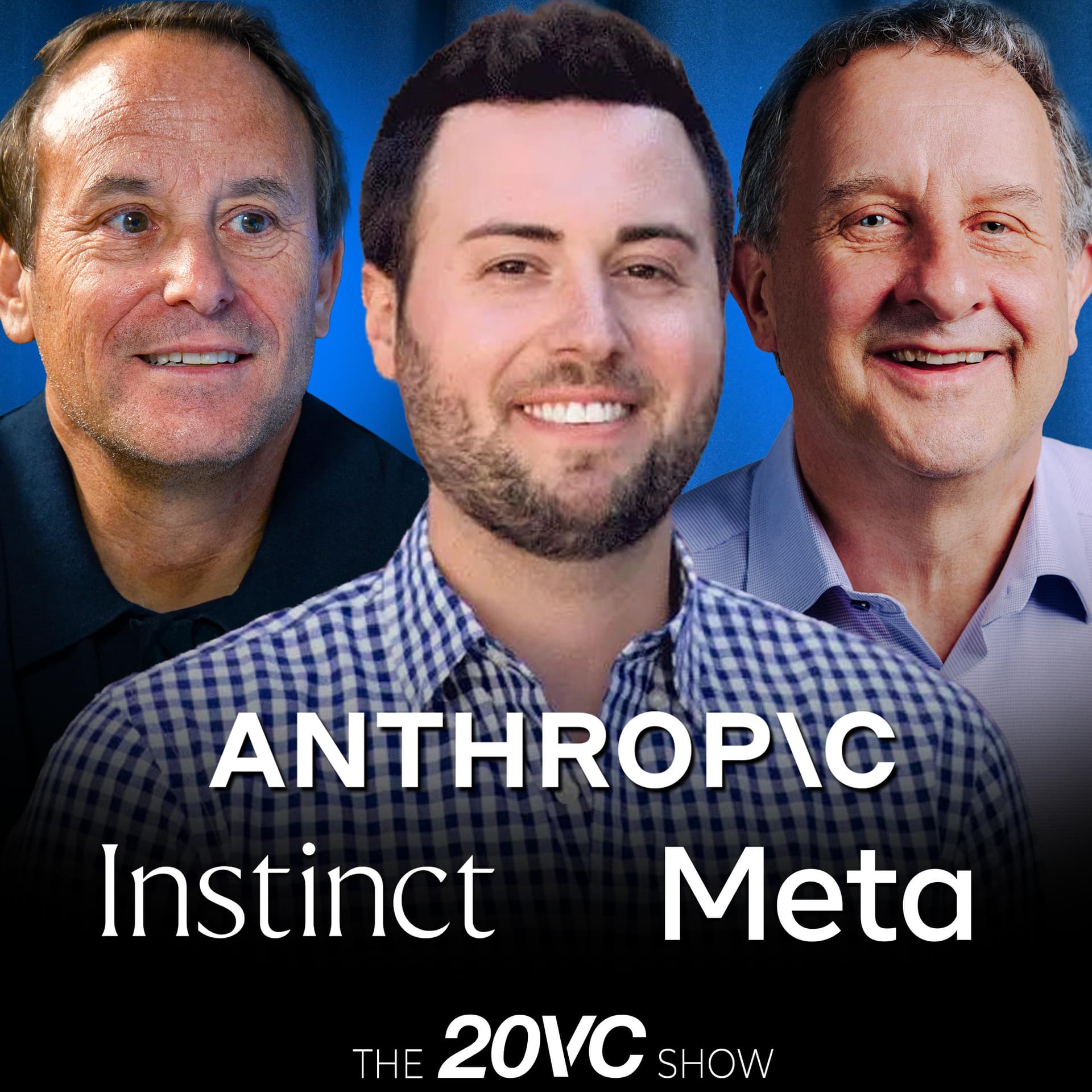
Episode Title 20VC: Mark Suster on The Biggest Fundraising Lessons for VCs, Why the Correction in Venture is Still to Come, Why Private Equity Will Replace IPOs and M&A as the Exit Path & The Woke Left and a Trump Administration; What Happens?
Podcast Description In this episode, Harry Stebbings speaks with Mark Suster, General Partner at Upfront Ventures, discussing critical insights on fundraising, exit strategies in venture capital, and sociopolitical issues affecting the industry.
---
Key Discussion Points
- From Serial Entrepreneur to Leading VC
- Transition to Venture Capital: Mark Suster shares his journey into venture capital after selling two software companies, with a focus on the challenges and lessons learned.
- Advice for Young Investors: Suster emphasizes the importance of learning from experiences and the need for resilience in the venture capital space.
- How to Raise a Fund
- Fundraising Lessons: Suster shares insights from his 15 years of fundraising experience, including:
- Should managers prioritize institutions or friends/family?
- Understanding the psychology of Limited Partners (LPs) and how to craft compelling narratives for fundraising.
- The significance of first closes and the right messaging around them.
- Common Mistakes: Highlighting pitfalls that many managers encounter during fundraising efforts.
- Exit Environments and Future Predictions
- Current State of IPOs and M&A: Suster discusses why IPOs are not the liquidity events expected and the potential future of M&A.
- Rise of Private Equity: With IPOs and M&A facing challenges, Suster anticipates that private equity will become a dominant exit strategy for venture-backed companies.
- Valuation Concerns: Examining the disconnect between entry prices and current market valuations.
- Sociopolitical Landscape
- Concerns About Political Extremism: Suster expresses worries regarding both the extreme left and right and their implications for venture capital and broader society.
- Anti-Semitism and Political Discourse: Acknowledging rising anti-Semitism and its historical context, particularly in the current political climate.
- Future of Venture Capital
- Market Corrections: Suster predicts ongoing corrections in venture capital, drawing parallels to historical market behaviors.
- Observations on Generative AI: Concerns about inflated valuations in the generative AI sector and the potential for market saturation.
- Investment Strategy: Suster discusses the importance of discipline in valuations and the approach to investing in emerging sectors like space and hard tech.
---
Key Takeaways
- Persistence in Fundraising: It's essential for VCs to continue pursuing funding, even in the face of numerous rejections.
- Compartmentalization: Effective VCs must learn to compartmentalize challenges to maintain team morale.
- Rational Investing: The emphasis on entry prices is critical, as irrational valuations can lead to poor long-term returns.
- Market Dynamics: Understanding market signals is vital for making informed investment decisions, especially in volatile environments.
- Sociopolitical Awareness: VCs must be cognizant of the ongoing sociopolitical climate and its potential impacts on their investments and the industry.
---
Final Thoughts Mark Suster offers a comprehensive view of the venture capital landscape, emphasizing the necessary balance between market awareness, psychological resilience, and investment discipline. The conversation reflects on the changing dynamics of fundraising, exit strategies, and the broader implications of political discourse on the venture capital industry.
For more insights, listen to the full episode [here](https://www.20vc.com).
Written by AI. May contain mistakes. Listen to the episode to check what was said.
Transcript
Automatic transcript. May contain errors.0:001998, 99, 2000 are nothing compared to the over evaluations of 2021. So we're two years into a correction. I think it's going to take another five. Of the 1 ,260 percent were marked by four firms. Soft bank, tiger, coachew, and insight. People invest the most amount of money when the market is just about to hit the peak. When markets fall, that's when everyone sells. And they sell because you start looking and I'm taking losses, I can't absorb these losses. Welcome back, this is 20VC with me Harry Stebbings, and I'm so excited for the show's day. I first met this guest 7 years ago when we did our first show.
0:38It was such a special one to do then, and so this was even more cool to do in person in the studio in London last week. So joining me in the Hot Seed is Mark Suster, general partner at Upfront Ventures, one of L .A.'s leading early stage venture firms, and before leading Upfront, Mark was a serial entrepreneur, having founded two software companies selling both with the loss selling to Salesforce .com and fun fact, I really learn a lot of what I know in Vansha through Mark's blog. It's really one of the best. Both sides of the table so do check that out. But before we dive in, as face it, your employees probably hate your procurement process.
1:11It's hard to follow, it's cobbled together across systems, and it's a waste of valuable time and resources. And as a result, you're probably facing difficulties getting full visibility, managing compliance and controlling spend. It's time for a better way. Meet Zip, the first modern intake to pay solution, they can handle procurement and all of its complexities, from intake and sourcing to contracting purchase orders and payments. By providing a single front door for employee purchases, Zip seamlessly orchestrates the procurement process across systems and teams, meaning you can procure faster with the least amount of risk and get the best spend ROI for your business.
1:48With over 4 .4 billion in savings for our customers, Zip is the go to solution procurement for enterprise an industry disruptors, like Snowflake Discover Lift and Reddit. Finally, a solution employees love to use, where buying things for work just works. Get started today at ziphq .com, slash 20vc. And speaking of Game Changer with Zip, we have to talk about Cooley. The global law firm built around startups and venture capital. Since forming the first venture fund in Silicon Valley, Cooley has formed more venture capital funds than any other law firm in the world, with 60 plus years working with VCs.
2:25They help VCs form and manage funds, make investments, and handle the myriad issues that arise through a fund's lifetime. We use them at 20 VC, and have loved working with their teams in the US, London and Asia over the last few years. So to learn more about the number one most active law firm representing VC -backed companies going public, head over to Coolee .com and also Cooleego .com. Coolee's award -winning free legal resource for entrepreneurs. I'm finally traveling expense and never associated with cost savings, but now you can reduce costs up to 30 % and actually reward your employees.
3:00How? Well, the van rewards your employees with personal travel credit every time they save their company money when booking business travel under company policy. Does that sound too good to be true? Well, the van is so confident you'll move to their game changing all in one travel corporate record and it spends Super app that they'll give you $250 in personal travel credit just for taking a quick demo. Check them out now at navan .com forward slash 20VC. You have now arrived at your destination. Mark, this is so, you know, I first interviewed like seven or eight years ago. I think it was on like a Skype call.
3:35I was probably about, you know, 21 or whatever it was, but thank you so much for joining me in person today. I'm thrilled to do it. Thank you for offering. Did I have gray hair back then? No, you looked actually about 20 years, young. Adventure's really taken it out of you, dude. It's a grueling industry. But I love to do this in person. Before we dive in, is there anything that you want to start with? Yeah, I would. If it's okay with you, today is actually Passover. And Passover is a holy day for Jewish people, so you might ask why I'm here. This is maybe the first year I haven't been home with my family, having a satir.
4:06I actually came to London to pick up my son who did a study abroad. But for any non -Jewish listener, I just want to acknowledge what Passover is. It was the struggle of the Jews to flee from slavery from the Egyptian people, and it's a story from the Bible about the goal of the Jews to return to their homeland. And the homeland of the Jewish people, many people don't know, was actually Israel. And so we originated from Judea and Samaria, which is modern -day Israel. And we over time were enslaved and oppressed throughout thousands of years, who were founded about 4 ,000 years ago. And the idea of Passover is that eventually you will return to your ancestral land.
4:51So we say every Passover next year in Jerusalem, and we've been saying this for thousands of years. And so I just wanna acknowledge that, there's still 130 people being held hostage in Gaza, the 130 people for a lot of people who want peace, but the starting point is to acknowledge that there's 130 people taken hostage held by terrorists of which it's estimated 20 to 40 of them are already dead and not released. So at least on this Passover, I wanna acknowledge the people who don't have the freedom that I have today. I mean, for a thank you so much for doing it today. And I didn't actually know that in terms of this historical context, so possibly, so I really appreciate you sharing that.
5:30It's a tough one to also pivot from to venture. I have to admit. But you know what, I've done so many of these shows so I can just do it as a seamless way anyway. For those that don't know Mark, how did you make your way into venture just for us setting the scene? Yeah. So I first got into venture in 2007. And in 2007, I had started two software companies. My second company I sold to Salesforce .com. I actually love Salesforce. It's a great company. But after you've been an entrepreneur for 10 years, at least for me, the idea of working at a larger company and not running the company was not something I wanted to do.
6:05I contacted my VC firm and I said, I think I might start a third company and they said, have you ever thought about being a GP? Have you ever thought about being an investor? Of course, I had thought about it. I think a lot of people kind of think about what I make a good investor. The problem is in 2007, people didn't really want operators. A lot of VCs were not operators. And so I said to my then mentor, my still mentor, Eve Sister, who's the founder of Upfront, I said, I'll do it as long as I'm a GP, as long as I'm actually writing checks and being an investor. So in 2007, I started. If we just start on that, I actually sat down with one of the leading founders of one of the best firms the other day.
6:45And he said, we get operator investors wrong. Founders who turn investors, operulent. Yeah. Operators are generally not. Okay. They've run divisions at large companies. It does not mean you understand a zero to one, the granular. And it's such a different element between founder turn invest and operator turn investor. And we should delineate between the two. Have you found that as a difference? And how do you think about that? I do think one thing that was unique about being a founder two times is I think I uniquely understood the journey, just how hard it is. You know, we were talking just before we started about the kicks and the shins that you really take as a founder, even of a venture fund.
7:21I remember raising capital, my mom assuming I was gonna IPO sometime soon. I'm thinking I have six months cash left in the bank. My employees coming to me and asking if they should take out a loan to buy a house. And I'm thinking, God no, like why would you do that? I have no idea if we're gonna be in business in seven months. And you've got to suppress all of that. You got to turn up at the office every day with enthusiasm and telling people all the positive things that are gonna happen. and you sort of learn what that psychological thing is for founders. So that's something I try to bring to the table.
7:55How do you do that today, Mark? There's always hard times and you will continuously get punched in the face. Yeah. How do you continuously show up to the team? No, no, it's great. It's all good and go home to your, your family and say, no, no, it's good. It's sometimes not good. It is true. It's sometimes not good. I think in order to be an effective entrepreneur and in order to be an effective venture investor, you have to be able to compartmentalize. You've got to be able to put problems into a box and say, I know I'm going to have to deal with that problem. I'm going to deal with it at some point in time.
8:26But if that encompasses everything I do, then nobody else can operate. What I learned was that there's a lot of people who can't deal with that. They can't, I say the majority of people can't deal with the stresses. So like in our worst days at my first startup company, which was based in London, a lot of the people came from bigger companies quit because they wanted to go back to bigger companies, and it's approved too stressful. I can't ask you. Yeah. What was your worst days? Look, the things that people don't tell you about mentor, losing money is hard for anybody and nobody wants to lose money and taking right offs is really painful, but there's worse than that.
9:01There's worse than that because we sort of, as an industry, we lionize founders and we say they're amazing and VCs are, of course, terrible and evil. But there's the same proportion of good and bad people who are entrepreneurs, who are investors, who are big company people, operators, whatever, like the human population, the human population. So if you're going to fund 120 or 150 people, you're going to find some entrepreneurs that are not good. You know, I found myself in a situation of people that I had backed four years that suddenly turned bad. They threaten you, they threaten lawsuits, you've got to deal with the legal side of it.
9:39I know many GPs dealing with this now and they call me and they can't talk about it publicly. Do you think we will see many more frauds come out from the last one? You're already seeing it. You know, we're reading about it like almost monthly in the press. Yes, you're going to see a lot more of it. Do you think they will be exposed to it? It's one step worse than that, which is I know of a company in which the founder embezzled money. Literally stole millions of dollars. In order to not end up in a big legal battle, their VCs ended up settling. They got all the stock back, but none of the money back.
10:10What he did was illegally, it's the same as going down to a bank and stealing millions of dollars. Like if you could imagine someone like that not being prosecuted. So they got back all the stock, he got to keep the cash, and they signed legal agreements that they're never able to talk about it. And that stuff happens. He will go on to raise money from other people. So when these hard moments happen, what do you do today with all the years of experience that you have? How do you manage that conflict in your own mind today? Well, I view the job of a CEO and the job of a managing partner at Adventure Fund.
10:45So I run our Venture Fund is really to shield people from that. That's literally part of your job as a leader is to shield other people from the stresses and pressures that you face. Talk about fundraising. Fundraising is not easy for BECs. Maybe it's easy if you're Sequoia or Andreessen Horowitz, but for all the rest of us fundraising hard. I know through 30 years of doing startups and venture that persistence pays off and your ability to work through problems pays off. So if I look at venture capital going and raising money, I used to tell people about fundraising, which is lemons ripen early.
11:22And what do I mean by that? So if you go ask 30 people for money, five or 10 of them are going to tell you know quickly, because those come quickly and the yeses take months. So the problem is psychologically you get in your head, oh my god everybody's telling me no and you could easily give up and people do give up. And my mindset is I know our returns are good, I know our team's good, I know the opportunity in the markets good. I'm just going to keep moving ahead and I know we'll get to the finish line. But it's my job to not let everyone on my team fill that way so I have to suppress it. Okay, so I love so much of you already, but we haven't talked about this.
11:58I mean one of my I'm not sure if everyone's his lines are not dors, but I do just want to finish touch on the Laman's ripen early. I find a lot want to keep optionality. Well, let's not really interesting. Let's stay in touch over the next few months. And then when you come back and say, Yale and you name your grade institution, and they go, oh, we'd love to be in. Yeah. And so actually do Laman's really ripen early with LPs actually being scared to get off the fence? Yeah, I think they do. There's no doubt about it that, and we know that entrepreneurs get this behavior too from VCs where they say, you know, we really like you.
12:30We just want to see a little bit more traction. And I tell all founders that we want to see a little more traction as the same thing is saying no. I think it's saying, as you, we don't believe in you enough right now. Because if we did, you just get over the data stuff. We've all done pretty see. We've all done low data. Of course. So it just means no. If they actually tell you no, they're worried you're not going to come back to them so they don't actually tell you no. They grin fuck you. They smile at you and they say, As soon as you have more traction, please come back and see me. Of course, LPs do that too.
12:58It's human behavior. But I would say two things. One is some actually do tell you know. And they tell you know in the nicest way. They'll say, I'll give you an example. The equivalent of we need more traction is, hey, we have a full stable of managers right now. We're going to do mostly re -ups. It's one in and one out. So in order to take you, I would have to drop somebody else. That just means no. Right? Like you have to learn the signs that mean no. Or they tell you we're looking to be 17 % in venture and right now we're 21 % in venture. So we have to scale back. That just means no. I find that more agreeable though.
13:36I'm like, I get that, that makes sense. The ones where I get very angry as a GEP is when they do 60 references, 10 meetings with you and your team and then come back and say, actually we're still developing our emerging manager program and we don't feel ready for it. Yeah, and you should have known that before you did the one. Absolutely. That's appalling. In terms of the line's not dots, do you still agree with that? Like you fundraise, yeah, we all do kind of continuously. I'm shocked by how few LPs do invest without existing relationships. How do you think about that line's not dots and whether it really holds true today?
14:07So the analogy just for anyone who hasn't seen it is on an x -axis is time and on a y -axis is performance. And I always said to entrepreneurs, when I meet you, you're a dot. You might be high on the y -axis, you might be low on the y -axis, but however you performed, you performed and I formed an opinion of you. If I meet you a second time, a third time, a fourth time, it starts to form a pattern, and that's the line. Sometimes a pattern is up into the right, I can't believe you launched your product, you hired great people, your revenues going great, and then your co -founder quits or suzou or you got bad press or Google announces they're going to crush you and then it's down.
14:43But over time, you start to see a trend of who you're dealing with and the resilience they have. I think the same is true for LPs making commitments to VCs like you have colleagues that left or you took a write -off and what did you make of that? What did you learn of that? How did you respond? How resilient are you? What did you do when everyone was writing huge checks at enormous prices in 2021? Were you doing the same thing or were you selling? Were you taking money off the table so they get a see -up pattern over time? Some of my best LP relationships said no to two funds before they finally came in.
15:17I just But I just viewed it the same way. I'm like, you just haven't yet seen enough of me to make a decision, but because I'm persistent, I keep going back. I always tell this story about Morgan Stanley. So Morgan Stanley, I had gone to see Jamie Sparons six times. And six times he politely said not yet. And this is a true story as I was camping with my family in Los Angeles intense. And in case you don't know, I mean, another thing about Jews is Jews don't camp. We don't do DIY and we don't camp. So this was like a big deal for me and I'm in the middle of a tent with my family And I get a message from Jamie.
15:52You says can you be in West Conch Yeah, West Conch a Hock in on Monday. I left my family in a tent I got in my car I raised to the airport and I caught a red eye to Philadelphia to go see him and it was the seventh visit I had no idea if I was gonna get him But I already told you on persistent we were raising a hundred and ninety five million dollar fund and I was stuck at 110 and I hadn't got a breakthrough. And the reason we were stuck is I had just become managing partner and people said, your first fund is managing partner, I don't know how that's going to go. So I showed up for this seventh meeting and two weeks later he called and he said, we're in and I couldn't believe it.
16:29He said, you didn't even ask me the most important question. And I said, what is the most important question? He said, how much? I'm going to say, I'll take anything. 22 and a half million dollars. From that 22 and a half million dollar commit the whole fund came together and all the people who knew Jamie Were willing to commit and then my next fund that took me 13 months to raise okay 2011 2012 my next fund took five months to raise because all the people who passed on that fund came into the next one That 2012 fund for us. I think is gonna be a phenomenal success It should return north of 5x capital cash on cash I'm just thrilled that Morgan Stanley's getting paid back.
17:10If we think about lessons from the fundraisings, how do you advise founders on when to do a first close? I get so many founders to say like 30%, 60%, how do you advise them in lessons? So I have unconventional views on most things. They always, I mean, the industry people you meet will tell you you want to be one and done because it's a sign of strength, right? To show that you could close all your money at once. I always tell people, raise the minimum amount you can to get close. So let's say you're raising $100 million, okay? If you can close on 20, if someone's willing to write that check and close on 20, close.
17:42And then you need to create a narrative on why you closed on 20. The nice thing about closing on 20, let's say you're on fun too. If for whatever reason the rest of the money doesn't come, you're still in business. And all you need to do is get through the next two to three years. When you're raising your next fund, now you've got three more years experience. When you have the 20, you'll start deploying checks. Now you have three, four, five deals for future people to evaluate. Usually in a fund you have up to one year to raise the additional amount of money. So I always say to people no matter what, just be in business.
18:11So my current fundraising and I can't really talk about fundraising, but let's imagine I was fundraising. You go out to raise $300 million, let's say. If you can get 200 in the bag and just put it away and be done even though you're not writing, why wouldn't it you? But you've got to explain to people why are you committing before other people? because no one wants to commit first, people always want to be the last check -in. What's the good narrative for closing on say 20 of 100? Because that's not even a minimum viable fund size. I think it is. You can do a $20 million fund, sure. But if you were raising 100 and say, doing a weekly series...
18:45Well, the problem with closing only 20 out of 100 is it looks like failure. So the first advice I give to people is put the smallest number on the front of your pitch deck that you're possibly raising. So if you want 100, you're raising 50 to 60. and then end up over subscribed. If you close 20 of 50, that's still failure, but that's not as bad as 20 on 100. And you just gotta have a positive errors. When you close to 20, you say to people, I think we will get to 50. I think we will get to 60. And you have to believe that, right? Sure. But you might not get there. If they really negotiate hard, give them something.
19:20Like, I don't know, can you give them a little extra economic incentive for being the first 20 to commit? Would you do that? I haven't done it, but would I do it? Of course I would, if I had to. So what would that be? That would be Ashrukari, that would be. Maybe you get a discount on your fees. Maybe you have a slight discount on Kari. Maybe there's some other incentive you can give to someone to committing the first 20 million. We know fun to funds. I'm not singling them out, but they are the ones who normally have a problem with this. Mark, you said 50. Doing 100 is a different fun size. There's a challenge where if you say too small of number and then it turns out being double, you've got a problem.
19:54How do you think about that? And is that not really the case? Would my strategy fundamentally change if I had a $50 million fund or $100 million fund? Of course it wouldn't. What it means is I probably will instead of having 25 investments, I'll probably have 35 -36 investments instead of writing $1 .2 million checks I might write $1 .5 million checks. Instead of investing over a two year horizon or a two and a half year horizon, maybe I'll invest over three and a half year horizon. But it's not the same as going from 50 to 500. 50 to 500 fundamentally changes your strategy. 50 to 100, you're still playing in the same ballpark.
20:31Should you go after the institutions or the big names first? Or should you go after your friends and your family get the local choral around you? Which ones the better one? First of all, money's money. You could have Harvard, Yale, Princeton, Stanford, but their money doesn't come with anything additional, right? So money's money. Then the hard job is yours. Like, you have to deploy it. you have to get founders to want to work with you and then you have to make returns, right? So it helps a little bit to have the brand and to raise other LP money, but money is money. Do I think people should go for institutional money?
21:06Absolutely. Yes. Why? Institutional money is way more likely to be in fund two and fund three and fund four, whereas friends and family money is not as likely to repeat. Just like with CEOs who I might say, look if you can't raise institutional money, raise friends and family money, it's the backup, probably not your leading plan. Same is true for funds like the funds if you can raise from institutional investors you should. And the thing is there are institutional investors that want to write $3 million check. So if you're raising a $50 million fund like that's a good size for them. RLP sheep around brown names.
21:42Do you notice that big brown names, your Harvards, your MITs as well? do convert people who could be on the sidelines. All investors are sheep. End of story like, I don't want to pick on LPs. Like LPs are no different than VCs. They're no different than retail investors. I took my first investment course in 1997. And one of the things I learned from my professor at University of Chicago is that people invest the most amount of money when the market is just about to hit the peak. Why? Because if you've been seeing three solid years of every time you write a check next quarter and the quarter after and the quarter after it's worth more, then at some point the whole market comes in and wants to write checks.
22:20So you sell. And of course, psychologically, that's the opposite of what you should be doing. Like when markets see a run -up, you should be selling when markets are falling. You should be buying. Now, I'll give you a real -world example. 2008, fourth quarter of 2008, I had sold my company. I had a bit of cash. I said to my wife, I think the stock market's a little bit beat up, post -leam and brothers, I'm going to put money into the market. And I said to her, please don't log into Charles Schwab. Because by definition, the checks that I write are going to be worth less two weeks later, two weeks later, two weeks later, it's really hard to do.
22:53And so I'd put a little bit of money and I dollar average down between about November of 2008 until about March of 2009. And for anyone who doesn't know, March of 2009 was like the nadir of the global financial crisis. I'm logging on every day saying, what have I done? psychologically it was really stressful and you keep doing it if you're a dollar averaging down and that's what I did and I kept writing checks and I kept taking losses and I said to her fundamentally I believe in these companies but listen I'll tell you the names I bought Verizon I bought Altria I bought DePont so I bought some safe names I bought Microsoft I bought Google I bought Amazon I bought Morgan Stanley I bought Goldman Sachs like I bought City Group and then all of a sudden people are saying City Group's gonna go bankrupt, I'm like, what have I done, right?
Read the full transcript
23:39And then the market, of course, had a huge rebound starting in April. And it was unabated until 2021. But I sold as soon as I made a profit. I just like, I couldn't handle the stresses of it. But let me tell you now, in my professional career, Harry, I in 2018, we'd seen this booming market, right? I started selling. So we sold in 2018, 19, 20 and 21. And I've been public about this. We sold $1 .2 billion worth of positions in 2021 when everyone was writing crazy checks I sold $600 million that year. Why? Public stock markets in November of 2021 software was trading at 24 .6 times NTM next 12 month revenue 24 .6.
24:21If you look at the 10 year average the 10 year average public market 9 .6 the 20 or average 6 .2 so I call that football field. One side of the pitch is like the low water mark 6 .2, the other side the high pitch, high water mark is 9 .6 and we're trading at 24 .6 in the public markets. In the private market it was 50 times NTM to 100 times NTM. It just made no sense, right? So we became a seller. Part of that was you know some companies just exited but part of it was a conscious effort to do secondaries, okay? So I I learned psychologically people are buying, I'm selling. Now, in 2023, everyone was shitting themselves because they had so many losses from 2021.
25:02We did not. We did not just because we dialed back our pace of investments. I don't wanna say like I'm perfectly smart and I timed the market perfectly, but we just had a sense of valuation said, gotten crazy. So in 23, I started buying secondaries at discounts. We deployed almost 50 million dollars into secondaries in 23 at deep discounts at a time where other people were like scared about the market and I'm like, I'm an investor. Do you sell all of your positions? Do you sell part of your position? I know it's dependent on how do you actually, in a run -up, I'll usually sell 33 to 40 % maximum.
25:37At a time, we'll just generally. Generally, because I'm a venture capitalist, I believe in long position. So if I have a company that went from in one case, zero to 600 million in net revenue, like it's hard to get to scale. so you don't want to have your gem sold when you get to 600 million that revenue. But at the same point in time, it was about 3x overvalued for the public market comps. So I took 150 million off the table. I kept 200 long. I had some LPs say, why would you do that? And I'm like, I don't know. If I was a public investor, I would imagine I would do that. Why wouldn't a private investor do that?
26:1070 % of my LPs were gracious and appreciative and thoughtful and kind. But a couple were very vocal and it was hard. One thing that I really worry about today, Mark, is that you mentioned liquidity and getting cash back. IPO markets are not open and the spigot is turned off and Lena Khan is crushing M &A. I might shit, Vanger doesn't want when we don't have the other end of this batch of open. It's funny you say this. When I first got into technology, there was one goal of every founder, there was one goal of every VC, IPO. The problem with IPO, even if you can IPO, there's no liquidity. So it's like a dirty secret like you take a company public.
26:48It's worth a billion dollars You hold 180 million of that billion dollars, but there's no float. There's no one trading the stock until you become Enormous so you're sitting on a hundred and eighty million dollars. Congratulations. You can't get out So that market is shut, but even if it was open, it's not Nirvana, right? That's one channel the second channel strategic acquisition So we all aspire to exit to Google and Facebook and Amazon and whatever in Microsoft. But that market is you've already noted is largely shut. So where are returns going to come from? They're going to come from private equity.
27:23So private equity firms are going to step in and buy assets from venture capital funds. They will either buy a company or they will buy secondaries. So secondaries, the fastest growing part of the market right now. But here's the thing. They're going to pay rational prices because they're professional investors who have to make money that had to make a return. If you're selling at rational prices, how can you pay irrational entry prices? So I've always said like entry price matters. You have to have discipline, right? So our median evaluation on entries between 11 to 12 pre at a time where people are paying 25, 30, 40 pre.
27:59It got crazy. Like in 2021, people were paying 60, 70, 80 pre for pre revenue companies. Oh, sorry, they still all. Yeah. In Europe, we had three 20s on 100 in a week. Really? Yeah for nothing. No revenue, no product, no nothing. So in 2021 and 2022 there were 1200 companies valued for the first time ever at a billion dollars or more in the private markets 1200 okay But let's give you some historical context. Where did the term unicorn come from? I assume you know I didn't leave yeah so she wrote an article in 2013 if you look at 2012 guess how many unicorns there were one That's why she called it a unicorn.
28:41In 2013, there were three. By 2015, there had been like 25 or 30. By 2018, these are net new per year. There was something like 50 or 60. And then fast forward to 2021, it was more than 700. It was like 749 in that one year, okay? So why, the explosion. They were valued at a billion dollars. They weren't worth a billion dollars. How many public market companies do you think worth a billion dollars in the US. I would have no idea. So if I take all of software and all internet companies, there are 343. That's it. That's the whole universe. That includes Facebook, Google, that includes Amazon, all of them, 343.
29:24And yet there's 15 or 16 hundred in the private markets. How could that be? So how many, if you would have made an assessment, how many do you think are legitimate unicools? of the 1221 and 22 that were funded. My guess is a thousand of them will never achieve an exit value of a billion dollars or more. Of the 1260 % were marked by four firms, soft bank, tiger, co -achew, and insight. And I'm not saying they're not smart investors, they are, but there was this euphoria of people just paying prices. But the average soft bank deal, and soft bank, the whole team is gone now, right? Like I don't know if anyone's left that, like all their investors.
30:02And I'm not saying they're bad people either. Like I mean, he made money on arm, he's certainly a smart guy, but they wrote a typical $300 million check into a company at a $4 billion valuation. Of course, I'm making these up, but that's roughly about where they were. Founder took 20 to 50 million off the table and they know they're never gonna be worth $4 billion so that it's a zombie company. So then the employees eventually are gonna figure that out and they're gonna leave. So it becomes even more of a zombie company. there's no even cleaning it up. And so they've just walked away from those investments.
30:34So how many seed funds are there? That are held at 7X, 9X, 12X, TVPI, zero DPI on the basis of these irrational fake markups. Okay, so the question for you is, are they bad for our ecosystem? As you said, they will help a load of seed managers raise new funds. They will give confidence to LPs rightly or wrongly. Are they good or bad? I don't ever ascribe good or bad like markets will be markets and there's not good actors and bad markets There's markets if you look at the over capitalization for example of the telecommunication industry in the 1990s in the US a lot of people lost money there were a few winners But a lot of people lost money but out of that out of the ashes Rose the broadband industry because all that money fueled laying down broadband fiber to the home So there's gonna be some good, there's gonna be some bad, but here's the thing you should know 1998 if you look at venture capital it took two years for the top quartile to go from 1x to 3 .3x Okay, two years think about what that means I have to deploy my whole fund and my whole fund has to be marked up 3 .3x in two years the only thing that could deliver that kind of returns for an early stage fund is momentum It's like not based on fundamentals.
31:50You can barely even finish your code in two years And it fell from 3 .3 down to 1 .4 But it took five years to be marked down from 3 .3 to 1 .4 And this is top quartile. This is not the whole industry and by the time TVPI turned to DPI at the end It was 1 .7. It never there was no dead cat balance. It was flat. So five years 1998, 99, 2000 are nothing compared to the over evaluations of 2021. So we're two years into a correction. I think it's going to take another five. All managers accurately reflecting their books today, do you think? I'm an LPN lots of fun, so I'm sure you are too. The numbers still look pretty high.
32:31Sequoia, Axel, people like that, who don't ever have to think about fundraising. They immediately take markdowns. So we had zero soft bank deals. We had zero tiger deals. with one co -at -2 deal, one inside deal. I'm not saying good or bad of any of those deals, but we didn't have irrational markups in our portfolio. So you either are a fun that never asked to think about fundraising, you just take the markdown, or you're a fun that never subscribed to all the hype in the first place, you don't have as far to fall. But for a lot of people, I think they're not taking the markdowns they need to take.
33:04I mean, look at what is it called of lace works or whatever, it was value that eight and a half billion dollars and it's reported in the press getting sold for 300 million. That's just one of 1200 companies that's gonna go through that or at least a thousand. Think about funds who said, I'm only gonna hold it at six billion instead of eight and a half billion. I'm only gonna hold it at five billion instead of eight and a half billion. Okay, but Mark, have we actually learned anything? I am seeing the most astoundingly ridiculous pricing deal activity on AI companies, customer support tools, they're the...
33:35is no, we don't learn anything. We're doomed to repeat history. So let's also go to the day. But will we even have a correction? Because it seems like heo, Vansha was about to, and then it's like, boom, A. Of course, of course you will have a correction. So let's look at A. If you take gendered of AI companies at the seed stage, I mean, you know any seed deals overvalued. Any, any startup is overvalued because you're talking about a company that has no customers, no revenue, but if you want to do gendered of AI in 2023, 2024, you're paying 44 % premium to do a gendered of AI deal. Remember, entry price matters, exit price matters, at the B -round, it's like 200 % premium, to an enterprise software company.
34:15So let me say this to you, Harry, and this is the hard thing about investing. To make money as any investor, you have to believe something that other people don't believe and you have to be right. So if you're betting on gendered of AI for the first time in 23, 24, 25, good luck making returns. Because even if you get into reasonable companies and chances are you won't. But even if you get into reasonable companies, you're paying a premium because the market has already moved there, the arbitrage has gone. If you were in crypto in 2013, 2015, 2017, you made a lot of money, right? You pushed all your chips in 2021, got to help your returns.
34:51So this is the weird thing, you go to CLPs. LPs wanna talk about the trend of the day because they're hearing about generative AI in the press, they're hearing about it from every VC. Right now, upfront is not doing a lot of generative AI. What are we doing? I'm doing things that LPs are not hearing from other people. I may turn out to be right, I may turn out to be wrong, but let me give you some examples of it's okay. We're putting way more dollars into space right now. Why? If you look at 2005, 2005 was a seminal moment in our industry, that's when AWS was launched. By 2009, the cost of launching a startup went from $5 million for infrastructure, for sun servers, for unix, for Oracle databases, for web hosting, and went from $5 million to $500 ,000.
35:35So you had a Cambrian explosion of startups starting around 2009. It wasn't like VCs suddenly woke up one day and said, you know what, instead of giving $5 million to founders, let's get $1 million. And let's create a category and we'll call it a seed fund. All of it was driven by Amazon. all driven by AWS and it changed the way our whole industry works because you could launch things for 500 ,000. The same thing is happening in space today. Falcon 9, the SpaceX rockets, which are now Relandable so you don't need new materials. You just need to refurbish it. Has decreased the cost per kilogram to launch into space by more than 90%.
36:12So what's happening? You have an increased cadence of things going into space and you have an increase in startups trying to take advantage of that. So there's been more than a hundred spinouts now from SpaceX. More than a hundred they've raised more than ten billion dollars And the vast majority of them are in Los Angeles. So that's why we're super active there We both believe in the market and we have a bit of a home -filled advantage Do you know that everyone they see that like given the cadence of spinouts from space I said the amount of funding is going in it's already a contrarian thesis I should say of all the companies that are spinning out of SpaceX something like 30 % of them are going into space There's people going into energy, there's people going into clean tech, other types of infrastructure.
36:55But what it's doing is it's leading to a moment in Los Angeles where there's a lot of hard tech founders working on things that wouldn't have been funded five or ten years ago. Of course, there are other reasons. There's great VCs focused on it. You have founders fund focused on it. You have Lux focused on it. You have Andres and Horowitz focused on it. But the overwhelming majority of the industry is not focused on it. Do you not worry that we have a generation of formally software investors now moving into hard -tech infrastructure energy? These are fundamentally different games. I do not play this game because I don't get it, like I don't do biotech.
37:28I think I'm going to see huge amount of people like we didn't know five with clean tech lose a lot of money because they don't get it. Of course you have to have skills, so as I look at my practice, we don't have generalism investors, we have specialists in investors. I actually don't believe that much in a concentrated I did fund around one team. We are what I've started calling multi -thematic fund. We have themes, but we have five or six themes. And so we have partners who just stay in their swim line of their themes. So I have a team just looking at space and national defense. I have a separate team just looking at healthcare.
38:01When we started doing healthcare investments in like 2014, 2015, 2016, most people in venture capital are saying don't invest in healthcare. It's a regulated industry. It's hard to make money. Some of our best returns are now coming from that sector. We try to stay focused on what we know. Jews who worry about accident environments for those companies, they are not traditional, there's not like 20 space companies in the public markets, like there is consumer enterprise. Well, first of all, if I define space as rocket launching, yes, there's not a lot of exits. But what is actually happening in space?
38:32The vast majority of what's happening in space is satellites and it's communication, so it's either Earth observation or media or telecoms. New use cases are emerging and they will emerge like extracting minerals or zero gravity manufacturing There are new use cases that will be created But do I worry about X -in environment? I worry about X -in environment for all adventure You're a software company If you become big who's going to buy you? Like who's going to buy all these 13 billion dollar companies? What happens to the M &A environments? Like, you know, we have the CMA in London that blocked Figma London blocked Figma The biggest buyers will struggle to buy the biggest companies That's why I think a lot of those may end up well either you get big enough to IPO and there will be plenty of those Or you end up getting bought out by private equity who ultimately probably combine you with other businesses until you're big enough for an IPO But it's probably easier to get exits at the $250 million to a billion dollar level because the universe of buyers is much greater back to this idea of capital efficiency back to this idea of entry price mattering.
39:36Do you think founders have realized that message? So I think it matters what team are you backing. There will always be founders who are going to be the biggest players in the industry. And those companies, if they're successful, will drive great returns. So, androle, but amazing company like God bless everyone who backed that company. It's really important for national defense for for the United States and for the Western world. And they have really big ambitions and I think it's going to be a public company one day. Do you agree with the thesis of like a founders fund who kind of go instead of trying to be in the category around it regardless of stage just be in the company which is why they're like plowing into open AI which is why they plow into Andrewl just be in the number one at whatever price or you're like uh there's ancillaries around the edges.
40:23I don't know as the answer. I know it's not my strategy. I know that I don't have the skills to do it but look at their history like they've been incredibly successful with that strategy. It's kind of hard to bet against Founders Fund. Their returns have been phenomenal. Their team's been phenomenal. Do you outcome star your plan when you invest? Not really, but we do generally think about what we think the exit environments like and we care a lot about valuation and discipline. Cause for us, I can't plan that Founders Fund world. I'm not Brian Singerman or Peter Teele or any of these guys who have been able to plow $152 million and dollars into a single company and be right consistently.
41:02So it matters to us. You said 1112, Fantry Price. I love your honesty around price discipline because everyone normally says, well, it just matters that you're in the best companies. Question on 1112. Anyone who comes out of a great company now raises 525 from Renderies? How do you do 11 or 12? And does that mean that you're getting different from others? Your question actually is, is there a selection bias? Are you picking companies that are not going to be as good? I don't agree with the premise. I don't believe that everyone raises five on 25 from Andres, and I think Andreson's great for some people not good for other people are median investment pre -money is 11 or 12, but we pay 20 we pay 25 it depends on the founder It depends on how much progress they've made it depends on what we see as the opportunity and how competitive it is Do I think that their selection bias?
41:49No, there are great people who leave companies you have to make an earlier bet I might have been able to wait six months, nine months, 12 months to make a bet. We have to know the founder before they create the company. How often when you break the rules, are you right or are you wrong? I don't think I can really put a number on that. I think post -talk we rationalize everything. We just want to back the most talented founders working in the industries that we're focused on. We want to stay disciplined since 2009. If you take every one of our funds, They've been median between 3 .2 to 3 .5 million dollar first check -in and they've been median between 18 to 21 % ownership.
42:30That's what we do. That's our strategy and we're disciplined about that strategy. We haven't diverted from that. How do you think about reserves? We invest 40 % of our fund, usually 42 % of our fund and we reserve 58%. In the subsequent round or in the subsequent two, three rounds, how do you think about that distribution? The 58 % is reserved for all subsequent rounds. And you know the job of every VC is like let's create three buckets after we write the check bucket one The companies that just clearly aren't gonna work and then you try to minimize the amount of capital you put into those Bucket two are the ones that are clearly working and you really want to back up the truck as much as you can But bucket three also matters These are companies that you really believe have a prospect of building something big and the market just hasn't accepted that yet and getting them over the hurdle matters Or Bucket 3 is also, I don't know, it's kind of just a bit in the messy middle.
43:22It's slower, it's harder, whatever. But my question to you is like, I don't think the rocket ships are sustainable value generators, and I think we overestimate our ability to pick our winners early, especially between Sydney. With that in mind, I question the effectiveness of reserves. Especially if you get ownership like you do. I'll just disagree. First of all, I disagree with the premise about the third bucket, which you kind of say, oh, those companies, I don't know how you characterize it but aren't likely to work. Some of our best returns have come from companies nobody else wanted to fund but they were doing something fundamental.
43:55It just took longer on average of our companies that take longer and that we had reserves for. On average it took six years to raise a growth round. But those companies by definition are more capital efficient because they didn't have access to it. I have six deals that fit this category that return $1 .4 billion dollars of returns in companies that other people didn't want to fund. We're agreeing. I'm saying that I don't like putting money into the rocket ships because they've got huge issues trying to get out of the... I don't think that's the same. So yeah, I got it. So look, we have three things we look at for your next round.
44:30Do I still believe in the market? Sometimes you write a check and a year and a half later you're like, I was wrong about that market, right? The second thing is do I still believe in the team? So sometimes you're like, I got to get the right market, but I got the wrong founder and you can tell the founder is not going to get to the next level or the founding team. Sometimes you have the right market, the right team, but you don't believe in the valuation. And we have been disciplined about that. Like one of our best performing companies, they went from 15 million valuation to 90 million dollar valuation to 500 million dollar valuation.
45:05And it's going to be worth billions. I'm very confident of that. But when it hit 500, it didn't have the traction to support it at the time and we just didn't ride a track There comes a time when it's not effective use of reserves dollar averaging in at that price At that it has no opportunity to go through it almost It didn't make sense for us given the traction of the business But I still really believe in the team and the market and it's just the price I didn't people always say with this business I found his founders founders first when you mentioned that kind of this required here for reinvesting for investing How do you think about market product people look you can have great people, like amazing people, but if they're focused on the wrong market, the returns aren't going to be there.
45:44So it's a combination of the right people in the right market. And I know that's kind of a hedge, but it really is that we're kind of 70 % found driven because I think great founders, if they're pointing at the wrong opportunity, we'll start to pivot towards a better opportunity. So we're probably 70 % found driven when you've got it wrong on founders. What have you not seen that you wish you had seen? Well, if you get it wrong on founders, it can be someone who wants to take a quick exit and they want to make a little bit of money and none of the investors are really going to achieve what we wanted to achieve.
46:17It's the short -termism. We're really trying to bet on people who want to do this for 12 to 15 years. That's extraordinary for someone who want to do it for that long. So that's something that we get wrong sometimes. Mark, what's been your biggest investing mistake? I think we learned a lot for mistakes. Early on in my career, it's exactly what you said. When I had winners, I wanted to pile money into winners. And it worked for me for the first two times I did it. And so, I just thought that's the thing you do. And then I had one big company that was incredibly fast growing. As a fastest growing company I had ever seen.
46:51And so I piled money into it and it ended up being zero. We had an offer to sell the company for $350 million. Founder didn't want to sell. market changed and it eventually sold for zero. Yeah, it was hard. How did you change as a result of that? So we started getting more disciplined about reserves and I started doing better planning and realizing that. What drove me to make the mistake in the first place was ego? I was driven by like, I'm not gonna have a new investor come in and own more than I own because I've done all the hard work for last three or four years. Or this is my winner like, okay, I know I have six million dollars into this, but why wouldn't I have 15 million dollars into this?
47:28I think really ego got in the way and I made that mistake really early in my career And then I started advising the rest of my partners I'm like don't let ego get in the way like we can love the founder We can love the market and just not love the valuation. I think it's quite dangerous for younger and raster's deploying capital If they've never raised money it's so easy to come into venture and be like oh amazing found a 5 million 5 million 5 million Me and you know it's fucking hard to raise money if you don't have the perspective of how difficult it is I think it changes how you think about deployment.
47:57Not just raising money as hard. Driving returns is hard, right? It's easy to write checks. Writing checks is the easy part. Making returns is the hard part. And so I always tell people, like, when you're new inventor, if you look at seven deals and you have great networks and you look at seven deals, you're gonna find three that look good and you're gonna wanna write those three checks. If you look at 70 deals, you're still gonna find probably three, maybe four that you really like to do. If you look at 700 deals, Okay, it's not going to be a three or four. You might want to do seven to ten deals, but the chances that those first three Are going to be the deals that you do is almost zero It really is a numbers game You really need to see lots of deals and over time you start to realize this is something special So I tell people just be patient when you first join venture don't deploy capital too quickly Do you think richer investors make better investors?
48:46They're not scared of downside They don't kind of worry so incest and they're like, ah, you know what? I believe they have that upside maximization mindset. I don't know. But I think like deeply analytical people who are self -confident enough to believe something that other people don't believe, when everybody tells you you're wrong and you're still making the investment, that's what matters, you know? And believe me, I've done for the last 12 or 13 years, I've been doing hardware investments. You know, we did an investment in Reng, we were the seed investor in Reng, everybody on Shark Tank passed on it, we wrote a check.
49:19I wrote a check into Nana, the baby camera company. It produces hardware. To this day, people still tell me like, why would you invest in a hardware company? But Apple's a hardware company. SpaceX is a hardware company. Tesla's a hardware company. Hardware plus software is incredibly valuable. So the hardware actually provides you with a differentiated return if you also have a services business. So for me, it's hardware plus software. And believe me, a lot of people don't agree with that. Does that want to show you how old venture is? If you think about ringing it, it's like a billion X you have 12, 15 % on the asset, you're like 120 million back.
49:53On a 300 million fund, it's like 40 % of the fund. I wish he didn't sell. I understand why he sold. I think it was right for him, and maybe it was right for the market. But I mean, Amazon sells billions of rings now. Billions of dollars worth of rings. Like, I look at what could this have been. Yeah, on our door. Yeah, yeah, they're everywhere. Now, Jamie would argue, and he's probably not wrong, that Amazon wanted to own this market anyway, and Google really wanted to be in this market anyway, and it was gonna get too competitive. Is there anything that you're not asked that you wish you were asked before we do a quick final?
50:29That I'm not asked. Are you worried about Trump? Yes, I am, is the honest truth. I fundamentally don't believe that he cares about democracy, and so that worries me. And I know that a lot of people that I'm friends with don't share that view. But would you prefer Biden in this state? Look, I'm like everybody else. I'd prefer third. I'd prefer somebody else. But these are the choices that we have. And it's not a great choice. You know what worries me? Of course, the extreme right worries me. It always has. But the extreme left worries me too. And they've become so radicalized. And they've really become radicalized against my people.
51:07They become radicalized against Jews. If I could say it to you this way, there's, I don't know, about 2 billion Christian people in the world. There's about 1 .3 billion Muslims in the world. There's a little over a billion Chinese people in the world. There's a little over a billion 1 .3, 1 .4 Indian people in the world, right? Like, this is the world's populations. There are 15 million Jewish people in the world. 15 million. That's 0 .15 % of world population. We have historically, for thousands of years, been amongst the most persecuted people there are. We were forced out of North Africa. We were forced out of Iran and Iraq.
51:45We were forced out of these places. We returned to our ancestral homeland. The land that we acquired, we acquired by purchasing it. We purchased it in the late 1800s. Up until 1947, it was all purchased. Zionism was a movement to aggregate money and convince people to return to their ancestral homeland. It was not a state, it was a British mandate. It was occupied by the Ottoman Empire for hundreds of years, and then by the Brits, the Brits took the land, and they said, in 1917, the Balfour Declaration said, we're going to give a land to the Jews. The Jews are going to have an ancestral homeland, and there were roughly the same size population of Muslims as there were Jews at the time, and they were granted a homeland.
52:30And to see the far left now villainized the most oppressed people in history that we somehow are the oppressors is beyond absurd, but it happened in the UK, Jeremy Corbyn, allowed anti -Semitism to rise in the far left in the UK, and it's happening in the US, and we need to put a stop to it. Can I ask when you look at the rise of anti -Semitism, we mentioned what we're seeing in Columbia right now. Do you think that's always been that deep -seated anti -Semitism within these people who we haven't seen before? Or is it just funny that anti -Semitism has existed for thousands of years, right? It's not the topic de jour of middle class white people.
53:05You just want something to be asked. Let me give you a historical context. Let's look at Russia. So Russia, there was something called programs which are the Russians have been killing Jews for hundreds of years. In 1917, you had the Bolshevik revolution. And they said out with the leadership who's the autocracy, like the common man, the common people are going to take control of the company socialist movement, right? The Jews were incredibly supportive of that. Why were they supportive of that? Because they've been oppressed for 100 years. They're like wait, we all get to be equal And you know what the Bolsheviks did they turned around and said yes, we're all equal except for the Jews right So the Jews don't have a seat at the table So they started to oppress the Jews the Russians have been some of the most oppressive people killing Jews for hundreds of years So do I think it's new like I would tell you that anti -Semitism So you believe these like white middle -class students who are suddenly anti -themis have suddenly I've always been on He's on us.
54:00I'm almost just, I think it's top it to you. I'm gonna join that brigade for today. For you to be willing to deny that more than 1200 people were killed on October 7th, for you to say that people weren't really raped, that babies weren't really killed. For you to believe that Jewish people who, I mean something like 20 % of the population of Israel is Muslim today. They have elected officials in the Israeli government on Israeli courts and senior positions and for you to call something like that genocide is beyond absurd. And is it a perfect democracy, of course. And do I believe in every one of their policies, of course not?
54:42But it's a democracy. It's democracy that welcomes minorities, that welcomes women and leadership roles. And now suddenly for the far left to try and villainize that, it's like a crazy ideology. Because what you do if you're a university. We've seen universities struggle to manage it in any effective way. Thank goodness you have activists, especially the donor base and the parent base that are starting to revolt against Harvard, against Penn, soon against Columbia, and their forcing change. And I hope that force change continues where education should be a place where all ideas can be explored, but where no single group is targeted.
55:23Like the way that Jews are being targeted now at Columbia, can you imagine any other oppressed group, black people or Latino people or Chinese people or LGBT people being marginalized the way Jews are right now? It's beyond absurd. Right my friend, I know you've got a run. I want to say huge, thank you for joining me. It's been so lovely to do this in person and I hope that we don't have to wait as many as to do the next one. It's been lovely to see you, I really appreciate your hosting. I mean, chats with Mark are always the best and it was so lovely to be able to do that in person. If you want to watch the full conversation in person in the studio, you can check it out on YouTube by searching for 20VC, that's 20VC, but before we leave you today, as face it, your employees probably hate your procurement process.
56:07It's hard to follow, it's cobbled together across systems, and it's a waste of valuable time and resources. And as a result, you probably are facing difficulties getting full visibility, managing compliance and controlling spend. It's time for a better way. Meet Zip, the first modern intake to pay solution that can handle procurement and all of its complexities, from intake and sourcing to contracting purchase orders and payments. By providing a single front door for employee purchases, Zip seamlessly orchestrates the procurement process across systems and teams, meaning you can procure faster with the least amount of risk and get the best spend ROI for your business.
56:44With over 4 .4 billion in savings for our customers, Zip is the go -to solution procurement for enterprise and industry disruptors, like Snowflake Discover Lift and Reddit. Finally, a solution employees love to use, where buying things for work just works. Get started today at ziphq .com, slash 20 VC. And speaking of game changer with Zip, we have to talk about Cooley. The global law firm built around startups and venture capital. Since forming the first venture fund in Silicon Valley, Coole has formed more venture capital funds than any other law firm in the world, with 60 plus years working with VCs.
57:20They help VCs form and manage funds, make investments, and handle the myriad issues that arise through a fund's lifetime. We use them at 20 VC, and have loved working with their teams in the US, London and Asia over the last few years. So, to learn more about the number one most active law firm representing VC backed companies going public, head over to Coolee .com and also Cooleego .com, Coolees Award -winning free legal resource for entrepreneurs. I'm finally traveling in these banks and never associated with cost savings, but now you can reduce costs up to 30 % and actually reward your employees.
57:56How? Well, the van rewards your employees with personal travel credit every time they save their company money when booking business travel under company policy. Does that sound too good to be true? Or Navan is so confident you'll move to their game changing all in one travel corporate card and it spends Super app that they'll give you $250 in personal travel credit just for taking a quick demo. Check them out now at navan .com -4 -20VC. As always I so appreciate all your supporting stay tuned for an incredible episode this coming Friday with ramps, Eric Gliment and the one and only Keith Roboi joining us for a very special duo episode.
From the publisher
Mark Suster is a General Partner @ Upfront Ventures, one of LA's leading early-stage venture firms. Prior to leading Upfront, Mark was a serial entrepreneur having founded two software companies, selling both with the last selling to Salesforce.com. Mark is also a prolific writer and one of his favourite pieces, Lines Not Dots is one for the ages.
In Today's Episode With Mark Suster We Discuss:
1. From Serial Entrepreneur to Leading VC:
- How Mark made his way into the world of venture having sold two prior companies?
- What does Mark know now that he wishes he had known when he started in venture?
- What advice does Mark give to all young investors starting their career today?
2. How to Raise a Fund:
- What are Mark's single biggest lessons from 15 years of fundraising for funds?
- Should managers look to institutions or friends and family first?
- Are LPs sheep? Do institutions anchoring funds lead to many others jumping in?
- What is the right amount to do a first close on? What is the right way to message the first close?
- What are the single biggest mistakes Mark sees managers make when raising?
3. Exit Environments are F******: What Now:
- Why are IPOs not the liquidity events that everyone thinks they are?
- When does Mark believe IPO windows will open again?
- How does Mark evaluate the M&A landscape today?
- With little M&A and IPO activity, why does Mark believe private equity will step into their shoes?
- With the change to private equity being the buyer, what does that mean for the sale price of the assets? What does that mean for the future of venture returns?
4. Trump, The Woke Left and The World Around Us:
- Is Mark concerned about the potential of Trump winning the election?
- Would Mark rather a Biden administration as the alternative?
- Why is Mark so worried by the woke left?
- Does Mark always believe there has been this deep-seated anti-semitism in the US education system? What can be done to remove this from our education system?