
In short
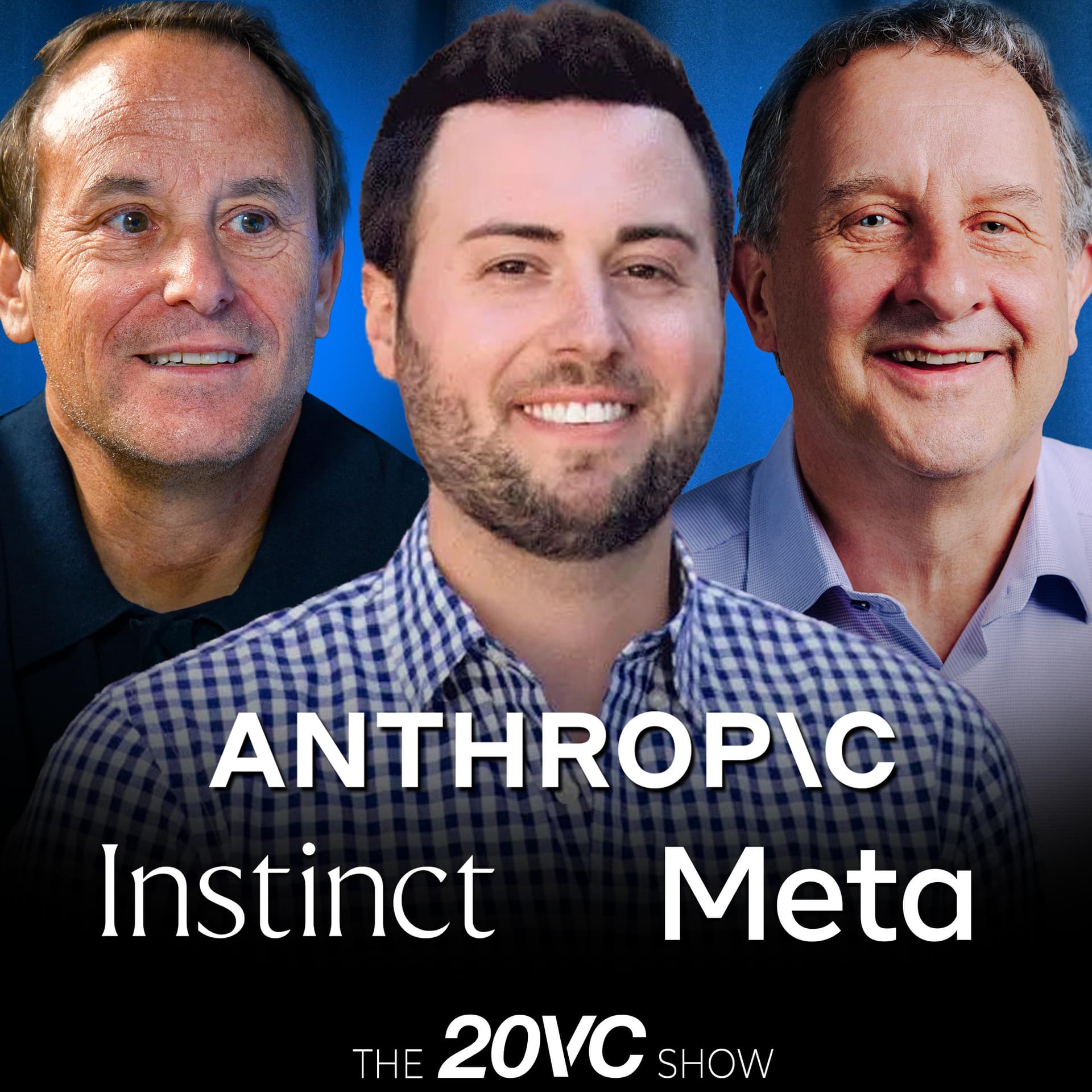
Podcast Summary: The Twenty Minute VC (20VC) - Episode with Sam Altman, Arthur Mensch, and Others
Episode Details
- Title: 20VC: OpenAI's Sam Altman, Mistral's Arthur Mensch and more discuss: Will Foundation Models Be Commoditised | Which Startups Are Threatened vs Enabled by OpenAI | Is the Value in the Infrastructure or Application Layer?
- Host: Harry Stebbings
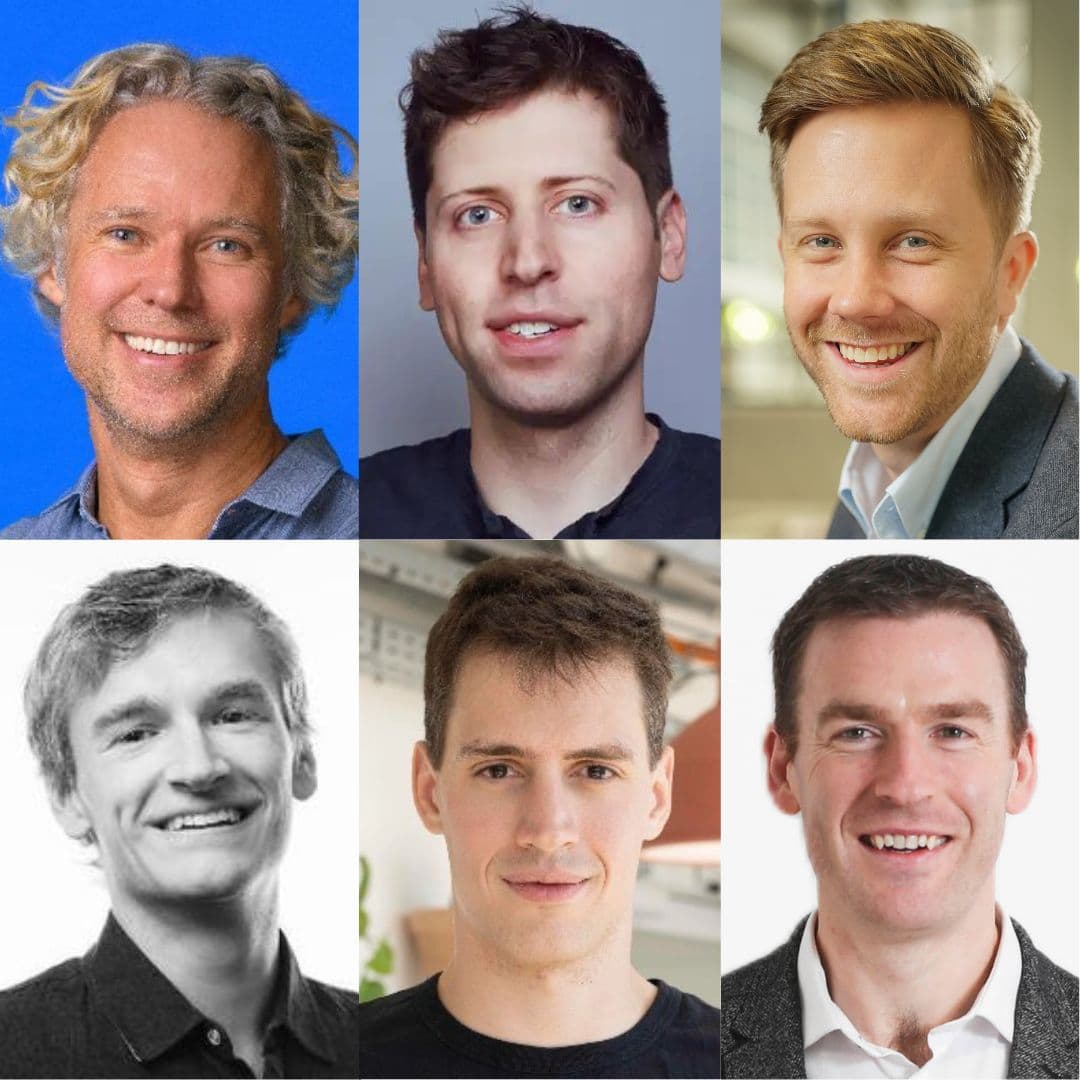
- Guests:
- Sam Altman (CEO, OpenAI)
- Arthur Mensch (Co-Founder, Mistral AI)
- Des Traynor (Co-Founder, Intercom)
- Tom Hulme (Managing Partner, GV)
- Tomasz Tunguz (Founder, Theory Ventures)
- Sarah Tavel (General Partner, Benchmark)
Key Topics Discussed
- Commoditization of Foundation Models:
- The rapid commoditization of AI models was a major focus.
- Sam Altman suggested that while models will become cheaper and more efficient, true differentiation will come from personalized applications that integrate deeply into users' lives.
- Application Layer vs. Infrastructure Layer:
- The conversation explored whether the value lies in the application layer or the foundational infrastructure of AI.
- Multiple guests, including Sarah Tavel, emphasized that the application layer will drive the majority of value as it captures user engagement and provides tailored solutions.
- Investment Perspectives:
- Investors expressed caution regarding investments in foundational models due to their rapidly diminishing returns and concerns over becoming obsolete.
- Tom Hulme compared investing in foundation models to buying power stations that quickly depreciate, advocating for a focus on application-layer investments instead.
- Long-Term Future of Foundation Models:
- There's speculation that the market for foundational models will consolidate, with only a few key players dominating (e.g., OpenAI, Google, Microsoft).
- Arthur Mensch pointed out the dichotomy of decreasing model costs and increasing access to tools, complicating the application layer’s dynamics.
- Impact on Startups:
- Startups need to evaluate whether they will be 'steamrolled' by larger players like OpenAI.
- Des Traynor introduced the concept of "thick" versus "thin" wrappers, with thick wrappers representing comprehensive solutions that address user problems deeply, whereas thin wrappers offer basic integrations without substantial differentiation.
- Future Business Models:
- The discussion highlighted the potential shifts in SaaS business models due to AI, moving away from traditional per-seat pricing towards consumption-based models that deliver complete work products.
- Sarah Tavel argued that the future of SaaS could resemble service-oriented models rather than traditional software sales.
Key Takeaways
- Enduring Value: The consensus is that application layers will create more enduring value compared to foundational models due to user engagement and tailored solutions.
- Investment Strategy: Investors are cautious about foundational models due to high capital requirements and swift commoditization, suggesting a shift towards application-layer opportunities.
- Strategic Insight for Startups: Startups should assess their business model in the context of AI advancements and consider whether they can offer unique value propositions that larger players might overlook.
- Market Dynamics: The future AI landscape may favor a few large providers, with the potential for new entrants to focus on niche applications that are not adequately addressed by these larger models.
Closing Remarks The episode provided valuable insights into the ongoing evolution of AI technology, especially regarding foundational models and their implications for both established companies and emerging startups. As the market continues to shift, understanding where value is created will be key for investors and entrepreneurs alike.
For more information and resources, visit [20VC](http://www.20vc.com).
Written by AI. May contain mistakes. Listen to the episode to check what was said.
Transcript
Automatic transcript. May contain errors.0:00When we just do our fundamental job, we're going to steamroll you. Ask the company whether a hundred X improvement in the model is something they're excited about. The technology is commoditising incredibly quickly. I likened it to investing a few hundred million into a power station, but you basically got to depreciate that asset in these foundation models over a few months. I just am a huge believer that the application layer is going to drive most of the value because what you have to imagine is who owns the user over time. If you own the end user, you're able to provide more and more value to them over time and capture that value.
0:38Our foundation models commoditizing is they're more value in the application layer or in the infrastructure layer, which application layer startups will get steamrolled by open AI. There are so many core questions in AI today that are simply unanswered. And so today I compiled eight of the best experts in the world to share their thoughts on the future of foundation models and the application layer, answering your core questions. But before we dive into the show today, when I invest in software today, I think software is valuable when it saves time and makes something easier. But when it enables the users to do something, they simply could not do without it.
1:14Then it's insanely powerful and valuable. That's the case with Tegas. Tegas, I literally could not live without. When I'm investing in a company, Tegas lets me see the most incredible reference calls with experts in a space you work at competitive companies or incumbents. These calls and data provide the most incredible insight that really informs our opinions and investment decisions. I can then share snippets from calls with team members. This is a tool that will change how you work and honestly you cannot imagine life without it, once you've experienced how powerful it is, you can tell how much I love TIGAS.
1:50So simply head over to TIGAS .com, that's T -E -G -U -S .com to check them out. You have now arrived at your destination. Sam, we have to start with you. How do you answer the question of are we seeing the commoditization of foundation models? There was a time when there were like more than 100 car companies in the US, I believe, or at least close to that. And if you go like look at some of the old media at the time, it was like, no, there's this better car. Now there's this better one. I know there's this better one. I think that same thing holds true for most new industries. I think it's fine.
2:23I mean, it's probably good, but I don't think that's where the enduring value will be. I think eventually it will shake out. There will be a small number of providers just doesn't something like that. Doing models at big scale, and it'll be extremely complex, extremely expensive. And I hope We all continue to push each other to make the models better cheaper faster and commoditize in that sense. And the long -term differentiation will not be, I don't think, the base model. Like that's just, you know, intelligence is just like some emergent property of matter or something. The long -term differentiation will be the model that's most personalized to you.
2:57That has your whole life context that plugs in everything else you want to do. That's like well integrated into your life. But for now, the curve is just so steep that the right thing for us to focus on is just make that base model better and better. Arthur at Mistral, I'm so intrigued to hear your thoughts. How do you think about the focus on just model improvement, where value or cruise, and ultimately, of the foundation models commoditizing in themselves? There's two opposing direction. The first is that the models are getting better and better. So it means that creating a verticalized application, as long as you have the data for it and a good understanding of the use case you're facing, is going to be easier and easier if you have access to the tools that facilitated.
3:36That's the first aspect, which would make me think that the application layer is going to grow thinner and thinner. But then there's also the fact that the molyze are getting cheaper and cheaper because we managed to compress them because we make a lot of improvement on their efficiency. And so that means that effectively vispeless to the competitive pressure there is on the model layer means that the price around the model, the dollar -per -intelligence unit, let's say, is definitely going to reduce. So there's these two aspects of growing ability, compressed price, which on one side says that the application layer is going to grow thin and on the other side says that the model part is going to grow thin.
4:13So for us, the project that we are taking is that the model part is still going to be a big enough and that we need to build this platform on top of that because that's where we are going to enable all of the vertical applications that will be interesting for humanity. Tom Hume at GV, I'd love to hear your thoughts. How do you think about that? The commoditization of the models and whether there's money to be made investing in the foundation model themselves or actually in the application layer beneath it? My first observation would be the technology is commoditizing incredibly quickly, which worries me a lot.
4:46So I think I likened when we talked the other day, it to investing a few hundred million into a power station. That's the training time and then you can turn it on and you've got inference coming out the side that's your power. Now the problem is this is an industry where it's going to take you a few months to build your power station and everyone else is building similar power stations next door with relatively lit -ledged edge. They're still they're all using the same GPUs, they're marginal improvements but you basically got to depreciate that asset in these foundation models over a few months.
5:17I just can't see it happening and then now we've got meta coming into the market. I mean Zuckerberg's done an amazing job. We have 350 ,000 H100s by the end of this year. That is 14 % of the world's H100s and he's going to open source the result. Lama 3 released last week is already incredible. He's pledged that he's going to invest another hundred billion dollars or so. He's already started to train Lama 4, that team and their world class. They're formidable competitors. So to invest now in an asset that you think you're going to have to depreciate over the space of weeks or months is very difficult to do.
5:53We have made investments in Gen AI, but more in infrastructure, more in the application layer, more in the sort of picks and shovels to support, but we've not thus far invested in foundation models. Is there money to be made in Bestie and Foundation models? When you look at the quantum of capital that is required to go in, there's obviously rumors of Mr. Olesnew funding around, you see the amount of cash that's gone into Open AI, and everyone else. The dilution in Harron within that is just going to be monstrous. Is there money to be made investing in foundation models do you think? They definitely has been because if you were to invest in open AI in the $10 billion round, there's liquidity in the market, you could sell that for a 5x now and you could have done that over a year.
6:33So, if you've got a momentum strategy and you believe that your investing in is going to be at the front of the pack and continue to be, I suspect there's money to be made. But if you're investing in fundamentals, it's very difficult to invest in something that actually is going to commoditise that quickly. In fact, I'd say the best teacher I ever had was Clay Christensen, just unbelievably smart human being. He wrote the Innovator solution, we all know that. And he will talk about sustainable, he did talk about sustaining and disruptive innovations. I think one of the frustrations with Gen AI, as the technology is commoditising so quickly, is it's a sustaining innovation.
7:08It's actually going to get sprinkled across all businesses to lower costs in call centers or to improve the product in personalization. It's not going to have a creative destruction effect like the internet did on many industries. And so as an investor that's frustrating because you want to invest in stuff that persists and completely rebuilds industries from scratch. But I can't really see it. I mean, we found some targets and we made quite a few investments. but it's not for me the sort of radical sort of shift or opportunity from an investment perspective that we perhaps saw with the internet.
7:43What do you think the end -state then is for models? You know, I was with a friend who remained nameless because he hates being publicly named anywhere and he mentioned that bluntly cloud providers will be the cash cow business and they will buy your Googles, your Amazon's and your Microsoft's will basically buy the foundation model companies, with AquaHydon, Alar Inflation, and then have cash cow businesses in the cloud providers and then give away the foundation models for free. Yeah, and that's to date, be my thesis as well. It will look more like a utility and the cloud providers rationally are saying we want to provide that utility on our compute and they're going to charge on that basis.
8:20And they already are, whether you're on AWS, GCP, anywhere else. Des trainer at InScom, I'd love to hear your thoughts. Use OpenAI to power thin in many your respects. Where do you think that the value is going today? How do you think about the commoditization of these models? Love to hear your thoughts. Right now, a lot of value is going straight into you for it. Like, as in we're handing it all at the back door to open AI. And we actually torture test all of the other items. It's not yet the case that they're all equal. I'd be wary of Amazon. So like, I could see Amazon just like flat up like buying and thrupper can be like, let's just make this part of the EC2 cluster.
8:54I think Apple will make massive, massive strides forward with AI. I feel like Bard unfortunately felt like we had to release this because Chachi Beauty was getting a lot of traction They need to have that Jay -Z like allow me to reintroduce myself moment But I think it's a really important nature use to be able to transition from one LLM to another Because if somebody does unlock new power, you'll want to be able to use it very quickly Winning involves more than just simply being agnostic about your LLM Speaking of being agnostic about your LLM, would you invest in OpenAI at $90 billion than this?
9:24I don't think I would under reason whilst I think they'll pass 90 the areas I'd be wary of is Amazon Amazon play this game well So like I could see Amazon just like flat up like buying an anthropic and being like let's just make this part of the EC2 cluster and that's just a very easy route to market and I think if opening I run out of new vectors of differentiation and the commoditization starts to kick in even for basic stuff I think it'll just become easier. Why would you use Amazon? It's already declared. It's already virtually private But you can like, he probably a lot of other adoption concerns.
9:55So I think Darryl won risk. Tom Hume, my friend, what about you? Would you invest in opening out $90 billion valuation? I would struggle to make that investment today. And it's not because I don't respect the team. My biggest concern at the moment, but if I observe the emergence of what Meta's doing, if I look at the arms race of what the cloud providers are investing in and the sort of Gemini, et cetera, any advantage is pretty ephemeral and the consumer facing product that drives, I don't know, is it 50 % of the revenue, something like that is not sticky. So to invest in a foundation model, what would I want to be true?
10:34I would want to believe that they had some unique approach that made them more defensible, so an obvious one is memory. Actually, none of these have cracked memory yet, but if you have a personal assistant, a chat GB2 equivalent and it remembers so that it can actually be applied probabilities as to what you want going forward, then it's interesting. If it's unique in its ability to take agency then it might be interesting. There's other orthogonal approaches that might be interesting. But if we're just talking about a foundation model where you've got to throw huge amounts of data, hundreds of millions of dollars of compute at H100s like like everyone else.
11:15It's very difficult to see a return on these investments. Tom Tungers, I know you've done some work around the analysis of where Vanny was created in terms of application versus infrastructure layer for the cloud generation. I'd love to hear how you think about this moving forwards in the next few years with foundational models versus application layer. And what the analysis from the last generation could tell us about the next generation. I ran this analysis, so in Web2, if you take the top three clouds and you look at their market cap, so AWS, GCP, and Azure, it's about a $2 .1 trillion market cap just for the cloud businesses.
11:48And then if you take the top 100 publicly traded cloud companies both on B2C and B2B side, so Netflix and ServiceNow, they have equivalent market cap, about $2 .1 trillion for both. So once at the infrastructure layer, once at the application layer, market cap is basically equivalent. The difference is, the infrastructure layer, there are three businesses, and at the application layer, there are 100. If the analogy holds as an investor, the odds of success are going to be significantly higher at the application there because the diversity of needs there is greater. EMAID, formally of stability, what do you think?
12:16How do we see the end state for foundational model companies? What does that look like? Are there going to be many, many? Is it going to be a concentrated set of fewer players? How do you think about that? I think that there's only going to be five or six foundation model companies in the world in three years, five years. I think it's going to be us and video, Google, Microsoft, OpenAI, and Dometern Apple, probably are the ones that train these models. Is Anthropic good? That's not that big of a great, but from a business model perspective, you have Claude on Google API and you have POM2. How are they going to keep up with POM2?
12:47They can raise billions, but Google spent $20 billion a year on AI. DeepMind salary budget is 1 .2 billion a year. They technically make a billion a year from their internal counter payments with Google as well. But again, Google, how much money do they have? $150 billion to win this? Okay, so we spent a good amount of time now trying to understand whether the model landscape will commoditize and where true value is built in that segment of the market. When we think about the consumer or the application layer, so to speak, the application layer that sits on top of these models, I'd love to start with Samaltman at OpenAI, who better?
13:19In understanding, how do we think about where value lies in terms of inferors versus application layer and the different strategies to build on top of AI right now? There are two strategies to build on AI right now. There's one strategy which is Assume the model is not going to get better, and then you kind of like build all these little things on top of it. There's another strategy which is build assuming that OpenAI is going to stay on in same rate of trajectory, and the models are going to keep getting better at the same pace. It would seem to me that 95 % of the world should be betting on the latter category, but a lot of the startups have been built in the former category.
13:53When we just do our fundamental job, we're going to steamroll you. Brad, you're the CEO of OpenAI. What is a simple question that a company or founder can ask to determine whether they will be steamrolled or not by open AI? Ask the company whether a hundred X improvement in the model is something they're excited about. It's actually we can tell pretty well because we know the companies that come to us saying we want the next model when is it coming out? When is it coming out? I want to be the first to try it. It's going to be the best thing for my company. And then there's a lot of companies that we don't hear from in that regard.
14:23And I think that's like a pretty good delineation. is if there's a clear path to how better intelligence, better underlying intelligence, accelerates that product and that company. Most companies can tell that story really clearly. Des, you're a founder, founder, obviously, of Intercom and you build with OpenAI, say, integration into your product. How do you think about a thin wrapper versus a thick wrapper and whether OpenAI will or will not steamroll a potential startup? The thick wrapper is like when you've actually solved the user's problem and to end fully, in a way, to OpenAI, never will.
14:54Open AI will hit some sort of minimum viable, like, what's good enough for everyone. You're never gonna make money filling in the gaps in the platform, the thing they haven't gotten around yet. Like, I described that as like, it's like you're on a train track, picking up, you know, euros or dollar coins or whatever. It's just train coming. It's gonna hit you at some stage. It's just not a hair rich you get. That thing's hitting you, right? I think if you find an area where they're not gonna go that deep, Open AI is never gonna put like five of their engineers going hard on wealth management, unlike, you know, banking integrations.
15:21So like, that's the thing, like, You're pickin' area and you're saying, let's do all of it. Let's just do a little tech demo science fair. Let's nail the use case. Sarah Tavill, you're of seen investor at Benchmont's day. I'd love to hear your thoughts about where you see enduring value being created, whether it's in the foundational model layer, or whether it's actually in the application layer moving forwards. I just am a huge believer that the application layer is gonna drive most of the value, because what you have to imagine is who owns the user over time. If you own the end user, you're able to provide more and more value to them over time and capture that value.
15:58And we can talk about what happens to the underlying models. There's certainly just incredible intense competition. Is it going to be an oligopoly? Is it going to be... We can talk about those subjects, but I focus on the application layer because I do think that's where just a tremendous amount of value gets ends up being captured and created. Tom Blomfield at YCombinator, you have this incredible perspective. You see so many thousands of companies that apply for YC every year. How do you think about the rappers versus non -rappers in AI? And then also bluntly, where the excitement is, whether it's in application layer versus infrastructure layer.
16:36There are clearly some rappers. If you can build it in a weekend at a hackathon and make a bunch of money, probably not defensible. The most businesses building on top of these models, you can describe the last generation of startups as like mySQL rappers or AWS rappers or something like you know it's the same kind of logic applies. I think where the sustaining value lies is identifying an industry deeply understanding the regulation in that industry, the tooling, the language, the all of the training, how people sort of work and behave and act and tailor your software to fit into that industry in a way that's extremely deeply embedded.
17:14Most people are building application layer stuff in an AI, say it's 80 to 90 % traditional software with 10 % AI. It's working in construction, figuring out how Pro Core works, or how the Salesforce CRM works, or some Oracle database. And I don't think open AI is gonna come and steamroll the construction company, AI companies, because they're not gonna deeply integrate into the processing of the software that exists in each of those industries. So I really believe everyone who works with a computer will have an AI co -pilot assistant thing in the next two or three years, whether you're like an oncologist or a law professor.
17:47Tom, it's so interesting you say there about the co -pilot strategy. It's the strategy that I see is the entry wedge for all startups. They, when I'm investing, Miles Grimshaw at Thrive, I know you have some sorts on the co -pilot strategy. So hit me, how do you think about the co -pilot strategy today for startups and how you feel about it? I think co -pilot is an incumbents strategy. Incumbents own distribution, they own data, they own the UX, and they own a business model that all aligns to a co -pilot. Copilot as GitHub Copilot, like in line, suggestions, think of it like how most go to any Microsoft product right now.
18:21Every Microsoft product now is a copilot experience, a sidebar, an order fail, things like that, right? Whether UX, the core product is a layer on top of it, right? It's immediately added in, which is also totally incumbent strategy. And it's still about sort of supercharging that work, but still where every user has a seed and every user doing most of the work. And it works probably, you know, if you think about the evolution here, the models, most of what's rolled out, might not be good enough for some of this yet, right? But that's what will come around the corner. You know, if you think back to Salesforce, disrupting, say, Seable, Salesforce launched like five years after Netscape launched.
18:55Like it might take a moment for that to happen. But the co -pilot, this idea of, I'm still the pilot, I'm still the user controlling everything and it's sort of like giving me assistive suggestions like GitHub, co -pilot, fits into the UX of incumbents. fits into the business model, if incumbents, and they already control that distribution. The opportunity offered up to a start -up, being a copilot for something else, like probably won't be that amazing. And there might be pockets of it where it can really work, but the opportunity to disrupt is to be orthogonal to the incumbents. It's so interesting to hear you say about kind of being orthogonal to the incumbents.
19:28My next question from that is, well, how does that then change the business model and the pricing model that SAS providers use when thinking about selling to their customers and Sarah Tavila. I'd love to hear your thoughts on this because I know you have a different take on this that I love. So how do you think about that? What AI enables is actually a very different unit of work that you sell, which is doing the work. And so you're almost a software company that looks like a services business that is able to sell like the full work product that the outcome as opposed to selling software that an employee has to learn to use and then gets a productivity boost from.
20:08And this is very disruptive to incumbents because incumbents are used to thinking about selling per seat and pricing per seat based on the cost of the head count. But if instead you're selling something that doesn't require that is like a very disruptive opportunity for startups. Team, I want your feedback on that style of show. That compilation episodes, I really want to hear what you think. So let me know on Twitter at how you're stepping. So you can check it out on YouTube by searching for 20VC. That's 20VC. But before we leave you today, when I invest in software today, I think software is valuable when it saves time and makes something easier.
20:47But when it enables the user to do something, they simply could not do without it. then it's insanely powerful and valuable. That's the case with Tegus. Tegus, I literally could not live without. When I'm investing in a company, Tegus lets me see the most incredible reference calls with experts in a space who work at competitive companies or incumbents. These calls and data provide the most incredible insight that really informs our opinions and investment decisions. I can then share snippets from calls with team members. This is a tool that will change how you work and honestly you cannot imagine life without it once you've experienced how powerful it is.
21:25You can tell how much I love Tegas. So simply head over to tegas .com that's t -e -g -u -s .com to check them out. As always I cannot tell you enough how much it means to me that you listen to the show. We have an incredible episode where Jason Lemkin coming out on Monday the review where we analyze his top three best deals and the lessons learned and his top three worst and the lessons learned. and it is incredible and not to be missed.
From the publisher
Sam Altman is the CEO @ OpenAI, the company on a mission is to ensure that artificial general intelligence benefits all of humanity. OpenAI is one of the fastest-scaling companies in history with a valuation of $90BN and $2BN+ in revenue.
Brad Lightcap is the COO @ OpenAI and the man responsible for the incredible scaling of sales, GTM, partnerships and business to today being over $2BN in revenue.
Arthur Mensch is the Co-Founder and CEO of Mistral AI. Since its inception in May 2023, Mistral has raised over $520M in funding from investors like Andreeseen Horowitz, General Catalyst, Lightspeed Venture Partners, and Microsoft with a current valuation of $2 billion.
Des Traynor is a Co-Founder of Intercom, and has built and led many teams within the company, including Product, Marketing, and Customer Support. Today Des leads all of Intercom’s R&D efforts, and parts of Intercom’s marketing.
Tom Hulme is a Managing Partner of GV (Google Ventures), and leads the European team. Today, GV has over $10BN in AUM and Tom has led investments in Lemonade.com (IPO), Snyk, Secret Escapes, Blockchain.com, GoCardless, and Currency Cloud (exited to Visa).
Tomasz Tunguz is the Founder and General Partner @ Theory Ventures, just announced last week, Theory is a $230M fund that invests $1-25m in early-stage companies that leverage technology discontinuities into go-to-market advantages.
Sarah Tavel is a General Partner @ Benchmark, one of the most successful and renowned venture firms in the world. At Benchmark, Sarah has led rounds in Chainalysis, Hipcamp, Medely, Rekki, Glide, Cambly and more.
In Today's Episode We Discuss:
- Will foundation models be commoditised?
- What is the end state for the foundation model landscape in 10 years?
- How will large cloud provider incumbents approach M&A with smaller foundation model providers?
- When will we see marginal revenue exceed marginal cost in the foundation model business model?
- Where is the value: the application layer or the infrastructure layer?
- How can startups know whether they will be threatened by OpenAI?
- What are good tests/questions to know if you are in the path of one of the large foundation models?
- How does the business model of SaaS fundamentally change in a world of AI?
- Will we see the end of per-seat pricing in a new world of AI?
- What is the right way to approach pricing in a world of AI? Consumption? Tokens?