In short
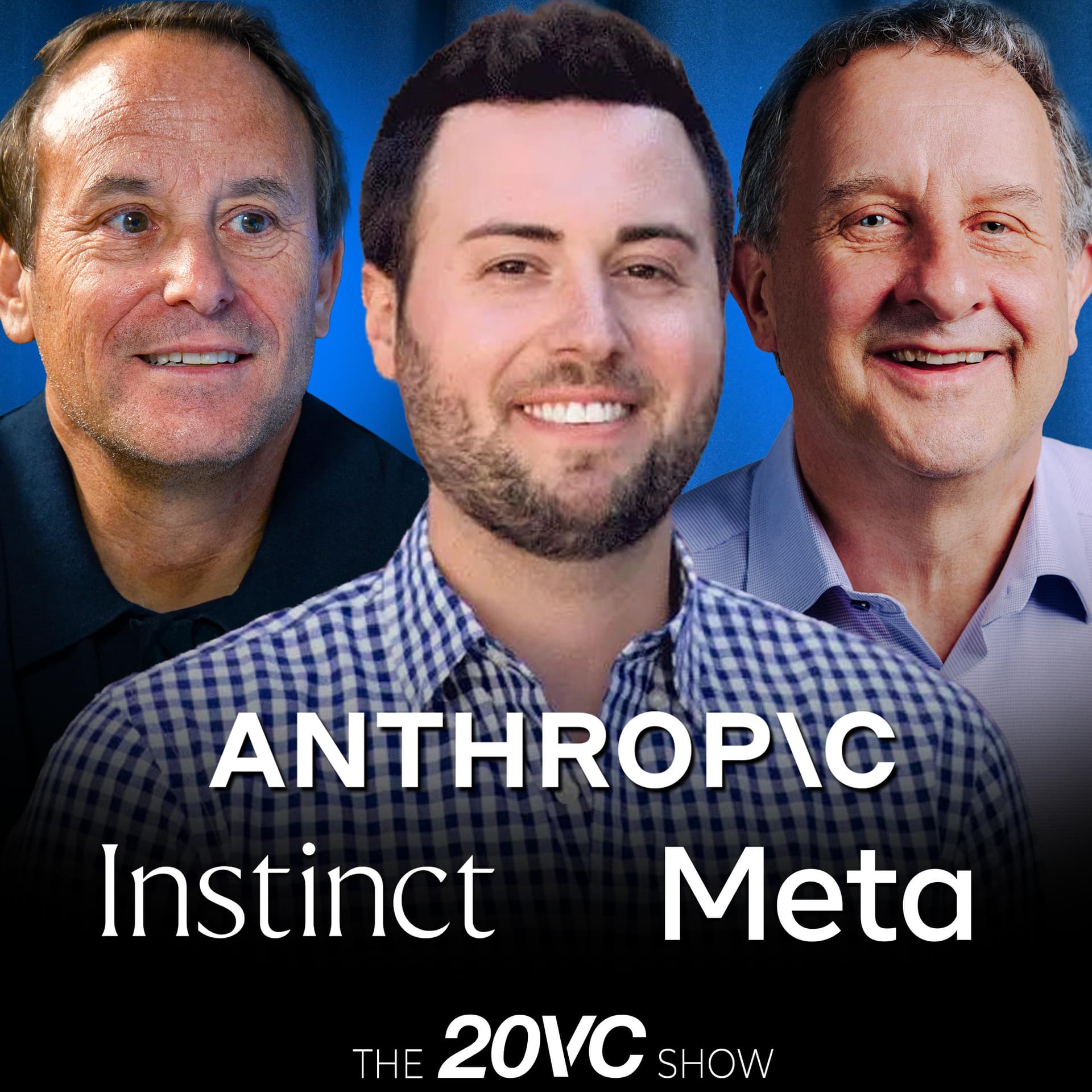
Podcast Summary: The Twenty Minute VC (20VC) - Episode with Elias Torres
Episode Overview
- Podcast Title: The Twenty Minute VC (20VC)
- Episode Title: Selling Drift for $1.2BN is the Biggest Failure
- Guest: Elias Torres - Co-Founder and CEO of Agency, former Co-Founder of Drift
- Host: Harry Stebbings
Episode Description In this episode, Elias Torres shares his insights on the challenges and lessons learned from selling Drift for $1.2 billion. He discusses the evolution of startups in the age of AI, the implications of size for tech companies, hiring practices, and the broader cultural shifts affecting entrepreneurship.
---
Key Topics Discussed
- Background and Founding Journey
- Rich Founders vs. Poor Founders:
- Discussed how backgrounds shape founders' resilience and drive.
- Torres reflects on the paradox of caring deeply about one's work while appearing indifferent.
- Early Life in Nicaragua:
- Shared personal experiences growing up under a communist regime, which instilled a strong work ethic and desire for opportunity.
- Immigrating to the U.S. and finding excitement in the possibilities available.
- Challenges with Incumbents
- Speed and Quality:
- Analyzed why large companies (incumbents) are slower and less effective than smaller startups.
- Cited the inefficiencies inherent in large organizational structures, particularly decision-making processes.
- Selling Drift: Insights on Success and Failure
- Massive Failure of Selling Drift:
- Torres describes the sale as a failure because it did not meet his vision of creating a sustainable, impactful company.
- Reflects on feelings of irrelevance post-sale and the emotional toll of transitioning to a new leadership team.
- Company Culture:
- Critiqued the “cushy culture” at Drift and how it impacted performance.
- Discussed hiring practices that lead to high accountability and performance within teams.
- Hiring "Rockstars" and Common Mistakes
- Criteria for Hiring:
- Emphasized the importance of "high agency," IQ, grit, and execution speed in new hires.
- Shared insights on the intensity of his interview process, which can deter less committed candidates.
- Mistakes in Hiring:
- Admitted to hiring decisions made out of desperation and the importance of trusting one’s instincts in recruitment.
- Working Parents and Team Dynamics
- Challenged conventional views about working parents, emphasizing the need for flexibility and support in the workplace.
- Offered a candid perspective on the challenges of balancing work and family life.
- Thoughts on the Future of AI and Startups
- Small Teams and AI:
- Projected that the most valuable companies in an AI-driven world will consist of fewer than 100 employees.
- Discussed the shift from human labor to AI and computing resources, and its implications for future startups and funding models.
- Funding and Revenue Models:
- Talked about the potential for a shift in venture capital towards smaller, leaner teams as technology enables new efficiencies.
- Cultural and Societal Reflections
- Expressed concern over societal complacency and the loss of grit among the current generation.
- Advocated for a return to craftsmanship and meaningful work in an era dominated by instant gratification.
- Personal Insights and Quickfire Questions
- Discussed personal beliefs, family, and balancing success with personal satisfaction.
- Shared thoughts on parenting and the importance of instilling resilience in children.
---
Conclusion Elias Torres provides a compelling narrative about his journey as a founder, the complexities of selling a successful company, and his outlook on the future of entrepreneurship in an AI-driven world. His reflections highlight the challenges of maintaining relevance, the significance of company culture, and the shifting landscape of startup dynamics.
Key Takeaways
- The Emotional Toll of Success: Success can lead to unexpected feelings of loss and irrelevance.
- Importance of Hiring Practices: Building the right team is critical for sustaining company culture and achieving long-term goals.
- Future of Work: The move towards smaller, efficient teams driven by AI and technology will reshape the entrepreneurial landscape.
- Cultural Reflection: A return to grit and craftsmanship is needed in today's fast-paced, instant-gratification society.
Written by AI. May contain mistakes. Listen to the episode to check what was said.
Transcript
Automatic transcript. May contain errors.0:00is selling a company. What we are told it is. You're the biggest failure in my life. I can't want it to build something great. I wanted to build something sustainable to walk around in your own company and you don't matter anymore. You bring new CEO, you bring new management. It hurts to ego, right? And you created this and you're no longer relevant. I would have a public company right now if it wasn't for all those carrots that I gave and candy bars and trophies. This is 20VC with me, Harry Stabbing, and I'm so excited for the show's day. So I always remember the first time I went to San Francisco, I was 18 years old, I was at Saster with Jason Lampkin, and the hottest company of the time was Drift.
0:37And today I have one of their founders on the show, Elias Torres. Elias is now the founder of agency, but before agency he co -founded Drift, which he sold for $1 .2 billion to Vista, and before Drift he founded Performable, which he sold to HubSpot. But before we dive into the show today, Secure Frame Empower's businesses to build trust with customers by simplifying information security and compliance through AI and automation. Thousands of fast -grown businesses including Nasdaq, Angel List, Doodle and Coda trust secure frame to expedite their compliance journey for global security and privacy standards, such as Sok2 and ISO 27001.
1:14CMMC, NIST, Standards and more. Bat by top tier investors and corporations like Google and Cliner Perkins, the company is among Forbes' list of the top 100 startup employers for 2024. G2's best software awards for higher satisfaction products and a recipient of the 2024 Cyber Security Excellence Awards. Something I definitely never got in school myself. Learn more today at Secureframe .com And speaking of trust and intelligence, let me tell you about Harmonic. Did you know that half of the 27 companies started last year by OpenAI alumni are still in stealth? I discovered this on Harmonic. the complete start -up database used by Excel, Insight Menlo, and hundreds of other leading VCs, as well as go -to -market teams from the likes of Notion, Brax, and Google to find the best start -ups and founders, even in stealth.
2:02Few things annoy me more than missing around, where we know the founder and should have led the round. But now, this is a problem of the past. Harmonic Maps everyone your team has ever met, emailed or connected with, to the source of truth for start -ups. So when that company that was just a little too early suddenly gains traction you won't be too late. Or when you find the perfect company for your thesis or product you'll know that Sarah just happens to know their CTO. How does Sarah know everyone? Who knows, she's a genius. Learn how VCs and GTM teams find the best startups six months ahead of the competition on harmonic .ai.
2:38And while staying ahead of the curve is crucial, make sure your finances work just as hard with Brexit. The ultimate financial stat for startups. So when Bracks was founded, it wasn't just about creating another financial product, it was about solving the really gritty challenges that founders face daily. Let's be honest, building something from the ground up is hard enough. Without dealing with clunky outdated banks, the pile on fees and leave your cash idle. Bracks is different, it's the financial stack that scales with you, no matter where you are in your journey. From corporate cards to maximizing your runway, to earning yield on your cash.
3:11Bracks was designed with founders in mind to make every dollar go further so you can focus on building. And here's what really stands out to me. Bracks combines the best of checking, treasury and FDIC insurance in one powerhouse account. You can send and receive money globally at lightning speed, earn yield from day one and still access your funds whenever you need. Plus, with 20X the standard protection through program banks, your cash is not just working harder, it's working safer too. It's no surprise that one in three venture -bought startups in the US, with companies like Anthropic, Coinbase and Robinhood, I mean my god these companies are incredible, trust BRACS to help them grow.
3:49If you want to join the smarter startups on the planet, head over to BRACS .com forward slash startups and see what they can do for you. You have now arrived at your destination. Elias dude, I cannot wait for this, isn't a Julien Beck, Pat Grady, two of my closest buddies, said this is the show that we have to do. I'm so thrilled that we can make it happen in person. So thank you for joining me. No, absolutely. No pressure No pressure at all, but I wanted to start actually on something that you tweeted before But it just really kind of hit home for me. You said I don't care a lot People hear this and many versions of that phrase often from me the reality is that I pretend I'm an eyeless to cope with the fact that I actually care Care way too much.
4:30I wanted to start with this because at a Jordan Peterson event someone asked the depths of my conscious in this causes me to suffer. Is it a blessing or a curse to feel so very deeply? And it just feels like a deep start. But how do you think about that? It's funny because yeah, I tweet not that much and when I do Brian Halligan tells me, why are you tweeting? Get back to work, right? And so I kind of don't want to tweet because it's hard for me. But I really think it's a paradox. I think life is a paradox, right? We always want just one answer. And in my case, I just find myself saying that a lot like, I don't care.
5:08I don't care. And people are like always doubting like, do I care or do I not really care? What am I doing? And I'm just something that I found maybe something later in my life now and the success that I've gotten, my family and all the things that I've been able to accomplish and so far, you know, close to 50 now, that allow me to realize what I care and what I don't care about. Right? And so it's been easy. Another thing is that the life I feel when entrepreneurs really hard, most people don't wanna be rejected, right? Most people don't wanna be told no. And so I've been said not so many times.
5:39I have how many people quit on me. I have many people churn as a customer. So you get beaten up so much that you just realize it's just going to be okay, right? And so when I say I don't care, it's not that I don't care. I do care, but I know it's okay. It's going to be fine, right? And so I just don't care a lot anymore, But I do care. You see how complicated it is? I totally do. Do you care less with more money? You care less about some things. Yeah, absolutely. We worry so much about the plumbing broke. The car has, do you need new tires? This trip got canceled. You have to pay this fee. So that is a huge release of stress that I just don't care about that stuff anymore.
6:26So that just takes like, I don't know, one third of the problems and I'm just like, okay, I don't care. Just pay it move on I interview many incredible founders like you and often I say what would you most like to tell your 21 year old self? And so many say I wish I could tell myself that it would all be okay Exactly and I think that's terrible advice because the fear that it won't be okay drives you to succeed The advice that I would give is different, right? It is true that things are gonna be okay Wherever you end up, it's going to be okay. It's about complacency is the secret of happiness, right?
6:59I would say that what I would tell my whole self is that things are not as hard as they seem. That's what I would tell my young self. What do you mean by that? We put ourselves so many roadblocks. We like I can't start a company, it's too hard, right? And we're like, no, it's actually not that hard. It's starting it. Finishing an accident is different, but I think we think everything's too hard. It's like if I tell a random person on the street, you can build an LLM yourself. Everybody's gonna say it's too hard. Is it too hard? It's really not that hard. The code fits on a page on the screen. It's really that small.
7:32That's the thing. It's like everybody thinks it's so hard, it's so hard, it's so hard. It's not that hard. I guess maybe it's because I grew up in a communist country. You know with nothing, and no future, no hope, that everything that I've done, I'm like, shit, that wasn't that hard. For example, people on my companies in the past, Like we get them gifts we get them food we get them like free lunch and they go in complain or like this Coffee's not that great and I'm like it's free if you don't like it go by your own They complain the things that people complain in the United States are like not that hard compared when you look I just came back from Cairo last night.
8:07It's tough. You see the slums you see all this areas is it's hard to live in Countries like that. I'm from Nicaragua life is not that hard for us in the United States Do you know what I mean? Have we lost the grit in the US, in the UK, where we have the wee work, so we have the nice cultures? I think that's why immigrants do well and start up, sorry. Brit. Totally agree with you. I do wanna go to that. You mentioned that obviously growing up in Nicaragua. I spoke to Pat, my big bro before this, when he gives me advice, I've learned just to take it. He told me I had spent a good amount of time on growing up actually and moved to the US.
8:41When and why did you come to the US? I came to the US because the home that we lived in, was not even ours. So there was a revolution, you know, people, we lived in somebody else's home because they left because of the revolution in 79. How will we? Three in the revolution, during the revolution, right? In 79. And so we lived in his home. And then after the communism, you know, the communist government toppled, like people came back and they wanted their property back. I had nowhere to live. I was literally homeless. I was just graduating high school. And luckily, because So my grandmother, she crossed the river and immigrant into the United States.
9:17After being there for so many years, she was able to get as a green card. Apply. It was the perfect timing. We lost our home. The green card came in. We had to come to United States. We got no choice. What was it like coming in for you having grown up in Nicaragua? I was excited. You know, Nicaragua was like, I could not have, I could never have a car. I could never have a job. I didn't, you know, there was no, no hot dogs, no burgers, you know, you come to United States and you're like, I was so excited because it was the land of the opportunity, right? I was chasing the American dream. So I could not be happier to give everything I had to that, right?
9:50Do you think it's still the land of opportunity? Absolutely. It's still is. 100%. It is the place where there is just more and more chance for you to accomplish all of your dreams. And for $5 million, even I can buy a green card. I would. Honestly, I'm contemplating. Yeah, it's like, why not? How did you find tech for the first time? I lived in the lay with my dad for two years. I never, I never spent time with him, except for this time, right? It was an emergency. In Nicaragua, there was a force draft. You had to go to fight the war, civil war. And so my mom called him up and she's like, you have a dad.
10:26I'm gonna send you to LA so you don't, you don't get taken to fight. And so I was like, I don't wanna go to the mountains to fight. And I get to meet my dad. Let's go. And I get to go to the United States. And so I met him. So I spent there about two years and he bought like a stolen computer like people came and sold him You know and so I he put it in the garage and he said go play with it And so that's it's like an IBM computer like you know in the 80s And I would be typing my homework in this printer and word perfect and using slow to one two three That was the beginning that I didn't that planted the seed that I was just attracted to this device and what it was able to do I just enjoyed it Do you think entrepreneurs who are brought up in wealthy families are advantaged because they have connections because there is some forms of nepotism sometimes available?
11:14What do you think actually having nothing shows you how bad it can be and how much you want it? Great is everywhere, right? It's not distributed only to the people who have nothing. We just get beaten up so much that we develop it in larger quantities, but my kids are going to grow up different, right? They're going to have ability to work with my companies. They're gonna have my network to have my access. They have my money. I wrote a post on LinkedIn when I said quit now your company big company It's time. I don't don't worry about the bonus. Don't worry about that title. Don't worry about that salary And then my my daughter is like that why are you posting such things?
11:49Not everybody has the luxury that you have today. I didn't have the luxury that I have today when I first started Right, I have the right to post that I'm not making stuff up and she goes yeah, the problem is me I can't say those things because I had those all those things from the beginning. I speak to many very successful people Would jump around but I'm loving this and they all say that one of the biggest challenges is how do you bring your children up? When you have a lot of money to be as hungry and as gritty as we had to be yeah I just try to manufacture adversity that's all I can for them the good thing is that I've had I had success when they were older Because I had my kids so young so they're only starting to get spoiled now like you know We're in London here, the whole family.
12:28And I said, you guys want to go to Cairo for the weekend. And they're like, you want to see the pyramids that would go hard. They said, you mentioned that typing away on the little IBM computer in the in the garrosh. IBM was your first job, I believe. Yeah, absolutely. Talk to me about that and how that impacted you. You know, it's like IBM was, I worked in a very special group, right? This is, this is the group that put IBM .com on the internet, right? But what I learned was that a 400 ,000 person company just can't move as fast. Luke Gurzner was the CEO at the time and wrote a book called Why Elephants Can Dance, right?
13:03And I don't think I disagree with him. Elephants can't dance. I don't buy it, right? They claim their dancing but they don't. They can sing maybe. Have we not seen bluntly over the last year or two years that elephants can dance? Adobe moved incredibly fast on product. Google moving incredibly fast in terms of integration of our alarms and building. We're seeing the biggest incumbents move at speeds that we've never seen them before. How do you think about that? I completely disagree. I think these elephants are just talking. They're singing. They're talking a big game It's mostly talk Google fucked it up.
13:33You know what I mean? It's like can I curse here? Yeah, it's great. No, there you go. Well, it's I think that Pollocks is the first one you get wineco that you already British. Okay, great great We get there and so I think that everybody's talking about how Google is struggling Google just dropped the ball right they invented this Transformers paper and everything they put out doesn't work like notebook LM the great one like it's already dead Right the project so it's like they're trying so hard, but they can't do it Microsoft called pilot I felt like Microsoft. I was really impressed. I felt like Microsoft was moving in the investing in opening I was changed.
14:09I mean Satya is like as a businessman like respect Satya is the man no doubt and being that early dropping all that money on opening I was genius changed the world right I mean that that is respect and they had the advantage to adopt all of this early but being you know search you know they have repression they dropped the ball right copilot everybody was like they're just a head making all the money first the problem is people are they they just have so much hard time trusting someone right and so they're reaping the benefit of being early but nobody's using the product It just doesn't work. The king is charge -up -it -tea, right?
14:46That's the one that everybody is adopting and using it every day, but that's not the real solution, that's not the future. Co -pilot, cursor, second, distant second, right? The elephants are not dancing, they're trying to dance. Okay, I mean, I've got a - Would you agree or disagree? So I'm just going to take one by one, otherwise I'm not going to have any coherence. Check Google, I completely disagree with you. I think the fundamental thing is access to consumers and distribution, and when you look at all the end points they have two consumers is the product that today know 100 % but their ability to access billions of people with you said Are they moving?
15:21I did not argue with distribution. Yes, we're in agreement distribution They win and the other one is they have the points they have the data to those are great assets that they have But it's been like three years. It's been like five years since we had GBT totally agree with you that is that fast No, I know and so I completely agree with you that and I will accept that one. I'm forward looking by Oh, okay, good. Forward looking by Microsoft. I think actually Microsoft I completely agree with you in terms of ProPilot. I think they will get amazing adoption though. I think it's very much like teams where I say, but actually fuck it in large enterprises.
15:58People just take it because distribution. Distribution is the biggest advantage of the income in tech. But does it matter then moving fast? If actually you can be slow. As long as you can. You ask me if it was speed. I responded to the speed question. I don't think they're moving as fast as we think they are. It looks fast, but it's not yet, right? But does speed matter then, is it? 1000%. That's the only thing that we can... Why? If we can just wait for someone else to build it, technology can monetize us, and then we can embrace it into our distribution advantage. Speed is everything. Speed is what creates the American dream, right?
16:34It's the opportunity. Speed creates the opportunity for others to win. Why did you think Chatchy BT wasn't the answer? I'm gonna give you this insight, right? I think software that has been built in the past 20, 30 years had the assumption it was built kind of like like we build cars We build a car all around and we build the entire environment so a human goes and drives the car It requires an operator. The future is not going to require operators. It's going to be building like driverless cars. They're completely different, right? Except that we are stuck with the roads and the signals and all this stuff.
17:09And so imagine when we can completely change transportation, right? What we're thinking is that we need to be building software with the assumption that I don't want to know how to drive the car or do all this effort. I just want to tell it where I want to go and when I want to go. And maybe choose to route. If we just start on a little bit of cool, I love it. I'll see that right? I totally get that. So chat you, PT, is still assumed that I have to use it. Is it not, I'm asking here not saying, is it not step function wise? So moving towards that. Absolutely. It's like the levels of autonomous drive.
17:39So it has to start here and we start with operator now. It does more and more of that full workflow process. That's the future that I'm like visualizing, right? How do we get to like truly agentic world, right? Where the LLM is doing the work for me. I just want to start on a little bit of causation there. Why can elephants not dance? I saw a recent post from Owen at Intercom, who's a friend, and he was like, everything I know about management is fucking a problem. Yeah, I just said that of course. Of course, of course. Why can't elephants dance? The number of people, humans, were at the blockage, right, in terms of adopting AI and technology.
18:12You know, my last company drifted before we sold to Vista private equity, right? It was 800 people. I was consumed. I mean, I know a big company is that have, you know, a thousand product managers. Just try to picture that sales force, right? Most of those people, like nobody gets fired for saying no. So everybody will not buy the right product or will not build the right thing, right? It's easier to just coast. When you start spending all this time, all these people focus on promotions, I gotta go home, I'm working too hard, I have to send an email at the end of the week saying five things I did this week.
18:45It's like, you're toast. That's why they don't move fast. Because you have to get all these approvals. You know, when you're a CEO of a public company and you spend all this time reporting and an analyst and press and all this other stuff How much time are you spending with the customers? How much are you spending building the product? Who has the vision? Who makes the big decisions? What conventional management lesson that we're all told do you think is most bullshit? One on once it's like if you're not working with the person every day Why do you need a special time to go talk to this person?
19:13I hate it when when when somebody says yes, can we talk? Oh my God, you know that's not good. That was messages. And then when you go into those one on one's, nothing happens. Why didn't you fucking tell me like when we were in that one on one? And so like my, if my whole schedule is filled with one on ones, shoot me. Like right now at agency, I have no meetings with anybody. We're like 15 people. We have one meeting for the whole company, for the whole team. Show me what you did yesterday, show me what you're gonna do today. That's all we do in that meeting. The rest of the time, I'm selling or I'm helping customers.
19:46But at some point that doesn't scale. When you have 50 people, you can't do that. We just create five groups of 10. And that works. Absolutely. How do you think I built Hubsbat with the team? We created a small team so you go operating. You own that product. You're responsible for that product. Why can't elephants become cheeses? And what I mean by that is when we look at, say, Twitter, massive reorganization of the structure of teams, the size of the company, why can't elephants transition to this new world? That's what they're kind of like in a pretzel, right? Every generation, industrial, commercial, internet, size, web2 .0, whatever, right?
20:23It always assumed that larger was better. Everybody's dream was like, wanna be a large company. We're entering a new world where the new proposition smaller is better. I mean, we always known smaller is better, but because we couldn't achieve billions in revenue without more people, we had no choice. Every big company today started small. So we will have much smaller companies with billions in revenue. That's the potential. That's the potential. And that is agent -fueled, because we have to fill in. It has to. You can't keep, I had 800 people, I had 200 in CS. You know how hard that was? I have public companies, friends of mine, right?
21:00That they're like, yes, help me with agency because I'm spending 30 million on CS. And it's not even the money, I have the money. We can kind of make it profitable. I can't hire fast enough and train them to support our customers and then layers and managements and benefits and recruitment and onboarding. You understand how that just blows all that up? If you could train an AI to do that job and just have straight compute do it 24 -7, which one do you prefer? And so that's going to lead naturally to what? Mallor teams. It was not possible before. Now we have a hope. We are optimistic that that is possibly the future.
21:35Maybe it doesn't work out that way, right? And people say those AI providers will be actually larger than previous software providers because you are transitioning the budget from a kind of tool budget to a labor budget. Absolutely. Do you stand by that or do you think actually traditional companies will not accept that transition from tool to labor budget? It's going to take time because the people making the decisions, if the person at the top is making the decision, you know what they're going to decide. But when you're dealing with everybody in between, I get a lot of rejection right now. CEOs are making a big mistake right now.
22:07They're like, I talked to them and they're like, yes, this is what I want. I'm down. At least let's get agency in here right now. And then they pass me down to the next person and to the next person. I'm just telling like it is, right? I'm just, you know, it's my future customers. But I want CEOs to be held accountable, right? They say they want to make the company better and more efficient. Take care of the customer. When the decision trickles down, I'm an enterprise sales guy, right? I'm an engineer, but you know, turn sales. It's so like, I'm navigating the enterprise, right? But what should they be doing?
22:34They should be earning that. They should be owning that decision. And they should make sure that they drive it. But that's why I'm telling you, if I see that in a company that has 2000 people, what do you think is gonna happen in a company that has 4 ,000, 10 ,000, 20 ,000, 40 ,000? And you get resistance when you all push down to keep your company. Oh, the way down I get resistance, right? And then when I bring her back to the CEO, they're like, yeah, I told the team to focus this too many things. Yeah, I'll get back to you in the next quarter. That's why those companies are not going to last if they don't change fast enough.
23:02Just came back to say me, you said earlier about kind of smaller teams really dominating the future. I'm a venture investor. Smaller teams means less funding required in a lot of cases. In a lot of cases, yeah. Does this threaten the traditional venture model or change it in a way? I think we'll have smaller teams, but we still need more compute. I mean, we're just really trading people for a compute. So maybe not, right? If you're trading people for compute, does that change your equity debt desire? What do I mean by that? Yeah, of course. Of course. Because a lot less equity will be spent on the team because you're not going to need rounds and rounds and distribute an equity after every round to hundreds and hundreds of people.
Read the full transcript
23:40Which is interesting. So then it's like early financing remains, but growth financing becomes actually debt financing on more predictable revenue bases. Absolutely. In a world of AI, what changes about the way that you start companies? Oh, everything needs to be done faster, right? the skill sets that you need, right? The people that you're looking for is very different, right? How do you respond to the common suggestion that actually we'll just do different things. We'll find more ways to be productive, creative, and actually we won't reduce workforce, we'll just be more productive. That's bullshit.
24:11You have had some guests here that I love in respect, but they're like, oh yeah, we're gonna get larger, in five years, and I'm like, what? I just saw something somebody posted on Twitter, and I was like, oh, we're gonna hire a thousand new sales reps. I'm sorry. It's like if we're building the promise that we're gonna, you know, AI is gonna do the work of humans. I think that humans are gonna do things differently, but at different companies, maybe their own companies. It's like, why don't we go serve other people? Why we all have to be focused on all the BDB companies in the United States? There's the whole world out there.
24:41There's so many niches. There's so much things that need to be built to improve the lives of other human beings. Why we all focus on the same market, right? You do not worry about the future of human labor and productivity. No, let's go travel, let's go feed, let's go farm. Like I would go plant, you know what I mean? If I wasn't building agency, like I'll go have a farm and like plant some like, you know, beans and just watch some growth, right? There's other things we could do with ourselves. I wanna learn how to paint. I just was at the Grand Egyptian Museum. Like I wanna go study that stuff.
25:10I wanna learn it, I wanna have fun. I wanna think about different ferros and kings. There's so much we can be doing, right? I love the way. I'm not gonna be like, let me take another job at Salesforce. for us, that's great. No. You don't want a job at Salesforce? No. I was hoping to set you up after this. You got connections, you know, anybody? You know, me and Mark go way back. You know, I had to email him 53 times to get him on the show. I got him. I like it. I get it. I spoke to so many of our mutual friends. You mentioned the 15 people that you now have with the agency. I spoke to Halley and obviously I spoke to Domesh.
25:42I spoke to Pat. They always said that you're literally the best they know when it comes to recruiting. Which I thought was really interesting to have that. one commonality from all three is your single biggest strength. And so I have to start. You recruited Andrew Klavio, Whitney, who's now HubSpotCTO, Chris O'Donnell at day now. What is your hiring criteria? Everybody wants to know the secret, right? My hiring criteria is high agency. I have to have IQ, you have to have grit, you have to have execution speed, you have to be obsessed. The way that I recruit, I'm a weird engineer. Like, you know, people don't do all the psychology tests on like my teams that I build and they're all like, this is the most extroverted engineer and team I've ever seen in my life.
26:24And it's like they're all so intense, they all talk to the customers. I tend to not hire that many introvert engineers. What happens is that the way that I recruit is so intense, I'm so in your face, I need you to make a decision now. I'm gonna ask you to go on the most dangerous expedition ever gone. We're gonna take Hubswap public, we're gonna build DRIF from scratch, you know, you have to create, you know, a fastest blah, blah, blah, this, to a hundred million in revenue. And so that just scares so many people. I just rub so many people the wrong way during my interview process. What do you think rubs them up the wrong way, the fact that you challenge them?
26:59I'm just too intense. I'm too intense. Like people are like calm down. People go put glass door reviews, right? I hate an interview with this guy. I have to say I hate an interview with this guy at Drift. How does your intensity show itself? It's like the speed of your questions. It's the speed of my questions is how I probe, show me, open up your computer. I wanna see your get right now, show me what you committed, show me your code. Let's discuss that. Did you really build that? Who was it? So I'm just like, I don't care about my questions. I just go bang, bang, bang, bang. I wanna see that.
27:28Do you worry that that in some cases will not get the best out of the person for someone who is maybe sure? That's the test, that's the test that I do. If they can't handle me and they wanna work with me, then that's what has made the teams work that I attract. Do you think you need to change your management style to get the best out of different people? What I've learned is, you know, we often say, this is the culture, and like culture is like this homogenous unified thing. And actually some people benefit from the carrot, some the stick, and I need to change who I am as a leader to get the best out of them.
27:58Good luck. Why? I don't want, I'm done changing for people, right? I don't care. It's like, you know what? School that, you know what I mean? It's like, look at Drift High 800 people. Well, it was like, I hire coaches, watch me, give me feedback, you know, Elias, you should be more carrots here, more of this. And that's why I would have a public company right now if it wasn't for like all those carrots that I gave and candy bars and trophies. I'm patting that. What do you mean you'd have a public company if you hadn't had the carrots? Like I sold a company to private equity, right? Why wouldn't I want to have a public company?
28:35I don't know, maybe I don't want a public company. Do you consider drift a short and short of its success? Drift is the biggest failure in my life. I wanted to build something great. I wanted to build something sustainable, like enduring, right? That the customers could keep using and getting value out of the product, right? Why did that not transpire? How many people? My problem, my fault on the product not growing it, not making it better. You know, you want to make a product that the customers receive value right away, right? What did you not do with the product that you wish you had done? speed, execution, the timing was off, right?
29:09I was so close to the LLMs being there to transform like what I'm doing now. So I'm excited for what I'm doing now, right? I get to start from scratch and that's really good in a way. I wouldn't necessarily want to be transitioning a large ship right now. It was tough. I don't think it was my greatest accomplishment, right? It's like I let people down, I let my customers down. I don't want to do that again. Why was it not salvageable? Why was it not a case if we can transition this into a public company? The way that we built companies are too big, too inefficient, right? To be able to make things salvageable.
29:42Like you said, right? This big company is that are now, right? If they do what Twitter did, if they reduce themselves to 20 % and build an amazing product and are willing to break all the pricing models and revenues and change all of that, then they will survive. Who would be then about the sale process? Was that difficult for you? I told you that nothing is hard. It was not difficult. It's like, but accepting. I'm an immigrant. Yeah, I'm just saying, but I'm just such a realist, right? I accept what it is. I don't let my pride try to, you know, my pride gets the best of me a lot of times, but I'm not going to be, I think that that was the smartest thing I did, right?
30:20It was not be emotional about it. A lot of people, even my investors would be like, yes, you're worth a billion now. You could be worth two or four. or they multiply my equity times dad. And you know, look at all the other companies are growing and it's because I did this in September of 2021, right? And so there's a lot of peers of mine that were like four billion valuation or stuff like that. And so we started a little bit earlier from some of those waves. So they were getting crazy valuations like hopping, you know, other companies, right? And so like outreach man is good friend of mine, right?
30:53He's in London. And so you see all this stuff and that like affects your ego, like why am I not being value when I'm a similar company sells off was value to right and so how much did you sell for 1 .2 1 .2 right and I'd be super blunt how much did you get paid from that I'm not saying that I say enough to change my life fuck your money for sure okay so fuck your money how do you think about that relationship to money like I said is it reduces a lot of the physical and material stress such such a blessing from an immigrant that had nothing to not worry about like, you know, I focus on this small stuff, right?
31:28Get a car whenever you need it, stay at whatever hotel you want, fly to wherever you want, eat wherever you want. That's just like the basics, you know, it's great not to worry. I believe a lot in assistance, you know, eventually will have them with AI. Like you need help. I think people are wasting their time trying to be old through goal or this. I want to focus my time on the customers, right? And my team and my people, I don't want to do anything else before we get back. By the way, you draw me all these questions that were not on the list. I don't know why it's cool. I always do this to work.
31:57He clearly haven't seen all the shows. We're going to get a customers, but I do just want to stand there hiring. Is there a process and has the process changed over time? Yes, big difference. So I used to be intense. It was a numbers game, right? And we wanted more and more and more. And so I had to go really fast and I would force people and convince people and I would convince more people than I should have. I could convince anyone I'm a good recruiter, right? But I realized now that that's not the same, right now this time I'm pushing back more people know me now more people know my reputation more people want to join It's important to not fall there was people that would reverse engineer my process and they would know how to talk to me in a way That would just touch to right points now doesn't matter what you say to me.
32:43I have to reject reject reject pushback pushback pushback Right? And so like if you don't, if you don't handle the pushback, I do a lot of contracting. Now you have to work for me part time. So either you're available or you're not, you need to show me your grit. How much work can you do while you're doing something else? I used to hire fast, fire slow -ish. Now I'm higher slow, fire fast. People never fire fast enough. Like every time I fire someone, right? Even though I'm a good fire now, right? It's like, I would always like, Everybody knew, right? It was so hard and it just became harder and harder.
33:18So think about the large income and how long it takes them to fire people. Years, years. I mean, in Germany, it's almost structurally impossible for us. Oh, that's what Europe, and let's not talk about Europe. But in the United States. It's like we're in Europe. That's true. Sorry, we can say anything we want about Europe. That's not talking about Europe. We're sitting in the middle of London. Exactly. It's a, what happens is that people just need to be more careful. I think my advice I give to early founders is that that's the problem with early founders, right? They have so much more to learn of like they have all these high hopes for all these people that they hire and Don't realize that most likely they're gonna be let down because it's gonna take a long time to develop that Intuition for recruiting and so now I just like you know, I had a guy working for me like tried one week Then he's like didn't get anything done in a week I had a whole bunch of young kids that I hire out of college and they all started early right now I hire five kids from Northeastern in one day.
34:13Before all my companies, I've built them on the backs of Northeastern students. They're amazing people. They're the best, I love the university. All my kids are going there. I used to hire one or two every time. My co -founder was Northeastern. He was early and founding engineer at Giraffe. This time I saw one and I was like, great, who's your friend? Oh, let me see that GitHub. Oh, who's your other friend? I see that GitHub. So I made five offers. They all started working. How do you onboard five new people in a day? I just tell them come to my house. I have a chef, a cook and a lunch, ship all the laptops to the house, and then we just ship code that day.
34:46And that doesn't cause dysfunction, misalignment, when there's only 15 people. No, that was like, we're like, okay, we're gonna do like two or three times more than we did last week, this week, because these people are here. And whoever does they make that goes. And they know that coming in that it's kind of bad. Absolutely. I want to unpack a couple of elements. How quickly do you know when someone's not good enough? It reality most people should know like within the first week or two It's just they just reject those signals. Can you get rid of someone after a week or two without it? You should you should I'm getting rid of people during the interview process in the first week or two weeks Because they're interviewing but the hard thing for people often is they hire someone two weeks and they're like They're not good enough, but it looks so bad if I get rid of them after two weeks I'm highly giving them a chance ego right and so they those people that are making those decisions are not changing their process.
35:33They either have to do more research, more interview, more testing, or finding the right talent, or doing the right reference checks, right? Or they need to be willing to do that, or be a more upfront. And that's why I tell people I'll pay your contract an hourly rate. This work. And I let them be. Show me what you got. All the best highs, always obvious. Yes. No, not true. Because I've hired thousands, right? It's like there's so many people that you're like, wow, what a diamond in the rough, right? So there's a lot of those. I have time to find them. I've actually find that often boring people in interview processes tend to be the best times because they actually tend to never be as boring as they actually are in an interview process.
36:12I never say anything about boring. I, boring is great, right? I've had people that, that my team interviews, right? And they're like, liars, just, just guys, not good. And I'm like, let me go back in. I go in really quiet, it really shy, but they had grit. They got shit done. They showed me their code. And then I go back to the team. And I'm like, by the way, the way that I ran interview, I'd have spotted a drift. Everybody, I would help I have a panel people interviewing, but I would always interview myself. I will do the informal. I will do the formal I bring them in. And then I do the closing, but I let them interview and have fun and tell me what they think.
36:47Right. So they're like, no, no. And then I just do whatever I want. I just make the higher end decision, regardless of what the panel says. Right. So I'm always like, no, we're hiring experts. Many times, they were like, that was really good, right? And they're better than the people that were interviewing. So the compromises I was making before, right? And so now, I'm getting leaner and leaner and just finding the best of the best. When you've made mishires, what did you not see that you wish you'd seen? The biggest failure in the mishires was myself. I saw it, but maybe I was desperate. I needed to build things, you know, I needed help.
37:21And I convinced myself that it was going to be okay. A lot of sass founders will listen to this and go, I get it the last, but you know what, I need some fucking sales. I know, I know it. I need to hit my numbers and my VCs telling me that I need this and I need to hit the quarter. So like, that good enough, but are they perfect? What do you say to them in that position? I'm saying I've been there. I hear you. I feel you. I've done that mistake, right? I tell them, don't hire that person. They're like, no, no, but I need to hire this person. And so I just see people living this lie right that they're like convince themselves they're gonna still do it And then they hire this person and they keep them for two years You know people that I let go or I people that I made a mistake on And then they go someone else takes them and they just the whole the whole industry just keeps taking this people over and over And I'm like it's unbelievable.
38:09They go oh well they what? They're what? Nobody says this is a monster. Exactly. You reference you call me call me right? If you call me you're here the truth because I don't want to lie to a founder But then people do it. I'm just saying this is how the industry works, but here I'm saying here. I'm the truth So one of the things I hate when I look at CV slash lengthens is bounce is like cool them Which is like two years drift two years hub sport two years two years two years I'm like at least two years is better than like a year People are hiring people that are bouncing every year. You Americans are incredibly Primeriscuous when it comes to jobs, but like do you agree with me in terms of hating that bounce bounce bounce?
38:43That was in percent and anything else that's a real red flag when you're looking at people's tracks Everything is a red flag if you stay there for a long time is a red flag too. Why what's your slope in there? I mean you can see if there's title acceleration exactly there's I'm saying but but I mean But even title acceleration doesn't mean anything. That's why you have to probe deep when you're interviewing What did you do? I always find great people use data No great people use stories You said, you said, you said, title acceleration doesn't mean much. I saw on your Twitter that you're not a fan of titles and you think titles will be removed.
39:16Why do you think that and why titles not useful? Because we're just ego -driven humans, right? We just want to build empires. We just want everybody to success. I mean, how many young people have hired, right? Did they pull me aside and they said, Liz, can I get a shot of being a VP at your company? Like, you know, early days. I'm like, you just graduated college back off. We just obsess with all that stuff, right? And so I'm looking for people that don't really care about that. We have to change the way we reward the team, right? Where there's gonna be profit sharing, revenue sharing, where there's gonna be more equity, just higher salaries, right?
39:50Those are the things that I'm thinking about constantly, right? If I'm gonna have 100 people, billion dollars in revenue, right? How am I gonna compensate them? How am I gonna retain them? Or not? They can't handle the first, you know, they maybe they burn out after two years, then take a break. Here, take your equity. It's gonna be worth billions. Not millions, right? Maybe billions. And so we go and we say, go start something else, right? I am a founder today, starting a company in this age, and I'm listening to you. What can I do to change the reward slash incentive structures of companies to make it better for my teams?
40:22All the companies I've been at and I participated. Maybe I was naive, but it was, I was never calculating how much money I was going to get. I was doing it for the love of the game, right? Being in that world and creating, being compared to my IBM days, right, and being frustrated for not being able to do anything. And people just leaving at five o 'clock and not caring. Oh, I'm an SDSM. I'm a distinguished engineer. And I get to go home and do some pottery. Kill me, right? It's like, I want to be in this, right? And so creating, building, impact, talking to my customers, busy all day, working for them, working with, having experiences with my team.
40:57And so like, if you don't want to be in that, don't do it. You're in it for the money. Forget about it, right? join the party and come and create value. And then the rest will take care of itself. How do you think about that distribution of profits effectively? As you said there, you've got the equity. You also have profit distribution. You can do dividends. What do you think that is most effectively? Let's get to profitability, right? Let's see how we build this company, right? Let's see what Pat supports, right? What's the core one? So it's like, is your mindset towards profitability in the journey different from what it was in previous years?
41:28Yes, yes. It was something that we were taught not to worry about. about it, right, in the past. They can deserve, right? And it's like, and the possibility was never a discussion. I mean, Pat gave me a class on free cash flow at one point in time. Some big players in the Sequoia portfolio doing things like that. But now I think about a lot more. I'm thinking more about enduring company more than anything else, right? Whatever that takes, right? If I can make this profit for 100 people and I can make something less longer, you know, I'm more driven about legacy now than I am about money. How do you think about a focus on profit today, reducing the growth potential of tomorrow?
42:05You will make trade -offs in resource allocation to hit profitability earlier. That will hamper your growth. David Cancel says to me all the time, it's always both. It's a paradox, right? He told me. I had to ask you both. Yeah. What does this mean? The problem is that, you know, I was a psychic and it would be always like, and he's like, just built me another C .R .R .M. I'm a Bill Man, other marketing automation platform I drift. And I'd be like, which one do you want? Do you want to see a ram? Do you want to map? Do you want to chatbot? Or do you want this? I would always like make him choose.
42:36And he would always be like, I want both. I go, do you want a quick product or do you want a great product? You know, engineers always want to like, we go back and say, you know, that's the co -founder. Do you want this? Or do you want that? And his answer was always both. And he took me a long time to learn that, right? That yet you have to focus. But not a simple clear answer. you have to do more than one thing at once. The same is with companies, right? I want profitability, right? But it doesn't mean that the rules are changing, right? The success of a company depends on its brand, depends on its product, differentiation.
43:09Those things don't change, right? How do we scale in and how do we grow it? It's not one company to rule them all, right? Curcer is great because it could grow so fast, unbelievable, but that's a different style of products, right? It's something that you can gain it easily and you can lose it easily. One thing that I'm worried about actually is funding cycles for traditional enterprise companies. And what I mean by that is I am a little bit younger than you, but I still grew up in the similar kind of saster days, so to speak, of like triple, triple, double, double, and the expectations revenue wise on founders were those.
43:43Now we have several companies as we've seen, go to 50, 100 million in revenue in a year, two years, and the revenue expectations have now changed so much. I worry that there is a generation of SaaS companies that will not get funding because they don't meet the McCalls, the mid journeys, the U -NAMES. It's really bad, right? Because there was a moment in time where we were worried about profitability, you know, past ZERP, right? Where we were like, now we're going to build better companies. And now we have cursor, and now everybody's like, I want the same. And so luckily, I'm not falling to that peer pressure, right?
44:18What I really cares, how do I gain the distribution of lifetime customers? I'm working on doing that at scale. That's what I'm out here to prove, right? The cursors and all that stuff, like you can easily switch to like windsurf and you can switch to this and you can go back to Co -Pilot and like so that revenue could disappear. This is a brand new phenomenon and we do not know how it plays out. Do you think a lot of VC money is burned in this wave? VC money is always burned. VC is a small asset compared to the rest of the stuff that happens in the world. I'll go to Dubai, go to all these other places.
44:49It's an exciting place, American dream. He said something that I need your advice on. You said that you got good at firing. It's not a nice thing to do. I think it's hard for especially younger founders. What would be your biggest advice to me on bluntly, how to get good at letting people go? I've learned to not make big promises that I cannot fill. People don't realize when I'm speaking how accurate I am because I've had so many conversations before as a, I'm not promising shit to anyone, right? I'm like, I don't know. I always promise you is like a lot of work and me yelling, you know, that's it.
45:20I promise you that. You enjoy fundraising, hiring, firing, Sunday's a crucial part of being a CEO. You enjoy fundraising. That really, right? I mean, I think I like deals, right? I like, you know, whether I'm hiring someone close to deal, whether I'm hiring a customer, close to deal, whether it's fundraising, yeah, closing the deal. I love that. I love that excitement, you know, when we were selling to private equity, right? I had some bankers that the board asked me to hire, but I didn't really need them, but no. I was like, I like this job. This would be great. Like just every month, just like having two or three deals on flight.
45:55So I like doing deals, but in reality, I'm a relationship guy, right? And so I care more about what happens after. I care more about the relationship I have with the VC after. Like I love Pat, I love Ezra from CRB, Violko, Larry Bond from General College. Those are my Jewish uncles and like, I like people. I like being with people. I love the thing. It's selling a company what we all told it is. This pros and cons. It's sad to be nobody, right? To walk around in your own company and you don't matter anymore. You bring new CEO, you bring new management. It hurts to ego, right? And you created this and then you're no longer relevant or that you couldn't take it further.
46:33And so it was a great experience for me to be the post -drift days. I spent like seven, 10 months, you know, traveling and trying to find myself. It was a tough journey. This is people that don't some nice graph of what happens in the depression and the sadness in you're nobody, you have no job, you have no meetings. But it was great. I needed that break. Do you think he still have an ego? Of course. Everybody has an ego. Ego is dangerous, but ego drives us too. It's kind of like the care don't care. I spoke to Julian before and he told me that you're an advocate of having children. as soon as possible.
47:09Why do you think that's... So this is a big... I got enough friends. Let's not make any friends here. Let's go. Why do you think it's so important to have kids early? When I was growing up, everybody was like, we have too many humans in the planet. Yeah, remember this. Global population will be 30, too. Oh, Billion, oh my God. And now the problem is the reverse. We don't have children. Societies are going to collapse. I mean, that's what we think, right? I just think that we have Brian Johnson, trying to stretch longevity and things like that. But I don't think we're far away from figuring that out.
47:39I think we're farther away to figure out how we can have healthy babies at a later age. So I think that the best time to have children is when we're younger, unless we have unlimited resources, right? But even then, your health, your ability, we have improved the possibility of having children with IVF and those things. But I've heard that the journey on that is really hard. It's really difficult. I was very fortunate. I met my wife when I was 17. We had our first child, I was 27, I have three kids, they're like 18, 19 and 21, it's my squad, right, they're my team. And so what happens is that they're like, can we go to Amsterdam now, you know, this week, I'm like, no, I got to work.
48:18And so you guys can go have fun. And so I think that I'm so blessed, right, because most people think it's one or the other, but in reality, you can do both. Not gonna be pretty, it's gonna be ugly. But while everybody was having... How can you do both? I mean, honestly, lots of fun. I mean, my wife is incredible. She was a home, we had this kids, but I would work all day at IBM, and I would go home, and it was like dinner time, bathing, put them to bed and doing the dishes. It's just exhausting, no sleep, commute, no money, no help at home. We were far away from our family. But I think entrepreneurs are like athletes.
48:54This sounds awful and arrogant, and so I might have to edit this out. But I have a very honed life. It's incredibly selfish. Yes. Everything that I do is so that I can perform better and be the best that I can be in a different response. When you have the kids and the wife, you want no longer the most important thing. Oh. That sleep schedule goes to shit. Oh. And your ability to inspire in that meeting is completely off. Your ability in front of me, it's all, you're not performing at peak. It's just we have different, different, different conditions of peak because I was able to do all that. I raised hundreds of millions of going through all that stuff, right?
49:30You have three kids at home that they just don't take a break, they don't take naps, and you're just like, I am exhausted, it's Sunday afternoon, can I take a nap? You can't, right? So it's like, it was horrible, and everybody would be talking to me in my younger days what you do this weekend. And I hated that question in IBM, right? And then, because they were like, oh, I went to Egypt for the weekend, and I'd be like, what'd you do? Well, I spent all day dealing with outages, from the company, from the start -up. And you know, my wife would be like, Saturday, let's go out, let's get out of the house.
50:02And I'm like, okay, I'll be done coding this feature that I'm finally without interruptions by noon. And then we'll take the kids off. And every 3 PM, and I would still be coding, right? And we'd go to the beach, and I would carry my laptop, and David would be like, buy me like a modem or something. It's like, I need to respond, and if there's an outage, who else was gonna do it, but me? My life sucked. I never traveled. I never did anything but work and the kids and the family, right? I traded it off. Now I get to go wherever I want, right? But unfortunately that I was able to build a company be successful and have my children.
50:38I'm more than blessed. I'm more than grateful. I can die happy today, right? Other people over the friends that they were successful or they had family and now they want to go and start the next journey in their lives, right? I was able to do both, but regardless, when you have everything, when you have money, when you have all these things, if you get to a later age and you don't have kids, and not that everybody should, and I'm sure people are going to judge me, like, what if I don't want to have kids respect me? I'm fine, but the reality is I see, like, we want something more than just material things and having a family is a great thing.
51:10I've just become an uncle for the first time and it's... I've seen your pictures. You're getting so... I do, I love this. The beautiful little girl. My question to you is, your wife is the first woman that you met in America, I think, yeah, when you were 19. 17. 17. After so many years of amazing marriage, what would be your biggest piece of advice to someone listening on how to sustain an amazing marriage? She's always right. You can't get my wife to apologize anything no matter how much right. I think I'm right. I work all the time, but not at home. And so, I don't know. It's just the first thing that came to my mind.
51:45We always talk about that. But it's really about that selfishness, right? It's that you have to realize that it's not about you or it's about this, you know, I think social media has ruined us of thinking what a perfect most of us What you see in social media is fake is about you and I don't mean that badly But you mentioned Kaira you mentioned Amsterdam you mentioned the nice things that they have well now being more selfish That's all enabled by you. Yeah, it is all about you It is but we were supposed to go to Kaira I have a friend here by to me and then my friend wasn't responding so I said to the kids let's go to Amsterdam instead and make us work, we wanna go to Egypt.
52:17Okay, okay, let's make it happen, right? And so, I don't know, I think you have to balance the selfishness, right? Yes, we are selfish beings, but I'm telling you, you get a lot more pleasure when others are around you. It has to be a little bit less about us. On the father's side, when you think back over the 21 years of fatherhood, and I think that you know now that you wish you'd known when you became a father 21 years ago, when you were 27. I guess what I saw their parents or whatever in the past like for example my kids are like you know the five love languages My kids love languages is touch all through them my daughter says from you dad.
52:53I want words about formation So I've learned to be more overcome that like oh, I don't want to be this dad We had this images and so on one side you learn to be more loving and caring and the other side I wish I would have been tougher with them and so like right now I tried to be tough too, right? And it's like, nothing compares to how I grew up beating the shit out of me, like my mom, like, and I love all that. I love my mother because of what she did at the time with what she knew, but she made me tougher. And so I think that we are too soft. We're too soft on all kids. Yeah, but what do we do when they say they want what's the information?
53:27You can give them words of information and be tough at the same time, back to the paradox, right? Words of information doesn't mean that you can be tough when you're like, I got a manufacturer adversity. You got to be tough, man. You can be weak, you can be soft. Has there ever been a time when you felt like you were letting them down as a fault of all the time? Right because it's like did I I saw this all these parents, you know They were older when I was working right and they'd be like I just restored this car with my kids and my kid is an Olympian And my kid is going to be like a pianist world pianist and I'm like shit.
53:57I had no money I couldn't do tutors for them. I couldn't do any of that stuff And so then I was like maybe I'm gonna teach him how to be engineers, right? And that's one thing I could teach him how to code early and I still feel like that because I was so busy It was either than to do in the dishes or or or making sure the systems were out but the company And so I felt like I let them down But I ask because I think I feel like blunt air constant failure because you know I'm a founder of a media company and then faster a son a brother a boyfriend and uncle and at every my a ball member At every moment.
54:29I'm letting down multiple people. Yeah, but the reality is that no one can do a perfect job for anyone And so what matters is what were you able to do in the good moments, right? Anywhere there was a tough lesson or whether it was some great words of affirmation or touch, right? So that's kind of why I don't care. Like I have regrets. It's like, I'm trying to do the best I can And I do good things because I'm thinking about them, but I don't worry if I don't do a hundred percent of what you wanted And what she wanted and what they wanted is like I'm just like, hey, I'm doing. Leave me alone. I want to finish on you retweeted Marcello Clause tweet on the commonality of failure in great people's careers And I think it's a really interesting question, which is like what was your favorite failure?
55:12And a favorite failure is often attributed with great lessons, great takeaways on how it changed you I think Drift was a great failure, right? You know, it's both right? Well, you sold it for 1 .2 billion dollars, so it's a bit of a cop out of a failure, my friend It is it but it is like what I'm saying is like look what I've learned was Do you think David's word is a failure? Yeah, I mean, I think, I think, just look at HubSpot, right? HubSpot is my thing there, right? It's like, look, it's a $30 billion company, Brian and Tormesh get to still be involved from an ego perspective. That's like, it's nice, it's better than drift, right?
55:48And so I think that that's what I wanted to build. But I made mistakes along the way that didn't create the foundation solid enough to grow that. Clevvy, you know, I'm a first investor, good friends with Andrew, right? You're the first investment player here. I convinced them to take a VC money. Whoa. And so how much did you put in? Yeah. It's great. And so what happens is that I have him on the show. I know, of course. It's the thing about it is that you go and you do that and look, look, he has an amazing $10 billion company, right? And it's a fantastic, you know, free cash flow. I still ain't a super under appreciation.
56:22A thousand percent. So that's why I'm not selling my stock. But here's the thing, right? It's like, those are role models for me. But this time I want to do it my way and so that's what I'm doing. That's why I'm in this journey all over with agents You're an investor also Christ. You've made quite a few investments. How is investing changed your operating mindset? Investing is really hard man It's like you telling me I respect that you don't ask why I could have come and I could have gone and become a VC I had a dinner with with David Fjallgote for like two hours one day because we're gonna start a firm You know, and he's like, oh my god, so many bottles of wines later And he's like, I can't believe Yaka gave me like two hours to explain how a VC firm worked And I'm like after that conversation, and I was like no fucking way.
57:06Why what made you say no fucking why? Because I'm a builder. You can build a firm. No, but the thing is that I hate seeing people that are like I'm gonna build a diss way and like no that's wrong. That's not gonna work I was like, oh no, you don't know this is when I see how much gap there is between where they're going to be after that experience and that journey. I'm not interested in working through that journey with them. And asking people for money and me making beds, and then I have to advertise and build a different style of brand for myself. I rather built and it's so much easier, so much more fun.
57:37Why did you take VC money? Respectfully, you could sell fund. Why take VC money for agency? The reality is that I made like $2 million in like just over like six, seven months consulting. AI. I was working with OpenAI. I was servicing their customers. I was just like sweating it out there, like learning LLMs Because I you know, I thought I missed the boat and so that I work with you know red bull ticket master D NBA, Clavio, and that's kind of where the idea for ages $2 million thing consulting. Yeah, what? Yeah, what were you doing? I was just working and coding and solving problems for them But OpenAI for OpenAI is customers, you know But people would go to my pony, and they're like, I need help me do this.
58:19And they're like, we don't help you build that stuff. That's your problem. And so they would send me leads, and I had to work the leads, and started charging like 25K a month. And then slowly things became 100 ,000 dollar contracts. So it became 500 ,000 dollar contracts. There's money to be made, right? So I actually tweeted that AI services companies will be bigger than actually AI technology providers in the next five years. Do you agree with that? Humans are the biggest blocker to adoption and they're going to need a lot of hand holding and help because we don't have the agents that we the workflows and the new products and the new models right in the meantime is a step function that we need people to hand hold them.
58:58Last one and then we'll do a quick fight. It's a horrible question because I hate like all timeline. What do you think do you think that there will be this transition repair to five to ten years or will it be much shorter of kind of 12 to 20. I'm on the longer side. You're on the longer side. This is a lot of hype. This stuff, we're not going to, even in the industrial age and revolutions, GDP was growing at 1%, 2%. I don't think we're going to grow at 10%, 20 % in one year, all of this stuff. Most of the money and most of the industries are even slower than adapt and tech. Tech is being extremely slow to adapt this technology.
59:33It's funny. Sanchez said we misappropriate success in AI to AGI, and actually the way that we should appropriated his 10 sudden increase in GDP. Just, I'll bet. I'm not a bad member. Let's drop some money on this if you want. Oh, I don't want to, I don't want to draw some money on this. But he didn't set a timeline. Oh, that's going to have been in 10 years. Yeah, I mean, I mean, it's like, yeah, 10 % GDP growth. I mean, the world's going to double and explode so much faster. Yeah, whatever. When that happens, it's going to happen. But in the meantime, it's going to take time for people to adopt this.
1:00:05We don't even have the right solutions yet. We just discover fire, right? The rest is gonna take time. I wanna do a quick fires at I say a short statement. Let's start with, what do you believe that most around you disbelieve? The being direct is better. People disagree, is that? Yeah. People think that being indirect is better. In action? You can buy and hold one public stop for the next 10 years. I'm scared of the giants, they're not gonna last, but Nvidia, I think compute, it's gonna, we're thirsty for compute. What would you do if you knew you could not fail? Educate more people in the world.
1:00:38How do you have such great skin? GDM back -ass. That's what. You're asking about a facial routine. I'm asking about a facial routine. Am I blessing? You do look very young. I think it's there. Thank you. Thank you. I think that still Latino genes. I think the genes, I'm grateful for them. Your Botox doctor told me. No, no, no. No Botox. No, nothing. I don't even watch my face. What if you changed your mind on in the last 12 months? I didn't think I was going to start a VC -backed company. I don't know. I didn't know what was the right idea. I didn't know that. So I changed my mind. This is the best thing I could ever be doing.
1:01:16What about the way that your mother brought you up? Have you decided to do differently with your children? I'm letting them do whatever they want, right? I'm freeing them from my pressure of like, to be me. They're kind of being me in a way. It's back to selling and relationships. I'm letting them be. If they don't wanna go to school, they don't wanna do their homework. I don't care. Is there a problem? I'm happy. I'm successful. I'm rich. It's up to them, right? Does money make you happy? No, it definitely makes things easier. What concerns you most in the world today? Extremism, ignorance, people can't have a conversation.
1:01:50It's sad. What's your biggest short in the public markets? Salesforce. I've asked a couple of people that question everyone said that and I'm just looking at me. I'm really a fuck penny. I'm just gonna fucking kill me. I guess I haven't listened enough. Anyway, do you want to come back on the show? Final one for you. When you look at the next 10 years and being excited, I'd like to end on a note of optimism. Yeah, my mother's got our masks. I'm excited for the drug discoveries that will come through AI and through what we have ahead of us. What are you most excited for? Wow. I'm most excited about, look, I just came back from Cairo and I got to learn about the Egyptian civilization.
1:02:30It's mind -boggling. I don't think we studied it enough. The love for art, the love for culture, for craftsmanship. It was so mind -boggling and so inspiring for me. You know, we think that with the evolution with new generations, we think we are better, but I think we're going worse. You can see in different dynasties and different generations how the craftsmanship and the Hellenistic era was actually worse than prior to that. And you can see that in the way that we build, right? and the way we treat our customers, you know, with billion dollar companies. I'm hoping I'm optimistic that we can get back to that and that we can build better products, better customer relationships, better businesses, more art, more culture, more time with our families.
1:03:15Like, I'm optimistic that that could happen. A lot of this isn't my favorite thing about this is being able to have just great conversations that are completely unstructured and learn from amazing people. This has been fantastic. So thank you so much for joining me today. That was so special, Stu and I want to thank you for being such a fantastic guest. If you want to watch the show, you can find it on YouTube by searching for 20VC, that's 2 .0VC on YouTube. But before we leave you today, Secure Frame empowers businesses to build trust with customers by simplifying information security and compliance through AI and automation.
1:03:49Thousands of fast -grown businesses including Nasdaq, Angel List, Doodle and Coda trust secure frame to expedite their compliance journey for global security and privacy standards, such as SOC2 and ISO27001. CMMC, NIST, Standards and more. Battened by top tier investors and corporations like Google and Client Perkins, the company is among Forbes' list of the top 100 startup employers for 2024. Cheetu's best software awards for higher satisfaction products and a recipient of the 2024 Cyber Security Excellence Awards. something I definitely never got in school myself. Learn more today at SecureFrame .com.
1:04:27And speaking of trust and intelligence, let me tell you about Harmonic. Did you know that half of the 27 companies started last year by Open AI alumni are still in stealth? I discovered this on Harmonic, the complete start -up database used by Excel, Insight, Manlo, and hundreds of other leading VCs, as well as go -to -market teams from the likes of Notion, Brax, and Google to find the best start -ups and founders, even in stealth. A few things annoy me more than missing around where we know the founder and should have led the round. But now this is a problem of the past. Harmonic maps everyone your team has ever met, emailed or connected with to the source of truth for startups.
1:05:04So when that company that was just a little too early suddenly gains traction, you won't be too late. Or when you find the perfect company for your thesis or product, you'll know that Sarah just happens to know their CTO. How does Sarah know everyone? Who knows? She's a genius. Learn how VCs and GTM teams find the best start -ups, six months ahead of the competition on harmonic .ai. And while staying ahead of the curve is crucial, make sure your finances work just as hard with Brex, the ultimate financial stat for start -ups. So when Brex was founded, it wasn't just about creating another financial product, it was about solving the really gritty challenges that founders face daily.
1:05:42Let's be honest, building something from the ground up is hard enough, without dealing with clunky outdated banks that pile on fees and leave your cash idle. Brexit is different, it's the financial stack that scales with you, no matter where you are in your journey, from corporate cards to maximising your runway to earning yield on your cash. Brexit was designed with founders in mind to make every dollar go further, so you can focus on building. And here's what really stands out to me. Brexit combines the best of checking, treasury and FDIC insurance in one powerhouse account. You can send and receive money globally at lightning speed, earn yield from day one and still access your funds whenever you need.
1:06:20Plus, with 20X the standard protection through program banks, your cash is not just working harder, it's working safer too. It's no surprise that one in three venture back startups in the US, with companies like Anthropic, Coinbase and Robinhood, I mean my god these companies are incredible, trust Brex to help them grow. If you want to join the smartest startups on the planet head over to brex .com forward slash startups and see what they can do for you As always I so appreciate all your support and stay tuned for an incredible episode coming on Monday with Andrew Feldman at Cerebrus This is 20vc with me Harry Stebbings and I'm so excited for the show's day I always remember my first time in San Francisco.
1:06:58I was 18. I was at Saster with Jason Lampkin and the hottest company of the time was Drift and today I have their founder on the show, Elias Torres. Elias is now the founder of agency, but before agency he co -founded Drift, which he ultimately sold for $1 .2 billion to Vista Equity, and before Drift he founded Performable, which sold to HubSpot.
From the publisher
Elias Torres is the Co-Founder and CEO of Agency, the AI agent for customer success teams. Prior to Agency, Elias was the Co-Founder of Drift, a company he sold to Vista for $1.2BN Before that he started Performable, which he sold to Hubspot.
In Today’s Episode We Discuss:
03:50 Do Rich Founders Make Better Founders: How Backgrounds Shape You
06:23 Speed: Why are Incumbents Slower than Ever
10:00 Quality: Why are Incumbents Worse than Ever
25:34 Why Was Selling Drift For $1.2BN a Massive Failure
33:30 How Did a Cushy Culture Kill Drift
37:01 What They Never Tell You About Selling for $1.2BN
41:08 How to Hire F******* Rockstars
46:52 The Biggest Mistakes Founders Make in Hiring
54:52 Everything You Think You Know About Working Parents is Wrong
01:02:00 Quickfire