In short
Podcast Summary: The Twenty Minute VC (20VC) - Episode with Erik Allebest, CEO @ Chess.com
Episode Overview
Title
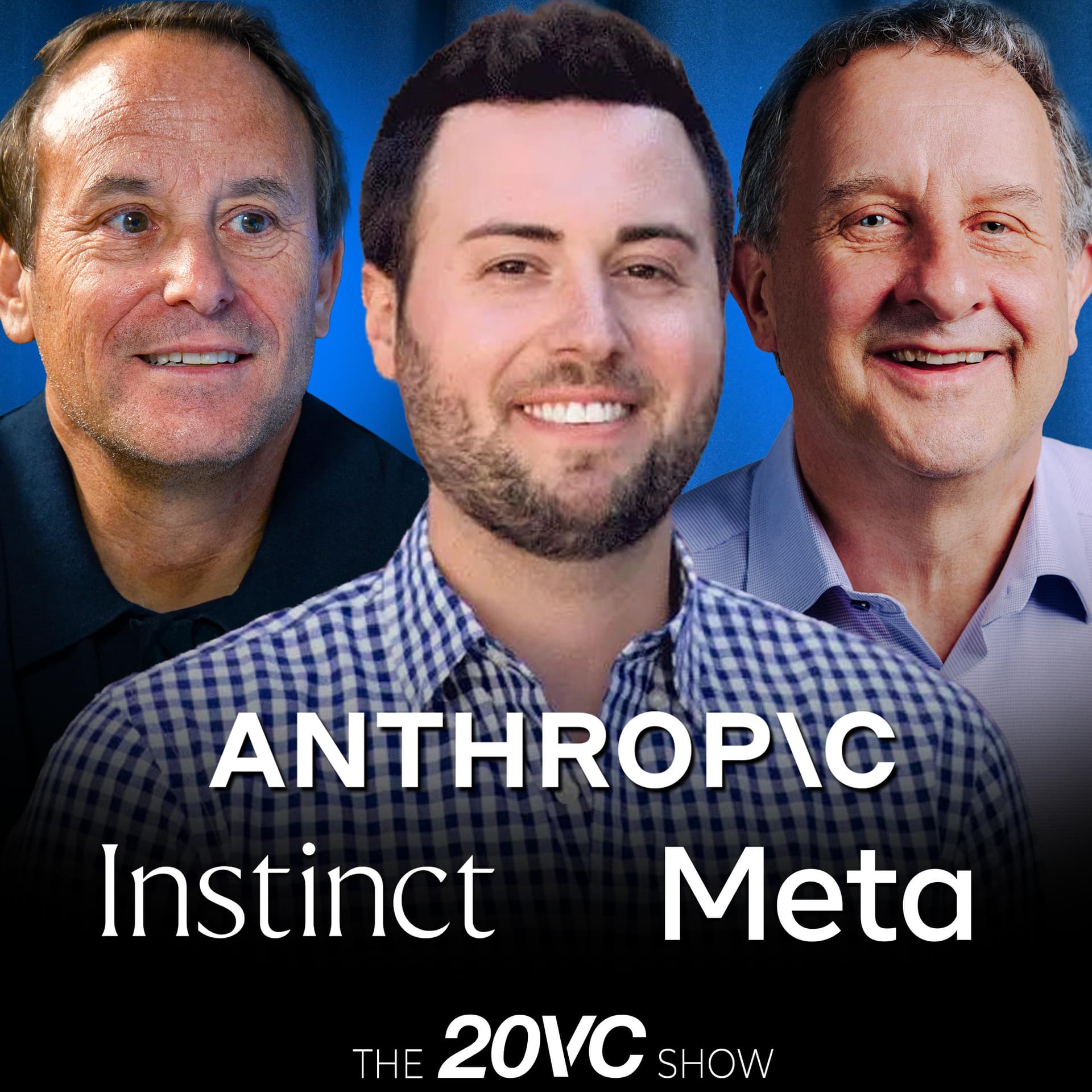
20VC: The Chess.com Memo: The Most Untold Story in Startups; Scaling to $100M Revenue, 150M Members and 700 People, All with Zero Venture Funding
Host
Harry Stebbings
Guest
Erik Allebest, CEO of Chess.com
In this episode, Erik Allebest discusses his journey with Chess.com, which has transformed into the leading online chess platform with over 150 million members, $100 million+ in revenue, and a staff of 700, all without any venture funding.
Key Themes and Insights
- From Unemployable to $100M+ Revenue Founder
- Erik's Background:
- Describes himself as scrappy and entrepreneurial from a young age, often selling items in school.
- Had a strong desire to create and start businesses, reminiscent of his father's entrepreneurial spirit.
- Education:
- Reflected on the value of his MBA and its role in shaping his self-awareness and leadership style.
- Emphasized the importance of personal exploration rather than viewing an MBA as a fallback.
- Scaling to $100M Revenue without Venture Funding
- Initial Challenges:
- Experienced difficulty in raising capital initially, being told the chess market was too small.
- Instead of seeking funding, Erik focused on monetizing early and building a sustainable business model.
- Adapting to Constraints:
- The lack of funding drove creativity and efficiency within the company.
- Erik’s perspective on growth has been shaped by experiencing limitations, which allowed for innovative problem-solving.
- Lessons on User Acquisition
- Creative Strategies:
- Avoided paid advertising, focusing instead on creating valuable content that drove organic user growth.
- Leveraged platforms like YouTube and Twitch for user engagement and community building.
- Impact of External Events:
- Significant spikes in membership correlated with external phenomena, such as the COVID-19 pandemic and the popularity of "The Queen's Gambit" series.
- Personal Insights on Parenting, Marriage, and Leadership
- Values in Leadership:
- Erik values kindness, compassion, and self-awareness in leadership and personal relationships.
- Advocates for positive reinforcement in parenting, emphasizing the importance of emotional support over strict control.
- Perspective on Money:
- Shares a non-materialist viewpoint, expressing that experiences and relationships are more valuable than wealth.
- Remote Work Philosophy
- Benefits of Remote Work:
- Argues that remote work enhances team collaboration and allows for a diverse talent pool.
- Believes that a mission-driven culture can eliminate politics and egos, leading to a more productive work environment.
- Thoughts on Capitalism and Company Ownership
- Critique of Capitalism:
- Expresses concerns about wealth disparity and the flow of value versus labor.
- Equity and Ownership:
- Discusses the challenges of implementing equitable ownership structures and how ownership can be complex in a global workforce.
- Personal Reflections
- Facing Life's Challenges:
- Shares experiences with fear, health, and the importance of self-acceptance.
- Practical Advice:
- Encourages others to pursue meaningful relationships and to focus on personal development.
Conclusion This episode offers a rich tapestry of insights from Erik Allebest, illustrating how Chess.com emerged as a leader in the digital chess space without traditional funding avenues. The conversation touches on critical entrepreneurial lessons, personal growth, and the significance of maintaining a mission-driven culture in business.
For more information and to access the full episode, visit [20VC](https://www.20vc.com).
Written by AI. May contain mistakes. Listen to the episode to check what was said.
Transcript
Automatic transcript. May contain errors.0:00We tried for like the first five years to raise money. And just time and time again was told, the market's too small, this is uninvestable. Everything I saw going on in Silicon Valley was based on large amounts of readily available capital. We did the opposite. We thought about monetizing immediately. Everybody was remote. There was no office. Our engineers were spread all over the world. Everything was the opposite, because we had no money. I'm really grateful for that. But this is 20VC The Memo with me Harry Stabbing's The Memo is the monthly show where we dive deep on the hyper -grossed journey of one amazing company and today we featured likely the most insane and untold story in startups Chess .com.
0:41Chess .com is the company that with no venture funding has scaled to over $100 million in revenue and over 150 million members around the world. Joining me in the hot seat is Chess .com CEO Eric Alibest. This was so much fun to do and I want to say huge thank you to Lee or Atrippledot for the intro today. But before we dive into the show's day, Merge is the leading product integration platform offering a suite of unified APIs across key software categories from HRIS to CRM. That allows organisations to offer hundreds of customer facing integrations. Merge also handles the full integration lifecycle from an easy initial build to handheld end user onboarding to maintenance support and management tooling for all your integrations, thousands of customers like Ram, Gong, Semgreb and Sendozo use Merge to power their integrations.
1:33Check it out now by visiting Merge .dev forward slash 2 .0 VC to receive $5 ,000 off your annual plan that's Merge .dev forward slash 2 .0 VC. And speaking of total game changes there with Merge, you need to check out public .com. Public .com is doing something no other brokerage has done before. They're sharing 50 % of their options revenue directly with you, the customer. Get something back on every options trade. Oh, and there are no commission or per contract fees either. Go to public .com and activate options trading by March 31st to lock in your lifetime debate. This was paid for by public investing must activate options account by March 31st for the revenue share, and options are not suitable for all investors, and do carry significant risk, and this is also only applicable for US members only.
2:26And finally, equity is your company's greatest asset, and managing it can be complex and expensive, but it's crucial to choose the right captable provider. And that's where Angel is coming. For me, there are three main reasons why we love Angelist. Software SimpliCity is number one. It's a one of a kind tool that really keeps your cap table clean and compliant. Second is pricey in service. You only pay for team members with equity, not investors. And then third, ease and simplicity. Angelless provides a single provider. Bundle equity, fundraising, banking and people tools on AngelList in one. It's so important that you make the right decision for one of the most important elements of your company, equity and equity management.
3:06Choose AngelList at angellist .com. You have now arrived at your destination. Eric, I am so excited for this dude. I've got a hand at you. You have the best headshot that I've ever seen. And we're gonna put it on social because everyone does the, you know, like, serious looking into the distance. And you just smashed it. So thank you for being here, Eric. Thanks for having me. I try not to dig myself very seriously. I love dressing up in different costumes and being weird, so thanks for using it. No, listen dude, it kinda goes straight to our first point though, which is, you know, you love doing things that are slightly out there.
3:41I heard that your first entrepreneurial activity happened at 9. Yeah, I was always like scrappy and I don't know, like, my dad was the same way. He was always starting stuff, doing things. I did several things at a young age. I would sell things at school. We would sell like either candy bars or bracelets or things. I would go to where the high school kids would drink beer and leave all their cans and I would collect them all and go recycle them. I would go door to door to sell stationary. I was just always hustling for something some way to kind of like make money and like do something. Yeah, it's in like the blood.
4:17I heard you say before that you were generally unemployable. Why do you think that and what makes you unemployable? You know, it's kind of funny. I have like this thing inside of me. If it's my mission of something I want to do, I am a hundred percent in. I am 200 percent in. If it's somebody else's thing they want, it just doesn't motivate me. This is my dad, and now my 15 -year -old son is exactly the same. If he wants to do it, he's thousand. He just can't be stopped, but if it's something someone else wants him to do, he cannot be motivated. And so I don't know what it is, man. You know, and it's not like I'm a non -compliant or disobedient person, but like with my heart's not in it, I can't get there.
5:03But if my heart is, nothing can stop me. You said that your father was the same. Having watched him then operate. Would there any takeaways for you and did that impact your mindset? I think my dad ended up doing something he loved, which was serving people in the legal community, but he really doesn't love being a lawyer. So he kind of like tried a lot of different things. And unfortunately for him, they didn't really pan out. And so he kind of always fell back. And he came from like a very poor immigrant family after World War II, you know moved to the US when he was five Kind of really had nothing and so he had a bit of that immigrant mindset where like you know be a doctor be a lawyer be a Professional and you'll always be safe, but in his heart He was an entrepreneur so he tried a lot of different things But always kind of fell back on being a lawyer and there was a part of me too that almost had a fallback too Where I was like, oh, I probably should go do a JD MBA and you have a fallback and I'm like, I don't know I want to do chess or something.
5:56So anyway, this is gonna be my question, though, which is like you know bluntly an MBA is a Non -risky move. It is seeking security actually by definition Brian Halligan at Hubspot said that recently because he did one two How do you reflect on that like did you want a downside protect and how do you think about risk? I didn't really understand what an MBA was so I don't really view it as like a Downside protection move for me or like a career advancement I mean, it was literally at first a little bit I got some career advice. I mean, coming out of college, I was so lost. I was an English major, but I really loved technology and like entrepreneurship, but none of my education prepared me for that.
6:36And then I was just kind of scrappy and doing things, but you know, my parents and my in -laws and everyone's like, hey, you need to go get like a real job and you need to go do some stuff. So I applied to like business school and law school. I didn't get in anywhere because it was like right after the dot com bubble burst in 2001 and I got rejected to every school and I was like, oh man, so then I'm like, all right, I'm just gonna go start and do something and then later it kind of was always in my mind and then I got pretty unhappy in the entrepreneurial thing I was doing and thought actually was my wife's like, hey, you need to go back to school.
7:08Like you are miserable, change pace, go do something and so for me, it was more of like an exploration of myself and like what did I want to do? Not a fallback. What did you learn about yourself, because it's clearly been a clarifying moment for you. What did you change or learn about yourself through that process? Well, first of all, I learned that I was an asshole and I wasn't a very pleasant person. And one of my dear friends at a business school, Andy Dunn, basically one day said to me, hey, let's have lunch and we go have lunch and he's like, hey, you come off like an asshole all the time.
7:42You don't smile that much. You kind of like assume that you're in charge of everything that's going on. It's off -putting and I was like first of all thank you for being brave enough to tell me second of all like I'm gonna work on that. I'm gonna try and you know fix my RBF my resting uh unhappy face and I'm going to try to be a bit more alpha -minus where it's like instead of being Control of every situation in the room step in if people want me to or I'm willing to but like leave some space for others And so I learned so much about myself in that way and I've really become a kinder more compassionate it more self -aware person through Stanford Business School.
8:19I'm not sure that happens everywhere, but it really happened for me. I think this showed us very well because I'm always very candid with my own troubles. I have often been given the same feedback, but I also think, and I also get told by other people, what makes me very strong is the fact that I am very direct, very concise. I don't mess around, and I will guide conversations in a productive way that leads to outcomes. It might not be the most emotionally careful, but it's good. And so I guess what What would you advise me having experienced this and then also having come through it? It's not an either or.
8:51It's not like being nice and then don't be direct. It's like you can be both and I think a lot of it has to do with the number of deposits and withdrawals you make in any relationship. It's like your bank account. So you need to have a way more positive interactions with someone if you're going to have a negative or a more or what they might feel as a negative or something. And so I do a lot of positive investing everywhere with everyone in my company, with my kids, with my wife, with all my relationships That builds up a buffer of trust and kindness and all that. So then if I have a moment of maybe clarity that feels a little bit stinging or a little bit too much or something They already know that there's a good amount of goodwill that I've built up there.
9:34But I'm accused of the same. I'm pretty brosht times. I'm not everybody's favorite flavor of ice cream. That's all there's to it. Do you find it disheartening when you do a lot of deposits and then when it comes to withdrawals, people don't give in the same way? I have accepted that. That's just a role, that's a position, that is just comes with the territory of times of being sometimes a person in a position of power. I'm fine with that, I embrace that role. We go through that process at business school and we kind of come out a little bit more aware of who we are. How did chess .com come to be?
10:07Because I know you bought the domain. I think it was in 2006. Talk to me about that process. Chess .com was my third chess business, which is totally absurd to say, but it started while in college, kind of teaching chess to kids. And setting up after school programs where lots of kids would come. And I was basically a labor arbitrage business where 30 kids would pay 15 bucks an hour to do an after school club. And then I would pay an instructor $50 to teach a class. And I did that in, you know, dozens of schools while I was in college and after. And then I kind of got this idea to franchise that business with this other science company that was doing the same thing.
10:44And then they needed chest equipment. So I started buying chest equipment and reselling to them. And then I'm like, I got to cut out the middleman, so I started buying stuff in China. Then I had extra inventory. And I was like, I'm gonna start selling this extra inventory online. So I created a website with my friend Jay. We started doing basically like the Amazon .com of chess. before Amazon was doing anything except books. And so you kind of went from a teaching business to an e -commerce business. And then while I was doing e -commerce, I was like customer acquisition cost is killing my business.
11:14I need to get off the Google AdWords or Google Ads at the time and build something that is meaningful for people and for users so they will come and do that activity and then I can sell them some chess equipment. I was like, I need to build a community. I want to build the Myspace of chess. You're not going to do that in an e -commerce site. I want to do that on chest .com. So then I contacted the people who owned it. They had like $5 million of like debt on the books and they needed to go bankrupt. So there's a bankruptcy auction. And I bought the domain out of bankruptcy. And me and Jay started chest .com.
11:45Okay, so a couple of different things. One, how big was the e -commerce site when you realized, hey, I want to move into a community? Between $1 and $2 million a year in... I think a little over $2 million a year in revenue, making good money. And so then we get the domain name through that process. How much did you end up paying for the domain name? $56 ,000 $56 ,000 at the time. Were you like, shit, that's a lot of money. I mean this is $2005 ,000 and so is where you like hell. This is the most important address that we will have. Yeah, I mean it was a no -brainer for me. Of zero concerns dropping that money.
12:18When I spoke to Leo, he asked the question of how much of a role has the domain name Chess .com played towards your success? Yes. Ridiculously large rule, especially at the beginning and the beginning sets the tone for later. In today's world, if we hadn't done it, if you would you have to start on chess .com, probably not, but given the time that we started and how it worked and it was web first and all the...so it was critical at the time. And so by the time we hit the kind of mobile ecosystem where app downloads don't require it .com and some people don't even have websites, etc. It's way less important now, but we were already massive at that time.
12:54It was fundamental. Talk to me about, I'm sorry, it's not in this case, I'm so intrigued. You buy chess .com and then what? Because we can look at it staying, it looks unbelievable. But how did you get the first million users? I opened up Microsoft Word and I started building wireframes in Microsoft Word. That's kind of where I was coming from. You know, had a friend of mine from college, designed a logo. You know, then I took these wireframes from Microsoft Word and then I started building the front end of these web pages in macromedia dream weaver. That's how long ago that was. And then I would build these web pages, push them through an FTP server to a fake domain name that I and my co -founder, technical co -founder J had.
13:36And he would take that HTML CSS document, put it in with some PHP and MySQL and push it live to the server. And that's how we got started. And then so we built a homepage. We built a login. We built forums. We built blogs. We built We build news, we build everything but how to play chess at the start. We're just gonna do a community and people can play on Yahoo or on ICC and then they can say that what their rating is and we're just gonna be a social media profile. But then people started coming and they're like, dude, we want to play chess. I'm like, okay, okay, okay, we'll build that. But that was really hard to do because back in the day, people were downloading clients to play, gaming was all done on like, executable programs on your computer.
14:16Doing it in the browser was like, in insanity at the time. JavaScript wasn't mature enough, there wasn't a web sockets or anything like that. Okay, so how many users did we have, what before we hit the actual chess playing, just on a community build? It was definitely under a million. Every day, a few hundred people would sign up. I mean, maybe a thousand or more would come to chess .com and then we would convert, you know, a fairly high percentage of them to just creating an account. But there wasn't a ton for them to do other than forums. But back in 2006, 7, 8, 9, forums was a big part the internet.
14:49When in your mind did you have product market fit? When did you go to J? We've got this like this is good. It was after we launched the learning product where you would go online and move a piece and it would give you a response and we took basically all the learning instruction material that we bought out of bankruptcy along with the domain name which was called chest mentor and we put that online and then we said if you want access to this you got to subscribe and once Once we did that, we immediately had people subscribing and we're like, now we have money, people are voting with their dollars and saying, we like this.
15:24And they were like, okay, it's time to like 100 % all in on this. You mentioned like adding the chess men to all the learning, people paying for the product and serving that community. When we think about the decision to raise or not raise, why at that time did you decide to not raise? Because I'm sure you could have done you. Now making money, you had traffic, things look good. What was that conversation like between you and Jay? We tried for like the first five years to raise money. We tried many times. We tried angels. We tried. I met Peter Teal. I met a bunch of different angels. I went up and down.
16:02I used all my connections, you know, Sandhill Road to try to raise money for chess. And just time and time again was told, the market's too small. This is uninvestable. Maybe I'll give you a little bit of money at like an insanely low valuation and I was like, ah, I don't need it that bad. When you'd look back, did you do anything wrong? Like, would you have changed how you presented? I don't think I did anything wrong. I think everybody was wrong. Consensus, including from me, was the chest was too small. And so why would you invest in a business that you thought would make $10 million in revenue at its best?
16:36I'm just playing devil's advocate here and I may be stirring the pot. What if they were right? Just pause. If you think about venture being $5 -10 billion outcomes, if we think about a $200 million revenue business, a $300 million revenue business, on public market multiples, you're looking at $68 -910X, it's still hard to see the $5 billion asset. Am I being shortsighted? I don't think so. I don't care about money. I'll be honest. I just don't care about it. And so it's just not the lens I look at. I mean, I think if you're a venture investor saying like, like, hey, I need to get to a $5 billion exit.
17:11Like, just may not be your investment. And that's totally okay. Why do you not care about money? Just love to understand that. Like, have you always been that way? I love experiences. I love having things. I love the security of like feeling safe and all. And having my needs and most of my wants met. But I know people where money is like, it's like self -worth or it's a scoreboard or it's like, precious something. and I just don't know why I don't feel that. I have a deep relationship and love of food, but I have some friends who are like, yeah, I eat when I'm hungry and food is good, but I'm like, no, no, no, I love food.
17:49Well, it's kind of opposite. I like, okay, I appreciate money, but I don't love money or I'm not motivated by it, I don't care about it in the same way. I don't know what. I used to place a lot of evidence to some of it, and it's like, I am valuable because I have money, and then I'm valuable to other people, which did not necessarily make me happy for a long period of time. Why do you determine yourself worth from them? Because I think I'm in a bit of a self -discovery of like, if it's not that, then why am I valuable to someone? Sorry. I would start and say, and this is something I, every human struggles with, but the first question would should be, why are you valuable to yourself?
18:24If your entire self -worth is a reflection of other people, you'll always be chasing that mirror. You have to start with good, balanced, self -worth, and self -value. That's a struggle for me as well. Like, I'm a very extroverted person. I love being around people. I love doing all that. But self -care, self -talk, self -worth, all of that is like very critical to my well -being and makes me a better person to show up for others. And then also that interaction is important. Anyway. How do I answer the question of why am I valuable to myself? Like, how would you answer that? There is inside of all of us an inner person an inner being and You have to get comfortable and happy with who that person is You can do that in a number of ways some people do meditation other people do a lone time where they can find peace and Long runs or walks or other things other people get it from Achieving something and being in the flow and you know could be skiing it could be sports It could be writing it can be all sorts of things but I think there's something about that.
19:29But I did do an ayahuasca retreat one time. It's the only drug I've ever done. And part of that journey for me was to get comfortable with myself and really be happy and solid and grounded in myself. When was that? Two years ago? Did that change how you operated as an entrepreneur? It totally did. How so? My biggest takeaway from this experience was, it is so weird. I grew up in a Mormon home and believed in culture and I lived that lifestyle. I never did any drugs or alcohol. So then to go do an ayahuasca retreat, I was so afraid to do that to be in a mind -an -altered mind state. But when I did that, it actually, for the first time, took all the other mind -altering things out of my mind.
20:16And I was present only with my mind. And my biggest takeaway from that retreat, and it took drugs to get me there. It's medicine, sorry, for those who practice it's called medicine, but it took a medicine drug to Tilt to teach me that I am every day Microdosing on drugs. I am micro dosing on slack. I am micro dosing on email. I am micro dosing on zoom I am under the influence of drugs every single day and every single moment of my life and I am in an altered state because of that The most helpful thing from that was to realize that when I am feeling anxiety or when I am feeling something, I am probably, and I'm not centered, I am probably under the influence of something.
20:59And it may not be a drug as we characterize it, but it's probably slack. It's probably a message someone sent me. It's probably a fear. It's probably something someone said on Reddit. I am under the influence. And so then you change what you do. You can't avoid email. You can't avoid Zoom, sadly. No, but just the recognition of saying, I'm feeling this because of this thing, but I am actually a safe grounded person outside of that. I am not my slack. I am not my inbox. I am not my social media presence. I am something deeper, safer, more foundational than that. Can I ask you back to the fundraising element?
21:35Yeah. When you said you tried and it didn't happen, as a result of not raising money, did you do things differently? I mean, had to do it differently. Everything I saw going on in Silicon Valley was based on large amounts of readily available capital. That means getting the best co -founder from Berkeley or Stanford, and that means like setting up an office on California Ave. It meant having a full time chef and masseuse in the office, it meant everybody hiring the best people you could, putting them in the office, and doing everything right there. And later on it meant doing everything in the cloud and it meant buying ads on Facebook It meant you know scaling up as quickly as you could Everything was like spend spend spend spend eventually you'll think about monetizing We did the opposite we thought about monetizing immediately everybody was remote There was no office our engineers were spread all over the world my co -founder was my college buddy from San Jose State Everything was the opposite because we had no money I'm really grateful for that.
22:43Sorry. No, it's fantastic to hear that you don't need me and my whole profession I'm thrilled. Just don't tell anyone, right? My question to you is having been through that experience having done creativity because you had to What do you think and advise founders when you see them today? Raising again more money than we ever thought possible raising money feels a lot like earning money in that it's a validation I'm worth the money. My ideas worth the money. If can fill a hole in your soul and it can make you feel like you're going to be more successful because of it. And you can. I mean, honestly, there are a lot of businesses that need capital.
23:23Do not get me wrong. There are a lot of businesses that need capital. It's critical. It's important. You can't do certain things without it. You don't get immediate ROI. You need a runway. All of that is true. But there are times where I have seen people over raise money or raise money at times they didn't need it. or pursue things within their business that were not right because they had money and knew they could get it. Where did not having money damage you? If you look back to the early days, where are you like, if we had $5 million that, we really would have been in a different spot. I don't know what would have happened if we had hired a bunch of local people.
23:59Would we have moved too fast and done the wrong thing? I mean, there's something about... Do you think you went slowly? We definitely went slowly. Why do you say that, though? I mean, like when you look at the trajectory, not that slow. I mean, companies that are venture -backed take as long as you did to reach the revenues that you did, the scale that you did. Being ten -what years? I mean, that's a sadly so -are -a -whoe sadly so. I just read about this game. I don't remember the title. There's just, there's a mobile game that launched literally last year in the last nine months that in those nine months did $400 million in revenue, some kind of like, like snow survival game or something.
24:37And I'm like, maybe I'm doing it wrong. I don't know. Dr. Leor, you made a lot of money faster than chess .com did, maybe. But not having money drives creativity in a lot of ways as we discuss. Customary acquisition is one way traditionally. You put money in the funnel. You mentioned the E -commerce business on Google ads, Facebook ads. Put money in the funnel, and hopefully it comes out with positive e -cogn. They didn't have that money. So how did you do creative customer acquisition? And what was some of those big lessons? Yeah, we'd totally been burned on paid acquisition. And we pretty much made a very firm rule that we weren't going to do paid acquisition.
25:15And so instead, we said, we're going to take any money that we have. And we're going to put it into content because content drives user value and it drives SEO. Our team has always been very good at capturing demand on any platform, whether it's Google or AppStores. because we create content, we create value. When people interact with that, it signals to the search engines that it's something valuable. And so it's always been an investment in content. And then the next platform of discoverability after Google and app stores was YouTube. And you got to get content and it's got to be good. And then after that was Twitch, and we followed that.
25:54And then it was short, CenticTalk, and we followed that. And so we always followed the content where it was and worked with really creative people and excellent people and we invested in the product and we invested in the content and we invested in capturing search but not paid. So I'm sorry to every all the businesses that operate on ad revenue, but you know we don't participate in that. I'm really interested to think as I mean contents obviously my business as well. Did you do a portfolio approach and see what worked in terms of content channel or did you just pick well each time? I'd just like to understand that transitory moment when you're deciding the next Content platform to move to I think we were smart about it one of my other classmates at Stanford You asked about MBA, you know, these are worth it I have some brilliant classmates from Stanford who've been really great to work with including Andy including Leore Another one was Marcella Cumberos who was at Ipsy and he and I talked early on and he told me early on how valuable getting a YouTube influencer was to their cosmetic subscription business.
Read the full transcript
26:56And I was like, okay, and I thought about that. And we started looking at that kind of early influencer marketing. And we found some really great chess creators. And we kind of started working that angle. And it was really valuable for us. How did you pay them? What was that stretch you like? I'm intrigued. It's always been a little different. Some is through kind of like chest .com affiliate. So if someone signs up on chest .com and then they are become a premium subscriber, they'll get a cut of that. Sometimes it was just some cash or an ambassador. Like we would do a year long ambassador for some dollars.
27:32We also create value for them because we then expose them to our community and then they get bigger and make money in their own channels. And so sometimes it's a scratch my back. I'll scratch your back with embedding them on like our platform where people can discover them and then go to their platform. So it's kind of a range of all of those. It's really interesting. It reminds me of Logan Paul, actually in prime, if you'll forgive me for that analogy, because like now, they're such a big platform themselves that when they work with talent and influences, they actually promote them too in a similar way.
28:02Would you have done anything different about content? You know, when I looked back at mine, I would have moved to YouTube a lot earlier. I was too late to YouTube. Not too late, we're on it now, we've done well. But I only did it two years ago, and I should have done it five years ago. Yeah, I think podcasting is a little different because there was like these other platforms, and then when did YouTube become a podcasting platform? I think for chess, chess is visual. And so as soon as YouTube came out, we were like, we wanna do that. We were doing live streaming back when it was Justin .tv, long before it was Twitch.
28:35Our very first live event that we really promoted was Danny Rent who's our Chief Chess Officer versus David Pruss who was at the time or head of content. We put a thousand dollars cash on a plate in between those two guys and then had them play chess against each other. And that was kind of the beginning of our live streaming. We would put kind of static content on YouTube that was in the 10 to 30 minute range. And then we would do live shows on JustinTV or livestream .com and eventually Twitch. and then Facebook was a different strategy. We would do a lot of quotes and memes there than Twitter was a little different.
29:12So we've actually been pretty smart on how each platform responds to the different types of content. What's the dominant platform to die for you? A lot of browsers and a lot of providers have removed attribution to make it really hard to tell. So Twitch does no attribution, but we've seen a tremendous amount of growth. I would say our most recent wave was completely driven off of short forms, whether it's YouTube shorts, Instagram, Reels or TikTok, it is totally driven. When you look at the membership scaling, was there needle -moving moments? We'll talk about Queen's Gambit, we'll talk about COVID, but in the earlier years, was it really a continuous up -but -gradual?
29:51Or were there very strategic, like, significant moments where it really inflighted? There were a couple of moments that things took off. So one was with the kind of Twitch creator, streamer influencer. That was a big one. Another one I'm actually gonna give a shout out to Keith. We talked about our mutual friend Keith. Keith was in the car with me one day and he said, Eric, I like chess. Sometimes I don't feel like I'm that like smart enough to do it. Also sometimes I feel like it's too frustrating. And I go do the puzzles and I feel like I get all the puzzles wrong and it's not fun. And I was like, man, Keith just told me that chess isn't fun, that doing puzzles isn't fun because he gets them wrong.
30:28That conversation triggered us to build a product called Puzzle Rush where you just start with all the easiest puzzles and then they get harder over time. You feel all this success and all this easy fun and then it gets hard and you challenge yourself and you fail. But that product was super needle moving for us. It lit the world on fire. Malcolm Gladwell wrote about this product. Like it was massive for us. There were just these little moments whether it was product or content that would inflame things and heat things up for a while and then it would stick. How important is early wins in activities?
31:03And so like you said, they're about the consistent winning early. How important is having early wins to the success of an activity? It pains me to say this. But somebody who wins their first game of chess is two to three times more likely to stay around than someone who loses their first game. And so then you're like, well, you've got to make sure that people win their first game. But doing that is like morally problematic in some ways. Do you make them play a bot so they, but they think they're playing a person? And there's all these things you can do. There's moral hazard in all of it and we've kind of avoided it.
31:40And so what we're trying to do is push people toward not playing a person first, but knowingly playing a coach bot personality where they will win and feel good, but not to just throw them in the pool of players against other people where there's a 50 -50 chance they're going to lose. That's the honest truth. Yeah, I was thinking, play a bot. Come on, dude. Think of our attention numbers. Can I ask, how have attention numbers changed over time? Have they stayed relatively stable? And how do you think about great retention and lessons from that? We have not historically been a metric -striven business.
32:14We've been a heart and mission and chess -driven business. We are getting smarter about it. How could you not hesitate that? They knew who we were when they married us, but they've been very patient and helpful to they understand where we're at. That's a whole other topic, but we've had a very good coming together and seeing things. We started on different sides of the mountain. We've come together to really understand each other. It's been actually really awesome. It's towards me about not being a matriarchist business. Why is it not better to be a matriarchist? It just helped me understand that because that is so different to what I normally hear.
32:51I don't know what to tell you. We've always guided things through what we wanted to do and what felt right and what was in our guts and what was on mission and what sounded cool and you know we've always done that. I think that was really healthy for us at the start. I think now having a blended balance of understanding those things is helpful to us. How do you determine success if matrix and not at the forefront of what drives decision making? Obviously I run media teams. We have very matrix -driven. And that helps me assign success or not to someone in some respects. It's a joy of media in a lot of ways.
33:29How do you determine success with Nordimetric first mindset? I mean, individually at the company, I think people don't think of success. I think they think of fulfillment. I think they think of effort. I think they think of mission and serving. And so if they do something that is well received by the community or helps us grow the game They feel good about that and then so then how would that manifest in numbers? We track active users we track subscribers We track usage of different things and people kind of you know They know how many members we have and how that's going and so it's just kind of a general Happy go lucky feel what numbers matter most to you today are daily active users a big deal for me Because it's very easy to just see how many people today are logging into enjoy chess That's very simple.
34:16More though, I would say we're starting to do a link of their Kerometric was super valuable. So we're now looking at that as a primary. So that says, your retention rate of your active users, which means if somebody on week one was active and was again active in week two, what's the likelihood that they come back in week three? And so it's somebody who has shown a bit of a habit or they've shown that they're invested, they like the product, what's the chances that they'll continue to like it? And how does that differ from like a D30 number? What it helps you see is not just like, I logged in 30 days later, but that I made a habit out of it, and I'm coming back regularly each week.
34:58It's not just, hey, I said you a push notification on day 30, so you came back and did something, but it's like, no, you made this a part of what you do. And so we have that metric, we have DAE, any others where we're like, hmm, this one. So one of the ones that we're focusing more on now is a percentage of learners over players the majority of people come and play But not everybody turns into a learner our business is funded by learners playing is free learning is Behind the paywall and so the percentage of people who want to learn and improve as a percentage of players is something that helps us Understand that people are getting greater value out of our product than just playing can I ask what percentage of people are learners versus players?
35:42We've got about 150, a little over 150, 160 million registered members. Take a weekly active users is probably around 10 % of that, around 15 million. About 10 % of that are active subscribers. An active subscribers means they pay monthly. They pay monthly or yearly. How many pay weekly versus yearly? What's that mix up? Most people play pay yearly. I don't have the exact numbers because again, I'm not metric -driven, it's not what I look at. But the majority of people play pay yearly and most people do tend to our highest paid product because they get the most access and Our retention on paid users is really good another one of my Stanford classmates Coddy Johnson worked at Activision and he's like wow I thought I had seen amazing retention numbers with world of work craft you guys are up there as like very sticky subscriber base once Your attention on paid uses I don't have the exact numbers but I'm just saying it's very high.
36:39That changed. I sent you our numbers, we got some interesting graphs, where it's kind of grew and then it had a Queen's Gambit bump, and then it had a more recent 2023 bump. The Queen's Gambit cohort, people saw the show, they saw chess pieces moving on the ceiling, and they're like, I wanna learn chess and get better. Those people subscribed at a higher rate than normal baseline. What do you mean they subscribed at a higher rate? There was more of them than the antithenal. The percentage of people who became subscribers was higher than our previous kind of steady state cohorts. They wanted to learn and get better, and Beth Harmon made them feel like they could be world champions.
37:15Did that bring in a load of low -quality leads, though, which is like, yay, we want to be Beth Harmon, we want to learn. And then actually they're like, ow, fuck it, I've got kids and I'm busy, and they churn. Was that a leaky bucket, actually? Or did they retain? I was really interested by that. So they subscribe to the higher rate, but then retain to the lower rate to your point. And that kind of we swallowed that, but it's not like it went up and back down. It went up and stayed up significantly. So yes, it was net massive growth, but yes, they later retained at a lower rate. But then we went to 2023 where the cheating scandal and mittens the chest bot and short form content blew up and then we also just exploded in schools.
37:58But now you have a whole bunch of high school kids and junior high kids and younger people getting into chess and they subscribe at a way lower rate. And so our registration numbers went through the roof, but our subscriber numbers didn't didn't follow. Can I ask you when you look at these kind of very strategic and clinical moments in the companies to actually respectfully a lot of them were outside of your control when we look at COVID, when we look at Queen's Gambit, no execution that you did drove that no offense. What do you advise an entrepreneur has given the the serendipity fate, lack of life.
38:32Be in the right place, man. Be paddling. We always say that we're in the boat, and we are paddling, and our sail is up, and we are, but we're also rowing. When the wind comes, we're already ready, and we're steering, and we're doing the best we can. But we're not in charge of when the wind comes. You can try to find the current and do different things, but it's stuff outside your control that makes a massive impact in a business. And we've had several Black Swan moments compounding, and it's been pretty phenomenal. And so we look at these very seismic moments that have incredible stretch -removing abilities for business.
39:07You then decide at some point, specifically in 2022, to raise cash from GA. Not totally accurate. After we were rebuffed by all investors early on, we kind of said we don't want to take any money. We're going to do this ourselves. Because before we had no success and no one wanted to invest later we had success and everyone wants to invest and we're like no thank you. I have a lot of no thank you emails out there I'm sure many people watching this program have gotten those no thank you emails from me But someone came along and said hey, I really love chess. Yes, I'm an investor But I want to put my own money in and I want to just I want to be I want to invest and I was like okay I live in Silicon Valley one day.
39:45I want to buy a house like maybe some of us want to take some money off the table We'll sell some second you know some secondary and we'll do a little bit of a liquidity internally We sold a small amount of, you know, 10 % of the company early on. And that guy was like, you know, and he's like, okay, well, I need this preference and I need this thing and we're like, nope, no deal, go away. You're on the same terms as all of us or get out. And he's like, okay, okay, okay, fine. I will invest. Same terms as everybody, no preference, nothing, no guaranteed returns. I just want to own equity. Okay, great.
40:14Now we're all on the same level. He invests 10%. He's like, I love chess. I'm gonna be an investor forever. Okay, great. Fast forward a couple of years. He's like, hey, I gotta get out. I got some LPs that need some money. I'm like LPs. I didn't even know about this like you told me you were gonna be in forever He's like no, no, no, I gotta exit But I got this other guy who loves chess his name is he's Sisy Steinberg founder poker stars He loves chess. He wants to meet you. I meet with him He's like, hey, I want to buy in. I want 50 % of the company. We're like get out of here We're like no chance no way and he's like okay I'll do less but we want these terms and we're like get out of here no chance no way He's finally he's like all right, so we come to terms and he buys like you know a little more than 20 some percent and Like okay, we took a little money off the table But he's like hey, I love chess.
40:57I'm gonna be here forever a couple years ago by he's like hey, I gotta get out I'm like get out. Why you love chess? What if it's going well? So then he's like nope, I got a cell and he's like either I'm gonna sell to who I want to or you guys can choose who I sell to and You guys can do that so now I start running this process where I start talking to all these people and private equity this and different venture firm there and all these different things because I got to buy him out. That's when we met GA but again it was to buy out existing equity. It was not to raise money. There was no primary money put in whatsoever.
41:27It was all just buying founder's equity and equal ownership. Do you regret selling to that first semester? Totally. Every day. Every day I think about it. I have so few regrets in life but that is one. What does that lead to? I mean it's not a great thought. I don't like it. But we're here now and so So I have to believe that the best things happen and the universe will take care of it all, but I mean... How much did you sell at first, 10 % for? I actually don't remember. 20 million valuation? Okay, so you were doing like $2 million for the co -founders. Maybe something like that. And then the Poker Stars guy boarded at what price?
42:03Yeah, and you're asking me things that are hard to remember. Maybe around three times that. And then GA paid 10 times that. Do you like working with institutional investors? I like Tanzan and I like Anton and I like Jesse and I like the people I work with. I have to say, I do like the people at GA, I don't want them to know that so please cut that out, just kidding, you can leave it, but I do like them a lot. I do too, I've had Anton on the show, I've had Morty and Eskibari, I think Jere are one of the best so totally, did things change post -having an institutional investor? Of course it changed, but the mission didn't change and I know you're like, ah, mission -driven, and maybe that's BS, it's not BS for us, because chess is like, it's a stewardship for us, and we really do feel the mission.
42:46I don't know how to do a mission -driven insurance arbitrage business, but you can't do a mission -driven chess business, but their view is drive, maximum shareholder value, but you do that through serving your community and growing your game and building a great product. And our view is build a great product to serve the community, okay, fine, it's gonna create shareholder value. We're looking at the same thing, but just opposite of each other. I get it, as in person I'm a person, I'm a showholder value, creates more enterprise value. I buy your mission, by the way. I just would be infuriated to work with it.
43:19Ha ha ha! You said something earlier, and you beat everyone to this trend. You said that you will remote from day one. I wanted to talk about this, and you know, many of the mutual friends that we have to. Why is remote work better? Because I can't think of a role, which is done better remotely. And people disagree with me. And I'm always open to my mind changed. So make the case for remote Eric. Okay. First of all, talent is all over the world. And if you are geographically confined on talent, you have a smaller hiring pool, and you are now competing, it's hard to compete against these massive dangled comp packages in certain areas and things.
43:59It's very hard. It's been amazing to have an international team where we have people in India working with people in Serbia, working with people in Argentina, and working with people in New York and it's just a beautiful thing. I don't know how to tell you. It is so beautiful. And because it's mission driven and because I always say the weight of our mission crushes egos. If you have an ego, this is the wrong place for you. Get out and go find somewhere you can serve yourself. The weight of our mission will crush you. It crushes politics, it crushes bullshit, it crushes egos. And so we're all there to serve the mission.
44:33And when all that other other stuff is gone, you're now collaborating and serving each other to serve the mission. And so we have really smart people who are passionate about what we do, who come from everywhere. And the other thing is, is they feel respected in their lives. They can show up to work when they want. They can do the work that they want. They can walk their dog in the middle of the day. They can take time off. They can do what they need to do. It is a joy for them to work. They don't feel trapped in the office. They don't feel like they have to show up early to do FaceTime. They don't feel like they have to be the last one to leave.
45:02They don't have to pretend like they're busy. It's so life -enabling to them that they're grateful to have the job and they give everything to it And that includes me. I love my life I love the fact that I'm sitting in a room and that there's no one around to bother me and that I'm doing this And I don't have to worry about if someone is judging me for how I'm spending my time or what's going on? It's freeing. Do you miss a human interaction and do you miss the creativity that comes from being in person? I am married with four kids. I don't miss human interaction. I know that some people do. What have been the biggest lessons in terms of what it may take to make remote work, having done it since day one?
45:40Being super mission driven and having people who really are consumers of your own product, they live the chess world and life so they get to participate in that thing. And the other crazy thing is that we are nobody's highest paying job. We immediately filter for highest pay. Like if you are looking for your highest paying job, it will not be chest .com. And so anyone who's hoping for that will go take a job somewhere else and they are here for passion. We pay as well as we can, but they're never going to leave for money. They stay here for lifestyle. They stay here for mission. They stay here because we care about them and take care of them.
46:19But we don't churn people who are just constantly looking for the next most money they can make. Those people don't take jobs at Chess .com. When people have got through the door who aren't mission driven, who do have egos, who do have desires on finances, it's inevitable they get through the door. What did you not see that you should have seen? Sometimes they say money doesn't matter or they're, you know, and then later it becomes, you know, I had a kid, I need this, you know, or a crazy offer comes in. We're always like, hey, we're super happy for you. If that's now the important for you, go do that thing.
46:51That's great. We're happy for you. It's usually a life circumstance will change. Occasionally we'll get like a bullshitter who will come through and suddenly they come in and they seem like the nicest person. Then they come in and they're like kingdom building and you know backstabbing and stuff and we're just like get out. Like immediately get out. What are the biggest mistakes you see found as mate when they're trying to do remote well? I think treating people like kind of like assets, kind of treating people like workers who are supposed to do a job rather than like teammates who are on a mission to do something.
47:22Everybody wants to be respected and everybody wants to feel like what they're doing has meaning. When people feel that it's like, I'm task oriented to do this thing that generates this, that makes money. I know that's what a business is and I know that's what work is. But when deep down when you feel that, I think it's hard to show up when you feel that that's what you're doing. I think when you show up to work and feel like there are people that I care about who are relying on me or there's a community that cares about what I do, it's very easy to show up for those people. Do you pay people according to national average?
47:57As you mentioned, global workforce, how do you think about like benchmarking and comp aligned to national average will same across the world? No, it's definitely nationally regulated. It's very hard to do. Compensation planning for a completely global company is super hard to do. Why is it so hard and what have you done well? Ah, like how do you do it well? I probably hired the first 300 to 400 people myself who worked with the company, and I would just say to them, how much money do you need to do this job? And if we can make that, we'll do it, and if not, I'll let you know. But really, what do you need to do this?
48:32Because I'm not going to make you an offer, because I don't know your life. I don't know how much the average person makes around you. I don't know what your expectations are. So tell me what you need. And if I can meet that grade and if I can't, hey, we part ways and we understand and that's what we did and people would say Hey, I can do this and I would say oh, that's great or oh, I can't do that This is probably my max here. It's a take it or leave it It's a little bit like that But what's been great is to see globalizing like people wages have gone up because someone who used to in Serbia work for $9 an hour now they have a global marketplace to work So that their wages have gone up a ton that's great for them and I'm happy and we've tried to adjust and do all that we can But again, some people just frankly wage out of our company if that's what matters to them.
49:15When you said, hey, what do you need? What percentage of the time did it come in above versus below? Probably slightly above more than, more than add or under. Speaking of kind of money and what you need, you mentioned Andy Dunn before. I spoke to him before the show and he said that you're wonderful in many ways but you don't really like capitalism. What do you think he means by that? And you mentioned before capitalism 2 .0. What does that mean? Look at the work that's being done by the people who are doing it. Look at the people who are managing those people And then look at the people who invest in there in the finance industry and look at where the value flows Versus where the work is being done and it's just disproportionate and I understand that capital returns and a healthy market where people can Invest their dollars to get returns is great for everybody's wealth creation who has money I understand that people having money creates jobs.
50:10I understand that money does flow down, even if trickle down economics isn't total, whatever, I understand a lot of these things, but I also understand that there's a driving human greed that makes it so that money doesn't flow in some ways to the people who need it or deserve it. And I don't know how to solve for this yet. What about ownership of companies? I mean this in the most non -provulsive way. If that was the case, what about splitting ownership across the teams, giving everyone much larger ownership, so you're gonna have vasting schedules, but ensuring that the company is owned by the teams.
50:44I love this. I wish that it were easier to do. For example, the global system of legality is so hard and painful. The moment you are an equity owner, you have a K1 in 37 states and 12 countries, and the tax bill alone for managing the equity, tiny equity stake you have can be worth more than the equity itself. And it depends on your structures and your countries, but like ownership is so hard to do. And it's a real barrier to doing that. The other challenge is investing schedules, so maybe someone owns, but someone comes in, works early, bales out. Now they have a bunch of ownership, but then they participate in all the upside of when they weren't there.
51:28And so there's a whole bunch of things around maybe the valuation when they joined versus when they left and they can capture that value But there's a lot of problems you dilute out and then so ownership structure in general is very problematic I think that is where the answer needs to happen But there's so much regulatory and legal and global stuff to fix around that before we can really get to that It might be one of the only few truly crypto native cases which makes sense actually if you think about a decentralized ledger of ownership, would be relatively stateless in terms of governance and legislature.
52:03I imagine when we think about that, would you just solve that? Or is that like, I don't like, I just think like that and you're an entrepreneur. It's possible in like my next thing. I am so overwhelmed by my current job that it's hard to think about anything else, but I have thought of that. Like, let me just try this out on you. What if there were a fund that only invested in companies where they cap their returns and and excess returns trickle down to the rest of everybody on the team. That sounds crazy, because you're like, why would you cap your return? Your whole thing is to get maximum returns.
52:35I'll tell you what I did. When our poker stars investor, the Shineberg family, when they exited to GA, I said, I am going to block this transaction as hard as I can. Unless we set aside a huge percentage comparatively of the sale, everybody is going to pay, I percent of their gains into a separate pool. This turned out to be tens of millions of dollars that we put into a separate pool and then we now pay out to the people who were here at the company who did not have ownership but we now pay out to them over a period of time that they stay working with us. We call it a retention bonus but it's as if they had equity.
53:18We did not have to do this but I forced tens of millions of dollars off of the gains of people who exited at that time to go into a special pool to reward the workers and the people who are here. GA, if you're listening, I'm going to do it again. And it's important to me that that money trickles down to the people who are doing it. You mentioned the tumultuous nature of life. I do want to touch on Russia. You know, you took the decision to speak up against Russia. And I think it led to what you said, a call from the FBI about a contract to kill you posted on the dark web. Did you just say me to this?
53:55What happened? How did this go down? I was just standing at the whiteboard, like talking about something with a friend, and it was a call. It was actually a local police station, which said, hey, have you talked to the FBI yet? And I was like, uh, no. And they said, oh, well, they reached out to us to let us know about this death threat on the internet that someone had ponied up some money to have you killed. And the reasons were, because of your stance on Russia. Why did you decide to take the public stance? Many didn't. Taking a stand is hard, but sometimes you gotta do it. How do you draw the line on what stand to take?
54:31That's the hard thing of Israel Gaza. Do you take a stand there? Do you take a stand on US elections? It is all very hard and I think we have not drawn very many, you know, we haven't taken a stand too many times. Why did you hear? Russia invading Ukraine. We have a lot of team members in Ukraine. We have a lot of team members in Russia who have mostly left. It was very hard to see and I feel like it's one of the great evils of, you know, the last few years is to see this direct assault. I understand the hypocrisy of taking a stand here, but not taking a stand there, but this is one of the most black and white issues out there.
55:08I would say Israel Gaza is not a black and white issue, but it's mostly just a black issue across all of it. Do you think politics has a place in a workforce? I think a lot of people work for me, think that it has a place in the workforce. We try to thread this in one way, which is to say we are not out there trying to have a stand on any particular issues, but our belief is that chess is for everyone. And that's an inclusive message. All people, all genders, all races, all religious affiliations, all everything. When you think about like moral stances to take, It's something that often parents instill on children.
55:47You have four children. Your eldest, I think, is 22. How old were you when you had your first, Eric? I had a pretty wild junior high. I'll just say that. I'm kidding. My wife hates that joke. Sorry. I was like, whoa. Oh, really? No, I'm in my mid -forties here. I had my first kid at 23. Wow. OK. Did you feel ready? Were you scared? I was scared, but I was ready. I think being 23 for me as a person at that age, all that I had done in my life, honestly, you know, some people are like, oh, late to launch or whatever, I was like early. I was a very mature, early, mature person, doing laundry by myself when I was a very young age, shopping, grocery shopping for myself, starting companies like, you know, I wouldn't live as a Mormon missionary for two years in Argentina and wash my clothes, you know, the mud off my clothes in a bucket with my knuckles and like you know I was just very young I was put into positions of responsibility so having a kid at 23 honestly felt like no big deal.
56:51What does great fatherhood mean to you and how has your style of parenting changed over time? 23 now you know 45 how's that changed in terms of what being a great father means? I'm learning still every day what it means to be a great father because it's different and a little bit for each kid. And I really try to meet my kids where they are and see the best in them. Some kids are easier to parent with certain styles and others, some kids are more compliant, some are more willing to please. And I'm still learning about that. My older two kids were easiest in some ways. And my younger two who are still at home have different challenges and I'm learning there.
57:33But like for I'll give you an example for my 15 year old son, he's so incredibly bright. but he really doesn't love to have people tell him what to do. That includes, you know, but his sister's got, you know, he drives it up the door at 8 o 'clock to go to school, but he doesn't want to be woken up. He doesn't want to be bothered. And so we finally said, hey, like, we're not gonna set an alarm for you. We're not gonna take money from your bank account. If you're lay, we're not gonna do these things. Just good luck, man. Good luck. So if he misses school, he's got an Uber to school. He's got to figure it all out on his own.
58:06And that actually makes him happy, rather than bumpers down the bowling lane. He wants maximum freedom with maximum consequences. The kids not need structure. No child wants to alarm clock. Of course they don't. No one wants to get up. Do you not need to do, I educate me, but do you not need to instill those guardrails? It works well for some kids who understand that. And there's a little bit of friction and you know, you kind of help and over time they see and do those things. And that is true for some personalities. For other personalities, sometimes the best thing is just to get out of the way and let life take its course.
58:43So I'm not trying to say either approach is best. It's very kid -dependent. But the more I tried to structure for my son, the worse outcomes he had. It was counterintuitive because it worked with my other kids and didn't work for him. And so I had to change, you know, my wife and I had to change strategies there. If you could cool yourself up, all right? the night before you became a father when you were 23. What would you tell yourself? You go 20T is wisdom now. And you can say, all right, you should know this. What would you say? Oh man, you're gonna make me emotional here. I think, I think be really attuned to that ratio of positive versus negative.
59:24When you're a kid, you feel the negativity from authority. You feel the wrong that you do. you feel when you mess up, you feel when you disappoint, you feel, you know, you feel it also heavy, and there's so much of it. You're getting so much correction in life, you're getting so many negative moments, and a lot of it's in the world, and if you're making your home also a place of negativity, you know, a lot of kids just want to check out because they can't handle the negativity. So just trying to make home as positive as possible, and have the most positivity so that when there are those corrective moments, you have a lot in the bank, and I wish you cannot do enough.
1:00:00There's no too much. Just do more and more. Did you have too much negativity in that proportion? I think there were times and periods or certain areas with each kid where you really want the best outcome for them in this thing. And so as a parent, you fixate on it and you try to, I want to fix this, I want to control this, I want to adjust this, and it turns into a lot of negativity. And you end up sometimes creating more problems than if you hadn't fixated on it and you had just left it. beat and I can think for each of my kids different moments or things where I was really trying to control or guard rail or convince or do that and ended up in some ways causing more damage than if I had just kind of let if I had let shown more love and just kind of given them the time and space to get there rather than try to make it happen.
1:00:53Speaking of like making it happen, I interviewed Holly, you know, the president of Shopify and he said that when he came to marriage, the most important thing is actually not to provide a solution And it's actually to make the person feel heard but not come in with while we can do this and this and this When you think about lessons on when it takes to have a great marriage What are some of your lessons there? To your point the greatest thing you can do is validate and listen and then when everybody feels validated and safe and heard down to baseline and safe. Then an only thing can you have productive conversations around policy or decisions or different things.
1:01:36But most people get into escalating fights and arguments about trying to feel heard and validated. And if you can be the person in your relationship, when there's tension to just stop and say, I'm setting my issues aside and I'm going to listen to this person as a human and what their needs are and what's driving them and what their feelings are and listen and say, I hear you, that sounds hard. I understand, that makes sense. I feel that you help that person then feel safe as a person. And then hopefully they'll take the time and their turn to then listen to you and do the same for you. And then when you come together, then you can start possibly then or later to work on solutions to the problems.
1:02:19Because there can be real problems and just validating feelings doesn't solve problems, but you have to start there. Have you always shown the true full extent of yourself? If we're honest, I don't show the full extent of myself because if you knew what I was like you would leave. I guess that's human nature. It's not my nature, if I'm honest. I don't feel like a dark person. I feel like a needy person sometimes. I feel like a confused person. Do you feel the need to always be strong? No. I think people love. People love like reality. People love vulnerability. People love self -deprecation and humor and just like real.
1:02:54People love real. It's always been who I am. I don't have the, I haven't had the drive to do that. And I think I had a safe home where I felt like I could be myself and I grew up that way feeling very self assured and I've had friends and people who just love me for who I am. And I'm not a perfect person and I make a lot of mistakes and I have character flaws for sure. But I try to lead with humility and with like acceptance of who I am and who everybody is. And I've found that that's created really great relationships. If you ask Keith, Keith will probably tell you that I work a lot seven days a week.
1:03:27I don't have kids because I worry that I will be mediocre if I do have anything else. What would you say to me? I think that make... I understand that. I don't know if my dad's gonna watch this, but I think my dad does that a little bit. I think he works to just not have to listen sometimes to some of the things that are maybe haunting in there. And I have that at times too for myself. like I am a compulsive cleaner, like if you came to my house, you'd think the housekeepers were there. I clean a lot because it puts me in a, in a, both in a zone of control, but also just being busy just helps me.
1:04:02So I understand what you're saying, but I do think that at some point to truly be happy, you have to be at peace with yourself as we started with. And work can cover up for that, but I think that you could slowly start to work in a practice of real self acceptance and reflection that doesn't have to just be glossed over through work. And I say that as I'm also talking to myself as I say that. The kids make you better at what you do. My Marcello Claw from SoftBank said that actually post kids, he had a reason to fight. He had kids to feed. He had a family to build. And other people in much more condoms say, no, they don't.
1:04:41If you're going to be a great parent, it takes away from work. but it fulfills you in other ways. Which side are you on? I mean, parenting is fulfilling for sure. Does it mean that you can't be as good at your job? Do you have to make choices between those? I would say some people probably do have to make choices. But I will tell you that my situation, and again, this goes back, I am home when my kids leave in the morning and I am home when they come home. That's partly working from home allows me to both put in a lot of work and hours over the week, but also be around and my kids can feel me there.
1:05:18I think people who have to do the grind to go out and they're traveling a ton or spend a lot of time in office, I do think that they may end up sacrificing some of their family fulfillment. The kids are like, God, I wish Dad went to an office. No, I'm sure I'm sure that's not the case and I totally get that. Dude, I've so loved this. I wanna do a quick fight. So I say a short statement and you give me your immediate thoughts. Does that sound okay? Let's do it. Do you remember when you became a millionaire? Yes. When was it? And can you take me to that moment? When I sold the second business, I had a seven -figure bank statement.
1:05:54I remember it. How old were you? 28? Did you feel happy? Yeah, I did. Does money make you happy? I think achieving things makes me happy. and that makes me happy. And can money be a signal of that? It can. What have you changed your mind on in the last 12 months? A little bit around parenting as I discussed earlier. I thought the guardrails were more important for everybody than they are. And I don't know that they are for everybody. Some kids need to just jump out of the nest. That's okay. What scares you more than anything else? Dying. Health. Health -related issues. Not being able to exercise.
1:06:31Anything around physical unwellness. Why does dying scare you? Oh man. The future is so exciting. Don't you want to see it? Society's evolving. It's such a crazy rate. It's like not being able to see the end of a movie. It's like I just want to see where it goes. No, I'm scared of dying because I'm worried about being forgotten in nothingness. That's inevitable, man. No, I'm not worried about that. But I understand that. I understand. What's the kindest thing anyone's ever done for you? My wife saw through that kind of asshole personality and forgave me many times early in our courtship and saw the good person that I was and gave me a lot of grace to find that over time.
1:07:14If you could have dinner with anyone in the world and I own a half and awesome anything, who would you have dinner with and what would you ask them? I would have dinner with Bernard on a you know the founder of LVMH. I'm just fascinated by how he thinks about brand, social status tied to money and items. And I didn't hear anyone understand marketing like he does or fashion. Or self -worth actually. He ties self -worth to very material things in an interesting way. I'll join you in that dinner. That does sound fascinating. What's your most controversial beneath penultimate one? Probably that nothing actually matters except for your relationships and time you spend with people that you love.
1:07:5210 years time final one, where's chess .com then this is 2034, where's chess .com then? In some ways I hope I don't know because I haven't thought about it in you know a couple years just kidding. I may be there in 10 years may not it's pretty stressful at times so there's there's times where I hope that I don't think about it in 10 years but I think chess will continue to be a big part of people's lives. And I think that in this world of exploding possibilities and a new, you know, there are dozens of games studios creating new games every single day to launch and do this and do that. We're in a world where there's more songs are being written and more content is being created and more things are being done.
1:08:37People go back to the classics and for a little bit of just like safety. I mean, my kids listen to music from generations past because there's something that's like classic about that and I think that chess will be the fallback of the greatest strategy game and most interesting thing forever and maybe even more so as there's even more proliferation of gaming. You have some very misadjusted children if they're not listening to 20VC but Eric, you know, I was told this would be a special one. You saw it before when we posted on LinkedIn. I've loved this. It shows like this, so why I love doing what I do.
1:09:13So thank you so much for joining me. Thanks for having me. It was a joy to talk with you. I appreciate your questions and many of your pushbacks and your insights. It's been great to dialogue. Thank you so much. I mean, what an incredible guest. I loved the humility there. This is such an amazing story. A hundred million in revenue. Over 700 team members. The number one online chess plan community with no venture funding. If you want to check out more and see the full video of the show, you can find it on YouTube by searching for 20VC, that's 2 -0VC. But before we leave you today, Merge is the leading product integration platform offering a suite of unified APIs across key software categories, from HRIS to CRM.
1:09:54That allows organisations to offer hundreds of customer facing integrations. Merge also handles the full integration lifecycle from an easy initial build to handheld end user onboarding to maintenance support and management tooling for all your integrations, thousands of customers like Ram, Gong, Semgreb and Sendozo use Merge to power their integrations. Check it out now by visiting Merge .dev 4 -2 -0 -VC to receive $5 ,000 off your annual plan that's Merge .dev 4 -2 -0 -VC. And speaking of total game changes there with Merge, you need to check out public .com. Public .com is doing something no other brokerage has done before.
1:10:37They're sharing 50 % of their options revenue directly with you, the customer. Get something back on every options trade. Oh, and there are no commission or per contract fees either. Go to public .com and activate options trading by March 31st to lock in your lifetime debate. This was paid for by public investing must activate options account by March 31st for the revenue share, and options are not suitable for all investors, and do carry significant risk, and this is also only applicable for US members only. And finally, equity is your company's greatest asset, and managing it can be complex and expensive, but it's crucial to choose the right capital provider.
1:11:18And that's where Angel is coming. For me, there are three main reasons why we love Angel list. Software SimpliSTY is number one. It's a one of a kind tool that really keeps your cap table clean and compliant. Second is pricey and service. You only pay for team members with equity, not investors. And then third, ease and simplicity. Angelless provides a single provider. Bundle equity, fundraising, banking and people tools on AngelList in one. It's so important that you make the right decision for one of the most important elements of your company, equity and equity management. 2. Choose Angelist at Angelist .com, as always I so appreciate all your support and stay tuned for an incredible episode coming this Friday.
From the publisher
Erik Allebest is the CEO @ Chess.com, the #1 online chess service on the planet with more than 150+ million members and 15+ million games played each day. Erik has scaled the company to over 700 people and $100M+ in revenue with no venture funding.
In Today's Episode with Erik Allebest:
1. From Unemployable to $100M+ Revenue Founder:
- How did Erik make his way into the world of tech and startups?
- Was his MBA worth it? How does he advise others on whether to get one or not?
- What does Erik know now that he wishes he had known when he started?
2. Scaling to $100M Revenue with No Venture Funding:
- Why did no one want to invest in Chess.com in the early days?
- What did Erik do differently as a result of not raising any venture funding?
- What would Erik have done if he had money from the start?
- What are Erik's biggest pieces of advice to founders with funding today?
3. Hard Lessons Scaling to 150M Members:
- What are 1-2 of Erik's biggest lessons on how to scale users with zero budget?
- What customer acquisition worked? What did not work?
- How important was COVID and The Queen's Gambit to memberships and sign-ups?
- What are the single biggest mistakes Erik sees founders make on customer acquisition today?
4. Parenting, Marriage, Metrics and Money:
- Why does Erik not care about money or capitalism today?
- How has Erik's style of parenting changed over the years? What works? What does not?
- What does Erik believe is the secret to marriage? What have been his biggest lessons?
- Why does Erik hate metrics? If so, how does he run the business towards goals and output?
Public.com Disclosure:
Options are not suitable for all investors and carry significant risk. Certain complex options strategies carry additional risk. Options can be risky and are not suitable for all investors. See the Characteristics and Risks of Standardized Options to learn more.
For each options transaction, Public Investing shares 50% of their order flow revenue as a rebate to help reduce your trading costs. This rebate will be displayed as a negative number in the “Additional Fees” column of your Trade Confirmation Statement and will be immediately reflected in the total dollars paid or received for the transaction. Order flow rebates are only issued for options trades and not for transactions involving other assets, including equities. For more information, refer to the Fee Schedule.
All investing involves the risk of loss, including loss of principal. Brokerage services for US-listed, registered securities, options and bonds in a self-directed account are offered by Open to the Public Investing, Inc., member FINRA & SIPC. See public.com/#disclosures-main for more information.