
In short
Podcast Summary: The Twenty Minute VC (20VC) - Episode with Niklas Östberg
Episode Overview
- Title: 20VC: The Insane Story of DeliveryHero: Losing $200M on a Gorillas Investment | Winning the Emerging Markets Delivery War with 35 Acquisitions
- Host: Harry Stebbings
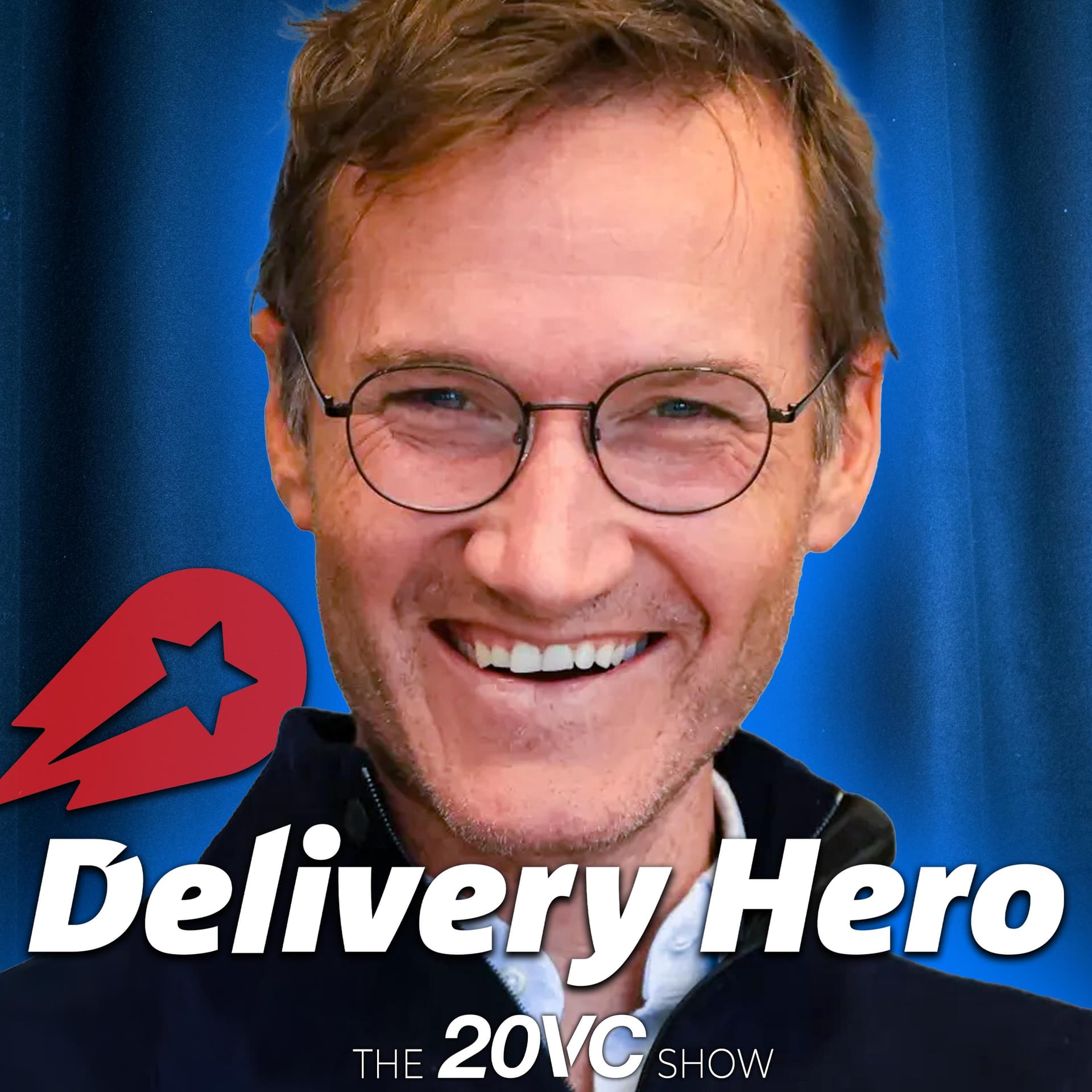
- Guest: Niklas Östberg, Founder and CEO of Delivery Hero
- Topics Covered:
- Background and insights from Östberg's entrepreneurial journey
- Financial challenges and successes of Delivery Hero
- Competitive landscape in the food delivery market
- Strategic insights on mergers and acquisitions (M&A)
Key Points
Introduction to Delivery Hero
- Company Profile:
- Operates in over 70 countries with a reported GMV of $49 billion.
- Achieved $12.8 billion in revenue and $750 million in EBITDA.
- Conducted over 35 acquisitions, including a notable $2 billion acquisition of Glovo.
Early Life and Entrepreneurial Spirit
- Skiing Influence:
- Östberg attributes his resilience and determination to his experience as a cross-country skier, emphasizing the importance of hard work and focus on valuing impact.
Financial Lessons and Challenges
- Investment Mistakes:
- Discussed a $200 million loss on the investment in Gorillas, reflecting on the lessons learned regarding cohort analysis and the significance of sustainable business models.
- Emphasized that performance metrics and customer retention are critical for long-term success.
Mergers and Acquisitions
- Mastering M&A:
- Shared insights from making over 35 acquisitions, emphasizing the importance of aligning local entrepreneurs with Delivery Hero's operational expertise.
- Discussed the strategy of investing in companies first before considering acquisition.
Competitive Landscape
- Competing with Uber and DoorDash:
- Östberg believes that success is primarily driven by execution (80%) rather than competition (20%).
- He argues that customer loyalty and service quality are more critical than the financial capabilities of competitors.
Emerging Markets and Future Outlook
- Investment in Emerging Markets:
- Östberg views emerging markets as highly promising for investment, citing the potential for growth despite regulatory challenges.
- Discussed the importance of adapting to local customer needs and behaviors.
Challenges in the European Market
- Regulatory Burdens:
- Critiques the heavy regulatory framework in Europe, suggesting it may hinder local companies compared to their US and Asian counterparts.
- Advocates for a more level playing field regarding regulations for local and foreign companies.
Quickfire Round Highlights
- AI and Technology:
- Expressed optimism about AI's potential to improve operational efficiency rather than just being a buzzword.
- Personal Insights:
- Stressed the importance of purpose and team dynamics over financial gain for happiness.
Conclusion The episode provides a deep dive into the entrepreneurial journey of Niklas Östberg, highlighting the intricacies of running a massive global delivery service and the lessons learned along the way. It underscores the importance of execution, customer loyalty, and strategic acquisitions while also pointing out the challenges posed by regulations in Europe compared to other regions. Östberg's insights serve as valuable guidance for entrepreneurs and investors in the fast-evolving food delivery industry.
For more insights, listen to the full episode on [Twenty Minute VC](http://www.20vc.com).
Written by AI. May contain mistakes. Listen to the episode to check what was said.
Transcript
Automatic transcript. May contain errors.0:00what I've learned over the years is 80 % parallel execution that is gonna matter for how big we get and how much money we make, and maybe 20 % during my competition. Yeah, we put in close to $200 million. Most of that was lost. In the end, when you look at cohorts, use requisitions and the data in depth, it's almost like gravity. It always works. Cohorts are incredibly strong. They don't change if anything to get better with the only one exception when you screw up. This is 20VC with me Harry Stemnings, and today we sit down with one of the great entrepreneurs of Europe. He has built the juggernaut in food and logistics in delivery hero.
0:42Now in Q4 2024, the company announced GMV of $49 billion, with $12 .8 billion in revenue and $750 million in EBITDA. They've made an astonishing 35 plus acquisitions, including the $2 billion acquisition for Glovo, through which we got this introduction for the show. But before we dive in today, here are two fun facts about our newest brand sponsor, Kajabi. First, their customers just crossed a collective $8 billion in total revenue. Wow, second Kajabi's users keep 100 % of their earnings with the average Kajabi creator bringing in over $30 ,000 per year. In case you didn't know, Kajabi is the leading creator to commerce platform with an all -in -one suite of tools, including websites, email marketing, digital products, payment processing and analytics for as low as $69 per month.
1:35Whether you are looking to build a private community, write a paid newsletter or launch a course, Kajabi is the only platform that will enable you to build and grow your online business without taking a cut of your revenue. 20 VC listeners can try Kajabi for free for 30 days by going to kajabi .com -2 -0VC. That's kajabi .com .kajabi .com forward slash 20V scene. Once you've built your creator empire with kajabi, take your insights and decision making to the next level, with AlphaSense, the ultimate platform for uncovering trusted research and expert perspectives. As an investor, I'm always on the lookout for tools that really transform how I work, tools that don't just save time but fundamentally change how I uncover insights.
2:19That's exactly what AlphaSense does. With the acquisition of Tegas, AlphaSense is now the ultimate research platform built for professionals who need insights they can trust fast. I've used Tegas before for company deep dives right here on the podcast. It's been an incredible resource for expert insights, but now with AlphaSense leading the way, it combines those insights with premium content, top broker research and cutting edge generative AI. The result? A platform that works like a supercharged junior analyst delivering trusted insights and analysis on demand. AlphaSense has completely reimagined fundamental research, helping you uncover opportunities.
2:56From perspectives you didn't even know how they existed. It's faster, it's smarter, and it's built to give you the edge in every decision you make. 20 VC listeners don't miss your chance to try AlphaSense for free. Visit AlphaSense .com -4 -2 -0 to unlock your trial. That's AlphaSense .com -4 -2 -0. And speaking of incredible products, when you're building a business you're going to encounter obstacles, your banking doesn't have to be one of them though, just talk to a founder who uses Mercury like Sanpei Omichi, the founder of Alice .com, a modern immigration law firm helping startups and their employees immigrate to the US and there are 20 Vc portfolio company and Sanpei says, using Mercury was a no brainer for me when I started my company.
3:40I was able to get an account open immediately and using Treasury and the checking account has been a breeze. So you need to visit mercury .com to see why founders like Sampei use mercury to help them hit the ground running, make the most of their money and see all their business moves in one place. Mercury is a financial technology company, not a bank. Banking services provided by Choice Financial Group, Column NA and Evolved Bank and Trust members of the FDIC, the provider of this testimonial was not compensated and is a client of Mercury Advisory LLC. You have now arrived at your destination.
4:15Niklas, this is such a joy for me to do. I mean, when we look at delivery here at today, it is one of the generational defining companies of Europe. So thank you so much for joining me today. Oh, thank you very much. Very kind of you. Now, I heard from some of your friends that you are the most resilient person they've ever met. And I heard stories of spraining ankles and cycling 100 kilometers the next day. I think that a lot goes back to our earlier years. Why do you get this unwavering determination and resilience from, do you think? I think some of it comes back to my childhood. I was a cross -country skier.
4:49And for anyone who's not the cross -country skier, it's exhausting. You train every day, you go out in the dark, two hours interval training in the dark forest of Sweden. That's kind of how a regular day is. It looks like. And I think you build some resilience there that came from there. But I think the other thing that also both for sale is just if you feel like you have a purpose and you actually do something where you add value. And I think over the years I've also learned to focus on what I can impact rather than all other things. And I know that it's hard, but I really try to stop caring for what other people think or piecing others.
5:26So that helps. One of my biggest weaknesses is I care too much about what other people think. does success help in terms of reducing the importance of others' opinions? Probably. It probably builds a certain confidence that what you're doing is right. I only have to be careful that it doesn't take you off your feet off the ground. But I do think that some level of success is probably helpful as well. Can I... was there ever a time when your feet did get off the ground? We call it getting too big a hat. I remember when I was like 21 and I raised my first fund. I thought I was hot shit and Niklas I was not hot shit Did you ever have a time and how did that go?
6:09Yeah, probably was at many times. I remember back in the 99s. I was investing in stock market I thought I was amazing. I made a lot of money I lost it very quickly and realized that maybe I'm not that great after all I think we all thought that we were better than we are were back in the COVID pandemic, business was going through the roof probably also time with the result that we were better than we actually were. You constantly get reminders that maybe you have to like stay on the ground. You're not as good as you think you are in the good times and probably not as bad as you think in the bad times.
6:45What did you do in COVID that you wish you hadn't done? It's hard to say, of course it's easy to say we benefit from hindsight because was not only the COVID ended, so that the whole capital market and interest rate and many other things that happened when COVID died out, that all came together at one point and that of course put a lot of pressure into companies to cut costs and so on. If we would have known that, we would have cut costs faster earlier, we would have probably taken down risk a little bit, we would have saved as much money as we can. The problem would erase equity instead of debt.
7:22During the time when we thought that we should be worth hundreds of billions and we felt we were undervalued back then when we were at 35. So of course it would have helped if we were taking on equity instead of debt. The raising debt is not something that's spoken about a lot but a lot do it. What's your biggest lessons or advice on raising debt and using debt as an instrument inside of equity. Yeah, I think the learning for me is that you have to be careful with it. Coming back to the point before, we thought that we were unbeatable, unstoppable. And therefore, if I had a clear path to being a hundred billion companies, why would we want it to loot on 30 billion?
7:59We get greedy and they didn't want to dilute those couple of percentages that would have cost us to raise a billion or two. And we were about to do it. But then stock fell 5%, the fact that it fell well now is too late. and the stock dropped about 10 or 15 % and we felt now is definitely too late and I short laughed the stock fell more than 50 % and then it was truly too late. It's easy to get greedy in those times. You feel like you're on top of it and yeah you have to be careful. It's very to dilute and not think too much about it. How do you maintain morale when you have stock drops as you did?
8:35I think it wasn't that hard at the beginning because I think everyone thought that was just temporarily and it would come back and all the numbers all KPIs were good. I think we took fairly fast action as well. Back in end of 2021, we felt a little bit worried about the market. We sat down Germany and Japan. We cut on 100, 200 million out of our budget before the year even started. We actually came in and I think things crashed down in January, February March, so a few months later after we did that. I'm lucky we did that, but I think the moral of the company was still very good. The felt was temporary, they felt that had taken action, we should have taken already before ahead of time.
9:23I think the hard part was to not grow valuation for another three years and we were almost where we were three years ago if look at that I stopped today and I think at some point some people start to lose hope. Were you overpriced three years ago or underpriced today? I think that that's how you see it. I think what public market often what it does is that it values things one or two or four and of course it compares with other companies and I think yeah we were definitely overvalued if you just look at it from a couple of years down the line a fast forward. For anyone who rather think of it as a DCF cost of capital over X number of years, maybe we were not that overvalued back then and we're probably undervalued today.
10:09Maybe truth is a little in between. I definitely think that we're undervalued today though. We mentioned confidence and having the courage of convictions. I do want to talk about something you said to me before, which is daring to be contrarian, making decisions not everyone believes in. Can you talk to me, how do you think about this specifically with regards to your leadership? Great leaders, the follow their beliefs, and when they do, people follow them. That also means that they will be contrary, they will be occasions when they go against the stream, and if they have a good judgment and great leaders have good judgments, then they are usually coming out very strong afterwards.
10:47And every time they succeed, they are to build the follow base and trust. I think it's very dangerous when these don't follow their belief. It drives skepticism organization. I think it usually will not be getting the respect. It will be inconsistent. The leadership will not be consistent when they don't do what they think and what they believe in. When did you have the strongest belief that most people disagreed with you on? A few that comes to mind as big differences were around logistics. No one believed in logistics back then. This was back in 2015 and we doubled down in logistics. The first initiative we did, we lost 6 million, it looked terrible.
11:30And most people were probably given up there, but we shut down that company and rebuilt it again and invested tens of hundreds of million in logistics. And I think everyone say now that that is a better customer experience. It's clearly better for customers and had a strong belief that we used to have to figure out how to make the economics to work. The same selling our home market was clearly a contrarian decision. Maybe some investors thought it was okay, but I think in the company that was a very contrarian view to sell your home market. Why did you sell your home market? It's a massive market in terms of population.
12:07It's not got the volatility that emerging markets do have. It seems from the outset bluntly a very contrarian decision. Yeah, so in a back dance this was 2017 and I felt that the market is not as big as it looks. It has a strong competitor and there will be no way of consolidating that market later on given regulation run M &A as well. So I think I thought this is going to be value maximizing and then I did believe that we could use that money to actually double down the markets which I consider to be much larger and I think it turned out to be larger markets outside of Germany. I also believed in a different thing which is I felt we would be a stronger operator internationally if you are not getting distracted by a home market.
12:57Back then everything we did, as soon as something happened in Germany, we would drop the ball on everything else because it's so close to our heart where we sit. So I felt we were very mediocre executor outside of our home market because of that and once we sold Germany, there was no excuse for not delivering outside of like in the rest of the world. So I think it became much stronger in our execution operations outside of Germany once we sold Germany. And so, and she said that you didn't see a market where consolidation could happen. One of my biggest questions when investing today is bluntly is this a win and take whole market and what does the distribution of gains look like in an eventual outcome in this market?
13:38Is this a market where you have to see consolidation as the ultimate outcome? No, I don't think it's when it takes all market. I probably changed my view there. Proving wrong, frankly, I know you've seen US that there are two players making a lot of money. Look at UK, there are three players making a lot of money, all of them. France, two players making good money. When you say that, I don't mean to jump in, but the UK, who have you got? You've got delivery, you've got Uber Ease and just eat them. Just the delivery and Uber Eats and they all make money in the UK, I would say, decently so. Same with France, I think, but the delivery and Uber is making money there.
14:19And the delivery are also up right a few markets where we have two or three players making money in that market. How do you think about the opportunity cost of being interesting enough? And I'm going to get in trouble for this because Will's a dear friend of mine at Delivery. But Delivery is valued at a billion five, I think it is. It's not a huge amount respectfully. When you look at what delivery here is today, that it takes a lot of resources, a lot of attention. Is that a large enough outcome for it to be interesting enough? So, yeah, we can already, if Delveru is correctly valued today, I would argue there are two low value today.
14:55I don't know, it's a profitable business that's growing and will continue to grow and it will make more money. It's clear value in that business. You can argue would it be even more valued if they would be possible to consolidate? Now I don't think that there is, it's possible to consolidate UK and if you had a market, do you want to trust a reason? So you can probably not consult that delivery and just eat the Uber and deliver you and so on. So anyone who would buy delivery, they will still have a three market market in UK. And it says it wouldn't really resolve, the wound really changed anything there.
15:30The only thing would be that someone else is operating and delivering a root. And it's more a question of can someone else operating better than delivering themselves? Can someone else pay more money for it than what is worth? Probably would it make sense for delivery to sell if someone offers a higher price but still a lower price than what business is long term worth, probably not. It's a tricky question. Why is it not a winner -taker -who -market? When you think about scale, really providing better unity on the density of drivers, density of customers, it seems to me like a winner -taker -who -market.
16:09Why is it not? There is a clear advantage. The bigger advantage is being large. If you're large customers, they're incredibly loyal to your product. They are not as price sensitive as people think. So we don't see that customers move because they get a five -year voucher somewhere or ten -year voucher They might do it one order, but then they go back to where they usually order and what is top of mind for them Therefore I do think there is a strong locking on customers as long as you deliver a good service The day you don't deliver a good service Yeah, well then they can it can be disrupted fast and we have didn't disrupted a lot of companies in Spain, Italy, Poland, Norway, Vienna, 2, and 3, 4 players in those markets.
16:54There are occasions when the leader is not delivering good quality, but if they do, it's incredibly hard to gain the customer base of someone else. I think there is important in the early stage that you get a strong lead, but then once you get scale, it doesn't really matter if someone has also a scale. It's not that if a comparator is half our size or double our size, it doesn't make it smaller. It doesn't make our economics worse if they're bigger or smaller. There's more relevant that we have scale and that we deliver a good service. I think in the past I saw it more as 80 % competition, 20 % our own execution.
17:33What I've learned of the years is 80 % our own execution that is going to matter for how big we get and how much money we make. and maybe 20 % that are doing by competition is not vice versa. So, as long as you get scale, you will make money, regardless if you're number two or number one. Of course, if you're number two, you will have less scale, you will make less money, but you will still be able to make money. What else have you changed your mind on significantly? Were you did or didn't believe something that over time, you have shifted your opinion on? I think one thing that I realize of the time is the importance of simplicity.
18:09I think in the past it was a tendency I wanted to do more than what the organization can actually handle. And I think focus on a few things and really doubling down on those makes a world of difference. So a complexity is a killer of speed. I mean that's such an interesting lesson because I always hear the statement that the best CEOs are the best resource allocators. And simplicity kind of boils into that. She would agree with the statement that the best CEOs of the best resource allocators and would have been your best lessons or most poignant lessons on resource allocation as a CEO. I do agree that the best CEOs are Exceptional good cap lullacators, but I don't think it's the most important part of a CEO's job I think it is an important job, but but by far not the most important I think more important is that you drive the culture the drive the speed of the organization You drive the organization in the direction of pace and data and direction.
19:07And if you do that right, capital allocation will be very easy. And capital allocation is also decision every day type of topic. Most decision capital allocation could be for the investment in this product, for the investment in this area, for the investment in this country. And if you have good data and if you have good culture, it will be obvious what is the right investments. You start to look at the returns, those ones. That's probably more important that you drive the organization, the speed of organization, and the culture of it is more important allocation itself. That, of course, it comes times when there are big decisions where you actually have to make a bet.
19:43You don't have the data, you don't have the information, and you just have to make a bet that we're going to go in this direction or that direction. That's what good CEOs have a good feeling. They know their industry, they know their organization, they know the strength of organization, and they were there to make sometimes the ball decision. When you think about those ball decision moments, when you're sitting there and you know it's one of those moments, can you take me to a time when you got the decision wrong? I think, yeah, quick commerce is an interesting space. I think we have been exceptional, happy with the performance of how we have been able to scale the whole quick commerce side.
20:18And that was also contrary and believe to double down on this. It was not a very popular one, but we felt that if you want to build what the customers really want and what they're asking and demanding, then we have to be able to deliver groceries and other items in a short fashion. Now there's a big part of our business and long term is going to be more than 50 % of our business. It's a larger than food for sure. So that turned out to be right bet. At the same time we also did a bet in a company called Gorillas because we felt we cannot do quick commerce ourselves in every geography. We can't afford it.
20:54It's too expensive to build up. So we rather felt let's take some of the money, put it in another company and see how we can learn and see how they can succeed and potentially certain opportunities in the future. Unfortunately, the business model probably could have worked out the North for Greenless, but the challenge is that the market changed. There was not possible the risk capital anymore for these companies and they burned too much. So how much money did you put in them? What did you learn from that going south? Yeah, we put in close to 200 million dollars. We got some of it back, a small portion back, but yeah, most of that was lost.
21:33The big learning I've made there as well as a few occasions before is in the end, when you look at cohorts, use requisitions and the data in that, it's almost like gravity. It always works. It always works. But for some reason, they kept acquired more customers than I thought every month, they kept course coming up every month and therefore also growth coming up faster than I expected. So when I looked at a few months earlier, I felt this makes no sense, they will never make it and then the art paste expectation I had and I felt, ah, maybe I was wrong. But now it's too late and then it happened again and again and the next month and next month.
22:14And at some point I felt, maybe I'm wrong, maybe my modest on the work, maybe the data, somehow it seems to work because I've been wrong so many times now that maybe I'm just wrong and that's when I made the investment. In the end, it's almost like gravity. In the end, cohorts model work, acquisition models work, prediction their works, temporarily you can boost it for a barge's discount and other means. But in the end, you have to look at the core of the business and then see. And I've done that mistake many times where also in some markets, we have a market in Asia where they beat their plan every month.
22:54And at some point I realized like maybe I'm not a good forecaster, maybe I'm just wrong, maybe they are right. But then it turned out to have built on a little bit light foundation and eventually what comes up needs to come down. I've seen the other way around. Sometimes you keep investing, you feel like everything is right, but the business doesn't grow, and you feel like maybe I'm just wrong, but eventually that tailwind that you're building in is eventually kicking off. I think the learning there is to stick to what you believe, stick to your core principle or investing, stick to your core belief in what works and what doesn't work and don't get too excited by the outside environment and getting dragged into something that kind of goes against what you believe in truly.
23:39I always think that to John main arcane's economists who said, when the facts change, I change my mind. And I very often think about how long do you keep pushing on a belief where all of the data tells you otherwise. That is a very hard question. Yeah, probably shouldn't. And of course, you have a lot of momentum traders and they make a lot of money by just staying with the momentum. So if you're not part of that momentum, you're also going to lose out. So there are occasions when you also have to play along when the music is there, you're dance, but you get to be careful. You mentioned that investing in gorillas as a lesson.
24:17I spoke to so many of our friends who said literally, Nick classes the Master of M &A. When you say about investing in gorillas, that's the extent needed 200 million. It's a loss. How do you think about that? Byverse is built, given your incredibly effective M &A strategy as well. Of course, coming back to this 200 million mistake was done here that we were a 35 billion companies. So this was back then less than a percent, was a half a percent of our market cap that we felt like we are willing to take this bet on this. Of course, if that valuation falls from or a 35 billion to five or ten billion, then of course, losing 200 million is a lot, especially if you don't have the cash in the balance, or you have enough cash in the balance sheet.
24:59I think there is also part of the learning that you have to take yourself a little bit out of this speed mode and think it through on a more fundamental basis than getting too caught up with your current value or your current growth. Stick on that, sorry, before we do the Bivos as well. You mentioned take yourself out of that speed mode. We chatted before and you said, speed of execution is the only thing that matters. How do you think about balancing speed of execution is the only thing that matters with having the wisdom to remove yourself from the day today's speed mode for those decisions?
25:32Yeah, so I do think for an organization itself speed is really what matters. But a good part is that for most organizations and most decisions are reversible. So you move, you take a decision, you get data and you change direction and the fast you can iterate and do that, the fast organization is going to move. And in the end, the reason for saying that that's the only thing that matters is that all the speed and all the things that you're building towards customers or other things that that our priorities is compounding. If you can get 25 % more of your organization in a year, that feels like, yeah, that's good, but it's not game -changing.
26:09If you do that for 10 years, you effectively compounding up a 10 times better product. So I believe in this moving fast and drive an organization fast and kind of compounding that is key. Then there of course, those non -reversible doors where you have to be very careful that you think it through and so on. And I guess making large investments is non -reversible. So I think you have to be a little bit more cautious there. How do you retain speed at scale? Delivery Hero is a monster of a business with a huge team. How do you make sure that everyone in the org feels urgency? And there is not bluntly a little bit of European apathy and slowness.
Read the full transcript
26:51I think you have to divide the organ responsibility and ownership very carefully and making sure that everyone can see their impact very clearly. So the setup we have, for example, we make sure that there's a clear ownership on the country level and making sure that they have that autonomy in that ownership. So for them, they can really make an impact in that country. It's very tangible what they do and outcome. If we set the goal of driving over all business to a size, then each individual cannot make really that impact, then cannot be that visible what they do. So you have to find a way that you can actually divide the goals in a way that is clearly measurable what you do and every part of the organization or every person in that organization and making sure that you drive that accountability and visibility and clarity.
27:39And if you do that, I think it's very easy to manage the organization. It's very clear who is a strong performer who's not. If goals are very tightly aligned to what the people actually do and the organizations set up such that you have that that the build responsibility on a smaller basis, smaller buckets. What you see in many companies over time is that they get too big, they get the goals at too large, it's not divided in, it's very transparent, whatever one does and how they contribute to their goals. And they start getting inwards looking. They don't look at what the actual output that they're driving, they rather look at how much they work, what they deliver, but it can be for not for consumer customers, but for maintaining the organization.
28:22So I think building a culture with output really matters and making sure that you divide the organization such that you have ownership and account built on very low level. We mentioned the Bivos build earlier. I do want to go back to that. As the master of M &A, how many acquisitions have you made in a class? I don't know. It's been a lot, but I think over 35 though. Yes, yes. We have done a lot, but most of them have been very, very small. And what we believed in is that we believe in those local entrepreneurs who knows the market better than Iran and we can leverage the fact that we know how to scale things and we know how to measure things and we know how to get good returns.
28:58So if I give some other examples, Petit Oshia was acquired when the company did 60 ,000 orders per month. Today it does maybe 20 million orders per month or close to at least. So of course it was very small businesses back then. I don't know, you know, Talabad is a company back then I think that it's 70 ,000 orders per month. So it's literally nothing. But we were good at leverage, we were good at which automate, try efficiency, knowing how to invest, taking over, building on scaling that while we felt that we had a big benefit of having those local entrepreneurs that we can plug into. And I think that has been a big success of the But we rarely made big M &A.
29:44That's been one or two big M &A, like Louisville. But most M &A have been rather small and rather being like you're acquiring a team and you require yourself one year of head start. Is it easier to buy a company versus build a company? I think for most companies it's harder to buy a company and be successful there. I think the hard part is not buying a company, the hard part is to make something good out of that company. That's probably something delivery has been very good at. They've been good at fostering this entrepreneurship and getting them on board and that's probably success. We're going to get to how you retain entrepreneurs in a way that no one else manages to do.
30:25I just want to stick on the pre -buy process. Do you always like to invest first or will you buy straight? What's the preference? I think in the past we knew that we had to build scale very fast. Probably wrongly so we looked at just the feedback then. It was this huge company when we started. It had been operating for 10, 15 years. We had another company called Takeaway. That is now one company just the Takeaway. But that was the gorilla back then. And we felt we would not stand a chance unless we scale fast. In order to scale fast we just have to buy and have to build. And we have to do that in aggregate.
30:59it. I think over times the industry changed, logistics came, Uber and others and the market improved that it can start this business way later than we did. But we believe that the only way to build scale fast enough was to buy back down. I think if you look at things right now, we probably prefer to build. The main logic for that is buying something now will be, well, at the time will be extraordinary expensive given that we still consider delivery to be under value, but also even if you buy ourselves another 3, 4, 5 % business and size, if that distracts us with 2, 3, 4 % then effective we didn't achieve anything and we only spend money on it.
31:40So in order for us to buy it really needs to be something where we feel here we have a very strong team, we can plug it into a machine and it will make rest of the delivery here a better So to what extent do you let the attitudes of the street public market investors impact your buying mindset? When you're looking in an asset like Globo for example, I'm not picking on them, I'm just choosing it as a well known asset that we got introduced through. The public market may love it or they may hate it, I'm not sure, but they will have a feeling. To what extent do you let that permeate into your buying mindset?
32:15I think we can see the core horse, we can see the acquisition growth, we can see the customer experience, we can see all the data in the world to know if this is a good acquisition or not. If you take a little less than example, it was very clear from us from the very first day that this would be an unbelievable, profitable company. Why would not benefit you from the first day, respectfully? It is a expansive business to run. It's a tough business. We very love these businesses. Well, it's not obvious to everyone. Why was it obvious to you? It's very simple. We see the cohorts, we see what is the repeat rate of our customers, and then how many customers are required per month, and how do the existing base evolve over time, and how many do we add to that?
32:59That would very clearly give you a certain growth trajectory. There's not an unashamed cohort's identical. What I mean by that is, as you expand cohorts, you will get less and less close to your ideal customer profile. They will be further away from your target market as naturally happens with customers. And so the cohorts may behave differently. How do you see what I mean? Yeah, I do, but the benefit we have here is that we also own a lot of assets in delivery here with more than 20 years of cohort development, where we have enormous amount of pretty good for 70 different markets. And we have seen in every single market, not a single exception where it has deviated over time.
33:42What are the big lessons? I'm so sorry to interrupt you in the class. What are those big lessons from those cohort data behavioral trends? Cohorts are incredibly strong. They don't change if anything to get better. With the only one exception, when you screw up, when you start not looking at the customers, or when you start missing a trend. So I mentioned logistics. So you're done a couple of mistakes, but we're not fast enough with our logistic, implementing our own delivery fleet. And then someone else comes, then of course our cohort will deteriorate, or multivirtical. Maybe we have built out a very good multivirtical offering to give further value to our customers, but we didn't do that fast enough in Colombia, as a good example, and we get disrupted by rapid.
34:27So then the cohort deteriorated big time. Or if we acquired a lot of customer based on vases, discounts, promotions, then of course, we'll also see a deterioration in cohort once we start pulling that out of the system. But if you look at where we operate, where we do things right and where we care for the customers and where the core is just the strength of the course and not coming from from vases and discounts, we have enormous amount of predictability. So we take the example of global, it was very easy for us to see how this business is going to grow over the next 10 years.
35:03And We still have many, many years of that growth trajectory. And we know how much margin we're going to make in an order. That's also very predictable for us because we set the price. So in the end, we know that the margin on the business is going to go to 10 to 13 % over time. So based on that, you can very quickly calculate your growth profit and you know your base cost, the marketing as well as the overhead that you have to have in order to run a certain size organization. So, if you take global, it's incredibly easy to see how profitable that business is going to be over the next 10 years.
35:37And for us, it was, therefore, clearly a good acquisition. For an investor, they don't see that data. The only thing they see is, where's the top line and what is the bottom line and what the growth rate is. And, of course, when we acquired global, that was a bad timing, probably. It was the end of 2021 before the whole market collapsed, where everything is about profitability. and global lost 330 million when we acquired it. So of course adding another negative 330 million getting into 2022 was not very pleasant but in the end that was painful but I think everyone start realizing how much value global is going to be worth and how much is already this worth if we extrapolate what we stand now.
36:21Do you think 2 billion was the right price? Well we paid stock. So in the end, I think effectively since our stock fell with 75 % that we didn't to loot that much. We bought it when our delivery here was more like a third of a billion. So the dilution for delivery here was more like five, six percent maybe. So I think that was an incredible acquisition. Only diluting a few percent less than a 10 percent for a business that is clearly going to outgrow the rest of the business. When you look at cohorts, what What is it that excites you? Is it like, because you could have like AOV size, average order value size being super high, twice a month I spend a lot of money, or it could be I use it every single day, but for very small things.
37:04What is it in the cohort data that you've learned shows true cohort strength? Yeah, so in the end, you want a cater for customers being able to order as often as possible and as convenient as possible. If you said the basket, the minimum basket size, such that you need to have two threads every time you order. Well, that will take away a lot of occasions for you because sometimes you're alone or you cannot afford. So we have to find ways how can we drive economics also for small baskets and make that work. However, if you do something that is not long -term sustainable, then of course the course also not going to be sustainable because the day I then and a movie from being able to do a five -year order and that's not economical obviously today.
37:45And suddenly you can order if you're for 15 euro. then you will start reducing your order behavior and therefore the course is sustainable. So whatever we do and we always have to build on sustainable economics, even if it's in the first instant, we might not have managed a business to get economics. So for example, with the statistic, it took a couple of years before we broke even per order basis and the whole quick commerce. It took us a couple of years to break even per order basis. It was not because we It was just because we hadn't optimized our own efficiencies. Therefore, you can maybe be ahead of time in terms of what you offer to the consumer, but you have to find a clear path how your long term can make sustainable.
38:30Otherwise, you should never offer you to do that order. Speaking of long term sustainable, what do you do? You mention rapping in Colombia there. What do you do when you have competitors who suddenly raise or have a lot of money? And that could impact your cohorts? The thing is that it doesn't impact our course so much and often the impact on the business may profitability is rather that you get nervous and you start spending a lot of money and you start copying what they do. But I think our learning is as long as we keep delivering good experience for our customers, keep pushing the boundaries for how we can make economics on every single order.
39:09If someone is willing to make a loss per order without that trajectory for getting profits, they might get some of the discount counters that the low value customer base might go to that competitor, but it's not sustainable. So eventually they will have to take away those vouchers, those discounts, and those customers will be good to any platform then. So I think the core is to making sure that we have a service where our good customers are loyal. That's what we see. Regardless what someone invests, we see that our customers are our exceptional loyal. You mentioned the word good there. It made me think, you know, we saw this bubble of capital going into the space.
39:47Whenever it was two to four years ago now, when you get to my age, Nicklas, the memory goes, but my question to you is, was that a good bubble ultimately that did produce advancements in logistics, consumer education, consumer awareness, or was it a bad bubble that bumped me, burned a lot of investor money, and didn't really progress the space forward? I don't think it moved industry forward that much. I think it just drove some non -sustainable behavior. Same here, if you look at the cohorts, we clearly saw a bump in the cord up. We thought that we would maybe maintain it at that bump at higher level.
40:24But it turned out to went back to the trend line. So if you have a trend line of this, it went up temporarily, but then it went back to trend line. So it really didn't move much in the industry. It just created a little bit of a bubble where we be spent on necessary money. So I think effectively in the end, Covid was not a good thing for us. Do you see door dash and do you see Uber Eats as your biggest competitors today? When you look at the capital that they have and the reserves that they have, is that the biggest threat? Not really. Coming back to the point around competition, I think it's 80 % about what we deliver and maybe 20 % of what it compared to us.
40:59And every single time when I see here we haven't grown fast enough. It was not the ghost of competition, it was because we didn't deliver a good service. We were not moving fast enough. So I think it's 80 % dust and 20 % competition. I don't think that the balance sheet matters in the end. That is not what limits any comparator spend money. It's going to be the return that is going to limit a comparator spend money. So it's going to be hard for a door dash or Uber or some of sustainably make bad investments because they can. I don't think is about balance sheet with all profitable entities, you can argue who is going to move that profitability up faster or slower.
41:41It's not going to be the balance sheet. It's probably more there. What cost can you have a good return? As we saw, get to scale in ornamentally, very quickly and incredibly successful in Turkey and then roll out across Europe and then bluntly roll back with just the same speed. What did that teach you? What should we look at and learn from that? Yeah, that comes back to the thing when you do something that is not sustainable and you get customers to order because to get 20 bucks for free of course, you're not building a sustainable business as soon as you pull that 20 bucks back You will lose a lot of customers.
42:15So it's a very expensive way of growing the same Doing a lot of discount and vouchers. It can be good to give a discount for someone who's a good customer and getting them to try But most customers who order a discount, it's over proportionally coming to very cost -sensitive customer. Customers are always looking for finding a deal. It's always going to drive a lot of fraud as well. So when you do too much of a voucher strategy, discount strategy, you are going to track the bad customer base. It's going to be expensive and it's going to drive their little value. And I don't think it tears the only one.
42:52Let's speak about our mistakes. If you take our Thailand business, we scale from a couple of thousand orders a day, up to 400 ,000 orders a day, in less than a year. This is faster than I think I've seen anyone scale a business, but it was not sustainable. The business is now back to doing way less, it's doing 25 % of that today. Was that predicated on a heavy discounting strategy? This count, yeah, you drove, it was very cheap so order food in Thailand with us. We didn't care for that customer experience enough, it was just about price. And of course when you tried to move the sustainability, most of those orders would fall off.
43:34And I would say the value of our Thailand business is not very high. It's, it's so you can scale very fast in our business. You can go to 400 ,000 daily orders in this case, but it's not worth anything unless you're being something sustainable. So when we see other comparators do that, we really don't mind that much. We know what it does over time. We saw the same in Turkey. We saw the same in a few other places. Those customers come back to us as soon as this stopped giving the varsals and discounts. Was there a market you launched where it just didn't go up? Like it was actually just pretty dead.
44:07Reception wasn't great. Yeah, it's always hard in the beginning to get that product market fit. But I don't think it's about a market. I think every market in the world will probably work with this. It's just a matter of getting that product market fit right. And secondly, is it worth while having another country, another set of regulation, another set of so a lot of markets might not make sense because it's not enough return, but I think they can all work. How do you think about how long you're willing to lose money in a new market before it turns good? I think you need to see that the fundamental of the business works.
44:46Coming back to that cohorts, are the cores good enough? Can we see enough life can value in this? And can we see that acquisition cost is getting to a place where we can actually scale it? So you need to get that to work maybe in a year or so. And if you get it to work, then of course you're going to spend money over the next couple of years because when you get it to work, you want to scale it. If you don't get it to work, well, then it's not going to cost a lot because why would invest in a business that has a bad lifetime value return. So in the end, sometimes it could be that the best market is the ones that's going to cost a lot of money for a number of years because you want to invest to grow it.
45:21So it's not necessarily that the best market will be fastest to break even. It could be that the worst market that will fast at the break even, but then they'll never get an value. How do you think about that? Never get any value with regards to emerging markets. One of the most important things I've learned is kind of pathways to liquidity and actually emerging markets are much more challenging to get liquidity from. There's just not much local liquidity. How do you think about that with emerging markets? And for us it's not such a big difference. We would rather see, do we have a return when investing this customer, regardless where they sit?
45:56And in some markets you can just scale it in a certain way. You cannot scale it fast. Coming back to the point where I tried to make before, you can then you're gonna not invest a lot of money and you're just gonna gradually scale it and in a small percentage every year and then you can run and break even for 10 years. And another that you're in the early days, I was part of starting those online pizza, it was a completed bootstrap, no investors at all. So we were breaking even almost on the first day of business, but of course, then it takes a very long time and you're not maximizing your business.
46:35If you have a good return on your customers, Well, you want to buy as many customers as you can at the price that we should have a good return and that doesn't really matter Where they sit to sit in a developer market the merger markets for us would be Well, it does because I ultimately do close back to enterprise value of the entity and actually if people discount revenue from emerging Markets then that's going to take a hit on the multiple that you enterprise value of that core entity is going to be worth Yeah, it depends a little bit if you're you're building a business to sell it Then of course you will have to look at the multiple and how markets are valuating and so on If you're building a business because you want to drive Shareholder return over time and driving cash flow and so on Then and you might not care so much what investors think is worth at a point in time You will rather care for what is the value of the business that you're building?
47:27That's the difference between price and value. We try to be focused more on driving value than driving price. Totally understand that. Final one before we move on to Europe and then Equip Fire. What's the single best M &A you've done from an ROI perspective? I think we have all of them because we bought them all very early. I look at a producer shea from Latin, what I mentioned before, that will maybe 50, 60 ,000 dollars a month. That business will be huge. Look at Taliban. It was a little bit more expensive, but we were doing 70 to 80 thousand monthly orders and now that is the 10 billion business.
48:03So that is a hundred times return or so. We have a lot of hundred times return or even a past and times return but most of them were small businesses. So of course it's a high return on a small amount. Then if you take a business like like global might have an absolute term, long term equally large. But on a multiple basis of course it's less given that it was still a larger acquisition. I have to touch on Europe before we do a quick fight. We both sit in Europe, and the world has never been so convicted in their doom around the future of Europe. How do you feel when you look at the negativity and skepticism around Europe today?
48:41There's some far -bashling that are things that we surely could have done better and that I hope that we will do better, but India and I'm an entrepreneur and an optimist. I believe we can do stuff. I believe we can build and amazing companies out of Europe. And I think there is a lot of strength in Europe as well. We are highly educated people, good infrastructure, welfare system, functioning democracy, we are a talent hub, decent balance, it and all of that. There is a lot of strength of Europe. There are also a lot of weaknesses of Europe. I hope we can address this. And if we can, I think Europe will be a amazing place for start -up and companies.
49:16What would you most like to change? Yeah, make it easier, faster to get talent into Europe, reduce some of the bureaucracy or certain regulation that can sometimes be a little bit overwhelming for a lot of companies and I speak about GDPR, sustainability reporting, paid transparency, direct accessibility act and so on. And they all make stands and have good intention, but collectively it's just a big burden on those European companies and I think a little bit unfairly that but they are not the same criteria for other companies competing in Europe. I think this is proportionally adding to European companies.
49:59So if you can do that, then... I mean, listen, I had Oscar on the show and he mentioned obviously the intense regulatory pressure that he's under from the Spanish government and it not being applied to, you know, Bluntni Ubra and foreign competitors. To what extent is Europe regulating itself into oblivion? I do think that sometimes we are hard on European companies and European companies are there is more scrutiny on us. There is a lot of regulation that is circumvented or ignored by Chinese and US companies. I do think that we have to truly level the playing field in many ways. I think a lot of US players also leverage the dominance.
50:40Yeah, we have to make sure that the US and Chinese companies cannot circumvent regulation. But we have to make sure that we are not going after European companies more than US companies US because it's easier to approach us and reach us So there are a few things that I think that we have to also work on to making a level playing field and hope that Tower Los happen. What do you say to Oscar when he faces the pressure that he's under from a national and the government is that, is it like hey dude, I'm here for you, Kumi, is it like oh shit, that's a big fine, what is one say? Generally the principle of delivery here is that we are in the details and we are in the trenches in the details so I will not step there and I'm just not being helpful and not knowing the details, so I'll go into details and the same thing I expect Oscar to be in the details.
51:32Of course, we collectively tried to find the best path forward and how we can solve it and be supportive and make it show we take the right decisions and operate in a good way. But in the end, we can only do so much in the end that I cannot blame Oscar for challenges that he is not responsible for. That has affected him, but where we have collectively taken decisions that we think are right. I've been a force to be able to take shared responsibility on those topics. Can I move into a quick fire round? So I say a short statement, you give me your immediate thoughts. Does that sound OK? I'm fantastic.
52:09Amazing. What do you believe that most around you disbelieve? I think Jen, Jen AI or the largest beneficial of AI is going to be the average company deploying it, but not necessarily the Mag 7, the ones who are building it. I think that is probably contrarium. At least if I look at the stock market, we will see they have done tremendously well, but other companies haven't. I do believe that the biggest benefit here is the leveraging AI versus tools of building. Do you feel pressure as a public company CEO to have an AI story? No, but I feel pressure of making sure that the leverage AI to get more efficient, working real hard on that.
52:50If you have a story or not, that's a little bit cosmetics. I don't care for that cosmetics so much. I care for actually leveraging and truly make our business better for it. You can buy and hold one stock from that 10 years of Undelivery Hero, which docked you at Buy and Hold. I like it to be a little bit of thinking 10 years and hold, because I think it says the right direction of what other companies that cannot be disrupted over 10 years. And I was always a big fan of Amazon and so on. I'm still a big fan of Amazon, but of course the valuation of those companies has gone up a lot, So you cannot count on multiple expansions.
53:27So the growth in those stocks will only be, or the value growth of those stocks will basically only be the growth that it can generate. That's still probably going to be a fair month, so maybe I stick with Amazon. What would you do if you knew you couldn't fail? Increase risk. How would you increase risk? Double down even more on things that are uncertain. What uncertain thing would you both like to We are a brave company that do what we believe in, so I do not think that we're holding back too much. Of course, a match before we're big believers in the whole quick -murs, grocery shopping type of thing, other verticals that we're expanding into as well, health and beauty and that's an so on.
54:05A match before I think that's easily more than 50 % of our business long term. Today is only a small portion, a small fraction. So that's something we are doubling down on, but I don't think we're too afraid of taking risk. We are willing to take risks as long as we have good data behind it. Which other public companies do you most respect in Amaya? Why them? There are many. You have Mark Zuckerberg and for having the bravery that he has had over the years, has been criticized many times, but is stood by his beliefs. Janssen, of course, with Anvidea, has been taking bold decision and been right many times.
54:44When will drones take over deliveries? It already reached a point where you can actually make it work economically. In some places, regulation is also a part of it. It will take time to scale it, but over time, around 25 % of deliveries are so good to be done by drones, but it might be 10 years something to actually build out that network to be there. So we are moving in that direction, but it's going to take a long time. I would say robotics will be faster and probably be able to cover a larger portion of business. What do you mean it'll be able to cover a large portion? It does pick and pack or it does delivery?
55:19What is that? Where do they own that segment? Yeah, so of course the challenge with drones is that it's hard to do in the city center of cities because of noise and regulation and it plays to land on and take off from that it's a little bit harder to do that in city centers and so on. and the robotics you can do in small cities, big cities, city centers, you can do it everywhere. It's a little bit slower than drones. So if you look at the Navarice drone delivery, it's happening like three minutes plus loading off loading. Robots, we cannot do the shortest way. They have to actually take the road, they have to wait for stop sign and so on.
56:03And they cannot drive in the same pace as you have a drone. So they're slower. but they can get you almost anywhere. That would probably be large much faster. Does money make you happy? No, I've never been thinking about it. I think having purpose and being in a team, having shared experience that makes me happy. I've never been thinking about it really. What's the secret to a happy marriage?
56:32conversation, honesty, understanding, forgiveness, try to take your ego out and win every discussion and every argument. This is probably a good start. And also try to see from every perspective, and I think there's a challenge to have overall that we have our point of view and we are not the standing enough that other people might have a different point of view and both being okay. When we look at the next 10 years, final one, what are you most excited for? Like for me with AI, you know, seeing the drug discoveries that will come for like MS suffers, my mother's got MS is immensely exciting. What are you most excited for when you look forward over the next decade?
57:10For me is is even more exciting than things where I can drive things forward and of course all AI space will make us more efficient, will make us better, will will dramatically, so I'm very excited to see that, that adding out. Nicklas isn't, this has been so much fun. I'm sorry for going so off -schedule with some of those questions, but this was fantastic, so thank you so much. Thank you so much, and thanks for a fantastic podcast. I mean, that was a really special show for me to do. Nicklas is such a hero of the European ecosystem and delivery hero has paved the way for so many others. huge thanks to Nicklas for giving up the time and if you want to watch more you can find it on YouTube by searching for 20VC.
57:54That's 20VC. But before we leave you today, here are two fun facts about our newest brand sponsor, Kajabi. First, their customers just crossed a collective $8 billion in total revenue. Wow, second, Kajabi's users keep 100 % of their earnings with the average Kajabi creator bringing over $30 ,000 per year. In case you didn't know, Kajabi is the leading creator commerce platform, with an all -in -one suite of tools, including websites, email marketing, digital products, payment processing, and analytics for as low as $69 per month. Whether you are looking to build a private community, write a paid newsletter, or launch a course, Kajabi is the only platform that will enable you to build and grow your online business without taking a cut of your revenue.
58:3820VC listeners can try Kajabi for free for 30 days by going to kajabi .com -4 -20VC.
58:52Once you've built your creator empire with Kajabi, take your insights and decision making to the next level, with AlphaSense, the ultimate platform for uncovering trusted research and expert perspectives. As an investor, I'm always on the lookout for tools that really transform how I work, Tools that don't just save time but fundamentally change how I uncover insights, that's exactly what AlphaSense does. With the acquisition of Tegas, AlphaSense is now the ultimate research platform built for professionals who need insights they can trust, fast. I've used Tegas before for company deep dives right here on the podcast.
59:25It's been an incredible resource for expert insights, but now with AlphaSense leading the way, it combines those insights with premium content, top broker research and cutting -edge generative AI. The result? A platform that works like a supercharged junior analyst, delivering trusted insights and analysis on demand. AlphaSense has completely reimagined fundamental research, helping you uncover opportunities. From perspectives you didn't even know how they existed, it's faster, it's smarter, and it's built to give you the edge in every decision you make. 20 VC listeners don't miss your chance to try AlphaSense for free, visit AlphaSense .com Ford slash 2 -0 to unlock your trial, that's AlfaSense .com Ford slash 2 -0.
1:00:07And speaking of incredible products, when you're building a business you're going to encounter obstacles, your banking doesn't have to be one of them though, just talk to a founder who uses Mercury like Sanpei Omichi, the founder of Alice .com, a modern immigration law firm helping startups and their employees immigrate to the US and there are 20 VC portfolio company. And, Sanpei says, using Mercury was a no -brainer for me when I started my company. I was able to get an account open immediately, and using Treasury and the checking account has been a breeze. So you need to visit mercury .com to see why founders like Sanpei use mercury to help them hit the ground running, make the most of their money, and see all their business moves in one place.
1:00:49Mercury is a financial technology company, not a bank. Banking services provided by Choice Financial Group, Column NA, and Evolved Bank and Trust, members of the FDIC, the provider of this testimonial was not compensated and is a client of Mercury Advisory LLC. As always I so appreciate your support and stay tuned for an incredible episode coming on Friday.
From the publisher
Niklas Östberg is the Founder and CEO of Delivery Hero, a global juggernaut now present in over 70 countries across four continents. In Q4 2024, the company announced GMV of $49BN with $12.8BN in revenue and $750M in EBITDA. They have made an astonishing 35+ acquisitions including $2BN for Glovo. Before launching Delivery Hero, Niklas co-founded Pizza.nu, leading its expansion across Sweden, Poland, Finland, and Austria.
In Today’s Episode We Discuss:
04:09 How Skiing Prepared Me For Life As An Entrepreneur
10:12 Losing $200M on Gorillas Investment
17:58 Quick Commerce: Does the Business Model Work?
25:09 How to Master M&A: Lessons from 35 Acquisitions
31:45 Evaluating Acquisitions: The Glovo Example
32:39 Cohort Analysis: Lessons from $49BN in GMV
34:35 Growth Strategies: What Worked? What Did Not Work?
38:27 Competing Against Uber and Doordash
41:40 Is Cash a Weapon in the War for Food Delivery
44:29 Why Are Emerging Markets a Good Investment?
48:21 Why Are European Markets Broken? Are Regulators Killing Europe?
51:57 Quickfire Round: Insights and Reflections