
In short
Podcast Summary: The Twenty Minute VC (20VC) - Episode with Oscar Pierre, Founder of Glovo
Episode Overview
- Title: 20VC: The Insane Story of Glovo: Selling 30% of the Company for €100K | The McDonald's Deal That Saved Them | Running out of Money Three Times | Burning $1M Per Day | Being Acquired for $2.2BN
- Guest: Oscar Pierre, Founder and CEO of Glovo
- Host: Harry Stebbings
- Release Date: (Date not specified in transcript)
- Description: Oscar Pierre shares the remarkable journey of Glovo, a food delivery service that nearly failed multiple times before achieving significant success and ultimately being acquired for $2.2 billion.
---
Key Points Discussed
- Early Days and Funding
- Starting with Nothing (04:27): Oscar shares his background as an aerospace engineering graduate who realized he didn't want a corporate career.
- First Funding Round: Selling ⅓ of the Company for €100K (07:30):
- Glovo's initial pre-seed round valued at €280K.
- Raised €100K, which helped kickstart the business despite skepticism from European investors.
- Marketplace Dynamics and Expansion (09:23)
- Glovo's unique position in the food delivery market, differentiating itself from competitors by focusing on logistics and marketplace efficiency.
- Significant Deals and Challenges
- The McDonald's Deal That Saved the Company (15:34):
- Secured a crucial partnership with McDonald's, which played a pivotal role in scaling the business.
- Running Out of Money Three Times (18:38):
- Multiple near-fatal funding rounds, including a critical investment from the CEO of Rakuten, encountered during a FC Barcelona event.
- International Expansion and Learning from Failures
- Lessons from Failures: What Brazil Taught Us (29:25):
- Brazil was a major misstep that cost €30-40 million due to misjudgment of market dynamics.
- Emerging Markets Strategy (31:36):
- Discussion on how to win in emerging markets, focusing on leveraging local culture and low labor costs.
- Operational Challenges
- Burn Rate and Investor Concerns (32:02):
- Discussed the company’s burn rate of $1 million per day, leading to heightened investor scrutiny.
- Scaling Challenges and Competitor Threats (33:29):
- Highlighted the constant competitive pressure from larger players like Uber Eats and Deliveroo.
- Culture and Values
- The Biggest BS Elements of Company Values (34:29):
- Oscar reflects on the importance of authentic company values, especially during periods of rapid growth.
- How I Ruined the Culture of the Company (35:40):
- Oscar discusses the impact of changing company culture and the importance of maintaining a hardworking environment.
- Mergers & Acquisitions (M&A)
- Biggest Lessons from M&A (42:06):
- Oscar's reflections on the complexities of integrating different organizational cultures and systems post-acquisition.
- Acquisition by Delivery Hero (45:38):
- Glovo was acquired for $2.2 billion, with Oscar detailing the negotiation process and emotional impact.
- Reflections and Future Outlook
- Post-Acquisition Reflections (48:56):
- Oscar shares insights on his vision for the future, particularly in the quick commerce space.
- Facing Legal Challenges (54:47):
- Discussed ongoing legal issues related to regulatory environments in Spain and concerns over the gig economy.
Key Takeaways
- Resilience in Entrepreneurship: Oscar's journey demonstrates the importance of perseverance in the face of adversity and skepticism from investors.
- Strategic Partnerships: Building relationships with major brands like McDonald's can significantly enhance growth prospects.
- Adapting to Market Dynamics: Understanding local market conditions is crucial for success, especially when expanding internationally.
- Cultural Integrity: Maintaining company culture during rapid growth requires transparent communication and leadership.
Closing Remarks Oscar Pierre's journey with Glovo is a testament to the turbulent yet rewarding nature of entrepreneurship in the tech and food delivery sectors. His insights on fundraising, scaling, and maintaining company values provide valuable lessons for founders and investors alike.
For more details, visit the website for The Twenty Minute VC [20VC.com](http://www.20vc.com).
Written by AI. May contain mistakes. Listen to the episode to check what was said.
Transcript
Automatic transcript. May contain errors.0:00The first round was valued at 280K pre -money and we raised the 100K. Wow! I would say all the European B .C .s are most of them passed on us. Nobody believed in our story, you know, a bunch of kids from Barcelona beating the deliveries and the overreach of the world. I remember the series B, it was like 25 million. We were gonna die, so we unlocked the biggest deal of all history of the delivery, which was... And that was a huge inflection point. This is 20VC with me Harry Stemings and the show's day is the most incredible founding journey. Oscar Pierre is the founder and CEO of Glovo, the food delivery site that will get you anything you want to your doorstep.
0:39Now this story is insane. The company started by Oscar 11 years ago in their pre -seed round sold a third of the company for just 100 ,000 euros. The company was later saved by a deal they made with Donalds. the company nearly ran out of money on several occasions. One time, the funding round even came from the CEO of Rakuten, who Oscar met an FC Barcelona drinks party. Today, they are part of Delivery Hero, who acquired them for $2 .2 billion. They've delivered 1 billion orders and have almost 60 million customers. This was such an incredible story to tell. But before we dive in today, here are two fun facts about our newest brand sponsor, Kajabi.
1:20First, their customers just crossed a collective $8 billion in total revenue. Wow, second, Kajabi's users keep 100 % of their earnings with the average Kajabi creator bringing in over $30 ,000 per year. In case you didn't know, Kajabi is the leading creator commerce platform, with an all -in -one suite of tools, including websites, email marketing, digital products, payment processing, and analytics for as low as $69 per month. Whether you are looking to build a private community, write a paid newsletter, or launch a course, Kajabi is the only platform that will enable you to build and grow your online business without taking a cut of your revenue.
1:5920 VC listeners can try Kajabi for free for 30 days by going to kajabi .com -4 -20VC.
2:12Once you've built your creator empire with Kajabi, take your insights and decision making to the next level, with AlphaSense, the ultimate platform for uncovering trusted research and expert perspectives. As an investor, I'm always on the lookout for tools that really transform how I work, tools that don't just save time but fundamentally change how I uncover insights. That's exactly what AlphaSense does. With the acquisition of Tegas, AlphaSense is now the ultimate research platform built for professionals who need insights they can trust, fast. I've used Tegas before for company deep dives right here on the podcast.
2:45It's been an incredible resource for expert insights, but now with AlphaSense leading the way, it combines those insights with premium content, top broker research and cutting edge generative AI. The result? A platform that works like a supercharged junior analyst delivering trusted insights and analysis on demand. AlphaSense has completely reimagined fundamental research, helping you uncover opportunities. From perspectives you didn't even know how they existed, it's faster, it's smarter, and is built to give you the edge in every decision you make. 20 VC listeners don't miss your chance to try AlphaSense for free.
3:19Visit AlphaSense .com forward slash 2 -0 to unlock your trial. That's AlphaSense .com forward slash 2 -0. And speaking of incredible products, when you're building a business, you're going to encounter obstacles. Your banking doesn't have to be one of them though. Just talk to a founder who uses Mercury, like Sanpei Omichi, the founder of Alice .com, A modern immigration law firm helping startups and their employees immigrate to the US and there are 20 VC portfolio companies. And Sanpei says, using Mercury was a no brainer for me when I started my company. I was able to get an account open immediately and using Treasury and the checking account has been a breeze.
3:58So you need to visit mercury .com to see why founders like Sanpei use Mercury to help them hit the ground running, make the most of their money and see all their business moves in one place. Mercury is a financial technology company, not a bank. Banking services provided by Choice Financial Group, Column NA and Evolved Bank and Trust members of the FDIC. The provider of this testimonial was not compensated and is a client of Mercury Advisory LLC. You have now arrived at your destination. Oscar, dude, I am so excited for this. It is such an incredible journey, so I'm very, very excited to unpack it with you.
4:33Thank you for joining me, Stayman. Thank you, Venna. I've been a big fan of 20VC. actually we started the same year. 2015. Exactly. Yeah, I was chatting to Paul, a lot of team planning. He was like, you literally same year. You were 22 when you started. Yeah. How did you get the idea for Glovo? What was that origin, aha? So the origins were in, were in huge, there was a huge ambition at the beginning. I was in school. I was studying for aerospace engineering and I graduated. Immediately I went to my, my dream company, which was Airbus in France. And then I realized really fast that that was a very big corporate company that I didn't want to be in and that's when I started Basically building a deck.
5:13I got some inspiration because I finished my studies in Atlanta and I saw how Uber launched in Atlanta So I said why don't we build the Uber for Errants that that was the first original idea I was thinking about my mom my mom was always very busy doing errands for For my father for my for my brothers for me like was like why don't we digitize this no and why we just build an app where anyone can just ask for any errand, just go to this store, pick up this, buy this and bring it to me. And that was the first idea. Of course, it was a very niche and very high -end service. And then when we launched it, the first aha moment that really made our ambitions a lot bigger was that we started seeing people ordering McDonald's.
5:58They ordered big Macs. I was like holy shit, like why big Macs? No, there's already a website called Justit where people ordered food. And that was the big aha moment. No, and that's when I understood that food delivery was still to be massively disrupted. There was the generation one of food delivery in the case of Spain, Barcelona, where we started the business. It was Justit that basically had a marketplace where they aggregated restaurants that did the delivery themselves. But there wasn't a marketplace that also offered the delivery and therefore unlocked all the supply of the city. Okay, so going back, how long did it take from idea to launch?
6:37I think a lot of people don't execute fast enough and they kind of just let ideas me under. How long was it from, hey, I'm going to do this to launching first. It was pretty fast. Again, I was at the Airbus, I had a lot of free time and I had 10k, 10k, 10k euros to spend in the first step. I was not a computer science, so I couldn't code first step. How did you get it made? I googled, built an X for Uber app and I found a developing company in Russia in Eastern Russia. That was the cheapest provider I found and they promised me that they would deliver a first person of the app for like 8000 euros.
7:13How was the first version of the app? And I was shitting, it didn't work. But I had something to start showing to investors, I had some mock -ups. Okay, so you have something short, sorry, fuck the schedule. You have something to start showing to investors and then what happens? You go and raise like a pre -seed seed round. Yeah. Yeah. Yeah. I was so young. I had I knew nothing about of course VC and you will find this very funny, but the first round was valued at 280k free money and we raised the 100k Wow, and with that the first business plan on the first day that we had took us to profitability and To a sustainable company So 100k at 380 post.
7:52Yeah, wow. Okay, so you raised the 100k What happens then? We build out the app again, but it's much more fully fledged. I mean, 100K is not much. But yeah, with that, we could hire the first CTO, start the app from zero. But we were already serving. Now, we were already getting some orders somehow. We also had a website. People just send us text messages, go to this store, pick up this. Now, again, we started seeing some orders from McDonald's. So now we launched, and then we started seeing some traction. It took a while, took a year, and that took us to the next round, which was like a million and a half.
8:26When do you think you have product market fit? You said a year that. When do you think you have product market fit? For a very long time, I could see we were delivering a service that people liked, but we had very negative unit economics. There was a very... Most of the investor community didn't believe that this new industry would turn into profitability, right? So that's not really product market fit because you're delivering a service that people like but that the price that people don't want to pay. So it took a while until you started seeing the power of network effects, you know, the fleet of couriers growing, getting all the efficiencies.
9:01And then at some point, which is the key of this vision, of course, is you start moving the revenue stream to the, what we call the merchant, not the partner, the restaurants, the stores, the groceries. You can start making the service cheaper and cheaper for the customer. You have so many lessons in terms of marketplace dynamics that you said about network effects and kind of the maturation of markets and what it does to the efficiency of the model. What have been your biggest lessons when it comes to marketplace dynamics? I mean, it's all about scale. So in our industry marketplace dynamics work on a city or on a national level.
9:35So we invest a lot in building the brand and the business on a national level and why the country is important is because most of the big partnerships are also country -wide. So you negotiate with McDonald's, with Walmart, with big brands that operate on a country in all the country. And then you also build a brand. We use a lot of channels that are applied to all the country. Like for example, we have invested a lot in TV. So you have to win in every country, right? And the network effects happen inside the country. When you cross the border, it doesn't matter how big and how well -known your brand is in Spain.
10:11You go to Portugal and you start from zero. And that's another battle that you have to win. And I think what we learned really fast, because as an entrepreneur from Barcelona, our natural expansion was, first we launched in Barcelona, that in Madrid, then Valencia, then we said, Okay, let's try, let's go international, no? And we picked Paris and Milan. Milan worked really well. Paris didn't work well. And the main reason was because in Paris, we were late. Now we were launching maybe like two or three years after the Liberu and Uberid's launched. So we never gained the scale and the leadership to be a sustainable business, right?
10:48In our industry, you really need a lot of market share. You need to become... Does it work if you're number two? It can work and we have out of the 23 markets we have, we have very few where we are number two and are profitable. It's tough. You need to be a very relevant number two. When you think about launching a market, how long do you give it in terms of maturing into a profitable market or a unit economically sustainable market? It depends, right? Because we've been launching markets since day one. Now, like for example, the most recent market we launched, I think, was Tunisia. And Tunisia has taken maybe like two, between two and three years to turning it into profit.
11:26Now it all depends on how fast you want to go. You can turn it into profit in six months, but you're going to move it a lot slower, right? So if you want to reach a big scale and you want to invest, you only have to invest in service, in marketing in the first two years and then you turn it into profit. Two to three years. Yeah, that's a long time. How much did it cost to launch your market? So in the case of Tunisia, maybe I'd say between five and ten million, but then And these businesses get a lot of scale. Like the beautiful thing about this industry is the scale. Like we're in some markets where our DMV, our gross merchandise value is getting too close to 1 % of the GDP of the country.
12:04It's a service that people use so frequently and for so many things, right? It's not only restaurants, it's groceries, it's pharmacy, it's shops, that it gets to a lot of scale. That's why there was so much money poured into it, right? Because I think all VCs understood at some point that this model was here to stay. No, it would become this massive scale platforms in every country, but you had to win, right? And that's why the 2018 to 2022, I think it was probably the the bloodiest VC battle of maybe of all consumer history. You said about like scale being so important there. Can you just help me understand specifically how scale impacts unit economics most significantly?
12:46I mean, it helps everywhere in the marketplace, right? on one end, on one end it's logistics, right? Like the, like we very fast, we become the largest logistics fleet in any city where we operate. That means that we have the cheapest cost to move something from point A to point B. It's like Uber, right? You generate an order now in Glovo, in Barcelona, you will probably find a courier available a few meters away from the pickup point. Then there's all the data, right? So all the data you generate with the restaurants, so delivering food is so complex, right? because it's a business where every single second matters a lot.
13:20You cannot send the courier late to pick up the order because the food is going to get cold. You cannot send it very early because that's seconds that you're going to have to be paying the courier. So it's a business about seconds and the more data you have about how long is this restaurant going to take to prepare a pizza? Or how long is it going to take that same restaurant if instead of preparing a pizza, it's preparing a paella, which it's going to take. So this is all data that you keep training the models. And then I would say that the last one is... These train models on ambiguous externalities.
13:50And what I mean by that is, like, yes, traditionally speaking, it takes 15 minutes to cook a pizza at Pronto Pizza. But they've got a new person this week and they're 10 minutes late because they're new. That's the challenge of real world, right? Or it's raining. And so it takes longer for the driver to get there because it's raining. And so they're going to be five minutes late to pick up. Does data actually help in a highly ambiguous world? On the rain, yes, you can train on weather, and we have a lot of live data on the weather of every single city where we operate. You also build a lot of products so that the restaurant can tell you if there's any externality.
14:27My story is busy. I need some rest, right? I need 20 minutes off. These orders are really big. I need to edit. Also, all of those inputs, you have to build a lot of product that is very easy to use for the restaurant. In saturation times, right? It's very high tension moments for the restaurant usually, because they have people to serve in the restaurant and also the couriers to serve. One error for me that's so optimized is when you can actually stack orders with a driver, and one can take six. How do you think about increasing unit economic efficiency, or whatever you want to call it, and the economics improving and whatever?
15:02But actually a slight deterioration in customer experience. They're going to wait a little bit longer because the drive is doing five orders. Yeah, it's an optimization game. It's all about lifetime value and understanding very well how every minute of the day is going to impact the lifetime value or the retention of that customer for the next order. We try to measure this all the time. It's the nature of our business. When we were chatting before, you said about speeding up market expansion to capture time. What did you mean by that? So look, going back to our history, right? So we cracked Spain.
15:35And I can tell the story. We unlocked the biggest deal of all history for the library, which was McDonald's. So this is back in 2018, the CEO of McDonald's in Chicago sends a message to all the countries and says, hey, we have to go into the library and we have one exclusive partner, which is Ugrits. That was in 2018. Back then, we were competing against three players in Spain. We were deliberate and unjustit. And when we read the news, we were screwed. Like if Uber gets this deal and can start delivering McDonald's for one or two years of delivery, we shut down the company for sure. So we found who the decision maker was.
16:15It was a lady call Susette. And we went to Madrid. At least I traveled there like 40 times to see her. And we convinced her to break the global exclusivity and give us a test. For some reason she trusted us more than above Uber Eats and she gave us that test and that was a huge inflection point. What was the test? A test is, well you know we're gonna launch with you, we're gonna launch in Madrid. You guys look like a bunch of kids because we were... You see, you are, but you're... We were in a garage, maybe the team was only 20 people. But everybody knew in the team that that was a life or death.
16:52So we were all in. Like we were, we had all engineers building things that McDonald's wanted, putting the McDonald's logo everywhere. Any request that they asked us, we said it was all yes. And that, you know, over from San Francisco, couldn't compete the local team in Spain. So we won that deal. And it was massive. Like the power of that brand, how many new customers it brings, it was huge. and that started the spinning the wheel effect of us growing a lot and then we replicated the same strategy in Italy. With McDonald's. Yeah, with McDonald's because the CEO of Italy McDonald's was like, wow, you're doing pretty well.
17:31Who are you doing this with? And you know, with global. And they also gave us the exclusivity for two years. So a lot of founders that told early on when they made a big customer like in McDonald's say, actually don't let it influence your product strategy. don't be too concentrated in your customer dominance, whatever you want to cool it. Would you say that's wrong advice? In our case, scale is fundamental. You have to win in every market to make it a sustainable business. And this mega large brands like McDonald's it's what brings all the new customers. At some point, it was very scary because 70 % of our volume in Spain was McDonald's.
18:08But I was okay because I knew this was just, it was just part of the customer flow. So customers went there, they ordered McDonald's, but then you could see in the cohorts how they started ordering more and more things. So it was just a matter of time that that 70 % decreased to another, today levels, which is between 10 and 20 in most countries. Okay, so we get this big contract from McDonald's in Spain and then it expands to Italy. Where are we in our funding then? We've got 20 people also at that point. Where, when did we like actually raise off us multiple millions? So our fundraising story is really tough.
18:41So we've been at the edge of dying at least three times and you look at the The cap table we had when we sold and it looked like a like a Frankenstein Cap table. There was why it was just so many it was so fragmented But was it it was so many and there were so many names that you would not know so all the all the typical vcs Well, I would say all the European vcs or most of them passed on us Nobody believed in our story, you know, a bunch of kids from Barcelona beating the Liberus and the Uberids of the world, who were always like one step ahead in fundraising, right? So I remember the series B, which was the first large run, it was like 25 million.
19:18We were gonna die. I had visited, I still have the list, 120 VCs that passed. Not an email, but an actual call or a meeting. And I just had no more VCs to page. It's like I googled and there were no more in Europe, right? To go to. And that round, it was a... So just go about that, like, respectfully. What did they miss or what did you do wrong? I think I was on the best at fundraising. Maybe I was to transparent to humble. Yeah, maybe I liked more big ambition or aggressiveness. And I think what they missed is the power of working really hard with less money. Where can you go? So how far you can go with less money but really, really good execution, even if you're really an experienced and very young.
20:06I think what no other competitor can beat us at is the culture of working really hard. What allows us to, for example, win the deal of McDonald's or to beat big competitors in any single market, I don't think any large competitor is now bigger than us in any of the markets where we operate. And it is just daily local execution and a mega obsession on details. What do you think of the European VC product at the atty stage? Yeah, no, it's struggled. I struggled a lot. Most of the people that I found had never built things, right? So it was really hard to connect. Even the ones that invested in us, Billy, a company is such a roller coaster, right?
20:46That if you don't have people that are used to this roller coaster, they add so much pressure, right? You get a lot of pressure from the from the business because there's always bad news coming and But if you also get pressure from the VCs, it's like, it's too much. I always say the founder's actually, it's one of the benefits of another benefit of working with like the owner of a firm or the principal of a firm, is that no one's going to fire me if I do a bad deal. In another firm, you do feel the pressure if you have not done great deals and people do get let go. And so they bring that animosity and concern to you, the founder, because Glovo is not doing well and now my other partners are looking at me going, Glovo is not doing well and we put in 10 million and that is not helpful to you.
21:24Exactly. I felt that a lot. Yeah. Yeah. Do you think that European founders are aggressive enough? You know, you are wonderfully talented. Okay. But you're also very humble. And you are not a sales guy, no offense and my aggressively sales guy. Do you think Europeans lack that in a way that Americans are fucking amazing at it? I'd say in average, yes. Yeah, yeah. When you speak to not only Americans, also, I know you go to Tel Aviv, you also feel that that that just feels smaller. And then you look at the business you have and they have nothing to envy. You mentioned some of the other competitors.
21:58You mentioned that you'd deliver use of the world. You raise a lot more money. If you're other competitors are raising a lot of money, do you have to raise a lot of money? So we raised as much money as we could. In the seven years of fundraising, I could never choose. I never said no to an investor. That's how little optionality I have. I'm back to that brown that I was telling before, or the series A, when there were no VCs left to pitch to. Globo was saved because I was in an event of the FCP, Football Club Barcelona, who's a sponsor back then was Rakuten, Rakuten is the Amazon of Japan. And Mikitani, which is the founder, he was there in the party and in the event.
22:40And he met me and for some reason he liked the company, he had seen the backpacks in the streets of the couriers and he decided to lead the round. So you can work really. How much did he put in? I think he did like 15 million. Wow, I'm glad you went to that event. Yeah, me too. Did you get VCs off to that? Be like, oh, we've heard about the round and, you know, hey. Well, in that round, it was a typical round that I had a lot of money pending to have a lead investor. At the end, it was a three leads to European VCs and Rikoten. The story doesn't end there. It got even worse because we were about to sign the contract with McDonald's.
23:18we were already operating with McDonald's, but we had to sign the contract for like the next two years. And ICs had been already approved. Everything, all the docs were ready. And I get this call from one of the lead investors from Paris. He's like, look, we had another IC. I was like, but you already had an IC. No, but there was another IC. And they're fine moving forward, but we need the contract of McDonald's signed. I was like, no way, man. Like this contract's take time. And I have three weeks left of cash. So I was there like negotiating with McDonald's But at some point I had to tell Mike that I was like, hey look, we need this contract.
23:51Otherwise, like, we're going to have to shut down the operations and finally we got the contract signed to meet the investor timelines. Wow. Yeah, yeah. It was very stressful. Was that the most stressful moment? There were two more. Gone. Series B, Series C. Well, I think it was our Series C. Again, two months left of cash. So for seven years, we raised around every nine months. It's commonly done to raise one every 18 months. Yeah. Is that just because you couldn't raise a round that would give you 18 months? Why did you raise for nine months? I feel far too fast. Because the stakes kept getting higher.
Read the full transcript
24:28So the industry kept getting more and more irrational, more and more growth. We were still at negative unit economics. So things were going really well, but the burn kept scaling. When we finally closed around, every single time we were like, fuck, like we either over invest and we shorten our our runway or Uber Eats and Deliveroo will kill us in all our markets. It was a life or death decision all the time and we had to over -svent every single time. And in one of those, again, it was December. We had to sign the round by I think the first week of January, end of January, we were running out of money.
25:04And December 23rd, I get a call from the lead investors saying that they're passing two days before Christmas. And yeah, that was a really bad Christmas. Sorry, I didn't mean to laugh. What do you do then? It's just such a gut punch. What happened then? You had the lead investor fallout. So in that case, I think we had to do a small internal round and then it gave us another three months to find another lead. Was there ever a cash tap that did turn on? You continuously had a lot of constraints. Was there ever a moment when in the series D or E or whatever it was someone was like, here you go, his 200 million.
25:44So we did get the run of 200 million, but it was in a moment where we were burning 30 million a month. So it was... It was... I was like, oh thank god, that's all. Yeah, no, no, it was scary. So after Spain and Italy, when we realized we had cracked the model, we got super ambitious and we said, Hey, because Paris we failed and we understood why we failed because we were late. It was that simple Yeah, and we can afford to ask button exactly We're late and we could not acquire customers cheaply and retain them cheaply because there were already two competitors doing it Well, but when we got that we were like, okay, let's look at the map of the world There's so many countries out there where nobody has disrupted them yet, right?
26:27So we as as you know as a Spaniards we look to Latin. I think Spaniards It's a trapezius, it's a small secret we have there, but it's actually pretty natural for us to expand into Latin, which is a massive market, right? There's a cultural and language thing there, right? So we started with Latin and we went to Peru, Chile and Argentina, and that was a big inflection point. When I saw, when we launched Lima and I saw the first week, it was flying. I was like, what was that? What did you see? It was the same as a very similar to what we saw in Milan and Barcelona and Madrid. Which was frequency of orders?
27:04It was AOV. It was a restaurant sign -ups. It was driver sign -ups. What was it? No, it was the three sides of the marketplace. It was easy to come in restaurants, couriers, there was good availability. But the most important thing was customers. We were acquiring customers and retaining them. When we saw that, we were like, well, the platform works really far away from Barcelona. Let's go huge. And then we roll out, you know, let them we want to countries that Just on last time while we're there. Yeah, how do driver acquisition costs vary between Barcelona and Peru? Korea position is it's not a huge line in the PNL in our business compared to right -hailing.
27:40Yeah, it's it's fairly tip Acquisition strategy the same different for customers. We know for curious actually. Yeah same for curious on customer side was it different in terms of CACs and then channel? There were a few differences but not massive. We have a playbook that is quite scalable. We, again, we use a lot, believe it or not, we use a lot of TV on top of online media. But TV has worked very well for us to drive a lot of downloads and new customers. Okay, so we have Peru and we're like, wow, it's so well, miles, miles away. What happens then? We're like, where else do we go? So look, I sent Arnau, Arnau was kind of our co -founder.
28:18He was our COO. and we sent him there to lead all Adam for the first two years and we expanded to I think 10 or 12 countries. Meanwhile, I heard someone that came from Uber that had been doing expansion there and we looked at the rest of the world and where we places that we liked a lot. Where countries that investors, I had to really convince them or even launch without their approval in countries like Kenya or Kazakhstan. And because from the European point of view, it was like, who's gonna order food delivery in Kenya? I was like, well, there's a lot of people with cell phones and people like food and they like to, and they like convenience.
28:57Respectfully, are your AOVs not much reduced? More than the AOVs is the ratio between cost of labor and AOVs, which matters a lot. The bigger the ratio is, the more affordable you can offer the service and the more demand you will find. Anfee use, the cost of labor is way, way less in these emerging markets. In some cases, yeah, for example, we seek markets like Morocco where that ratio is very large and this allows us to offer the service much more affordable to the end customer. Which market did you try? You mentioned Paris, but it didn't work. Which other market did you try and it didn't work?
29:31And what did you learn from that? So the biggest failure was Brazil. Yeah, Brazil was a big failure. We lost a lot of money. How much money did you do? It was like a black hole. Probably we lost like 30, 40 million euros. Yeah, look, we just did the wrong assessment. We looked at what was there in the market. There was a company very successful called IFoot. And we thought that IFoot was very similar to just it. Whenever we saw just it in any market, we actually launched because we knew we could compete against them and we could offer a better service. So we saw a lot of similar things, but we just did the wrong analysis.
30:05And when we went there, we realized that IFoot had all the content All restaurants, all brands were delivering with I -Foot. They had the pretty good service. So at the end, these platforms are really sticky. If a high percentage of population is already using I -Foot, you need to spend a lot of money in vouchers to convince customers to switch to an app. Even if they switch, they will tend to go back to their favorite app. Unless you keep vouchering them. And vouchering in our business is horrible because you don't have margins that are really thin. And anytime you go into a voucher, you go into negative economics.
30:39So we had to shut down Brazil. How long did you give it? That was fast. It was like a year. Was that a tough decision to shut down at that year mark? Yeah, it was really tough. I think shutting down things is a super important skill for a founder. At the end, it's an ego thing because you have to go against what you have previously told the board, the investors, the employees. One year before launching Brazil, I was selling the Brazil dream. I was telling everyone, like, hey, this is going to be massive and like, and even when you launch and you start saying things Not going super well. You have to keep selling it, right?
31:14Because you need to inject that energy into everyone and one day you're like you have to go out there and be like, Hey, you know everything that I told you I was wrong. The the toughest thing is is this the ego when you know when you have to take this decision apart from of course How tough it is to you know in Brazil? Probably we had a hundred employees we had to let them go and they were doing things well. Just the market was too tough. So we go into these emerging markets, Kazakhstan, Kenya. What do we see all up into the right? Pretty much. Why does this journey not get easier on the fundraising side?
31:46I'm confused. Like we are now having Peru, Italy, Spain, Kazakhstan, Kenya. But who gives a fuck? They're performing great in the unity corner looking good. We're starting to see the benefits of scale. Why are investors not flocking to you at this point? So I think there were two things. One was the burn. The burn was really scary. It kept going up. No. 15, 20, 30. Did it make you nervous? Yeah, of course, because you saw like one thing I did during seven years was checking how much cash we had in the bank for seven years. Right. And it keeps going down every single day. And also it keeps going down.
32:26No offense. a lot. A lot. If you're doing 30 -mill a month, I mean a million a day. When we launched in Latin, we had a competitor there, very well -funded, called Rappy. They were the best fundraisers, they raised from Sequoia, from the ST, it's a bank. And it's crazy when we went there. We went from saying, hey, these guys are crazy. They're so irrational. Two, doing exactly what they were doing in a matter of three months. Big exclusivities are worth a lot. But wow, so you pay these restaurants an exclusive, which is like a lump sum to only be with you. Yeah. How do you, I mean, you must have like a load of McKinsey consultants working out the payback periods on that.
33:05We do it ourselves. It does pay back. How long does it take to pay back? I know it depends, but like what's acceptable pay back? So we, we usually invest at the three, four years pay back? Three, four years pay back. Yeah. And then you get the exclusivity for three to four years. Yeah. Well, it depends. Wow, that's astonishing. Careful, that's long. OK, right, so one of the bombs was very high. That was one reason why I didn't like it. Easily. Yeah, the second was we were getting some scale. Right, we were getting to 1 billion, 2 billion, 2 of line, but we were still really small against the big players.
33:43Now you looked at Uber, they were at least 15, 20 times bigger, delivery hero, even delivery, back then was a lot bigger than us. And when you lack this scale, you're still really exposed to them, right? Because they have so much scale that they can just go into your home market and destroy your business with maybe like 20, 30 million investment. So I think even though we were big, many investors and I think rightly so, they didn't see us as big enough to fail. You mentioned Layoffs in Brazil. Super hard things to do. I do want to talk about talent. building businesses, merely a collection of people.
34:19You said some great things before about talent. You said to me before about rewriting values. Everyone, you know, speaks to most Americans and they love mission and values. What are your biggest lessons on rewriting values? It's something that I've pushed in my index equity team every single year, right? So we block a few hours, we look at the values and even though 12 months ago, we all agreed on every single word on how to define each one of the six values that we have. Every time we sit down and we look at them, we're like, ah, this doesn't feel right anymore. We can improve it with this word, they're changing this or maybe adding a new value, right?
34:55We haven't changed the value so much, but we have proactively worked on them on a yearly basis. So that was really important. I think the problem was when we got to like a thousand employees, that's when we messed up the culture. That's when we, it was all my fault because... You said you ruined the culture. Yeah. Why did you ruin it? What did you do? When you're a hyper -scaling, it's really easy to have a very aligned culture and everyone working super hard. Everybody is so stretched. Everyone's responsibility is huge. That challenge and that it just pushes everyone to work really hard. But it's inevitable that one day your business starts growing at 30 % year and year.
35:39Right. And that coincided when we got to around a thousand people. And I think I ruined it because I started getting scared of some part of our team reacting to how I said certain things. No, and I started being a bit of a politician. So what do politicians do? They say things in a way that a very large percentage of the population will like it. It always gets to that first all -hands or zoom call where you say something. You're talking about values, you're talking about work ethics, you're talking about the importance of working really hard and long hours. And when you finish the call, you're going to get a message from someone like, hey, what you said, maybe it was a bit too aggressive.
36:20Certain people in my team didn't like it. And as a young founder, when I started getting those messages, I was like, like, oh, yeah, it's true. Maybe I was too aggressive. Maybe it's just things, say things, I'd be nicer. And that was the beginning of not the end because we have, you know, re -conducted it. How do you think about that? I'd love your help here because I think I don't have that at all. Like, I'm very, very bullish and confident in my leadership. But the challenge is some people find that abrasive and bluntly too direct. And part of me listens to this and goes, ha, ha, I'm right to be this way.
36:55Like brilliant. I'm not affected by kind of bluntly weak people who get offended by it. But then you do have talented people who you want to feel empowered and opinionated and great. How do you think about that balance? The day I realized I was ruining the culture was in a Christmas party of a global. I was in a conversation with a few engineers. That moment there was a company posting a lot of our engineers. And that company I'm not going to name the who it is, but they were really hard there. Now they had a very hard working culture. And I heard one engineer saying, yeah, I was also poached, but I decided not to go there because they worked really hard there.
37:32And when I heard that, I was like, shit, like, it's not only the intensity starts going down of the company. It's that you're losing the hard working people to another company that is achieving to set and keep that intensity, right? So it's also a network effect that you need to keep working on. What did you do then? Like I don't know you very well, but I know you a little bit that must have been a crushing video. It was what did you do start from the top start aligning the top leaders firing those that were not aligned now you realize that some of them didn't want to go back to the globe of the beginnings and then start saying things as they are now I wrote a couple of emails to the team that you know it was like a company was on fire for a few weeks because at the And again, if you have 20 % of the company that is really misaligned, and it wasn't their fault, it was our fault because we just relaxed.
38:27And all the messaging, the recruiting process, the onboarding process, nobody told them that we wanted that type of work ethics and a hard working culture. So if all of a sudden the CEO goes out there and sends a message that, hey, we have to go back to the beginnings, this is how we like working this, our culture, a lot of people didn't like it. And then even if it's 10 -20%, it's very loud, right? So you do get, it's not a week, it's a year of noise. And it's a year of really bad energy, a lot of toxicity. People take time to leave or get fired. Is it lack of work? I think or is it work? I don't know.
39:08I think it's just human nature that if your leader is not on top of you, you know, raising the standards, it's pushing for faster deliveries. How do you do that? Is this relaxed? How do you instill that velocity, that unwillingness to relent and just say, hey, we are different organization now. We operate at the highest level and we don't accept anything that's not that. How do you do that? I wouldn't point to a single thing, but it's just everywhere. It's when you recruit people. In that interview, you have to be super transparent about what you expect in terms of working hard and if you feel that he or she doesn't understand what working hard is, you explain it.
39:46It's like, hey, look, most of the days I'm here in the office until eight. You might have to do the same and on weekends I connect. The people you fire is another mega signal. And then in every single meeting, like I try, when I walk into a meeting, I try to remind myself, okay, my mission here is just to add more velocity and to raise standards. Nothing that they will present is going to be fine. Now this is the mentality that any leader has to go into because if you go to the report and you see the manager your leader is fine with everything you're presenting I think it's just human nature that the next time you have to to report is going to be a little less quality Do you have any other big management lessons?
40:25You've managed now thousands of people for years. Any other big ones? Look, I've had two stages at Globo, one was hyper -scaling. And as I said before, I think in hyper scaling, the things can work with the CEO being away fundraising because there's just so much energy into the business. Actually, that's what I had to do. I was all day fundraising. I was almost until six hours a day fundraising and then I worked on the business. And then my new stage was when, after acquisition of the Libre hero, which coincided when we started growing at 30 % year and year. And when you're at this growth rates, which are good, but it's not hyper scale or hyper growth, that's when you need you can not sit back Now you need to be injecting Velocity and energy into what I said before knowing to any single meeting where you go How are the layoffs layoffs suck if you do advise founders on giving layoffs?
41:19What would you advise a founder who is about to give layoffs? So we unfortunately we've done a few layoffs what I found is that people are a lot more mature than when you expect when you're planning the comms and all that. We've always put a lot of budget into it to treat people well. It's not only about the people that we will be leaving. They deserve it. It's not their fault that you have to lay off or do a big lay off. It's even more important for the people that stay because those people that you lay off are their friends and the way they exit the company is super important in the post -layoff era.
41:49I always post now that we always got the layoff proposal from the HR department. I always push for more. Let's give them more. It's for sure. It's a good investment. I always say to people like the way you leave somewhere is often the way you're remembered When we chatted before you said that you did too much M &A. What did you mean by that? I did a lot of M &A. I think entrepreneurs are By nature very optimistic and you think only about the upsides not like well I'm gonna take this company just gonna connect it to global Eventually we shut down everything and my conclusion was I was just too optimistic about the upside but not looking at how complex it is to integrate different text acts, different cultures, different teams.
42:31Of course, when you buy a company that founder will most probably stop thinking about building and leave. What was the biggest acquisition you made? So we bought a couple Instacart type of businesses, large baskets, grocery marketplaces, one in Spain, and one in Portugal. Maybe like 5 million each, I don't remember. 5 million each doesn't feel like it's a huge amount of money. No, this is not a thing about decision. No, no, it wasn't huge. It was also a lot of the focus. I also got really excited because it was like me going back to the beginnings and starting again. And I talked a lot about it to the company.
43:10So now I think about it. I'm like, man, you're so stupid. Just our business is about focusing on the small details every single day and making the marketplace better every single day. not about expanding to other things. How do you think about market depth versus breadth in terms of penetration of, you could have stayed in Italy and Spain and just gone more services, more services, gone into pharmacy, gone into cash delivery, gone into driver banking and financing. I mean, we could take this in a long way versus breadth as you did of Peru, Kazakhstan, Kenya. I think the answer to that is how time -sensitive it is.
43:50And when is your right to win? So for example, I know I can keep expanding now in Italy and Spain into other delivery services because we have already won the battles. We are already by far the largest delivery brand. So the opportunity of groceries or pharma where we're growing very fast is still there. And we can crack it and we can invest massively now in 2025. The portal is still there. If you go to Peru or you go to Romania, It was a now or never decision back in 2018 because you had to be the first mover like getting their first and building the scale It was a now or never no so now we know that you know our playbook basically is number one Winning food delivery in restaurant delivery and number two expand multi category And we think the second will be much larger than the first it just a matter of of the timing of What is multi category so multi category is basically groceries is pharma and then anything else.
44:47Anything else is any shop, electronics, flowers, retail in general. No, anything that can fit into a rider's backpack. That said, groceries is massive. Groceries is so big. Just going to Spain, for example, the groceries offline market is 120 billion out of which only 2 % is online, 2 % of groceries industry is online. We're fully convinced that this 2 % will turn into 20 -30%. And the magic of it is that we don't see, like, delivering groceries on demand with no mistakes. You need so much technology. And to make it profitable without overcharging the customer, you need so much technology, that we now see all retailers, all grocers, they're relying on us to go into the online business because their online business is not working.
45:32That's a massive opportunity. We know that when this 2 % of online penetration turns into 20, we can capture at least half of it. Before we get to the future we come up with a new business to the scale where acquisition offers start to come. And you decided to take the acquisition offer at one point. Yeah. Why did you decide to sell? And was it the first acquisition offer? No. No, no, we had multiple offers. When we were only in Spain and Italy, we got the first offer. How much was it for? I think a hundred million. Half of the board was in favor of taking it. I guess it makes sense for them. How much did you have of the business then?
46:07Maybe 25 % 30 % 25 30 million is a lot when you're 25 26 minutes a lot anytime But when you're with any part of you tempted honestly no, and I don't think it was rational because of course that changes your life already By a lot, but I was just so convinced that what we had was working and we could expand to 20 more markets Which is what we've done okay? So that was the first and then tell me about the delivery here one. How does that come to be first of all? delivery here invested in global in series B. It was part of those rounds that nobody wanted to invest. We ended up taking the competitors money.
46:43We were competing against delivery here in some markets and delivery here also did some investments and we agreed to take their money. Why did we decide to sell? Well, after the series, I think it was the series F, you know, that moment when you close the round, you go to the no -terry, you're so happy, but you know, you go back to the office, you look at the business plan and you're with your CFO with Edu and I was like, we need to start fundraising for the next one. We cannot wait much. We looked at each other and we were like, I can't do another one emotionally, I can't. Because every single round was so stressful.
47:17And it was rational also not to do it because in every single round there were high chances of failing and having to shut down the company. So that's when we decided, hey, either we IPO or we sell. And we started looking at both options, IPOing, We were still burning almost a million a year a day a million a day So we were like wow, I capital efficiency is really taking a fight a million a day Okay, so IPO wasn't very viable a new one profitable We were not profitable. We were already at three billion top line and then we started looking for a sale We talked to all the potential buyers and the livery hero by far was the best bidder not only for my investors But also for the team and for me basically the livery hero operating model is to empower local brands Now they have Taliban in Middle East, which actually recently IPO and they have 80 % they have a Peditos yeah in South America they have Glovo no so they have a bunch of amazing delivery brands and they empower them with a lot of technology and with capital when we needed it.
48:16So this allowed us to keep operating and keep bringing the business and it was a great deal for everyone. How much did they buy for? It was an all stock acquisition for 2 .3 billion. When you sign that deal, how does it feel? It was 31st of December. We had to do it in 2021. How did it feel? Good. I felt really good. I felt like part of the mission was completed, which was on one end, you know, returning the money. And on the other, making sure that global would keep existing, keep delivering to customers, keep serving riders and restaurants. Buntly on paper, suddenly have, I don't know, whatever your ownership was $220 million, $300 million, whatever it was it saw.
48:56You don't seem like a guy who really cares that much about money, Oscar. How did it change your mindset? So one thing I did was I started speaking with a lot of people that have done an exit. And I think one thing I realized very fast is a correlation between and happiness and people that had stopped working. So those entrepreneurs that had made a big exit and moved into a wealth management lifestyle were then happiest. And that to me was very clear. Like what gives me a lot of happiness is going to the office every day spending time with my team, cracking big problems. Of course, that's not all my life, right?
49:32They have a lot of life outside of work, but for me it's very clear I want to keep working until I die. And you're still at delivery here today. Like it's still in the right. Yeah. Most leave post acquisition. Yeah. It's something that I think about. On one end, I co -funded as MOLVC in Europe called Yellow. So it's a 30 million fund we invest in in young entrepreneurs. Why move into VC? I mean it in the nicest way. You're like an amazing entrepreneur and you've been through this incredible journey. You've redefined a category. Why do you have VC? I mean in some way I was already investing a lot as a business angel.
50:07I had done like four investments and I loved spending time with entrepreneurs. It got too messy like as a business angel. It's really hard to keep things under control also I just teamed up with Adam which came from Atomico and gave them all my money that I wanted to invest in preseed. For me it's like an important hobby. I spent a few hours with them every week and I like it a lot and learning but I also back to your question I realized that I don't want to get investor full -time. I really like operating businesses. What have been your biggest lessons from investing as well? As a first -time founder when I spoke to VCs back then I thought I was having a one -on -one conversation and in reality is like if you are broadcasting to the entire VC community now so the amount of cheat chatting that happens across all VCs like they're talking all day like they're sharing all the deals or sharing all the Intel so that's an advice for all founders especially first time founders like it's a very very connected community and anything you're saying to one don't try to play games assuming that that conversations are confidential because they're not also like don't go out too early.
51:08This is often not in my interest, but don't go out too early because they talk so much that if you go and meet one, it will likely go in an associate's WhatsApp group that you are meeting. Do you see what I mean? And then suddenly people think you're raising. And then suddenly they say, oh, we turn them down. And they guess no, they would turn down by Excel or in the actual whoever it was. And suddenly, like vicious rumors can start. Yeah. Totally. That's dangerous. Will you still be at delivery here on five years? I want to operate businesses all my life, right? That's the, or build things that's what I like and I enjoy.
51:42And every time I think about starting something new, I realize how cool it's global and the platform we're building, how much we're growing. I still see global being 10x bigger than today. We're getting to 7 billion top line. I see so much potential. I think I see as Amazon 20 years ago. It's global very profitable today. Yeah. Yeah, we just turn profit all. We just turn 10 years. Last semester was our first profitable semester. That must be a special moment. Yeah, it was good. One thing I think that's a big needle mover in the industry that was, you know, respectfully the reason why I've invested in the past is because I actually believe that you can subsidize one part of the business with a very effective ads engine on the other side of it.
52:24And I don't think we've seen that fully taken advantage of yet. How does advertising and media change the quick commerce business? It's fascinating, the ads of space. And that's an area where I feel we just started. Yeah. We believe in our business out of every 100 euros of GMV, we will be able to generate at least 5 euros of advertising money, which of course are almost full margin. We're now at two or halfway, more or less, between 2 and 3. It makes so much sense, right? Because every time someone a customer opens a lovo, they open it with an intention of purchase. So for any brand, any restaurant, they want to be there, right?
53:02it's so efficient advertising, right? If you are, I know, a shampoo brand. You want to be there when the customer is searching for shampoo and you want to be in the first listing, right? So what would drive your revenues from 2 to 3 to 5? Is it purely a traffic? So it's more advertising product and more penetration. So we have around a fraction of all the merchants that we work with and all the groceries and brands that we work with, using our advertising products, also, which is a matter of penetration and also improving just the advertising engine. Totally. Yeah. Which brand do you not have today?
53:36Could be a restaurant brand or other brand, which do you not have today that you would most like to have? In terms of Merchand, I think the number one I would like to have are two Spanish ones. One is Inditex, so all the Zara's, etc. They still don't want to go into the quick commerce. Why not? They're in the quick fashion game. They're not in marketplaces. You will not find them also in Zalando, maybe a bit of in Zalando, but they really want to control end -to -end their online experience. And the other one is Mercadona, which is the Walmart of Spain, 40 % market share offline, and they also want to console end -to -end their experience.
54:11What company did you not acquire that you wish you had acquired with the benefit of hindsight? We have a very beautiful story with Miki from Walt, because we started the same month, almost It was the same month in 2014, end of 2014. And we sold like two months away. So our story is very, very parallel. And we always had conversations of teaming up and joining forces and building a very large European new delivery company. But our paths never joined. I think it is one of the great entrepreneurs of Europe. So I'm super happy to hear that. I agree. One element that I do just have to discuss before we do a quick fire is regulation.
54:47Regulation is difficult to implement and sometimes poorly done. When I look at the market that you operate a lot of time and it seems that Uber have a lot of freedom to do what they want to do and you maybe don't, is regulation enacted fairly? Of course the geek economy needs more regulation, right? It's a reality that has grown everywhere in the world and operating this business across 23 different markets with all government realizing that they need to regulate it somehow, right? Because it's growing so much and so many people are working and generating revenues from it. It's been tough. It's been tough.
55:21We have to build public affairs teams in every single country, etc. And unfortunately the country where we suffer from regulation the most is Spain. I'm not gonna go into details, but it's so extreme that I'm now in a criminal process. The General Attorney accused me with six years of prison for running with a freelancers model, which is something that has been validated by judges in Spain up to 14 times. It has gotten really political, but the reality is that I'm there. I had to go the clear three months ago. I think it's the only country in the world where a founder, a CEO of a digital platform, has to be declaring with criminal accusations.
55:58Does that make you very nervous? I mean, it was big, yeah. It was big, and it also got a lot of noise in the media. And the worst thing, now that I think there's a lot of discussions around bureaucracy in Europe as a barrier for entrepreneurs building great things. The worst thing is that we're not playing a fair game against our competitors. So for some reason we were the only company that the administration went against in Spain and our competitors who are from the US, so we're each, they're still not being accused. No, so we're not only suffering from I think aggressive regulation, but we're not playing...
56:33Is that lobbying? Is someone paying for that? No, look, I think it's just that we were by far the largest one. the most visible one. And as it was very political, I guess the administration targeted first the larger one. And I guess they're gonna go now after the second one. The timings are slow here now, so there's gonna be a time difference that producers are our advantage maybe. Do you worry it's going to get worse? Just being blunt. EU has hired 1500 people for AI safety. Policing. Do you worry that it's gonna get worse? generally I'm very optimistic in life but I just don't see the incentives so that this trend changes so in EU and regulations getting easier for the next wave of entrepreneurs I'm not super optimistic.
57:19Final one of we do a quick fire when you think about being a young European entrepreneur and for the thousands that will listen to this show what would you say to them when they're often told hmm you really need to move to that if you want to build a tech company. No I strongly disagree. Look, I think from Barcelona where there was a very small ecosystem of tech and tech talent, we were able to build top -notch technology. I don't think our technology had anything to envy our American competitors. So I fully disagree. I wish somebody had told me to have more ambition when I started. At least for the first three, four years, I didn't fully believe I could do it.
57:55Now, there were no big examples in Europe or at least in Spain, so I wish somebody had told me. But at the end we are as smart and we can work harder or as hard as in any other place. Do you think it's a fallacy that Europeans don't walk as hard? If you sustain a hard working culture you will keep finding the talent is there. I mean you don't need to convince a million people. That's why I told the team like when they told me no because now younger talent they want more work -life balance. I'm like look I only need a thousand. I don't need to convince the entire young community. I just need a thousand people that want to work hard then you will find them.
58:30Dude, I won't do a quick fire. I could talk to you all day. So let's start with what do you believe most that most people around you disbelieve? I think we're building a platform that most people think of it as only food delivery. And I say that's the future of online commerce. When people have this first experience of ordering a MacBook charger and getting it in 30 minutes and repeating, I think that's going to be the future. So everything will be on demand and everything will be delivered in 30 minutes. Which competitor do you most respect and why? I like what? We compete against them in 5 -6 markets and some we beat them and some we don't.
59:06But it's always a very nice battle. And they do things as we like. They do things with high standards. Which market are you number two in? That you would most like to be number one in? I'd say Portugal. But we're going to get there in a year. The British is still ahead because we launched too late. But we're going to get there. You can take one investor with you to your new company, which invested you take. Baya from Seaya, she was the first VC that believed in us and she was in the board all the way until the very last day. What made you say great boardman, but you? What I loved about her is she always told me, hey Oscar, because most of the conversations with her were around friend raising.
59:47And she was always like, hey look, I know that if you don't call me, is that you don't have news. Well, most of the other investors were like, how's the terms going? Have you received the terms? Are they signing it? How did that? No, so they just added so much pressure because they were suffering also. And Bia knew that the moment I had good news, I would call her immediately. So I appreciated a lot. What about the way that your parents brought you up? Will you do differently, deliberately, with your children? Look, I was lucky that my parents had money. We've never liked anything at home. But at the same time, I saw my father working until 2 a .m.
1:00:21every single day, every single day. And that, I think, marked me a lot. I think that's also the other very important reason to keep working, to show the example to your kids. I'm not a father yet, but I know that when I am, it's really important that your kids see you suffering every day. Or not every day, but they don't see that it's easy life all the time. One of the most famous CEOs in the world said to me once, that if you want to learn to be a good parent, just watch the Discovery Channel, National Geographic, and watch the elephants. The little ones learn by watching the big ones. You learn by doing.
1:00:57And so if you want your kids to work hard, you got to work hard. Can I ask you, did having a bit of a safety net, not worrying about money, help you as an entrepreneur? I always say I'm not an entrepreneur. I started, my family was middle class, but like I lived at home in a nice home, man paid for food, I was going to be a law scholar. If it might failed, I'd just be like a middle class daughter. Wasn't that risky? I think it helped me in having irrational ambition and taking a lot of risks to the point that we almost shut down the company three times because I was always pushing to the limit so much because back to your point, I guess that I wasn't that scared about death.
1:01:39No, I didn't have kids, I didn't have a house. For the first four years, I was living with my parents, so I was like, look, I mean, I would be terribly sad, but my life didn't depend on it. You can be CEO of any other company for a day. What would you be CEO of? I'm why. I think, Vintet. I think about Vintet a lot, yeah. Because I like big consumer platforms, and of course I like the impact they have. Do you know Thomas? No, I've never met him, but... You should meet him. He's a friend and investor in the fund. He's wonderful. Like really one of the most fantastic CEOs. What do you know now? You wish you'd known when you started Glover.
1:02:17What I suffered the most was when the culture started softening a lot. So what I would tell the Oscar of the beginning is keep speaking with full transparency all the time. Doesn't matter how many people have in front and doesn't matter if a fraction of them get upset. But final one for you, I like to end on positivity. I'm an optimist like you are. What are you most excited for in the world? When you look at all the developments, could be anything that you work around, see, what excites you most when you see it today? So for me, it's AI and it's ability to help MS patients, multiple services patients, find new and more innovative cures.
1:02:55My mother's got MS. It was always told to me that you'd never find a cure for MS. Now it looks like you might do in five to ten years. In those lines, I guess what feels really exciting is how terrible jobs will disappear very soon. So those jobs that nobody wants to do, like in hospitality or cleaning or all of this will get robotized. If you think about the world where nobody has to do shitty jobs, that's a much better world. I've so enjoyed doing this. Thank you so much for putting up with my very meandering schedule. You've been fantastic and I so appreciate it. Thank you. It's been great.
1:03:29I have to say, Oskar is one of the most humble, thoughtful, strategic leaders that I've been fortunate enough to have on the show. It was so great to have him in the studio and just what a fantastic guy. If you want to watch the full episode you can find it on YouTube by searching for 20VC, that's 20VC on YouTube. But before we leave you today, here are two fun facts about on newest brand sponsor, Kajabi. First, their customers just crossed a collective $8 billion in total revenue. Wow. Now, second, Kajabi's users keep 100 % of their earnings, with the average Kajabi creator bringing in over $30 ,000 per year.
1:04:04In case you didn't know, Kajabi is the leading creator commerce platform, with an all -in -one suite of tools, including websites, email marketing, digital products, payment processing, and analytics for as low as $69 per month. Whether you are looking to build a private community, write a paid newsletter, or launch a course, Kajabi is the only platform that will enable you to build and grow your online business without taking a cut of your revenue. 20 VC listeners can try Kajabi for free for 30 days by going to kajabi .com forward slash 20 VC. That's kajabi .com K -A -J -A -B -I .com forward slash 20 VC.
1:04:42Once you've built your creator empire with Kajabi, take your insights and decision making to the next level with AlphaSense, the ultimate platform for uncovering trusted research and expert perspectives. As an investor, I'm always on the lookout tools that really transform how I work, tools that don't just save time but fundamentally change how I uncover insights. That's exactly what AlphaSense does. With the acquisition of Tegus, AlphaSense is now the ultimate research platform built for professionals who need insights they can trust, fast. I've used Tegus before for company deep dives right here on the podcast.
1:05:15It's been an incredible resource for expert insights. But now with AlphaSense, leading the way, it combines those insights with premium content, top broker research, and cutting edge generative AI. The result? A platform that works like a supercharged junior analyst delivering trusted insights and analysis on demand. AlphaSense has completely reimagined fundamental research, helping you uncover opportunities. From perspectives you didn't even know how they existed. It's faster, it's smarter, and it's built to give you the edge in every decision you make. 20 VC listeners don't miss your chance to try AlphaSense for free.
1:05:49Visit AlphaSense .com -4 -2 -0 to unlock your trial. That's AlphaSense .com -4 -2 -0. And speaking of incredible products, when you're building a business you're going to encounter obstacles. Your banking doesn't have to be one of them though. Just talk to a founder who uses Mercury like Sanpei Omichi, the founder of Alice .com, A modern immigration law firm helping startups and their employees immigrate to the US and there are 20 VC portfolio companies. And Sanpei says, using mercury was a no brainer for me when I started my company. I was able to get an account open immediately and using treasury and the checking account has been a breeze.
1:06:27So you need to visit mercury .com to see why founders like Sanpei use mercury to help them hit the ground running, make the most of their money and see all their business moves in one place. Mercury is a financial technology company, not a bank. Banking services provided by Choice Financial Group, Column NA and Evolved Bank and Trust members of the FDIC. The provider of this testimonial was not compensated and is a client of Mercury Advisory LLC. As always, I so appreciate all your support and stay tuned for an incredible episode coming soon. The first round was valued at 280K pre -money, and we raised the 100K.
1:07:04Wow. I would say all the European BCCs are most of them passed on us. Nobody believed in our story, you know, a bunch of kids from Barcelona being the deliveries and the overreach of the world. I remember the series B, it was like 25 million. We were gonna die, so we unlocked the biggest deal of all history of the delivery, which was... And that was a huge inflection point.
From the publisher
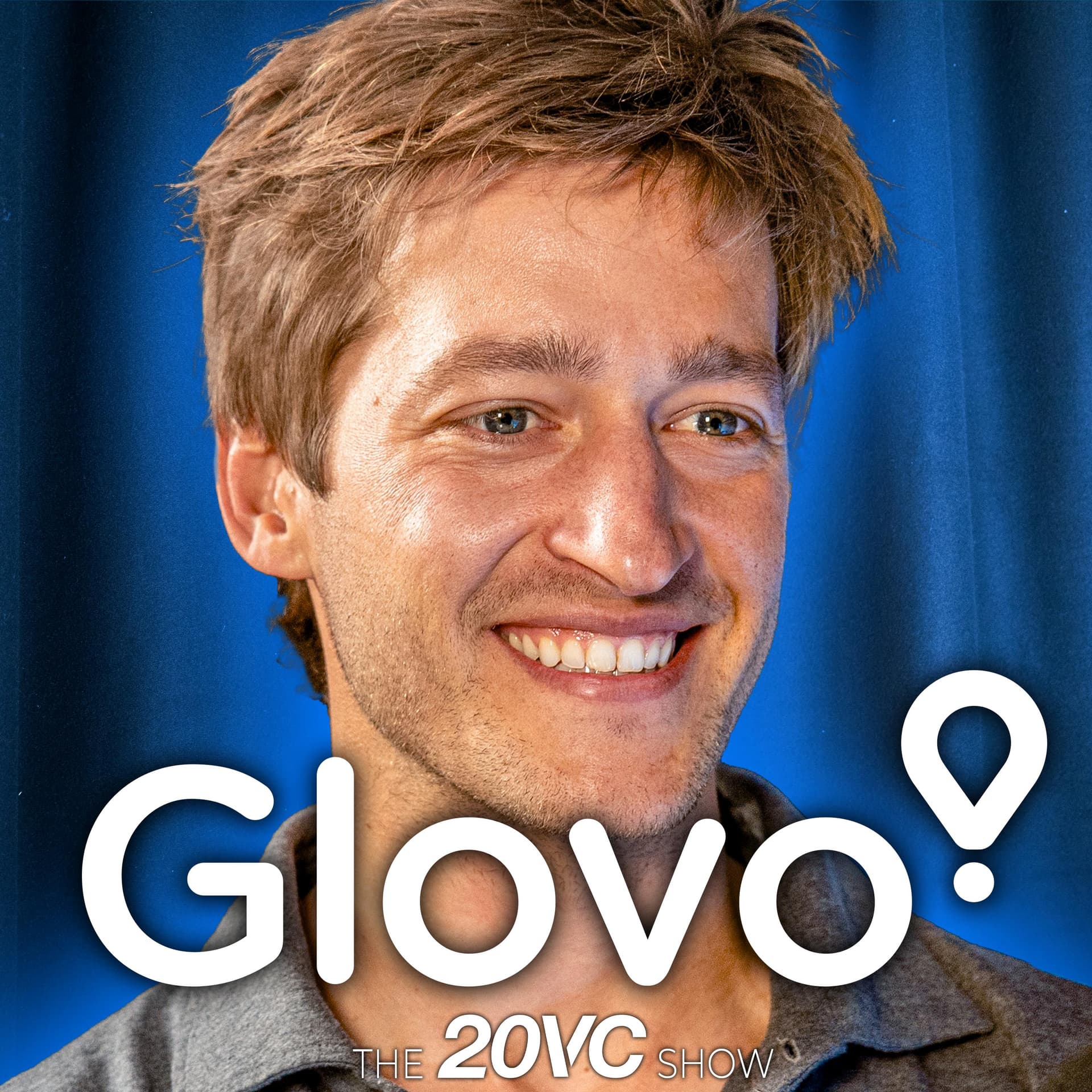
Oscar Pierre is the Founder and CEO @ Glovo, the food delivery site that will get you anything you want to your doorstep. This story is insane, the company was started by Oscar 11 years ago, in their pre-seed round they sold ⅓ of the company for €100K. The company was later saved by a deal they made with McDonald's. The company nearly ran out of money on several occasions, one time the funding round came from the CEO of Rakuten who Oscar met an FC Barcelona drinks. Today, they are a part of DeliveryHero who acquired them for $2.2BN, they have delivered 1BN orders and have almost 60M customers.
In Today’s Episode We Discuss:
04:27 Starting with Nothing
07:30 The First Funding Round: Selling ⅓ of the Company for €100K
09:23 Marketplace Dynamics and Expansion
15:34 The McDonald's Deal That Saved the Company
18:38 Running out of Money Three Times: Fundraising Hell
25:57 International Expansion: What Worked
29:25 Lessons from Failures: What Brazil Taught Us
31:36 How to Win in Emerging Markets
32:02 The Burn Rate (Burning $1M per day) and Investor Concerns
33:29 Scaling Challenges and Competitor Threats
34:29 The Biggest BS Elements of Company Values
35:40 How I Ruined the Culture of the Company
41:14 Layoffs and Talent Management
42:06 Biggest Lessons from M&A
44:41 The Future of Quick Commerce
45:38 Acquisition by Delivery Hero
48:56 Post-Acquisition Reflections
54:47 The CEO on Trial and Facing Prison