
In short
Podcast Summary: The Twenty Minute VC (20VC)
Episode Details
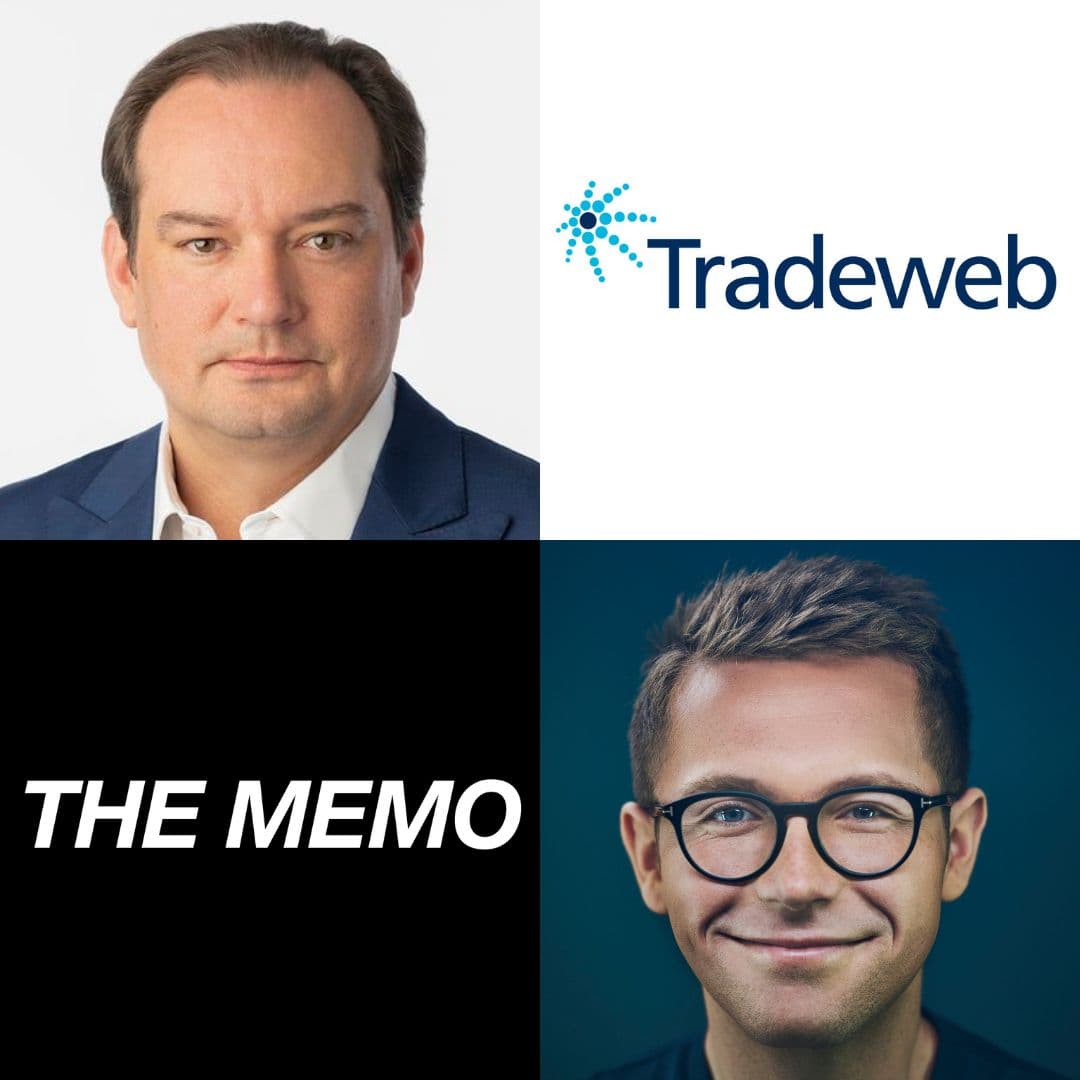
- Title: The Memo: The $23BN Company You Might Not Have Heard Of: Tradeweb
- Host: Harry Stebbings
- Guest: Billy Hult, CEO of Tradeweb Markets
- Release Date: Not specified in the provided content
Overview In this episode of The Twenty Minute VC, host Harry Stebbings interviews Billy Hult, CEO of Tradeweb Markets, a notable company that has experienced significant organic growth over the past 27 years, leading to a market cap of $22 billion. The conversation covers a range of topics including Hult's journey to CEO, leadership philosophies, hiring practices, and personal insights on managing money, power, and family.
Key Themes and Discussions
- Billy Hult's Background
- Early Years:
- Described by teachers and parents as a quiet but engaged child.
- Struggled academically in subjects that didn’t interest him but excelled when engaged.
- First Job Experience:
- Worked as a betting clerk in a tough neighborhood, which taught him important life skills.
- CEO Leadership Insights
- Defining CEO Role:
- Emphasis on understanding that a company is fundamentally about its people.
- Important for a CEO to set the strategic direction and ensure effective execution.
- Management Style:
- Balance between being direct and empathetic. Hult values authenticity and building relationships.
- Discussed the importance of making "big bets" for company growth and transformation.
- Hiring World-Class Teams
- Hiring Philosophy:
- Reflected on past hiring mistakes and the significance of balancing IQ and EQ in candidates.
- Acknowledged generational differences in work ethic, expressing concern about perceived softness in millennials.
- Delegation vs. Control:
- Discussed when to delegate and retain control, emphasizing the importance of empowering team members.
- Personal Reflections on Money and Power
- Changing Relationship with Money:
- Hult discussed how his perception of money has evolved over time.
- Ranking Fame, Power, and Money:
- Ranked fame last, suggesting that power is more significant to him.
- Parenting and Family Dynamics
- Parenting Style:
- Self-described as the "yes dad," emphasizing love and fun in parenting.
- Balancing Work and Family:
- Acknowledged feelings of guilt for missing important family moments due to work commitments.
- Current Business Environment
- Market Resilience:
- Discussed the current economic climate, drawing parallels with past crises like 2008 and the impact of political factors on business.
- Future Outlook:
- Expressed optimism for Tradeweb's future, highlighting the potential for growth and innovation.
Closing Thoughts Billy Hult shares candid reflections on leadership, the importance of grit and resilience in both personal and professional realms, and the complexities of balancing ambition with genuine human connections. This episode provides deep insights into the mindset of a successful CEO and the evolution of a leading market player in the financial technology space.
---
Key Takeaways
- Leadership is fundamentally about understanding and motivating people.
- Building strong teams requires a balance of intelligence and emotional awareness.
- Personal growth and reflection are crucial for effective leadership.
- The current economic environment is complex, but resilience and adaptability are key for future success.
For more information about the podcast and to access show notes, visit [20VC.com](https://www.20vc.com).
Written by AI. May contain mistakes. Listen to the episode to check what was said.
Transcript
Automatic transcript. May contain errors.0:00It's not about pedigree, it's not about polishness, it's not about what school you came from and who you know, it's about old -fashioned grit and resiliency and streets mart. I have an ego, you have to have an ego. I'm a person that was, you know, president of my company, the number two person in my company, you know, for a long time. You know, when people show you who they are, like believe them. This is 20BC The Memo with me, Harry Stebings. Now 20BC The Memo is our monthly show where we highlight an incredible company that you might not have heard of. Today, we highlight the story of a $23 billion juggernaut, trade web, the electronic interface that connects the lights of Citadel to Goldman.
0:39Now, joining us in the hot seat today is their CEO, Billy Holt. This is an incredible discussion on CEO ship, parenting, relationships to money, ego, and so much more. But before we dive into the show's day, Merge is the leading product integration platform, offering a suite of unified APIs across key software categories from HRIRS to CRM. That allows organisations to offer hundreds of customer facing integrations. Merge also handles the full integration lifecycle from an easy initial build to hand -held end user onboarding to maintenance support and management tooling for all your integrations, thousands of customers like RAM, GONG, SEMGRAB and Sendozo use Merge to power their integrations.
1:23Check it out now by visiting merge .dev 4 -0 -2 -0 -VC to receive $5 ,000 off your annual plan. That's merge .dev 4 -0 -2 -0 -VC. And speaking of total game changes there with merge, you need to check out public .com. Public .com is doing something no other brokerage has done before. They're sharing 50 % of their options revenue directly with you, the customer. Get something back on every options trade. Oh, and there are no commission or per contract fees either go to public .com and activate options trading by March 31st to lock in your lifetime debate. This was paid for by public investing must activate options account by March 31st for the revenue share and options are not suitable for all investors and do carry significant risk and this is also only applicable for US members only.
2:17And finally, equity is your company's greatest asset and managing it can be complex and expensive, but it's crucial to choose the right captable provider. And that's where Angel is coming. For me, there are three main reasons why we love Angel list. Software Simplicity's number one. It's a one -of -a -kind tool that really keeps your captable clean and compliant. Second is pricing and service. You only pay for team members with equity, not investors. And then third, ease and simplicity. Angel list provides a single provider. Bundle equity, fundraising, banking and people tools on Angel List in one.
2:50It's so important that you make the right decision for one of the most important elements of your company. Equity and equity management. Choose Angelist at angellist .com. You have now arrived at your destination. Billy, I am so excited for this. I heard so many good things from Rhana when I was walking with her in the park. I was like, I want to have Billy on the show. Please make the intro so grateful to her for doing so. And thank you for joining me today. Well, thank you for having me. Rhana is amazing. I want to tell you Harry, I think this is maybe like a bucket list thing for me to do with you because I've been watching You know, you're growing kind of you two presence and I was hoping to get the invite and sometimes you get lucky and actually get it I remember when we started I could actually get away with not doing video and now I actually have to look presentable Billy I mean this is tiring life more than presentable.
3:34I think you're ready for the biggest platform available Well, you're very kind Charm will get you a long way But I want to go back way way back, which is I think we shaped actually a lot in our childhood And so if we go back to your early years, how would your parents and teachers have described the young Billy? I do agree with your premise that like it's amazing how much of you get formed from like the age of like zero to six or zero to eight So I think it was like a much more quiet kid and I think I've become of a fairly, you know, boisterous I'm not a young adult anymore. I think I'm like middle aged now, we're not very but it was a quiet kid I tended to do very well in school at things that I was interested in and very poorly in things that I was not interested in.
4:17So I was like almost like that prototypical kid that flourished when I was engaged on something and then really struggled. Like capital S struggled when it was not interesting to me. There's like a story about, you know, the kid that took French from like 0 to 11th grade and couldn't learn to speak like three sentences in French. and then he moves to Paris meets a girl who only speaks French and learns the language in like two months I was kind of like that as soon as I was emotionally kind of engaged on a topic Then I would do okay, but I struggled with everything that was sort of like not straightforward to me I was not like by any stretch.
4:53I was no runner. Did you have a hard first job? Someone said to me the other day. It's very transformative to have a really hard first job Be it like doing lawn mowing when you're seven all day or like I did. I grew up in Manhattan, you know, so there were no lawns to mow. But I'm going to make you laugh with this. It's a good question. Sometimes like the most true stories are entertaining. My first job and it was like either end of high school or Early college kind of one of those summer jobs was working Harry at a place they called like OTBs It was an off track bedding The place where people would go in back in the 80s and 90s in Manhattan and place bets on horses And I was a bedding clerk in the South Bronx.
5:35It was a tough neighborhood, and it was a tough job. And you had to learn very quickly to think on your feet. You met all different types of people. It wasn't like an internship at Brown Brothers or Morgan Stanley. A little bit of the school of hard knocks. You said about... I didn't. You're kind of really leaned into things that you were good at or passionate about and discarded or didn't like the things that you did. You think people should lean into their strengths and discard their weaknesses? I think that there's a way maybe to like overdo all of that and maybe there was a time when I was a kid where I was definitely overdoing it There's something about like the 3c minuses and the 2 a's that doesn't always please the parents plus it can cause some alarm bells in the school So I wouldn't necessarily pattern all of that that being said I think especially as you get older I think there are some inherent strengths that you want to kind of lean into There are things that like you're good at, the things that you gravitate to, but most importantly, I think there is an aspect of what are you really ultimately emotionally engaged in, like what do you really truly care about, and then my instinct is you tend to do the best with things that you really care about.
6:42Someone said to me, oh, they, everyone says like, do what you love. I say that's bullshit. Do what you're good at, because what you're good at, you'll generally like, and if you don't suck it up. I think that's true. It's a little bit of you can be misleading when it's sort of Just follow your passion Harry, just do what you love. You know, life can be a little more kind of exacting and sometimes decisions you make early in your career or your life have like longer term consequences. So you can be sometimes a little naive if you just go down that path, what's the sort of hemming way? Like isn't it pretty to think so?
7:14Like wouldn't it be nice if we could all just do like things that we love? You're a PM way back, why not? I had a couple of jobs in the old kind of traditional world. I was a bond broker and then a sort of cell -side bond trader learning along the way I was never like never good at it. I think maybe that's because I didn't like it. Did you find being CEO very natural? It is a very different role. Every CEO ship is different. There are aspects of the job that I have found to be natural and there are aspects of the job that I think I gravitate towards and I enjoy And then there are kind of things about it that I think maybe aren't like in my perfect sweet spot and are harder.
7:50What do you think makes a good CEO? Like what are the core checklists of my job as CEO is this? I'm not gonna make you laugh with this, but I do think there's something which is interesting which is like you're the CEO of a company and what is a company? It's like people. I do constantly remind myself that I'm dealing with people and people have egos, they have opinions, they have personalities, there are ways to motivate people the right way and then you can demotivate people. So I do think there's a concept of like reminds yourself what a company is. I think high level you have to be the external face of the company.
8:23And you have to really be the person that at the end of the day represents the company at the highest level. I think you have to set strategy. And I say that like in a very straightforward way. I think it's a CEO's responsibility to set the strategic direction of a company. And then the company executes behind that. I think in a good way I try to get my kind of sleeves rolled up and my hands around execution, that's where companies ultimately make their bones around like how good are you at really ultimately executing on a game plan. And if you get yourself like too removed from the actual kind of like the execution piece of it, I sometimes think that there can be a little bit of a passivity.
9:00But my question to you is, like you said there about you don't want to be too far removed. We often hear the statement, hire great people and get out the way. How do you think about that? And then, my career management and the balance between the two. It goes back a little bit to sort of like, how do you lean into what you do really well? And so I think that there are aspects of a sort of ecosystem or a complicated company where you hire great people. And it's not that you get out of their way, but maybe you support them in a way where they feel empowered to do their job really well. And then there's the concept I think of, what is my responsibility, Harry, to like make a difference?
9:37You know, how do I become a difference maker player for my team? And so how I try to do it is high level like engage with, you know, the biggest most important investors and engage with the biggest most important clients. I think I'm really good at that. And so I try to make a difference for my company by putting myself in those situations. Early on when I became CEO, I was invited nicely. I don't think they regret it now, but it was a very nice invite from them to be a part of the sort of JP Morgan, in like CEO conference in Napa. Quite a nice conference and it was a nice invite. These CEOs from all over the world were there and this won't surprise you at all.
10:15I got to watch like Jamie in action as the CEO of JP Morgan. He's there but like JP's hosting this event for their clients. He's amazing with clients. You talk about a guy that can flip the switch from he's the most well regarded esteemed person in a lot of ways at that event. He makes it all about his engagement, you know, with JP Morgan's clients. His ego goes away and every single one of his interactions is about like, how are you doing? What's going on in your business? How can we help you better? That was kind of like an interesting visual that I got. Like, I'm like, if he can be still that good at that, then we all have to up our games a little bit because, like, goodness, like, talk about like a difference maker.
10:59You know, that's like a big deal. You know, how many people like walked away from that conference, like, yeah, the wine was great, but I got like 30 minutes with Jamie and he like really like understands my business now. Like that's cool. Well I think it goes back to my angelu quote, it's not what you say, it's not what you do, it's how you make someone feel. I think that is true. You know the other thing she says which I love we're gonna get into like a quote contest is like you know when people show you who they are like believe them and so I've always thought of that which is like you know good and bad when people reveal themselves to you it's happening for a reason.
11:31Okay help me understand that to people not change so I look at myself I'm not old but I've grown up quite a lot in the last 10 years. I did stupid shit I used to lie when I was nervous I would be too arrogant because I believe that bullshit and now I realize that I'm just another person figuring life out and so I don't know if that's fair. Well people grow for sure and I think that's a very kind of intuitive comment that you're making and I think as you grow you show people your evolution and so you don't just believe them once I think maybe there's this concept of you believing them all the time but you're seeing who they are and so maybe there was a moment where you showed someone one thing about yourself a long time ago and now you have the ability to show someone something else about yourself and if they're evolved the right way they're seeing your growth along the way.
12:19As this kind of recurring theme in my management which is that I very much dictate there is no voice but mine and people are scared of me. It's not great actually. I mean my response is you should be. What would you advise me? I don't want to have a culture of fear. How do I not, but also be very direct? Sat the direction and lead. You don't seem unbelievably scary, but I hear you. So since we're like sharing notes a little bit, I do think the most important thing is like being direct. I think that's really important. Do you sugarcoat? You know, we all have things to work on. Either I sugar coat or I have a little bit of this like what's the thing like truth with Novakine?
13:00Yeah, I try to make it feel good sometimes and that's not always like the most effective way So we all have things to work on and I got to think through that But it sounds to me like that directness that you're describing is really good and really important as you get older Do you sometimes like become a little bit maybe more mellow? No, I've become less patient But you're not as older. Maybe there's some sort of like moment where it flips a little bit. I'm gonna make you laugh with this I'm you know 54. Oh, you're not belly. You know I'm 54 going on 65. I'm probably more intense in Certain ways at 54 than I was at 34.
13:39I guess I'm nicer now at 54 than I was at 34 I'm a little more like Understanding of people probably try to be the kids make you nice. Is that it? Do they make you more patient more understanding? Maybe like being around love when you leave the office in that kind of way. Maybe mellows are kind of softens you. I think you can be pretty nice, but also like pretty exacting and pretty rigorous. And I think you can have very high expectations of people. So I can be nice. I can be a little bit sometimes not quite as direct as I need to be. Everyone that works for me understands when I'm angry. It's probably a bummer when I'm angry because it maybe takes a little bit to get me angry or get me disappointed, do you care about being light?
14:20Yeah, I can understand how people would perceive it as a weakness. My overall instinct, Harry, is if you're authentic and you're yourself, then that's a lot of it all. Not to say that no weaknesses can emerge, but you lead with who you are. So I've always probably wanted to be light. I feel like getting along with people is like, let's start there. I'm not easily pushed around. I mean, I'm going to make you laugh with this one. I don't always get what I want, but I tend to get what I want a fair amount. So I'm not a pushover, but if someone doesn't like me, does it bother me? Yeah. A little bit.
14:59When do you dictate versus when do you welcome opinion? This is another challenging one, which is like, no, no, I'm this year we're going this way. Versus open for thoughts, let's discuss the right plan together. If I feel like it's a decision that ultimately there's a tremendous amount at stake around and there's going to be a fall guy on the decision. If it doesn't wind up working out, I will make sure to make an obvious point that it's mine because I don't think you can pass the buck on big decisions. That being said, dude, I have a lot of smart people that work with me and I have a lot of really smart by the way clients in my world.
15:37So I do like to get people's opinions and I do like to hear from the people around me and my general view is if you can get a consensus, that's better. I get you. Inventure consensus often needs to be a bit of a challenge. That's when it comes to decisions. And on decisions before you've said about the importance of CEOs making kind of big bets, so to speak. Can you talk to me? Why is it so important that CEOs make big bets? And how do you... So let me describe a few this way for a second. So my company, TradeWeb, has largely gotten to where we are today through a lot of like, really good organic investments and organic growth, right?
16:17So we are not some company that's arrived here through lots of like M &A. But as you know, well, and you talked about like for yourself, like the sort of like the personal kind of evolution, the personal growth things, sometimes like companies need to grow through, I think, change. And so one of the things I've been doing a little bit is like using the language of change, right? Which is like we've gotten here and we've arrived through all of this organic kind of investment and growth and continuing to kind of move ourselves forward in this very one specific way. Let's start talking about putting more bets on the table.
16:53Let's start talking about doing more deals. And since we're going to talk about that and we're going to look in that direction, let's talk about it in big ways, let's talk about it in transformative ways. Let's not be afraid to start using the language of real ambition. Why not? I sometimes like, click off like too often and for sure like not well enough. When you take a golf lesson, they'll make a change and that change will feel so awkward because they're trying to get you to feel something. So sometimes you, or I do this a lot, I will enunciate a point pretty loudly to sort of push us in the direction of change.
17:31It totally makes sense. I think the biggest thing also with leaders is and an anciating change. I always hit people say, I'm so bored of saying the vision and the mission. And it's like, yeah, but for someone, it's the first time that they're hearing it. And it's true. Always after remember that. You mentioned there, like, how do you take bigger bets? How do you be more courageous, more bold? Yeah. Super direct, Billy. I think about talent brands a lot. Where do the best software engineers want to go to work? Yeah. And with Stripe, with Shopify, with the Silicon Valley names. do you the best software engineers want to go to trade web?
18:05And how do you think about that? I think the goal is for the answer to be yes. The history of the company is interesting because you don't always have companies that have been private for so long and then go public kind of later in the company's history or evolution. So like the roots of the company is really around being a little bit private. There are advantages to being sleepy. So I'll describe for you an advantage or maybe we can talk about this. Trade Web Harry has a lot of clients. Goldman Sachs, Morgan Stanley, Pymco, WAMCO, the Central Banks, Norgeous, like all these big, like, you know, hedge funds, right?
18:42We travel along back and forth between like giant egos. At the end of the day, it's really simple. We're the electronic interface that connects like Citadel and Goldman. We've been pretty smart around understanding like, there's a totem pole, there's always been a totem pole, understand where you sort of live in that totem pole and we don't always have to be the sort of like biggest ego in the room We don't always have to have the biggest brand. We can you know flourish And amplify a little bit Sometimes behind the scenes and let our clients Ultimately at the end of the day have the biggest most important presence out there I don't know if we've like always like thought that through like perfectly exactly I think that's how we evolved in a certain way I think it's fascinating in terms of the strategic position of kind of knowing where one sits and also being the Enne Blob means that you don't always have to be front of house.
19:38Dude, one time I was out with a guy, this is like a long time ago. He was a nice guy, he was a little bit of like, out of central casting, hard -nosed like, bond guy. And this is like probably like 10 years ago, he was working at Credit Swiss at the time. And we were talking and I kept referring to BlackRock as my client. And he just reminded me in a really nice way. He's like, oh yeah, like they're actually like my client and I didn't want to get into a debate with him about like who actually was providing more value to BlackRock or who BlackRock was more of the client to but he was letting me just Understand like hey look, I'm gonna say this in a nice way.
20:12There's no way that relationship with BlackRock is more important to you than it is to me. Human beings are very like interesting, right? Because there's like so quickly almost like I don't want to say like a competitive dynamic but people have like egos dude like big egos do you have an ega? Definitely yeah, I have an ego you have to have an ego I'm a person that was you know president of my company the number two person in my company You know for a long time and I had a great working relationship and a friendship and a partnership with the CEO And we would talk about it where I would say to him like this can't be cold play where like everyone knows like Chris Martin and like no one else.
20:51Like this has to be a band where at least there's two of us. Why? Because my ego, I guess my ego was bruised. I was like, oh wait, I don't want to be Mike Pence standing in the back. What did he say? He said, I got you. I hear you. And that's why we will co -brand. We'll work on making sure that it's always understood that this is a two -man partnership at the time. That being said, he was the CEO. You know, so there were certain things he would do by definition that I would be the person standing on the sides. And I felt my ego then, like, oh, what would it be like to do that myself, right? And so of course.
21:25How was it when you became Freddie Mercury? Oh, Chris Mossend. It was comfortable and normal. It felt like a process that had worked. And for me, it felt like a moment in time, maybe in my life and career, where I was for sure like ready to do it, which is like a big part of, I think, like when succession works the right way. It did not feel honestly, and I think you know very well that I would tell you if it was true, it did not feel like laden with like anxiety. It felt like let's go, let's go do this. I've done a lot in my career and I'm ready for like this next chapter. Was there ever a time when you had to check yourself on your e -gay?
22:00I remember when I was like 21. I made a thousand amount of money and I was like, I am fucking cool. And I believe the bullshit too much. Professionally, it has not felt challenging for me to do that because I think there's like a little bit of like like an easy goingness that I bring to the equation that feels less ego driven. So what I think about is like, how do you make sure that your casualness does not allow a scenario where someone thinks the results are casual? I'm aware of all of that stuff. Do you worry about that? You aren't informal and human and it's wonderful for me. I do because like I'm more driven now than I was when I was building my career, but I don't always show it.
22:43I wouldn't say it's like a technique because it's like it's my personality and it's who I am I'm comfortable in my own skin and I come across that way I'm also again, let's throw this other thing back in the mix I think like firmly aware of like this totem pole thing right when someone takes themselves like so seriously It's like come on guys like let's remember there are bigger problems in the world There are bigger problems and the financial service industry like when I make you laugh when um the famous line when you know of the financial crisis was kind of roaring. And the story was that Lloyd was in a town car headed down to see the Fed and kind of one of the bankers in the car said to him, like, I don't know how much more I can take of this, because they were stressed.
23:25They were working really hard. Everyone was going like 100 miles an hour. And I think the guy was like, I don't know how much more I can take all this. It's like the pressure is like building. And Lloyd said, like, come on, like we're not like storming the beach at Normandy, right? Like let's keep this all in perspective. We're all pretty lucky here. Do you feel a pressure? I feel the pressure and maybe this is a little bit of a concept of what you're saying in terms of ego I sometimes feel the pressure when I go home and I find myself like slightly having a harder time to Relax and unwind and be present with my family and I feel like distracted and so I'm thinking to myself like Why am I carrying all this stuff home?
24:01Maybe because of like how I'm dealing with pressure Maybe how pressure is kind of running through my system Someone asked me like do I feel nervous and I don't feel nervous Well, you make everyone feel very comfortable, so I wouldn't feel nervous in this situation. Sometimes when I'm doing a part of a board meeting that isn't necessarily out of my central casting sort of comfort zone, I'll feel a little nerves. Like, oh, I'm in 10th grade, I'm going into take a biology test. You know, have I studied hard enough? I do have to ask, on the like, you feel the pressure when you go home. I don't, I feel the guilt because I'm like, relatively uninterested by the conversation and that sounds awful and if anyone from my family listens I'm sorry it's true but my point being like you spend all day stimulating.
24:45You're brain -stired? Yeah but then they want to talk about the weather. I feel that too it's like it's a challenge it's like something's not quite right if at the end of the day I haven't figured out a way to keep that engagement thing running and maybe it's like run out of gas a little but I feel that way too or it's sort of like how can I be unbelievably aware of the details of these five business issues, but struggle with my, you know, my 12th graders, the name of her history teacher. Do you feel like you've been that few kids like you would like to have been? It's pretty hot when you see you have a public company.
25:18The broad answer is definitely yes. The truthful and the more recent answer is no. I have three kids and my younger daughter. She's a senior in high school and she's got like all these like big basketball games. You know, it's her last basketball games and I missed a bunch of them, you know, I was working and I felt like the work was really important and I relied on my relationship with her that she would be understanding of it and of course she was, but I feel the loss of missing those moments the most I think. Did you really need to be there? I often we can over amplify the importance of it and it's like no one will remember those any yet.
25:55Good question. I think it's impossible to know the answer of like was it worth it. If you're asking me today, my answer is like probably not, but at the time I must have thought yes. Has your style of parenting changed over the years, Benny? No. I think I was always probably a little bit of like the yes dad. I struggled saying no, so it was easy to kind of surround them with love and to try to be the person that did a lot of fun things with them. And I find myself doing different obviously versions of that, but being similar along those things 15 years later, that sort of dynamic is kind of still How do you inspire children to have the same hunger, ambition, tenacity when they're brought up in a wealthy family bluntly?
Read the full transcript
26:41You know, you went to a betting shop in the Bronx. Like, they don't need to. How do you encourage them to be really ambitious? Super hard. I would say that like from a parenting perspective, that's like the number one thing on my mind. I don't know what are we talking about like privilege like having access to privilege or maybe being privileged And I think that's like a it's like an interesting word these days and being like spoiled and being Unmotivated I learned a long time ago a little bit of a lesson Which is like other people's successes like aren't your success I've also learned a lot around the concept of like I'll make you laugh with this one It's the beer's mod is cold when it's like not yours So there's a really nice feeling to go into like your house with your cold beer in your house and Having a sip of that and knowing like hey like I earn that I go out of my way and in the best possible way as a father Just to reiterate those kinds of things with my kids, but yeah, they live a different life than I did Yeah, I often ask myself I often ask myself what I work as hard if I've been brought up in different situations And the honest answer is I didn't fucking know.
27:52Maybe you can't, right? It's like hard to know. Like what's that little like extra motivational thing? I went to schools, I grew up pretty, you know, Manhattan, like middle class. I went to schools with like a bunch of friends much more wealthy than I was as a kid. I was motivated. Not necessarily by like money or status or all that stuff, but I was for sure motivated to prove myself. And that is, you know, very well. That can be like a super strong blessing. Money, fame, power. How do you rank the three? And what's important to you? Fame, distant third. It would be really easy to say like, money, first, power, second.
28:34I think power is like pretty interesting. So I think if you dismiss power, so obviously, maybe you're not quite being super true or super assessing, like how you really feel. I've always thought like a little bit of like prospering below the radar is not a terrible place to be. You know, you're gonna blow up my Instagram account with this one So I'm gonna become less less below the radar at some point But like I think like prospering below the radar is cool One thing I often think about is like Deritually does make better leaders And the reason I say that is because you remove downside fear You can be more courageous when downside is relatively removed And you don't need to constantly be fearful Like one is if they are not financially independent or free Do you think rich leaders make better leaders?
29:14Not not 100 % positive It's a good way to think about it. I would say there's certainly examples where that seems to be true, right? If you think about like a lot of these private equity founders or hedge fund founders who are extraordinarily wealthy who have become wise. I think really important kind of traits. I think that the opposite way to think about it would be like by not having as much at stake do they lose some credibility doesn't seem like it. But the best of like machines, that just animals and the money is just like a school board and it's just a way to show that you win. You know this really well, Harry Blackstone at one point was a majority shareholder in my company and there was a moment in time before the company went public.
29:56I wanted a very casually meeting Steve Schwartzman in a casual kind of setting, you know, speaking of like you're almost describing him perfectly and it was very quick to say he would never remember it is a understatement. But he grabbed me a little bit by the arm and he said like, very aware that the blackstone role and the company and the fact that my company was going public and he said as a sort of wise man, like it's nice to win, enjoy it. And I felt that when he said it. I was like, well, this guy knows like winning. And if he's telling me like to not lose sight of that moment where you've worked really hard for something and it's happening or it's coming true, I'm gonna remember this moment for sure knowing he's not, but I'm gonna remember this moment because like he knows And so maybe in that model that you're describing like those guys like no like what it takes you might as well listen Do you like being public company?
30:53Honestly, and I have so many friends here public companies the years now Yeah, I'm like do you like him? They're like no I hate it. I wish yeah I mean when you said honestly like you're kind of leading the witness anyone would say there are things about it not to like. Like what? You wind up spending a lot of your time on corporate governance regulation, things that you feel like are occupying more of your time than you wish they could. And almost everyone feels that way a little bit like burdened by the structure of it. That being said, genuinely, there's like a lot of things to also like about it.
31:26Are you and I doing this today if we weren't public? Maybe not. So there's a profile thing that works. This is gonna make you laugh because I told you I was like a pretty poor student in a lot of different ways. There's like that report card thing around like how is your company like ultimately performing in the bright lights of a stock price? Do you check that daily? Yeah. Okay. I tie my mental happiness and my mental state to the performance of my company. Yeah. Kind of harder for me because there's no ticker. How do you not get depressed when your tick is down and how do you detach from the performance of the company?
32:01It's hard. Is it down because the market's getting reprised around an extra genius event? It's not personal. Or is it down because there's been some sort of like subpar performance in your business and the market's reacting to subpar performance? So I do think you can kill through your reaction differently. We've been lucky because we've performed really well, but it's not like we've performed perfectly. So you wear those moments where maybe, you know, you feel like there's been a reaction, you know, a negative reaction to your business and you're human. Can I ask you, what's been the biggest bet that you've made to see?
32:36Oh, there's work tout. And what did you learn from that? There's a part of me that wishes like I had a really good question, like a super almost like dramatic kind of response to that. We've done a couple of important deals that have been not big bets, but they've been smaller bets that are moving us in the direction of kind of what you and I are talking. about in terms of like the big bets. I really like this in you. If there's not a big bet that comes to mind straight away, respectfully and I'm so pushing, do you think you've been courageous enough as CEO making big bets? I placed big bets on people in my 10 year SEO and I'm not kind of like sugarcoat the answer.
33:17Like I really have. What does that mean? That on people who don't have the qualifications in the experience, but you believe? I have taken what I would describe to you as like honestly like risks in sort of relationships that I felt like were beneficial to both me and the company. And I've, I think, benefited from having very strong intuition about people. If you had put a number on it, what percent of your bets on people prove outright? Shockingly not as high as you would think. You can put a number on it for me after this, but there's a chart that basically 50 % of the Yeah, I was gonna say 50, like the concept of being able to have like intuition.
33:57All of those things should be like bright lights pointing towards like 75 % or like like 100 % like everyone, but like the answer's no. But in the 50s and the don't, I had commonalities in why it doesn't work out. Maybe chemistry, maybe I saw something in them that they didn't quite have or I pushed them in a direction that maybe they didn't quite want to go to and then maybe in like the human nature of the whole thing that the chemistry broke down and you sometimes you get stuck and then it's kind of like can you get unstuck you know can you find another kind of run at this whole thing you know and I've had to like assess like a little bit of of the very first things that you and I were talking about and this is turning into like an amazing therapist session which is have I been clear enough have I been direct enough have I given enough kind of feedback along the way most of the time the answers yes and I don't put a lot of blame for myself when something doesn't work out.
34:54But as you know really well, like there's always like a co -created dynamic. And when you're CEO and you place a bet on someone and it doesn't work, you know, you're bombed. Oh yeah. And then there's time delays and there's lags and then you go through the process of getting rid of them and then the process of finding someone new and then onboarding is three steps getting rid. All painful. All bad outcomes. All long processes. How quickly do you know if a bat on a person is a bad bat? It can really depend and then there are these moments where truthfully like someone clearly turns it around and That initial instinct can be wrong.
35:30As someone was telling me recently, you know the first time a CEO feels like, you know Something hasn't worked out. They should act on it because like if they have that impulse with like all of this sort of importance on the line There's a reason why they're having that impulse and it's gonna be tough to ultimately resurrect the relationship I have not found that to be the case and I don't feel like this is a defect I feel like this is a um an absolute strength. I'm an optimist and I really see qualities in people and sometimes it's a struggle of like hey, I see this in you you can do better here I'm gonna keep pushing you because I know you have it in you but I'm demanding of it by the way.
36:12This isn't for a forever chance, but it's there. I'm gonna get in trouble for this one. But you said I'm pushing you in demanding. I am the same, but I think that the younger generation which I am in are entitled and do not want to work as hard and want to prioritize balance and life. And I think it's very challenging to have the same work environment that you had in the 80s, which was fucking grind. Yeah, like people like smoking on desks. Yeah, and people used to pull all night's in banks. Yeah, yeah It was a tough culture This is like there's like no doubt about that But it but it was actually an efficient culture in many ways.
36:51Yeah Output do you worry that this generation is too soft? Some of that stuff got played out a lot around as you know really well like around COVID and work from home and there felt like there was like if not a power struggle They're felt like there was this like tension in the system about like what's really gonna work here I don't want to sound like you know the old guy on the chair on a lawn kind of thing like you know making Pranouncements about like what the kids are like these days, but sometimes there's so much Benefit that you get from hustle and grit and perseverance. There's just is I agree I'm fucking email Benny or 53 times with a separate email for every week for a year and a week.
37:35Yeah. Is that switch permanently turned on all the time? I will say this and tell me what you think about this. Like the kids that have it like switched on. Like wow, do they have like a lot of like trajectory in front of them? Oh, 100%. But I also find with the ones that have it switched on, they show early signs of exceptionalism. It's why whether I'm hiring you or I'm investing in you, I will always go back to early childhood. No great person who was hugely ambitious, fell out of McKinsey and Bain and thought, oh, now I'm gonna be really ambitious and courageous. It's a process along the way.
38:09Some of that process can be about positive momentum. So I know people who have only been successful and they will only be successful. And they were successful when they were in sixth grade. They were successful when they were sophomores in high school. They went to Harvard, they went to Harvard Business School, and they've been exceptionally successful straight out of central casting in their professional careers. All of that is like positive momentum that has just built over time. I would never hire them or invest in them. Those guys are the ones that break the minute something breaks. They never have experience being bullied, being the fat kid in the corner with no friends.
38:49Yeah, the sort of like Tom Brady theory of like, I'm gonna use every slight that's ever existed to continually motivate myself and create this kind of resilience thing There's like no doubt that's the sort of like the two types I don't know so you and I were like joking about the kind of EQ thing and like the sort of like self -awareness and all of that stuff I sometimes gravitate towards people like who aren't like me at all and when I say that to make you laugh like the out of central casting like the smartest people like in the room. I've always been the smartest, I will always be the smartest, and that switch, that cognitive switch, is just like turned on.
39:28I see the benefits of just like straight forward, like wow, like a really smart person. No, I didn't like them too smart. Very bad, very bad trait. There's a decent chance that you're a very smart guy. For me, it's easy. As a decent show, I'm said I'm a trauma and I'm a child. But no, okay, I would rather unwavering hustle and I would unwaver. Yes. Well listen, you know, you get both and then you're really onto something. Let's be honest, right? You get both. I've been with you on the side of like hustle and resiliency and really what we're talking about are like offset skills. The hardest thing, the thing I've made mistakes on now, which is I used to hire the pedigree person and that was the wrong hire.
40:11And then I went binary and I would suddenly go to the really inexperienced, really hungry ambitious. And that didn't work either. It was just inexperienced in immature. You know what's interesting, like in my world, Harry, and you're gonna appreciate this, to make an obvious point, I'll mangle this for you. There were a ton of really bad consequences to affirm like, Bear Stearns going through like the struggles that Bear Stearns went through. One of those is that when I grew up, like in the bond trading world, where their sturns had like tremendous levels of respect and really talented people and they like lived in that ethos of what you're describing.
40:51Like it's not about pedigree, it's not about polishedness, it's not about what school you came from and who you know, it's about old -fashioned grit and resiliency and street smarts and that entire firm for a lot of years and even when that firm was like extremely successful for a lot of years, kind of lived by that code. To see that code kind of die by the sword a little bit hurt because it was kind of cool to kind of feel that culture in the world. My question to you is like hearing you that is about at best, and finding one before a quick fire. Yeah. A lot of younger people look at why we all stand and feel very worried about the state of the economy, the state of the world, you've seen some real old shit, man.
41:36How does this compare? How did it feel when Bastons went through its troubles, Leemons went through its troubles? 2008 happened. My company was on the 51st floor of the North Tower. I was in the building on 9 -11 that day. When I think about trauma, it starts with 9 -11. Then I think about the professional trauma around the crisis. I mean, that was some pretty scary stuff. Is there gonna be cash at the ATM at City Bank? You know, there was this like just like massive unwind and it can feel like that never happened, but it did. And so for like a company like Trade Webwig, we saw like our clients like, you know, with this like amazing business model and then saw our clients going down one by one.
42:20You know, and Ted Pick as CEO at Morgan Stanley's talked about that there was a moment where Morgan Stanley felt like next in line, like super shaky, right? Like where can this thing go? And then, cut more recently, even a year ago, like the shocks to the system around the regional banks and all of that, you realize you're living in this like fragile place, you know, and I didn't even mention obviously the pandemic. The world feels like, obviously like, scary right now. But does this feel better than it did then, in 2008, in 2000, with the Dock Room? The markets feel better and more resilient and in an obvious way in better shape.
42:58There's a playbook in place around preserving the structure and the high functioningness of the market in a way that people should feel in a good way confident in. The world feels like shaker than ever. I mean you tell me if I'm wrong about that but I see not a ton of good things out there if you start with like American politics and then get into the Middle East and then get into kind of Russia and then we haven't. I'm not a political expert but everything even around China feels pretty fragile. So that's, we're pretty volatile. Do you politics impact your business? Yeah, just from the standpoint of volatility in the marketplace, we've gotten much stronger in the EM regions.
43:39So we've gone through periods of time where we've planted flags in terms of how we've wanted to build business in China markets and things like that. So there's always a little bit of a real world impact to what we do. I mean, I think we've got seven of the major nations that are having political election year. But listen, I could talk to you all day, but I want to do a quick finally. What have you changed your mind on in the last 12 months most? I have changed my mind on Trump being electable. 12 months ago, I did not think the Republican Party would get behind him and I didn't think he could win the election.
44:12And now you think he will? I think he will, and it starts with he can, but I think it ends with he will. Is it that bad if he does? I mean, I think it's bad for like my nervous system. But he was right about China. He was right about a lot of the economy. You know, you and I can talk about like what he was right about and wrong about. You know, he brings so much negative energy into the into all the situations, but we can probably have a thoughtful conversation about like things that he got right. I mean, I think we're allowed to do that. Is New York City still a capital of the world? Yeah. You talk about resiliency, you talk about grit, you talk about all of those qualities that make someone awesome.
44:50New York City has like all that stuff like times a million. What's the best book on financial markets? And why? The best book on financial markets is gonna surprise you. reread all of the financial part of Sherman McCoy in Bonfire of the Vanities. The way Tom Wolf is able to get inside you know a trading firm that was modeled after Solomon Brothers is incredible. Like the language that he describes like transactions and the cadence of the markets off the charts. What do you know now that you wish your known when you started a CEO? You can call yourself the night before your first air CEO and say, ah, Billy, you should know this.
45:31Create boundaries quickly. So don't always entertain every new relationship which can be a concept up to like a banking relationship, it can be an external relationship with a client like preserve your time in a very structured way because time is one of the most valuable things that you have. That's a good one. So many of you will say to me, I wish I wasn't as nervous and I wish I'd known that it would all be okay. And I think it's the most bullshit one because the fact that you worry that it won't be okay means you work harder, you put it in your mouth. If you always know that it's okay, I probably wouldn't have worked.
46:07Okay, you can have dinner with anyone, dad or alive. Who do you have dinner with, am I? My father passed away when I was younger, so I would definitely always pick him. How old were you when he passed away? I was 26. So if I could pick him, like have a fun sushi dinner with him, I think I would probably pick him. That'd be fun. Does it upset you that he doesn't see you as a success? I don't think about it like constantly, but the answer has to be kind of like deep down, you know, yes. And so you live with like a bunch of regrets sometimes. times, and that has to be one of them because you know, you feel that, but Jostles regret that he didn't get a chance to spend time as a grandfather.
46:43That's the part of life that gets tough. Penaltimate one, what are you most excited about or optimistic about, say? We just spoke about geopols, it's in global conflicts and challenges. What are you most excited or optimistic about? I'll kinda answer this one like a little bit like personally, like I'm really optimistic mystic and excited both about where I feel like this company is going to go. Not to be like narcissistic but to be honest, you know, my own personal kind of evolution and growth and how I feel like I can continue to lead and run this company. I'm very, very enthused and I think this comes through to you and excited about the opportunities in front of the company and myself personally.
47:23Okay, as a great lead on to the final one, which is like 10 years time, where do you think you will be as a company and as an addendum to that, what is the one reason why you would not achieve that? The company is going to continue to be this high -powered global marketplace that's going to continue to march in all of these new directions, some of which you and I could plot out right now and some of which we haven't thought of. But when you think about the concept of this company's ability to partner with the most important market participants, there's nothing stopping a forward march for us. So we're gonna be bigger, stronger, and a better company.
48:01Complaceancy is the killer of the whole thing. Getting the things that matter wrong is the killer. You stop placing like idea generation at the top. You start putting like office politics ahead of that. You lose sight of like who the customer is. Bad traits. I'm very determined and I'm gonna work my best to make sure like those things don't enter our world, but those are the killers. But I've so enjoyed this. I know it's done into a bit of a therapy session, which I love it for me for sure I'm you're gonna send me a bill. No, I'm not actually I Greatly appreciate the flexibility. This is why schedule was shared.
48:37Thank you so much for being so brilliant My pleasure and thanks to Ron and thanks to you. This was great I so enjoyed doing that show with Billy I love it when you have a meandering discussion and you have the schedule But it goes off into the directions of relationships to money ego Identity parenting if you want to see the full video you can check it out on YouTube by searching for 20VC, but before we leave you today, Merge is the leading product integration platform offering a suite of unified APIs across key software categories from HRIS to CRM that allows organisations to offer hundreds of customer facing integrations.
49:11Merge also handles the full integration lifecycle from an easy initial build to handheld end user onboarding to maintenance support and management tooling for all your integrations, thousands of customers like Ram, Gong, Semgrave and Sendozo use Merge to power their integrations. Check it out now by visiting Merge .dev 4 -2 -0 -VC to receive $5 ,000 off your annual plan. That's Merge .dev 4 -2 -0 -VC. And speaking of total game changes there with Merge, you need to check out public .com. Public .com is doing something no other brokerage has done before. They're sharing 50 % of their options revenue directly with you, the customer.
49:55Get something back on every options trade. Oh, and there are no commission or per contract fees either. Go to public .com and activate options trading by March 31st to lock in your lifetime debate. This was paid for by public investing. Must activate options account by March 31st for the revenue share. and options are not suitable for all investors and do carry significant risk. And this is also only applicable for US members only. And finally, equity is your company's greatest asset and managing it can be complex and expensive. But it's crucial to choose the right cap table provider. And that's where Angel is coming.
50:33For me, there are three main reasons why we love Angel list. Software SimpliSTY is number one. It's a one of a kind tool that really keeps your cap table clean and compliant. Second is pricey and service. You only pay for team members with equity, not investors. And then third, ease and simplicity. Angelless provides a single provider. Bundle equity, fundraising, banking, and people tools on Angelless in one. It's so important that you make the right decision for one of the most important elements of your company. Equity and equity management. Choose Angelless at angelless .com. As always, I so appreciate all your support and stay tuned for an incredible episode on Wednesday with Trace Stevens at Founders.
51:12is found...
From the publisher
Billy Hult is Chief Executive Officer of Tradeweb Markets (Nasdaq: TW), as Billy puts it, they are the "electronic interface that connects Citadel and Goldman". They are also one of the most under the radar but incredible businesses of the last 20 years. Through no glitz acquisitions or specific moments, TradeWeb has compounded organic growth for the last 27 years to today, with a market cap of $22BN.
In Today's Episode with Billy Hult:
1. From Betting Shop Worker to Public Company CEO:
- How would Billy's teachers and parents have described the young Billy?
- Why does Billy think it is so important to have a hard first job when growing up?
- What does Billy know now that he wishes he had known when he started?
2. What it Takes to be a World-Leading CEO:
- How does Billy define the role of the CEO? What are the core tenets?
- What has been the single hardest element of CEOship to learn?
- Does Billy care about being liked? How does that impact his management style?
- Why does Billy think it is so important for CEOs to make "big bets"? What have been his biggest?
3. Hiring World-Class Teams in 2024:
- What have been some of Billy's biggest hiring mistakes? What did he learn from them?
- How does Billy weigh IQ vs EQ and hustle? Which wins? Why?
- Does Billy think this generation of millennials is too soft?
- What are the single biggest lessons Billy has on when to delegate vs when to retain control?
4. Money, Power and Family:
- How does Billy approach his relationship to money today? How has it changed over time?
- Fame, power or money, rank them from 1-3. How does Billy rank them?
- How does Billy describe his own style of parenting? How has it changed over time?