In short
Podcast Summary: The Twenty Minute VC (20VC) - Episode with Taavet Hinrikus
Episode Overview In this episode of The Twenty Minute VC, host Harry Stebbings interviews Taavet Hinrikus, Partner at Plural and co-founder of Wise. The discussion centers around various themes in venture capital, including the commoditization of VCs, the misalignment between GPs (General Partners) and LPs (Limited Partners), and the current state of the European tech ecosystem.
Key Points Discussed
- Commoditization of VCs: Hinrikus describes VCs as "spreadsheet monkeys" who lack real operational experience and are often overly focused on metrics rather than the potential of founders and their ideas.
- Misalignment in Fees: The traditional 2:20 fee model in venture capital is criticized for not aligning the interests of GPs and LPs effectively. Hinrikus advocates for a lower fee structure to encourage more investments and better alignment.
- Importance of Founders with Experience: Hinrikus favors backing serial entrepreneurs, highlighting that they typically aim for bigger goals based on the lessons learned from previous ventures.
- Challenges for Multi-stage Funds: He argues that multi-stage funds can negatively impact seed rounds by creating a high-velocity investment game that can detract from the foundational support needed by early-stage companies.
- European Sovereignty: Hinrikus discusses the need for Europe to build its own tech and defense sectors, emphasizing the importance of independence from US technology and the potential risks associated with reliance on external systems.
- Investment Decision-Making: He outlines the decision-making process at Plural, which emphasizes a limited number of deals per partner to ensure quality investments and thorough evaluations.
In-Depth Discussions
VCs and Their Role
- "Spreadsheet Monkeys": Hinrikus uses this term to criticize VCs who are more focused on financial metrics than understanding the core of a business—its founders and vision.
- Operational Experience: He stresses the lack of operational experience among European GPs and how that can hinder investment decisions.
Fee Structures and Misalignments
- Current Fee Models: The conversation critiques the traditional VC fee structure, which Hinrikus believes creates a misalignment of incentives. He mentions charging lower fees to encourage better investment outcomes for both GPs and LPs.
- Importance of Alignment: The discussion touches on how alignment in venture capital can improve investor-founder relationships and investment success.
The State of European Tech
- Need for European Independence: Hinrikus discusses the necessity for Europe to develop its own technology, especially in light of geopolitical tensions and reliance on US tech, which may not be reliable in the future.
- Investment in Defense: The conversation shifts to the need for investment in Europe’s defense and energy sectors, particularly given recent global conflicts.
Investment Philosophy
- Backing Ambitious Founders: Hinrikus shares his belief that experience matters, and Plural’s strategy focuses on founders with a strong track record of ambitious projects.
- Investment Decision Process: He explains the internal decision-making structure at Plural, which promotes rigorous evaluation and a limited number of investments to maintain a focus on quality.
Quick Fire Questions The episode concludes with a rapid-fire segment where Hinrikus shares insights on various topics, including:
- The need for more capital in deep tech investments.
- The importance of reducing regulatory burdens.
- Europe’s competitive landscape against the US and China.
Conclusion The discussion with Taavet Hinrikus provides valuable insights into the evolving landscape of venture capital, emphasizing the importance of founder experience, alignment of interests between investors and entrepreneurs, and the critical need for Europe to establish its own technological capabilities. The episode serves as a thought-provoking examination of the current state of venture capital and the future of European innovation.
For more information, visit [20VC.com](http://www.20vc.com).
Written by AI. May contain mistakes. Listen to the episode to check what was said.
Transcript
Automatic transcript. May contain errors.0:00do not be that asshole. There are plenty of stores out there, respectable VCs not picking up the phone when it's about times. We are commoditized productory. VCs are a commodity, you can press them down. Fundamental is the idea of collecting two to and a half percent management fee. It does not really make sense. It does not align us with the outcomes. If we can't imagine 100X, we should not be entertaining the idea of this deal. This is 20VC with me Harry Stabbings. Now I am a proud European, I grew up loving technology in London. With that in mind, there were a few heroes for me to look up to.
0:36One of them is our guest today. He's built one of the most defining companies in Europe over the last decade. The first ever direct listing in Europe, now a $10 billion company, I'm thrilled to welcome Tavit Hinrichus, today a partner at Plural, the $500 million fund that backs the most ambitious founders in Europe to build what I call really hard shit. it. Before plural, Tavit found it wise, and before that was the first employee at Skype. If that wasn't enough, he's also an angel in the likes of Bolt, who we had on the show before with Marcus and Synthesia. But before we dive in today, turning your back of a napkin idea into a billion dollar start -up requires countless hours of collaboration and teamwork.
1:17It can be really difficult to build a team that's aligned on everything from values to workflow. But that's exactly what Coda was made to do. Coda is an all -in -one collaborative workspace that started as a napkin sketch. Now, just five years since launching in beta, Coda has helped 50 ,000 teams all over the world get on the same page. Now at 20VC, we've used Coda to bring structure to our content planning and episode prep, and it's made a huge difference. Instead of bouncing between different tools, we can keep everything from guest research to scheduling and notes all in one place, which saves us so much time.
1:53With Cody, you get the flexibility of docs, the structure of spreadsheets and the power of applications, all built for enterprise, and has got the intelligence of AI, which makes it even more awesome. If you're a startup team looking to increase alignment and agility, Cody can help you move from planning to execution in record time. To try it for yourself, go to coder .io slash 2 -0 -VC today and get six free months of the team plan for startups, that's coder .io, slash 20VC to get started for free and get 6 free months of the team plan. And while coder keeps the engine running smoothly, Shopify puts the pedal to the metal when it's time to sell.
2:31I spend my time looking into successful businesses of today and tomorrow. And often, there's a business that's behind the business, helping drive success. For millions, that is Shopify. Shopify is home to the number one checkout on the planet. Boosting conversions by up to an astonishing 50%, meaning way less cars going abandoned and way more sales going into the business, winner. So if you're into growing your business, your commerce platform better be ready to sell wherever your customers are. Go to Shopify .com slash 20VC to start your $1 per month trial today at Shopify .com slash 20VC in letters.
3:09And while Shopify helps you drive sales, don't forget what really keeps those customers is coming back. Trust. Trust isn't just earned though, it's demanded. That's why over 9 ,000 companies, including at Lassian, Cora and Factory, rely on Vanta to automate their security compliance. So Vanta helps businesses achieve certifications like SOC 2 and ISO 27001, turning months of tedious work into this beautifully fast and straightforward process. Their platform automates compliance across over 35 frameworks. It centralizes workflows flows and it proactively manages risk, all while saving you time with automation and AI.
3:45So whether you're just starting or scaling your security program, Vanta connects you with auditors and experts to get audit ready quickly and build trust with your customers. Get $1 ,000 off your first year by visiting vanta .com -420VC.
4:04You have now arrived at your destination. Tava, dude, I'm so excited for this. I've wanted to make this one happen for years. So thank you so much for joining me. Finally, I'm so glad to be here. Well, dude, the pleasure is all mine. Now, I want to start before plural. You're a prolific angel. Can you just start on the investing career there? How it went, whether you liked it and the transition to plural? So I made my first angel investment probably about 20 years ago. And I think you know, through so years of building, building wise and still working at Skype, I was like I met other people who were building businesses.
4:38I was excited about what they were doing I wanted to be part of the journey and wrote the small angel ticket I went into overdrive once I stopped running wise doing 30 40 50 deals a year. That was fun You know, but I think it was it started feeling to me a little bit wall street Esk high -speed deployment. I think it's been it was a great portfolio strategy think the portfolio has done really well, but it felt it wasn't it wasn't very kind of Mission aligned. I thought there is something more that can be done and that's kind of was the beginning of thinking Hey, we should start plural. We should really think about getting founders who have scarred tissue from building companies to become investors What was the single best investment from that period?
5:24So one of the things I missed out on investing in bolts seed round But then a couple years later, I was really impressed with Marcus and I spent a bunch of time and I spent a lot of my Limited liquidity buying up seconder AC in in Bolton like 2017 I just want to start then with a core question Which is you said there about it felt a little bit like Wall Street That kind of hit when you said it because it made me think of Doug Leone who said on the show to me that that Vansha has turned from a boutique cottage community into a commoditized high volume industry. Do you agree with that transition from boutique community to a high volume commoditized industry?
6:07I think a lot of that rings a bell, but I think we need to unpack a little bit more. I think you know, it's very different if you're talking about deploying big checks in mid or late stage. It's very different if you're doing high speed investing in early stage kind of what I did as an angel It's very different to what we do at plural which is Backing the most ambitious founders and sometimes there's no one else who wants to back them I think we need to unpack this into different parts of the venture ecosystem and different parts I think are going through different journeys. You said before I saw this and I was like this is just too good not to start with it You said VCs are spreadsheet monkeys.
6:49You have no idea how to run a business. Can you unpack that for me, Tov? What I meant by this is that if you are looking at the mid -stage SaaS company, consumer company, where all you need to do is stack up the cohort curves, take away the CAC, multiply by LTV, pay a very high price to win the deal, Well, that is not very exciting to me. And that's what I mean by spreadsheet monkeys. But if you're talking about early stage when you're really looking, looking the founder deep in the eye, trying to figure out why is he doing it? What is his unfair advantage to build a generational business? Things that's very different.
7:31And some things that I've said many times is that if you look at the European landscape, vast majority of the European GPs have not spent the single day working in a real company. Save worked in consulting firms banks, but they haven't worked in a real operating company. And I think the SCAR tissue you have from working in an operating company or even more SCAR tissue you have from building, being the founder, being the CEO is very different. There's two elements I want to unpack there. The first you said about the movement away from the spreadsheet and besting. I had a bill from Spark on the show who has made some great investments recently in your granolas but also your anthropics of the world.
8:11And he said that we're actually leaving that era, that that predictable SaaS growth era is over. You see companies like Lovable, Bolt, Macau, the mid -journey you name it, where revenue strategies are unparalleled. And that SaaS predictability era is over. Do you agree that the era of spreadsheet investing and predictable SaaS growth is over and we're now in this unbelievably unpredictable time. There is a lot more unpredictability, but I think there are still companies that run a grocery factory. I think they will look somewhat similar and more spreadsheet -like and say, need capital and people need to give some capital or nothing wrong with that.
8:50But that's maybe even more similar to what public market investing used to look like long time ago. But I think if you're talking about trying to spot the next trillion -dollar company. I think that's a lot harder. Maybe even harder now, and it was back in the days because the competition is bigger in some sense that are more people trying. You mentioned the majority, I think you said before, it's like eight, twelve percent or whatever the fact you have like operating experience in real companies in venture in Europe. How does the mindset differ when comparing an investor who who doesn't have any operating experience to someone who does have a lot of operating experience when it comes to actually investing and picking the companies to work with.
9:33How does that mindset differ, do you think? It's about ability to assess the founders and think about what could this look like once we get to product market fit. When you have product market fit, when you have metrics to look at, I think everything becomes a lot easier. The challenge is really before that. But a big part of it is also, we're five partners at plural, we've all built companies before, we've always raised money, we've raised money or tried to raise money from pretty much everybody who was around 10 years ago. The best of the best and the worst of the worst. Every time we had some most insightful conversations with the people who had built their own companies.
10:14In the seed round, we got Max Levchin when we were raising money for transfer wise as it was called before, you know, send away raised money from Ben Horowitz. And same, same for my partners, we had some most insightful conversations with people who had been on operating journeys. And that's why we're always looking for people who were a couple years ahead of us. And we feel also now, like even now when we speak to founders, they really appreciate the fact that we've been in their shoes. Does it make us a better investor? Frankly, I don't know. Time will tell. It makes us better partners for the people we invest in.
10:50If you go through the different elements of Vansion, sourcing, selecting, securing, which is winning and servicing, which is helping, do you think if we take it one by one, the operating experience makes you better at sourcing finding companies like do more founders go to you inbound because of the experience and the operating successes that you've had or not? Frankly, I think Ventura is a brand game, so if you are a new fund to brand the sub -brand of the GPs, I would say that plural of built -up brand is being you do deep -hards shit that most other people are like, well, I don't understand that.
11:30Would you say that's a fair representation of the brand that you want to build? We are looking to back some most ambitious entrepreneurs, whatever's rebuilding, so we're looking at Proxima Fusion. That's maybe what you would call Deep Archit. When we look on the other side, we have Teton, which is using CCTV cameras to monitor patients. It's not that complicated, maybe. It's a full spectrum. But I think it's a character of the entrepreneur, which it may be the most important. Approximately half of the founders we've backed are repeat entrepreneurs. We look at Torsten, who built the gaming company, then he went into building a defense company and he started Helsing in 2020 or 2021.
12:12You need to have some sync which makes you tick differently to go building a defense company four or five years ago. Before this became a hot topic. How do you feel about the value of serial entrepreneurship? Inherently I find that I feel so much more comfortable back in serial entrepreneurship. There is so much learnt through the Scott issue of the mistakes you've made before. but then others say about the benefits of naivety of being a first -time founder. We love repeat founders. When we look at the people we've backed and say once we haven't backed, what stands out to us is that the repeat founders typically go for a much bigger goal.
12:47Torsten did a gaming company and he went into defense. We can talk about Danny Aleck as a first company was E -commerce and then he took on a massive challenge with Billings Spotify. So we love the the fact that these people, they go for a massively bigger goal next time. And again, I don't know if they have a bigger likelihood of success, but even if the likelihood of success is the same, the outcome is so much bigger. They've learned a fair few things on the journey. I don't think I would be that excited to back the founder who built Finta Company 1 and then goes on to build Finta Company 2.
13:19You know, I had Dalyan on the show from Founders Fund and he said, if you are a Pete founder building in like enterprise SaaS, you are doing a massive injustice. In this time, when we have income inequality like never before, climate challenges like never before, energy problems like never before, conflict and defense problems like never before, you really thought the second time you do payroll again. For me personally, it's pretty hard to get excited about the good old SaaS company. I still get very excited, so that's the joy of this game, which is there's many different ways to do it. We are complimentary, Harry.
13:53I agree totally. Do you think rich investors make better investors? I often think this with like a sequer of the world. They are not scared about downside protection. They are upside focused. They are not scared of losing their jobs. They are not scared of not making money. It is solely upside. Do you think rich investors make better investors? What I would ask about is, are they investing other people's money or their own money as well. I think there is one thing if you're a rich investor and you play with the only other people's money, there's a difference in if you're a rich investor and you're investing your own money.
14:30It's a question of alignment and hopefully we'll talk more about this but like we've saw deeply about alignment in venture and how to make sure that we are better aligned with both our LPs and our founders and I think sat to me is a core thing. I've like, look at what a person does with their own money. And I think that's kind of the most important. Do you think when we look at the current state of venture, it is aligned sufficiently? I don't think it is in general. Fundamental is the idea of collecting two, two and a half percent management fee. Does not really make sense. It does not align us with outcomes.
15:02At plural, we charge about half the management fee and we think we are much better aligned. And also what it enables us to do is make a few more investments per fund. So in Fund 1, we probably made two more investments because of this. Fund 2, we think, will make four more investments as a result. That's four more shots on goal. That is pretty damn important. And still, we have a fantastic team, we have five GPs, everyone is being paid well, but not ridiculously. What would you say to the GPs? You say, hey, I need these fees. I need them for paying benchmark salaries against other salaries for other firms, which are the same.
15:39I need a platform team. I need a head of talent, I need a, you name it. Earn your right to do it. You know, when hiring people for a startup, you wanna hire the people who are dying to work to build this company. You don't wanna hire the people who are coming here for the biggest salary. Yes, you wanna make sure they are compensated ridiculously well if things go well. I am very proud of the fact that when we built wise, everybody had stock options, including every customer support agent. Say customer support agent joined us beginning, say, all made a million dollars when wise one public. I'm super proud of this.
16:14Similarly in venture, it's a team and cheap piece. Once we have this magic DPI, it should make lots of money. But I don't think people in venture should make a lot of money just because they are deploying capital. Do you blame the VCs or do you blame the model? Because like fundamentally, it's just a game of human incentives. And when you said that DPI, the quality is so backdated now. I mean, it is so elongated in a way that it hasn't been 15 years ago or so. It's really 15 to 17 years before most fans are seeing DPI meaningfully. Do you blame the GPs? It's a game. Don't blame the player. Blames the game.
16:51It goes both ways. As the industry evolves, maybe things will change. And we're hopefully doing our part to make this a better game for everyone. Do you worry about the elongated window to DPI and liquidity, especially for some of the projects that you do? these are such hard projects, these are multi -dackage journeys. Isn't it even longer for some of these projects? I do worry, we need to come up with better solutions for some of the long liquidity problems. Some of these companies may need billions, but I think at the same time, if the companies are well capitalized, they can reach milestones, then you have liquidity.
17:29And as a best example of all, it may be SpaceX today. It's a private company has had zero liquidity issues. There is a secondary market always open. So journey is the beginning was very hard, but being able to attract the capital to get to a place where you hit your milestone and make progress. So especially in what you call crazy companies that we back, it is definitely harder. But I think, you know, we need to make sure these companies are hitting milestones, creating value even if revenue is take longer. And I think Samsung will be opportunities. Do you think the tenon to traditional venture model in terms of timeline needs to be updated, especially for generation of companies that you invest in?
18:09I mean ten years is short. I mean if I look at you know maybe maybe looking back now why is now looks like a simple Finta company. Everyone is doing Finta companies. You know it took us. We started working on it with Christo in 2010. We launched beginning of 2011. We went public in 2021. I was a ten -year journey. But also to be honest the last three years were probably pretty liquid, even we were private. Let's call it seven years. And maybe for deep tech companies it's 10 to 12, you know, if you hit the bad patch in the markets it becomes 15. I think we need to recognize this. But I think also maybe at some point people just need to be more disciplined in returning some capital early, you know, there are some investors outside who are very vocal, you know, seeing Fred Wilson has spoken a lot about taking some money off the table.
18:55We mentioned fees in that structure as a misalignment in the industry. Are there any other misalignments you think that are very prominent that we don't speak enough about? Skinns a game, fees. I think there are some... As a kind of... There is this skin in the game, you mean like the GP commits? I don't think venture should be rich people's area only. Going back to what we spoke about before, look at for someone investor on money, we are the biggest investors of fund ourselves. And additionally, every deal we do, so lead partner is a deal, writes a personal check. So we are also, can I be blunt, how much do the fund are you?
19:31Collectively, we are the biggest investor in the fund. I don't think we're not going to start talking about numbers, but you've been in your, your in the business, you know how much the biggest LB in a fund could be as a percent. So you can, and so you can make a pass that the lead partner will also write another check. Yeah, that is unusual. We don't like say idea playing with playing with a house money something that We're not so keen on so it's a personal check the size of it depends depends on the individual's position So for some people is smaller for some it's bigger But we wanted to be something which is meaningful so you think about like I'm investing my own money in addition to the fund Where I'm already an investor and I think there may be a ritual part as well of wiring from your own account the same time as we wire from the fund account.
20:19Maybe it has a thing to mention, like, is there other weird things in venture? Where does the idea come from that you should pay your investors legal fees? Well, we pay our own legal fees, vast majority of venture deals as in the term sheets that you pay your investors legal fees. What is this about? It comes from the money you give the company, the company pays their legal fees. Yeah. Why does it make sense? I think it's just the way it's been done. And so we should continue. And so you will pay the legal fees for the whole round? No, we pay our own legal fees. Okay. Usually, the company pays to invest with legal fees.
20:53Just, you know, we can, I'll show you already in the term sheet after the discussion. And so you pay your own legal fees and the company pays their own legal fees? Fine. Where do you pay your legal fees from the management company of the fund? Yes. What do you think are the areas of founder investor conflict that people don't often talk about? timeline misalignment, investors wanting some money back before the founder, which is kind of a hard one. In a way, if the founder is in it for the next two decades, it's a question of liquidity. Has being an investor changed your mind in any major ways about operating?
21:32Now you see the other side of the table and you're like, ah, I actually get it now on this or on that. I think maybe the biggest thing which strikes me is Fund composition part. We really don't think we have much control over fund composition What do you mean so when you say fund composition like do you like how many sauce companies? How many Carbon companies you don't want to have the same risk everywhere? You know a company is outside like fuck we have too many deep that companies. We need a sauce company We're kind of okay mostly with the facts that we follow the most ambitious entrepreneurs, whatever's our building.
22:12But I can start sympathizing with the people who are saying, hey, you have this great carbon capture company. I love you, but we have three already in the fund. We can't add a force fund because it starts skewing the fund composition. You start learning the ones like that, which on a deal -by -deal basis isn't relevant, but you know if the whole fund is in the subject of the carbon market for example somebody should think about it soon. Given the outlandish best you take bluntly in terms of outcomes and how ambitious they are, how do you think about portfolio construction in terms of how many you want on a per fund?
22:46On a per fund basis I think fund one we probably had a model of 25 to 30 we ended up with 31 so So we do pay attention to having diversity in the portfolio. Yeah. Did you do reserves? We do reserves as well. What's the ratio there? Reserves ratio. Fund one, we had limited reserves. We was less than a third. Fund two, we kind of drew the line roughly in the middle. I think probably we end up with slightly less than half for reserves. And the reserves is still something that we are iterating and learning about the best ways of doing it. I haven't found anyone who says they've nailed it. No, I really also don't like the uniform reserves.
23:32There's some people that say, if you get a good round, we'll always ride a reserve check. I didn't think that's right. I think you should actually be kind of all -in or not. Fundamentally, I agree with the ideas of just doing a pro -art and a cop -out. Yeah. Your ease or want to do nothing or triple down. However, I think it's a real world is slightly more complex. Round happens a year later. So, company has done well. Sorry, it's a weird signalling sync. Some days I think signalling risk is real. Some days I think it's not real. You want to make sure you have some kind of a more uniform way of doing it through the fund.
24:06And we're working on that. We're going to get a decision making. I do just have to ask you, I think the thing where you get in trouble with the reserves is the communications where people think that it's coming and then it doesn't come and you surprise them last minute. Now, I work with some of the biggest and best founders who I bring in to come and pass with us. And the thing that uniformly shocks me in communications is how much harder former founders are or founders are with founders than VCs are VCs kind of tiptoe around founders We don't want to get a bad MPS and talk you're doing great.
24:39You're doing great But like I'm not gonna do the reserve check and former founders or founders are just like dude You're not hitting bar like this is not impressive and they're much more direct and less empathetic in some ways. It's really, I think this is really hard. We tried to be honest, but we're also ZAR for the founders and we will promise we're not going to give up before you. But it doesn't mean we're going to write bad money after good money. We've told our founders we're here to have GDP level impact. If your company's not doing it, I'm sorry, we should not continue funding it. You may keep on working on it and we'll do our best to help you, but it doesn't guarantee So next checks, how do you think that when you say they were here to have GDP level impact we're going to get to Europe later, but just on the decision making, I have that you don't have like traditional investment committees.
Read the full transcript
25:32That is like the hailed structure of decision -making adventure. How do you think about investment decision -making on a per company basis in the farm? It is super simple and we have it's very actually very formal like there's a couple things every investor can only do a limited number of deals per year. It looks at two to three deals per year is the right pacing. If you come saying I'm doing deal number six, we're going to be like, hey, Tavit, what's going on? Limited number of shots on goal, skin in the game. So you're willing to commit your personal money. Third one, you write a memo about the deal.
26:05The memo starts with, why is this company important to me? Every deal we do, we're testing like, will you be willing to be a co -founder of the company? All the 49 deals we've invested in so far, we feel about all of them that's a partner who did some deal that like bloody hell this is so important so exciting I would love to be a co -founder of this company There's a memo starts with why is this important to you? Let's talk about the founder. Why is it important for the founder? How can it be a hundred X from here? If we can't see that we should not be entertaining it 100 X if we can't imagine a hundred X We should not be entertaining this idea of this deal there are many great investments which are 5x guaranteed So many great investors who should do this is not plural.
26:49Once we have that memo, we have an investment committee and given that we don't vote on deals, the committee discussions are very honest, very brutal. Pause there on when's the memo sent? We typically start talking about the company way before the memo. Send the lead investor, says, I'm writing a memo, we're going to have an investment committee. We have a brutal discussion at the investment committee about the company and sends a ball goes back to the lead investor. On that discussion quality, I think it's most often damaged because not all of the investors or partners' knowledge is at the same level as the lead partner and so you've got some people who know nothing about the company and some who know a lot.
27:33How do you make sure that the partnership's knowledge on the company is at a sufficient enough level to have that quality discussion. Most likely we've spoken about the company a few times before over the past weeks, during our pipeline meeting, etc. Sir, our lot of companies were more than one partner meets with a team. Does every partner need to meet the founder? No, absolutely not. And I think Sir is probably no company where all the partners met the founders before the deal. It's typically one or few partners that meets a company. But we give a lot of trust to the individual GPs. The bar for being a GP is super high.
28:12So we give them a lot of trust. And we kind of felt that it doesn't make sense to hire someone brilliant and tell us, and you have to come on Mondays to ask permission to do a deal. Going back, we have the IC. And after the IC, Selid partner goes back and thinks about the feedback. We have many cases where after hearing the feedbacks elite partners like hey guys, you know, Ian you raise great points Karina what you said about your experience in the market is very true and I'm not gonna do the deal many cases where this happens What's the percentage time? I know it's unva but like is it like 70 30 50 50 80 20?
28:50It's probably more like 70 70 percent gets done. So it doesn't get done But you know, we're not really we're not quite like I'm not sure measuring this is a right thing and start setting maybe wrong incentives. And by the way, sometimes also there is a time factor. We look at a deal, doesn't make sense. The lead investor comes back like, hey, I'm not doing it now. Six months goes by and like, hey guys, I'm going to have a new IC. The company has done what they promised or something gets changed. And I want to lean in now. So let's have a discussion again. How do you feel about compressed timelines for deals when founders are going, hey, I'm sorry, I'm running a process and I need answers by Friday.
29:29How do you as a partnership feel by being put under that urgency? I don't think it's happened to us. We do see different types of deals. I mean, I completely respect the fact that we need to communicate to the founders how long something is going to take and if we tell them that hey, you know, we're going to have an IC on Tuesday and we'll tell you on Wednesday, it makes sense. We can get things done very quickly. We've probably got them things done within a number of days. If something is super competitive, we need to move. We need to decide soon. We believe that we tell the founder, what our process looks like.
30:06We try to make it compatible. 2020, 2021, there was a lot of deals done, you know, under the gun, basically. I did some myself personally. Made some big losses. Yeah. We even made a lot of time together. But you know, it's, they would grow. There's those with the winners. Definitely. So I don't see these crazy companies moving so quickly. At some momentum, spreadsheet, investing, which starts moving way quicker. Tell me, do you have some form of scoring voting mechanism in the partnership to give that very objective feedback to the lead partner to take home? Not really. We talk about it. We share our feedback very, very kind of directly.
30:49Do you think you should? Also, we are the same as you. People say to me, it's very helpful to have a historical record. So you can see how the partnership picks and thinks over time. And you can look back and go to our historically. We keep notes directionally, because I think it does help calibrate. I think in an ideal world, we want to come back to it a year later and say, hey, let's recall that I see and what do we learn from it? Is there anything that you think you should change about your decision making process? us. Absolutely not. We're brilliant. On the reserve side, how does the reserve decision making look?
31:27So reserve, like follow on checks, we flip it around. On the reserve decisions are like follow on checks as we call it. So lead investor writes a memo, comes back with the proposal, but this needs a majority vote. It's idea of marking up your own homework, kind of the idea of the fund is we write whatever 25 30 first checks. Everyone does 4567 like it doesn't matter who does more or less really but when we talk about the reserve that's a finite allocation, a finite asset we need to divide up and you cannot do that unless you take collective feedback, collective input. We think these ones are are done best collectively.
32:10We're trying to balance, you know, how could we keep a bunch of reserves for the best companies, but you don't know the best companies. So next round, you might not know it's around after next easer. How do we do our share to help the companies forward in the next fundraise, which oftentimes means doing the pro rata, which I think is a cop out, but doing that. And then, you know, balancing that with can we keep larger reserves for deploying checks in companies is where we are actually, you know, at that time maybe not confident of 100x because we've seen 10x already, but if at that point you see the momentum and you feel, you know, maybe it's 50x left, 30x left, you want to deploy more capital.
32:51On the deal structure itself, we spoke about misalignment earlier, lick -prap's liquidation preferences are often now more and more under scrutiny. Maybe it's something in the US, but people are now often doing deals with no lick -prap. How do you feel about leg prefs as a former founder and now VC? I don't think it makes out much sense. We are here for unlimited upside, one next down side. The difference is purely marginal. We spoke about this when we were starting to play around with SIDF for plural and thinking like what are the structural misalignment in the industry we want to fix. I think it's one of the next things we should work on.
33:31We haven't like, ultimately haven't felt it important enough and I also to be honest as a founder it feels shit But also as a founder it doesn't matter as a founder. You're also in here for the long -term upside Let me rewind but we need to think about in the industry is how much capital gets deployed for a size of an outcome Founders too often sink fundraising and large fund raises is ultimate measure of success You know, which I think is BS something that hasn't been spoken widely Basically, even so, Ys supposedly raised a shitton of money, we probably raised a billion or more, Ys only raised 160 million primary capital, and we only burned through about 100 million primary capital.
34:12How do million primary capital do build in excess of 10 billion of value? If you look at companies outside, where you've raised 2 .5 billion to create 10 billion of value. And then if you deploy, if you, if your complaint raises a billion at five billion with the possibility of getting to 8, 9, 10, maybe the league preff is different, but early stage league preff, I don't know, it doesn't really make sense, but... Another element of time she's also boards and involvement on boards. Do you need a board seat with every deal? We do not love boards, I think, is a fair starting point. So things that I don't like about boards say oftentimes become way too big way too quickly You see round investor takes a board seat your a round investor takes a board seat your beer on investor Ex - your C and D so you end up with five VCs on the board and two founders.
35:03I don't think these boardrooms are any good So other thing you want more why are they not good? Because you have five people with a relatively similar Similar mindset similar view of the world, you know They will be looking at maybe the guy with the biggest fund or the guy who wants to be the smartest guy in the room They will dominate too much of the discussion. So right boards are slightly more balanced I'm very much in favour of the idea that founders who are building companies at some point It might be good for them to be on one one board the another person building a business You know, I think it's good for both.
35:38We're seeing an increased dilution sensitivity from founders where especially at the early stage, they don't want to dilute more than say a 10 % on the first round or the first Prophecy round. Are you seeing this increased sensitivity around dilution from founders? We are a commoditized productary. We see that a commodity you can press them down. Someone told me early on say only person to to fight for your ownership is yourself. No VC will ever fight for the founder to ownership. You need to fight for it. So there's a lot of truth in it. You know, the founders say need to fight for their ownership Absolutely.
36:13The other side of it is and still easy if you're a good fundraiser You're building something which is deemed to be hot. You're building an AI SaaS company It's easy to put a party around together Tyloo 10 % and nobody gives a shit about the business So I think you need to think about to you have people involved who will help you through the good time than the bad times. In the good times you don't care about your advice, you don't need your help, but you want someone to pick up the phone when it's a bad times. There are plenty of stores outside of respectable VCs not picking up the phone when it's a bad times.
36:47Do not be that asshole. But I think it also goes back to founders of like actually creating around where people have enough skin in the game to feel interested, to feel the company is important. There's so many things I just wanted to pick up on. The best founders do not need the help of the VC. Keith Reboy said it on the show to the point of like, with ever founders we're here to help you, founder Vani Mad, how do you reflect on the best founders don't need you? Fundamentally I agree with this, but I think we have the ability to be very deeply involved if you need us and get out of the way rest of the time.
37:24On the early stage being art and other science. What worries me is like the multi -stage fans have so much money now, you're 8 billion, 10 billion, Andrew is amazing, 20 billion. Pre -seed and seed is literally just the massively high velocity option game. Five on 50 fine doesn't matter, it's 5 million, we just want to have a chance to write 25 at the A and 100 at the B and all that matters is it could be the next day that breaks. And actually seed is being destroyed by this high volume game. I don't think this game will last. I think the best founders will realize that getting a check on good terms from a multi stage firm is by no means a guarantee of raising money from them in the future.
38:05I think the game will change. The industry will change, the game will change over time. More capital coming in. The question is, are we going to have more founders? How do you keep it in balance? If you have more capital than founders are getting better terms? If you have more access supply of capital for the founder base that we have today. Yes, in certain sectors, which are deemed hot, you know, 2021, if you were an XY's employee, everybody would write, check to you without even meeting you. Does that make any sense? No. Same happened to Google employees, maybe five years before. I do think that you need to separate kind of the early pre product market investing from the later stage.
38:48But I think also same time it's safe to believe that the returns will be coming down over time as the asset class matures becomes bigger. Do you think they will come down as the asset class matures become bigger or they will go up as outcome sizes become bigger and trillion dollar companies become more and more commonplace? I mean trillion dollar companies 10 years ago we've like, now there's several. So best investors will continue generating best returns, but I think median is probably going to come down over time. If plural does not hit the heights that you would like it to, what will be the reason?
39:25Europe did not have enough ambitious entrepreneurs. It's Sam, not us. Speaking about putting in the effort, I do want to move to Europe. You said that now is the time of all times for European sovereignty. on the Y now, why is it so important now more than ever that Europe stands on its own two feet, do you think? Even zooming out when we were starting to think about plural in 2021, we raised our first one in 2022. So thinking of creating plural, we had two things which were really important. European sovereignty and GDP level impact. I was true four years ago and it's even more true now. Two things which have happened in between, one is the Ukraine war, which before that, investing in defense felt strange.
40:09After the Ukraine war, it feels like we need to do this in Europe. And I think the second thing which has changed is, I think really what happened in the White House in February, where Zelensky was taken for a grilling, and so ways that the US cannot be trusted anymore to be the protector of Europe. This kind of results in a world where we need to rebuild a lot of things on our own. We need to build our defense sector. We need to build our space sector. We need an independent energy sector. We need security, intelligence. A lot of sectors where I think we're going to be living in a tripolar world.
40:49So there's going to be an American version. Let's call that Andriiil. There is a European version, Helsing, a Chinese version, defense, space, energy, security, intelligence, everything, all of the critical services. And these critical services, they make up a vast portion of GDP. Do you think our relationship with the US has fundamentally changed? I think it has. Does that worry you? We probably were living in a naive world before this. We saw human nature has changed and we're now post -cold war in a different world. And maybe history could have worked out differently, but I think now the world is pretty similar and say ideas that we overly rely on the US probably was already wrong back then.
41:36I think we all need to punch our weight. I believe we are better collectively. Estonia is better part of Europe. UK is better being part of Europe. Europe is better together with the US, but I think we all need to collectively put in the effort. And maybe we were relying slightly too much on the US before. But today, when you look at NATO contributions in 75 % coming from the US, we're maddening the overrides on the US. That's very kind of clear. But I think also what we're seeing now with the US saying, you know, we'll sell you a 10 % worst fighter jet. Who is ever going to buy US defense equipment?
42:14I mentioned Teton before doing monitoring patients. Do we want the US patient monitoring solution in our hospitals? Do we want, we have a company which is making... But why do we not want a US patient monitoring system? We have a US data storage system, we have a US system. What do you say turns it off? When they don't feel good about Europe anymore. Do we want US robots roaming around our streets collecting intelligence information? I think it's pretty clear we don't want Chinese ones. But what stays you draw the line? And you are living in a completely compartmentalized, deglobalized world where you could say that for everything.
42:49You have to. I think I'm hopeful, You know, Germany are buying a billion dollars of energy a day in some circumstances from other countries because they are so woefully inadequately supplied by energy. We are going into a world of decoupling for a while. I'm kind of hopeful that Western world will come closer together after going through a rough patch. These are complex topics. Why do we need national sovereignty or like continent sovereignty around your health things for Europe and Andeaners for the US. Why is that important? Andreux is all in Europe. What if the US says we're going to disable Andeaner in Europe?
43:28You need independence. If we can't guarantee that Andeer solution works regardless of what people do in the US, we cannot trust it. And I think if you're thinking about anything else which has access to vast amount of information, If we talk about anything that gets visual audio Information robots cameras. We probably want to control who has access to the information we gather and who has access to a kill switch robots intense information Defense space energy. Do we have anywhere near the supply of capital currently today to fund this incredible depth of sovereignty supply needed. Do you remember how much capital Germany allocated to this the last couple weeks of February?
44:22I think it was between 1 .5 and 2 trillion. The Germany allocated just after the Zelensky White House meetings. These discussions are happening everywhere in Europe today. And so, realities we probably cannot use 2 trillion today. We need a trillion this year, two next year, over time. So I'm feeling is that the right approach Germany saying here's a trillion. What does that mean? We need to work together in Europe, but we need to work together in ways which are slightly more slightly faster than the way we've done it before. Like if you think about some of the defense collaborations that have happened in Europe, they're very painful.
45:00Italy says we will take part in this project, but this widget has to be produced in Italy. And that makes things very slow. Like if you look at how the how war has happened in Ukraine, you need to be building it right and constantly. I think we need to be a little bit more modern about the way collaboration happens, but we do need to collaborate around Europe. And I think there's a cap that everyone is realizing that defense contributions, you know, we were not at 2 % in Europe before. Estonia was ahead, but in Poland was ahead. But, you know, we need to get to 3, 4, 5 % everywhere and same in other critical industries.
45:34Estonia, Finland, Baltic countries have been ahead for a while. To what extent is it a very real concern for you about Putin wanting to expand beyond where he is now? I think it's a very serious, very real concern. We should be living under the assumption that whatever happened in Ukraine now, Russia will try in another country over the next years. And we need to be ready for this. Are we too far behind already? When you look at China and when you look at the supply of talent that they have, the depths of talent they have, the control that the CCP has, the funding that they have, and America, what America have shown in the last few years, have we already faded into a relevance?
46:17If we go back to the question around defence and timeline of a couple years, I think if these budgets are unlocked soon, we can actually still get a lot done. So urgency is higher now than it's ever been. Politician at highest levels are thinking about it in the same ways today. So I'm hopeful that they will come up with the right answers, but it's by far not guaranteed. I don't think the political structures allow them to come up with the right answers in a way that's best for us in the long term. They are focused on a four -year -old action cycle and a lot of the projects that we're talking about at 10, 15 years out and actually the capital or requirements and prioritization strategies needed.
46:59Don't favor a relation. That's what worries me. I think it's it's a correct thing to worry about, but I think also we need to be more entrepreneurial and find ways to build things quicker. And I think it's doable. If we go through like problems that we need to overcome, what do you think of the single biggest barriers we need to overcome in the race against China and the US? A lot of this comes down to sufficient early stage capital for deep tech companies. It's a crazy investment that we like to do in plural. If we're looking at, for example, the most advanced fusion company in Europe, the new German government has said, say, one, it's a first, not one, but two fusion power plans to be built in Germany.
47:46So we're seeing there is a political will to act now as well. more deep -tack cash earlier in Europe. We're not ambitious enough. We often get told, hey, we don't work hard enough. The other one is, oh, you're happy with a 50 million sale or an hour. Harry, we don't brag about it as Americans do. That's a difference between European and Americans. We're too humble. And I think, you know, we need to learn to become better marketeers. Absolutely. Maybe we need to hire American marketeers. Another that I never have an answer for. And it's like the regulatory hurdles that come from a fragmented Europe being a barrier to stopping us.
48:22To what extent do you think that is a very valid problem? No entrepreneur ever has not started a company because of regulation. The best entrepreneurs say go through walls made out of titanium to make it happen. It's an excuse. But on the other hand, we need even more to make Europe a more unified market, labor, capital. Why do we need to have a stock exchange in Amsterdam. Great companies listed, sir. London, Estonia. I would love to be in the Sturdy and Stock Exchange. Unfortunately, yes. I would love to have to be a single global stock exchange. Maybe we could build it on a single blockchain.
49:03I asked Julia Huggert to see if the London Stock Exchange, whether we should have a European Stock Exchange. When you look at the Stock Exchange as a cross here, they're all subpar and they're all subscale. I was met with a frosty reaction. Do you regret going public in London? I don't regret going public in London. I think why is an example of a company that is well -known amongst investor universe that's going to go public anywhere? Adian and public in Amsterdam, whoever knew they have a stock exchange, they've done very well. Why is this done very well in the UK? It's been a pass of up and down, but that's something which I think what happened similarly in the US.
49:43Do you think you'd have a pricing premium if you're in the US? I don't believe why would have a pricing premium in the US. We spent a lot of time agonizing this over the US before the IPO. I think it's for why it has worked out well. However, structurally, we have a lot of issues here. We don't have enough retail participation in the UK. We don't have enough institutional participation from pension funds. I do think UK stock market is sub -prime in that sense. If you're a retail product, you want your consumers to buy you, so make sense to go public in the US. But I also think in some sense, maybe some of this is a bit of a wrong thing to spend so much energy on.
50:24Why is without a public in the US? Result would be the same. We would not be paying more tax in the US. We would still be headquartered here. So sometimes it feels to me people love to talk about this, but I'm not sure how big is the actual difference for certain companies? Do you think Nick should go public in London? He's built the business in London. The team primarily is London age -keyed. Do you think you have a duty to go public in London? I don't know. I don't know what Dutinic feels. So I can't answer on this. Here's what I would tell Nick. If he wants to build a big business in the US, send a huge group of public in the US.
50:58Can I ask you a very wise thoughtful, pre -meditated person in a nice way. When you go public also after blockups you have liquidity, how did making money change your mindset approach to life, approach to relationships? How did it change? Who you are? Frankly, I think it has not changed. I have generated liquidity through the years from wise. I mean, not until we were valued at billions. I didn't sell a single share of secondary, but after that I've done it in a systematic way. I was also lucky to make money from being the first employee at Skype from stock options. So in that sense, I've been financially independent since 2002 -3.
51:47Did it change your mindset, though? I am all interested in the upside. And I'm interested in what is the good things I can do with returns. I don't need to go to work for the monthly paycheck. Thinks that is an incredibly powerful moment for everyone. If you were to sit in a room with the leaders of Europe and say, you ask China, we need to compete. This is what we should do from here to change. Are there any policy changes, changes that you would recommend to make us as competitive as possible? More capital for deep tech investment. Look at encouraging entrepreneurship, reducing the regulatory burden.
52:25And I think the way we do government purchasing decisions, whether it's in defense or other areas, the government should be the biggest customer for European startups. Listen, I want to move into a quick fight, because otherwise I could talk to you all day. So I say a short statement, you give me your immediate thoughts, sound okay? Yeah, let's try. What do you believe that most around you disbelieve? Estonia is a fantastic country. We have the biggest number of unicorns per capita and nobody knows this. Why do you think that is? What is in the waters of Estonia? We had great education during Soviet times.
52:58We had an early start thanks to Skype. So ecosystem acceleration from an early success story is humongous. Which company today in Europe do you think will be the biggest accelerator in the way that you mentioned that was Skype? There seems to be a lot of companies coming from Revolute today, which is pretty cool to see. I don't know how many of them are doing exciting things compared to trying to do Fintech widgets, but maybe today it's a revolt. I mean, why is it a fear of startups? Monzo has been great. Spotify, I don't know, top of my head. Spotify has been pretty good. What buy in the public markets would you make for a 10 -year period?
53:38What's your like buy and hold? I have never bought the public stock. That's really hard. For 10 years. I mean, actually, maybe I would go very classic. Rookcher has a way for 10 years, that is going to compound in a much more predictable way if it's only single allowed to hold. I love that you haven't bought a public stock. Lots of private stocks. What if you changed your mind on in the last 12 months? I've become a whole lot more optimistic on Europe. I think frankly everything that has happened in relation to US, I've become so much more bullish on Europe. We will rebuild the critical industries.
54:13When you look at your best investment, and we mentioned bolt earlier, is there another one that you think will be the standout? Maybe some T -J. I made a pretty big angel investment early on when it was two crazy guys. AI was, I don't think abbreviation AI was use so we're doing video generation using smart engineers. They've done an amazing job and still early in the journey. Tell me, if everything goes to plan with plural, what happens? What does the world look like then? Trillion -dollar European companies. In 10 years? We will see. Tavitlisten, thank you so much for this. I love it when conversations bluntly don't go to plan.
54:54It's always the joy of what I do. You know I've wanted to do this one for a long time, so I really appreciate you taking the time and this has been fantastic. Me too. Thank you, Harry. I mean, the breadth of that show is incredible. From global conflict to the future of European tech to the misalignments in venture capital, Tavitl was incredible. If you want to watch that episode, you can find it on YouTube by searching for 20 V .C. But before we leave you today, turning your back of a napkin idea into a billion dollar start -up requires countless hours of collaboration and teamwork. It can be really difficult to build a team that's aligned on everything from values to workflow.
55:31But that's exactly what Coda was made to do. Coda is an all -in -one collaborative workspace that started as a napkin sketch. Now, just 5 years since launching in beta, Coda has helped 50 ,000 teams all over the world get on the same page. Now at 20vc, we've used Coda to bring structure to our content planning and episode prep, and it's made a huge difference. Instead of bouncing between different tools, we can keep everything from guest research to scheduling and notes all in one place, which saves us so much time. With Coda you get the flexibility of docs, the structure of spreadsheets and the power of applications, all built for enterprise, and has got the intelligence of AI, which makes it even more awesome.
56:12If you're a startup team looking to increase alignment and agility, Coda can help you move from planning to execution in record time. To try it for yourself, go to coder .io -2 -0 -VC. Today, I'm going to get six free months of the team plan for startups. That's coder .io -2 -0 -VC to get started for free and get six free months of the team plan. And while Coda keeps the engine running smoothly, Shopify puts the pedal to the metal when it's time to sell. I spend my time looking into successful businesses of today and tomorrow. And often, there's a business that's behind the business helping drive success.
56:48For millions, that is Shopify. Shopify is home to the number one checkout on the planet, boosting conversions by up to an astonishing 50%. Meaning way less cars going abandoned and way more sales going into the business. Winner. So if you're into growing your business, your commerce platform better be ready to sell wherever your customers are. Go to Shopify .com slash 20VC to start your $1 per month trial today at Shopify .com slash 20VC in letters. And while Shopify helps you drive sales, don't forget what really keeps those customers coming back. Trust. Trust isn't just earned though, it's demanded.
57:26That's why over 9 ,000 companies, including at Lassian, Cora and Factory rely on Vanta to automate their security compliance. So Vanta helps businesses achieve certifications like SOC2 and ISO27001, turning months of tedious work into this beautifully fast and straightforward process. Their platform automates compliance across over 35 frameworks, it centralizes workflows, and it proactively manages risk, all while saving new time with automation and AI. So whether you're just starting or scaling your security program, Vanta connects you with auditors and experts to get audit ready quickly and build trust with your customers.
58:03Get $1 ,000 off your first year by visiting vanta .com -2020VC.
58:13Now as always I so appreciate all your support for the show. If you want to watch an incredible episode stay tuned for our show on Thursday with Jason Lamkin, Roryo Driscoll and Fabrice Grinder, a special one to come there.
From the publisher
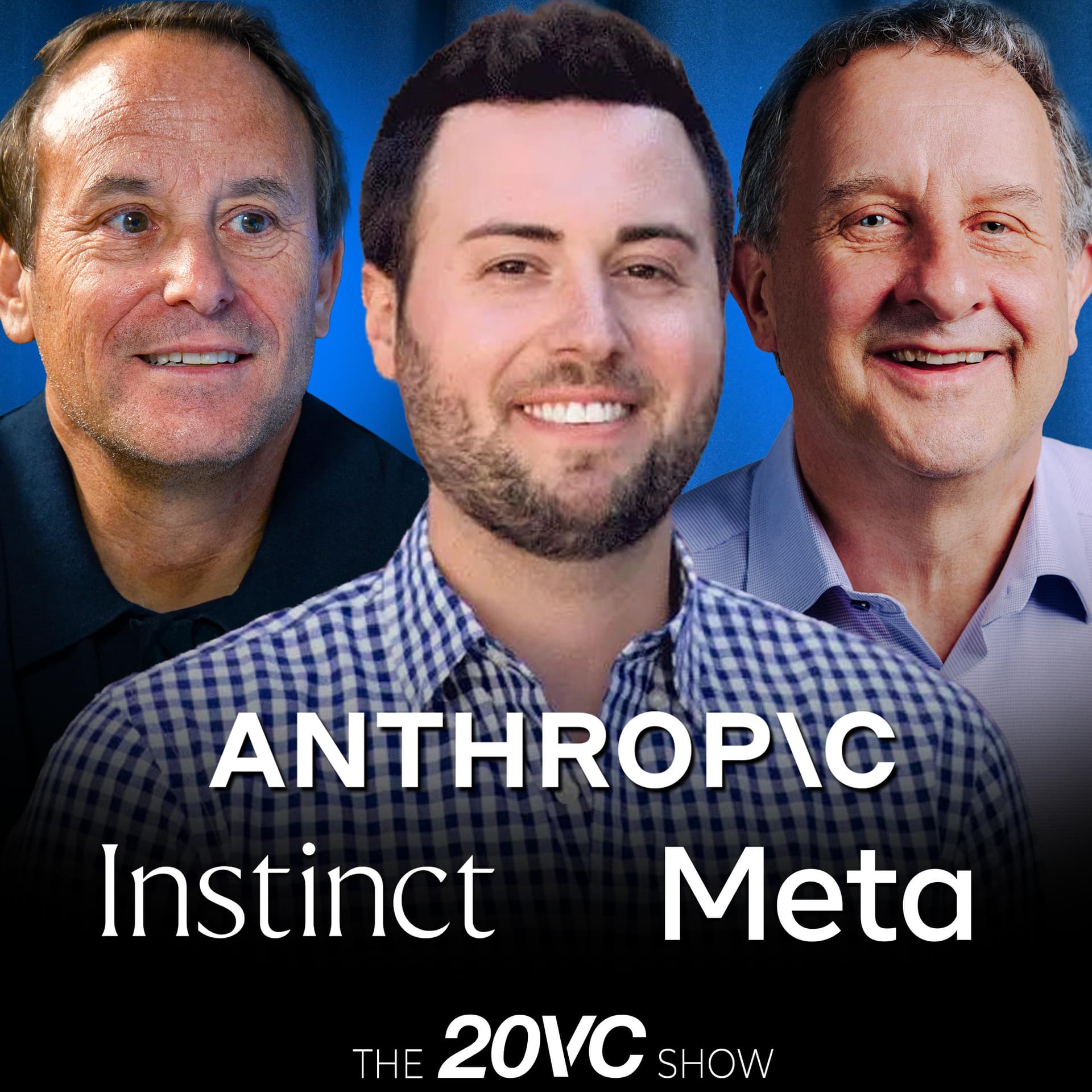
Taavet Hinrikus is a Partner at Plural, the early-stage fund that backs the most ambitious founders on a mission to change the world through technology. He co-founded Wise in 2010, where he was CEO and later Chairman, which went public in the first-ever direct listing in Europe in 2021. Prior to that, Taavet was Skype’s Director of Strategy until 2008, having joined as its first employee. He’s been an active investor for more than a decade,with personal investments in the likes of Bolt and Synthesia.
In Today’s Show We Discuss:
04:08 VCs are Spreadsheet Monkeys
05:41 Why Banker European VCs Suck More Than The Others
11:20 Why Serial Entrepreneurs Are Better
14:48 Why the 2:20 Fee and Carry Model in VC is Broken
18:01 What are the Biggest Ways VC Investment Decision-Making is Broken
28:26 Why is it BS when VC Firms Need Every Partner to Meet the Founder
31:24 When and Why Will Founders Realise Multi-Stage Firms are Bad Early Investors
34:35 Why Does Europe Need to Build it’s Own Tech Now More Than Ever
37:24 Will Putin Invade More European Countries
39:29 What are the Dangers of Having US Made Tech in Europe
47:12 How Does the Change in Relationship Between the US and Europe Impact How We Build Our Tech Ecosystem?
52:36 Quick Fire Questions and Reflections