
In short
Podcast Summary: The Twenty Minute VC (20VC) - Episode with Tomasz Tunguz
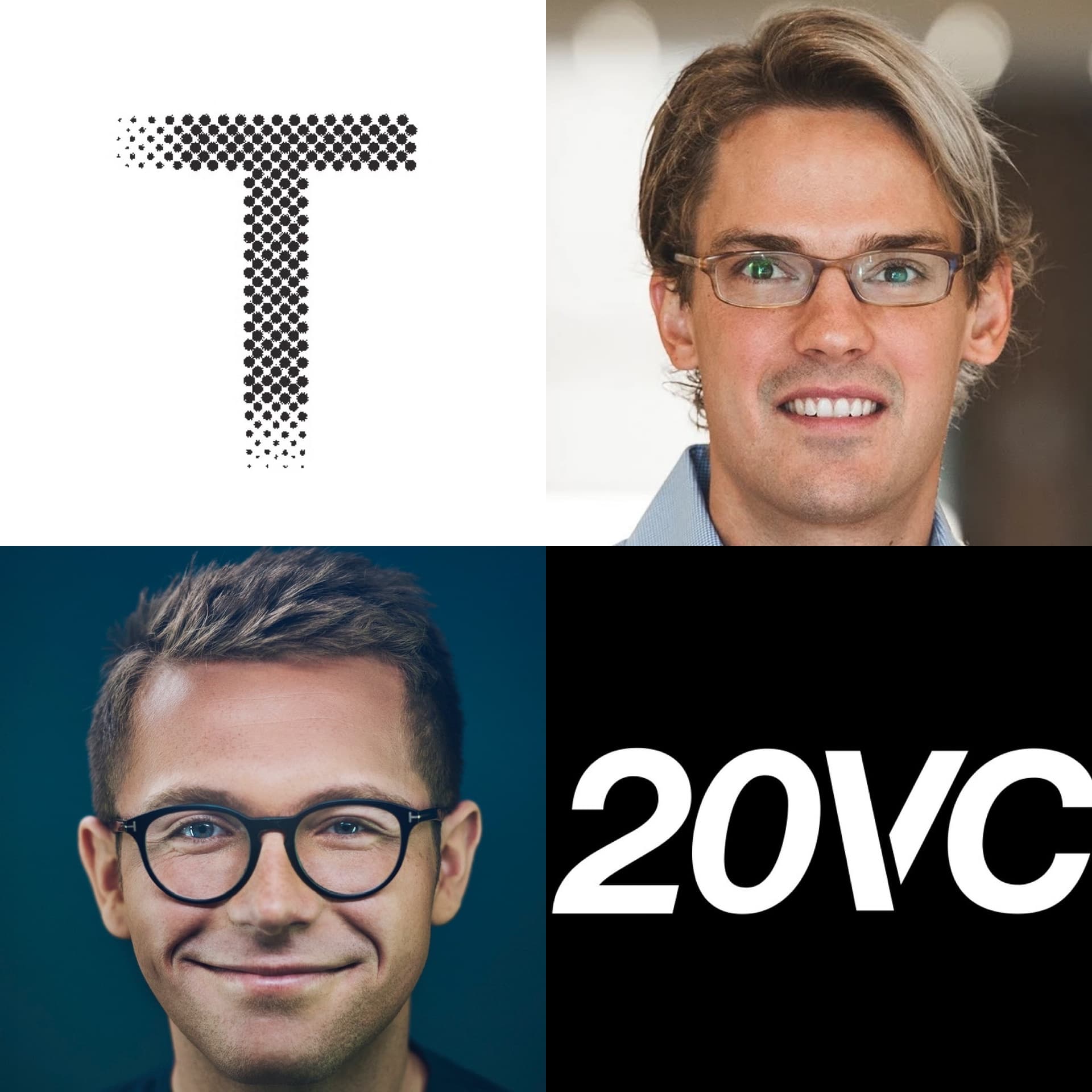
Episode Overview Title: 20VC: Who Wins in AI; Startup vs Incumbent, Infrastructure vs Application Layer, Bundled vs Unbundled Providers Guest: Tomasz Tunguz, Founder and General Partner at Theory Ventures Fund Size: $230M, investing $1-25M in early-stage tech companies Host: Harry Stebbings
Key Discussion Points
- Founding Theory Ventures
- Reason for Leaving Redpoint: After 14 years, Tomasz desired to start his own venture firm and explore new ideas.
- Lessons from Redpoint:
- Emphasis on thesis-driven investing; deep understanding of specific sectors is crucial.
- Importance of concentration in investment strategy due to the power law in venture returns.
- Fundraising Process
- Meetings with Limited Partners (LPs):
- Conducted 150 meetings; only about 40 were pre-existing relationships.
- Half of the fund's capital came from new LPs.
- Documentation:
- Utilized a data room containing a track record, pitch deck, and insights to pre-qualify investors.
- Creating Urgency:
- Shared updates on commitments to convey momentum and encourage further investments.
- Key Challenges:
- Common reasons for rejection included LPs' comfort with solo GPs and timing due to market conditions.
- AI Landscape Insights
- Value Accrual in AI:
- Startups vs Incumbents: The speed and agility of startups may allow them to outpace incumbents if they can acquire distribution swiftly.
- Infrastructure vs Application Layer: Startups might find more success at the application layer due to greater diversity in needs.
- Bundled vs Unbundled Providers: In early market stages, businesses might prefer bundled solutions for simplicity.
- Future of AI
- Economic Impact of AI:
- AI could significantly boost US GDP, potentially replicating post-war economic growth.
- Incumbent Companies' Response:
- Companies like Google may struggle with the rise of AI, as traditional operations face disruption.
- Market Readiness:
- Enterprises may not be fully prepared for AI adoption, preferring simpler solutions.
- Regulatory and Market Dynamics
- Regulatory Challenges:
- Regulations often favor larger companies, creating barriers for startups.
- Incremental regulatory approaches are preferred to understand second-order effects.
- Asymmetry of Knowledge:
- The gap between tech innovators and regulators can hinder effective regulation.
- Investment Philosophy
- Thesis-Driven Approach:
- Concentration rather than diversification is emphasized when investing in fewer, high-conviction companies.
- Market Timing and Customer Demand:
- The ability to adapt to market timing and understanding customer needs is critical in developing investment theses.
- Future Predictions and Trends
- AI Adoption:
- The expectation that a significant portion of software development will be driven by AI in the coming years.
- Enterprise Readiness:
- There is a considerable opportunity for companies that can facilitate AI adoption in large enterprises.
Conclusion The episode presents deep insights into the current state and future of venture investing, particularly in the AI sector, highlighting the challenges and opportunities faced by startups and incumbents alike. Tomasz Tunguz emphasizes the importance of a thesis-driven approach, understanding market dynamics, and the role of regulatory environments in shaping the future landscape of technology investments.
For more information: Visit [The Twenty Minute VC](http://www.20vc.com) for more episodes, notes, and resources.
Written by AI. May contain mistakes. Listen to the episode to check what was said.
Transcript
Automatic transcript. May contain errors.0:00I think at the foundational model layer, that's a big boys game or a big girls game. The odds of success are going to be significantly higher at the application layer because the diversity of needs there is greater. We faced with a technology that could actually replicate the post -war surplus out of World War II. I think Google had a rude awakening where, to some extent, they developed in -house but ignored. So it's a classic innovator's dilemma. This is 20VC with me Harry Stebings. Now the last time I had Tom Tunger's on the show was seven years ago. Since he's become a dear friend and last week he announced his new $230 million dollar fund, Theory Ventures.
0:33No one deserves this more than Tom and it made me so so happy to see. Prior to founding Theory, Tom's been 14 years at Rat Point as a general partner, where he made investments in the likes of Luka, Expansify Monte Carlo, Junanelitics and customer to name a few. But before we dive into the show, Dave, help me talk about Coda. Coda is the doc that brings it all together and how it can help your team run smoother and be more efficient. I know this because Coda helps me. At 20VC, we use Coda for all of our research for every episode, so all team members essentially can work on the schedule all in one dog seamlessly built by Coda.
1:07And here's how Coda can help your team run smoother and be more efficient. Coda allows you team to operate on the same information and collaborate like my team does all in one Coda place. By putting date in one centralized location, regardless of format, it eliminates so many rope blocks that can just stop your team in their tracks. This is really what slows down productivity and collaboration. With Coda, your team can operate on the same information and collaborate in one place to get projects across the finish line faster. Help your team run more smoothly, more efficiently with Coda. Get started today for free.
1:38Head over to coder .io slash 2 -0 -VC. That's coder .io and get started today for free. Coda .io slash 2 -0 -VC. And some EU tools we cannot live without. Angel list is fast becoming. The center of the venture ecosystem. So for startups, Angelist reduces the friction of capital management, banking and fundraising all in one place. Teams can focus on scaling and let Angelist handle the rest. Thousands of startups have moved their cap tables to Angelist in the past year. Angelist also supports large venture funds and their teams with an automated software first approach and the best customer service in the industry.
2:13Fun managers can focus on making great deals, while Angelist handles reporting taxes, compliance and more. What's more, with the recent release of Angelless Network banking for fund managers and investors, your deposits are secure with the most trusted banks for maximized FDIC coverage and mitigated single -bank risk. If you're ready to scale your startup or fund with the platform of the centre of it, visit Angelless .com forward slash 20VC to get started and finally, Bracks. Since its founding, Bracks has been committed to helping startup small and scale faster at at every stage of growth from MVP to IPO.
2:48Today, Bryce is all in one financial stack, is used by one in four US startups and counting. Like at this beta founders all day, and I know how crucial it is for them to have the right financial stack. Bryce gives you fast access to a high yield business account where you can safely store and move your cash while getting up to six million in FDIC protection. Lately, it's been all too clear how important that is. Plus, you get high -limit corporate cards, It's easy to spend its tracking and automated bill pay to learn more about the all in one financial start for startups. Visit brex .com for slash 20VC.
3:21That's B -R -E -X .com slash 20VC.
3:30You live now arrived at your destination. Tom, it is such a joy to have you on the show. I just checked. And it is 2016 when you were lost on the show. So seven years ago, I've missed you dearly, my friend, but thank you so much for joining me today. Thanks for having me back, Harry. I can't believe it's been seven years. Time flies. Look at you. Huge audience. New fans. Okay. How far are you comments? Incredible. That is so, so kind. But I want to start with, obviously we recently found a theory such an exciting time. I want to dive in. First, why did you decide to leave Rap Point and why did you decide to start on your own?
4:03Yeah, at a great time at Rap Point it was there for 15 years. Learned from many wonderful people and after that amount of time I decided that after seeing so many founder start companies that I really wanted to start one of my own when I was about 17 I started a little company and over the last 15 years maybe more 20 years I've watched all these startups grow. I wanted how that feeling for myself and I also wanted to experiment a bit more and everybody has an idea about how they want to create their own business and I've been a student of startups for a long time and so I really wanted to build a venture firm in a slightly different way in September last year jumped in and then we were off to the races.
4:37You mentioned that, like, the learnings in the 15 years. If there are one or two big takeaways for you from your time at RappPoint, I'm asking you to distill 15 years of lessons in a short sound bite. But what would they be? And how does that influence how you think about building theory moving forward? Yeah, so I really believe in thesis -driven investing. And what that means is going deep in a space and spending six, nine, 12 months researching it and really understanding it. As a board member, I will never know about as much about a space as a founder, but if I can deeply understand a space then I think I can be a very helpful board member.
5:11That's one of the reasons why theory is called theory. I really believe in concentration. The industry is governed by a power law, and the more dollars you can have closer to the y -axis of a speak on the power law, the better your returns will be. And so I wanted to set up a firm that was set up for thesis -driven concentration. That was a whole idea. This in portfolio construction is what gets me out of bed in the morning. When I was peeing my language, I want to start there. This is like a process that's shrouded in much opacity and we just see fun raises announced. So I want to talk about the fun raise.
5:41How many meetings did it take to close out the fun, my friend? It took about 150 LP meetings. The fundraising market was a very challenging one over the last couple of months, I'd say. But it took about meeting about 150 LP's. I thought about it just like a regular software sales process, right? Where sales assisted 15 % close rate and so built up a funnel and a pipeline that was large enough with 15 % close probability that we could hit our target. And we were very lucky where we exceeded the target, we raised a hard cap and ended up at about 230. So 150 meetings, I'm fast now, how many of those did you know before the raise itself?
6:16I probably knew about 40 of them, 40 to 50. How many of them committed having not known you before? Because I always say invest in lines, not dots, and the importance of building that relationship outside of the fundraise. How many committed having not known you? So about 50 % of the capital was for new relationships, about half of the capital. Can I ask, for the starting checks, they're the hardest to get? When you think about the strategy there, did you go for large institutional anchors first, or did you go for the friendlies who were much more likely to say yes? I went for the large institutional anchors.
6:50I had some relationships there. So the LPAC has five members And if I could fill two members of the LPAC right out at the gate Then that would assuage a lot of concerns from new rail piece because there were institutional backers from the beginning and That they were wonderful. They took many reference calls on my behalf and gave me a lot of advice through the process It's kind of like if you think about finding a lead for a series A or a series B If you can find that lead who then does the diligence and then we'll talk to everybody else who comes in guides you It sets out the process really well.
7:18It's a little bit different because most venture firms are basically large party rounds. It's just the number of investors you're talking about 15 to 25 to 30 sometimes. And so it doesn't really have that dynamic of a lead, but the LPAC is basically the Limited Partner Advisory Council, the board, it's the closest thing that I think you can get to, unless you have super concentrated LP base. Did you have a limit on check size? Often when I was raising people were like, oh don't allow them invest more than 20 % of the fund. Did you have a limit on how much they could invest as a percent of the fund?
7:46I did, yeah, I think the largest LP is no more than 12 % of the fund. So there's different theories here. So one of the wonderful things in raising this fund was I got to see startup land in all as beauty and glory, the number of people who reached out who I wouldn't have thought to help and talk about their journey and their experience and their fund construction was amazing. And so I learned about funds where the $200 million fund with 80 % of the capital from two LPs was super concentrated. And then there are other funds that are the opposite where it's just lots of small checks. And then you have people in the middle.
8:15Having that breadth, it was just absolutely eye -opening to understand that there are many different ways of creating a venture firm, at least on the capital formation side. I'm glad you went with the 12%, I think diversification is important. So I'm thrilled that you went for the ladder. What did you give for all the materials? Did you send pitch decks to everyone beforehand? Did you have data rooms? How did you think about getting the right materials in place for the race? I prepared a data room. There was a track record in there at pitch deck, a bio, Some of the blog posts that I'd written some metrics that I put together.
8:46So I set up a brief and a bio And that was theory one. That was the outbound email. If I had been introduced I would send them my bio and then the deck. The idea was to use those materials as pre -qualification So some LPs prefer not to invest in solo GPs different LPs have different mandates They might only invest in the US and might prefer early stage later stage And the idea was to qualify just like an SDR would and so those briefing materials that was the entire purpose And I used a dark send and I didn't allow downloading because I wanted to understand where people were in the pitch deck where they were stopping and that informed the Way that I would pitch them if they decided that they wanted to meet It's so interesting so I always have this contrarian view and I always advise people to not send the deck beforehand And the reason I say that is because they look for a reason to say no They'll go.
9:32Oh, well actually he's the sister of him. We want a generalist Oh, he's only focused on North America the truth is they might have those preconditions before But when they meet you and they see how brilliant you are all of those can go away And so don't give them a reason to say no before they have the chance to hear how inspiring and brilliant you are I think that's brilliant wisdom. I didn't follow Do you know what I mean? And then afterwards once you get them pulled in you can be like hey I'd love to show you more I'm gonna send you our deck as a follow -up and it also gives you a reason to follow up more than one would normally have There's a lot of wisdom there.
10:06The other reason is if you're raising a first -time fund it's really a bit about the individuals more than it is anything else And so to send the materials at a time maybe you don't have the opportunity yourself shine So I could see that. Tom, what was the biggest reason that people said now? You mentioned the solar GP album of that. What was the biggest reason people are ah, no for us. Yeah, so solar GP is one There's keepers and risk and so some LPs are just not comfortable having a single person and be the general partner. The other challenge was timing. I was raising during a time when the public markets had been down, but the private market valuations had remained elevated.
10:38And so the combination of those two put a lot of LPs in a place where they didn't really understand the nature of their portfolios. If you thought you were 50 -50 public private and then the public's fell by half, all of a sudden you were three quarters private, one quarter public, but the private market was going to be written down but hadn't been written down. And so one of the biggest reasons was just need more time in order to understand where my portfolio is so that I can figure out allocation in the future to this asset class. Which LP class did you predominantly raise from? Because if you enter like Endowment Funds in particular, that was a big scene that was troubling for a lot of them.
11:10And also they have mandated net outflows because they have scholarships and maintenance for sites. Was it predominantly Endowment Funds? How did you think about the different LP classes? Barry Eiger from Lightspeed, he has a great blog post on the ideal construction of a venture fund. And he talks about, ideally, you want to have about 30 % fund of funds, ideally 30 % endowments and foundations, and then 10 % pension funds, healthcare plans, etc. That was the advice that I got from a handful of other LPs, and so that was my sort of mental model when I went out. And the ultimate LP base is roughly that.
11:42It's predominantly US. First close, second close, final close. How did you approach the closing mechanisms? There's this sort of aura around at first and only close. No one really explained it to me. I talked to one friend who is an executive at a public -itreate company raised a venture fund and he said he had 15 closes. And so every time an LP would commit, he would have a close. And his perspective was, if somebody signed up, it doesn't cost many more to close them and have them wire and we'll just keep going. And then there, you know, other investors who said, ideally having a single close means you raise for a position of strength.
12:13And we had a single close, but the purpose of a closed date is just to drive people in unison to a cadence that you're trying to set. There's nothing magical about it. There's nothing terrible about having multiple closes. It's just a way of organizing a particular process. That closed date is drawn out of thin air, and it's driven by how strong of an auction you can develop and what your LP relationships look like. But it's a vanity metric for VCs. I think one of the biggest mistake managers make out shoes. They get a load of people who say yes. They don't close them and they leave them hanging.
12:45And then a month later they come back and say, hey, Tom, you committed to my fund and you were like, Oh, I forgot about that. My eyes, she kind of allocated the money elsewhere, and it was actually two months ago now. That happens a lot, which is don't let it go stale. I always say close as soon as you can, as fast as you can to not let it go stale. So totally with you. And it feels more momentum. Right, if somebody asks, like, how much of you close, you want to show a level of progress and it gives you a reason to come back to people and, like you said, before a reason to email people. So I think this mistake around a single close is completely misplaced.
13:15Did you do anything to drive urgency in the LP base? because as you said, the single closes one way to do it in terms of ensuring that people move faster downpipe. Did anything else work for you in terms of just ensuring there was efficiency and urgency in the process? Every time I had another verbal commit, I emailed the LP base and I gave them the update. I wrote this blog post a long time ago talking about when you're fundraising what you want to convince people of is inevitability, that the company or the fundraising round, its positive conclusion is inevitable. And so any data point that you can provide to investors that supports that is hugely helpful.
13:51When you say, hey, this person just committed or we just got another great institution, for me as someone who's already committed, I'm like, oh, actually, Tom's gonna be a winner, I should introduce him to more people. Do you see what I mean? Totally. Absolutely. Exactly. So, I was a little bit, I was very deliberate about that. Or review. What would you say what with your race that you do again? And what would you say did not work and you would change for an next time? Yeah, so after I raised capital, I went and I talked to I should have done this before But I went and I talked to some of the most sophisticated capital formations people I just asked them how they do their job and it was really interesting because the really sophisticated fundraisers They're always in market.
14:31They're referencing LPs. They are building pipeline and that's a full -time job And so I think one of the things that's really important is building long -term relationships that worked really well for me So I was really happy to have a lot of long -term relationships that I could lean on. That was a really big deal. Things that didn't work so well, there are different geographies where LPs is a whole or more conservative, and it took me a while to appreciate that. And so I probably spent more time traveling than I should have. And so next time, there'll just be longer lead times on some of those geographies.
15:00Did you find in -person what, much more effectively, than remote, cool in terms of conversion and closing, or actually no? No. No, no, there's no correlation. Boy, I'd have to go back and look, but maybe I wanna say like a quarter to a third of the LPs, I only met after they committed in person. And that's probably an overhang from COVID where a lot of funds were raised entirely virtually and people are comfortable. I actually, the thing that I do is every week, I meet two new LPs and with each LP meeting, I say, hey, Tom, I love this discussion. And then ones two other great LPs that think like you and you think I'd have a great discussion with, and they go, oh, you've got to speak to Satish and Logan.
15:40Oh, that'd be fantastic, which you might make in the intro, I'll send you a blurb now that you can forward. Oh, of course, super happy to, and the flywheel is self fulfilling. You're a machine, Harry. You now have this breath of experience raising theory in a pretty freaking hard market. What would you advise managers going out to raise, having had the experience you have done with theory? The point of LP diligence that was new from either in the process was the business model. I think in the last 11, 12 years where we've had this incredible mobile market, the portfolio construction hasn't mattered as much.
16:12But the volume of questions that I received consistently from LPs about, what are your assumptions on number of seeds, number of A's, the fatality rate, the multiples on those, how does that compare to the standard venture capital distribution? The number of questions that I got about that, I think suggests that it's really important to have a business model in your deck. That I think has changed just as a result of the cost of capital increase. I mean, sad that it wasn't always that given the fact that Well, it's convolable, no, it's convolable. That's just fucking underbought an adventure clapper, it goes to 7, 2008 or more than ever we met.
16:42I mean, at the series A, we were looking at financial plans and we were putting together financing rounds that were a function of the capital into the business and then, whatever, in 2012, all of a sudden it was not about fundamentals anymore and it was really just about access. I love that discussion and so I wanted to dive into it because 2 .30 million, okay, that's the fun size. Why did you decide 2 .30 million was the right amount to raise? It was all about portfolio construction. I ran a lot of math in order to figure out using historical venture data. I ran Monte Carlo simulations for optimal portfolio construction.
17:13How may I understand how many companies, how much for a national, how much for reserve? It's about 12 to 15 portfolio companies, significant concentrations, so you probably have 40 to 50 % of the fund in the top three holdings, maybe more. It's an unusual portfolio construction. Monte Carlo simulations bits out a couple of different dominant strategies and this is one of them and this is the one that aligned with when we talked at the beginning But the way that I like to invest about being thesis driven and really understanding space if you go deep into space and you can understand it And ideally you're in a place where you have a lot of conviction and you can keep investing and keep supporting a company I also think in an adventure environment that's going to be significantly different this 10 years over the last 10 years Setting up a venture firm to be able to consistently invest behind its companies should provide founders a bit more or comfort from their financial partner.
18:00So I similarly did the math on Monte Carlo's, and I found that at 23 companies, you get something like 82 to 84 % of the benefits of diversification. What you're saying is essentially with deep thesis and deep thinking and a lot of time, you need less diversification because your ability to pick is significantly better. Correct. That's exactly right. So we're doing series A's, what's the check size per company estimate? Yeah, it's about eight to 12 initially. 8 to 12 initially. Is the phone big enough given how large AI machine learning rounds all today being 30 to 50 million on a pre -seater receipt as we're seeing quite often now?
18:40We can flex. We're not in a position to be able to lead a 50 million to our series A. We could co -lead so that's one way of doing it and if you're raising a 50 million to our series A you probably do want it from, I would say you probably do want it from two different PCs. Because we're so concentrated we can focus our resources where we have the most conviction. How do you think about the decision on doubling down? You said there about kind of three companies could be say 50 % of the capital base. What is that conviction building process that like to putting that much capital behind one of the three?
19:08It's a lot of diligence. We'll spend six, nine, twelve months researching a space like one of the themes that we have is the decade of data. So I've been investing lots of different data companies for a long time. So one component is just really understanding the market, understanding the buyer base, the different segments, their needs. Another component is benchmarking companies. So been doing that for more than 10 years. I've got a pretty significant database of data points there. So just understanding on a relative basis, what is the ultimate performance? A third part is understanding what the exit markets look like in the entry prices and what is a reasonable, multiple expectation over what period of time.
19:37On the exit market analysis, I go back and forth. Is it worth doing because it's so variable? You could look back on the prior 24 months and say, it could be that or it could be today or it could be way, way worse. We can't project out 7, 10, 12 years. is it valid doing it? Okay, so the historical forward multiples about 5x, it's a little higher than that's about 545. And in the Hain Day of quantitative easing, the top court teller companies are trading at 40 times. And today it's about maybe six. And so you can't go into a company today and say, okay, I'm going to project a 20 times forward multiple on this company at the time of IPO, if it's at a hundred million growing at 70%.
20:14You just can't, I would say that's irresponsible, because it's just completely unrealistic. If you've spent the majority of your time in venture during a time when you've had those kinds of multiples, you need to say, check on, what do you think your return expectations are going to be given that it is a 4 % ESOP Employee Stock Option pull dilution by year and dilution created by other venture rounds and that. Going through that discipline, I think is as much just like I said, particularly for working in a team, it's just a really important discipline step. There's this awesome book called Super Forecasters that got him Ted Lo wrote, and he talked about Enrico Fermi who created the Atomic Bomb, always wanted the team for the of thinking which was all about conditional probabilities.
20:54It's called firmization. The idea is like just to numerate the conditional probabilities. In order for this generative AI company to succeed, the first thing it needs to do is hire a PhD team. Okay, what are the odds that they can do that? Then they need to raise a Series A. Okay, what is up? The base rate for raising a Series A from C is about 60%. Then they need to raise a Series B. Base rate's 50%. Then they need to do this and this. And you put it all together and then you tie it to your expected value and you come out with a big range of what you think the ultimate outcome can be. And each company is going to be different.
21:20a marketplace has to do supplier acquisition, supply side acquisition and demand side acquisition. And so like that framework, at least for me, really helps me to think about what are the two or three key issues or questions that a company needs to answer over its timeline or its lifetime? How do those odds change? And ideally, they improve and the more that they improve, the more comfortable one after being concentrating. I think it's Philly Bluff's own or one of the Lafonce says that if you know a market better than anyone else, you can pay a higher price than anyone else because you know more about it than anyone else.
Read the full transcript
21:51My question is to you, do you agree with that statement? And how do you think about your own price sensitivity? I think it's true because if you know more about a market, the range of expected outcomes is far more narrow, which means your certainty in making a bet is better. The result of that should be you should be willing to pay a higher price. The more you know that an option is in the money, the more valuable it is. I agree, up How do you think about your own price sensitivity in my ownership wise? Do you need 10%, you need 15%, how do you think about ownership sensitivity on a power company basis?
22:21Yeah, so I think where I put it is, it's important for us to have meaningful ownership because we're so concentrated. The idea is because we have such a small portfolio, it can spend a significant amount of time with each portfolio company. So ownership matters, ownership also matters, I think, with a form of returns. We want to have significant ownership. And the idea with the firm is that you don't need to have significant ownership out of the but you can build a position over time. And in terms of like multi -round investing, how do you think about it? Can you do a 5 % ownership on A and then get five more at the B, five more at the C?
22:51Like how do you think about that cross -cycle investing? Is it a bit of a deal? Yeah, so that's a tough configuration just because the dollar amounts that you're talking about just go up so significantly, right? 5 % at the A, it's a hot A. So you're probably talking whatever it is, five at 100. And then the next round might be 200 or 300 and so to buy another 5%. You can do the math. I think about it a bit more as can you get 10 % at the seed maybe you can buy another 10 to 15 % at the a and then buy another 6 5 % at the b with the concentration on a per company basis to have such concentration You also have to not do pro -rata or not concentrate capital in a lot of companies too because you have to preserve dollars for the best How do you think about that aspect of bluntly being a little bit more disciplined around reserve dollars and not allocating to anything in the middle or under performing.
23:37The business model of the firm affords both, so there's reserves for every company. The idea is with every business, there's a very blunt instrument, which is with every stock position that you have if you're any kind of investor. Either you should either be a buyer or a seller. And if you're in the middle, you probably don't know enough about a business. The idea behind the concentrating reserves is we will run diligence processes on those existing portfolio companies in order to understand where to concentrate. But we also have the capital to be able to support companies go up and down. One of the stories that I think hasn't been told enough is like the Snowflake series C in the series D almost didn't happen because the company was burning so much the gross margins were in a really rough place And there was a flat -round in there somewhere and then it became as fast as growing software company in history So one of the reasons for this portfolio construction is if you're in a radically different capital markets environment You want a financial partner who has to wear with all to be able to support you across multiple rounds and that's no Flake route multiple on that finance that was a big lesson that I learned at redpoint But the multiple on that financing is legendary I want to dive deep on that.
24:35What happened and what was the lesson fee? Snowflake at the time was competing with giants. So there was red shift and there was GCP and the company was growing very quickly and the market was there. The company had a really tough time and I can't remember exactly if it was a Series B or the Series C but it was this middle round. Maybe it was a Series C. The company was burning a ton of capital and couldn't raise money from the outside and it was the insiders that stepped up, led that round because they believed in the business. And so the ultimate result was if you have an accurate thesis and you can find the right company and you have the way with all to be able to support their business through good times and bad.
25:08You can be disproportionately rewarded for it. I love that and I agree with it. I also didn't know actually that in terms of the series C. I do have two questions on like thesis -driven investing which is I always worry about confirmation bias which is you develop the thesis and then you find something that aligns to it and you're like this is it and actually thesis can be wrong. How do you think about the dangers of confirmation bias and not just following victim to your own predictions of the future model of the world. Yeah, totally. You can become enamored with a particular view of the world and in order to mitigate confirmation bias, you need to have many conversations.
25:41You just need to keep testing and keep pushing. And at the end of the day, the great part about investing in B2B software is there's a buyer, and neither they buy the software or they don't. And so the greatest sort of foil to confirmation bias is a lack of customer demand. I have this view around the future of the marketing ecosystem system being tied to the blockchain and this decentralized infrastructure. And I've been working on it for nine months. And the thing that I consistently look for is, okay, where's the pipeline? Who's the buyer? Who's willing to spend? Where are the experimental dollars?
26:10Where are the advertising agencies saying? And so I can come up with that idea consistently. But if I can't find a buyer for it, I can still have this beautiful vision, glass pyramid, so to speak. But if I can't find a buyer, then I need to abandon the thesis or at least set it aside for now. The other question for lines to what you just said there about blockchain and applied to marketing, which is timing. A lot of these can be right, but can just be too early, as I know. How do you think about bluntly market timing, especially on Thesis where you can know too much ahead of market? You have to look for pipeline.
26:39So it all comes down to customer need, right? So pest .com versus Instacard or Peapod versus Instacard I think it's kind of the canonical example. The market timing, as long as you have a strong pipeline, you can have a lot of confidence. As long as you can extrapolate the needs of one buyer to another. And so that's why spending time and trying to get as broad of an understanding of as broad a cross -section of the customer by our population is absolutely essential in developing these diseases because somebody has to buy it at the end of the day. I do want to move to the future and discuss A.
27:07where you're investing but also some of the broader topics around it. A question that I have which I can't really find an answer to, but it's like when we think about the future, especially in terms of AI models, does the rise of large AI models mean the future of AI, but as an ecosystem is dominated by a single general model, or one or two single general models, or will we have a decentralized fragmented ecosystem? I think you have both. I think the analogy of Apple and Linux is really useful here, Apple and Windows, where you'll have one system that is basically fully integrated and closed, and then you'll have another world where people are building little open source models.
27:43And some people believe that there's going to be a single dominant model. I'm of the mind that There's probably an interface that if you look at Microsoft Jarvis, so you look at Lange and fix here. Any of these companies where they take an input and then they are basically mediator across a bunch of different models for different purposes. I think that's probably going to be the dominant model, at least in the consumer world. And then in the enterprise world, you'll have the Stripe Twilios who are creating platforms where it's very simple for developers to get started with large language models.
28:10And then you'll have like full enterprise services firms where big fortune 500 just wants a problem solved. Pepsi needs a generative model for whatever reason. They don't have the discipline. They want the whole thing in a box. And so, you know, this really nice spectrum. I think it's a foundational model layer. That's a big boys game or a big girls game. It's because of the capital intensity required both for training and the GPU access and all those kinds of things. So maybe there's a start up or two that's able to raise a couple billion dollars in order to compete. I think it's more at the application layer.
28:37I ran this analysis. So in Web2, if you take the top three clouds and you look at their market cap, so AWS, GCP, and Azure, it's about a 2 .1 trillion dollar market cap just for the cloud businesses. And then if you take the top 100 publicly traded cloud companies both on B2C and B2B side Netflix and ServiceNow, they have equivalent market cap about 2 .1 trillion for both. So I wanted the infrastructure layer once at the application layer. Market cap is basically equivalent. The difference is the infrastructure layer there are three businesses and at the application layer there are 100. If the ideology holds as an investor, it odds of success or can be significantly higher at the application layer because the diversity of needs there is greater.
29:11You mentioned enterprise usage there. The thing I can't get my head around is some of the biggest companies in the world will not allow the majority of their data to be put through a different solution stored in some cloud infrastructure they've got no idea about. This is some of the most sensitive data they have. If they want to run any form of queries or models on it, it will need to be on -prem in their HQ under lock and key. How do we think about enterprise access when data access is so cool to their needs? So the first generation of software, all the software was run on an enterprise's machines.
29:45And Salesforce said, let's move it to the cloud and we convinced as an ecosystem, everyone that the cloud was safe. And the cloud is also expensive, we're starting to realize. And so now there's a bifurcation where data remains in the customer's account. The application is being run by the software company. So you have a separation of the application from the application plane from the control, from the data plane. I think we'll see a very similar architecture where the model actually goes to the data and then comes back out with the result. So the data is actually within the customer's account.
30:11There's some compute that's in put next to the data. The model is executed and then it goes away. And that way whoever's managing the model can update the model, modify it, do whatever they need to. And then at the time the model is needed to extend the point and pull back. So I think that's probably a dominant architecture. I think if you're in like finance or healthcare, it'll probably be completely on -prem for the foreseeable future. There are other kinds of issues like if copilot produces a bunch of code and you're a global 2000 and that code is actually copyrighted by somebody else. What do you do?
30:35If a model produces a bunch of PII that's like quasi -related to somebody else, I put together this presentation on the opportunities for AI startups and one of them is this whole bucket of enterprise readiness, like SOC2 compliance, legal shielding, data security, there are all these kinds of deployment models, there are all these kinds of challenges and issues that are associated with them and there's a big business there, many big businesses to people there. That's a question. Do you think this is a bundled environment? I always think about the quotes Jim Bortstale, bundling or unbundling. As you said that, there's many different big businesses to be built at, but they could also be bundled into an enterprise software suite.
31:09Do you think it's a bundle or an unbundled world in that envisioning? My learning has been that in early markets people want bundling. And they want bundling because they don't yet understand the technology moving so fast that most people don't really understand it end to end. But they want the technology to solve a problem. Like for your global 2000 you want a generative model you're not yet in the place where you can most people aren't say that these are the five different layers These are the best of breed across the five different layers and these are the parameters upon which I'm going to choose best of breed So team bedding's layer the two most important things are I don't X and Y right and at the model serving layer that latency versus cost Most people aren't there yet in their level of sophistication because they don't have enough experience with it So my sense is in the beginning people want an end -to -end solution Just give me a thing that works that's simple and then as I learn what my needs are and what my customer needs are and what I need the software to do I will break it in a particular way Then I will go and look for a best of breed in the market and I will swap out that layer My my question to is I'm worried about this asymmetry of knowledge We mentioned kind of enterprise buyers there and then the providers Tom.
32:07I'm European I know how some of these large enterprises think especially in Europe. Hey, I it's kind of like you need to remind them It's artificial intelligence. Al Alams is you're gone. You've lost me already How ready do you think Enterprise Buyers actually are? Do you think the hype cycle is ahead of the Enterprise propensity to buy? This is a technology that most buyers won't need to understand how it works. It's like a database. How does Snowflake work? I bet most people who buy Snowflake don't know. I don't know if you ever have seen the story, but there's this Italian artist and he was exploring this idea, it's called the illusion of explanatory depth.
32:43So he found 100 people in Milan and he asked him to draw a bicycle and then he 3D printed all those bicycles. And out of the hundred bicycles, how many things worked? Dan? Two. So, just because we're very familiar with the technology or an innovation doesn't necessarily mean that we understand how it works. And so, I think in the case for most enterprise buyers, like I said before, I think they want an end -to -end solution that will just work. And what work can 85 % to 90 % of the time, and that'll be good enough. And if in those 80 % to 95 % of the time, I can save you half of your time, just co -bile it does.
33:13Then that's good enough. And as long as it checks all the boxes for my security team, my AT team and my compliance team, then that's good enough. You mentioned that co -pilot, you mentioned it quite a few times. Today, I think it's code generation, 40 % of new code generation is artificially intelligent code generation. What do you think that will be in 10 years time? I think it will probably be 70 -80 % And reason I say that, I bet that 40 % a lot of it is what's called boilerplate code. A lot of it is standard code or code that's been slightly modified. I'm creating an HTML page, I need the HTML header and the title.
33:46And so that's probably 40 % of the content of an HTML page. It's probably the same for a Ruby file or Python environment. And so we're at 40 % today, and I bet we're at 75 % to 80%. Most of the code that's written is slide modifications of existing code. One Pepsi's website is not that different to Coca -Cola except for the underlying assets in the text. And so we'll get there. And so then the question is, OK, Goldman projects a 7 % reduction in the labor population as a result of artificial intelligence. But overall, a two and a half percent increase in GDP. And so that's massive. Like the US GDP is growing in about two and a half, over the last 20 years grew in about two and a half percent a year.
34:21And so you have this impact where you could literally double the GDP growth of the US as a result of AI. And so the reason I think a lot of people are super excited about it, the reason I'm so excited about it, is to macroeconomically for the US, we're in a hole where we've printed way too many dollars for the GDP that we're producing. But now we face with a technology that could replicate the postwar surplus out of World War II that drove the next 40 or 60 years of prosperity, but you've got a technology that's not really a wartime technology, that it could do it. That's the reason I think so many people are so excited about it, and the evaluations are as astronomical as they are.
34:51The one concern I have is when you look at it, it does bring about a concern about distribution of wealth and the concentration of income. How do you think about wealth inequality over the next years, and the dangers of it actually concentrating wealth further into the hands of fewer? Getting into politics. I think it's the role of the private markets in order to drive innovation forward and it's the role of government in order to encode the values of the population into its loss So I think those are the forces that exist in tension and the network effects and the power laws that we are all chasing Definitely create those dynamics when it comes to wealth But it's not a new problem.
35:25You look at railroads or telecommunications or whaling that's been around for forever Final one on this but how do you think about regulation? I'm concerned about the asymmetry of knowledge between private and public We're very fortunate to spend time with someone most brilliant entrepreneur in the world and then you go and speak to the regulatory bodies Which Bloney just don't have the same level of information and knowledge and they're setting the regulation. It's concerning How do you think about that chasm of knowledge between those two bodies and where it means we'll shake out from a regulatory standpoint?
35:56There's a lot of your conversation. I think regulation on the whole one it benefits and comments because the cost of adhering to regulations are significant You take a look at in the mid -90s you could have 25 million in revenue and go public today If you have a hundred million in revenue of an it costs you fifteen million dollars in your first year Go public and that's just a byproduct of regulation So regulation benefits the winners are the bigger companies. I think the second thing is a lot of the times when regulation is imposed People don't anticipate the second order effects. You look at real estate prices in California as there are three to four times What they are in the rest of the country because of the law that was passed in the 1970s called prop 13 They're all these sort of like second and third order effects that a lot of regulation doesn't anticipate and the legal process doesn't move fast enough You look a crypto, right?
36:37It's taken the US government 10 years to catch up to what's going on and now with operation choke point starting to really regulate that ecosystem And they finally gotten around to it So I think the system maybe a little bit of another example Like if you think about airplanes, okay post -World War II airplanes We were just invented the jet engine and the commercial airlining business was growing But it was still really risky. The FAA put a bunch of regulations around plain to keep flying planes. And then one day we realized that planes will square windows crash more because they create stress fractures along the points of the squares.
37:07And so we regulated that out. What does that teach you? We don't know what we don't know. And so the best path to regulation is incremental when we identify that there's something wrong. Well bad things happen long way. Yes, there's no doubt. And this is my town, Calis, but that's the path of the price of progress. Final one. You mentioned it. Sometimes benefiting larger companies and incumbents. This is my also big question, which is like startups first in Cummins, Alice Rampella Landryson says a brilliant one, which is, will the incumbent acquired innovation before the startup acquires distribution?
37:35When we look at the two -anceless spectrum for the next generation of AI and LLM, which is will existing incumbents integrate it well enough into their distribution channels to be highly effective and continue their dominance. Or actually a startup with agility, flexible code bases, much better place to win in this next generation. How do you think about that kind of startup versus income and mega wall? My thinking is evolved here. In the beginning, I thought the incumbents were going to win the whole thing. And I thought that because the incumbents have far greater distribution, Microsoft has an incredible channel, Microsoft has a special relationship with OpenAI, the pace with which Microsoft is injecting its products with LLMs is astounding.
38:14And so startups are in this unusual position where they have negative time to launch. They're actually behind the market, which is unusual. think about mobile apps and they're launched at the Apple store. It starts with the first ones to understand how to write mobile apps with objective seeing. But I think any time we talk about machine learning, there's always this question around what is the moat? And I have this as reaction, which is like the data mode to data mode. And I think the answer is the one that it's always been, which is better execution is the moat. If you can build a better CRM and get it into market, you can win.
38:42You take a look at what notion has done with documents or what snowflake did with databases facing too big and combat. There are these stories. They're all over, they create this beautiful for consolation within startup land of the David versus Koliest story. I think if you're a venture capitalist or if you're a startup founder, you have to believe. I think it's in your fabric that no matter how big the incumbent is or the advantages that they have, that if you have really great execution, you can still win and you can win big. I tell you, Lager, I always say the speed of execution is the biggest determinant that I see in the differences between achieving and not achieving product market fit.
39:14Tom, I think we both agree that Microsoft's absolutely killed it in terms of their embracing and approach to this netting generation who's done really badly. Which one of them is, ah, you really missed the beat on this one guys. How it's gotta be Google. I had my former employer so it pains me to say it. And I didn't believe that chat would replace search, but I think for many use cases it will. And I think Google had a rude awakening where I don't know, for 20, 25 years they were uncontested. And now all of a sudden there's disruptive technology. To some extent they developed in -house but ignored.
39:45So it's a classic innovator's dilemma. And so this technology went to other places and now is a challenging the hegemony, the monopoly power. And that is so exciting if you think about like the ads ecosystem, like the BDC ecosystem has been relatively quiet over the last 10 years because of that dominance of Facebook and well. And now all of a sudden you have a technology and a re -platforming where all that market share is conceivably up for grabs. You couldn't create a new travel agency, you could create a new shopping experience, you could create a new stack overflow, you could create a new social experience based on chat.
40:13And so it's wide open. They were so strategically ahead of the game acquiring DeepMind. An amazing team there. What went wrong with that? I think it's a classic thing that when you have a golden goose, when you have an incredible business model, you're always faced with the choice of disrupting yourself and destabilizing the ship or waiting until somebody destabilizes it for you. I think as a leadership team, it is so difficult to have the discipline to say, we are going to destabilize this ourselves. That's what happened. Do you think they knew? And what I mean by that is that Netflix did destabilize the Golden Goose.
40:44They took their mail all the business, put it online because it was obvious. It would lose revenue in a short time, but it would obvious. The move from search to chat still isn't actually obvious. It's potential, but it's not obvious. Do you think that's why? I think it's part of it. So you think about the cost that produce a GPT -4 query versus the cost to produce a Google query. I bet it's like 100 or a thousand or 10 ,000 times different. And Chris Dixon had this post at every major innovation start out looking like a toy. about the chat, the Google, or anybody working in search is looking at those tech, and then we had conversations with friends talking about the cost of career on the stuff, you just can't get the economics, but you can't look at it at a point in time, you've got to look at it on some geometric curve or some logarithmic curve where you've got effectively a Moore's Law happening for you.
41:26So I think that was definitely a mistake that I made in anticipating the technology. I think the other thing that I didn't really appreciate until some of the later models came out was just how sophisticated the emergent behavior can, so there's this paper that talks about that how these LLMs learn and the analogies like humans right so I can learn math by reading a book right I can learn addition I can learn division in that way like the next time I see four plus four I know what the answer is or what a cube root of 27 I also learn how to swim and in order to learn how to swim I can read a book about the physics fluid dynamics and I can understand like what's happening with the vortices and where my arms need to be and what my legs need to do but after reading that book you throw me in the pool I will drown initially a question I can read all the theory in the world and so there's two different ways that we learn like we we learn by effectively memorization and we learned by doing.
42:10And what we thought at the beginning with these LLMs was that the primarily memorization systems and that's why there's improvements in the GMATs and the LSATs and the AP tests just because they have more and more exposure to those questions. But we're starting to realize that they learn also by doing. And so there are these sort of what they're called emergent properties where the more questions that they're asked, the more they figure out how to answer those questions in a better way. There's this beautiful feedback loop that exists that only happens when they swim more. They swim more, they learn how to swim faster, or they're asking more questions, they learn how to answer questions better, just like a human would.
42:41And not to say that they're humans, said that whole thing aside, but that I think has a compounding benefit that is really difficult to appreciate. Humans are very good at linear stuff and they're terrible at geometric stuff. And I think what happened is that the quality of the answers and the breadth of the knowledge and some of these emergent behaviors, like the models learning how to swim, all of a sudden snuck up on everybody. And now the pace of innovation in space is so fast, you wake up every morning and there's a new model, There's a new way of putting it together. There's a new application.
43:07It's just it's really hard to stay on top And that's because we're on the steep part of this geometric curve for the sophistication of these models And at some point they will make the shelf of an S But it doesn't feel like we're gonna be close The final one I promise the one thing that as a European I'm nice shot The no one else's thinking about or seems to be known thing about is like the data or content ownership And what I mean by that is Google will redirect you to a newspaper website where the cool pages where the original post is Chagy Beauty will leverage the internet and the world's content base and retain you on their website and simply scrape the information to theirs.
43:40Content providers will not be able to build a business when Chagy Beauty just scrapes all of their content and they have no way to monetize it anyway. But how do we think about the future of data attribution and content attribution in that model? So Google has had this problem for forever with snippets. You ask it, like, who's Harry Stubbix and it puts the three paragraphs about how amazing you are on the search results page right and that could come from New York Times and the publishers and Google have been fighting back and forth in Europe and other geographies. It definitely exists here who owns that content.
44:10The notion of fair use if I take two music tracks and put them together that's a new product and so I have that copyright. If I take the New York Times article about the events in Taiwan and I mix it with a CNN article and it produces a new article is that a new thing where I should have copyright and so basically the internet becomes one huge wall garden that's that's just summarized by ChatGPD. I don't think any large language model operator wants to see that world because the reality is you need CNN and New York Times or any of the content producers to have a viable business model in order to put into this system.
44:41And the large language model company is probably not going to get into that business. And so what does the revenue share look like and what those arrangements and features TBD? I wonder if you can look at the Mozilla Google Deal or the Google Apple Deal or some of the publisher contracts or even like distribution agreements It's a great environment to cross media companies today. We'll probably get to something like that, be my guest. I could clearly talk to you all day, but I want to move into a quick fire. I say a short statement, and then you give me your immediate thoughts. So will we be in a better or worse place macro wise by the end of 2023?
45:11I think we will probably be in a worse place by the end of 2023. I think the Fed is over corrected on rates, the rate of money production M1 and M2 is decreasing faster than anyone expected. I think there's just like a human psychology to want to over rotate on things and be slow. And then I think the risk of conflict in Taiwan is significant. So the combination of those four risk factors, I think puts the odds of a US recession meaningfully higher than I think a lot of people appreciate. We mentioned Microsoft as like the leader and Google is running behind. Who's like second to be chasing Microsoft?
45:42Who you like they have a short at chasing? Adobe doesn't have the recognition it deserves when it comes to using generative. I think about the applications in Photoshop, the launch of Protocol Firefly. I think they're right there. What trend in AI in that generation of AI do you see that you don't think others are spending enough time on? Enterprise readiness. I think if there's one big market opportunity that people haven't focused on, it's how do you bring this to the global 2000 in a way that they will accept it by. That's consistent with ways that they've bought software in the past. You can invest in and you can short one multi -stage firm, which firm do you invest in and which do you short?
46:16I would invest in Founders Fund and I don't want to say on the shorting side. Okay, on the seed fund BT side pure play seed fund you can invest in one fund and I guess you don't want to short one So we can just say invest in which one would you invest in on that side on the seed stage? I'd invest in good water. I'd invest in good water because it's completely worth organelle to B2B I really respect what she was building with his huge pretty significant engineering team down in the five B2C opportunities all over the world The opportunity for LLMs to destabilize the existing BTC Internet is really huge And so I think it's got a nice market opportunity in front of them What's your biggest investing miss and how did that impact your mindset?
46:59Yeah, I've missed so many companies data dog and Twilio many others The thing that I've learned is that the startups are the ones who create the markets and so if you have a rabbit user base in a really early market It will most of the time surprise you on the upside What would you most like to change about the world of Alps? I think the thing that I'd love to see happen in the LP base is LPs educating VCs on their goals This sort of happened in venture where venture capitalists explain their business models in really clear ways about like fun Construction and I think the most impenetrable part about the LP in a lot of cases is just understanding what drives them What's the portfolio construction and then figuring out how to map that to a fund?
47:38That's been the hardest part for me And he's really hard also for me I agree with you and I asked many LPs to come on the show but a lot of them really don't like to be public. About 10 years ago, Vansha was not nearly as transparent, and I hope we bring a level of transparency to the LP market that we haven't had before. Will Trump win the election? I don't think so. I bet the Santa's wins. I think it will be tough for him to circumnavigate all the legal troubles, and I wonder if the RNC doesn't get involved. Would this antists be good for our business? He's a very complicated person. I think the Republican Party is still the party of business and capitalism, And so I would say yes, put it a different way, which is the entitlement spending in the US over the next 10 years is projected to consume something like 95 % of tax receipts and so we need and I don't know who it will be But we need some reform on the entitlements and France is going this way France is going through this now And it's you can see it's extremely painful and the strikes in the US and the strikes in France And I think we're looking at a long period of time where the relationship between Government and people are going to change over the next 10 years pretty meaningfully and so we need a leader who who can guide us through all that.
48:41Tom, an ultimate one. Who's your favorite angel to work with? And why then? So I love to work with Guy Pajone. He's the founder of Sneak. Just fantastically insightful, really helpful, very granular advice. It can be a founder that you bring in. One of the angels I really like to work with is his name, Alan Black. And Alan was a CFO at Zendesk and he was on the board with me at Looker. And he took Zendesk public during the crash of O8. And so his experience going through financial carnage is just awesome. them. Just to have that story to have lived yet, I really respected it. I think he's got a really great worldview as a result of that.
49:16Tom, final one, my friend. Well, it's been the biggest home run cash -generative investment that you've made from a DPI perspective. And how do it come to be? It was looker. The story there was in 2012, Ritchift, with the fast -screwing product inside of AWS and Tableau was the dominant BI product. And there was a thesis that there would be a new BI product that would be architecture for the cloud. And the friend of mine from Google I was actually the loyal, the founder, and we clicked, and I loved the technology we had built, and there was a post that I think it was Josh Carpeman or Finn Barnes wrote, and the question was, who took a bet on you when you were young, in your career, and Lloyd took a bet on me, and brought me in to DA, and forever grateful for it.
49:52Tom, listen, I've loved doing this. I hope my interviewing style has changed a little bit over the year. It's, it's so much fun. Thank you so much for doing it, my man. Thank you so much, Harry. I really appreciate it. Congratulations on all your success, too. I just love doing that episode with Tom and I implore you to check out his writing. It is fantastic. Find about TomTongers .com. You can also find us on YouTube by searching for 20VC where you can watch the full interview to stay in full. But before we leave you today, you've helped me talk about Coda. Coda is the doc that brings it all together and how it can help your team run smoother and be more efficient.
50:27I know this because Coda helps me. At 20VC, we use Coda for all of our research for every episode, so all team members essentially can work on the schedule all in one dog seamlessly built by Coda. And here's how Coda can help your team run smoother and be more efficient. Coda allows you team to operate on the same information and collaborate like my team does all in one Coda place. By putting date in one centralized location, regardless of format, it eliminates so many road blocks that can just stop your team in their tracks. This is really what slows down productivity and collaboration. With Coda, your team can operate on the same information and collaborate in one place to get projects across the finish line faster, help your team run more smoothly, more efficiently with Coda.
51:09Get started today for free. Head over to coder .io slash 2 -0 -VC. That's coder .io and get started today for free. Coda .io slash 2 -0 -VC. And some EU tools we cannot live without. Angel list is fast becoming. The center of the venture ecosystem. So for startups, Angelist reduces the friction of capital management, banking and fundraising all in one place. Teams can focus on scaling and let Angelist handle the rest. Thousands of startups have moved their cap tables to Angelist in the past year. Angelist also supports large venture funds and their teams, with an automated software first approach and the best customer service in the industry.
51:46Fun managers can focus on making great deals, while Angelist handles reporting taxes, compliance and more. What's more, with the recent release of Angelless Network banking for fund managers and investors, your deposits are secure with the most trusted banks for maximized FDIC coverage and mitigated single -bank risk. If you're ready to scale your startup or fund with the platform of the centre of it, visit Angelless .com forward slash 20VC to get started and finally, Brexit. Since its founding, Brexit has been committed to helping startup small and scale faster at every stage of growth, from MVP to IPO.
52:20Today, Bryce's all -in -one financial stack is used by one in four US startups and counting, like at Disbeat to founders all day. And I know how crucial it is for them to have the right financial stack. Bryce gives you fast access to a high -eal business account where you can safely store and move your cash while getting up to 6 million in FDIC protection. Lately, it's been all too clear how important that is. Plus, you get high -limited corporate cards, easy -espans tracking and automated bill pay. To learn more about the all -in -one financial start for startups, visit brex .com for slash 20VC.
52:53That's B -R -E -X .com slash 20VC. As always, I so appreciate all your support. It really does mean the world to me and a calm way to bring an incredible set of episodes next week.
From the publisher
Tomasz Tunguz is the Founder and General Partner @ Theory Ventures, just announced last week, Theory is a $230M fund that invests $1-25m in early-stage companies that leverage technology discontinuities into go-to-market advantages. Prior to founding Theory, Tom spent 14 years at Redpoint as a General Partner where he made investments in the likes of Looker, Expensify, Monte Carlo, Dune Analytics, and Kustomer to name a few. Tom also writes one of the best blogs and newsletters in the business which can be found here.
In Today's Episode with Tomasz Tunguz We Discuss:
- Founding a Firm: The Start of Theory:
- Why did Tom decide to leave Redpoint after 14 years to found Theory?
- What are 1-2 of his biggest lessons from Redpoint that he has taken with him to his building of Theory?
- What does Tom know now that he wishes he had known when he started investing?
2. From 150 LP Meetings to Closing $230M: Raising a Fund I
- How would Tom describe the fundraising process?
- How many meetings with LPs did he have? How many did he know previously?
- What documents did he share with LPs? Did he have a dataroom? How did he use it?
- How did Tom create a sense of urgency to compel LPs to come into the fund?
- How does Tom feel about the debate between one close and multiple closes?
- What was the #1 reason LPs said no to investing?
- What worked and Tom would do again for the next raise? What did not work and he would change for the next raise?
3. Where Will Value Accrue in the Next Decade of AI:
- Startup vs Incumbent: Will incumbents embrace AI before startups are able to acquire distribution?
- Infrastructure vs Application Layer: Where will the majority of value accrue in the next decade; infrastructure or application layer?
- Bundled or Unbundled: Will bundled services be the dominant consumer and enterprise choice or will unbundled specialized solutions win?
4. AI and The World Around It:
- How does Tom believe AI could save the US economy?
- Why does Tom believe Google are the losers in the AI race?
- Which incumbents have responded best to AI?
- Why does Tom believe we will be in a worse macro place at the end of the year than we are now?


