
In short
Podcast Summary: The Twenty Minute VC (20VC) Episode with George Sivulka
Episode Overview
- Podcast Title: The Twenty Minute VC (20VC)
- Episode Title: 20VC: Why All AI Companies Are Under-Valued | The Future of Foundation Models: Scaling Laws, Generalised vs Specialised, Commoditised? | From Unable to Afford Rent to Raising $130M From Index and Peter Thiel with George Sivulka @ Hebbia
- Air Date: [Date Not Provided]
- Host: Harry Stebbings
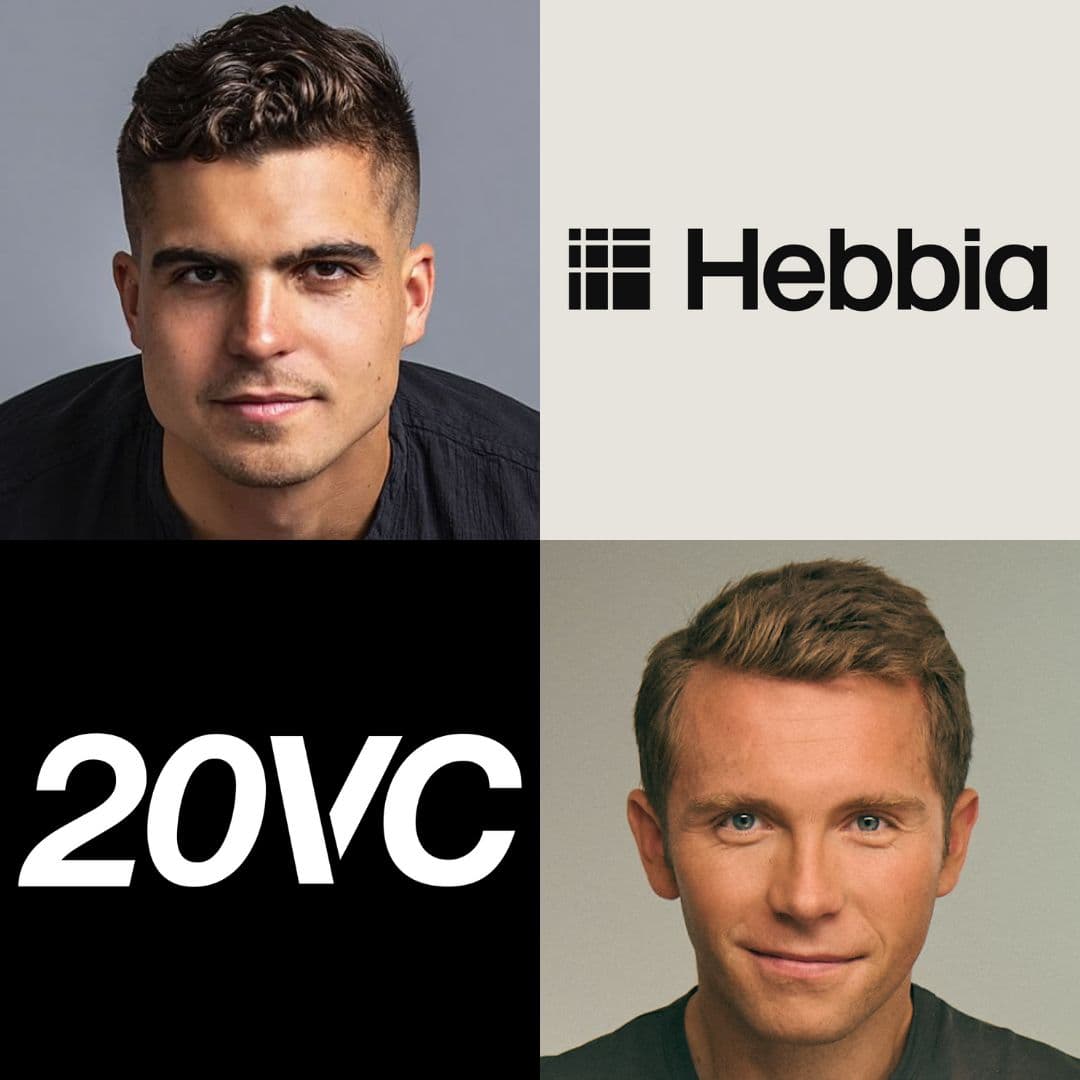
- Guest: George Sivulka, Founder & CEO of Hebbia
Guest Background
- George Sivulka is the founder and CEO of Hebbia, a rapidly growing generative AI company that recently raised $130 million in Series B funding from investors including Peter Thiel, Index, and a16z.
- Before founding Hebbia, George faced significant challenges, including financial struggles and a unique journey through his education and early career.
Key Discussions and Insights
Traits of Great Founders
- Three Common Backgrounds:
- Difficult childhoods
- LGBTQ+ identities
- Experiences of being adopted
- These backgrounds are often linked to a strong desire to prove oneself, which can drive success.
Early Life Influences
- George shared anecdotes from his childhood, including sneaking into dining halls to eat and his relentless pursuit of opportunities, like cold-calling NASA for internships.
- His experience with rejection and perseverance shaped his determination and work ethic.
The Founding of Hebbia
- Inspiration for Hebbia:
- The emergence of GPT-3 and the realization that significant pain points exist in processing unstructured data.
- George wanted to create a product that could effectively address these pain points in finance and business.
The Future of AI
- AI Applications:
- Discussion of the commoditization of AI models and the potential impacts on businesses.
- George argued that AI tools will enhance decision-making rather than replace jobs, leading to an increase in productivity and overall employment.
- Foundation Models:
- Debate on whether the future will consist of many specialized models versus a few general-purpose ones.
- George believes that scaling laws for inference (how models operate in practice) will be crucial for the evolution of AI applications.
Economic Predictions
- George posited that all AI companies and even non-AI companies are currently undervalued.
- He suggested that the next wave of AI could generate an additional $100 trillion in economic value, similar to the impact of computers in previous decades.
Challenges and Competition
- George expressed that competition in AI is healthy and that the market has room for multiple players.
- He emphasized that a focus on real, measurable value creation will set successful companies apart in the crowded AI landscape.
The Role of Geopolitics
- The geopolitical landscape will play a significant role in shaping AI's future. Government usage of AI will likely increase, impacting how companies develop and deploy AI technologies.
Key Takeaways
- Persistence is Key: George's journey illustrates the importance of persistence and resilience in the face of adversity.
- AI's Evolution: The transition from experimenting with AI to creating tangible value is a pivotal step for businesses.
- Human-Centric AI: Emphasizing the human element in AI will be crucial for successful integration into businesses.
- Market Predictions: An optimistic outlook on AI's potential to contribute significantly to GDP and reshape industries over the next few decades.
Conclusion This episode of The Twenty Minute VC provides a compelling look into George Sivulka's journey as a founder, the challenges faced in the AI landscape, and the transformative potential of AI in the business world. Through personal anecdotes and insights, George highlights the significance of persistence and the importance of creating real value in technology.
For more information, visit [The Twenty Minute VC website](http://www.20vc.com).
Written by AI. May contain mistakes. Listen to the episode to check what was said.
Transcript
Automatic transcript. May contain errors.0:00you can you can bucket great founders into into three backgrounds. I think probably the most common is that you had kind of a messed up childhood. The second most common would be your gay and the third most common would be you were adopted. Look at like a list of all time grates. Elon Musk kind of messed up childhood. Jeff Bezos, Steve Jobs adopted Peter Teal, Sam Altman, you know, like publicly gay. And I think that all of these early life experiences end up giving you some desire, some deeper passion to go out and prove yourself. This is 20VC with me Harry Stabbins and today we have one of the most wild stories in AI, Hebrew.
0:37Three years ago George Sevolka couldn't make his rent of $300 a month for a mattress on the floor. He snuck into Stan for dining room halls for meals after dropping out. He raised his first two rounds of financing with clothes hanging behind him on Zoom. Most recently the company raised a whopping $130 million and has investors including Peter Teal, Index, GV and Andreson. This is one of the most remarkable stories of the last few years. But before we dive in today, here are two fun facts about our newest brand sponsor, Kajabi. First, their customers just crossed a collective $8 billion in total revenue.
1:19Wow, second, Kajabi's users keep 100 % of their earnings with the average Kajabi creator bringing in over $30 ,000 per year. In case you didn't know, Kajabi is the leading creator commerce platform, with an all -in -one suite of tools, including websites, email marketing, digital products, payment processing and analytics, for as low as $69 per month. Whether you are looking to build a private community, write a paid newsletter or launch a course, Kajabi is the only platform that will enable you to build and grow your online business without taking a cut of your revenue. 20VC listeners can try Kajabi for free for 30 days by going to kajabi .com -4 -20VC.
2:05And after building your online empire with Kajabi, it's time to scale your global team with remote seamless hiring solutions. So every business is a global business in 2025, but how do you do payroll for your global business and team and comply with international labelers will remote handles payroll, benefits, taxes, stock options and compliance to help companies of all sizes pay and manage full time and contract workers all over the world. Remote global employment solutions keep your team, your finances and your intellectual property secure. Remote never charges hidden fees just best -in -class global employment solutions for a low flat rate.
2:42The world's top remote companies Love Remote, GitLab, the world's largest all -remote organization, Trust Remote to run their global team. Remote is funded by IndexVansions, Sequoia Capital, and the host of the greatest podcast ever, Harry Stebbings and 20VC. Ready to learn more? Head over to remote .com -4 -20VC, that's 2 -0VC, and begin hiring within minutes. Enjoy 10 % off your first three months by using the promo code 2 -0VC at checkout. out. Now that your team is up and running worldwide, make sure your finances work just as hard with Brex. The ultimate financial stat for startups. Let's be honest, building something from the ground up is hard enough, without dealing with clunky outdated banks that pile on fees and leave your cash idle.
3:27Brex was designed with founders in mind to make every dollar go further, so you can focus on building. And here's what really stands out to me. Brex combines the best of checking, treasury and FDIC insurance in one powerhouse account. You can send and receive money globally at lightning speed, earn yield from day one and still access your funds whenever you need. Plus, with 20X the standard protection through program banks, your cash is not just working harder, it's working safer too. It's no surprise that one in three venture back startups in the US, with companies like Anthropic, Coinbase and Robinhood, I mean my god these companies are incredible, trust to help them grow.
4:05If you want to join the smartest startups on the planet, head over to brax .com forward slash startups and see what they can do for you. You have now arrived at your destination. George, I am so excited for this dude. I've been really looking forward to this one. I spoke to Kevin Hart, San Geen, Corey. I found out all the shit there is to know. So thank you for joining us. Yeah, and I mean, it sounds like you did a lot of research. So thank you for diving deep, and it really excited to meet you as well. Yeah, there's a bench campus. It's amazing the amount of free time you have. He's giving me a fun show.
4:36Talk to me about your childhood. I spoke to Sangin and he was like, this was a really interesting part of me getting to know George. So talk to him about your childhood and I'm leaving that deliberately open for you. It is fair and I think the first time I met with Sangin who's one of our investors at the Series B, it was like a 30 minute lunch that turned into almost two hours of us talking in depth about the dynamics that I think made me have a chip on my shoulder. But in short, I was born in Staten Island, New York City, which you already have a chip on your shoulder from that. Grue up, you kind of around New York City in New Jersey primarily, which a second ship.
5:12But my mom is probably like a mafia child born and raised Staten Island and my dad is an immigrant from Slovakia who grew up under the Iron Curtain and then immigrated really escape to the United States. They both of them actually fully intended to be professional athletes. And they had four children of which only one was a boy. And so, you know, you can imagine they're just May when I was chasing butterflies on the soccer pitch or like falling on my head many times, which I have plenty of stories of me literally like falling over while trying to dribble or basketball. And I think, you know, my whole childhood I was really just a math kid.
5:48Like not very out there, I wasn't really talkative, only really good at math and my parents barely even knew what Stanford was. So growing up, you know, you kind of have this whole misalignment of who I was and who I wanted to be with who they wanted me to be. That gave me this drive and desire and passion to go out and prove myself in a way that was really tangible. Maybe not only to them, but like hopefully to my own kids one day. Did you have friends? I had a lot of friends who were incredibly nerdy. So we went to a public school. Like I was the type of kid that would it would hack the school tablets to put starcraft.
6:23on everyone's computer and then you know we'd all like not be paying attention in public school playing star you know so there is a there is a large enough contingent of kids that were also not athletes before we were chatting you said there are three archetypes i don't know if you want to go into it yeah i'm i'm i'm i'm i'm i'm i'm i'm happy to i always joke around and say that uh you can you can bucket great founders into into three backgrounds uh i think probably the most common is that you had kind of a messed up childhood. The second most common would be your gay, and the third most common would be you were adopted.
7:01Look at a list of all time grates. Elon Musk kind of messed up childhood. Jeff Bezos, Steve Jobs adopted. Peter Teal, Sam Altman, you know, like me, a publicly gay. And I think that all of these early life experiences end up giving you some desire, some deeper passion to go out and prove yourself. I actually very much agree with you. I always very much felt like a disappointment. My brother was really, no, no, I mean, he said, my brother was always incredibly talented and good looking and tall and smart. And I was kind of just pretty average and I was fat. And my dad didn't really hang out with me, I don't know, with my brother.
7:35And so I always just felt like a disappointment. What a mistake that was Papa. What is your brother doing now? That's what I'm talking about. There we go. Did you feel like a disappointment? I think the answer is yes. I did. I felt like actually physically unable to do the things that I was wanted to do. Or I thought that I was good at things that weren't valued or weren't as important. All of my sisters are amazing athletes. They're all like, you know, six feet tall and they're just incredible athletes. And I was just not often. So it's kind of like the ugly duckling in many ways. I had that you built lasers.
8:13You called cool NASA. Can you talk to me about these kind of Very cool early influences in your life and how it shaped you. There's completely separate stories there, but I think, how do you call cool NASA? There's actually a very good story. I wanted to be an astronaut. Like that was my number one goal, and I was hell bent on that. And so by the time I was, I think around 15 years old, I was going to high school in New York City, and all scholarship school where the alumni pay for everything. I was like, I was kind of tracking academically really strong, and I wanted a NASA internship. and they were offering them to college undergrads or graduate students.
8:51And so obviously I applied and got rejected five times. And then there was a snow day in February where my school was closed. I commuted into the city. I actually showed up in front of their New York City office in Asagotter and in Stanford Space Studies. And I demanded that they let me in. And the front door security guard was like, you know, kid, get the heck out. Like, what are you doing? You don't have an appointment. Like, yeah, I printed my resume out on the nicest paper. I'm wearing a suit. You've got to let me up. and he kicked me to the curb. And so I actually sat outside. It's like 110th Street Manhattan.
9:21And it was snowing. It was like so, so, so cold. And I didn't know what to do. I started crying. And I actually called my mother because I was like, well, I'm gonna come home. And she's a salesperson. She works in medical sales. She picked up the phone and said, listen, no, you're not going anywhere. You sit your ass down and you call every single number that you can get into the building. And so I sat on the curb and I cold called every number on Google, you know, from my old phone. And finally, someone picked up, I was one of the only people in the office that day, and they came down, met me in the lobby, and I basically pitched them on myself for two hours.
9:57It gave me an interview. I interviewed, boxed the interview, because I didn't know anything about, like, kind of like, linear algebra, didn't know anything about physics. But I memorized all of the titles of the posters on this professor's wall. Came back the next day, so showed up again, cold, and told them basically everything that I could possibly know about his specific research and was impressed enough to let me work for him for free. And then they paid me the next year and then I published internationally recognized research the next year and by that time, I think that was impressive enough to to let Stanford let me in, which was a life -changing moment.
10:29That is incredible. That is also an incredibly heart -wrenching moment thinking of it, a little boy on the street crying. The advice of when to give up versus when to persist and fucking relentless. Me and you are both young. We've been told you've win by resistance and going for it. When is that true and when is it not? I think I have an unhealthy obsession with driving really hard. Yeah, I think you just can never give up. Like I just don't think that's an option. You can look at every company ever and in some get to $100 million in revenue in whatever, like some span of time, which they probably their marketing team has hacked and some end up taking really, really long periods of time.
11:08The only thing that actually changes is the rate at which you get there. And so sometimes things go in your favor, sometimes they don't. But if you're so persistent that you just continue, like you can, you can bring a lemonade stand to a hundred million dollars ARR. Like there's nothing and that's actually stopped. You can brute force your way as a founder. You screw product, Mark, you can literally brute force anything in the world. You just have to have that shape. You have to continue to just pound away at, at whatever is, is in your way. Yeah, Stanford was a big one for you, I imagine. It was a really big personal validation to get in.
11:39Correct. Yes, yes. How did it feel when you got in? I was on to the next one. You know, it's like, okay, you know, that's done. And like the next day, I was like, okay, well, how do I become the youngest PhD student in my school's history? It's like, yeah, it's not even a moment. I think you know, I was excited for a moment, but you know, it's faded very, very quick. I spoke to Corey before the show. Someone who's known you since you were 18? Probably even earlier. Take me to the founding of Habby then, where at Stanford we're doing incredibly well. We are the one to child. How does Habby come to be in that situation?
12:10I'm one of the youngest PhD students in the history of my school, and I actually believe that I was working on, you know, at the time, one of the areas of research that was most interesting to me was meta -learning, this idea of teaching machines to learn, to learn. And June of 2020, Sam Altman, Open Eye, came out with a GPT -3. And if you remember the title of that paper, it was large language models are multitask or meta learners. And I'm sitting in my lab one day and playing around with this new technology. And I'm like, wow, they just stole the most important thing I could work out right right under for my hands.
12:42And I said, well, if I can't build the most important technology, how can I build the most important product? I think those are two very separate things. Obviously, at the time, GPT -3 was not a product. And I don't even think chat GPT is a really good product. It's like a calculator. It's got the technology in there and encapsulate in very simple form, but it's not a product that, like in Excel, that lets you just build whatever you'd like with it. That's very human first. And Stanford always pounds into your head the idea, hey, you've got to start a company where there's a lot of pain. And I had a lot of my students or a lot of my friends would go into investment banking or private equity if they were really lucky.
13:17And they would come back and basically be the least happy versions of themselves. They'd like lost 50 value just hated their lives. It seemed like there was a more pain in financial services around processing unstructured data than anything I had ever seen. It's like, well, there's a great company to be had here. Let's give it a shot. So we're sitting in that lamp. We're like, hey, there's a great company to be had here. Let's give it a shot. What now? Because I heard, I mean, I know this will pictures of this wonderful bedroom. I know this was four seasons finest. Unable to make, right? You made me feel like such a diva when I saw that bedroom.
13:49but unable to make $300 rent, sneaking into Stanford dining halls for meals when you weren't studying there. Yep. George, I have no comment off the record, really. Raise two rounds of financing with clothes hanging behind him on the Zoom. Take me to the next step post that, I'm gonna do this in the lab. So I was on a PhD salary, you know, you're making what, $38 ,000 a year, I think 42, at the time, if you had the Stanford Graduate Fellowship, which I had. And I said I was going to go and leave. And I actually originally went on leave and said, told my advisor, I'll be back in a year. You know, this coronavirus just like you me some time.
14:27And I didn't have anywhere to go. Like, there was like a logical next step. And I wanted to work on this company. So I asked my friends who were renting out a house in East Palo Alto to let me rent a room, the cheapest room that could possibly find. And they were all fully booked. And it was like, I think over a thousand dollars of rent. And they said, I think it was actually, you know, 500 or $600 or not $300 to give my my broke self some credit here for not being able to afford the rent, but they said you could rent out the master bedroom closet And so I bought I brought in like a mattress from the dorms and I had a folding table from home depot nearby And I would basically rotate whether the mattress was on the floor or the folding table was on the floor And that was I just sat there and worked all day 16 18 hours a day go to sleep wake up do it again no weekends and it's kind of like I turn into almost a monk where I was just obsessively building heavy -habby -haves training models at the time.
15:17So you'd wake up in the morning, check on them, you know, continue to use my GPU career because I didn't want to spend any money. Is there a period where more work is not effective? Like when I think about 16 to 18 hour days in that environment, dude, I'm masochistic to the stream where it's unhealthy and alcohol, like, bulimic, tortured child, and fuck, I'm like Lindsay Lohan eventually. Um, but like, when I think of even, when that mean that, I would not function well there. I need fresh air, exercise, it's hefty. Yeah, ultimately I probably went too hard. My condolence is 2020, I think I think I definitely left nothing on the table to a point where it's detrimental to my health.
15:55But at the same time, I think that that was like a crucible where it helped form me. It's very hard to be a founder. And those are the moments where you're just like, you're eating microwave meals every single day. And like you're just like losing weight and you're trying to will something into existence. I actually was trying to pitch one of my former bosses at a professional services firm, and he looked at me on the Zoom call, and he almost cried, and he was like, just come work here, like, what are you doing to yourself? I just don't like come back, we'll give you like a proper salary, like you don't have to do this.
16:26There's so many low points like that, and I think I kept on chewing through it, and yeah, raising money in the closet, I actually got on with, for we raised a pre -seed from Peter Teal, and floodgate and then our seed from Michael Volpi at index. And Mike was like, hey, we're gonna do a partner call just as a formality of the few partners. Just a couple of. This is, this is Volpi at. And so Volpi is like, there'll be a few partners on this call. What round is this for? This is for our seed. So it's a follow on to the pre seed in like November of, I think, 2020. And I get on the Zoom call. I've literally got clothes hanging behind me and they're like all of a sudden, Mike shows up and then four other partners and then 80 partners in like the zoom screen testulates with you know hundreds of faces and I'm like horrified at the fact and likes like look he's living in a closet and everyone's like ah great founder and I was so embarrassed and then a bitch like me honestly hilarious.
17:19Yeah, I just want to unpack that element there because I said I can't remember who it was who told me I had to ask, but they said I had to ask about driving to Peter Teals house. Well, so saying two months prior again, I think I was at Stanford, or just about the leave Stanford. And one of my friends had interned at Founders Fund. And he's like, hey, I hear you're raising financing. You should talk to Peter. And I was like, oh, I'm not gonna say no to that. And so he introduces me on an email thread with me and Peter. And I'm like, hey, Peter, would love to do a lunch or dinner. I'm not a morning person.
17:49So I was like, Peter, would love to do a lunch or dinner anytime soon. And Peter was like, I can do a breakfast. And I was like, I really wanna do a lunch or dinner. You know, like, can we do a brunch? You know, he's like, I'm gonna do a breakfast. And so I said, well, that's fine. And he gave me a slot on a Saturday. And so got in my car. I was an old beat up 2006 Audi convertible that I had fixed up from Craigslist and bought for $4 ,000 at three in the morning and drank a bunch of coffee, like 18 cups of coffee, like a five hour energy, like all the discussions I've had drove from three to eight to his house to go and pitch the cup.
18:22And I mean, you showed up 45 minutes to an hour late. He's like just waking up and I'm wired. I'm like sitting in my chair, you know, like ready to go. And it was supposed to be a 30 or 45 minute breakfast as a guy. It's kind of already shot. But we ended up talking for I think like four or five hours about not only the company and all of the flaws that I had in my business model, but then also math and and and deep esoteric philosophy and like just the world. And he said, you know, I'm not investing at the time because it was coronavirus and a variety of other factors. But I'd love to put in a check.
18:55I got another conversation thinking I just made a friend or was seen from someone who is incredibly, incredibly, incredibly, right? And I'm leaving his house and I felt like I was inducted into the Illuminati. I was like my whole body, you know, drop top, the sun's shining, I was playing Kanye West, I drove out his ass, I was like my first offer from a venture investor. How much did he invest? I think the total round was like a million dollars. So it is like nothing. Yeah, but what do you think makes Peter so incredible? There's two things. He is incredibly ontologically smart. And so he can build this world view or this perspective of the world where he actually just knows how to pattern match to a variety of other things.
19:35But then he's also, I think, phenomenologically smart, which is the idea of he understands processes and how humans behave really well. And so he's always thinking, hey, X -anti or if I'm looking at something that's about to unfold, could I have predicted this ahead of time? And he always just asks himself that question. So you built up a really rich perspective of the fallacies that human society has, memetic behavior that people kind of go out and copy each other with, etc. So we then have money from Peter. And we have the Peter's income approval. Yeah. Does that open every door in the valley?
20:08I mean, I think we were in late discussions with a lot of investors and then everyone else was like, yeah, it's like, you know, it's pylon in here. It's, you know, it's some of the best money that you can get. And that was a game changer for us. So then we closed with Maples and Pluggate. Yeah, I was in an ad floodgate. Okay, and floodgate and and teal and then we get back to work Mm -hmm. We've got a million or so. We've got a million and then two months later Mike actually hears about hebef from his daughter who's a Stanford student And I think I've seen a product with friends and and then Mike actually comes in is like hey This is completely different than elastic or all these other search technologies that I've seen invested Obviously he's on the board of elastic days.
20:46He's like well, let's just go add some fuel to the fire How much did he invest in? He invested like an additional two or $2 .5 million. So where did the 130 come from? Well, as a years later. It was years later. So this is all in 2020. We end up building a product studio which is the first to productionize Ragng or Tree of Logmented Generation also in 2020. We build the first semantic search engine. We actually go out and start doing. Let me just help us on the sound. What is Rags? Rags is an acronym that stands for Retrieval Augmented Generation. If you look at large language models today, they're really good at maybe thinking if you give it the right context, but they hardly ever have the right context.
21:33And so Rags was the first real attempt to give them the data to answer questions correctly. Okay, and so we are building on Rags to start? We were one of the first people to productionize the idea of putting a search engine behind an LLM. So you'd ask a question and then instead of it just replying from its memory, it would actually go and do a search and then reply with a context. So in an enterprise where you have a lot of offline data, we were really the first people to hook up that offline data to a large language model, so answer that question. So you're one of the first, and we're seeing that now in action and it's working.
22:05That's a bit of a plot twist over here. I actually don't think Rag Works at all. It's one of the most used AI architectures in the world pioneered at Hebbia in a very meaningful way. I think every enterprise is experimenting with it, but it has a lot of different failures where a lot of the time the questions that people ask these systems aren't ever explicitly in the data, they're never explicitly stated, they're actually about the data. So for example, if you're asking an AI system, is this company a good investment, which is actually a very common thing that people ask heavy over marketing materials?
22:37Maybe it'll say in a pitch deck, yeah, this company is a great investment and as something that the CEO says or like a recording, et cetera. But what you actually want from that system isn't to search in the data, it's to answer about the data, hey, what's the customer concentration? What's the strength of the management team? What are X, Y, or Z criteria that are fundamental to our specific investing process? And that's a process. That's not ever explicitly stated. Actually, the marketing materials are often like a load of crap. You have to actually distill what's true out of them. That's what heavy it is.
23:08So it's not actually finding something that exists already. It's taking all the things that exist already and starting to answer questions about that information. Take me to that transition then because we were building on rack and we're like, great, we're going to productionize this. And then we move off. And you realize that actually it's bullshit and it's not as good. Yes. To take me to that realization. Yeah. So we actually deploy it some of the largest finance firms in the world. We had to go from zero to a million dollars of revenue sometime in 2021 or 2022 and raise or series A also from index from my index, which is 30 million bucks.
23:43And we start to see that all these customers, okay, now they know what, you know, Chachi Biti is, they know what LLMs are. Heavy as this like really mature enterprise product in the market and we're by far the first to actually get there. And we just looked at all the queries that people were asking. And the questions that people were asking weren't ever, okay, find me the quote or find me the command F questions. They were actually more, okay, read all the documents and then tell me all the times they mention AI or what are exposure to Silicon Valley bankies during the regional banking crisis.
Read the full transcript
24:13And so all of these questions, it was actually almost 90 % of the questions that people were asking these systems weren't answerable by search through the documents, but rather they had to be work done on top of the documents and then answered. My question is like, what the fuck happens to the rest of the landscape? If you're like, no, Ragh is not actually the right approach and they're all loving Ragh. Couldn't be hotter right now. I don't think they're loving Ragh. You don't think they are? I don't think they're loving Ragnar. What makes you say that? I think 90 % of enterprise AI right now is almost like this vaporware.
24:45We swear at works, like look at this amazing demo where we ask, what does the CEO say about the investment? And in the minute that they actually go to, try to use it in a real world example completely, just fails. And so I actually think that the majority of AI usage, a lot of these usage statistics are all kind of, one of my favorite phrases, it's fugu -easy -fugazi. And one of the things that Hebio really tries to put forth in the market is say, hey, change will take time, but we have a system that is actually starting to drive real, measurable value over very specific defined use cases. And our tagline is always, hey, stop experimenting with AI, which everyone's experimenting.
25:22They're all really excited about it. Start driving value, like getting value out of it. To what he's done is this RPA versus the Gen T. I actually am not a big believer in RPA. I think RPA is almost not an AI application in the new sense of AI. It's like AI in the old 10 years ago sense of AI, where RPA is effectively very simple computation. Some of the things that people are asking, Hibiya, are over 800 page credit agreements, or 230 page sims, confidential information memorandums, this marketing material. They're not actually asking for things that copy numbers. They're saying, hey, tell me what are inconsistencies in this document.
26:01Tell me where there's an event of default that we can trigger. There's almost this open -endedness or this new level of computation that people can do. I think Daniel Dinesy, we had on the show, come on, on Wednesday. He said it very well. He said, like, listen, RPA is low -skilled, low -level competitive processes and agents is high -skilled, ambiguous decisions. Great. I think that's a nice phrasing. I think it's incredibly clear. Yeah, and I think that we very much are capturing the agent that the high level and big US decision making and trying to trace it all the way down back to individual citations or individual characters that led the model to that decision.
26:39I thought about actually such a statement the other day that he made which is the notion that business apps that exists today will just collapse into agents. Do you agree with that and will apps be the predecessor to agents? I actually don't don't agree with that at all. I think he's completely wrong. I think it depends on how you define business apps, but I actually think that if the new business apps are platforms, you'll actually start to see those platforms really take hold. Like, Hebi is a platform that lets you build whatever agent that you'd like. And so here's a bit of a mind -fuck when building Hebi or when building all of these foundational primitives for how people use AI over the last four and a half years, Hebi has always asked ourselves, what are the apps that AGI would want to use?
27:22or what are the apps that agents would want to use themselves? I .e. what are the tools, because these AI applications are really good at using tools, that we could build that would assist LLMs or these really smart foundation models whatever they are in the future to get to an answer more quickly. It's quite interesting, you know, Hebiumatrix orchestrates lots of smaller LLM calls. It's actually scaling at inference, I .e. it's running massive amounts of compute at the orchestration layer. And we think that an AGS system would prefer to use heavy and matrix to diligence a company or to look through thousands of documents Versus to read them all by hand and they're in a really long context window.
27:58So is the future of Business apps not business apps for business platforms. We've got platforms agents or apps. Yeah, what is the future? I ultimately think that it will be a mix of all three history doesn't repeat itself, but it often arrives 60 years ago, or even longer, the foundational unit of compute, i .e. doing a calculation on a computer was effectively introduced to the enterprise. There were plenty of people that were tallying things or bookkeeping in actual books, and their jobs changed, and there were apps for bookkeeping, and then there were platforms like Excel that let people build better apps for bookkeeping, and then Excel was unraveled again into better apps for bookkeeping.
28:38I think that there's opportunity not only in verticals, but there's also opportunity in the entire industry, in terms of building platforms, in terms of building core predators, in terms of even building new types of quote unquote, agent employees. And I think that that opportunity is the exact same size. If there was a hundred trillion of dollars of value that was created in the stock market from the introduction of the computer or the fundamental unit of compute, I actually think a hundred trillion dollars of value will be created in the next 60 years from the introduction of inference or of AI computers.
29:09Well, will that be additional value? or will that be value that denigrates from the existing value of alternatives? I believe it will be additional value. And maybe I'm too techno -optimist, but I actually think the S &P 500 is completely $100 million of additional value. I can't quite get my head around that. How does that even exist? Adding a $100 trillion of value, is that just because we will see GDP and productivity grow so much that it takes place? I ultimately genuinely believe that more than 50 % of the GDP will be contributed by what you can call all agenteic applications in the next few decades.
29:42I actually think it'll happen faster than the next few decades. Do you? Again, Daniel. Daniel. It's hard to take. Daniel on the show was like, listen. Pop me up against Daniel. Yeah, what do you say? What do you say? He's literally next door. So we can arrange that. But he said that we consistently underestimate how long it takes for enterprises to adopt new technologies, to get comfortable with data security, to get comfortable with processes. Is that right? to a G -Ting, actually, we all post a tipping point. It's a good point if you're cutting cost, which I think Daniel and you, you know, I, one of the best examples of using AI to make companies more efficient.
30:22Like if you look at finance and how fast Excel went to 90 % market penetration in finance, 1985 to 1986, literally 18 months to 24 months Excel took over all the finance. Everyone switched from using a calculator the HP 12C to using Excel. And if you look at how fast finance actually ended up using credit card data to value public companies ahead of their earnings, that was again a two year period more recently. And so finance is the slowest moving, most lethargic, you know, Leviathan. It's the worst possible customer base to go after unless you're providing outsized alpha or real value in which case the minute that there's something real finance moves faster than any other industry.
31:01And so I'm actually making a bit of a bet by going into finance and starting to go out and try to get to my own. You know what I worry about? I worry that we lose the education process. What I mean by that is a lot of like, GPs or managing partners, when you name the title in it's on your firm, they've been through the shed of analyzing companies, staying late, understanding what makes a great business, all of these things. And then we'll just say, well don't worry about that, shit, happy all to it. And so we have this no graduation pathway for the next generation. And so we have decision makers who don't have that graduation.
31:33Yeah, I'm less worried about that. I think ultimately one of the best things about having the years of experience is actually having the depth of knowledge about investing. So for example, if I'm a junior trying to price an asset, I haven't seen that many other companies that look like this company. And so I might say, hey, I think it should be price at X, Y, or Z. And then someone in the IC meeting will be like, hey, no, I've seen 20 other companies in my 40 years of career that look exactly like this. And they all went nowhere. And I'm leaning on my prior experience. With Hebrew, now juniors who are really smart themselves can say, okay, you might have remembered 20 deals, but I'm looking through every deal in our company's history and a giant matrix that anyone has ever seen.
32:18And I actually can tell you quantifiably that when a company is performing here, it's 90th percentile across all this investing criteria. We should actually pay 90 % premium to market. And I'm actually using more deals than you've ever seen. because I know your name is on this many IC members. And that type of structure thinking or that type of additional information that you can now give juniors in their career actually think makes better investors. I don't think that that takes away. Do you really think it will be a tool for usage, not a tool for replacement? I genuinely believe it makes humans better.
32:52I genuinely believe. If it's five years time, do you not think that is a different story? I think that it will change the way that people do work, but I genuinely believe that it'll actually increase the AUM of the firms that use it, I think it will actually drive more employment. I think there will be some jobs at change. Hey, there's no more bookkeepers that do tabulations in spreadsheets on two sheets of paper. One change is most and most days the same. The cognitive tasks that are lower in cognition, like more back office, middle office, maybe even some of the more junior front office tasks, I think we'll start to move into, okay, How can we manage AI juniors rather than actually do this ourselves by hand?
33:36But I don't think that just as Excel didn't end up taking away jobs from people, it just changed people to having to learn Excel. The exact same thing will happen with AI. So you don't think that we will see team sizes for juice as a result of agent integration and to enterprise. There's all these stories and you have like Clarna that's positioning for investors that they're firing half their staff and no one really wants and I think a lot of BS. I think it's BS. Yeah. There might be some reality to it. But I think that it's it's an amazing marketing story. And so anytime that I ever hear something that's put out as a marketing story, I almost negated in my head to actually think about like what the implications are when you're saying something and screaming it from the rooftops that almost always means that inter internally you're freaking out about something.
34:19I think I look at that really loud behavior. And I think that behavior itself really negates the content. That's maybe my my positioning on on this sort of stuff, but how do you feel about competition? What are your lessons on competition? There are several players now in the heavier slipstream. How do you feel about that? I think that if $100 trillion of economic value will be created by AI and agentech applications, that there will be so much room and so much opportunity for a ton of different players. I don't think that when Excel came out and then Mark released Salesforce and then people created TurboTel, all these unravelings of Excel, actually were produced later, but that made Excel any less value.
34:59I actually think it made Excel more valuable. I view Hebrew as this platform as something that will actually get better, the more people get inspired by it and build increasingly verticalize applications. What models do you sit on top of what? We are completely model agnostic. We use all of the major model providers, some of our own models. but ultimately the foundational difference that Hebrew is capitalizing on right now is fundamentally new and very important difference, which is I actually think I'm the order of creating Rags and creating agents in decomposition is this idea of us in the last year or so having pioneered scaling at inference.
35:35Talk to me about this. Right now you actually, so OpenAI is starting to do this with O1 where they'll have a model recursively think about a question over and over and over again before it produces an answer. And so instead of training a larger model, they're using effectively a similarly size model and just telling you to run multiple cycles, i .e. compute more before answering. Hebrew is actually pioneered something different where a year or almost 18 months ago, we said, hey, we can't wait for these models to catch up. What we'll do is infer simple single question. Let's actually run hundreds or even thousands of submodels of the best models in the world to compute over every single document to answer the same question.
36:16And so ultimately if you can't train larger and larger models fast enough, you could take whatever state of the art or cutting edge and run it more times to get more compute i .e. more computational power, better decision making for the same user right now. And so this is an idea that we pioneered. It doesn't matter if you're using Claude 35 or if you're using O1 itself, i .e. scaling at inference at the orchestration layer with something that was scaled at inference with the training layer, but you get way better results. And And it's a way to drive to more accuracy, find, provide the best results.
36:49That does train from intercom recently, he spoke about the movement away from OpenAI to Anthropic. We've seen that for certain types of documents, like the dense legal ease or more colloquial documents, Anthropic works better, but for other types of documents, like Owan or OpenAI 40 works better. And it's always trade -offs between accuracy and speed and all kinds of things. Actually a lot of the time when we're decomposing a task, we'll use mixes of OpenAI and Brobick even Gemini. Do you think we live in a world moving forwards of many models that are specialised in different things, as you said, some do legal, some do whatever we want to talk about?
37:23And that's the world we live in, or there's generalist, monolith models, which really could have been the whole stack. This makes me think of the story of Bloomberg, which has the best financial services training set of all time, and they trained a GPT 3 .5 class model. I was called a Bloomberg GPT, and they released an archive paper and everyone on LinkedIn and was like, wow, Bloomberg is cutting edge and they're gonna steal finance out. Why did they not? You know, they did have, they go to the best data and finance. So then, GPT -4 was released, I think, like a few weeks later. I don't know exactly another right timeline, but it just destroyed Bloomberg GPT at every single finance task.
38:01And so you saw the idea of post training or kind of like this refined, verticalized model creation just always with lose to scaling loss. And maybe we're at the end of scaling law as a training, but I actually think you know, have you know and now open it on a variety of other companies are starting to pioneer the idea of scaling laws and inference and I actually think that it will make nothing that that other players can do to fine -tune models will ever catch up. I need to break that down, sorry. So everyone's like, oh are we at the end of scaling rules? Oh, we're at, yeah. Read, read, read, ban you off and Daniel Dines alike.
38:35Yes, we are. Yes, we are. The upper end of our, um, Read Hoffman is like, no, there's so much more room to run. Can you just break down for me the difference in scaling laws at inference and scaling laws at training? Yeah, I think it's a bit of a marketing distinction, but ultimately the idea is that the way that we got here over the last five, seven years of training models has been let's build a bigger and bigger model and let's give it more and more data, more and more clean data. and then maybe we'll do some RLE chaff or some reinforcement training to find you in it after pre -training. And that worked great to get us here, but we're running up against the amount of good data that exists in the world.
39:19We're running up against... Oh, me, because people push back on this and say, there's so much data that we haven't used yet, whether it's video data that can't be translated, whether it's synthetic data, we are not at all exhausted in terms of data supply. You know, I think that we're starting to run up against the constraints of it. That's a gut feel. I'm not, you know, I'm not looking at particularly in -data collection myself, but I think we're starting to run up against the limits of really good data that we can. What's the problem? So, ultimately, that might mean that, hey, we're training larger and larger models.
39:51Actually, I, again, just created the largest GPU cluster of all time, and they're going to try to train larger and larger models. But regardless of how the scaling law is for training larger models, or parameter account and accuracy or performance, I carry out. I'm starting to believe that you could still get better compute, not by building a larger engine to use a metaphor, but by actually putting a bunch of smaller engines together. A habea by orchestrating large amounts of inference to answer one single question ends up kind of building like a Tesla where Tesla is made up a bunch of smaller engines or a bunch of smaller, electromechanical motors that make a lot of torque and a really, a really amazing larger engine.
40:30Does it not make it incredibly capital inefficient? You know, I think the one thing that people in my position will always tell you is that the cost of intelligence will go to zero. The cost of intelligence will go to zero. I mean, I think that since Hebias started, the cost of inference over a fixed number of parameters has decreased by the seven orders of magnitude in four years. And so I genuinely believe that scaling compute is like a no -brainer. And yes, we run more large language model calls than anyone might even say would ever be necessary. But we have the best accuracy in the business.
41:05We can answer much more complex problems. We're driving real value for enterprises. And I actually think that every single quarter, like our margin goes, we're not spending money fast enough. You mentioned S -so -A -I -S -GPU cluster. Yes. What they've been able to do in such a short amount of time is miraculous. Yeah. What do you think that tells us about the layer itself? ultimately the model layer, and I think this is not a hot take anymore. I've been saying it for a few years, but I think it will become commoditized. I think that a lot of value will accrue at the hardware layer. And we can talk about what that means for NVIDIA, especially as NVIDIA has a stranglehold on training, but not as much stranglehold on inference.
41:40And so you might actually see other chip makers actually start to, their chips start to be used in a more meaningful way, because KUDA is what all ML scientists were trained on in their PhDs, but then inference doesn't matter kind of what you're using. And I think it will be the infrastructure layer and then actually the application or agent layer that will create the most value. Ultimately, why does it not follow the same vein as cloud where cloud is commoditized. But as you do cloud, AWS, I mean, completely commoditized, be honest, but it's great business for them. I think it might. There's probably fewer players and more entrenched players in cloud.
42:17And ultimately, you know, I think those players honestly kind of have like an OPEC, I'll go up a lead where they can control pricing. I just think that ultimately cloud is actually more complex than training larger and larger models. And then the cloud providers are basically using models as a loss leader happily to build stronger modes in their cloud businesses. And you see this with Anthropic and Amazon, you see this with Microsoft and OpenAI. Absolutely. Whoever has the best models will continue to attract the right amount of investment. And the different thing about clouds too though is that the cost of switching is much higher.
42:53So to refine my earlier point, right, like I can switch models readily. Like I think there's even entire businesses now. There will be an entire industry of being able to switch models from open AI to anthropic one in open AI goes down. But to switch clouds is like, you know, for any of the, like substantially sized startup, like a 10 million to 20 million dollar investment just to switch is almost always never worth it. It's much, much, much stickier. Whereas here, it's a very simple API key. It's very simple to switch models. And so I think that that's also a differentiator. Open AI at 160, and ThropaGear 40, or XAI at 50.
43:29Which ones do you buy? I think XAI is the most undervalued company. And a really spicy take, I actually think XAI might overtake Open AI and then throw a pick into value over the next 12 to 24 months. It's just crazy, but I think they're all undervalued. It's your thinking. I think Elon is very well positioned in the geopolitical sense. I think Elon can run a more efficient business than and not have to deal with as much administrative bloat or as much friction from employees. How important is the geopolitics in winning this game? I think geopolitics is actually very important. I think that the government will be some of the largest users of AI, especially with some of the recent things that the new administration in the United States has been talking about with increasing government efficiency.
44:12I think that ultimately energy is a very big bottleneck. It's a very common thing in Silicon Valley to talk about, hey, we need nuclear reactors to flatten the duck curve so that we can continue to drive to larger and larger data centers, et cetera, et cetera. And those are ultimately geopolitical resources. And so I think all these things end up being very important. And then Elon's just operationally so talented. So I think that ultimately if this becomes commoditized and whoever can really operationalize model creation and serving models the fastest, I think what I think might start. So you think SAI and you would invest in them?
44:48I would, but ultimately I think all of them are undervalued. I genuinely believe all AI companies and the S &P 500 are all undervalued, which is a very hot take. If we're about to create a hundred trillion dollars a day, I think this is a real tangible technological shift. It's a massive unlock on the order of what computing did for the entire economy over the last 60 to 80 years. I think this will do for the next 68 years. I think all these companies are massively undervalued including the non AI companies I'm back in the last bit including the non AI companies. I genuinely believe that Computers made legacy businesses better if you use them correctly And so it's a massive disrupting force, but if you can ride the wave of change a AI agents and this new fundamental paradigm There is a massive unlock for genius.
45:34There is a slight difference everyone taught was about kind of different technological transitions. When you look at the agricultural transition or the kind of agricultural dependency on human labor and movement and machinery, computers and workforces, these were at least ten year transition repair. At least, this is like, hey, we use AI tools now because we just bought them today. The transition period is instant. Yes, much faster. Does that not change the enterprise value accumulation and whether they're good or bad for businesses? Because it's like instantly a business will die if you don't have it or not.
46:07Yeah, I actually always like in technological revolutions to what Hebrew is doing right now where people invented, we discovered the technology of fire and then someone invented the torch. I don't know how many years later, we invented the engine and someone invented the car or the wheel and then the chariot. And so this idea of encapsulating and building a useful product on top of a technology change is actually a thing that takes more time. And I think that Hebrew has built, If Excel was that product for compute, I actually think heavy has built that product for AI. And I think that when you have a good product, that share transition will be very, very, very quick.
46:42Right now we have these chat bots or these surface level search engines that give you facetious surface level value. Yeah, it'll help your kid cheat on their homework. But to drive to whether or not something is a good investment is a much, much more rich problem. His chat, the right interface, in my name, of these applications. I ultimately do not think so. I think that chat was always a useful feature. it's a useful interface. It's like a single cell in Excel. It's like asking if the TI -84 was the right interface for computers or the terminal was the right interface for computers. We have not even started to explore the opportunities for interfaces.
47:16I actually think that - What do you think they are? I think that Hebrew is the Bell Labs and I can see of ourselves as the Bell Labs of defining AI interfaces. I think that Rags was one of them. I had this idea you could find things in the data a really fast decomposition in agents are another. This idea of scaling it in -ference with our matrix product is another. You can look at a lot of the other things where agents are controlling four screens at once and you're actually looking at someone use a computer or computer use AI models or moving cursors or others. Almost all of them have actually an agent that's inefficient does interface not become irrelevant.
47:50I actually think that the better agents are, the more work that they do, the more important it will be that they are easily understood by humans. The idea would be, okay, let's say we have a bunch of employees, 10 ,000 employees, or 10 ,000 AI agents drop at a company. They're all experts at doing something. That ends up not becoming a problem of giving them the right tasks, but actually it becomes a management problem. There's this whole infrastructure, orchestration layer, the thing I always come back to of making these things work together. That's actually going to be a challenge. That's going to require a very human first, ultimately, a product.
48:27That's what we're trying to build. Do you think Elon will be successful with that? I think it will be his greatest challenge. There's a lot of self -protecting mechanisms in the largest organization in the world, which is kind of a US government by Span, by head, it's just this massive, unruly organization. It's not going to be as simple as Twitter. Are you more excited in the post, Trump? I think the thing that I care most about in the world is that we, as an industry, have very clear guardrails that we can follow and understand to build the best possible tools, to get our tools out to the economy to make sure that everyone transitions in the best possible way.
49:03So I'm ultimately regardless of... But does your business not thrive on a better financial system? And we're seeing now a financial system. And the US from afar that would seem to be thriving. Objectively, it would appear that Trump is good for business. I won't make a comment here. I think that there's a lot... because they say it's so interesting, there's 99 % of CEOs come on the show and they either shut up or they say they vote for Kamala and then it ends and they're like, by the way, I'm so Trump. I am so Trump. But it's fascinating. Yeah, for sure. So I totally understand the not answering.
49:45Yeah. You are not alone. It's okay. But the one question I want to ask you mentioned in video before. Sure. That's a really big question around that ability to sustain that monopoly. You've seen Google, you've seen Matti, you've seen Amazon all wanna move into the chip play. How do you think about Nvidia's ability to sustain their pretty unwavering monopoly so far? So Nvidia has, I think that the best modes aren't technological modes, they're not data modes. They're actually people modes. People and networks have the most friction to change. One of the things that Nvidia does best is the fact that they made this early bets on machine learning.
50:23They created CUDA, which is the way that, as I mentioned before, almost everyone learns how to train models, like they learn how to interface with Nvidia chips for training. And as you're starting to see, maybe that prediction that I made earlier, the shift away from training to inference as a fundamental, like almost macro shift in how people deploy AI, I actually think that will destabilize slightly the dominance of Nvidia chips. you can start to actually use AMD chips or even custom architectures, which all the major model providers are also currently exploring to do inference. So you have your academics and your researchers, you know, training large models on Nvidia chips, but the minute they deploy them, they can deploy them on cheaper infrastructure.
51:04And that actually, I think it will be a big change. So I'm actually still bullish on Nvidia, but I'm even more bullish on other chip makers and custom ASICs to do inference because I think there will be a larger shift to inference moving forward. Is that other chip maker paradigm existing incumbents Google meta Amazon ename it or is it a new generation Cerebra style probably be large tech providers and and AMD I don't know about Intel right I would probably bet on them There's definitely an opportunity in the market, but chips are hard before we do a quick fight Do you just want to kind of resurface backups the agent layer for all we out of the experimental budget phase?
51:42I think that 90 % of the market is still an experimental budget phase, but we're starting to see early promises of actual value and my entire business is focused on unjust those repeatable use cases. Everyone thinks they're a master of agents and agenteic workflows. What do they think they know that they actually don't know? Like I think ultimately the people in the enterprise that are most excited about AI and positioning it so strongly are CTOs and information technology people. And maybe the thing that we've, that Hebi has always said is that the CTO or the IT folks are actually the people that know the least about the business.
52:18The people that actually understand how to use AI in a business context are those that are closest to the business. And so we're jumping the gun a little bit with the CTO is trying to build the CRM before it's been invented. And you know, you actually need business people to build the CRM in Excel first in kind of that order of operations. And so there's a lot of unbundling of AI applications or CTO is trying to go out and build, you know, a very specific vertical application. But I actually think that building this platform heavy matrix is the thing that will unlock user's ability to discover what they can use AI agents for.
52:53What will be the pricing mechanism for the future of agents? It's a good question. There's like four canonical price, there's like consumption base pricing, there's per seat pricing, there's like hey, rent a salary, so pay a salary for an employee which seems a little bit ridiculous, but will be less so. and then maybe there's flat pricing. And I think it ultimately depends on how you're driving value. Because Hebrew is building human -centric AI, the human layer to how you orchestrate an AI agent staff that scaling at inference, we do per seat, because it's ultimately always back to the human.
53:26I think you'll see all of these new business models and pricing mechanisms. You do per seat because it's about the humanore, just because it's what they know as a buying mechanism. I actually think that we are human first. We're business user first to the point where CTOs like to pay for consumption or API, etc. And like, you know, business users like to pay per seat because it's how they map back to value. But also we want to incentivize change. Tech is not the hard part of all of this. It's hard. But the hardest part of AI change management, no matter what company you are, are people. And like actually getting people to use the software.
53:59When you charge for consumption or API pricing, you're disincentivizing the change. You're saying, okay, well, I'm going to penalize you in a monetary way for every time you use an AI application. What the heck? It versus here's a per seach fee. It might be expensive, but use it more. You could run more LLM calls on on Hebbiav Effectively for free than any other platform if you actually are driving real -chain and that's what I love to see Are you ready for a spicy round? Let's give me the spicy round. We got the tissues out here too Well the tissues are going to be fine. This is the case you need them to hide behind So this is a spice round.
54:32So this is questions from friends of yours. Okay. We got some changing colors up here. I love it. Yeah, yeah, I know it's a full game show. Um, there we go. It's like a fucking David Gatacol. Perfect. Number one question. Would you sell for $2 billion today? Would I sell for no? What was the single best we've seen meeting? It's somewhere between, you know, Peter talking to me about anything about the business and deeply academic things and Mike taking me on a walk around the the Woodside that horse park. Do you trust Sam Orman? No.
55:07That's that question. Yeah. I don't know if I'm real my sources. But I want to do a quick fire around. So I say a short statement. You give me your immediate thoughts. That's not okay. So I'm good. Let's do it. What do you believe that most around you disbelieve? Oh, I have a crazy one. I believe that UFOs are real. I think a little bit more on the nose right now, but I actually believe there's fundamentally different propulsion technology and that I think the US government has access to it. Wow. It's a very, very, very, I have a lot of spicy takes. It's a special. Is that how? What trait are you slightly ashamed of but has contributed to your success?
55:43I don't think I'm ashamed of it, per se. But one thing that I always hid was the fact that I'm deeply religious. In an industry that's very atheistic or agnostic, it was like something that was very personal to me. And I think it's been massively contributing to how has it come to pieces? I think that ultimately when you're doing hard things or when you're you're chewing the glass or you know working All like those really late hours believing in something larger than yourself or believing in what you do as as a vocation Or something that's deeply purposeful and deeply meaningful is actually it's additional fuel It helps you in a way that is I think good for the soul it really it really charges you up and and I think right I do.
56:27I pray for an hour every morning. Was? Yeah. I wake up, I sit on a meditation cushion, and I used to meditate. I think meditation is also great. Praying and then putting something out into the universe or, you know, actually having a dialogue with whatever you believe. I actually think is even more powerful. It's it's it's almost time. Tool count out. You know, I live by myself sometimes. But but sometimes it's all it's all in my head. I think I think it's incredibly good for the human mind. I think it's almost an antivirus for the human mind. For an hour. For an hour. Yeah. People meditate. Why is it so weird to pray?
57:05I think it's an adventure. I didn't know what I would say. When you dive into the human psyche and you're not looking at your phone and a lot of the time it's also a really great channel to think. I think a lot of the best ideas that I've at Hebrew have come from from moments of silence. Gosh. I get up at like eight 20. My first meeting is at eight 30. It's like an espresso ready for me. I'm like, oh, fuck, I'm on my shorts. Oh, God, mom texted Jesus. Yeah, I'm on here in the live. Hi. So we have different morning routines. What's the gym routine? You're a fit, dude. I try to try to work out every day.
57:45I actually end up mostly channeling the startup. pressures and anger and anxiety into heavier and heavier things and lifting heavier and heavier things. It's nothing that's in particular. Silicon Valley back is the center of all things. Hebrew, I think there's a podcast that actually recently came out where everyone's like, if you're going to build an AI company, you've got to build it in Silicon Valley. But there is one company in New York that is doing a really amazing thing. That company's Hebrew yet. It seems like they're actually doing something interesting. And I do think we are the exception rather than the rule, unfortunately.
58:21So I'm a big believer in Silicon Valley. Why? Why are you the exception? I think that we are a Silicon Valley company in terms of our style of work, in terms of how hard we work, in terms of how we actually pursue new technology and invest in technology. And we're starting Silicon Valley. And we have almost only Silicon Valley investors. What have you changed your mind on in the last 12 months? Longer than 12 months, probably like 18 months ago, It was the scaling it in for instance, like the belief in like a new set of scaling laws that they would be that really really really important Service now.
58:52Yeah sales force or UI path. Okay. Shag Mary or kill Um Yeah I wouldn't I wouldn't shag any of them I I don't think that traditional Shag is like a short term excitement. Oh I mean, I don't think that in case you needed the content I know exactly, I know exactly what you're getting at here. I really, I probably kill them all. I don't think that traditional enterprise B2B applications are sexy. We're an enterprise AI company. Are you a bar of Salesforce? We are. Everyone says Salesforce is fucked in this nice generation. I don't know. I don't think they are. I think that Salesforce has built, again, a very, very, very sticky network effect with people and people are the shifting function at the end of the day.
59:43It's not a technology problem. Claude can build a Salesforce. I think Clarna again had another Fugazi story about building, like going off Salesforce because Claude had built them a CRM and I just think that the switching costs, the network effect of changing human beings habits is too high. Salesforce is one of those like monopolies in that they have so much stickiness, habitual stickiness. You can buy one company in the public markets that will be most benefited by the next wave of AI, which company do you buy? That's a deep question. I would probably buy Nvidia, it's a lean answer or AMD rather.
1:00:18I think AMD, because I believe that they will benefit from the shift to to infant scaling more than in an outside sweat. You can be CEO of any other company for a day, which company? And not a company. I'd love to be mayor of New York. Believe it or not, I just think that's like a fascinating job. I think it would be really, really interesting and would love to make some change there. What question are you never asked by investors, by angels, advisors, employees, journalists that you think you should be asked? I think that one of the most interesting questions is where does creativity stem from?
1:00:52Or where do you get inspiration from? Or kind of like how do you come up with new ideas? Like I don't believe that people come up with new ideas by brainstorming or incomprehensible. Like I just think that's, again, Fugazi Fugazi. But I think that ultimately, you know, that that question of where creativity stems from, I'm also a very big painter. I'm a very big, so I do large scale, like 10 foot plus oil canvas, oil painting. I heard about this. Why did I come from? I just, I think, I think, are you a poet as well? I love to write and probably not as good a poet, but I actually think that other creative of outlets are really, really good for knowing me perfect.
1:01:29Get it. I paint. If you want me to try it right, I will follow my head. I told you that story at the start of that. I mean, what do you find about painting? Good for you. I think it's one of those activities where you can channel emotion or intuition or like latent thoughts that are somewhere in your subconscious and connect things in a really meaningful way. And so, you know, in a world where there's all the stimulus or you're always kind of thinking or turning through something or all this distraction. You know, you're standing in front of a canvas for like 10 hours with some nicotine and you're just lost in this art.
1:02:04I think great artists will tell you that they don't even know where paintings come from. It just, you know, is this channeling something? It's one of the best places to think. It just gives you connections. It brings up these parts of your subconscious, these connections that I think you can't really access without being creative, whether you're making music or writing or painting, I actually think that's one of the best ways to process it. Final one, do you feel that your parents are proud if you now? I think so. Yeah, I think so. I think that they've heard about it. There was one moment where I think my father's boss ended up calling him is like, you know, your son's kicking ass and I was like, well, that was a very happy moment for me.
1:02:43That's a special moment. The chip remains though. It's not going anywhere. George, I so appreciate you being so open. I so appreciate the conversation. You've been fantastic to have on. Yeah, I've loved it and appreciated all the research that you've done and all the crazy lines of questioning. So thank you, Harry. I appreciate a lot. I have to say that was such a fun show to do and I was so, so grateful to George who flew over from New York for that episode. It was so much better in person. If you want to watch it, you can find it on YouTube by searching for 20VC. That's 20VC. But before we leave you today, here are two fun facts about our newest brand sponsor, Kajabi.
1:03:20First, their customers just crossed a collective $8 billion in total revenue. Wow! Second, Kajabi's users keep 100 % of their earnings with the average Kajabi creator bringing over $30 ,000 per year. In case you didn't know, Kajabi is the leading creator commerce platform, with an all -in -one suite of tools, including websites, email marketing, digital products, payment processing and analytics for as low as $69 per month. Whether you are looking to build the private community, write a paid newsletter, or launch a course. Kajabi is the only platform that will enable you to build and grow your online business without taking a cut of your revenue.
1:03:5820 VC listeners can try Kajabi for free for 30 days by going to kajabi .com -4 -20VC.
1:04:12And after building your online empire with Kajabi, it's time to scale your global team with remote seamless hiring solutions. So every business is a global business in 2025, but how do you do payroll for your global business and team and comply with international labelers? Well, remote handles payroll, benefits, taxes, stock options and compliance to help companies of all sizes, pay and manage full -time and contract workers all over the world. Remote global employment solutions, keep your team, your finances, and your intellectual property secure. Remote never charges hidden fees just best -in -class global employment solutions for a low flat rate.
1:04:49The world's top remote companies love remote. GitLab, the world's largest all -remote organization, trusts remote to run their global team. Remote is funded by IndexVansions, Sequoia Capital, and the host of the greatest podcast ever, Harry Stabbingson20VC. Ready to learn more? Head over to remote .com forward slash 20VC, that's 2 -0VC, and begin hiring within minutes. 10 % off your first three months by using the promo code 2 .0VC at checkout. Now that your team is up and running worldwide, make sure your finances work just as hard with Brex, the ultimate financial stat for startups. Let's be honest, building something from the ground up is hard enough.
1:05:28Without dealing with clunky outdated banks, the pile on fees and leave your cash idle. Brex was designed with founders in mind to make every dollar go further, so you can focus on building. And here's what really stands out to me. Brackets combines the best of checking, treasury and FDIC insurance in one powerhouse account. You can send and receive money globally at lightning speed, earn yield from day one and still access your funds whenever you need. Plus with 20X the standard protection through program banks, your cash is not just working harder, it's working safer too. It's no surprise that one in three venture back start -ups in the US.
1:06:05With companies like Anthropic, Coinbase and Robinhood, I mean, my god these companies these are incredible, trust Brax to help them grow. If you want to join the smartest startups on the planet, head over to Brax .com forward slash startups and see what they can do for you. As always I surprize all your support and stay tuned for an incredible 20 sales with Carlos Delatore on Friday.
From the publisher
George Sivulka is the founder and CEO of Hebbia, is one of the fastest-growing gen AI companies and they recently raised a $130M series B. Investors include the company include hailed names such as a16z, Peter Thiel, Index, GV and others.
In Today’s Episode with George Sivulka We Discuss:
04:47 Three Traits The Best Founders All Share?
08:11 How Cold Calling NASA Changed My Life
12:01 From Stealing Food From Stanford to Pitching Peter Thiel
17:22 Lessons working with Peter Thiel
26:39 The Future of AI and Business Applications
33:03 The Future of Employment with AI
33:45 Debunking the Myths of AI Job Displacement
35:09 The Future of Models: Many specialised or few generalised?
35:56 Scaling at Inference: A New Frontier
38:10 The Impact of Scaling Laws on Foundation Models
40:40 The Future of AI and Enterprise Value
43:43 The Geopolitical Influence on AI
45:03 The Commoditization of AI Models
47:47 Why Foundation Models Will Not Follow the Same Path of Cloud
52:53 Why All Companies, Both AI and Non-AI Are Undervalued