In short
Podcast Episode Summary: 20VC with Eoghan McCabe
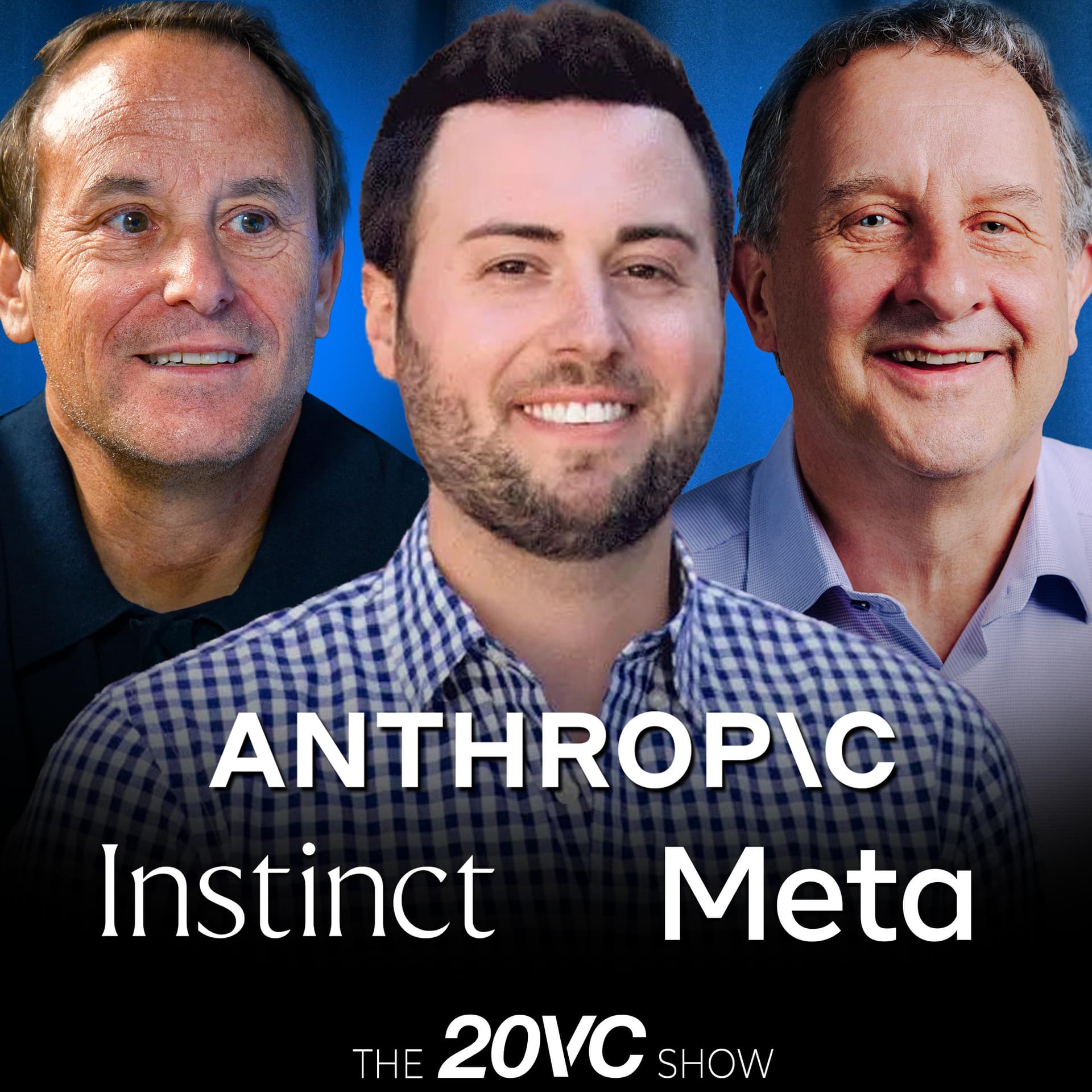
Podcast Title: The Twenty Minute VC (20VC) Episode Title: 20VC: Why Most AI Investments Will Do Worse than the S&P 500 | Why Early Stage VC is F*** | The Danger of Kamala Harris and Why Trump and Vance are Best | Freedom of Speech, Censorship and Government Control Host: Harry Stebbings Guest: Eoghan McCabe, Co-Founder and CEO of Intercom
Episode Overview In this episode of the Twenty Minute VC, Harry Stebbings interviews Eoghan McCabe, diving into a variety of topics such as the future of AI investments, the early-stage VC landscape, political commentary, and the philosophy of freedom of speech. McCabe shares insights drawn from his experiences in leading Intercom, a significant player in the SaaS industry with a focus on AI-driven customer service.
---
Key Topics Discussed
AI Investments
- Skepticism Towards AI Investments: McCabe argues that most AI investments will not outperform the S&P 500, as many venture capitalists rush into AI without adequate differentiation or competitive advantage.
- Building AI Tools: He criticizes companies like Klarna for trying to create their own AI tools, equating it to past attempts of building proprietary SaaS workflows. He believes domain-specific AI systems require significant expertise and effort.
The SaaS Industry
- Public Market Trends: McCabe discusses why he believes more late-stage companies should not rush to go public, citing market conditions and the need for substantial time to build valuable companies.
- Challenges in Early-Stage VC: He describes the early-stage VC landscape as "f***," suggesting a saturation of funds and a lack of clear returns on investments.
Founder vs. Manager Mindset
- Unbalanced Founders: McCabe posits that the best founders often exhibit unbalanced behaviors, contrasting the differences between founder and manager modes in leadership.
Political Views
- Political Commentary: McCabe expresses his belief in the importance of individual liberty and the imminent threats posed by current political climates, particularly criticizing potential policies from a future Kamala Harris administration.
- Support for Trump: He argues that Trump represents the most personal freedoms and liberties at stake, positioning his political support as a matter of principle rather than allegiance.
Freedom of Speech
- Censorship Concerns: McCabe argues against censorship, contending that restricting speech can lead to dangerous precedents of governmental power over individual freedom. He highlights the need for open discourse, even when it may lead to controversy.
Futuristic Views
- Nuclear Threat: McCabe expresses concerns about the potential for nuclear conflict, underscoring geopolitical tensions.
- Robotics and Automation: He predicts a rise in robotics replacing blue-collar jobs, emphasizing historical trends where technology has replaced dangerous jobs, ultimately leading to greater societal advancement.
---
Insights and Takeaways
- Market Overhype: While AI companies are currently enjoying rapid growth, McCabe emphasizes that long-term sustainability requires much more than initial hype. The importance of usage, retention, and true value creation is paramount.
- Cultural Shifts in Leadership: A strong focus on values like resilience and hard work is essential for success, but McCabe acknowledges that not all employees align with these expectations, leading to a culture of high performance.
- Freedom and Governance: The discussion illuminates the delicate balance between freedom of expression and the responsibilities that come with it, reflecting on the current political landscape.
---
Final Thoughts This episode features a rich and provocative discussion, showcasing Eoghan McCabe's candid views on a series of pressing topics from AI to political commentary. It serves as a reminder of the complexities and challenges in the technology landscape and the broader societal implications of leadership and governance.
For access to the full episode, visit [20VC on YouTube](https://www.youtube.com/channel/UC2YwB5Y2A6v0gC5UflnD4Nw) and explore more about venture capital and startup funding.
Written by AI. May contain mistakes. Listen to the episode to check what was said.
Transcript
Automatic transcript. May contain errors.0:00Most VC money is going to support a lot of excitement around AI and actually not do better than the S &P 500. I think that building your own AI agent platforms is going to be as smart as in the previous generation building your own SAS workflow. The terrible fucking idea. I'm a big believer in individual liberty and peace or in a time where both of those are being threatened. It's crystal clear that Trump and fans are the people who are promoting the most personal liberties and freedoms. I think it's deeply evil to decide what can or cannot be spoken about. It's really dangerous. Governments become insanely and dangerously powerful when their citizens cannot say what they believe is true or not.
0:41I mean this show has more peri -peri -sourced than a Nando's extra hot chicken. This is one of the spiciest shows we've done in a while. Also such range of discussion for a short show AI politics freedom of speech. Oh in McCabe co -founder of Intercom is incredible here. If you want to watch the full episode, you can find it on YouTube by searching for 20VC. That's 2 -0VC. Before we begin, I want to share something interesting about the private market. There are many ways to buy and sell private stock today. But Hive is the only platform that provides a one -stop liquidity solution for private companies and their shareholders.
1:15It not only provides access to a deep pool of investors, but also allows companies and boards to control key elements like buyer approvals, seller eligibility and even pricing, offering liquidity on their own terms. What's more, Hive's comprehensive transaction execution service and centralized transaction tracking allows companies to stay on top of all past pending and upcoming transfer requests, so easily and at no cost. Visit hive .com, that's h -i -i -v -e with two eyes, and see why they're the fastest growing liquidity platform in the world. Hive markets limited is a broker dealer and member of FINRA, SIPC, investments in private stock are risky, only accredited investors may buy through Hive.
2:03And just like Hive transforms liquidity, TIGUS transforms how we gather insights for investing. When I invest in software today, I think software is valuable when it saves time and makes something easier, but when it enables the user to do something they simply could not do without it. Then it's insanely powerful and valuable. That's the case with Tegas. I literally could not live without them. When I'm investing in a company, Tegas lets me see the most incredible reference calls with experts in the space who work at a competitive company or incumbents. These calls and data provide the most incredible insight that really shapes my opinions and thoughts and investment decisions.
2:39And I can then share snippets from calls with team members. This is a tool that will change how you work. Honestly, you cannot imagine life without it once you've experienced how powerful it is. And you can check them out today by heading over to tegas .com. You have now arrived at your destination. Owen, I am so excited for this dude. I always remember our last show. It's one of my favorites that we've done. So thank you so much for joining me, stay man. Thank you for having me back. Not at all, but we always start with the context and you've been asked 10 ,000 fucking times how many times you found it in to come.
3:10And so we're just going to skip it. I want to dive right in. We are in a very interesting time of AI. A lot of people are saying that customer service is the most impacted and will be removed with Intercom's position. Why are you not fucked by AI? Sad with love. I appreciate that. I mean, everyone's fucked by AI in the fullness of time. I mean... No, that's just the title for the show, is it not? That's the intro, that's the segment. Unfortunately, I'm fortunate, I regret that already. Yeah, in the fullness of time, increasingly powerful and abstract AI will do away with all of the work we need to do today to deliver software experiences.
3:48That has always been the case with technology. There is no new technology that won't be obsolete in some period of time. And I wouldn't be working my ass off. And Edricom, if I thought that it was about to die and be crushed by AI in a year or two. So I think we've got a decade, two decades. So the conventional wisdom in AI circles now is that actually customer service and customer the sport is the low hanging fruit and that's going to be picked off in the next year or two. What position does Intercom play in that landscape moving forwards or do you disagree that is not the time frame and it will be a decade plus?
4:20You know the reality is that adoption and new technology takes far longer than we all always imagine. We were the first to come out with an AI agent that would do customer support for you like actual conversations with customers and closing tickets. it's we now have, forgive the fucking pitch. We now have the highest performing AI customer service, but you look at everything that's on the market. They can't resolve tickets at the rate we can, the average resolution rate of our bodies, now approaching 50%. How is that, Owen? You leverage open AI and alternative models to draw that efficiency? Yeah.
4:55Just help me understand, I don't actually understand, is it the existing data sources that you have which allow you to do that better? Yeah, it's all the existing data sources is with the intercom it's your historical conversations that your human reps are also having. But what's really interesting and what's key to understanding how the AI is going to develop and we can go back to your questions if I manage to remember is that building domain specific AI systems requires a phenomenal amount of work on top of these LLMs. Of course, yes, over a decade or two of the LLMs will get powerful enough that they will disrupt away all of these detailed intricacies that we've built.
5:30But FIN, our AI agent, for example, is the product of over 100 unique experiments to figure out how exactly to understand customer questions and resolve tickets. There's patented components to it. I think there are somewhere around seven different LLMs intricately connected together. This homegrown AI and just a lot of very detailed prompt engineering massaging to make it highly effective at closing tickets. When we first released our AI agent, the average resolution rate was in the high 20s. So that's the rate at which it successfully closes tickets when it gets involved in the conversation. And now, like I said, it's approaching 50%.
6:09I think Zendesk is still high 20s. And so it just takes a long period of time and a lot of work to build all of the functionality on top of the LLMs to make them really, really great at these domain specific things. That's why these AI application companies are going to win. That's why they're going to become so big because I don't think at least in the next five 10 years that any of the AI labs are going to build all the domains specific stuff. I interviewed Ethan Molyck, he's the head of ML or AI at Warton and he said you cannot believe in AGI and also be a SaaS investor. Right. That's right.
6:45If you believe in AGI, then every SaaS product will be killed. Straight off. Yeah. I think that's right in the fullness of time. And again, if you held on to your stock in facts companies, you'd be crushed. But for the first 10 years, you would have made a fucking fortune. So in technology, it's all about timing and it's all about waving success of growth cycles and riding the trends in that moment in time. And then you must reinvent yourself and kill yourself. You asked an interesting question at the start. We've already forgotten what it is. Well, I also have a question which is like, why are you not thought by AI?
7:19AI. And that's the answer. It's because, sure, AGI crushes all of software in the fullness of time, but it takes a really long period of time to pick up these technologies in the question you asked. Do you think that we are overestimating technological advancements in AI? I mean, people are now thinking that actually with scaling wars and with bluntly the amount that incumbents are spending, we could actually get there so much quicker than we ever thought. And we are a scheme reaching a scheme. Do you think we're not actually, and that is over hyped? There's various aspects of it. The rate at which AI is going to change the whole world is a little overhyped.
7:53The raw technologies will be built long before they have a real impact on the world. That said, even the technology community at large has not yet made contact with how valuable AI already is. There are 100, 200, maybe there are 500 companies globally that have built AI first, products that are blowing up. I saw some statistics that showed that the average time it took for a SaaS company to reach 30 million an hour or from a specific investor who was picking great SaaS companies was something like four or five years. And the average time for these AI companies to reach 30 million an hour or was less than two years.
8:35AI application companies are currently blowing up in a way that people don't realize. They're currently delivering a lot of value. This is my hardest thing as an ambassador, which is to termly sugar high revenues first is actually long enduring sustainable revenues because you're absolutely right, I invest for a living day today. I see 10 million ARR, the whole freaking time from AI companies. Yeah. Before that would in 18 months have been the gold standard. My challenge is the quality of revenues much lower, often their POCs and pilots if they're enterprise at all. Sure. It's the most exciting time to be investing and it's also the most challenging.
9:06But of course, when anything new happens, any new trend, there's going to be so much noise. And it's your job to be one of the few investors who can spot the signal in the noise and beat the market. Most VC money is going to support a lot of excitement around AI and actually not do better than the S &P 500. There's a brilliant stat, which is like, in the two years following the family of Netscape, only 1 % of internet enterprise value was created. Yeah. Now, they were the very early days. And still, this has to be the very early days of AI, and there will be a lot of AI companies that will totally flame out.
9:42I stand by the assertion that there are AI companies delivering really tangible value, and the things you pointed to are exactly right. Usage and retention is how you spot the difference. So there is definitely a lot of revenue that's driven by just excitement and people kicking tires, but there are AI businesses out there where they retain customers. Those customers have totally changed the way they've worked. They're expanding on the product. They're not going anywhere. They've forever changed. Clana announced that they were stopping their customer contracts with that work day and with service, with Salesforce.
10:13And it led to this wave of what? This is the future. Companies will build their own SaaS tools. I'm interested. How do you feel about that? And how do you respond to that question and concern? Well, I have no choice but to say that that's a terrible fucking idea. And just like Intercom is eventually fucked by AGI, we'd also be fucked by companies building their own AI systems. The reality is, hand on heart, independent of my association with Intercom, I think that building your own AI agent platforms is going to be as smart as in the previous generation building your own SAS workflow tools. These things are super deep.
10:49Like I said, with FIN, our AI agent, it's the product of over 100 different experiments, many patented parts. We've got 30 ML engineers and counting, 100 other engineers working on all the application components. You're just not going to build a highly performant rich AI agent on the side. Not going to be done. And I think any attempt to do so may yield some short -term excitement. But even clarinet long -term, I'm pretty sure we'll move on to a professional purpose -built system. I completely agree. It's one of the most ridiculous misnomers in the valley right now that everyone will build their own individual tools.
11:23Next no sense. There's two worlds. One whereby It continues to cost a lot of money to provide such great high -quality AI products and you do a Canva, an increased pricing by 300X. Well, I'm Canva, love those guys. Or actually, we see costs go way down as they have done so far and actually pricing remains relatively stable, but it's the cost that really reduces. What world do you think is more likely? And why? Technology is deflationary. Technology gets cheaper and cheaper and cheaper over time. Look at these statistics where they show the real prices of various products and goods, and even as currency inflates, the price of, say, TVs, flatscreen TVs goes down.
12:09And so these AI agents will be way cheaper than humans while they're also better. That said, what you're going to see people do is augment their savings they make in their budgets or use the savings they make in their human budgets to spend on as much AI as they can until they're now totally over -serving their customer. I think people are going to start to find that if, for example, in our e -commerce story, these companies can generate substantially better sales through providing these epic AI assistance that will happily spend more money for them. But when those themselves become commodities, then it'll get cheaper over time too.
12:47Do you buy the reduction in team sizing that AI has? I think if you look back to the 70s, people would say, God, if we had computers that did all these things, we wouldn't need anyone here. Yet there's still companies with hundreds of thousands of people. How do you feel about the reductive nature of AI on team size? Valuable businesses have got smaller with technology. The size of Google or Facebook when they were worth $100 billion in employee size was substantially smaller than and generally that electric or Ford. The long arc of technology and automation requires less humans. So it'll perpetuate that arc.
13:23You're not gonna see mass layoffs. At Intercom, for example, we've been using our this AI agent fin for nearly two years, and we've not let anyone go, but we've stopped growing the size of our support team. I think any future growth is gonna be catered to by the AI agents. The AI agents will first do a lot of low level and simpler work. and the humans will do the higher level work. Now when we hire for customer service, we're hiring a more talented experienced person. You can do the creative things that the AI agents can't. Eventually, as these teams get smaller and through attrition, the AI will be doing more and more of them and there just will be less humans in the mix.
14:02I am asking a spicy one here. Is Sebron then to fire 700 people in Clawna's customer service team? If they could do it, capitalism dictates that they should. But if they do, the way you do it, like why go on average? They must be something else. Certain use cases where the distribution of the types of questions is really tight, rather than this big, long, normal distribution of so many different types of questions, will be able to create these tight custom experiences. If you're a clarina, for example, you might only get three questions that cover 80%, three types of questions that cover 80 % of your inbound.
14:41And therefore, you can actually create AI or AI -ish experiences to do big swaths of your customer service. Most businesses are not like that. What extent do you think foundation model layer companies, your open AI, your anthropics, subsumed the core application layer companies? Customer service may be being one of them, language translation may be being one of them. To what extent do you think that's a reality? Again, in the fullness of time, if they manage to become ever closer to something we call AGI, they will. Storytellers and visionaries are very different from builders and business people.
15:19These are just different types of disciplines and different individuals. So the people that tell these big, visionary stories about how LLM companies are AGI, it's going to crush all of software. They're not actual business people. They're not actual builders. and they don't realize that businesses, consumers have real practical problems that need solving and it takes them a really, really long time to adopt these technologies. Can I ask you, what do you believe will happen in the next 10 years that can't need today is considered crazy or nuts? I think we're going to see a giant rise of robotics in many different areas.
15:56A lot of blue color work will probably be done by robotics. The one thing that's important to say while I'm celebrating this human work being done is that technology has always put humans out of work when the work has been dangerous shit and demeaning. Whether it's individuals on factory floors where they lose limbs, humans dying in mines, so much of these types of work that humans fucking hated that actually killed them has been replaced by technology. and all the while the population of the world has increased, GDP has increased, longevity has increased. We have no reason to believe that we're not still on that same trajectory.
16:38How do you feel about the photographer who's gonna have their spend cut in half because we can do AI backgrounds so much easier, we can reduce spend on a photo. I literally just came from a photo shoot and I was like, dude, this is gonna be mostly AI in three years. And he was like, I know. They'll learn new things over time. When I got into the technology industry, I was making crappy websites, writing HTML by hand. Now we have so many different ways to generate websites. You've certainly have seen so much web designer work disrupted by wicks and squares base and Shopify and all of these tools and technologies and frameworks.
17:18But actually, these people were never put out at work. The demand, the greater demand that these people could not serve was catered to, and those people got more specialized. It's going to continue to be the case. Something I find really challenging on is you look at the latest YC batch. All the companies are relatively interesting AI consumer application layer companies in large part. And actually when you dig deeper a lot of them is kind of 11 labs, tag to an open AI model, and it's really just bringing together different foundation model companies. And the core thing comes back to, well it's not really that much defensibility, it's just kind of awkward, etch, you start together.
17:55How do you feel about defensibility in startups? I know you've invested too in that. There is no such thing. There's no such thing. Even Apple don't have it. Apple very famously championed their patented iPhone technologies and yet Samsung came and actually beat them on many different criteria. Technology is a kind and most game. It's about who builds it first and brings it to market, helps customers understand and adopt it, always being the case. And so talking about modes, it's kind of silly. Now that said, some of the greatest technology companies of our generation then go on to build networks and other things that do become defensible, whether it's Apple's eye messages, whether ecosystem, whether it's Google's data, whether it's Facebook's network.
18:34At some point you can build some degree of defensibility, but software companies and technology companies are particular. They don't tend to have any defensability other than the fact that they can build better and faster than anyone else. And that's OK. It speed the single most important thing in going from zero to one. To one of them. To one of them. Working your ass off, working very hard. Can I ask you, if we think about Silicon Valley Central casting, PG's essay on Founder Mode when incredibly viral obviously in the last month, how did you feel and think about it when you read it? I think it was really acute and fun, branding for a thing that anyone who's built a company has deployed since the start of companies.
19:11There's nothing new about it. There's countless books about Steve Jobs and how he operated. Maybe it gives permission now to founders to trust their good and instinct, which I think is a really, really good thing. But business is very much an art, particularly starting a business from scratch, as a deeply creative endeavor. The worst type of art is art produced by committee. I would say it's just not art if you're trying to find the lowest common denominator and something that satisfies everyone. And so highly agentic individuals and acting on their own intuition, I think it's how greatness has always been made.
19:46Can I ask you, I don't know if it's public, but how much do you guys do in revenue today? It's in the hundreds of millions. So it'd be one of the larger private software companies. Why don't you go public? I always hear girly and you know, Brad and I'll tell him to turn their like more companies need to go public when they're in this range. Yeah, the valuation will take a minute. I mean, of course, a VC would say go public. Look, these VCs need liquidity. Founders who have a different mission and a longer time horizon and who actually need to operate the businesses unlike Gurley have different priorities.
20:19My goal is to build a giant, highly impactful, really fucking cool technology company. It means absolutely nothing to me whether or not my stock is traded on the public market with a private market. The reality is today. data for you in terms of rigged accountability, all of the reasons that they say. They're the things that the analysts want. They're the things that the investors want. I want a shit ton of customers, a shit ton of revenue. I want a really impactful organization. I want to have a really, really big amount of influence on technology at large. I don't need all of the regulatory compliance to do any of that.
20:58All the regulatory compliance gets in the way of that. But the reason that people take public companies private during crazy moments like this post -COVID now post AI Is so that they can make really big swings and big bets without all of the rig and world of being public We nearly went public in 2022 and I'm so grateful that we did not Talk to me about that. I didn't know that. Yeah, 2022. I think it was June 15 We had a stock ticker that I hated nothing cool was available We had written our S1 and the market's collapsed. We weren't not the only ones. How did people respond? Investors get excited.
21:35Equity coming. The right investors want value long -term and they know that in these moments a great change that the best value will be created behind closed doors. All the big swings and changes I made at Intercom that has dramatically accelerated our revenue growth. I don't think I could have made that if I was a pull -to -comedy CEO. I am an investor though. We need liquidity. and M &A, what you're going to do a Dylan and go through 18 months of hell and then get blocked. No, you're probably going to do a whiz and just say no thanks at the start. And then I POs, I'm with you on everything you just said.
22:09So what happens then? We just have this extended private window? There will be IPOs, there will be liquidity, maybe on private markets, M &A will warm up again. There's a lot of money in PE. It'll have to on stick itself, but admittedly we're currently in an awkward patch where a lot of people are asking themselves. Does this VC model even make sense? I mean, Intercom is a 13 -year -old company. When people were investing in Intercom, they thought maybe they'd get liquidity in what, eight years. And we are, by far, not the only company of that 10 years. So, the game has changed. Do you think the VC model still works?
22:45The amount of capital at an early stage available today suggests to me that that's got to be a crappy end of the market for VCs. It's just a raw commodity now, early stage VC. I don't know how you make a return there. You mentioned the revenue there and the seismic shifts that you've done made to cause the changes. Why did revenue, plateau, growth, plateau, what happened? We forced more and more customers to talk to sales. It certainly increased ACVs, but it actually cut out a phenomenal amount of growth in SMBs and small customers. And those small customers were actually the lifeblood for our sales customers.
23:24They just needed some time to grow. That was a really, really, really, really big mistake. Our total customer account started to shrink. That's one example. Oh, there's where we're pricing. We got greedy. We wanted people to sign big contracts upfront rather than allow them to expand into them. So, it was just going against all our intuition, bad commercialization. That was the main thing. Do we want to talk about the internal changes that intercom about restarting the startup? Yeah, the culture. Companies are this deeply interconnected system. You know, you can't change one thing without changing another.
23:56You can't pick and choose. It's not an Alcar menu. It's a deeply interconnected system. We needed to totally change our values, make clear that hard work and a focus on our mission was key, was crucial. I gave permission to people to act in quick and scrappy and messy ways. I rolled up my sleeves and gone evolve myself. I set this project called Project 52 where I gave us 52 weeks to reinvent the company, I spoke to the company every single week. I just created this very high degree of intensity. I rolled out these new performance management processes where people who didn't fit with the new values I wrote and the values were things like hard work and resilience and a focus on our mission, where respectfully moved out.
Read the full transcript
24:38I always struggle with this, like the values of hard work and resilience. I mean it in the nicest way. No one disagrees with them. One of our values is unreasonably hard work. I expect you to cancel your friends dinner to continue working when you have a project. People would say no, that's wrong and you should have that balance. I say that's fine. You should have enough jobs on my house. But you should be four against some. No one's against that hard work and resilience. Is that true? Yeah. Is that true that no one's against hard work? I think so. Many, many employees are against truly hard work.
25:13Don't you think so? Have you not met lazy people? Why do you have your value? I know, I know, there are people who don't work very hard, but it doesn't mean that they're like I disagree with it They know that lazy. There was kind of a meme that started 10 years ago where people would say work smart and not hard Started to promote ideas like work life balance and I think that that's great There's no objectively right or wrong way to live your life But if you're trying to do something insanely difficult, it will just require a lot of energy and focus There are people out there who think that there are smarter ways to work that maybe four days a week is better than five or maybe some version of work life balance is more productive I think that that's false really fucking hard work cannot be beat.
26:01Did people push back on that? Yeah, and on all the things of course they did, yeah, but they were wrong for the company and that's totally okay I guess they pushed back on some of the tops down way of working, you know I would dictate values, I would dictate policies. The way professional CEO runs an organization is by consensus. So imagine they want to feel out an opportunity to bring people back to the office. They'll go and they'll pull leaders and staff on their opinions. And if it's not popular, they won't do it. And so they're stuck in stasis and mediocrity. The way highly -agentic -enabled founder who will not apologize does that.
26:37Simply tell people, we're going to be two days in the office. This is for a good reason. if you're not into it, God bless. Certain people are allergic to that way of working. They want to be part of the communist consensus approach, and that's not where greatness comes from. How many days a week you're in office? We only mandate two days a week. I think an average, it's something like three. If I started all again, I would definitely do five days a week. I think just being a person is just far superior, so much more fun. It's a divisive topic. Another divisive topic is politics. And you have leaned in to political commentary on social support to start off.
27:14Why did you decide to lean in on expressing your political views? Because it's important for humanity. I'm a big believer in individual liberty and peace or in a time where both of those are being threatened. Western establishments, Western governments are impinging upon a lot of individual liberties, whether it's freedom of speech, freedom to start and run certain types of businesses. They don't like crypto, so they don't like AI, and they're starting a lot of wars between nuclear powers. And I think that that's just really, really, really, really fucking dangerous. That's the only reason I'm in anyway involved.
27:49I hate politics. I tend to dislike politicians. I have always been deeply apathetic about political games, but this time is different. Why then be pro Trump? I'm naive, I'm a naive Brit. But talking about his impact on democracy, his ability to impact Supreme Court participation and attendance, why be pro -Trump? Yeah, like I'm pro -Freedom. I will vote for and support and donate to the person who promotes the most freedom. I have no team, no tribe. At the moment, it's crystal clear that Trump and fans are the people who are promoting the most personal liberties and freedoms. They're not the ones who are wanting to shut down speech or to shut down crypto or to try and buy an AI or do a range of other things that are just gonna be straight up bad for society in the world.
28:41And they're the ones who want us out of these wars. Really obvious, patently clear the solution, or the person that needs to get voted for. Very few people I talk to in technology who are not voting Trump at the moment. Very, very few. There are some people who are either triggered by Trump, but most people have decided that that's the side that is gonna support liberty and peace the most. Do they miss it publicly? Of course not. Why would they be self foolish? It's totally okay. I am not going to judge people for making decisions about what they want to involve themselves in. I just think it's really important that people speak publicly.
29:14If it's a thing that we're afraid to speak about, then everything gets worse. I think it's inappropriate to hate on people and criticize them for choices they make, particularly when the choices are designed to protect humanity and peace in the world. So how do you feel about Brian Armstrong's famous piece about politics not having a place in the workspace? It's an effective practical solution. I introduced that years ago also and we do not talk about politics in Intercom and I never do that within the company either. For me it's also important that Intercom never tell us employees what to do in their personal lives.
29:48I'll never tell employees what they can or cannot say. And if any employees ever attacked for their political positions online, especially in particularly if there are positions that I disagree with, it's important that I demonstrate these principles in those moments. I will defend them, and it's important, I think that the CEO exercises and demonstrates their alignment with these policies, and so similarly, I'm gonna be myself, I'm gonna represent the things I believe in. Again, particularly when they're aligned with things that are designed to better humanity and peace in the world. Did you worry about turning off potential talent from applying or joining?
30:24No, I'm a really, really big believer in authenticity. Great leadership is all about being who you truly are. If you're completely open, honest, and vulnerable, then people can opt in and out accordingly. Because of the values I instituted and the performance management processes I followed to curate a certain set of people in the company, when I really resill it, there was literally one person who left. And if you're not going to work with me because you're not willing to accept my individual beliefs and Support my efforts to better humanity and find peace in the world. Then we're not a good fit for each other I've heard of no problems with customers.
31:00I've heard nothing from the board or investors if you stay close to the moral high ground You communicate the reasons you do what you do and you stay strong Don't apologize or flinch when the tiny minority of people come after you you'll find that the masses will be very supportive and really I've had no problems whatsoever by my openness. You said about authenticity and leadership there. When were you inauthentic to yourself as the leader do you think? Maybe during the DI days, I never really promote a DI. I always thought it was a really bad idea to discriminate against people for their race or their gender or things like that.
31:35So I never was cool with DI but you know, publicly I didn't speak out about it. There was a point in the Bay Area where minority candidates were thrown around like poker chips. Like it was really gross. I would go into meetings with recruiters and they would say, good news, we've got a minority candidate. And I'm like, that is the fucking most disgusting thing you could say about that person. You didn't care to mention while company they worked with, what their achievements are, just that they're black. The most egregiously disgusting way to treat a person. So that used to happen, but that doesn't happen anymore here.
32:08So I think we've moved on a little bit from it thankfully we're a lot more sober But I think in conventional industries and maybe in conventional cultures And I think London and New York a little more like that there might be a little bit of it still But thankfully we're waking up. What have we not moved on from that is totally right? I think it's totally fucked that we Try and censor people Institutions and the big tech companies are still censoring people. It's evil really really evil – Evil or rational? – I always like to draw a different case, which is like, okay, everyone has a boss, okay?
32:45I have a boss as an investor that my LPs. No, if you are in my companies, you cannot say what you want, because it could offend one of our LPs, and they pay your rent. – Yeah, I think companies are very different from the wider world and the public forums. I think it's deeply evil to decide what can or cannot be spoken about. It's really dangerous. It's the hallmark of totalitarianism and it has always signaled far worse things. What happens when freedom of speech is fake news? Who gets to decide what fake news is? Elon must post a picture about Vino Kostler's beach with no plaques. With no plaques allowed.
33:22He knew it wasn't fucking no plaques allowed. Of course he did. Jokes are protected by freedom of speech. And if Elon repeatedly does that, his reputation should take a hit. But no greater power should ever be trusted. And it's proven that they can't be trusted. For example, during the COVID times, to decide what is or is not fake news or write wrong or appropriate. That's very dangerous. And I know you're playing devil's advocate right now, but there's very, very few people that agree that that's a good idea. Jokes are protected by freedom of speech. So, if I say a joke and it's egregiously false misinformation that has maps of freedom.
33:59It's fucking lootly. That's your guess. to decide. During COVID, it turned out that these gene therapies were really bad for you, and that these traditional treatments were really, really helpful. Don't slap your face like I shouldn't have said that because it's fucking true. No, it's just like, then I could just blast it anything out. It's a fucking joke. Yeah, yes, you can. And you should. And that's the power and magic and beauty of freedom of speech. No one gets to decide what is or is inappropriate or true. And people frequently make mistakes and often it's worse to mistake. It's very purposeful massaging a truth for various certain interests.
34:35What if a joke has massively damaging consequences to people, physically, mentally? The kind of hard and fast rule in the United States is you can't yell fire in a crowded theater. If you're a quote unquote joke causes a greedy harm to someone, maybe you're a joke. I don't know. It docks as someone and it tells people go and attack a certain person at a certain address, you've passed the threshold there. That's no longer speech, that's kind of conspiracy to cause harm and inflict damage on a person, so I don't think you could say that that should be protected. So basically, I'm so fascinated. So basically we should be able to just say anything.
35:13Abs, fucking litly, are you crazy? You think that a higher power should tell you the sovereign individual, the beautiful human that is hurry, what opinions you can on, cannot have. Governments become insanely and dangerously powerful when their citizens cannot say what they believe is true or not. No, but I think we should actually have rules. Okay, God, maybe I'm just getting - Who makes the rules, my friend? Maybe I'm just getting so infected by Europeanism, but like I could walk a situation where, you know, a black person or a white person or a Muslim, you choose your race is getting beaten in the street by 10 others and it's completely staged because it's a joke.
35:56And guess what, I will put it in the right forums at the right time and inside a fuck ton of hatred, but it's a joke. Then you should be shamed, you should be criticized, people should stop following you. I think that that's really, really inappropriate. That's not a cool thing to do. But the power is that B cannot decide what's right or wrong and what's a joke because then And they can just decide at various things that they don't like because it's a joke. Look, all freedom comes at danger. The freedom to own a knife, the freedom to drive a car, the freedom to say what you want comes at risks.
36:29But we are born sovereign and free and first to be able to live our own beautiful lives and create and love who we want, build companies we need and deserve full freedom. And it's never been government's job to take that from us. the government works for us. They are our employees. Their job is to protect us, not shut us down and shut down our freedom. The truth is, I didn't even ever have a thought like it had freedom. I think that this part of a UK thing, I think when there's a monarch, and I think when you live under generational experiences of being a surf and people of a kingdom, then you do tend to feel less freedom.
37:12The people who came to the New World and the United States by definition are people who decided that they didn't want that and they separate themselves from it. So Europeans, people in the UK and Ireland, they don't feel that same level of freedom. But everything from DEI to that being afraid to say about Trump, like, I don't feel any freedom to say anything around that. That's a problem and that's because of the institution's culture, big tech. You're saying you're speaking to a problem that is happening today and it would be made far worse if we let governments shut down things like jokes. Do you think Trump will win or do you accept that camera?
37:46No fucking clue. No clue. Who do you think won the election or won the stage last night? JD or Tim Maltz? Fans didn't know it's standing job. I think he was like, he did a good job of being calm, collected, smart, empathetic, thoughtful, communicator. In the refounding of Intercom, how have you most significantly changed as a CEO? It kind of feels like you've found yourself. It's true, you know. When I left, I left chiefly because I was sick, also because revenue started to slow, also because I was attacked in the press, and I was spiritually crushed, physically crushed, psychologically crushed, that process, you know, when you had all of that shit happen.
38:28Not good things, versions of like, am I a fucking loser? Like, I fucked up. And in doing so, when you go through a process like that, your ego is eviscerated. Your identity as whatever perfect little image that you're eager to create for yourself is by necessity burned And so when you go through these processes, but then manage to survive it What comes out the other side is a far more authentic person all these ideas of perfection Can't possibly be held to be true anymore because they've been proven otherwise so when I came back to intercom Yeah, I felt so much more myself. That's just help me speak my mind be authentic and real what people create and curate the culture and environment that I believe would be successful and do so making no apologies and being okay with people being upset by it.
39:15What trait do you have that you're slightly ashamed of but you think is contributed to your success? I have a lot to prove still. I'm still just a boy who was bullied in school and there's trying to find love and validation. You know tends to be the case for all founders. I've never met a founder that's really well balanced. You can't possibly imagine someone who is grounded and centered, part of a love and community deeply at one with the universe who then says, I think I'll start a technology company. That doesn't exactly happen. Most people that start companies, they have so much to prove big chips in their shoulder to get to your question.
39:51If there's anything I'm ashamed of, it's that. I'm still trying to prove myself. That's what tends to give us our edge and that's what creates artists. And I think the secret is not in fighting that but learning to love that and I've learned to love that. Final one for you do a quick fire. SF is known for its productivity, benefits to your career. You've got the new club. Yeah. Why you did it? Let's start now. Yeah, well, I'll start with the SF commentary and where you framed it. SF is just a really, really, really, really fucking great place to get work done. It can be incredibly important. Everywhere shoots a 10 or 11.
40:26People got a bad on time. Really great place to be productive. of great place to balance your nervous system and these stressful endeavors getting out to nature. It's not a place for sensuality and sexuality and excitement and connection. And so in part, I wanted to change that a little bit, but I wanted to do so under the guise of my mission to promote freedom and individual liberties and things like merit and capitalism and growth and humanity. These American and Western values are on your threat, but they're actually supported by the vast majority of people. People are so afraid to speak publicly about their support for such things.
41:04They're afraid that they'll be looked at as being the bad ones, that there's something wrong with them that they're not cool, that they're not sexy. I believed that was on -true, and so I felt like if I could get the masses wanting to be involved in a very fucking sexy popular fun thing, I could prove that these things were exactly those things. The San Francisco Freedom Club is designed to hold only epic parties four times a year for people to love freedom and all these other values We got 3 .7 ,000 people on the wait lists. We invited 600 people. It's really apparent that the vast majority people want fun and they want freedom I saw the pictures online it that fucking awesome.
41:44So well done for that dude. Please please come to the next one It's in December if we could get you there that'll be outstanding That would be fun, but listen, I want to do a quick fight. So I say a short statement, you give me your immediate thoughts. So that sounds okay. Sounds wonderful. What do you believe that most around you disbelieve on? That nuclear holocaust is super possible. Well, I'm not just going to move on post that one. I might like, can you unpack that for me? Yeah, I mean, the United States and Russia have many thousands of nukes pointed at each other ready to go. And the United States is fighting a proxy war with Russia.
42:15It's super easy for these things to tumble into nuclear war. and if nuclear war happens, five billion people on the planet die. Read nuclear war, scenario, brand new book, harrowing book. Do you think we'll see the Middle East erupt into a? No idea, looks bad. What book written before 1965 would you most recommend? The only way that comes to mind is 1984. There's a theme in this whole conversation, forgive me. Do you like freedom, moan? Is that a thing, fee? Tell me what blog posts written post -2000s your favorite. I listen to interviews by smart people. I just want to listen to conversations by as many smart people as possible.
42:52That's why I love podcasts. Who when you see their name you like, oh, I want to listen. That's great. Because we're talking about national security and whatnot, I think Eric Prince is fascinating. He's the former black, black water guy, Eric Prince. Tell me, what have you changed your mind on most in the last 12 months? That the LLM lab, the LLMs are going to eat software. I don't think that's gonna happen anytime soon. Who's your favorite VC? Apart from heart -stepping. If you were starting a new company, this is a different question. If you were starting a new company today, who would you take your first shot from?
43:25If I was raising a Series A or B, I really like Ilya Fushman at Client of Perkins. I think he's just got good intuition and he's just chill. He's just a natural. I really love my moon who he works with also. I mean, my moon have history. He invested in our Series A. Maybe it'd be Ilya. My mood's one of my favorites. One of the best of the best. Okay, final one for you. What question are you not often asked? That you think you should be asked more? What is great leadership? And it's only because I have a firm and a hard, if not a cheesy answer. And that's by being truly yourself. I know very few leaders, even the most celebrated leaders today, that are truly authentic.
44:06But the closer you can get to being yourself, the more powerful leader you'll be. Did I love having you on because you actually get honestly and you don't get the veneer of corporate? I so appreciate this as always you've been wonderful to have on. I appreciate it too. Thank you for having me Harry. Really appreciate it My word that was so much fun to I love it when it's a natural discussion You can watch the full interview by searching for 20 VC on YouTube That's 20 VC where you'll be able to find it easily to see the full discussion in video now before I leave you Let me share one more exciting development from Hive.
44:39It's called Hive 50, and it's like the first live index of large cat private securities generated directly by customer orders and transactions on the platform. Over 70 % of US -based decakons have traded on Hive, and the Hive 50 ranks the 50 most liquid securities in its marketplace. Based on transaction volume and liquidity, and even better, the index is equally weighted to the top 50 stocks. Effectively, acting as a barometer for the market's direction and momentum in private tech company investments. Go check it out at hive .com slash hive50. That's hive with two eyes .com slash hive50 to see how they're shaping the future of private market investing.
45:21Hive market's limited is a broker dealer and member of FINRA SIPC investments in private stocks are risky, only accredited investors may buy through hive. and just like Hive transforms the quality, Tegas transforms how we gather insights for investing. When I invest in software today, I think software is valuable when it saves time and makes something easier, but when it enables the user to do something they simply could not do without it. Then it's insanely powerful and valuable. That's the case with Tegas. I literally could not live without them. When I'm investing in a company, Tegas lets me see the most incredible reference calls with experts in the space who work at a competitive company or incumbents.
46:01Because these calls and data provide the most incredible insight that really shapes my opinions and thoughts and investment decisions. And I can then share snippets from calls with team members. This is a tool that will change how you work. Honestly, you cannot imagine life without it once you've experienced how powerful it is. And you can check them out today by heading over to tegas .com. As always, I so appreciate all your support and stay tuned for one of the best 20 VC Venture Investor episodes we've ever done coming on Monday with the one and only David Frankel found a collective.
From the publisher
Eoghan McCabe is the Co-Founder and CEO @ Intercom, one of the largest private software companies in the valley with hundreds of millions in revenue and thousands of customers. To date, Eoghan has raised over $238M from Index, Kleiner Perkins, ICONIQ, GV, Bessemer and more incredible firms. Intercom’s goal is to reinvent customer service with AI agents replacing human agents over the next 10 years.
10 Questions with One of the Largest Private Company CEO’s:
-
AI Investing: Why will most AI investments not do better than the S&P 500?
-
Building SaaS Tools with AI: Why is it crazy for companies to follow Klarna and use AI to build their own tools?
-
Going Public: Why is Bill Gurley wrong that more later stage companies should go public? Why did Intercom shelve plans to go public in 2022?
-
Early-Stage is F*******: Why is the early-stage venture ecosystem as an asset class f******?
-
Founder Mode: Why does Eoghan believe all of the best founders are unbalanced? What is the difference between Founder vs Manager mode?
-
Political Voice: Why did Eoghan decide he had to voice his political opinions now?
-
The Danger of Harris: Why does Eoghan believe a Harris administration would rob the US of immense freedom, democracy and civil liberty?
-
Why Vote Trump: Why does Eoghan believe that Trump will regain immense freedom for the sovereign individual?
-
Freedom of Speech: How does Eoghan determine right vs wrong when freedom of speech leads to harm and injustice?
-
Middle East and Nuclear War: Why does Eoghan believe that nuclear war is much closer than we think? Will we see the Middle East descend into war?