
In short
Podcast Summary: The Twenty Minute VC (20VC) with Klaus Hommels
Episode Title
20VC: Why Price Sensitivity is BS | Why "Portfolios" are Merely a Construct to Make LPs Happy | Why the Best Investment Never Happen in "Fundraising Rounds" | What Europe Needs to do to Become a Superpower Again
Episode Description
In this episode, Klaus Hommels, founder of Lakestar and notable investor in companies like Spotify, Airbnb, and Facebook, shares his views on venture capital, European innovation, and the critical factors driving investment decisions.
Key Discussion Points
- Challenging Conventional Investment Rules
- Price Sensitivity:
- Klaus rejects the notion of price sensitivity in venture capital. He believes the quality and potential of the company are far more crucial than the price.
- Building Portfolios:
- He criticizes the concept of building portfolios solely to appease Limited Partners (LPs), arguing that this distracts from the focus on quality investments.
- Fundraising Rounds:
- The best investment opportunities often arise outside traditional fundraising timelines. Klaus emphasizes the importance of identifying and acting on exceptional companies when they present themselves, instead of getting caught up in the fundraising cycle.
- Capital Concentration:
- He challenges the limitations on capital concentration per company, advocating for a strategy that allows for significant investments in standout companies.
- The State of Innovation in Europe
- Underfinancing Innovation:
- Klaus asserts that Europe is currently underfinancing innovation by a factor of eight relative to its historical levels, highlighting the need for a shift in investment paradigms.
- Space and Defense:
- Discussing Europe’s inability to launch satellites independently for six years, Klaus suggests that technological sovereignty is critical for Europe’s future competitiveness in global markets.
- Pension Fund Investment:
- He argues that European pension funds should be mandated to invest in venture capital to bolster innovation funding, thereby enhancing returns for pensioners.
- Success Stories and Insights
- Investment Anecdotes:
- Klaus shares how personal connections and unique opportunities led him to invest in successful companies such as Revolut (inspired by his son) and Airbnb (initiated through a conversation with Madonna's manager).
- Learning from Early Mistakes:
- He reflects on early investment mistakes, emphasizing the importance of learning from failures and remaining grounded in a volatile market.
- Future of European Venture Capital
- Need for a Unified Approach:
- Klaus calls for a more cohesive strategy among European nations to tackle defense and innovation challenges, stressing the importance of political will and collaboration in achieving this.
- Cultural and Regulatory Disparities:
- He points out the differences between European and American approaches to venture capital, particularly in terms of risk acceptance and regulatory environments.
Key Takeaways
- Identify Unique Opportunities: Exceptional investments often arise outside of traditional fundraising mechanics; be ready to act quickly when they do.
- Focus on Quality Over Quantity: Building large portfolios may be necessary for LP approval but detracts from focusing on high-potential companies.
- Investment in Innovation is Critical: For Europe to regain its place as a global innovation leader, it must increase funding for startups and foster a culture of risk-taking and investment in technological advancements.
- Long-Term Vision Required: A unified European strategy on defense and innovation funding is crucial for future competitiveness against other global superpowers.
Conclusion
Klaus Hommels offers a refreshing perspective on venture capital, emphasizing the need for a shift in focus from traditional investment norms to a more agile, quality-driven approach. By investing in innovation and fostering collaboration, Europe can reclaim its position as a global leader in technology and entrepreneurship.
Written by AI. May contain mistakes. Listen to the episode to check what was said.
Transcript
Automatic transcript. May contain errors.0:00Venture is not sitting in a nice office with borrowed power, yeah, of LPs and playing like in old Caesar's times, thumbs up, thumbs down. I'm not so kind of building portfolios, if I find cool companies that make a difference, that is where the beef is. If you have one or two of them, every portfolio looks great. I do believe that if you see the right company, you should take a lot of risk and over -propeachal risk and those. Are you price sensitive, class? Absolutely not. This is 20VC with me Harry Stebings and listen, I grew up in Europe as one of the biggest venture nerds. And that meant this guest today is one of my OG investing idols that I really looked up to for a long time.
0:42He is one of Europe's leading investors with a portfolio including Spotify, Airbnb, Facebook, Coinbase, Revolute and more. He also founded Lake Star and chairs the Board of Directors of the NATO Innovation Fund. But before we dive in today, we're excited to ignite your curiosity with a journey into the world of transformative ideas. If you're driven by the pursuit of knowledge and personal growth, you'll love exploring the vast collection of insightful book summaries on the Blinkist app. So with Blinkist, you can access expertly crafted summaries that distill the essence of thousands of influential books, allowing you to read or listen to each in just 15 minutes.
1:21I know they beat 20VC. Being recommended by the New York Times and Apple CEO Tim Cook, it's no surprise that 82 % of Blinkist users see themselves as self -optimizes, and 65 % say it's essential for business and career growth. And speaking of business, Blinkist is also a trusted L &D partner for industry leaders like Amazon, Hyundai and KPMG UK, empowering over 32 million users since 2012. 12. As a 20 VC listener, even better, you get 25 % exclusive discount on Blinkist. That's B -L -I -N -K -I -S -T. Just visit Blinkist .com, forward slash 20 VC to claim your discount and transform the way you learn.
2:02And while you're optimizing your learning, let's also optimize your finances with Brex. The financial stack founders can bank on. Brex knows that nearly 40 % of startups fail because they run out of cash, so they built a banking experience that takes every dollar further. It's such a difference from traditional banking options that leave your cash, sitting idle while chipping away at it with fees. To help you protect your cash and extend your runway, Bratis combined the best things about checking, treasury and FDIC insurance in one powerhouse account. You can send and receive money worldwide at lightning speed.
2:37You can get 20X -the -standard FDIC protection through program banks and you can earn industry leading yield from your first dollar while still being able to access your funds any time. Bracks is a top choice for startups. In fact, hey, it's used by one in every three startups in the US. Just check them out now, bracks .com -flash -dodups. And talking about building trust, Secureframe provides incredible levels of trust to your customers through automation. Secureframe empowers businesses to build trust with customers by simplifying information security and compliance through AI and automation.
3:15Thousands of fast growing businesses, including Nasdaq, Angel List, Doodle and Coda, trust Secure Frame to expedite their compliance journey for global security and privacy standards, such as SOC2, ISO27001, HIPER, GDPR and more, but by top tier investors and corporations, such as Google and Client Perkins. The company is among Forbes' list of top 100 startup employers for 2023, and Business Insiders list of the 34 most promising AI startups for 2023. Learn more today at Secureframe .com. It is a must. You have now arrived at your destination. I am so excited for this. I've wanted to make this one happen for quite a few years, so thank you so much for joining me.
4:00Thank you very much. It's a pleasure. after that long years, the weight was worse because you have become an icon. So now I'm the underdog here. I mean, flattery, I'll get you everywhere, but I want to start with a crucial first question, which is, one that I haven't phrased quite like this before, Adidas or Puma, and how did Puma lead to the start of your investing journey? Well, so you obviously did your homework. This is a very crucial question. So, not in terms of the sport shoes, obviously, and as a Swiss German, I should say, that is on, but as a life lesson. Puma made a very big impact, and I guess you always have two or three of those in your life, and Puma was the halo moment for me.
4:44So as you know, I grew up in the German countryside, hence my crazy accent here. It was close to Manchen Gladbach, and I was the son of a farmer. So at 1617 -18 I knew a lot about how to work in the fields and to all this nasty work that nobody ever wants to do in that age. But I was lucky that my grandma wanted me to hate banks. And the way she thought about it was, look, I give you 20 ,000 bucks and you buy stocks. If you gain something, it's yours. If you lose it, I cover it. And she thought I go to the local saving and loan bank, get a bet stock recommendation, lose the money and I'm at the bank.
5:24As it turns out, my affinity for football, and Mönchengladbach, was that they played in Pumachus and Pumachus did the IPO when I said, look, grandma, takes the losses so I can go in fully leveraged and at the time I was making ten bucks pocket money a month, I made a hundred thousandth with Puma in three months. So I said, look, two phone calls, hundred years of pocket money, I become an investor. So at that moment, the sale was set for what I wanted to be in the future. What did your grandmother say? So she obviously was delighted also for the wrong reason, so to say. I still did a banking apprenticeship so that she probably disliked, but she thankfully lived long enough to be able to see how part of the story develops.
6:11Did you ever go through a trough of disillusionment, so to speak? And what I mean by that is, as a young investor, make a series of mistakes early in the career that lead you to question whether you are a good investor. I think there's a lot of investors today who are sitting there going, gosh, 21 was a boom time, my numbers look great. Am I still a good investor? Well, yes, I think that was the other purpose. Of course, I lost the money afterwards. And that was probably her real mission with it so that you lose the money and make the lessons when you don't have a lot of money. Because when you're young and lose a little bit, which is still everything you have is as painful as if you lose a lot when you're older.
6:50So this has been a very, very thoughtful lesson for me. So I had a rule for long that when I had an exceptional hit, I would stop investing for three months because success makes you fear that you can work over water. And you needed to force yourself to have this humbling moments to say, oh no, no, no, no, that was luck. Yeah, keep cool, yeah, and don't make silly mistakes, no. So, actually, you say that about kind of when you have success, you pause. Because I actually think when you have success, maybe that is the time as an early stage investor to double down more than ever. I often think, oh, richer investors, better investors, because you're not afraid of downside.
7:29You see the beauty and Spotify in Revolute, in Helsing. And you don't see the many reasons that many people say no. Well, not sure. So I think there's a difference between a lot of different genres of investors. So there are people that have a lot of money that if they have successes and think there's a momentum mark, they're poor, a lot of money in the market, but for very different reasons. I'm always intrigued by the technology or by the founder. And this doesn't scale with money so much. So and it has to be that final moment, and the special moment because I do want to fall in love with the founder and the business because at the end I look at myself as an outsource business development guy and so I do spend a lot of time so I do need to like everything with it.
8:17Why are you an outsource business development guy? Because that's what venture is. Venture is not sitting in a nice office with borrowed power of LPs and playing like in old Caesar's times, thumbs, thumbs, thumbs down. So now I think the entrepreneur is the star because he has a single acid risk and he is a super passionate for one idea and for with this idea, yeah advancing society and I'm just a feature to increase the odds that he succeeds. When you get a pick on an entrepreneur wrong, what is it that you don't see? Good question. I don't know. It is always very different. So what I really, really despise is vanity.
9:02So there is a high correlation between people that post a lot, or tweet a lot, or whatever. So you're using social media a lot and efficiency. Always being a... I think this for VC's similar than for entrepreneurs themselves. But it's implicit sometimes. So it's also mistakes aren't bad by design. You just need to understand and find a rule that you can avoid the same mistakes. So if you if I wasn't set up to have certain mistakes, I would also not get into the companies that finally make it. Class for me these shows are like, why I love what I do because to me you're in most respectful way, like a wise elder venture that I can learn from and me too so I live.
9:48The challenge that I have though is on the founder side, We've seen the industry so transactionalized where founders say, Klaus, I want Lake Star, thank you, but I'm deciding on Friday. And you have a much shorter time to build a relationship, to build conviction in a founder. How do you embrace and feel about that transactionalization? So first of all, I do not get involved in a lot of companies. Yeah. And I'm totally fine if a founder rejects it for some reason, because there's young and in most cases young and there are a lot of new things coming to him at the same time and it's very difficult to get them into a certain chronology.
10:31At the end, I made a might have also made a bad job in promoting what I can contribute. So on the flip side, for me, this way more satisfying to see that those top entrepreneurs that I've backed, I've always, when they did the second business, I was always allowed to be one of the leading investors, be it was the sum up of the snickle, always with other businesses. The other question I had is that you mentioned that the frequency of tweeting and posting on how that correlates. Ventures become a marketing business above everything else, with venture investors tweeting, writing, doing podcasts, believe it or not, doing video series, we've all become content creators.
11:12How do you feel about the evolution of venture where we all have to bluntly set up? always being on cash. That's several questions. So if you have a certain mission and the mission requires you to be a little bit more outspoken or to reach a broader audience, then I think this is a perfect methodology to do this. So then because you cannot achieve that aim in a different way. But what you are alluding to and what I'm is the self -promotion stuff. So thinking, oh look, I'm a cool entrepreneur. And for them, entrepreneur means sitting in a house in Berlin with an avocado toast in a cappuccino and thinking we rule the world.
11:58And then just in the afternoon thinking of some random entrepreneur, say, hey, great, thankful to be part of the journey. So this is something where I say, look, geez, there's so much more urgent things to do for of VC, then doing those kind of things. Can I ask on a macro level, how do you think venture is more misunderstood today? If that's on a micro where it's like it's not about avocado toast and cappuccinos and thrilled to back in a class on a macro level house it misunderstood. It's pretty simple. For me, the progress of a society is the way how they can handle risk. And it's higher Europe has had societal and economical progress, especially in the 50s, 60s and 70s.
12:40and we were basically very good at financing innovation at the magnitude of 4 % of GDP. So the banks financed it because they were in a regulatory framework where they were allowed to do this kind of investments. And the innovation at that time was Bosch, Siemens, Porsche, you name it. So today the regulation has changed. Banks do not finance innovation and startups anymore. so and today the only regularly compliant way of financing innovation is venture. And in Europe we are at 0 .5 % of GDP. So we are under financing innovation by Fector 8 in comparison to the levels that made us wealthy in the 50s, 60s, 70s.
13:25Two kind of spin -offs there. One, do you think then that we should have banks and government institutions filling that hole and doing 3 .5 % to meet us at the 4 %? Look at the earlier stages that doesn't work. So if you discuss with banks, this is a larger complex discussion always. So I think they have not been trained and experienced in this kind of financing. And the banking side is the wrong one. But we should get our equations straight, meaning we cannot expect to create wells in a way we have created. if we are under financing the reasons why we created that was by Factor 8. So this will probably not work.
14:06I don't feel like we are under financing innovation in Europe. When you look at deal cycles, when you look at deal pricing, when you look at quality of deals, I think we have dramatically too few good companies for the amount of cash that we have, which is why we're seeing the exorbitant prices that we are in Europe. Am I wrong? Yeah, look, that's not how I look at it. So this is what you're describing is a cyclical element to it. And there is no doubt that we do need to finance innovation. And there will always be faces of more liquidity, of exuberated pricing, and the pendulum always swings between the left and the right.
14:48If you think about the fact that from a start where we accompany a company until we exit it is easy eight or ten years if you really want to make sure you get all the value creation all of the phenomena that you would be describing will happen at least once in the lifetime of that company. So this is something where I'm not concerned. Structurally there There is a lot of science that the world has changed a lot. If you think about 2000s and early 2010s, there were no technical founders. So that, and I thought, lengthily about the fact why is that? Because we had the copycat nations where the Zamba Barsers built the machine rocket internet.
15:32But this was basically an absence of technical innovation. And the reason was an interesting one is that, at that time, Incidentally, Europe, very few people that had an affinity to technology, they had economics at school. So they were basically really afraid of becoming self -employed. So if you see the first German value at a text declaration that you need to do as an entrepreneur, that can be pretty intimidating. So basically I even have sympathy for that. So this has thankfully all changed. If you now look at the ETH or the Technical University Munich or the KTH in Stockholm, the quality of the founders is very, very different.
16:14You barely have any copycats anymore. You really have genuine technological innovation and ideas. The quality of technical talent is there. The quality of local liquidity markets has gone through the floor. The LSE, I mean, I didn't actually ever remember it being good, blunt M2 young, but I mean now it's terrible. I don't think the German stock markets hugely better. I don't think Ampsam's hugely better either. Bill Atman is running away faster than anyone from whatever it is euro next. How much of a problem is the lack of liquidity markets in Europe? Are you can answer the little broader scope.
16:50How much is especially continental Europe the financial illiteracy of problem? So basically you see that politicians, you see it in a lot of instances. We are not thinking the same way what can you do with money that the West does it. And also, so my weirdest moment, it's a funny anecdote also, is when we had the spec and we listed it in Frankfurt. So, and then we were speaking to the CEO of Frankfurt's stock exchange, he said, look, this is cool. Can we have this photo because the founders are really, really proud. And this is the culmination of their journey so far. He said, yeah, we can do that, but there's a priceless for that.
17:32And I said, what do you mean? There's a priceless. Yeah, we are doing sort of an advertisement that this IPO is happening at the Frankfurt Stock Exchange. He said, no, no, no, the priceless is make a guess for the photo. 400 years. 400 ,000 euros. just for the photo and what we did we did a CGI of the interior of the Deutsche Berzer and put it on a tapestry in our office and then we we stood there had our own bell and rang it and it looked 100 % authentically but we did really not pay one to pay the four hundred thousand bucks and I spoke to the Deutsche Berzer said guys you can find to have a business model so also find to take a certain margin over lifetime of a quotation but don't text people at the highest emotional moment when they are so proud to go to the stock exchange.
18:20So this is what I mean with culture. You said that we don't get financial literacy like the US does, we don't do it the way the US does. What is Europe not do that the US does? First of all, we do suffer the different aspects of the heterogeneity of our continent. Yeah, so there is no point in having a three stock exchanges because at the end liquidity is everything and we should basically say we should have a European stockings. Yes, we should. So there wasn't a attempt, but it was blocked by politicians. It's still a little bit like a regional egoism, which is part of the problem. So the second one is we do not have deep capital pools.
19:03So I mean, when you think about a huge step was in 1974 when you had the ERISA Act. So that pension funds in the US were to invest in venture funds. So and this made a big difference and we don't do this in Europe. So in I think the most pension funds invested according to the endowment model in the US, meaning you get basically a venture allocation of 10 to 13 % plus and the European pension funds invest 0 .02 % in venture. First of all, it's already shocking because the numbers in the US, it's not that the risk has risen. It is that also the return has over proportionally risen. And if you think about it in a different way, if you forced, I'm very careful with the word forced, you have to force pension funds to do it.
19:56Because then A, you would get a way higher return, which makes a huge difference for the pension on the buying power pensionier has. So for example, if you have a normal worker that pays in a thousand euro a month at the age of 2020 -something, and when he is 64, with a German pension fund he has 750 ,000 bucks in an American 1 -3 .5 million, just because of compounding of higher yielding assets. So, meaning we all say we have problems with the retirement system. So, this is a very easy fix. We are just into conservative asset classes. But at the same time, this money being unlocked from the pension schemes would solve the entire problem of financing innovation.
20:43And the best, you would solve two problems and nobody had to pay for that. Except one politician needed to tackle this problem and they all are very afraid to touch anything that has to do with retirement. You mentioned that kind of the inclusion of pension funds being more active in venture funds. My why I'm then I promise we will get back to schedule. My worry is that respectfully they need to write such large checks, 100 million plus in the US's case for some of the largest pension funds. They are investing respectfully in immensely large funds that everyone in the business knows will do at best to X, at best.
21:18But they're not very good and not great assets. I think yes and no but it's still a luxury problem because we're coming from the world where the life insurers are discussing that they could not even provide the 2 -3 % minimum yield yeah or for the pension years. So I mean even if you're a mediocrite fund yeah and do 2x this is on a lower -gratmic scale in a different orbit to what we currently have. Are you worried by the lack of the kuditian bancher's date on a more broad scale? We've seen AMA and IPO at its lowest level since last 20 years. No, so it's always better if we have it, but it will come back at some point.
21:57And good companies are always worse something, and there are always a lot of people be willing to engage with them. There's always an exit market for them. I'm relaxed because at the end, everything boils down to the qualities of the assets, and then you mitigate a lot of these risks. I want to dive into the quality of the asset settlement there and the asset themselves being in this case defense. Specifically when we spoke before and when I had a founder actually of Andrew on the show before he was fascinating he was like no no defense is not a category you can't build a portfolio around defense really the Andrew of X is just Andrew do you agree that it is not a large enough category to build a venture portfolio around no I don't it's not it is it will become anyways.
22:43So at a famous quote always is when Uber started in San Francisco people said, but the taxi market is only 250 million and today Uber's revenue in San Francisco is 600 million. So if you do the math on defense which we can do a little bit later, you will see that's massive money coming into it, creating this market and creating a lot of opportunities there. But at the time I'm not so keen of building portfolios. If I find cool companies that make a difference, that is where the beef is. And if you have one or two of them, every portfolio looks great. There's a lot of things you don't know about the market and we have to work very much in building the ecosystem.
23:25Hence my willingness and drive to serve as a chairman of the NATO Innovation Fund to exactly build this ecosystem. Why do you not like the idea of portfolios? Many people brought up in the last 10 years, it's adventurous built around. And in early stage you're told, 20 to 40 is the right number for the right levels of diversification and there's the standard portfolio tropes. Why do you? It is a mean tool end. You have to build portfolios in order to get money from institutional investors. But on the way there, you'll make a lot of concessions. So you have to think about how much do I reserve per company.
24:00Am I at some point shot out? Or can I reuse proceeds to get to a pretty high investment grade? Because if you do three times the money, but if you have a hundred minus 20 % or 10 years management fee, that's 80 times three. It's 240. But if you have a hundred percent investment grade because you can use proceeds, then three times is 300. So you see, this has nothing to do with any company that's just trying to please the framework around the roots of deployment, so to say. I think this is something we need to obey to because we do need this money, but this is for me something that has nothing to do with investing.
24:39So, and if you find the cool companies, this is basically what I mean treat by. I remember Brian Sengman at Founders Fund, his friend of mine, and he once told me that Founders Fund's great performance lies in the truth. Fundamentally, they do not have capital constraints on a per -company basis, which means they can concentrate huge amounts of money into the same company. How do you feel about capital constraints on a per -company basis? I don't know if I should pride myself for that, but at least I am regularly asking my very understanding investment advisory board to be a little bit more generous on these rules.
25:14Yeah, so I do believe that if you see the right company you should take a lot of risk and a proportion of risk of those. Part of a venture portfolio, whether we like it or not, is building it as an element of why now, why is the company more exciting today than it was in prior years, specifically around defence. I want to dive into, in what ways is the perceived risk from Russia worsening? And how is support for joint defence in NATO changing? Look, so there's a variety of things here. So first of all, I would not necessarily categorise as defense investing. At the end, it is all deep tech and one customer emerges and that are the MODs.
25:55There's a very good reason for that because suddenly you are forced to think a little bit more about the technical sovereignty, about capacity to defend yourself. And the limitations are in the classical equipment. You cannot, you build it or buy it so So quickly, because there are limitations on that. And secondly, the efficiency works on the different technology versus established equipment is very, very different. You have a thousand Euro drone that takes also ten million tank. You have a five -finals thousand submarine unmanned, which can take out a five -finals million submarine, the classical one, and the same for basically every category.
26:37So there is a huge shift and the Ministry of Defence need to see where do I allocate. And deep tech can make a big difference in these kind of mechanics. And so that's why we are very committed at NATO level to investing technologies that enhance the defense capacity of the NATO member states. When we think about enhancing defense capacity, when we chanted before, you said when it comes to defense, we need to make the electorate understand how bad the situation is. What do you think we most need to understand that we don't understand? There has been a long time of the peace dividend, so to say.
27:14I mean, me included, I had never thought that we would get to this kind of a situation where we are at... We see a war on Europe territory. And if it then comes to the fact that we seriously need to think about being able to self -defend ourselves, then you've started to make up the mass. So what has been achieved? What did we do with the... ministries of defense and some numbers are very misleading. So for example, everybody says, yeah, but Russia has the capacity or the economic power of something between Portugal and Spain. But in terms of purchase power parity, they're spending more on defense than the entire NATO member states.
Read the full transcript
27:55There are, for me, these kind of things happen gradually, with more with facts of observation. So for me, it was not, or it's still very difficult to see that an entire continent is depending on the availability of internet if Elon Musk with Stalin has a good day and if he has a bad day, he shuts it down and this is what defines an availability of a certain technology. So I think for a continent this is to poor. There needs to be a consistent strategy how we basically level ourselves up in terms of our capacity there. Does Germany and the UK have significant munitions to defend itself today? It's not all as old.
28:33The ammunition is a cruel one. So the numbers I have from the military is like four days in Germany and UK and five in France, which is 25 % more, but it doesn't make a difference. There are other facts which are mind -boggling. So for example, with the new hypersonics, if they have a warhead, the reaction time of any US presidents 12 minutes before and when the rockets won that fast, you had a way higher reaction time. So basically there's a new reality that forces us to think more technologically about it. The other example which I found very, very surprising to say the least is even if you buy US fighter jets, the way how it works, you see what the owner it stands somewhere in the hangar and you want to start flying, you have to put it in the way were where you want to fly.
29:23And then this data is sent to the US. And if they like it, the machine starts, if not, it doesn't start. So this is not exactly how a sovereign, how sovereign spirit works, I would guess. Will we have nationalized or kind of continentalized security winners? And what I mean by that is Andrew wins the US Helsing wins Europe because you have this sovereignty of provider. Is that what will happen? So this will have a very big influence. Yeah. So that's That's why I, for example, also believe that some player like an ESA aerospace is a perfect situation for a sovereignty investing. I'm back. One for me.
30:01Sorry, I didn't understand. So the space will be a very, very big opportunity and a very crucial technology ecosystem to co -own, so to say. Think about it like the styling. So a styling, if it can connect to a mobile device like Apple, theoretically the entire European tail industry would be obsolete. So, and if suddenly the self -driving cars are more dependent on low -orbit satellites, do you think that in the common petition between Tesla and the European car industry, we would have easy access to the stylings? And even if we wanted to have our own constellation, would we have easy priority on the transport on SpaceX into low -orbit?
30:41So these are very, very fundamental technologies where we either left out or we have a very stringent plan how we get into those. taught me about our ability to launch satellites. Yeah, currently we either we get a slot in a space X, there's all the restrictions that they are, or we have Ariana, but Ariana based, lastly, sold 100 % of their defense transport capacity to Amazon. So basically, as Europeans, we are for the time being not able to send own satellites at our own discretion whenever we want to. for how many years? Six years. Six years. So do we just wait? Or speed up and build the next champions that guarantee us this technical sovereignty that we need in many many fields.
31:29So what exactly is your philosophy listening? What worries you most? So what worries me most is that at some point we need a European unanimous view on what is important to us and then we need to act on it and then we need to support this. But this doesn't have... GD, we know what's important to our senior Trump is consistently saying we need to spend a significantly higher portion of GDP on defense and we need to start paying for defense ourselves. And we're going, wah, wah, wah, wah, wah, wah, wah, wah, wah, wah, wah, wah, wah, wah, wah, wah, yeah, well that's what I mean. That's what I mean.
32:00That you're perfectly right with this. And I think also, in this case, I think Trump has a point that because it's pretty naive to think that everybody else pays and we don't need to pay. And it's even worse. So look, if you think about the germ budget, not only didn't we pay 2%, but whatever we pay to the 1 .4%, 60 % of that is salaries and pensions. It's not that you buy equipment and become more able to defend yourself. It is conceptually wrong. Coming back to the question, what worries me most is a very, very clear view. What do we need that execute on it? So, because can you just help me?
32:40I was trying to understand the other side of the argument. I was trying to put myself in their shoes. Why are they thinking, no, we are right to limit defense spending, and it is in the best interest of the budget to prevent this expenditure? Because the electorate doesn't give them benefit of the doubt. So, the politicians fear they cannot win by doing that, historical, which was probably there have some sympathy because if everybody thinks you never have a war, then all the inhabitants of a country probably say like why do we invest in that if we will never have a war? But if they knew this is the ammunition level, this is the constant threat that we have, then you will have probably a very, very different viewer.
33:24We have that now. We have Israel -Garza, we have Russia, Ukraine, the ability for Putin to bunny -move into Lithuania, Belarus, surrounding nations is very real. Now is the time when the electorate would say, sure, that's increased defense funding, no? Yes, and you still need to explain a little bit more. So finally, as you see, Rheinmetález becomes sponsor of Bosia Dortmund. So this is also done this year in sync with the politicians to bring this topic in the bits of the population and make it visible to everybody. So I think there is this explanation that is currently happening. Are the ministries of defence incentivized in the right way to purchase military equipment for best performance?
34:08What I mean by that is, if you try something new from Helsing, you could get fired if it doesn't work. But if you try something from Lockheed, yes, so you always have that. So you never get fired for buying IBM, right? This is the mental thing. There are some advantages as facts because you cannot get the equipment we bought in rough numbers and the efficiency in the Ukraine shows that you have to buy other stuff. So there is a very clear way so that people need to understand we need to get into a very different, let's say, asset class of defense equipment. Can I ask, do you think it is realistic for us to move our percent span of GDP from 2%, I believe it is now to 3 .5%, is that a realistic ask?
34:57There's an overview, I'm a commissioner study, so in which I analyzed all this kind of stuff. And clearly came out that in terms of threat, historically, most of the European countries have spent in the vicinity of 3 .5%. Poland is at 6 or 7. The Baltics are even higher and Finland is also way higher. So this is actually not a crazy number. So I try to understand what are the repercussions if we went in as a German -Suss -3 .5%. Basically that meant we had to spend 100 billion extra roughly. So with all the economic theories, if you drop 100 billion into an economy, provided you can spend a lot of it in the home base, or let's say Germany, or even Europe, then you immediately basically get back 80 to 110 percent of GDP effect.
35:53You would get 25, 30 percent of immediate tax effect and you had something like 40 percent of household income. So if for a period of four, five years the net effect of Germany to put it a little bit polemically, if you ask the German electorate, do you want to be indebted with 63 % of GDP and not able to defend yourself? Or with 68, 69 % after the five years and you would be able to defend yourself? I think that's the ultimate question that we have to ask and the choice that will be made in the next months. If Trump says, hey, I'm not going to continue subsidizing your defense. Good luck. What happens then?
36:35What I described, we do have to come up with our own sovereignty. So that means investing now. If we can provide it fast enough, that's fine. If we can, probably there will have to be other options that... On the 150 billion that we need to spend the additional 100 billion, say we have that, say we move to that 3 .5%. What's the right allocation of the actual 100 billion? How do we do that effectively? Constraints, capacity constraints is the one, but you still need to have some of those. So that will be a fight for the scarce resources. And the others basically is along the efficiency. So you do have drones.
37:12And if you extrapolate the development, what will be happening there? You saw, you had like one drones, yeah, that got fly by one. So soldier, and then you have the next development will be swarms, and then you will have be attacking swarms and defending swarms. And so there is so much going on here that there has to be a little bit of foresight where does electronic warfare go. And then we have to equip ourselves to be efficient in that field. So this will probably be in the technical part of the equipment. And that is also why I do believe the chances for deep tech investors that have a good ties into the MODs have a fantastic chance now.
37:57If we think about 2 % investment in defense of GDP and 5 % of that in basically in tech buys us 50 billion demand from NATO member states in Europe. So if you think it's a three times revenue multiple, we're talking 150 billion market cap. If we do the same with three and a half percent GDP and 10 % then we are at 150, 160 billion. Yeah, and for more like 400, 500 billion market cap per year. So this This is the chance where you would say from a economic understanding the reason why this is a very attractive field as investors to go into that. How many investors in Europe do you feel are closely tied to MODs in the way that you mentioned that?
38:41Currently very few. Do you have to change your mindset as an investor when investing in such a different category? This is fundamentally different from and process investing. Look, it's not that different. So technically you have deep tech companies that have a superior sensor, that have a software instead of managing the operating system of an Android phone, it manages like Oterian, the operating system of a drone. You have very similar traits, you have one customer, one different customer, and who has a very special procurement process, which probably you have to learn a little bit, that's basically at the beginning, what is not so much the difference?
39:25What do you find the hardest thing that we have to embrace as we think about spanning the 100 billion effectively? Well, you have to reinvent an ecosystem and an ecosystem that basically hasn't ever worked together. So there are very few startups that ever worked with PRIMES. There are very, very few startups that have worked with the Modes and vice versa. So this has all to be so reinvented. Everybody has to get to know each other. Everybody has to develop a certain level of trust. And the interesting way, what I'm currently thinking is how does this ecosystem develop? What is the mature market?
40:03Is it a little bit like the farmer industry? Because the farmer industry, if you think about a Novartis, they are basically a gigantic organization if it comes to distribution and regulation, but not invention. So a big prime as a malloch in distributing because they have years and years of lobbying into the MODs and they are pretty good at regulation because if you want to sell something you have to fill out 800 pages of what do I know. And they all have that and startups will never have that to some extent only the big ones like the Helsing Center, the Underwoods. So the question is how many of the startups become sizeable companies and become a prime in their own sense?
40:48Or will we have a market like a farmer market where you have basically a lot of innovation that gets accelerated through the corporation with primes? How do you think that plays out? and do you think there will be a new generation of primes where there are 10 Helsing style companies of the world? Too early to tell for me, because we are so early in the process that it still has to come. To the capital requirements fundamentally changed and does venture as a product need to change to fit this changing landscape. If you think about Helsing's first round or Andrew's first round, I don't have the data, but I would imagine it is significantly more than a traditional seed or pre -seed round.
41:28Look, of course. And not only if it's a proceed or pre -seat round, it's also, if you think the process through has to be, to some extent, also at the growth capital stage, because if the growth capital is always provided from the US, then basically you are abolishing your own sovereignty at that stage already again. Then you have the influence in the boards, which then comes from the big investors, which might have at some point a different interest than if it was a European one. So it's interesting to see the examples we have in the US are might not be 100 % transferable to Europe because the US defense budget has like 14 % R &D which translates into 94 billion own R &D a year Which is a lot and which is proprietor findings that then finds it way its way in Europe It's 4 % and so 9 billion so the necessity And it comes to embracing innovation to cooperate with the VC world and VC financed innovation is way, way higher in Europe than it is in the US.
42:33What are the biggest ways that we could make mistakes? The biggest mistakes. This is a trust thing. There is a very fragile situation now that you have to sell into the MOTs. You have to break the procurement processes as they are. And if you, if protagonists get into the game that just do it because it's easy or they perceive it's easy to raise a fund in defense and then become active Yeah, there might be a risk that this fragile Trust level there is jeopardized so it's very important at the beginning. We are very serious Yeah, and very sober and honest players in that field so that we do not lose that there's this beginning trusting I remember speaking to Trey at Andral and I said, what did Andral have that made you successful?
43:18And he said, oh, well, I know how to sell to governments. Palms are product genius, Matt Grims and Operations expert, and then Brian Schimpf is a phenomenal CEO. And he's like, it's the unique combination of our team which makes us successful. And I've met many defense companies today as an investor and they're a product expert, but they've got no idea how to sell to MODs and they've got no CEO ability. And they don't have the, My question being, do you agree with me that the biggest challenge is the unique skill set of founders to sell into this market effectively? Oh yes, of course. And basically, it is their gift and they are fast -tracking the development of the ecosystem.
43:57So basically when I started with AOL in 1995 I was responsible for online banking. Right? So to bring online banking to the German banking landscape, there was nobody in German banks that wanted to do online banking. There was no way how to sell online services into banks. So it is all a process. So as much as it is a process to do that now in an MOD. So that is why the mission of the NATO Innovation Fund is bringing these trust levels. Now people say, oh, we get financed. So we can start a dual use company, which wasn't the case before. The entrepreneurs basically were left alone. And then always the needle, yeah, there are some people in the MODs that now are responsible to embrace early innovation and adopted.
44:45So these processes need to be accelerated and this is how the ecosystem will be developed. Can I ask you, we've spoken a lot about defences. Defences won a huge area of expenditure for governments and people. And now there is health. And you actually led the investment in NECCO. I spoke to Shack obviously before and Daniel before. He used to tell me, why did you have such conviction on Necko? Because I remember when you did that deal, actually, Klaus. And you moved so fast. Just told me about that and how you came to move so fast on it when other people didn't. I think this is the entrepreneurial spirit.
45:22And basically it's a little bit the spirit that we can take very fast decisions in the organization. But I was on my way to Munich at that day and I was discussing with Daniel for long, if he ever wanted to open it up. And so if he felt like he wanted to open it to investors and at that moment then, okay, he said, Klaus, I think I should open it up. I'm contemplating. I said, all good, all good. So I changed the direction and didn't fly to Munich. I flew to Stockholm. I was two hours later in Stockholm. Had my scan went through everything and I issued the term sheet the same evening. And sometimes it has to do with total uncorrelated experiences you have.
46:04So I'm regularly going to Lanzahoev, which is a clinic in Germany where you have like precautionary examinations and they talk with you about how important it is to have it in certain intervals, so not only have you other parameters of your blood, but you also have it over the period of time, so you can see it. So I basically was subconsciously trained for a situation like with Neko where you had the same phenomenon with the moles, skin, examination also with the blood so that you have it over a certain period of time. Everything that I've thought was very cool with the Lanzahov. That you'll get like a report where they say this is your number, this is the interval in which your number should be moved for a certain parameter and then an explanation what to high and to low has cause and effects.
46:52So all this I thought was very, very cool for way more people than we think and people become more Health sensitive. That's why I explicitly felt there's a very, very big market and as I'm always been a product I starting from a oil and I fell in love with the product and that was a very quick Concerration a price sensitive class absolutely not why not because the good things I would still do them. Good companies I've invested in, even if there were 30 % more expensive. And the shit, I don't want to have it, it's worth 30 % cheaper. So the beauty is, I'm not in the buyout, where buying makes a difference.
47:31I'm in the business where, right, judgment makes a difference. Yeah. And even if you misprice it at the beginning at 20, 25%, it doesn't make a big difference at the end. People are always stuck on this valuation thing. And valuation is for me a hygienic thing. The first of all, the first hygiene factor is, if the founder tells me a decent price, and a decent price is interesting, if he's too expensive, I think, what the heck did you smoke? Yeah? And if it's too cheap, then he said, look, you don't understand what it is, because at the end, it is a pact that we both do, which honors everything I've done in my life as an entrepreneur, the aspiration and the perceived execution skills.
48:16And this is the result of that is the price. And this is, you can have a confidence interval around it, but that's not rocket science. Sikki Kierbauer, is a presented cash deployed for me? This is a typical fund question. I do think that you need to have ownership in that sense that some of the crypto funds that I'm seeing they invest many, many, many companies very, very small sums, so it never makes a difference if you're right. So you need to make sure that it makes a difference if you're right. The reason why sometimes argue this is I feel I'm an outsource business development guy. So I have a certain number of hours available to help you and I need to make sure that the compensation level as it should be right on your side must be right on on our side as well.
49:02So and that's basically how you come up with finding a common sensitivity to agree on. Can I dive into a couple of companies? We mentioned Daniel Curingi and you find Stockholm. How did he come to be another investor in Spotify? So I was lucky to be an investor in Stadol, which was led by Matthias Bickcher, a great entrepreneur in Stockholm. And Daniel was CTO there. And we got to know each other. Obviously, there was for sure a UD -latural appreciation for him, but obviously also a reciprocule one. So, and then at some point when he started Spotify he asked me whether I would be willing to be on board again.
49:44Was it an easy yes? It was not an obvious company at the point I was dealing with music rights, intense IP challenges. This was not like an obviously easy company to build. But look I mean all the big ones I invested in were not obvious ones. So you could say when the time I was looking at Spotify it was, I'm not sure I wouldn't say it's illegal. but we had music and we didn't have the rights. Yeah. So at the time when that I invested in Skype, there was no business model, because Skype out wasn't even invented. The time when I invested in Airbnb, it was also very, very early. So how did you come to be in Airbnb?
50:25You're in Germany, in Europe. How did that come to be? So it's a lot of luck. So in these situations, so in the case of... I mean, be it was a discussion I had with a guy or zero, who was the manager of Madonna. We were chatting and he basically was advertising it so heavily and tried to convince me. I think at the end I followed his logic and luckily I made that decision. Okay, so we have that. What about Revolute? Yes, Revolute is, I think it's the biggest blessing that we have in the European ecosystem currently as a company. And we basically, we missed it in the UK team at the time. I still remember then my son came along and said, look, I found this cool app.
51:09Yeah, and he was raving about it with his friends at the dinner table. Yeah, and I looked at it and with my product affinity, I said, wow, it's this cool. And then I just ordered. Yeah. Literally, I ordered the team to get into that cap table. And this was a very short one. Well done, team. It's impressive. Okay, so we have that. Another one, got into Metta or Facebook at the time. How did that happen? And when we were chatting before you walked me through kind of why it was exciting for you, talk to me about getting into Facebook when you did. I was following the social media stuff as there was a company called Sing in Germany and there was like Friendstar and then you had like my space.
51:49It was fascinating that Friendstar being like the sort of first social media, Yeah, the only thing they basically invented is I could see through whom I know somebody else There are the six or seven degrees of what knowing each other So and then suddenly my space came and they just added music to it and the whole herd Moved away from Forensic to my space and suddenly my space was the hottest thing on earth and then Facebook came along and Suddenly introduced like clear names or voyeurism and then everybody moved there and so until then I did not feel that there was one single argument why the value was captured.
52:28And then they announced that they were willing to do introduce the API. And at that moment I said, Jesus, if that's the API, then all the music or the innovation is easier to happen within Facebook because you take advantage of the network. I don't need to build the network again. And then the value will stay. And at that time I needed to figure out how I get into it. And then I, for two months, once called everybody I knew in the valley and that ended up with Matt Kohler, like a little coincidence because I was at Benchmark, as we see, and he was with Benchmark, and so that was the established connection and then I bought some shares that he could organize and thanks Matt by the way.
53:11The commonality amongst these when I hear them is these are not round -tounding, this is in between in a lot of cases, very sound -indipitous events. Is that the commonality when you're reflect on the winners that you've had? They are all tween arounds, making something happen when a round does not exist. Yeah, so look, I mean, also it's a little bit like a personality. So if I want to have it, I want to have it now. Yeah, so and then you try to preempt it. So and in these times, what the examples I was saying that was the market was not in the same professional status as it is now. So there was always room for like cowboys like me that tried to get into some situations in a different way.
53:49Edith Krad in India. No, a very similar market at all. Completely different. Related to the European and the US market. Why in how? FinTech is good. Yeah, I like FinTech. I was always working with Shailandra from Sequoia in the Indian market. So, and we looked at it together and he was so kind to help me getting into it. Very early innings and I backed also Kuhnalschaas company he had before and so he was happy to have me again on his steps kept him. Amazing companies there. Sadly it can't be all winners. Sometimes we make the wrong decision. When you think about your biggest loss, what was your biggest loss?
54:32How did that shape your mindset? It's also a mentality thing. So I come from that area in Germany called Kolo and Bonn and in Düsseldorf were very easy -going people. So they have like a little bit like I would say they like the Dalai Lama. Sometimes it's good if you get what you want and something is good when you don't get what you want. I have felt that a lot of cases, even if you don't get what you want, it turns out well in for a good reason. So I still remember being son of a farmer, I didn't have a clue about anything what I wanted to do in life. And that didn't so much change after my studies.
55:09So I thought, Lord, that'd be cool to be a sculptman or McKinsey or BCG or Monk Stanley and I applied several times everywhere, but they never wanted to give me a job. So kudos to their smart, ancient art departments because I would have been a terrible employee. It was clearly not what I wanted, but in hindsight it was the savior of my life. So otherwise it would have been way worse. And it's the same with companies. So my biggest nightmare I wouldn't say but at that time it was a pretty nightmare. It was a company called Wunderloop where basically I worked with a friend of mine like three, three and a half years just to lose 60 % of my wealth.
55:47The market wasn't mature enough for it. But I was a little bit too early. It was a cookie -based advertising platform that was probably like two years too early. But during the process I got to know somebody who wanted to buy this company, but at the end didn't, we then hooded off and we decided to find MacaFony together, a company in Turkey that resolved for 150 million, several years, two years later, two and a half years later to Nespus. So it overcompensated the loss of that one company. So I'm a big believer if you are ethical in the things you do and you're friendly, then luck comes to you and you can make a positive thing also from a lot of losses.
56:29When you look back at winners that became losses, how do you think about when to sell? So for example, I was in Clubhouse, I was in Hoppin, I was in Bereal, Clouse, all of these I could have sold for 20, 30X. Look, everybody has that. So be cool, everybody has that. There's a common trade with all the entrepreneurs and investors. So I got in at King .com, a 2 .5 million, I sold something at 100, and I could have sold at 5 billion. So I did do it. Obviously. So basically, is that the one you think about most? No, I don't think about it. So I think it is... I think at the time this was still an argument called because Candy Crush didn't even exist.
57:11It was a very different company at the time. But it's a fantastic team and they deserve very much to be so successful as they were. So I'm totally relaxed. It is a little bit like a certain number of criticism that you get. If you don't get it, you're not there. The final one for you to a quick fire, and I hope it's okay for me to ask personal, but you have incredibly hard working ambitious children. And respectfully, it is quite hard to bring up children in affluent families to have that hunger ambition work ethic. What's the secret? At the beginning, it hasn't been like that very affluent, so the beginnings weren't that glorious.
57:47It was a long journey to get where we are now. We had a very normal and very tight family life. So I very consciously Decided to be basically during the 12 ,000s at home at at five or six Yeah, and then we had supper there we did a homework and then brought them to bed and then at line I said down at the at the desk again. So this was a very conscious decision Yeah, if it is you need literally ex ex ex plans. Yeah, right? This is the outcome now. I think there has been a lot of very valuable input by then wife was giving to the kids Then the love and the the home that she created. So this is probably everything working together there You talk about work a lot with them.
58:32Yeah, is that important? Oh, yes So They all got the same the grandma test So they have some exposure and that's the best way to see if they like what they what they can experience So now look at it's a very open discussion I for them Listen, I want to move into a quick fire round. So I say a short statement and you give me your immediate thoughts. Does that sound okay? Yes. Okay. So which venture investor do you most respect and learn from and why? I think Lee Fixer is a very cool guy. When he was at Tiger, he was in Mercado Libre, he was in Yandex, he was in Flipkart. And it basically it was one man show on the plane, starting there was 28 29.
59:14This is an amazing achievement. Also, the way he applied thoughts to concrete markets, very, very impressive. He's also an LP in 2020, I love Lee, a fantastic guy. Biggest lesson from working with Daniel Ag, for many years. Crazy persistence and patience, things at least two levels more profound than others. It's very logical and is always a very friendly and well -rounded character. And he has uncompromising ethics in everything he does. Very important to me. single -bass performing investment by multiple. Investment defined as the returns delivered and I would say every single cent I invested in any of my four kids, multiple is not measurable.
59:58But if you want to, as I said, I have a different coordinate system with that. If for what it's worth if you insist I have something like 6, 7 investment more than 100 times money, 1 even 1000 times and some more like 6 or also in the range of 30 to 60 times money. But this is not the currency that very nice this currency have to tell you is I have some very, very crazy cool thank you emails from the best founders worldwide that say, thank you for your help, you kept your promise and made an impact on my journey. So this is what makes you proud. This is when you sit, when you are 80, you sit in front of the chimney and it was a glass wine.
1:00:35And then you say, this is what you will have lift for. You didn't live for six or eight percentage numbers of funds. That doesn't matter at the end. It is more like the impact that you made for people. The happiest things in life are not iron or gold, but unmade decisions. Which unmade decision weighs on your mind most? That's not how I think about it. It's a little bit what we just discussed with the Dalai Lama thing. I'm fatalistic about it. So everything that I thought was bad, a lot of things were I thought were bad, That turned out to be good and a lot of things that I thought were good turned out to be bad.
1:01:10So time will tell. I'm easy on that. If you are an ambitious entrepreneur wanting to build a company, do you build it in Europe today? You still can, I would say. Also because yes, you are an ambitious entrepreneur, but it's not everything in life. So you are also a human being. You have friends. You have family. I think it is sometimes an equilibrium in life and not a single parameter that needs to be optimised. The Americans say, the Europeans, they just don't work very hard. More on's, not true, or you like actually our Catholic is generally much lower. I think it is more nuanced. So I think on the very top of the pyramid, it's exactly the same.
1:01:52You will, people fight like maniacs and there is everything that you do in order to get somewhere. but I think the broader base under the bell curve is more complacent, more entitled. You have more discussions on this crazy vulture and on ESG and what do I know? This is not that you see it in different, in different Geos. That's too funny, I love the crazy vulture. I always say love here. I said to you, which investor would you swap portfolios with today? If you're a comment. What's your comment class? I said, if you saw my portfolio, you wouldn't have asked that question. I mean, to be fair, I didn't see the portfolio before.
1:02:44So I'm happy to put a pin in that one. I do want to ask you, incredibly successful angel, turn, venture investor, what element of being an angel do you miss out most? That's from Shaikh. I know I would have guessed it is from Shaikh because we have this discussion very often and there are clear advantages of being an angel. You are very free. You do not need to do fundraising. The decision takes as long as you want to. But you always die one death. So meaning, a platform has also something interesting and you can achieve something with a platform that you cannot achieve as an angel. There is a right time for being the one or the other.
1:03:25So I think Mark Evans who admire a lot, he was spectacular good at benchmark. But afterwards, now even better as an angel. So I think maybe everything has its time. Mark is incredibly special, also incredibly behind the scenes. Man does not even have LinkedIn. That's what I mean with social media. Will Nacco be bigger than Spotify? I believe that there is a very, very high chance it becomes super big. For very reason, so you have the execution skills that are unparalleled and proven, and the markets are so much bigger if it comes to health. But the end music is not a big market. It's a okay market, that's not a monster big market.
1:04:09and as Daniel said last, that the pay, the sum of what the US spends on heart diseases and medication, all that kind of stuff in the US is in the vicinity of Apple's revenue worldwide. So that means if you are moderately successful, the size is so much bigger. And I do think that with the product we have currently at Niko, with the ideas that Daniel, Yalma and the team have, Yeah, there is a very high chance that they will absolutely smack it. Final one for me. What question are you not often asked? Do you think you should be asked more class? That's an interesting one, because everybody asks me very factual things and gear shorter.
1:04:56There are a few people that sit down and say, you're basically, I'm doing a journey for like 10 years. What makes me happy over a period of 10 years? because there will be some fatigue moments from the normal work or what did you make in what do you individually make out of it because happiness can have many facets and just being successful and eight times divorced is also not the ideal dream of a happiness, right? So it is not only factual things. It's a lot of things of what makes you proud, what were the moments, what should I design my life? So this is things that I always ask. So it is very great luxury if I can have some friends that are 10, 15 years older that have mastered the next 10 year period in terms of prioritizing the pros and cons and the important ones.
1:05:48A weird one. Everyone always does that. I'll be happy when. I'll be happy when I have X or when I do Y or when something is achieved, you know, say, say for me, I'll be happy when I have a personal track record like this. There are two things that make me, would make me happy and that's a fun word then. I need to be proud of my eight -year -old me, what I have achieved and what I've dreamt of, and proud of my eight -year -old me when I look back and say, how have I been, have I shown integrity was the people I've worked with, integrity was my partner, was my family. These are the two things that are the North stars for making me happy.
1:06:30Classless, and I so appreciate the incredible discussion state. Thank you for joining me, and it's so good to do it in person. Thank you. My word, I wanted to make that one happen for many years. If you want to watch the full episode in studio, you can find it on YouTube by searching for 20VC. That's 20VC on YouTube. Now, before I leave you, we're excited to ignite your curiosity with a journey into the world of transformative ideas. If you're driven by the pursuit of knowledge and personal growth, you'll love exploring the vast collection of insightful book summaries on the Blinkist app. So with Blinkist, you can access expertly crafted summaries that distill the essence of thousands of influential books, allowing you to read or listen to each in just 15 minutes.
1:07:14I know they beat 20VC. Being recommended by the New York times an Apple CEO Tim Cook. It's no surprise that 82 % of Blinkist users see themselves as self -optimizes, and 65 % say it's essential for business and career growth. And speaking of business, Blinkist is also a trusted L &D partner for industry leaders like Amazon, Hyundai and KPMG UK, empowering over 32 million users since 2012. As a 20 VC listener even better, you get 25 % exclusive discount on Blinkist, that's B -L -I -N -K -I -S -T, just visit Blinkist .com, forward slash 2 -0 VC to claim your discount and transform the way you learn.
1:07:55And while you're optimizing your learning, let's also optimize your finances with Brex, the financial stack founders can bank on. Brex knows that nearly 40 % of startups fail because they run out of cash, so they built a banking experience that takes every dollar further. It's such a difference from traditional banking options that leave your cash sitting idle while chipping away at it with fees. To help you protect your cash and extend your runway, Bratis combined the best things about checking, Treasury and FDIC insurance in one powerhouse account. You can send and receive money worldwide at lightning speed.
1:08:30You can get 20X the standard FDIC protection through program banks and you can earn industry 3 -leading yield from your first dollar while still being able to access your funds any time. Bracks is a top choice for startups. In fact, hey, it's used by one in every three startups in the US. Just check them out now, bracks .com -4 -slash -dodups. And talking about building trust, Secureframe provides incredible levels of trust to your customers through automation. Secureframe empowers businesses to build trust with customers by simplifying information security and compliance through AI and automation.
1:09:08Thousands of fast growing businesses, including Nasdaq, Angel List, Doodle and Coda, trust Secure Frame to expedite their compliance journey for global security and privacy standards, such as SOC2, ISO27001, HIPER, GDPR and more, but by top tier investors and corporations, such as Google and Client Perkins. The company is among Forbes' list of top 100 startup employers for 2023, and Business Insiders list of the 34 most promising AI startups for 2023. Learn more today at Secureframe .com. It is a must. As always, I so appreciate all your support and stay tuned for an incredible 20 product episode coming this Friday.
From the publisher
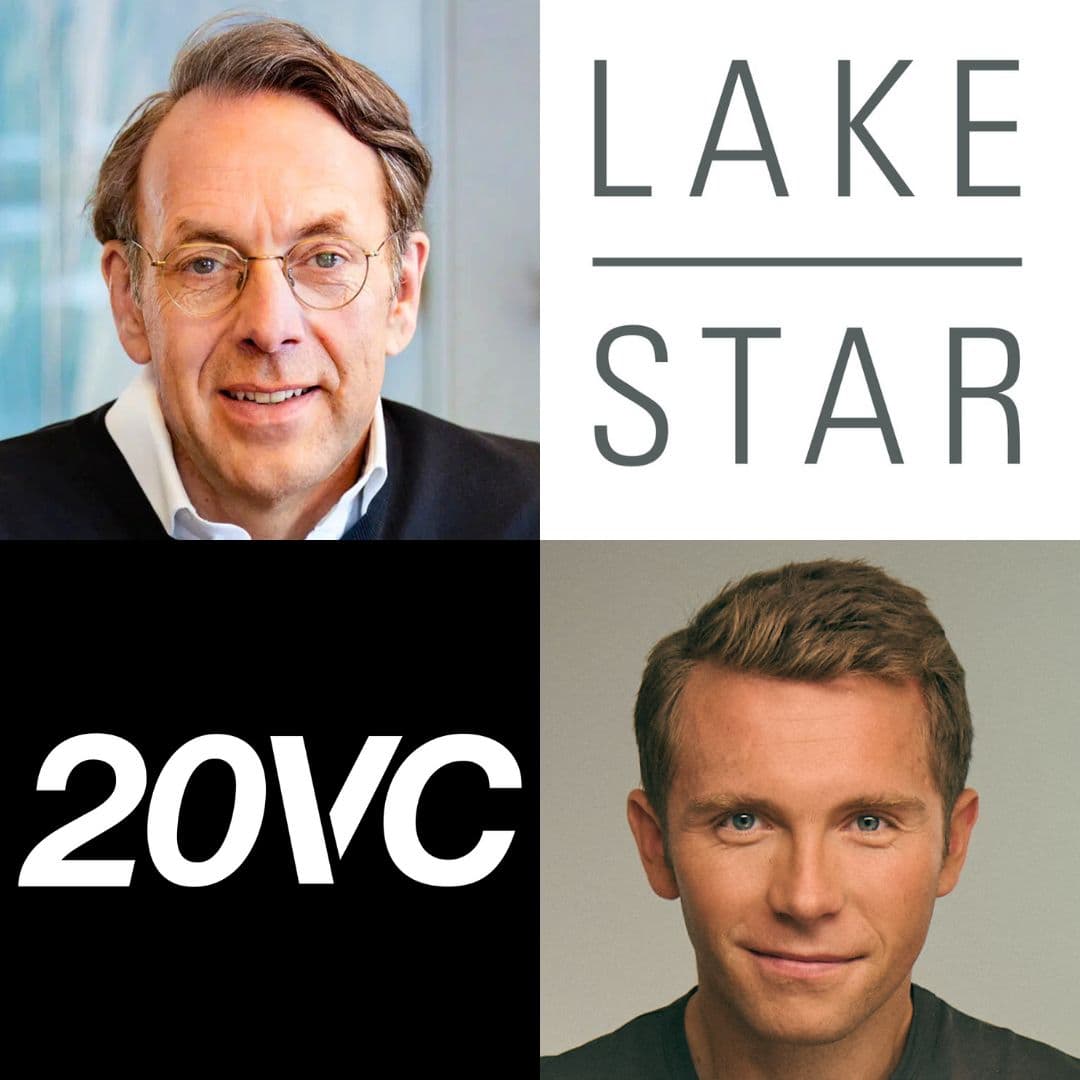
Klaus Hommels is one of Europe’s leading start investors of the last decade with a portfolio including the likes of Spotify, Airbnb, Facebook, Coinbase, Revolut and more. Among his many responsibilities, Klaus is the Founder of Lakestar, his own venture fund and chairs the board of directors of the NATO Innovation Fund.
In Today’s Episode with Klaus Hommels We Discuss:
1. The Investing Rules that are BS:
-
Why does Klaus totally reject the idea of price sensitivity?
-
Why does Klaus hate the idea of “building portfolios”?
-
Why does Klaus believe the best investments are made when there is not a fundraising round in motion?
-
Why does Klaus believe that capital concentration limits on a per company basis are BS? How concentrated is Klaus happy to be?
2. Europe: What The F*** is Going On:
-
Why is Europe underfinancing innovation by a factor of eight?
-
Why is Europe unable to send satellites into space for six years?
-
What should Europe do to become a global superpower once again? What needs to change?
-
Why should European pension funds be forced to invest in venture capital?
3. The Stories Behind the $BN Returns:
-
How did a dinner with Klaus’ son lead to his investing in Revolut?
-
How did Klaus analysis of Friendster and MySpace lead to his buying Matt Cohler @ Benchmark’s Facebook shares?
-
How did a small investment in a Swedish company, Stardoll, lead to Klaus investing in the seed round of Spotify?
-
How did a conversation with Madonna’s manager lead to Klaus investing in Airbnb?