In short
Podcast Episode Summary: The Twenty Minute VC (20VC) - Episode with Mitchell Green
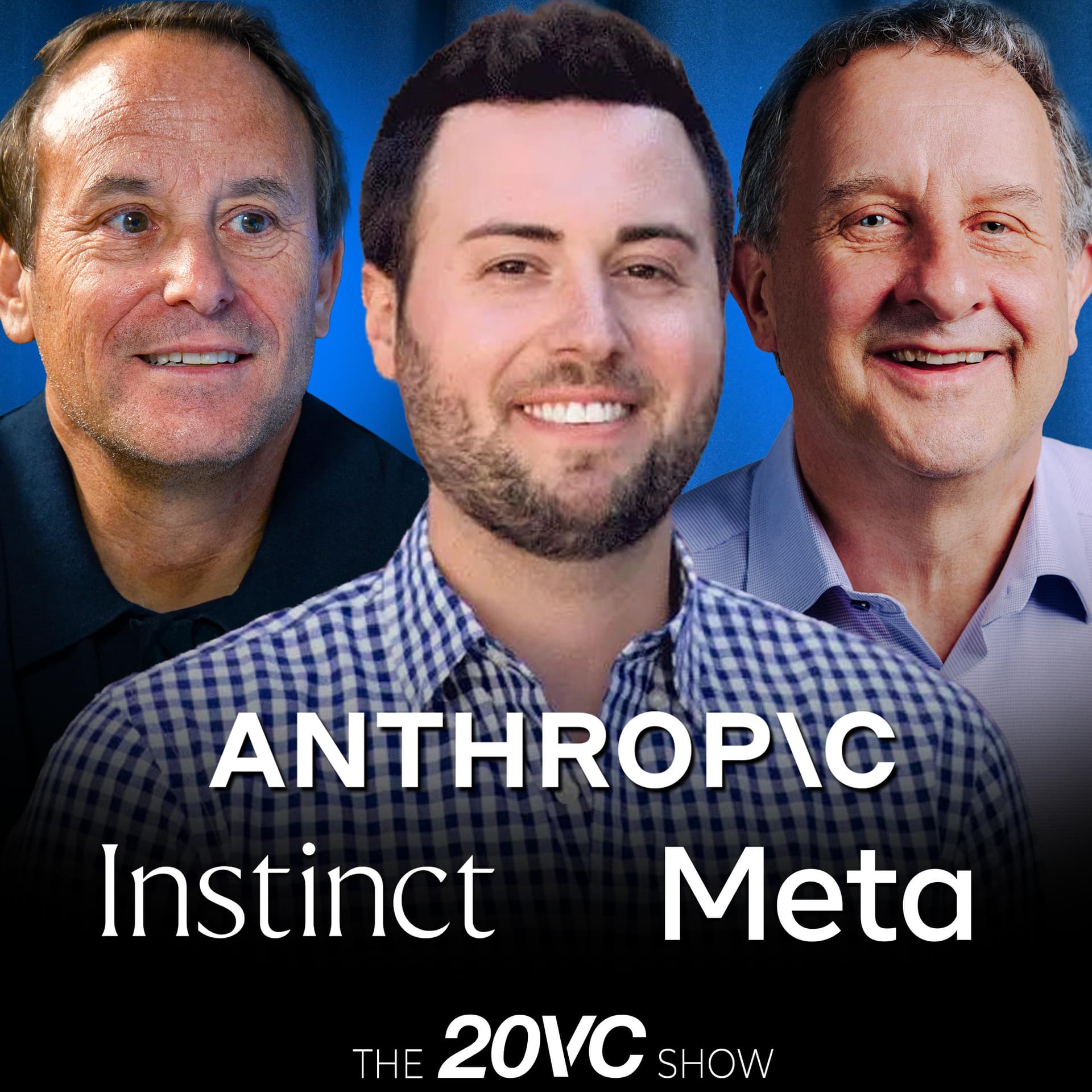
Podcast Title: The Twenty Minute VC (20VC) Episode Title: 20VC: Why Traditional VC is Broken: How VCs Learned Nothing from 2021 | Why LPs are More Important than Founders & Advice to Emerging Managers | Bull Case for Bytedance & Why TikTok's Ban Doesn't Matter Guest: Mitchell Green, Founder and Managing Partner of Lead Edge Capital Host: Harry Stebbings
Overview In this episode of The Twenty Minute VC, Harry Stebbings interviews Mitchell Green, a seasoned venture capitalist known for his critical analysis of the current venture capital landscape. Green shares insights on what he perceives as the failings of traditional VC models, the importance of Limited Partners (LPs), and strategic advice for emerging managers. He also discusses specific investment cases, including ByteDance, and reflects on the implications of AI in venture capital.
Key Topics Discussed
- Golden Rules of Investing (04:31)
- Green reflects on his time at Bessemer and the framework he developed that defines Lead Edge Capital's investment strategy.
- Challenges in AI Investment (06:48)
- Investing in AI infrastructure is seen as a risky venture reminiscent of investing in websites in the late 1990s. Green argues that established companies will likely continue to dominate.
- Single-Person Companies (08:51)
- Green humorously asserts that the concept of billion-dollar companies run by a single individual is unrealistic.
- SaaS Companies' Slow Growth (09:26)
- Discussion on the future of SaaS companies that are not yet profitable, revealing concerns for their survival amid slow growth rates.
- State of the IPO Market (16:12)
- Green argues that the IPO market is facing significant issues, particularly for companies that are not growing rapidly.
- Selling Strategy in VC (23:24)
- He emphasizes the importance of knowing when to sell investments and critiques a generation of VCs for mismanaging exits.
- Advice for Emerging Managers (27:37)
- Green provides insights on how emerging VCs can successfully navigate the industry, highlighting the importance of relationship-building with LPs.
- LPs vs. Founders (43:01)
- He posits that LPs hold more critical importance than founders in the current investment landscape, urging VCs to prioritize LP relationships.
- ByteDance and TikTok's Future (46:03)
- Green presents a bullish outlook on ByteDance, asserting that fears surrounding TikTok's potential ban are overblown.
- Perceptions of Chinese AI (51:30)
- Green discusses the underestimated capabilities of Chinese AI firms and their potential to lead in global innovation.
- The Dangers of Social Media (55:18)
- He raises alarms over the harmful effects of social media on younger generations and calls for increased regulation.
Key Takeaways
- Importance of Framework: Having a structured investment framework can significantly enhance decision-making.
- Market Realities: The current venture capital and public market environments are fraught with challenges, especially for companies lacking clear profitability and growth.
- LP Relationships: Building and maintaining strong relationships with LPs is essential for securing funding and driving successful exits.
- Critical Perspective on AI: Caution is warranted when investing in AI, given the industry's volatility and rapid changes.
- Social Impact: There is a significant societal risk posed by social media that needs to be addressed through regulatory measures.
Conclusion Mitchell Green's insights into the venture capital industry provide a thought-provoking examination of its current state and future directions. His candid approach and emphasis on practical investment strategies offer valuable lessons for both seasoned and emerging managers in the field.
For more information and resources, visit [The Twenty Minute VC website](http://www.20vc.com).
Written by AI. May contain mistakes. Listen to the episode to check what was said.
Transcript
Automatic transcript. May contain errors.0:00I think investing in AI infrastructure today is like investing in websites in 1997. The incumbents usually win. It's customer distribution. The idea of a single person AI company, I think is like, comical at best. I think the venture industry was about to be in for a rude awakening and then AI showed up. People didn't learn a damn thing from 2021. It's like shocking. This is 20VC with me Harry Steadings. Now honestly, I think there are very few truly great investors in Vansha's day. Honestly, I think much of the industry is a Ponzi scheme. One big firm upholds the numbers of another big firm, and they both hope that the music does not stop, and then there are real players who make money reliably for their partners.
0:43They do the work. They're most often in silence, which is why it's such a great joy when I can tell their story on the show. One of those individuals is Mitchell Green, co -founder of Leedech, one of the most direct no BS and brilliant investors and guess what, he makes a shit ton of money for his investors. This was such a joy to do and I think you will love it. But before we dive in today, here are two fun facts about our newest brand sponsor, Kajabi. First, their customers just crossed a collective 8 billion dollars in total revenue. Wow, second Kajabi's users keep 100 % of their earnings with the average Kajabi creator bringing in over $30 ,000 per year.
1:23In case you didn't know, Kajabi is the leading creator commerce platform, with an all -in -one suite of tools, including websites, email marketing, digital products, payment processing, and analytics, for as low as $69 per month. Whether you are looking to build a private community, write a paid newsletter, or launch a course, Kajabi is the only platform that will enable you to build and grow your online business without taking a cut of your revenue. 20 VC listeners can try Kajabi for free for 30 days by going to kajabi .com -4 -2 -0 -V -C. That's kajabi .com -k -a -j -a -b -i .com -4 -2 -0 -V -C.
2:01Once you've built your creator empire with Kajabi, take your insights and decision making to the next level. With AlphaSense, the ultimate platform for uncovering trusted research and expert as an investor I'm always on the lookout for tools that really transform how I work. Tools that don't just save time but fundamentally change how I uncover insights. That's exactly what AlphaSense does. With the acquisition of Tegas, AlphaSense is now the ultimate research platform built for professionals who need insights they can trust fast. I've used Tegas before for company deep dives right here on the podcast.
2:34It's been an incredible resource for expert insights, but now with AlphaSense, leading the way, it combines those insights with premium content, top broker research, and cutting edge generative AI. The result? A platform that works like a supercharged junior analyst delivering trusted insights and analysis on demand. AlphaSense has completely reimagined fundamental research, helping you uncover opportunities. From perspectives you didn't even know how they existed, it's faster, it's smarter, and it's built to give you the edge in every decision you make. 20 VC listeners don't miss your chance to try AlphaSense for free.
3:08Visit AlphaSense .com -4 -2 -0 to unlock your trial. That's AlphaSense .com -4 -2 -0. And speaking of incredible products, when you're building a business you're going to encounter obstacles. Your banking doesn't have to be one of them though. Just talk to a founder who uses Mercury like Sanpei Omichi, the founder of Alice .com, A modern immigration law firm helping startups and their employees immigrate to the US and there are 20 VC portfolio companies. And Sanpei says, using Mercury was a no brainer for me when I started my company. I was able to get an account open immediately and using Treasury and the checking account has been a breeze.
3:46So you need to visit mercury .com to see why founders like Sanpei use Mercury to help them hit the ground running, make the most of their money and see all their business moves in one place. Mercury is a financial technology company, not a bank. Banking services provided by Choice Financial Group, column NA and evolved bank and trust members of the FDIC. The provider of this testimonial was not compensated and is a client of Mercury Advisory LLC. You have now arrived at your destination. Mitchell, I'm so excited for this. When Nigel Morris messages me and says, Hey, you've got to spend time with my friend, Mitch Lamley, you know what?
4:22This is going to be a fun one. So thank you so much for joining me. Absolutely, thanks for having me. Nigel's a legend, so. He is a legend. Always makes people very lazy though. So athletic. He's also the hardest working man and I joke to him the first time I met him. I'm like, well, how's retirement? And then he showed me his outlook calendar. And I'm like, I think you work more now than you did when you ran Capitol One. But in by the way, never go on a bicycle ride with him. I would never. You can do it. Before we dive into lead edge, there was Tiger and there was Basima before. Yeah. When you think about your takeaways from those experiences that shaped how you operate and run lead edge today.
4:55What are the one or two that really shape how you think about lead edge? What I would tell you is my time at Bessamer was very formative for why everything we do here at lead edge. When I joined Bessamer 2005, Bessamer is this legendary early stage venture fund that is very shark tank -esque. And what I mean by that is every year, you know, a thousand archpreneurs was walking the door and at the time they had five partners and it was very like shark tank ask. They were wondering why insight was finding these 15 million dollar revenue companies growing fast that had never raised money and they were like personal friends with the guys that ran, you know, Jeff and Devon and the guys at insight.
5:37And all that insight was doing was replicating what summit and T .A. did, which was higher 22 to 24 year old knuckleheads, which my now partner Brian and I were and pound the phones calling companies all day long. You realize that the company calls you back, the company sucks. It's the CEO you talk to every two days for a month. And you know how you know what a good company is. Over two years, talk to 10 ,000 bad companies. When we got there, a week into the job, they're like, okay, next Monday, you're going to come and present your best companies. We got there and we're like, oh, we found this great company.
6:05It's two million revenue. It's going to be the next Google. They're like, no, it's not this company sucks. Find this company's that meet like 10 million of revenue. And then the next week, you'd find a company that means 12 million of revenue that grows 10 % of the year. and they're like, no, findest companies that grow for them is like 50 % a year. And then you find a company, but it has 20 million revenue, grows 40 % a year, what you know has 30 % gross margins. And they're like, no, no, findest businesses with like 70 % gross margins. And they over like a period of a six week time, eight week time, built these like five criteria.
6:35And they basically said, on Mondays, when we do our pipeline meetings, we want you to never bring a company that meets less than three criteria. If it meets five, I'd be better already have the meeting set up, the next meeting, and start the pipeline meeting with. I spoke to company ABC. It meets X number of criteria. Here's what it does. And so it just looks like it was a very rigid framework. In a world where like you can call companies all day long and it's like an unlimited universe, like stay like very rigid. And so when we took that framework, we expanded it to six. Now it's the lead edge eight, and it defines everything we do.
7:09I love that in terms of how it defines everything you do. And I love the framework structure. I had an appeal on from Spark recently and he said that bluntly this form of spreadsheet investing respectfully And I hope you don't mind me calling it spreadsheet investment. Totally fine. Okay. He's outdated in a world of AI and in the next generation And that kind of bank -a -letter approach will not work in the next generation Is that fair and how do you think about that? Look we speak to 10 ,000 companies a year We have a team of 20 22 to 24 year olds that are speaking to 10 ,000 up with here If I say I need to meet all eight of these criteria, it's about a 1 % yield, which is, you know, 10 ,000 companies, 100 meet all eight criteria, and to do five to seven deals a year, that's like too small of a pond efficient.
7:55We wouldn't end up doing anything. So what we find is if you say, I need to meet five or more of these criteria. It's just objective. Like you're 23 years old, was the company 4 million revenue or 18 million revenue. You find about 10%. And this is after chicken to probably 70 ,000 companies over the last decade. So what a 10 % yield you get five or more criteria. We do diligence, so that's gets you 10 ,000 to 1 ,000. You do diligence on 150, you do 175 of them. How do you go from 1 ,000 to 150 to 1 ,75? Most start looking to do anything. You're calling them, they're not calling you. By the way, the good ones don't call you back.
8:28The good ones you call every two days for a month. That 150 to 1 ,75 leads you to do five to seven deals a year. In terms of the AI response, we find the companies 70 % of what the stuff we invest in, the guys at Spark have never looked at, they've never heard of, because they're investing mainly in the coasts. Less than 10 % of our companies are in the Bay Area. Not because we don't like Bay Area entrepreneurs, we love Bay Area entrepreneurs. They can build some of the biggest companies in the planet Earth. I just think it's very hard to make money at 100 times revenues. Invest in. And also, if you look at our companies, less than 10 % are in the Bay Area, 70 % of the time were the first institutional investor.
9:05Now, AI and just shut up all this stuff. So deep seek was announced, which I find quite funny that a lot of people that invest in the infrastructure of AI didn't even know about it. I think investing in AI infrastructure today is like investing in websites in 1997. You and I could have taken $50 million, bought some microsystem servers and built a website. Today, for 10 pounds a month, we can build a website that's 50 times better than that. Same thing's going to happen. The prices are going to plummet. But the stock market actually acted pretty rationally that day. What happened? Nvidia stock fell.
9:37The software stocks went up. So, what did I mention that? We're investors in a company in Toronto that we own the business called Gravity. We're world's most boring company. It makes budget planning software for small local governments. If you are the water district of Atherton, if you are the Palo Alto Police, department. You need to post a budget online. It helps you plan the budget, post it online. But hopefully around a 10 million dollar business grows very nicely, had never raised capital. Before we came in, I had never had a salesperson. We came in, brought on a new CEO, brought on a CRO partnered with a guy who had built a 200 million dollar GovTech business.
10:13My point is here on the AI stuff. They have 10 software engineers. They can use companies like Cursor, CoPilot, to help their 10 engineers become like 30 or 40 engineers. And you're gonna see this at Salesforce. You're gonna see this at Workday. The incumbents usually win. Since the iPhone came out in 2007, 2000s, whatever, six, whatever it was, there's only been three companies built that did not exist before, that were 100 billion dollar companies. Bite dance, Pindo Doe, and Uber. Who won? Facebook, Google, Microsoft. Like, incumbents who wins. It's customer distribution. The idea of a single person, AI company, I think is like comical at best.
10:51Which is why I'm part like because everyone is saying, hey, we're gonna have billion dollar companies with one person. It's like these software companies are not like, as you know, you run an awesome venture fund. Like a lot of the software stuff isn't that, it's not like that company. This is not like rocket science tech that people are solving. It's sales, it's distribution. It's GTM, it's regulation, it's cool. It's going to work, it's difficult. It's not kind of stuff. If I had a dollar for every time somebody had said to me, like, oh, Microsoft's is going to do this. I would have never invested in any software companies and nor would anybody else have.
11:20But the great thing is, is it's like, people ask us to, like, well, you must run out of companies to call. Every Monday morning, new companies come in that we've never heard of. This is like software. I mean, when Josh Christianer said it 10 years ago, that software was hitting the world. I was like, oh, I just kind of, like, this sounds crazy. But he's right. Like, it's changing every sector and every industry. And I believe, if I when you look at technological trends over the last 50 years, people always overestimate it over the near term, and they always underestimate it in the long term. AI is gonna do completely revolutionized the world over the next 10 to 20 years, but it's not gonna be because we created a new call center software company.
11:59There's gonna be some type of company that AI is enabling that nobody else could do something before and that changes it, and it's gonna be guys like you, our benchmark, our Sequoia, that find that thing at the very early stage, and my guess is it is not just some infrastructure so it's not for a company that like the world knows about it now. I completely agree with you. I just want to take it in time because you mentioned gravity in this company. It's like 10 million error. I'm just intrigued because it's a very different world to one I actually have at all. I see a measure. What does that deal look like in terms of price?
12:28I think we bought the business for like 50 million dollars or something like that. We own the company. We bought the business for 50 million dollars. And by the way, it grows like 50, 60 % a year. Now by the way, it will never be an IPO. In a million years it will never be an IPO. We want to build a business So give example we just sold the company. It was a company called safe send that makes it's like a verticalized version of DocuSign for tax returns. There's a bunch of reasons DocuSign is not very good at it It also was like the tax organized that people get that like you know Did you get married this year?
12:57Did you have kids? Did you move and all the sort of things when we invested when we bought we bought about 60 % of the company in 2021. My partner Neha made the deal and my partner Brian. That business, we met through coal calling. It was based in Ann Arbor, Michigan. It was a bootstrap business that had never raised capital. It had been around for six or seven years. And it was COVID enabled. And what do I mean by that? It turns out before COVID, a bunch of people like used to literally go to their accountants office and like sign their tax returns. It sounds totally insane. but after COVID, like you couldn't do it during COVID, you couldn't do that.
13:31So it was all electronic. But then it turns out it stayed COVID enabled. Unlike a virtual events company, like a hop in where like people during COVID couldn't go to events, they went to virtual events. It turns out that people like to go to Vegas and drink beer and get away from their husbands and wives and children. And so like everything went back to Vegas and these events. You'd never have gotten a doctor sign and said, oh, I'm sorry, please send me a paper copy. It's like the reverse. So this thing was cool. So we invested in that business. It was about 13 of ARR. It was growing about 50 -60 % a year.
14:03It was a control deal. So we were buying 60 % of the company and we bought 60 % for about 90 of equity and 20 of debt. So what is that? I don't know 130, 140 -mind evaluation. In three and a half years, we built the business to about 47 million of revenue, very nicely profitable, and we sold it to Thomson writers for a great return. That was a business that if you had read our investment memo. The word IPO would not have come up in the thing. We were like, listen, we'll grow it from 13, 14 million to 60, 70, 80 million and we'll sell it to a mid -market private equity fund because it's got 90 plus percent gross dollar retention or we'll sell it to a strategic.
14:40If that deal, so we pay, you know, I don't want 30, 140 for it, middle of 21, insanity, right? Had that deal been backed by benchmark, like Vissier or Fett Peter Fatt, no one of those guys backed at benchmark, doing a minority deal based in Silicon Valley, it would have been 500 million dollars. And so like, let's go find stuff. We don't have to play the same game. Let's go find the boring stuff that's not gonna be the next, there's zero percent chance it's the next snowflake. It's the next day to dog. Let's go find stuff that we can just build like, invest when they're 10 to 20 million dollar revenue for businesses and exit them when they're 60 to 80 million to our software businesses.
15:15The immediate response would be that yours aren't generational defining founders. 100 % like me, Fountain Vissier would be like, no, we have to backfounders who reshape categories. like true true visionary innovators. And here you're talking about a control deal where you're bringing in a team, which is amazing. But a very different scenario. That's totally fun. We have these eight criteria. Some of them are like generational companies. Late last year we were buying bite dance. We're paying five times earnings for it. It grows like 25 % to 30 % a year. It's just, do you meet the framework of what we do?
15:45We own a business called Exegrid. It was started in 2002. We own about a third of the company. It last raised money 15 years ago. We bought out Lehman Brothers. It's a 16570 million dollar revenue business that compete with HP and Dell and like storage devices. It's a 70 % gross margin business It did 26 million of EBITDA last year. We bought it for we bought our stake at a hundred and thirty million dollar valuation Great. I'm gonna build it into a 250 million dollar revenue business doing 70 of EBITDA and I'm gonna sell it for ten times even there and make four times that money. No, it is not generational game defining.
16:22What is tech investing making really good returns? So I am really worried, because we're seeing the shake out now. I'm getting old. You said, I think you said I was 32. I'm 28, just to clarify that. Not a meant to go from Spark. Oh, thank God. I was like, Jesus, I'm not that. But I'm really worried because we're seeing this generation of SaaS companies now that's raised a lot of money, but actually they're not profitable. Growth is in the mid teens now, yearly. Like this is in a 10 to 20 percent growth and revenues are 50 to 200 million. They are not big enough for people Living dead so Fundamental problem that happened we saw this when we were up as Mercokon companies back then you would basically Exit a company to an IPO or a strategic those were like the two options on how you could get out of a company And if the teacher didn't show up and if you got it's like 50 60 70 mile revenue that stopped growing Maybe people will then what the heck do I do?
17:14And in 2010, 2008 timeframe, mid -market private equity firms, like Nautic Partners, GTCR, Charles Bank, they would buy industrial companies, manufacturing companies, services companies, some bought consumer, some bought healthcare, none bought software. And that was just as like the Vista's, Tomas and Francisco's were like just starting to start. Fast forward today, now these big software private equity firms have gotten very big. And you also have mid -market private equity funds. where by the way, these portfolios, they still buy industrial companies, manufacturing companies, they're portfolios grow at like GDP plus two, right?
17:46So if I bring up a company grow on 15 % a year, that's like, that's like really fast for them. And now it's not 100%, but 50%, 60 % of these bid market private equity firms also buy software companies that they have a sleeve to do software. So now if you like look at all of our exits, a third of our exits have actually come to private equity. In those companies, by the way, I've got seven our portfolio, don't worry, we did some real stupid stuff in 2022, 2021, as everybody else did as well. You'll have companies that have 130 million revenue that have 18 % growth. They don't burn that much money, but they have 130 million dollars of cash.
18:27These companies effectively went public. In 2015, 17, when companies went public, they'd raise 100 to 300 million, okay, forget the ubers and Facebook's, it doesn't like that. But most companies raise 100 to three million bucks. In 2021, they would go raise 100 to 300 million dollars. These companies completed IPO's, you have to get them to, I mean, we've just drilled in a couple of our companies that we have this. It's like you have to get to rule a 40, because that's the only way you're getting out. A strategic snack and it just come and buy you, this company's never gonna go public. You need to get it to rule a 40 to sell it to a private equity fund.
18:59Like, and by the way, I'm sorry the last round was $3 billion. You're 120 million a revenue growing 18 % a year, if we can get it to rule of 40, you might be worth five times revenues. You can try to pivot and pivot all you want. There are so many VCs that just like to like waste their time on company boards. We do not understand it. We're just like, listen, yes, we have a preps and we would get our 1X. But if you told me today I could take a .7X just to get out of it, I would happily cut you. I would happily do it. There are hundreds of these companies out there. The problem with the IPO market, the IPO market is actually totally fine.
19:32If you look at IPO performance of companies, they've actually done pretty well versus opening day prices. Look at reddits, look at semi -zero things. The issue is the good companies, the kerfana labs, the data bricks, they have so much money, they have so much cash, they don't, they strives, they don't need to go public. And you know, you have this whole other sector company that can't go public. I'm going to make you and Jerry and Stamen, I do not think in five years the majority of companies that could go public will go public. Being public will be a unfortunate consequence of scale. And that's really bad for the venture capital industry and LPs.
20:04If we don't have a very developed or mature secondary market. Correct. That is very... Do you think guys like Don Valentin or Mike Moritz or John Doar, they would be like putting guns to these founders heads today and be like, you need to go public. Don't be afraid of the 27 year old HB at Harvard Business School analyst. You'll be fine. We actually think it makes companies better. I get all sides of the trade. How does it make them better? John Corston said the other day, listen, if you are a public company, or if you're a CEO, and you think that having an analyst at Goldman saying, oh, you need to improve your margins is gonna increase the discipline within your company, then you clearly do not have a great company.
20:43Look, there's two sides of it. Well, nobody says you, by the way, have to be a public company, Chanel, TetraPack, M -Way. There are big private companies, Coke industries. You do not have to be a public company, but I do think if you take venture capital money from people You should be very clear on look. I think the striped I don't know them But the striped I think very early on were saying like we don't want to be a public company So like if you invest in us just know that we very well that be public I think if you're very open and honest with the investors I think that's totally fine. There are two different ways of obviously the quarterly guide the quarterly cadence of public companies Is a little bit nonsensical nonsensical.
21:19However, I think if you go ask a lot of like Mark Banny off or like, and on the Google guys, did be in a public company, make them more disciplined, did it like make them like prioritize one thing over another thing, they probably would say like, but it was a necessary evil. They had investors that wanted liquidity that they needed to take it out. I do think like a company like Zoom with public because public companies they compete with or constantly like, well, zoom. It's a tiny business. Like, why do you want, you know, like, they use it as a negative where you can be like, okay, go look at our balance sheet.
21:51But like, I do think the quarterly cadence is a little bit ridiculous. But there are some companies also just don't care about the curves much about it. And their stocks are going to be more volatile. And like, we have no problem with companies that go public and want to have dual -class listed stock. I've got one in transfer wise over here. Do you think that private market investors, venture investors, are advantageously positioned because of asymmetric information and historical information to manage the book once it goes public. In other words, Israel, off in the Evergreen fund, the right structure, or do you think it should be handed over to LPs and they are as well positioned?
22:25I believe it depends what you tell your LPs your mandate is. I believe most private market investors are very good company pickers, but like good company and good investment are too very fundamentally different things because of valuation and when you're a public company, you can know, if you are an early -stage investor, when your company goes public, you should get off the board and sell the company. It's nice to expect that's what you've told most of your investors is that you do. You spend all your time picking small companies, growing up big companies, and then they go public, just get off and call today.
22:54Look, we are relentless in our focus of trying to make like two to five X and three to seven years. And when we do it, just like move on to the next company. Now again, our business is not, like the early -stage venture business is a lot of like trying trying to get 100 backers, but you're gonna have a bunch of zeros as a result. That's not our business. And we just feel like if you can cut the downside scenarios of the zeros, you can generate like really good returns. Like, look, people have always credited us with like very high like DPI's and it's just a relentless focus on selling. When I sell, I'll always either sell too early or too late.
Read the full transcript
23:30Have I regretted selling too early? Yes. I've never regret like too late like I think pigs get slaughtered at the end of the day. I'm so enjoying this So relentless focus on selling what have been your lessons from a relentless focus on selling and what does that really mean? We have a disposition committee at leadage and we meet like what is a disposition? Yeah, we look at the portfolio Well, what's an investment committee? Invest for committee is you you you sit and you know talk about Companies that you want to invest in you like analyze should I invest in this company? Well, a disposition committee is the exact same thing.
24:02Just in reverse, I'm already an investor in this company. How should we think about getting out of the company? Oh, there's a secondary. It can be find secondary. Is there an early investor that might want to buy more of our stake? Is there a crossover hedge fund that would want to buy our stake? Why might we want to sell? Because the company we think the market size could be too small. We've lost confidence in the management team. There could be a whole set of reasons. But it's like, we think there's a lot of really good funds that are really good at investing. We think there's a lot of people that are not very good at selling.
24:29But I might blame LPs for this just as much as GPs. The LPs have to hold the GPs accountable. One of my long -time LPs refers to some VCs as pigs at the trough. It's like, I ate the food. I like spent all the money. Give me more money to spend again. They shouldn't do the third or fourth time if you haven't given a lot of the money back from the first or second time. There's just a lot of people in this industry are very complacent. All of OSS as GPs needed to do a better job getting money back to LPs and figuring out how to do it. So you said there about disposition committee and then I wanted to talk about like ventures place in a money manager's book because it's gonna be too interesting.
25:10You said there about disposition committee. I'm often told that companies are bought, they're not sold. Do you agree and how do you reflect on that bought not sold as a sentiment? Look, I've had lots of returns generated by selling the companies, but putting them up for an auction and selling the companies. There are a lot of things a lot of companies don't do that they probably should do. It's very hard to get bought if your strategics don't know who you are. So we encourage all of our founders to get to know the biggest strategics in the space, get to know the private equity funds that could eventually buy you.
25:42By the way, if you think you're going to do 50 million of revenues this year from 30 to 40 and then beat the number. It's just building relationships and partnerships with people. I totally agree along the journey building that a marsuse to where it says lines not dots Yeah, we mentioned there about kind of duration you said like two to seven ice and three to five We're trying to make two to five x's in three to seven years Which it basically blends to a 20 % that aircraft okay totally makes sense the thing that I hear there is duration So I'm a money manager at a big endowment pension fund and I'm going huh with that duration if we compare that to now a 15 year what it will be duration for an early stage venture funds I can compound my money with you three times over almost yeah and get that say blended say three x Yeah, or I can go to a early stage venture fund which is now probably outsized in terms of actual size Fund and maybe get a three ice.
26:38I'm sure I've seen the data. There is not many three I'm sorry, but we know totally agree with you by the way We met some it we met some endowments like a couple years ago that said oh your lead edge, your fund returns aren't good enough, all your funds aren't 3X net funds. I only invest in 3X net funds and we've turned that we left the meeting and we said to ourselves, should we go ahead? That guy immediately. Should we hire him to run our money? Please tell me where all these 3X net funds are all run. It's a complete fallacy. And so my point is, if I can compound my money with you three times over and get that say 3X blended versus a hopeful 3X in a venture fund over a 15 year period, and this is my point, the duration is so long.
27:16How does Ventia earn its place in a log? I think it's very hard. I think there's too many Ventra funds. My advice to guys and Gals that go start Ventra funds, do you ever interviewed, or do you know, for Bruce Grindel? Yeah, of course I've interviewed him twice. I really like him. So for Bruce, I've been an LP of ours for 15 years. Those guys have figured out the game. It's like investing the C -D -A in a cell of funds in the BRC. That is a fantastic game to play. And you can make a ton of money doing it. And you generate DPI back to your investors. You still get to ride your winners. the 15 year duration thing is totally true.
27:50And it's actually shocking that the number of venture funds over the last five or seven years has actually increased given that the exits are getting longer, not shorter. What I believe like emerging managers and people starting venture funds need to do is take advantage of the secondary markets. And the fact that these growth funds have gotten so big or the crossover hedge funds that want to get or the public funds that want to get into private investing and start selling off stakes. Do the seed, do the A, and sell some in the BRC. You're not selling the whole position, just like start to return money back to people.
28:23I get you, but then I also think, oh, because I just had a GP on from Immersions, and he basically outlined the different fund returns they had, had they sold or not sold positions, and bluntly, they sold their sales force position at IPO, and had they not, they would have made another, I'm butchering it, but 20 to 30 billion in gains. That's basimus sold. That Shopify position at IPO lost billions. My point being that with your mention of February since something at the BC, sure, but aren't she, if Vansha's a power or game? That's true. So like I take it, but by the way, you gotta stay in business.
29:03And so I think the faster a venture fund can get to a, if you could get a venture fund that could get to a 1X faster than other funds, That fund could probably grow last. That's quite a bit. And I'm also talking towards emerging managers as well who like need to stay in business And you know need to raise funds two three four and you know are not people like best one that have been in business 80 years And by the way for every Shopify go ask them about you know 1999 in 2000 or like how many billions of dollars were lost in 2021 by not distributing positions. You said about the stupid stuff in 21 -22 we did obviously.
29:36Everybody did. What was your most stupid and what do you learn from it? Our stupidest mistakes were just like overpaying for a couple of companies. Assuming the exit multiple was going to be like higher than it actually is. You know, and I credit my partner, Neemay, you know, who's been with me since the beginning with really in like 2018 or 19. We really started to shift our business away from Silicon Valley based companies and needing to say every company, needed IPO. It was go find these gravities, go find this safe send. What caused that? Cause I guess you were a fun one student. It's like your Ali Barbos, your Spotify, your Uber's fantastic companies, but all venture.
30:15Yeah, yeah, yeah. It was caused by the fact that we looked around and said there's no possible way that every one of these companies can grow to be as big as they are. The law of compounding when you're investing over a billion or two billion hours of revenue, or sorry, a billion or two billion of valuation. It's just like harder. It's just like the law of large numbers. And we also just looked and were like, who's got money? Mid -market private equity funds. And there's hundreds of them. And we were like, none of these guys used to buy software companies. They're now starting to buy software companies.
30:44So now we have like a fertile ground. And if you think about a lot of these mid -market private equity funds, they're probably those growths 7 % a year, 6 % a year, top line revenue growth, industrial companies, manufacturing companies. Now they have sleeves to buy software companies. How wait a second? For us, we'll go buy a company that's 30 million revenue, 20 million revenue growing 40 % a year. Let's grow it, two to two to half, three X the revenues, and then it'll be growing like 15 % a year. That's like fast. And we can run an auction, we can sell the business, and we'll get 20 people that bid for it.
31:17So this is my point to actually, those companies growing mid teens with 50 to 100 million revenue. There is a nice info to them. Doris, they just need to pivot the business and realize they're not building the next data dogs and snowflakes, and they need to get them to rule a 40. And the most important thing getting to rule a 40 is high gross margins. If you have high gross margins and you have 90 % gross dollar attention, you can try to sell it when you're losing money break even. Or with some of these growth equity firms and venture funds should do is do it themselves. Like it's not that complicated.
31:46It's like, look, you have higher attention rates. You know, if you have low retention, like good luck, you know, if you have 70, 75, 80 % gross retention. It's much harder. But if you have a 90, 95 % gross dollar retention business, yeah, like make the hard decisions, get the thing to profitable, turn it into rule of 40. So you said, hey, one of the mistakes was we paid up for things a little bit too much. How do you determine between a stretch on price and a mistake that we stretched too far? We build a five year model. The model's wrong. We try to put a reasonable exit multiple on it. It's not valuable to do.
32:18And what I mean by that respectfully is like exit multiples vary so much over different durations. If we look back at 2021 -22, the multiple would have been so much higher versus today so much lower. I don't know where I'm going to be. I think you need to use like some reasonable revenue multiples of software companies or just shorthand free, but not. Like it's not at the end of the day. I think you should assume, if you build a software company and you're in it, you know, and it's growing, you should assume an exit of, it's growing 15 to 25, 15 to 30 % a year, and that should trade somewhere between four to seven sometimes revenues.
32:52We tend to our bands that we tend to assume most exits are four to eight times revenues. Maybe sometimes 10 times at the absolute highest, if it's growing 30, 40 % a year. By the way, I credit the guys at Iconic a huge amount. Look, they were underwriting deals in 15, 16, 17. I think they thought they'd exit stuff 10 to 12 times revenues. So they bought the best assets and maybe paid 20 % higher to get access to the the best assets and then multiples went to like 20 to 30 times. The best way, by the way, to four extra money is two extra revenue and two extra multiple. By the way, the reverse happens too.
33:29So that's what's happening to all the stuff in 2021 vintage funds. Multiple's got cut in half for people. And so if you two extra revenues and half your multiple, that's called a one X. What is the stupid stuff that we are doing today that not many people are talking about? Saying 100 times revenues for companies, we don't want we like to ask ourselves when we look at businesses. if I invest today and I grow it for 18 months. And I assume like, it's still growing fast. Am I like kind of in the money? Or do I need to grow for four or five years until I even get in the money? Like if you, I think in toast, for instance, it was like when we invested in 15, 16, time, is 17 time plan, it was like 25 revenue, growing 250 % a year.
34:08That would be a billion dollar plus valuation today. We paid 20 times revenues. It was like 500 million dollar valuation. We're like, that's pretty expensive. And we think about, we're like, okay, in a year from now, we're ended at like 10 times. Okay, like for that growth rate, that's like saying it's pretty reasonable. Like I think I encourage people to ask like, okay, I paid this price today in 12 months. Am I in it still at like 80 times revenues or 50 times revenues? The price is being paid or totally insane. I also think I'm not enough investors. I've had numerous entrepreneurs tell me, oh, I don't look at gross dollar retention nets that only think that matters.
34:42And it's like, oh really? That's like a I think more investors need to focus on like gross dollar retention. Why so? Okay, if you've got a business that ends at the end of 2024 at 10 million of revenue It I've and I've got 200 % gross dollar retention So like okay my 10 became 20 all through existing customers But you only have 50 % gross dollar retention you actually lost half your customers And you had yes, you had a few that really liked it but that means a huge amount of, like, experimental. When you're a really small company, a difference between 90 % grossed our attention and 50 % isn't that much because it's not that much of the pond to fill up, the bucket to fill up.
35:18But when you get to like 100, 200, 300 million revenue, it's a huge hole in the bottom of the bucket, which just then leads to, you know, sales market efficiency. It's just awful, and your burn rates are much higher. Not enough people, and like we look at a lot of these AI software companies, and like the gross dollar retention rates are just like really, really low. It's actually like shocking. Pretty much ruled with them all. Not every one of them. Like, not everyone. Lovable's got 85%, which is pretty good. It's better than chat, GPT. But again, it's not 90 growth. But like, we have a business in our portfolio.
35:52But like, it will not change the world. It makes cardiac monitoring software. It is a very small market. It has 99 % growth dollar attention. It just means that you can run the business very capital efficiently over time, Because you don't have to keep spending money and more and more sales and marketing. How do you think about that? Capital efficiency and future dilution element when investing. As we said earlier, Uber and your Alibaba, these are incredibly cash -consumptive businesses. And now, you fund businesses which are incredibly cash -efficient, lean machines. Yeah. So Alibaba was very cash -efficient.
36:26Actually, when we invested, it was a billion dollars a profit. Actually, there may be less shares of Alibaba. I credit Josiah and the team that I love is actually like done the amount of stock based comp dilution for a lot of public companies is totally crazy. Most people including ourselves over the last 15 years massively underestimated the amount of stock based comp dilution and dilution that we all took. You know, Uber was was was totally insane. We tend to over the last few years we've dramatically increased the amount of like dilute. We assume 20 30 % dilution and if you're I'm guessing earlier, it could be a lot more than that.
37:00We have this, like, what we call cap efficiency, it's like, you know, Warren Buffett would laugh at us because it sounds kind of stupid, but it works. Are your revenues today greater than your historical cash burn, humanively? Not raised. If you've raised 80, but only burned 20, and you have a 40 million dollar revenue business, like that's a great, that's a great business. But we're looking for like a one -to -one ratio or better. We just think it speaks to so many, just quality, qualities of the business. like we were lucky to be investors in Benchland. We're still investors. When we invested, Benchmark did that early round, and Thrive was an early investor.
37:36When we was like 13 of ARR growing, in Walnut, about 100 % a year, that must have been expensive. Yeah, it was expensive. It was like, I want to say in the low threes, it was expensive. However, the company had only burned like 10 million dollars. It had burned very little capital. And why? Because it had like amazing gross dollar retention rates. in the CEO was just like he thought a lot about, I know when it got to 20 million, it had not burned 20 to get there. They just value the value of a dollar. You now have a lot of entrepreneurs that just like to light my empire. By the way, I'm not saying some of them will build amazing businesses.
38:11By the way, we have definitely missed businesses that were not capificient. It's just like it wasn't for us. What business most sticks out to you with that in mind? That we missed, it's not like massive. I mean, when we looked at stuff like it had like horrible gross margins. But again, it was like, we looked at it at $500 million hours and like we were completely wrong. Like just like a hundred percent wrong. How many businesses actually though have that perfect profile that fits yours? When you look at as we said, your ubers, your door dashes, door dashes. We looked at it in past. So like it's fine.
38:41Again, we're going to miss stuff. It's fine. But again, we have a framework. A hundred out of 10 ,000 companies will be at all eight criteria. Now a lot of those hundreds evaluations would be totally insane if you can even get in or even want to take money. Out of 10 ,000 companies, 10 % will meet 5 in more criteria. Now with respect, we live in such an interesting asset class because it is one where the supply chooses the demand. In other words, the company chooses the source of capital in a lot of cases. My question to you then is, okay, we find one that meets all the criteria. They then have to choose you.
39:13If they meet all the criteria, they probably have a lot of options with absolute respect that, Mitchell, you're not a romantic around company creation in the way that a lot of Silicon Valley VCs are or the way other MSL. Defounders resonate with the kind of financial. Founders want, so our pitch is very simple. It's the reason that, you know, a huge number of our founders have invested in our funds post -exit. The founder of duo responded and then DM me after I tweeted about having you on, being like, amazing, amazing now I'm an LP, it's even more amazing. It was cool to see. It feels like what do we do?
39:50Why is that? When we started lead edge, my partner Neem and I is Brian hadn't even joined yet. That around, we're like, I said we had take our two knuckleheads money, like why are they gonna take our money? And we were like, well, if I had been the global head of HR Pepsi and Neem, you had been the global head of HR at Microsoft or Dell, pick a company, we could probably cold call HR software companies to be like, hey, let us invest in your business and we'll introduce you to a bunch of like global HR execs. And that'd be like pretty, probably pretty believable, right? We don't have that. We had never been the global head of HR of anything.
40:21Or we had never done anything, except like cold coin analysts. So we thought like, well, how are we gonna get in the companies? And we thought, what's make our competitive advantage be our LPs? So let's raise money from world class execs and entrepreneurs. And so like if you look on our website, 80, 90 % of our LPs get permission to be listed on our website. And these are people who run and have built some of the world's largest companies. These are people at the former CEO of Trolish Wild, the former CEO of Kimberly Clark, the former CEO Colgate -Pomolive. And we go to companies and say the following, if you invest with us, we'll give you access to our LPs who have built, run and advised some of the world's largest companies.
40:58So, hey, you are a software company that sells into the farm of biospace. You sell R &D software. Well, hey, would you want to meet the former CEO, Pfizer? Would you want to meet the former CEO, BioGen? And we both, we introduce them during our diligence process. They act as our own version of McKinsey. That's how we get an idea. And that's why people like us. That is a model though now that's used by a lot. I have, I don't know, $65 billion founders and orphans that less kind of traditional company, much more software -led founders. And I use that as a weapon, so to speak, to win. But I would say founders are like, yeah, that's great.
41:34But by the way, Indice, have that too. And definitely, so go ahead to. and all the great firms have this kind of armory or kind of weaponry of great, great entrepreneurs who are master with them. To what extent is that differentiated? A lot of ours are entrepreneurs. They're executives at like plain, boring, vanilla, non -software companies. We just constant leverage them. We can track introductions. We track every intro. Everybody says they help. They're very good for people to do. I think there's a reason that like 80 plus portfolio company exact, former, former and current portfolio company execs.
42:07who we've backed our investors and our funds. So like, I don't know. Everybody says they help. We just do what we say we are going to do. It's just not that hard. Dude, I love it. You said about tracking intros that you had a very viral tweet. And I can't remember who did it. I think it was, um, Pit Dessie, Shill Mournus who kind of tweeted your like criteria around how companies do reporting. Yeah, hierarchy of bullshit. Yeah, I was like, I was like, yeah, but we're going to Haseo's ideas. But one of the ones where when funds like, you know, are fudging numbers, they track intros, I thought, What so like what we are?
42:39We believe so like we can give there's a reason that Doug song who sold this company for two and a half billion dollars Put money with this fund because we drove tons of intros There's a reason that these season some of the biggest venture funds on the planet are long -time investors with us They've seen that some action do it. I don't know why more funds like say they have these incredible networks Don't help people more like I have no idea why I have a feeling a lot of funds scale It's okay. And also a lot of people were just like a lot. So a lot of our LPs are execs who are plus or minus five years away from retirement.
43:12They've been retired for the last five years or there about to return to the X5 to 10 years. And they want to help. Like a huge amount of LPs are not from Silicon Valley. And so we find them a company and we get them involved early on in the process. It's how we do diligence. And so if like you are a payments company, like we invested in transfer wise over here, We very early on and before we invested said like listen, we do want to talk to the former CFL of PayPal Would you want to talk to you know the former president of east side and any good entrepreneurs gonna be like Yeah, that sounds like interesting people and then we called them and ask them hey, what'd you think?
43:47How do you manage that from an infrastructure perspective because that sounds amazing, but it's difficult to work Yeah, it's difficult to do this so look every intro we make I wish I could tell you that it's automatically locked know, we BCC and assistant and it gets logged in Salesforce. It's a highly customized version of Salesforce that, you know, we've built, spent millions of dollars on customizing over the last 15 years. Do you know what heads of network and net what manages and community managers? Put it up. What we have is every person, if you've worked at lead edge, if you work at lead edge, like every person on the investment team has access to all the LPs.
44:21And by the way, to be clear, if you're an associate who's worked here for two years and you're going to Seattle for a wedding and you say, hey, I want to stay on Monday. It would be like, wonderful. You should meet like these four LPs. We'll pay for your plan to get. We encourage everybody that works at the firm to get to know our LPs, spend time with them, educate them on what's going on in the portfolio. Versus if I was like a vice president, I'll pick on index, pick any from on the planet. If I was a vice president, it indexed and I was flying to Seattle to meet a company, I would go meet the company, I'd go meet maybe another prospect company and then I'd fly home.
44:54I wouldn't be spending six hours meeting four other individuals and like who are LPs and who are LPs and index It's not their model It's like these funds are primarily backed by the largest endowments and pension funds in the world that our model is like We're gonna be 95 % backed by individuals and we're gonna treat those individuals like gold Quite a lot of VCs today say that founders are our customers LPs are not our customers. I would tell you that we have two customers founders but more importantly, LPs, because if you do not have LPs, you do not have a business. I 100 % agree. I think it's really arrogant to suggest they are not your customer.
45:35I think it's two customers, as you said, founders and LPs, but I'm astonished by this unwillingness to recognize some of the customers that we have to provide a great product for. So like, we run our business, trying to figure out how do we have 97 %... How do we keep up? 97 % gross dollar retention, not net. that gross with LPs. If you think that, what do you do? So we communicate with them. We do lots of events with them. We do quarterly calls. We walk people through the portfolio. We tell people how things are doing. Look, some companies are gonna be doing well one quarter. Some companies are gonna be doing bad with quarter.
46:07But again, when you grow 30 % a quarter on average, like some are gonna be doing well, some are gonna be doing bad. But just like the lack of transparency in this industry to LPs is shocking. To what extent do you think your re -operators is determined by your engagement community, communication versus performance. Both. By the way, without good performance, you can have none of it, but I can tell you that people, here's the thing though, people want the nice guy, the good guy, the person who communicates to win. So like if you have a bad vintage or two bad vintage funds, they're more likely, I think to stay with you.
46:44100 % and that line's not dollars again. You said that they weren't come back without the poolmans. Brong. They do come. They do. We've seen there are, they're, they're are not going to like talk about. There is a very well known, very large private equity fund that historically would raise their, it's not in software. It would raise their funds and literally be like, to LPs, you have three weeks to get your docks in. Take it or leave it. These are the terms. We're not changing anything. They then add a bad fund vintage. They've been in the market for three and a half years. The fund they just closed is like a fraction of the size of their fund before.
47:14And it's the, I asked them LPs, what's the problem? He's like, you know, exactly the problem is they're jerks. You're LPs. They give you the money, like, they're paying you. Like, it's, I don't know. I get you, but we've seen a lot of fund returns or performance numbers leaked in recent months. I'm not gonna name the funds, because I don't want to be letting them out. And their numbers have been poor mid teens, IRRs, at best, for early stage funds. And they have scaled AUM and had a excess supply My of LP cash is performance even relevant. That's my LP's are to blame for a lot of this. I have many LPs come in this office and say, hey Harry, I have 500 million a year, where do I go?
47:56And I say, well, we go to these two ones, but you can only get 20 in each. And so there's a hundred and then they have 400 left. And they go, so I see I've got to put 75 in X multi stage farm. And I'll just have to, it's my budget. The smartest ones I find are actually, like, And listen, if the opportunity is not there, let's go figure out where else to put it. Like it's not like I have to put a billion dollars in venture here. Maybe a billion dollars in venture is too big. I should be doing smaller. I think there's a guy, Eric C. Bush at Mercer, who runs research there, who took a bet on us very early on.
48:30Before fun three, people would laugh at it. Actually, our first institution investor in fun two is University of Virginia. And like we literally started the meeting with like you're not going to invest to us. Like why would you invest with us? knuckleheads, like, you know, we don't have a brand, we have nothing. And a lot of the investment consultants are very brand name focused. It's like, again, you don't get fired higher than IBM, higher than McKinsey. I credit this guy, Eric Siebush, who's like taking a flyer on us very early, and he's done it with a bunch of other young managers. This is all about the people.
48:59And he like digs into, okay, I mean, you're fun three. Why'd you exit these things in fun one? How'd you think about it? How do you think about returns? How do you think about treating LPs? Talks to a bunch of like portfolio companies. Like how do you actually add value? We tell LPs. Everybody tells you they help companies. Wonderful. Let me go introduce you to 10 companies in our portfolio, talk as many as people as you want, and ask them if we add value. But respectfully, when you look at someone like Andrewsson, they have proven brand is more important than performance at scale. Well, let's see over the next 20 years.
49:28Let's see over the next decade what happens. But you're right. Well, anyway, they're far richer than I am. Does that make you change your perspective on the importance of brand? Or you just go fuck that. We stand a lane and we do that. We stand our lane, so I have a huge amount of respect. There's this amazing, sorry, I mean, this so nice. Is your ego a little bit hurt because your performance is here? Nope, nope. But I respect the firm. Probably one of the best returning funds in like the tech investments. There's a couple of them. One of them is Spectrum Equity, incredible investors. They've kept two to two and a half billion out of funds forever.
50:01By the way, benchmark, funds are smaller. Now, benchmark is like, it's a curve all benchmark. Mark is it's like head Gen 1, Gen 2, now you have Gen 3, and they still continue to put up really good numbers. They've kept it small. Josh Coppelman at first round is continuing to stay small. Mike and Ann at floodgate have continued to stay small. But like the firm that I think is generated the best returns in the tech investing world of the last 30, 40 years, and it's become more of a buy -out fund. But they used to do tons of minority as TA associates. And they've looked at Scott and Gigantic, huge funds, put the DPI's that they put up are just like incredible.
50:34But what do you think they do that makes them so good? They're relentless and thinking about how to get liquidity to LPs. So a lot of stuff they do in the buyout world now is like they'll do minority sales. They'll invest in a company two years later, sell 30 % of the company to somebody else, get their break back. So they sit not already on one X. They're just like relentless focus on liquidity. I think some of these giant platform funds, the endreesons of the world, there's just so many people at these firms. I have no interest in having like hundreds of employees. We have 80 employees and that's plenty.
51:05Do you think Venture, Doug Leone said on the show to me, that we've moved from a boutique high margin community to a commoditized low margin industry? 100 % agree with him. Do you think that is irreversible? Is the platformization now Venture? It is matured to this asset cost. Because the hard thing also for me is the cost of capital is so different. So I lost a deal recently to one of these large masters. I did three on 15, handshake was the founder. It was pre -product, pre -revenue pre -evidently, but an amazing founder. And he called me up and that's saying he said I would never walk out on a handshake, but I got offered 8 on 100 and it's uncapped.
51:40Yeah, like these bad returns will do it over time, but it's gonna take a long time. I think the venture industry was about to be in for a rude awakening and then AI showed up. I always say AI was the oxycontin that we need it. Yes, I think that's it for a lot of these entrepreneurs. I think that's true. Again, I love to talk to people that have been in this industry longer than I've been alive. this what's going on in AI looks very similar to the internet bubble and it's like people didn't learn a Damn thing from 20 and 21. It's like shocking Let's not even talk crypto because that's the whole another world.
52:12What should we have learned entry price matters a lot Don't over capitalize companies bingo. Yeah entry price matters Don't over capitalize companies the amount of stock dilution really really matters if you run a fund where you need IPOs, you better invest in founders that want IPOs or companies, or have a good plan how you're gonna get a lot of secondary out of it. It's entry place matters. Entry place matters, a ton. These companies are not all snowflake in Facebook's. Like they're not. The vast majority of companies, I put on one hand, the amount of people that are capable of backing companies like Googles and Facebook's of the world and doing it more than once.
52:49It's a really, really, really small group of people. It sure is heck isn't me. It's like the Doug Leonies of the world. And there's not many of them. I love Doug. Oh, it's just like, we need more Doug Leonies and Don Valentine's and people that are just like, and LP is that are like very direct and outspoken. People like Peter Dolan at McKenna used to be at Harvard and like, if you would have, we have hundreds of thousands of listeners and several thousand LP's. If you'd advise something on investing managers today, it can be anything. What would you say? I believe a great question that people don't ask.
53:22They should ask any manager who was around 10 plus years. Hey, in September of 21, September 30th of 21, how much unlocked stock did you have in your portfolio? Let's say September, I was like the high play of the insanity in the last, you know, Duck Run Up. How much unlocked public stock did you have in your portfolio? And the next question is, why didn't you distribute it to your LPs? And a lot of funds can distribute stock too. And like, you could have kept the stock. So like, why didn't you hold? Some people will be like, well, I was on the board. Well, shouldn't you, I mean, isn't your goal just to return, like returns to LPs?
53:58Isn't that like the whole job of the business? That would be a shocking amount of people that have a lot of unlock that did not return money. That did not return money. Look, I also think LPs should spend more time talking to companies of portfolios that failed. Like actually talking to the ones that didn't go well are like with a one X's to find out what is the person really like to work with. The ones that work really well, those are the easy ones. Tell me the stuff that didn't work and like how did you how was the how was the partner on the deal? How did they respond? How do they deal adversary?
54:29How did they like deal with you? That loads of things like like the focus on you said hey if I get the chance to take a point seven X back on a non -der perform up Fuck it. I'll take it all day long all day long How do you feel about the transactional nature of where time is spent your frat Wilson's of the world who is an incredible Investing incredible incredible He'd be in that fight. Of course completely agree, but he always says like, reputations are made in the bad companies. And then you also have the realization that I have a limited amount of time and I have to manage a portfolio and invest in new companies.
54:59Is it possible to bluntly cut your loses elegantly to concentrate on your winners? It's a lot easier for me to do it than it is for Fred because he was there when it was nothing. I came in as it was a bigger company. But again, there I think are some VCs is that are like world class PCs that cut their losers. There are firms that are known to if you're a CEO and you don't perform, you probably won't be the CEO. But I think if you just the founder coming in, you should just be, I have no problem with that, I tell all my employees, if I'm not the right person to run lead ads, like throw me out, like let's find her, put me on the side, you come in run the business.
55:33You mentioned bite dance, yeah. We had the head of private from Bailey Gifford actually, and yesterday, you were a big in bite dance. There is a lot of public concern in the US or excitement, which other side you sit on, that TikTok will be shut down or kind of divested. Use that before you're not worried about that. When we under wrote Bite Dance, we assumed the US business is worth zero. Bite Dance North America is a single digit percentage of revenue. We assumed it was we shut down. And it's not profitable, then I said. Then we saw actually what happened when they shut it down for a day, and both sides of the aisle came running up with their bags saying, oh please, please keep it open, please keep it open, Please keep it open.
56:12We just want something to happen. Either shut the thing down for good or spin it off or do something. I suspect it's not done by a profit or whatever the date is. They'll probably push it out. Again, I'm not saying I don't know. I think there's four or five people in the world that know what's going to happen. And time will tell. But again, it's just the uncertainty. I do think this though that the Chinese government actually really likes white dance. It's a truly global business. Oli Baba is not actually global business. Tencent is not really a truly global business. Nike is a truly global business.
56:41Microsoft, John Deere, or global business. What I mean by that is you can go into, I don't know, 140 countries around the world and buy Nike shoes. Probably go into 100 countries and around the world and buy a John Deere tractor. China's always wanted to build a truly global business. This is that first truly global business. They're very proud of what they built. It's a huge business. I think they're gonna be one of the foremost AI companies on the planet over the next decade. What makes you say it'll be one of the most former AI companies? There's a reason when the amount of AI they have already embedded in the product in India when they were kicked out several years ago Nobody's really built a build a competitor in India.
57:15I mean Facebook's trying to be don't be the way you know who hates White dance, right Mark Zuckerberg And by the way, so would I to be clear I would be if I was running Snapchat or Instagram or Facebook I would be all over Politicians and in Washington being like oh, this is horrible. This is all propaganda This is like you got to get these guys out of here. It's the biggest threat to these companies Absolutely incredible with these Chinese, the Chinese, the Chinese, I mean, if you look at all these stats, like number of PhDs in science spend and all these things, like it is a credible country that is like, they're not worried about what happens next quarter or next year.
57:50They think in 50 year blocks. Do you think we as the West underestimate China's ability in AI? A hundred percent. I just have seen how hard people in China work at some of these tech companies. I agree with you and as a result I get concerned. Do you get concerned by their ability to infiltrate our societies and provide amazing products? I think both countries should learn to get along. A China and US collaborating together more is better for the global world than less. There's lots of things like both countries can do together to make both countries a better place. Peter at Bay de Gifford taught me actually the strength of the core bite dance business in China.
58:31I know it's global business as you said, but the core business in China. Monsters. And by the way, it's a huge commerce business there too. Unbelievable. But we were thinking, oh, TikTok shutting down in the US, it's over. It's terrible. I'm not really at all actually. Exactly. My question to you though is, if it is more domestic focused, I just don't understand why liquidity comes from it is not going to list in the US clearly. Hong Kong. Hong Kong. For sure. Like, by the way, 10 cents listed in Hong Kong, it's gigantic. Hong Kong. 100%. And that's feasible. I'm not even 100 % yeah, but look at the intense a huge company.
59:01There's giant Asian businesses listed on the Hong Kong Stock Exchange. It's very liquid. You could have a trillion dollar like by the way, I don't know what Facebook stock is Marki have is yesterday, but I think it's like a one five to one seven trillion dollar company This is the same size business in terms of earnings gross faster and I mean like Ali Bob and Tencent don't really grow that fat. I mean, they're like five seven eight percent growers What do they trade it? 13, 15 times earnings. You do the math. Like this is a very, very big company. I like to, we like to buy stuff when no one else likes to buy things.
59:34Like when the world hates something, when my long -time LPs... Does that not go against your statement, though, of the best founders and not the ones calling you back? That's fair. That is the first statement. I just think that, you know... Because I struggle with that statement, too, because I have so many great entrepreneurs in here from the founders of UI Path and the founders of Klavio and they go on and on on Tobias Shomovye. He just gives me data, I have about 50 VCs, but like nope, nope, nope, nope, nope, nope. And actually it is the opposite. They were cooling, they were cooling. Yeah, look for every, for every Tobiet Shopify, there's a hundred thousand founders that are like, they're not going to make it.
1:00:10But look, it's incredible what he put it up. Can I ask you a final one point or a quick fire? What's your favorite deal? You've done many deals. What's your like, that's my favorite. What did you learn from that? The favorite deal is buying like LPs out of a 20 year old fund. It and buying something to like get four times, I don't know, I mean, find something like it four times our names. You buy fund positions? 100%. So like this. Where you do strip sales. Yeah, so the thing is, all one explain. So, um, the company I'm going to get to is this company called Workhuman. That's where we're going to go with it.
1:00:39There's a table in front of us, right? Let's say this table is a company. If I buy 10 % of this table are 60 % of this table, it's the same table, right? If you own the table, but the chair you're sitting on, if you're the fund and you own the table, and the chair you're sitting on, on half your, on half your fund, and I buy the chair, I just bought 25 % of the table. So like we just view it as like buying it to a wrapper. So we describe investing in companies, is we have these like very specific criteria, then we take this completely flexible approach. We'll go to the front door, it will stay up like a house.
1:01:13You're walking down the street, you see a three criteria house, walk by it. See a four -carteria house walk by it, get to a six -carteria house, knock on the front door. You can go in the front door and you can buy, you can lead around in a minority deal. You can go in the front door and buy the entire business. Well, what's it like they don't want to raise capital? You can go in the side door and buy out like an early investor or an early employee in the form of secondary. Again, it's still the same house. But let's say that doesn't work. What's it like? You can't buy secondary. So for whole hostarrings, it could be rofers, it could be there's no sellers, whatever.
1:01:43Well, let's go through the basement window with a pickaxe. And let's find a derivative. Let's fund somebody's co -investment vehicle. Let's find some 20 -year -old fund where 90 % of the nav is in like one company. So this example, this company work human is an awesome business up in Boston. It's been around 20 -plus years. It's insanely profitable. And it doesn't grow 50 % a year. It's a giant, stable business. I'm going to totally get dates wrong. But like it came out of like a tooth. We met the company. There was nothing to do. There was no like The company didn't need primary capital. It was super profitable.
1:02:19There was no secondary to buy So we found an old fund that was 17 years old and we went to the part founders and said look The fund you it must have like a bunch of LPs that went out even in at 16 years, right? I mean we bought it at like the position at like five times earnings and we've gotten 90 % of our money back through dividends in the company. And you're like, well, how'd you do that? The LPs were in the fund for like 15 years. They just like wanted out. So in a - There are these unique opportunities I find in business where it's this arbitrage on timing. Correct. And that is the most special time ever when you have a manager who desperately needs liquidity to get a fundraise.
1:02:56And they know that it is inopportune to sell, but they need to get that next fund. Correct. And for you, your duration is different. Correct. And so we were like in a world where LP is in GPs are looking for liquidity Fishing in the pond of old funds like 20 -year -old funds people are like well, what's your discount to nav? Nav is irrelevant. What's fair market value if like nav is really cheap? I'll give you I'll but pay you a hundred percent over nav But I can't do that because then the LP would think oh you know more than I do so I'll pay at discount to nav still Do you worry that everyone is doing that now?
1:03:33It shocks me that more people don't do this. There's not that many people doing it. The secondary funds, because they do gauge that good rise out of price. A lot of people are going after the multi asset stuff. So you'll buy an LP that's selling 30 positions in 30 -year -old funds, and there's 200 underlying companies, or 500 underlying companies in it. We're looking for the stuff where there's one underlying company, and it's an old fund, 90 % of an app is in one company and like we just write off the other stuff basically I just like look at it. Gosh, you say you buy the basket, discard the 10 % of the amount.
1:04:07Exactly. Have you ever been surprised on the 10 %? Yes, we got back 50 % of our money on a 10 % in this fund and we're human. Yes, it was some like chips company that literally were like the cash balance on the balance sheet is like almost as big as their valuation for the entire company. This doesn't make much sense. I don't know, I don't know if this thing does, but whatever. Maybe it'll be, it'll get us up and back. It'll be 50 % of our money back. Wow, I love that. Listen, I wouldn't do a quick fight. I've so enjoyed this conversation. So let's start with, what do you believe that most around you disbelief?
1:04:39DPI is the most important thing and Mark's are completely for suckers. You combine whole one public stock for 10 years. Microsoft. Why? The price in power, the price in power they have is absolutely incredible. You don't worry that there's no upside left given how rich you price are. It is expensive, but it's just an incredible business with amazing price more. I think they have it in good. So you asked me who I thought was the best CEO I saw on that list. I think Sasha is absolutely incredible CEO. It's a giant business. There are companies in a downturn if we could get a 30 % drawdown, like I would buy snowflake or buy data dog and put it in a drawer and let those compound for 10 plus years.
1:05:18I mean, Amazon, you can put in that bucket too. Just a lot of them are fairly rich. What's the hierarchy of BS that companies report? Oh, favorite place to work. If in the second page of your presentation, if you were like, where are the greatest place to work in this region. But a lot of it comes down to, they'll be like, oh, my revenues are this. You look at the chart, you start doing all the analysis, and you're like, actually, that was your total contract value. That's a pretty good one. There's a lot of ways to flood your growth profit numbers. What if you changed your mind on in the last 12 months?
1:05:49Oh, self -driving cars. actually self -driving cars. Well, if you take a ride in them, incredible. Now, it's gonna take a long time to get out there. Now, 10 years ago, like, you know, I said, like, people always underestimate tech over the long term, but they overestimated always in the near term. Everybody was talking to self -driving cars 10 years ago. The experience that I had in LA and like San Francisco and self -driving car is absolutely incredible. Now, we don't shit on people in this show, but we can praise them. And so if you would have choose one seed from one series A and one gross to put your money into his LP, which firm would you choose?
1:06:21If I had to be like a traditional growth, okay, like spectrum would be the growth fund, but that's a lot of your audience is not that type of growth. That's more like bootstrap growth, traditional growth, either iconic or maritech. Like there were terms of iconic are freaking amazing. Okay. I want to call my attack. Serious A. Those two groups between C -DNA, it would be like benchmark or Bessamer. You don't worry fun sizes too large. If you need to own a large fund and write a $50 million plus check, Bessamer is as good as any of that are big funds. Like I think the guys at Index are amazing investors too.
1:06:55I probably a lot of these funds is you've got to buy the basket. Like Bessamer actually just has one fund which I highly respect. I may guess they know of a bio fund but like an India fund. But you always have to buy the basket. You want to do Excel? You're going to do the whole basket. Yeah, yeah, yeah. Yeah, yeah, yeah. Totally agree. What can you say? Oh, go ahead. No, no, please. Oh, I thought you were gonna ask me like the short. Micro strategy is totally insane. Why? I'm very not bearish on crypto, but like I think it reminds me a little bit of the tulip craze that you can't actually use crypto to go buy like, if I could bugle buy a Tesla crypto, it'd be amazing.
1:07:27If I could go to Amazon and use Bitcoin to be incredible, but like you can't right now. Now again, I think it's probably just so volatile, people can't like the currencies. The idea, like when I understand Micro strategy is effectively issuing debt to go in the market and buy more crypto, and they just keep doing it. But if that reverses, eventually got paid on the debt. And it just sounds like a house of cards to me. That just seems to me like some of these like crypto businesses are a little skeptical. Do you have any crypto investments? I do not have any crypto investments. We've looked at stuff around, we looked at chain analysis years and years ago, probably should have done it.
1:08:02Like the picks and shovels type stuff should have done coinbase like years and years ago. But I should have bought Bitcoin too. I never have. but I mean, clearly I couldn't afford to. What concerns you most in the world today? Two things, income inequality and the fact that, where I grew up in Michigan, like I worked in a factory in high school, I think a lot of those people today are like, way worse off relative to what wealthy people were 25 years ago. If it's the point 1 % or the 1%, it's just like broken off in this printing of money, it's just cause, it's gonna cause massive, it's like massive income dispersion.
1:08:34I agree, but what happens, Michel? It's getting worse. That causes revolutions to be clear, but the thing that I actually worry about more in your term that's solvable is social media for teenagers. It's absolutely horrible. We need, I am a bite dance investor, to be clear, bite dance in the vast majority of their market is highly regulated. Like, kids in China go on bite, go on TikTok to read about like science experiments and math projects. You know, in the States, I assure you that's not happening or in England. Social media companies are regulated. There's a reason the BBC or the Discovery Channel or NBC can't say a lot of the things that get set on social media.
1:09:09They're highly regulated. They're like regulated by the government. You get massive fines. Social media companies need to be held accountable for the content. There's a law. I just forget. Should we be banned or should we be banned from the 16s? Should we be banned into? Yes, I think we should. I think it needs to be way highly regulated. Well, I suicide rates, depression rates, all this bullying, all these different metrics you look at are going one way up into the right. the social media is the demise of society. Penultimate one, when have you questioned yourself most as an investor? I think we questioned our existence in 2021 as like we were just getting annihilated on prices.
1:09:49We questioned ourselves now and are we totally wrong on AI? And we just don't get it. And like are there gonna be one person companies way sooner than we think? Are all of our software companies gonna be completely disrupted and all of them go away? And like taking a stand that it's their not. But like I guess I could be totally wrong. I think a good investor who says they know the answer to something That's the best way to fail and we just you know you got to stay intellectually curious and my favorite is the Thesis that we say about I mean I've read about the thesis and one of the fucking professors like I didn't about you.
1:10:18I've never had a thesis I don't have any thesis my thesis is this is made six or eight criteria that that I literally the amount of Pontification in the world Especially on Twitter by people that are like in the investment business people should spend less tweeting more investing time Here's what I believe. What you tell your LPs, just make sure you stick to it and do it. That's actually the best advice I can give for any emerging fund manager. It's like, the fine what you're going to do and do exactly that. Don't stray from it at all. Will the tourists get washed out of the ventricus? 100%. They will.
1:10:47When? I don't know. It might be like a slow, you know, it might be like a slow hole in the canoe, but eventually, yes, they will. Yes, 100%. Final one for you. I like to finish on like optimism positivity. When you look forward the next 10 years, what are you most optimistic, positive excited about? Humans are just like very resilient people that like adapt change. I mean, I'm glad I became a software investor and not an energy investor. Energy, I don't know, it's been like a dying industry for the last 15 years. But energy has never been a holder now. It's the other now, but like it goes in waves.
1:11:21And I just like the amount of innovation that's happening and just like change, like I get to invite, I get to meet really interesting founders. Some of them are going to change the world. someone we're gonna sell budget planning software to the Afterton Police Department. That's fine, but they're building cool companies. Like, I am an entrepreneur. I was, when I went to work in business school, I was involved in the entrepreneur conference. And we'd always bring in people that built software companies, built consumer companies. I was like, why don't we go get Steve Cohen or the guys who built giant money management firms.
1:11:53Like, Steve Cohen is an entrepreneur. Like, he started with a very small business, started by himself and now runs one of the biggest hedge funds in the planet, Ken Griffin, same thing. I mean, they're like incredible entrepreneurs. The ability I get to spend my day meeting cool entrepreneurs is just like, it's not a job, it's like an amazing thing to do. You know, I hate this operator and the way we use it, because it implies that anyone else who's not like an operator, that you don't operate. Yeah, exactly. I'm an 80 employees. So yeah, actually the best advice I ever got and something I try to do every year at Leed Edge was from the founder of Excel KKR, which is a very good fund.
1:12:28and he said you should interview all your employees. From Admin, to your other partners, and basically ask him for feedback. Just be like, hey, if you were running the place, what would you do differently? Tell me everything you do in your job, green, red, or yellow. And so it's like, okay, well, I actually don't care what you do green. I care what you do red, because I wanna get rid of those things. And like I've been doing that for three or four years, and the feedback you get is just incredible. What have you most changed on the back of those? Yeah, so lots of things. But I would say the biggest thing we've we did is as we started to call more and more non -silicon value -based companies are 1820 associates, you know 2224 else were like dude in Chicago nobody knows who we are and Indianapolis nobody knows who you are we need to like get the brand out there so we hired this amazing Eta PR comms macaela and who had helped build tusk ventures for Bradley who had probably built a pretty good brand over like a couple years and we're like hey macaela how do we to get entrepreneurs in Madison, Wisconsin, to like know who we are.
1:13:27We got 15 years of quarterly letters about like the hierarchy of bullshit. By the way, all their venture funds take viral. It's a book, I'm really, we don't have a, it's a good, it makes a good door stop, could kindling in the winter for a fire. Really good. So that content we want to start to release to the public. Like we joke that it's like, it's very funny that partners at, and recent Horowitz who we're friends with, or partners at Benchmark, or partners at, you know, first round have made the hierarchy of BSlet are kind of famous. We didn't actually make it famous. We just gave it to other people who distributed it.
1:13:58We should distribute our own content. She's like, we have 10 years of amazing letters like this, 15 years. Let's start to put those out there. Go on CNBC, go on Bloomberg and watch entrepreneurs if you're on TV. You're now smart. We tend to be a pretty direct firm. Actually, another thing that we pride ourselves on is fast And I don't think enough people do. Tell an entrepreneur if it's not a fit. Tell them very quickly. Don't waste people's time. People, Valle, I'd say it's LPs. If we're not a fit for an LP, please tell me. There's no reason for me to meet you two or three times and give you a bunch of data.
1:14:31I highly respect you have a call with somebody and they're like, you know what? Like what you do, Mitchell, you guys just aren't a fit for us. No problem. Like we at Leigh Dedge to all our analysts and associates and principals and VPs drive down the fact that, hey, you talked to a company like they've prepped for the meeting, they've done a bunch of work. Tell them it's just not a fit. Like don't drag it out a month. Don't drag it out to it. Do you give them the reasoning why 100 % we do? Yes. And you don't want that that log you back. Don't care. Some people argue back. And by the way, we passed on an analyst candidate.
1:14:59He emailed me and said, I am on like the Harvard, you know, varsity team of this and this. My rejection box is full. I reject your rejection. He got another interview. He, I was like, this letter is just like incredible. He actually like most people get rejected. I should, like 99 .9 % if you'll get rejected, and you never hear from them again. This guy was like, no, I reject your rejection. Here's the reason why I think I'd be really good. Here are some really interesting companies that I think are interesting. This guy sounds pretty damn good. Like why do we pass on them? They're like, oh, we were kind of full for the year and oh, get him back in.
1:15:32Like let's make this guy. The thing I find astounding with people who want to get into ventures is actually it's quite easy if you just give the premium version of yourself. If I send you three companies every quarter that are aligned to lead edges model and the companies that you like and I can see that on your website. And I do that for three quarters, say nine months. Come in here, come and talk to us, 100%. 100 % yes. Yeah, that's impressive. Yes, 100%. Listen, Mitchell, I've loved doing this. Thank you so much for joining me and you've been a fantastic guest. Thank you. Oh my God, I so enjoyed doing that show.
1:16:02If you want to watch the episode, you can find it on YouTube by searching for 20 VC. That's 2 -0 VC. As I said, you can find that on YouTube. Mitchell was live in the studio in London. But before we leave you today, here are two fun facts. about on newest brand sponsor, Kajabi. First, their customers just crossed a collective $8 billion in total revenue. Wow, second, Kajabi's users keep 100 % of their earnings, with the average Kajabi creator bringing in over $30 ,000 per year. In case you didn't know, Kajabi is the leading creator commerce platform, with an all -in -one suite of tools, including websites, email marketing, digital products, payment processing, and analytics, for as low as $69 per month.
1:16:43Whether you are looking to build a private community, write a paid newsletter, or launch a course, Kajabi is the only platform that will enable you to build and grow your online business without taking a cut of your revenue. 20 VC listeners can try Kajabi for free for 30 days by going to kajabi .com -4 -20VC.
1:17:08Once you've built your creator empire with Kajabi, take your insights and decision making to the next level, with AlphaSense, the ultimate platform for uncovering trusted research and expert perspectives. As an investor, I'm always on the lookout for tools that really transform how I work, tools that don't just save time but fundamentally change how I uncover insights. That's exactly what AlphaSense does. With the acquisition of Tegas, AlphaSense is now the ultimate research platform built for professionals who need insights they can trust, fast. I've used Tegas before for company deep dives right here on the podcast.
1:17:41It's been an incredible resource for expert insights, but now with AlphaSense leading the way, it combines those insights with premium content, top broker research, and cutting edge generative AI. The result? A platform that works like a supercharged junior analyst delivering trusted insights and analysis on demand. AlphaSense has completely reimagined fundamental research, helping you uncover opportunities. From perspectives you didn't even know how they existed, it's faster, it's smarter, and is built to give you the edge in every decision you make. 20 VC listeners don't miss your chance to try AlphaSense for free.
1:18:15Visit AlphaSense .com forward slash 2 -0 to unlock your trial. That's AlphaSense .com forward slash 2 -0. And speaking of incredible products, when you're building a business, you're going to encounter obstacles. Your banking doesn't have to be one of them though. Just talk to a founder who uses Mercury, like Sanpei Omichi, the founder of Alice .com, A modern immigration law firm helping startups and their employees immigrate to the US and there are 20 VC portfolio companies. And Sanpei says, using Mercury was a no brainer for me when I started my company. I was able to get an account open immediately and using Treasury and the checking account has been a breeze.
1:18:53So you need to visit mercury .com to see why founders like Sanpei use Mercury to help them hit the ground running, make the most of their money and see all their business moves in one place. Mercury is a financial technology company, not a bank. Banking services provided by Choice Financial Group, Column NA, and Evolved Bank and Trust members of the FDIC. The provider of this testimonial was not compensated and is a client of Mercury Advisory LLC. As always, I so appreciate all your support and stay tuned for an incredible episode coming on Friday.
From the publisher
Mitchell Green is the Founder and Managing Partner of Lead Edge Capital. Mitchell has led or co-led investments in companies including Alibaba, Asana, Benchling, ByteDance, Duo Security, Grafana, Mindbody, and Xamarin, among several others.
In Today’s Episode We Discuss:
04:31 How Bessemer Taught Me The One Golden Rule of Investing
06:48 Why AI Infrastrcture is the Worst Investment to Make
08:51 Why it is Comical to think there will be $BN one person companies?
09:26 WTF Happens To The Cohort of SaaS Companies With Slow Growth, Not Yet Profitable and $50M-$200M in Revenue
16:12 What is the Biggest Problem with the IPO Market
23:24 When is the Right Time to Sell in VC and How a Generation F******* it Up
27:37 Biggest Advice to Smaller Emerging Managers
40:13 The One Question That Tells You if a Business is Good
43:01 Why LPs are More Important than Founders
45:03 One Question Every LP Should Ask Their VCs
46:03 Why TikTok Does Not Matter to ByteDance and It Is a Screaming Buy
51:30 Why We Drastically Underestimate the Power of Chinese AI?
55:18 Why Social Media is the Most Dangerous Thing in Society
01:00:07 Quick Fire Questions