
In short
Podcast Summary: The Twenty Minute VC (20VC) - Episode with Dax Dasilva
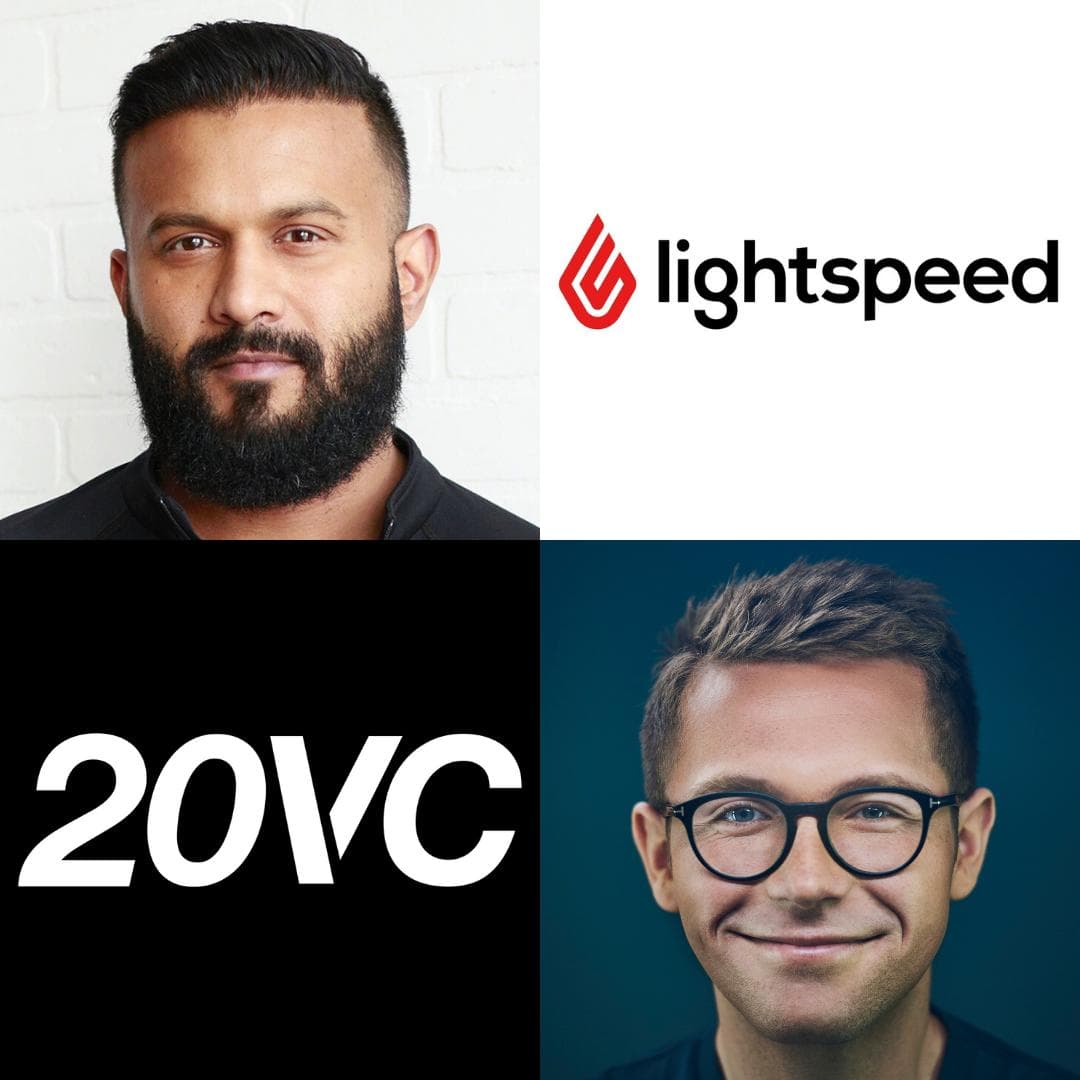
Podcast Title: The Twenty Minute VC (20VC) Episode Title: 20VC: Why VC is Distorting a Generation of SaaS Companies & With $900M in ARR and a Market Cap of $2.6BN is Lightspeed the Most Misunderstood Public Company with Dax Dasilva, Founder & CEO @ Lightspeed Host: Harry Stebbings Guest: Dax Dasilva, Founder & CEO of Lightspeed Commerce
Episode Overview In this episode, Dax Dasilva, the founder of Lightspeed Commerce, shares insights on the company's journey from bootstrapping for seven years to becoming a public company. The discussion revolves around the impacts of venture capital on SaaS businesses, the challenges faced by Lightspeed, and the evolution of leadership within the company.
Key Topics Discussed
- VC Funding Distortion in SaaS
- Bootstrapping vs. VC Funding
- Dax chose to bootstrap Lightspeed for the first seven years, emphasizing profitability and sustainability over rapid growth.
- He questions whether Lightspeed would have achieved the same success had they raised funding early on.
- Distortion Effects
- Dax believes VC funding is distorting the growth metrics of many SaaS companies, leading to a lack of focus on product development and customer needs.
- He advises founders to adopt a more measured growth approach, focusing on building a solid product before seeking funding.
- Challenges of M&A and Leadership Returns
- Returning as CEO
- Dax returned to the CEO position to address challenges within the company, particularly related to integration after multiple acquisitions.
- He faced pressure from the public market, which was skeptical about the company's ability to execute effectively.
- M&A Complexities
- Discussed the difficulties faced with mergers and acquisitions, including cultural integration and operational alignment.
- Leadership Evolution
- Changing Leadership Skills
- The skills required for leadership evolve as companies grow, from coding and product development to strategic vision and team motivation.
- Dax reflects on his early days of building Lightspeed and the importance of being close to the customer.
- Lessons Learned
- He emphasizes the importance of clear communication and vision in leadership, which develop over time as a company expands.
- Navigating Competitive Markets
- Creating Competitive Advantage
- Dax discusses the importance of identifying unique value propositions and market segments within competitive landscapes.
- He believes in focusing on core customer profiles to drive product development and marketing strategies.
- Future Direction of Lightspeed
- Profitability Focus
- The company is currently in a phase of balancing profitability with growth after years of aggressive expansion.
- Dax outlines plans to enhance operational efficiency and investor confidence through clearer financial strategies.
Key Takeaways
- Distorted Growth Models: The rapid growth models encouraged by VCs can undermine the fundamental aspects of a successful SaaS business.
- Importance of Founder Leadership: The presence of a founder in leadership roles can provide necessary vision during critical transitional phases.
- Customer-Centric Development: Building strong relationships with early customers and iterating products based on real feedback is crucial for sustained growth.
- Navigating M&A: Careful planning and integration strategies are necessary for successful mergers and acquisitions, particularly in complex business environments.
- Sustainable Business Practices: A balanced approach to growth and profitability can lead to long-term success, positioning the company favorably in public markets.
Conclusion Dax Dasilva's insights into the journey of Lightspeed Commerce highlight the importance of sustainable business practices, customer-centric development, and the evolving nature of leadership in rapidly changing markets. The discussion illuminates the challenges and opportunities faced by SaaS companies in today's venture capital landscape.
Written by AI. May contain mistakes. Listen to the episode to check what was said.
Transcript
Automatic transcript. May contain errors.0:00The first two years I coded till foreign the morning every day. When I was encoding, I was with those early four customers that sit with those customers and watch them use the software and then iterate quickly so that if something didn't fit with their workflow or it didn't consider something that they needed to do with their inventory, there would be another iteration of the software that was out, you know, within a week or so, I've mentored companies that are building these, these SaaS solutions In order to have attractive metrics that are going to be interesting to VCs, there's short cutting a lot of the product development and the basics of building a business like we did.
0:38This is the story of light speed. Light speed with 900 million in revenue and a market cap of $2 .6 billion. The question stands, is this one of the most misunderstood companies in the public market? Today we're joined by Dax to Silver, founder and CEO of light speed, who bootstrapped the business for seven years before raising from Excel. Years later he took the company public on the Canadian Stock Exchange at just 70 million in ARR before moving years later to the New York Stock Exchange. But before we dive in today, all of you listening use tons of software every day. Sometimes it fills us with rage.
1:15You can't figure something out. The chatbot in the bottom right is useless. You keep getting bombarded with these useless pop -ups. And for those of you who build products, no one wants their product to feel like like this. Thankfully, a company exists to help users without annoying them. Command -bar, it does a couple of very helpful things. First, it's a chatbot that uses AI to give users extremely personalized responses and deflect tickets. But it can be beyond just text. It can also co -browse with the user and show them how to do things inside the UI. Magic. But it can also detect when users would benefit from a proactive nudge, like a helpful hint, or an invitation to start a free trial.
1:51Command -bar is already used by world -class companies like Gusto, Hasha Corp, Yachtpo and Angelist. If you're a product CX or marketing leader, check them out at commandbar .com slash Harry. And talking about incredible companies with commandbar, I want to talk to you about a new venture fund making waves by taking a very different approach. It's a public venture fund anyone can invest in, not just institutions and accredited investors. The Fundrise Innovation Fund is democratising venture capital, which could have big consequences for the industry, the fund is already off to a good start with $100 million into some of the largest most in -demand AI and data infrastructure companies, companies like OpenAI, Anthropic and Databricks.
2:33Check out the Innovation Fund's impressive list of investments for yourself by visiting funderize .com slash 20VC. Carefully consider the investment material before investing, including objectives, risk, charges and expenses. This another information can be found in the Innovation Funds Prospector at fundrise .com slash innovation. This is a paid sponsorship. And finally let's talk about Squarespace. Squarespace is the all -in -one website platform for entrepreneurs to stand out and succeed online. Whether you're just starting out or managing a growing brand, Squarespace makes it easy to create a beautiful website, engage with your audience, and sell anything from products to content, all in one place, all on your terms.
3:15What's blown me away is the Squarespace Blueprint AI and SEO tools. It's like crafting your site with a guided system, ensuring it not only reflects your unique style, but also ranks well on search engines. Plus their flexible payment options cater to every customer's needs, making transactions smooth and hassle free. And the Squarespace AI? It's a content wizard helping you whip up text that truly resonates with your brand voice. So if you're ready to get started, head to squarespace .com for a free trial. And when you're ready to launch, go to squarespace .com slash 20vc and use the code 20vc to save 10 % of your first purchase of a website or domain.
3:53You have now arrived at your destination. Dax, listen, I am like a vertical sass nerd to the extreme. Which is a vertical sass nerd, right? Honestly, dude, there are so many reasons why I had so few friends at school, but that means I love your business. So first off, thank you so much for joining me day. It's great to be here. Thank you. Now I always think we're always kind of shaped by something in our childhood that maybe wasn't actually that easy. You know, for me it was actually my mother having MS and looking after her. When you think back to your childhood, was there something that shaped you or really impacted how you think and who you are today that stands out?
4:28I had a really beautiful childhood but I think the context of where my parents had just immigrated from. There was a dictator in Uganda. They grew up in Uganda. My family families from originally from India from the Portuguese colony called Goa, but they all moved to Uganda for jobs in the British Civil Service and then they were expelled by a dictator in 72. My mom was 18, my dad was like 223 and so in that context I was born, my sister was born in this new country where they were just super young and had to carve out an unexpectedly carve out a whole new life. And so the fact that we had, and like these incredible childhoods.
5:06We spent a lot of time in nature doing these low -cost things like camping, which is why I'm such a big, big proponent of the environment today. It came from a bit of a chaotic background and I sort of had the immigrant experience, definitely an introvert. Did you have entrepreneurial pursuits when you were young? I did. Yeah, my dad brought home a Mac, you know, when I was eight or nine. He was a graphic designer. Actually, it was a welder and the discovered that back in Africa, he was a journalist and that he was a communications guy, and so they gave this opportunity and I went, I nerded out.
5:36You're into vertical SaaS, I nerded out on UI design and a tool called HyperCard on the early Mac. And that's how I became a programmer. I mean, by 12, I had my own Mac, and by 13, I was working for a Mac developer that was building early networking software on the Mac. So that's the other part of my childhood where I'd like confirmed nerd, right? No, no, I'm so happy because I obviously invest day for a living and I have a thesis that the best founders always and consistently start entrepreneurial activities very, very young. I never meet them when they're 25 and it's their first thing ever. I'm pleased that you fit the thesis that I have.
6:11So I was like, I worked for that startup and got to see you like a startup from ages 13 to 15, the insides of one. It was like a husband, wife, and maybe a contractor. Quickly after that, I started building software on my own. So by 15, I was building software as an independent contractor. So yeah, what team of one, but you know, entrepreneur to the core. Why did you start light speed? Like did you, you know, the family that no background in restaurants, no like always all my grandmother cooking over stove and I fell in love with restaurants. Why did you start light speed and what was that a home moment?
6:45The environment that I grew up so obviously there's a big background in the early Mac and being a part of that Mac ecosystem where there was the early developers or the dealerships, you know, before there's Apple stores there was dealerships. I grew up in those dealerships I was doing tech support, I was working them as Adrian Little Nerd, but I started building software for those dealerships. They were building a lot of their own software. Each dealership was building their own software. It was usually the business owner building their own custom file maker. It was like a Microsoft Access database, homegrown.
7:16They were terrible. Over time, I was trying to build more and more software for these dealerships. If you think about what a Naples dealership would look like, it really is our ICPR, ideal customer profile of light speeds. the complex inventory centric retailer with high value inventory with serial numbers, multiple locations, purchasing across multiple stores and multiple currencies. It's everything we do as a as a it's everything we offer in the light speed software today to retail. So I was cutting my teeth building software, you know, contracted software for these dealerships between the ages of 15 and 28 when I started light speed and basically that moment of okay I'm not gonna build another custom piece of software for another Apple dealership.
8:01You all want the same thing We're building light speed here. So if we go back to that first product Did we have product market fit from day one and I'm just interested when you think back to that What are some of your biggest lessons from that zero to one discovery on that V1? The first two years I I coded till 4 in the morning for that first two years every day. I was fueled on, I don't know if Tim Hortons here in Canada, but it's like these French vanilla coffees that are like all caffeine and sugar. They're just like fueled by these things. They're just like coding. What was, I think what helped the product market fit happen is when I was encoding, I was with those early for customers.
8:38And they were like, I picked a variety of different customers and I'd sit with those customers and watch them use the software and then iterate quickly so that if something like that Something didn't fit with their workflow or it didn't consider something that they needed to do with their inventory. There would be another iteration of the software that was out within a week or so. They got them closer and closer to a perfect workflow. How did you think about building what they needed and not what they wanted? Because sometimes what they want isn't necessarily right. 100%. Right? And so that's where you've got to be.
9:09And I think that's like a little bit of where the tech support background comes in of like, this user wants to accomplish this. And they think they want to do it this way, but from your observations of what their operations look like and that's where you have to kind of in our in my case I want it to be physically there with the customer. It's probably not possible for every type of scenario But I wanted to observe what it looked like. I wanted to see what they were trying to pull off so that with what I wanted to create as a user experience Maybe we're going to leapfrog their expectations of what we want to do and so nobody asked for the mobile check out when you were doing that 4am coding and that intense customer discovery with them.
9:46Had you raised money at that point? No, we didn't raise money for the first time. This is what terrifies me. This scares the shit out of me that. No, because today, I've interviewed the founder of Clavio, UI, Path and Service Titan, and all of them said the exact same thing to me, which is we were so close to the customer, because we couldn't afford customer support, and we had to just do it all ourselves. And I asked them this question, If I had given you 5 million on a 25 million price, like you could probably get today if you go to the valley, would light speed in this case have been the same as it is today?
10:21I don't think so. Those seven years of bootstrapping, like we're in our profitable growth phase where we're now out of this growth growth growth at all cost phase and we're now into balancing growth and profit, that's like the early first seven years where we were profitable, we ran and the company grew with a great degree of balance. And I think that those are a great part of our DNA. We also had a really good seven years of really solidifying our identity. I think that's strong sense of identity and who we are, what we represented and how we did business helped a tremendous amount when we took VC money, when we went public, and also when we did M &A.
11:00When you merge other companies into your company, you have to have a strong sense of identity to allow other companies to be able to flourish as a part of your company and not try to suffocate them out of insecurity. I think that strong sense of identity is a hell out of the lightspeed to do a lot of the, what did you not do that with the benefit of hindsight? You're like, I wish we had done if we had more money. Could be a second product earlier, could be geography wise earlier, could be more engineers. What did you not do that with the benefit of more money? You wish you had had done earlier.
11:29So when we did get money, we transitioned our product into the cloud. We did it at the right time. We could have done it a couple of years earlier and it could have benefited us to have done it a few years earlier Our cloud product was out by 2013 Square some other folks like shopkeep had which we acquired later maybe had a couple years on us because of that But maybe that might have maybe that might have sped things up in our in our journey Why did you decide them was the right time seven years in so long period of time? When did you why did you decide that and what revenue were at when when you decided to raise them?
12:03You were at 10 million. It was actually just, you know, those folks that I just mentioned square and that it was a New York POS company going to shopkeep. There was new players coming onto the scene. At this point, we were competing with legacy black plastic POS systems. It was easy, compete with them. But then other POS systems that were more forward looking, more cloud -based, like square, even though it was very simple at the time, and like shopkeep, which was an iPad POS, which we had, but ours was in cloud -based. They started to come out even though they were very simple. They had hundreds of millions of dollars being funneled into them And it started to be I went from from the perspective of like yeah, I have no finance background ever really looked for investors to maybe it would be Maybe not a bad idea and we didn't actually go out looking for VC money We you were masters of the trade show.
12:51We'd done macro for many years and then we switched to doing NRA which is national retail Federation that happens in in New York in 2000 was 2000 in January of 2012, we had a number of VCs come to our booth and looking for the future of retail because every retail player is there and they identified late speed as that. And within a few weeks, we had Excel partners who, you know, the investors buying Facebook and then within two weeks of that, they were in Montreal at our office. And then within a few weeks of that, we had $30 million. $30 million investment. Well, actually the diligence took a few months, but are two within a few weeks we had a term sheet.
13:30And so it wasn't something that I contemplated. It was even something I fully understood of all of how all that worked. Participating preferred curve. I didn't know what that meant. When I hear you speak, you know, it lights people to phenomenal business and you're a phenomenal entrepreneur. Seven years to 10 million in a year. I mean that respectfully. But in today's like SaaS investor benchmarking, it's not fast enough growth. But now you're at Clote Wheel and this year like close to 900 million in a year. Yeah, it's physical either we just finished. Uh, it was about 900, but this fiscal year we are focused on to be a billion in revenue.
14:00Okay, but my point being, that was kind of slow trajectory. And so it's like, do you think SaaS investors today have broken models that will miss great companies like Lightspeed, given the new demands of venture? That's an interesting question. I know that when I've mentored companies that are building these SaaS solutions, in order to have attractive metrics that are gonna be interesting to VCs, there's short cutting a lot of the product development and the bare and the basics of building a business like we did. Obviously, it's less room to test and battle test and get to something really phenomenal.
14:37But the slow burn, I think that's there's quality that happens in that process and let it cook, right? I totally agree with you. I think we should actually ban companies that are not extremely capital intensive from raising for the first five years. It would be fascinating to see the outcomes of those companies and compare them like for like. Can I ask you, you mentioned the increasing competition there. What are your biggest lessons in how to play and win in intensely and increasingly competitive markets, given the journey that you've been on? It's always good to create your own greenfield, blue ocean, whatever metaphor you want to come up with.
15:12I think it's important for when you're competing that you know the actual value. Our value is not that we can take a payment. Our value is that we are running a complex operation for one of these businesses. that we're creating the competitive advantage for them versus their competitors. And so you've got to find that segmentation where you clearly have that right to win and you've got the right product market. What are your biggest product marketing lessons on how do we span that core customer ICP from say retail to also add in to hospitality without alienating the core that you've just acquired?
15:44Yeah, so it's always a little bit of a risk to defocus. And I think right now, now they've been back at light speed for five months as CEO, I was executive chair for two years. I think there are areas where it's going to be helpful for us to focus again where we've decided to spread our wings maybe in too many places, too many regions across too many products, a lot of acquisitions. It's always exciting to grow the business, especially when the market's rewarding growth. Can I ask you, when you think about your early go -to -market and early distribution, what did you not do well? What do you look back on and I was like, ah, that was a big mistake.
16:18And what do you learn from that? Well, the reseller strategy was really successful. In those first seven years or zero, we spent zero money on advertising. But we spent a lot of money on these reseller conferences twice a year. We'd have like three, 400 people show up. And actually, when the VCs came and saw that, they went undercover. They went undercover under false identities. It was a lot of fun. During our Dallas certification camp, our term sheet went from 25 million to 30 million because they were like, wow, you got a massive community of people around from Saudi Arabia and like in like Europe and Australia and all over the US and Canada and like everywhere people are coming to learn how to sell a light speed and are generally also users of light speed.
17:00I think we did a good job at first of integrating our direct go -to -market effort because we had internal sales people but we always gave priority to the reseller. I think as we got bigger we had struggles with okay when does it become a direct lead? When does it become a reseller lead? Some of the resellers worked as fast as the other ones. We're like, off, we kept that as a direct lead. We could just close that on our own. And then as we went into the cloud and there was less of a need for reseller to do hardware, we started to lean more and more towards doing everything direct. And then as we did high velocity sales model, we went very direct, cut out a lot of the reseller energy.
17:37And I think that a lot of that network died away. And And I think that might have been a mistake because now we're trying to bring it back a lot because there is more complexity now. If we're doing the more complex hospitality businesses and so on and we're building that partner channel, obviously it's a new evolved way of go to market with partners and we have a very huge direct effort and an outbound effort on the streets. So when you move more to direct sales, the traditional perceived notion is that actually It's quite a slow sales cycle. They're not generally that technology adopting. They have slower adoption cycles.
18:11Was it high velocity and also like your ACVs were still pretty high then. So was it high velocity and high ACVs? I'm fascinated. I mean our sales cycle was like 30 days. It's not enterprise sales cycles. What was the ACVs then? But this is bad then. So not obviously. Sorry. What's the acronym average contract value? Yeah, it's like a few you know sub five thousand and then a lot of cases, you know, I'm sorry I'm fascinating. How do you do it? You call them up and say hey, Docs Do you need all help with light speed? Do you go into the store? What was that? When it was our direct sales model like we're doing a lot of performance marketing You know, it's it's for people that are looking for retail point of what to sale systems or later hospitality point of sales systems You're generating all those leads and you're qualifying the leads then your sales people are closing and then the close rates We had really, really strong close rates because we prospected leads that were very much in our wheelhouse It was a good they were a good match for the product now today.
19:07We're going after ICP merchants and we're making a transition with locations Where before we were going after everything and a lot of our everything in terms of like every range of GTV, right? So 500 ,000 and above is really where light speeds determine where we can where our products is the best fit But we have tremendous, we have a lot of customers that are some 500 ,000 as well. I went to the site though, sorry to interrupt you to ask. I mean, this is the nicest way, but I didn't know how to say it nicely. It's super enterprisey. Like, there's no PLG motion there. I couldn't sign up and see much.
19:41It was heavy enterprise. Is that deliberate? I think for our ICP, which is 500 ,000 of annual transaction value, did you want to speak to somebody? There is complex operations. It's not something you're going to sign up for. and just start going with. There is a segment of customers that's below that, that could probably do that, but it's no longer our main target. Over time, you have to make choices and you have to choose focuses of like, who do you really serve? And who is really gonna wanna pay for all the functionality that we have? So it's a really rich system. If your needs are X, it may not be that you wanna spend the money on everything the lights we can do.
20:20You may be better served by a clover or a square or Shopify. I think it's really important that businesses have opinions, which is like if you're subbed 500K, all good, but we're just not the right provider for you, and there's many others that are. Find one on the products and then I want to go to the leadership. How much of like cost is on implementation, hardware, and how do you think about kind of reducing that as much as possible, because that's a real hit on margins. Yeah, that's why hardware sales are a big focus for late speed. Our revenue is primarily software subscription revenue and payments revenue.
20:52Do you think the markets understand the two and how they should be valued? The software in the payments piece? You know, there's always a debate of whether we want to be considered a software company or a payments company, what's better for light speed? I mean, my preference would actually just be that the markets understand us as a profitable growth story and you know, we've got three quarters of EBITDA positivity under our belt. And we still remain a bit of a show me story for the market. Why do you think you're a show me story? because I just tweeted before this show that you're one of the most underestimated or misunderstood public companies.
21:25Sorry, I mean that in the nicest way. But why are you showing me? So I think we've been a grow, grow, grow story for a long time. Last year, we spent the almost the entire fiscal year rolling out lights, we payments and making and converting a third of our base. Now we've got this really great foundation for profitability. I've spent a lot of time and focus on cutting off X. And so I think we're doing a lot of the things the market wants to see. I think it just wants to see that plus software revenue growth as opposed to payments growth for a few quarters. It all has got your high. It was that something that needs to be brought under control.
21:59It just hasn't been a focus and that's part of the reason why I think it's important for the founder to come back. It's a new phase for the company being a profitable growth story. Talk to me about that because you know you're chairman. You can be chilling on a beach doing whatever you want to do in a different capacity. Why did you decide to come back? And why was then the right time? What's great about being the executive chairs? It's great for a founder, because you can be on the email, you can be on the Slack, you can be in the, get the pulse of the business, but you really aren't in the day to day operations.
22:28You know, you can kind of see it happening, but being in the chair is very different. We are in a new phase and we've had, we've pulled off some incredible things, the acquisitions, getting through flagships, making the payments thing a lot of the market It was skeptical on the payment that we'd be able to execute on the payments thing. All that's been done. But now I think we're in this grown -up phase. We are no longer a teenager next year. We're turning 20, right? I want us to be a great adult. We know what the formula is. It's a good time for a founder to lead people through some maybe some structural changes.
23:01You know what I want to say? You might be able to ask it like, you come back because something is not right. You don't change things that are working perfectly well. What was not lacking path any while? We all want to see investor confidence return in the stock. I mean that's not been a good story. The story is the profitable growth adult version of light speed, right? It's got all of these things in balance. I felt JP felt the board felt that the founder... It's a good moment for the founder to be able to tell that story and lead the team through the transitions that are necessary. And we had to do some...
23:32in the five months I've been back, we had to do some tough things. We had to do a reduction in force. We've had to get into capital allocation strategy. We had to make some big clear statements that calm down nerves about no more M &A, no large M &A. And show great growth numbers, shows great forecast of a balance of profitability and growth. So there's been lots of not resets, but clear definitions of what it's going to look like for investors. And now I think that they want to see that consistency. After unpacking a couple of times that, you mentioned the roofs. What are big lessons in terms of how to do RIFS?
Read the full transcript
24:08Well, respectfully, as hard as they are, you're not alone. I think everyone does RIFS this last 18 months. Horrible. Any advice on how to do them as best as can be? So it was the first one I've done, because lightspeed did won the year before, but it was my predecessor. I underestimated how emotional that process would be. It's difficult. People are so excited to be a part of this story to let talented lightspeeders go, is and when you're responsible, I mean you have to do it for the greater good of the company, it's hard. I think we learned a lot from the first time. I mean there's a lot of logistics and coordination of those emails that go out and the packages and how people are informed or informed that they're staying and there's...
24:50We actually pulled off a very flawless execution. We got we got a lot of high marks from folks on on how it was done. I think it's one of the top of things that I've ever had to do. I had never done layoffs personally at the company and that's almost been 19 years. So yeah, if the M &A worked so well, do you agree with the decision and the statement that we won't do large M &A moving forwards? So I think we did a couple of really great things with our acquisitions, but what we haven't done and we haven't finished doing is all of the back -end integration. So there's a lot of costs that we can pull out.
25:22There's a lot of things that we can sunset over time. That work hasn't been done. That's like the third phase. And so I'll be giving like a plan at our capital market it's on how that's gonna look, but I don't think that we should be adding more until we've done that. And then the market doesn't want to see more confusion added to the picture when we're trying to simplify and focus. You know, and so... What do you think the market doesn't want to see, but you think is still beneficial to the business? I don't think that large emanate would benefit the business either. You know, I think that we accomplished what we wanted to do with all the emanate that we did between 2020 and 2022 of consolidating all the complex, hospitalian retail players that were a similar size to us, we did that.
26:03There's not really another list of players that we want to do that with. What do capital markets not want or want to see that is opposite to what's actually good for the business? So they may say, oh, we want just US, and actually it's better to continue building on an international portfolio. Or they may say, oh, we don't want product expansion, and then it's actually better to build product expansion. Where is our misalignment between what the public market wants and what's good for the business? I think when it comes to M &A, what I've heard, and I've spent a lot of time listening to shareholders, it's one of the best things about being a public company as you get some really direct feedback.
26:37And the very frank feedback is, lightspeed doesn't need further distractions with new M &A projects. Ingest and digest all of the things that are part of the company now, make sure all of that is creating value. that the company is generating profit. At the end of the day, I think there's another thing that I haven't mentioned that when we went public in 2019, we were much simpler company is 70 million in revenue. That's 70. Yeah, now we're a billion in revenue. Because of acquisitions, because of the way we've grown, it used to be so easy to model the business. It was locations times subscription revenue and easy to model light speed.
27:17Today it's extremely difficult for folks to model light speed. It's an investors can lose interest if it's super hard to model and that's part of why I want to clean up the location The question are locations in anticipation of capital markets day because one of my goals is to simplify So that people can model this business again when there's understanding investors can buy back in and that's why when they sniff When they're like lights be doing another doing more. I mean, there's like okay Well, it's never gonna be easy for us to understand this business ever again And that's the opposite of the direction.
27:48I want to go to 70 million in revenue respectfully in today's SaaS market is insanely low to go public. There's a generation of investors now that are saying, hey, SaaS companies you should go public earlier, your approach is the right approach and building in public is the right one, not staying private to all with 700 million in ARR. What would you advise founders who are maybe in that position where they're at 100, which is amazing? And they're listening to some going go public and they're looking at others saying there's a lot of free private market capital, stay private. I would say it's been my favorite phase of the company, despite the challenge as being a public company, I think it's so good, has been so good for light speed.
28:30It's really a graduation. It's a graduation in your processes, it's graduation in your storytelling. You get a ton of, like I mentioned earlier, you get a ton of feedback from shareholders, your business improves. How it feels different from BC and we've had really, we had some really great BCs with I know via and with Excel, But you really feel like there's a couple of personalities that are your that are your bosses or not your bosses But you're at your key partners. Whereas when your public it's yours to screw up It's really you and your team that you're feeling. It's a very freeing and independent sort of way of operating How they said I love your business and as I said I tweeted this thing that's most misunderstood at 900 give or take and 2 .7 billion markups days like 3x is there no desire to take it private?
29:13I would be chomping at the bit to take it private at the miss pricing of my business at that stage. Yeah, I think we're definitely in a transition. We're in this profitable growth phase. It's a bit of a show me story. I would say out of six checkboxes that we've nailed five in the last couple months. Maybe one more to go on software growth and location growth. And then I think we're there in terms of like the shopping list and we have to show consistency. I feel like there's a lot of value we can create on the public market. What trait is the lead at? Are you almost ashamed of but has been very Contributing to your success.
29:48I have a certain degree of fearlessness There's an appetite for risk. There's a reason why when I went into conservation I'm like the person that's like ready to go into a jungle and and not think about it or When I've done all the things that we've done in lightspeed that seemed that would seem like bold moves I didn't hesitate to go for it, you know Well, that feels a bit like a job interview question when it's like, what's your weakness? And they're like, ah, I worked too hard. There's a risk of getting burned by that. Have you been burnt by fearlessness before? There's areas that we've marched forward.
30:22We've had to course correct. We're okay with failing. We're okay with iterating. We're okay with rescuing a situation. It's so funny. I asked this question like, many billion dollar founders. And it's like, I give you like 50 traits of mine, like, I'm like, rudely impatient. Well, I will be really horrible because I'm so impatient. And it's like, it drives actually real velocity in case. No, but it's no, no, no. When you go over and say to someone, are you lazy or stupid right now I'm thinking both? It doesn't build great culture, you know? Yeah. But I just find it funny because people often struggle and I'm like, fuck, I have so many that I could save for myself.
31:03Do you think you found yourself as a leader at some point? I know that sounds really weird and Spurge, and I didn't mean that. I think you learn who you are indeed a ship. Yeah, I didn't think of myself as a leader that two -year period I spoke about where it was like four a .m. in the morning That was me transitioning from me being that independent software guy one man show I was just a little bit scared of my team like this team was software was selling really well and this team was growing I was like on the third floor of this apartment building I read the second floor for light speed There's lots and lots of people starting to show up there, you know, because we were selling the revenue is coming in and we were we needed more folks Eventually I had to start talking to these people and was forced to be a leader and we talked about the dreamer that I was as a kid I was like an introvert.
31:47I think light speeds pushed me to be able to articulate a vision to be able to communicate But it didn't come naturally. That's something that I think a lot of people that that are that are in startups that might be passionate about solving a problem, then they have to figure out, okay, how do I be a leader? How do I lead these folks? How do I inspire these folks? How do I pivot these folks? How do we, how do I convince the market? How do I talk to media? It's not necessarily something that everybody knows how to do just because they start a business. Do you know what I find worrying today? I interview the world's best founders.
32:17Now the world's best VCs. VCs are better at communication than found so. Something is wrong with the world when that is the case. I think it's because VCs sell cash and so you have to get really fucking good at selling it. It's like $1, $1, $1. Well, my dollar's pretty other than your dollar. Right. Dollars did not different than the other dollar, yeah. Yeah. I just go, I'm not a dick. And it's like, at least now I want to do a quick fire with you, Dad. So I say, it's your statement. So let's start with what do you believe that most around you disbelieve? I really believe that individuals matter.
32:50Individual business person, individual conservationists makes such a huge difference. I feel like there are people feel like there's like this huge ocean of problems or ocean of of the status quo or the zeitgeist that not individuals don't really make a big difference, but I have some incredible examples. Do you think that's the case in a world of Greta Firmburg, Attenborough influences like Ronaldo or Messi or you name it? I think we're in a world where people realize that individuals are everything. Individuals are bigger than the biggest companies in the world. Yeah, you're right because you can have large figures but can large figures make change?
33:27Can large figures actually do anything has Greta Thunberg like there's a lot of awareness But like I think when I look to for example, you know, let's say a Paul Watson of C -Shepard saved every species of whale in his 50 year campaign putting his body and and the crew is between pods of whales and whalers from Iceland and Japan or or business examples Steve Jobs There's individuals can that I admire whether it's in conservation or whether it's in technology There are people that actually make things move there is this whole thing of Instagram influencers and But I want to be on action, right?
34:02I want to see individuals cause results to happen And that's what I want to believe and that's what I see in the things that inspire me You're not into the personal brand content build. I before they're seen it you're I didn't think you have a Twitter Tell me, who's the best ball member that you don't have that you would like to have? I'd love to have a founder of a comparable company to Lights V that's sort of maybe done a similar journey, but in business off we're in SaaS, maybe in payments, but it's gone on a similar arc. Or beyond it, hopefully beyond what we've done. Love to learn from that kind of person.
34:40I would be at Shopify, I would be one, I would say, hey, that would be a really interesting edition. Yeah, I'm friends with them. You know, we compete enough. There's enough overlap that probably that wouldn't work What's the most contrarian or unorthodox advice that you'd have for founders listening? You know, I think that everybody's so loves their pitch decks I was see a little bit of a frown when I'm what I suggest to folks that thing that made a huge difference to me is that I was forced to write a three -year business plan And we're going to get our early grants like I got $6 ,000 and $8 ,000 grant, you know, when I was basically on unemployment when I started light speed.
35:14And that three -year business plan, I just thought it was so much BS. I was like, oh, I just got to do this and mail it in. And it was a written component and a spreadsheet component. And that business plan, we actually hit that business plan on the nose in year one. No, I think we failed a little bit on year one, but year two, we hit it on the mark and year three, we exceeded it. And it actually changed everything about our pricing because we actually had to run everything through spreadsheets. It actually solidified and just made it help to suicide what we're doing and what we're not doing. I know it's not fashionable and I know that people love their 10 slide pitch deck but that's not a business plan.
35:49And I think people are a little bit scared by the rigor of what having to write an essay and then have a three -year spreadsheet of what you're going to do. I think it's necessary. I don't think we'd be the same company if we weren't forced to do that. It's so funny. I say don't even bring me a deck. I'm on like the opposite side. I'm going to, I'll fight you on this one. So you have a thesis and I think there's a difference in like having an idea and a vision of how the world and your company transpires. But I think projecting out like a three or a five year financial model, I mean, fine do it, but it's fucking poetry.
36:23And I actually think you might align yourself to it, which might misdirect you from the real opportunity. I definitely hear those concerns, you know, and I'm not a big master plan. I actually, spiritually, I really believe the bigger plans always gonna be better than your stupid plan that you come up in your with your head, but I think that that three -year business plan, if maybe the model of the projections are meaningless, but the clarity of writing down what you're gonna do and what you're not gonna do, there's so many ideas that people have when they're starting. Just writing on paper, what are the core elements?
36:54Who are your customers? And actually the pricing is a really interesting one because when I was pricing light speed to begin with, there was a lot of Mac business software, there wasn't a lot of Mac business software, but there was one that we really admired, there was like 80 bucks, and we priced a little bit more than them because we really admired them, but we knew that we did more, it was a different space, it was a CRM versus POS, and we did a lot more, but then I showed that business plan to a colleague of my father, and he was like, times four. Multiply that price times four, I was like, that's crazy.
37:22Like I can't ask for times four, that changed everything. We had four times the revenue, we had four times the amount to invest, we had four times a better product, everything changed, the model changed, and so that business plan gives the ability to dig into that price, because if we'd gone with 100 bucks, we wouldn't be the same. Totally, but I think on the flip side, it can also make you stick to a plan that you could have done better than. And a great example is actually, you can have a forecast, actually, one founder or one company saying, you know what? I need you in payments. And you're going, huh, payments.
37:55We should look more and suddenly you're pulled into doing payments in year two. I'm just saying that. You didn't know that you'd ever do payments. You thought you were just rational software, but you would not do payments because it didn't go to your model. But payments may have been perfect. Do you see what I mean? Yeah, Harry, I would say that if I look at that original Lightspeed Business Plan, that is really the same customer. It's so much is almost 20 years later, so much. It's the core of, it's still relevant in terms of who we define ourselves as and who we define our customers. So yeah, we've expanded to payments, we've expanded to another vertical beyond retail, but it's a crystallization of what we're offering and what we're doing on the value and how we're going to market.
38:40And even though that's evolved, it was a moment of clarity. So you would say to founders, write a 10 page memo with a financial plan? Yeah, I think it was like six to eight pages with a financial plan. Maybe you will throw it away, maybe you'll never look at it, But I guess what would happen to me, I was like, wait a second, referring back to this three -year plan that we thought was BS, like, did we not just hit that number? Like, it looks familiar. You might surprise you. It may not. Tell me, what few changed your mind on in the last 12 months? I think that maybe because we were so growth -oriented, I thought that the balancing of profit and growth sounded like something really limiting.
39:18Now, I feel like it's a really positive constraint that's going to build like that long -term business that I want to see lights be be and like build that long term value. So it sounds, sounds like another interview question, DAX. Yeah, it sounds like a constraint. Now I know it's, I think it's good. Profit and growth beautifully and line together. Exactly. Wow. You know what dies politicians, they don't. They don't understand as smooth as you do. Thank you. What concerns you most in the world, you mentioned love of nature and conservatism, what are you most concerned about? Yeah, I mean, environmental trends concern me, and that's why it's a big part of where I want to apply my startup DNA.
40:02I believe in the startup model, and so I've applied that to conservation, and I believe that light speed actually helps with sustainability too, because the local businesses that are supported are like the ones that can actually make more sustainable decisions or work community oriented decisions. but yeah, the environmental trends are terrifying. I also think that in society we're disconnected from two things. Disconnected from nature, disconnected from spirituality, and I think that's why we're unanchored. And that's why some of my projects outside of Lightspeed really try to look for how we can reconnect with those things in ways that people find unexpected or exciting.
40:38They worry me because we used to, like in terms of spirituality, we used to have, folks used to have connections to community through their church or through their community hall or whatever. People used to know where their food came from or where their water came from or and now that's in the urban setting or in the modern setting that seems like something in the past and we don't have anything to really replace it with. What I think you were saying, I think you were saying religion replaced by brands. Yeah, yeah, I'm not saying that religion is something we need to cling to. No, but I've been a religion or seen a replaced by brands.
41:11Your community ownership and belonging is replaced by Rans. You used to go to church, and now you go to a Taylor Swift concert. You used to resonate with Lord's Prayer, now you resonate with Love Story. Final one for you, my friend. What question are you not asked that you should be asked more? I think the question is sometimes that once in a while it gets asked, and I have to, I'm happy to give an ads run, is like if you're such an environmentalist, how come your company supports consumerism, your powering restaurants and your powering retail stores. I do believe in local business being able to make better choices that are like rooted in their communities, rooted in sustainable options.
41:53And so it's going to come more from the local businesses than it is from the multinationals and it's allows people to also make those choices, you know, as consumers. So I think that there's an alignment there. We have to transform the way that we consume if we want to make progress on the environment. Like we're not going to stop eating, we're not going to stop buying things. But I think we're discovering retail and hospitality. It's better to go to a restaurant with their reusable plates investing in the people that work in those places. There's less waste. If you think about retail stores as a local warehouse, they don't send boxes to your house.
42:33you're going to a place where it's already there and you make a selection. I think that these are environmental choices and normally people think about them in that way. Dias isn't, I've given you quite a hard time today. I apologize for interrupting and sassanly. I apologize for continuously saying you're a politician. But the joys of not being a journalist is you have a little bit more freedom. So, time to keep it putting up with me and I've so enjoyed this. I have to say I quite enjoyed pushing back in that episode. I think I've got a better the journalist vibe in me. If you enjoyed that more discursive style of show, let me know what you think.
43:10I always love to hear your thoughts. You can watch the full episode on YouTube by searching for 20VC. That's 20VC. But before we leave you today, all of you listening use tons of software every day. Sometimes it fills us with rage. You can't figure something out. The chatbot in the bottom right is useless. You keep getting bombarded with these useless pop -ups, and for those of you who build products, no one wants their product to feel like this. Thankfully, a company exists to help users without annoying them. Command bar. It does a couple of very helpful things. First, it's a chatbot that uses AI to give users extremely personalized responses and deflect tickets, but it can be beyond just text.
43:47It can also co -browse with the user and show them how to do things inside the UI. Hi, magic. But it can also detect when users would benefit from a proactive nudge, like a helpful hint, or an invitation to start a free trial. Command Bar is already used by world -class companies like Gusto, HaschaCorp, Yoppo and Angelist. If you're a product CX or marketing leader, check them out at commandbar .com slash Harry. And talking about incredible companies with Command Bar, I want to talk to you about a new venture fund making waves by taking a very different approach. It's a public venture fund anyone can invest in, not just institutions and accredited investors.
44:23The Fundri's Innovation Fund is democratising venture capital, which could have big consequences for the industry. The fund is already off to a good start with $100 million into some of the largest most in -demand AI and data infrastructure companies, companies like OpenAI, Anthropic and Data Bricks. Check out the Innovation Fund's impressive list of investments for yourself by visiting Fundrise .com slash 2 .0 VC. Carefully consider the investment material before investing, including objectives, risk charges and expenses. This another information can be found in the innovation funds prospectus at Fundrise .com slash innovation.
45:02This is a paid sponsorship. And finally, let's talk about Squarespace. Squarespace is the all -in -one website platform for entrepreneurs to stand out and succeed online, whether you're just starting out or managing a growing brand, Squarespace makes it easy to create a beautiful website, engage with your audience, and sell anything from products to content, all in one place, all on your terms. What's blown me away is the Squarespace Blueprint AI and SEO tools. It's like crafting your site with a guided system, ensuring it not only reflects your unique style, but also ranks well on search engines, plus their flexible payment options cater to every customer's needs, making transactions smooth and hassle -free, and the Squarespace AI, it's a content wizard helping you whip up texts that truly resonates with your brand voice.
45:47So if you're ready to get started, head to squarespace .com for a free trial, and when you're ready to launch, go to squarespace .com, slash 20VC, and use the code 20VC to save 10 % off your first purchase of a website or domain. Now stay tuned for one of the best 20VCs we have ever done, Sean McGuire from Sequoia for the spiciest 20 VC on Monday next week.
From the publisher
Dax Dasilva is the Founder & CEO Lightspeed Commerce, one of the most incredible stories in startups. For 7 years they did not raise outside funding and ran a very profitable business. Ultimately they partnered with Accel and Innovia before going public on the Canadian Stock Exchange with just $70M in ARR. Lightspeed also undertook 9 acquisitions over the course of a four year period to consolidate the global market. Today they have a whopping $900M in ARR but are only valued at $2.6BN. Today we ask the question, is Lightspeed one of the public market's most misunderstood companies?
In Today's Episode with Dax Dasilva We Discuss:
1. VC Funding is Distorting SaaS:
- Why did Dax decide not to raise money for Lightspeed in the early days?
- Does Dax believe Lightspeed would have been successful had they have raised a seed round like many do today in SaaS?
- Why does Dax believe venture funding is distorting a generation of SaaS companies today?
- How does Dax advise founders scaling their business today from $0-$1M in ARR?
2. What Went Wrong: The Founder Returns:
- Why did Dax feel he had to come back to the role of CEO in 2024? What was not working?
- What was the single biggest problem that the public markets had with Lightspeed?
- What were some of the biggest challenges that came with the intense amount of M&A?
- What would Dax most like to do that the public market will not allow?
3. What Makes a Great Leader: How it Changes:
- What required skills in leadership change with the changing scale of the company?
- What skill does Dax have that he is slightly ashamed of but has most contributed to his success?
- What did Dax not know when he founded Lightspeed that he wishes he had known?
- What question is Dax never asked that he should be asked more?