In short
Podcast Episode Summary: 20VC: Roger Ehrenberg
Podcast Information
- Title: The Twenty Minute VC (20VC)
- Host: Harry Stebbings
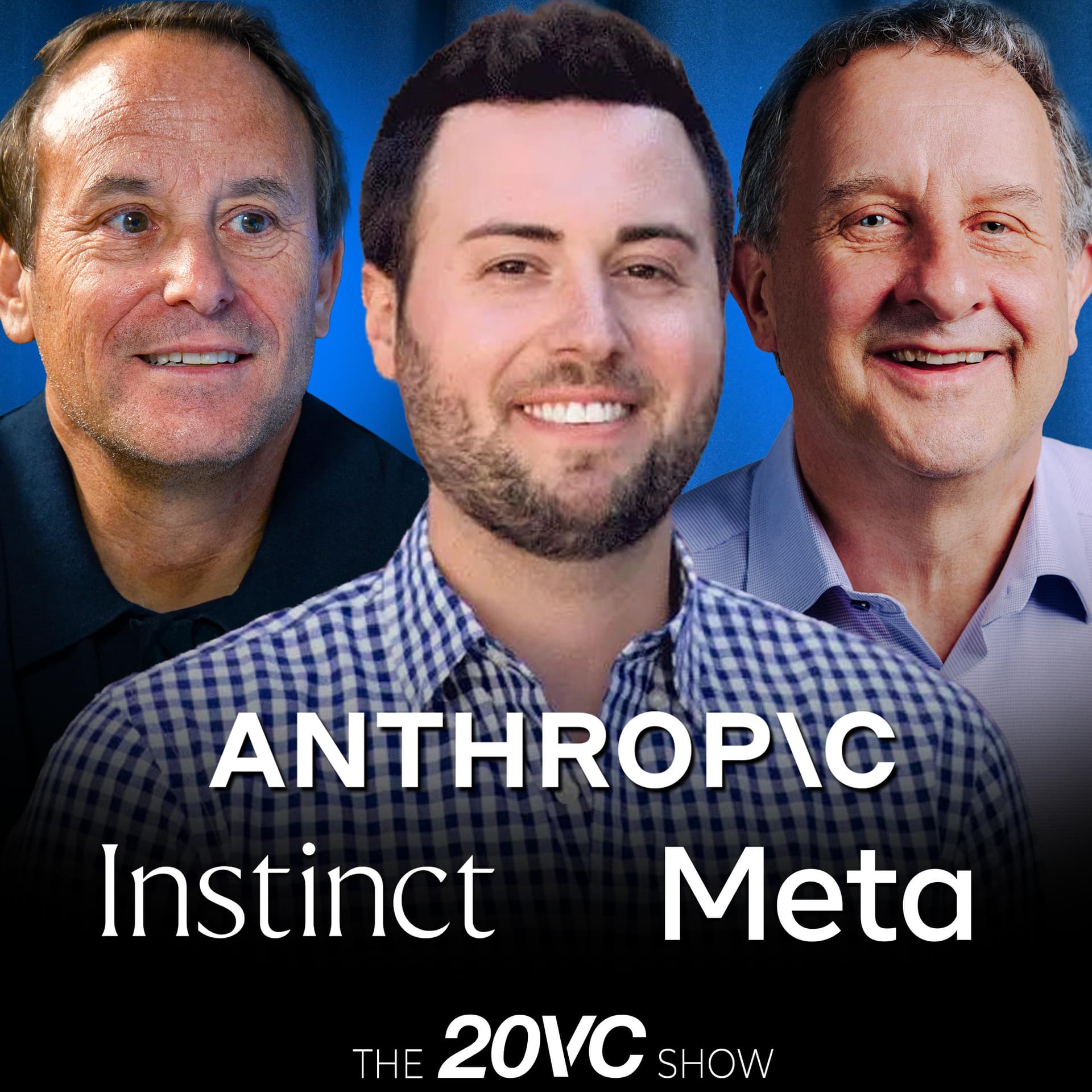
- Guest: Roger Ehrenberg, Founder of Eberg Capital
- Episode Title: 20VC: Why VC Returns Will Get Worse, Why LP Incentive Structures are so Broken, and More.
- Episode Length: Approximately 1 hour and 30 minutes
- Release Date: Not specified
Episode Overview In this episode, Roger Ehrenberg, a notable figure in the venture capital landscape, discusses the changing dynamics within the venture capital industry, touching on the commoditization of venture, the roles of Limited Partners (LPs), the state of liquidity, and reflections on personal wealth and parenting. The conversation is deep, insightful, and covers various aspects that shape the future of venture capital.
Key Discussion Points
- The Commoditization of Venture and Worsening Returns
- Commoditization Debate: Roger disagrees with Doug Leone's assertion that venture capital is turning into a commoditized, low-margin industry.
- Worsening Returns: Reasons for expected declining returns in venture capital due to increased capital influx and its implications.
- Cyclical Nature: Discussion on whether the influx of LP capital is cyclical or a permanent shift in the landscape.
- The New LPs and Incentive Structures
- Broken Incentive Structures: Roger argues that existing incentive structures for LPs are flawed.
- New Players: The impact of sovereign funds and pension funds entering the venture market.
- Best Practices: Identifying firms that have effectively capitalized on the new LP class.
- Liquidity in the Market
- Challenges of Liquidity: Discussion on the lack of IPOs and M&A, and where liquidity might emerge in the next two years.
- Continuation Funds Strategy: An exploration of how continuation funds can offer liquidity solutions.
- Future IPO Market Predictions: Predictions on when IPOs might reopen and which companies could go public.
- When to Sell versus When to Hold
- Selling Strategies: Roger shares advice on timing for selling or holding portfolio companies.
- Lessons from The Trade Desk: Reflection on the decision-making process related to the sale of The Trade Desk and its implications for future investments.
- Relationship to Money
- Investor Psychology: The impact of wealth on investment decision-making and strategies.
- Wealth Experiences: Roger discusses key moments that shifted his perspective on money.
- Parenthood and Marriage Insights
- Raising Ambitious Children: Strategies for instilling ambition in children raised in financial abundance.
- Successful Marriage: Insights into maintaining a strong and supportive marriage.
Key Takeaways
- Performance Pressure: The pressure on LPs to ensure performance due to career timelines can distort investment strategies.
- Liquidity Solutions: Continuation funds may become a primary method to generate liquidity amidst a lack of M&A activity.
- Investment Psychology: The need for investors to remain grounded and aware of psychological biases and market conditions.
- Family and Wealth Dynamics: Roger emphasizes the importance of aligning family values with financial success and the ongoing conversations required to maintain ambition in children.
Personal Reflections from Roger Ehrenberg
- Roger shares personal stories of financial milestones that shaped his view on wealth and success.
- He discusses the psychological effects of wealth, emphasizing the importance of maintaining humility and a strong family foundation.
Conclusion Roger Ehrenberg’s insights provide valuable perspectives on the current state and future of venture capital, the evolving role of LPs, and the intricate balance of personal wealth and family. His reflections serve as a guide for investors navigating this complex landscape, emphasizing the need for humility, strategic thinking, and long-term planning.
For more episodes and to delve deeper into the discussions, visit [20VC.com](http://www.20vc.com).
Written by AI. May contain mistakes. Listen to the episode to check what was said.
Transcript
Automatic transcript. May contain errors.0:00There's going to be a compression of returns. You're going to have more of the end reasons and the insights and these platforms. They're not really venture firms. Very early or Tisinal VC is not going and it never will be. I'm not in pure tech anymore. But if I was, I would literally be spending almost no time in pure AI. Take risk. Don't play it. Say, have a deeply healthy basis and just put it out there. Don't be a sheet. Don't follow the playbook. This is 20VC with me Harry Stebings. Now I remember reading Roger Aaron Bergs writing 10, 12 years ago. It inspired me and so much of the way that I think.
0:38To me he's one of the true greats of this business and I'm so so thrilled to call him a friend's day. With that, Roger is most recognized as the founder of IA Ventures, one of the most successful seed stage venture firms of this generation. Having seeded DataDog, DigitalOcean, the TradeDesk and Wise. Today, Roger is the founder and managing partner of E -Burg Capital, a pioneer in bridging the gap, among sports franchises, sports betting, media and entertainment, and his current sports portfolio includes the slice of Miami Marlins, Alpine Racing and many more. But before we dive into the show's day, Hyve is the marketplace for private stock.
1:13Whether you run a fund, lead an investing syndicate, or invest solo, Hyve gives you unparalleled access to some of the most exciting companies in the world, all before they go public. Think Flex, Sport, Reddit and AirTable, alongside many other companies I've featured on the show. Secondaries are so much easier with Hive. Stay on top of the private market, with free access to volumes of real -time market data, and enjoy Hive's automated trading experience, with thousands of trades across hundreds of unicorns. Hive is the fastest growing pre -IPO marketplace in the world. Create a free account day at hive .com -4 -2 -0 -VC, that is hivewith2 -i's .com -2 -0 -VC -2 -0 -VC.
1:53zero VC and see why over a thousand institutions and 10 ,000 accredited investors have joined Hive. And if Hive provides incredible levels of access, secure frame, secure frame provides incredible levels of trust to your customers through automation. Secure frame empowers businesses to build trust with customers by simplifying information security and compliance through AI and automation. Thousands of fast -grown businesses including NASDAQ, ANGELLIST, DUDELE and CODER, trust secure frame to expedite their compliance journey for global security and privacy standards, such as SOC2, ISO2701, HIPER, GDPR and more.
2:32Back by top tier investors and corporations, such as Google, Client, and Perkins, the company is among the Forbes list of top 100 startup employers for 2023 and Business Insiders list of the 34 most promising AI startups of 2023. Learn more today at SecureFrame .com. It really is a must. And finally, a company is nothing without its people. And that's why you need remote .com. Remote is the best choice for companies, expanding their global footprint where they don't already have legal entities. So you can effortlessly hire, manage, and pay employees from around the world, all from one easy to use self -serve platform.
3:08Plus, you can streamline global employee management and cut HR costs with the remote's free HRIS. And hey, even if you are not looking for full -time employees, remote has you covered with contractor management, ensuring compliant contracts and on -time payments for global contractors. There's a reason companies like GitLab and DoorDash trust remote to handle their employees worldwide, go to remote .com now to get started and use the promo code 20VC to get 20 % off during your first year. Remote opportunity is wherever you are. You have now arrived at your destination. Roger, I am so excited for this.
3:46You just said, you know, the magic happens in the conversation. It does. Thank you so much for joining me today. Thanks, Harry. As usual, I'm thrilled to be over there. Now, I was listening to you on Eric's show the other day, and you've said before about, essentially seeing these seismic shifts in landscapes every kind of 17 years, which I thought was kind of mysterious where it was every 17 years. But if we go back to the first seismic shift that you saw when you weren't from banking to venture. What was that seismic shift that you saw that others didn't? I felt like there was almost a euphoria on the street back in those days.
4:19I had been running during his debts at City in Deutsche. And then my last tour of duty on the street was as the CEO of DP Advisors, which was this multi -billion dollar trading platform. Money was coming really easily, but also with that, knives were never sharper in terms of the politics, whether it's inside H1Zero or at the top of Wall Street, the pie is big and people in most cultures want as much of the pie as they possibly can. And I just found that culture corrosive and I also felt like this fell too easy. The markets were up into the right. Money was being minted really across the street, that necklace markets in addition to trading.
5:01And that sense that things feel a little too good. And I personally had felt my learning curve had stopped. And I couldn't really imagine another traditional job on the street that was exciting and would enable me to grow. That's really what precipitated my spending the next five years really digging into the seed stage technology world. And then it was really during that period that I crystallized my hypothesis. that very early, very concentrated, that kind of big data infrastructure thing was something that ultimately was going to be a badger. You said there about it seemed a little bit almost too easy to make money.
5:43Things seemed just a little bit easy. Venture in the last few years, I think, for many, it seemed easy to make money, again, not real money most often. Would you align the two timelines? Because for the last years, it did feel too easy in venture. No humble brag or false humility. If you look at when I left IA, that was pretty much the peak. And then the last couple of years, I'm obviously very, very challenging. Again, I'm not going to sit here and say, it seems that venture is really overheated. Maybe this is a good time to step out, monetize my stuff, but that's effectively what happened. So I do think that there's something about this intersection of macro circumstances answers in the industries where I'm spending my time.
6:26And this emotional pull that tells me it's time for a change that has aligned with these cycles. And then now, you know, being on the by side as opposed to the cell side and the liquidating stuff, it's pretty good time to be on the by side. I think you've got a lot of time to rise. Can I ask you, you know, you mentioned that timing the peak, so to speak well. Doug Leoni said on the show before, venture capital's transition from a boutique high margin business to a commoditized low margin business. Do you agree with that statement? I don't. I think what Doug is referring to is the asset class being a wash and capital.
7:04There's going to be a compression of returns when you look at the denominator effect because you're spreading aggregate returns over a much larger asset base and unless you're creating proportionate exit outcomes that are at least proportional to that asset grade, then of course you're going to have a chart of compression. But to me it just further indicates, and this is something I talked about back when I was at Wall Street, wrote about when I was doing early blogging in 2006 and 2007, is this barbelling of the industry where yes, you're going to have more of the end reasons and the insights and these platforms that they're not really venture firms, they're corporations that that are multi -stage investment firms, that have some venture, that have some growth, that have some pre -IPO, and in the case of inside, even pure PE.
7:54And then, on the complete opposite side, you will always have the boutique investors that are actually helping form companies and helping the best founders design the experiments to raise the product market fit. And then, as the farm system for those large aracic adverse who can deploy much larger amounts of capital in order to sell the best agnases that come out of the farm system. So I do not think you can really paint the industry in broad product brush and say venture is now commoditized. Venture is never going to be commoditized. Maybe mid and late stage venture will stop looking and feeling like venture and feel more like institutional asset management.
8:35But I think incubation, pre seed and seed will always occupy a different place in the universe. Can I take it counter to you or a question to that, which is, well, how do we operate then as boutique players when you have these corporations who come in? And now, due 10 on 50, we've seen 20 on 100 several times in the last month in Europe for pre -seed pre -product. As a boutique player, how can one compete when corporations destroy seed in this way? So, this has happened forever and it tends to be a very steam specific and highly cyclical. You could say the same thing about cloud computing or machine learning.
9:18And now let's say I, there are these trends where large asset gathers are going to want to have a lot of bets. And they're going the need to have that convexity and their portfolio because they need those grand slams in order to justify the huge asset base that they're deploying to generate institutionally acceptable returns. But if I'm, and again, I've got my focus over here, I'm not in pure tech anymore, but if I was, I would literally be spending almost no time in pure AI, almost not. I would be looking for other things where there are still massive opportunities that are not getting the attention in that the hype themes of the moment are.
10:00I'm so glad we're aligned on that. I do have to ask you a matter of a statement, you said you said we're at a wash with capital and the capital supply increasing so much, which obviously causes the worsening returns. Is there a going back from this? Can you retreat from that? Is it purely a cyclical motion? Or actually, are we just seeing now Venture is another asset class like P and it will continue to have such high levels of capital supply? I would say the latter Harry, I think that things have fundamentally changed and partly it's with new sources of liquidity becoming LPs and venture firms.
10:32You have to just look at sovereigns. Sovereigns were not major players in the last cycle of VC and sovereigns are everywhere. And then you've got the number of family offices that are multi billionaires or deck and billionaires has skyrocketed. So it just improved asset allocation. Where is this money to go and this is where people like Mark and Ben were really very early in saying, we really need to build something that's scalable, that offers an array of products that can serve the largest and most sophisticated limited partners. That was a very keen insight and something that has served and like we will continue to serve them well, now it doesn't make them great, very early stage investors.
11:18That's the thing is very early, artisanal BC is not going and it never will be. People have tried and they have failed. And because of the small assets eyes, IA is certainly one of the best examples. It's hard to access. As a result, there will be relatively few LPs that will have the opportunity to invest in the very best, very early stage firms, but that's okay, even if you can have a little bit of exposure to those best firms, those returns can be quite significant on an absolute basis as a blend to an overall portfolio. So, launch story short, tectonachypto liquidity, if there's no going back because there are now these much larger firms that are institutionally investable that can take sovereign money and massive family office money, that trend that way is just going to continue.
12:09I think I like about this conversation is actually, you know, you don't have fees now obviously managing your own money My question to you is you mentioned the worsening fees and you mentioned the increasing capital supply and the private equity Like nature that venture might you know adopt and maintain how much longer does venture have on the two and 20 model before That becomes real pressure on fees and fee structure. So I think it will very much be a function of performance, it's going to be just like hedge funds. The very, very best hedge funds charge exorbitant fees, but on an after fee basis, they still outperform.
12:45Canonical example there being Rentech, right? 5 and 44. Look at Sequoia, look at their fees. The best firms charge premium fees and will be able to get it because on an after fee basis, they still outperform. So I think you're going to have that continuum. And then you've got a bunch of hedge funds that are big asset gathers that are now one in 20. Sometimes they have share classes that are one in 15, one in 10 for longer lockup capital, but on billions of dollars. So something that's different about hedge funds versus venture funds is because of strategy type, you have these massive differences in liquidity.
13:19There is a cost curve for wanting to access long dated liquidity in a hedge fund context. So when you see some of these hedge fund launches, I remember when Eric Mendes launched each park, there were like three different share classes, a three year lockup, a five year lockup, and the seven year lockup. And the fees went down the longer the lockup, which makes intuitive sense. I mean, that's logical, but in VC, everything is a long day lockup. There is no differential. You know, you could say, well, I'll invest in a mid or late, late state strategy. Those necessarily should have lower fees because the time to hold in the amount of work is less.
13:56And the assets are generally larger. So what I would expect is a normalization that would look a lot like the hedge fund industry smaller longer dated higher returns Differentiated managers will still command premium fees and then more mature strategies Late -stage growth pre -IPO massive AUM that will become commoditized and you will see fee compression the first thing when I have says you mentioned kind of Well, it's performance -based question for you I speak to many LPs and they're very open with me and they say, honestly, I don't care about your performance. I care that I'm not getting fired.
14:31I'm probably going to be gone in five years. I'll probably be retired in ten. Performance for you will be 15 away. So actually, is LP structures completely broken in that way? So LP structures, traditional LP structures are completely broken. And I've spoken a lot about this. You know, I feel a lot of the dumbing down adventure and too many adventure firms being created. LPs have been enablers. They've been enablers on that end. And they've also been enablers on the completely opposite end, which is name your venerable Silicon Valley Venture from fund 12, 13, 14, 15. When they've had any return capital from fund four, they've raised billions and billions and billions of dollars getting to a 20 managers that haven't actually had DPI in a generation or getting paid $10 million on their fees.
15:22So the answer, Perry is yes, but I would posit those traditional LPs as a percentage of the overall pool become diluted and much larger, much more return after fee return and focus investors like sovereigns who don't give a shit, they want to make money. And their depression is a perspective I would argue is good. That's healthy on the industry. They are deploying enormous amounts of money, which is why I come back to the greatest disruption it away is going to be in the mid and late stage venture scene where managers are going to want to and need to gather enormous amounts of assets. But the game in town is going to be this new LP class who is much more focused on fair fees and returns.
16:14Do you worry that there'll be fair weather LPs? You know, often in Venture, it's, hey, choose to golden names because they are stable, they will stay with you for three funds. Do you worry that the new class of LP, whether it's new sovereigns, whether it's new corporates, family offices, whatever that may be? Do you fear that they may be fair weather and cyclical? corporates, I don't even need to make the argument. They are fair weather and they are cyclical. But it is very much a fruit of the day. Oh, there's new management and they're like, we're going to foster this innovation culture. We're going to put money to work alongside the seas.
16:47And then there's a downturn they could fire. And then they exit the asset class repair. And then they come back and it's back and forth. I think that for the reason that we touched on earlier that there is this just inexorable rise of wealth and liquidity that needs to be deployed, venture is here to stay. And I see these sovereigns developing durable asset allocation strategies, of which venture is a part, they can't leave. They need to deploy capital. And for them, it's going to be much more around who should I deploy my capital with? And do I fire certain managers or have I really backed the best?
17:26The best ones, and I'm happy to just keep rolling it forward. So I think there's always the fair weather LPs, but I think it's much more the corporate going like this, but I think sovereigns and the largest wealth accumulators they're not going anywhere. We mentioned the broken incentive structure there. Endowments are a large part of kind of the LPD landscape, especially in the US. If you were a CIO today looking at your team, how would you structure an incentive program that was aligned that made sense and that avoided some of the structural incentive problems that we discussed. Well, endowments are tough as opposed to, like, let's say, a horse -leab ridge, who, I mean, they have their own equity culture as a profit -making enterprise who takes endowment money and deploys it versus an endowment itself who has this public good.
18:18If you choose to be in this field and you go work for an endowment, it's not profit maximizing. That's not why you're doing it. You're doing it, in my opinion, for one or two reasons. One reason is working with great people and learning and building relationships. And that's super valuable, even if you're not going to get paid, as well as you would if you worked for a private investor. Conversely, there's mission. I have a particular institution in mind that to me is the most extraordinary culture, University Notre Dame, and their investment office. So that's obviously a very mission -driven institution.
18:51They've got a very clear set of goals in a very pure charter. Everybody that works at ND went to ND. They believe in the institution and its mission and the students. And they're amazing, very smart, very long -term oriented, do unbelievable diligence, and they really invest in relationship. But the people that work there could be at any number of places making way more money, and they choose to be at ND, investment office, because they love their colleagues, and they love the mission of the institution. So endowments are funny. I really think it's less about the structure and it's more about either providing affordable learning environment for the best young people or the sense of mission associated with the institution itself.
19:38You mentioned the liquidity element being kind of a lever that one could pull in terms of hedge funds in their please. If we're being blunt, venture sucks for liquidity. It's long -term lockups and you have little choice. My question being, would you invest in as day given the fundamentally lack of liquidity for such long periods of time and the challenge that it's used. I would, but I think when you think about how Venture plays in a diversified portfolio, unless you are a perpetual institution. This was Dale Swenson's argument at Yale, right, which was, I'm investing money forever. I have some liquidity needs, but at the end of the day, my objective function is having the base of the endowment compound and attractive rates over extremely long periods of time.
20:28So he put I think it was North of 40 % of the endowment and alternatives and people thought that was bad shit crazy and then you look at Yale's performance over very long periods of time and they've kicked ass. I mean he started doing this I guess in the 80s So 25 years of putting this or 90s and started putting this thing together and it built a gorgeous portfolio. But you need that kind of a holding period in order to be the optimal investor in the asset class. However, however, if instead of allocating 20, 30, 40 % of your endowment to Betcher or alternatives that are illiquid, you did 5%, 7%, as if you put it on the shelf, you focused all of your energy in manager selection.
21:15Then you just let it ride, let it ride, let it ride. That five to seven percent provides a lot of convexity in return. When you have those liquidity cycles, because these things happen in bunches, Harry, a liquid, then it's massively liquid, and then a liquid, massively liquid. But again, if you look at the compounding with the best managers, you want those returns in your portfolio. You just need to build a manager liquidity profile during those the liquid times. Do you know what I think the challenge is? I think the a lot of endowments look at Swanson and the entry point there and go, well, if we do the same proportion, we can get the same compounding over 25 years.
21:49And I think what they forget is the non -consensus and right element that he had in the 90s when there was less to choose from. It was a more fertile asset class to invest in. And if one were to do the same proportion today, the element of picking is so much more challenging. And the asset class itself is so much worse as a performing asset class that it doesn't generate the same. Do you see what I mean? I know exactly what you mean. That's true. I think the principle is the same. The absolute returns are different, but I would also argue, depending on your portfolio construction, you could construct a less higher returning but less volatile portfolio than Swenson had.
22:26Because so many of these managers that you would be investing in today in deploying large or amounts of capital are more institutional. The returns might not be as high, both because of an industry -washing liquidity and where they sit on the stage strategy. Most of the capital is in mid and late stage just because that's where the dollars are so great. But if you could get risk -adjusted returns of 12 to 15%, pretty freaking good. If it's below 10%, then you're not getting paid for the risk. It's what is the premium that you're willing to accept above liquid strategies over long periods of time in order to have that ill -equity.
23:07That's really what it comes down to. If you're doing mid and late stage, it's not the same degree of ill -equity as the stuff that you and I do, Harry. Because these are real companies with hundreds of millions in ARR and it's much more a function. It's almost like PE. It's like early PE versus venture. It's completely different asset class toward you and I do. I totally agree with you. I think to your point though, that the 10 -12 % being good enough, I think that's exactly why Andreessen respectfully will continue to thrive and raise billions and billions of more dollars because compared to the 6 or 7 % net that they're getting elsewhere, the 12 % is perfectly fine.
23:42That's good enough for the portfolio that the LP is building. We're starting to converge on what I believe is the right answer, which is yes. If you're getting paid 500 -700 basis points for ill -equity and you're either a perpetual institution by charter or just so massive that you effectively act like that? Yes, that occupies a perfectly fine place in your portfolio. I am optimistic about some things today. I don't bring my optimism to you because you are the answer of my concerns. I'm concerned about liquidity, Roger. We see M &A markets pretty much close up entirely. I don't think IPO markets will open for 2024, Bluntnet and the Stripe All -Data Brits will go out in 24.
24:21And I'm just going, Where the fuck does the liquidity come from this year? How do you think about an answer that question? I think probably the greatest source of liquidity now is going to be continuation funds. And it's going to be existing portfolios raising money from net new investors, yet it reflects today's valuations. And you basically get fresh capital to join the partnership, provide an off ramp for those who have your official expression right now. and are like, I just need some fucking liquidity, and it ends up being a win -win. And I think that's a perfectly reasonable intermediate strategy for an environment where there's so much liquidity that's looking for returns that to mark somebody's attractive portfolio to market and say, okay, we're going to price this at a 20 % IRR from our projections.
25:13We will step into a portion of your LPs, in some cases, GP shoes in order to generate liquidity. Great. Honestly, that's what insight's done. That's what and he is done. And I see this as being actually a very pragmatic technique, especially for managers that have stacked funds where there's some real gems in there that you've got some ANSI LPs that are like, man, I need money to fund other parts of our mission, whatever it is. and net new investors can come in and provide that liquidity. I think that's a really great strategy. Do they happen at scale these continuation funds? I mean, I'm thinking of light speed.
25:54You mentioned, you know, any A there you mentioned insight. Do they happen at scale just for the big names? No, they can happen with smaller names. You probably still need a continuation fund the smallest 50 or 100 you probably could get it done. But then it's you need some smaller firms that have really good private portfolios in order to generate that kind of investment. Because you're obviously not going to sell the whole portfolio. You're going to sell, I'm talking about this in the context of going concerns, right? These are active firms that are investing new funds and they're operating as the normal funds, but it's addressing the exact question you ask, which is what about the liquidity and if you're three, four funds deep and you've got some stuff in one and two that's a liquid, but really, really good, profitable and growing quickly, but it's pre -IPO or their IPO stale, but there's no IPO market.
26:49Would you be willing to take a discount in order to generate some liquidity for your LPs? Some of these firms are saying yes. I think it's a viable strategy for a decent swath of the venture industry. It certainly caters best to the later just because you can price those assets easier? Is that not a core conflict of interest being the pricing? You're the price setter and the price giver. And so you're not the price setter and the price giver. Remember so you have net new investor looking at a portfolio. They're the price not the existing manager. But they're the LP and the continuation fund though.
Read the full transcript
27:23They're not doing select asset by the LP and the top continuation fund and then you manage the continuation fund to buy assets underneath. Well, you're operating that portfolio that's already been deployed. You're now managing a static pool. Right, so there's no net new asset coming into that pool. It's Continuation Fund Investor, WorkSwip Manager, To Higher Fund, To Value Portfolio. So there's a third party that's valuing the portfolio. Buyer and seller need to agree on a price around that third party valuation. If price is agreed to, Remember, existing manager, not existing manager, is still managing these assets.
28:04They have LPs, they're GP. So for them, they want to get the highest price possible for their LTs to be happy and for their crystallized GP interest to be worth as much as possible. Obviously, continuation upon manager wants that value to be as low as possible, so their basis and that portfolio is low. It's that dynamic that creates if you can find a market clearing price for the portfolio that is both fair From the existing manager perspective and represents and track investment opportunity for the net new continuation quite advanced Speaking of fairness of price and we really haven't stopped to schedule here, but I'm loving this I think every LP in the universe would also be going this is great There's a lot of chasm in how managers are valuing their books today Do you think that the way managers are valuing books today is fairly reflective?
28:53Or do you think it still has a way to come down? That is a very manager -specific question. I can't give you a plight of answer. Harry and I are honestly, I'm kind of out of a game, so I'm not really speaking to these firms. You're much more in it than I am. I would pause it from what I know when I am and I'll pay a lot of funds, that they have been very slow to adjust down. And it's been happening. Everything is always with a lag adventure. Right, it's slow to adjust to down markets. Down markets is being observed in the public arena and very slow to reflect up markets. It's just everything is like this.
29:32Public markets are like this and private markets are like this. Which is why, honestly, I think, this whole continuation fund discussion is so interesting and topical because you've got these two very different utility functions because there has been so little liquidity for so long, some managers are desperate because they're under tremendous heat from their LPs to get blood from a stone. And then you've got continuation upon managers that are deeply aware of the phenomenon I just mentioned. And they're like, oh yeah, public markets have recovered. Public markets are near highs, but private markets are still really low.
30:05Now's the time for me to get in and take advantage of that desperation on the liquidity front. And that's what makes the magic right now. So, I did love you. So if you were a large scale L .E. And I was like, you know what Roger, I've heard you, you are the man to lead our continuation fund strategy. Day one, what do you do with that strategy? If you're head of strategy for the continuation fund program, what does that look like? It's a very interesting challenge because on the one hand, the very best firms and funds will do it, right? Because, well, there may not be liquidity today. They've got free portfolios.
30:41They've had tons of DPI in the past and they're like, I don't give a shit if we don't distribute anything for five years and neither do RLPs because they've already made so much money. They're off the table. Then you've got a bunch of MEP managers who don't have that much interest in the portfolios, have a delivered DPI and they're just kind of fucked. Right, and I think there is a whole swath of the industry. It's like a slow motion train wreck. They are not going to be able to raise new funds. they're going to struggle, but the firms have so many funds behind them in so many assets that they are eventually going to wither, but they're not my target either, Harry.
31:18So, you know, what I'm looking for are honestly the most promising early and mid -stage firms that started in an unfortunate time. Just as their companies were hitting their stride, the IPO market shut. The M &A market became increasingly challenging with Lina Khan and the FTC getting much, much more But they've got really great portfolios, but they haven't had a lot of DPI. That's where I would focus my energy is on those funds that are new -ish, meaning past decade, have some great stuff, but started a little late to miss the IPO wave of the 2016 -2020 era. You mentioned missing the IPO timing and you mentioned the very small windows of liquidity and venture which you need to take advantage of.
32:10Horsey Bridge have got some amazing data on really why Ventures is shit asset class unless you take advantage of these very finite windows where then it can be an amazing asset class. Roger, when you're advice on how you think about when to get out, what have been some of your biggest lessons on when to get out and what it takes to do that successfully? I think we need to distinguish between IPO liquidity versus secondary market liquidity. Those are two very different things. If we divide the world between secondaries in private and then IPAs, how do you think about that? We at IAA would work on our companies to plan probably two years before a planned IPO, in terms of undergoing an IPO readiness process.
32:53And being in a position to be opportunistic, when both the company was done with our preparation and literally were public markets ready from an infrastructure, a legal compliance, and an org structure and org structure perspective. And that takes time. So literally it's like a two -year lead time. Then, yes, once you're ready and let's say it takes nine to twelve months to get that done, then it's okay, let's find the best time and then do it. But I find that framework of when a company is on that trajectory to be an IPO two to three years forward to undertake this IPO readiness show you can be opportunistic based upon a market environment.
33:32That's one. The private side, the secondary side, that is much, much harder for the reason that clearly in this particular bubble, in the same way when we were in 99, 98, 99, you had companies that had these stratospheric valuations that made no sense on any objective basis. Clearly, with 2020 hindsight, it would have been great to sell something. Sell some part of a position, sell 10 or 20 % of a position. It's hard. It's very, very, very hard to do that. But I think the mindset needs to be almost the same as the public company readiness for aim work, because it forces you to be objective. Is this company a public market candidate if you had taken deep breath?
34:20looked at and offer said, from an IPO readiness perspective, where is this company? The objective answer to that question is, no fucking where, light years away, then maybe that would have prompted you to say, I really believe in that, but maybe I should take 20 % of the position off the tube. Something. And you know who's done that really well is USB. Fred, very selectively. And they've obviously had big IPO winners, and they've had some IPO winners were they sold some in advance? Have you sold someone in advance, Roger? We did. Yes. So we sold a little bit of wise in the series E. Was that the right time, we did it?
35:05Was that the right decision on reflection? And I guess why was that the one time? You know, we had such an enormous position in the company. We wanted to distribute something from fun to and to generate some recycling dollars. And it was what we considered to be a fair price at the time. And it was part of this process and why's did this brilliantly actually? They made money. Like they generated actual money way in advance of going public. So they held these annual employee tenders where we basically cleaned up the cap to it. We brought in the super sophisticated great pre -IPO investors to then buy out some early investors and to give employees a measure of liquidity.
35:49And so it just basically continued to concentrate the cap table and shrink the number of holders, which makes life easier. We sold into one of those. For the reasons I said, we ended up being able to return half of fun to and generate recycling capital. Fun to is $105 million, which obviously has done extremely well. That was great. We had a similar result from a very different situation in fun one when we sold simple to BVA because that generated the liquidity that we then invested in the trade desk series big. So this is what worries me there, which is you spoke about recycling there and the ability to reuse those dollars and make every dollar as optimally efficient as possible in that fund deployment.
36:34I don't think we're going to see recycling possible due to the lack of M &A. We used to have the, remember the small M &A kind of eight, ten years ago when I ate 50, 60, $50, $70 million amnesty that would generate the recycling quickly for you. And you could use dollars more effectively. We don't have any recycling now, most often. Does that concern you? And do we see the end of kind of effective recycling, really? It's a very sure point, Harry. Yeah, I think really the only way to get that recycling now is similar to what we did in WISE, like the BBA simple thing. You're right, that was like $117 million amnesty.
37:10Yeah, we don't see very many of those these days and honestly, I just chalked that up to dumb luck like the timing I ended up working out for us there. No, I'm we're holding our breath it recycling for a very early stage bond is a struggle a Real struggle just because of how how earlier investing how long it is before some of those companies have these opportunities Where I want to invest in that, but where am I gonna get the capital from? It's like you've deployed, you need to reserve for your fees. Well, where do I get the money from? And that, which is why a lot of firms try and solve the problem with SPVs, we never would do that.
37:48So we forced ourselves into finding solutions for recycling. We got bailed out with the simple acquisition in Fund 1 and in Fund 2, we addressed a proactively through the sale of a little bit of our wise position. So that's on the secondary side. Going back to the public side. We've seen funds believe that they know more and have asymmetric information to public markets and to LPs, which they literally do, having been investors before. But believing that they should be able to hold and maintain management of that position. How do you feel about that? And I guess when you look at Tata Dog, when you look at the trade desk, you have many absolute bings.
38:28How did you think about whether to distribute versus whether to hold and sustain? That is one of the hardest questions that Brad just and I have dealt with. And we talked to tons of friends and mentors about us to try and develop our own philosophy. And I would say our behavior shifted post -trade desk. Trade desk was idiosyncratic in that that was our first grand slam. Right? Like that was the franchise making investment. Our first IPO in 2016 enabled us to return many, many, many, many, many multiples that were postponed. But because of that, we got out of that position much faster than we would have otherwise.
39:20Because it was such a franchise making deal. So if you look at our average distribution price on TTV, it's probably two and a half million. It went IPO at a 700 million. That's, it was valued at 700 million on the day I went public. So we ended up doing two public secondaries within the first six months and then we distributed shares over the next 18 months. That was one where because it was our first, we got out quick. So you think, well, what could have been early seed stage funds, $50 million fund, first big win, return, five, six X net on that one position? We'll chalk that up as a win, but a lot of money left on the table, obviously.
40:07Now, personally, you know, we distributed shares, I held shares for a very long time. I personally, in those LPs who didn't sell immediately, may way more than that because the stock just rocketed. But as a firm, what I told you is what happened. Then when you think of our other IPOs, data dog, wise at DOCN, those we've been much more measured and Systematically distributing, not doing public secondaries for cash, but actually just distributing shares over time. When you look back at the trade desk, it's actually very rational. As you said, 700, 2 .5, you're like, okay, do you regret it and do you look back and go that was silly?
40:46Or do you actually go, no, I still see it, but I can understand all rational and thinking. I'm not a regretful person, Harry. That's just not that's not the way I'm wired. You can always look back at 2020 hindsight and Overfit a curb and say well, this would have been the optimal thing to do, but that's not real life real life is we discussed in Great detail what our strategy should be we discussed the balance between what happens if the market goes to shit and we had this franchise making Position well, how would we feel that what about our brand? We're going to be in this thing for the long run.
41:19So I think we behaved incredibly rationally. If it had been not IPO 1, but IPO 2, 3, 4, we would have behaved differently, and we would have generated greater returns. By the same token, you could say the same thing for wise. And we've done very well on that. So it's kind of like, you know, dude, as long as you're thoughtful, and as long as you go through the process of analyzing the context and the trade It kind of is what it is. I lose no sleep over there. How much of an impact does it have to have an IPO company, a fund maker in the earlier years of a fund life cycle? Like there it was your first.
42:00That was a real flag bearer for you in those days. I feel like we had a ton of respect in the market even before the IPO is by then, we were just starting to deploy fund three, right? fun too had wise and digital ocean, fun one had data dog, and we had a bunch of other stuff in there that was really great stuff. So I think that we had the respect in the industry both by peers in our LPs, but I'm sorry there is nothing like taking a company, public, where we owed 17 % on the day of IPO. How much money did the trade desk make for IA? I think that we ended up returning 5 to 6x net on that one trade that was $250 million fund.
42:46So 5 million, 5 .2 million turned into net, 250 to 300 million, DPI, net. Was it a consensus agreement deal? Did everyone want to do it? Oh jeez, remember we met Jeff Green before I'd even set up the fund. We met in the fall of 2009 and I incorporated IA in December of 2009. Brad was a consultant for me. He hadn't even started. And Ben Siskivick was there who had worked with me on my angel portfolio. And yeah, I think we all felt very passionately about Jeff. He hadn't yet onboarded his co -founder Dave Pickles, the CTO. We literally committed on the basis of a PowerPoint. We worked on that deal with Fatter Collective.
43:31So Eric Paley and I both sat on the board and so we literally co -led the seed round together and then I .A. bridge them three times before raising their series. I do love you guys. I don't think it's said enough that like a gen - what I didn't know about every now and then I was like I looked up to you and found the collective for so long as like the poster charts of the boutique artisan style of venture which is so special to me. The fanboy moment there but move on and you can see my arm. It's just like getting worse and worse. So, I end up with a sleeve. I wrote it up to the sea of the largest salt and wealth on the other day.
44:09And he's like, oh, you have tattoos. I'm like, no, no, it's just notes. You're one of a kind here. Jeno, he said, you're not normal. I said, I think that's a compliment. Will you give me $10 billion now? That's the minimum check. My question to you is, and this is a blunt one, do rich investors make better invested decisions on liquidity? because as you said there, on the other ones, you didn't need it as much, the money didn't mean as much. You know, you could look at Sequoia and say like, hey, they just see upside, which means they ride the winners, they absolutely capitalize on them and they get captured as much value as possible, because they don't need it.
44:45Sometimes desperation causes less good returns. Do rich people make better investments? You could say it that way. I would say it a little bit differently. I think about it more as have you made the franchise. Now, it's a coin made the franchise 40 years ago. For them to set up this evergreen structure makes all the sense in the world. I want to be precise. We can say like rich investors, it's not so much that when TTT, when public, we were then rich, what it meant is we had actually done our job and returned significant capital to our LPs. They all had a thesis that we were great stockpickers, a great partnership, and had keen insight into which sectors would ultimately be fruitful.
45:30This was the first objective validation that they were right and that we were right. So to me, Harry, it's less about the rich and more about we proved it. And once we proved it, then the level of confidence that we had in ourselves that, huh, maybe we're not this rag tag bunch of geeks, But we're actually really good fund managers and really good stock pickers and really good partners to founders That I think gave us the opportunity to take a deep breath and then say okay What is the optimal liquidity strategy for public markets positions once we have the freedom? That's the way I would say it that validation my question to is that can have a flip side Which is one can become overly confident?
46:21Investors' psychology is one of the most under -discussed aspects of our industry, and it's really fucking hard. And I think there's a lot of young investors today who are going, my portfolio that look great on paper three or four years back, or that I built over the last three or four years, is actually taking a hammering the companies and getting down -ounds. How do you manage investors' psychology? What have been your biggest lessons first? Well, firstly, acknowledging that it's a super -hard job and that we're all human and and subject to frailty and bias all over the place. And I think one of the amazing things about my partners is that we were able to talk about all this stuff, like very openly.
46:59So having a strong partnership and that deep respect and intellectual rigor and honesty helps to deal with that. And I think if you're a solo GP, then you really need mentors that can kind of help serve in that function. because we process this stuff a ton. So I think we're always very grounded, Harry, but when it comes to the psychology of missing something great, we could have invested in platinum, like our anti -portfolio, or we had the opportunity to take liquidity off the table when a company was high -flying and then it crashed. Well, how do you deal with that? And then there's the issue of, well, we could have held on to TTD and returned another five to 10X of the fund, are we stupid?
47:41just processing these things very honestly and then learning from what happened was one of our superpowers, which didn't mean that we always made the best decisions. It certainly meant that we tried to make the best decisions and that we had the logic for our decisions. But that suffered from did work out because life is not in your control. I come back to the Clubhouse example of, well, even though you believe, even though it's crazy, What I'm seeing here evaluation is divorced from objective reality, just sell something, so I take that schmuck factor off the table if the thing goes to shit. That kind of drove a lot of the thinking around TTD.
48:23There was the franchise making aspect, and then there was the, if we don't do it, and things go south, and we could have made the whole fucking franchise. But we didn't do it. How would we feel then? Let me tell you, the downside regret versus the upside opportunity cost. We made the right trade. It's not even a question. Does success get easier to attain adventure the more you have? Is it cyclical? Because IA has amazing bangers, wise data dog, the trade desk, great founders come to you, LPs come to you, success is this cyclical snowball down a hill or bullshit. You still have to fight like a dog every day on the field.
49:02The answer is yes, it's yes to go. Because venture in the best of circumstances is hard as hell and I am sure your pal Doug Leoni would say the exact same thing He said it on the show people think that like great entrepreneurs just rock up every day and be like oh We're only coming to you bullshit. It's as successful as he's been he fights like hell and this comes back to The conversation that we had before we even started recording about Well motivation. What do you need to make you happy? Doug, he's richer than Chris's. My sense of him is he wakes up every morning, puts his feet on the ground And he's like what's fucking go?
49:41I'm not as rich as Doug Leone, but I'm in a pretty good place When I put my feet on the ground I wake up in the morning and I say what's fucking go? Do either of us need to do this from an economic standpoint? Of course we don't do we need it for for ego and validation, that's not really it. At least I can't speak for dog, that's not really for me why I do it. I do it because I just fucking love to work and I love working with founders and I love building stuff. To answer your question, is it easier if you've actually done a bunch of really good stuff and you have a ton of respect and awareness to the market for both investors and founders?
50:16Yes, do you still need to hustle like hell and work as hard as not harder than everybody else to leverage that? But little advantage you have over net new manager? Yes, apps are fucking lootly. It's both. You mentioned that the element of wealth, and I did want to talk about it, because it's something I think we don't discuss enough. When you think about kind of, it sounds weird, but you would kind of journey in relationship with wealth. What was the biggest needle moving moments in terms of your relationship to money? The first million, the first ten. What were those needle moving moments that changed your mindset on wealth?
50:49So it's I think I had told you once before for me the most the time when I realized wow I can make a lot of money is when I was 20 28 on Wall Street 29 Got a 320 thousand dollar bonus in my 95 thousand dollar base So I made 450 thousand dollars and that 320 thousand dollar bonus check Harry was like the most exciting amount of money I've ever received and it was just such the vast difference from what I ever thought I could make. Was that happiness or was it short term joy? Was it like, yes, amazing you got for a lovely dinner, but the next day it's like, ah, or were you actually happier as a person?
51:31And I didn't think it shallow to be happier. I think we wrongly assigned that. No, I understand, I think. It made me feel different. In the way that I talked about the TTD IPO giving us this measure of confidence and validation that bonus gave me something similar. And that was the first time I felt something quite like that. It felt durable. It felt like it validated my skill as a Wall Street transactor, as a partner to customers, and I was really valued. And that did change something inside of me. I'm good. I can do this. That was the first inflection point. Second inflection point was, and that was its city, at Deutsche, five years later, when I was on the equity management committee, I had rebuilt the equity drift, structuring and marketing business thereafter.
52:27They blew out all the BT people in the wake of that acquisition. And I built a great fucking business. Great people, super profitable, low risk profits. And then my boss at the time ran the equity division, he got this special pool to give to 20 people and he gave it to me. It was a special equity program on top of what was then my largest bonus. Just tell you, order of accuracy. So like the $320 ,000, $2 ,000, $29 ,000, or whatever. This was six million plus this other thing, this special thing that only 20 people got and when he communicated that to me like I was in shock. It was like not something I was expecting.
53:06It was that next level of wow. You could draw a line from the day that I got that $320 ,000 dollar bonus in my position at city, at that point, to where I was at Deutsche Five years later. It was a whole other level of, wow, like, it almost like the imposters in Rome Harry. And I've said this a bunch and it is true. There is still a sense of disbelief in how I've gotten to where I am. I couldn't have imagined it. Certainly wasn't forwarded. And as I told you when my wife and I got married at 27, we had less than zero. We had her student loans. I worked all the way through Columbia B School to pay for myself.
53:43We had not. We had our love and three years later, we're here. And it's still to this day dizzying. Like I don't quite understand it. And I'm incredibly grateful for it. But it's these moments. And I guess TDD was kind of the next one. If there have been like three in my life, those are probably the three. And I'm excited to see what the four will do. Do you think that will be a fourth? Respectively, you've used a term before being post -economic. Once post -economic, is there like no more flags to put in the ground on it? No, that's another 50 million. It's like, okay. It's not money. I've never worked harder.
54:19I'll know it when I feel it. I'll give you an example. I've now invested multiple sports teams, and that's exciting. But that's simply because I have money and people value me around the table. That's not it. What's it is going to be one of my venture investments that I seeded or preseated, becoming a widely successful company. It's going to be the same thing that I did 13, 14 years ago at IA or eight years ago with TTD. It's going to be something like that in the future. It could be that. It could be some of my economic development work that I'm doing in Detroit. It could be something there. Like, I don't know what it is.
54:58There'll be a fourth and there'll be a fifth. I'm in this for a long time, my friend. What's been the most surprising thing about accruing such wealth? You did not expect Probably how little of an impact is that hobby? In terms of what the life you live the way that you approach the world I think the way that I approach the world obviously it's like we have nice things I mean the place that we raise the boys in New York we have this house and calling you from today New Jersey a little house in Ann Arbor Okay, well there's people with a lot less money than us that have those things married to the same woman, never been happier, knock on wood.
55:34Something I do know is at this age and stage is all about health. Getting to this age and just friends and family and stuff like that. Honestly, Harry, I feel like the same person as when I met Karen at a bar in Ann Arbor in 1987. I don't feel that different. Yeah, there's the feeling of waking up in the morning and not worrying about money, right, like not worrying if somebody gets sick or if God's will bid something, you know, one of my kids needed something or whatever. And it's like, we don't worry about that. So that like that whole thing is off the table. But in terms of like my drive and motivation and excitement and I think humility and desire to learn and do new things, that's really lusting unchanged.
56:18The universal truth that I speak to many and many successful people about, I speak to that has a new bank about it, just in short, short capital. And it's that it's so challenging to bring children up in a world of financial abundance and make them feel ambitious and hungry and hustle. What have been some of your biggest lessons on how to create children with ambition and hunger in a world of financial abundance? That is probably the question I get asked the most by people who have known me and know our family. I'll first say it's hard as hell, really hard, especially raising in a place like New York City where they went to school with kids whose parents might have different values than ours and needing to remain true to ours and for our kids to respect that.
57:04So our kids are young men 26 and 23. It's still constant vigilance. This is an ongoing conversation. So thankfully, I think Karen and I just because of who we are and how we lived life, there is not a disconnect between what we say and what we do. We walk the talk, we work hard, we care about other people, we believe in investing in your community, we believe in humility and grieffulness. This has been pounded into our kids heads from day one and they lived with it. It hasn't been words I've been present no matter how high -powered a job I had. I coach their teams. I never missed a birthday. I was at every school performance.
57:45I optimized for my family. Thankfully, I was able to do that given my career choices. Karen, clinical psychologist, has her own practice. Could shape her schedule to be a full -time parent, active in the kids' schools, active in our activities, coached their baseball team, was Commissioner of the Baseball League. We have done everything to align our actions and interests with what we want from our children. We have kept them grounded because we ourselves are granted. And it's not just we're jetting off doing this and that, and they're sitting back with a baby sitter and 10 grand on the counter.
58:19Oh, go have a good weekend. So it's a very long answer, very short question. It's a very nuanced question. And again, it's an ongoing conversation or family, even it's our boys or adults. Have you ever felt like you fell as a parent, and how did that change your mindset? No, which doesn't mean I haven't made mistakes. But like I didn't have kids now, because I don't think that I could be there in a way that I would want to be like you said, and that would be a failing of parenthood to me. Yeah, well, no. I don't feel that way at all. I mean, again, my wife and I were together for a decade before we ever had kids.
58:52We had kids when we were ready, both in our personal relationships and our relationship with ourselves. We embraced it and invested and engaged in it as the priority in our lives. So even with all of my business activities and achievements, I never didn't optimize for a family. I just want to finish on actually Karen. You mentioned having such an ongoing and continuous incredible force in your life, being your partner. What's most non -obvious secret to having such a brilliantly successful sustaining marriage? That's not respect and trust. picking your battles. And what I mean by that Harry is as long as we've been the gathering as well as we know each other, they're wasting which we still bug the shit out of each other.
59:40That's just natural. We're humans. There's stuff that used to irritate me that I would call out and she would get angry and vice versa earlier on our relationship. And I think what has happened over time is a bunch of those things, stupid things, but annoying things. A bunch of stuff is hardwired, that's very, very hard to change. And unless it's really important, biblically important in terms of the way it makes you feel about your partner, just fucking let it go, just let it go. So that'd be one, and there's one other enormous one, and maybe even the biggest one, which is it's not about winning.
1:00:23I used to feel that if we disagreed or had a fight and I knew I fucking knew I was run but she didn't agree. When I was younger, I used to feel like if I didn't win the argument I was weak, like I was being a pushover. And what I came to realize is that it's almost exactly the opposite. You should never have the mindset of winning or losing versus your spouse, your partner. Neckrot. That's just the wrong frame. You can have a disagreement. You can argue. Fight. Firstly, you should always fight fair, words matter, and not being very conscious of saying hurtful things because you're hurt and you want to lash out.
1:01:01Sometimes it's important to just take a breath and pause and not say that thing that you want to say because you're so red -hot. Just don't say it. Take a deep breath. Because I guarantee you that next moment will be better than had you set that thing. It's always better to have hard conversations later after things have cooled down. If things get really hot, the best thing to do in that moment is just to say, let's stop. Let's pick this up when we're both calmer. And again, I'm saying these things, it's very, very hard to do. This is like level 10 ninja shit. But I'm also speaking to you as somebody that's been with this person for 37 years and we've been working on this for a very long time.
1:01:40And we still fuck it up, believe me. But we largely get it right. I love that. And I agree, I tend to just go for it. I always used to believe that, hey, when you've got a problem, radical candor, let's go now. And that was the worst piece of advice that I got. Never, never a good idea to go now. And Harry, it's not always right to be as honest as you want. It's how it's heard, not what you said. It's a retreat. Listen, I want to do a quick fire. This has been fucking amazing. So I say a short statement, you give me your immediate thoughts. That sound okay. Okay, so what have you changed your mind on most in the last 12 months?
1:02:14That I'm not insane for going back in the seed stage venture after having gotten that. I actually love it. It's my calling. What's the biggest surprise of owning a sports team? They are not managed as well as you would think. There's a lot of room for improvement. Have we reached asymptote in terms of pricing of sports teams? Every P E firm is in sports now. It's crazy prices. Have we reached a cap? No, because of something we talked about earlier, which is with this tremendous influx of institutional capital and with pro teams, pretty soon the NFL I would guess, becoming PE investible, return expectations are going to come down and prices are going to go up.
1:02:54What's the best investment advice you've ever been given? The ability to withstand short -term pain for long -term gain is the superpower. So being able to manage your own internal stress and to let the thesis play out even if it's unpopular and unconventional can lead to amazing compound returns. You just need a long enough time horizon. When do IPO markets open again? I think we'll see some green shoots in 25, but probably 26 is when it's really going to come back. Will Trump win? I hope not. If he won, would he open up M &A environments? Yes, certainly with the different head of the FTC. I mean, the pendulum has swung all the way in the other direction.
1:03:34I think you could argue that antitrust was extremely weak for a generation and now it's swung all the way in the other direction. I would expect it to come back the other way, yes. You've got C, pick, and win three cool tenants pre -investing. Where are you weakest and where are you strongest? I would say I am weakest today on C and strongest on win. C because my energy is much more focused on my current company's tremendous energy. on having them be their best. I am not outgoing to conferences and doing all the things that I did in my younger days because I'm just fucking tired, but that's what I have my kids for.
1:04:20They are going to scaffold this sea. The only reason you have kids is to blame your faults on them and to send them to conferences, okay? Ha, ha, ha. It's such an awful existence, Harry. It's so terrible for my world. Honestly, I feel so bad. If you need a third adopted child, I'm right here, baby. Karin, you're like right to the family. Yeah, great. Most people meet me and they're like, wow, you're really quite big. We expected you to be like Harry Potter. And like, thank you. I grew up about 10 years ago, but that's wonderful. So, yes, what's the biggest advice that you have to manage or outraising today?
1:04:56Be different. Take risk. Don't play it safe. Have a deeply help, Vistas, and just play it out there. Be shocked. Don't be a sheet. Don't follow the playbook. Penultimate one do the best founders need that VC a lot of VCs like to pretend like we have this mythical value founders Funds say hey the best founders don't need you don't mind. I think the best founders are Depend I think the best founders benefit from Really good VCs to act as a sounding board especially in those earliest days and to give them honestly Empathy and psychological support because that is often the hardest thing to get when you're struggling at the beginning and trying to get to product market fit.
1:05:36Again, like the very best companies that we've been involved with, the founders were all amazing. They all were highly self -motivated and independent. Like they didn't want to lean on us as a crutch and didn't. But I would say to a person, they all benefited from us as strong, stable, say partners to process hard feelings and hard business problems in those early days. 90 % of VCs detract value, Vino -Costola, agree or overstatement? There is something to the general view that VCs think a lot of themselves and probably attribute more skill to themselves than they actually have. I think unless a VC is proactively unconsciously humble and aware of the limitations they can have on the outcome of a company, than a probably value -destructing.
1:06:30Because of these fucking podcasts they go on these days. What? Souls. No wonder, tell me why you're so brilliant. Final one, Roger. Where are you in 10 years? That's a classic, but like, where do you want to be? Like, doing this with Andrew and Ethan, want to be handing it over to them? What does that look like? 10 years is a good time horizon. So in 10 years, I'll be 60, We pay, they'll be 36 and 33. I would aspire for them to be day -to -day running pieces of our family business, with me really serving more in a chairperson's capacity, but with them being the principal operators. We talk about venture and that's where we spend most of our time, but there's lots of other things I do too.
1:07:18I've got this pretty significant real estate business, and I have this deep interest in affordable workforce housing and investing in Detroit. I've got investments in food and beverage. I'm like very invested in the rejuvenation of Detroit. Not something I'm very, very passionate about. And it's not just in Detroit, kind of the great lake states and believing that that is a great place to do business and ultimately with the intersection of climate change. Do you manage that yourself? Do you have a family office to do that? I do. I do. I do. I do. I do. Do you know what my advice to you would be?
1:07:46you do too much. You're doing too much. I'm actually doing like four, but the difference is, it doesn't stress me out. Roger, you've been amazing. Thank you so much for being so fantastic. I've absolutely loved this. Well, I hope we can see each other in person soon and have probably those 28 mojitos that you want me to buy now. I have to say, I think that's one of the best shows we've ever done. The combination of venture, marriage, bringing up children. Roger really is one of the most incredible people in this business. I want to say a huge thank you to him for being so brilliant. If you want to see more and watch the show, you can watch it on YouTube by searching for 20VC, that's 2 -0 -VC.
1:08:25But before we leave you today, Hyve is the marketplace for private stock. Whether you run a fund, lead an investing syndicate, or invest solo, Hyve gives you unparalleled access to some of the most exciting companies in the world, all before they go public. Think Flexport Reddit and AirTable, alongside many other companies I've featured on the show. Secondaries are so much easier with Hive. Stay on top of the private market with free access to volumes of real -time market data, and enjoy Hive's automated trading experience with thousands of trades across hundreds of unicorns. Hive is the fastest growing pre -IPO marketplace in the world.
1:09:01Create a free account day at 5 .com forward slash 2 .0 VC that is hive with 2 eyes .com slash 2 .0 VC and see why over a thousand institutions and 10 ,000 accredited investors have joined hive. And if hive provides incredible levels of access secure frame secure frame provides incredible levels of trust to your customers through automation secure frame and powers businesses to build trust with customers by simplifying information security and compliance through AI and automation. Thousands of fast -grown businesses including NASDAQ, Angel List, Doodle and Coda, Trust Secure Frame, to expedite their compliance journey for global security and privacy standards such as SOC2, ISO 2701, HIPER, GDPR and more.
1:09:48Backed by top tier investors and corporations such as Google, Client and Perkins, the company is among the Forbes list of top 100 startup employers for 2023, and business insiders list of the 34 most promising AI startups of 2023. Learn more today at Secureframe .com, it really is a must. And finally, a company is nothing without its people, and that's why you need Remote .com. Remote is the best choice for companies, expanding their global footprint where they don't already have legal entities. So you can effortlessly hire, manage and pay employees from around the world, or from one easy to use self -serve platform.
1:10:24Plus, you can streamline global employee management and cut HR costs with the remote's free HR IS. And hey, even if you are not looking for full time employees, remote has you covered, with contractor management, ensuring compliant contracts and on -time payments for global contractors. There's a reason companies like GitLab and DoorDash trust your remote to handle their employees worldwide, go to remote .com now to get started and use the promo code 20VC to get 20 % off during your first year, remote opportunity is wherever you are. As always I sir appreciate this port and stay tuned for an absolute banger of an episode this coming Wednesday.
From the publisher
Roger Ehrenberg is a legend of the venture industry as the Founder of IA Ventures, among the most successful seed-stage venture firms of this generation, having seeded companies including Datadog (NASDAQ: DDOG), Digital Ocean (NYSE: DOCN), The Trade Desk (NASDAQ: TTD) and Wise (LSE: WISE.L). Today Roger is the Founder and Managing Partner of Eberg Capital, a pioneer in bridging the gap among sports franchises, sports betting, media and entertainment. Roger’s current sports investments include stakes in the Miami Marlins, Real Salt Lake, Alpine Racing, Betr, Commonwealth, Kero Sports, Simplebet, SlamBall, Smarkets and WagerWire.
In Today's Episode with Roger Ehrenberg We Discuss:
1. The Commoditisation of Venture and Worsening Returns:
- Why does Roger disagree with Doug Leone that "we have moved from a boutique high margin business to a commoditised low margin industry"?
- Why does Roger believe we will see consistently worsening returns in venture?
- Is this influx of LP capital cyclical or is it here to stay?
2. The New LPs and The Broken Existing LP World:
- Why does Roger think the existing incentive structure for LPs is totally broken?
- Who are the most important new LPs entering the venture market?
- How do sovereigns and pension funds entering venture change the industry?
- Which players have capitalised on this new LP class best?
3. Where Does the Liquidity Come From:
- With the closed IPO window and lack of M&A, where will liquidity come from in the next 24 months?
- Would a Trump administration open M&A markets? Does Roger agree M&A markets are shut down?
- When does Roger believe IPO markets will open again? Will Databricks and Stripe go out in 2024?
- If Roger were to run a continuity fund strategy, how would he structure it? What would he do?
4. When to Sell and When to Hold:
- How does Roger advise managers on when to sell vs when to hold?
- How important is it for a new firm to have a company go public in the first five years?
- What are Roger's biggest lessons from selling The Trade Desk at a $2.5BN valuation?
- How does Roger think about managers thinking they should manage the public book of their portfolio for their LPs? What are the pros and cons?
5. Relationship to Money:
- Do rich investors make better investors? How does investing when you have a lot of cash already change your mindset around investing and exiting?
- How does Roger analyse his relationship to money today?
- What have been the single biggest needle movers in his wealth journey? How did it feel when he made a $6M bonus?
6. The Secrets to Parenthood and Marriage:
- What does it mean to be a great father for Roger?
- How does Roger think about bringing his children up with the same level of hunger and ambition, despite being brought up with such wealth?
- What are Roger's two biggest lessons on the secret to a great marriage?