
In short
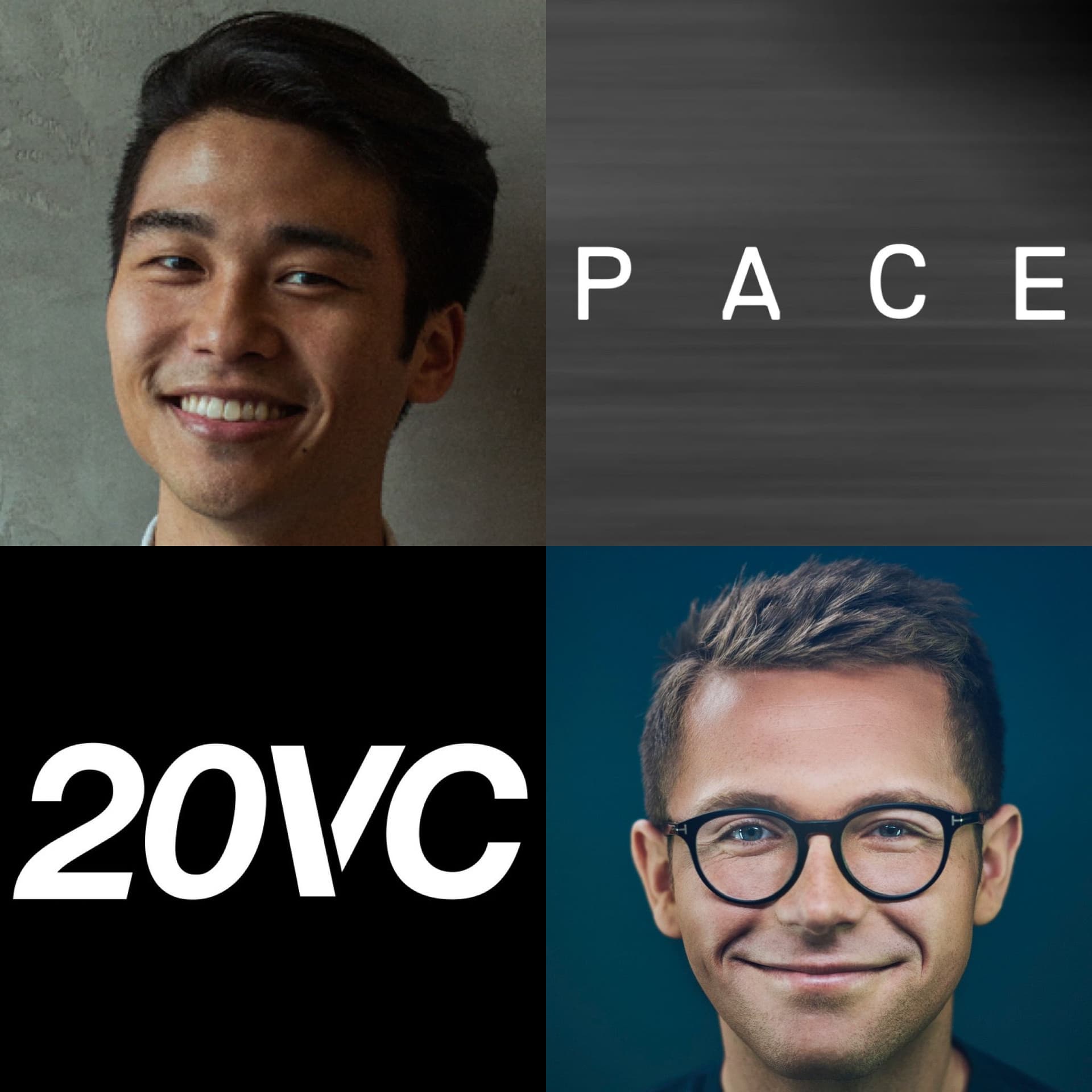
Podcast Summary: The Twenty Minute VC (20VC) with Chris Paik
Episode Title 20VC: Why VC Subsidizes the Wrong Type of Business, Why Capital Gains Tax is Crazy, The Biggest Misalignments Between VCs, Founders and LPs, Why Business Model - Product Fit is as Important as Product-Market-Fit
Episode Overview In this episode, host Harry Stebbings interviews Chris Paik, a General Partner at Pace Capital, an early-stage venture firm in New York. The discussion covers a range of topics, including venture capital strategies, misalignments within the industry, and insights on building successful consumer businesses.
---
Key Discussion Points
- Chris Paik's Journey to VC
- Background:
- Transitioned from being unaware of venture capital to becoming a prominent VC in NYC.
- His journey began at a tech meetup in New York, which ignited his interest in the tech ecosystem.
- Experience at Thrive Capital:
- Worked for eight years, significantly contributing to the firm's growth from a $10M to a $2.6B fund.
- Focused on recognizing young talent and providing opportunities regardless of their credentials.
- Core Pillars of Successful Venture Investing
- Simplification of Investment:
- Invest in companies that can be described in a single sentence.
- Importance of understanding both Product-Market Fit (PMF) and Business Model Fit.
- Market Sizing & Timing:
- Analyzes willingness to take risks based on market conditions.
- Critiques the notion that virtuous companies lack enterprise value.
- Misalignments in Venture Capital
- VC and Founder Misalignment:
- Identifying key misalignments between venture capitalists (VCs) and founders.
- Discusses the capital gains tax and its implications for the industry.
- Acquisition Dynamics:
- Describes how acquisitions can disadvantage investors.
- Future of Consumer and User-Generated Content
- Frameworks for Analyzing Consumer Businesses:
- "The Seven Deadly Sins" as motivators for consumer behavior.
- Substack Analysis:
- Questions Substack’s business model fit, despite its PMF success.
- Challenges in the Venture Capital Ecosystem
- Critique of VC Practices:
- Believes that VC subsidizes businesses not suited for venture funding.
- Argues that traditional businesses should not rely on VC for growth.
- Regulatory and Financial Structure:
- Suggests a change in capital gains taxes to equalize incentives between labor and capital.
---
Key Takeaways
- Intentional Partnership: Pace Capital's equal partnership model is aimed at incentivizing ownership and aligning interests.
- Selective Investment: Focus on fewer, deeper relationships rather than scaling through portfolio services.
- Market Timing: Understanding market conditions is crucial; being early or late can significantly impact success.
- Defensibility in Business: Defensibility should be integrated from day one, not an afterthought.
Conclusion The episode offers deep insights into venture capital, emphasizing the importance of understanding market dynamics, aligning interests among stakeholders, and the nuances of investing in consumer-oriented businesses. Chris Paik presents a thoughtful perspective on the current state of venture capital and its future implications.
For more information on the podcast, resources, and the full transcript, visit [20VC.com](http://www.20vc.com).
Written by AI. May contain mistakes. Listen to the episode to check what was said.
Transcript
Automatic transcript. May contain errors.0:00The vast majority of direct consumer brands not suitable venture investments. Venture Capital subsidizes business building of companies that should never have been venture capital targets. Venture Capital is not responsible for putting a sandwich shop in business. Where does the line stop? You all listening to 20 VC with me Harry Stabbings and this discussion stay was so, so awesome to do. For contacts I first bonded with this gap many years ago on an index vanishes trip to Iceland for early stage managers. We've been friends ever since, and so it's taken us a couple of years to make this happen, so I'm thrilled to welcome Chris Pike, general partner at PACE Capital, an early stage vanisher firm in New York.
0:40Their first firm was $150 million, and their second most recently was $250 million. Before co -founding pace, Chris was a general partner at Thrive Capital, where he spent an incredible eight years having joined the firm when they were on their first fund at $10 million. But before we dive into the show's day, are you building enough conviction to outpace other investors in this changing ecosystem? Tegas helps VCs get under the hood of their investment's quicker. Map of all the markets with deeper research, monitor the financial health of portfolio companies and even source new deals. Tegas is trusted by top firms like Red Point and Spark Capital for everything from expert calls and transcripts to quickly surfacing insights across filings, comps and banish marking.
1:22Find out why a majority of the top venture funds are using Tegas on a daily basis to differentiate, consolidate and accelerate their research, head to tegas .com forward slash growth for your free trial, and speaking of tools we cannot live without there, Secure Frame is the leading all -in -one platform for automated security and privacy compliance. Secure Frame simplifies and streamlines the process of getting and staying compliant to the most rigorous global privacy and security standards, like SOC 2 and others, and secure frames industry leading compliance automation platform, paired with their in -house compliance service and form auditors, helps you get all it ready in weeks or not months so you can close more deals faster, automate your security and privacy compliance with secure frame, schedule a demo today at secureframe .com that really is a must, and finally are you tired of using the same old tools and platforms in an attempt to manage your global team will ask to why use 16 different tools when you could just use Deal.
2:20Deal is the only global first HR tool with unmatched automation, customizations and integration making it the only platform for building contracts, visas, background checks, payroll equipment, benefits and beyond. Are you ready to see how Deal can scale with your global and local teams? Visit deal .com forward slash 20 VC and book your demo today. That's deal .com forward slash 2 0 VC to book your demo.
2:55Chris, I am so excited for this. I love the framework that you wrote. I had so many great things from Josh, from Jared, from many others. So thank you so much for joining me, Stay Chris. Thank you for having me. That's a pleasure to be here. Now we're going to have a great discussion. Stay. I always love a little bit of background, a little bit of contact settings. So how did you make your way into the world of venture first? And let's start there. I wish I could say it was intentional and not accidental, but it was more accidental. Truth be told, I didn't even know that venture capital was a thing.
3:27When I was growing up in early college, probably as a kind of bleeding heart liberal college student lumped it in and aligned it with all the finance. Oh, you're like, this isn't that actually interesting. It wasn't until I graduated. I didn't have a job. I wasn't sure what I wanted to do. Stumbled basically backwards into the tech meetup scene in New York. I remember going to a meetup at Shigshack back when there's just one shake -shack. It was like a couple dozen people. This meetup called Hackers and Founders. And I just became enamored by the idea of a tech ecosystem. That's not Silicon Valley.
4:04For better for worse, I'm a hipster with all of the insufferable qualities associated with it and the idea of a tech epicenter that wasn't too on the nose was really interesting. But to answer your question, I knew Josh Kushner from college. We were classmates. He was a year -buff me. And as I was getting my feet wet trying to figure out what was up from down in tech, I was reaching out to all my friends who were in tech adjacent and they're like, hey, angel investing, no, so can I cut up and I asked him if he wanted help very graciously so we're working together and that was my introduction to venture.
4:47Thrive capital at the time was a $10 million fund. I'd like to think that I got a start -up experience but it just happened to be a venture capital firm because we really went from zero to you name it in a very short period of time. You guys really scaled the firm. We want to take lessons from that incredible experience with Thrive to this new and out of a being pace. What do you think of one or two things that you really took from your experience building and skating thrive with Josh Riko that really impacted how you build pace? One of the things that thrive does really well in my opinion maybe even better than anyone else in industry is it leans into people's potential regardless of their age, regardless of of their credentials when I reflect on the kind of responsibility that I was able to have at thrive with no justification.
5:40The first board I ever sat on was Twitch, I was 25 or 26, I had no business doing that from a traditional sense. I think in an industry where a lot of venture capital firms understandably compensate on the basis of like performance rather than potential and junior investors' inventor kind of constantly struggling and fighting for the ability to lead deals and spread their wings and try their hand at investing One of the things that we did really well thrive mostly Josh is Identify people who are young, hungry and ambitious and just like really lean into them not need to rely on Check the box casting call situation Listen, I wanted to talk about pace and I want to start just setting the foundations Why did you choose the name pace?
6:29There were a handful of things that really resonated about the word. One is, pace is not necessarily a fetishization of speed. It is a very intentional rate of resource expenditure to achieve a distinct goal. Where are we trying to go? What do we have at hand? How do we get there? So it's more about the intentionality behind it rather than just like raw speed. Sometimes you have to go slow to go fast and vice versa. The other thing that we really liked about it is if you ever watch a competitive race toward a France marathon, you'll have the people that are winning the race right out in front.
7:06And if the camera zooms out at all, there's either in the sort of fancy of like the pace car or there's a runner right next to lead person that's the pace setter, those people are really important to helping keep the people running the race in the right mindset. But those people are not running the race. Strictly on the sidelines, their job is to make sure that when the environment changes, when things happen, spur the moment, that the people that are competing are staying focused and keeping their heads in the game. And we think that ought to be the role of venture investor. We're not running the race.
7:40The founders are running the race. But what we can do is help them stay focused, even when shit hits a fan. I love that in terms of the pace, but I can know absolutely right in terms of that analogy. The most important thing is the partnership behind any fund. You chose an equal partnership, which is a very deliberate decision. Why did you choose an equal partnership? And why was that the right decision for you? Paces in equal partnership for, I would say, two primary reasons. One is, you know, I'm sure you've heard the line, Show me the incentives, I'll show you the outcome. Sure. How do you incentivize people to do their best work?
8:13How do you get people to act like owners this phrase? Like, act like an owner is so important in making people the right behavior, what better way to actually make people feel like owners than actually make them owners and make them equal. The distance between a 5149 split is way more than 2%. Like it might as well be like 80%. And we think a lot about designing the system and designing the incentives that encourage and elicit the desired behavior. The other thing that I think is really interesting about the equal partnership model, It's really attractive from a recruiting and retaining great talent So you know world where the vast majority of firms are highly structured and going back to firms compensating on the basis of Performance not potential and really long feedback loops where you know if you have an Olympic athlete the day before they win gold They know they're great.
9:07They are fully confident they can win gold and then the day after they win gold all of a sudden the entire world's Oh my God, you're so great. In a world where the feedback loops are similarly super, super long, there are a lot of people out there that know they're great, that know they're gold medalists, but maybe aren't seen by where they are at or the rest of the world is gold medalists. We think that an equal partnership structure is really attractive and a great weapon in recruiting those kinds of people, particularly before they're acknowledged as gold medalists. And then from a potential perspective, I don't think there's a construct out there that is better suited to properly retain and incentivize Greattel.
9:45I do want to ask you also choose a very deliberate decision not to have portfolio added support, which in this world of venture value -app and services, again goes against the grain quite in a way. Why did you decide not to have the portfolio added support services model of venture? Why was that? You can't pay someone else to go to your kid's soccer games for you. And maybe that's too paternalistic of a view. When a founder chooses to work with us, and we shake hands. The implicit contract is that we show up. The person that they're talking to, that they want to join their board as the person is going to be spending time with them.
10:20That means we're not just tagging somebody in and sending it, hey, we sign up to help this company out and then all of a sudden they're interfacing with somebody they never met before. In Adventure Capital firm, there are things that are meant to scale the GP, like the investor, and those are questionable. Really, they're not necessarily helping the companies. They're helping the investor, not really helping the companies. We think that venture isn't an asset that is meant to scale. It's pretty hands -on, you're all piercelessly used, you choose a handful of relationships and companies, and we believe in a fewer, deeper relationship approach.
10:59On the back of that, I think it makes more sense for us to fully commit to every company that we invest in rather than try to build out an apparatus that makes it easier for us to deploy more capital. You say a few are deeper there. It really correlates to the type of model that you go for in terms of portfolio construction. So I just want to dig in on that before we move into frameworks, which is just how things the fund and how do you think about average check size ownership, requirement, number of companies in a portfolio just to give us a perspective on that. So we just started investing out of our second fund.
11:30Fund one was 150, fund two's 250. Portfolio construction, we believe in more of a concentrated approach. You want high teens, low 20s companies and a portfolio for more concentrated model. And in order for that to work, you need to own a lot of the companies that you invest in. We target 20 % ownership when we invest in a company. Chris, do you get that? Because I, I target me. Likunis is my girlfriend and I'm still single. Okay? So like, my question is when do you get 20 % like, honestly, I never see that. We've been successful at hitting our ownership target in 70 % of the companies we invested in.
12:07Now, rubrics are meant to be broken. It's funny. In Ventura, I feel like everyone says, oh, like my best performing companies I own the least of or my best performing companies I pay the highest price for. Yes, if you have a really high bar of conviction, necessarily the highest conviction things that you get comfort with are the ones that you break the most number of rules on, so the ones that you pay the highest price for, you own the least of. But that doesn't mean their inputs into it, right? It's not okay. If you pay a really high price for a company, like high price companies are good or low ownership is good.
12:37It's really like you shoot for the stars and even if you miss, you land on the moon. I don't think anybody will exceed anything than their highest expectations. That's a framework of approach. You establish your rules to know what your exceptions are. But it's not just a lip service. We actually do really focus on it. Like question choose, let's say we have a 20 companies. You have 10 each between you and Jordan. That is a lot of companies now you're on fun too. To be managing an on top of if you're in the high touch game without any services. It's not truly scalable. You think about it. If you add another 20 companies, you'll soon be at 20 each with board sees.
13:13Is that scalable? The short answer is yes. The longer answer is, Jordan and I don't view ourselves as the only investors at pace. We have ambitions of growing the firm considerably. I would love nothing more than my last day at pace to be Paces Best Day Ever. Jordan and I have issued terms like co -founder. We think that Aik Rob's future partners of the firm from agency and ownership. That's one solve for the bandwidth thing. The other solve for the bandwidth thing that isn't that common across industry is we take our time. The investment period for Fund 1 was 3 and a half years. I know firms that have raised funds and deployed them and that raised another fund in the same calendar year We're happy to take our time and be patient be patient for the right pitch and that helps alleviate that bandwidth issue Because companies become successful they get acquired you're banned with constraints roll off or the companies go under I have to agree the I'll wear a three a deployment period and I'm just looking at every deal We didn't be lost yet because of price and get thank God I am so grateful to have not done this for the first time in my career.
14:21I do want to discuss the company themselves, because you wrote a brilliant tweet recently, and it was completely the opposite of the way I think. So I ask every company that I meet. Chris, I'm giving you a billboard in Times Square. My friend, what are you going to put on it, captivate the audience? And you tweeted, investing companies that cannot be described in a single sentence. So very different ideas. Why am I wrong? Why do you believe investing companies that can't be described in a single sentence? So let me first say it. I could be wrong. Like that could definitely be the wrong advice.
14:55I think there's a big difference between consumer marketing and Describing the actual essence of what a company is doing the consumer marketing 100 % requires a very picky concise description when you want to a gender word of mouth or in a sales pitch, you have to be able to develop a very succinct description with hooks about the core value propositions of what the company does and what it builds. But in totality, if everything that a company is doing and building can really be accurately described in a single sentence, it's probably too one -dimensional. It's probably not ambitious enough. It probably isn't doing enough.
15:40Zooming out, I had a blog when I first started adventure. There were a bunch of posts that I stopped blogging because I thought to myself, who am I to blog? This is insane. I don't have anything worth contributing. Even worse, I'm paranoid at the idea I could put something out there and it would influence somebody to make the wrong decision. So I very much described to the kind of Hippocratic oath first, do no harm. And I think a lot of investors can do a lot of harm. One of the things that I take issue within the venture world is I think a lot of people put a lot of thoughts out there, taking as gospel, and there's this kind of fetishization of distilled down what you're building, make it punchy, through pitchfectomy 12 slides, and I think that makes it easier for us as investors to process a lot of information.
16:25When we're like, hey entrepreneurs, put your business in the box, and so we can check them all off, I fear that leads people to over rotate. In the idea generation phase, create things that are too simplistic. Any time a company is successful, it spawns a countless number of X for Ys. Uber is really successful, so I'm going to start Uber for X for Ys. One of the challenges is it's easy to describe successful companies when all is said and done in a single sentence. That is clear because they have established the category and developed the vernacular to be able to describe what it is that they did that was so hard for them to describe in the beginning.
17:05Airbnb is easy to describe in a single sentence retroactively. They pioneer the sharing economy, but if you were to describe Airbnb in the beginning and try to explain how it affects real estate prices in markets because it changes the calculus of economic return on home ownership, like that would be impossible to describe in a single sentence. And I fear that focus on pithy -ness dampens the imaginative scope of founders. I totally get that, especially when you say there about how Korean creation and dominance leads to consumer understanding where, as you said, Airbnb everyone knows now sharing, okay, I'm gonna borrow from someone else and pay a toll for that usage.
17:48It may be me think of something that your partner said. Your partner Jordan said, but your world class, when it comes to isolating companies and businesses down, to their core atomic value swaps. Now this sounds incredibly intelligent. What does he mean by this? It's really like essential value exchange between a company or product and whoever is on the other side Let's see you walk into a convenience store and you buy a candy bar for a dollar that atomic value swap is you are exchanging a dollar For a candy bar which is presumably giving you one dollar or more of Value and that's a sustainable value exchange and so when you apply that to interactions at a company or product level, that's what the concept of intent.
18:34Atomic value swap is, how do you describe what is being offered, the perception of value of what is being offered, and then how fairly compensated the party is that's offering the value for the value that's being delivered. One of the challenges that has historically plagued online gated, for example, is how How do you appropriately price helping somebody find their life's partner? Virtually no amount of compensation. If you actually find your life partner on my platform, there's no way that platform is being appropriately compensated for the value that is delivered to you. On the flip side of that, there are a lot of marketplaces that perfectly price the value that they deliver.
19:16So most marketplaces actually perfectly price the value that they deliver. Okay, let's have you just dig in on that. So they perfectly priced it at your Instacart for you versus for a low income worker respectfully. The price and value ratio are actually misaligned. The time that you save in store is 30 minutes to you that could be a thousand dollars. That value capture retrieval to the low income worker. It's probably six dollars. So actually there isn't a perfection of pricing because the value is subjective to consumer note. Instacart isn't a marketplace. The genius behind Instacart and DoorDash and other companies like that is that they perfectly price discriminate laziness and the value of a leisure hour.
20:03Generally speaking, people are a little bit more price sensitive when it comes to utilitarian things. If you're buying two apples and one apple is $1 .50 and one apple is $0 .25, and you think they're the same, but probably you're gonna buy the $0 .25 apple. But what's the value of time? And so I would say your lessons are really good and price discriminating, people's leisure hours and how they choose to spend it. Going back to the idea of the atomic value swap, let's say Twitter, what is Twitter's atomic value swap for a user? Twitter's promise to a user? Distribution, you show up to Twitter with ideas, content.
20:41You contribute your content to Twitter. And in exchange, Twitter offers you a meritocratic environment that can reward your contributions with engagement and distribution. It doesn't offer you anything else. Notably, it doesn't offer you any economic reward for your contribution. It just promises to compensate you in distribution of your thought. That's different from a platform like YouTube. YouTube actually compensates you economically for the content you contribute to it. So those are two different value propositions. The other thing, you can view that very diametrically opposite to something like a substack, where very explicitly people are creating content with the idea of monetizing it, not necessarily just for distribution.
21:30Most companies that we understand as social networks do that. They incentivize the incremental contribution of content with the promise of distribution, with no expectation of economic return in exchange. And as a result, they incentivize and attract the incremental marginal content creator because as the network grows, the prospect of attaining distribution within that network increases. On a consumption side, the consumption atomic value swap is easier to isolate. It's like, I want to be entertained. I'm willing to spend this Iota of time in exchange for this unit, a entertainment, or knowledge or whatever.
22:09Lean back and lean forward consumptions are slightly different, but in general, most media competes with each other for the incremental minute of user attention. You mentioned laziness earlier. I loved something in the frameworks, which I always think about you when I'm investing in consumers' day, and it's the Seven Deadly Sins. You set the Seven Deadly Sins at actually the Seven Call Motivaces. What are the Seven Deadly Sins just to get a framework, and how do they apply to the world of consumer for anyone thinking that we've taken a very dodgy religious turn? Sure, some deadly sins are pride, envy, lust, gluttony, greed, sloth, and wrath.
22:49These have not changed over millennia. These have, withstood the test of times, or talking about survivor bias, the seven deadly sins, Darwinistically proven. I actually think the 7 Deadly Sins are really core motivators. They describe why people do things. And I would go far as far to say, like, honestly, they're the only reasons why people do things. I think it's possible to distill down any individual behavior that anyone takes and bucket it into one or more of the 7 Deadly Sins. I kind of subscribe to the Kantian School of Thought that altruism, or when we do things that are perceived as virtuous by society, it's things to serve our own ego.
23:33It's things to fuel our own sense of pride and create a form of ourselves that we think more favorably about. I think another way you can describe it perhaps less third -raily is the seven deadly sins are ways to describe self -motivation. And at the end of the day, most people are inherently self -motivated. So when we think about that and we think about the ways to motivate people, how does that fit into your thesis around consumer investing, what you like to see, what drives consumer behavior, and what you look for in an enticing consumer investment. Just what's the tie back to investing? Yeah, this is like probably contentious.
24:11One of my frameworks is I think that the like virtuousness of a company is inversely related to its enterprise value. We have to all agree that we are investing within this framework of capitalism. When we think about enterprise value creation, I think it's easy to be susceptible to like things that appeal to our own sense of ego of like doing good in the world But the problem is there are these things called nonprofits that are designed not to create enterprise value that do incredible work I would argue that nonprofits are maybe the perfect example of that inverse correlation between enterprise value or captable enterprise value and virtue created and done by an organization.
24:54And let Ms. Taster framework that I have is, you know, the more that a company leans on or touts or suggests that it is doing good in the world, virtuousness in the world, that's great marketing. But when the rubber hits the road and like translates into enterprise value creation, not as advantaged. Sorry, how may I sound why? Because the opportunity cost of that, like virtue value creation and the trash from the enterprise value creation. Do you know what I mean? I'm just thinking that so, by any office like, hey, you can do good and make a lot of money in the same vein. What is this not saying?
25:28I'm not saying that companies that are successful can't do good. That's not what I'm saying. Let me take a step back. One of the things that I wanted to define is I think society perceives virtue as when somebody is not acting economically, right? If I were to, for example, give away money, that's something that is not economically rational, but since I would view that as virtuous. So if you describe virtue as an individual or a company acting not rationally economically or not doing something that home will economic us would do, the logical conclusion that behavior does not lead to structurally better enterprise value creation.
26:13It can be effective in marketing. It can be effective in recruiting. But from a core business model perspective, are you distilled down the atomic value swap of a company? There isn't a ton of room, perhaps no room, to internalize virtue into that core atomic value swap as a company. So when we think about this, atomic value swap, and we apply it to those seven dead leucins or seven core motor fatis and just to retrofit it to the real world so we get at, you obviously worked on Twitch at Thrive, it was one of your great investments. I want to understand, how would you bucket that in terms of where it sits in the 7 Dead These Sins or 7 Great Motivators, and how would you retrofit Twitch to that model?
26:52Sure, on the consumption side, it's entertainment. It's like some form of sloth and envy in pride. On the content creation side, it's some form of pride and greed, and I don't think that, But like describing it that way is actually bad. Again, I think the 7 Deadly Sin suffer from a branding problem. But like most user generated content networks, it is incentivizing content creation by offering distribution and also economic return because Twitch like YouTube pays their content creators. And on the consumption side, it's just competing the same way that YouTube and Twitter and TikTok and Instagram have all compete for entertainment.
Read the full transcript
27:33Can I ask you, you said before about new content, UGC platforms, essentially in franchise or in courage a previously disenfranchised creator? What did you mean by this? And how do you think about that when investing today? Yeah, I think the current state of the world is the don't want to scout put of the efficient market. So one of the things I ask is, what are the very good reasons things are exactly the way that they are? Because every single actor is constantly trying to extract maximum value from the existing set of how things are. And so if you are trying to create structurally new value, one, I think the best way and has proven in the successive user content networks is you have to empower a previously disenfranchised set of creators.
28:22So people that were structurally disadvantaged, if you look at the most popular content creator on TikTok, I think it would be no longer be the case, but definitely was for a very long time. Charlie Mieleo is a, she made a name for herself creating dance content. And dance, as a form of media, was structurally challenged in Instagram and Snapchat because audio music, which is so core to the content consumption experience, was never an endemic part of either of those platforms. And so when you look at TikTok audio, it's structurally a part of the atomic forms of content. And when you include music, all of a sudden, dance is elevated from this thing that you enjoyed, but then you had to opt into turning the sound on.
29:09It is elevated from being this kind of second -class citizen on Instagram that rewards aesthetics or Snapchat, which doesn't really have, has built up distribution mechanisms to being a first -class citizen of content on a platform like musically. Jokes like, oh, I'm sure you have a face for radio. It suggests maybe people that aren't good looking enough to be successful on TV Because of the challenges of what we reward as society can be enfranchised in a format that actually doesn't need them to be good looking Chris is that a self -ful of suggestion that I'm doing the right medium if so I appreciated a new and my mother are thoroughly aligned.
29:49And thank you. No, I totally agree with you there in terms of the encouragement or inspiration to a previously disenfranchised group. I think there's another important fact to which is the market timing itself though, and being right on market timing. How do you feel about the importance of why now? A lot of people are like, well great founders, they can win it into existence. How do you feel about why now? I think the best analogy I can come up with for success in startups is you're surfing a wave. And half the battle is making sure you're in the water when the wave comes. That is really important because if you see the wave coming, you're still on the beach.
30:26There's no way that you're gonna get out there in time to be able to surf it. And so I think that goes into the importance of timing. The other thing is no surfer really can make waves. You don't have the power to change the actual tide. I think that great founders are incredible at putting themselves in the position to surf waves, and then also are able to navigate in surf waves very well. They're great at recruiting, they're great at it, and there's money, they're great at managing, but I don't think anybody can make waves themselves. You can just surf them. Maybe you're really good at identifying them.
31:05Chris, I used to be in the camp of it's all about the founder. Now, honestly, I'd much rather a really great market and I take a much more market sound trick approach because I've seen how difficult it can be when you're a great in a shit market. How do you feel about market versus founder centrality honestly? I think I probably tend to agree with you. There are a couple of addages. One is, I feel like it's Warren Buffett. Warren Buffett has this line of, I like investing in businesses that can be run by a hand sandwich, which suggests the durability of businesses themselves. If businesses get up and running, if business are at scale, there's a lot of momentum in inertia in companies and particularly if they have moats and they're taking advantage of moats, sometimes companies can just be successful period.
31:47It doesn't even matter who's running them. The other kind of cut of it that maybe elucidating is if you have the world's greatest founder and you put them in a market that doesn't have any demand or something that's like impossible, structurally impossible, it doesn't matter how good they are. They're just not going to be able to create something that the the entirety of capitalism, the entirety of the Darwinistic state of the current economy is structurally against too heavy of a lift. Conversely, you can have markets that we're going back to the living algae, you could just be like accidentally in an area and then you could take them because it's that powerful.
32:26You reflect on the dot -com boom or there are plenty of people who created a lot of value and it was almost certainly beta. One of the questions I like to ask people was you rather invest in an A plus B, with a B plus operating team or a B plus business and an A plus operating team. And I think people's answer to that will often indicate their stage preference. Most people who invest really early might skew to the team answer. And then people that are a little bit later will probably favor the business. I tend to agree markets are a huge input into outcomes, particularly in venture. Can I ask you, we mentioned there about being in the sea or being in the ocean for that wave coming.
33:14There's still an element of timing. You'd go to have your board ready. How do you think about market timing risk? Many people said that you see very ahead of the curve into the future. Transparency Chris, I didn't like market timing risk. I want a product where if we put it in market, I know we got demand. So how do you feel about market timing risk? I agree. Being too early is just as bad as being too late. In many ways it's like rock paper scissors where you have to be just one step ahead. If you're multiple steps ahead, you lose. If you go out to surf at midnight, you're toast. I completely agree that market timing is really important, but you take that risk much more than me.
33:52So how do you think about your relationship to market timing? because you do, too. Yeah. If we're using the surfing and alluring, if you go out at 5 a .m. instead of 6 a .m. like maybe you're taking incremental market timing risk, it's still in the realm of timing the market properly. Not completely disregarding some of the factors that you don't have control over. It's not being hubris to can saying, okay, I can go out at 9 or 10 p .m. And I'm gonna make these waves and like, I'm gonna surf them. I also recognize I'm taking the surfing analogy way farther considering that like I have never surfed and so maybe everything that I'm saying is completely wrong.
34:29This is not the bill of long. Thank you for listening. But I would say the closer you are to the change, truly the less it feels like market timing risk. I would describe waves as the process of a truth going from a truth being spread from very, very small consensus to global consensus. What do I mean by that? Let's take, I don't know, what are some macro trends? Mobile, cloud computing. Let's take AI. The vast majority of the world woke up to AI in, but November when chat GPT was released. So many smart people have been working on AI for years prior to that. One could have argued that there's like market timing risk if you were in AI in October of last year, but the vast majority of people that have been spending time in the space understand that is just not the case.
35:26It hasn't become consensus yet, but it is inevitable that it will be. You said something before, any company that is pure execution risk without any market risk is not a suitable venture investment. Now I saw this and I thought no that's so wrong I tweeted it because I thought it sounded smart but if you look at Tesla, greener movement, greener transport in nicer car and affordable -ish cost there's no market risk there there's no if you produce a car like this there will be sufficient demand there's only execution risk on ability to build ability to produce scale within cost and budgets so help me understand this one any company needs that market risk to be a suitable venture investment First, I would contest the idea that Tesla had no market risk.
36:14Tell me, I'm happy to be wrong. Sure, so I think there are many different ways to look at Tesla. What if Tesla's were a million dollars each? Would it be as successlars as today? Of course not, no. Tam is a tenth. What if Tesla's had ten mile radius? Sure, but our hypothesis is if we can provide a car that is sustainable, green energy, and is sufficient for the majority of the population in an affordable price, then that will be sufficient to moan and there is no more curious. I think that's huge market risk, right? It's like that's not proven. It's certainly if you're to walk into the office of any big auto, exact, they would be like, no, that's crazy.
36:52You know, you have structural infrastructure, gas stations, every half mile. You have all of these things that advantage internal combustion cars. I would say that there's tremendous market risk creating Tesla. It was impossible to say that there would be millions, tens, hundreds of millions, billions of dollars of demand from consumers for electric vehicles. I'm really sorry to you, I didn't get you. It's good for the planet, it's cheaper than fuel, it'll get great. There are plenty of places where it's not cheaper than fuel. If you exist in a place that is off grid and particularly a decade ago, two decades ago, So electricity was more expensive.
37:33There are places where electricity is more expensive to deliver per unit of energy than fuel. In a post -economic, for a poor country, yes. Electricity is, like we have economies of scale production. We can get something cheaper than fuel. But there are, Chris, an old planning on supplying customers to the Lusoto in Africa. Okay, of course we're giving them to the UK and the France and Germany and New. you ask, that's why we're going. Yeah, so I don't see how you could view Tesla as not having market risk. You're like introducing a product that doesn't have structurally validated demand and be hypothesis, even the use of the word hypothesis suggests that there is market risk.
38:20Well, I think everything has a hypothesis before you introduce its market. When I have a jumper company, I have a hypothesis that they will wear green and orange jumpers frequently enough that they will see the atomic value in it and buy it from me. Everything is a hypothesis until there is a concrete transaction. Yes and no, I think in venture we're so primed to think that way. The vast majority of the world, the vast majority of the economic like transactions that happen in the world, happen in things that don't have a lot of market risk or wouldn't have market risk for a new entrant. So for example, I want to make ball bearings.
38:58There's no market risk in making ball bearings. There's entirely validated demand that doesn't mean that there isn't money to be made in making ball bearings, particularly if I have an advantage, a cost advantage in making ball bearings cheaper or faster or better than other people, but like the demand for ball bearings is and will be constant. That is, that's not changing. The demand is very well understood. We sit on different sides of the fans on this one, but it's okay It's good to have a difference of opinion my friend a question for you there is how do you think my market sizing risk? Just going back to like market risk for sex cus you're not a polo shirt the demand for polo shirts is well understood I could start a business also creating polo shirts that would not be suitable for venture because there is no market risk in making a polo shirt.
39:53It's incredibly well understood demand, especially if there is nothing structurally different about the product. That being said, there is money to be made. But I disagree completely because it doesn't actually be sure it's different about the product. It could be sure it's really different about the go -to -market, about the brand. It could be that this means something different to each user. It could be that we provide it in a completely different go -to -market. These are all part of the company, not the product, which make it venture backable. So I think one of the challenges is the conflation of like venture backable with creating value.
40:26There are plenty of companies out there that can create value, can create a lot of value that aren't suitable as venture investments. So as we'll be talking about venture investment is all buts of venture investment is hymns. These companies were like fire, glasses, shoes, fantastic products, but that would fit you with these. I would say the vast majority of direct consumer brands Not suitable venture investments. You could argue that something like a hymns was surfing a regulatory change Where telemedicine was empowering a category of like demand expansion That's maybe a more acceptable rationale for a super venture investment But I don't want to pick on all birds, but like what's all birds market camp today?
41:11179 million. And that's the one successful company in maybe hundreds that have tried to do the same. I am making the argument that venture capital is not the right capital instrument for the growth of those companies. Even if you were looking at like blue ribbon sports, Nike, they're like debt. These are great capital instruments to help these companies grow. And you don't need the pressure and cost of capital, associated with venture capital to help them grow. I get you, but on the flip side, I've seen this first time with my brother's business. He runs a more traditional business that would not be venture backable in ways.
41:49And you're like, debt, and I'm like debt. And he's like, yeah, but debt providers are not willing to take on risk profiles when we don't have cash flows going back five years when there's uncertain value on expansion into the US. When there is a level of uncertainty that you know, Nike saying, hey, we're going to expand beyond trainers to apparel, the banks go, well, you don't have five years of financials. And so the financial instruments that aren't venture capital don't suit the product. And so venture retrofits itself to that, I think. I think this is increasingly happening with the glut of venture capital and dollars chasing returns, venture capital subsidizes business building of companies that should never have been venture capital targets.
42:33Venture Capital, as an industry, is not responsible for the zero to one of value creation everywhere. Venture Capital is not responsible for putting a sandwich shop in business. Where does the line stop? I don't know, I agree with you. I had the founder of Butcherbox on the show recently. And Butcherbox does 600 million in revenue, very high quality revenue, the leading brand and category in the space. If you project out to a three, four years time, there'll be a billion and surprise value of three to four billion, that is the one that's done it. The all -time leader. To me, that really shows a space, which as an asset class, is not a venture asset class.
43:14Did Berture Box -Rise venture capital never? If you think about what venture can help create that would never be possible bootstrapped, it's companies that are not revenue -generative in the beginning. There are plenty of companies that just actually dig a J -curve. There's some whole development or product building that needs to reach some point of scale, and then it can come out the other side and create money and be fairly compensated in value exchange for what it's putting out there. If you're in the business of making widgets and selling widgets like butcher box or other companies, you have the luxury of revenue from day one.
43:53You don't structurally have a j -curve in your business building. Maybe you have a self -imposed j -curve because you're leaning into growth and then you're growing unprofitably in your investing in op -ax and that's going to create future scalability and then your marketing profile changes in the future. But there are plenty of companies out there that have revenue from day one. Don't even try to tap it. Can it make them grow faster? Sure. But is it existential to their existence? No. So that's the line then, where it is existential to their existence. That is the line where then venture capital is the right financing model.
44:28If the company literally could not exist without venture capital, that's probably a good criteria to suggest that it is within the rum of venture capital. Do you believe in defensibility? Everyone talks about defensibility and messes like seed of responsibility. I think it's largely bullshit from day one. I think it's built over time in process with customers with team. Do you agree or do you think fanspots can be very present on day one? I think the recipe for defensibility can be very present on day one. What does that mean? If you were to look at the system design behind companies that ultimately developed modes at scale It's not something that like happens magically overnight once the company's up and running It's like embedded in the core product from day one and so I think it's possible to evaluate a company early and see the future potential of defensibility in the form of a moat?
45:19I don't think people accidentally end up with moats and defensibility. You think they're deliberate about it? Yes. I don't think anybody oopses their way into a moat. I did like ID 10 references before every show that we do and we've now done two thousand shows and now I have 20 ,000 references. It's an incredible day to moat on a generation of venture investors. I never intended to do it at all. I just did it to all spatic question, did you loop your way into a moat? I don't think you did. You were very intentional about the way in which you approached your craft and the concept you create and that led to a structural advantage, whether it's brand, distribution and how it argued that it was very, very intentional.
46:00I think it may be nice to think about it as effortless competency, but I think you were being appropriately rewarded for a ton of hard work. Thank you, I appreciate that. Chris, we've gone on schedule, but I'd love this. There are other elements where you're like, it's just wrong the way we do it in Venture. It could be the type of companies we fund, it could be our theory around defensibility. There are other elements where you're like, ah, so wrong that way. Venture writ large encourages any and all forms of entrepreneurship. It's like to be best for Venture Capital. Venture Capital, as in industry, benefits when the most number of people are trying the most number of things, because as a business venture kind of picks the winners and invests in them.
46:43The more number of shots on goal, the better. But I also believe that there are just some kinds of businesses that just won't work. I know we're in the business of exceptions, and that is 100 % true, but that doesn't mean that everything is correct to be tried. Does that make sense? It does. And so does this go back to what we said about kind of investing in the jaker of where you have to have that. Otherwise, it's fundamentally impossible to scale, or is there an alternate meaning? It dovetails with that. I think about how many founders are misguided to start companies because they look to the current ecosystem of venture funding and use those data points as inputs into companies to start.
47:27Great founders don't listen and also are survivor bias of entrepreneurship. Isolates and rewards and creates narrative storytelling around people that like didn't listen. But in many cases there are very strong structural reasons why companies could exist when they existed. For example, let's take mobile social networks or user -generated content networks. There's a very clear reason why the order of founding went from Twitter, first to Instagram, to Snapchat, to TikTok. And it is because mobile as infrastructure and bandwidth in its earliest stages supported the lowest packet size text. And then next, compressed images, Instagram.
48:14And then images in short form video and then video and audio. There's a very clear reason why it had to happen that way. And so like TikTok couldn't have been started before Twitter. I think Venture, Heveline's and Devices, everyone to try everything all the time. And it's good for Venture. But I am increasingly interested in trying to apply greater frameworks of approach and theory onto business evaluation. because I do think that if we can increase the efficacy with which we guide entrepreneurship, writ large, just think about the returns that can happen. If we reduce the heat loss of entrepreneurship, even though venture capitalized business is structurally advantage for maximum shots on gold regardless of heat loss, if we could reduce the heat loss of entrepreneurship, that would be amazing.
49:04Do you know the venture capital product is just pretty broken? I know we're going broad now, but let you know. The alignment with our pieces is largely not there. You see that with the fun raises that we've seen over the last years. You know, bluntly, the feed or carry model makes it incredibly profitable as a business to the point where you can make NBA player salaries as a GP with large funds. There is this huge misalignment there, there's a huge misalignment in LPs who don't get carry in any of their vehicles who are optimizing for not getting fired. And structurally, the industry is fraught with breakages in my mind.
49:38Yes, I agree. It's one of those situations where like Jummi and Sentas I'll show you the outcome. Exactly. It has to be regulation, right? It has to be regulation. Regulation is probably the only answer. For one, I think it's kind of crazy that whether it's like venture hedge funds or private equity, that there are people who can combing all their labor value with capital value, right? What do you mean by combing labor value with capital? So people that deploy capital as their job are compensated for their labor value in deploying that capital as capital value. So, NBA players, right? NBA players, they create value.
50:16It is their like labor value. They are taxed at income tax level. They don't get to enjoy capital gains taxes in the value that they're creating. What's crazy is that people who are deploying capital as their job, if they're successful, the vast majority of their returns are taxed as capital gains, not labor. That's like raising, I'm not like, this is crazy, that's so broken. So if I were to think about the system design, the system design of society, if you were to look at the current state of the financial world, financial capital, private equity, hedge funds, as a brain drain, that is this massive sucking noise on smart, ambitious people, Because they've realized that, oh, this is a dominant strategy in this version of capitalism and in this regulatory environment.
51:09You probably should tax carried interest like income tax. That would break that structurally different incentive mechanism. And then it would diffuse talent elsewhere. Would it? I do think it would cool what is an overheated attraction to the industry. Chris, how are your fun raises? I mean this with total respect. But like, you're a younger manager, and yes, you spun out of thrive, which is blue chip or blue chip. But like, how does LP respond to you? I don't know if this is something that you experience as well. But for better for worse, when you go out to raise money as an emerging manager, there's nothing you can do.
51:47Like you can't change what people say about you behind closed doors. There's nothing you can do to change that. There's nothing you can do to change your track record. So when an LP does reference calls, they dig in and they do diligence. There's nothing you can do to change the data that they're going to harvest and come back with. And so in many ways, that's all it is. No, because you can change the perception of that data, which is just as important as the data. And so I will say when I know that data is going to come back, maybe not great, I will caveat and say, hey, if you were to do references on me, you would probably hear as a witness that Harry is incredibly short on time.
52:24He runs two businesses at the same time. That's a con. I'll caveat it so they're not surprised. They're expecting it They know that I'm self -aware and I'm probably looking at ways of solving it. The solving for that Expected outcome of that they should read for me is as important as solving the data itself So yes and what is the goal? Is the goal to hit a number or is the goal to find Aligned investors because if the goal is to find aligned investors you actually want your investors to have as high fidelity of data as possible. And then regardless of their interpretation of it, say yes or no.
53:01If the goal is to hit a number, then the perception interpretation of that information matters. But even perception is still like, even if you have a line investors where you think they are aligned and they are aligned to you. But as you said, you can't control the data that they get in. And so like, if they are aligned and they are truly aligned, getting ahead of it showing that yourself or where is not like some strategic manipulation of data and perception, is just a, hey Chris, I want to caveat ahead of time. This might come back and I don't want you to be put off by it adversely. Yes, but wouldn't you strictly prefer an investor that saw that as a feature not a book?
53:37Yes, but some just say don't on initial reaction. And then they go to their partnerships and they say, oh we got this back in their partnerships. We don't know you as well and don't have granular data. Oh that's bad. Oh I'm not sure about that. And then the data manipulation and contortion happens inside partnerships in -tunnel discussion happens. And what was a very pure data point, which is, ah, Harry's quite busy, or oh, Chris is quite busy, turns into, oh, well, actually, there's not enough bandwidth and there's real partnership. All of these things because of their partnership discussions.
54:08So when we were fundraising, we had kind of a mantra which is optimize for alignment, not outcomes. In many situations, people, companies can optimize for outcomes rather than alignment. And that over rotation over time leads to misalignment. So how did you then deliberately, I'm fascinated, love that, how did you then deliberately optimise for alignment over out there? We were as transparent as possible with every single investor that we spoke with and in our fund one fundraising presentation, we had a slide that says, this is what we think fund one will look like. This is what we think funds five and beyond will look like.
54:48you as an investor are, yes, assessing what we are trying to do in this moment in time. But we are also very intentional and we're trying to give you as much forward information as possible about where it is that we want to go, what we want to build, and we want to make sure that you're also aligned with this future of the firm. Because the relationships that we're establishing are not one to two -year relationships. Our goal is for future GPs of pace to have as good of relationships with the investment professionals at our LPs as we do. Decades in the future. And so if that is the goal, you have to be able to find institutions that are aligned with the future strategy of the firm.
55:34Chris, how many LPs do you have? We have about 12 institutional LPs in Fund 1 and 15 in Fund 2. How many meetings did you take for Fund 1? Probably 50? Something like that. What was the most common reason they said no? So interestingly enough, LPs have really hard jobs, right? When we invest, we at least get to invest in assets. We're like, okay, well, I think this is a good business. And regardless of the management team, I think it's a good business. LPs have to invest behind judgment. They're trying to fit a curve to a single data point if it's the first time that they're meeting you. And that is an impossible task to ask somebody to do.
56:12Like, how do you extrapolate a curve from a single data point? That's impossible. Most of our LPs for Fund1 were people that we had longitudinal relationships with. They were able to fit that curve over a much longer set of data. I don't know if we got to a yes for any of our LPs in Fund1 where we met them in the process. I would say that Maxus has a brilliant article, Invest in Lines Not Dogs. And I meet two new LPs every week and I ask them for recommendations each. and I'm not fundraising, but it means that now, you know, I've met them over years, also in my deployment pace. And the LPs that joined in fun too, we developed relationships with over the deployment of Fund1.
56:52Chris, did you do a first -class second -class? How do you feel about the closing mechanism? We did a single -class for both funds. I recognize if there's some ego -signalling involved in that. At the end of the day, the only thing that matters, the thing that helps you do what you want to do, and there are many ways to skin a cat. That's entering the world of micro optimizations, what's the biggest misalignment between Alp and GPT Stagy thing? You can't show how much time we have. So probably handful of things. One is it's not clear to me that management fees were really intended to stack over multiple closed -end funds at increasingly high denominations.
57:30Even if you look at hedge funds, right? Sure, management fees on top of a large UAM, but they're redemption mechanisms. There isn't structural cantilevering process of capital, the way that there are with closed -end funds. So if there's that, I would say excruciatingly long -feedback loops. There's the added of venture capital firms take forever to die because they're just so long in the tooth. How could you change that? Because that's just company maturation timelines. How could you solve that? Let's imagine a world, hypothetically, where there was carry clawback across funds and management fees were all to the dollar rationally budgeted.
58:09What would the venture world look like then? Let's say incentives were actually aligned. If you lost money in another fund, that could be clawed back against carry from prior funds. I've never heard of that cross -fund carry throwback. Right. For better or for worse, like, that's just the state of supply and demand in the LPGP ecosystem. Doesn't support that. Doesn't clear the bid. It's a mechanism that theoretically could exist list, with enough dislocation between supply and demand, but it doesn't currently. What happens to the multi -billion dollar funds? They raise massive, massive funds in the last few years, and are sitting on 25 years of history, bloated teams, bloated partnerships.
58:49Definitionally, I don't think all of them make it. Here's the thing, it's gonna take a long time, it's gonna take a decade plus, for this stuff to unwind, but they're gonna get lost to the sands of time. If you could change one thing about the world of LPs, what would you change? Like I think GP commits are just inherently wrong in a lot of ways because they prohibit a huge amount of diverse but brilliant people They're not proportional to wealth and there's arbitrary numbers placed on 2 % 3 % 4 % ridiculous I agree with that. Well also simultaneously agreeing with the intention to align incentives Totally get that agreed but it should be proportional to wealth There should be flexibility of mindset around it and it should be viewed in a different kind of paradigm Final one and then a quick fire, is there anything more broken on the GP ecosystem that you think is important to highlight?
59:33Or any misalignments between founders and investors, I think this is really important one for founders also to hear. Where a founder and investors misaligned, an example would be liquidity. Sometimes it is in the interest of the investor to sell when it may not be in the interests of the founders for them at that time. One of the biggest areas of misalignment between founders and investors is probably management incentive in an acquisition. Management incentive in an acquisition is basically when the acquire and company says you, the management team, will have this compensation package when you join.
1:00:09None of that is going economically to your capital. And so as an acquireer, you can be like, hey, company x, y and z, we actually want to give you a massive management incentive for a stock buyer company. In this type of situation, we're going to give zero dollars to your cap table. That's a huge misalignment of incentives between founders and investors, where the founders are like, awesome, this is going to be great for me. And then investors like stuck holding the bag because we helped build this business or get it here, there are always opportunities for misalignment. That is a very large example.
1:00:43To your point, driving the prioritization of liquidity, particularly from an investor perspective, is another area of misalignment. I think the areas of maximum misalignment are when it feels like the reputation does not carry over in between iterations of the game, or that's the final iteration of the game that anyone participants is playing. Because then people are incentivized to maximize the short term rather than long term. Chris, I want to do a quick far -own, so I say short statement and then you give me your immediate thoughts. So what's your biggest investing hit, and what did you learn from it?
1:01:16I would say like probably the company that I was able to be involved with that is the most publicly well known is probably Twitch. Gosh, I learned a lot about what it takes to be a good board member. I learned a lot about how to navigate hyper competitive environments. What did you specifically in those cases if you were to distill one or two thinnest like the importance of staying calm on a board, the importance of like product marketing differentiation, if you could drill down a strap that? I think that a great board is meant to be a mirror to the founders. Very rarely is a board supposed to offer prescriptive advice.
1:01:51In the same way that if you were to ask advice from somebody you really trust, oftentimes they would just ask questions to help you develop confidence that you are making the right decision. And so in many ways, a great board is meant to reflect as clear thinking back to the operators, the CEO, the leadership team. Not necessarily introduce net new information or be prescriptive. If I'm doing my job well, I'm half therapist, half coach. On navigating competitive environments, seeing Twitch firsthand gave me one of my mental frameworks, companies or platforms that start with the explicit strategy of coaching, like economically incentivizing, supply from another platform.
1:02:38You see this in like company starting and they're offering kind of creators or the supply like minimum guarantees economically incentivizing them that strategy does not work because you are fighting an uphill battle and going against gravity at twitch We saw countless competitors Inclusive of mixer competitor throw massive minimum guarantees at streamers on twitch and they all failed What was the future of Substack? Substack is an interesting company where I don't know if they have business model product fit. I think it's pretty clear that they have product market fit, but it's not clear to me that they have business model product fit.
1:03:19Any other piece of software that looks like Substack, you would assume does not charge a percent of revenue, particularly at the scale that Substack does. So like for example, let's say Shopify could Shopify as a business justify charging 10 % of GMV then why can sub stack? I think sub stack can because of the intangible value on cost of time to create versus the tangible value of cost of goods to sell. If it costs me $10 to make this bracelet, I can actually put a cogs on that versus the three hours it took me to write that piece of information that I don't price efficiently is mispriced is unknown price.
1:04:04I think that can work at small scale, but at large scale, it inevitably begs the question, is this worth what I'm paying? I would expect that business model to have a leaky bucket at the top. At best, get margin compressed at the top. So you have people that have the most distribution, that are the best for the platform from marketing perspective, dramatically negotiating down their economics. So if you look at like card processing, stripe, ad yen, the biggest customers don't pay the rate card, they negotiate down from the rate card of whatever 3 % in 30 cents to an interchange plus. And so you get margin compressed.
1:04:44What's the biggest investing miss or mistake and what did you learn? I think one of the things that I have learned about myself as an investor in pretty video syncratic is I make the best decisions without leverage or help. So as an investor, I don't work with an associate. I don't have an associate. I don't have a principal. I don't have an analyst. I think it's because in the past, I've been in a position where I didn't do the customer calls. I didn't myself do all of the diligence. And it was synthesized into information that was digestible and presentable to make an investment decision, but I hadn't done the work myself.
1:05:21And through that, I've learned I should not be in those positions. I should force myself to do the work myself, and if I don't want to do the work, that is a really strong input into my inherent level of conviction. I think you're so right. I think it's also so important to be the one taking the references, to be digging in deeper, to be hearing that tone change, which says enough that doesn't say everything, and to really be feeling that full experience, I think it's really important. Okay, tell me, if you were to invest in one seed -specific firm, which would it be Chris. Does Y -Comminator count as seed?
1:05:55What's seed? For me, to someone who primarily does seed investing. It could be in bold start, it could be floodgate, it could be susur, it could be true, it could be first round, it could be uncork, it could be better tomorrow ventures, A ventures in New York. I'm like very personally fond of the folks of her box group. Spent a lot of time on that. Love -tish. Hit me my friend, other than thrive, because that's obviously family for you. Which multi stage problem would you invest? This may just be because in my investing career, I had the most overlap with the firm and maybe it's because they funded us meeting at first time, but maybe index to avoid the kind of boilerplate answer of Sequoia.
1:06:32If you could choose one board member to be on your board as a founder, who would it be? I know they bring different things, but you can only have one and they are amazing that you've worked with. Who is it? I had the opportunity to sit on a board with a guy named Craig Sherman who works at a with them. I want to finish on one final one. You mentioned the five fun vision for pace. What does pace look like then in 30 is time, Chris. Peace is five or six perfectly core partners. I'm no longer there, continues to focus on Platonic Ideal Venture Capital Series A is involved with some of the most forward companies of its generation.
1:07:10Chris, my friend, I have absolutely loved this. I cannot thank you enough for going off schedule so much, But you've been a star and this has been such a good discussion. I absolutely love that one with Chris. If you want to see the full video in video on YouTube, you can search for 20VC and you'll find it there. Likewise, you can find the transcript for the show by signing up for our newsletter on 20VC .com. But before we leave you today, are you building enough conviction to outpace other investors in this changing ecosystem? Tegas helps VCs get under the hood of their investments quicker. a map of all the markets with deeper research, monitor the financial health of portfolio companies and even source new deals.
1:07:49Tegas is trusted by top firms like Red Point and Spark Capital for everything from expert calls and transcripts to quickly surfacing insights across filings, comps and benchmarking. Find out why a majority of the top venture funds are using Tegas on a daily basis to differentiate, consolidate and accelerate their research, head to tegas .com for what's growth for your free trial. And speaking of tools we cannot live without there, Secureframe is the leading all -in -one platform for automated security and privacy compliance. Secureframe simplifies and streamlines the process of getting and staying compliant to the most rigorous global privacy and security standards, like SOC2 and others, and Secureframe's industry leading compliance automation platform, paired with their in -house compliance status burst, and for more auditors.
1:08:34Helps you get all it ready in weeks, not months, so you can close more deals faster, automate your security and privacy compliance with secure frame. Schedule a demo today at secureframe .com that really is a must. And finally are you tired of using the same old tools and platforms in an attempt to manage your global team? Well, us too. Why use 16 different tools? When you could just use deal, deal is the only global first HR tool with unmatched automation, customizations and integration, making it the only platform for building contracts, Veezes, background checks, payroll equipment, benefits and beyond.
1:09:10Are you ready to see how Deal can scale with your global and local teams? Visit Deal .com ford slash 2 .0 VC and book your demo today. That's Deal .com ford slash 2 .0 VC to book your demo. Now stay tuned for a very special episode on Wednesday where we commemorate Mother's Day with an incredible array of sales leaders joining us in the hot seats.
From the publisher
Chris Paik is a General Partner @ Pace Capital, an early-stage venture firm in NYC. Pace's first fund was $150M and their second was $250M. Before co-founding Pace, Chris was a General Partner at Thrive Capital where he spent an incredible 8 years having joined the firm when they were on their first $10M Fund.
In Today's Episode with Chris Paik We Discuss:
1. From Hipster to One of NYC's Best VCs:
- How Chris made his way from not knowing about venture capital to being one of the most prominent in NYC?
- What are 1-2 of his biggest takeaways from his 8 years at Thrive? How did they impact how he thinks about building Pace today?
- What are Chris' biggest lessons from working with Josh Kushner? What did Josh do to spot young talent in a way like no one else did?
2. The Core Pillars of Successful Venture Investing:
- "Invest in companies that can be described in a single sentence". What does Chris mean by this? How does that impact the type of companies he looks to invest in?
- "Business Model Fit is as important as PMF". What does Chris mean by this? How does he determine where a company has business model fit?
- How does Chris analyze his relationship to market sizing? How does Chris think about how willing he is to take a bet on market timing?
- Why does Chris believe that the more "virtuous" a company is, the less enterprise value it will have?
3. What is Wrong with Venture Capital: The Misalignments:
- What does Chris believe are the single biggest misalignments between VCs and Founders?
- What does Chris see as the biggest misalignments between VCs and LPs?
- Why does Chris believe we should scrap capital gains tax and all be taxed as an income tax?
- Why do acquisitions allow investors to be screwed over by the acquiring company?
4. The Future of Social and User Generated Content Platforms:
- How does Chris analyze consumer businesses according to "The Seven Deadly Sins"? Why does he call them, "The Seven Deadly Motivators"?
- What does Chris believe is the future for Substack? Why does it not have Business Model Fit?
- What are 1-2 of his biggest lessons from being on the Twitch board? How did that experience impact his mindset and approach to what good is in UGC and social?
- What does Chris believe is the number one thing to look for in a potential consumer social investment? What do so many miss?


