In short
Podcast Summary: The Twenty Minute VC (20VC) - Episode with Rebecca Kaden, Nicole Quinn, and Eurie Kim
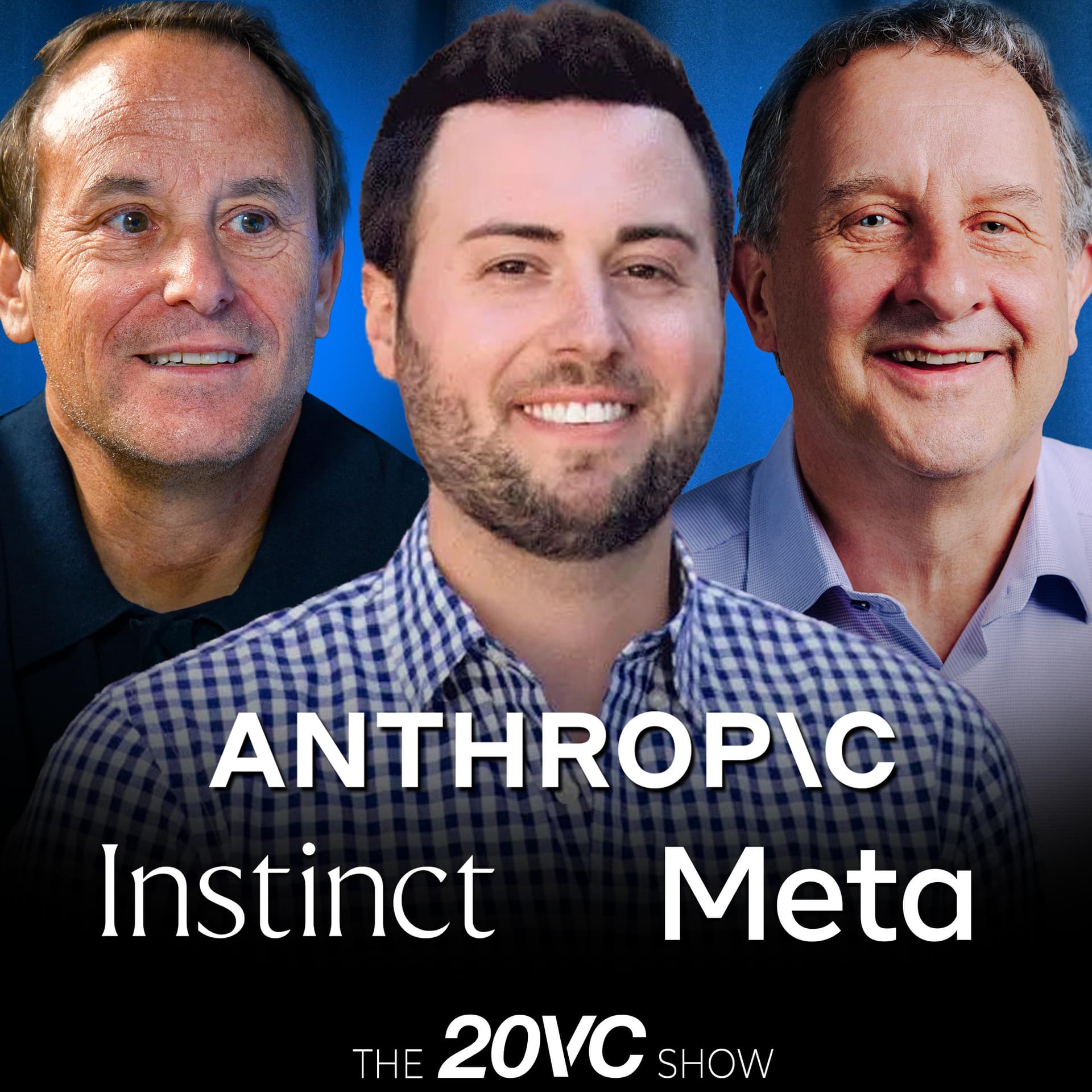
Episode Breakdown Title: 20VC Will Seed Pricing Remain High | Where is the Funding Crunch? | Three Core Elements Required to Raise a Series B/C | Why AI is Like the Lottery Today | Why Now is the Best Time to be Investing in Crypto | Why Investors Do Not Want to Reprice Companies Host: Harry Stebbings Guests:
- Rebecca Kaden - Managing Partner at Union Square Ventures
- Nicole Quinn - General Partner at Lightspeed
- Eurie Kim - Managing Partner at Forerunner Ventures
Key Themes Discussed
- Seed Rounds
- Current Market Dynamics:
- Discussion on whether traditional seed funds can compete with multi-stage funds that aggressively invest at the seed stage.
- Seed pricing has remained resilient despite macroeconomic pressures; however, varying opinions exist on future trends.
- Advice for Seed Founders:
- Founders looking to approach Series A should focus on understanding their business and the kind of partners they want to collaborate with.
- Series A
- Market Conditions:
- The guest panel provided insights on the current health of the Series A market, suggesting it is uneven with continued pressure on valuations.
- Core Elements for Series B/C:
- Key elements companies need to focus on include:
- Building momentum.
- Demonstrating strong metrics.
- Having a clear market strategy.
- Series B and Beyond
- Valuation Pressures:
- Discussion on the increasing difficulty in raising Series B rounds and the potential for down rounds versus structured rounds.
- Importance of clean terms for down rounds to avoid complex structures that can hinder future funding.
- Future M&A Activity:
- Expectations around potential waves of mergers and acquisitions (M&A) versus the likelihood of many startups failing to survive the current funding environment.
- Crypto, AI, and Hot Takes
- Crypto Investment Sentiment:
- The panel discussed why now may be the best time to invest in crypto, citing potential for revitalization in the sector.
- AI Dynamics:
- AI investment is compared to a "lottery," suggesting its unpredictable nature but also its immense potential to transform industries.
- Emphasis on the importance of building applications that effectively leverage AI, rather than merely betting on the technology itself.
Notable Quotes
- "AI is akin to winning the lottery. It is the lottery of time." - emphasizing the efficiency gains that AI tools can offer.
- "The best teams and those growing 2-5X year on year will continue to get funded."
Key Takeaways
- Investment Strategies:
- The importance of staying focused on the fundamentals and long-term value creation over following trends.
- Market Resilience:
- Seed funding appears resilient, while Series A and beyond are witnessing increased scrutiny and valuations are under pressure, leading to potential structural changes in venture funding.
- Collaboration among Funds:
- A move back towards collaboration between seed funds and larger multi-stage funds may enhance the support for early-stage companies.
Conclusion This episode of The Twenty Minute VC provided a comprehensive overview of current trends in the venture capital landscape, particularly focusing on seed and Series A funding dynamics, the evolving role of AI and crypto, and the strategic approaches needed for successful fundraising in challenging market conditions. The insights from industry leaders offer valuable perspectives for founders and investors navigating these complex terrains.
Written by AI. May contain mistakes. Listen to the episode to check what was said.
Transcript
Automatic transcript. May contain errors.0:00The next era of consumer applications will look like a consumer application and have crypto rails buried beneath the hood and is going to revive a crypto winter. Now is the best time ever for crypto. I would say AI is akin to winning the lottery. And what I mean by that, it is the lottery of time. We are seeing across the board investors are very hesitant to come in and rephrase things. I would much rather take a significant down -round than having structure on that. That's what I'm really encouraging up all the hotel companies to do. This is 20VC with me Harry Stebbings and stay, this roundtable was totally unscripted, no questions ahead of time, and I'm so glad what an amazing discussion it was.
0:39I'm so thrilled to welcome Nicole Quinn, general partner at Light Speed, Rebecca Caden, managing partner at Union Square Ventures, and Yuri Kim, managing partner at 4Run Adventures. I would love to hear your thoughts on this style of roundtable, you can let me know on Twitter at Harry Stabbings and you can watch the full video on YouTube by searching for 20VC, but before we dive into the show today, there is no shortage of helpful AI tools out there, but using the mean switching back and forth between yet another digital tool, what was supposed to simplify your workflow just made it way more complicated and less of course you're in notion.
1:13Notion combines your notes, docs and projects into one space that's simple and beautifully beautifully designed and you can leverage the power of AI right inside notion across all your notes and docs without jumping between your work and with a separate AI powered tool, automate the tedious task like summarizing meeting notes or finding next steps, freeing you up to do the deep work. It allows you to save time and right faster by letting notion AI handle the first draft, jump start a brainstorm or turn your messy notes into something polished and you can try notion for free when you go to notion .com slash That's all lowercase notion .com slash to zero VC to try the powerful easy to use notion AI stay and when you use our link you're supporting our show and speed game changing products like notion there listen to this mercury has been a breath of fresh air getting started was maybe one of the most delightful onboarding experiences I've had mercury is just so easy to use the aesthetic of it is actually quite relaxing for me it was less a choice and and more finding a kindred spirit.
2:19Imagine feeling this way about business banking. You could, if you join more than 100 ,000 startups on Mercury, the powerful and intuitive way for ambitious companies to bank, start building momentum, and leave the friction behind by visiting mercury .com forward slash 20VC. Mercury is a financial technology company, not a bank. Banking services provided by Choice Financial Group and a Volve Bank in trust, members of the FDIC. And finally travel and expense are never associated with cost savings, but now you can reduce costs up to 30 % and actually reward your employees. How? Well, the van rewards your employees with personal travel credit every time they save their company money when booking business travel under company policy.
3:04Does that sound too good to be true? Well, the van is so confident you'll move to their game changing all in one travel corporate work card and expends Super app that they'll give you $250 in personal travel credit just for taking a quick demo. Check them out now at navan .com forward slash 20VC. You have now arrived at your destination. I am so excited for this. I've won this one for a while so I want to start with a little bit of intros from each of us. Let's start with Yuri and then let's go Rebecca and then Nikki. Yuri over to you. All right, I'm Yuri. I'm a partner at 400 Ventures. We invest in all things consumer thinking about the changing behavior and different evolution of needs and priorities of consumers and how that bubbles into real business ideas.
3:51Rebecca? I'm Rebecca Caden. I'm a managing partner at Union Square Ventures in New York based early stage venture fund portfolio is increasingly global. We like to invest early and look for businesses with core network effects in markets that we believe you can tip over that are in moments of transformation where you can go direct avoid gatekeepers that are sitting on the edge and working toward the center. Nikki. Hi folks. I'm Nicole Quinn or Nikki as Margarita drinking good friends like Harry Colman. We keep on forcing you to respond to. No I love it. This is a little good friend's cool mate.
4:26So I'm a GP at Lightspeed Venture Partners. When I started a million a decade ago, we were raising $700 million funds. They're now $7 billion funds. And so we've really scaled because it's so important to us that when we invest in the generational change businesses at the CIGI or CIRIS A, because we'd love to be first institutional capital in, then we really want to stay with them through the journey. And so for us, we've been raising growth funds, then opportunity funds to stay with those companies and invest in the pre -IPO rounds. We can even talk about the benefits of that later. But for us, it really is investing in companies and just staying with them as very active, helpful investors across sectors and the generational change companies tomorrow.
5:13What's the difference of a growth fund in an opportunity fund? Yes, good question. Opportunity is later stage, like over a billion, and then the opportunity fund mainly goes into companies who've already invested in, whereas select new companies. And by the way, Nikki, thank you so much for teeing me up, because my first statement, We're gonna make this spicy as Rebecca said before this. My first statement was, it's not possible for traditional seed funds to invest in the hot seed companies of today, given multi -stage funds wanting to be in so early as the first check. Do we agree that it's not possible for traditional seed funds to play that game anymore?
5:49Disagree. I disagree with that for a bunch of reasons. One, I think, more than anything structure, structural, venture, favors hustle. And there's a long history of that. The hungry, the new, the people who are out there building new ideas and seeing things earlier. Big platforms can hire a lot of people. They can put a lot of feet on the ground, but they're also really busy. There's a lot of companies to manage. There's a lot of big checks to write and to manage to deploy the capital. And a dedicated seed fund that can be focused on meeting people before it's obvious when they're just getting started and put all the energy there can absolutely get in it.
6:26I also think we are increasingly back to an era where the returns are going to be created through outsized and better ideas and hypotheses versus then consensus. I get you and I love that idea as a seed investor, but how on earth do we play when it's like coming up on six on 30? I've had many rounds where I might three on 15 and then Andreessen coming and go hit six on 30. But I think the good founders have seen the story play out. You get a big round and a big raise and maybe somebody shows up to help you, maybe they don't. But if you're a founder that understands what you're building and what type of people you want a partner with, you do see that people are taking a lower price point valuation in the beginning with the understanding that they want the help that you have to offer.
7:13Hopefully you've got some specialization at your firm or at least yourself as an independent partner. And that's how it used to be. You are picking somebody that you were going to be working with for the next 10 plus years. And certainly all of us who did seed investing 10 years ago, like I'm still on many of those boards. Enough has happened with the rise of all the money coming in, all the exuberant valuations, all the flame outs. And now you're left with people who still want to do this, still want to start companies even though it's hard. And I think they're more thoughtful about how to build the board and the trajectory and the journey that they want to be on.
7:46I'm very much, by the way, on the same page as Rebecca and Yuri and at light speed, we really like to work with seed funds and be collaborative with them. The vast majority of the deals that I've done have been series A. Harry, you know, we've definitely worked together on some, hopefully many more. And I also think Harry, that you're in such a special position because the seed funds have great relationships with the angels. So you're in a terrific spot to be able to then do the precedle seed rounds, whereas we work with seed funds that we love to work with. And so it's about building those relationships, this is a long -term game.
8:17And so it's about like, stay true to the relationships, not messing people over and realizing it's a long -term game. You know, one way to do it is to have a strong perspective on something that other people aren't focused on. This assumes that everything is aggregating over specific things, and that's very much been the story of the last, however many years. But that is often not the case for us, and in many of the best examples that I studied from USB's history, it was very much not the case. And so I think a lot about where can I develop strong perspective that may not be the hottest thing of the moment.
8:53When we think about, like, seed itself as an asset class, everyone likes to talk about the negativity in macro. Do we agree, though, that seed is unimpacted, and seed will continue to be bluntly immune to macro cycles, given pricing hasn't really been impacted? So interestingly, we actually ran the data on this yesterday. You're exactly right. The valuations in seed have not dropped. And we'd look to the state to really over like 10 -plus years. I think it's primarily because the growth stage rounds, right, will come down as public market arounds come down. But there is that lag. And so then the bees come down, the bees come down.
9:29The seed, I would just say there is a lot of money there. And so I'd say it's number one. The reason is because of the lag of public markets by stage. And number two, there is a lot of capital. And like when people leave big funds to start their own seed funds, well, there's more money that then goes into those seed funds, as well as the big funds starting their own seed, set prep funds within the multi -stage vehicle. So there's a lot of capital going into seeing it. I'm gonna take the other side. I think seed valuations are gonna go down. Ooh, spicy. Come on. You're... You wanted to be a spicy this morning.
10:01Here we go. You're seeing the hypothesis of why. You are going to have an era, a vintage, a big funds that are God awful performances, right? That are really bad. Not yours. Not any of ours guys. But everyone else is. God awful that. And it's going to force funds to look in the mirror and say, what was wrong with that strategy. And one is going to be, we pay too much money for things. but another was going to be the strategy of very large funds writing $2 million checks does not work. You can't follow them through. They're actually not great option values that it may be the wrong allocation of capital.
10:46And if that is the case and we're seeing this a little bit already, you're going to push those funds back up market. They will retreat from writing as many seed checks. The seed funds that are often earlier in their ventages for a second are going to stop growing with every successive fund as much as they were before, because the market's going to constrain it, which will stop seed rounds from continually expanding. Some seed funds won't be able to raise another fund, given the vintage we just left. We're hearing that from LPs. And the capital dynamics will change, and at the same time, we're seeing growth rounds were harder, then dees were harder, then seeds, then bees.
11:21We're in an era where we're seeing it, A's are getting harder, right? You have seed companies who raise a lot of money. And if seed companies can't and reach their benchmarks, I think all of these pressures combined are going to over time draw the cost of sales. But I think that's predicated though on the realization of the large multistage firms. Yes. Correct. They are so entrenched within large endowment funds institutions, multifamily offices. I see it in Europe where they're like, we know we're going to lose money on X firm, but the brand is so valuable that we get customers because of it.
11:54We don't even care. Yeah, the lag is long. By the time you've had a bad fun, you might have had another good fund start to return. It all gets mixed in where the returns are happening from funds that are earlier than the bad ones that we have yet to see play out. By the time the bad ones play out, hopefully there will be a couple of new good ones to speak of. I think memory is very short in this industry. Rebecca is absolutely right. That is what should logically happen if you let the whole economics play out. Even if you have one of these earlier checks that were at evaluation that truly doesn't matter to a later stage fund.
12:27If one of those works out and they can deploy hundreds of millions of dollars after that, then it'll validate that that's still a viable gambling effort. Candidly, it's an effort for their earlier partners to get some experience because they're not going to be able to put growth into dollars to work because growth is harder. The traction needs to be higher. Now you're like, okay, well, why don't you put a couple million dollar checks to work and see what you can do with them and see if you can bring something to the table. But Nicole, I mean, I'm wondering how you guys do it at Lightspeed. Like, do you all invest across all of the stages?
12:55Like we do at Foreigner, you know, we do seed all the way through to Croats across our fund, and it's the same partners that are doing that work. No, we're very much specialized by different stages, by different sectors. We really believe the light bead that we can be the most valuable board member by specializing. And Harry, on what you said earlier on the LPs perspective, I would say, but as GPs we care, like we really care about those results. How do we keep putting money back into the fund and recycling So that we see a lot of funds move away from carry optimization to fund appointment an AUM Which it is there is a fund that we were talking about earlier that is doing that we are definitely not doing that So for us it is nothing to do with AUM.
13:37We are laser focused Advise me not making sure that it is about the carry it is not about the AUM That is part of our DNA always has been we remind each other of that every single week Okay, and then $7 billion funds. Yeah. You don't think it's at all about the A. And do you think you're getting into the carry in this lifetime? We're only optimized about the carry for the $7 billion. I love you and all your partners, but I have the key to what you just said is, handle my partners. So as we have increased the AUM, we have increased the number of partners. When I first started, we had three offices globally.
14:15We now have 11 offices globally. And so we really have made sure, hey listen, there was a year where two of the largest global outcomes were in Europe. We're like, we don't have boots to the ground in Europe. We need to make sure we're doing that. Rebecca, you said you just did a deal in Europe. There are huge opportunities out there. So now we have London, Berlin and Paris office. That's how it scales. Unfortunately, the costs also scale. Not enough to hear. You're looking at 140 million in ARR. I mean, this is a pretty good SaaS company. The cost is to grow. The cost absolutely grown. You guys have tons of partners and it's a whole, it's just a very different asset class.
14:52Like I think the other argument is that venture has become a very different asset class. Same way that a lot of other asset classes have evolved, right? Private equity follow the very similar trajectory. And as that evolves, the desired outcomes, the way people make money, all of it changes depending on what you're looking at. I don't think that's bad. I just think you're bifurcating this into different buckets of capital and right now There's a lot of overlap in what we're all looking at from a company perspective Some could argue they'll be increasingly less overlap that those asset classes will evolve towards different fits for the type of Platform and firm you've evolved you see that with general I'm a hospital system.
15:31That's an example, right? You can build a very large platform and say hey it an asset that before was totally non -inspectrum could be super interesting for us, like a hospital hospital. We're doing the exact same thing, where we never had a biotech team beforehand. We had one venture partner part -time doing healthcare and then we said, listen, the returns in healthcare are so enormous. And so, yeah, setting up new practices, new franchises that we never looked at or we part -time looked at before and tested it out for a few years. But now we're really doubling, tripling down on that. So I think that it's super important to do that.
16:05I think the place that it gets difficult as once you start to say, I've got a very large firm from an umbrella level and then I've got a bunch of different mini portfolios, not mini, they're pretty large at that stage anyway, but then there's sort of teams that are running portfolios under a portfolio. Maybe they work together, maybe they don't, maybe everyone's responsible for their own returns, but that is one thing that we feel is differentiated up for on our where all of us are working on the same portfolio. We have different companies, but we don't have differentiated carry, we don't have differentiated economics.
16:34It's the same fund, and so if there are reserve dollars that are limited, then we need to decide, hey, is it going to be this company or that company? Which one do we think is going to move the needle here on the whole fund? I think that's a conversation that in our partnership makes it a team effort versus if you're running your mini portfolio of 100 million or a billion, then you're going to be optimizing for your own outcome. There are other firms that get so big that you have to start splitting things up because you literally can't have everything be consensus up from like 20 partners and 20 different strategies.
17:04Definitely not consensus. The best ones are the non -consensus. When we think about kind of the immune nature of seed, if we go to Series A, Rebecca you mentioned kind of your recent doing a Series A deal, what are we seeing in terms of Series A markets? Are there as frothy as ever? Often people are actually saying that's why we're seeing crunch. What are our thoughts on frothiness or crunch at Series A? I think the Series A market right now is actually really interesting because you're seeing tail of many different worlds depending on what you're looking at. Things that are, I think getting outsized multiples still less than they were 18 or 24 months ago, but dramatically different than other pockets.
17:41Anything with momentum. Momentum, I think, has a giant premium on it now because it's gotten much rare, kind of across category, momentum -driven businesses we are seeing this. Obviously, things in high -flying categories, things that touch AI and have momentum, right? Massive multiples right now. And I think there's a big premium for season teams, people who have seen it before and particularly if they've seen it before with good outcomes because it feels like this market is quite complicated and and there's a desire for teams that have been able to navigate things before on the other hand I think anything with a complicated story things that are figuring it out and are seeing some growth curve But it took a while for that to figure it out So maybe they had to spend some of that seed money so their ultimate revenue is less than what you ultimately would like and their curve is newer.
18:30Very hard to raise money for big opportunity in. Anything in complicated markets, like things that have complexity, I think, are very hard. And that might be the opportunity for the seat funds. If you are a specialist and you understand that complicated market, and you're able to see that trend earlier than a series A fund or a later stage fund that needs to see more traction to get that over the line, then that's your opportunity to have and hopefully your valuation to have. I just pulled up, we had a slide in our AGM meeting last week or two weeks ago. Essentially, A valuations are at 35, which was the same as 21.
19:02And now we all know about the spikes and the 20 on 100 and all of that, but like as an average, it was 24 in 2020, 35 million bucks and 21, 40 million in 2022 and then back to 35 most of this year. So you aren't seeing the drop that you are in the series D, which kind of balloon to 740 million in 2021 and now is back down to 340. You're still at the same level. You're still at the same levels right now in the seed. We were joking just before we started that I had a 2 on 7 back in the day that I'm still working with now and is doing really well. We're talking a 10 and 11 of the last two years as your average seed price.
19:41We definitely hear more about these really high priced rounds, but as an average, things are still the holding stevels. I would also just add, like, something is worth what someone's willing to pay for it. So on the acquisition side of things, everybody thought it was INSANE when Facebook paid $19 billion for WhatsApp, right? But now, beauty of hindsight, my gosh, was it worth 10 % of Facebook's market cap to buy WhatsApp? Absolutely. So the same applies on the other side of the spectrum at Seed and Series A. It's like, this one, it's really worth what someone's willing to pay for it. And at Light's Feed, we're huge believers in AI, and by the way, I can't believe we've for 23 minutes and we've only mentioned AI once.
20:16That to us is really worse, like paying, you know, a slight premium, not a crazy premium, Harry, for because we're such believers that that is the new technological wave. And if like open AI really do what they do, plan to do with regards to the like app store of AI, then that's gonna be like a new search distribution wave. And so you've got like at least a couple of really powerful tailwinds coming together on AI. Yeah, the valuations are going to be slightly higher, but honestly, that's worth paying for in this market if you truly believe in the upside of AI. What percent of your deal flow is AI in the first line?
20:55I can give you some stats. We've invested at light speed at 54 companies in AI, invested over a billion dollars in AI. But big but, that was not all this year. That is an order of generative AI. Right, that's been over the few years, over the last few years, a lot of those companies are doing exceptionally well. Generative AI, though, again, we're real believers in, across different sectors, healthcare, Fintech, enterprise, consume. Great, I think AI is quickly becoming a sometimes critical building up piece of many companies versus it being an AI company. For us, we've invested in, I don't know the number off the top of my head, but you know, a good handful of new AI first focused investments of different kinds of categories, both kind of the enablement and the application layer.
21:39But the dramatic impact in the portfolio has actually come from existing portfolio companies, application of it, which has for many of them changed trajectory or meaningfully evolved their business. And it's a technology. One of the remarkable things about the technology is that it's pretty easy to use. The packaging is very different than previous shifts. And so the opportunity to easily implement tool sets that are coming onto the market and match it with platforms already at some scale in different categories is so powerful that we're seeing the outside impact there so far even more so than kind of the net new businesses.
22:17So I was just having breakfast this morning with one of the best van Trinvests in the world, I think. He said, you just can't play the AI games because the pricing, Dave, anything good is untenable. I mean, what is the AI game? I guess if you are trying to find the Google AI equivalent, then you know, you're at this place where you're trying to really think about infrastructure building, but think about all the applications that have come on top of that. And that's just like a Wild West. And you have, it's not even begun. And I think what we get really excited about is AI versus like a crypto or NFT craze.
22:48AI is something that can actually change consumers lives. And what then this technology could do to make that actually a business model that makes sense for somebody else to build? That's what we really get excited about. And so we're still thinking about everything from a consumer lens, like what is the thing that you're solving that will meaningfully change somebody's life. And then is there an AI orientation to it that could make it more cost effective, more scalable, faster -going market? I would say AI is akin to winning the lottery. And what I mean by that, it is the lottery of time. So when you're like, say, 10 hour working day, you spend maybe an hour of writing a newsletter.
23:24Well, that could get compressed down to 10 minutes, right? You behives, you use letter platform, you use their AI, you can just do it at a fraction of the time. You don't have to spend the same time on your customer support. Your operations is made much more efficient. You then have an AI chief of staff or an EA or a family planner. It's incredible. We can't all afford to have family EA's, but if you're playing like $10 a month with AI, you definitely can. They can take so much off your plate. So you suddenly wake up and you have two or three hours extra in your day that you did not have before.
23:53It is like winning the time lottery. And what are you going to do with that time? Hopefully more experiences, hopefully more travel, hopefully more enjoyment. So then it becomes what is the future of fun and entertainment? Maybe you're using character AI and talking to your favorite characters, but there's so much we can do with our new lottery of time. I think the person you were talking to, if you believe all of the value is going to aggregate in a very small number of underlying models and platforms, that may be correct. But I think what you're hearing here is there is a tremendous amount of excitement around application layer and quite solution tools that actually are likely to aggregate a lot of value not because they are AI but because they are meaningfully solving problems that have existed for people for businesses with a new tool set to do that better faster cheaper.
24:38By the way, on 40 was a series A price that made sense because you've got the deal math at a certain point a percentage ownership of a certain amount of dollars, a certain valuation kind of coalesces to a price, a clearing price. That just means that team and that idea is deserving of getting both rounds at the same time. But they're still going to need to do the work to be at a series B metric level to be able to get the next round that's going to clear that price. Otherwise, their series A is going to be at the same price that that was at. Time might be different in this moment based on which founder you have and what you're building.
Read the full transcript
25:13But ultimately the metrics all converge to the same. You have to have a real business at some point in time. Speaking of a real business at some point in time. Are we nervous of doing A's cognizant of the fact that I don't know about you, but there really is a crunch at B. B and C it's like, well the rubber hits the road, the crunch is real. Are we nervous about doing A's given the very different and changed expectations at B? I'm on the board of a company where we did the A and Rebecca actually just did the B. Those founders are so thoughtful and so smart, it's daybreak. What they're doing is mental health for adolescents.
25:45And so I would say, listen, like there is a crunch in terms of valuation. Definitely, that is coming down. But I do still believe the best teams and the ones that are growing, you know, 2345X year on year, they will continue to get funded. Really, we're just moving to like a flight to quality. And that's okay. Do you think that realizations hit in the minds of founders in terms of the valuation crunch? I find they're still holding up. I think it's starting to. We're seeing it kind of just split into a couple categories. We've had a bunch of bees and seas kind of raised in the last kind of couple quarters.
26:19Things with momentum raise great bees. We are seeing that we've had two in my portfolio last quarter. They raise great bees. It takes a little longer. Maybe the process is more intense for them, but they get done. It's momentum enough or is it momentum and efficient? Momentum, a market that is deep and expansive and exciting that has a why -now to it, and fundamental economics underneath that that is exciting to people and look to be sustainable. You need that whole package for that strong round right now. The efficiency is crucial, I think, because before an momentum alone was enough. No, no, no.
26:54It has to be momentum paired with a very strong, efficient historic and I think a really good market story. Then there was this other group. We're actually like, I'm excited about value, which is, these are interesting businesses. They're sitting on messy cap tables because they raised at too high of a price. And what's slowing down there around is that the business is pretty interesting, but it's not all the things we just talked about for some reason. And beating or it was just price too high. And beating ever post it last raised at is going to be hard and people are very scared of that. We are seeing across the board, investors are very hesitant to come in and rephrase things and to do the downround and deal with the anti -tolution and navigate the messiness and it's so powerful.
27:38It's just so painful to do a downround, the impact on the world. It's not that painful. It's either that or you go out of business. So I think, you know, I had a conversation with a founder who was like, look, we got the message, the board, the, you know, the founding team, everybody understands this is not 2021 and we want to, you know, have a great partner, clean, clean terms and we want to move forward. There's like something great here and we want somebody who believes in our growth and what we're building. That is a very sound head on shoulders across the board. And I think that is what you're going to start seeing because the last six months it was quiet because everybody was waiting on the sidelines because nobody wanted to do the dirty work of reprising things.
28:16But if it's acceptable to just not reprice for the sake of it, but just to do it with logic, Then I think people start to say, okay, well, this is the price that I would pay for this asset at the stage and here's why So it's not personal. It's just this is what the market is bearing right now and the opposite part of that is very much Clean terms. I would much rather take a significant Down -round than having structure on that That's what I'm really encouraging up all photo companies to do I think clarn is a good example in Europe right and they do it 90 % down -round rather than taking like a lot of structure because that structure then sticks with you for multiple rounds.
28:51Take the straight vanilla simple terms, keep it clean, do a down -round, you can come back from that, don't put a bunch of structure on. A lot of some of the founders understand that the last rounds, they don't think their companies were really worth that at the last round. Yeah, they understand the benefits and downfalls and markets we're finding or we can talk to them. I don't mean this isn't hard. It's super hard to run a company right now. It's super hard to deal with that volatility and be operating in markets that are completely different from what you were in. But I'm finding a lot of sophistication and understanding of the end goal of turning over these next cards and being able to do it in the best way for the companies.
29:32But Rebecca, I think what you're saying is that it's actually right with regards to founders. But I don't know about that with employees. I don't know you think that employees say, hey, I think my company was worth 2 billion. And it is a surprise for them if it's not a problem. but my shares were worth a million dollars. And now they're under water. So I'm gonna quit. I'll do it. There's actually it's really hard to dig out of that problem. And so you do see a lot of turnover on the employee side because it's better to just start fresh with a new package than to try to hope that you can get out of underwaterness.
30:02That might be unfortunately kind of the necessary piece of it because otherwise you're just coming up with structure or something to keep the price and hunting the problem down the road. and not doing no one a service, not the founder, not the employees, not the investors. And so hard work is hard, but if you're doing it for a purpose, can be good. So series A sounds okay. We'll take the downhounds. It'll be okay. So graduation rates will stay the same. Or will they? They're not going to stay the same. They're going to go to the same. They're going to. So we have like way increased mortality rates.
30:36We think how do we think about that? Yes. I think we have way more mortality rates, which may go back to the beginning of why seed is hard because you can't just do it because you think it's a good idea. You have to be in context with who else is in the market, downstream from you and what are the series and investors going to be looking for and if they're all looking for metrics and big markets with tailwind, all of the stuff that Rebecca and Niki and I have been talking about, then there are a smaller set of concepts that are gonna be in the sweet spot. And if you wanna be fringe, you gotta figure out how that's gonna get fringe follow one, which is still there, but it's just a lot harder.
31:09I would say, I don't think it's necessarily a bad thing. What would be bad is if those trophy markets had really continued and people were starting to then put good money after bad In companies that hadn't found product market fit, but my gosh They're sure what raising as if they found product market fit and it lightspeed listen like yeah Our valuations increased in those frothy times, but our like pace of deployment didn't we always stitch like a three -year pace That was true then that is true now. We didn't want to get too carried away I would have to say like a lot of tourists came into BC and they were like okay great Yuri Rebecca have done the A's in these deals or season these deals.
31:46I'm just going to do the B or C rounds just because without doing their proper diligence. That is really where we ran into problems because those companies die from indigestion rather than starvation. And I think those companies took on too much money. Well we see a wave of M &A, small scale M &A, of your high growth companies picking them up for nothing, and for cents on the dollar sorry, or will it just be a generation of companies that die? I think we might see a little bit of M &A, but I actually think that M &A is really hard right now. I think you're just gonna see a lot of them, unfortunately, die because M &A works if some other piece has a lot of cash, right, or has a lot of asset, and you're seeing later stage companies being told to really focus, to really focus on branch, to really focus on the essentials of the business, which often goes against the opportunistic M &A.
32:33I think you'll see aquahires. I think you'll see it in kind of small ways, but we're also not really in an era where you can just sell a lot of stuff to Facebook and Google. And whenever the sell may be, the market multiple on the clearing price is going to be based on public ops. And so you're down to a very poultry 1X at best for a lot of assets. I have asked a lot of banks, but also like, called DevBizDeb teams this at the larger consumer companies. And they're all hiring. They're all really busy. So they're definitely doing work, but they're not putting money to work. They're just analyzing a lot of businesses and then unfortunately not pulling the trigger.
33:12Rebecca, you said earlier about challenging set of numbers coming from lost generation venture firms. Does the generation just get a pass? I think there's going to be some rebu - you're hearing from LPs. They've been overallocated to venture. The liquidity cycle isn't really there. They're nervous about these ventages. I don't think it's like there's going to be a massive retreat. Also because innovation is exciting and it will always be and this is at the heart of it and long term such a believer in it, but I think you're going to see at least a little bit of a reshuffle thing and press towards focusing in a different way.
33:47And probably, I press more towards what is tried and true, what stood the test of time, and where that unfortunately magnifies some of this disparity is probably amongst earlier emerging managers who may have raised of the last few years. And as a result, our first or second fund is the fund that's kind of one of my partners called it like the special child that needs extra help. And it's that fund in 2020, 2019 that unfortunately had to live through COVID and then had the run up and then overspent and then couldn't pull back that enough. And so a lot of the market dynamics disproportionately affect those ventages.
34:23And if you had ventures prior and you have ventures after, then you probably can get through it. If those are the only two funds you have, you're probably gonna suffer. The key to this is liquidity. Yes, the IPO market is looking miserable. That window is not exactly wide open to say the least. But Harry, you know my brother, Jamie Quinn. He is at a fun new view capital. And he runs the part of the business that is saying to funds like Forrana, USB, Lyspeed. Hey, do you want to sell some of your older positions to us, gives you liquidity? And then they continue to take those positions on for the future.
34:59So I feel like there's like new creative ways where folks can think about getting liquidity and I'm making sure that they do have those solid, consistent, redundant. I love this. It's been so long. I feel like we should do a podcast called The All Out podcast. With no straight talking points, just like riffing for an hour. Yeah, I'm doing the thing. What does we cover here? I want to finish this. I loved your same early Rebecca that let's make it spice. Love it with its spice. What is your spiciest take then today if you have one each? I think mine is we are exiting the time of consensus -based venture capital that we are going to learn that this idea that everything gets bit up because there's this like the myth of a hot deal is a myth that over time most of those are not going to be worth very much at all that the industry is going to go towards development of ideas and perspectives and the edges of it versus consolidating at the center towards chasing the world.
35:57because the ultimate value creation of that is going to prove out to have been low. I mean, I would say, you know, whereas we're all paid to be, you know, innovative thinkers here at Forerunner, we're back to the basics. This is about building businesses that solve real problems and that takes a lot of time and a lot of thought. And it needs to be... As far as you take, here. Isn't it? Because it's not about what's... I mean, it's a little bit of what Rebecca was saying. It's not about what's hot. Because half the stuff that's hot, I don't even know what they're talking about. What is the behavior that's happening and what is it matter?
36:26And so some of the investments that we've made this year, actually my partner invested in one that's a, it's an auto body shop, a chain of auto body shops. How is that venture? Well, it's venture because a lot of the technology that goes into powering that can then start to create a digital native franchise, which then is scalable. So I think we're having a lot of fun going back to, let's not think about just tech for tech -seek and let's think about problems to solve and how tech can make that more efficient, But ultimately, like you said, I think we're back aside GCBata health care system. That's been around for a long time.
37:00But suddenly returns in that investment strategy makes sense in venture, because other things are not returning as much. Nikki, hit me. What's yours? Hot take, going back to where we started from on the multi -stage funds. I think we spent far too many years with the multi -stage funds during the seeds, the A's, the B's, the C's, and then suddenly realizing, wow, now I'm the only one on the cap table. There's no one else to turn to. There's no one else around to help support this company with me. And so I think we're going to go back to the old times and being like, great, as we're collaborative with seed funds.
37:37Then we'll do the A, we'll share it with our favorite people for the B. Then maybe we'll split the C with them, show it to our favorite people for the D. We're going back to that time. I have another one. Now is the best time ever for Crypto, right Rebecca? Guys, I have loved this. Thank you so much for doing it. You have been amazing. Thanks, Harry. Always a fun time. Thank you. Awesome team. Well done. That was fantastic. I have to say we really did have so much fun with it. It's amazing how much more fun you can have when you don't have a schedule and have no topics planned. It was an incredible panel.
38:08So thank you so much, everyone, for joining. If you'd like to see more from us, of course, you can on YouTube by searching for 20VC. But before we leave you today, there is no shortage of helpful AI tools out there. but using the mean switching back and forth between yet another digital tool. What was supposed to simplify your workflow just made it way more complicated and less of course you're in notion. Notion combines your notes, docs and projects into one space that's simple and beautifully designed and you can leverage the power of AI right inside notion across all your notes and docs without jumping between your work and with a separate AI powered tool, automate the tedious tasks like summarizing meeting notes or finding next steps, freeing you up to do the deep work.
38:51It allows you to save time and right faster by letting Notion AI handle the first draft, jump start a brainstorm, or turn your messy notes into something polished. And you can try Notion for free when you go to Notion .com slash 20VC, that's all lowercase Notion .com slash 20VC to try the powerful, easy to use Notion AI's day and when you use R -Link, you're supporting R -Show and speed you've game -changing products like Notion there. Listen to this. Mercury has been a breath of fresh air. Getting started was maybe one of the most delightful onboarding experiences I've had. Mercury is just so easy to use.
39:27The aesthetic of it is actually quite relaxing. For me it was less a choice and more finding a kindred spirit. Imagine feeling this way about business banking. You could, if you join more than 100 ,000 startups on Mercury, the powerful and intuitive way for ambitious companies to bank, start building momentum and leave the friction behind by visiting mercury .com forward slash 20 VC. Mercury is a financial technology company, not a bank. Banking services provided by Choice Financial Group and a Volved Bank in Trust, members of the FDIC, and finally travel in these banks and never associated with cost savings.
40:05But now you can reduce costs up to 30 % and actually reward your employees. How? Well, the van rewards your employees with personal travel credit every time they save their company money when booking business travel under company policy. Does that sound too good to be true? Well, the van is so confident you'll move to their game changing all in one travel corporate card and it spends super app that they'll give you $250 in personal travel credit. Just for taking a quick demo, check them out now at navan .com forward slash 20VC. As always I so appreciate all your support and stay tuned for an incredible episode this coming Monday with Mateo at 8th Sleep.
40:44It's one of the best we've done in a long time on management. Stay tuned.
From the publisher
Rebecca Kaden is a Managing Partner @ Union Square Ventures, one of the leading early-stage firms of the last decade with investments in Twitter, Twilio, Coinbase and many more.
Nicole Quinn is a General Partner @ Lightspeed where she has led investments or sits on the board of Calm, Cameo and LunchClub to name a few.
Eurie Kim is a Managing Partner @ Forerunner Ventures, the leading early-stage consumer fund. Eurie has led investments and sits on the board of Oura, The Farmers Dog, Curology and more.
In Today's Roundtable We Discuss:
1. Seed Rounds:
- Is it even possible for traditional seed funds to play in a world of multi-stage funds investing so aggressively at the seed stage?
- Is seed immune to the macro environment? Will seed pricing remain as high as ever?
- What advice does the team have for seed founders approaching a Series A? What do they need?
2. Series A:
- How is the Series A market looking today? Is there a crunch at the Series A?
- To what extent are valuations compressed at the Series A?
- What 3 core elements do companies at the A stage, looking for a Series B next, need to focus on?
3. Series B and Beyond:
- Is the real crunch at the Series B?
- Why are down rounds so much better than structured rounds for companies raising?
- Will we see a wave of M&A in the next 12 months?
4. Crypto, AI and Hot Takes:
- Why is now the best time to be investing in crypto?
- Why is investing in AI a lottery right now?
- What is the most controversial thing that each believes today?