Ask ChatGPT

 The Two Matts
3 Nov 2026 · 53m · 17 chapters
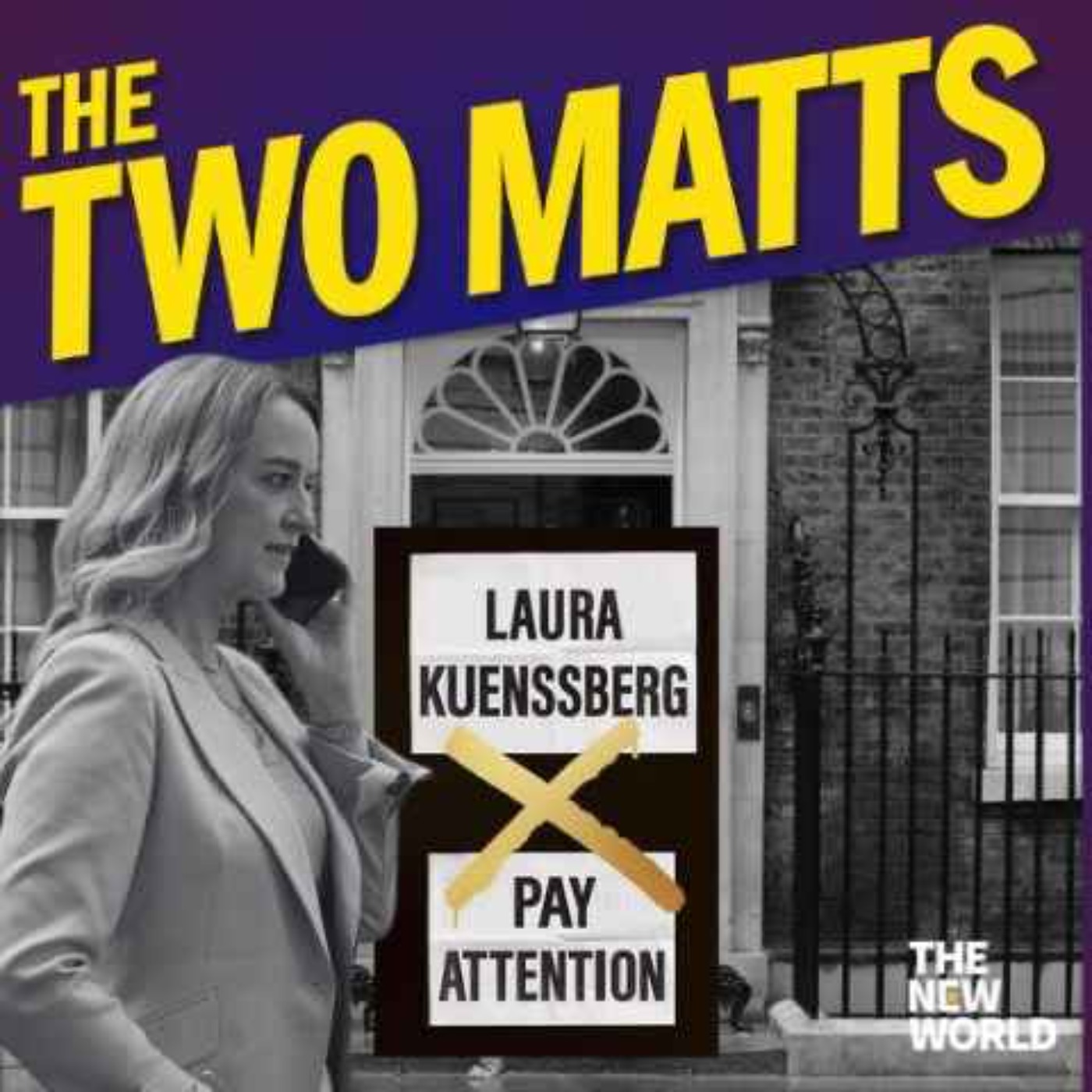
Laura Kuenssberg discusses her book Pay Attention, arguing that UK politics has become more volatile due to social media, party “churn,” and aggressive campaigning, but that the solution isn’t to “lose our minds” or embrace a “move fast and break things” populist mindset. She emphasizes the need for shared reality built on reliable, scrutinized information, and defends the BBC’s role amid contested truth and funding debates.
Laura Kuenssberg is a BBC political journalist (former political editor, presenter on BBC Sunday shows) and documentary maker; she previously produced Brexit-era films and a series called State of Chaos. The hosts are “Two Mats” (Matt and Matt).
Government often “doesn’t work well” despite spending over £1 trillion annually; politicians sometimes ignore voters’ priorities; social media enables distrust campaigns; the BBC should be transparent (“show your working”) to maintain trust.
Brexit referendum reporting disputes (e.g., “£350m” and economy warnings); Farage’s “pure cold rage” comment after Henry Novak’s murder; Farage’s defensive press-conference tactics and “mainstream media fake news” style; BBC audience reach figures (e.g., 6 o’clock news, Sunday show).
Written by AI. May contain mistakes.
Laura discusses her passion for journalism and the motivation behind her book.
Exploring significant changes in UK politics and the influence of social media.
“You come up for air and go, right, can we actually look at what's going on here?”
Discussion on the responsibilities of politicians and citizens in today's world.
Laura critiques the media's effectiveness in informing voters about politics.
“Before I worked in politics and covered politics, I was not interested in what was happening, you know, 20 past four on a Thursday afternoon in the House of Lords.”
Discussion on the media's coverage of Brexit and the backlash against it.
“And all we're interested in is finding out what's true and then explaining it and reporting it as accurately as we can.”
Explore how political figures manipulate media narratives for their campaigns.
“And they went, oh, well, people weren't informed properly.”
Discuss the importance of access to reliable information for democracy.
“The longer I'm in the chair, the more I believe that to have a functioning country and a democracy that is worth believing in, you must have the right to access reliable information.”
Learn about the significance of transparency and trust in journalism.
“And I think that's all about connecting, trust, show your working, right?”
Investigate critiques of the BBC's impartiality and the response from journalists.
Examine the changing landscape of broadcasting and the integration of digital platforms.
“But it's certainly a vigorous debate as to whether TV politics is doing its job anymore.”
Discussion on the role of digital platforms in modern conversations.
“But the idea that it's one or the other is just wrong.”
In-depth analysis of Nigel Farage's influence in UK politics.
“One is that you talk about his statement in June about the Henry Novak case.”
Discussion on the rising anger in politics and its consequences.
“For a period of time, there was something happening in our country that I did not recognise.”
Discussion on the current state of politics and the BBC's role in it.
“i think has in those sort of what's happening in day-to-day politics uh is different neither Randy Burnham or Kemba Baden-Ockle, people who particularly want to do that.”
Exploration of the funding model for the BBC and its implications.
“I mean, look, we live in an era where the truth is contested and we have a precious organisation.”
Discussion on the significance of truth and scrutiny in media.
Analysis of political communication and figures like Andy Burnham.
“I've been a long time since I've been like, oh, gosh, I've got the attention span for that these days.”

Get the gist, explore an idea or ask about something said.
 Claude
On The Two Matts, what are the key points of this episode?
Searching your listeningAutomatic transcript. May contain errors.
0:00Cash Now, More Later from Opendoor gives you cash up front for your home, plus all the profit later. That's no chaos now, no cash left behind later. Skip the showings now, pocket extra profit later. This is so simple now, this is so awesome later. Or sell fast now and pop the champagne later. Cash Now, More Later, now available nationwide. Start your offer at opendoor.com slash ACAST. Profits calculated after fees and costs, eligibility and offer price may vary. Shipping, billing, admin, payroll, marketing. You're managing all the things. So why waste time sending important documents the old-fashioned way?
0:38Mail and ship when you want, how you want with Stamps.com. Print postage on demand 24-7 and schedule pickups from your office or home. Save up to 90 % with automated rate shopping. That's why over 1 million small businesses trust Stamps.com. Go to Stamps.com and use code PODCAST to try Stamps.com risk-free for 60 days.
1:07Hello and happy Tuesday everybody. Happy special Tuesday one and all. Yeah, this is a special episode of the Two Mats podcast with the great Laura Koonsberg from the BBC, former political editor turned presenter, very familiar with you on Sunday mornings interviewing the good and the great and now author of a book a timely book called pay attention um laura welcome to the show thank you very much it's nice to be with you matt and matt it's a delight to have you um listen um the opening line is quite a striking line in the book you say you'd swore you would never write a book um why why did you swear that and why did you change your mind oh okay that's a good question the the first thing is i love making tv right and i love being on the radio and i love reporting and i've written a lot for the bbc website over the years you know i have a column every saturday newsletter you know we're all kind of filing all the time right you guys know that how things work but what i've also spent a lot of time doing in the last 10 years is making documentaries so as we've been going along I made two films during the Brexit process that were kind of behind the scenes blow by blow minute by minute uh and I'm really proud of them and I then made a series that some some people might have seen and it's still on iPlayer or YouTube or everyone a thing called State of Chaos that where we made three episodes about basically everything blowing up and all the prime ministers is coming and going and I was really proud of those pieces of work and I suppose I felt as a my kind of journalism it's like I was doing the the sort of long form work where the documentaries and I used to have a bit of a kind of laugh about it with Tim Shipman who I don't know if you ever had on the pod but everyone will know he wrote the big homes about the Brexit wars and and I kind of conversation with him and actually he had the transcripts of all of my docs which is kindly credited in his books but it sometimes felt to me that my version of that were my docs right so I kind of done the big detailed long-time thinking in the medium that I know and understand and enjoy kind of creating and that might sound a bit pompous um and meantime from time to time you know lovely publishing people had said oh you should do a book do you want to ever do a book one I was like no no no I have my documentaries um but I think there's something about the last 18 months maybe where you've had reforms massive surge of success the greens coming in and and labor prime minister who was meant to bring an end to the stability and didn't yeah i just kind of thought okay with very persuasive publishing people that it was kind of time to come up to air come up for air and i think that a lot of people maybe you know maybe me included we've gotten to this way of uh of not just covering political reporting but when you're trying to analyze political reporting there was an awful lot of oh god things have gone crazy like bonkers the new normal and i suppose in the end i just kind of thought well actually it's not really good enough just to say that how can we pick it apart and i had all this stuff like in my head in the back of my head from having been in the room from having seen them all come and go from having all these kind of conversations tucked away with members of the public over the years, as well as with politicians.
4:37And I sort of felt, you know, one of the people who read it early on said to me, it's like you've kind of come up for air. It's like we've been swimming around in this kind of really stormy ocean. You come up for air and go, right, can we actually look at what's going on here? I thought it was interesting, Laura, that you mentioned State of Chaos, because that was actually going to be my first question, which is that reading the book, which I very much enjoyed I thought that it shared some DNA with that series because that was in a very different obviously in the documentary form reporting on a tension which you then lay out in the book in a very detailed way and interesting way which is that things are differently different now there's no question you know you became a political correspondent I think in 2003 that was the year before Facebook was founded and here we are in 2026 and I guess this must be your ninth prime minister you know quite a change um and in that time as you talk about in the book the insurgent parties have arisen and social media has taken over and politics has become much more aggressive and dangerous and and and often rageful but you also you say this is a very demanding a new context but and you say this a number of times you're not yet persuaded that But the move fast and break things mentality that the populist parties reflect and feed upon is what will break the logjam.
6:05And I wondered if you could talk about that that tension between massive forces of change and where you you seem to land in the book, which is the answer is not simply to lose our minds and go totally with the flow that we have to be where the public are, but to kind of reflect upon where we are. And I guess that speaks to the title of the book, Pay Attention. I think that's right. And I suppose it's a kind of, again, I don't want to sound pompous now, speaking as an author, it's a bit of a different register for me. And I don't want to just talk about my stories and analyse things that have actually happened.
6:42So this is a new thing for me. So hold my hand through it. yeah I think what I I want people to understand and I want to help people understand all of the different jigsaw pieces that have put together what looks from what looks when it's in front of your face like a really really confusing picture like how did we get to a point where we have had a seventh prime minister in 10 years like how did that happen and you know what the other someone said to me the other day why did you write the book and I thought well there's six reasons david cameron teresa may boris johnson lestros rishi sunakir stammar andy burnham and he's the he's number seven because i had to do a last minute final chapter once he moved in yeah um it's not normal for us in this country a relatively stable country what's always been a stable country to have that level of of of spinning through the churn yeah the churn the churn has been completely extraordinary and we all know this don't we that those traditional bonds between communities and particular political parties have frayed.
7:48People are willing to shop around. People are willing to move. People are hacked off by years of feeling skint. A lot of people are hacked off thinking that their concerns about various issues, particularly immigration, were ignored or brushed under the carpet for a long time. And that volatility in people's ability to shop around and move around, coupled with, as you say, technology that's just speeded everything up and competes for our attention, I just kind of feel you can't just say oh well that's how it is it's just a mess it's just never going to work because one of the things also that I think is fascinating which is is in the book and I kind of I want citizens to know this um in covering politics in one way or another and being in and around Westminster and Whitehall for more years than I care to remember I honestly hand on heart don't think i've ever met anyone who would say that it works well but it's really shocking yeah that's really shocking the government spends more than a trillion pounds every year of hard-earned cash from taxpayers uh and it doesn't and it doesn't work well nobody would say it doesn't work well now of course there are bits where governments works well of course there are you can point at individual programs and go well well that was that was that was a really well achieved and and often in an emergency government can work incredibly well and very fast but i just don't think this sort of the the kind of a really this churn of the status quo where politics is really angry it's all really messy government doesn't really work people are really angry i just i don't think it's enough just to say that's it that's that's it and that's how it how it is and when you see that tension map with when well the what else and you know one of the one of the reviews of the book is like well it's quite interesting which doesn't really suggest what else with it well that's not that you know i'm not going to be a politician says him thank you very much um but i i think we can rest and maybe that's why i've written a book with a very bossy title like i suppose i want people to be conscious and actually think about what has changed under our noses and also politicians to be conscious of actually what the what the public wants because i also think part of what's happened here and it's the reason why i've got lots of quotes from voters in the book is that politicians have often absorbed themselves in their own debates and their own issues rather than really being keyed into what people's priorities are yeah i that was one of my observations was by the end of the book i wasn't entirely sure i'm sure this is deliberate i'm not entirely sure who you were asking to pay attention whether it was the readers to pay attention to what's going on or indeed it's the politicians to pay attention to the reality of the outside world and it's on all of us i think right i think so this is on this is on all of us we're living in a really fast changing world and i think we all have to be conscious of that and i'm not by the way saying to anybody reading it uh you must pay attention to what happens in westminster every day that's not what i'm saying people don't have to like People are not interested.
10:55Before I worked in politics and covered politics, I was not interested in what was happening, you know, 20 past four on a Thursday afternoon in the House of Lords. Yeah, that's not. But it's. There are times in the world, it's a bit of a refrain where you're explaining how things work, which I thought as a sort of explanation and explanatory guide to how journalism and politics meets and the end result. It's absolutely fascinating. And it's a really sort of great guide for how our industry collides with politicians. But you have to keep saying, you know, stay with me here, you know, do keep up at the back.
11:35And I just wonder whether do you feel like we've done as the media in general, have we done a good enough job explaining those machinations to the voters, especially when it's become so critical now that the voters make the right decision especially around something like a referendum around Brexit for instance I think we've tried really really hard right and I think you know it's very difficult to I honestly I think it's really difficult to generalize right the media you know the media in this country I think that the British media is amazing I think we're incredibly lucky to have the press that we do I think it's a fantastic sort of buffet of delicious items that people have to choose from some people love some bits of it some people hate some bits of it some people love to hate some bits of it and hate to love it and feel bad about secretly loving it um but i think and it's you know it's one of the reasons why i uh have worked for the bbc for such a long time and continue to choose to work for the bbc and haven't got i mean i love being at it and i was there briefly and i had fab colleagues there But, you know, I am deeply proud to work for the organization where we absolutely bust a gut all the time to explain things as well as we can, to find out as much as we can.
12:52And all we're interested in is finding out what's true and then explaining it and reporting it as accurately as we can. So and it's interesting that you mentioned Brexit. I mean, obviously, that was a huge decision for the country. one of the things I think is fascinating about that and I talk about this in the book is on certain in certain quarters there's been I think a voluntary amnesia about some of the reporting so you know I've uh well there's often been oh well no one reported or pointed out the 350 million on the side of the bus that's just not true I remember it all my colleagues said all the time.
13:33Well, that's the net figure. It's not the total figure. And we reported that all the time. People say, oh, well, no one talked about the economy in the referendum campaign. I flew to China with George Osborne invited to go and do an interview with him during the referendum at the very beginning of the campaign, where he sat down and said, if people vote to leave, there'll be a severe economic shock. Now, I'm not, of course, I'm a BBC journalist. I am not giving a position on was it a good thing, was it a bad thing, whatever. But after the referendum, I think there was a contingent of people who were deeply unhappy about the result, who played one of the oldest games in the book, which is shoot the messenger.
14:07And they went, oh, well, people weren't informed properly. They must have. And that's not a comment on the decision that the country made. But there's amnesia about that. And also, it was sometimes quite cynically used. I mean, I remember and just thinking this is an interesting little moment, which isn't in the book, but maybe I should have put it in. um one one of the prominent uh second referendum campaigners who shall remain nameless used to post a lot and talk a lot about oh biased bbc this that and the other is terrible they didn't do their job doing the rex campaign all that kind of stuff and i bumped into them uh in westminster during that whole kind of florid time and it's someone i knew a little bit don't know very well but knew a little bit and I said uh I said and at the time I was political editor right so every time they were seeing that online they were whipping up a whole load of hate online targeted then at my team and at me but whatever I mean I don't look at my social media notifications and haven't for a long time but we had every day we had people screaming shouting on college green and I'll write about that in the book all these crazy times when there was so much animosity between the two sides and it was dangerous sometimes so I bumped into them and I said you know i'd love to know what what are you telling me is the problem with the reporting you know you are saying publicly and whipping up distrust in the bbc it's quite a prominent person so what's the problem because i'd love to know um because we don't almost get anything right and they said oh there's no problem with the reporting it just works for my campaign right right so so the follow-up sorry laura gone no i was just gonna say just that is something you know pay attention to that people in politics now are not they often can particularly with the help of social media on all sides uh they are i would like ordinary voters to understand that people are not always acting in good faith and that was some a very prominent person who was deliberately whipping up a sense that the bbc was not telling you the truth uh in order for their campaign and they admitted to me that there was no problem with our reporting at home and i said of you know i mean i said something along the lines of thanks very much that's really nice i'll say that to my young lovely team of journalists who are working really long hours and have to walk through a screaming crowd of being abused on their way to work right but it's it's like it's really interesting that because the again i think that one of the governing ideas of the book is is is your belief which we certainly share and have talked a lot about on the podcast in new world about a shared reality yeah yeah and the threat to it and you say i'm quoting it i'm the The longer I'm in the chair, the more I believe that to have a functioning country and a democracy that is worth believing in, you must have the right to access reliable information.
16:54How else to make the best decisions if you have no idea what's true? Now, that seems to me nonpartisan common sense. However, you know, the period when you were political editor 2015 to 22. I mean, if you had if you're if the very first political editor of the BBC, Hardeman Scott, right, who was 1970 to 75. Right. Can you imagine what he would have made of the change from 2015 to 2022? Now, so the reason I mention that is, is is it actually possible to to have a shared reality in present conditions? and if so back to what matt was saying how do you buttress it i mean is it just a question of keeping going yeah absolutely keep your head up fight for it keep going you know there's a reason why and and look the the landscape has changed so much and there's a lot about it that is alarming and there is a lot about it also there is you know i was some some of this also there are positives in some of these changes i was watching an interview this morning with two campaigners and I promise I won't keep going off on tangents, but I tend to do that.
18:00These two campaigners over the sodium valproate, terrible thing that happened to children when their mothers were taking a particular drug and they've been campaigning on it and all the rest. They found each other on social media and that's how the campaign started. And the story of these two women who connected that way, who never would have met each other otherwise. Anyway, I've gone down a tangent. I just want to say, like, I think it's not all bad. The changes are not all terrible, but in terms of that, you know, a kind of contested reality of course there is one and those of us who believe in one who spent our lives devoting to trying to find out what it is and then explain it and share it with people we have to keep our heads up and keep going and and and also not not think it's not what people want right but you it's very easy to tip into a sort of giant like moral panic right so if i think of the in this wonderful country of ours if you look at what people actually want and what people are actually consuming you know more than 90 percent of adults in this country use the bbc every week you got three and a half million people watch the six o 'clock news they're there abouts every single night my show on a sunday morning is watched by about a million and a half people and then like another sort of 250 or 300 000 will watch it in on iplayer we have particularly in broadcasting we've got fantastic organizations not just the bbc who do proper proper work who spend their lives trying to find stuff out and people still want that and people want that actually you know look at this size and i'm not just doing a bbc effort because but there are there's fantastic journalism in this country think of the you know the most either either it's the biggest or the second biggest website in the country is bbc news so it's easy to so i want people to understand what's going on right and particularly that if you just glance at this thing you don't know if a clip there has been in from a politician has just been recorded by themselves with no scrutiny no half questions or if it's a clip in an interview with a journalist who's done their homework and who's looked for the facts and all of that kind of stuff you don't know that but i think there's a you asked uh what can we do about it i think one of the things that we do and that we are increasingly trying to do, and I've sort of always tried to do anyway, is be really, really transparent about what you know and how you know it as much as you can.
20:23And I think that's all about connecting, trust, show your working, right? That's all about trust and connecting and saying, you know, my old boss, Deborah Turner, who I worked for ITN and then came to the BBC and then left last year, like, and she's a, you know, a genius. and her big thing was about you know one one of her big things was about transparency and verifying and actually she turned part of our fact checking stuff into a a new thing called bbc verify right and that's showing you're working how do you know and i also tried to do this so if you're standing in westminster you don't go well i suspect that the cabinet thinks that the prime minister is a fool it's like it's that okay fine well that's that's nonsense isn't always an assertion if you say do you know what i spent all day on phones cabinet ministers i spoke to 10 of them six of them don't think that the prime minister is going to last the day or whatever that's that's inviting people into the work it's also just better journalism frankly but that's something i've kind of always tried to do anyways like here's the and here's how the sausage has been made um and i think that's a trust thing and i think actually with the whole range of outlets that we've got now it's easier to provide those moments and those insights for people who really want to know how much that makes perfect sense but how much i wonder in in the timing of the book is a sense of of the bbc needing somebody to come out and shout its corner because obviously it's you know you mentioned deborah ternest there obviously she's gone in a scandal around editing of trump's videos emily matliss spoke about the problem of false equivalence of the bbc during particularly around brexit and i do not if if anyone ever raised i just don't recognize that or agree with it at all and i've got huge respect for emily she's a fantastic journalist she's an amazing broadcaster she was talking about a period when i was political editor doing all the political reporting and leading the political reporting and i just do i completely reject that argument i don't recognize it and i completely reject it anyway sorry i interrupted you i just don't i mean like i can't have that pass i just don't because i just don't i just don't agree where do you think she's gone wrong in that argument in that case well i'm not going to be personal meddling i don't have her mc taggart lecture in front of me but no but it's a it's a much broader she's not certainly not the only one to suggest that there was no and there's two things there so the case that i think the particular case that she was making actually was not so much about false equivalents it was about uh um like sort of direct meddling now i was the one doing the political reporting for the today program for the six o 'clock news for the 10 o 'clock news and writing up an online piece pretty much every day for the front page of the bbc website about what on earth was going on i've never had what i would describe as direct interference from anyone in the government ever ever now of course you get people trying to spin you that's what they do on all sides that's their job you guys know that everyone listening to this podcast knows that politicians or their comms people will phone you up and say blah blah blah blah blah but the idea that there was this kind of hidden hand and i'm not saying you know emma she's perfectly entitled to her view and i've got huge respect for her and so i'm really not having to go at all i'm really not completely entitled to her view but that's it just does not for a second match my experience and i worked in the bbc westminster newsroom for years with an absolutely fantastic team and we you know won lots of awards across the industry and if the rest of the press thought we were doing a good job then i'm not so sure that we were kind of you know secretly being uh yeah pushed around and i'm definitely not trying to trigger you here but emily's partner on the news agents lewis goodall you will have seen the extraordinary row he got into with krishnan guru yeah yeah and and lewis suggesting that people like you tv presenters broadcasters have kind of fallen behind the pace of of modern uh communications and media and are really part of the problem you You know, Christian put up this great defense, I thought.
24:38But it's certainly a vigorous debate as to whether TV politics is doing its job anymore. You see, I think you've got to look kind of hard at the evidence on this. So our number, if you want to look at numbers, as I said, you know, you've got three and a half million people watching The Six Every Night. we're doing the same numbers basically and quite often better than the you know by the time you got our pair and everything our numbers are in rude health we are doing lots of big long form things I got the you know we did a half hour prime time special with the prime minister when he just walked into number 10 I had access with him through that first week an excellent colleague at ITV has just done a half hour that's going out in ITV prime time the first prime minister's 100 days that's sitting down with a big terrestrial broadcaster the guy at itn called dan hewitt who's a massive talent um and that's the other point that's missing from this argument um uh not that it would be you know so uncommon for two uh prominent broadcasters to want to get into a rut with each other while defending their own empires and what i do is the lot so to present this as an argument between tv news and the online world like that's we do the law so i've been doing but we started doing brexit brexit actually as election cast in the 2015 general election and i was part of that team and then we did brexit cast then we put brexit cast on telly right so there's the crossover moment in 2017 and there were people telling us that's not oh that's not going to work you can't put a podcast on television it's not a visual medium and we put it on BBC One and like look at it now so in a normal week you know I'll do a call for the website I've got a newsletter that goes directly to people's email which you can sign up for online if you fancy it you know like a sub stack or whatever you want to call it I'll do two podcasts at the weekend with Paddy O 'Connell the weekend newscast versions which do really well I've got the BBC One show on a Sunday morning lots of people watch it on catch up people see also on YouTube or the clips or whatever so to present this as a debate between one or the other is just wrong it's just wrong and and why would we not want to extend our work to as many places you can see because the point about this and it's a classic media thing people love to get into a ruck about fight between different platforms and which platform here and which platform there and this that and the other the story is the important thing the content is the important thing and when you get great content whether you're writing a book or doing a documentary whatever you're finding out the point is how do you get it in front of as many people's eyes as possible and i'll give you another recent example you know i did the interview with charles spencer and we got about two million people watched it live on bbc one you know she's a very healthy audience but by the time we had i think the next day there were about a million views on youtube but also like you know health warning youtube views are not the same as somebody sitting and watching a tv program for half an hour they're not the same not calculated in the same way and you can't necessarily see into the black box of exactly what's going on with digital numbers but anyway there were a million views i think on youtube the next day or maybe it was the next 48 hours but and by the end of that week there have been 22 million interactions with some form of that interview right so like why would we not extend ourselves into all the platforms where people are so i think there's a fact i mean i saw the well i didn't see the whole thing i saw the clips of the ride between christian and and lewis and it's a kind of it's a false debate because it's not one it's not one of the other but what i would say also about a lot of the digital platforms which are fantastic and really exciting and like you know they've enabled us to have a conversation like this it's great that people can do things and you know i've been podcasting for more than 10 years so i'm obviously like in favor of that kind of thing because it It gives us space for longer conversations.
28:39But the idea that it's one or the other is just wrong. And we don't know. There is not an issue. It's not a problem. It's just the way it is. There's a real, the relative visibility of numbers is just not the same at all. Right? It's difficult to know what the real impact, or much harder to know what the real impact of digital products is.
29:05Still waiting in line? Again? That's time you'll never get back. Save time and money with Stamps.com. Over 4 million businesses have skipped the line with Stamps.com. Join them to save up to 90 % off carrier rates from your computer or phone right now. Print postage for certified mail, registered mail, and packages in seconds. Then schedule a pickup right from your home or office. For a limited time, go to Stamps.com and use code PODCAST for a free welcome gift. Taxes and fees apply. Cash Now, More Later from Opendoor gives you cash up front for your home, plus all the profit later. That's no chaos now, no cash left behind later.
29:45Skip the showings now, pocket extra profit later. This is so simple now, this is so awesome later. Or sell fast now and pop the champagne later. Cash Now, More Later, now available nationwide. Start your offer at opendoor.com slash ACAST. Profits calculated after fees and costs, eligibility and offer price may vary. The quarter pounder with cheese is made with 100 % fresh beef, cooked when you order it. Then comes the melted cheese, the slivered onions, the pickles, the ketchup, and the mustard. Add hot crispy fries and an ice cold Coke, all for$8. And if things go well, one loose fry at the bottom of the bag.
30:29The quarter pounder with cheese meal, now$8. Ba-da-ba-ba-ba.
30:39there's a very interesting aspect to the book which is the extent to which farage looms over it and there are i think three chapters devoted to all right um certainly two anyway you part what part of the purpose of the book i think is to parse farage and his impact without you know within the constraints of being a bbc journalist and it's very interesting because there are several things I think which are worth picking out. One is that you talk about his statement in June about the Henry Novak case. Henry Novak, listeners will remember, was murdered in December 2025 and September, in Southampton rather, and there was a video of him under arrest by the police, which was very disturbing.
31:20And Farage, the day after, does a statement in which he uses the words pure cold rage. And you say, I simply cannot... He's got a YouTube channel. Right. His own YouTube channel. I simply cannot imagine that a mainstream politician would have called for rage, whether cold, hot or any other kind in response to distressing events such as the murder of Henry Novak when I first started working as a journalist. So that's one thing I want to ask you out. And I'll just follow up. You do also talk about when you are making the program you did on Farage this year, that you think that he is encountering problems, which we certainly agreed with, that it's very different being an insurgent.
31:58in Clacton and being, frankly, the star of the 2024 general election campaign. And then suddenly finding yourself surrounded by ex-Tories, having to plan at pace, being, in theory, potentially a prospective government. And he's got he's having difficulty and is becoming quite catchy as a politician as he moves on to the defensive. So give us a sense of Farage in this process as a figurehead and an exemplar. So I think I mean, one of the reasons there's a lot about him in the book is partly because we were making a film about him uh so we after reform's kind of massive first success i thought that there's something going on here that we have to try and get under it's really fascinating their growth is extraordinary you know they had hundreds of thousands of members that grew exponentially after the after the election so i thought we had to take a look at that and during that period of time when we were filming with them you know off and on we had several interviews and we went to various different play went and filmed with some with their local councillors and we spent some time with with various different reform figures and we were allowed to go and you know film in reform hq when it literally still was smelling of wet pain so we were seeing that kind of explosion and how they were trying to professionalize and i think what you saw was that you know it and it was in retrospect it's probably not really surprising actually because with greater success or a scale of greater success, not just being, you know, like someone who would be called on to go on the telly to talk about politics, but to be looking like actually, you know, a massive party ahead in the polls consistently, that was inevitably and rightly going to bring a much higher level of scrutiny.
33:38And whether it was the allegations about racism during his school days, whether it was about allegations over what's happened with party finances or funding, We have seen on several occasions Farage takes a very sort of hostile, or his shtick can be very hostile when it comes to hostile questioning. And he doesn't always look comfortable with it. I mean, there was one memorable press conference at the sort of height of the row about what had or hadn't happened when he was at school, where he just sort of started shouting boring, boring at journalists who were asking questions. and it's interesting to see how he's responded to that sort of different level of pressure and you know a similar thing happened recently with um the undercover the verbatim undercover investigation that had been recording people in in the party and including him having a lunch with prospective donors who actually weren't prospective donors they were undercover uh uh journalists, but they're funded by, I think, a political group anyway.
34:45But his response to me when I was asking him about it was, you know, very defensive, so defensive. And then he eventually said, well, frankly, I wasn't even listening. Now, you just cannot imagine any other mainstream politician seeing that. And you certainly, I can't imagine any politician who was an elected MP saying that kind of thing like 20 years ago. I just can't. And he uses that. And I think it's partly to sort of appeal to his supporters because his supporters think, well, yes, the press is being unfair. They are being unreasonable. That's not fair. He wasn't even, why shouldn't he, you know, behave as he wants to behave?
35:26And he has a real connection with his base, undoubtedly. but most politicians just don't behave like that and I can't imagine politicians behaving like that when I started out and that's one of the things is the change how policy the willingness that politicians have now to target back at you which is was not like that 20 years ago and Jeremy Corbyn did that, Nadal Farage does that, Zach Polanski does that, other politicians do that increasingly me but that those three jeremy corbyn really started doing that big part of his script and it's very like donald trump does that stance on a stage and says mainstream media fake news all that donald trump did that to me at a press conference interrupted me and said that's your question and then said turn to teresa may and said there goes that relationship you know that's that's the that's the tactic and it's a strategy and it's a feature of modern politics um but that definitely happened the pressure of scrutiny did shift Nigel Farage and there's a there's a moment that I'll always remember and I asked him I think it was the last of our interviews for that documentary that I quote a lot from in the book and I said like what's the hardest thing about the job and he said it's the responsibility then he quickly sort of corrected himself and said well what I mean is when other people make mistakes or counsellors get into trouble then I hate and I'm paraphrasing and it's all in the book but I had to you know I hate basically having to apologize for other people's messes but I just thought that's so that's I I found that very revealing he might dispute that and say oh we was just saying that it's annoying when other people make a mistake and he has to answer questions about it but and the other reason also there's a lot about him in the book because he's he's the great survivor you know this starts with David Cameron well he's gone then Theresa May well she's gone Boris Johnson well he's gone and who's still around he is with a you know diversion off to the celebrity jungle and and then back in uh but he's still here even though reform's been having a terrible time of late you know farage is is one of absolutely one of the central characters of politics in this country the last 20 years and it would have been it would have been weird if i hadn't written a lot about him i think laura what one of the other uh cultural phenomenons that you you spend a lot of time on and quite rightly so is around the risk that is now prevalent in both politics and and journalism and you you write very movingly about joe cox and it was um reading uh i remember watching you do your piece to camera about joe cox but yeah i do but reading the words um without blowing too much smoke it is incredibly moving and and you capture the moment and i wonder whether you feel that um obviously politicians feed into that level of anger the media in certain places does as well and it becomes in everybody's interest to stir the pot until something terrible happens and we've seen since you started writing the book of course we've seen tragedy as well around and with it come you know and and in other places and i just wonder whether you feel that that is still escalating or has some of the heat through maybe a sense of mutual self-preservation that is is some of the heat coming out of the rhetoric these days i think it's a it's a really interesting question i think it's very hard to measure you know i think look certainly if we go back to the kind of height of the Brexit wars in Parliament.
38:58For a period of time, there was something happening in our country that I did not recognise. Day after day after day, and this was the period of Parliament. This was not the referendum. This was when Parliament was locked and stuck and lodged and you had inside the incredible houses of Parliament. I just saw so many times you see politicians up in each other's faces, you know, screaming and shouting, tears, red faces, people so furious and sort of distressed. And that's not normal. And then outside, you had crowds of hundreds and hundreds and hundreds and hundreds of people on each side, sort of lined up, screaming and shouting at each other.
39:49And some people there passionately and peacefully campaigning and protesting which of course they have absolutely right all right to do but then one day i remember being in filming and we were in filming an interview with boris johnson who insisted on waving a lightsaber around and i was trying to get him to sit down in the chair and put his microphone on but the window was open i talked about but the window was open and i could hear the i think it was about 10 000 demonstrators on whitehall with tommy robinson speaking about Brexit betrayal. And there was just this moment where we didn't feel like Britain.
40:21And that's not making a judgment on who was right and who was wrong. It's just so unfamiliar. That heat's gone, right? That heat in Parliament has gone. There's a different generation of leaders. They've moved on. Equally, when Keir Starmer took over from Jeremy Corbyn, a lot of the heat and vitriol that there had been in the Labour Party when, and he said about, you know, sorting out the anti-Semitism problem. And that had also, which I write about in the book, that had become very tricky at some moments for some journalists, including me, we were just doing our jobs, but we were often in the kind of line of sight.
41:04I think those particular sort of flares have eased off but here's the thing i think everything has been so choppy and turny and people are really hacked off and unconvinced that politics can be a force for good that it doesn't take much for things to flare up again you know look you mentioned henry novak and that dignified family so dignified and then there was like a riot on the streets that night look at what happened recently in uh portsmouth where you know masked men balaclavas was it portsmouth michael tough had a very long day was portsmouth should we take that out yeah you have masked men turning up with their faces covered then ending up having a rut with the police so i think that the overall climate i think has in those sort of what's happening in day-to-day politics uh is different neither Randy Burnham or Kemba Baden-Ockle, people who particularly want to do that.
42:11They're not those sorts of people. And you don't have Boris Johnson chucking half the Tory party out because they don't agree with him. You don't have Boris Johnson trying to lock up Parliament's prerogia so that he can leave the EU without a deal. So the principles are less provocative, perhaps. But then you've got Zach Polanski saying it's not controversial to call Zionism racism, which whether you think that is a good thing or a bad thing and that is a very contested debate, it is certainly, as a point of fact, it is certainly a controversial thing to say and then he will sit in the chair opposite me on a Sunday morning and say it's not controversial.
42:48Knowing how that's going to come across to some of the people listening and watching. So I think, sorry, again, it's a very long-winded answer. I think the overall, that daily pressure cooker has kind of eased off but there's just so much boiling underneath.
43:07um i've got one more question if you if you've run out matt um no well i was i was going to ask um just on your thoughts laura about the the bbc funding model really and and its future i'm not that little easy one at the end well i'm not i'm not i'm not expecting you to have a uh after well maybe you do have a rabbit out the hat answer but you know it seems to me that this book and And as Matt mentioned earlier, you know, it is it is being published at a time where, you know, the BBC's future is you've got a new G. Funding model white papers probably going to be out by the end of the year, the government says.
43:46Charter expires at the end of 2027. This is a really big moment for the BBC. You are one of the great personalities, front of house figures for the BBC. What do you think that the stakes are? because your neck of the woods in the BBC family, the universe, obviously if we want to preserve that shared reality, is key, isn't it? Really. I mean, look, we live in an era where the truth is contested and we have a precious organisation. And then some. Yeah. So we live in an era where the contested truth, we live in a country where we have an organisation that we all own whose purpose and reason for being for more than 100 years is to pursue the truth and explain it to people without fear or favour.
44:29It's renowned around the world. Sure, there are pressures on funding, and it's dreadful for colleagues who are having a rough ride. But we have an enormous reputation, a very proud legacy. We have very significant amounts of resources, and we have absolutely world-class journalists working in every corner of the globe. and what's not to love about that go to any country in the world that's not the uk and put on the tv in your hotel room and try to find a news organization that is as clearly and as expertly and as consistently and as proudly going to report things to you that matter and things that are true and things that are based in fact and not opinion and you'd be hard pushed you know i've lost kind of the number of people say god i was in the states and i put the telling on and i just didn't know who was telling me anything true like i just couldn't find it you know there's a reason why my colleagues in dc and bbc world news america is doing well because because in the states you're like i can't fight oh so i'll go to the dbc great and uh plug they'll be have doing a wonderful midterms program tonight um you know and i think i mean i'm by nature probably an irritatingly optimistic person uh and i think there's a particularly british trait of of of complaining about what's wrong with what we have rather than saying this is what we have let's preserve it let's fight for it let's be proud of it let's get our heads up and i you know you know the preservationism alone isn't going to this is going to be a real battle because the forces against the bb the forces against the bb what do you mean what well because i think that the the array of forces that are now lined up against the bbc are not just ideological they are you know technological there are a lot of people who have a vested interest in the bbc being depleted in the years ahead and there are a lot of ideological people to add to that who want the idea of shared reality to go because shared reality is what they they don't want so what i'm saying is just saying let's keep it going it's fantastic you have to be more on the front foot i don't mean you personally but as a corporation doesn't it it has to make its case in a very clear way that you need a universally funded public service broadcasting system that offers news at its very heart right well we do yeah but you need to tell people that because they're new generations well yeah no sure but there's a new generation that have come up for whom the idea of it you know a tv license fee is ridiculous because they don't have tvs they have screens look clearly there is a discussion going on about the license fee you know would you have a hundred year old model you know in order to fund something for another hundred years clearly like a lot of things if you started with a blank sheet of paper in 2026 you wouldn't think that making everybody pay a fee in order to buy a tv from their shop from their local electricity shop would be the way that you're going to do it right clearly not but i mean actually as you're arguing yourself i you know i don't think the answer and i'm not just saying oh it's fantastic we've got to keep going i'm saying actually we've discussed about it's being more transparent more you know i used to talk to deborah about a thing called aggressive impartiality which is not like trying to punch people in the face but it's saying this is true right this is true these are the facts this is how i know it i want you to understand it because it's important and it matters and people want to you know yes people like looking at their phones i love looking at my phones i spend too much time looking at Labradors and how to get skinny arms on Instagram.
48:11And it does work, by the way. Spoiler. Skinny arms for Labradors. Or whether to buy magnesium for a woman of my age. I'm like, what is this stuff? You know, and then occasionally a bit of the news. But I just don't, again, maybe I'm just an optimist, a sort of naive optimist. But, you know, human beings want to know what's true, right? People want to know what's true. They want to have information that they can trust. And I think people are really smart as well. I think some of this debate imagines that people are so dim as to think that they can't decipher, they can't enjoy skinny arms for over 50s and then also want to read a nice long article in Prospect about electoral reform or whatever.
48:54We're all complicated. That's very true. Never mind Prospect in the new world. Yeah, I don't know. You did trigger with that. I've been a long time since I've been like, oh, gosh, I've got the attention span for that these days. But I think people are not daft, you know, and people can discern. But I think there are things about scrutiny. And one of the things I talk about a lot in the book, I really want people to understand what is actual scrutiny and what is politicians feeding social media algorithms? What is politicians interviewing themselves? What's politicians having their own channels or their own YouTube or whatever?
49:31and you know i think it's great that the barriers to entry for media and things like we can have this chat on a podcast that's great barriers to entry are much lower they were happy days but you have to understand as a citizen that means that politicians might be pumping stuff to you that no one's checked no one's asked the question it might be a load of nonsense it's certainly their version of the facts and that's why we have to fight for people who are actually going to check facts for you and you know not give up on all of it but i think i mean i'm not a kind of doom meister you know i think if i'd been a doom meister i don't i'd not even have had enough stuff for one chapter i'd be like this is too hard well let me just for 20 years well i know i know we're pushed for time now but let me just ask you let me ask you a quick one because it's because obviously the book changes in your plan because we do get this new prime minister yes you say you say in the book you've interviewed 10 prime ministers and i went on to on to ai and said it Has there ever been a period of time in history where that would be possible in a 30 year journalism career?
50:33And it's never been possible before. So that must be probably a world record. But you Andy Burnham arrives and you say you're quite snarky about him in places. You you say you've never seen somebody look so delighted with himself. I don't think he'd take that as snark. I think he'd be like, I was absolutely overjoyed. I mean, one definitely snarky thing is you talk about number 10 North and you say it's look, running the country is not like an episode of DIY SOS. But that is true. What my quick fire question to you is in this in this age of fighting populism, but communicating real politics deeply and profoundly so people understand it.
51:17Has Andy Burnham got what it takes? He might. we don't know yet but he what he's what he's got is he has enabled labor to have a second hearing that's he's done that i don't know what's going to happen next i don't know you know and what just got what it takes means but you know look he is an incredibly expert politician he's got huge uh particularly excellent communication skills he's also a lot more ruthless than people realize Clearly, you know, he carries out a coup in plain sight while looking like a, you know, to some people's eyes, like a, you know, a lovely bloke. And people who know him and work closely with him for a long time is both a lovely bloke and also a steely, steely politician.
52:05You don't get to number 10 without being ruthless in one way or another. And I think we'll see. I think, you know, he is a he's a very good politician. what's interesting is how he's put his team together um and you know for the for the beltway in having um the quartet of him and antonio romeo and jonathan powell's point the national security advisor and jane pernell one senior former official said to me recently that quad as it were with is the strongest sort of quartet of people at the center of government and has been for a long time which i thought was just an interesting observation so i don't know but he's i mean look he's already he's given Labour a second chance right and it's extraordinary that they plundered their chance in 2024 and the whites of Starmer stumbled in the way that he did he's given them a second chance I don't know what happens next Laura listen thank you we got through the whole thing without even mentioning threesomes which is a first but we'll do that another time the TV podcast is normally about my god we just run out of time politics and all serious and actually you've been talking about other things but the book is called pay attention it's out on thursday bonfire night there are fireworks in there you go hold it in front of your face no too close oh you've got it oh there we are so i'm not very good at this promotional art yet i can't even hold my cover by the way it's going to stand it out very good very good indeed and i was very happy with it thank you for your time and let's do it again sometime it'd be wonderful to speak to you again and don't suggest that i was being mean about any of my colleagues in the broadcasting industry i wasn't i just have a different view yeah well they can interpret that different view as they choose as they wish right thank you all the best take care see you guys so uh fascinating conversation yeah very interesting yeah the bits about the bbc i thought were um probably the most interesting where she really got into her stride and um very clearly feels the need to defend some other views that have been out there in the last few years you know yeah that was fantastically interesting and also i thought her laura's remarks about the quad was a that was new to me um the idea that uh at the helm of of this administration is the quad of um antonio romeo the cabinet secretary uh james pernell uh the chief of staff jonathan powell the national security advisor as well of course the prime minister i don't i haven't heard that and and it reminds me of the quad back in the days of the coalition you know it that's a new that's a new angle it's interesting yeah good okay well dear listeners i hope you enjoyed our chat with laura um and the book is as i said it's out on thursday pay attention um so get a copy of that um go and subscribe to the new world and actually the other person who would have been in a quad i guess way back when alistair campbell when you subscribe to the new world right now you'll get a free signed copy of percivillians his new bestseller it went straight into the top 10 on the sunday times bestseller list so people are lapping that up go to the newworld.co.uk forward slash to matt to claim that introductory offer while it's there thank you to matt with us the third Matt for producing the show and send in any questions you've got based on what you've heard Laura saying or we've got the midterms coming up tonight, there'll be loads going on, we'll be back on Thursday at the latest, if there's some huge drama we might even be back tomorrow but who knows send in your questions to twomats at tnepublishing.com and until we speak next, have a great week have a great day
56:09We'll see you next time.
56:25Now available nationwide. Start your offer at opendoor.com slash ACAST. Profits calculated after fees and costs, eligibility and offer price may vary. Still waiting in line? Again? That's time you'll never get back. Save time and money with Stamps.com. Over 4 million businesses have skipped the line with Stamps.com. Join them to save up to 90 % off carrier rates from your computer or phone right now. Print postage for certified mail, registered mail, and packages in seconds. Then schedule a pickup right from your home or office. For a limited time, go to stamps.com and use code podcast for a free welcome gift.
57:02Taxes and fees apply. The quarter pound of a cheese is made with 100 % fresh beef cooked when you order it. Then comes the melted cheese, the slivered onions, the pickles, the ketchup, and the mustard. Add hot crispy fries and an ice cold Coke, all for$8. And if things go well, one loose fry at the bottom of the bag. The Quarter Pounder with Cheese Meal, now$8.
BBC political presenter Laura Kuenssberg joins the Matts to discuss her new book Pay Attention (out on Thursday). In a fascinating and wide-ranging discussion Laura defends the BBC against charges of declining influence and being guilty of creating a false equivalence in its reporting. She addresses violence in politics, Nigel Farage's weaknesses, Jeremy Corbyn's role in demonising the media, how the nation became “unrecognisable" after the Brexit referendum... and how Andy Burnham has got the strongest behind-the-scenes team in politics for a long time. Enjoy!
Produced by Matt Withers
Get a FREE SIGNED COPY of Alastair Campbell's new book when you subscribe to The New World. Go to https://www.thenewworld.co.uk/subscribe/
Hosted on Acast. See acast.com/privacy for more information.