Ask ChatGPT

 The Two Matts
1 Nov 2026 · 47m · 12 chapters
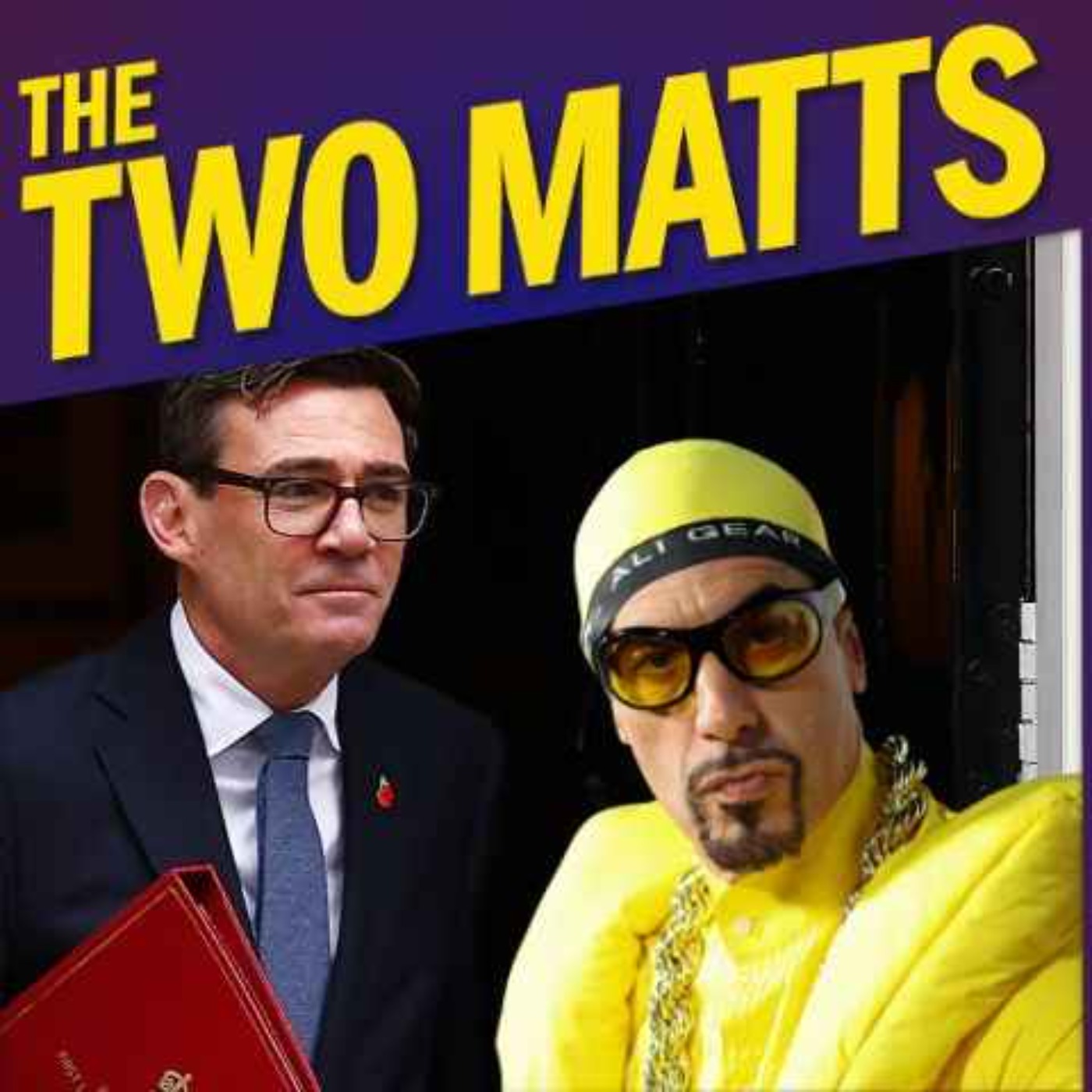
The Two Matts Q&A covers UK welfare policy, Europe re-entry, Israeli politics, US midterms, Remembrance Day “performative” culture, and the reception of the new Ali G film. On welfare, the hosts argue welfare spending is economically and psychologically problematic (about 30% of public spending), hard to cut in practice, and should be reformed by reducing need via “back to work,” while targeting “piss taking” rather than arbitrary cuts. They cite pensioner-heavy costs (about 55% of welfare bill), demographic aging, and warn AI/robotics may disrupt jobs. They also criticize “instant fiscal implications” from diagnoses, giving examples like ADHD railcard discounts and a lawsuit over a Montenegrin embassy flag.
none; it’s a Q&A between the two hosts (“the Two Matts”). Key guests mentioned: Alan Milburn (expected welfare report) and Steven Timms (welfare report). Europe segment centers on Andy Burnham’s openness to freedom of movement. Israeli segment discusses Gadi Eisenkot vs Netanyahu and notes Eisenkot’s anti-two-state stance. US segment predicts Democratic wins in midterms.
Written by AI. May contain mistakes.
Discussion on the economic and psychological impacts of welfare spending in the UK.
“it'd be great to be back in at least a single market in terms of growth um uh but it is you You know, I mean, there's no doubt that a lot of people who are on benefits would like not to be.”
Discussion on the potential changes in the UK-EU relationship and the significance of freedom of movement.
“I get that there is a lot of work ahead in its early days, but this does seem like a big deal, doesn't it?”
Analyzing the current state of Israeli politics and the implications of potential leadership changes.
“I'd be thrilled to see the back of Netanyahu, though that doesn't seem certain yet.”
Forecasting the outcomes and implications of the upcoming midterm elections in the U.S.
“I think he's going to get it shellacking, as they like to say in American politics, and he might lose both houses.”
Discussion on key political races and their implications for party direction.
“A big race in Texas that I think the world will be watching, which is James Tallarico versus Ken Paxton.”
Exploring potential risks and dynamics of election certification.
“And, you know, there are kind of interest, sort of fancy that seats like Steve Hilton, one British-born former advisor to Cameron is up against Javier Becker in California.”
The significance of charisma in modern politics and its impact.
“I really like the cut of Abdul Al-Sahid's jib.”
Addressing the performative nature of wearing poppies for Remembrance Day.
Debate on the balance between tradition and performative acts in society.
“I mean, it's a mark of respect to those who gave their lives.”
Examining the effectiveness of activism through public displays versus real change.
“And in America, there's, as you know, this great tradition of saying thank you to your service to anyone who's mentioned that they were in the in the in the pay call for more than a year.”
Analyzing the failure of the new Ali G movie and the role of activism.
“You know, you can't get on in an autocratic or fascistic regime without wearing insignia.”
Explore the changing landscape of comedy through the lens of Sasha Baron Cohen's work.
“I just think it's a bit boring now that these overplayed their hand.”

Get the gist, explore an idea or ask about something said.
 Claude
On The Two Matts, what are the key points of this episode?
Searching your listeningAutomatic transcript. May contain errors.
0:05Hello and happy Sunday everybody. Happy Sunday one and all. Hope you're all having a great weekend. We've had a great time up in Manchester where we're still incumbent and I don't know. I am in London. Only the Kelly family are down in lovely London. Okay. But anyway, let's let's crack on. We're going across the Pennines to Hull from Georgina in Hull. do the mats agree with me that the amount of welfare this nation doles out is both economically and psychologically catastrophic well i don't know if it's catastrophic but it certainly it presents a problem um both in terms of our ability to afford it as the nation um which and i think we're going to get to this in a separate question is one of many reasons why it'd be great to be back in at least a single market in terms of growth um uh but it is you You know, I mean, there's no doubt that a lot of people who are on benefits would like not to be.
0:58So, you know, there is a psychological element in it. It accounts for about 30 percent public spending as opposed to, say, 5 percent on defense and a thudding 10 percent on death interest. the problem with all this i mean obviously the background is that he lee in his budget last week didn't get into this and the reason for that which i think is you know understandable is that he's waiting for alan milburn's report on young people and steven tims's report on welfare which will be big documents very important um and then he got into a bit of a mess about um whether there would be welfare cuts in this parliament because he said in one interview at least that he there would be and then he had to uh rein that back on advice of officials that he couldn't be sure it would happen in this parliament and actually um whilst i you know i think welfare reform is extremely important uh i you know i think that those uh were streeting on the radio on friday was saying it's a bit much for the tories to go about welfare reform that they could have done five minutes ago so you know a point well made and i i remember weirdly peter lily when he was Secretary of State of Social Security has no left wigger, you know, a real Thatcherite, saying that whenever anyone came to him and said he needed to cut a billion pounds out of the benefits budget, he used to say, well, fine, which million people would you like me to take a thousand pounds from?
2:22Because there is in all this, I mean, there are lots of elements in it, but one is a sort of welfare nimbyism, which is everyone says they want benefit cuts in general, but they don't want cuts to the benefits they like. And everyone has specific benefits that they particularly like, whether it's to do with their loved ones or their communities or their constituents or whoever it may be. And I was looking this up, and actually it's a sobering fact that apart from two years in the austerity period, the only countries in the liberal democratic world that have cut welfare in real terms this century, there's quite a period are greece spain and portugal and that was all in response to debt crises so in other words it's really hard to cut welfare and it's very silly to pretend otherwise um now what labor is proposing is yes we will reform uh welfare but they the quote is we'll do it the labor way which is they want to reduce the need for welfare rather than just cut budgets arbitrarily, which is strategically very sensible and ethical.
3:32And Alan Milburn is expected to suggest that they front load some extra spending, which is going to be very difficult to get NEAT, and we've talked about a lot on the pod, back into work. And there's a good case for that. That all then puts a lot of pressure on Healy for the spending review. Now, it's worth bearing in mind, this has been so slightly glossed over, but in spending reviews, the Chancellor is not obliged to give any details on the welfare bill because the departmental spending level he names for the Department of Work and Pensions is the department's budget, not welfare spending. Now, I think that Healy will and Burnham will say something about welfare spending before then, but it's just sort of worth having in one's back pocket that a spending review does not oblige the Chancellor to say, we're going to spend this much on welfare because it's only departmental budgets which are a separate issue and i think that there are several problems that are really really big and need a big conversation and here to your point on thursday matt i do agree with you which is that we do need a big conversation about this which is what's driving the bill well one of the big factors is the demographic aging population you know about 55 of the welfare bill goes to pensioners right then there's the fact that there is something to do with the very specific nature of the british political ethos which is yes this is a more individualistic country than continental countries in lots of ways but we do have a strong sense of solidarity and collectivism so you know yeah there's a great sort of english individualist tradition but we also produce the nhs you know so you can't just sweep that away people do believe in in decency and then my final thought on this is and i think again under under rated in the whole discussion is that the kind of jobs that milburn is going to say we need to create more of and he's right are precisely the kind of jobs that very soon ai is going to replace and the comeback to that is well robotics is behind what might be called white collar cognitive tasks and that's true but then if you look at like gemini robotics or NVIDIA, Isaac Groot, they're very close now to taking over some pretty substantial sectors of manual and, you know, semi-skilled labor.
5:53And just everyone needs to remember that no one was talking about, you know, AI chatbots until four years ago and ChatGPT came along and suddenly it all happened. So I just think it's worth keeping at the back of one's mind that this is not just about political will although it is it's also about the the real global social and technological context which is moving at an incredible pace you know yeah no i think that's brilliantly put um i i mean i saw martin lewis on the telly the other night and he sort of did a post-budget show and he had this graph of where the welfare spending was increasing and that split it up into the constituent elements and it was it was the health side of welfare that was is forecast to grow massively to take us up to 13 14 percent of gdp which is up there at over all-time highs yeah yeah and but i i and i did sort of think well i hope that you know in some ways i i do hope that um robotics and ai will help mitigate some of those costs but to to georgina's question on the psychological elements of it i do think that there is there is something at risk of going awry in this country where um uh welfare becomes a uh a thing in people's lives that there's an expectation and there's a couple of things i want to just point out which made me think that and they're not actually related to the welfare budget per se but i do think that they are indicative of a culture a culture of welfare one is um uh the rail cards for people with adhd right which which was announced later in this week that people with adhd can qualify for a third off rail travel because it's a neurodivergence and it's now listed as a and I think what the hell has ADHD got to do with getting on a train and traveling I just don't buy it I've got ADHD right but why on earth does that impede my ability to get on a bloody train it doesn't it's a nonsense and I'm sure there will be people that are gonna ADHD confuses you you know it messes up your ability to die arise and you might miss you I mean I'm no get it's absolute bollocks you do not need a discount on the rail to because you've got adhd and the second one that really uh made me think you know this is this is we're sliding into dangerous territory there's an amazing story of a woman who lives next i think it's the monte negroan embassy in Pimlico and she is a she she has a chronic anxiety condition and is affronted by the design of the of the Montenegrin flag which so she says upsets her and it's and she is currently suing Westminster council because she can't a nasty flag because she's got it's gaudy apparently and she doesn't like it gaudy and that is nasty the embassy didn't get planning permission to put their flagpole up and she says that she wakes up in the middle of the night and can't shut down these thoughts of desperation because of the gaudy nature of the flag that is flying that she can't even see and she says i know this is irrational but that's not my fault that irrationality is in my head so she's now suing westminster council now obviously they've always been barking mad cases but the fact that it's even possible to see a council and the council will have to present a legal defense and it will cost thousands and thousands of pounds and christ knows maybe she'll win under some bizarre nutcase law but i do think that we have in my lifetime in our lifetime we've seen um claim culture which started out as quite a cynical enterprise you know um we'll all remember the the solicitors who would how you know chase people who chipped those paving slabs i think that's become it's morphed into a culture where there's an entitlement that the state owes me something because i'm not perfect and um obviously there are massive degrees within that sweeping charge that i've just laid out but at the far end of the spectrum i think there are there are there is a category of welfare or benefit that is absurd and people do and and i'll say the unsayable i think people do need to get a grip and well the first port of call can't be the claim line you know no and also to draw distinction between a diagnosis which you may get you may get a diagnosis for adhd and you know i think we we can there's there's a big and angry argument about whether the extent of diagnosis has become excessive yeah that's a sort of separate issue but not every diagnosis of every single condition should have a fiscal implication i mean obviously if you're disabled physically disabled obviously if you have a serious uh psychological condition there are implications but to be triggered by i I mean, many, I say that, but many is the night I've learned, laid away at night and worried about the Slovak flag, Matt.
11:18You know, I mean, it's, I've never told you this, but since we're, you know, it's, it's why I have so many bags under my anxiety. Oh, there's money in that anxiety. Yeah, maybe I should go and get some money. Some good paper in that. Yeah, I mean, the idea that there is a sort of instant sort of financial journey from finding a particular flag upsetting right which let the kind does not suggest an entirely cloudless mental health right or or or perhaps an overactive imagination one or the other um is absurd and um and also very unfair on people who are disabled and or do suffer from genuine psychiatric or psychological conditions so that is so that's the bigger challenge the bigger point is i guess is when as i'm ranting there as i have been i feel like a daily telegraph cult i feel like alison pearson you know but there is a distinction there is there is somewhere on the venn diagram of legitimate welfare and need and um and and absolutely socially justified benefits and piss taking yeah there is a there is a middle ground And we've got to I think we've got to work that out.
12:36And I think the government would be it would be a very productive exercise to go through it with a common sense hat on and to say, look, welfare has its limits in the future. You know, and if we're going to preserve the true value of welfare, then we've got to eliminate the piss taking elements of welfare. Yeah. And I think that there's an opportunity here because this is going to be a very difficult conversation, I think, because of all the things we discussed just now. And I think that it would earn the government a lot of credibility in what is going to be a difficult one if it if it did identify some of the kinds of practices that you're talking about up top and said, look, you know, don't name an arbitrary figure at the start.
13:21I think that's my worry is that nothing happens under Labour. And then another right wing government comes in and does say we're just going to cut 30 billion and tough. Yeah. And I do agree. I think, you know, as a starting proposition, it's right to try and do this in a way that isn't just sort of a target. You know, we've got to cut this amount from the welfare budget, but is more based upon what is welfare for? Who should it be for? Perhaps some people should get more than they do now and some less. I mean, I think these are the kind of subjects that don't get addressed. But this is a biggie.
13:53It really is. Right. Should we move on? So let's move on to the the next question. So I'm just bringing it up from Federica in Murrayfield. Am I right to be as excited as I am about Andy Burnham's apparent open mindedness to a real change of direction on our relationship with Europe? I get that there is a lot of work ahead in its early days, but this does seem like a big deal, doesn't it? After 10 years of Brexit misery. Well, I mean, I think it really does seem like a massive deal. And in fact, my sense of it being a big deal is magnified. Actually, it's magnified ever since the budget where, you know, we had we had our different takes on on on the relative value of the budget.
14:37But not on this. But not on this. No, but also I sort of felt that the budget being so, you know, banal and low key kind of indicated that the big this this was the big swing. And if this is, you know, if he's talking about economic growth and so specifically about the freedom of movement, as we discussed on Thursday, such a as you describe it, you know, the third rail to grasp that so. So clearly, I thought, was really bold. And it signaled to me that this guy is absolutely serious about getting us back into the heart of Europe. And this was, it wasn't, you know, it was something concrete, I think.
15:26I think what he's done is identify that the customs union, the single market, These things still are abstract notions in a lot of people's heads. But to say freedom of movement, that means something. And that is the argument that the nation can have constructively, because we all know the consequences of it, that there's good sides and there's bad sides. But it's very concrete. And that that to use that as the pivot point for the conversation about our relationship with Europe, I think could be a stroke of genius. And yes, Federica, I'm as encouraged as you are. Yeah, me too. I mean, I'm actually on this one, I'm unambiguously excited.
16:03You know, I don't really have any no notes, as it were. I mean, it is going to be Federica's right to say, of course, it'll be a hard lift. Everything like this is. But it's a long I mean, I can't. It's one of the boldest things said by prime minister in my lifetime, I think, just to sit there and say, yeah, I'm thinking about freedom of movement after 10 years of, well, we can't go back on this. it really augurs well and I I agree with him I think that he is making this front and center of his premiership maybe in the end his principle I think social care is the other one but you know if he's already thinking about a legacy and wow what a legacy it would be you know I mean one thing I would say though Matt is if he does back away from it if it was just loose talk well that in combination with a very limp budget i think that would put a massive question mark over the basic foundation of courage in this government which is going to be a prerequisite to success i but i that's not i mean i and i don't and i think also to to be fair to him and the you um i don't think that what comes out of this conference is necessarily sort of a absolutely you know every t crossed every i dusted um plan but it must indicate a clear direction of travel because i sort of see the order as the order of play as this summit and then all the subsequent summits and meetings and bilaterals with key players in the european scene between now and the election and then a manifesto which promises uh an accession treaty to be um negotiated um And then I think, unfortunately, a referendum.
17:47But I think that there's a sequence here which is quite clear. So if we can get out of November the 20th, not long away now, you know, something which says, right, this is where we're heading, a route map. That'll be an amazing thing to get in before Christmas, won't it? Totally, totally right. OK, next question comes from Amy in Blackheath. I'd be thrilled to see the back of Netanyahu, though that doesn't seem certain yet. Do the Mats think Gadi Eisenkot would be much better? Well, this being Israeli politics, there's a lot of sort of procedure and weeds, I'm afraid. So Netanyahu has taken an undoubted bash.
18:25He's on 53 seats down from 64, but not enough to finish him off. So things are really in limbo. What happens now is the results are certified on the 4th of November this week. by the 11th at the latest the president of israel isaac herzok has to ask one of the leaders either eisenkot i think it will be or netanyahu unlikely to form a government they have then 28 days to do so they can ask for an extra 24 14 days um let's say they do it does take 14 days that would take you to around december the 23rd and then wow there's a provision for a second candidate which would be Netanyahu to try and form and then a third you know so this could go on till February right with an election by May 28th and I my worry at the moment is that we're as things stand I think the likeliest outcome is the second election but to the question well um obviously there's a huge attraction in Netanyahu going from all sorts of reasons one of them is that you know he's he's really one of you he's been prime minister for 19 of the last 30 years I mean you know enough already um and also because he's become such a sort of figurehead of the international problem and i can't think of an international an individual uh political leader who's been the focus of so much international international protests and hostility since george w bush around iraq maybe before you know you've got this feeling like kissing joan vietnam cambodia days so obviously a change is always good what are the arguments in favor of eisenkot well he's a military figure former chief of staff of the idf he has skin in the game because he lost his son gal to hamas early in in the conflict in december 2023 and then two of his nephews and there's an interesting sort of nixon china type pattern in in israeli politics which is people who've been generals or do go on to do because they are trusted, go on to do surprising things.
20:34So Yitzhak Rabin signed the Oslo Accords, Ehud Barak withdrew Israeli forces from southern Lebanon, and most surprisingly, Ariel Sharon pulled out from Gaza in 2005. So there's that. He's an interesting guy. He would be the first prime minister of Moroccan descent. he's a very accessible figure he hasn't changed his mobile number so he gets hundreds of texts from ordinary citizens he's got 48 seats in his block at the moment now the big question is which don mcintyre raises in a very good piece for the new world yes you read it is could he pull in the arab israeli uh parties and that that would take him over to 67 which would do the trick.
21:21The problem is, and this is where I think international expectations have to be managed, is that the sort of Overton window in Israel is very different to the Overton window in the outside world. You know, Eisenhower is different to Netanyahu, but he's not that different. So what would he do? He would definitely be different on the West Bank. You know, he's very tough on the settlers and he wouldn't crucially endorse the very controversial E1 settlement. And that's significant. He's also, again, significant, less hawkish on Iran. So if he did become prime minister, I don't think he'd necessarily be pushing.
21:59I mean, Trump may not care, but, you know, for resumed full scale conflict. The big barrier is, and this is really important, because, again, it's, you know, the way that the debate is framed internationally he is not he's not just not in favor of he's actively against the two-state solution yeah and um you know it's really important for people to understand that but if they get him he he is uh there are possibilities but first of all i've i as things stand it's very hard to see how he gets to a point where he can bring the arab israeli parties in who'd be able well and secondly you know it's really important that people don't have any expectation at least in the short to medium term of a two-state solution process being ignited just by Netanyahu's departure welcome as that may be that that's all I would say yeah no I think that's that that's clearly right and yeah it's important that he's you know people looking at it thinking he's the opposite of Netanyahu.
23:06No, he's not. He's very different. He's very different. And I do think that the differences are in the harder edges. So I think people like Smotrich and Ben Gavir would be out, for instance, which would be good. Well, he's ruled out Ben Gavir. He has, he's left a little bit of door open to Smotrich, but I think you're right. Right. And I also think that it would, I mean, I'm not, I'm not suggesting this would happen, but I think it would make Netanyahu's accountability for what's happened in the last couple of years closer to a possibility. And he's against, as I understand it, he's against the illegal West Bank.
23:48That's right. Yeah, exactly. I mean, the West Bank is his big difference. So I think they are they're all positives. But yeah, if you're I mean, if your heart lies in a two state solution, then he's taking that no further forward as even Netanyahu. No. And to be honest with you, no figure in the Israeli firmament who's likely to be prime minister in. I mean, you know, without reopening wounds, you have to remember that for the Israelis, October the 7th is still very fresh. Yeah. So, you know, I mean, obviously, the outside world focuses on Gaza and I totally understand that. But for the population of this very small landmass, the idea that, you know, and unfortunately, one of the I mean, there's a kind of cycle here is one of the functions of all the protests, which are entirely legitimate, has been to create a siege mentality in Israel.
24:44And so at the moment, the idea of them sort of just saying, OK, you know, we get it. What we should really be doing is focusing all our energy on a two state solution when most of them are still worried about disarming Hamas, to be honest. Yeah. But, you know, the West Bank stuff is important. So, you know, it's important. OK, I'll tell you what, let's take a very quick break and then we'll come to our next questions. welcome back dear listeners this is the two mats podcast by the way just before we go on to the question mat do um think about if you are thinking about subscribing now's a great time because you get a free signed copy of alastair campbell's book per civilians and to get that with your subscription to the new world magazine all you have to do is go to the new world.co.uk forward slash two mats that's the number two m-a-t-t-s excellent so uh from carlo and harbour it is hard to think what more donald trump could do to annoy the voters go to war in exactly the way he promised not to drive prices up with insane tariffs waste time on personal vendettas ruin farms and communities with data centers and line his own in his family's pockets like a man who doesn't give a damn what anyone else thinks all that being so how optimistic are you both about Tuesday's midterms.
26:03I'm pretty optimistic right now. I think he's going to get it shellacking, as they like to say in American politics, and he might lose both houses. He might lose the Senate and Congress, which would be marvellous. I read an interesting piece of analysis in The Economist this week about how Hispanic voters are very central to this output. They are now basically floating voters within the system and are massively disappointed at well some of them are very disappointed at trump's failure to um be as tough as he said he was going to be on the border um some are you know appalled at the prices of fuel caused by the iran war and and tariffs and it's all it's all the it's all trump's fault you know they're all these things are identifiably trump's fault you know and And that's what's so, I guess, so karmic about it is that there are a lot of chickens coming home to roost.
27:06And I think I think they will fly back with a vengeance on in the midterms. Yeah, no, I agree. I think I think I mean. So what's up for grabs? Thirty five of the hundred Senate seats because they run on a six year cycle and all of all four hundred thirty five of the congressional seats. And and this has been less reported here, I think, than it should be governors in 36 states. It's a big day. Then, as you say, you know, it will be a referendum on Trump and deservedly so. I mean, you know, he it's been a bin fire and lots of very interesting sort of granular things, I think. Like in Kansas, there's a Democrat called Adam Hamilton, very Christian, very, you know, traditional Christian, though liberal in politics.
27:55If he wins the Senate seat, there'll be the first Senate seat since 1932 to go to a Democrat. So that's amazing. Yeah. A big race in Texas that I think the world will be watching, which is James Tallarico versus Ken Paxton. I think there'll be a lot of attention because it's so consequential for the direction the Democrats take after this, which is Abel El-Sayed versus Mike Rogers in Michigan. So that's important. I mean, but going back to governors, one of the big prizes is that they could, for the first time since 2010, hold the majority of governors' mansions. And again, that gives you a lot of clout in, you know, America is a state, you know, it is a very devolved country.
28:39And so that's important. And, you know, there are kind of interest, sort of fancy that seats like Steve Hilton, one British-born former advisor to Cameron is up against Javier Becker in California. He won't win. But it's interesting that a British-born Republican got to the final two. I don't think it'll lead anything. I think one thing just to slightly calm people's nerves about, which is what happens afterwards, which is, I mean, you know, this may be famous last words, but so far there are no signs of what looked to be a risk of ICE agents turning up at polling booths. Well, we'll see on that Tuesday.
29:15Yeah. And then there's a thing about the whole question of certification. And is this going to be another January the 6th? Well, there's a much smaller risk of that because the presidential race has to be certified by a joint session of both houses of Congress presided over by the vice president of the day in his or her capacity as president of the Senate, which is why Mike Pence was in such a predicament in 2021. actually here the state election authorities do the certifying and so it's much more bitsy so trump may unleash a sort of flotilla of lawyers to challenge the results but in the end you know the republican congressmen and senators get elected they'll want to be able to take their seats on january the 3rd right so you know i i think that the look trump is capable of anything and he probably doesn't even know how he's going to when he starts seeing those you know blue map pictures on the night of november the third fourth he may lose it you know who knows but all i'm saying is that at the moment yeah i'm optimistic and i think that i mean this is a whole other conversation but but then i'm hoping it will set them up for a really interesting two years where they can hold his feet to the flame i personally think it'd be an area to impeach him again for a third time because it's what he wants it may be impossible to resist i don't know but what they can certainly do is force him into getting rid of i mean what would be great a great scout would be hegseth right yes you know they'll they'll start controlling the key committees and yes i think that quite a number of trump's team may be sat before they're forced out so there's an opportunity to really snarl up these last two years.
31:07I really like the cut of Abdul Al-Sahid's jib. Have you seen some of the social media? Yes, he's a very charismatic politician. Well, he came out and, you know, the brilliant thing about Trump is a moron, you know. Yeah, no, no, he's got that X factor. Yeah, definitely. I mean, you know, which I increasingly feel is so a lot of the discussion about outside focuses upon. I do think it was ill judged of him to campaign with Hassan Piker. But, you know, that's not going to be a defining characteristic of his ability to be a senator. Let's be honest. But everyone does. Oh, you know, he's too pro-Palestinian or he's too pro that or too.
31:52But actually, when you look at Mamdani and when you look at Trump, early Trump, to be honest, the reason that they prosper. is not primarily ideology, but in modern politics, because they have that charisma. They have that X factor. And I think if he is elected, he will go far. Yes, I agree. I agree. I mean, whether the United States is ready, will ever be ready for a Muslim president would be an extraordinary thing. But, you know, the one, you know, the one I think, and this is really depressing, but i think the last group to to be represented in the white house will be women women yes because you know um when obama started out you know yeah and and even on a polling day there was still this ludicrous idea doing the rounds that he was secretly muslim and all you know still elected twice yeah um phenomenal you know um but they just so far america is a really sexist country there's just no two ways about it it really is yeah yeah um okay um next question comes from sally and sally asks i've noticed tv news presenters wearing the poppy earlier and earlier each year i believe very strongly in remembrance day and its importance in our national conscience but are we at risk of making it performative rather than commemorative well i've got my little poppy here so i wear one um and i yeah i believe in it um and i think some of the arguments made against it are, you know, the celebration of war or imperialism and infantile.
33:30I mean, it's a mark of respect to those who gave their lives. But, but, but, but, but, but, but, to the point I think Sally's making, there is this sort of, and it's not just confined to poppy wearing at all, which is that performative pressure has always threatening to supplant what used to be a culture of courtesy and civility, that the instinct to do something because you think it's right is sort of being replaced by the the fear that you have to give in to social pressure or something and otherwise your social media will jump on top of it and i think there's an irony here because the men and women who died in the particularly in the first and second world war died precisely because they believed in a free society as opposed to a fascistic one and part of the free society is the freedom not to wear a poppy you know or to be forced to use particular pronouns or whatever in the workplace or anything like that the freedom to be awkward is really the only freedom worth having so i'm really i actually don't agree with this sort of absolute rule that all bbc presenters have to wear one right yeah if they want to i do but you know it's a it is a free country thank god i actually did some research on it because i thought well is there any evidence that it's getting earlier and earlier and I'm not sure I'm not sure it is I think it peaked in about a common what it was 2010 or something like this and I think Gary Lineker was involved and was wearing a poppy like a basically a month before poppy day if that's the effects not I think well this and this was the because it is of course it's a horiole chestnut this this question and these were all the columns and i think somebody literally wrote you know there'll be an outcry for not wearing it in august you know at some point yeah yeah yeah yeah and i do think that um i mean i don't care whether people wear poppies or not um and i tend to wear one um three or four days before i will make it you know i'll buy one every year and um and wear it that that week and i think that i think that's reasonable and i do think um um When Alistair came to do his talk at Cadogan Hall, Cadogan Hall, I must pronounce that correctly, Cadogan Hall, Cadogan Hall, actually.
35:49More performative shaming there. I know, exactly. You pronounce it how you like, Matt. Yeah, yeah. He came in wearing a poppy, and, of course, that was October the 22nd. Yeah, yeah. And I said, oh, you've got your poppy on. He said, oh, I've just been to the BBC, and everyone's wearing poppies. And it was kind of and I think Alistair actually took it off for the Cadogan Hall. Right. Right. So. So that was interesting that he was very much he was wearing it because the BBC wanted him to wear it, basically. And I think that is that's a bit daft. But yeah, generally, I think it makes me very proud, actually, in a strange way.
36:30When I see, for instance, our prime minister or a foreign secretary at an international summit wearing a poppy and other foreign leaders perhaps not quite understanding why this guy got a red flower on his lapel. And I think it's really nice that we as a nation still have this remembrance thing for something that, well, a handful of people are still alive to have actually lived through. I think when you look at it like that, that is a wonderful tradition. Yes. And in America, there's, as you know, this great tradition of saying thank you to your service to anyone who's mentioned that they were in the in the in the pay call for more than a year.
37:10Or a traffic warden. Thank you for your service. We don't have that. But, you know, the poppy wearing is a nice tradition. But there's a difference between traditions and and performance. And I think we saw a bit of this in. Do you remember? I mean, no one remembers this because actually most people have completely forgotten about Ukraine. But when Ukraine started, everyone went crazy on Instagram and people were taking the knee for Zelensky. And, you know, and and this I remember writing at the time, you know, you're all not going to care about this in six months time. And it was so. And I so I kind of feel that people feel they can bank a bit of virtue.
37:50Yes. By doing something now and be and and avoid an online. Oh, you're not wearing always not. You don't care about Ukraine. and then kind of actually forget about the substance. And I'd much rather people had a sort of were interested in the past, the lessons of the past wars, good and ill, than that they sort of just wore a poppy because they felt under terrible workplace pressure to do so. That's silliness, you know. Also, to the performative thing, you've just reminded me of Owen Jones went on trigonometry. Oh, yes, yeah. golden and railed at um constantine kissing about um what did you do to protest i think it was the iraq war or the war in afghanistan and and he and kissing said well you know i was 16 at the time or whatever it was he said no come on did you go on a march did you wave a flag did you and i sort a thought is i mean look i've got admiration and respect for anybody who feels strongly enough about something to give up their saturday afternoon and go and march down whitehall and wave a flag you know i've done it myself over brexit right so i've got no but i don't see that as as material activism you know i really don't i don't see that as being truly meaningful in affecting change and nor do I think people who didn't paint a placard and wear the badge feel necessarily any less than those who do.
39:23You know, it's a strange... Plainly not. I mean, you know, these strikes go from the polls that, you know, those who feel very strongly about it. No, they're claiming, it's like clearing podium space for how much I care about something. And I think it's a little bit ridiculous to use that performative thing as a test of it. a test of anything yeah and it's not very it's not very british either to to it's not we're not a nation of flag wavers by i mean i'm not just to be clear before because you know god knows these days you have to so there has to be a little preamble before you say anything but this is here's a preamble i am not listeners not comparing the poppy to a nazi badge right i'm not okay I'd like to say I'm disassociating myself entirely from what's about the form.
40:13OK, well, let's more generalise it. You know, you can't get on in an autocratic or fascistic regime without wearing insignia. Right. That's one of the that's part of the let's not notify. Let's say, you know, just generally, I mean, idiots who suddenly in 2016 started going around with MAGA hats. Yeah, or a patriotic platform with their stupid balaclavas, you know. Which is literally the funniest and most ridiculous and sinister. And also funny how something can be both funny and sinister. But you're right. You know, it devalues the actual symbolism of it. It must be optional. It must be. Right.
40:55I think we've got time for one more quick one. Okey doke. From Stu. The new Ali G movie has bombed, hasn't it? Who crossed the line here? Sasha Baron Cohen or the activists who very effectively pilloried it interesting one that it is an interesting one and I'm not sure I think the reason I think the reason it's bombed is that it is just out of its time yeah yeah um and you know I used to love Ali G back in the day but not because of the sort of stereotypical but I saw this great phrase fluid racism which was and it was described as fluid racism because it was very hard to pin down exactly why it was racist, but you were pretty sure that it was somewhere.
41:40Somewhere in the mix. It couldn't quite work out why. The racist alibi, I remember, was a very good one. That's right. And, of course, the weird thing about Ali G is that no one's even sure what race Ali G is. Well, he's supposed to be, and I don't think this necessarily is relevant, in fact, to the answer to the question, but according to the you know the story if it's the story um he is his real name is alistair leslie graham and he's an idiot white white man in stain yeah but you see that's the point is that unless you sort of um follow comedy which i kind of do uh you wouldn't necessarily know that so so and i don't think when it debuted it was that was part of the yeah as it were the the legend so i think you're right that the fluidity of it was was very important to the joke and of course that is that's a that's i mean i i'm a huge admirer of sasha baron cohen yeah i think a genius and um and i think at its best when he for me the best of le g was when he was exposing the idiocy of people that's right yes of trying to hold some sort of irrational nervousness of the interviewees you know he was that was it was brilliant and some of the best comedy i've i've ever seen but I think the reason it's Bond is that that whole thing, it's not necessarily a question of society, you know, recoiling at the innate racism of it all.
43:04I just think it's a bit boring now that these overplayed their hand. I didn't particularly, you know, what was the news? It was News Cord, the organization. News Cord went for it. And I did think actually that was a bit sketchy because it was the first time, you know, it's an AI. news court as an organization does lots of ai generated media monitoring which is a good a good use of ai very but this is the first time they'd um targeted a creative artist yeah and of course you know that led to news courts very closely connected with the palestinian cause and sarah baston sasha baron cohen said you know well why why is the first artist you're going after jewish blah blah they denied it and it got very tangled up you know yeah yeah but but i think it's it's bombed because it's it's boring now and he should have kept him in retirement well you see that's the old thing is that i think you you nailed it which is i think time is the best sort of campaigner in all of this which is that you know back in the you know we're old enough to remember the 70s comedians just you know and they were really sort of um chauvinistic and old-fashioned and then along came the old so-called alternatives you know the young ones and the comic strip and and they transformed comedy and that was great and then you know you think of something like little britain which was a huge hit at the time but now just looks like weird you know kind of and i think the weird thing i was looking this up and ali g first appeared in 1998 right i mean that is sashman is 55 now it's nearly 30 years ago yeah it's when he was 56 and it's a bit like george clooney now going back to playing a young hunky doctor in er or and i think this is what sasha baron cohen should bear in mind because he he wants to be peter sellers it will be like peter sellers who was actually only 54 when he died suddenly going back to the goons when he was in the late 1970s it would have been bizarre you know it would why are you doing that and i think that you know he's got a great year ahead he's going to be starring sasha baron cohen in this you know it's one of those things which could be brilliant or a total stinker tarantino's first play the pop and j cavalier you know opening in the west end in in march i've got my ticket can't wait um but um you know so i'd be focusing on that the new stuff he's doing you know developing himself as a serious actor and i just think you're right i just think um most comedy doesn't last right python is very unusual in in that we all still yeah reference it uh the young ones have survived somehow winnell has survived you know there are there are things which like great bands do survive but they're very few and i just don't think allergy is one of them yeah no i agree with that i agree um yeah he should have set it in yellow aspic and uh left it where it was anyway and move on to the next thing you know he's such a huge he is to me he's an enormous talent and yeah and there are so many targets to satirize exactly exactly great well that was enjoyable I hope you've enjoyed it dear listeners and we'll be back well we'll be back Thursday we might depending on what happens yeah we might do maybe we'll be back a bit earlier than that if it's a blue wave spectacular we might have to we'll play it by ear and until then anyway enjoy your week have a lovely week and thanks Matt thank you to the third Matt for producing the show as ever
The Matts answer listener questions in this, their regular Sunday morning Q&A episode including: is welfare out of control? Is Andy Burnham really setting us up for a quick return to Europe? Has the Israeli election improved chances of a two-state solution? Will Donald Trump get a shellacking in this week's US midterm elections? Are we all wearing poppies too soon? And is Ali G a man out of time? Enjoy!
Produced by Matt Withers
Get a FREE SIGNED COPY of Alastair Campbell's new book when you subscribe to The New World. Go to https://www.thenewworld.co.uk/subscribe/
Hosted on Acast. See acast.com/privacy for more information.