Ask ChatGPT

 The Two Matts
5 Nov 2026 · 1h 22m · 20 chapters
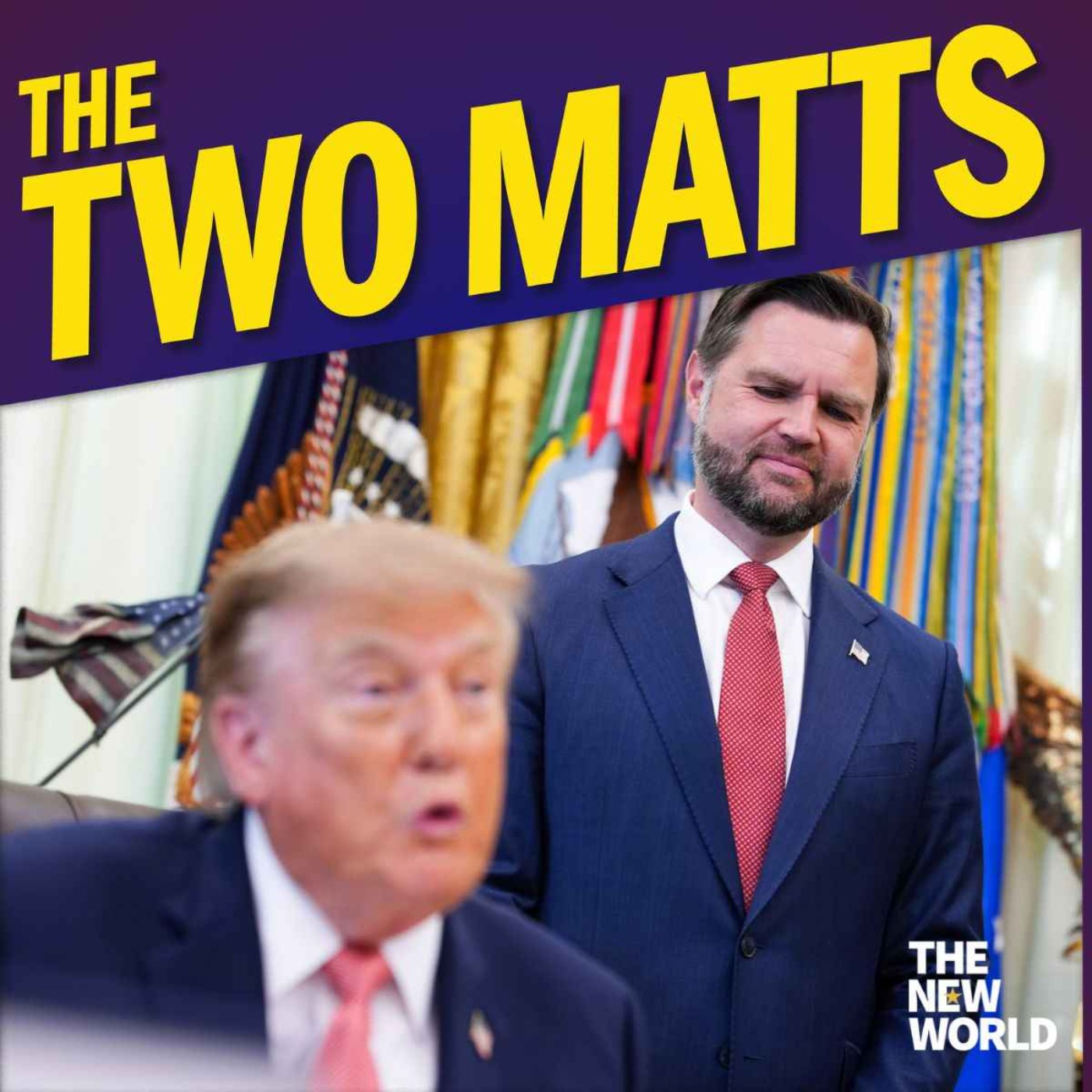
The episode is a “bumper edition” mixing political analysis of the U.S. midterms with a conversation about language loss. The hosts argue the election results reflect structural volatility and the “bin fire” of Donald Trump’s last two years: inflation worsened by tariffs, a war he promised not to start, and a sense of betrayal tied to corruption and hubris. They cite a major sentiment shift likened to Watergate-era betrayal, and note Democrats’ messaging focus on affordability, ending the war, healthcare, and AI costs. They also discuss Trump’s likely reaction—meek denial followed by possible foreign-policy escalation—and the idea that MAGA is effectively “Trump” and the Republican Party can’t easily “return to normal.” They mention J.D. Vance’s public critique of Trump and debate whether Democrats will fracture into centrist vs progressive purity tests.
Sophia Smith-Gala, journalist and author of How to Kill a Language. She studies linguicide, including overt state repression (e.g., Turkish criminalization of Kurdish) and subtler community shame (an Ecuador chapter). She argues languages are more than communication: archives, social relationships, and biodiversity knowledge. She shares her family story: her grandmother’s critically endangered Emilia (Gallo-Italic) language, misidentified as “Italian dialect.”
Written by AI. May contain mistakes.
Discussion on the surprising election results and political shifts.
Exploration of voter expectations and perceptions of betrayal.
“But they don't put up with betrayal ever.”
Insight into how the Democratic party is strategizing for future elections.
“And I think these are the, this, this 120th Congress, which we'll gather on January the 3rd, it's kind of the, the Iran war babies really, you know, plus affordability.”
A discussion on the corruption within Trump's administration and its impact.
“But I do think, and I was really pleasantly surprised, actually, burning the midnight oil on the night of the elections, watching the acceptance speeches.”
Examination of the current state of the Republican party and its challenges.
“And they articulated that and described it really brilliantly to an audience.”
Analysis of the implications of Trump's leadership on the Republican party.
“So there is this huge, it's not just a sort of venal corruption, there's a kind of structural corruption within MAGA based around this dependency on this one autocrat who decides everything.”
Discussion on the internal conflicts within the GOP and future elections.
“now we can all go back to normal kind of narrative has any juice in it at all.”
Exploration of historical instances of political betrayals and their implications.
Analyzing Trump's reaction and behavior following recent election results.
“Now, the difference is that he, by that point, is the candidate, because LBJ said, I'm not going to stand again.”
Discussion on Slavoj Zizek's insights regarding the consequences of Trump's presidency.
Exploring potential challenges for the Democratic Party moving forward.
“and back slapping and self-congratulation yesterday.”
Evaluation of how recent political events may impact global politics.
The discussion revolves around the implications of the midterm elections and the evolving dynamics within the Democratic Party.
“yeah i mean your your point that does one set i mean first of all they're only midterms right i I mean, very important and definitely as midterms go, historic midterms.”
The hosts discuss insights from Anthony Scaramucci regarding Trump's political ambitions and implications for future elections.
“In a moment, we'll be talking to Sophia Smith-Gala about her wonderful book, How to Kill a Language.”
Exploration of the changing dynamics in U.S.-Israel relations post-election.
“Do you think with the kind of doubts around the outcome of the Israeli election combined with this kind of sledgehammer blow, that there'll be a meaningful shift in Israeli policy from the U.S.”
Sophia Smith-Galer discusses her book on linguicide and the importance of language preservation.
“And explain to people why it's important that languages survive.”
Explore how assimilation affects language retention across generations.
Discuss the importance of institutional support in preserving languages.
“If he had just let it marginalise it and just let it die away, then maybe it wouldn't.”
Exploration of how languages are valued in education systems and society.
“So yes, Yes, you can look at the Catholic Church.”
Discussion on personal struggles with learning Spanish and effective strategies for improvement.
“But I want to be able to speak much more meaningfully.”

Get the gist, explore an idea or ask about something said.
 Claude
On The Two Matts, what are the key points of this episode?
Searching your listeningAutomatic transcript. May contain errors.
0:00This message is brought to you by today's sponsor, Walden University. Set a course for change. Now is the time to make a real change in your life, career, and community. At Walden University, we give you the support and flexibility to get the W. Walden's online programs are designed for working professionals like you. You'll gain hands-on skills to take on real-world challenges and succeed. Your future is waiting and Walden is here to help you achieve it. Take the first step to make your impact. Visit waldenu.edu. Walden University. Set a course for change. Certified to operate by Shev.
0:43Hello and happy Thursday, everybody. Happy Tsunami Thursday. Blue Nami Thursday. Blue Nami Thursday. What an extraordinary day yesterday. Oh, it was amazing. uh did you did you predict it at all matt did you feel that it could be as convincing as it was no no i mean i i thought the um i think when we were talking about it actually on the pod we both sort of agreed that the house was likely to go democrat and um the senate possibly but it was a lot of the races were officially you know um a toss-up and in fact it was absolutely no such thing seven senate seats flipped um the swing um was you know it's very hard it's apples and pears but if you compare trump 24 to this set of elections it's a 12 swing yeah which says a lot about the structural volatility of politics nowadays i suppose but you know let's be honest it also says a lot about the absolute bin fire that has been the last two years of trump's presidency and and um i mean i think that you know the top line in all of it was that that um you know we can go into how the democrats have got their act together but also how you know this is this is a self-inflicted defeat in the sense that he didn't do anything about inflation he compounded it with the mad tariffs and he went to a war that he promised he wouldn't and not surprisingly the americans are very angry i've read i've read somewhere that but it's the biggest sentiment shift of sentiment since Watergate, actually for me.
2:22And, and I think there's an interesting parallel there about a sense of betrayal, you know, running through both and that, and that really, you know, voters will put up with a lot if there's a sort of promise of something and they, and there's a core belief of, of somebody's sense of integrity, I guess. But they don't put up with betrayal ever. and i think that's what's come to haunt him exactly and i think that the it shows he didn't really understand his his victory i think which was that the americans had got to the point where they were very annoyed about a number of things um what they perceived to be an elite that wasn't listening to them uh affordability crisis and they were willing to take back a convicted felon a man found you know uh liable by jury for for sexual assault and all the other things indicted for um insurrection and so on um on the promise that he would strip back all the nonsense and get on with the things that they cared about you know no more wars close the border um get prices down now he had closed the border um although i don't think that they when they heard that they expected you know ordinary people being gunned down in the streets of minneapolis by ice agents okay so you know and i think that is that that was it the people that were upset about that were not just people so to speak of the left or democrats you know regular americans were whoa you know then hang on um and and and so yes and your reference to watergate's absolutely spot on that there's a the 74 midterms created a completely new sort of congressional landscape.
4:07We were called the Watergate babies. And I think these are the, this, this 120th Congress, which we'll gather on January the 3rd, it's kind of the, the Iran war babies really, you know, plus affordability. But I have no sympathy with him at all. You know, he asked for this. I mean, well, the, the level of hubris that has, there was a great, We've both read it right through of the whole of what a hot take postmortem of what went wrong in The New York Times. And yes, the headline was a direct quote from the chief strategist for the midterm elections for the Republicans. James, a guy called James Blair, who said, I've seen the enemy.
4:53It's us. Yes. you know it was a real that that uh that comedy sketch where the mitchell and webb mitchell and webb sketch where the two nazis looking at each other and saying are we the baddies yeah and and there was plenty of other um kind of lines to support that sense people saying um you know the problem is not that our guys aren't turning out to vote it is that they are turning out to vote but just not for us anymore well i i think that's an important point because i think I've always thought, as you know, that the person that would beat Trump would be Trump, right? And so it is proved. But I do think, and I was really pleasantly surprised, actually, burning the midnight oil on the night of the elections, watching the acceptance speeches.
5:42Because, as you know, the Democratic primary process was a bin fire. And actually, it really was. I mean, it was extremely concerning. And, you know, the Democrats have a great capacity for factionalism. So let's see how it all plays out. But to be fair, and it's important.
6:04Speech after speech coming from the traditionally called centrist wing of the party to the more progressive wings, you know, the Tallaricos, the El Syed and so on. really focused okay they were focusing on affordability they were focusing on ending the war and they were focusing very interestingly and i think this is where you know trump the republicans the tech people have a big problem on ai and its cost and and and it was those and healthcare and it was just the this extremely focused message which was so a lot of people yesterday were saying yeah but this was a vote against trump rather than for the democratic party and i suppose that's true but i think it undersells the extent to which as it were to a surprisingly to a surprising extent and regretifying swiftness the democratic party is at least provisionally getting its act together for 2028 now there's a long way to go but it wasn't just um a rebellion it wasn't just a mutiny against trump there's something more here and i think that's absolutely right and i think if you if you sort of do a counter history of it and think well if the democrats were as hapless as they were going into 2024 what would the result have been i think it would have been a very different result i think we did see we did see a clear narrative we did see them realize almost like a penny dropping and you could see it consistently throughout the whole cohort yeah there was there was a message around betrayal around corruption very important corruption absolutely huge i mean i mean i was thinking you know we both exchanged messages yesterday and saying well i hope mr burnham's team pick up on this that there is a that there is a concrete narrative and i thought um what is extraordinary though and probably anomalous about the American case is how naked the corruption is in the Trump regime.
8:07It is absolutely naked. And they articulated that and described it really brilliantly to an audience. But there's also been, I was only going to add that, there's also been wrapped up in Trump's hubris that, as the New York Times piece said, you know, that he came to the conclusion two years ago that the laws of politics don't apply to him singularly. There's a huge amount of incompetence in the running of the campaign, especially how money was spent. There's some extraordinary detail in that New York Times piece about the level of the funds they had, because Trump had raised more than$400 million since 2024, but wouldn't sign off on spending ads in this race.
8:56And it got to the point where, because they didn't book any ad space, until the very last minute, they were paying$30 ,000 for commercials that the Democrats were paying$2 ,700 for because they'd booked them a month ago. So there is this huge, it's not just a sort of venal corruption, there's a kind of structural corruption within MAGA based around this dependency on this one autocrat who decides everything. Well, I think that's absolutely right. Right. And I also think that that points to a greater problem that the Republican Party, and as much as it still exists now has, which is I think we can safely say that there will be no third term.
9:42Well, you know, perhaps we can. I mean, I suppose there's a vanishingly tiny chance that he declares a coup. And, you know, but I really don't think that's going to happen. So there's a lot of very old school conversation going on now about, well, you know, how does the Republican Party get back to normal? Right. And how does it sort of what about Nikki Haley? And, you know, and this is a very politically illiterate way to approach it, because the whole point about MAGA was that the Republican Party did a deal with the devil, which was, OK, you know, they fought very hard not to have Trump in 2016 and it didn't work.
10:24the Republican establishment. He became the candidate he won. And over the years that passed, and crucially, when he was in exile after January the 6th, the Republican is all the old sort of white shoe country club Republican establishment discovered that he didn't have any power anymore. And Trump now held all the levers. So the Republican part, it's not just that MAGA is Trump, it's the Republican Party is Trump. So, you know, Ron DeSantis is, I mean, And this is a ridiculous verb to use with in the context of Ron DeSantis. But, you know, he stormed out the gates saying this is an existential level event for the Republican Party.
11:04Right. Yeah. OK. You know, see you, Ron. The problem they've got is, yeah, you know, they do need a new direction. They do need a new leader. um but it will it but on the other hand madly it will be impossible for anyone to be the presidential nominee in 2028 he doesn't have trump's blessing because he controls everything even if as you say very incompetently yeah so sorry guys but you you know you you you broke it you own it you know this is what you've turned the republican party into which is a cult of personality and guess what the cult the personality at the top of it is 80 years old and not functioning so great.
11:48So I really don't think this sort of now we can all go back to normal kind of narrative has any juice in it at all. No. The guy who's kind of right in the eye of that storm, actually, that's not a good metaphor because the eye of the storm is a place of calmness and I think he is being swirled around like in The Wizard of Oz, but is J.D. Vance. Oh, yes. and who released this long social media piece of political analysis about where it all gone wrong, which has been critiqued in many ways, not least by people saying, well, never mind your political analysis. What's the prognosis for getting things back on track?
12:34But putting that to one side, it was obviously, you didn't have to read between the lines. It was in the lines that he thought Trump had blown this, that the war had cost them deeply, you know, and no question said, you know, if you think losing the Senate for six years is a price worth paying, then argue that at least that will be honest, you know, and, and that's, it was a clear affront to Trump. I was astonished. One, I've been astonished twice by this note, one that he released it. Yeah. And sort of open betrayal, act of betrayal for against a president who um is mafiosi like in his in his demands of faulty but then to read this morning that he'd run it past trump well in the first place who had approved it that's that was the most extraordinary detail um and and you have to wonder uh whether you know what was going was anything going on in a is it true one assumes it's true um b what was going on in trump's head when he said yeah go ahead that's fine yeah um i mean you're right it look i i i messaged you yesterday in my sort of nerdy way i was trying to find out you know the scouring are there any precedents for a sitting vice president essentially attacking the incumbent publicly i mean there's plenty of detail plenty of examples of private disagreements that's standard and indeed probably healthy um but uh the only one i could come up well there are two actually and one is so ancient it doesn't count which is that vice president calhoun resigned on andrew jackson in 1832 so i think we can put that one aside the the only sort of modern one is um hubert humphrey in september 68 comes out and says uh and he's still vice president to lyndon johnson and says that he would halt the bombing of North Vietnam.
14:29Now, the difference is that he, by that point, is the candidate, because LBJ said, I'm not going to stand again. So although LBJ was pissed off, he was really in no position to object. We're a long way away. I mean, Trump isn't going to stand again, but we're a long way away from the 28th election campaign. So this was just, I felt, a pretty, I mean, it's quite a craven thing, isn't it? You know, because it's sort of is not doing me, gov, and just attacking the person who to whom he owes his his position. But it is. It's Trump's reaction that I think is absolutely fascinating, isn't it? Because I mean, I agree.
15:11We've got Richard Littlejohn, right? That great political sage in the Daily Mail today. The Daily Mail seems all the say over this can't quite comprehend what's going on. But Little John, big headline in red saying Trump could do anything now, up to and including starting World War Three. Now, that's not maybe, but that's not the Donald Trump I saw yesterday in the ballroom who looked, frankly, like a dotty old man who couldn't quite come to terms with the scale of what had happened or really was sort of too pissed off to be even bothered about it. I was more interested talking about a ballroom than what had just happened in the last 24 hours, which was a disaster.
15:54I think we can all agree that the evidence of the last 10 years is that Donald J. Trump is quite erratic, right? Yes, yes, yes. OK, so there's absolutely no doubt that his initial response to these results has been one of meek denial. So the first thing he does is say to the New York Times, amazing. You know, everyone was wondering whether he would accept the results, send out a flotilla of lawyers. the whole thing would be snarled up in the courts for months not at all he says i'm absolutely willing to accept these results look forward to working with them we'll probably work something out so that was one the other thing was there was a clue i think on the night before the day before when he did his closing arguments at at all places the reflecting pool one of the scenes of his most egregious construction disasters and he was going on about you know the piping and how to get the This was not a great closing message if you're trying to get the vote out.
16:53But it reminded me, and this is really weird, but I think it tracks, which is, do you remember the Warman ice rink in 1986? This was when Trump was not yet a politician, but he was beginning to be a public figure in the 80s. And Mayor Ed Koch was having terrible trouble making an ice rink work, and there were deals that weren't working out with the unions and so on. And so Trump said, leave it to me, I'll fix it. And he did very quickly. And this he has always cited, I think it's in the art of the deal, as an example of how a businessman can get construction done and infrastructure done in a way that the public sector can't.
17:31And it seems to be interesting that he did that the day before. And then the day after, he goes preposterously to the site of the ballroom and says, you know, look at this stone. And I think that this is a man who is sort of in the fetal position, metaphorically. And just now he may stay there. You know, it's quite possible that for the next two years he will just sort of, I mean, he's 80. He may just kind of continue to withdraw into himself in a state of ever greater denial, spend more and more time in Mar-a-Lago on the Gulf links and all that. But let's face it. You have to also acknowledge that there is a terrible possibility that he might remember that the one thing a president can do without much help from congress um is do things on the foreign stage and the and so on and so one i mean obviously it is for the good of the world that the former option applies and he just sits in mar-a-largo you know talking about how he sure does let them chickens right um and and talking to himself um and being brought to diet cokes uh but you know the the i thought it was interesting that one after some early and meek interventions he then posts on true sent social uh a base just an image of a baseball cap with veto written above it so he's obviously part of him is thinking i'm going to go to war with this new congress yeah so i don't know but i agree with you at at the at the moment he's he's he's in a state of ptsd there's no question um and that means that one of the problems with that and here we really are in a sort of roman empire thing you know when the emperor just goes mad or withdraws into off to capri and you know is no longer ruling what do the rest of them do you know rubio hasn't surfaced right one of the stupidest hot takes i heard was oh this is great for marco rubio what are you talking about marco rubio is secretary of state and national security advisor you know his dabs are all over the iran war right sorry but you You know, there's no way he gets through presidential primary debates by just saying, well, I never agreed with the war either.
19:44Sorry, Marco. Well, the one thing the one thing that Vance has got in his favor is it's widely known that he was against the war. Yeah. And I thought it was very interesting that Donald Trump Jr. retweeted Vance's thing with this is 100, 100, 100 percent correct. so so so that is interesting um just before we um go we'll take a break in a minute and by the folks i should mention in this the second half of this show um we're going to have an amazing chat with um sophia smith garland who is a a brilliant writer who's written an amazing book called how to kill a language uh which is totally tangential to this conversation but i just wanted to flag that up so don't miss that but talking of great writing slavoj zizek filed oh yeah yeah dropped in at um 10 o 'clock asking whether this um this quickly uh written piece would be of any interest to us and it was one of the most interesting pieces i've read on the whole thing because yeah well because he's saying you know um can you just put down the champagne glasses if you think that the end of Donald Trump is the end of the problems that caused Donald Trump you're nuts and you know he it's a real volley against the kind of uh lazy liberal thinking I think about personification of all the world's problems onto this one character true and it was actually a fascinating bit of um of history within the piece where he said you know Zizek supported Trump's election yes i remember yeah because he said you know the world needs a shock to shock it out of his stupor and to and to to address the fundamental changes that need to happen which are all structural you know they're all around inequality and that's that's true yeah you know all of these things and do so what i wanted to talk specifically was there was there was a great deal of high-fiving and back slapping and self-congratulation yesterday.
21:50Do you think that that, looking at it 24 hours later now, is that, was it overdone? Is it misplaced? No, I don't. I mean, I think Zizek is, as you know, I'm a massive fan and, you know, we get on very well and I admire him enormously. And I think the piece makes a very good point, by the way. However, and as you know, I am not one inclined to optimism or, you know, I am. No, I'm not. I mean, I, you know, but I've been stress testing this one now 48 hours, and I think it is, it has the potential to be. Let's go no further than that. I am. The bit I'm worried about in the medium term is that the sort of moment of democratic unity will collapse into stupid arguments about should we be progressive or should we be centrist?
22:43And And the answer, of course, is both. Right. Yeah. Go across the 50. You need a 50 state solution. You need El-Sayed kicking it, you know, in his places. You need Rahm Emanuel and Josh Shapiro campaigning in their places. You know, you don't need to all have the same views on Gaza. You don't all need to have the same views on socialism. them it that's not how america is such a big country and contains contains multitudes to coin a phrase no so i really hope that there aren't the democrat party doesn't go back to its purity test thing yes right yes that being said can i just gloat a little bit more right you allow me just a little bit of gloating right which is the two people that i'm really thinking of both friends of the show um steven miller right steven miller architect of the deportation and ice right yeah campaign how do you think things are in the miller household this morning right the guy who's basically seen as responsible for the murder of alex pressey and renault good right okay i mean i'm hoping that he is not having a nice time p hexeth another friend of the show yeah um you know he is if i would be amazed if trump doesn't get rid of him because he's gonna carry the car he's gonna and the other person who is in my thoughts and prayers as always is elon musk who spent 446 million dollars on these midterms right and including 224 million in texas right yes yeah he got zip nada for it you know and now has a governor uh gina in a hossa um first latina governor in um possibly in in the whole of america and uh talarica is the new senator who defeated the appalling um republican candidate ken paxton 224 million he spent all that and he's got nothing now to to sort of circle back to your point in the zizek point that there is a really important debate coming up now which i think the democrats are on the right side of generally which is it's they've got to really think about slowing down data center growth and they've got to really talk about ai pausing as a country the americans but just to throw in a sort of spanner into that particular campaigning works i looked it up this morning and 40 percent of american growth at the moment is accounted for by ai and tech yeah so if you're planning yeah to be um probably in you what you want is to be in control of the senate for six years at least and in control of the the house possibly for longer and then the white house from 28 you're going to need a lot of that growth so that that's where zizek's point really does bite which is when they start to think about the practicalities you know how are they going to fund better health care and job schemes and so on you know idea it's not it's not as straightforward as it looks let let me challenge a little bit on on that and i know that you you're not being uh simplistic at all you know i know you recognize there are these deep structural problems but we we have been now for several years you and i specifically been warning about you know the huge fundamental changes that have got to take place in the world to yes to stop people like trump and to stop people like putin having agency in the way that he does and the whole thing now are we now saying that one vote in america can dispel that no no no and and um to be absolutely clear i would be horrified to think that anyone would think that's what i thought i mean yeah no no i know you don't think that but i just want to spell it out well uh all right that's what i meant about some of the back slapping like it's all like it's all happy days now oh yeah i mean let's pick that up and run with it um i mean to to sort of localize it you know the reason i was so down on the budget right was not really because i was so down on the budget per se okay i'm you know it's the budget things have already moved on as you said they wouldn't quite right it's precisely because of what you said which is it i feel we're on a tightrope between two skyscrapers here right and one foot out of place and it all tumbles down now that's a bit hyperbolic and melodramatic but you know burnham becoming prime minister great right this great yeah but we've still got le pen in france we've still got afd on the march in germany we've still got and this i think is part of the mix that we must never lose sight of even as the the sort of news train rattles on we've still got europe in a state of quasi nihilistic um youth quake this unease and i think that is a product of what you started off by saying matt which is that there is a basic fundamental uh sense which expresses itself in different ways of different generations different cohorts that things aren't working okay and oh yeah i mean your your point that does one set i mean first of all they're only midterms right i I mean, very important and definitely as midterms go, historic midterms.
28:24But they change in terms of the world's geopolitically, they change relatively little. So I was very glad that Burnham came. I was glad Burnham came out and said, well, you know, this is good because it means that we now have a Congress that we can deal with to bring affordability down. And he said and it gave him the space, which was really important to say, I can't do this. Yes. Until the Iran war is over, which he hadn't really said in quite that categorical term. And I thought that was good. But the truth of the matter is, you know, the British prime minister. I mean, Haki Defries, when he starts the first day of the House as Speaker of the House and so on, his first call is not going to be to Andy Burnham.
29:10Right. Right. So, yes, I mean, we've come from a place in November 2024 when Trump won a second term and people were talking about, as they always do, decades of power for the far right. That is clearly not going to happen. But the flip side of that is just because they've stumbled doesn't mean that we're now looking forward to the words that should be banned. and we never use them, but some people do, is resumption of normality. OK, yes. The question that I will be watching with great genuine interest, actually, and now a measure of and now for the first time, a measure of excitement is what are these new Democrats going to do?
29:55Because I think that people, you know, probably if you are guessing today, you'd say that the two frontrunners is interesting. before the midterms the front runners believe it or not for the um democratic nomination were kamala harris and gavin newsom amazed all that's right overnight yeah the betting markets have shifted to john ossoff who i think everyone is sort of looking at and thinking he's he gave such a great speech right right and and and and then i think you know aocs it will definitely run and that'll be really interesting yeah but you know let's see what they've got to offer but the other thing is they what they have now which is fantastic is they've got these millennial outliers in people like talariko and el sayed who can push the envelope and say well yeah but what are you doing about the structural questions you mentioned and that will have a um a benign cascading effect around the world because people do watch american politics so i you know me i'm hopeful not optimistic Yeah, yeah.
30:57No, no, no. 100%. And I think we're totally aligned on that. I just I just there were times I tell you what you mentioned, the procession of great speeches. And I thought they were uniformly great with one exception, which was the one that I was hoping would be the best of them all, which was Al-Sayed. I didn't like it. I just thought it was, in fact, I'll tell you what confirmed my sort of sense of discomfort with it was a very high profile UK columnist who's out in the States right now. Oh, yeah, that was horrible. Yeah, yeah. No, no, no, not that. Not the Sky News thing, which was. but this columnist messaged me last night saying it was all a bit frat boy and excitable and stuff like this and all those sorts of references to the wolverines and whatever that means you know and kind of and it was a just a bit too it was smug i thought and i just thought if you compared that to the well specifically to the speech of ossoff where i thought it was that's what we need more of that vision i agree plan you know rather than just like hey screw you we we beat you you know let me put the counter case which is talk about irony right as the in-house scientist i've now it now appears that i'm the new world uh abdul el-sahid fanboy and i kind of am actually because obviously he and i disagree on elements of the middle east right but i actually don't think that the main issue of the next election is going to be the middle east right partly because i think that by then i mean we've already seen signs of it with um trump withdrawing aid from israel you know with netanyahu's agreement i don't think he wanted it immediately but you know that that will be less of a hot button issue by the next election than than it is now but what you say is true man absolutely i mean elsa can be really obnoxious right but you know who else can be really obnoxious and has done quite well is Donald Trump.
32:57And there's part of me, there is part of me that thinks it does no harm in the mix to have a few Democrats who are, you know, pretty frisky and feisty. I mean, you wouldn't want all of them to be going around and say, hey, J.D., Abibi, right? You wouldn't want all of them, right? But I kind of like that sort of fuck you because it comes from a place that they threw, so much at al-Sayed they really did you know and yes Trump went up there and gave one of the most anti-Muslim bigoted speeches I've ever heard in my life and I've heard a few you know calling him Muhammad and Ramadan and he's a jihadist and we're gonna have to have metal detectors when he comes in I mean just off the hook awful right yeah and I sort of felt al-Sayed was entitled to let off a bit of steam but i also think in spite of that and this is where i sort of uh i don't want liberals always to be liberal is that i i like we need a few people with a dukes up right like rama manuel who i i think is running for the nomination and won't get it you know was famous for um following obama into the shower right and just say you're a disgrace you know what the fuck is this all about And I kind of think you need people like that because liberals have a very strong belief in rationality, which is nice.
34:27OK, I'm all for rationality. I'm down with the rationalists. Right. But occasionally you need a few crazies in there just saying, what the fuck are you all talking about? Anyway, good. My unexpected defense of Abdul, who is my new number one. I think it's great. Very good. Very good. Listen, I'll tell you what. Well, I do want to talk about what comes next. And you were talking to, we'll take a quick break, but you were talking to, well, if I had to have a short list of 20 people who I'd like to be talking about America to after last night, you were talking to him last night. Yeah, it was great.
35:05Let's come back in a moment, folks.
35:10This message is brought to you by today's sponsor, Walden University. Set a course for change. Now is the time to make a real change in your life, career, and community. At Walden University, we give you the support and flexibility to get the W. Walden's online programs are designed for working professionals like you. You'll gain hands-on skills to take on real-world challenges and succeed. Your future is waiting, and Walden is here to help you achieve it. Take the first step to make your impact. Visit waldenu.edu. Walden University. Set a course for change. certified to operate by Chev.
35:50Welcome back, dear listeners. This is the Two Mattes podcast brought to you by the subscribers of the New World magazine. Do join them. In a moment, we'll be talking to Sophia Smith-Gala about her wonderful book, How to Kill a Language. But Matt, you were last night talking to the guy I'd love to have been talking to about what's been going on over the last 24 hours, the Mooch, Anthony Scaramucci. Yes, I was. it was a how-to event which was actually sort of framed around um a guy called rye barco who's got a new book about courage in america and it was tied to the midterm so they they had um other people there um including foxy from scs who dares wins and now khan's and but you know there was the mooch uh utterly sleep deprived wonderful right and you know i'm gonna get trump and all that He's brilliant.
36:38But as always with Anthony Scaramucci, he is, you know, he he's got a fantastic New York shtick of being kind of, you know, he's a bruiser. He's a truth teller. He's a super bright, super brilliant guy. And he he was fascinating about what he thinks Trump now wants. And the most I mean, there were many aspects of the most striking thing was he agreed that Trump really doesn't want a Republican successor. Right. He kind of likes Gavin Newsom. You know, he wants a good looking Democrat whom he can play golf with. And I think I think that's what's the rationale. Just explore that a bit more. Well, I mean, I think that Trump really doesn't care.
37:28I mean, remember, Trump was a Democrat originally, as all New Yorkers are. It's a one party state. And and then he thought about running as a independent and as a reform candidate, the reform parties as was. And then finally settled as a sort of right wing Republican. But he's not really I mean, he's not a child of the GOP, is he? I mean, he's not he's not he's not. I mean, he used to think that his knowledge of American history is hilariously poor. I mean, he felt that Frederick Douglass was alive. You know, that that that was still my favorite Trump historical fact. Two hundred and twelve years.
38:06He said he's doing an incredible job. You know, well, he did. But we can't thank him, sadly. So I think that he he he's much more a sort of a Roman emperor figure. You know, he thinks of himself as unique, divinely ordained and and also slightly disgusted by the idea that someone from his own tribe might dare to succeed him. I mean, I suppose if you game it out, what what would be more fun if you were Trump? Right. To watch Vance or Rubio or someone ruin your legacy as he would see it. Or to see someone who from the other party ruin your legacy as you complained on Truth Social every day. But also who you probably quite liked, you know, in the way that he he likes Zoram Mandani.
38:58You know, he likes Obama. He loves Obama. Right. yeah um you know he's gonna he's gonna end up in a bromance with al-said for sure totally i was just trying to find out and i can't whether al-said plays golf because if he plays golf yeah he's in it's a slam dunk um yeah no completely he loves winners he loves people with a an aggressive you know will to power that's you know he's an issue and so the ideal for trump i imagine would be and i think this is what anthony was trying to say and did say really which is he retires to mar-a-largo he's got the board of peace he's got a sort of para private uh court down there and an international dimension and all the corruption still going you know it's strong in all the countries where he's still able to do it and he's got a democrat in the white house whom he can whinge about on television and you know late at night i mean he already talks to everyone on his mobile can you imagine what a pain he's going to be when he's no a longer president right um but also he can kind of be best friends and yoda to uh to attempt to a democrat president who if they're smart will go well in the same way that blair would brown would have thatching occasionally and go yeah yeah yeah yeah you know why wouldn't you you know and because he you know hate him or or love him but he's funny and entertaining and he's box office he'll be on every bloody podcast when he's bored and joe rogan will have him on once a month and you know he'll we'll see more i think you're right i think we'll see more of him post his presidency than we will now and let's say you know it's president or soff or president newsom or president aoc if they have a relationship with trump trump will then go out on these podcast circuit and say i think she's doing a great job she's not very well advised terrible advisors now that is exactly what a president wants their predecessors to say, which is they're a genius, ill-advised by the idiots around them, right?
41:03You can just hear it, you know? What a great guy. Yeah. I wish you'd stop talking about people's bottoms, though. It's like... Very strange. It's not that men shouldn't talk about other people's bottoms, just making that clear, folks, but it's a slightly odd habit to pick up aged 80 when you're president. Can we just talk just for a couple of minutes, It's just about Israel because we haven't mentioned that yet. Yes. Yes. And I think it was massively consequential to the Middle East, the midterms election, because I think I can't remember whether it was number three or number four in J.D. Vance's list of.
41:42Yes. Of complaints. But it was there as the U.S.'s relationship with Israel. And it was marked that actually in the last two, three years, it's the first time ever, really, the majority of Americans now have an anti-Israeli government position. Do you think with the kind of doubts around the outcome of the Israeli election combined with this kind of sledgehammer blow, that there'll be a meaningful shift in Israeli policy from the U.S. administration? I think there already has been. I mean, I actually have thought for a long time, and I think Trump's slightly oddly timed announcement that they were going to cut the aid.
42:29I mean, a very strange point, and it does need some unraveling. Netanyahu has long argued, and this, by the way, this is not necessarily good news for peace in the Middle East. But Netanyahu has long argued that the dependency of Israel upon America is not healthy because it means that you have to go to Washington to ask permission for lots of things. Now, it may not look that way, but that's actually how it works. And when you do what he's doing in the West Bank, you get biffed, right? And I think that actually the way where Israel is heading as a country is much more isolationist than people appreciate.
43:13It has a very, very healthy tech sector. It's not quite there yet with the sort of independence. It needs trade links and it needs weapons deals with other countries. But I think that the view in the Israeli elite, not just Netanyahu's government, is that the sort of dependency upon America where it has become so controversial is actually a drag on Israelis' public policy. Now, as I say, consider what that means, because what they're trying to do is escape any form of accountability to the American public. However, I do think that this will it will accelerate that. And to be honest, I think it's all it's already.
43:57I wouldn't say it's based into the share price, but I think that in the same way as it took a while for other NATO countries to start listening to, you know, Robert Gates in 2011, the defense secretary said, guys, you're going to have to start paying more for your membership of NATO. It took Trump to kind of make them realize, no, they really were going to have to. I think that what's happened is that in the aftermath of October 7th and then with Gaza, you know, it's just become clear that the U.S.-Israel relationship, as it was after the Second World War, is no longer tenable and is going to have to be a major realignment.
44:39So what I don't think the next president, even if it is a Democrat, perhaps especially if it's a Democrat, will, you know, fly to Tel Aviv or get whoever is Israeli prime minister to come over early and say, can't we just be friends? I mean, I'm sure there'll be many bilaterals, affirmations of praise, but at au fond, the relationship is going to change fundamentally. Thank you for that. Okay, folks, we're going to take another very quick break, but do join us on the other side when we're going to be speaking with the wonderful Sophia Smith-Gala about her book, How to Kill a Language. Join us in a moment.
45:33like you. You'll gain hands-on skills to take on real-world challenges and succeed. Your future is waiting and Walden is here to help you achieve it. Take the first step to make your impact. Visit waldenu.edu. Walden University, set a course for change. Certified to operate by Shev.
45:56Welcome back, dear listeners. We are delighted to be joined with the brilliant Sophia Smith-Gala, who is a journalist of many talents but the reason we're talking to you today Sophia is your new book How to Kill a Language which is it's out now isn't it? Yes it is. Yeah and it's been brilliantly reviewed and in fact one of the reviews I read said which I thought was absolutely right said said you know it's the kind of book you read and you wonder why the hell it hasn't been written already and i think that's absolutely true um it's about linguicide isn't it and the death of of small languages languages that are in danger of being um going extinct um it the the title how to how to kill a language i think it's it's slightly misleading in the in the tone of the book because actually i when by the time i finished reading the book i was just so enthused by how much life there was in the battle to save language, you know, and the importance of language.
47:01What made you write this book? And explain to people why it's important that languages survive. Well, I come from journalism, and in journalism, if it bleeds, it leads. If I'd gone for a soft, gushing title, no one would have bought the book, unfortunately. I also in the book explore just as you've said the taxonomy of linguicide how can we define or attempt to identify the different ways in which languages are disappeared around the world we hear about expressions like language endangerment endangered languages without ever posing the question well that they didn't get endangered by themselves something endangered them so this was it was an attempt of mine to work out who was responsible, where was the agency in this, and who was responsible for the languages that I cover in the book disappearing.
48:01And they tell wider lessons that are true for many languages that I do not cover in the book as well. So I will explore things like the overt linguicide of the Turkish government in its history criminalising Kurdish. That's a really quite open, uncomplicated means of linguicide and indeed wider discrimination and much worse. you then have other examples which can feel a little bit more implicit or less obvious especially when I think about a chapter that I did in Ecuador which is about shame and how even members of a community who in theory might be proud of who they are and not proud of the language that's long been associated with them because they attribute it or associate it with the past with poverty etc and so they won't pass it on even though it's ultimately not a choice that they've made but it's attitudes around them that have persuaded them into thinking their language doesn't matter anymore I was personally motivated to do this not only because I'm really interested in languages but because at the heart of the book is my own story and the story of the language I discovered in my own family but I always just thought was a dialect of Italian and instead was a language in its own right that's critically endangered yeah and that and that was um you tell Tell it very personally and quite movingly about the story of your grandmother, your nonna, who died while you were writing this book, didn't she?
49:37But just tell us a little bit about her story and her language, because I'd never, to my great shame, I thought Italian was Italian. And I'd never heard of this wonderful dialect that she spoke. So did I. And, you know, I was raised a diaspora. it's not like I was raised in constant connection and contact with modern Italy. So the Italy of my home and my nonna's home was almost this time capsule trapped in diaspora. But most people will associate Italy with Italian. They will not associate Italy as a country with many Italian languages. and so the language that my nonna spoke in addition to standard Italian was called Emilia and this is a language that you find in Emilia-Romagna and that's in the north of Italy and it's a Gallo-Italic language and it would actually be considered further away from Italian than a language like Sicilian is.
50:43It's a lot closer to languages like Occitan, other minoritized languages in that part of Europe even possibly closer to French than it is to Italian depending on how you look at it and certainly when when you'd hear my nonna or my mum speak it there is a very there are some very French sounds you know in your in my ignorance if we think of Europe as only national languages and not any of the minority ones you think a lot of these fronted vowel sounds like uh are oh that's not an italian sound it sounds frenchy and actually it's because there is there's so much vowel diversity in this part of europe in particular so yeah so that's that's the language that um non-nan mum spoke they only ever referred to it as dialut which in and of itself is not italian like the word for dialect in italian is dialetto so they called it dialut and understood it to be a dialect of Italian, but it's not.
51:42They speak a variety or dialect of Emilia. I was absolutely fascinated by the book, and I thought one of the things about it that was really powerful was the sort of, and ran throughout it, is this argument that languages are not just means of communication, which I think would be most people's kind of default assumption, which is that that's what they are. But you make a very powerful case for saying, no no they're much more than that they are a kind of uh they are a collective archive of information they're a social imaginary they're a way of seeing the world um they are a system of social relationships can you talk about that a bit because it it really opened my mind to what a language is languages are encyclopedias and they are toolkits they are far beyond just a means of communication even if you take my non-niss language it demonstrates another evolution of latin that happened in the italian peninsula besides standard italian a a linguistic historian or a historic linguist would be able to give you more far more information than i on how useful that ends up being as a language for example in in study and how important the documentation of such a language would be to study of Latin and study of Italian.
53:02That's one example. If we think about communities themselves and parts of the world, there's a really clear link between the world's most biodiverse hotspots and linguistic diversity. It's a very common thread that's seen around the world. So a lot of these communities that have long been custodians of the land where they are, have words that help describe and define information that they have learned over all of these years which is not only useful for looking after the land as it is now but it may be very important for looking after the land as it is forced to adapt with climate change just as one example and in the book I remember and since writing the book and conversations I've had following it I've been able to meet lots of speakers of different languages who have told me about instances where western science comes along and says hey we've discovered a new species and speakers of languages and areas where those species have been discovered say well we always had a different word for that you know we always knew it was a different species um but this this knowledge hasn't been considered or taken seriously or it might have been oral storytelling tradition that will simply be labeled as myth and it won't be considered as possibly bearing scientific scientifically useful information so languages will have this and far beyond this level of what information can it give us for science or for history there's another level that i argue is actually more important which is do people use and need this language to feel like they are part of a community or identity that's incredibly important that we're now talking about the tightness of our social fabric and comfort with describing who and what we are and the minute you destabilize that and the minute that someone feels like they have lost their cultural inheritance or ability to communicate because the language link has gone other problems ensue and we're still quite early in sort of scientific research of understanding what those problems are and that's why i write this book because until we do more research and until more science happens i'm going to tell you qualitatively what is going on how people are feeling that these languages are disappearing uh and bid you to consider why why we should care yeah it's it's interesting i think this touches on the most important part of the book read and you've already referenced the diaspora you know of which you're a product and you describe this um you know a pattern really where you get a monolingual grandparents and then a bilingual parent and then a monolingual grandchild and the language that started at the top ends up being reduced or gone in in the third generation and i guess that that's a product of assimilation isn't it that's the grandchild assimilating into the new community and adopting the language of the new community and it's also it's also the grandparent assimilating because the longer that the grandparent will be in let's call it the new country the longer the grandparent is there and I saw this with Nonna the better her English got so she became by the time I was born she was totally comfortable in talking to me in English and that is part of the reason why my language portfolio became what it was yeah and we should mention your language portfolio because it's it's quite you speak Spanish really well Arabic you studied at uni as well didn't you and it's obviously Italian you speak now although funnily enough Italian wasn't the language that you were good at and and you trace that precisely because of the it wasn't Italian as taught in schools that you were hearing at home is that is that a fair reading why wasn't it italian that you were great at well i understood what was said at home without speaking it um there may have there was obviously a lot that i didn't understand but i always knew what was going on and that's really common for receptive bilinguals where you're you're constantly in this similar domain so for me it would be like my nonna's kitchen or my nonna's living room listening to conversations that effectively repeat themselves over a very very very long time like I have no problem in either standard Italian or dialut talking about a cup of tea being hot or cold kind of thing like those the kind of expressions that are so familiar to me um there's no way I'd be able to do a podcast interview like this and I think yes it's so Italian wasn't offered at school Italian is only offered at about one percent of UK schools as per the most recent data might change and I think learning other languages that were available to me I learned baggage free I didn't have this shame or embarrassment around it that I was having to learn a language I felt like I should have inherited as a foreign language like I was alien or foreign to it and by the time I got to my late 20s and I think I lost some of this language shame and these hang-ups that are just common for anyone who's an adolescent this you know this awkwardness and this fear and self-esteem and in my 20s I thought how can I have learned Spanish and Arabic and I still feel like I struggled to have an Italian conversation I need to do something about this and what happened was I did this intensive two-week program in Milan and they did an oral test at the beginning of it and I was terrified ahead of it because oral exams for anyone who's learned their language they're just really scary and I remember I did it and you know explaining myself introducing myself and then they put me in B2.
59:06B2 in language learning level assignment is pretty high. Okay. It's not far C1 is basically fluent so B2 they could see how developed my comprehension was my issues are actually more in expressing myself and grammar um yeah grammar really is what confounds me because the vocabulary is pretty much all there and that is totally typical of someone in my position where you believe that you don't speak a language when the truth is it's a lot more complicated than that right okay it's very interesting to me uh because my father was Maltese. I don't speak Maltese, but he did when he was growing up. And as you probably know, it's the only Semitic Arabic Hebrew family language written in Latin alphabet.
59:58It's very odd language. And during his upbringing, he grew up when he was still part of the British Empire, the school he went to, children were beaten for speaking Maltese. So it was a very, you know, that was the context, even though he did speak it at home. um but then when don mintoff was in power in the uh 70s you were expected to speak maltese so it was the it was part of the his nation building so that little island has gone through the ringer on on that language and um you know which is one of the reasons i suppose that once he was over he kind of kept away from it but it there were so many points of um resonance for me in the book about how, particularly in your discussion of Ukrainian and Hebrew, you know, how statecraft and power structures can have an incredibly intense impact upon whether or not a language is spoken.
1:00:54And I also think it shows how short our memory is, that it will, when I do book talks or I talk to people about my book, and I tell them, for example, that, you know, that people didn't speak Hebrew as a day-to-day language until not very long ago. It's mind-blowing because people know that there is a nation state where it's a national language now. And we're not talking about that long ago. Your father going through that experience at school is not that long ago. And these conversations, if they're not sort of brought into more of the mainstream they end up being completely absent and that I think is a huge problem when we talk about language and especially language in politics it's incredibly problematic where you then have politicians talking about English and it's in a vacuum in which no one is remembering or reminding sort of how this came to be in the first place and the damage that associating assimilation and social cohesion with monolingualism has done.
1:02:04That is so not the case, but it has been the strategy of so much statecraft, as you describe a nation building, the assumption that to build a nation, it must be around a language, one language, and all the others become a problem, as opposed to resources or rights for people to have. And in the Russian case, to drive out Ukrainian? yes yes in in the russian case putin is not the first to effectively kind of discriminate against ukrainian speakers on the basis of language or attempt to devalue ukrainian in comparison to russian that's not only borrowed from a playbook from the ussr it is borrowed from the playbook even before the ussr to the russian empire that this this history of linguicide in that part of the world is so extensive and we see commonalities between that and other places for example trying to call Ukrainian a dialect of Russian as opposed to a language in its own right in an attempt and that's in an attempt to forge a larger more consuming Russian identity and exactly the same thing happened in Italy the reason that a lot of these languages are called dialects is to try and conceive of them as lesser versions of Italian as opposed to representing something that could indeed threaten Italian identity.
1:03:28Yeah what's the difference between a language that that fights back and survives I'm thinking in particular of Catalan actually and Franco's insistence that Catalan would be suppressed in Catalonia and now you go to Barcelona if you You look at a newspaper newsstand, you'll see an edition of El Periodico in Castilian. You'll see one in Catalan, same with La Vanguardia. And it's fought back and it's now, you know, you get many more smiles asking for un tallat in Barcelona than you will for un cotado. And what's the difference between Catalan that is now resurgent and booming and a language that withers away gently and does go gentle into the good night?
1:04:12which is what i feel is happening with the deal at where my nonna is from and in piacenza there are people who uh are sort of great hobbyists and who do put on amazing events and courses throughout the year about it but we're not seeing that necessarily translate to like a big groundswell that's then demanding rights whereas we have seen that in other parts of Italy I'm thinking especially of Sicily I think the difference between them is very hard to pin down but it did occur to me recently because of a podcast I was on where I was asked a question which I first thought like why the hell you asked me that that's a crazy question and then I thought ah you're onto something here so I was asked on this podcast is is like is banning a language and criminalizing it the best way to suppress a language and i just thought like oh my god it's nuts that you're trying to make me hierarchize this i don't want to give don't want to give a recipe out to people but it occurred to me that in moments in history where there has been something super egregious a clear law banning a language murder war there's something very clear for people to resist and fight back and it occurred to me that wow it's that is deeply horrifying and leads to cost of life and there is no such you know there's no worse a thing but look at instances where there's never been a ban per se and it's not been that the language has been seen as such a problem that the state has had to quash it but rather than the state has simply pretended it never existed in the first place right it's not important enough or dangerous enough to ban so we don't even bother and I think institutional neglect in that way has in some instances led to communities not necessarily rallying against what they perceive to be losing which in these examples is never we're only losing our language it's often we are losing the right to our land we are losing the right to autonomy or self-determination it's like language is a bit of a bellwether of of the status of a people yeah so franko's franko's Sorry, just to say Franco's mistake was to suppress it, perhaps.
1:06:53If he had just let it marginalise it and just let it die away, then maybe it wouldn't. Look at what he did to the languages found in the Iberian Peninsula. Look at the lengths he tried to go to. It's incredible. But that is how powerful and dangerous he actually conceived these languages to be. And if you are trying to resist and build a grassroots moment and movement, and I think that was as true hundreds of years ago as it is today in the era of social media, you have to give people something they feel is worth fighting for. Sometimes you have to give people an enemy or a villain that's easy to identify and resist against.
1:07:41yeah yeah can i just ask a question about um ancient languages or so some people call them dead languages even um but you make a very interesting point about latin having been um kept alive in in in liturgy and worship um i guess it's less true of coin greek do you let's say a counterfactual but let's say that latin wasn't very much still alive in in worship and some would argue it's declining um what's the value in preserving those languages i mean i i think they should be but but am i right so the only languages that are that old that we have been able to preserve the ones that were written down so there were goodness knows how many other languages and historical linguists can only estimate and guesstimate and use their incredible minds to figure out how many languages we perhaps once had but we only have evidence of the languages that broke themselves down or that speakers wrote down and the reason that latin is still so present in cultural life is because of the value that people continue to give it today and this is a value that has remained since latin stopped being a vernacular language and since it evolved into its daughter languages the the re we see a value in it and that is why we preserve it so the minute one of these languages doesn't get preserved it's because its value has been lost now you will possibly in some instances have people who still think these languages or yeah i'm not talking about latin now i'm talking about hypothetical ancient language that could be at risk of being you know totally abandoned i mean it would only maintain its value and role if if institutional power granted it.
1:09:51Sometimes it really is a mix of grassroots will. That's quite scary. Yes, it is. But it's, you know, the value we continue to attribute to the Latin language is only maintained if institutions keep applying that value. Important, powerful institutions. So yes, Yes, you can look at the Catholic Church. You can also look at governments which will deal with policy around Latin being taught at school, for example. The minute you take a language out of education, it's massively lost its value. Well, like coin Greek. Yeah, I mean, very, very hard to push to get a school that teaches that now. Yeah. There are languages that have speakers battling to be given GCSEs so that it's not only about teenagers being able to develop their language skills.
1:11:00in many cases heritage language speakers being able to keep languages that are important to them it's also about our language and what it represents and the people it represents is of value to be included in this education system you know it's all about value and how where we position languages in these hierarchies that we end up placing them in as i was reading the book i was reminded of something that somebody explained to me about 20 years ago we were talking about the digital economy how the internet worked and how and why was it that everybody was doing you know if you're in Norway why were you doing English language versions of your website and why was it so much harder for you to establish a Norwegian language website and is of course because there were so few Norwegian speakers in the world relative to the English language speaking and I thought because obviously you're a star of social media you know you're an enormous following on instagram and and tiktok i mean nearly a million people i think following following you on on social and i wonder is is the algorithm ultimately what will do in for most of these languages because it rewards english it's it's you know there are no prizes out there for having the number one romanian language website because it's so small um and and and if the algorithm is is based on popularity and clicks the tendency is going to be always to gravitate towards or to sync towards english my answer to this is a bit in flux at the moment because ai is changing the scene at such a rapid rate even I don't really know what's going on but to explain the current drama that creators are having to go through you're absolutely right that I mean I am a native English speaker I've always made my content in English is what I feel most comfortable doing it's it's how I can reach the biggest audience possible which is what I want to do and if I were to suddenly make a video in Spanish or Arabic or Italian or Emilia, it would tank.
1:13:10It would tank because the algorithm has categorized me in a way that will include she speaks English. Now, I and that doesn't mean that I don't talk about loads of different languages in my work or I constantly use words from other languages. But the main body of the video will be in English. AI enabled features on platforms like instagram like youtube are now forcing auto dubbing and often it's the case that a creator would have to opt out of it or you know it's not always easy for a creator to not do this so what will happen is i remember last year i'm i'm like a big rosalia fan the spanish pop star and a video came up on my feed and she had been auto dubbed into english and she was singing so not only was she now saying gobbledygook it was all out of tune you know it really warped her I had just to interrupt I had such a similar experience with Alistair Campbell doing an interview and he was speaking in German because he's a German speaker as well but the Instagram feed had also dubbed it back into English but with a German accent and I thought it was like the it was like that Steve McLaren thing but Alistair was going nah we shall not you know this is totally wrong and he was just insane and it took me about 30 seconds to realize what had happened but this is nuts even Rosalia she regularly does interviews bilingually she will either do it in Spanish and English or she will mix the two in this incredible way that bilingual people do when they code switch between languages and there is no way that AI autodubbing can imitate her Spanish accent in English or yeah you know can't imitate that and the the these machines cannot understand that people can speak more than one language.
1:14:54On the other hand, for people who are monolingual, the internet is getting easier for you. The internet is auto-translating into your language. Now, does it auto-translate 100 % correctly? No. You probably get the gist. It won't do it totally correctly or in an enjoyable manner and i think people like me who are obviously huge champions of linguistic diversity multilingualism i worry that the availability of of this relieves cognitive load which is actually really important for learning other languages you should feel like your brain's having a tough time figuring stuff out that is how you learn that is the pleasure of it anyone anyone who may be monolingual listening but who enjoys crosswords you know this is our brains we have to make sure our brains keep doing this in an age in which our cognitive load is being en masse lifted and seemingly our lives are being made easier for us by technology a lot of that is positive a lot of that is going to lead to social good not only social harm but in terms of appreciating languages in our lives we've got to protect we've got to protect some of this effort we need to put out yes yeah that's fascinating matt on your maltese point i if a maltese person speaks to me i obviously cannot reply to them in maltese but between my arabic and my italian i totally understand what they're saying to me it's so interesting isn't it yeah i mean it sounds arabic the first time i went back there when i was very young i was blown away by my father's relatives the way they talk to each other it's an extraordinary sorry language sorry sorry man sophia no i just wanted to end on a on a note of get some free personal instruction from you well yeah i have your attention right i've been trying to learn spanish for 30 years i've spent years in catalonia i've spent years in south america and i can swear pretty well in porteno which is like a buenos aires kind of dialect but where am i going wrong and how do i finally crack it because i know one thing duolingo is not the answer what is the answer it's not okay i've i've got the answer for you bear with me it needs a little bit of diagnosis so my first question is what specifically do you feel like you're struggling with with spanish given you have considerable experience with it so grammar and sense and and so I can my vocabulary is way ahead of my grammar right so I know a lot of words and I know a few phrases as well so um and I can sing in Spanish you know and still I know Spanish songs but when it all goes the minute I try and speak converse with somebody in Spanish I can probably my family think I can speak Spanish because I can order the meal at the restaurant and ask for the table.
1:18:01But I want to be able to speak much more meaningfully. There's a great difference, I think, between being able to have a few pat phrases when you're on holiday and sort of maybe raising yourself above the tourist who just refuses to even try, but also to have a conversation, not in the depth we're having now, but at least to say something beyond, you know, can i order the uh can i have two beers and a cup of coffee okay i completely understand where you're coming from my next question is then i appreciate you're a busy man but when you chill out or have fun recreationally what are your hobbies what do you like doing i like uh painting playing the drums uh reading for pleasure uh going to the gym weightlifting i found it i found it i found it okay so um one of the best things that i did for my italian two years or three years ago i managed to find an italian pt in london and i said to him i you know i will i will pay you for this program but i have one request which is that you only speak to me in italian okay and obviously his english was so fantastic that he occasionally would move into english and every time i had to remind him in italiano in italiano um and he was i i don't know if every pt is going to be like this but he was so under he obviously thought i was just sort of an eccentric you know british woman but he he could understand i was trying to connect my heritage i was really trying to improve and he could see that i understood everything and that might you know the problem was me trying to get it out um but it was amazing and my italian improved so dramatically it was like a six-week program that i did with him where i saw him four times a week and my italian improved dramatically now that worked because it was intensive yeah and you don't necessarily need to do something intensive but it's very easy in london to find i think um a spanish-speaking pt if you enjoy doing that I also think it's really easy to find interesting things to read in Spanish yes but the the issue that you have is that your understanding of vocab is great you need to be speaking the grammar that's that's the one thing you need to be doing and it's the one thing that all language learners we all struggle with finding opportunities for do you like cooking yes i love cooking so another thing that you can try is turning your i'm actually going to make a video about this at some point i've been putting it off for ages but i just need to make the time to do it turning your kitchen into a language nest so a language nest is an expression used in language learning environments where they're focusing on immersion and it's the idea that if you go into your kitchen no language can be spoken in there other than spanish okay um it doesn't have to be your kitchen it's just that people often have some of the most fun in the kitchen and they actually spend quite a lot of time alone because if you are cooking for an hour or something you're probably there by yourself um and you do have to talk to yourself a bit but it forces you to only research and use spanish language recipes yeah um it obviously works even better if you have another person at home who might you know buy into it and help you at least with the vocab and you you're creating an immersion environment at home that can complement whatever else you try to do but don't be shy about talking to yourself because the point is you've got to get it you've got to get it out of your system and start piecing it together and then the final thing is finding opportunities to to speak with speakers so obviously you could get the PT the other thing that you could do is look for language practice events that might be happening in London and honestly I really recommend in the past I've done language exchanges where you speak half an hour in your language and then the next half an hour you speak in English and you help someone's English that's fine but at this stage in my language learning I actually just want to be immersed in the language I don't really want to sort of flip to English for half an hour I want my brain to kind of be locked and logged in yeah um so those are my three pieces of advice because I mean it sounds so obvious now that you say it but I don't actually speak it that much I sit there listening and reading and trying to understand, but not actually speaking it, which when we're talking about a language, I guess is fairly fundamental.
1:22:55Sophia. If you like music, have a little sing song because you're speaking when you sing. Yes, indeed. I do. I love, what's that great Italian guy? Anyway, we're going way, way too deep here. This is another podcast altogether. Thank you so much, Sophia, for your time. It's a terrific book. It's called How to Kill a Language, Power, Resistance, and the Race to Save Our Words. And it's on sale now. Go buy it. Thank you for listening, folks. Send in any questions, any observations to twomats at tnepublishing.com. We'll be back on Sunday with our regular Q &A episode. Thank you to the third Matt, Matt Withers, for producing the show.
1:23:41Thanks, Matt. And it's goodbye from me. And it's goodbye from him. And it's goodbye from Sophia. You've got to say it's goodbye from me, Sophia. It's goodbye from me, Sophia. Goodbye.
It's a special edition for you this Thursday as the Matts analyse the incredible rout of the Republicans in the US mid-term elections. PLUS the author of one of our favourite books of the year, Sophia Smith Galer, discusses the extraordinary impact language has in our communities, why so many are at risk of extinction, and what we can/should do about it. It's fascinating stuff. Enjoy!
Produced by Matt Withers
Get a FREE SIGNED COPY of Alastair Campbell's new book when you subscribe to The New World. Go to https://www.thenewworld.co.uk/subscribe/
Hosted on Acast. See acast.com/privacy for more information.