In short
The episode argues that a consistent nighttime routine—especially sleep timing, light exposure, and food timing—is fundamental to health, recovery, immune function, and healthy aging.
Guests
No guest interview. Host is Richard Coles and Emily Andrews for “Catching Up With The Royals” intro; the health segment is delivered by a separate lifestyle/health host (“The Good, The Bad and The Healthy”).
Key claims
Blue light from phones/TV suppresses melatonin; late heavy meals impair sleep by diverting resources to digestion; consistent bedtime protects circadian rhythm; ~7 hours supports immune function (citing ~70% immune drop if <6 hours); magnesium (~300 mg) supports nervous system/muscle recovery.
Notable examples
Turning lights off, using red light glasses; finishing dinner before 7pm; nightly milk and 90% dark chocolate; kids’ bedtime routine; aiming for ~9:30pm bed and adjusting wake alarm to preserve sleep duration.
Written by AI. May contain mistakes. Listen to the episode to check what was said.
Chapters
Tap a time to open that second in VOIntroduction to Nighttime Routines
1:03 to 1:19
Exploration of the significance of a nighttime routine for health.
“Welcome to today's special episode of The Good, The Bad and The Healthy where I delve in to some of my lifestyle specifics and interesting topics to help you on your health journey.”
The Importance of Sleep
1:19 to 2:00
Understanding why sleep is crucial for overall health and energy.
“Sleep is the number one thing you can do for your health.”
Circadian Rhythm and Light Exposure
2:00 to 2:56
Discussion on how light affects sleep and melatonin production.
“So that nighttime routine is maybe not something everybody thinks about, but it is super key to how you feel and live a healthy life.”
Managing Blue Light Exposure
2:56 to 3:53
Tips on reducing blue light exposure to improve sleep quality.
“So one of the tricks I do in my house, you know, I'm turning off lights at night.”
Food Timing and Sleep
3:53 to 4:59
How meal timing impacts digestion and sleep quality.
“A good tip for certain people if you want to do that, although it does make the TV look a bit red or the screen.”
Unwinding After Dinner
4:59 to 6:40
The importance of relaxation and enjoyable rituals after dinner.
“and then the first action is go see the kids and the missus and start the dinner process for that evening because I want to get that food in before 7 o 'clock ideally.”
Bedtime and Sleep Consistency
6:40 to 7:45
Establishing a consistent bedtime for optimal health and performance.
“Then it's off to kids' bedtime and getting them ready for bed is a process in itself.”
The Role of Magnesium
7:45 to 10:11
Exploration of magnesium's benefits for sleep and recovery.
“seven hours if I go down to six my body doesn't work as well there are studies that show if you have less than six hours of sleep in a night, your immune function can drop by about 70%.”
Transcript
Automatic transcript. May contain errors.0:00Sunna Van Kampen:Welcome to Catching Up With The Royals, a brand new show with me, Richard Coles. And me, Emily Andrews. Every week we'll be going beyond the headlines, lifting the lid on what life is really like behind the palace walls. Hello sir, good morning. I'm the Sun's new royal correspondent. Oh, he said, look at me up and down. Things are looking up. We'll be diving into the moments everyone's talking about. What does the world owe you if all of a sudden you've handed back your crown? Meghan and Harry can't keep hold of their stuff. We'll reveal the secrets of an organisation usually shrouded in mystery and explore defining moments of royal history to see how the past still shapes the monarchy today.
0:38Now, you actually knew Princess Anne.
0:40Sunna Van Kampen:I think one of the ways she acquired power was through that relationship with the present. But before that interview, no-one had really spoken and been so open. Was that a game-changer? So, join us every week wherever you get your podcasts, on YouTube and on Saturdays on 5, as we catch up with the Royals.
1:03Welcome to today's special episode of The Good, The Bad and The Healthy where I delve in to some of my lifestyle specifics and interesting topics to help you on your health journey. So today I'm talking about my nighttime routine and how it's actually a fundamental key to your health. Sleep is the number one thing you can do for your health. Hands down, nothing else gets near it. We all know how bad we feel if we've stayed up too late past our bedtime or if we've been out on a night out and we've only had four or five hours of sleep. It literally destroys our body. Sleep is so fundamental because it is the time when our body gets to recuperate.
1:48The immune cells go around the body and repair cells. and that process is fundamental to healthy aging and us feeling good from an energy point of view on a day-to-day basis. So that nighttime routine is maybe not something everybody thinks about, but it is super key to how you feel and live a healthy life. So I'm going to break down mine so that you potentially can get a few little tips or tricks to take into your nighttime routine. So first thing we've got to address is our circadian rhythm and light and what light does to us because it's not something we consume. So most people don't really give light a consideration, but we live in a world where we're either watching TV or we're scrolling through Instagram late at night.
2:33And that light coming from the TV or your phone is blue light. That is traditionally the light we see during the day from the sun when it's daylight. So it's telling our body it's daytime. And we have a natural system within our circadian rhythm that produces natural melatonin in our own body to help us get tired and drift off to sleep. It's the hormone that helps us get to sleep. So when you're having late nights behind the TV, you're potentially interrupting that normal circadian cycle and you will limit your own melatonin production, which can be a real problem why people, you know, watch late night movies and then try and go to bed but just can't sleep.
3:16So one of the tricks I do in my house, you know, I'm turning off lights at night. I want it to be dark in my house. I'm trying as best as I can to stay off my phone as much as possible. But then at the same time, avoiding screens. And you can, and I do sometimes, if I have to work late, wear red light glasses. Now these glasses will block out all the blue light and only let the red light through. So you can be sitting behind a screen watching TV and avoid that blue light whilst carrying on with your day as you normally would. So red light glasses, have a lot of science behind them. A good tip for certain people if you want to do that, although it does make the TV look a bit red or the screen.
4:01So not always ideal, something everyone wants to do and I use it occasionally. Then another thing that affects our sleep is actually food timing. So when are you having your dinner? I know a lot of people will wait till the end of the day, get to nine o 'clock and go, oh, I haven't eaten anything. I need to figure out what I'm eating. And then they'll wolf down a quick meal and then go to bed within an hour or so. The problem with that is digesting food is a really resource intensive process on our body, which can actually stop your body from sleeping. So you all know that feeling of a late night takeaway, a big curry at 11 o 'clock before you go to bed, heavy meal, and then you go to bed and you wake up almost feeling a bit rubbish and a bit groggy.
4:43And it's because of that food. So what it does is it means your body has to then spend its time and its resources processing that food while you're asleep instead of doing its normal cleaning processes and recovery processes for the day ahead. So when you eat your meal is super important. I finish work around 6 p.m. and then the first action is go see the kids and the missus and start the dinner process for that evening because I want to get that food in before 7 o 'clock ideally. So I've got at least a few hours before bed to digest that food properly. So food timing is proper fundamental to your sleep routine.
5:24Then another thing I do after dinner, everyone wants that pleasurable moment. I've worked from 5am in the morning potentially and it's we've had dinner at seven o 'clock and you just want that relaxing moment to help you kind of switch off and unwind because if you're a parent you'll know it's finished work it's dinner time and that in itself is an operation and can feel like a task sometimes so you want that relax and unwind and that's when as you may have already heard the glass of milk and dark chocolate come out which is a nightly routine for us. I'm not ashamed to say. I love it. It's good quality, organic, unhomogenized, full fat milk.
6:01It's delicious and nice. And when I say a glass of milk, actually more like probably half. I just need a little bit to just, you know, wet the whistle, as they say. And then with a nice piece of 90 % dark chocolate. And the kids sharing that, well, my oldest, who's three and a half, he eats 90 % dark chocolate and loves it, which just proves it's your taste buds and they can adapt. So if you're eating the milk chocolate, you've got to step up and adapt your taste palette to the dark chocolate because it means you can eat healthy, polyphenol rich, antioxidant rich, dark chocolate every night and not worry about your health.
6:38And it's just that unwinding ritual for me. Then it's off to kids' bedtime and getting them ready for bed is a process in itself. You have to try and calm them down, get them away from the screens, try and let them get all their crazies out. It means a bit of wrestling on the bed is a good thing. It gets all that last bit of energy out for the day before we then start to unwind, maybe read a book and get them off to sleep. So kids' bedtime is a big part of the day. But by that time, dependent on a good day, we're looking at like eight o 'clock and we're done. Me and my wife, we're done for the day and we'll probably have an hour to maybe catch up if we're lucky.
7:16And a bad summer's night, it can be 9.30 by the time we've got the kids to bed. But then it gets me onto the most important part as well is bedtime and when do I actually go to bed and now the interesting thing I do that's different from what most people when most people go and set their alarm for when they need to wake up the difference with me is I'm quite consistent on when I need to go to bed and if it changes I'm changing my alarm based on that to protect my sleep I know I function optimally on seven hours if I go down to six my body doesn't work as well there are studies that show if you have less than six hours of sleep in a night, your immune function can drop by about 70%.
7:57So you often get ill after nights out or when you've wrecked your sleep for a period, that's when your immune system won't be able to protect you and you catch that cold. So bedtime is super important. And for me, ideally it's about 9.30 every night. If I'm at 9.30, my alarm's set for five, no problem. If I, for whatever reason, missed it and it's 10.30, I'm adjusting my alarm to 5.30 to make sure I get those seven hours. That is super fundamental. And the best thing you can do for regulating your sleep is just keep it consistent. Your body has a natural circadian rhythm and that's, it's a creature of habit.
8:33Essentially, it takes environmental cues. That's where the light come in. But the more it's consistent and the more we go 9.30, 10 o 'clock is my bedtime, 5 a.m. is my wake-up time. You can be a non-morning person and you can wake up at 5 a.m. every day without fail. And it's just about making sure you get enough and keeping it consistent. It's when we do one thing for five days and then on the weekend we totally change it. That's where we're in a constant state of flux and it causes us sleep problems and your rhythm just can't figure out what the hell you're doing. Basically, it doesn't know what a five-day work week is and a two-day party weekend is so that doesn't work at all so bedtime it's best to set an alarm for bedtime rather than wake time and you know even on a normal day you will just consistently wake up without an alarm at the same time because your body gets stuck into that routine so in a nutshell that's my nighttime routine they're the things I focus on there's one other thing I do as well about an hour before bed I will have a glass of magnesium and that's where that magnesium can help fuel your rest and recovery and your body in a way that sometimes people can't because 75 % of the UK is typically not getting enough magnesium in your diet and magnesium is responsible for over 300 enzymatic processes in your body and every single organ needs it to function properly but it has a really crucial role to play in our nervous system and our muscles and our recovery.
10:03So nice glass of about 300 milligrams of magnesium before bed is part of my routine and it's super optimal. So that's what I do. Take whatever you want out of that, do some of it, do none of it. It's your choice. It's your life. But I hope some of you may be able to take some tips away and optimize your bedtime routine so we can all get a good night's sleep and feel amazing the next day. Thank you for listening.
From the publisher
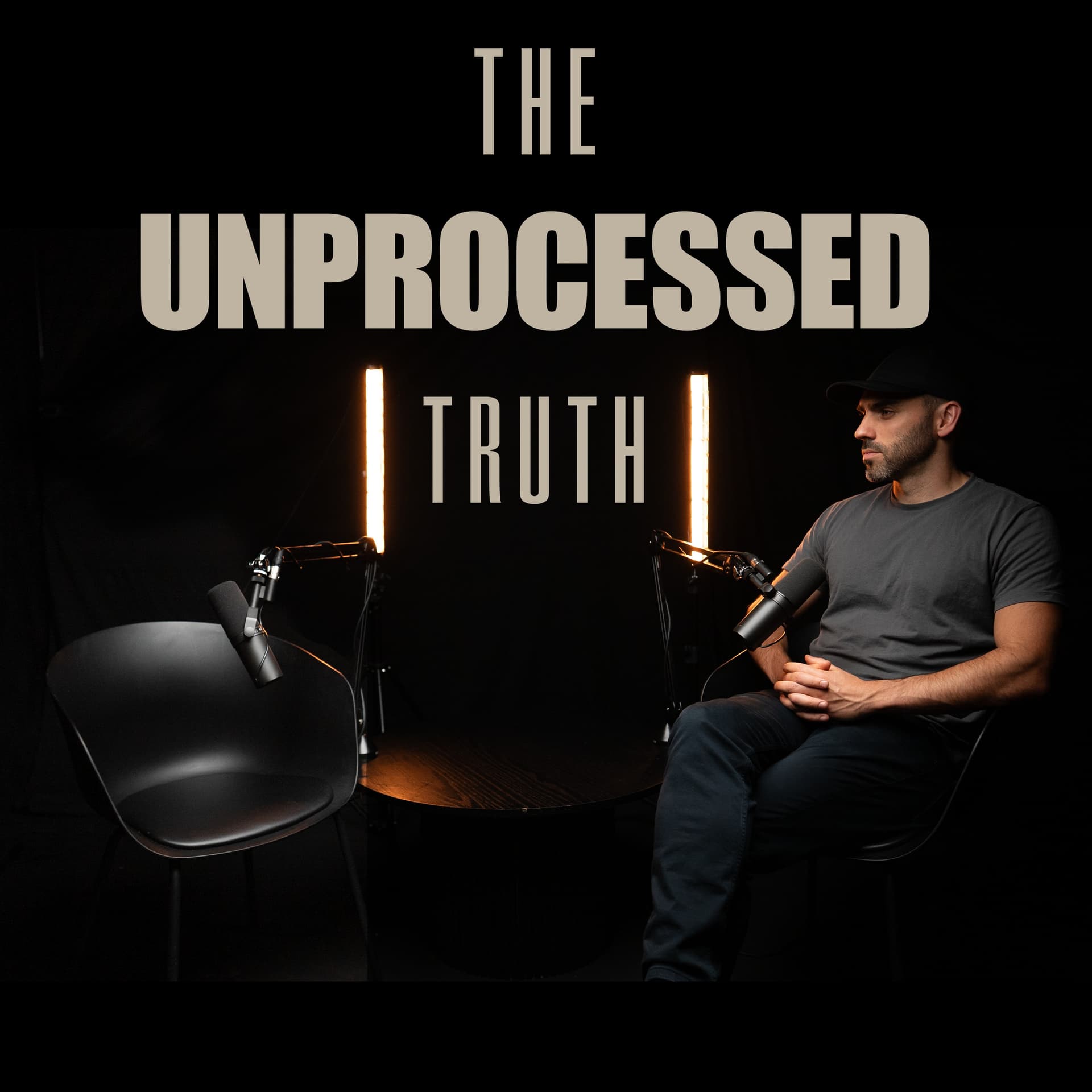
Welcome to The Unprocessed Truth, hosted by me, Sunna Van Kampen.
Let's chat about the importance of a consistent nighttime routine! In this bonus episode, I’m sharing the exact steps I take each evening to wind down, recharge, and set myself up for success the next day.
We'll be releasing guest episodes every Friday and bonus episodes each Tuesday - see you there!
Hosted on Acast. See acast.com/privacy for more information.