

 Ask ChatGPT


Viet Thanh Nguyen discusses his childhood refugee escape from Vietnam (1975), family silence, racism and gentrification in San Jose, and how stories/books shaped his identity and writing. He connects those experiences to postcolonial theory (Edward Said’s Orientalism) and Hollywood’s Vietnam representations (Graham Greene’s The Quiet American, Apocalypse Now), arguing that popular culture both reflects and erases non-white people. He also explains how The Sympathizer became a Pulitzer-winning novel and an HBO series, and how fatherhood and his mother’s mental-health history affected his emotional life and creativity.
Viet Thanh Nguyen, Pulitzer Prize-winning author and USC professor of English and American studies; child refugee from Ban Mê Thuột; author of The Sympathizer and memoir A Man of Two Faces.
memory is fragmentary and shaped by others’ accounts; stories can save and destroy; Orientalism and “romantic fantasy” enable power; Hollywood often erases Vietnamese identities (e.g., no Vietnamese names in Apocalypse Now credits); representation affects real-world targeting.
fleeing twice; U.S. Navy rescue “Dunkirk scene”; separation in U.S. refugee camps; anti-Asian sign “Another American, driven out of business”; Lester the Cat award; Apocalypse Now massacre scene; Quiet American’s Phuong depiction; HBO casting choices and Robert Downey Jr. roles.
Written by AI. May contain mistakes.
Viet recounts his family's dramatic escape from Vietnam during the war.
“From South Vietnam, we are now waiting for just one word, surrender.”
Discussing his unreliable memories of the escape and their aftermath.
“I actually don't remember hardly any of it except fragmentary images, So I like to call myself not an eyewitness to history, but the eyewitness to the eyewitnesses of history who are my parents.”
Viet shares his experiences of separation from his parents in a refugee camp.
“But when you were growing up, did you ever have conversations with your parents about their life in Vietnam?”
Explores the emotional impact of leaving his adopted sister in Vietnam.
“And my parents tell me, this is your adopted sister.”
Viet discusses his parents' struggles as Vietnamese immigrants in America.
“And what happened to her after you left for America?”
Reflecting on experiences of racism and alienation during childhood.
“I mean, what do you know about their injuries?”
How books and stories shaped Viet's childhood and identity.
“And so I turned instead to the library, to books, to movies, and escape out of this refugee experience.”
Viet Thanh Nguyen reflects on his childhood experiences that shaped his writing journey.
“And there in a haystrewed barn, he found love with a country cat.”
Nguyen discusses Edward Said's Orientalism and its impact on his perception of literature.
“I first read it at the University of California at Berkeley.”
Nguyen critiques Graham Greene's The Quiet American, exploring themes of colonialism.
“Greene himself and the narrator of the novel, Thomas Fowler, an English journalist, are both quite aware of the racism that is being perpetrated against the Vietnamese and other Asians.”
Nguyen shares his struggle between academic success and his passion for writing.
“And that's why people think he foreshadowed what the United States would do on a much larger scale in the 1960s.”
Viet Thanh Nguyen discusses how he confronted unprocessed emotions related to his family's refugee experience.
“And yet what I did in order to survive was to change those memories or to seal over those memories with a trap door and refuse to look underneath that trap door.”
The conversation explores Nguyen's debut novel, its influences, and its satirical take on Hollywood portrayals of the Vietnam War.
“It's about a North Vietnamese spy who is embedded in a South Vietnamese community in exile in America.”
Nguyen critiques how Hollywood has historically erased Vietnamese characters and calls for better representation in film.
“They are just a sort of homogenous mass.”
Nguyen shares his involvement in adapting The Sympathizer into an HBO series and the importance of Vietnamese representation.
“It doesn't mean I think they should be censored or banned.”
Nguyen reflects on the personal impact of his mother's death and becoming a father on his emotional growth and writing.
“wanted to make sure that if I had the chance, we would give Vietnamese actors the opportunity to be the stars of their own spectacle.”
Nguyen discusses the dual nature of art as a tool for both confronting fears and embracing creativity.
“Can you just talk a bit more about that time?”
Deborah Tice shares her emotional journey searching for her missing son.
“thank you very much indeed for listening to This Cultural Life.”

Get the gist, explore an idea or ask about something said.
 Claude
On This Cultural Life, what are the key points of this episode?
Searching your listeningAutomatic transcript. May contain errors.
0:06Welcome to This Cultural Life, the series in which some of the world's leading artistic figures choose the influences and experiences that most inspired their own creativity. I'm John Wilson and my guest in this episode is the Pulitzer Prize winning author and academic Viet Thanh Nguyen. A child refugee, he moved to the United States with his family at the end of the Vietnam War. He's best known for his 2015 debut novel The Sympathiser, which has been translated into 30 languages, sold more than a million copies worldwide, and was adapted as an HBO television series in 2024. Viet Thanh Nguyen has written widely about conflict, migration and identity in his fiction, and more recently in his memoir A Man of Two Faces.
0:51A professor of English and American studies, he teaches at the University of Southern California. Viet Thang Nguyen, welcome to This Cultural Life. Hi, John, thanks for having me. Your very first choice for this programme is the fall, some would say the liberation of Saigon in 1975, and this is when North Vietnamese forces captured the capital of South Vietnam, marking in effect the end of the Vietnam War and the start of national reunification. From South Vietnam, we are now waiting for just one word, surrender. It could come at any time. The Saigon government is reported to be ready to meet any conditions for peace.
1:32Tonight, bursts of small arms fire are echoing round our hotel. You'll see a stream of military vehicles crossing the Binhua Bridge over the Saigon River. You were four years old at the time, living in Vietnam with your parents. How did the family get out? Well, we had a very dramatic story, and we fled from the Communist Army not once but twice. Our hometown, Ban Mithuot, was the first one captured in March 1975. And my father was in Saigon on business. My mother was on her own. She had to make a life and death decision. She grabbed her two sons, including me, and fled on foot, leaving behind our adopted sister at 16 years old to take care of the house and the property.
2:10And then we went down among tens of thousands of refugees, soldiers, and civilians, made it to the nearest port town, caught a boat, went to Saigon. April, we did it all over again, and we had the typical dramatic escape story on a boat. and we were picked up in the middle of the sea by a U.S. Navy ship. There was the most incredible Dunkirk scene. Matillas of ships steaming out towards sea, loaded with refugees. I lost count of the number of vessels involved, something like, I would have thought, 500, in what I believe to be one of the most daring and incredible evacuations of all time. I actually don't remember hardly any of it except fragmentary images, So I like to call myself not an eyewitness to history, but the eyewitness to the eyewitnesses of history who are my parents.
2:58And in 1975, as I say, you were four years old. So any fragmentary memories or images that spring to mind from that time? Or is it just a total blank? I have these fragmentary images. For example, I remember that we were on a small boat and that there were sailors on this boat shooting at another smaller boat of refugees trying to approach. Now, I wrote about this in my memoir. And my brother said, who was seven years older, said that didn't really happen. So I have these very undependable sort of movie-like moments. And I don't know if I can trust my own memory. That's interesting because the memoir does, it's incredibly dramatic.
3:31And you're describing what your parents went through at the time. So are you imagining their plight or is that stuff that they've told you when you were growing up? It's a little bit of both. I mean, certainly I was old enough to witness some of the things that happened to them. Like they're being shot in their grocery store on Christmas Eve, for example. When I'm at home and my brother gets the phone call telling him that this has happened. and I'm watching cartoons on TV and he tells me, and I'm nine years old and I don't know what to do with this information. And so I keep on watching the cartoons and my brother says, what's wrong with you?
4:02Why aren't you crying? Why don't you feel anything? And that moment has just been imprinted on me for decades and decades. In other instances, there are things that my parents told me about, fragments from their life that they have told me about. And so those two things are blended and I've tried to reconstruct in certain instances how they must have felt. And that shooting that took place on Christmas Eve, I want to come back to that because this is when the family has settled in San Jose in California. But when you were growing up, did you ever have conversations with your parents about their life in Vietnam?
4:33Typically not conversations. We didn't really have conversations. It was more whenever my parents felt like dropping a memory bomb on me, for example. So my parents, they were poor. They were not very well educated. They had very few resources. And one time over dinner, my parents, my mother said, oh, you know, when we first got there to the south, I had to pick up buffalo dung for fuel. My father said, why are you telling that story? So it was moments like that where usually when they would tell me things, it would be awful, horrifying things. And then I would have to imagine the rest of their circumstances.
5:05So you don't remember anything really about leaving Vietnam, those fragmentary images of the boat. When you arrived in America, you were split up from your parents for a time. That must have been incredibly traumatic. This is where my memories begin at four years of age because we end up in a refugee camp in the United States. There were four of these camps set up to hold 130 ,000 refugees. In order to leave the camp, you had to have an American willing to sponsor you. And for whatever reason, no one wanted to sponsor all four of us. One sponsor took my parents. One sponsor took my brother. One sponsor took four-year-old me.
5:39And so my earliest memories that I know have happened are of me howling and screaming as I'm being taken away from my parents. Do you remember who was looking after you? I remember their faces. And I was probably not a very good little boy because I was howling and screaming. But one of the earliest memories I had in that house is that these people were so kind, they wanted to make me feel at home. So they got chopsticks for the meal. And how you get chopsticks in Harrisburg, Pennsylvania in 1975, I have no idea. But I didn't know how to use chopsticks at four years of age. And I felt terrible.
6:08I felt like I should know how to use chopsticks. And these people are all looking at me. And so moments like that have stayed with me. How long were you with them for? I was separated from my parents for about three months altogether. together and my brother who was 10 and 11 didn't get to come home for two years and what about your adopted sister who you left in Vietnam as you say to look after the house did you say she was 16 I was four so obviously at four years of age I knew that I had a sister then I forgot and at some point when I was 10 or 11 in San Jose a letter comes in the mail and in the letter there's a photograph, black and white photograph of this beautiful young woman.
6:47And my parents tell me, this is your adopted sister. And I had no memory of her. This was a total shock and a rupture in my being, I think, because all of a sudden I had to think about who this person was, why we had left her behind, why was she left behind and I wasn't left behind. And so from that moment onwards, I think from about 10 or 11, I felt that we had an absent presence in our house, our family, a ghost-like figure. And it really shaped the way that I thought about the refugee experience, but my own self as well. Do you know why she was adopted? Well, because my parents were Catholics and they wanted to have many children and they couldn't.
7:24And so my parents decided to adopt a girl from an orphanage run by nuns. And then by circumstance, soon after that, they had my brother. And so one of the tragic things about this whole experience was that I knew she was adopted, and I went to see her in Vietnam. And then finally, she was able to visit us in California to see my father before he died in 2024. That's 49 years. It took 49 years for her before she could finally visit the United States. And she told me a story I had not heard until then. But she said she didn't know she was adopted. She found out she was adopted from one of our maternal aunts who said, do you know why your family left you behind?
8:05Because you're adopted. That must have been an incredibly cruel emotional blow for her. I'm sure it was, and I did not know about it until two years ago. And what happened to her after you left for America? Well, she was 16. She was left in charge of the house and the store that my parents had. And of course, what happened when the Communist Army came in was they took everything away from her. And they sent her to what was called a volunteer youth brigade, which was obviously not a voluntary action. And their task was to be sent into what were called the new economic zones, which were these desolate places.
8:36that had been ravaged by bombs or mines and was basically a hard labor sentence. And then she came back and then she lived her life and got married and had children. And when I finally came back to Vietnam in 2004 and saw her for the first time, it was really remarkable, despite everything that she'd been through, that she showed up for our meeting with the hair done, beautiful makeup, nice clothing, smiling. And I knew that she probably was adopted because none of our family knows how to do these kinds of things. You know, we're not we're not known for our sense of humor. We're very hardworking and stoic.
9:09And here she was, even after all this trauma, able to be beautiful and to smile. Is she still in Vietnam? She's still in Vietnam. And you're obviously in touch with her now. The family moved to San Jose. What did your parents do there? How do they set themselves up? They opened perhaps the second Vietnamese grocery store in San Jose, California, which is, again, what you're supposed to do when you come pursuing the so-called American dream. Was that their business in Vietnam? What had your parents been doing? They were just entrepreneurs. They did everything. So they had a tailoring business. They ran a jewelry shop.
9:41In the middle of the jewelry shop, they were also selling and servicing motorbikes for whatever reason. They were just doing whatever they could to make a living. And what they could do in San Jose was to open a grocery store. One of my earliest memories was walking down the street from my parents' store, which was in the heart of downtown San Jose, and seeing a sign in another store window that said, Another American, driven out of business by the Vietnamese. And so that was San Jose and that was childhood and that was youth for me as this witnessing my parents struggle to save their own lives and to save the lives of their children and all the relatives in Vietnam that they were sending money and goods home to.
10:15And yet also confronting these mixed messages from American society about whether we were welcome here or whether we were just another kind of alien invasion. So you were aware as a child of hostility then? Oh, yes. Because I could see the sign. I didn't understand really what the sign meant and the history of anti-Asian racism in the country. But I obviously understood that the person who wrote this sign meant people like my parents, possibly even my parents. And you mentioned the shooting on Christmas Eve a few moments ago. Was that racism or was that just a robbery? I don't know. It was just a very hard time in San Jose.
10:50It was an economically depressed area. Now, if you go to visit, San Jose is now a branch of Silicon Valley, and it's very expensive. And in fact, my parents chose very good property because if you go there now, the grocery store is no longer there. Instead, what's on top of my parents' business? The biggest, most expensive apartment building in San Jose with Starbucks right where my parents' store was and across the street, brand new City Hall. That was also part of the American dream, that my parents were forced to sell their property to the city through gentrification. But at the time, in the 1970s and 1980s, the only people who wanted to open new businesses in this area were the Vietnamese refugees.
11:26Obviously, they survived this shooting. I mean, what do you know about their injuries? Do they ever tell you? My family does not speak about so many things. And so the injuries were not serious because they were back to work within a day or two. And they had no choice because if they didn't go back to work, who would take care of the business. Was it a Vietnamese neighborhood you were living in, or was it very mixed? We lived not far away from the grocery store. We lived right next to the freeway entrance, and our neighborhood was white working-class people, Mexican immigrants and their children, and Vietnamese refugees.
11:59So it was a melange. Was it a happy childhood then? No, I wouldn't say it was a happy childhood. I think it was a childhood that was marked by great loneliness and alienation. I knew my parents loved me, but they never had time to spend with me. And that was the paradox of immigration and refugee experience, that your parents can love you. But because they love you, they're going to spend all their time working and none of their time with you. And so I turned instead to the library, to books, to movies, and escape out of this refugee experience. Well, I was going to ask you about your cultural upbringing and specifically what role books played during childhood and wondered, you know, who introduced you to books.
12:32But you went looking for them then. Well, I mean, some of my earliest memories after leaving the refugee camp were of the library. That somehow, even though I came at four and my parents' English was not that great, by the time I was five or six, I could read fluently in English. There were people who must have taught me English. And I give great credit to these unknown teachers who did this for me because they provided me that tool to go to the library and find this whole set of other worlds. And I never lost my love for the public library. Which books made a big impression on you at a young age?
13:04I read all the children's classics, you know, things like Curious George, for example, and the Tintin or Tintin comic series, which made such a huge imprint on me. Of course, potentially a problematic series. You mean this sort of imperial undertook? I mean, first of all, I think Ergie was probably a liberal for his time and that his depiction of the colonies and of non-white peoples was probably pretty good for the day. You see, express sympathy, for example, for American Indians and for the Chinese, not so much for black Africans, obviously. But going back to his work, there's no doubt that these are very dated kinds of representations.
13:37You're suggesting that so much of the family history was unsaid. Did you start to make up your own story to almost fill that void? When I was eight years old in school, my teacher gave all of us an assignment, which was to write and draw our own books. A story came to mind right away, and it was about Lester the cat. Lester is an urban cat, stricken with ennui. Bored with city life, he fled to the countryside. And there in a haystrewed barn, he found love with a country cat. So first of all, the San Jose Public Library gives the book a book award and sets me off on the path to 30 years of misery and trying to become a writer.
14:14Sorry, you won an award. I won an award. I won an award. I wrote and I drew it. I bound it. And I had the deceptive illusion that somehow being a writer was fun and that the act of creation was fun. There's truth to that, but there's also a lot of misery and hard work. Where did that story come from? I don't know where that story came from. But looking back on it as an adult, of course, Lester the Cat was me. Intuitively, I understood the idea of alienation and longing and love and that I needed to go somewhere to find it. And instead, I displaced all of those feelings and aspirations onto a cat.
14:45And I never even had a cat. And I don't think I ever had even seen a cat. But somehow I'd seen pictures of cats and read books about cats. And so Lester the Cat came into being. What was the prize? It was probably just a ribbon and the fact that my parents couldn't even take me to this event because they were busy working. So the prize was really my school librarian taking me and buying me a hamburger at a hotel restaurant right across the street from the library. and it was probably the nicest restaurant I'd ever been to. What about school? I mean, you talk about the inspirational teachers, but what about fellow pupils?
15:16What was the atmosphere in the classroom like? I went to Catholic school for most of my life. And so, again, we were this sort of multicultural embodiment of what the United States could be. And then there was a typical bullying going on. So I remember very vividly getting comments from kids like, hey, did you fight in the Vietnam War? Were you carrying an AK-47? And I was like, I was four years old at the end of the war, But somehow these kids knew what that war was or what some of the images of that war was and wouldn't let me forget about that. And did you have an understanding of what had happened during the Vietnam War?
15:49Not very much. I mean, I was very curious about it because my parents weren't talking about it. And if they were talking about it, they were talking about it from the Vietnamese or their Vietnamese perspective and what happened to Vietnamese people. whereas these classmates of mine were thinking about this from the perspective of how Americans perceived the war from the news or the movies or television or radio. And so when did you start to get an understanding of Vietnam? I think by the time I was getting to be a very serious reader and I was a very serious little boy and so then I started to go and started to read as much as I could about the war in Vietnam including American novels that I should not have read because they were novels written for adults And so I started to be exposed to the complications of what it meant to be a Vietnamese person encountering depictions of Vietnamese people not written by Vietnamese people.
16:36And, of course, around this time when you were growing up, Hollywood started to try to get to grips with what had happened in Vietnam. When did you become aware of the Vietnam war films of the era? I was a war fanatic as a little boy. And I watched a lot of American war movies. I watched John Wayne movies, for example. And I was cheered for the American soldiers. and then a movie called Apocalypse Now came along and I was able to rent it from the video store and I started watching it. It was very weird for an 11 or 12 year old boy to watch this movie and I was still rooting for the American soldiers but then halfway through the movie they massacre Vietnamese civilians in a very graphic scene.
17:13Look in that tin can. That rusty can. That's right. That's all. There ain't nothing on it. Check the yellow can. Check the yellow can. She was sitting on the tin.
17:25And when I was watching that, I remember just being utterly confused and split in two. Was I the American doing the killing or was I the Vietnamese being killed? And at 11 or 12 years of age, there was really no way for me to understand that moment. And I had to put it away and wait for about eight or nine years before I went to university, before I started to be able to even talk about that scene. and not only about the violence that it depicted and the violence that it referred to in terms of real massacres, but also the violence that a movie could do to someone like myself. Because I really do think that was a moment of violence that happened to me because it completely shaped me.
18:04When you say you didn't understand what was happening at the time, were you traumatized in the moment of seeing that scene? I don't want to say traumatized because there are people who've been truly traumatized by true violence, but I was deeply affected by it. Enough so that when I started to talk about this movie again during this moment in university, when a professor asked us to recount a scene from a movie that was important to us, the first one that came to mind was the massacre scene from Apocalypse Now. And as I started to recount the scene, I found myself shaking with rage and anger. And I realized that stories have power.
18:40I had known that stories had the power to save me. That's our sentimental notion of what literature and art and stories could do. But recounting that scene, I realized that if stories have that power, they also have the power to destroy us as well. And that's when I started to become serious about becoming a storyteller, because I wanted not only the beauty of storytelling and what it could do as art, but I also wanted the power of storytelling as well.
19:09Your next choice for this cultural life, Viet Thanh Nguyen, is the groundbreaking book Orientalism by the Palestinian-American academic Edward Said. When did you first read it? I first read it at the University of California at Berkeley. I became very intellectually precocious and inquisitive there. And I wanted to join this senior thesis class on postcolonialism and colonialism. And I got myself into the class and I read Graham Greene's The Quiet American for the first time. I'd been a fan of Graham Greene, actually, as this little boy growing up in San Jose, California. I was reading this English novelist, reading The Power and the Glory, for example.
19:42I hadn't read The Quiet American, however, so I read it for the class and I realized, oh, this is obviously is about the Vietnam War from an Englishman's perspective. It's obviously an excellent novel, technically, and was a hugely important novel for the Americans because many American readers felt that Graham Greene in 1955 had accurately forecast the tragedy of what the Americans would do. But it was also a book that I felt was inadvertently rather racist and sexist towards the Vietnamese that Green was actually quite sympathetic to at the same time. And Edward Said's Orientalism helped me to make sense out of what I saw as the Orientalism in Graham Green's thinking.
20:19Just outline the thesis of Orientalism as laid out by Edward Said then. Said says that Orientalism is a way of thinking that the Occident or the West has about the Orient or the East, and that this way of thinking was cultural, but it was also political. It was military. It was about power. It explains how the Orient is a construction for the Occident. It is a fantasy that there are true Orientals, real people out there, but the image of the Oriental that the West constructs displaces real Orientals or real Asians and that the fantasy has tremendous power. And so this is what is so enabling about Saeed's analysis because it allowed me to understand how Vietnam worked in relationship to the United States and how there were real Vietnamese people like my parents.
21:04But what the Americans were doing was to see Vietnam through the lens of fantasy, and therefore a fantasy that justified what the United States wanted to do in Vietnam. So had you already read Orientalism when you read The Quiet American? I read them at roughly the same time. At the same time. So then you applied Edward Said's thesis to a reading of the Graham Greene novel then. Yes. It was my introduction into starting to think critically about how literature and power and colonialism and racism and sexism could all operate together at the same time. Did you read, therefore, the Graham Greene novel as a racist novel?
21:37Well, it's a tricky situation because, again, I think in the novel, you would say that Greene is, like Hergé, in some ways, a liberal and very sensitive to the issues of colonialism and racism that he's watching, that he's seeing. Greene himself and the narrator of the novel, Thomas Fowler, an English journalist, are both quite aware of the racism that is being perpetrated against the Vietnamese and other Asians. However, what the novel also depicts is essentially a drama between the Englishman, Thomas Fowler, and the American, Alden Pyle. And there is a woman in between the two of them. There's also a love triangle that's going on.
22:14And the woman is Phuong. And she's this beautiful Vietnamese woman who really we only see through Thomas Fowler's perspective. Now, is that a racist depiction or is that a sympathetic depiction? There's a little bit of ambiguity here. But, you know, in Grimm's memoir, as he talks about Indochina in his memoir, he loves Indochina. But there's a deep romanticization of Vietnamese women and how they come to represent Vietnam in the Western imagination. Now, that is what Saeed would call an Orientalist fantasy. So it's not... It's like exoticization. Exoticization. It's not a murderous racism necessarily, because that would be what the explicit colonizers would do.
22:51But the romantic fantasy is just on the other end of that. Romantic fantasy is very difficult to separate from the actual power and domination of colonialism. I can't say what made me fall in love with Vietnam, that a woman's voice can drug you, that everything is so intense, the colors, the taste, even the rain, nothing like the filthy rain in London. They say, whatever you're looking for, you will find here. They say, you come to Vietnam and you understand a lot in a few minutes, but the rest has got to be lived. So within The Quiet American, you have the old-school English journalist who represents the sort of long-standing imperial powers, and then the American is a CIA agent, I think, isn't he?
23:36Right, old and old, yeah. But he represents the new political, economic, more insidious power coming to try and destabilise Vietnam. So did it give you an understanding of what had happened, the deeper understanding of what had happened in the country of your birth. It gave me an initial understanding. There was so much more to say. But the figure of Alden Pyle as a quiet American, I think, is brilliant because there are ugly Americans. And there was a novel called The Ugly American written by American authors that depicted the more brutal version of American power. But the Alden Pyle character, I think, is actually more dangerous.
24:07And Graham Greene thinks so as well, because the Alden Pyle character is a Yale graduate. He's well-spoken. He's well-read. He studied this area. And he comes in with the best of intentions, or so he says, and nevertheless, he messes everything up. He becomes complicit in this terrorist bombing in the center of Saigon that kills all these innocent civilians. And that becomes the metaphor for Green about American intentions. You could have good intentions, or believe you have good intentions, but innocent people will die. That is Green's analysis of what's happening. And that's why people think he foreshadowed what the United States would do on a much larger scale in the 1960s.
24:42What were your career ambitions at the time? My career ambitions were not to become a doctor, a lawyer, or an engineer. My career ambitions were to take the only talents that I had, which were to read and to write and try to do something with them. Did you feel pulled between art and academia? Yes, because it became clear that I was a natural born academic. I knew how to write academic papers, but I was not a very good writer of fiction. And I had my parents breathing down my neck. What are you going to do? What are you going to do? Because my brother had become a doctor. And so I told them, okay, I'll become a doctor too.
25:12I'll get a doctorate in English. And they were very confused. They didn't know what to do with this. But the one thing they could understand is that I could become a professor. So for me, becoming a professor was my day job. Respectable. Yeah, respectable, my day job that I would try to pursue until I could become a writer. In the notes that you sent to us before coming here today, you mentioned Maxine Hong Kingston, a teacher that you had at Berkeley, who you're describing in these notes as a role model. In what way? Maxine on Kingston had published a book called The Woman Warrior in 1976, which was a landmark book in American literature because it was a major account of Chinese immigrant life, but also a feminist text that became very influential.
25:48She's an American writer of Chinese heritage. Right, exactly. And she was a professor at UC Berkeley. I got into her class to be a writer. There was only 14 of us. I should have taken it seriously. And instead, what happened was that I would come into the class, I would sit just a few feet away from her every day, about the same distance I'm sitting from you right now. And every day, I would fall asleep. And so at the end of the semester, Maxine Hong Kingston gives me a B +, which is, you know, an Asian F, in other words. And she writes me a note and she says, you know, you seem deeply alienated.
26:24You should make use of our university's excellent psychological counseling services, which, of course, I didn't do. I became a writer instead. But this moment was unforgettable for me for at least a couple of reasons. One was that it demonstrated to me that I was not a very serious person and had so much more work I needed to do before I could become a writer. But the other thing that it demonstrated to me eventually was that I was actually deeply alienated. I just didn't think I was at the time. And the reason why Professor Kingston thought I was deeply alienated was because of what I wrote for her in my class, which was an essay about my mother going to a psychiatric facility.
27:03And that experience was obviously traumatic for my mother and also difficult for me and so difficult that even though I wrote this essay for Maxine Hong Kingston, I never talked about it again. And everything that I wrote about in that essay, I forgot about. And so that I thought for the next 30 years that my mother had gone to a psychiatric facility when I was a little boy. During the pandemic, I reread the essay and I discovered my mother had gone to that psychiatric facility when I was 18 years old. and I wrote about it when I was 19 years old. So even as a full-grown adult, my memory had played tricks on me because I felt like a little boy and that's what I chose to remember for decades.
27:42But do you think that all fed into you becoming a writer of fiction then? In order for me to become a writer, I had to do a few different things, which included learning how to write, obviously, but also trying to figure out my own emotions. There's no doubt that everything we've been talking about in terms of my childhood and my adolescence and my mother had deeply shaped me. And yet what I did in order to survive was to change those memories or to seal over those memories with a trap door and refuse to look underneath that trap door. And it wasn't until after the success of my first novel, when I started to go around doing conversations like this, talking about my parents and the refugee experience, that I suddenly realized I had not dealt with these emotions.
28:24I remember standing in front of 800 people talking about the grocery store, for example, and all of a sudden being overcome with emotion about a subject that I thought that I had already dealt with. And at that moment, the trap door fell open beneath me. And I fell through and I realized I had not processed at all in any way what had happened to my family and to myself and that I would need to confront those emotions. Well, let's talk about your debut novel, The Sympathizer, which was published in 2015. It's about a North Vietnamese spy who is embedded in a South Vietnamese community in exile in America.
29:00And you talk about obviously the experiences that your parents had, your childhood possibly feeding as well. But just to go back to Orientalism by Edward Said and The Quiet American by Graham Greene, how much were you drawing on those two books in writing The Sympathizer? The Sympathizer is in conversation with many books, but there's no doubt that The Quiet American is one of those books, and partly because The Quiet American is a very good read, and it's a murder mystery, and it's a thriller in the Graham Greene style. And so when I decided to write a novel, I chose the genre of the spy novel, as did Greene, because spy novels are entertaining.
29:34And not only are they entertaining, but they also give you the opportunity to talk about history and politics in a natural way. And it's also a novel that is, in some ways, my literary conversation with authors that have preceded me. One aspect of The Sympathizer takes you back to seeing Apocalypse Now, because the protagonist gets a job in Hollywood as a so-called reality consultant on a big budget Vietnam War movie. Was this your revenge on Apocalypse Now? Because it's not a very sympathetic portrait, particularly of the director. It's my revenge on all of Hollywood, because it wasn't just Apocalypse Now.
30:08You know, I've watched almost every movie that Hollywood made about the Vietnam War. Platoon around. Platoon, Rambo, Full Metal Jacket, Missing in Action. There's a huge list of these things. And And it's an exercise I don't really recommend to anybody. And so the movie that is satirized in the novel is not really Apocalypse Now. It's really a compilation of all of these things because Apocalypse Now really is a work of art. And that's something that I wrestle with, that you can make a great work of art and yet have it be problematic in certain ways for certain people. And so it's really a satire of the entire Hollywood movie industry and how it functions as a contradictory arm of the military-industrial complex and the Pentagon.
30:45There is a scene in The Sympathizer in which the captain, the protagonist of the story, is having an argument with the auteur, the director of this film, about the portrayal of the Vietnamese people and saying that they're not given real backstories, not given lives, they're not given lines. They are just a sort of homogenous mass. And again, that goes back to Orientalism again, doesn't it, Edward Said? And at the end of Edward Said's Orientalism, he talks about Hollywood, actually. And he's not really concerned with Vietnam, although he mentions it by the end of the book. He's really concerned with how Arabs and Muslims are depicted in Hollywood.
31:17And the thing is, you know, he's saying that the depiction of Arabs and Muslims in Hollywood, in movies, and probably not just Hollywood, has an enormous impact on the way that Arabs and Muslims in real life are perceived, and therefore, how they are then going to be targeted by military power in certain ways. He wrote that in 1978. Nothing has changed really in 50 years. And everything he says about Arabs and Muslims and their representations in cinema in the West is equally applicable to the Vietnamese and to other Asians and other Orientals as well. And so one of the things that I really wanted to do in the novel is to depict that with the satire of the movie.
31:52And I'll point out one example where this erasure happens. It's not simply the racist images that we see in a movie like Apocalypse Now. It's that when Apocalypse Now finishes and you look at the credits, there are no Vietnamese names in the credits. The random American GI who doesn't even have a line in the movie gets a name and a credit. There are Vietnamese people who actually say things in Apocalypse Now. They don't say very much, but they say things. You have no idea who these people are. Their names are not even in the credits. It's as if these people didn't even exist, even though we see them on the screen.
32:25So there you see how institutionally the power of Hollywood manifests itself. It can show images of non-white people on screen like the Vietnamese, but in the practices of Hollywood historically, there's been a tremendous degree of erasure of non-white people at every level, including in the making of images and movies as well. I didn't realize that. I mean, that is quite extraordinary. Does it make you look at, I don't know if you go back and watch Apocalypse Now occasionally, have you seen it since that first viewing at the age of 10? And do you look at it in a completely different way now? I taught a class at my university on the American War in Vietnam for many years, and the one movie that I would show that would represent Hollywood was Apocalypse Now.
33:07So I would watch it every couple of years. And I'm serious. I think it is a great work of art. Everything I'm saying that I'm critical of Graham Greene's Quite American. I'm critical of Tan Tan. I'm critical of Apocalypse Now. It doesn't mean I don't think they're great works of art. It doesn't mean I think they should be censored or banned. It means that I think that they should be grappled with, but they should be grappled with in ways that acknowledge their accomplishments, but then also acknowledge that they're deeply flawed as well. And I use that movie to help my students understand the contradictory power of popular culture.
33:34Because a lot of people would watch Apocalypse Now and think, oh, it's an anti-war movie and it's an anti-racist movie. And my argument about Apocalypse Now is that it's such an interesting film because even though in some ways you could interpret it as an anti-war movie, in fact, it's been used for pro-war purposes. There's this great memoir called Jarhead by Anthony Swafford, a young man who's about to go off and fight in the Gulf War. And he's in the U.S. Marine Corps. And what happens in U.S. Marine Corps training? They watch Apocalypse Now. What, to fire them up? To fire them up.
34:17These are supposed to be anti-war movies, but even the military understands that what's really going on is that all you have to do is show guns and tanks and explosions and war and young people who watch it will forget that they might die or that they might kill innocent people. What they're going to remember is the excitement of the spectacle. And that's what Apocalypse Now really represents. You would like to think that it would be impossible for those Vietnamese extras and some of those people who have lines, if that film was made today, not to be credited. You think surely things have changed.
34:48Well, things have changed for sure. Let's look at The Quiet American. The Quiet American was adapted twice by Hollywood, once in the 1950s and once again in the early 2000s. the 1950s adaptation, the Vietnamese character of Phuong is played by an Italian actress, for example. And the Vietnamese have no speaking lines in there. And then in the early 2000s version with Michael Caine and Brendan Fraser, it is more sympathetic to the Vietnamese. And the Vietnamese do have speaking lines. So yes, representations have changed overall. But nevertheless, do we see Hollywood making major Vietnamese movies, featuring Vietnamese characters as the main actors, or are they adapting novels like Graham Greene when it comes to the Vietnam War?
35:29Which is one crucial reason why I agreed to make The Sympathizer into an HBO TV series. As complicated as that process is, I wanted to make sure that if I had the chance, we would give Vietnamese actors the opportunity to be the stars of their own spectacle. Saigon, 1975. The war was ending. And I awaited my new assignment. My protege. Jesus. So where are we going? To next harbor on your CIA bridge. America. How involved were you in that production? I was an executive producer, which means something and also means nothing. My role was to try to make sure that we could get the TV series made with the right collaborators.
36:13The showrunner, co-showrunners were Don McKellen, who's Canadian, and Park Chan-wook, who's Korean. And Park Chan-wook is one of the two greatest Korean directors in the world, the other one being Bong Joon-ho. And I felt this was really important because if an American was a showrunner, they would totally screw me on this. Because Americans have a hard time getting away from their own understanding of the war in Vietnam. Whereas someone like Park Chan-wook, you know, he was my first choice. Partly because his cult movie, Old Boy, an incredible movie, was an influence on The Sympathizer. Robert Downey Jr.
36:46is in it, playing four different roles, CIA agent. Well, he's the auteur as well, isn't he? He's the auteur, he's the congressman, he's the professor. This was Park Chan-wook's idea, to cast one major white male actor to play most of the white male roles, because number one, it would be fun, you know, from his point of view, and me too. But number two, as he said, I'm going to make a point that historically, you know, in Hollywood imaginations, but also in Western imaginations, all Asians look alike. Well, here it's going to be all white guys look alike. We're going to put Robert Dunning Jr. And Robert, you know, he just he ate it up.
37:20I think he has so much fun on the set. But there's no doubt that this was one of the more controversial aspects about the TV series. The Sympathizer, the novel, won the Pulitzer Prize in 2016. How did you find out and how did you feel when you got that call? I was in a hotel room in Cambridge, Massachusetts in the afternoon waiting to go do an event that night. And I was typing emails on my laptop. And all of a sudden, my social media started to make pinging noises. That's how I found out. Oh, you found out from other people? Yes. Not directly from other people? No phone call, no announcement.
37:51It was a strange experience, out-of-body experience in so many ways. And I felt very lonely because I should have been sharing that moment with my wife and my son. And instead, I had to dance by myself in my hotel room. What did your parents make of your success as a writer? My parents probably did not read my books, which is fine. I think they'd been through so much. I didn't need to subject them to the difficulty of reading my books. What they thought about my books was actually primarily just around the sheer economics of it. Whenever I would see my father, he would ask me, how many copies have you sold?
38:25And when I told him, he was thrilled about that. When I got the news about the Pulitzer, I didn't even call my parents. I think part of me thought, well, why brag to my parents about this? And why would they care? But the next day, my father called me when I was on the road. And he said, and his voice was shaking with happiness, the villagers in Vietnam called, you won the Pulitzer Prize. And so he found about it on his own. And I think that, you know, the irony is that the Pulitzer Prize, it has so much tremendous symbolic weight. And it has meaning even outside of the United States, even in Vietnam.
38:55And this is what it took to make my father happy that it just took winning a Pulitzer Prize. And so at least I was able to give them that gift. In the notes that you sent us, you mentioned the death of your mother in 2018, and becoming a father in 2013, and how they both affected you very deeply. Can you just talk a bit more about that time? My mother had gone to the psychiatric facility, as I mentioned, but it wasn't just once, it was three times. And the third and final time in 2005 was so debilitating that for the next 13 years, she was never really herself. And that was really a shadow hanging over our family.
39:33And then she passed away in 2018. And I became a father in 2013. And these events are related in my mind, because I felt that the refugee experience had been so difficult. And my childhood had been so difficult that I felt emotionally debilitated, that I felt myself incapable of loving other people. I never was able to say I love you, for example. And I felt that I would be a terrible father because I didn't know how to love. You didn't know how to love or didn't know how to say I love you? Both. I felt very numb as a child. I felt nothing. And so it wasn't simply that I couldn't say I love you, which I couldn't, but I felt like I couldn't feel it either.
40:15And it would take me years to finally understand that the roots of all of this were that moment of abandonment at four years of age. And that my way of coping with abandonment was to stop myself from feeling. So I became a father reluctantly in 2013, and I literally finished The Sympathizer three days before my son was born. And so this act of creation in writing the novel was tied up with the act of creation in becoming a father and realizing that, number one, I could feel. I could feel through writing, but I could also feel for this new person in my life. And so by the time my mother passed away in 2018, I was growing emotionally as a person, as someone who could say, I love you, as someone who was now finally confronting his own childhood.
40:54someone who was confronting what had happened to his mother, confronting the various things that had never been said in the family and never could be said while my mother was alive. I could never have written my memoir while she was alive. And what drives you on creatively as a writer? There's that dimension of art and literature, which is about the power of the storytelling and the power of the narrative to save and to destroy that I think Saeed helped to represent to me and that I hope to continue. But then there's the playfulness, that art and literature are about beauty, Because when I was eight years old and creating Lester the Cat, I wasn't thinking about power.
41:28I wasn't thinking about politics. I was thinking about how fun it was to create something. Being a writer for me is ultimately is trying to tap into that mysterious source within us that allows us to confront our deepest terrors and fears, but also allows us to be our own inner children as well. Viet Tang Nguyen, thank you very much indeed for sharing your cultural life with us. It's been a pleasure. Thank you.
41:57And if you enjoyed that conversation with Viet Thanh Nguyen, other globally renowned prize-winning novelists who we've had on This Cultural Life include Salman Rushdie, Margaret Atwood, George Saunders, Isabel Allende, Marlon James, and many more. You can hear them and every other guest from all the previous series at BBC Sounds or wherever you get your podcasts internationally. And please do subscribe so that you never miss an episode. From me, John Wilson, and series producer Edwina Pittman, thank you very much indeed for listening to This Cultural Life.
42:32I haven't seen my son since 2012. That's the last time I hugged him. I know that my son is somewhere alive. This is Deborah Tice. Her son, Austin, is one of the biggest missing person cases in the world. And for years, I've been searching for him. Oh, gunshots. Somebody's written a message and they're all on blood. What do you want from me? I should solve the mystery. I want to know about my son. Where is Austin Tice? From BBC Radio 4. Listen on the I'm Not a Monster Presents podcast on BBC Sounds.
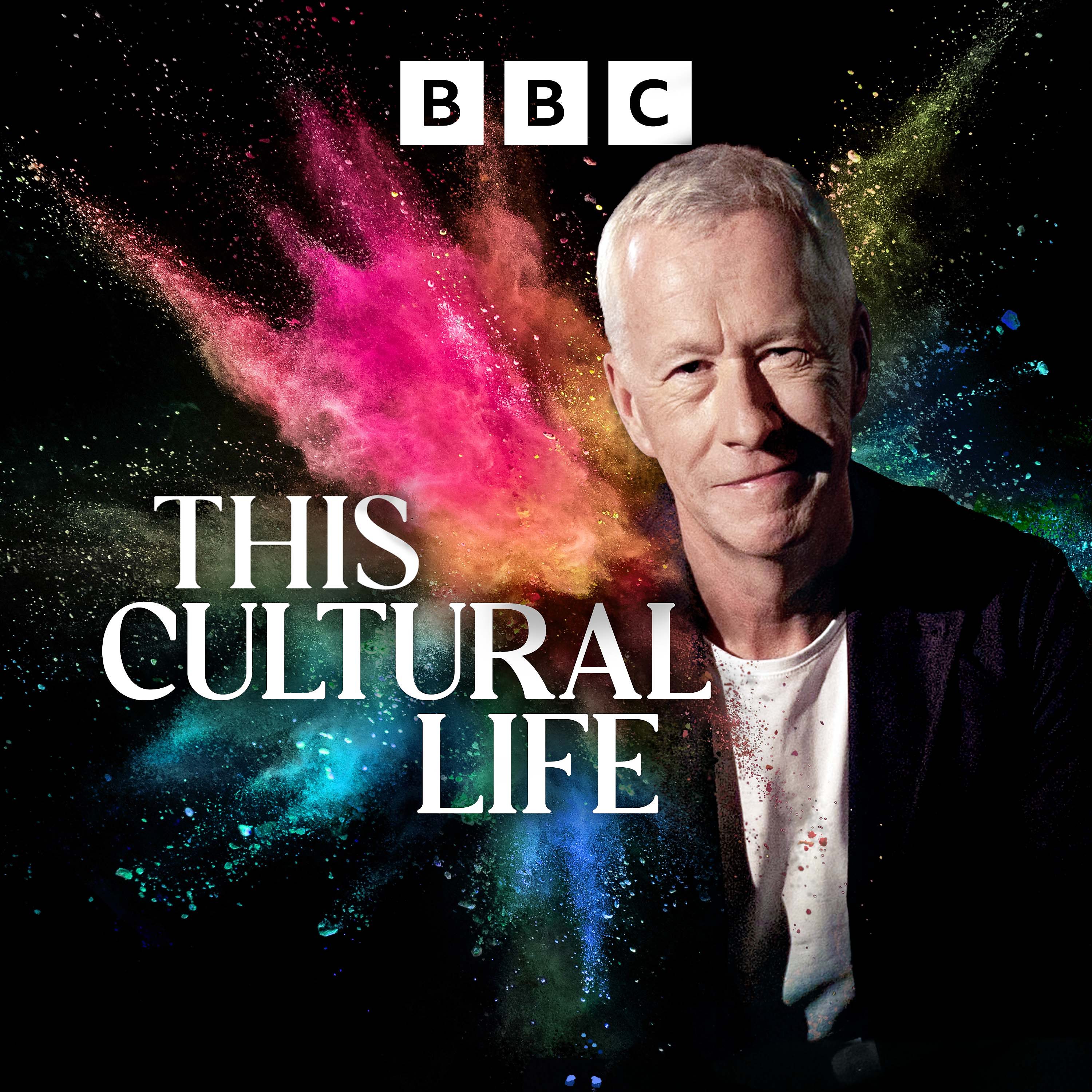
Pulitzer Prize-winning author and academic Viet Thanh Nguyen talks to John Wilson about his formative influences and experiences. A child refugee, he moved to the United States with his family at the end of the Vietnam War. He is best known for his 2015 debut novel The Sympathizer which has been translated into 30 languages, has sold more than a million copies worldwide, and was adapted as an HBO television series in 2024. Viet Thanh Nguyen has written widely about conflict, migration and identity in his fiction and, more recently, in his memoir A Man Of Two Faces. A professor of English and American Studies, he teaches at the University of Southern California.
Producer: Edwina Pitman
Archive used:
News archive from Newsdesk, BBC Radio 4, 29 & 30 April 1975 Clips from Apocalypse Now, Francis Ford Coppola, 1979 Extract from The Quiet American, Graham Greene, 1955 Trailer for The Sympathizer, HBO, 2024


