 Ask ChatGPT
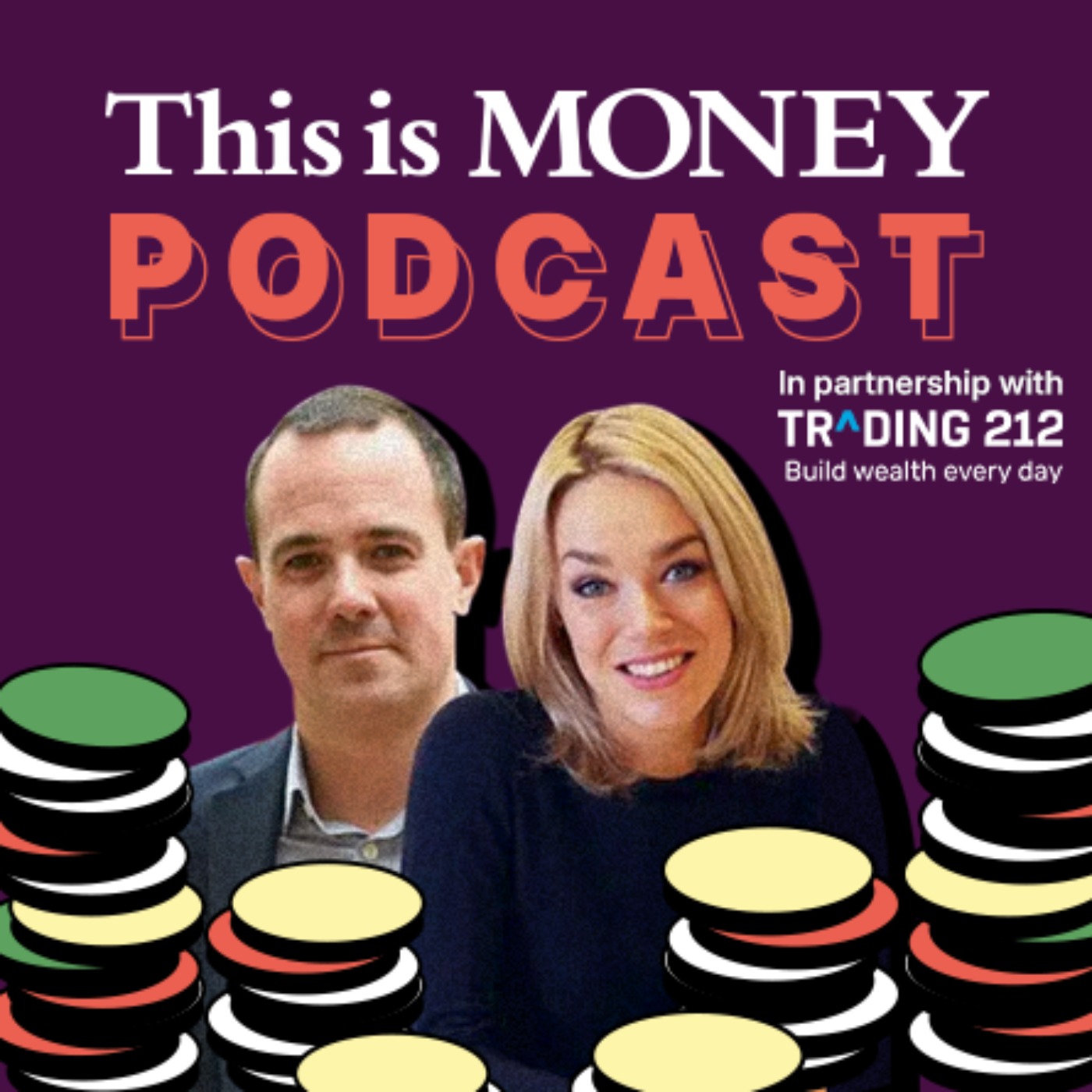


A government-backed push to get Britons investing (not just saving), plus interest-rate uncertainty, supermarket “spend more” tactics, property affordability measured as “A4 slices,” and a consumer rights case about flight cancellations during the Iran war.
Helen and Simon (This Is Money hosts/commentators). “Crane” is a recurring consumer-rights segment host. “Toby Walton” and “Simon Lambert” are referenced for the supermarket tactics reporting.
The retail investment campaign starts next week, coordinated by the Investment Association (not run by government). It’s aimed more at older, cash-heavy savers than young people. Investing beats inflation over the long term; “capital at risk” warnings are often misunderstood and may deter people. Bank of England rate decisions won’t be rushed due to uncertainty; IMF cut UK growth forecast to 0.8%. Supermarkets may use dynamic pricing, in-store audio/animal cues, and trolley design to increase spending.
Emirates flight cancellation/refund rules vs online travel agent (PODO) “phone ping-pong” for ~£2,700. Zoopla: Westminster property costs ~£837 per A4 “sheet,” while many northern cities are ~£200.
Written by AI. May contain mistakes.
Discussion on the government's campaign to encourage people to invest rather than save.
“But first, if the government told you doing something with your money was a good idea, would you do it or would you run a mile?”
Exploration of why investing is crucial for long-term wealth growth and the risks of saving.
“The rumours are red squirrel, not grey squirrel.”
Identifying who the campaign is aimed at and discussing generational investing habits.
“and that over the very long term, the medium to long term even, if you do that, you should see a better return on your money.”
The risks associated with holding large amounts of cash versus investing for growth.
“I know that there are lots of people out there who have money in that kind of over 50s say maybe who have and they're also younger than that too who have a lot of money sitting in cash.”
Addressing common misconceptions and fears about investing versus gambling.
“I'm not plugging Trading 212's cash ISA here for them.”
Learn why many people misunderstand the concept of capital at risk in investments.
“Because when you lose that, you do lose all your money.”
Discover the importance of promoting long-term investing over short-term gains.
“It's getting people to change their behaviour.”
Learn about new regulations allowing banks to advise clients on investments.
“maybe an investment firm can say to you, not this is what you should do with your money, but this is what people who are in a similar situation as you have done with their money.”
Understand how rising interest rates are managed by the Bank of England amid global crises.
“Did we need them to say that or did we know it anyway?”
Explore how uncontrollable factors like oil prices affect inflation and economic policy.
“Actually, the Bank of England isn't really acting to do anything about the oil price already having gone up.”
Learn strategies for individuals to safeguard their finances during economic uncertainty.
“So there is probably more of a possibility that they could go up than you would think if you were just looking at this completely dispassionately without that having happened in the very recent passed.”
Get insights on how to manage mortgage rates and financial planning effectively.
“If you haven't got a rainy day fund, do you need to be saving a rainy day fund?”
Learn tips on remortgaging, saving strategies, and smart investment planning.
“Look into the deals that you could switch to now.”
Understand your rights for flight cancellations and refunds due to conflicts.
“And this week, a sad story about cancelled flights due to the Iran war.”
Explore the complications and frustrations of booking through online travel agents.
“But these operators, they always just send you on such a sort of...”
Learn about travel advisories and how they impact insurance claims during conflicts.
“And the worst thing about all this is the reason that they're flying as well.”
Discover innovative strategies supermarkets are using to increase consumer spending.
“We've discussed many of these deals that aren't really deals, shelf placement, bakery smells, confusing unit pricing.”
Learn how shopping trolley design can affect consumer spending behavior.
Explore how shopping behaviors are influenced by psychological factors.
Discuss the implications and ethics of dynamic pricing strategies in grocery stores.
Examine potential consumer reactions to changing prices in essential goods.
“The flip side of this would be used as a marketing tool towards people.”
Learn about a novel approach to property valuation using A4 paper size.
“Finally, you never asked, but we're going to tell you anyway.”
Analyze the effects of reduced rental properties on the housing market.
“of A4 sheets of paper and how much you get in different areas.”

Get the gist, explore an idea or ask about something said.
 Claude
On This is Money Podcast, what are the key points of this episode?
Searching your listeningAutomatic transcript. May contain errors.
0:02Welcome to This Is Money Podcast sponsored by Trading212. Download the Trading212. Download the Trading212. campaign, encouraging more of us to stop saving and start investing our spare cash. But will it work? Are we about to get a rerun of the Tel Sidd era? Also today, the Bank of England hints at rate rises but says it isn't in a rush to make a decision. Crane is back on the case. This time it's over a flight cancellation due to the Iran war. Plus, from cows mooing in the milk aisle to price changes every hour, we unveil the tricks because supermarkets are plotting to get you to spend more. And because who hasn't wondered this, just how much would you need to pay for an A4-sized slice of property in your area?
1:01Don't forget to have to date with all the latest breaking money news. Just go to thisismoney.co.uk or download the app. But first, if the government told you doing something with your money was a good idea, would you do it or would you run a mile? That was the question posed by R. Simon for his latest piece about the government's new retail investment campaign. Basically, billions of pounds of our hard-earned cash is stuffed into savings accounts, earning interest, hopefully, but not doing a huge amount else. And the government would love to put even a tiny fraction of that to work in UK PLC. But will the plan work?
1:42Research suggests, well, yeah, actually, the campaign has got people thinking. So is this TELCID 2.0? Welcome, Helen. Welcome, Simon. Simon, firstly, the new campaign. What's it all about? What's it going to entail? And when is it? The campaign is going to kick off next week. And it is a government-backed campaign, but it's not actually being run by the government. It's being coordinated and run by the Investment Association, which is the kind of fund management industry body with a load of people from the financial services industry. So, you know, investing platforms, wealth managers, the companies that work in that space.
2:30And they've all got together to back this campaign to get people to start investing and do more with their money. Now, it's not every single investing platform. It's not every single wealth manager. It's not everyone in the investment industry. Some of them have declined the opportunity to join because obviously they've been asked for money to do it. And some of them haven't necessarily agreed potentially with some of the messaging and so on. We don't know what form the adverts are going to take. There's rumors of a squirrel being involved. Right. Yes. No one is willing to confirm or deny whether there will be a squirrel.
3:10It's an interesting animal for choose because when I think of squirrel, I think of squirreling away savings. Maybe that's what it is. Maybe it's a don't squirrel it away kind of thing. Who knows? Red squirrel, I hear as well. The rumours are red squirrel, not grey squirrel. Grey squirrel's bad. Red squirrel's good. You know, you don't want a non-native squirrel that's come over and taken over our squirrel population telling you to invest. But I think before we get too far down the squirrel hole, I think that what we need to focus on is why on earth are we doing this? We sort of need to go back a couple of steps on this because Rachel Reeves wants us to invest our money.
3:49She's told us this. She told us this in the budget. She told us this as she was cutting the cash ISA limit from£20 ,000 to£12 ,000. and it's to encourage people to invest their money. So if you've got 20 grand a year to put away, she doesn't want you putting 20 grand a year in cash. She wants you putting some of it into investments. It's very tempting, as I said in my column, to think, well, you've told me to do that. I'm going to do the complete opposite. And also it's even more tempting because not only does Rachel Reeves want you to do this, but the previous Conservative government wanted you to do this too.
4:22There was talk before the election happened, there was going to be the NatWest share sale. And the NatWest share sale was going to be another TELCID moment. And we have these time and time again. The government wants you to invest your money. Why does the government want you to invest your money? Well, it says because it wants you to support UK PLC. It wants to support the UK stock market. Arguably, a lot of the money that's getting invested isn't going into the UK stock market anyway. It's going into the global stock market. It's going into gigantic American companies. If you do the sensible thing and buy a global tracker fund, 60 % of your money is going into the US stock market, not the UK stock market.
4:58But the other reason why they want you to invest is that it will make you richer over the long term. And despite my naturally contrarian and anti-authority sentiments, I agree with the government here. What the government's trying to do is what we do on this podcast week in, week out. And what we do on This Is Money day in, day out. It's trying to help people make the most of their money. It's not saying you must only invest. You must never save. It's not saying you're a saver. You're bad. You're an investor. You're good. What it's saying is that there is reams of highly credible, proven information that shows your best chance of growing your wealth long term.
5:46And by growing your wealth, I mean growing it above inflation. Because if you don't beat inflation, you're not getting any richer, you're getting poorer. Growing your wealth long term is by investing your money into the stock market, using the ability of companies to take money, put it to profitable use, and then reward those who invest in them, either with their share price going up or with dividends being paid out. and that over the very long term, the medium to long term even, if you do that, you should see a better return on your money. It's not to say that it won't go down sometimes, but overall it should go up.
6:26When I think of sort of campaigns like this, I think, oh, well, it must be targeted young people. I don't know why I think that. Maybe it's the squirrel. Four-year-olds could buy the squirrel. But anyway, I was under the impression that actually young people are getting quite savvy about investing. So who is this campaign for? Who do you think it's going to reach? Well, you've got a point there, Georgie. And actually, young people aren't the problem here. Whilst they might be much maligned, Gen Z and the younger millennial cohort are actually much more switched on about their money and much more switched on about making the most of their money and investing than the older generation.
7:06It's actually, I would argue, the older, more wealthier people that need to be reached here. Because I know from my years that this is money from speaking to people from the emails we get from readers from the polls that we've run from the sheer level of concern during the financial crisis about which banks shared licenses, so that people had their money protected from how much interest there is amongst readers about how much of their savings is protected. I know that there are lots of people out there who have money in that kind of over 50s say maybe who have and they're also younger than that too who have a lot of money sitting in cash.
7:51Now you need money in cash you need a rainy day fund there's varying sort of how much that should be ballpark figures three months of essential spending is a is a is a common one right or or a couple of months three months of post-tax income but above that you should be thinking about investing your money because otherwise it's not being put to the most productive use now there might be a reason not to do that it might be that you have the money because you need it in the short term you need it for for example a house deposit or you've got something that you have to pay for you're going to do do whatever with the money right but if it's just that kind of long term wealth that you're building up then you shouldn't just leave it sitting in a savings account if you've got tens of thousands of pounds or in some cases i see people regularly hundreds of thousands of pounds sitting in cash your money isn't working as hard as it could be and you should probably be taking a little bit more risk with it and investing it in order to get a better return and this is what that campaign is aimed at changing our behavior on.
9:04Just a very brief one though on this one Simon at the top of the show I advertised a rate for a cash ice of a 4.62 % which to my mind sounds really decent right can you really expect to get over the long run a return of way more than that i mean yes that's a one-year thing and then the promo rate drops off etc etc but um some people i imagine are thinking well do you know what that's kind of in the bag it's a guarantee whereas people say oh you know five percent is a pretty decent rate of return well five percent 4.62 i'd rather just go safe and that that is a very very good question georgie and certainly at the moment that sort of rate looks pretty good 4.62 percent tax free from your Trading 212 cash ISA, right?
9:47I'm not plugging Trading 212's cash ISA here for them. I don't need to. They've put a 4.62 % rate on it. I know, right, because I know the guys at Trading 212, I know how much money goes into that cash ISA off the top of that rate, okay? I know other people who run saving and investing businesses. I was having a conversation with someone this week and he said the amount of money they have seen go into their cash ISA. They've had a tabletop in cash isa in the run-up to the deadline he said the amount of money they have seen go into it is like off the charts you know overwhelming systems that kind of thing but there's no guarantee that rate's going to stay that high okay so you're trading 2121 that's got a year's bonus on it right that bonus will drop off interest rates have been coming down now savings rates are actually surprisingly high considering what has happened to interest rates up until the point of Iran war right which we're going to talk about in a minute of what's going to happen to interest rates next savings rates considering the base rate has come down to 3.75 percent savings rates are still surprisingly high isa rates are still surprisingly high you can get you could have got you can get one year fixes above four percent for example but this problem is not a problem that just exists when savings rates are decent.
11:06This is a problem that existed when savings rates were, for want of another word, crap. This was a problem that existed when we were talking about best savings rates in the half a percent area. This is a long-term structural problem with how we are managing our money in this country. I read some figures the other day and I wish that I had screen grabbed this or taken a photo of it wherever I read it or something like that. And it was something to do with the median wealth of a US investor versus a UK investor. It might have even been the median wealth of a US household versus a UK one. I can't remember what it was.
11:43But it was basically down to the fact that they invest their money. And obviously, home buyers and the US stock market has gone up by so much. But the gap was really quite stark. And I know people in the US earn more, right? And there's a trade-off there. They hardly get any holiday and various other things. but you know the gap in wealth between the two was really substantial and it was largely explained by the fact that in the US they have much more of an investing culture and I think the reasons why people give for not investing you need to to tackle those and it's this is a difficult thing to do because this isn't a TELCID thing this isn't a buy this stock thing this one stock thing This is a invest your money sensibly and over the long term thing.
12:34And that's a harder message to get across than you can make a quick buck on some British gas shares. But there is this element where if you do it over the long term, if you do it sensibly, if you take that risk, then you should build up your wealth by more. But I think that people are nervous about it and they worry about it and they worry about making the wrong decision. They're not necessarily concerned about picking the best investment. They're worried about picking a bad one or the wrong one. And it's getting that message across to people about the simple ways to do it that mean you are minimising your chances of doing that.
13:11But also that you're not, you know, the reason people give is I don't want to gamble with my money. You're not gambling with your money. When you gamble with your money, when you put a bet, if you put a bet on the Grand National and your horse didn't win, you lost all your money. If you invest your money in the stock market and the company does badly, the share price will go down. It's unlikely the company is going to go bust and it will go to zero. That's the only way that you lose all of your money. It will go down. In our race to 10 ,000, I have basically been, you know, fairly recklessly punting my money around to try to make a return.
13:42OK, and I haven't. I'm down, but I'm only down 15 pounds. You know, I haven't lost all of my money. Who's winning? The monkey? The monkey's not winning. I'm beating the monkey now. The fashion reseller and the antiques dealer are head and head. But the person who is in last is the person who is gambling. It's our sports better. Because when you lose that, you do lose all your money. And so there isn't a reason that you don't lose all your money. But then there's also a lot of talk about what do we do about the risk warnings and stuff. It's like the capital at risk. I was asked about this at an event this week.
14:15What do we do about this capital at risk thing that you have to put on all this investment stuff? And it's like, well, firstly, my reply was, I don't think that 80 percent of people even understand what capital at risk means. Because the question I was asked is, should we not be putting their cash at risk? Your cash is at risk of falling behind inflation. And I said, yeah, maybe we should. Maybe we do need to get a message across like that. But I don't think that the capital at risk thing, you know, I think most people don't even understand it. I think people are turned off by some of this stuff and we need to start kind of turning them onto it.
14:49And the way that you do that is by trying to advocate for investing over the long term to make more of your money. And I think the thing is, is this isn't a big, big bang event, right? This is not a the squirrel comes out on Thursday, on Friday. Everyone's all in on the stock market kind of thing. And that's not the intention here. It's a sowing the seeds. It's getting people to change their behaviour. And we can change people's behaviour, as we've shown with auto-enrolment, with pensions. But that has involved signing people up to a pension and then they have to opt out of it. Can we achieve anything near that with personal investing?
15:29I don't know. Watch this space. Helen, do you think it will work? It's difficult, isn't it? As Simon says, I think there are some people who just absolutely think investing is not for them. I think really it comes down to education. doesn't it? Maybe the part of the reason that younger people are keener on investing is that, you know, they've grown up with the internet, they can educate themselves on it. Any sort of silly question they have about investing, they can kind of find the answer online. Whereas older people, you know, we don't talk about investing at school really still, people just don't understand it and just think, oh, that sounds a bit risky.
16:06That's probably not for me. And so I think it really you know an advert from the government isn't going to actually educate people on the sort of benefits and risks of investing is it it's just going to be a here's a squirrel put some money in a stocks and shares isa so I think it's kind of got to go a bit deeper than that and the other thing that's interesting is that we've got this new targeted support stuff coming in I think next month which is new there's rules about how banks can kind of promote well not promote can advise people on what they should do with their money is has changed slightly.
16:42So it's kind of aimed at people who might take financial advice that probably think they can't afford to take financial advice. So it essentially means that your bank or another sort of financial firm, maybe an investment firm can say to you, not this is what you should do with your money, but this is what people who are in a similar situation as you have done with their money. So say there's someone sitting there with tons of money in a cash savings account, their bank would now be able to say, other people who are in a similar situation to you have thought about investing. And it just kind of puts that seed into people's heads.
17:19Now that, you know, there's obviously a huge benefit for banks from that in that they can get more money from you if they sign you up to an investing account that obviously charges fees. So, you know, they're obviously quite pleased about it. But I think maybe kind of putting that seed into people's head is something that could be useful. You know, if you do see one of those recommendations, then obviously check that your bank is the best person to take that service on with. They're often not when it comes to investing accounts. So do do kind of shop around if it's something you're thinking of getting into.
17:51But I think just bringing it more into the conversation around money can't hurt. Right. Simon, you did mention about rates. The government of the Bank of England has admitted that it faces a difficult decision on interest rates as the Middle East conflict continues to push up prices. Andrew Bailey dropped big hints that rates could rise, but says they will not rush to make a decision on it. It comes as the IMF slashed its growth forecast for the UK this year to 0.8%, the biggest downgrade of all G7 nations. It's a balance, though, isn't it, Simon? You suppress rising prices by increasing rates, but then you squeeze the economy further, which the IMF says is not doing that great.
18:30Did we need them to say that or did we know it anyway? But what wins out? What is the thinking? There are really difficult judgments to be made, Andrew Bailey told the BBC. We're not going to rush the judgments on those things because there's a lot of uncertainty around this. Not just how it's going to play out, but also how it's going to pass through into the UK economy. Who would be a rate setter right now? In theory, when inflation is going up and expectations of inflation are going up, you raise interest rates. By raising interest rates, you increase the cost of borrowing money, and that reduces the demand for borrowing money, and that reduces the money going into the economy and slows the economy down, and in theory then drags down, should drag down future inflation and the path of future inflation.
19:21but what if you're in a situation where the inflation is coming from something that you have absolutely no control over it literally does not matter what the bank of england does with interest rates inflation from the higher oil price due to the iran war is going to come through and kick in anyway but i think what you need to remember when you look at what central banks do is we always frame it in the they're going to do this because this stuff has happened way, right? So they're going to have to do this because the oil price has gone up. Actually, the Bank of England isn't really acting to do anything about the oil price already having gone up.
20:09The Bank of England's rate setters know that whatever they do, they can't change what has happened in the past. short of getting a DeLorean, going back in time, changing some things. But we've all seen the movie that shows that that sometimes doesn't work out how that's going to be planned. So what they're trying to do is they're trying to change things in the future. So they're trying to go, right, well, the oil prices shot up due to somebody deciding to set fire to the world. and off the back of that we're going to get these inflation expectations from consumers from businesses it's going to drive up the cost of x y and z what can we do to stop the future price increases that could kick through off the back of this not not the ones that have already happened can't do anything about the fact that petrol prices have gone through the roof but it can try to do something about what the impact of petrol prices going through the roof is on the whole of the rest of the economy.
21:14Now, I must admit that I'm very much in the camp of, I don't think the Bank of England is going to raise interest rates. Certainly much more in the camp of, I don't think the Bank of England is going to raise interest rates than markets, for example, which have been predicting like three, four rate rises. However, I think we need to be acutely conscious that central banks got caught out massively by the cost of living crisis and they don't want to get their fingers burnt and be accused of being hugely behind the curve again. So there is probably more of a possibility that they could go up than you would think if you were just looking at this completely dispassionately without that having happened in the very recent passed.
21:57Helen, how bad are things? Are we headed for recession? Well, maybe. There are some warnings out there to that tune that we could be heading there. And obviously, it all depends on what happens with the war, doesn't it? And things seem to be just changing day to day. It's really difficult to make predictions. People obviously look back to what happened in the cost of living crisis kicked off by Russia invading Ukraine. But the situation was sort of quite different then. So back then, inflation went all the way up to about 6%. We kind of don't know exactly what's going on with inflation. Now, the last figures are from February when it was 3%.
22:38And we've got another inflation ready out next week. So that will be really vital to see where things were in March when obviously the conflict has started. But there's a sense that maybe some of this stuff is already kind of baked into inflation, really, you know, we've had sort of higher prices for longer, and it isn't as much of a sort of sudden price shock as it was back in 2022. So yeah, I mean, legitimate concerns that it could be going back to 2008 levels. Andrew Bailey wrote a letter to the IMF this week warning of threats to financial stability that chimed with 2008. So things like, yeah, it doesn't sound great, does it?
23:24Bit of a small black cloud on the horizon. So he mentioned things like elevated share prices, stresses in the private credit market and liquidity issues. He said, put simply, there's an increased likelihood that multiple vulnerabilities could crystallise at the same time, thereby amplifying the threat to financial stability and the provision of critical financial services. So a bit scary. Yeah. But I think the upshot of it is let's wait and see what on earth happens with this war that's going on. Right, I mean, sobering Simon, sobering. Is there anything we can do briefly to repair ourselves and our finances, Simon?
24:07Well, the obvious thing to do would be to be a bit more cautious at the moment. Put a bit more money away. Save a bit more. Put some money into your savings, you know, just in case anything bad happens. Make sure you've got that rainy day fund, all those other things. Brilliant time to launch a retail investing campaign, but anyway. Yeah. Well, you know, this is sod's law, isn't it? It's that this sort of get people investing thing has been brewing for so long that they managed to wait long enough for a war to kick off and the stock market to fall. Although the stock market has actually gone up by quite a bit over the last few weeks.
24:42It's managed to regain quite a bit of its losses. The problem is, is that all of the things that you could do to prepare your finances in terms of cutting back, saving a bit more money, being a bit more cautious would be really would be bad for the economy. But I think it is on a personal level. At times like this, it's a good time to sit down, try to set aside a bit of time and take the opportunity to take stock of your finances. Have you got a rainy day fund? If you haven't got a rainy day fund, do you need to be saving a rainy day fund? And sometimes it can be difficult when someone starts talking about like three months of essential spending or whatever.
25:21You're like, I'd literally never be able to save that amount of money. I mean I actually don't know how I'd save that amount of money from scratch but the best thing is to have some money we did a podcast on this last year sometime maybe I think and there was some research that showed that even if you just had£1 ,000 in a rainy day pot the risks to your long term finances from a moment of financial stress were massively reduced so it's do you have the rainy day pot you know how are you protected elsewhere what's your notice at work for example you know if you are in a scenario where you are self-employed then you are at much more risk if you're employed then you should have notice but if you've only got a month's notice you're at more risk than someone who's got three months notice for example so maybe you do need to have a bit more in your pot but then also you know are you making the most of your money are you what are you what do your investments look like do they look like the investments that are right for you or do they look like a hodgepodge of stuff that you've picked up over the years and is just a bit random and could you do something to sort that out um are you paying too much for your bills uh for example could you still fix your energy bills and then you'll know how much you're going to be paying and potentially you're not really going to be paying any more than you are paying now mortgages i think is an obvious one i i like to think that there aren't any people listening to this podcast who are paying their standard variable rate because they just didn't bother to remortgage but just in case there are any of them doing that then do do something about your mortgage this is potentially costing you a very large amount of money there might be a good reason to be on an svr for some people but if you've just accidentally fallen onto it because you didn't bother to remortgage, do something about it.
27:17I think it's more likely there's going to be lots of people listening to this who know their mortgage is coming up for renewal this year and are looking at, there was a figure this week, I think, that on average people are going to end up paying£395 a month more. Last September I started paying about£400 a month more for my mortgage than I was paying before. It's really annoying, just to be clear. It's really annoying. I would describe it as like car tax, for example. You have to pay for your car tax. You still have your car. Your car does not drive any better. Your car does not do anything better in any way.
27:56Yet you've just handed over a load of money. It's a similar thing. You're still in the same house. You don't really care. You've not got a better mortgage. In fact, you've got a worse mortgage. You're just paying more for it now. So it is really annoying. It is a large sum of money. But plan ahead. Look into the deals that you could switch to now. Consider locking into a fix now. Rates have actually been being cut this week. But consider locking into a fix now. Add the fee to when you complete on the remortgage. And then you won't have to pay it up front. And that means that you can then still change right up until the point where you take that mortgage with most deals.
28:36Check it out before you do this. Speak to a broker. Go and do that. and make sure that you've got yourself sorted. Because if rates come down, you can always move to a cheaper deal if a cheaper deal comes out before your remortgage is up. But if rates go up, then you'll be stuffed. So think about that. Make sure your savings are getting the best rate. Make sure you're not losing money to tax that you don't need to lose to. So if you've got savings sitting outside of an ISA and you've got ISA allowance that you could use, which most people will do at the start of the year, get those savings into a cash ISA.
29:06Don't lose 40 % of your interest to tax. Um, also, uh, in terms of investments, uh, dividend tax has gone up, you know, capital gains tax has gone up in recent years and so on. If you can, if you've got investments outside of an ISA, get them into an ISA. Just do that kind of sensible financial planning stuff that you should be doing anyway. But maybe this is the prompt to do something about it. All right, then. Thank you very much, Simon. Right, Crane is back on the case. And this week, a sad story about cancelled flights due to the Iran war. Now, you have a reader who got in contact. At the beginning of this year, my husband and I booked flights to Islamabad to deal with some family matters after our son sadly died aged 33.
29:52The flights were booked using the online travel agent PODO and cost around£2 ,700. pounds. Now, they were due to fly together with Emirates from Manchester via Dubai and returned separately for whatever reason. Nine days before, they both got emails saying that the outbound flight had changed, but the new time would mean that they would miss their connection. We called Emirates, but were told to go to Apodo instead. After speaking to Apodo, I decided not to travel and requested a refund, but my husband attempted to change his flights and still make the trip. That, Helen, is where the confusion really begins.
30:29Take up the story. Exactly. So I think this is going to descend into a bit of a rant for reasons that I'll explain in a bit. But first of all, I'll explain what people's actual rights are, because I'm sure there'll be loads of people in this situation at the minute. You know, this is obviously an extremely sad one, which is why I wanted to get involved. But there'll be so many people out there who've had their holiday plans thrown into disarray because of the conflict, as we always say, you know, very first world problems. But it is really annoying. And a lot of people are wondering, can I actually get my money back?
31:03What are my rights? So it all depends on where your flight's leaving from, where you're going to, but also where the airline that you're traveling with is based, what country it's run from. So if your flight was supposed to leave from the UK and it's cancelled by the airline now that's key actually so if you just decide not to go uh because of you know obvious reasons Middle East quite scary if you're traveling somewhere there uh then you might not get your money back the flight has to be cancelled by the airline it has to not fly so if you don't think you want to go but your flight hasn't actually been cancelled yet it might be worth just waiting to see if it is cancelled because it will make it a lot easier to get your money back.
31:48So if you're leaving from the UK you should receive a refund within seven days of the whole cost of your flight and that's no matter what airline you're on if it's leaving from the UK you're under UK regulations and you should get your money back and the airline shouldn't mug you off with offers of vouchers as well you have the option to get a cash refund. It becomes a bit more complicated for flights back into the UK, so flights home. If you're flying with a carrier who's based in the UK or the EU, they're covered by UK and EU travel regulations, which means that the same rules apply, you should get a refund within seven days.
32:26Where it gets more complicated is your flight home to the UK if you're flying on an airline isn't based in the UK or EU. So in this reader's case, they were flying with Emirates. So they're not covered by the UK and EU regulations, They're covered by their own home country's rules and their own company terms and conditions. So worth getting in touch with them, checking those. However, I will say at the minute, a lot of them are making concessions given this situation that's going on. So Emirates is offering a rebooking or refund on all flights departing between the 28th of February and the 31st of May.
33:01And airlines have tended to be sort of quite good on this and say, if your flight is cancelled, you know, we're not going to quibble. You can you can have your money back. so back to this reader's case they were flying with Emirates so first thing they did when they found out that their flight was cancelled was to go to them and say can you please help us we'd like another flight and this is where the problem started so as he said they booked through Apodo which is one of these online travel agents now these really really annoy me this is where the part of the rant part comes in um i just don't really see the point in these companies right so back in the day when you had high street travel agents you know you would go there you would speak to your nice friendly travel agent they'd show you a brochure and they'd say oh i see you'd like to go to spain on holiday perhaps you've considered this resort you know people say this is really nice but now it's when it's just you looking on a website to book your holiday i just don't really see the point in these sort of third party middlemen getting involved um you know the reason people end up falling into bed with them is that you'll be on a flight comparison website and their prices will look slightly cheaper than booking with the airline direct so i can save 20 quid if i fly if i book my uh flights with a podo and it isn't just a podo there's so many of them instead of booking with I don't know BA or Ryanair or Emirates directly so people kind of book with them because they think they're saving a bit of money but then by the time you go through you know they'll charge you more for your bags and your board printing out your boarding pass and they add all these extra costs on and then the key thing is it makes life so much more difficult if something goes wrong and you need to get a refund so as with many many areas of money it's the person that you pay your money to which is the company that needs to help you if something goes wrong so in this case it's very much a podo who are responsible for refunding um this couple for their flights but what a podo did when they contacted them is just say now you've got to speak to emirates they're you know they're the ones in control of of when the flights are cancelled so i think you should call them um they obviously go to emirates and they say no no it's not it's your contacts with a podo go back to them but they do this so many times the couple basically decides they just don't want to fly anymore and they just want their money back.
35:24But these operators, they always just send you on such a sort of... Merry dance. Phone ping pong. Yeah, merry dance to get your money back. So in the end, I got involved, called a pay-to-pay-to and they did very quickly agree to pay them back. And, you know, this was quite a lot of money. It was almost£2 ,700. And it just really irritates me that, you know, these companies are happy to take people's money. But when something goes wrong and, you know, obviously all these travel companies are so sort of busy at the moment. But, you know, all you need to do is what they'll say is, oh, we haven't had our money back from Emirates yet.
36:03So we can't pay you back until Emirates pays us back. And it's like, no, like you are massive companies. Just pay people back. Like they've made their sort of contract with you. Just pay people their money back. So I personally, I never book through these agents. I tell my friends not to book through them. You might pay a little bit more if you book direct, but if something goes wrong, you'll be so glad that you did. Yeah, I'm the same. And the worst thing about all this is the reason that they're flying as well. Like they don't have a lot of stuff going on in their heads that they really don't need to worry about£3 ,000 that accompanies like, oh, I haven't been paid.
36:41Sorry, not my problem. If you haven't been paid by Emirates, not my problem. You owe me anyway. Anyway, what's the latest, just quickly, Helen, from the Foreign Office about travelling? So in terms of Pakistan, where these people were travelling, still recommending that you don't travel to many areas. If you have got holiday booked, especially to anywhere in the Middle East or anywhere that's affected by this stuff, go onto the Foreign Office website because they'll tell you exactly where and where isn't recommended for travel. There's sort of different levels of threat, I suppose. But it's important to know, especially for things like claiming on travel insurance.
37:20You know, a lot of people can't claim on travel insurance at the minute because most policies will rule out acts of war. But it's good to know where you stand because sometimes you can get money back if there's a kind of warning out on the country you're going to saying definitely do not travel here. With airlines as well, if there's a warning out from your country saying absolutely do not go to this country, it sort of gives you more sway with persuading an airline to pay you back for a flight if you if you need to so yeah definitely worth checking the rules and you know clearly also for your own safety um it's not not always about just getting your money back you know please please also check for for the sake of your own life brilliant well done helen for for getting that money back but bad for a podo that you had to get involved right anyone listening to this pod will be well aware of the supermarket tactics to make you part with more of your cash.
38:16We've discussed many of these deals that aren't really deals, shelf placement, bakery smells, confusing unit pricing. But cows mooing in the milk aisle. Not only is this a new one on me, I'm not entirely convinced it's going to make me want to buy milk. just because I don't really want to think about that and where it came from. But anyway, your man, Toby Walton, has been speaking to the experts about the fresh tactics we could be bombarded with in coming years. But what, Simon Lambert, has he uncovered? He's uncovered a variety of things which range from the sort of slightly offbeat, like the cows mooing at you for the milk.
39:01And I agree with you here, actually. I'm not convinced that this one would work because I think people like to be detached. I think they like their milk to be detached from where their milk came from in a way that cows mooing at you doesn't. There's also talk of hens clucking next to the egg aisle and things like that. Can I just say one thing on this? Yeah. So everyone who's read this article in the office has said, God, that's so strange. I've never come across that. When I was a kid, so this is in the mid-1990s in the Midlands, our local Asda had mooing cows and clucking chickens in the supermarket.
39:36Wow. So he'd go up. Yeah, kids could go up and press a button and the cows would go, moo. Obviously incredibly annoying. I remember my mum banned me from pressing the cow moo thing because imagine you're walking around Asda and they're just endless kids. But the moo was going off almost constantly. But it just made everyone want to get out of the supermarket more quickly because it was, again, incredibly annoying. How was the bee? Listen to Helen. That's hilarious. That is hilarious. Were they near the milk aisle? Yeah, so the cows were where the milk was and the hens were on top of the bit where they keep the eggs.
40:10OK, so this was the real deal. They were attempting to do this. And when you went down the meat aisle, for example, in the pork section, was there a pig oinking or did they steer away from that? Not that I recall. Fair enough. But it was some time ago. Yeah. So other than cows mooing and hens clucking, we've got some interesting stuff here. We've got dynamic pricing. Now, dynamic pricing obviously exists in lots of different places and is highly controversial. But digital labels on the shelves. So at different times of day, the price could change. Toby gives the example of you're in there on a Friday evening.
40:48You're sort of undecided. Should you pick up that bottle of rosé? Is it a pink wine evening? And then all of a sudden the price drops in front of your eyes. You're like, oh, yeah, I'll have that. but they could use it at quieter times they could use it at busier times they could do it when it's hot outside you know it's middle of the day the ice cream's uh cheaper to try to encourage you to buy it when it's really hot or maybe the ice cream's more expensive because you're more likely to buy it they could start playing around with this stuff but the absolute best one in here shopping trolley handles now this is based on a genuine piece of research that does appear to stack Cup by Bayes Business School in London that suggests that by adding looped parallel handles either side of a shopping trolley, shopping is more enjoyable and could prompt you to spend 25 % more.
41:40The research, which involved monitoring 2 ,359 shoppers over a three-day period, so it's quite a lot of people, with half having traditional handles and the other with the adapted design showed how the modifications seem to encourage shoppers to buy more and it's based on a psychology theory about triceps versus biceps oh my word so consumer psychologist nisa by inda explained the use of triceps when pushing a trolley is associated with a sense of rejection by holding a couple of handles at the side of the trolleys with a pushing motion that works like a wheelbarrow you activate bicep muscles as you pull towards your body this is a positive feeling associated with the things you like right pheromones are just a reminder that that psychology is very theoretical and just because you have a positive feeling doesn't mean you want to spend more some people may get a positive feeling from not spending more but either way what this all highlights to me is and dare i say it simon a wee bit of desperation is that fair or is this just a great article from toby looking at things that could happen or are supermarkets really trying to think oh my word how can we get people to spend more money all of the above right i think it's it's a great article on the things that they might do don't expect to see this down your local supermarket anytime soon unless you do have that aforementioned delorean and you're going back to helen's childhood in the mid-90s in the midlands uh where you will find the cows moving and the hens clucking but in a increasingly digital and ai dominated world i would expect to be seeing some of this quite soon i mean you know remember minority report the billboards that changed people walked past them all that kind of stuff like you're already seeing that kind of thing happening you are you are seeing the ability to to tailor things to people they can't read your mind yet but i guarantee they can probably like there's something that means they can read you've done something on your phone so you could be standing there in front of something you've got your phone in your pocket the supermarket's done a deal with some data provider somewhere who's somehow got this information from somewhere on your phone from something you've downloaded or something that you've done and they know that you are the person with more propensity for buying that rosé and it's like pop down the price goes when they just need to nudge it down by by a pound for example and and maybe it'll be that kind of like it's only going to be a pound cheaper for the next 40 seconds run to the till I was at the Consumer Goods Forum big event in Amsterdam last year and one of the stands was sort of advertising this digital pricing and look one thing that drives me nuts as someone that travels a lot is there is no predictability around except when you travel during school time right I'll give you that it's predictability prices are going to be really high but you can't guarantee you can't budget you can't work out but there is something different about going around a supermarket for example and prices changing through the day food is an essential we need to buy it the idea of dynamic pricing i think is quite despicable that you would change prices through the day for something that people need to buy because if you're at the wrong time of the day you're stuffed i think it's awful well i would say two things in response to that one i can see a scenario where if If this did happen, you'd then have some supermarkets that decide to differentiate themselves on honest prices, prices that won't change.
45:31The flip side of this would be used as a marketing tool towards people. Also, if it were to happen anytime soon, I'm pretty sure someone in the government would come up and say, oh, we've got to ban dynamic pricing. And they'd come up with some way of legislating against dynamic pricing. And it'd be OK for rosé, but it wouldn't be OK for bread. And then there'd be endless arguments about it. and it'd end up in a huge kerfuffle and a couple of U-turns. And by that point, the supermarkets probably would have just either given up or introduced it anyway. Yep, quite. All right, then. Finally, you never asked, but we're going to tell you anyway.
46:08How much is your home actually worth per sheet of A4 paper? Zoopla has crunched the numbers. Helen, I read this article a couple of times and I have to say I'm still a bit confused. um what why what i love this story because it's just totally mad um it's such a uk property market story like i don't think this research would be done in any country other than the uk um so what it's about is it's about how much your house is worth and you know people talk about price per square foot but no one really understands no one really cares no one in Britain really cares or knows what their house is worth per square foot no one can envision what a square foot looks like really or certainly not in terms of how many of them there is in their house I think because you know we we do tend to have smaller homes than people in a lot of other countries around the world you know if you look at the average home in America it's like twice the size of the average uk homes so i think we sort of put value on our homes in different ways right like how many bedrooms does it have does it have a nice garden is it a nice victorian property does it have a lovely view i think like we don't always think just in terms of size so british people have always struggled to get on board with this sort of price per square foot thing even though like when your estate agents will tell you it but you're just like oh okay um so what zoop has done is it's right to come up with a sort of novel way of looking at properties size and something that people can kind of grasp onto so instead of price per square foot they've looked at the price of houses per sheet of a4 paper um so do you want to have a guess at how much uh the average a4 piece of paper of property is worth in the uk 200 isn't that the article it is about 200 so um can i just point out here Georgie's cheating she's read the story.
48:07I'm trying to whack it out. Well that's the thing because it was like£193 and then I was how much is a square foot? Is a square foot an A4 size of paper? It was I was just a bit confused so it's quite similar to a square foot. Yeah. An A4 piece of paper. Yeah a square foot is about£193 so that in most cities across the UK it's about £200 for an average sort of A4 sized piece of paper. But some places, much, much more. So every major city across the northern Midlands, you get a full sheet of A4s worth of space for£200. So Manchester, Leeds, Sheffield, Liverpool, Birmingham, Coventry. So that's kind of about the average.
48:54But there are some places where you get much, much more. So in Burnley, Hull, Sunderland, Blackpool, Middlesbrough and Blenau-Gwent I hope I've said that right you can get two full A4 sheets of paper for£200 two full sheets however in Westminster you would need to pay£837 for one single sheet of A4's worth of property and£200 would get you just a quarter of a sheet of A4 so you know this is obviously completely mad but I just love it I think like well why not why not compare it to an A4 sheet of paper? It's not got any more or less meaning than a square foot. So yeah, do have a look at the article on the website and we've got a lovely graphic of pieces of A4 sheets of paper and how much you get in different areas.
49:43It possibly explains it a bit better than I am. Marvellous. No, I don't agree. I thought you did a very good job there. Helen, very good job. Anyway, Simon's status of the week. Can you beat an A4 paper property measure index? No, I can't. There's nothing that can beat that this week, at least, I don't think. But what I would say is what I do like about the A4 piece of paper is we all know how big a piece of A4 paper is, as Helen says. Yeah, true, true. Whereas most people have no idea how big a square foot or a square metre is. like they know what it's referring to but they don't know how much floor space it would actually take up but then when i read the a4 piece of paper research i was possibly more confused by the end of it than i was when i started reading about houses measured in a4 pieces of paper uh but i will give you a stat anyway which is 220 000 there are expected to be 220 000 fewer homes to rent by the end of 2026 according to mortgage lender pepper money apparently due to various things but one of them being the renters right act prompting many landlords to throw in the towel and you know we've had this conversation so many times and whilst that may be seen as a good thing because landlords are bad and first-time buyers are good the dwindling stock of supply of homes to rent in this country is becoming a real issue for people who are tenants and who rent their home.
51:18Not everybody can afford to buy a home. Not everybody wants to buy a home. We do need homes for people who rent as well. And this is becoming something of a problem. You know how I feel about it, Simon. Homeowner for five minutes and now I'm back renting. I like renting. We need rental properties. That to me is a mad stat of the week, but a good one. So thanks Thanks, Simon. Right, that is it. You can keep up to date with all the latest breaking money news. Just go to thisismoney.co.uk or you can download the app. And if you have any comments or questions to the team or anything you'd like them to look into, Simon...
51:53Email us at podcast at thisismoney.co.uk and come to thisismoney.co.uk forward slash podcast to join in the debate and read the comments. And if you like our podcast, why not rate us wherever you found us? Helps other people find us too.
Hosted on Acast. See acast.com/privacy for more information.