Ask ChatGPT
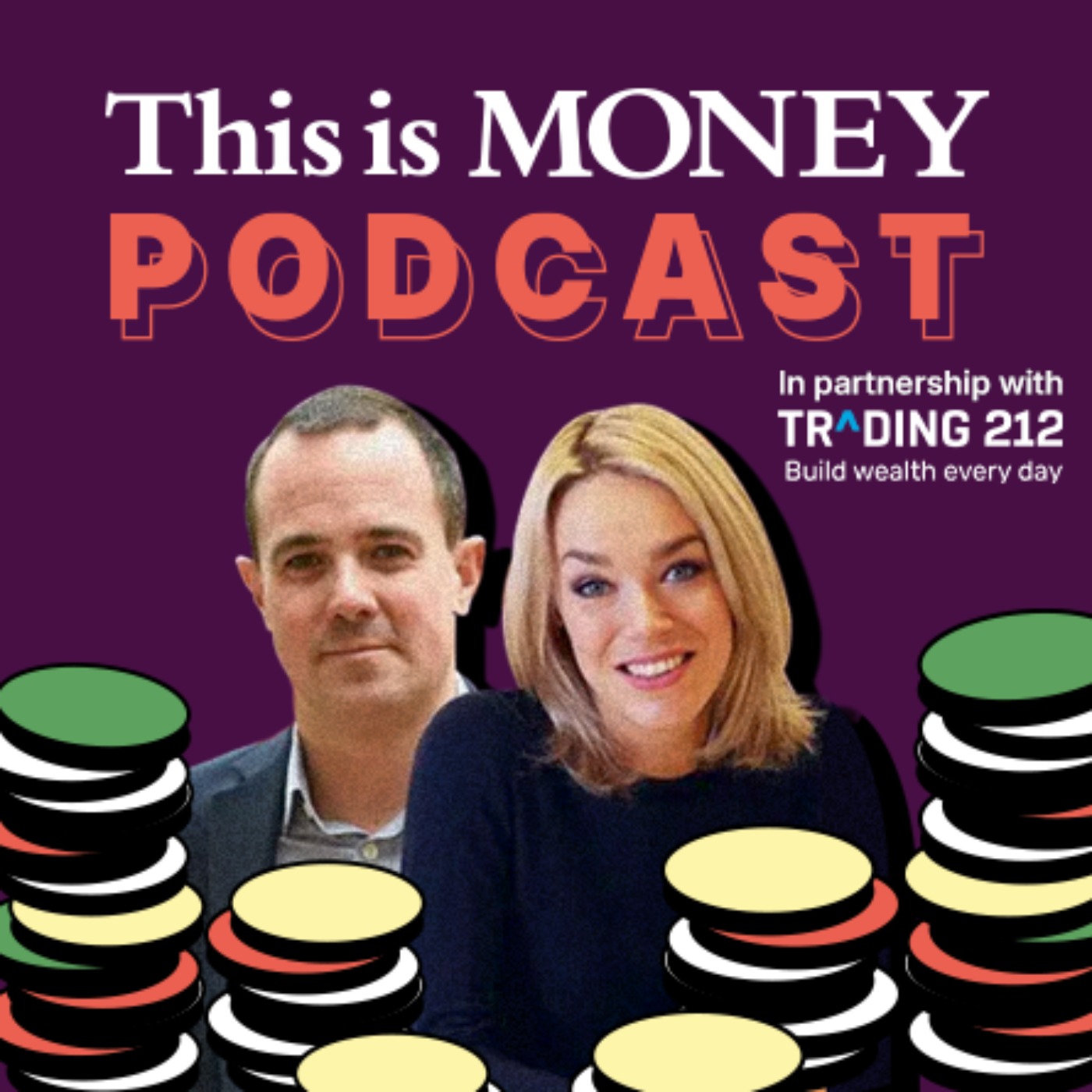

 This is Money Podcast
24 Jul 2026 · 36m · 16 chapters

Andy Burnham’s first days as UK Prime Minister and whether his “cost of living government” has affordable, well-funded policies; focus on pubs, buses, electricity VAT, defence/finance, and potential tax rises.
Georgie Frost (host), Simon Lambert (co-host), Helen Crane (guest). Backgrounds: Simon and Helen are money/policy commentators who run the rule over UK economic plans; Georgie is the show’s presenter.
Burnham is “more charismatic” and has acted quickly (bus fare cap £2, pub rate support, removing VAT on electricity bills); some measures may be unfunded (VAT cut linked to removing digital ID scheme funding). John Healey as Chancellor is framed as “safe hands” to reassure bond markets; wealth taxes are argued to be populist and impractical (cashflow/net-wealth issues, deterrence, avoidance).
ID cards scrapped; Gary Stevenson/Dan Needle “wealth tax” debate; proposed mansion tax changes; “60% tax trap,” stamp duty, frozen thresholds, and fiscal drag; suggestion to unfreeze thresholds and use domestic gilts to stabilize borrowing.
Written by AI. May contain mistakes.
Discussion on Andy Burnham's immediate actions and policies as Prime Minister.
“Just go to thisismoney.co.uk or download the app.”
Analysis of Burnham's proposals on bus fares and support for local pubs.
“to help or whether it's something else that we need to be doing that's going to help but he also They've talked about high streets, pubs, bus fares.”
Discussion on the financial sustainability of Burnham's policies and potential tax implications.
“Not going to save people much money, but walk straight into a, ooh, is this funded, Rao?”
Insights into Burnham's cabinet choices and their potential impact on economic strategy.
“tried this before and it ended up being an expensive mess that never happened.”
Exploration of John Healy's role and the significance of his appointment as Chancellor.
“I mean, you could argue that Gordon Brown's cabinet looked pretty left-wing, and Gordon Brown was a pretty conservative chancellor.”
Debate on upcoming tax changes and their implications for public spending.
“Does it matter, do you think, all this chopping and changing, Simon?”
Discussion on the concept of a wealth tax and its potential effectiveness.
“Now, the personal allowance thing, that was something that was sort of speculated on quite a lot.”
Explore the concept of a wealth tax and its implications from a populist perspective.
“and now Gary Lineker, among others, music producer Brian Eno, have written to the new Prime Minister Andy Burnham asking to be taxed more.”
Learn about the concept of land value tax and its potential benefits over current taxation.
“But a land value tax is essentially a tax on the value of land.”
Understand the importance of timely budget announcements and their impact on public confidence.
“about the one step that Andy Burnham could take to make us all richer without costing a penny and it relates to this subject.”
A critical analysis of the current tax system and its impact on economic growth and wealthy individuals.
“So just tell us what you want to do and then do it, really.”
Explore the various taxation issues affecting high earners and the economy.
“By the time they left government, what originally started off as an emergency measure was still in place.”
Discuss the UK's lagging median wage compared to European peers and its impact on living costs.
“time the reason why the cost of living is such a problem in this country is because we have gotten noticeably poorer compared to our european peers okay if you look at the uk's median wage which is£37 ,400.”
Evaluate proposed tax reforms meant to stimulate growth and alleviate financial burdens.
“So what I would say is the narrative needs to change.”
Analyze investment strategies using government bonds to stabilize the economy.
“Obviously their rates are higher than in Japan.”
Address the rising oil prices and their implications for the economy.
“Andy Burnham, John Healy, Burnley, that advice is for you for free.”

Get the gist, explore an idea or ask about something said.
 Claude
On This is Money Podcast, what are the key points of this episode?
Searching your listeningAutomatic transcript. May contain errors.
0:02Lee Boyce: Welcome to This Is Money podcast sponsored by Trading 212. Download the Trading 212 app today and open a cash ISA with promo code TIM to get the 12 month bonus promo rate of 4.67 % terms apply. I'm Georgie Frost and joining me and Simon Lambert today is Helen Crane. And coming up, there's a new Prime Minister in town. Andy Burnham has wasted no time in taking actions on pubs, buses and electricity bills. All part of a radical plan or just more tinkering? How will we pay for it? Plus, we know his views on defence, but what about our money? What will the new Chancellor John Healy have in store for us?
0:40Lee Boyce: Simon and Helen run the rule over the new Burnham government and offer some advice of their own. Don't forget to stay up to date with all the latest breaking money news. Just go to thisismoney.co.uk or download the app. But first, Andy Burnham officially became the fifth UK Prime Minister in four years this week, replacing Sakhir Starmer at number 10. We got a very quick taste of what sort of administration he intends to lead with a succession of policy announcements and his new look cabinet, including, importantly for us, his new chancellor. A cost of living government. But do they have the money to back it up?
1:12Lee Boyce: And if not, are tax rises on the way? Welcome, Helen. Welcome, Simon. Simon, Andy Burnham, what do we know of the King of the North after less than a week, a full week in position? Who is he and what can we expect? The first thing that we know, which we knew before, and is directly related to the fact that he managed to take over from Keir Starmer as Prime Minister, despite Keir Starmer not having really done anything wrong and just sort of resigning, is that Andy Burnham is a lot more charismatic. We knew that anyway. He set out his stall with a speech a couple of weeks ago, and he's been delivering actually on some of those things in that speech.
1:52now if you look at that speech there was a number of things that he identified as an issue and to be fair to Andy Burnham as his man of the people act goes he has identified a number of things that lots of people think are an issue the cost of living is the big one as you mentioned although we'll move on to that in a bit and talk about how whether any of these measures are actually going to help or whether it's something else that we need to be doing that's going to help but he also
2:18Simon Lambert: They've talked about high streets, pubs, bus fares. Yep. These are tried and tested things, but they drive people mad. I mean, a£2 bus fare cap. Should you really be paying more than£2 to get a bus somewhere? I mean, buses are effectively, you know, well, in theory, funded by the local authorities in some way, but then we've farmed them out to private companies who then take some money and it's a very inefficient system. You know, really, actually, public transport, it's public transport, should you pay more than£2 for a bus? I'd argue not. Pubs, cutting rates for pubs. This is something that raised its head after the budget when rates were actually put up for pubs and pubs are closing at a rapid rate.
2:59Simon Lambert: People really value their pubs. People are noticing that it's a genuine problem now and giving them some extra help is considered to be a good thing and people are appreciating the kind of community aspects of them because they bring people together and not just to get smashed-faced on booze, but to talk and share good times and all that kind of stuff. And they are a hub for the communities that they're in. And I think arguably I would agree with Andy Burnham. We need to think about the kind of things that we want to support in terms of shops, pubs, the high street, etc. And maybe think about the kind of things that we don't necessarily want to support.
3:35in the firing line was vape shops this week and those gambling arcades that you get you know on the high street like your own mini version of Vegas you know you can imagine you're in Vegas or Monte Carlo as you spunk your week's wages on the fruit machine do we want to see those on the high street I don't want to see those on the high street I don't want to see lots of things on the high street that are there and actually I think probably if we've only got enough money to support
4:00Simon Lambert: some things we should support the things that we want to support so he's come forward with this kind of common sense man of the people i get what you feel approach the difficulty is how long is that going to manage to last and the first thing that happened this week was there was a small cut to electricity bills removing vat on electricity bills again most people just probably go yes totally mad we charge five percent vat on electricity bills either charge 20 vat or no vat What's the point of charging 5 %? It's just silly. So yeah, get rid of it. Not going to save people much money, but walk straight into a, ooh, is this funded, Rao?
4:39Unfunded promise, etc.
4:41Lee Boyce: Well, wasn't it supposed to come, the cut from getting rid of the ID scheme, the digital ID scheme? But apparently that wasn't actually a funded policy. So then it's like, oh, where is that money going to come from? Which is interesting, isn't it, considering how much emphasis Rachel Reeves and Keir Starmer put on funding their policies and how much they attacked the Tories for their supposed£22 billion black hole of unfunded things,£11 billion of which was public sector pay rises that Keir Starmer and Rachel Reeves waved through on the same day. so yeah it is interesting that I wasn't funded but again it this chimes with the whole I get it
5:22Simon Lambert: act and I don't think it's an act from Andy Burnham I do think he does get it and I think he's brave as well I think he's bold enough to go I get it and I'm going to do something about it ID cars was a terrible idea it backfired the moment it came out everyone went no we don't want them. Verging from we don't want them to this is massive state control and also to we've tried this before and it ended up being an expensive mess that never happened. So why are we wasting money on it again? So killing off ID cards is clearly a wise move.
5:57Lee Boyce: Yeah, I feel like we've been having that debate for some time. Helen, what do you make of the cabinet maker? I mean, I understand, as Simon said, that Andy Burnham is a very affable chap. But what about what we can expect from the people around him? And we'll lead on, of course, to what we care about, which is the Chancellor.
6:16Helen Crane: As you say, the Chancellor was the sort of big surprise. We'd said ourselves that we thought it might be Shabana Mahmood or Ed Miliband. And then, yeah, total curveball when he announced John Healy. I mean, I think it seemed like quite a safe choice. Maybe, you know, he's been around for quite a long time. He probably wasn't likely to spook the bond markets. I think that was the worry about Ed Miliband. He's obviously sort of quite left wing and quite a kind of political operator. Whereas John Healy is a bit of a kind of safe pair of hands. It's like I'm describing as like a goalkeeper. Safe hands Healy.
6:55Helen Crane: In a way, he's got some sort of left wing allies in there. but I think he's kind of played it quite savvily. And, you know, bear in mind a couple of years ago, he was saying, oh, we don't want to be in hock to the bond markets. I think he's now really worried about the bond markets and that's why he's sort of gone for this safe choice. The most recent Conservative government did more to shift the tax burden onto higher earners and the wealthy than the previous Labour government did and actually did the most to shift that burden onto higher earners. and the wealthy and lower the tax burden on middle earners and the lower paid than any government for a really really long time and they were constantly being criticized for being right wing so i'm not entirely certain on a financial podcast whether you can read too much into whether the cabinet is left wing or right wing because you know they have a habit of doing what the other side the opposite side would do anyway i mean maybe they're a bit like thomas tucall's england team you know just randomly put someone on the left, randomly put someone on the right, and they may do something completely different.
8:03I mean, you could argue that Gordon Brown's cabinet looked pretty left-wing, and Gordon Brown was a pretty conservative chancellor. It obviously wasn't Gordon Brown's cabinet, it was Tony Blair's cabinet, but...
8:13Simon Lambert: You know what I mean. It's just like, I think the proof will be in the pudding. I think the risk is, what's quite funny, is actually I think we're in a little bit of a honeymoon period at the moment, is the full-on speculation of what are they going to tax next hasn't really kicked off yet. It won't feel like that to many people. They'll be seeing lots of stories. But, you know, if you think about this compared to the frenzy before the last two budgets, obviously there's still plenty of time, but that's what they really, really need to avoid. What was interesting about John Healy was that on the same day that Andy Burnham was there talking about the cost of living, John Healy was sending a message to businesses about he was equally as worried about the cost of business and the cost of doing business.
9:01And I think that message will have been very, very much welcomed by businesses, large, medium and small out there. That is a massive concern. And it obviously feeds into the cost of living.
9:14Lee Boyce: Well, I want to talk about potential tax rises shortly. But before I do, I just you mentioned Gordon Brown there. Gordon Brown, he was Chancellor for a decade, up to 2007. Since then, we've had 10 and 8 Chancellors in the last 10 years alone. Does it matter, do you think, all this chopping and
9:35Simon Lambert: changing, Simon? It does matter. I think we have to remember that within that list, I believe, we obviously have Kwasi Kwarteng, who lasted three weeks. Was it longer than three weeks? I can't really remember. Isn't Sajid Javid in that list as well? He was the Chancellor very briefly, wasn't he? So, you know, we've got a couple of short-lived ones.
9:58Lee Boyce: Sajid Javid was there for a year. Nadeem Zahawi was there for a last year. Yeah, I mean, I would argue we've moved on quite a lot, saying that John Healy is going to be Chancellor versus a decision at one point that was made to make Nadeem Zahawi Chancellor. and listeners can make their own decision as to why Nadim Sahawi was not an appropriate choice for Chancellor.
10:20Simon Lambert: But yeah, the chopping and changing doesn't help. The chopping and changing of plans, we've seen this. This is what, you know, finished off Rachel Reeves, wasn't it? It was the U-turns and everything, the rushing stuff out and then having to U-turn on it, a little bit more deliberation and giving Chancellors more time will work. I would be very surprised if we see another Chancellor before the general election. I think that this is it. We're going to have the same Chancellor now until the general election.
10:48Lee Boyce: That's a strong, confident pronouncement I would never make in this political environment. But let's hope so. Helen, Simon was talking earlier about the tax burden. Economist Paul Johnson said the new prime minister would either not be able to deliver on his pledge for a new cost of living measures alongside more spending on social care and defence. or we're in for big tax hikes. Now, the personal allowance thing, that was something that was sort of speculated on quite a lot. I think during the week that was scrapped in the short term at least. But there is hope that the frozen thresholds will be looked at, for example.
11:27Lee Boyce: But how would we pay for this?
11:30Helen Crane: Exactly. So on that income tax point, I mean, that would have been hugely, hugely expensive. And I think that's what Paul Johnson was talking about there. you know, if we were to raise the personal allowance, I mean, even to raise it by a tiny amount would cost a huge amount of money. So I think it sort of makes sense that that's maybe out the window for now. In terms of where the money for these cost of living policies will come from, actually, what's been announced yet isn't that expensive. The energy bill VAT cut, it's about 45 pounds a household per year for an average household so you know don't knock it everyone wants to sort of cut in their energy walls but it's not going to be um a hugely expensive policy for the government um and the bus that's that thing again you know welcome but it's not going to cost like billions of pounds if they do look at bigger uh tax cuts i think as often happens probably wealth taxes might be something that they'll look at again um capital gains tax is something that's been mentioned so rachel reeves already increased the rates uh back in 2024 when labor first got in um from 10 to 18 for basic rate taxpayers and 24 for higher rate taxpayers something uh labor often talks about is equalizing that with income tax rates so that could be up to 40 % for higher rate taxpayers.
12:59Helen Crane: That seems like it might be possible. We've also heard a lot about the mansion tax, again, something that Rachel Reeves brought in. That's coming in from, I think, 2028 for homes worth more than 2 million. But there's been chat about Andy Burnham, maybe bringing that down so people who live in homes worth 1.5 million or more could pay it. But again, though, these are taxes that only hit relatively wealthy people. And, you know, it's easy politically to say, let's charge these wealthy people more tax. But is it actually going to raise that much money? Because the pool of people that you're taking that tax from is still low.
13:41Lee Boyce: Simon, Helen mentioned there the wealth tax. Can we just explain what this is? Because I feel like this is something that's been talked about quite a lot. There was a programme by the YouTuber Gary Stevenson, the trader, who interviewed Dan Needle, the famous tax guy. And it became a bit of an internet, social media sensation about how we should tax the wealthy. I think it's 2 % on 10 million. Dan called it a populist measure. and now Gary Lineker, among others, music producer Brian Eno, have written to the new Prime Minister Andy Burnham asking to be taxed more. Now, you can voluntarily, I understand, offer to pay a bit more tax.
14:24Lee Boyce: So I imagine all of these people have done that. But just explain to us, is it a populist measure? Would it work? What would it take to work? What would be the repercussions of it? Put it to bed for me and everybody else who keeps hearing about this. Bloomin' wealth tax. Okay, let me explain to you why I think a wealth tax is a populist measure and answer the second part of your question. I think it's a populist measure because the idea of it appeals to lots of people who in some way feel that the elite is taking advantage of them or have been given the message that the elite is taking advantage of them.
15:02And if this elite stopped taking advantage of them, then things would be much better for them. That's one of the key tenets of populism. Secondly, there was a poll. I can't remember who did it. Apparently, like 70-something percent of people would support the idea of a wealth tax. So it's in theory popular, right?
15:24Simon Lambert: Thirdly, like all of the best populist measures, it looks more at the symptoms rather than the cause and actually wouldn't really work. Most of the best populist measures sound like great ideas, but wouldn't really work. The reasons why a wealth tax doesn't work is because, A, it's fraught with difficulties. 2 % on wealth over£10 million. Sounds fair enough, doesn't it? 2 % isn't much. 2 % of£10 million, if this was an annual charge, which I believe is what they're suggesting, rather than a one-off charge. The danger of one-off charges is they have a habit of coming back and becoming regular charges.
16:04Simon Lambert: 2 % on 10 million pounds is 200 ,000 pounds that's quite a lot of money now if you're Gary Lineker and you are the owner of a very successful podcast company and you've got lots of media fees and things like that coming in and you were the one of the BBC's highest paid presenters you moved on obviously but I'm guessing he probably still has a pretty good income then maybe 200 ,000 pounds a year isn't an issue. If you are Gary Stevenson, maybe Gary Stevenson is so rich that£200 ,000 a year isn't an issue for him. Brian Eno, I imagine he gets lots of music royalties and things like that. But there are going to be people out there who will have a wealth, and it's not net wealth, this is the problem.
16:48Simon Lambert: You don't get to take your debt off it, okay? So it's not really your wealth, this wealth tax. So there might be people out there who are judged to have assets worth£10 million or more, but they don't have a spare£200 ,000 a year. It might be that it's tied up in their house or their pension. You can't spend your house or your pension and you can't really draw on it in the same way. If you're below a certain age, you're not allowed to draw on your pension. And are we really going to suggest that people start remortgaging their houses or taking some form of equity release in order to pay a wealth tax?
17:21Simon Lambert: And that's a sensible move. But more to the point, there's quite a lot of people who on paper might have that money, but it's tied up in their businesses and they can't just take 200 grand out their business i was having a conversation with hugo duncan our business editor yesterday and he's like what are people we expected to do just like sell off chunks of their business to pay a tax he's like that that is not going to help the economy grow also you know the other issue is is that the very wealthy tend to a have very good accountants which is one of the reasons why they have managed to become very wealthy very good financial advisors and they're mobile Now, I think this whole millionaires leaving the country thing is overcooked.
17:59Simon Lambert: However, there definitely is a phenomenon of, we used to call them the super rich, but the super rich have now got like hundreds of millions or billions, haven't they? So, but let's just call them the very rich, right? There is a phenomenon of the very rich leaving the country. They are moving to other places. They're obviously not going to Dubai anymore, but some of them are going to Italy. I mean, Milan looks very attractive. You know, or countries where they feel that they are more welcome, but also they're not coming to the country or they're being very careful about moving their assets to the country or they're being very careful about buying certain things in the country.
18:35Simon Lambert: And it's a deterrent. OK, it is ultimately a deterrent to wealth. And so that's why I don't think it would work on paper. It might sound like it would bring in plenty of money, but in reality, I don't think it would would bring in that much. and most economists that you speak to some of them are for it but most economists that you speak to say it's a bad idea go back to that conversation between dan needle and gary stevenson you know gary stevenson has done a great job of his popular economics and everything like that no i'm not going to talk him down but he's doing a certain brand of fire brand popular economics dan needle is not dan needle is looking at it much more dispassionately and if dan needle genuinely thought that a wealth tax would bring in some money to help sort out the economy, then he would say that.
19:24Simon Lambert: He's backing another very unpopular idea, which is a land value tax, right? So it's not like he's afraid of backing unpopular ideas.
19:32Lee Boyce: What's a land value tax, Simon?
19:34Simon Lambert: Oh, the land value tax, we would need to go back to last week's podcast to learn more about this, listeners. But a land value tax is essentially a tax on the value of land. It removes the value of a property from the land and then there is a tax charged every year on the land and the idea is that this would replace council tax which is not a very well-designed tax and the valuations date back to the early 1990s and you could also maybe get rid of stamp duty which is a terrible tax and you replace it with this one tax what you need to remember is that the value of your home is not the same as the value of the land so obviously it would cut that and also the idea behind this is that it doesn't discourage the productive use of land.
20:15Simon Lambert: Because if you tax the buildings on land, then there is an incentive to put less buildings on there. Right? If you tax buildings, the incentive is to have less buildings. If you tax the land, and it doesn't matter how many buildings are on the land, then actually, you are encouraging the productive use of that land.
20:34Lee Boyce: Right. So Helen, we've sort of gone off on a bit of a tangent, but I actually think it's rather the relevant because where there is space, Helen, where there is a gap, where there is a lack of knowledge, we look to fill. Where there is speculation, may we plough in as financial journalists and as just general people talking about what could come down the line. And inevitably, this is going to happen until we get the first budget. Now, Rachel Rickards-Strauss has written about the one step that Andy Burnham could take to make us all richer without costing a penny and it relates to this subject.
21:12Lee Boyce: What is it, Helen?
21:14Helen Crane: So Rachel has rightly said that one of the best things that Andy Burnham and John Healy could do to save us all money is to hold the budget as early as possible. The reason for that is for as long as we don't really know what's happening and for as long as this speculation continues, obviously, as you said, we're partaking in this speculation, but that is our job. People will feel uncertain about their money. You know, people already feel really uncertain about their money and have done for a long time, really going back to the first cost of living crisis. You know, there's been loads of policy changes in the last few years.
21:56Helen Crane: You know, we obviously had a change of government and then the last little Labour going brought in quite a lot of changes in quite a short space of time. And I think people just want certainty. They want to know if their sort of tax rate is changing, if they're going to be taxed on their house, what's going to happen to tax on energy bills. I guess I really got that one. I think people are kind of saying, even if it's bad news, just tell us it. The worst thing is this kind of hanging around and this unknown. So last budget was in November, I think November the 26th, which is so, so late for a budget.
22:30Helen Crane: You know, there was a time that these would be in sort of late September, early October. I think there's one kind of hope for this anti-Burlan government overall. It's just give us a bit of certainty. You know, there's this issue around does he have a mandate? I think the best thing to do would just be just get in, tell us what you want to do, and then just get on with doing it. I think governments have this habit of doing loads of little bits of tinkering. and I worry that, you know, Andy Wenner may be making these little updates to policies that Rachel Ruse has brought in. That's kind of not the way to do it.
23:00Helen Crane: Just either stick with what's there or change it, but just tell the country what's happening and then get on with it. Let people make decisions. You know, like Simon was saying, the business is being worried about how much they might be taxed. This is all terrible for the economy. You know, they're not going to be hiring people. They're not going to be investing. You know, it's not just households. So just tell us what you want to do and then do it, really.
23:23Lee Boyce: I think there's a lot of tinkering because politicians are reluctant, but also they've stuck to their manifestos to not raise what is likely to be the one tax that's actually going to bring in some money, which is income tax by 1%. I think it was the Institute for Fiscal Studies that suggested that would have been probably the simplest option, but nobody has the appetite for that. Talking of appetite, pension triple lock is something that I imagine people will be talking about quite a lot. We've spoken about that in previous episodes. Simon, you have written an article about what Burnley Heelham should do.
24:03Lee Boyce: You see where I'm going with that? I don't know. But one thing I would add to Rachel's very sensible suggestion there, or maybe it's even two if I can remember the second one. But the first one is definitely miserableism. Keep it positive. You're on a crest of a wave of change. And the second one, which actually I think they've failed already, is why, oh why, can't politicians that come in just go, do you know what? I'm going to sit down. Like if you were a CEO of a new company, you're not going to come into the company and go, right, I'm going to make a change every day and announce it. Boom, boom, boom.
24:36Lee Boyce: Because already we're hearing about U-turns. Why don't you just say, this is a big job. I'm going to sit down. I'm going to go through the books I'm going to talk to my staff we're going to come up with a great plan but right now I'm just going to get on with the job maybe go around kiss some babies' heads look at some factories you know get a bit of good spirit in the country but we do not need a policy change a day those are my two Simon what would you suggest? I would argue that that's a good point and definitely avoiding the 100 days of miserablism that Rachel Reeves and Keir Starmer started with would be a good move.
25:13And so far, we're doing that. Although they really waited a few weeks before they started dropping the£22 billion black hole bomb all over the place and, you know, really killed off all the optimism that was there after the election. You'd like to think that Andy Burnham and John Healy have learned from that. I'd also like to point out to listeners that those portmanteaus were Georgie's portmanteaus. They were not my portmanteaus. I was not going for Helam or Burnley or anything like that. So if you want to hold anyone responsible, hold Georgie responsible for that.
25:48Lee Boyce: Sorry to the people of Burnley. Look, Andy Burnham has promised us a new direction. Okay?
25:58Simon Lambert: Now, if ever there was something that we needed a new direction on, it is a tax system that has been getting progressively worse and holding back growth since the financial crisis. I wrote my column about this this week and Lee said that one of the lines made him laugh. So I will read it out. I said the Tories and now Labour have been trying to solve the problem of needing more money for public spending and debt interest by squeezing more from the same bunch of lemons. And that is what it is. The same bunch of lemons have been repeatedly squeezed. Now, the mistake that we're making with all this talk of taxing wealth, etc., which never ends up taxing the very wealthy, it always just ends up taxing the wealthy middle classes, is that all of the people in the country with any money feel like they are under constant attack.
26:56Simon Lambert: and that is leading them to rein things in to hoard to save okay it is creating a scenario where they feel that being aspirational doesn't work and isn't paying off and this is not just Keir Starmer and Rachel Reeves's fault this is also the fault of successive Tory chancellors before that to give possibly the greatest example well two of the greatest examples of stupid taxes and these you know the tories did nothing about these and actually made them worse the first one is the 60 tax trap the removal of the person allowance above a hundred thousand pounds which means our tax rates go 20 40 60 45 at one point under the tories they went 20 percent, 40 percent, 60 percent, 40 percent, 45 percent.
27:54Simon Lambert: That's how much is being taken out of a person's pay rise. They didn't change that threshold. They could have moved up with inflation. They could have moved up with wages. By the time they left government, what originally started off as an emergency measure was still in place. Your£100 ,000 earner in, you know, 2000, and God knows if it was like eight or 10, I can't remember when it came in, was very different to your£100 ,000 earner in 2024 and it's holding back the economy people that some of the most highly paid productive people in the economy the people we need to rely on to really drive things forward the people who can actually really move the dial are actively turning down work so as to avoid being taxed this is stupid or they're paying more into their pension if you include the child getting it's even madder right you've got people choosing to not work because they're having so much money taken off them.
28:45Simon Lambert: The other really stupid tax is stamp duty, which they made repeatedly worse. Okay, stamp duty, bad tax, wasn't a problem like way back in the past when it was a flat 1%. Now it's completely mad. But then you've got all these other things, the other frozen tax thresholds, the basic rate tax threshold, the massive fiscal drag from the higher rate tax threshold, the child benefit removal trap. You've got stamp duty, you've got the hated inheritance tax. You've got all of these things that just contribute to this feeling that people are constantly under attack. And the reason this is foolish is because what we should be doing is we should be playing to our strengths.
29:23Simon Lambert: And the strengths that we have in this country is that, yes, there are quite a lot of people who are really struggling to get by. But there are also quite a lot of people who actually do have quite a lot of money and quite a lot of people who are high earners. And we should be tapping into that. We need to tap into Britain's wealth and we need to like get that going so i think that we need to just go it's not working it hasn't been working for 15 years 16 years however long let's try something different because over that period of time the reason why the cost of living is such a problem in this country is because we have gotten noticeably poorer compared to our european peers okay if you look at the uk's median wage which is£37 ,400.
30:10Simon Lambert: That compares to the median wage in Germany of£54 ,400. Austria,£59 ,300. Belgium,£59 ,600. Netherlands,£59 ,000. Norway,£58 ,600. I'm not going to include Switzerland. Ireland,£47 ,300. France,£47 ,500. Spain,£42 ,700. We're behind Italy. You know, we're basically just ahead of Poland. And we wonder why the cost of living is such an issue in this country. The cost of living is such an issue in this country because we're competing with all those other countries for goods. You know, we're buying the same stuff. We don't just produce things in this country and buy those. And we are noticeably poorer than them.
30:48Simon Lambert: It's why when you go on holiday, it feels so expensive. Unless you go to a genuinely cheap country, it's why if you go to France, you're like, going out for dinner here is really expensive, even just in like a normal place. and we need to change direction. It's time to go, it's not working. Let's try something different. So what I would say is the narrative needs to change. We need to see tax thresholds unfrozen and rise with inflation from next April. Just go, right, we've banked that fiscal drag. We're going to change it. They're now going to start going up. We need sky high marginal tax rates that unfairly people's pay rises removed.
31:24Simon Lambert: As I said, 60 % tax trap, child benefit removal trap, student loan repayments that are taking an extra 9 % from graduates take home pay we need to do something meaningful about that drastically reduce stamp duty permanently not holiday permanently and that will actually boost the property market in a positive way that a holiday wouldn't investors and entrepreneurs need a concrete plan for capital gains tax that's laid out and stuck to if we're going to raise the rates and equalize them with income tax fine but we reintroduce inflation indexation that rewards long-term investment. And then we say we are not going to fiddle with this anymore.
31:58Simon Lambert: And we need to put the annual tax three threshold back up to the£12 ,300 it was at before Jeremy Hunt slashed it to£3 ,000. We need to do something about the double pensions and inheritance tax problem that is coming next April and is going to see lots of estates charge 60 % plus rates. This is a problem coming down the tracks. We have it in our power to stop it now. and how are we going to fund all this? Well, the problem we've got is the bond markets. We've got these flighty international bond market investors, but let's tap up our wealthy middle class instead. British personal investors have a surprisingly large appetite for buying gilts direct.
32:35Simon Lambert: They've been attracted by a capital gains tax benefit because they're capital gains tax-free if you make a profit. If you buy low-rate bonds now and then get them at maturity, you make a tax-free profit, but also because they like the idea of the solid interest rate return. let's combine it with sorting out inheritance tax make gilts held to maturity free of inheritance tax we've got a huge amount of patient british capital let's use some of it to stabilize our bond yields if you look at some of the countries in the world that have very high debt they also have relatively low borrowing costs japan is a classic example because it's got a really big domestic government bond holding base.
33:16Simon Lambert: Italy too has a similar thing going on. Obviously their rates are higher than in Japan. And, you know, it's possible you can argue that we can't afford to do these things. You can say, look, we're going to end up with an unfunded Liz Trust quasi-quarteng style mess. But I would argue that we can't afford not to do these things because we're just pushing that boulder up the hill. We're beating our head against the same wall. The country is riddled with bad taxes. We know it. Our listeners know it. People out there know it. Politicians know it. Businesses know it. Investors know it. I genuinely think that if we actually properly signaled a change of direction with a genuine plan, like the one you said, Georgie, where someone had sat down and done it properly, and we enlist the OBR to cost it and look at the growth that we'll get from it, that we would be fine and we could do it.
34:07Lee Boyce: There you go. Andy Burnham, John Healy, Burnley, that advice is for you for free. Fantastic. Well done, Simon. Thank you. Simon, start of the week.
34:22$100. Without wishing to bring the mood down on my note of positivity, one of the problems staring the government in the face as they're trying to do something about cost of living crisis is the fact that the price of oil has gone back up to$100
34:36Simon Lambert: due to Donald Trump's ceasefire looking about as peaceful as the Argentinian football team.
34:44Lee Boyce: I love the connection, Simon. Thank you very much, Simon. Thank you, Helen. And thank you, as always, for listening. You can keep up to date with the latest breaking money news. Just go to thisismoney.co.uk or download the app. And if you have any comments or questions, team, or anything you'd like them to look into, Simon?
34:59Simon Lambert: Email us at podcast at thisismoney.co.uk. Tell us what you think Andy Burnham and John. on who you should do. We want to hear from you. What are your ideas? Am I barking up completely the wrong tree as well? Am I a fool who would will on another Liz Truss-style meltdown on the economy? Do we need to be doing the opposite? Am I an idiot for suggesting that we help out the higher paid in order to get some trickle-down economics going and actually we should be helping the lower paid? Tell us because we'll talk about it on the next podcast. And if you've got really good ideas, send them in and we'll read them out.
35:33And even if you don't have really good ideas, You know, send us your maddest idea.
35:37Lee Boyce: And if you like our podcast, why not rate us wherever you found us? It helps other people find us too.
Follow us on Instagram @dmgnewmedia.
Follow us on TikTok @dmgnewmedia
Follow us on X @dmgnewmedia
Email us [email protected]
Text us 020 7938 6000.
Hosts: Georgie Frost, Simon Lambert, Lee Boyce, Helen Crane
Producer: Georgie Frost
Hosted on Acast. See acast.com/privacy for more information.