
 Ask ChatGPT


 This is Money Podcast
29 May 2026 · 40m · 12 chapters
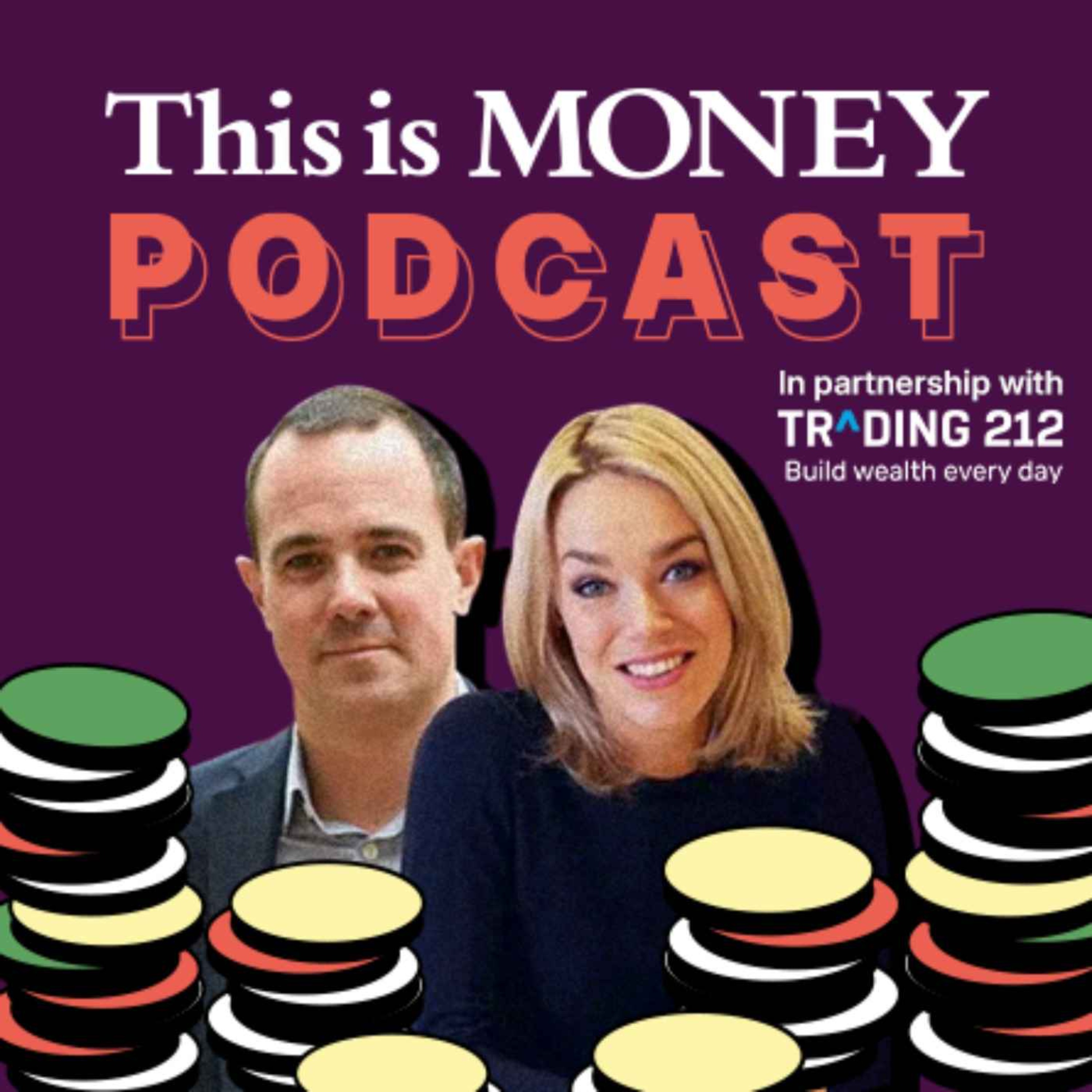
A YouGov poll splits opinion on whether to take a £1m tax-free lump sum or £1,000 a week for life; then the episode covers savings-rate changes, ISA transfer problems, an EV recall/range issue for Volvo EX30, rising UK energy bills, and the real cost of running cooling devices during a heatwave.
Helen Crane (savings/consumer finance expert; discusses ISA transfer “missing money” and energy/heatwave costs). Lee Voice (co-host; provides calculations and market context).
Lump sum is “probably the correct answer” due to inflation and investing returns; £1,000/week reaches £1m only after ~19 years. Inflation example: £1,000/week would be ~£609/week in 2046 if inflation averages 2.5%. Savings: fixed-rate ISAs now offer ~4.5%+. HSBC ISA bonuses caused delays/“limbo” beyond the 15-day transfer rule. Volvo EX30 owners can’t exceed ~150 miles due to battery charging restrictions; parts from China mean very slow replacements. Energy price cap rises by £221/year to £1,862 from July; possible further rises in September/October. Fans are cheap (e.g., 35W desktop fan ~49p for 9 hours/day for a week on cheapest tariff); built-in air con ~£37.60/week.
YouGov age splits (e.g., 65+ mostly choose lump sum). HSBC Premier/ISA bonus: up to £1,000; some transfers reportedly take ~6 weeks and may require postal applications. Volvo EX30: global recall of 40,000; UK owners ~10,365; one reader locked out repeatedly and received “don’t charge above 70%” letters. Lake District retiree forced to charge twice and switched to trains/buses.
Written by AI. May contain mistakes.
Discussion about the dilemma of choosing a £1 million lump sum or £1,000 weekly.
“But first, it's a sort of theoretical question you might discuss with your mates down at the pub.”
Exploring the benefits of taking a lump sum and how to manage it.
“I don't think of it like, would this add to a million?”
Discussing the impact of inflation and personal spending priorities on financial decisions.
Analysis of rising savings rates and what consumers should know.
“But you wouldn't know it looking at a whole raft of popular accounts.”
Learn about the issues customers face with ISA transfers at HSBC.
“So people have told me that they've been waiting in some cases six weeks for their balances to be transferred.”
Discover the ongoing problems faced by Volvo electric car owners due to safety measures.
“It's so easy to instantly make chats payments and, you know, perform all sorts of financial wizardry with our phone apps and, you know, in branch or whatever.”
Hear stories from frustrated Volvo owners dealing with car malfunctions.
“And then what you're actually getting is something completely different.”
Understand the implications of rising energy prices and how to navigate them.
“and the takeover of Chinese EVs are kind of swamping this market, including the infamous Jaycoo that lots of people now seem to be kind of driving about.”
Learn about the recent changes in energy tariffs and the impact of rising wholesale gas prices on consumers.
Explore the costs and efficiency of various cooling devices during hot weather.
“But for those few days a year when we all swelter in a heat wave, they are lifesavers.”
Hear personal strategies for keeping cool during heat waves and the cultural nuances of enjoying summer.
“You know, like ice packs, you get, you know, if you get an injury, you've got a couple of those like gel wet ice packs.”
Discover the importance of investment strategies for managing a large sum of money and the power of compound interest.
“Lee's got another tip of the week for us, Lee.”

Get the gist, explore an idea or ask about something said.
 Claude
On This is Money Podcast, what are the key points of this episode?
Searching your listeningAutomatic transcript. May contain errors.
0:02Lee Boyce: Welcome to This Is Money podcast sponsored by Trading212. Download the Trading212 app and open a cash ISO with promo code TIM to get the 12-month bonus promo rate of 4.76%. Terms apply. I'm Georgie Frost and joining me and Lee Voice today is Helen Crane. And coming up, the question dividing Britain. Not whether to get a fan or air con, we'll get to that later. No, a£1 million lump sum or£1 ,000 a week for life. Which would you choose? Also today, savings rates rising, energy bills are too, and exploding cars? Don't be getting set up to date with all the latest breaking money news. just go to thisismoney.co.uk or download the app.
0:48Lee Boyce: But first, it's a sort of theoretical question you might discuss with your mates down at the pub. Well, Lee, Helen, no alcohol being consumed, but if you won the lottery and had the choice, would you pick a million pound lump sum or take a thousand pounds a week for life? Now, that was a question posed to nearly 7 ,000 Brits by pollster YouGov recently. and it's fair to say opinions were somewhat divided. It got people talking on X. This is Money looked into this with the help of a few savings experts but before we get to what they say, I absolutely know what I would answer to this but Lee, Helen, what would you answer?
1:31Georgie Frost: Hi Georgie. Can I just say when I saw this on social media, it had that, do you remember that white dress, gold dress thing where some people saw that it was a white dress, some people saw it was a gold dress.
1:41Helen Crane: Yeah, yeah, yeah.
1:42Georgie Frost: The whole of the internet was divided according to news reports. And that was about 10 years ago. It gave that vibe. Do you know what, Georgie? When I looked at this, my brain first of all said£1 ,000 a week for life. I was like, that sounds like loads. Surely after a certain amount of time, I hadn't done the maths. After a certain amount of time, it was going to tick over the£1 million mark. Then my sanity came in and said, of course you would take the£1 million lump sum and I would take the£1 million lump sum. on.
2:10Helen Crane: Ellen? Yeah, I agree with Lee, actually. When you first see this question, you kind of think, how many years of life have I got left? And I was, oh, I'd like to think I've got quite a few. So maybe the thousand pounds a week would work out. I actually worked it out and it would take 19 years of a thousand pounds a week to get a million pounds. But in your sort of mental maths, obviously I can't do it that quickly so I I think I also thought 1000 but that no you're like Lee is right you should take the million think about returns that's the point isn't it like you have a huge lump sum you can start returns on it straight away but I don't know just every week it's great wouldn't it imagine like every Friday it just dings into your account very exciting so exactly
2:56Lee Boyce: this is the question that faces many people I suppose when they reach retirement do you take the money and invest it? Do you take an annuity? What would you do, Georgie? I have been thinking about this. For me, I would definitely take the£1 ,000 a week. Just knowing that I had that security for the rest of my life, because, you know,£4 ,000 a month is a very, very decent wage, would be excellent. I don't think I would like the pressure of investing, certainly, or looking after£1 million. I think there are too many issues with where you put the money. also is now a good time to sort of invest it all.
3:33Lee Boyce: They say don't invest it immediately. So then what do you do in the meantime? There are too many decisions that I just don't want to make. So I would just like the security of a thousand pounds a week, even though I'm the oldest person here. I don't think of it like, would this add to a million?
3:49Georgie Frost: Georgie, I'm here to guide you and to change your mind almost instantly.
3:53Lee Boyce: All right. Persuade me, Lee. Persuade me. Firstly, why were they asking this question well it was just it was just a you go a you gov poll it wasn't for
4:02Georgie Frost: a company specific it was just a question that they asked britain's and i think it's one of those questions that they they kind of put out there for some social media traction and also because it is a bit of a one of those things that you kind of you think there's an obvious answer and there is an obvious answer once you've thought we're three but sometimes you reply to things almost instantly so you talked about you know being at the pub you might have instantly said you know an answer then thought about it a bit more had a few pints and gone no actually no that's the answer but you're you're with the youngins actually uh you're with the youngins Georgia in this 7000 poll because it was it was a real split 55 percent of people would take the one million pound lump sum 40 41 percent would take a thousand pounds a week for life and the rest didn't know that's a pretty equal split really um but 18 to 24 year olds 26 percent would take a lump sum and 66 percent would take weekly and then 25 to 49 year olds it was a 43 percent would take lump sum 53 percent would take weekly 50 to 64 year olds 64 percent would take lump sum 32 percent weekly and then 65 plus 80 percent would take lump sum 17 percent weekly now the divide in Asia is pretty obvious isn't it the older you are the less likely you are to make that 19 years uh to add up to a million pounds but there's two things you really need to you would factor in on this and actually this would be such a beautiful problem to have wouldn't it Georgie and I must admit from time to time very occasionally um I play the lottery um especially euro millions if they do one of those bumper ones where they're giving away loads of the one million pound prizes and there's like 10 of them or whatever I sometimes do that so I think the odds the odds are extremely long but they get a little bit shorter on those prizes when they do that and I start to mentally spend the money you know what would I do with it holidays family friends you know whatnot you start to mentally spend what you would do that money and I think we all potentially do that from time to time now the first thing i'm going to do to convince you to say a million pounds lump sum is the correct answer is you're totally right actually sometimes having big pots of cash it sounds lovely on paper but it can be quite um confusing where to put it to make sure all your money's protected um and splitting it around and it calls sleepless nights you know worrying where that money is you know you don't want to be scammed you don't want to be this that and the other but so the financial services compensation scheme is up to 120 000 per bank per banking license so you'd have to split it if you did it that way but if you get
6:20Lee Boyce: six months though am i right in thinking you get six months up to 1.4 million for a big financial sort of transfer like a divorce or house sale inheritance yeah so you'd have time to think and
6:31Georgie Frost: we should point out here as well that the answers that we kind of got on this are presuming that this is tax-free this is a tax-free lump of lumber cash that's come but what i was saying is ns and i something like income bonds have a max of a million pounds treasury backed so you could put your million pounds into there take the monthly income and that's going to probably return you not far off that four thousand pounds a month and it'd be secure in a government backed bank so basically you could make that money and that's very that's a very conservative conservative thing really you could be getting you know between five and ten percent returns on a million pounds fairly simply without having to take tons of risk but the nsni one would be the real bottom risk level um and then you're going to be you're going to be turning that money around and getting that paid out every month so you're basically attacking it anyway um and then we always talk about compounding and eventually that one million will become way more than that pretty quickly and the other thing is to factor in inflation uh which is a pretty dull thing to talk about but over time the buying power of a thousand pounds it gradually you feel less well off so if inflation averages two and a half percent over the next 20 years that sum will only be worth around 609 pounds per week by 2046 so those two things added up uh together means that the lump sum is probably the correct answer and that's what the two savings experts that we've spoken to have told us but i do also understand that love the weekly amount you know four thousand pounds a month tax-free is more you know way more than the average uk salary and it might depend on where you are in your life and it might cover your mortgage your bills and all that kind of stuff and free you up to do whatever else you want to do in your life um and weigh it up but also a million pounds could do that because you can tuck it into something that pays you a monthly amount which is why it's you know, for most people, it would be the no brainer answer.
8:30Helen Crane: Yeah, the inflation thing is a big one. Helen? You know, we've said, we've given the reasons why this 1 million is on paper, the right thing to do. But it also depends on how you spend it, right? So I think if I got that money, one of the first things I would think about is buying a house, buying a nice house outright, you know, no mortgage for the rest of your life. But then that's the money gone, isn't it? you know that's done that's sort of no no returns looking at the housing market in the minute you might not make your money back um but then you know you've you've lived your the rest of your life without a mortgage it depends on where you're at doesn't it it depends on what your sort of priorities are and you know if you're the sort of person that isn't going to be bothered to check on your investments all the time and switch things around maybe it's better to just get that uh 1000 pounds a week it certainly certainly isn't a bad position to be in look either way you've
9:21Lee Boyce: Failed to persuade me, I think, Lee. Although the inflation is a powerful argument. And besides, I don't think this is going to be a real issue. But if it is, do let me know.
9:29Georgie Frost: You never know, George. You never know. It could be you. You never know. It could be you.
9:33Lee Boyce: I don't play the lottery, so it's definitely not...
9:35Georgie Frost: Oh, it's definitely not going to be you. It's definitely not going to be me. It definitely could not be you.
9:40Lee Boyce: If you are looking at somewhere to put some of that maybe£1 ,000 a week, savings rates are on the rise. Hurrah! But you wouldn't know it looking at a whole raft of popular accounts. The top rates on most easy access accounts, both ordinary and ISAs, are barely moved in recent weeks. It's the fixed rate deals that are becoming increasingly attractive. What's happening with savings rates?
10:04Georgie Frost: There's just extra competition currently in the market, Georgian. Actually, I think with the change up on the direction of travel with base rate, where we look like they were nailed on reductions before the Iran conflict, things were going one way. They were nudging slightly lower. deals were getting less attractive you know returns were just weren't as good as they were sort of 18 months ago then uh the kind of markets changed in terms of where it looked like interest rate decisions were heading um we saw mortgage rates spike quite quickly in the first few weeks of the iran sort of conflict um and that has had a knock-on effect to savings deals because the way banks have priced price these up um you know and they have to stay competitive to get the cash in and you're right easy access accounts haven't really been moving too much but people seem to be going and heading to them way more than fixes at the moment which is probably that kind of philosophy of having your money at arm's length I would say you know in case of an emergency kind of thing but if you can fix and there are some really attractive short-term fixes out there and we're back in a kind of time now where a one-year or two-year fix is probably going to pay you just as much as if you locked up your money for five years.
11:17Georgie Frost: So for example, on a non-cash ISA front, you can get 4.85 % with MBNA, which is Lloyd's owned. And fixed rate ISAs aren't far behind. The top fixed rate cash ISA is 4.66 % from Bankris. And I think I was saying this on the show not too long ago, some of the big banks are actually offering good rates, which is honestly, it's been years since we've had anything even noteworthy. But you can get 4.55 % with Halifax or Lloyds and Bank of Scotland or 4.5 % with Nationwide. That's a fixed rate ISA. That's up almost one percentage point compared to a couple of months ago. The good thing about the Lloyds, Halifax and Bank of Scotland ISAs is they let you take your tax-free interest monthly rather than just once a year, which is a quite popular way for especially retirees to use ISAs.
12:08Georgie Frost: You can put your money in. You might have built up a big pot of tax-free cash. And you can almost draw on it like an extra salary, basically, and top up your income. So there's been quite a lot of interest around that. And actually, Helen's just written about this, so I'll pass the button over to her. But even some of the big banks have struggled under the weight of cash ISA transfer pressure. So HSBC, towards the end of the last tax year and the start of this new tax year, had a really attractive one-year fixed-rate cash ISA. It's actually been quite swamped. A big organisation like HSBC. And people, readers have got in touch with us to report missing money, which is a story that Helen's written this week.
12:50Georgie Frost: Missing money, Helen?
12:51Helen Crane: Exactly, yeah. So this all started when, as Lee said, at the start of the new tax year, HSBC had an incredibly tasty deal on offer for people with big ISA balances. So if you opened one of its premier current accounts, which is it's essentially current account aimed at wealthy people you have to have a hundred thousand pounds in savings or investments with hsbc to open it if you did that you got a 500 pound cash bonus and also if you put a hundred thousand pounds into an isa you got another 500 pound cash bonus and there was also lesser amounts of people who put less in so basically if you were at the top of that, you could get£1 ,000 in free money.
13:35Helen Crane: There was a cash-lised option and a fixed rate ISA. The fixed rate ISA also had a 4.5 % rate. So really tasty deal for people with big balances. So unsurprisingly, people absolutely piled into this. Loads of people tried to open accounts. We don't have the numbers, but given the number of readers who've got in touch with us, it seems like it was very popular. From talking to those readers, it seems that HSBC has basically been a bit overwhelmed by the demand. So people have told me that they've been waiting in some cases six weeks for their balances to be transferred. So you had to transfer an ISA in from another provider to get that bonus.
14:11Helen Crane: And people are saying basically, it's supposed to be done in 15 days as per the rules. But in reality, in normal times, a lot of banks can do it in two, three days a lot quicker. So people have been waiting for weeks, people who've been left in limbo. One lady said that she saw the money go out of her old account, but it didn't show up in the HSBC account. So it was just sort of disappeared. And other people say as well that when you went to do the transfer online, some smaller banks didn't show up on this or drop down menu where you had to choose the bank you were transferring on. So instead of just calling HSBC and explaining what happened and them saying, oh, sure, we'll put it through online, They told them to apply by post, which seems slightly ridiculous in the year 2026.
14:59Helen Crane: So there's been people going back and forth with postal applications. And it just sounds like it's been a been a real mess, to be honest. I did ask HSBC about this and they said that people will still be paid interest in this sort of delay period if they've applied for the account. And if they've sort of missed the deadline to apply for it, they'll still be able to get the offer because the delays are their fault. But, you know, with these huge balances, hugely worrying if you sort of don't know where the money is. And I think a lot of people I spoke to as well are just, you know, we're longstanding HSBC customers.
15:32Helen Crane: And we don't like the one person I spoke to said he actually just cancelled the transfer and went somewhere else. Because I think people feel that the customer service is just really poor. And as a bank, if you put out this offer, you know, you know, people are going to rush into it. Obviously, it was probably the best deal on the market. So maybe think about how you're actually going to process those applications. And in fairness as well, from some emails I've got this morning from readers, it sounds like it isn't just HSBC that's having these problems. So, yeah, stay tuned for maybe more to come on ISA transfer chaos.
16:06Georgie Frost: I think it's one of those things where, you know, there's a framework in place where ISA transfer should happen within 15 days. and if it doesn't happen and your money's in limbo somewhere it's quite a scary experience and i actually recommended someone who a friend who's an hsbc customer i knew was looking for a new home for their isa and i said wow they've got this like quite good deal uh this hsbc isa so went off to i helped um try and sort it out the bank that they were transferring or wanting to transfer the money from to HSBC wasn't on the HSBC list of providers pretty mainstream provider very technologically kind of new age app type bank and HSBC requested that the transfer would have to be done via post and at that point in 2026 I think you just go nah let's forget about that I'm not I'm not gonna rate chase a half a percent if I've got to do it via post and I think Like, you know, it's one of those classic things where stuff like that should be just so easy now.
17:11Georgie Frost: It's so easy to instantly make chats payments and, you know, perform all sorts of financial wizardry with our phone apps and, you know, in branch or whatever. Post, really? Come on. I know. I mean, it's ridiculous, isn't it? Post, goodness me.
17:26Lee Boyce: Right, moving on. Volvo, that most trusty of Swedish cars. We had a Burgundy estate when I was little. Classic. I know, right? But wait. More than 10 ,000 electric Volvo owners have been stuck for months with cars that barely managed to cover 150 miles before running out of charge after the manufacturer imposed strict charging restrictions. Why? Because of the risk of it bursting into flames. This is not the burgundy Volvo that I'm used to.
17:59Georgie Frost: I've got to say, visions of you going into a Burgundy Volvo is everything that I need on this day. Classic. Proper box one, 1980s. Burgundy really does make me think of Volvo. There's not many colours of a car that make me instantly think, but Burgundy just makes me instantly go to Volvo. And Volvo have built a reputation over the decades of being the safety first conscious car. You know, it's really, you know, at the forefront of safety. so when something like this happens to a brand like volvo they have a chance to rectify the mistake but this has been going on and rumbling on for upwards of six months where people were written to at the end of last year warning warning them not to charge their cars above 70 percent battery and don't leave cars unattended while charging because of virus and this is a global recall of 40 000 cars and one quarter of those are for uk owners of the x um ex30 suv um and what's happening is the range uh that was promised on these 280 mile cars really people aren't being able to go over 150 before 150 miles before having to to charge up now we have been absolutely swamped uh rob poll our measuring editor has been swamped with readers who are absolutely livid about this because the parts that are required to sort this out have to come from china and it's taken a long time to get them and actually by the end of april it admitted that fewer than 10 battery packs are being replaced and 10 um out of how many 10 000 odd cars it's actually 10 365 cars and there's lots of people uh that are also complaining about other issues so one reader that we have get in touch abid hasain 43 000 pound volvo volvo uh ex30 got it in may 2024 got it on finance um problems started in october 2025 when uh locked out of the vehicle key stopped working um leaving his wife stranded 20 miles from home and they've been locked out on the car of the car on four separate occasions since uh despite local rover volvo dealership investigating the issue and then got that letter in december saying don't charge your car over 70 percent and don't charge it unattended you instantly probably go god i just want to take i want to get this car back absolutely right i've had enough of this car i want to get out my get
20:28Lee Boyce: out my finance agreement you're not getting your family in that car are you exactly you know and
20:32Georgie Frost: And it's a horrible thing. Basically, yeah, you've got the car on a flexible car finance loan that you're paying every month, but you expect a certain degree of kind of, you've been promised one thing, you know, 280 mile car, a car that's probably not going to lock you out of it. And then what you're actually getting is something completely different. And other people have got in touch as well, you know, how it's really hit their lives. So someone, a retiree, Stephen Surgeon, who is in Rochdale, regularly visits Lake District with his wife, but the 70-mile drive, he's having to sometimes charge the car twice on that route and just got so fed up with it that essentially they've just started taking train and bus to their beloved Lake District because the car has become a constant inconvenience and they should be able to complete these journeys in one go.
21:26Georgie Frost: But they're unable to do it. So, you know, I think that, as I say, the response from Volvo on this, I just think, hasn't been strong enough for a brand that is synonymous with safety, with quality. You know, I think reputational damage is starting to appear here because at the end of the day, that's a long time to wait for a fix on a car, you know, that should be delivering better. Understand things happen. Understand things can happen on a production line. also understand that in a very safety first environment of course it's the right message to put out there that you shouldn't do this if it's dangerous if there's a high risk of fire because you can't go above 70 battery but then it's a question of trust so once a fix is done how much do you then trust the car going forward how much of a you look at that car on the drive and i think it's been such a faff to sort out and you kind of end up resenting the car and thinking
22:21Lee Boyce: and actually damage to evs as well exactly what i was first time switching ev you know oh for
22:26Georgie Frost: goodness sake i should have just stocked the petrol but of course things go wrong petrol cars you know there's plenty of recall notices over petrol cars as well and this is you know appears to be a bit of an isolated incident and it just felt it's unfortunate probably a combination of a few things but having to get parts from another part of the world things going on you know in terms of uh freight and whatnot coming from overseas obviously plenty going on there um but i feel like these readers that have got in touch feel a little bit abandoned abandoned by the company and i hope that after writing this story we've written a couple of stories about this including in the newspaper this week i know they're taking it seriously but i hope that there's some sort of way or some sort of means to kind of make it up to the people that have been inconvenienced and have been left in limbo with their cars because that's what I think any sensible company would do.
23:20Georgie Frost: And also, let's not forget Volvo and all other European car brands are in a massive dogfight with China at the moment and the takeover of Chinese EVs are kind of swamping this market, including the infamous Jaycoo that lots of people now seem to be kind of driving about. So there's lots to kind of mull over for the Volvo bosses. And let's hope people can get their cars fixed swiftly. And if they don't, we will keep on writing these stories of readers and drivers who are upset.
23:54Lee Boyce: Absolutely right, Lee. Absolutely right. I recently had a recall on my car. Well, not really a recall. It was something wrong with the airbags. And so they had to change it and they changed it for free. I got loads of notifications. I'm still getting loads of notifications. very swiftly done but it does make you think oh I'm sure it's fine but there's absolutely no way I'd want any of my family members sat in my car on the off chance that the airbag might explode some chemical in their face so anyway it's all fixed now Lee it's just a rubbish petrol car
24:25Georgie Frost: that's got plenty of other things wrong with it that's just one of that's just one of many
24:29Lee Boyce: foibles yeah that's the least of its problems Lee that's the least of its problems let's hope it
24:34Georgie Frost: It never needs to be deployed, Georgie.
24:36Lee Boyce: Exactly right. Helen, we got confirmation this week that the energy price gap would go up from July, that the energy price gap will go up from July. Not a surprise due to the conflict in Iran, but it's the largest jump in the price gap since January 2023, when rates rose 20.6%. But then we had the protection of the energy price guarantee. No such thing in place now. So what can you do? How much are we talking here?
25:04Helen Crane: So it's important to say, first of all, that all these figures are based on the average household, of which many people would say, you know, there's no such thing. But this is based on average usage. So typical sized household with a typical level of energy use. It will be going up by£221 a year to£1 ,862. So it's a big jump, as you say, biggest jump in a while. And the bad news is these things sort of run three months in advance. We get to hear the energy price cap a while before it comes in. So this is from July. It will go up again in September. And we're already starting to hear rumours that it will go up again in September because of, as you said, all the oil price rises caused by the conflict in Iran.
25:52Helen Crane: Things are for now only really heading one way. Will there be any government support? the government has already said that it won't be like the last time this happened when they sort of stepped in when bills were going to go up to I think four thousand and something pounds a year back in 2022 they did step in and say no we're capping this it doesn't sound like that will happen this time although we're a far way from getting up to those ridiculously high figures again so it makes it a good time though to think about your energy tariff still about two thirds of people I think are on the energy price cap which is the tariffs that are actually governed by this new cap if you're on a fixed tariff and this doesn't affect you because you've locked in your price for normally a year and there are still fixes that are cheaper than the cap and so yeah definitely worth thinking about switching on to one of those if you think it can save you money we've kind of talked about this before energy bills are something that can sort of fall to the back of people's minds.
26:54Helen Crane: I think people have historically thought about it as a, you know, one of the sort of smaller bills. It's not as big as say, your mortgage or something like that. And I think people kind of let it slide. But you can make a decent saving, especially when prices are going up. And it really doesn't take very long now to do it. If you switch supply, the new one basically sorts the whole thing out for you. And in general, it's quite easy. So yeah, it's worth
27:20Lee Boyce: worth taking a look. Lee, you must be laughing for fixing. When did you fix? A few months ago.
27:26Georgie Frost: No, I'm not on a fix. No, Mr. Simon Lambert is on a fix. Oh, Simon. I wanted to fix, but I moved house at the end of March and I couldn't take my energy deal with me. So I'm at the mercy of a 12 month kind of new home tariff that I've been given, which looked fairly reasonable. I did all my maths homework of course Georgie but there's been actually a couple of interesting things in the energy world one of which is we've gone back to just having big companies again lots of them have merged and sucked up collapses and whatnot and now we're back to having kind of like six main energy companies again which means we're kind of at the mercy of whatever rates they're setting the other thing that's happened that has happened the last couple of weeks some of the energy providers are launching kind of like top of the range tariffs and then giving households like 24 or 36 hours to fix onto them and then they're gone so it's kind of like deals that vanish quite quickly and i think that i don't really like that very much feels like people rushing into making decisions and you have to work out your unit rate and all that kind of thing because while the price cap is set at this level you've got to remember that's just for the typical household you know some people have far bigger homes and will be paying far more than that and should be probably looking around to see what kind of fixed tariff they can get from their current provider or where else they can get their energy supply from and actually the big reason for this price cap rise is a 35 % rise in wholesale gas prices and it's not July that's the concern because of course July, August, September we typically use less energy aka the heating it will be more what is the October price cap going to be when we're all then starting to kick in out of central heating systems is it going to go much higher than that could we be looking at a price cap going towards the 2000 pound mark all of those kind of question marks are still there while the price of gas is still high you know you'd be really wise to have a look now to see what you could fix not for as I say the next couple of months when energy bills are just not on your mind whatsoever because we're in the midst of a heat wave but your future self may thank you when it's November December and we're at the opposite end and there's a cold snap and you are not on a fix and the price cap has gone up and you're paying more for energy than you might have done if you'd acted now.
29:47Lee Boyce: Absolutely rightly right things that are definitely not energy saving electric fans and air conditioning But for those few days a year when we all swelter in a heat wave, they are lifesavers. They're in our range, though, of different options to choose from. Traditional desktop, pedestal fans, modern air cooler devices, even domestic air conditioning units. So how much would it cost to run each of these for a week? Helen, the numbers have been crunched. I understand there's a bit of a heat wave going on in the UK at the minute. How is the UK coping?
30:23Helen Crane: Very chill, not mentioning it at all on Twitter, just getting on with life. Yeah.
30:29Lee Boyce: No one's mentioned it at all, have they?
30:31Helen Crane: Everyone's, yeah, keeping very cool about it. No one's spoken about it at all. I barely even know. I'll bet. So going to the numbers. Yeah. So I think people have certain perceptions about this. So, you know, people think air con's incredibly expensive. But I think even things like fans will think, oh, is this kind of using quite a lot of energy? You know, your average sort of tabletop fan, which doesn't always do that much when the temperature gets that high. And so this is data that U-Switch has crunched on how much it actually costs to run each of these devices for a week. So they've looked at fans, air coolers and air conditioners.
31:10Helen Crane: I was just going to explain what an air cooler is because I hadn't really heard of them before this week, but they actually sound quite nifty. So they're kind of somewhere in between a fan and air conditioning. instead of just blowing hot air around like a fan they actually take in the air and cool it and blow it out again um i sort of looked into these they seemed maybe 100 pounds ish to buy they actually seem quite good i'm considering uh trying one out for uh for the next heat wave yeah so they're looking at the prices a traditional fan actually doesn't really cost that much to run. So USwitch says that running a typical 35 watt desktop fan costs 49p if you use it for nine hours a day for seven days.
31:53Helen Crane: It's all right. Not really sure why someone would be a fan for nine hours a day for seven days and just sit in your house. Maybe overnight during the night. Yeah, maybe. So yeah, the 49p, that's not too bad. It's important to look at the wattage of your device because obviously certain fans will use more. You know, that's not too pricey for most people. Pedestal fans, so that's the biggest fan on a big pedestal that you might have, slightly higher power. That would cost about 84p to run for nine hours a day for a week. And it's important to say that this is based on the cheapest fixed rate tariff.
32:28Helen Crane: So this is for people on the absolute best energy deals. It will be a little bit more for people who are on, for example, the price cap so on to air coolers and the cost of running one of these for nine hours a day for a week is£1.05 if you're on the price cap that rises to£1.18 air conditioner unsurprisingly the cost absolutely rockets when you start to look at air conditioners so portable air conditioner the one that you sort of stick the hose thing out of your window So that would cost you just over£14 to run that for nine hours a day for seven days. On the cheapest tariff, on the price cap, that's nearly£16.
33:09Helen Crane: And a built-in air conditioner, get ready for this because this is really steep,£37.6 a week for nine hours a day for seven days. Yeah, it's quite hefty.
33:20Lee Boyce: That is something I can imagine that you would keep on for a long time. You know, you'd forget about it. It's just around you. Oh, that's a lot. I've got an air conditioning unit here.
33:29Helen Crane: Yeah, that's how they're designed, isn't it? You're supposed to leave them on the whole time rather than kind of switch them on and off. I mean, you probably know better than me. I don't use it, Helen.
33:38Lee Boyce: What do you think? There's a cost of living crisis going on, Helen. What are you talking about?
33:41Helen Crane: Yeah, I think if I had an air conditioner, I would just I would just simply never turn it on.
33:46Georgie Frost: I think in short, if you have a handheld fan, a desktop fan, a pedestal fan or an air cooler, you don't really have to worry about the impact it's going to have on your energy bill because it's pretty minuscule. is when you start getting into the the bigger uh ticket items but presumably especially if you've had something like air con uh built in and typically what people do in this country i think only something like one or two percent of homes in this country have air conditioning units which is um you know a bit of an anomaly compared to other countries but we you know we are having probably more heat waves than we usually would but homes in this country have been largely built to keep the warm in rather than the other way around because we deal with more cold weather than we deal with warm weather but getting one of these air conditioning units installed typically people do have them in one room bedroom or home office for example it can cost anywhere between one and three grand to get it installed and then if you're getting a multi-split system two to four rooms you're talking between three and seven grand if you're talking the whole house it can cost eight to 15 grand so you're probably not really worrying about the cost of putting it on for let's say in total two months of the entire year i've got a pedestal fan had it from john lewis for about 10 years i get to use it about two days of the year before it gets stolen by my seven-year-old who you know sets up like a bunker in a room putting a fan and just sort of you know really going to town on the heat she she has said this week that there's a heat wave about 400 times and she oh Bless her.
35:17Georgie Frost: I know what she's been doing. You know, like ice packs, you get, you know, if you get an injury, you've got a couple of those like gel wet ice packs. She's been swapping them around and making sure there's always one in the freezer and then she uses it and sets up a fan and puts it on. And I'm like, oh man, like you are not going to be able to cope with a heat wave in the future. We've been doing what we call a family passaggiata, which is Italian for an evening stroll, which is, you know, in Italy, you know, especially Italian cities, they don't tend to have gardens or they have very small courtyards.
35:47Georgie Frost: And that's why you see people really well turned out in an evening going for a stroll around their local neighbourhood. We've been making Passagata a cool thing in my little pocket of Estes, George. We're making it happen. We've been strolling around at sort of seven o 'clock. Well, looking good, dressed well, me and my crocs.
36:06Lee Boyce: You're having an evening stroll, Lee. Stop being posh.
36:09Georgie Frost: Having an evening stroll around the little country park and it's very, very nice. And I love the heat. I love the hot temperatures. and I think sunny days are a blessing. But yeah, we keep cool by doing things at home. Like, you know, we've got a south-facing garden and the difference between the front of the house and the back of the house is drastic. So, you know, if you want to cool off, the living room is really cool because it's at the other end of the house. So naturally, with small children, we just bung them in there for the hot hours, especially this week being half term, and it's absolutely fine.
36:43Georgie Frost: And then you keep the curtains shut on that kind of south-facing side. That helps keep out some of the heat. And basically, we've all got our ways of keeping cool. Essentially, it's not as bad as what we make out. I think sometimes other countries look in. It's that classic, oh, the Brits have got a heat wave again. Oh, they're all sort of struggling. Georgie, I'm still on that central line with my ball suit jacket on. I'm a gentleman. I never take it off. Yeah, I refuse. I'm here. Absolutely right, Lee.
37:10Lee Boyce: You've got a jacket on now.
37:11Georgie Frost: It's 40 degrees on the central.
37:13Lee Boyce: Like BBC reporters of old.
37:16Georgie Frost: It's 40 degrees on that central line, but I'm sweating it out in here. It's my version of some hot yoga. It's absolutely fine. It's all good, Georgie. It's all good.
37:27Lee Boyce: Enjoy the sunny days when I'm here, people.
37:29Georgie Frost: And if you've got an inexpensive fan, you use it until your heart's content. It is not going to bankrupt you. Just make sure you've got a good quality one that is doing some oscillation and it's got good settings. it's worth investing in a good one. The Tower of Fan that we've got is very good.
37:45Lee Boyce: And that is not Lee's tip of the week. Lee's got another tip of the week for us, Lee.
37:50Georgie Frost: No, I ain't got a tip of the week. I'm giving you a stat of the week with Simon's not here. I'm jumping in. I'm going for it. All right. Sorry, Simon. Sorry, Simon. I'm jumping in with stat of the week. My stat of the week. Lee's stat of the week. I'm going back to the first story about the million pounds versus 1 ,000 pounds a week. I was crunching some numbers on one of my favorite favorite things on the internet which is the compound interest calculator man i can spend hours on this thing i love it just tapping in numbers looking at the compounding adding years adding deposits in interest rates oh i just love it anyway million pound initial investment five percent annual returns how many if you don't touch the money how many years do you think it would take with a 5 % interest rate on a million quid for it to double if you left that million pounds in getting 5 % it takes 13 years and 11 months to double to two million pounds that's if you don't touch it um but you'd have to not touch the money which actually going back to that story at the beginning that's if you did get that lump sum of a million pounds you'd have to probably put it in some investment get returns rather than stick it in property if you wanted to live on it for the rest of your life.
39:01Lee Boyce: That is it this week. Thank you, Lee. Thank you, Helen. And thank you for listening. You can keep up to date with all the latest Breaking Money news. Just go to thisismoney.co.uk or download the app. And if you have any comments or questions for the team or anything you'd like them to look into, Lee?
39:15Georgie Frost: Yeah, you can email us at podcast at thisismoney.co.uk. You can comment on the story where this podcast lives and you can leave comments in all sorts of places these days, YouTube, Spotify, wherever you want. We read them all. So do get in touch.
39:29Lee Boyce: And if you like our podcast, whatever you found us, it helps other people find us too.
It's the sort of theoretical question you might discuss at the pub with your mates. If you won the lottery and had the choice, would you pick a £1million lump sum, or take £1,000 a week for life?
Pollster YouGov posed the question to 7,000 Britons recently, and it is fair to say opinions are divided. According to two money experts, there is a right answer - so which is the best strategy, and why is likely to make you much richer? Georgie Frost, Lee Boyce and Helen Crane discuss.
Easy access savings rates have barely budged in recent weeks, but fixed-rate deals are becoming much more attractive. We look at some of the best - and Helen explains why a number of HSBC customers are feeling disgruntled after Isa transfers to the bank were hit with a raft of delays.
The team also looks at Volvo's chaotic EV recall, and what drivers who have been told their car is a potential fire risk can do.
It has been confirmed that the energy price cap will rise by 13 per cent in July, with costs for the average household climbing by £221. So is it worth thinking about fixing your tariff?
And in this week's heatwave, we discuss data which reveals exactly how expensive it is to keep cool. Are new-fangled air cooler devices worth it, and is air conditioning as pricey as many assume?
Follow us on Instagram @dmgnewmedia.Follow us on TikTok @dmgnewmediaFollow us on X @dmgnewmedia. Email us [email protected]. Text us 020 7938 6000.Hosts: Georgie Frost, Simon Lambert, Lee Boyce, Helen Crane. Producer: Georgie Frost. Hosted on Acast. See acast.com/privacy for more information.
Follow us on Instagram @dmgnewmedia.
Follow us on TikTok @dmgnewmedia
Follow us on X @dmgnewmedia
Email us [email protected]
Text us 020 7938 6000.
Hosts: Georgie Frost, Simon Lambert, Lee Boyce, Helen Crane
Producer: Georgie Frost
Hosted on Acast. See acast.com/privacy for more information.


