
In short
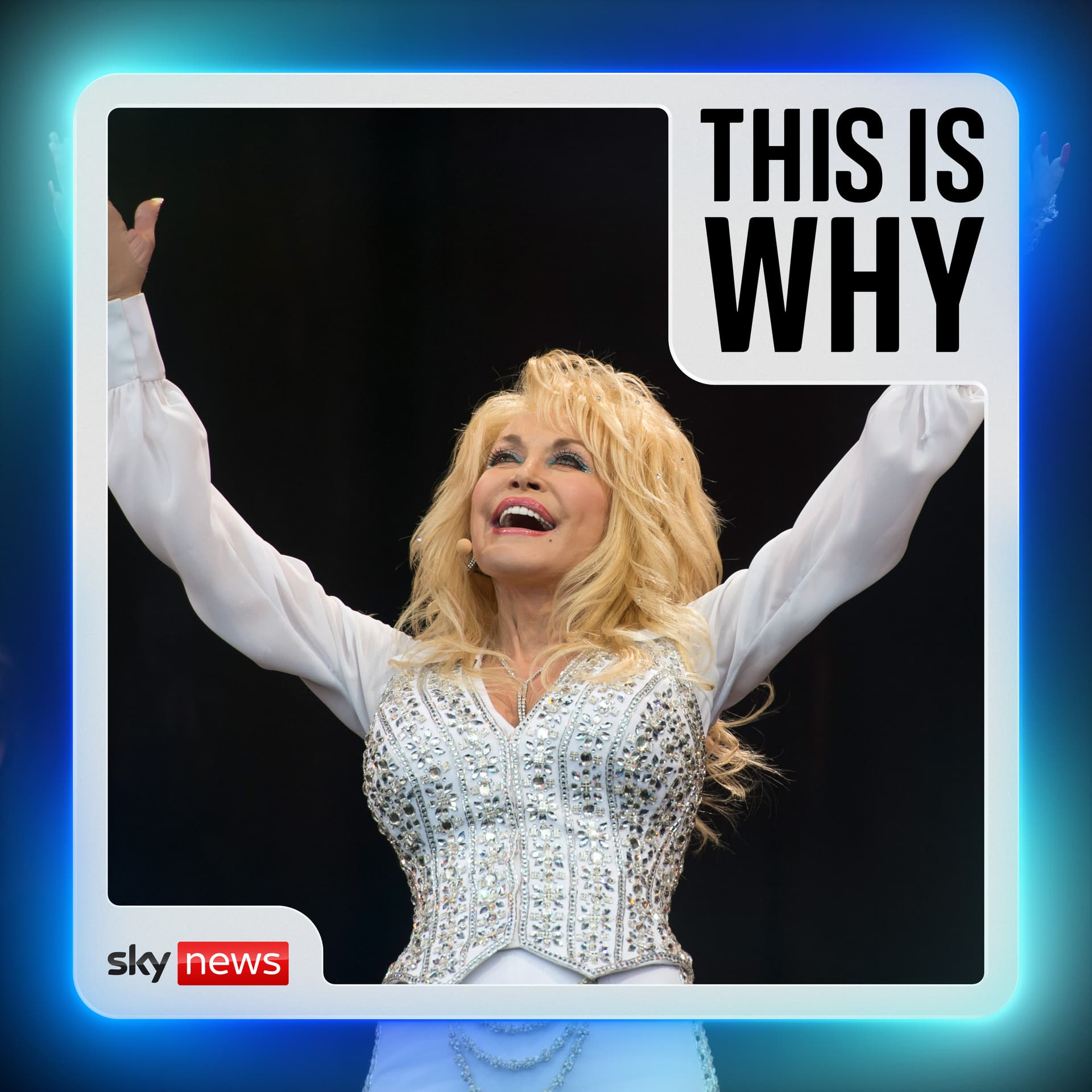
Why Dolly Parton appealed to every generation, combining an instantly recognizable image, cross-generational country roots, and lifelong philanthropy; also discusses her death and legacy.
Guests
Bob Harris, a long-time broadcaster who interviewed and championed Dolly Parton for decades.
Key claims
Dolly’s glittery persona was “artifice and authenticity,” letting her be underestimated musically and philanthropically; her optimism (“tomorrow will be better”) and inclusive messages gave permission for LGBTQ+ self-expression; country music’s family/church roots helped her craft; her work was “a force for good.”
Notable examples
Porter Wagoner partnership; writing “Jolene” and “I Will Always Love You” on the same day; “9 to 5” workplace injustice; “World on Fire” from Rockstar; Dollywood Foundation and Imagination Library (books for children up to age five); royalties funding projects in deprived black areas; her letter to children ending with “I will always love you.”
Written by AI. May contain mistakes. Listen to the episode to check what was said.
Chapters
Tap a time to open that second in VODolly's Cross-Generational Appeal
0:21 to 1:12
Exploration of Dolly Parton's ability to resonate with multiple generations.
“Well, hey there, it's Dolly, and I've made it.”
The Essence of Dolly Parton
1:12 to 1:54
Discussion on Dolly's unique personality and her contributions beyond music.
“If I hadn't been born a woman, I'd have been a drag queen because I love all the glitter and the glare and the flamboyance.”
Bob Harris Reflects on Dolly
1:54 to 3:40
Broadcaster Bob Harris shares his personal experiences and insights on Dolly.
“The broadcaster Bob Harris knew and interviewed her over many, many years.”
The Roots of Country Music
3:40 to 4:51
Understanding the cultural roots and family connection in country music.
“was something she said to me when we were talking in 2023, which was the last time I saw her.”
Dolly's Image: Artifice and Authenticity
4:51 to 6:59
Exploring Dolly's unique public persona and its implications.
“and somewhere in that garden or in those grounds or in that backyard, there'll be instruments just scattered around.”
The Strategy Behind Dolly's Career
6:59 to 8:31
Discussion on Dolly's career strategy and her partnership with Porter Wagner.
“One of my favourites is that she was asked about this years ago and she said, I've spent a million dollars to look this trashy.”
Songwriting and Themes in Dolly's Music
8:31 to 11:12
Examination of the songwriting process and themes in Dolly's hits.
“She said more or less the same thing at certain times.”
Dolly's Relevance in Modern Music
11:12 to 14:01
How Dolly Parton remains relevant through collaborations and new projects.
“But the themes, I wonder whether this is part of the reason that those songs and she have remained so popular to this day, because they deal with some pretty big themes.”
Dolly Parton's Impact and Philanthropy
14:01 to 16:49
Explore how Dolly Parton's charitable efforts and music positively affected many lives.
“In particular, there's an opening track called World on Fire where she's not making any judgment, but what she's saying is the world's gone crazy.”
Cultural Reflections on America
16:50 to 19:57
Discuss the changing cultural landscape in America and Dolly's role in bridging divides.
“I can't even tell you how important it was for me to be there, as it was for all of us.”
Show all 11 chapters
Dolly's Legacy and Inspirational Messages
19:58 to 22:03
Reflect on Dolly's legacy of love, unity, and her empowering messages for children.
“People of all ages will be moaning Dolly's passing today.”
Transcript
Automatic transcript. May contain errors.0:02Bob Harris:Sky News, the full story first.
0:11Through her music and her image, Dolly Parton made herself impossible to ignore. And then she gave every generation a reason to love her. This is why.
0:30Bob Harris:Well, hey there, it's Dolly, and I've made it. I'm 80 years old, can you believe that? Do you know what? I can, actually. Because before her death, it felt like Dolly Parton had always been there, and that she was always going to be. After all, she was a country star to your gran, a film star to your mum. Then more recently, she was a Glastonbury hero, a collaborator with Beyonce and Pitbull. And for the very youngest, she became the lady with the big hair and even bigger personality reading them a bedtime story. Very, very few people get to belong to that many generations at once. And part of the trick was that she created an image that no one could possibly overlook.
1:12Bob Harris:If I hadn't been born a woman, I'd have been a drag queen because I love all the glitter and the glare and the flamboyance. I know how the drag queens love to get it all on. And even as a woman, I look like a drag queen as a woman. I'm just a little over the top, but I just love that. She was always in on the joke, but Dolly made herself impossible to ignore. She wrote songs that sounded simple but rarely were. She turned her success into jobs in her community and books for millions of children. She said to me, if only one person is affected by some of the things I've said or by the lyrics of some of my songs, she said, that's rather than nothing.
1:53just one person and I feel I would have done a good thing. The broadcaster Bob Harris knew and interviewed her over many, many years. Bob, what a day. Look, you yourself have spoken to Dolly over the years. You've spent decades, you know, playing, championing her music. What are your thoughts on her passing? You know, this has hit me really hard. I think I'm obviously not alone in that, but I feel desperately sad. today, particularly the speed with which her decline seems to have taken her to her passing, because she's been posting quite regularly, hasn't she, her health updates. And I don't think she's been quite right at any point since her husband, Carl, passed away last year.
2:41And it's so often, isn't it, that you see a couple where one of them passes away and the other then passes away quite soon after. And I think that Dolly's been grieving Carl. And gradually that's eaten into her sense of herself and her health. And finally, it's led to the announcement that we heard yesterday. What was she like in those meetings that you shared? She was fantastic. It's really hard to completely describe the way that she would bring a room to life. But she really would. She had such incredible, positive energy. I rarely met anyone who was so constantly positive in terms of her view of life.
3:27And I think we see that in the expression of the way she lived her life and interacted with people around her in her life. There are some great, great quotes. I mean, everybody's got their Dolly quotes, but there was something she said to me when we were talking in 2023, which was the last time I saw her. We were talking about the fact that we were both at that point, obviously in our late 70s. She was four months older than me and was a constant inspiration to me, actually, in terms of her energy level and her approach to life. Now, we were talking about the fact that sometimes when you get to where we are in our lives, it is possible to feel tired or low or down.
4:10And she said to me, even when the days are not so great, tomorrow will be better. And I just thought that completely sums her up. And it's something that I've kept in my mind ever since. This was a musical career, though, that spanned decades from 60s onwards. How does someone remain, not just in the public eye, but actually relevant in her music for so long. It's an interesting thing with country music in the States that we don't necessarily understand this in Britain unless you've been to America and experienced it. So let's say we're in the Appalachian Mountains or we're at a barbecue in Texas in the sunshine and somewhere in that garden or in those grounds or in that backyard, there'll be instruments just scattered around.
5:02They may be even a low stage. And during the course of the afternoon, the barbecue, somebody will pick up a fiddle. Somebody else will pick up a banjo. There'll be three and four and five-year-olds dancing in front of this low stage to the music being made by their uncle and their grandpa. And that's where you begin to find the real roots of Dolly. And this cross-generational thing is part of the appeal of country music in America, where you find all members of the family enjoying the music that they're listening to. And there's no discrimination in that respect. And the other really, really important ingredient to the sound of country music, and again, this expressed a lot of where Dolly came from, the church in Nashville, Tennessee.
5:47I think there are more churches per square inch in Nashville than almost anywhere else in the world. It's called the buckle of the Bible about. And this is where so many of the country artists learn their craft as well and learn to just be out in front of an audience singing. Churches, maybe the congregation, somebody will step forward and sing. It could be a three or four or five or six-year-old that has a good voice that the parents are saying, you take the next verse. And it then becomes the most natural thing in the world, this expression. And that's so important to one's understanding of the way that country music artists have come onto the stage in their early years.
6:32I think, though, in trying to understand Dolly herself, no discussion between the two of us can avoid at some point landing on the image. And I mean this with no disrespect to Dolly, but she was this curious combination of artifice and authenticity. I mean, where did that look come from? Because to some 21st century eyes, it might look a wee bit anachronistic, not for Dolly, for some reason. There are so many quotes that we can attribute to Dolly to explain this combination. One of my favourites is that she was asked about this years ago and she said, I've spent a million dollars to look this trashy.
7:13it's a great line that was one of the things about dolly she never took herself too seriously and i think this was part of the reason that we loved her so much she was humble she always kept her feet on the ground but by having the look she had and being prepared to be out with all her sparkles and her wigs and everything else i think she gave permission then particularly in more recent years for gay people, for trans people, for people to express themselves. She gave them permission to do that. And I think that was a very, very important aspect, again, of why we love Dolly so much, because through example, she was prepared to lead the way and open the door for people who wanted to express themselves in their own way.
8:03I keep coming back to the idea that she built herself to be looked at and in doing so, kind of let many people underestimate her as a force musically, as a force in terms of her philanthropy. I still keep coming back to the idea that this image that she created, she created it to be looked at and in doing so, the big hair and the body and the rhinestones and all the rest of it, she allowed herself at times to be underestimated, but underestimated to her benefit. I think you're absolutely right. She said more or less the same thing at certain times. let people underestimate me because I know what I'm doing.
8:39And she really did. She choreographed her career, even at the point where she began. Porto Wagner, as we know, was so important. Just explain who he was. So she arrived in 1964 from her mountain home as a young, determined, but still naive girl. She was only in her early teens. I mean, it was just so brave. And immediately she began to establish herself in Nashville as a recognised writer and as an emerging artist that was beginning to make a mark. Porter Wagner was a long time established country music star in Nashville. He had a television show, which was huge in country music circles, and he invited Dolly onto the show, and he effectively launched her.
9:29They made a lot of records together. They had a very successful partnership. But I think eventually Dolly began to feel claustrophobic, and however difficult it was to break that partnership, a lot of people were saying to her at the time, wait, you're biting the hand that's feeding you here. But she wanted to stand on her own two feet and be her own artist and write songs in her own way. And when you think in 74, for Jolene and I Will Always Love You, which are two of her best known songs. She wrote those two songs on the same day. I mean, it's really, it's incredible. I didn't know that. Yeah.
10:07She would go on what she would call writing binges. There's a great tradition in Nashville where writing songs is part of your day by day routine. But a lot of the music publishing companies organize songwriting meetings. between writers who maybe don't know each other particularly well. And they're given time and space in a room, a piano, some instrumentation, guitar. And they said, get together. Here's a few ideas for topics. Come up with a couple of songs. It's like the days of the old Grey Whistle Test, actually, where in the days of Tim Pan Alley, where the Carole Kings and Neil Sedakas of this world were invited to sit in with each other and write songs.
10:51and then those songs would be played to the ancillary workers that worked at the publishing companies who had the nickname the Old Greys and the ones that seemed the most likely to become hits would be the ones that the Old Greys could hum or whistle having only heard them maybe once or twice in the hook. Of course, the Old Grey Whistle Test, that was the music show that you fronted for many years, launched the careers of people like David Bowie who certainly knew a thing about writing a tune And when you look at songs like Jolene, like Nine to Five, they were incredibly catchy in terms of the music, in terms of the hook.
11:28But the themes, I wonder whether this is part of the reason that those songs and she have remained so popular to this day, because they deal with some pretty big themes. Jolene, of course, a woman concerned about her partner, but it's not a song of anger. It's not a song of violence. Nine to Five, you look at it, first glance, it looks quite a poppy record about going to work. But actually, look at the lyrics, and it's someone shrieking at the injustices of the way in which women have been treated in the workplace. Yeah. And both those songs would have passed the El Grey whistle test, by the way.
12:00Yeah, of course. But no, you're right. And again, one of the things about country music that's always been the most attractive element of it, and Dolly, it absolutely reflects this completely, is the music's ability to tap into the feelings and the lifestyle of the fans who love that music. And Dolly was absolutely brilliant at nailing the way that her fans might be feeling at any given time. And those two songs, both of them, Jolene in particular, demonstrate that completely. And then you see artists from the 21st century returning to those records. And of course, at the top of the list, you've got to say Beyonce collaborating with Dolly Parton.
12:44There's a way to stay relevant in the 21st century. Yeah, the idea that that Beyonce record, the last country album that she did, was so controversial. She was born in Texas, she was brought up with country music all around her, Beyonce, so it was natural that the Dolly Parton-Beyonce collaboration would eventually happen. And I have to admit, one artist that I didn't see coming down the pipeline to work with Dolly was Pitbull. And again, it's one of those anthems from the back catalogue, 9 to 5. Did those artists seek her out or was it Dolly who was doing that? I think it was the other way around.
13:18The people were seeking Dolly out. I think at the time that she and I spoke was the release of the Rockstar album in 2023. Now, that was something that Dolly did seek out because she realized that she hadn't covered rock in all the years and all the genres that she'd been connected with. and she really wanted to make a rock album. And she was able then to enlist the help of rock artists that came onto those tracks with her. And she was also able to allude to some of the things that she felt important in terms of the way of the world and the way the world is at the moment. In particular, there's an opening track called World on Fire where she's not making any judgment, but what she's saying is the world's gone crazy.
14:09Let's just stop for a second and have a look at the way the world is. Are we happy with the way the world is? See, she's asking these sort of questions. She's not saying to you, you should be unhappy with the way the world is. But just stop and think for a second. How do you feel about the fact that the world's on fire? Now, that's so subtle because she never stated any particular political preference. and yet she alluded towards trying to make the world a better place. There was a natural positivity and ebullience, a force of nature to the woman. But more than that, I mean, you yourself, Bob, have described her as a force for good.
14:50What was it from her meetings, her life, her music that led you to describe her like that? The work that she did on behalf of so many people, I think there's the literal work. So, for example, the Dollywood Foundation and the Imagination Library, where she was sending a book a month to millions of children. So we're talking about children up to the age of five who would be receiving a book beautifully wrapped with their name on the cover for them to read and for them to begin to immerse themselves into the power of literature. because, as we know, her dad couldn't read, and she felt that he was missing out on so much.
15:34And she wanted to bring that gift to young children who maybe wouldn't have the opportunity to otherwise discover books. I mean, I can give you many, many examples, not least of which, a lot of the royalties for I Will Always Love You, she funneled a lot of those royalties into to a particular project in a deprived black area in American cities. Wherever you look, there's an imprint of the good that Dolly did for life. She was not political political, but she was possessed of strong opinions. What were the causes that you think that were most important to her? Sexuality, of course, springs to mind, but she also had a thing or two to say about race.
16:17Yes, she did. And there are the quotes where she talks about, I don't care what the colour of your skin is. And she'd go white, black, yellow, purple, blue, grey. It just doesn't matter. I think it was very important to hear that sort of opinion and language from someone as influential as Dolly. And I think that's what we're all feeling today, isn't it? That America in particular. I mean, personally, I feel very sad about what's been happening in America over the last 10 years or so, because I took my culture from the States from the time I was a teenager by my rock and roll records. I can't even tell you how important it was for me to be there, as it was for all of us.
17:03David Bowie, Robert Plant, Elton John. We all wanted to be part of American culture. Nowadays, I don't want to go back to the States. I feel it's a hostile environment. I'm not even sure they'll let me in. Do you know what I mean? It's really difficult. And we've lost a person who wanted to bridge that gap. I was talking to Dolly about the fact that we were both children of the 60s in many ways. I mean, I vividly remember 1967 and the summer of love. And I know that the hippie ideals have been to write it somewhat since. But what is that lyric line? What's so funny about peace, love and understanding?
17:41and that to me was what Tavi represented.
17:56Bob, you will have seen country music move in and out of the mainstream over the decades here in the United Kingdom. I don't know if you were there back in 2014, but I guarantee you will have watched her performance on the Pyramid stage at the Glastonbury Festival. Yeah. Well, it's interesting. So now it's official. Country music is the fastest growing music genre in the UK. And of course, so much of that is down to Dolly as well. People have loved her since we first began to get to know her in 67. and going back to what we were saying about the cross-generational appeal of country and the way that that crowd at Glastonbury wouldn't necessarily, I don't think, have known what to expect from a Dolly Parton set.
18:41You could see, couldn't you, the audience was so engaged and they loved her. It was an amazing moment. To kind of bring it back, though, to Dolly, the songwriter, where do you place her in the pantheon of great artists? Right at the very top. Honestly. Really? Yeah, I really do. It's not just that the songs were successful and she was so prolific, but the topics were so real. There was a run of bluegrass albums that she made in the early 2000s. And in one of them was a track called My Tennessee Mountain Home. And it was a song that talked about her background. It really touched me. We haven't experienced what she went through in there.
19:24But the one thing for sure was that her family, big though it was, poor though it was, was happy. It was a happy family. It was secure. She was given fantastic tools to deal with life in a positive way. She took happiness with her from that Tennessee mountain home into her career. And how often did we see Dolly smiling? All the time. She always seems to be smiling. And I think that so much comes from her background. People around the world will be moaning her. People of all ages will be moaning Dolly's passing today. And usually we ask, what do you think her legacy would be? Actually, what do you think Dolly would want her legacy to be?
20:08She was a successful businesswoman, a philanthropist almost beyond compare, a musical artist that is still being played decades after she first started. What would she want to be remembered for, do you think? I asked her this and she told me straight to be known as someone that brings love and unity to the world. It's really interesting you say that because obviously we've talked about the Imagination Library and millions of kids around the world got books from her. They also got a letter from her just as they were turning five years old and were heading off to school and they wouldn't be receiving books from her again.
20:43And look, I get millions of these will have been sent out. But I just want to read it to you, Bob, and just get your reflections because it says this. You and all your friends are very special. There is no limit to what you can do or how far you can go. Just remember the lessons my family taught me. Dream big dreams, learn everything you can learn, and care for all those who care for you. You do all of these things and you can be anyone you want to be. You are terrific. And remember, how else could she finish it? I will always love you. I mean, you can hear her voice in every word of that, can't you?
21:14You can. Isn't that touching? That's really almost brought a tear to my eye, to be honest. because it's so empowering, isn't it? Again, she said to me, if only one person is affected by some of the things I've said or by the lyrics of some of my songs, she said, that's rather than nothing. Just one person, and I feel I would have done a good thing. And that letter, it's an expression of that, isn't it? Yeah, well, she has affected a lot more than one person. Certainly the two people sitting in this podcast right now. Indeed, yeah. Bob, it has been lovely to talk to you. Thanks for your memories.
21:47Thanks for your time. I really appreciate it. Thank you. And that's your lot for today. Of course, we want to hear your thoughts on the passing of Dolly Parton. What was your favourite song? What did she mean to you? Email me directly, why, at sky.uk. We'll read some of your replies out tomorrow. Till then, take care.
From the publisher
Her music career took off nearly 60 years ago and tributes to Dolly Parton have come from people of every generation, including Sir Paul McCartney and her recent collaborators Beyonce and Pitbull.
But it was not just her music that led to so many people being big fans of hers. She was a very generous philanthropist, donating millions of books to children, she spoke out against racism and was a huge gay icon.
We talk to broadcaster Bob Harris who has spoken to Dolly Parton many times during her decades-long career about why she meant so much to people from every generation.
Have you got a question for Niall? Email us: why@sky.uk