
In short
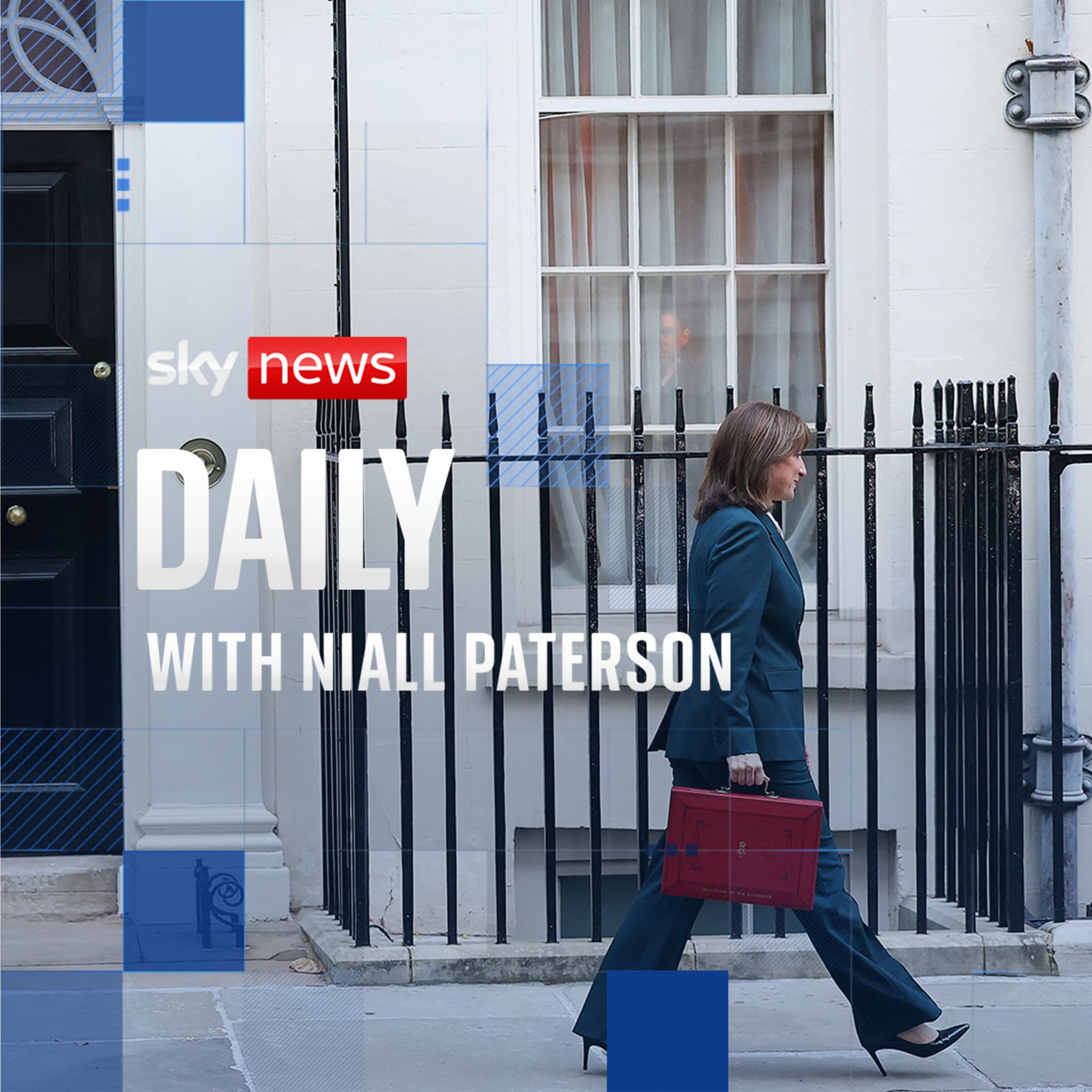
A breakdown of the UK Budget 2025’s winners and losers, using consumer impacts and the leaked OBR forecast controversy as context.
Guests
Consumer expert Iona Bain (14 years covering UK budgets; previously discusses market/bond reaction and household effects).
Key claims
A major OBR document leak before Rachel Reeves’ Commons statement triggered “pandemonium” and a bond-market shock (gilt yields briefly fell). For lower-income families, lifting the two-child benefit cap and uprating benefits with inflation help, but energy relief may be offset by possible increases in the energy price cap. Most working and retired people face higher taxes, especially due to income tax threshold freezes extended one year longer than expected. Pensioners may face a future “ticking time bomb” as state pension rises under the triple lock toward the personal allowance. Business faces continued pressure from policy and confidence damage, including prior national insurance rises. Higher-value homeowners face a “mansion tax” via a 4.5% surcharge on homes above £2.5m, delayed for implementation.
Notable examples
Thea, a 40-year-old single mother with three children whose childcare consumes her after-tax £2,800/month; Cathy Price, running a 60-staff cleaning firm struggling with recruitment despite paying above minimum wage; Sue, a retired civil servant in Stockton-on-Tees concerned about pensioners and disabled people.
Written by AI. May contain mistakes. Listen to the episode to check what was said.
Chapters
Tap a time to open that second in VOThe Budget Leaks and Reactions
0:40 to 3:37
Exploring the chaos surrounding the budget leaks and initial reactions.
“Talk about a rough day at the office for budget responsibility.”
Winners and Losers of the Budget
3:37 to 5:26
Discussion on who benefits and who loses from the new budget announcements.
“Let's start with the winners and there was quite a bit in there I would say for lower income families.”
Pensioners and Tax Implications
5:26 to 7:22
Analysis of how the budget affects pensioners and their tax situation.
“And this will affect people right across the income scale.”
Impact on Small Businesses
7:22 to 9:16
Investigating the budget's effects on small businesses and minimum wage.
“When actually just because it's not necessarily something that's being felt by consumers and workers in the here and now and there might not be as much of a political hit.”
Pensioners' Financial Landscape
9:16 to 14:00
In-depth discussion on pensioners' financial situations and potential tax burdens.
“Budget days tend to be dense with detail and I always end up feeling rather more dense by the end of them.”
Wages and Pension Impacts in Budget 2025
14:00 to 16:20
Discusses the implications of wage increases and pension adjustments in the budget.
“So this year, the highest of those three things was wages and those were up 4.8%.”
Transcript
Automatic transcript. May contain errors.0:00Coming up, the budget. Rachel Reeves says it's both fair and necessary. So how will it affect you? How does a banana trigger a CIA-backed coup? Do AirPods herald the arrival of a new global order? What do LED lights say about the future of humanity? I'm Ed Conway, and in each episode of my new podcast, Stuff Matters, I take an object, crack it open, and reveal the world-shaping forces hidden inside. This is economics told through the things we think we understand. Search Stuff Matters on your podcast app to listen and follow.
0:40Talk about a rough day at the office for budget responsibility.
0:44Iona Bain:Madam Deputy Speaker, it is my understanding that the Office of Budget Responsibility's Economic and Financial Outlook was released on their website before this statement. This is deeply disappointing and a serious error on their part. The Office for Budget Responsibility have already made a statement taking full responsibility for their breach. Potentially the only person having a worse day than Rachel Reeves was the OBR employee who accidentally leaked the entire content of the budget more than half an hour before she got to her feet in the comments. I was actually watching PMQs, which always traditionally comes before the Chancellor's statement.
1:25what was striking was the number of MPs ignoring the Prime Minister, superglued to their phones, doom-scrolling through the OBR's assessment of the Reeves budget. So, in the end, was this her finest hour or just one last roll of the dice? What Rachel Reeves announced in the Commons certainly seems to have pleased MPs, on her side anyway. The people who really matter, though, exist outside the Westminster bubble. Today on the podcast, we want to explore what all the numbers and graphs and policy announcements actually mean for you. We've brought together a business owner, a pensioner, a single mother and more to put their concerns to consumer expert Iona Bain, who joins us now.
2:06Iona, great to have you on the Sky News Daily. And look, on occasions like this, we do tend to focus on the winners and losers, those who do better, those who do worse. I'm just wondering if perhaps Rachel Reeves might ultimately be the loser today after whatever happened down at the Office for Budget Responsibility.
2:23Iona Bain:Yeah, it was quite the shocker, Neil. I mean, I was away from my desk actually grabbing some lunch in the half an hour to hour before the budget thinking nothing will happen at this stage. It's the calm before the storm. I get back to my desk. It's absolute pandemonium. I mean, in the 14 years I've been covering budgets, I've never seen pretty much everything leaked out just beforehand. so there'll be a lot of red faces at the OBR and you could see that Rachel Reeves was understandably pretty livid. Do you think there will be anything more though than red faces? I mean fundamentally this doesn't look good for the Chancellor or indeed for the OBR but are there I suppose any real world consequences from it?
2:59Iona Bain:I think there was certainly a concern that leaking all that information beforehand could have a big impact on markets and we did actually see a real shockwave through bond markets with guilt yields going down, but then they settled after that. We knew a huge amount that was going to be announced by Rachel Reeves in the weeks and days beforehand anyway. So the fact that pretty much all of it was leaked out an hour beforehand might not make that much of a difference, certainly to the general public. And we will be hearing from the general public very directly in just a few moments. We've got a few people with some very pressing issues that they'd like to get your advice on.
3:34But let's start with your individual take, Iona. Winners and losers. Let's start with the winners and there was quite a bit in there I would say for lower income families.
3:43Iona Bain:We knew in advance of the budget that Rachel Reeves was going to lift the benefit caps for anyone who's claiming benefits who has more than two children so that means that if you have a bigger family then you would be able to claim benefits like tax credits and universal credit on behalf of those subsequent children. We also heard that the benefits that people claim would rise in line with inflation next year. So the idea behind that is that benefits would keep in line with the cost of living. Now, whether or not families will feel like what they're receiving in terms of universal credit or other legacy benefits is actually keeping up with the cost of living.
4:25Iona Bain:I think that's up for debate. If you look at individual things like food and energy, it's certainly true that lots of those families will be feeling like bills are still incredibly high and it didn't look like in this budget that there was going to be much of a reprieve on that front. We did have this announcement of levies being removed from energy bills and that would on average cut£150 from energy bills from next April. But I'm a little bit sceptical about whether or not we are actually going to see energy bills come down or not because it depends on what happens to the energy price cap which could go up next year.
5:00People are going to be paying more tax pretty much across the board. Just explain exactly what was going on there. I mean the way that the Chancellor framed this in her statement was, look, we all have to do our bit, but presumably some people are doing their bit more than others.
5:14Iona Bain:I think the bottom line is most people who are working and in due course, most people who are retired are going to end up being taxed more on what they take home and what they earn. And this will affect people right across the income scale. And the thing is, with any kind of tax rise, is that even if you're on a low income and the sums on paper don't look very high, that is still, you know, maybe 100, 200, 300 pounds, not in your pocket that you could really do with. And I think what was the big shock after the budget was leaked out beforehand was that actually this freeze in the income tax thresholds is going on one year longer than everybody expected to.
5:58Iona Bain:That's really going to magnify the effect on households. And if I can just give a shout out as well to pensioners, because I think this is where there could be a bit of a ticking time bomb for Rachel Reeves. As things stand, if you're just getting income from the state pension when you're retired, then no, you're not going to be taxed because you'll still be getting the state pension within your personal allowance. But in years to come, you will bust through that personal allowance if you're retired. I wonder whether it's going to be unpopular with everyone else. I mean, pensioners either fall into one of two categories.
6:29You know, they're great as a source of free weathers, originals and free childcare, care or they are ultimately responsible for all the problems that we have in our economy. What action did we hear today from the Chancellor when it comes very specifically to what pensioners receive?
6:43Iona Bain:I think a lot of pensioners will be or at least should be actually breathing a sigh of relief because there were a lot of rumours in the run-up to this budget that there could be a cap on withdrawals from pension pots each year in terms of the tax-free lump sum that people can take from their pension pots when they retire. And that actually prompted a lot of pensioners to withdraw that money in a bit of a panic against the advice of experts, I should say. And maybe a few of those people are now regretting making that decision. But I think it does reflect a sense in the pensions industry that actually too often chancellors look at pensions as an easy way to find revenue.
7:22Iona Bain:When actually just because it's not necessarily something that's being felt by consumers and workers in the here and now and there might not be as much of a political hit. The problem in our country is that we don't have people saving enough for retirement, even if they are automatically enrolled into their workplace pension. So anytime you fiddle about with pensions, you do somewhat damage trust in the system and you make it harder to convince people to take responsibility for their own retirement. In overall terms, I mean, if you are a saver, if you are diligent, if you take advantage of ISAs and the rest of it, I mean, this wasn't necessarily the best budget for you either.
7:54Iona Bain:No, although I think to be fair, you do have to be saving quite a lot of money every year to be feeling that cut in the cash ISA allowance that Rachel Reeves did announce today. So if you are able to save£20 ,000 in cash every year, that's a very good position to be in. Tax the rich seems to me rather more a Labour mantra when they're in opposition than when they're in government. But was there anything in the budget today that falls within that sort of definition? I think it's fair to say that the mansion tax, although that's not what Rachel Reeves called it, but Rachel Reeves is hoping that people will interpret this mansion tax as a way for people with higher value homes to bear the burden of this particular budget.
8:35Iona Bain:I think it's quite interesting that the mansion tax, as well as a lot of other things that were announced in today's budget, are not going to be coming down the track for a couple of years, actually. So that should give the system enough time to figure out how to put this mansion tax into place, which, of course, is 4.5 % surcharge effectively on homes that are above the value of 2.5 million. And it's much more for the homes that are higher value even than that. And I think one of the big problems that we have with budgets these days is that I'm not sure that we can be entirely confident that we'll go through with a lot of these tax changes, these surcharges and these measures that can be unpopular.
9:15Iona, let's both of us just draw breath for a second. Budget days tend to be dense with detail and I always end up feeling rather more dense by the end of them. So let's delve in very specifically to a couple of very individual issues. We're going to start with someone called Thea and she is a single mother. I'm 40 years old, I have three kids and I work full time My salary, which is after taxes,£2 ,800 a month is swallowed whole by my childcare expenses And then of course on top of that we have rent, gas and electric and all the other bills, council tax, etc Iona, we really don't seem to use the phrase as often as we used to but we remain in a cost of living crisis, don't we?
9:55And the removal of that two-child benefit cap is going to be hugely, hugely beneficial to some but perhaps balanced out by that income tax threshold shenanigans.
10:05Iona Bain:Yes, absolutely. And some charities are arguing today that actually, because of the overall cap that there is on the amount that you can claim in benefits, that actually some of the poorest families who would otherwise benefit from this lifting of the two-child benefit cap are not actually going to benefit after all. So I think that that's possibly one to watch in terms of how many families will actually see a benefit from this particular policy change. Iona, let's turn our attention now to something actually which we probably should discuss quite a lot more and that's changes to minimum wage.
10:37I'm Cathy Price. I've been running a cleaning company since 2009, Clean Shield Professional Limited.
10:44Iona Bain:We employ about 60 staff. I don't think we're looked at or recognised by the government. I think they look at bigger businesses. You know, I'm at the end of my career. I'm wanting to pass it down. to my family. And I just feel that I'm handing over something that's going to become impossible to run because we are struggling to get staff. Although I pay minimum wage, I do pay above minimum wage as they work their way up. Look, Iona, we have heard for a number of years, but particularly recently, about this fundamental lack of productivity that exists in the British economy. People do tend to cheer when there's a rise in the minimum wage.
11:28But are we going to see that resulting in anything other than diminished corporate profit?
11:32Iona Bain:It's always an easy win for a chancellor because when they raise minimum wage, of course, it's not the government that has to foot the bill for that. It doesn't have to fund that from taxation. Of course, on paper, this looks like the right thing to do, but the impact of that falls on business that is really struggling, especially those smaller businesses, maybe those businesses that can't afford to pay that much more than the minimum wage. And I'm just trying to keep going. I suppose what Cathy's point, and indeed your response reminds us, is that whilst we often treat these big budget events as standalone events, you've got to see them through the prism of everything that Rachel Reeves has done up until this point.
12:07You're talking about business, the national insurance rise in terms of employer contributions. I mean, was this a pro-business budget, do you think?
12:15Iona Bain:I think Rachel Reeves would definitely like businesses to think that she has gone easier on them compared to last year. But the truth is that the environment out there for business is still just really difficult. And many companies and the leaders of those companies that I speak to really wish that that national insurance rise had not happened, that it has been a bit of a break on growth within their company. and the last few months of pre-budget speculation about what Rachel Reeves might or might not do, that that in and of itself has been quite damaging to business confidence as well. I'm going to let's consider people now who are out of work and into retirement.
12:52And for that, we're going to head north.
12:53Iona Bain:I'm Sue. I live in Stockton-on-Tees. I'm actually a retired civil servant. My last job was in Whitehall. She's not doing anything for growth. She needs to do things for growth. I don't think she should come after pensioners or the disabled. which is the first thing she did when they came into office, which was so unlabeled. Iona, kind of a general question arising from Sue's point. I mean, are pensioners better off or worse off as a result of this budget? I think something that we should definitely keep our eyes on is how many pensioners are going to end up paying tax on their pension income. So what people might not realise is that actually your state pension is taxable.
13:38Iona Bain:So you do get the personal allowance like everyone else, which is£12 ,570. And this is the amount that you can earn or you can receive from your pension without having to pay tax. Now, we have a situation at the moment where the state pension is going up every year in line with the triple lock. And this is a guarantee to raise the state pension by the highest of one of three things, inflation, earnings or 2.5%. So this year, the highest of those three things was wages and those were up 4.8%. So that's how much estate pension will be going up next April, which looks like great news for pensioners, except it puts them within touching distance of the maximum of their personal allowance.
14:23Hey, who knows? At some point, we might have a Chancellor who actually talks about doing something with the triple lock at some point. I'm not holding my breath just yet.
14:29Iona Bain:Well, yes, although it is such a controversial debate, the architect of the triple lock only this week, Sir Steve Webb, who was the pensions minister in the coalition government when it was introduced, he made a very cogent argument that it has helped to reduce pensioner poverty. But certainly, if we're going to be discussing all the different areas of public expenditure that need to be considered in these tough times for the public finances, maybe the triple lock shouldn't be completely off the table. Iona, let's wrap this up with what the Chancellor hoped to achieve today. I mean, ahead of her speech, she said that what she was going to be announcing would be fair and necessary, that it would go some way to addressing the cost of living crisis.
15:08How successful do you think she was?
15:10Iona Bain:She wants to really, really convey the argument that actually those who are on benefits, those who are struggling with their household bills, people who rely on their cars to drive to work, as we saw with the 5P duty cut being maintained, these people will hopefully not feel like they have been punished and will hopefully feel like they are, you know, able to breathe a sigh of relief. And it's those folks who maybe can afford to shoulder the burden more that will feel the biggest impact from today's budget. But essentially, they can take it. Unfortunately, we have this big elephant in the room, which is the freezing of the tax thresholds.
15:46Iona Bain:And Rachel Weaves had to acknowledge it in her speech today that she is asking pretty much everybody to chip in and to contribute. And that was code for actually most of you are going to feel tax rises. Even if it's not an explicit tax rise, it's one that you will nonetheless have to face in the next five years. A lot will ride on how we talk about this budget in the days and weeks and months to come and whether the public can really get this idea that actually everybody is going to have to pay for what's been decided today. We will find out. Iona, thanks very much indeed. And that's a lot for this edition of The Daily.
16:24For the very latest on what is in the budget, what it means for you and what happens next, Just head over to the website, skynews.com. We'll see you again tomorrow.
16:59This is economics told through the things we think we understand. Search Stuff Matters on your podcast app to listen and follow.
From the publisher
Will you be better or worse off than you were before Chancellor Rachel Reeves announced her tax and spending plans in her long-awaited budget?
From the minimum wage and scrapping of the two-child benefit cap to ISA caps and tax threshold freezes, Niall looks at how the budget will impact you with personal finance expert Iona Bain.
Producers: Tom Gillespie and Araminta Parker
Editor: Wendy Parker