
In short
After a ceasefire in Gaza, violence continues as Hamas tries to reassert control while rival clans and militias fight for territory, including groups allegedly supported by Israel; the episode frames this as “divide and rule” and links it to aid distribution and the stalled Trump “20-point peace plan.”
Guests
Dominic Wagon, Sky News international affairs editor in Jerusalem; Ben van der Merwe, Sky News digital investigations journalist in the studio; Sam Rose, UNRWA Gaza director (interviewed).
Guest backgrounds
Wagon covers international affairs from Jerusalem; van der Merwe leads data/forensics and digital verification; Rose is a senior UNRWA official focused on Gaza aid operations.
Key claims
Israel withdrew from about half of Gaza, leaving a vacuum; Hamas is weakened but is fighting rivals; at least one militia (Yasser Abu Shabab, Bedouin from southern Gaza) opposes Hamas and has received support from Israel; UN reporting says the group looted aid trucks; Gaza Humanitarian Foundation (US-backed) supplied them food after UNRWA distribution points were closed.
Notable examples
TikTok/Instagram videos showing mansions, fresh food, cash, cigarettes, iPhones, and vehicles; battles around the Jordanian Hospital; Hamas summary executions and mass shooting footage; Israeli soldiers’ claims (Mako) that weapons/vehicles supplied to clans were seized by Hamas.
Written by AI. May contain mistakes. Listen to the episode to check what was said.
Chapters
Tap a time to open that second in VOContext of Ceasefire and Ongoing Violence
0:31 to 1:15
Discussing the current situation in Gaza amidst a ceasefire.
“How does a banana trigger a CIA-backed coup?”
Anti-Hamas Militias in Gaza
1:15 to 1:40
Exposing the rise of anti-Hamas militias operating within Gaza.
“Hi everyone, today on The Daily I want to take you inside Gaza.”
Territorial Changes in Gaza
1:40 to 2:13
Explaining the territorial changes in Gaza and the impact on control dynamics.
“Now look, clearly there have been gunshots fired by the Israel Defence Forces.”
The Role of Clans and Militia Groups
2:13 to 3:20
Analyzing the emergence and role of clan groups fighting against Hamas.
“Our digital investigations journalist Ben van der Merwe is with me in the studio.”
The Militia Group's Ideology
3:20 to 4:20
Exploring the ideological backgrounds and motivations of militia groups.
“is mainly Hamas fighting what are called clans or tribal groups and militia.”
Hamas's Control Over Gaza
4:20 to 6:00
Discussing how Hamas has historically maintained control over Gaza.
“For the past two years, cigarettes have not been allowed into Gaza.”
Israeli Support for Rival Groups
6:00 to 7:05
Investigating claims of Israeli support for groups opposing Hamas.
“And then since then, it has ruthlessly suppressed any kind of opposition, any challenge to its rules.”
Challenges of Reporting from Gaza
7:05 to 8:00
Understanding the difficulties faced in reporting on the ground in Gaza.
“So now Hamas is now trying to re-establish its control and it is being challenged by, in the area that it, or the area that the Israelis have pulled out from, most of all by the Dogmush clan, the northern end.”
Public Sentiment Towards Hamas
8:00 to 9:10
Exploring divided opinions among Palestinians regarding Hamas's rule.
“But what's interesting is that aside from the group that's part of the Dogmush clan in Gaza City, these other four, they are all based within the zone that Israel still controls.”
International Response and Aid Dynamics
9:10 to 10:30
Discussing the international response and aid flow into Gaza.
“in Gaza and the Palestinian Authority in Fatah on the West Bank.”
Show all 13 chapters
Trump's Peace Plan and Its Challenges
10:30 to 11:30
Examining Trump's peace plan and its implications for Gaza.
“into Gaza so how have you been able to identify these groups, identify individuals within them with whom to speak and then verify that what they're telling you is actually accurate?”
Current Situation in Gaza: Aid and Militias
14:03 to 16:40
Explore the complex relationship between aid distribution and militias in Gaza.
“They're that enthusiastic about the idea of an international force going in.”
Implications of Trump's Peace Plan
16:40 to 19:46
Discuss the potential outcomes and challenges of the Trump peace plan for Gaza.
“The breakdown in law and order inside of Gaza is, of course, a concern and something that we're all watching very carefully.”
Transcript
Automatic transcript. May contain errors.0:00How does a banana trigger a CIA-backed coup? Do AirPods herald the arrival of a new global order? What do LED lights say about the future of humanity? I'm Ed Conway, and in each episode of my new podcast, Stuff Matters, I take an object, crack it open, and reveal the world-shaping forces hidden inside. This is economics told through the things we think we understand. Search Stuff Matters on your podcast app to listen and follow.
0:30Ben van der Merwe:Coming up on the Sky News Daily, a ceasefire might be in place, but the violence hasn't stopped inside Gaza. Why? How does a banana trigger a CIA-backed coup? Do AirPods herald the arrival of a new global order? What do LED lights say about the future of humanity? I'm Ed Conway and in each episode of my new podcast Stuff Matters I take an object, crack it open and reveal the world-shaping forces hidden inside. This is economics told through the things we think we understand. Search Stuff Matters on your podcast app to listen and follow.
1:14Ben van der Merwe:When is a ceasefire not a ceasefire? Hi everyone, today on The Daily I want to take you inside Gaza. Not literally, of course, we are still barred by Israel from entering unescorted. But Sky News has spoken to members of anti-Hamas militias operating from areas still controlled by Israel. They say they've no intention of laying down their arms and plan to fight Hamas till the end. Now look, clearly there have been gunshots fired by the Israel Defence Forces. But we're also seeing Hamas trying to re-exert its grip on Gaza. There have been summary executions. There have been battles with other militia groups vying for control.
1:55Ben van der Merwe:Our investigations have revealed those groups are operating in Israeli-controlled territory. And at least one is receiving direct support from Israel. So, who is currently running Gaza? And what does that mean for peace? Dominic Wagon, our international affairs editor, is in Jerusalem. Our digital investigations journalist Ben van der Merwe is with me in the studio. To you first, Dom. Look, Gaza has clearly changed significantly over the past two years, and even since the ceasefire was announced. So what does the strip look like now?
2:27Dominic Waghorn:Yeah, so I think most people have got sort of somewhat used to the geography of Gaza. It's about 25 miles long and about four to eight miles wide. What's happened under the Trump 20-point peace plan is Israel has withdrawn from about half of the territory that they have been occupying during the last two years. They've withdrawn to the kind of eastern half of that narrow strip, but they've also kept the northern bit, a small strip on the north, and also in the south around the Rafah crossing. So the Israelis have about 53 % of the territory. And what they've left, Hamas is clearly now trying to take control back of because Israeli troops aren't there anymore.
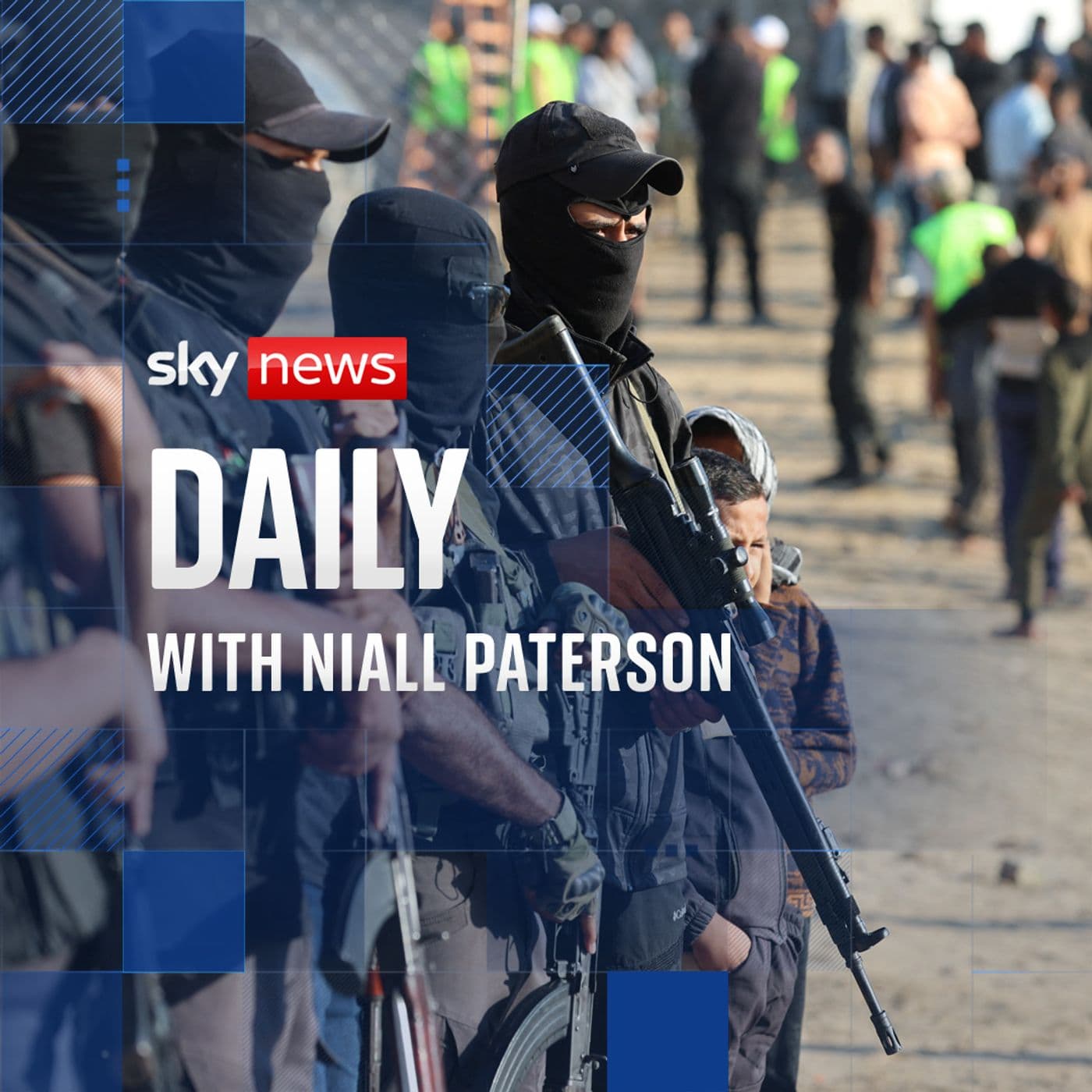
3:06Dominic Waghorn:and in that area Hamas has been fighting with clans and militia and in the area the Israelis now still control a number of clans and militia have kind of popped up so instead of Israelis fighting Palestinians Palestinians are now fighting Palestinians across bits of Gaza that is mainly Hamas fighting what are called clans or tribal groups and militia.
3:29Ben van der Merwe:Ben let's bring you in I mean I have to admit that the existence of militias of clans of family groups taking on Hamas has been a bit of a revelation to me. So who are we talking about? There are not only Palestinians on the Israeli side, but armed Palestinian groups operating with military bases, with heavy equipment. And presumably, therefore, with the knowledge of the Israelis. So in the case of at least one group, we have quite a lot of information about their relationship with the Israelis. This is the group led by a man called Yasser Abu Shabab, who is a Bedouin from southern Gaza. And basically, they have taken control of a small slice of territory in Selangaza, sort of nestled in amongst all these destroyed buildings and rubble fields on the outskirts of Rafa.
4:13And if you look at the videos that their fighters post on TikTok, on Facebook, on Instagram, it's a completely different world from the rest of Gaza. There's these beautiful mansions. They have a huge amount of fresh food. They have lots of bundles of cash. They have cigarettes. They have the newest iPhones. They have brand new vehicles. For the past two years, cigarettes have not been allowed into Gaza. New vehicles have not been allowed into Gaza. Phones are something that Israel has banned from importing into Gaza. So what we were looking at is whether Israel is really supplying these militias as a sort of proxy force to take on Hamas.
4:52Ben van der Merwe:This group, ideologically, what do they think of Hamas? The group is very strongly opposed to Hamas. And some of their members have a long history of antagonism to Hamas. but they come from different political traditions. Some are former members of Fatah, the sort of main secular rival to Hamas that runs the West Bank. And in fact, the group claims to receive support from the Palestinian Authority there in the West Bank. Other members of the group, we found at least one member who was a fighter for the Islamic State back in 2015, 2016, although he claims to have left that past behind. What seems to unify them really is an opposition to Hamas, but it should be noted that they didn't begin as an ideological project.
5:33They began as a looting gang. There's an internal UN report that we obtained from late last year, which describes this group as the main people looting aid trucks on this route through southern Gaza from the Kerem Salaam crossing, which is where almost all aid has been entering Gaza. Dom, I thought Hamas was in complete control of the Gaza Strip.
5:54Dominic Waghorn:It is a complicated situation in Gaza, but you have to go back to 2007, where Hamas violently overthrew the control of the more moderate FATA faction in Gaza and took complete control of the Gaza Strip. And then since then, it has ruthlessly suppressed any kind of opposition, any challenge to its rules. And then it has kept control using pretty sort of brutal methods, throwing people off the roofs of buildings, summary executions in the streets and the rest of it. But obviously, it has lost that control during this two-year occupation and the Israeli offensive and it has been massively weakened and so other groups have always existed there and they have been as ben was saying there anything from militia to families criminal gangs there's the dogmooch family who are in gaza city and they've always been a group a sort of clan that has been a kind of rival to hamas that has been tolerated and now that group has popped up again and been fighting with hamas so effectively and if you're wondering why hamas has not got control.
6:55Dominic Waghorn:It's because Israel has massively weakened it. And in that kind of vacuum, then these other groups have re-emerged and some new groups have popped up as well. Some of them actively supported by Israel. So now Hamas is now trying to re-establish its control and it is being challenged by, in the area that it, or the area that the Israelis have pulled out from, most of all by the Dogmush clan, the northern end. We've been talking to the head of that clan. And he said, told us about a battle that has been waged, a very fierce battle around the Jordanian hospital towards the northern end of that area that the Israelis have pulled out of.
7:31Dominic Waghorn:And he said that he couldn't understand why Hamas has been destroying buildings. He said, I understand it when the Israelis are doing that, they're trying to force people out, they're trying to displace us. But why on earth would our Palestinian brothers be doing it as well? So it's a complicated picture, but it's at the bottom line, effectively, is Hamas is trying to regain control of Gaza and there are various groups who aren't happy with that. There's a few other groups that have become sort of increasingly prominent in the last few months, sort of spread all around from north to south of the Gaza Strip.
8:02But what's interesting is that aside from the group that's part of the Dogmush clan in Gaza City, these other four, they are all based within the zone that Israel still controls. So in the far north, we've got a group which is based out of an abandoned school. They claim to control quite a lot of territory in the north, but we've not seen any evidence actually of them moving sort of more than 200 meters away from this school. Further south, there's a group that we spoke to who claim to have a thousand men. Again, we don't have a confirmation of those numbers. And then there's another group in Khan Yunus, which is much more secretive and about which very little is known.
8:40Ben van der Merwe:Dom, look, I kind of feel we often gloss over this point. I mean, you've made it already. Israel is supporting these groups. I mean, how do we know that?
8:48Dominic Waghorn:Well, it's divide and rule. And that's obviously a principle of warfare and control that runs through history. And Israel has been using that and it's used it to kind of avoid the possibility of the Palestinians getting their act together so they can have a state, something that Netanyahu is opposed to. He's opposed to the two-state solution. So Israel withdrew from the Gaza Strip, arguably its critics would say, so that Palestinians were divided forever between Hamas in Gaza and the Palestinian Authority in Fatah on the West Bank. And that principle of divide and rule Netanyahu has openly admitted is still being applied and actively being applied during this war.
9:27Dominic Waghorn:And it's clear that they have been funding and arming various groups. And there's been, It seems disquiet in the Israeli military about that. And on Mako, one of the Israeli digital news websites, there are claims from Israeli soldiers that Hamas has succeeded in seizing dozens of pickup trucks, weapons and ammunition that Israel supplied to clans since the ceasefire. One of the Israeli officers quoted on this website says they silenced all opposition to the clans project. that's what he calls this effort to give weapons and money to some of the clans in gaza by the israelis it was clear that this would be a failure we'd pay for and because of pressure from the political echelon we fell in line so obviously this has been going on not all israeli soldiers and commanders have been happy with it and you know in the minds of these uh israeli military sources who are critical of it has backfired because it's given weapons and and uh vehicles our money to Hamas now that Israel is pulled out of part of Gaza.
10:29Ben van der Merwe:Ben, right now we're not allowed into Gaza so how have you been able to identify these groups, identify individuals within them with whom to speak and then verify that what they're telling you is actually accurate? I mean it is very difficult without international access to Gaza. I mean obviously we have journalists there but their mobility is very limited and they can only do so much. So a lot of what we've been reporting has been relying on social media posts by sort of members of these militias, by people who've witnessed these events, and then us in the data and forensics unit, sort of checking that these videos are from where they say they are, locating them, making sure that they're not old videos from some other conflict.
11:10And a lot of it is sort of finding people online to talk to who may have witnessed these events. So going through sort of thousands of different contacts that we've accrued and reaching out to people in the hopes that someone might have seen what we're looking into.
11:25Dominic Waghorn:Just to add to what Ben is saying there, we've obviously been talking to our team in Gaza and the sort of picture they are telling us about is a kind of a sense of sort of divided opinion really in Gaza. There are those who see Hamas as, even if they don't like Hamas and they don't like its Islamist rule, they see Hamas as the best chance of restoring some kind of order in Gaza. And they say they're coming out on the streets, they're going back to policing traffic. And in a sense, their fighters are reassuring, because there's been a huge amount of crime and chaos and, you know, dangerous things going on.
12:00Dominic Waghorn:On the other hand, they don't like the fact that Hamas have been out destroying buildings, having these battles with the Dogmush clan, for instance, but also out executing people. And in terms of the video we've seen from Gaza, and there's Not a lot of it, but we have seen video of Hamas fighters, one horrific bit of video of a Hamas fighter getting a Palestinian, shooting him in the leg. You hear him screaming in pain and then really disturbing video of a mass, a multiple execution squad. So people lined up, forced to their knees and being shot in the back of their heads. Footage that's too grisly to show in its entirety on TV.
12:38Dominic Waghorn:So, you know, there's a lot going on. And I think on the one hand, Palestinians are really desperate to have this international security force that has been promised under the Trump 20 point peace plan. But in the meantime, while that is not materializing, they do want to see some kind of return of law and order to the streets of Gaza.
12:55Ben van der Merwe:What has been the response to the current violence from the White House? We know that Donald Trump is desperate for a Nobel Peace Prize for him to get one. He probably needs his peace plan to advance beyond its initial stage.
13:07Dominic Waghorn:Yeah, and I think under the 20-point peace plan, obviously there is this provision for an international security force to be including members of the French military, the Indonesian military, members of Arab militaries. I have to say, you know, a year or so ago, that would have been a non-starter. But because Donald Trump has been able to gather so much momentum diplomatically as part of his peace process, we have a number of countries signed up to it. But it looks like we're months away from that force being sent into Gaza because it's got to be formed, it's got to be trained, it's got to have a clear mission.
13:43Dominic Waghorn:And in those months, there's obviously a huge danger of chaos or just the vacuum being filled by Hamas. And there's a big question mark, I think, over whether Hamas will allow this force in. And the Hamas officials that have been interviewed on Sky News have said that Palestinians have got to run Gaza. And they don't look like that. They're that enthusiastic about the idea of an international force going in. In terms of what Donald Trump has said, he actually said originally a few days ago, he said he is aware of Hamas carrying out military operations. He kind of acknowledged that that's going on almost, it seems, with American approval, because he says some very nasty groups had to be dealt with.
14:24Dominic Waghorn:but asked most recently about it and he said that they have to disarm, they will disarm, and if they're not prepared to disarm, they will be forced to. Not quite clear what that would involve, almost certainly not the American military disarming them, but he does seem to be increasingly impatient about the fact that Hamas is still armed and still carrying out military activity in Gaza.
14:45Ben van der Merwe:We know, of course, that aid is going into Gaza right now, perhaps not at the level that some would want, but it is. You mentioned before that at least one of these groups evolved from being a looting gang. I'm wondering what the relationship is between these militias and the aid that's currently going in. One of the other things we know about this group is that they received their food from the Gaza Humanitarian Foundation. That is a US-backed aid group, supposedly impartial, which came in after Israel forced UNRWA, the UN's refugee agency, to close all its hundreds of distribution points that it had around Gaza.
15:24And Gaza Humanitarian Foundation, GHF, instead they've been sort of distributing aid from just a few distribution points, mainly in the south of Gaza, very heavily militarized, and hundreds of people have been killed seeking aids at these sites. So it's been very controversial, even before we revealed that they were supplying this militia with food. One of the questions is whether if aid surges in, the price of food falls, and any income that these groups receive from smuggling or rooting would be diminished. And that's what Sam Rose, the Unruh's Gaza director, told us.
16:00Ben van der Merwe:Yeah, Dom, you were speaking to him. I mean, what are they saying about the current situation?
16:03Dominic Waghorn:Yeah, Unruh is one of the sort of great punch bags of Israeli politics, and it's been blamed for being riddled with Hamas members. It's banned under Israeli law now from operating or getting aid into Gaza. It's sort of officials are now having to speak from outside Gaza. But what Sam Rose was saying, telling us from UNRWA, is that they have a lot of aid waiting to go in. They're not able to take it in themselves. They're going to have to use other aid agencies to take it in. And the fear for them is that if it goes into lawless areas where there's fighting, it's very hard for them to operate. You can't send aid into areas where there's a battle going on.
16:37Dominic Waghorn:So that's a concern. but I think also he was keen to put it into some perspective.
16:42Ben van der Merwe:The breakdown in law and order inside of Gaza is, of course, a concern and something that we're all watching very carefully. Quite frankly, it's the last thing that anyone needs right now, particularly the people of Gaza, given what they've gone through. But I think the bottom line right now is that we've gone from a situation where, you know, 100 people on average pretty much were being killed every single day. We're seeing nowhere near like those levels of unnecessary violence and unnecessary killing right now. So, yes, it's bad that this is happening. We feared that it would happen. The release for people, the respite for people is massive, despite these concerns about the law and order situation and the gang situation on the ground.
17:25Dominic Waghorn:This is obviously a preferable state of affairs, but it's not ideal and it needs to be dealt with. And it's not quite clear how that happens under the Trump peace plan, which effectively put the easier bits of a peace deal, so the exchange of hostages for prisoners, a ceasefire and plans to send aid in, put that ahead of the trickier bits on how you actually guarantee and keep the peace in Gaza, both in terms of a ceasefire enforcing security force and a government for Gaza.
17:55Ben van der Merwe:What then does this actually mean for the Palestinians, for the peace process, for the two-state solution that has been much vaunted, that is presumed to come at the end of this?
18:05Dominic Waghorn:In terms of a two-state solution, that is the big imponderable and kind of question at the heart of the Trump 20-point peace plan. And when asked about a Palestinian state, he wasn't prepared to say he wants one. And there are lots of plans as to how Gaza's future is improved. and they seem to, in his mind at least, involve just a huge amount of money. We've had this week a report claiming that Tony Blair, Jared Kushner, the Saudis and the Emiratis have got a plan for Gaza where it becomes a tax-free coastal city. At the heart of it will be AI data processing centres, cloud computing centres and also a Tesla factory.
18:47Dominic Waghorn:And the point is, I think Palestinians we speak to say, it's great there's a lot of money potentially coming their way, but they can't be bought. And until there are plans that deal with their aspirations for self-determination, for a state of their own, these plans aren't going to go anywhere. And until, you know, the Trump team and the others supporting him get it, that, you know, it's about land as much as it's about money and improving the economy, there's a limit to how far that peace plan can go. And Donald Trump doesn't seem prepared to talk about a Palestinian state yet, not least because his Israeli ally, Benjamin Netanyahu, is opposed to the idea.
19:23Dominic Waghorn:So far, no real signs of that being sort of thrashed out in terms of the international diplomacy about Gaza at the moment.
19:30Ben van der Merwe:And Ben, until that point though, what are we going to be seeing on the ground? More violence, more deaths, more clashes. It certainly looks like it. These groups have told us that they have no plans of laying down their arms. They don't see the ceasefire as binding them. and they intend to fight Hamas to the end. My thanks to Ben and Dom, and you can read their full investigation over on the Sky News website. That's your lot for this episode of The Daily, however. We're back again tomorrow.
20:02How does a banana trigger a CIA-backed coup? Do AirPods herald the arrival of a new global order? What do LED lights say about the future of humanity? I'm Ed Conway and in each episode of my new podcast Stuff Matters I take an object crack it open and reveal the world-shaping forces hidden inside This is economics told through the things we think we understand Search Stuff Matters on your podcast app to listen and follow
From the publisher
With internal fighting and power struggles ongoing, can peace hold within Gaza for the Palestinians hoping to begin rebuilding their lives?
Dominic Waghorn, our international affairs editor, and digital investigations journalist Ben van der Merwe join Niall to explain who these groups are and what role they are playing.
Producer: Soila Apparicio
Editor: Mike Bovill