
In short
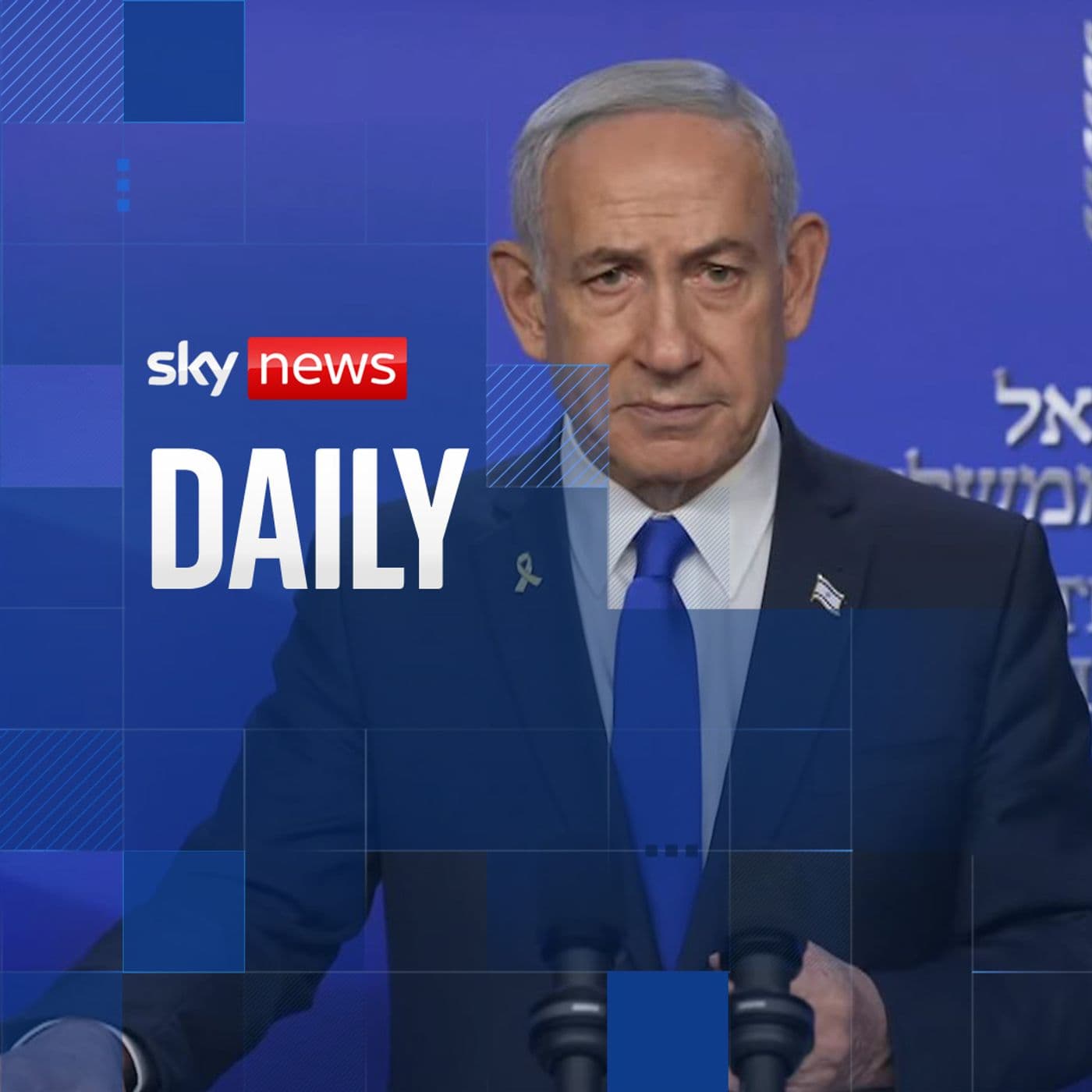
Whether Israeli Prime Minister Benjamin Netanyahu wants a “forever war” via a full-scale, long-term military occupation of Gaza, and what that would mean for security, hostages, and humanitarian conditions.
Guests
Yossi Mekelberg, professor of international relations and senior consulting fellow for Middle East and North Africa at Chatham House; Eya Damawi, Palestinian aid worker in Deir al-Bala, central Gaza.
Key claims
Israel already controls most of Gaza; full occupation would mean more troops, checkpoints, house raids, arrests, and policing rather than combat. Mekelberg argues it’s militarily possible but politically and practically unsustainable, risking long-term entrenchment and hostages’ deaths. Damawi describes daily hunger, displacement, and children collapsing.
Notable examples
need for 500–600 aid trucks/day vs far less; parallels drawn to Northern Ireland’s checkpoint-driven radicalization; IDF spokesman Nadav Shoshani denying famine risk and claiming aid has no limit.
Written by AI. May contain mistakes. Listen to the episode to check what was said.
Chapters
Tap a time to open that second in VOUnderstanding Military Occupation in Gaza
0:30 to 1:51
Exploring Netanyahu's push for military occupation and its implications.
“Coming up on The Daily, Israel's Prime Minister wants a full-scale military occupation of Gaza.”
Life Inside Gaza: An Aid Worker’s Perspective
1:51 to 3:20
An aid worker describes the dire humanitarian situation in Gaza.
“People are physically and mentally exhausted.”
Expert Insights on Military Control
3:20 to 5:38
Discussion with Yossi Mekelberg on what military occupation entails.
“Yossi Mekelberg is a professor of international relations and a senior consulting fellow for the Middle East and North Africa programme at Chatham House.”
Challenges and Risks of Full Occupation
5:38 to 9:07
Analyzing the feasibility and consequences of a full military occupation.
“What is the Israeli military's assessment of how potent a fighting force Hamas remains?”
Potential for Violence and Resistance
9:07 to 11:12
Possibility of continued violence and resistance under military occupation.
“I mean, we know from public opinion that most Israelis want to end the war and their priority is bringing back the hostages.”
Regional and Global Reactions
11:12 to 13:39
Exploring the potential regional responses to an official occupation of Gaza.
“But even we assume that there will be a reduction in that, this is going to be even harsher occupation to what we see in the West Bank, because the military would be afraid of what's waiting around the corner.”
US Politics and the Gaza Conflict
13:39 to 14:00
Discussion on the unpredictable stance of the US government regarding Gaza.
“I think so far the region has been relatively subdued.”
Analyzing the Future of Gaza's Occupation
14:00 to 16:53
Discusses the implications of a potential long-term occupation of Gaza and its impact on various stakeholders.
“I mean, it's often difficult to tell exactly where the White House's attention is these days.”
IDF's Stance on Gaza's Humanitarian Crisis
16:53 to 17:25
Explores the IDF's refusal to accept responsibility for the humanitarian situation in Gaza and their claims regarding aid.
“Well, for its part, the IDF refuses to accept responsibility for Gaza being on the brink of famine.”
Transcript
Automatic transcript. May contain errors.0:00Hello, Ed Conway here. Here is what might sound like a slightly random question. What do AirPods, bananas and a pair of shoddily made running trainers from the 1970s have in common? On the surface, not very much. But on my podcast, Stuff Matters, I will uncover the deeper stories behind each of them. You will see how together they tell a fascinating new story about the world we live in. The first full series of Stuff Matters is out now. Just search for it on your podcast app and follow. Coming up on The Daily, Israel's Prime Minister wants a full-scale military occupation of Gaza. What might that look like?
0:37And what does it mean for the people who actually live there? Hello, Ed Conway here. Here is what might sound like a slightly random question. What do AirPods, bananas and a pair of shoddily made running trainers from the 1970s have in common? On the surface, not very much. But on my podcast, Stuff Matters, I will uncover the deeper stories behind each of them. You will see how together they tell a fascinating new story about the world we live in. The first full series of Stuff Matters is out now. Just search for it on your podcast app and follow. Day after day, Benjamin Netanyahu has been calling for a full-scale military occupation of the Gaza Strip, which is not to say that the Israeli armed forces don't already control most of Gaza.
1:25Estimates vary, but certainly it's in excess of three quarters of it. So today on The Daily, we want to explore exactly what complete control might look like, how Israel might go about achieving and indeed sustaining that military occupation. Also, what it would mean for the people of Gaza, given the reports of disease, malnutrition and hunger. So in a moment, I'll be speaking to Middle East expert Yossi Mecklenburg from Chatham House. But what's it actually like inside Gaza right now? People are physically and mentally exhausted. And every day we face the risk of pumping, displacement or repeated expulsion and starvation.
2:06Eya Damawi is a Palestinian aid worker living in Gaza. He's in Deir al-Bala, central Gaza, actually the main hub for those humanitarian efforts. Even there, the situation is pretty desperate. We don't know how we are surviving. It feels like a daily miracle. Long lines, mothers crying, children collapsing from hunger and exhaustion. It's something you can never get used to. It breaks your heart every time. If Israeli titans its military grip even further, daily life will become almost impossible. There is hardly any space for life now. How can people live if even more restrictions, fear and pressure are imposed?
2:55It will crush whatever is left of hope or stability. And also the age situation would become catastrophic. Its entry will be even more restricted, possibly blocked or reduced to a trickle. That means more hunger, more diseases and slow death for thousands of families who already have nothing. It would be systematic, deliberate suffocation of people.
3:28Yossi Mekelberg is a professor of international relations and a senior consulting fellow for the Middle East and North Africa programme at Chatham House. Yossi, great to have you with us. Could you just describe what military occupation means? in the mind of Benjamin Netanyahu? If the military law is applied and the military is in control of the place and they assess the security situation, it means more troops on the ground, it means checkpoints, it means that the military can enter into almost any house at any time of the day and arrest people with quite devious illegal procedures. People are detained.
4:09And we see in the case of the West Bank that violence, whether by the militaries, in the case of the West Bank also settler, almost with complete impunity. And in the case of Gaza, maybe rebuilding the settlements there, and then almost the same playbook of the West Bank. So in your mind, Yossi, do you think it would be possible and practically possible for the Israeli military to occupy the whole of Gaza? Do they have the capacity to do so? I mean, they already occupy most of it. The fact of just having troops on the ground and take over, it's a tiny, tiny piece of land. We are talking about a quarter of greater London.
4:58We're talking about 360 square kilometers. and occupy most of it. The question is what are the implications of that? It means you need to control the population. If you occupy the place, it means it's your responsibility to look after the well-being of the population. We saw how badly Israel has done with either allowing international agencies to supply humanitarian aid, or in the case they will try with what they call the Gaza Humanitarian Fund. So then it's the complete responsibility of Israel to look after the population. What is the Israeli military's assessment of how potent a fighting force Hamas remains?
5:42I mean, actually, it's the IDF. And if you look, only this week, 600 former very, very senior security forces, Israel Security Forces, chief of staff, head of Mossad and Shabak said, As far as military campaign, there is no need to contain. Hamas is a much weaker force compared to what it was 22 months ago. And it's not worth actually continuing the world from neither tactical or strategic, however, because what's Israel going to achieve? basically engage and trench more in guerrilla warfare against Hamas. Most leadership has been killed. Probably around 20 ,000 Hamas militants been killed in the war.
6:35So even if you look at it from a pure military perspective, there is not much that Israel can achieve. On top of it, probably if there is a full occupation, the fate of the hostages is in great danger. I mean, we know that the IDF is against this idea of occupying Gaza. We've been hearing, haven't we, reports about the IDF chief of staff making clear that this is not something that they would necessarily wish to pursue. But they have, and they will, because that is their job. And I'm just wondering, when they do this, it certainly looks likely that this is what's going to happen. Is this an occupation that will hold in the long term?
7:19In Israel's strategy, always the idea was, is that short wars and not multi-front wars. And look what happened. 22 months in multi-front war, because this is a military that relied on conscripts and mainly on reserves. And those people that already served up to 400 and above days in 22 months are exhausted. And they are not interested. And the chief of staff and other generals thought that there is a huge risk of the military, of less and less people show up to reserves. Especially the nature of occupation is different from war, from fighting. It means you move from actually combat experience into policing experience.
8:10And that's usually soldiers don't like to do. It's more dangerous they are not gearing to do it, as they are not geared to deal with providing and distributing humanitarian aid. And that's what the idea, how long it can last. I mean, we see some, you know, wars don't come to an end anymore in modern warfare. They go on for forever. As long as there is no political solution, as long as the international community doesn't do enough beyond statements, including recognition of Palestinian statehood, which was important and a positive move, but there is not using their leverage to end it, I'm afraid we might have similar conversation in five and ten years.
8:57I know that that is why there has been that opposition from military and intelligence figures. But what of political opposition? Does that exist? I mean, is the Israeli public on side or not? I mean, we know from public opinion that most Israelis want to end the war and their priority is bringing back the hostages. There has been for a long while now and their demonstration. However, I think the public is exhausted. We see the fatigue when it comes to protest. There is fatigue there, which this government takes advantage to pursue this very extreme strategies or extreme ideology. I mean, is Benjamin Netanyahu, in proposing military occupation, granted military already controls most of Gaza right now, but in proposing this course of action, Is he in essence accepting that the hostages just aren't coming home?
9:54I think for Netanyahu, it's never been a priority. And some in his government, you know, from the ultra-nationalist, nationalist, messianic, they say openly that they are ready to sacrifice their hostages. They say if we need to release prisoners or not defeating Hamas or not occupying and building settlements, this is the price to pay. The covenant between Israeli governments since the establishment of the state was that if you're injured in a war, if you become prisoner of war or hostage, the government will do anything to release that. And there is no doubt that for Netanyahu, throughout this conflict, this was not a priority, which I think long term is going to have a huge impact on the Israeli society and also the readiness of young people to volunteer and serve in combat units.
10:51Yossi, can we talk about what practically all of this might mean for Gazans themselves? Well, I'm not so sure that occupation will end the violence, because I think Hamas will continue its guerrilla warfare and probably other organizations, because they won't accept the occupation. But even we assume that there will be a reduction in that, this is going to be even harsher occupation to what we see in the West Bank, because the military would be afraid of what's waiting around the corner. What would this occupation mean in terms of humanitarian aid? Would outside aid organisations be able to get in the United Nations, others, or does it then all fall to the military?
11:34if it's left for Israel again, military is not geared towards providing humanitarian aid they will have to find a way but we have to remember, at this point time is of the essence it's not that we can think let's build new structures build a new mechanism to do that, when we see the starvation within Gaza we are talking about the need of at least five, six hundred lorries a day. What we see is not even a fraction of this. So whether Israel can actually get its act together and provide under occupation, it's a question, but it will be risky for them too. And the minute it would become too risky, they probably would stop it.
12:26Yossi, a number of times during our conversation, my mind has gone to, you know, the situation that the British government was dealing with in Northern Ireland for a long time. And one of the things that we remember from the darkest days of the troubles was the radicalization that took place amongst young people who were living in that sort of environment. I mean, do we see something similar as taking place in Gaza? Without downplaying what happened in Northern Ireland, if you're talking already only in this last 22 months on 60 ,000 people killed, how many people lost their loved ones, losing everything in the process, no shelter, no education, no food.
13:06And at the end of the day, and this is the parallels with Northern Ireland, those who stand in the checkpoints are always your enemy. They stop you from going. They represent the country that occupy you. They represent those who stop you from going to medical treatment. They stop you from going to work. to stop you from visiting your family or going to your land to cultivate. They'll always be your enemy. And the more it's entrenched and the more the one side hate, the more it's radicalized. How is the rest of the region going to respond to that? I think so far the region has been relatively subdued.
13:43And I think the statement by the Arab League last week was an important one because it talks about the end of the war, it talks about the reconstruction, of Gaza, and also talk about the disarrant of Hamas, which is, I think, it's a breakthrough. So it's actually creating opportunity for Israel to end the war. If there is an occupation officially, because informally there is already an occupation of most of Gaza, but if the occupation and it looks more and more permanent, I think probably the Arab League would meet again and they will condemn it. I mean, it's often difficult to tell exactly where the White House's attention is these days.
14:24But is the United States going to be on side for this or not? It's so difficult to know what White House, or specifically President Trump, going to say because we see so many contradictory messages or messaging coming from the White House. And we know, like in the case with the war in Iran, when Trump wanted to bring it to an end, he did it almost instantly. It doesn't seem that he has the same appetite to end the war in Gaza. This will create the opening for the Netanyahu government, the current government, is probably to occupy it. And that's, I think, in the long term. It's a massive worry.
15:10And unless the rest of the international community won't respond to that, but in a strong manner, meaning with using its leverage, to stop it, I'm afraid that this might become a reality. Is there an alternative that is palatable to the Israeli Prime Minister, to the Israeli public, to the Israeli military, and indeed to the wider international community, that doesn't involve some state of continuing occupation of Gaza, for the short to medium time at least? I think after 22 months, there is no ideal end to this war. However it ends, the tragedy is for all of us to see. No one comes great out of this war.
15:56So there will be a lot of rebuilding. But I think it's the time to end the war, and I think with the United States, the only way is a ceasefire, seeing the hostages returning. It will involve releasing of prisoners. but the worst idea is to enter in another long-term occupation. Obviously, it's not good for the people of Gaza, but long-term, it doesn't serve Israeli interest to be in charge of more than 2 million people that we all know right now hate Israel. It's the idea how you scale it down and eventually leave there and allowing international forces, including from the region, ensuring security, creating an alternative governing bodies inside Gaza.
16:45But for this, you need to have a strategy beyond the here and there and the survival of the Israeli government. Yossi Mecklenburg, thank you so much for your time. Well, for its part, the IDF refuses to accept responsibility for Gaza being on the brink of famine. In an interview with Sky News, IDF spokesman Lieutenant Colonel Nadav Shoshani says the IDF operates, quote, in accordance with our values, with our procedures and with international law. He also insisted that there is no limit to the aid getting into Gaza. Israel has previously said they are a solution to United Nations aid being stolen by Hamas fighters and that they ensure supplies do reach civilians.
17:25That's all for this episode. If you want to hear more on Gaza, why not check out the latest episode of The World with Richard Engel and Yalda Hakim, where Yalda speaks to the author Anshul Pfeffer about what Binyamin Netanyahu might do next. That's available wherever you listen to this podcast. Just search for the world. The Daily's back tomorrow. Hello, Ed Conway here. Here is what might sound like a slightly random question. What do AirPods, bananas, and a pair of shoddily made running trainers from the 1970s have in common? On the surface, not very much. But on my podcast, Stuff Matters, I will uncover the deeper stories behind each of them.
18:04You will see how together they tell a fascinating new story about the world we live in. The first full series of Stuff Matters is out now. Just search for it on your podcast app and follow.
From the publisher
But after 22 months of war, that’s exactly what Benjamin Netanyahu wants.
What would long-term occupation mean for Gazans, Israel, the Middle East and the world?
What would it be like for those living in Gaza? Will the Israeli hostages be returned?
And is there any other option in Netanyahu’s eyes?
Niall Paterson is joined on the Sky News Daily by a Palestinian aid worker in Gaza and Professor Yossi Mekelberg, senior consulting fellow for the Middle East and North Africa programme at Chatham House.
Producer: Alix Culbertson
Editor: Mike Bovill