
In short
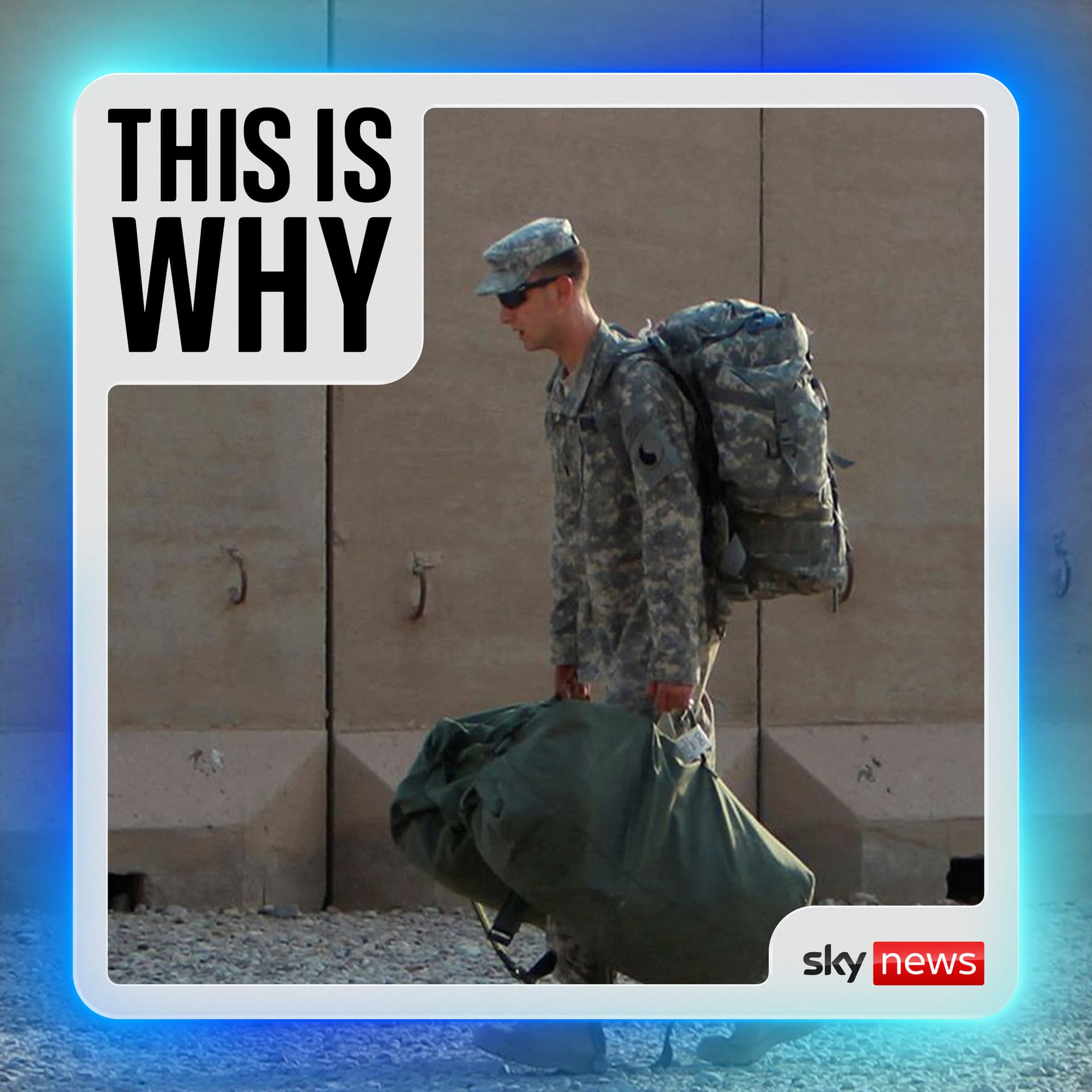
Europe’s shift toward voluntary national military service (France, plus moves in Germany, Poland, Latvia) amid the perceived Russian threat; whether the UK should adopt similar measures and how it would work given UK recruitment and force-size constraints.
Guests
James Heapy, former UK Armed Forces Minister at the MOD (last Conservative government) and former army major.
Key claims
A Ukraine “peace” deal could increase Russian confidence; Russia’s forces may redeploy across NATO’s front. National service could bolster “third echelon” societal mobilization and provide a baseline of trained capability. The UK should have a serious public conversation, not dismiss it as political gimmick. Main challenge: the UK regular army (~70,000) is too small to run annual training for national servicemen; veterans remobilization and training models like Operation Interflex may help.
Notable examples
Operation Interflex (training Ukrainians as “mission rehearsal”); comparisons to Germany/Poland/Latvia national service steps.
Written by AI. May contain mistakes. Listen to the episode to check what was said.
Chapters
Tap a time to open that second in VOCurrent Military Landscape in Europe
0:45 to 1:37
Discussion on the increasing military preparedness among European nations amid threats from Russia.
“Now, as I sit down to record this, we are seeing reports emerging from the United States that Ukraine has agreed to a modified peace plan.”
France's Voluntary Military Service Plan
1:37 to 3:25
Exploration of France's introduction of voluntary military service and its implications.
“And what does all this say about the prospect of a war in which we'd be an active participant?”
Challenges Facing Military Recruitment
3:25 to 5:31
Analysis of recruitment difficulties in the UK and the necessity for a national service conversation.
“That's the first issue and by far the most important.”
The Value of National Service
5:31 to 7:19
Discussion on the societal benefits of national service and the potential military capabilities it could build.
“and how you make sure you've got enough people for that is a really important debate.”
Modernizing Military Skills Training
7:19 to 9:43
Consideration of how national service could integrate modern skills suitable for current warfare.
“that Russia realises it's overmatched at every turn.”
Selling Military Service to New Generations
9:43 to 14:00
Strategies for encouraging younger generations to see value in military service amidst changing societal views.
“backdrop, whether the public might be more minded to support something like this now?”
The Value of Military Service
14:00 to 16:40
Explores how military service can benefit young people and society.
“career, the Navy and the Air Force too, but in my case, it was the Army.”
Transcript
Automatic transcript. May contain errors.0:00James Heappey:Coming up, it's not quite conscription, but France is introducing voluntary military service in the face of the growing threat from Russia. Could we soon follow suit? How does a banana trigger a CIA-backed coup? Do AirPods herald the arrival of a new global order? What do LED lights say about the future of humanity? I'm Ed Conway, and in each episode of my new podcast, Stuff Matters, I take an object, crack it open, and reveal the world-shaping forces hidden inside. This is economics told through the things we think we understand. Search Stuff Matters on your podcast app to listen and follow.
0:44James Heappey:Hi, everyone. Welcome back to The Daily. Now, as I sit down to record this, we are seeing reports emerging from the United States that Ukraine has agreed to a modified peace plan. You can find out more about that over on the website. But it certainly doesn't mean that the Russian threat has magically disappeared for Ukraine or for Europe. Could a ceasefire actually be more dangerous for us and our NATO allies? Well, that's why we're seeing nations across the continent beefing up their militaries. The latest, France, will later this week announce a form of voluntary military service. So what's the plan here?
1:20James Heappey:Well, France aims to train up young people so that they could be funneled into the forces if necessary. On top of this, President Macron aims to increase the size of his reserve forces to more than 100 ,000 within a decade. Other European leaders are doing similar. The UK is not, for the time being at least anyway. So why the recruitment drive? Are we in the UK missing a trick? And what does all this say about the prospect of a war in which we'd be an active participant? Let's welcome back to the daily James Heapy. He was Armed Forces Minister at the MOD under the last Conservative government.
1:52James Heappey:Prior to politics, he spent years in the army, leaving at the rank of major. James, great to have you back on the podcast. We're expecting an announcement from the Elysee later this week, but on the basis of what we already know, what do you make of the French plan? Well, I think it's in keeping with a lot of other countries in Europe that are doing very similar. Germany has announced that it will reintroduce some degree of national service. Poland has announced that it will, at the very least, get young men and women to participate in military training. Latvia reintroduced it in 2024. So this is a direction of travel.
2:28And therefore, what Macron is doing is entirely in keeping with the threat that Europe now faces.
2:33James Heappey:What then is the problem that these European countries have identified? I think you should break out three separate issues, all of which, to some degree, military service can help with. The first and most important, the reason that this is a legitimate conversation is that the threat from Russia is real. And actually, bizarrely, a peace deal in Ukraine almost escalates the threat because it looks like the sort of peace deal that won't see Russia particularly punished for the aggression that it's shown since it invaded Crimea in 2014. And so it will reinforce a sense in the Kremlin that the sort of the diplomatic price of being aggressive is worth paying because in the long run, the West seeks a peace deal that isn't that punitive.
3:16And then you've got this battle hardened Russian army currently concentrated in Ukraine that will go back to its home bases and redistribute all along NATO's frontage. So the fact that you see from Norway all the way down to Greece, lots of countries now having some degree of national service or conscription in order to bolster their troop numbers feels in keeping with the threat that's emerging. That's the first issue and by far the most important. The second is that in a society where the instinct to serve is less clear, fewer families have got living relatives who have served in the armed forces, it is less of an obvious career choice for many young people nowadays.
3:58And so sadly, a degree of compulsion might become necessary in order to meet the demands of the Army, Navy, Air Force that different countries hope to sustain. And then the third, it was interesting to hear Macron alluding to it. There is something about military service that frames in the mind of young people their sense of nation, their sense of belonging, and that in a society that is increasingly less cohesive and more divided, maybe that sort of shared sense of purpose and identity that comes from military service has value there.
4:32James Heappey:I look at what has been happening in Ukraine and Russia. And when we talk of the Russian forces, we make the distinction between those who have enlisted and those who have been conscripted, that those who have been forced into fighting are perhaps not of the same level of quality as those who have chosen to enter the armed forces. So the Army-Navy Air Force that you hold in peacetime is the Army-Navy Air Force that you start a war with. Its presence, its capabilities in peacetime need to be impressive enough to deter the adversary from coming and having a go at you in the first place. But in every war ever, your first echelon army, the army, navy, air force that you've held in peacetime, dies and dies sooner rather than later.
5:17And the army with which you finish war tends to be your second or even your third echelon. Now, what that means is that, yes, there's a thing about having the most impressive first echelon, your standing professional force before the war. and how you make sure you've got enough people for that is a really important debate. Traditionally, the UK, for example, has seen its second echelon force, the force it generates next to come from predominantly a volunteer reserve, who in the Cold War, it was the Territorial Army, it's now called the Reserve. And they are volunteers who train part-time to be ready to take a role in the military in time of crisis.
6:01And they would be augmented by people like me who were ex-military who carry a legal obligation to be remobilised to serve again in that eventuality. And then the third echelon is when you turn to the citizenry beyond and you try to mobilise society. Now, the advantage of national service, there are big downsides, but the advantage of national service is it means that within the citizenry, you have got a baseline military capability because over time, more and more people will have been through the process of basic military training at the front end of their national service. So when you come to mobilise that third echelon, you've got people who are already militarily capable.
6:48There's a deterrent that comes from knowing how successfully the UK or France or Germany or Poland could mobilise their second and third echelons. And therefore, the degree to which we're able to mobilise as a society and can Russia match that? And what NATO is increasingly focused on is NATO's ability cumulatively to deter with its standing force, but then its plans for mobilising society and industry to generate the follow-on forces so that Russia realises it's overmatched at every turn.
7:22James Heappey:Are we then behind the curve? You know as well as I that there have been problems with recruitment both to the regulars and the reserves in the United Kingdom. And yet, whilst we look at what the rest of Europe is up to at the moment, we don't seem to be embarking on a similar level of voluntary national service. It should be a much more live conversation in the UK than it is. I understand why it got sort of giggled at a bit in the general election campaign. It slightly came out of left field. This is the sort of thing that needs a lot more pitch rolling and frankly deserves to be more than just a sort of manifesto gimmick.
7:51I think it's something that warrants some pretty serious discussion. The downside, and this is a really important point to register, is that our regular army is only, what, 70 ,000 people strong. And the commitment that it would have to make to training and sustaining a cadre of national service people every year is kind of more than the army could really cope with. So we'd have to get our head around who does this, like who delivers this national service because the army's too small to do so. In the Cold War, people like me who had left the army within the last 10, 15, 20 years used to have to report annually for a camp to check that we still had a set of uniform, we could still shoot straight, we still had a vague understanding of military tactics and ideally we could still run somewhere in a speed that was kind of vaguely threatening to the enemy and the regular army used to run those camps for veterans to go back and be kind of their annual mobilization camp the army's not big enough to do that anymore so we need to be clear on that as a challenge could be that the reserve does it and what i think is really interesting is all of a sudden you can start to see Operation Interflex, which has been the British military's training of the Ukrainians, you can see that as a mission rehearsal for how actually you could do that, A, for UK veterans who have still got their legal liability to be mobilised, but also potentially for some sort of UK national service.
9:29James Heappey:I just wonder whether the situation has changed since the general election, that there is now that much more open conversation about the fact that with a a handful of years, we could be in a direct conflict with Russia. And with that as the backdrop, whether the public might be more minded to support something like this now? Well, I mean, certainly the conversation has changed in that Tusk, Mertz and Macron have all now gone there. I think it does feel much more pressing given that Poland, France, Germany have all now started that conversation with their public. And I really hope that MOD ministers are given license by number 10 to have this conversation with the nation because it needs to be had in a very serious way.
10:13The moment it gets caught up in all this kind of hyperbolic nonsense about whether Generation Z and Generation Alpha are patriotic enough, that's just really counterproductive and suits the political agenda of some, but frankly doesn't meet the sort of seriousness of the moment. British young people for millennia have shown that they've got the resolve to do what is necessary to defend our nation. So let's stop patronising them with that sort of conversation and just start to have a conversation about the benefits of spending some time, you know, at the end of school prior to university doing a spell of military training.
10:47In many countries, the skill sets that are required during that period are highly prized by employers thereafter. And we should be having that sort of conversation rather than it all being the nonsense that we saw in the head of the general election.
11:00James Heappey:How important is it these days when fighting a war to have large numbers of warm bodies in uniforms holding guns. Do we genuinely need soldiers in great numbers, given the way in which the battlefield has shifted? No, probably not. I don't think this is kind of generating POWs battalions. That's not the plan. But to my point earlier on, it's a sad reality of war that the army that you start the war with is not the army that ends it. And we have to have a plan for how we generate that follow-on force. And before people get carried away the National Service thing, my first challenge to government would be, what is your plan for reinvigorating some of those Cold War practices around keeping in touch with veterans, keeping their military skill set, and that you've got the uniforms and everything else to remobilise them as quickly as possible?
11:52That's the most obvious thing to do, because there you've got a skill set of people who already know how to operate warships, already know how to work around fighter jets, who already know how to be part of army formations. But the sort of secondary part of it is, do you do some sort of national service? Remember, it doesn't need to be everybody spending their time running around in sort of very wet, hilly parts of Wales, learning how to do infantry attacks. What it might be is taking all of the incredible digital skills of these digital natives, which Gen Z and Gen Alpha are, and helping them to overlay their sort of instincts as a digital native into a military context.
12:35So you've got a baseline of military skill that is applicable in a modern battle space. I think that where France and Germany are going is very much down that route. And yes, of course, there is a blunt reality to military service that you do have to kind of be able to shoot straight, run fast and close with the enemy and deal death. But the battle space has changed. And so young people, I think, would find in a period of national service that they weren't just doing those traditional military infantry skills. they were also learning how to pilot drones, how to operate in a much more technically demanding battle space and therefore acquire a whole bunch of skills that are really, really, really useful in their careers beyond.
13:19James Heappey:As someone who has been there and done it, how do you sell military service to a generation that has not grown up in the shadow of the Second World War or indeed the Cold War? I think you do two things. So firstly, be clear-eyed about the threat and don't buy into this idea that Gen Z and Gen Alpha are feckless, unpatriotic, wet. I just don't buy that at all. I think that plenty of them, if faced with the sort of geopolitical realities and the threat that the United Kingdom faces, would feel very much that it was their duty to serve. The second thing is the army is the most amazing place to spend the formative years of your career, the Navy and the Air Force too, but in my case, it was the Army.
14:08So much of what I have done since is founded on skills and a mindset that I acquired in the Army. And I haven't been responsible for sort of running around dangerous and dusty places and being worried about my life for 15 years now. The Army offers you much, much more than the ability to sort of, you know, fire a rifle. It's about teamwork. It's about communication. It's about calmness under fire. There's a whole bunch of things that are incredibly helpful to people in a life beyond. Helping young people to see that opportunity, to see that you don't have to commit for 25 years, just go and do it for one year if it was national service or three or four years if it was a short contract in volunteer service is an amazing foundation to lay for the rest of your working life and you know be more transactional there's nothing wrong with proposing to gen z gen alpha that military service is is good for them and it's not just about duty it's about self-investment
15:11James Heappey:james on a balance of probabilities currently do you feel that the united kingdom is heading for conflict is heading for war and if so do you think as a country we are taking the necessary steps and making the preparations for that inevitable conflict. The balance of probabilities is that war won't come. But that is only if we take the threat serious enough that it might come, that we equip our military with everything that they need to create the deterrence that stops war from coming. If Russia thinks that NATO has gone soft, that NATO's cohesion is shattered, that the resolve isn't there to fight, that the West won't mobilise its industry, won't make the sacrifices within society that are necessary to sustain a war effort, then war will come because Russia will be emboldened to think that it can take a bite out of Estonia and NATO will be compelled to respond.
16:07So war shouldn't come, but war only won't come if we take the threat of war seriously enough to invest in defence and deter. And that means not just what the government spends on ships, tanks, planes. It's not just about the number of people that we hold in our professional peacetime volunteer force. It's also the message we send to Russia about our commitment as a society to fight as a whole nation in the face of their threat. And that's what has the biggest deterrent effect of all.
16:40James Heappey:James Heapy, always great to get your expertise on the podcast Thanks for your time Thanks for having me The very latest on the Ukraine peace deal is of course available on the website The Daily's back tomorrow
16:55James Heappey:How does a banana trigger a CIA-backed coup? Do AirPods herald the arrival of a new global order? What do LED lights say about the future of humanity? I'm Ed Conway And in each episode of my new podcast, Stuff Matters, I take an object, crack it open, and reveal the world-shaping forces hidden inside. This is economics told through the things we think we understand. Search Stuff Matters on your podcast app to listen and follow.
From the publisher
Are you prepared to fight for your country?
That's the question Emmanuel Macron will be asking the young people of France this week when he announces a plan to introduce voluntary military service.
The threat posed by Russia and a US that has a questionable commitment to NATO means Mr Macron isn't the only European leader who has had to ponder such a move.
Should the UK follow France's lead and introduce some form of military service?
Niall is joined by former armed forces minister James Heappey.
Producer: Tom Gillespie
Editor: Mike Bovill