In short
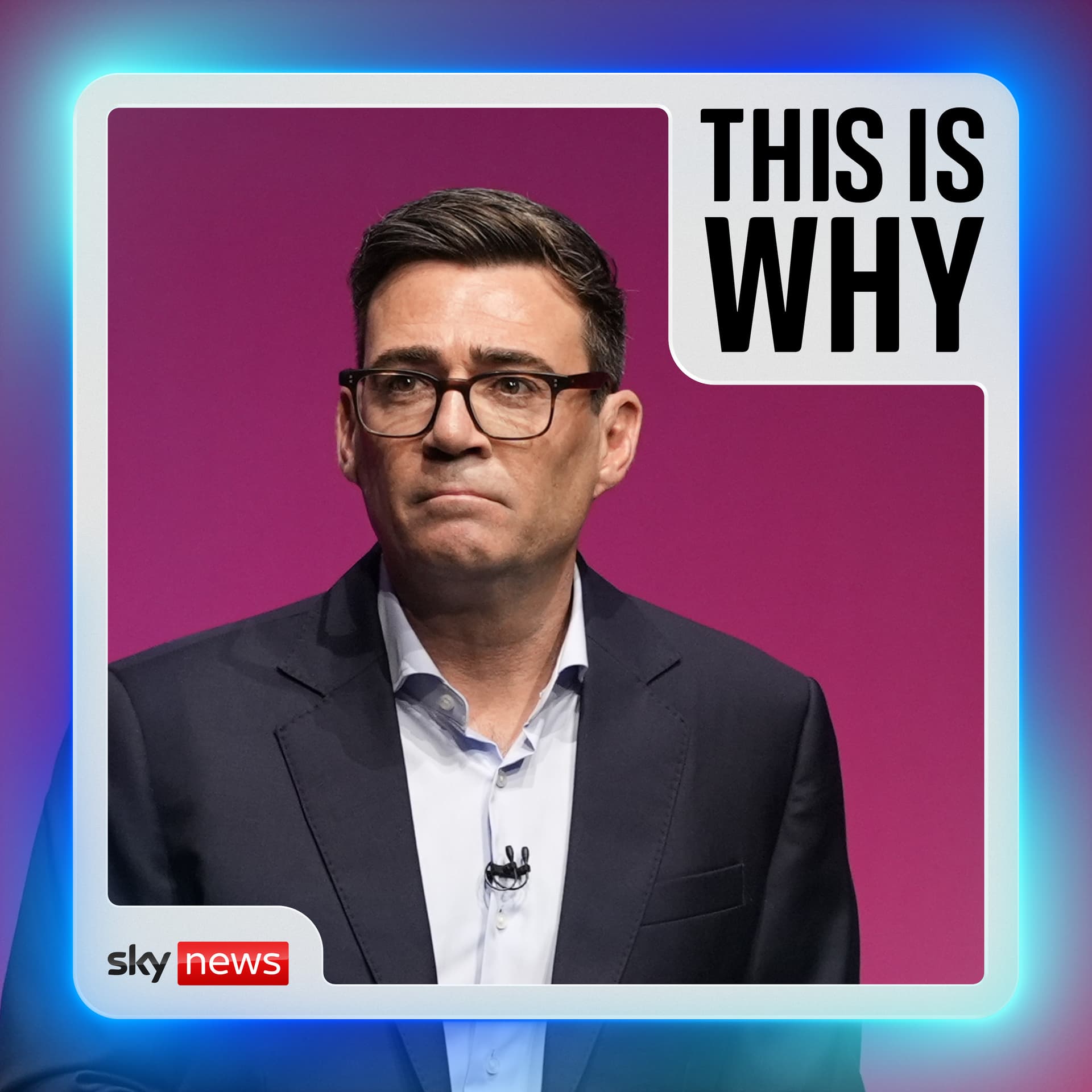
Robert Jenrick’s defection from the Conservative Party to Reform UK, and whether he can work with Nigel Farage, plus what it signals about the UK political right.
Guests and backgrounds
Sam Coates, Sky News Deputy Political Editor; Natalie Fahey, editor of Nottinghamshire Live covering Jenrick’s Newark constituency.
Key claims
Jenrick’s move is framed as either principle (“Britain is broken”) or ambition/power-seeking; Kemi Badenoch allegedly pushed him out after being briefed he would defect. Jenrick is described as a highly effective political operator who has repeatedly reinvented his positions (Remainer to Brexiteer; later hardline immigration; ECHR exit stance). Farage is portrayed as skeptical and distrustful (“absolute fraud” / flip-flopping). Reform’s internal stability is questioned given potential leadership challenges.
Notable examples
Jenrick’s 2014 “one-nation” moderate image; his resignation as immigration minister over “stopping the boats” allegations; social media stunts like “Fair Evaders” and putting up Union Jack flags; his past sacking by Boris Johnson amid property/donation stories; Newark confusion over whether a by-election will follow.
Written by AI. May contain mistakes. Listen to the episode to check what was said.
Chapters
Tap a time to open that second in VOUnderstanding Jenrick's Political Journey
0:45 to 2:53
Exploring Robert Jenrick's political positioning from Remainer to Reform UK member.
“Mr Jenrick insists this is entirely about principle, that Britain is broken and it's everyone else's fault.”
The Dynamics of Political Ambition
2:53 to 5:04
Analyzing Jenrick's ambition and shifts within the Conservative Party.
“you know quite a lot of cash looked like it had been pumped into how he did his videos that caught the attention and he undoubtedly He undoubtedly had a following, this news felt, slimline, super healthy lad.”
Perceptions of Jenrick in Newark
5:04 to 7:44
Discussing local perceptions of Jenrick's political defection and ambitions.
“He has done bold things with his career in order to change things and been successful in it.”
Future Implications for Newark
7:44 to 14:01
Examining the potential impacts of Jenrick's switch to Reform UK on his constituency.
“She's editor of Nottinghamshire Live, which covers the New York constituency, where Jenrick has been MP since 2014.”
Navigating Relationships in Reform UK
14:01 to 15:30
Explore the complex interpersonal dynamics within Reform UK and its leadership.
“What does it mean for you and your colleagues?”
The Ambitions of Robert Jenrick
15:31 to 17:25
Discuss the implications of Robert Jenrick's move to Reform UK and its potential impact on party dynamics.
“Sam, we know how ambitious Robert Jenrick is.”
Consequences for the Conservative Party
17:26 to 18:38
Analyze the impact of recent events on the Conservative Party and Kemi Badenoch's leadership.
“And it sort of means that even if it wasn't quite the evidence that he was on the cusp of a defection, it's probably worthwhile for her to have done just on those grounds alone.”
Transcript
Automatic transcript. May contain errors.0:02Sky News, the full story first.
0:09Coming up, Robert Jenrick jumps ship to Reform UK. But is he charting a bold new course or simply clambering onto the nearest lifeboat? It's time for the truth. Britain has been in decline. Britain is in decline. After months of positioning, pointed criticism and barely concealed frustration within the Conservative Party, Robert Jenrick finally joined Reform UK. Well, actually, what happened is that his boss, Kemi Badenoch, was briefed that he was going to jump ship. So she rather unceremoniously pushed him overboard before he had the chance. Mr Jenrick insists this is entirely about principle, that Britain is broken and it's everyone else's fault.
0:54So, depending on your view, it's either a bold ideological stand or simply the latest stop on his long, meandering journey to find anyone who'll let him lead something. So today, we're asking, who is Robert Jenrick? What propelled the man who first became MP for Newark back in 2014 to leave the Tories behind? And what does this latest reinvention tell us about the state of the political right in the United Kingdom? Let's get started with our Deputy Political Editor, Sam Coates. Sam, how on earth did we get here to a point where Kemi Badenoch has had to sack one of the bigger beasts in the Conservative Party?
1:30Do you know what, Neil? The journey's best seen through the photographs of him. Go on. Because when you look at those photographs in 2014, because he won in the Newark by-election in that year, he was a moderate MP, a one-nation Conservative, a little bit wet, a little bit, to be a little bit less healthy, and that's not weightist. Neither of us talk. No, no, it's been, you know, I understand it's been Christmas. The shirt is, you're having trouble with the buttons. What was clear is he was a certain character then. He progressed pretty quickly up the ladder, but he was a Remainer. And then we voted for Brexit.
2:06And then he was a Brexiteer, a hard Brexiteer by positioning. Then he wanted to leave the European Convention of Human Rights. And he was a very, very hardline immigration sceptic, having previously in his career been a lot more gentle on that. And he had a bit of a conversion when he was at, it was when he was at the Home Office, wasn't it? That's the narrative. One version, his version, is the facts helped shape his approach. Another version is this guy will do whatever it takes to get to the top. right he basically was sacked by Boris Johnson at one point there were lots of stories about him and property moguls and developments and donations and all the rest of it and he found himself out of the cabinet after being housing secretary and then found his way back in after positioning himself further to the right and making him more of an important political figure that brought with him a caucus and a bunch of MPs but behind him and then embarked on sharpening his image you know quite a lot of cash looked like it had been pumped into how he did his videos that caught the attention and he undoubtedly He undoubtedly had a following, this news felt, slimline, super healthy lad.
3:06There's an element of lad about Robert Jenrick. Some of his social media over the Christmas period had him alongside his friend Rick Holden at the darts wearing those funny hats. In his quest to represent a certain type of white English man, he was trying to appeal to that demographic, I think. And sort of very different vibe from what we had in 2014 onwards as a sort of premier Cameroon. All of that was designed to speak to the politics of the moment. So was it policy that radicalised him or just power being within his grasp? I think a lot of people think it's a bit more the latter, including, by the way, Nigel Farage.
3:42So would you describe him then as an effective political operator? What determines an effective political operator? Proving that they've changed something. Well, look at his career. I mean, he managed to achieve the top of Tory politics two or three times, despite setbacks, despite being on the wrong side of the Brexit debate, despite leaving the cabinet. He was back. He was a leadership contender who lost and then was in contention again only last year, the polling suggests. He was millimetres from taking over from Kemi-Bade knockout points, I would suggest. So that is a success. Another success is he helped take the Conservative Party with him.
4:20Of course, the difference between Robert Jenrick and Kemba Badenock in the leadership contest was he back leaving the ECHO, and she didn't make that firm commitment. Where did the Tory party end up six months later? In his position and not hers. And he can sniff the wind. Is it just that he got the politics before everyone else did? He says things that we know there are plenty of people within the Conservative Party, not necessarily on the front bench, that they are thinking, but they didn't say it. Some of his career is defined by bravery, right? He was happy to put two fingers up to the group of the Tory party that he entered kind of alongside those One Nationers.
4:56He resigned as immigration minister when Rishi Sunak was prime minister over allegations that Rishi wouldn't go far enough in order to achieve the ends of stopping the boats and all the rest of it. He has done bold things with his career in order to change things and been successful in it. I think he has dragged the Tory policy position. He has achieved feats of political rehabilitation that few can. That's a mark of success, I'd say. Ideologically, is he more reformed than Conservative? I don't know. Kemi Baden-Ock has adopted a position that the Conservative Party will not cooperate with reform.
5:31But at the same time, the policy positions of those two parties are getting ever closer together. I mean, we talked about the European Convention on Human Rights. It's quite a lot of stuff around green environmental regulations. other things to do with the relationship with Europe and whether or not you would rewrite some of the treaties that Labour are doing. The question of what's the clear blue water between the Tories and reform policy-wise is less clear. Tories would like it to be the idea that reform aren't fiscally conservative and economically competent. Reform will go out and out to challenge that and close the gap there.
6:08And it'd be interesting to see where figures like Robert Generic take that? I mean, if, for instance, Robert Generic was the Treasury spokesman for Reform UK, could that help deal with all of that? Then are we not really on very similar territory? Because even the donors, frankly, in some cases are the same. So what then do we know of his relationship with Nigel Farage? I've talked to Nigel Farage about Robert Generic. And with some conviction, what Nigel said to me on this subject when I interviewed on it in about April of last year was, look, I know Robert, I'm just not sure I trust him. And the reason that I'm not sure I trust him is he flips his political position.
6:47He went further than saying he didn't trust him, called him an absolute fraud. Yeah, and, you know, anybody who flip-flops that much, you've got to be careful of. I said to Nigel Farage, do you think that Robert Jenner is the kind of person that gives politics a bad name? And Farage was like, well, I think it's for him to prove that that's not the case. I believed Nigel Farage was quite convincing in the caution with which he spoke about Robert Jennerick. And he did identify something I think that a lot of people identify about the journey and clearly did see it as something to be cynical of. There are other views in Reform UK.
7:22Richard Tice has always been much warmer, much more openly saying, look, Robert Jennerick, you should come over. And I was always struck by the difference between those two. Nigel Farage and Richard Tice are different, though. I think Richard Tice, who has sort of conservative vibes about him, would be intrinsically and essentially a lot more comfortable with that defection. More from Sam in just a moment. But let's turn to Natalie Fahey. She's editor of Nottinghamshire Live, which covers the New York constituency, where Jenrick has been MP since 2014. Natalie, what have you made of Robert Jenrick's political career to date?
7:57I think Robert Jenrick's been on a bit of a journey. and when he first arrived he was parachuted in, safe seat, he's not from the area, everyone was a bit like who is this guy? He's very ambitious, almost ruthlessly so and he's obviously building his own personal brand and we've seen him kind of step away from the party slightly and become a person who does these really energetic social media campaigns like the thing about Fair Evaders on the London Underground, absolutely nothing to do with Newark but gets him a lot of personal attention. And he went for the leadership. Obviously, he lost that.
8:30He knows he's popular in his area because until the last election, at least, he had a huge majority. We've seen a big change in the way he behaves and it's all about his personal brand. Take me then a few steps along the early stages of that journey. As you say, parachuted into Newark. I mean, how was he perceived at the time and in the first few years of his time as Member of Parliament? We used to have a little bit of a nickname for him where we called him Robert Generic because he was just sort of parachuted in as a safe seat conservative MP and he was just sort of bobbing along. He's never been this great constituency MP because he's not from the area.
9:01I think people generally like him but there's always been a little bit of a distance where people kind of think okay you've just been sent in but you're not actually from our area you're not one of us. I mean you will hear lots of stories about people who he's helped and he's done stuff for them but generally he's always been this kind of climber. So he had a few years where he didn't really do very much and then you sort of saw him accelerate and he lost all the weight. He overhauled his physical, personal, outward appearance. He started doing all these personal campaigns to get himself noticed and that's when you started thinking, okay, this is really a guy who wants to get out there and get known.
9:41Give me an idea then of how he was as a campaigner because, you know, safe conservative seat but we live in troubled times and frankly I'm not sure that there are many safe conservative seats these days. Well he is one of those people who you will always see out on the streets taking photos of himself on Twitter. He made a massive deal of the fact that he went out with a load of guys with a ladder and put up Union Jack flags and there were videos, photos of that. We had Robert Jemrick in his jeans and t-shirt putting up flags on the street which sits a little bit at odds with the person who I think he really is.
10:15He comes from a really wealthy background. He's got lots of properties around the country. He's not your normal guy. He's not like Lee Anderson, who's been down the pit and had that kind of authentic working-class hero journey. He's not that kind of person, but he's tried to reshape himself a little bit as that. That's the kind of guy he's trying to become, I think. But is it working? I don't know. Over the course of the 11-plus years that he has been the local MP, I mean, have you noticed, as others have, the drift to the right in his personal politics. Absolutely. And I think because he's got this huge personal ambition, he's obviously thought, I need to get in with reform.
10:49And so he's just aligned himself more with that. I mean, I wouldn't say people in Newark are particularly massively concerned about illegal migration and all those kind of traditional reform things that people are really going for at the moment. It's more of an old school conservative area. So it's interesting that he's done this. In terms, though, of his obvious personal ambition, is that necessarily in and of itself a bad thing? I'm just wondering when he was holding those senior posts within government, whether there wasn't just a certain amount of pride that the local MP had risen to such high office.
11:23I think that actually made his position as MP less tenable, if anything, because he was moving even further away from the constituents. You know, he was this ruthlessly ambitious person who was trying to climb to the top of government at the expense of what was happening in his local area. So, yes, you may see him putting flags up in the middle of the road, but is he actually helping anybody? Newark is quite a small town. It's quite a proud town. I think they really want someone who is embedded in their community to be their local MP. And he kind of created this bit of a distance between the constituents and his kind of presence on the national stage.
12:00I mean, we saw this as local journalists as well. You know, all the time he'd be writing columns for the Daily Telegraph, giving exclusives to the Daily Telegraph. But it was really, really hard for us to get him on the phone. You know, I'm not saying he's a bad guy, but it screams someone who's looking in the national stage direction rather than what actually matters on the local platform and to the local constituents. Let's talk then just a little bit more about how this defection is being perceived in Newark itself. I mean, you've mentioned the constituents there. Are people up in arms? Are they grabbing the pitchforks and the torches?
12:33I think people are confused. So, you know, like the likes of you and me, we're a little bit in the political bubble, probably you more than me. we know what this means and they've got a reform mp now but i don't think people understand that they either think there's going to be another election and they'll get a chance to vote or some people on local facebook groups have been saying all right we're going to get a new conservative mp coming in now because we voted for the conservatives so they're just a bit confused about what's actually happening we might see further down the line that people will come to realization that oh hey we've got a reform mp now but it might take a few weeks for people to kind of go, oh, actually, I voted for the Conservatives.
13:11I want a by-election now. But as we've seen from other defections, that's not going to happen, is it? What practically do you think that the fact you now have a Reform MP rather than a Conservative MP will have on the constituency? What it means for the wider Nottinghamshire picture is we're kind of at the epicentre of this big reform surge. We've got a massive power base now of big reform names. Obviously, Newark is right on the border of Nottinghamshire in Lincolnshire. We've got Lee Anderson, we've got Ben Bradley, who lives in Newark. So his MP is Robert Jemmerich now, which I'm sure he's absolutely ecstatic about.
13:47We've got Andrew Jenkins, we've got Richard Tice just down the road. We're really at the centre of this now. What does it mean for Newark? I mean, it is put it on the national stage. They probably don't really care about that in Newark itself. I think it's going to take them a bit of time to finally think, oh right, this has happened. What are we going to do now? What does it mean for you and your colleagues? Because as I understand it, you haven't always had the greatest of relationships with reformed. No, well, we were in the news last year because obviously we got banned from Nottinghamshire County Council by the reform leader there.
14:14But it's a really mixed bag. I think it's very personality-driven, and I think that particular instance was personality-driven by that particular leader. We've always had an OK relationship with Robert Jemrick when he's been here, but Lee Anderson blows really hot and cold, depending on what his mood is at the time. Ben Bradley we've got a great relationship with. We've gotten well with Richard Tice in the past. I don't think that much is really going to change, hopefully, unless this kind of accelerates Robert Jenrick's ambition to go even further forward. And he's got even less time for the local things going on, which is a possibility.
14:49What's your best guess about that now that he has moved to the smaller party after, of course, failing to gain the leadership of the Conservative Party? Yeah, well, he's going to be a big fish in a small, inexperienced pond. And he's a great political operator. He's a really confident public speaker. He's an intelligent guy. He's got lots of experience. I think anyone who's got ambition and reform at the moment should probably be a bit worried about Jemric joining because he's going to try and shoot straight to the top and nothing will stand in his way. Of course, he's got to keep his seat. That's the main thing.
15:19So he will have to occasionally come back and maybe put some more flags up. But, you know, he's ruthless. So I don't know if even the likes of Farage will be sort of thinking, OK, I've got to watch out for this guy. Thanks, Natalie. So let's return to Sam. Sam, we know how ambitious Robert Jenrick is. We know that Nigel Farage has reacted in the past to challenges to his leadership. So how long can reform actually survive with these two in it? Political parties have always had ambitious people in them. They wouldn't exist if they didn't have, rather like newsrooms, they wouldn't exist if they didn't have ambitious people tussling for the top.
15:51In fact, I think the most skilful political leaders acknowledge and accept that that's what's going on. I don't think it's necessarily a problem. what I think is there is a question about the kind of Britain that Reform UK wants to take us to, the way it synthesises its kind of red wool supporter with its economically dry ex-Tory, ex-UKIP supporter, and whether or not the contradictions of that don't sort of blow things apart, rather like they did for Boris Johnson. Boris Johnson's hoovered up both bits of that coalition. Reform UK's tried to hoover up both bits of that coalition. Ultimately, You can do it to win an election.
16:31You just can't do it to run the country. So what does this then mean for the Conservatives? And what does it mean for Kemi Badenow? Plenty of people suggesting that this was a strong moment by a strong leader. The biggest thing, I think, is this has shawed up Kemi Badenow. Not so much because she got ahead of what would have been a pretty disastrous news cycle. She had to sack him. Yeah, quite a few different ways that they could have done this, though. And coming out like a big bang, a thunderbolt from the sky, with a video explaining why he had to go, denouncing disloyalty, presenting her as in command of the situation.
17:03So I think given that she had, you know, a bucket full of the proverbial, I think she dealt with that pretty well. But the reason I actually think that she's stronger is because the person that polling tells us the members, Tory members liked way more than her is now out of the Conservative Parliamentary Party, meaning the chances of anybody being able to challenge her, of the members having somebody they'd rather have in that top job than her have disappeared. That is a win for Kemi Badenock. And it sort of means that even if it wasn't quite the evidence that he was on the cusp of a defection, it's probably worthwhile for her to have done just on those grounds alone.
17:41Sam, what do you think of Robert Jennerick? Because the thing I'm hearing loudest right now from outside this studio are cries of betrayal. Well, I think the Tories would say that, wouldn't they? one thing about Robert Jennerick. I think that he's in the top tier of most ambitious politicians I have ever met. And so I think the cries of betrayal would not bother him one bit. His eye is on the prize. The question is, is he good enough to get it? Sam, many thanks.
18:13The whole affair underlines the fracturing of the right of British politics. It raises questions about direction and discipline within the Conservative Party. It gives Reform UK a credible Westminster figure at a crucial moment. And it leaves voters to judge whether Robert Jenrick's decision truly was about conviction or perhaps naked calculation. The Scania's Daily is back again soon. Until then, take care.
From the publisher
The reinvention of Robert Jenrick reached what could be a career-defining milestone after he was sacked from the Tory party and walked into the arms of Nigel Farage’s Reform UK.
The manner of his departure created a political earthquake - but his defection will surprise few who have been following his career.
From his drastic weight loss to climbing lampposts with flaggers - who is Mr Jenrick and how has he tried to scale the political ladder?
Niall is joined by co-host of Politics at Sam and Anne’s, Sky’s deputy political editor Sam Coates, and Nottinghamshire Live editor Natalie Fahy.
Producers: Tom Gillespie & Natalie Ktena
Editor: Mike Bovill