
In short
Episode topic: Gambling addiction and why people from ethnic minority backgrounds are more likely to hide gambling harms and less likely to access support, despite gambling harms being more severe.
Guests and backgrounds
- Emma Birchley (Sky News journalist): researched the issue after hearing Kiki’s lived experience; contacted GamCare and spoke with an academic from Manchester University.
- Kiki (young Black woman in recovery): began gambling at 16 (scratch cards), moved to online slots/bingo in 2016; later developed gambling plus drug addiction; attempted suicide; now a peer aid mentor with Bet No More.
- Lisa Walker (mentioned): former poker gambler who won £127,000 then lost it; became homeless with children; founded New Beginnings for women in recovery.
Key claims
- GamCare/YouGov research: ethnic minority respondents are twice as likely to hide gambling and nearly three times as likely to feel guilt.
- Drivers include shame, stigma, cultural pressures, and mistrust of statutory services (e.g., GP).
- Online gambling (slots) is rising fastest and can intensify compulsive behavior.
Notable examples
- Kiki’s “12–14 hours” gambling, spending bare minimum on essentials, paying Wi‑Fi/electric to keep gambling access, and losing her relationship with her daughter for 18 months.
- Lisa Walker’s recovery group: ~250 women helped, only four non-white.
Written by AI. May contain mistakes. Listen to the episode to check what was said.
Chapters
Tap a time to open that second in VOUnderstanding Gambling Addiction
0:28 to 1:00
Exploring the prevalence of gambling addiction among ethnic minorities and the lack of support-seeking behavior.
“We'll take a deep dive into the day's top stories with NBC News' trusted journalist.”
Kiki's Story: A Personal Struggle
1:00 to 1:47
Kiki shares her journey through addiction and the realization of needing help.
“just aren't accessing it in the numbers you might expect.”
Research Insights by Emma Birchley
1:47 to 3:06
Emma discusses the statistical disparities in gambling addiction and support-seeking among ethnic minorities.
“I'll be speaking to her myself in just a few minutes.”
Cultural Barriers to Seeking Help
3:06 to 4:50
Discussion on the stigma and cultural factors that prevent ethnic minorities from seeking help for gambling addiction.
“Now, they are the organisation that run the National Gambling Helpline.”
Lisa Walker's Impact on Women in Recovery
4:50 to 5:42
Emma shares Lisa's inspiring story and her efforts to help women struggling with gambling addiction.
“I mean, what is so interesting is she said, I thought a gambling addict was an old white bloke in the bookies having a pint, betting.”
The Rise of Online Gambling
5:42 to 7:20
Discussion on the increasing prevalence of online gambling and its effects on addiction.
“What was so interesting is that three years ago, I met someone called Lisa Walker, really inspirational character, I think.”
Kiki's Journey to Recovery
7:20 to 14:46
Kiki describes her experience with gambling, the effects on her life, and her path to recovery.
“Just start by describing how you got into gambling.”
Raising Awareness for Gambling Issues
14:46 to 15:12
Explore the importance of awareness in preventing gambling addiction.
“Let's bring Emma Birchley back in at this point.”
Transcript
Automatic transcript. May contain errors.0:02Sky News, the full story first.
0:08Kiki Marriott:Coming up, gamblers from ethnic minority backgrounds are more likely to conceal addiction than white people. They're also more likely to suffer harm. We speak to one woman to find out why. As the day wraps up, get the scoop on what's been happening with Here's the Scoop, a new podcast from NBC News. with me, your host, Yasmin Vasugian. We'll take a deep dive into the day's top stories with NBC News' trusted journalist. It's a fresh take that's sharp, thoughtful, and it's informative, bringing you closer to the headlines and conversations that are shaping our world. From the front page to the zeitgeist, here's The Scoop from NBC News.
0:47Listen daily wherever you get your podcasts.
0:52Kiki Marriott:It's commonly known that gambling can be addictive and therefore dangerous. Yet despite help being pretty readily available, in fact, research shows that people from ethnic minority backgrounds just aren't accessing it in the numbers you might expect. And that can lead to some pretty catastrophic outcomes.
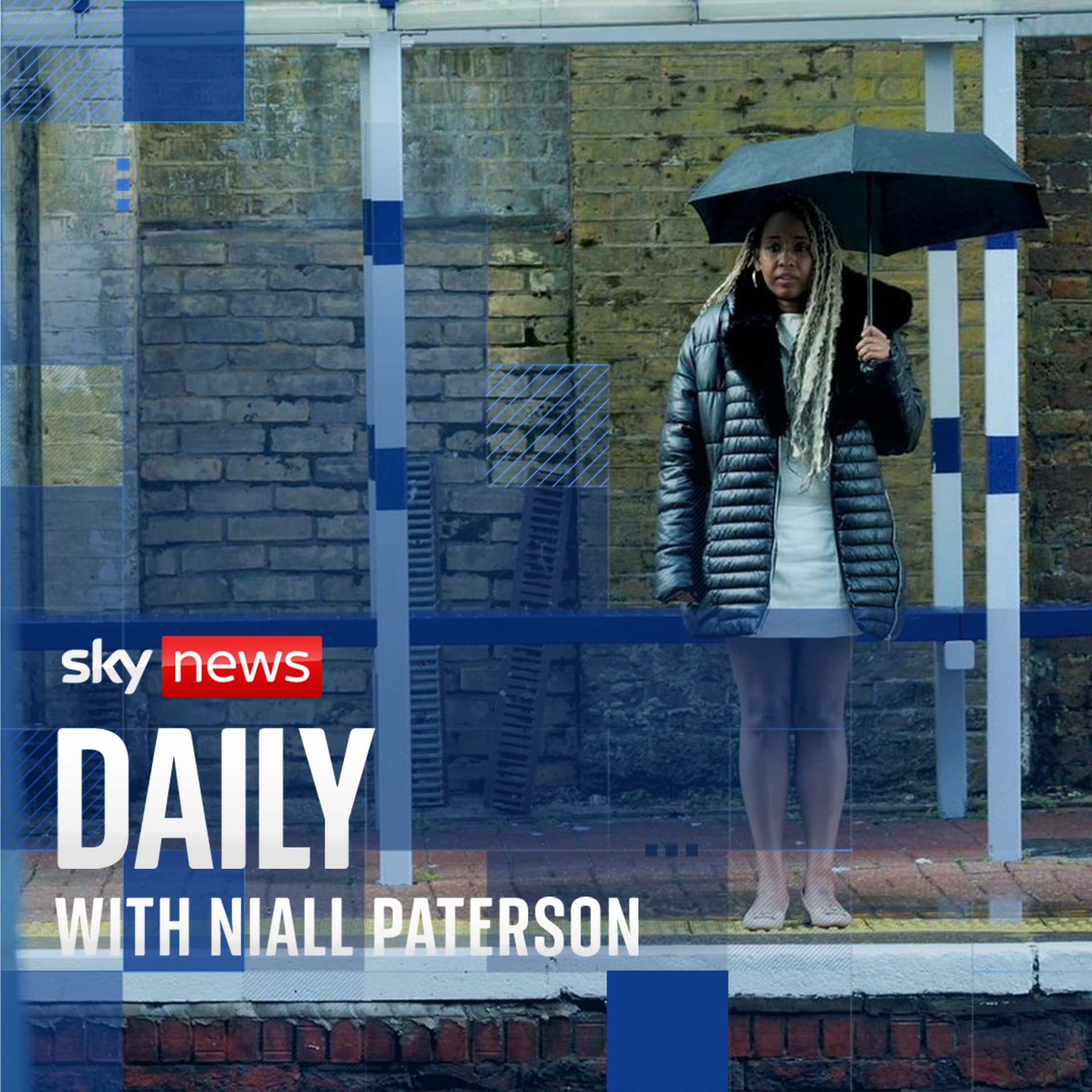
1:09Emma Birchley:I was numb at that point. I was just so done with trying to survive and just existing and having no life. I walked to the train station at 5am. I was waiting for the first trains to arrive. and I sat at the train station thinking about my daughter, thinking about the mistakes I've made in the past, thinking that I didn't want to live this life anymore.
1:38Kiki Marriott:That's Kiki, a young black woman who found herself right on the edge because of gambling and drug addiction. Now, thankfully, she did manage to get the help she needed and she's now helping others. I'll be speaking to her myself in just a few minutes. But let's start with Sky's Emma Birchley. Emma, you've been looking into this aspect of gambling. What put you onto the story? Because I'll admit, it's not something I've even considered before. I was watching Kiki speaking. She was at an event. She was talking about her lived experience of gambling harms. It's just something she's just starting to do now at this point in her recovery.
2:11And one thing that she said really piqued my interest, and that was, why is it that there was no one that looked like me or sounded like me when I went into recovery? and from that point I started looking into it and I looked at various research online that's been done over the years which it's out there, that research. That's what's so strange. It's out there. It shows that you are less likely to gamble if you're from an ethnic minority background but you're more likely to suffer harm from that so whether it's financial harm or whatever and yet you're less likely to go and seek help. So what's going on?
2:45And all of these reports say people need to be told that there's support out there because it is there for everyone.
2:51Kiki Marriott:Just establish that evidence base a little bit more for us, Emma. So they're less likely to gamble, more likely to suffer harms from gambling, less likely to seek any help. Yeah, and I started thinking, well, how do we stand that up? Where are the figures that back that up? And I contacted Gamcare. Now, they are the organisation that run the National Gambling Helpline. So they are dealing with people, contacting them all the time via all sorts of different means, whether it's on the phone or online or whatever, even WhatsApp. And actually, they had just done this piece of research with YouGov, spoken to more than 4 ,000 people.
3:23And what became clear from that is that if you're from an ethnic minority background, you're twice as likely to hide that you're gambling and nearly three times as likely to suffer guilt from that gambling. So you can see that something doesn't match up, does it?
3:41Kiki Marriott:So what on earth is going on here? Do we have any idea what lies behind these statistics? So that's where Kiki comes in. And she has been so honest, so open. I mean, just brilliant. And when I was interviewing her, what became clear was that she feels shame, stigma, cultural pressures. She talked about what goes on at home stays behind closed doors. You don't share your problems with other people. So for her, her approach was it's very much about shame in the home and stigma. And then I spoke to an academic from Manchester University and she said, actually, in her mind, it's more than that. Their research says it goes beyond just shame and stigma.
4:24It's actually also about mistrust, mistrust of statutory services, like going to the GP, whether it's for a physical health reason or a mental health reason. And so people may be not coming forward, not having that trust in the services that are out there and the willingness to put themselves out there. And I suppose what needs to happen is by doing stories like this, it is raising awareness. And by Kiki putting herself out there and saying, you know, there are gambling addicts that look like me, then people might be more inclined to come forward. I mean, what is so interesting is she said, I thought a gambling addict was an old white bloke in the bookies having a pint, betting.
5:07Didn't think it was someone like her. She Googled it, looked online, said, oh, you know, these are people losing thousands and thousands of pounds, remortgaging their home. That wasn't her. It was benefits, borrowing from friends, 10 and 20 piece spins on the online slot. So we're talking small amounts, but it gripped her, completely gripped her and got her into debt.
5:29Kiki Marriott:You've been speaking to those who are on the other end of this equation, those who are helping out, those with gambling addictions. And their experience suggests that there is a distinct lack of uptake of these services from ethnic minority backgrounds. What was so interesting is that three years ago, I met someone called Lisa Walker, really inspirational character, I think. She was a serious gambling addict. She won£127 ,000 playing poker. She lost it all and so much more. Ended up homeless with her 10 and 11-year-old children. Now, three years ago, I spoke to her and she was telling me about the fact that she had gone into recovery.
6:07There were 35 men in the room, one other woman. Where were all the women? And from that, set up a group called New Beginnings and has been helping women ever since. Now, she's helped close to 250 of them. I asked her how many of those were non-white. Only four. One of them was Kiki.
6:25Kiki Marriott:Emma, place this into kind of the broader perspective. Gambling in this country is obviously still a big thing, but is it on the rise? It is on the rise. But actually what's rising fastest is online gambling of things like casinos, slots. Slots were Kiki's things. You know, back in Lisa's day when she was gambling, it was physical betting. She was going into casinos in real life, going into betting shops or whatever. this is slots. And what Kiki was saying, interestingly, is that she was holding it together for the outside world. You know, she'd still get dressed up, put her make-up on, and yet at home, when she was behind closed doors, she could not put her phone down.
7:04She'd go to the bathroom with it. She'd have a long charging cable so she could, in the bath, whatever it was, she just could not put it down because she was completely hooked, spinning, spinning, 10p, 20p.
7:15Kiki Marriott:Emma, just pause there for a second because this is probably an appropriate time to speak to Kiki herself. Kiki, thanks for talking to us. Just start by describing how you got into gambling.
7:24Emma Birchley:I started gambling when I was 16, just scratch cards. And that kind of was the common theme. I only played scratch cards through my late teens and in my 20s. I started playing slots and bingo online in 2016.
7:41Kiki Marriott:For those who haven't played these slots online, what is it like? How much money were you spending?
7:47Emma Birchley:I wasn't spending that much money because I didn't have that much money to spend. I had my favourite games and when I was playing, it was the best path of escapism for me. I couldn't think or feel anything when I was gambling. And I think that's what made me want to keep on gambling, that complete escapism from anything that was going on in my life at the time.
8:06Kiki Marriott:Was it a rush? Clicking buttons on a laptop or tapping keys on a screen?
8:11Emma Birchley:Yeah. When your numbers come in, you do get an adrenaline rush. you get excitement and want that feeling again.
8:18Kiki Marriott:When did you realise that this was perhaps not a fun recreational activity anymore, that it was becoming a bit darker?
8:25Emma Birchley:The first glimpse I had of that was in 2016 after a miscarriage. That was the first time I thought, I've got a problem here and I put myself on Gamban and Gamstock and things like that. But that didn't last for very long. I needed that buzz of winning, playing and putting real money into it, knowing you can get real money back. I needed that kind of fix from it so I went back to gambling properly I think it was 2022-23 when there was kind of no return there was no picking myself back up I loved gambling for that escapism I could play for days at a time if I started gambling I'd be gambling for 12 to 14 hours at the very least it all depended on money really and if I'd won then I could play longer it if I didn't pay short up.
9:13Emma Birchley:If you didn't have the options to gamble that caught in the desperation the panic to get more money so that you could gamble.
9:19Kiki Marriott:If you're spending all your money on gambling you aren't spending money on the things you probably should have been.
9:24Emma Birchley:No I wasn't I was living on the bare minimum of everything. One meal a day, very little gas, only having a couple of baths a week if that sometimes depending on how depressed I was at that point and the only reason why my Wi-Fi bill and my electric got paid for was because I needed it to gamble. They were the only two bills that I kind of paid for on my phone bill because I could gamble through my phone bill. So they were the three things that I regularly paid because that's what helped fund my addiction.
9:54Kiki Marriott:What effect did all this have on your relationships?
9:56Emma Birchley:I think it put a huge stress on my relationship that I was in at that time and I stole money from that person and made a lot of promises to that person that I wouldn't do it again. I've got cross addictions so I was taking drugs at the same time so as soon as I would take cocaine I'd gamble and no matter how much I meant the promises as soon as that happened it was game over so that put a lot of stress and strain on that relationship even though I paid the money back it was just a consistent let down not being able to depend or rely on me at all when it came to money and I lost my relationship with my daughter for 18 months because of it she moved out when she was 15 and we didn't speak and at the time I was just so selfish I was so fed up and so tired of things that had happened in my life some traumatic events that had happened and I just kind of gave up on being a mum I gave up on participating as a member of society I gave up on myself you know I didn't have much left.
10:52Did you see yourself as a gambling addict?
10:55Emma Birchley:I knew I had a gambling problem I don't think it was right till the very end that I saw myself as a gambling addict I always fooled myself into thinking that I'd get it together eventually because that had been the theme of my life. I had my bad points but then I'd get it together and I'd start doing well again and kind of ebbed and flowed but this time around in 2023 I couldn't get back up again. It was just one very dark road. I did consider suicide many times and I did attempt suicide but I think that when it came to a head is when I went to the train station and I thought that I was doing everyone around me a favour by choosing to end my life.
11:33Emma Birchley:But I felt a sense of responsibility that in my death I'd be causing other people a hell of a lot of trauma.
11:40Kiki Marriott:Why do you think it took you so long to reach out for help?
11:45Emma Birchley:Years before that, I had Googled what is a gambling addict and I didn't see any women. I didn't see people that were like me in a sense, like low bettors. I thought to be a gambling addict you have to be rich, you have to have lots of money and I didn't have a home to remortgage, I didn't have cars to sell and so I thought oh I'm just being an attention seeker, I'm just being dramatic I don't have a problem, I thought that I was very weak and I thought that I was pathetic because I couldn't get a grip of the situation
12:15Kiki Marriott:The statistics do appear to suggest that gamblers from ethnic minority backgrounds from communities like yours don't reach out for help in the numbers that perhaps white gamblers do Why do you think that might be the case?
12:29Emma Birchley:I think it's just how most of us are raised. We're taught from a young age to, I can only speak for myself, but I wasn't supposed to go and get therapy, seek outside help, tell official people what was really going on. That's something you kept to yourself, especially being a parent. You don't want social services involved. You don't want your children taken. And I think that was one of my main reasons for not ever saying how bad things were, because I didn't want to put my child's life in jeopardy with social services, especially as I'm from a background of being in foster care myself as a child.
13:07Emma Birchley:So that was a really big fear of mine. Also, shame and guilt and not having that support. I think people see drugs and alcohol as a really serious addiction, and I don't think they see gambling addiction in the same way. It's something that people think you can control when you can't. I was completely powerless over my addiction I think it's a cultural thing I think it's how we were raised and what we're taught especially being a black woman you're expected to be very strong you don't want to be seen as a bad mum and those are the things that kept me from getting help for many, many years even at desperate times when I wanted the help
13:40Kiki Marriott:But you did get help Tell me what life is like for you these days
13:43Emma Birchley:Oh, life's amazing today I've got an amazing relationship with my daughter We're best friends today and I made my amends to her and she understands I did the best that I could with what I had at the time. And she's a very smart young lady and very open-minded to things that could happen in life. And I'm very grateful and lucky to have her as mine. I get to spend Christmas with her this year for the first time in a couple of years, which I'm ecstatic about. I get to help people today. I'm a peer aid mentor, somebody that helps people coming into recovery, that suffer with gambling harm and we help them to empower themselves to give them the tools and what they need to make the changes that they want in their life it was very fulfilling I love doing it I'm a volunteer and I just love the whole experience I love the one-on-one sessions I love helping with facilitating groups it's an amazing thing to be part of and I'm very proud to work with Bet No More in that area and being able to help other people in recovery and give back to what was so kindly given to me.
Read the full transcript
14:46Kiki Marriott:Let's bring Emma Birchley back in at this point. Emma, just having listened to Kiki's story, incredible and well done to her. But in your mind, what needs to happen more broadly so that others don't end up where she did? I think that if you can get to the point where you're able to ring the gambling helpline, you know, that is the bouncing off point for all sorts of different routes to therapy. But I think the main thing is it's raising awareness, isn't it? because the more you talk about it, the more we become aware of it. There might be someone listening today who's thinking, well, actually, that's me, and maybe this is the moment that I do something about it and start that journey that Kiki was at this time two years ago.
15:25Kiki Marriott:Emma, many thanks. That's your lot for this edition of The Daily. You can hear more of Kiki's story over on the website skynews.com. The Daily's back tomorrow.
15:39As the day wraps up, get the scoop on what's been happening with Here's the Scoop, a new podcast from NBC News with me, your host, Yasmin Vasugian. We'll take a deep dive into the day's top stories with NBC News' trusted journalists. It's a fresh take that's sharp, thoughtful, and it's informative, bringing you closer to the headlines and conversations that are shaping our world. From the front page to the zeitgeist, Here's the Scoop from NBC News. Listen daily wherever you get your podcasts.
From the publisher
Kiki Marriott is one of the thousands of people in the UK whose life has spiralled out of control because of gambling addiction.
However, research has shown that while people from ethnic minorities like Kiki are actually less likely to gamble than their white counterparts – they are more likely to suffer harm from gambling and less likely to seek help.
Why is this? And what can be done to help those most in need feel more comfortable with getting support?
Niall is joined by Kiki and Sky News correspondent Emma Birchley.
Warning: This podcast contains references to addiction, substance abuse and suicide.
Producer: Tom Gillespie
Editor: Mike Bovill