
 Ask ChatGPT



The episode says Greta Thunberg and other activists tried to reach Gaza by sea with a small humanitarian shipment, but their yacht was intercepted by the Israeli military and the activists were detained. Topic: whether the voyage achieved anything, and what it means amid Gaza’s humanitarian crisis.
Alistair Bunkel, Sky News Middle East correspondent in Jerusalem.
journalist covering Israel/Palestine; previously discusses access limits and humanitarian reporting.
the boat carried limited aid (baby formula, nappies, medicine) and aimed to challenge Israel’s naval blockade, but critics say it was symbolic/publicity. Israel called it a “selfie yacht,” deployed commando forces, jammed GPS, and showed detainees uncensored Oct 7 footage.
the activists’ plan to break the blockade; UN/medics’ reports of severe malnutrition (not yet famine); and Israel’s use of a 43-minute Oct 7 compilation for propaganda.
Written by AI. May contain mistakes.
Discussion on the interception of Greta's yacht by the Israeli military and the circumstances involved.
“Now that's audio released by the activists of the moment we think it happens.”
Analysis of the goals behind the yacht's journey including breaking the blockade and raising awareness.
“countered by many others wondering exactly what the purpose of it really is.”
Details on Israel's military response and the tactical execution of boarding the yacht.
“But they felt that it would set a precedent that if the blockade was broken by this yacht, then it would encourage many other yachts with activists on board or ships with activists on board to try and make that journey.”
Discussion on the propaganda aspects for both activists and Israeli officials regarding the incident.
“And from the Israeli point of view, there is a propaganda element to it as well.”
Overview of the current humanitarian crisis in Gaza and the challenges faced in reporting.
“And so we all rely on journalists within Gaza who many organizations, including Sky, have employed for a number of years.”
Exploration of the international community's response and implications for future activist attempts.
“Because I think it is fair to say that the calls from quite a few now in the international community, allies of Israel about what's happening in Gaza are getting louder.”

Get the gist, explore an idea or ask about something said.
 Claude
On This Is Why, what are the key points of this episode?
Searching your listeningAutomatic transcript. May contain errors.
0:00Darren McCaffrey: Coming up on the Sky News Daily with me, Darren McCaffrey. Greta Thunberg did not make it to Gaza with her aid. Instead, the boat she was on was boarded by the Israeli military and all the activists detained. So we're asking today, what did she and the others achieve?
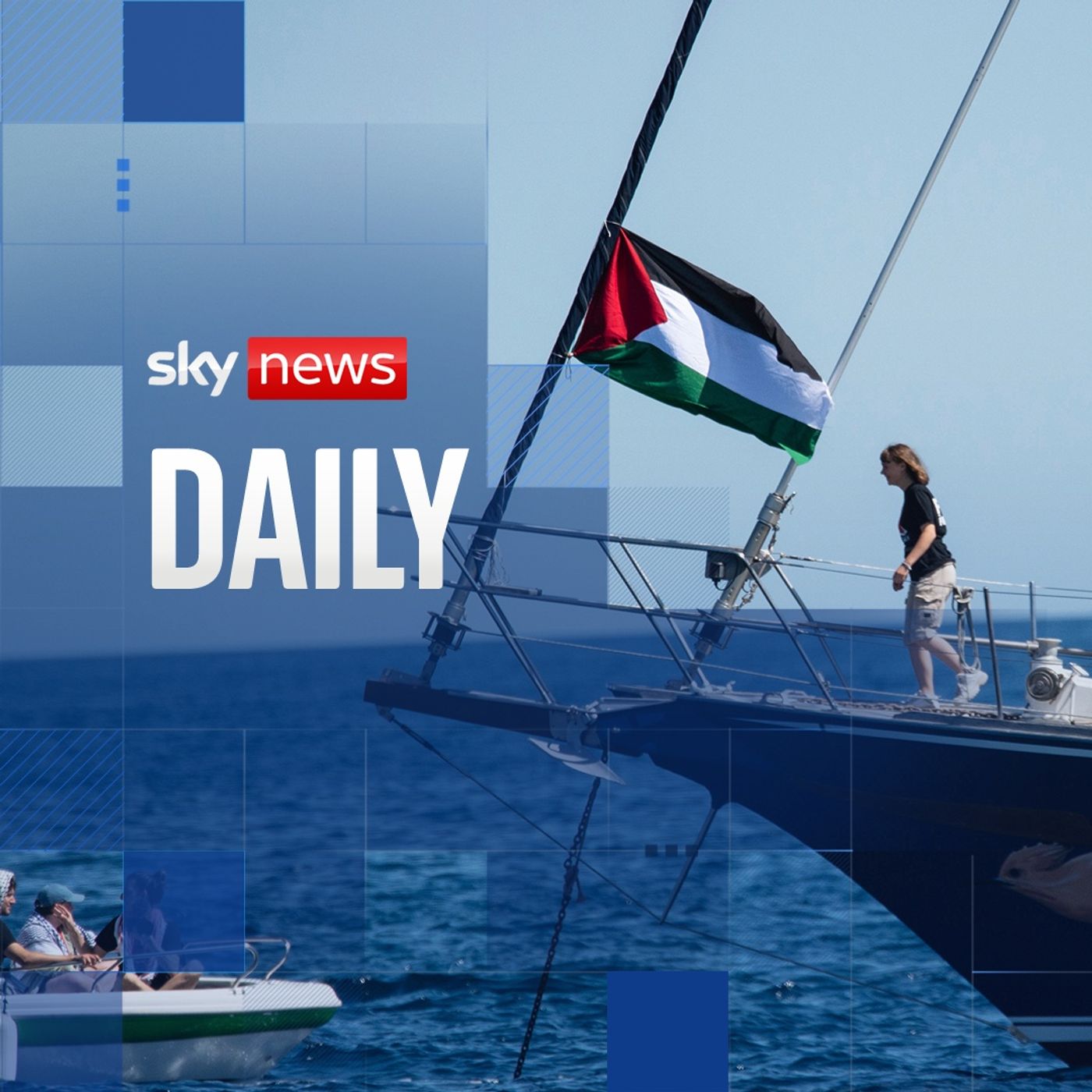
0:25Darren McCaffrey: Well, the yacht with Greta and 11 other volunteers on board had set sail for Gaza over a week ago, carrying a small amount of humanitarian aid. But at three o 'clock this morning, it was intercepted by the Israelis.
0:46Darren McCaffrey: Now that's audio released by the activists of the moment we think it happens. Israel has branded it a selfie yacht and said that the activists will have to watch footage of the October 7th attacks by Hamas before they're allowed to return home to their countries. our Middle East correspondent Alistair Bunkel is in Jerusalem. And Ali, just give us a sense of who was on this boat. So there were 12 activists, many of them French nationals, probably the two most prominent figures on board, French MEP and also Greta Thunberg, the Swedish activist, best known, of course, for her environmental campaigning, but also increasingly has taken a pro-Palestinian stance, in recent years and obviously has a big global following.
1:40She was, I think, probably the most prominent person on board this yacht. There were others. Liam Cunningham, the Game of Thrones actor, wasn't on board the yacht, but was there in Sicily and Catania just before it set sail to give his support for it. So quite a lot of global support for it. But equally, that's countered by many others wondering exactly what the purpose of it really is.
2:05Darren McCaffrey: Just on that point, there was food on board, wasn't there? But in the end, this was also about publicity, really, wasn't it? I think even the activists would accept that. So I suppose they were trying to achieve, you know, three things. Firstly, was to try and break a naval blockade, an Israeli naval blockade of Gaza that has been in place for many, many years, which ostensibly is there to stop weapons being smuggled into Hamas, but also prevents normal kind of shipping coming and going from Gaza and also actually often hampers the work of Gaza. At least it did in peacetime. So to try and break that blockade.
2:50Secondly, they were carrying some aid on board, baby formula, nappies, medicine, etc. I mean, they're on a yacht, so they were pretty limited in what they could carry. The Israelis have said that it amounted to basically a single truckload. And so it was never going to make a difference to the people of Gaza. That definitely was more symbolic than anything else. And then thirdly, yeah, they will say raise publicity for the humanitarian crisis inside Gaza and for what's going on at the moment. And genuinely, it's a humanitarian crisis in Gaza. But the Israelis and any critics of this yacht will say they were also trying to raise their own personal publicity.
3:31The Israelis this morning described it as the selfie yacht, suggesting they'd spend all their time basically filming videos and taking photos for their own Instagram.
3:38Darren McCaffrey: But from the outset, the Israelis very clear they're not going to allow it to break the blockade. And then we had effectively it been stopped in the early hours of this morning. I think the Israelis considered when they were trying to work out what to do and how to respond to this yacht that was coming their way. I think they briefly considered letting it through and saying, well, you know, fine, go ashore. But they felt that it would set a precedent that if the blockade was broken by this yacht, then it would encourage many other yachts with activists on board or ships with activists on board to try and make that journey.
4:16So the decision they came to was the deployment of Chayatet 13, which is a commando unit, kind of US Navy SEALs, Britain's SBS, that kind of thing, highly trained. From what we can gather, information is pretty limited because the communications on board the yacht were affected. Their GPS was jammed. But what we can gather is they surrounded the yacht at sea, but also flew drones above it. And then they boarded it. And then really the latest we've heard when the Israeli foreign ministry posted photos and some video of the soldiers on board the yacht handing out bottles of water and sandwiches to the 12 activists.
5:01Now, those videos, everything looks calm and under control. I think everyone will be very pleased that if that is a reflection of the reality, then this didn't end in some violence because that is what has happened in the past when flotillas have tried to break this blockade. But we haven't heard anything since. We gather they are being towed to the port of Ashdod, south of Tel Aviv, north of Gaza, Israel's biggest port. And from there, they will be deported back to their home countries.
5:32Darren McCaffrey: The Israelis have said this is not just about publicity, it's about self-publicity, Alastair, haven't they? And they say they're going to make these activists to watch footage, unedited footage, from the October 7th of the attacks. Let's make no mistake. I mean, there is a sort of a propaganda element to this on both sides. You know, obviously, for the activists, there is a propaganda element of trying to, well, at the very least, challenging Israel by sailing towards Gaza, and then hoping to break the blockade and land ashore in Gaza, and to raise a sort of an awareness there. And from the Israeli point of view, there is a propaganda element to it as well.
6:12You know, they have tried to execute an operation to board this vessel with minimal fuss and then have told the world how they've done that. And then they will, we're told, under the orders of Israel's defense minister, they will make these activists watch the 43-minute video that is totally uncensored. It was put together not long after October 7th. And it's a compilation of raw footage from October the 7th from multiple different sources, from Hamas body cameras, from dash cams on cars, from videos, mobile phone videos, you name it, put together to show just the atrocities that took place on that day.
7:00And they've used it to show it to journalists like myself in Israel and around the world, diplomats, politicians, to make everybody aware of what went on on October the 7th. And they say they're going to show that to these activists. So, you know, I think it's reasonable to say that both of the parties involved in this incident are sort of using it to a degree to their own advantage.
7:27Darren McCaffrey: And let's talk about the situation inside Gaza. As you say, we've heard from the United Nations and others about how desperate they think things are. And I know you and I have talked about this in the past, and it's been raised many times, journalists and online, independent journalists into Gaza. But we have a sense that things are pretty desperate. Yeah, they're really desperate. You're right. Independent journalists, international journalists like myself and others working for major news organizations cannot get access into Gaza, except if we are invited in on rare occasions by the Israeli military for brief and limited embeds.
8:06And so we all rely on journalists within Gaza who many organizations, including Sky, have employed for a number of years. So we know from that source that the humanitarian crisis is acute. We also hear it from international organizations, the United Nations. We also have heard it from international medics who have been operating in Gaza for brief stints. Recently, there were three or four British medics who very publicly were sending videos out multiple times a day about the desperate situation with inside hospitals and the lack of medicine and the lack of fuel to run electricity and generators, etc.
8:54So we can build up a pretty good picture day by day of the humanitarian crisis inside Gaza. But it is the subject to a lot of debate, to put it mildly, as to how bad it is. It's never quite reached famine status. That is actually a sort of defined legal status, really. It's never quite got to that point. but it is at the point where a very large number of Palestinians in Gaza are now severely malnourished, particularly children who are not getting the nutrients and the food they need, especially babies. And that then has knock-on consequences. It's not just about people being hungry. Of course, that's a major factor.
9:44But when people get very hungry over a long period of time, they get desperate. And when people get desperate, the security situation starts to break down. So the lack of humanitarian aid has huge consequences on a number of different levels.
9:58Darren McCaffrey: Finally, Ali, how does Israel respond to this? Because I think it is fair to say that the calls from quite a few now in the international community, allies of Israel about what's happening in Gaza are getting louder. And this will almost certainly not be the last attempts by activists and others to raise attention to what's happening in Gaza. Is there a sense from where you are in Jerusalem that Israel may change direction or that they simply are not really responding to this increasing pressure? I think the truth lies somewhere in the middle. And it's sometimes quite hard to establish exactly what the kind of the mindset of the Israeli government is.
10:46So the messaging that comes out on social media can be very robust, pretty stubborn, quite aggressive sometimes. And, you know, I think a lot of the time international pressure, whether it's about getting more humanitarian aid into Gaza, whether it's about a ceasefire, whether it's about the way the military operations have been carried out in Gaza. You know, I think there's a sense that it kind of falls a lot of the time on deaf ears in Israel. I don't think that's always the case. When you sort of live here, work here and, you know, cover this every single day, I think you notice moments when, you know, Israel and Benjamin Netanyahu, the prime minister, are aware of the situation in Gaza and the impact it might be having on Israel's reputation abroad.
11:38What's happening in Gaza, the humanitarian crisis, it is a crisis. It is desperate, but it hasn't yet tipped into famine. And I think one of the reasons it hasn't yet tipped into a famine is because Israeli government have always been acutely conscious never to let it get quite to that stage. So yes, they imposed an 11-week blockade on Gaza. But one of the reasons that they started to allow limited LA back in is because they recognized that it was getting to a moment, sort of a tipping point in terms of the humanitarian crisis. Normally, it's the Americans who have the biggest influence over what the Israelis are doing.
12:14And it's often not really that noticeable. But, you know, sometimes after the event, you suddenly realise actually that kind of situation has changed slightly. Why has that changed? Well, probably because of the pressure they've been coming under globally to change.
12:31Darren McCaffrey: Alistair Bunkel, for us in Jerusalem, thank you very much indeed for your time today. Well, that is it for us on Sky News Daily today. We're back again tomorrow.
12:44Darren McCaffrey: Thank you.


