
 Ask ChatGPT


The episode covers two themes: (1) online sadistic groups targeting vulnerable children in the UK, with a call for parents to be aware; (2) UK royal finances and cost-saving claims. The Royal Train is being decommissioned in the next couple of years. Key figures: the Sovereign Grant is £86.3m this year, rising to £132m over two years, driven by Crown Estate profits (including wind farms). Travel examples include £400,000 for King/Queen/staff flights to Australia and Samoa, plus other paid-for portions, and a £4.7m annual travel bill.
Norman Baker, former Liberal Democrat MP and author of And What Do You Do? The Royal Family Don’t Want You to know, who argues the monarchy is a waste of money and estimates £500m/year, calling for Duchies and royal spending to be more accountable.
Written by AI. May contain mistakes.
The episode opens with a focus on the Royal Train and questions about royal finances.
“Online sadistic groups are targeting vulnerable children.”
Discussion about the announcement of the Royal Train's decommissioning amid rising royal costs.
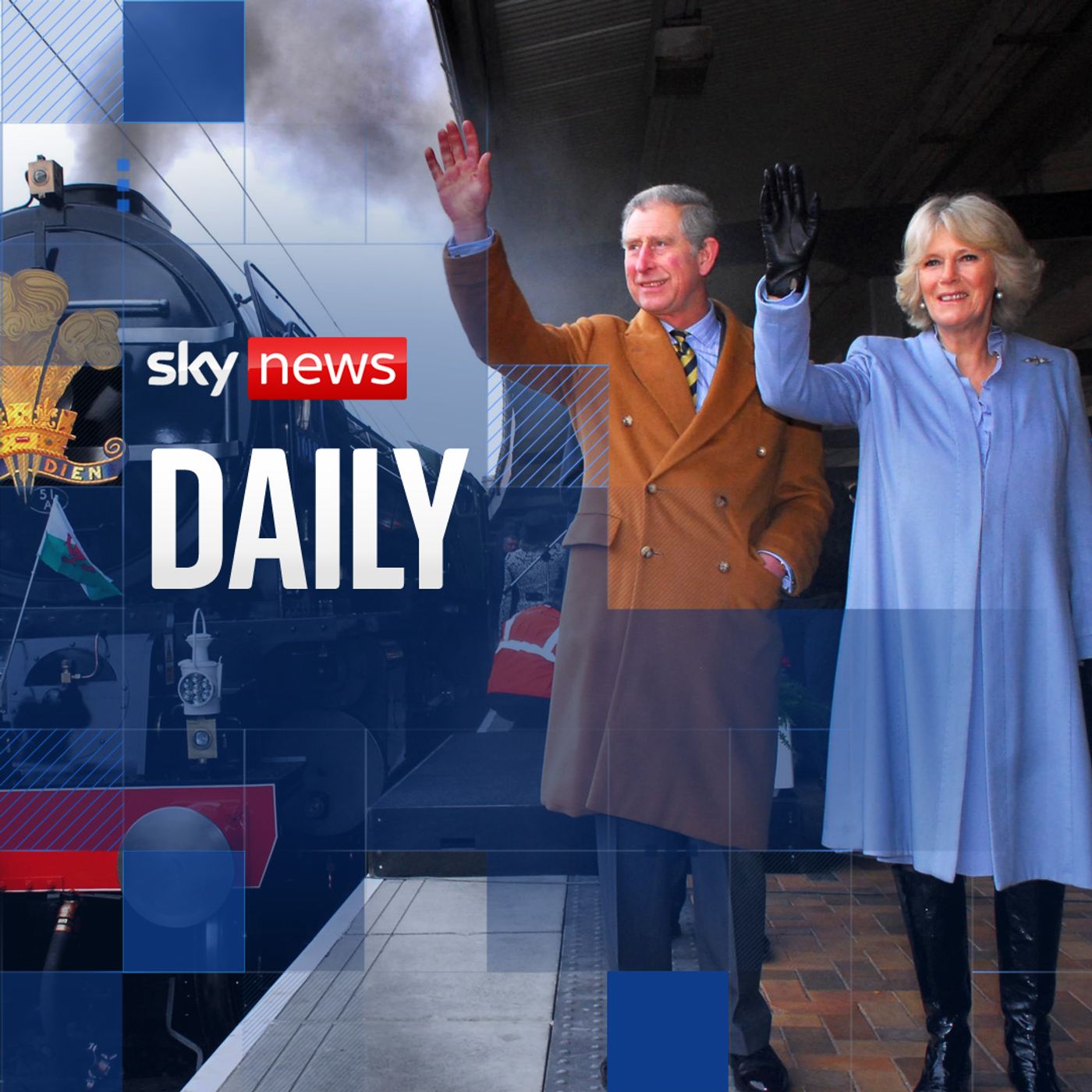
“I'm Gareth Barlow and on today's Sky News Daily, it's the end of the line for the Royal Train.”
An exploration of the staggering figures related to the royal family's travel expenses and funding.
“We'll have more on that later with the former Lib Dem MP Norman Baker.”
Insights into Prince William's finances from the Duchy of Cornwall and the controversy surrounding taxation.
“And we always, we get given kind of all these documents and it's always kind of the supplementary one where they give us the travel bills for journeys that were over£12 ,000.”
Norman Baker discusses the costs of the royal family and argues for greater transparency and accountability.
“But many would argue those buildings are not open to you and I most of the year.”
A discussion on potential changes in royal finances and the public's perception of the monarchy's value.
“You know, in the Queen's time, Queen Elizabeth, you know, she would take the train from Liverpool Street up to East Anglia to get to Sandsingham.”
Explore the monarchy's awareness of social and environmental issues regarding royal finances.
“to the keeper of the privy purse yesterday.”
Discussion about the alarming rise of online predators targeting children.
“Online sadistic groups are targeting vulnerable children.”

Get the gist, explore an idea or ask about something said.
 Claude
On This Is Why, what are the key points of this episode?
Searching your listeningAutomatic transcript. May contain errors.
0:00Gareth Barlow: Online sadistic groups are targeting vulnerable children. The sheer amount of potential victims is astounding. It's a very real threat and it is here in the UK. It will always shock me. A young boy could commit such awful offences. Some of the content has been the worst I've ever seen. Parents need to be aware of what can happen on these sites. Find The Calm on Sky News YouTube. I'm Gareth Barlow and on today's Sky News Daily, it's the end of the line for the Royal Train. But do the Royal Family need to do more to save us money? Online sadistic groups are targeting vulnerable children. The sheer amount of potential victims is astounding.
0:49Gareth Barlow: It's a very real threat and it is here in the UK. It will always shock me. A young boy could commit such awful offences. Some of the content has been the worst I've ever seen. Parents need to be aware of what can happen on these sites. Find The Calm on Sky News YouTube. The Royal Train. Did you even know the royal family had one? Well, they do, but today the Palace have announced it's being decommissioned as part of a cost-saving measure. The Sovereign Grant, the public funding for the running of the costs of the monarchy this year, comes in at a remarkable£86.3 million. In that, 141 helicopter trips taken last year at almost£475 ,000 and 55 private charter flights costing almost£600 ,000 too.
1:46The figures have certainly raised a few eyebrows, especially being published on the very day the government is voting on welfare cuts during a cost-of-living crisis. We'll have more on that later with the former Lib Dem MP Norman Baker. But first, our Royal Correspondent Rhiannon Mills is here. Rhiannon, it's 2025 and we're talking about a thing that many people I don't even know exists, a royal train. Well, it's going to now be past tense shortly, but it's got one last hurrah.
2:14Gareth Barlow: Yeah. And look, it's this time of year where we get a peek inside the royal finances. Yesterday, the Royal Press Pack, we all kind of have to turn into forensic accountants as well. It's a slightly peculiar day where we get all of the royal finances and we get bombarded with spreadsheets and graphs and all sorts. And it's trying to pick apart what is the story. And look, the one that everybody in the room started talking about immediately was the royal train. And it's because historically it was such a big favourite for Queen Elizabeth II. She loved using it. As she got older, it was the perfect way to get her up and down the country.
2:49Gareth Barlow: She could stay on the train overnight in terms of safety, security. It was seen as the perfect way to transport the monarch and get her to as many places as possible. But now, yeah, apparently the king, with the fondest of farewells, has decided that it is now going to be decommissioned in the next couple of years. That was the big headline. But behind the headline is some massive figures. You're kind of delving into the finances of the royal family. What have we found? Do you know what? I think if I were an anti-monarchy campaigner, I would probably be saying, do you know what? all you royal journalists, you've had the wool pulled over your eyes because you're all talking about this train.
3:26Gareth Barlow: Actually, let's look at the figures which are enormous when you consider, look, all the other discussions going on today about welfare reform, people struggling with the cost of living crisis, the fact that the royal family last year, it was£86.3 million they were given through the sovereign grant to fund their public activities. The even more eye-watering figure is the fact that over the next two years that is going to jump up to 132 million pounds. Enormous, isn't it? So the Crown Estate is this portfolio of land and buildings which is in the trust of the royal family and that makes enormous profits and it's made an even bigger profit in recent years because of wind farms that are being built on their land.
4:14Gareth Barlow: They own the seabed. And that means that the amount that they get through the sovereign grant, which is 25 % of the profits of the Crown Estate, has kind of leapt up. The train is out. Yes. But are the big, big eye-watering bills when it comes to travel very much present? And if anything, may potentially going to get even more expensive because there's new helicopters coming. Yeah. And we always, we get given kind of all these documents and it's always kind of the supplementary one where they give us the travel bills for journeys that were over£12 ,000. So those are the ones that we always kind of go for.
4:50Gareth Barlow: But my goodness, one that really jumps out this year is, do you remember the trip to Australia and Samoa at the end of last year? £400 ,000 the flights cost for the king, the queen and staff. OK, that figure is big enough. But then you have to remember that actually some of the flights were actually paid for by the Australian government. So that's on top of the 400 ,000. And also some of it was paid for privately because the king and queen came back via India. So that 400 ,000 that we paid for is just a bit of it. Which bit, which in-flight catering is that paying for? It's enormous. I can't fully comprehend how it would have cost that much.
5:34Gareth Barlow: But hey, those are the figures. and that is just one small proportion of a total travel bill of£4.7 million. For one year. Yes, for one year. It bonkers figures and I'm sure many people will be listening to this going, hang on a second, Andrew's not doing any work anymore, Harry and Meghan aren't doing any work anymore, it's supposed to be this slimmed-down monarchy. We're talking about figures that are going up and up and up and up. Yeah, I would say that, and actually this came across quite loud and clear when I was at Ascot a couple of weeks ago. People like Ascot, for example, would say you cannot put a price tag on what the royal family mean in terms of profile for this country.
6:14Gareth Barlow: And actually, the keeper of the privy purse, kind of in quite an interesting quote, said yesterday, and I think this is really telling. I have at the back of my mind a global perception survey conducted shortly before the period to which this sovereign grant report relates, which found that the monarchy is the single biggest influence on perceptions of the UK among international audiences and the single biggest unprompted topic that other nations have seen or heard about the UK ahead of sport, politics, culture and the economy. Let no one say that the work of the royal family goes unseen, unheard or unnoticed.
6:54Gareth Barlow: So ultimately, that would be their argument. But again, anti-monarchy campaigners would say, well, actually, where's the kind of real proof of this influence that they have abroad? And ultimately, do they need to cost this much money? And that will be the thing for members of the public. They'll go, what else is in it for me? Where's the value for the ordering member of the public? Certainly from the palace side, they will say that, look, this money, yes, some of it will go towards the refurbishment work for Buckingham Palace. Some of it will also go towards other heritage building projects. And they would argue that they are making sure that they are kept kind of up to date, that they are refurbished, that they kind of tick off all the health and safety kind of fire eggs and things like that.
7:35Gareth Barlow: And they're doing that for the nation to make sure that these buildings are still standing in decades to come. If that money didn't come from the sovereign grant, then we'd have to pay for it in other ways of taxation. But many would argue those buildings are not open to you and I most of the year. And therefore, I'm not entirely sure that their argument would wash with some people. So we've learned that the train's out, profits are up. But the one thing we haven't really learned to the same degree is what's happening for Prince William. So Prince William has the Duchy of Cornwall. So this, again, is another portfolio of land and buildings which funds the heir to the throne.
8:17Gareth Barlow: And he inherited that when his father became king. He basically takes the profits from the Duchy of Cornwall to fund his private life, some of his public work with the Princess of Wales and their children as well. Now, last year, we found out that he took£22 million from the duchy. There was a bit of a row because we said, well, how much tax is he paying? Because his father, when he was Prince of Wales, did used to declare his tax. He didn't have to, but he did because he wanted to be transparent. Prince William, last year, we were told, well, we're not going to tell you how much tax he's paying.
8:58Gareth Barlow: this year, they kind of took a bit of a different tack in saying, well, he pays the highest form of tax. Still no financial number on it. Rhiannon, thank you. We'll be back actually with you in a bit. But as you mentioned, there are people who argue the royals aren't a good deal for taxpayers. One of them is Norman Baker. It's a name that might be familiar. He was a Liberal Democrat MP, also the author of And What Do You Do? What the Royal Family Don't Want You to know and believes that the royal family are, well, a waste of money. Our royal family is extraordinarily expensive, at least 10 times the cost of any other monarchy in Europe.
9:39And the cost has been ballooning over the last 15 years. You've described the royal family's finances as utter hogwash. It's quite the statement. What's it all about? You have to remember the civil list, which was the old system, provided the royal family with 7.9 million in 2011. The amount of money coming this year is 132 million. And on top of that, you have the exemptions from taxation, which are unique to the royal family. You have the money for the Duchy of Cornwall, Duchy of Lancaster, which in my view should go to the treasury, but instead is taken by the king and by Prince William. You've got the exemptions from corporation tax, capital gains tax on the duchies.
10:20You've got the enormous cost of security, you're hoping to protect people in the royal family, no one's even heard of. And the estimate, really, which I put together for my new book, is£500 million a year for the royals. So all of that considered, and you say that they're far more expensive than monarchies elsewhere in Europe, if you were to cut, if you were to spend and if you were to save, what parts of the royal family's finances would you be unleashed at? The Duchy of Combe or Duchy of Lancaster historically ought to be part of the crown estate and therefore part of the public sector, with the 20-odd million pounds profit for each of those duchies each year, going to the exchequer to pay for things like defence, schools and hospitals, in the same way the other Crown Estates money since 1760 has gone to the Treasury.
11:09Quite clearly, the transport arrangements are completely out of control for the royal family. The amount they spent on scheduled flights and scheduled rail was very little compared to what they spent on charter aircraft. You know, in the Queen's time, Queen Elizabeth, you know, she would take the train from Liverpool Street up to East Anglia to get to Sandsingham. You know, that sort of thing has disappeared now with Charles and Camilla. They'll always opt for a charter flight. Charles famously said that the first-class travel on British Airways was deeply uncomfortable. Well, you should try economy class, if you think so.
11:44Especially for someone of my height or my knees, I would agree with you. some anti-monarchy campaigners will argue that the scrapping of the royal train provides a kind of useful distraction from some of the exorbitant figures we're talking about what would you make of that kind of argument well i mean i think there's some truth in that give you another example we spent probably at least 72 million that's the official figure on the coronation there is no requirement for a coronation it's just a pr exercise for the royal family no other european monarchy bullets with a coronation. The last one it did was Norway in 1906.
12:21Is there not an argument then on the basis of the last European coronation was 1906 to keep them, to be the people that stand out, to sell that image on the world stage? Is there not an inherent value in keeping some of that tradition? Well, the coronation probably cost the taxpayer money. There was an income stream from tourism. I don't think we should base our constitutional arrangements on tourism, but you've remember people were given a day off. You know, the loss in GDP terms was more than the coronation brought in. So it doesn't actually make any sense economically. And just to remind people that the royal palace, people say Buckingham Palace is a great attraction.
12:57The royal palace in Europe that provides the most visitors for the most money is the Palace of Versailles. And the French abolished their monarchy in 1848. That's a topic we could get on and do many, many podcasts, a whole series on. I think it's fair to say whether or not the monarchy stays or not, but let's assume that it carries on in its current form. The royal family is marking its own homework, it's controlling its own finances, and then also doing its own accounts. Do you think there is an argument to take that control away from them and put it into the hands of somebody else? The royal family is part of the public sector, just as the NHS is, as government is, as local councils are, as schools are.
13:34They should be subject to the same rules of accountability and controls and expenditure as every other part of the public sector. Norman, thank you so much. Norman's thoughts there. You may agree or disagree. Well, let's bring back in our Royal Correspondent, Rhiannon Mills. Rhiannon, what about further announcements on more savings? We can't see the Crown Jewels sold off. They've got to stay. Are we going to see anything else maybe sold off or not used or done differently?
13:59Gareth Barlow: I think certainly from listening to the keeper of the privy purse yesterday. Change his type of stuff. Yes, I can say it probably. I think what he says now is that you have a monarch who is mindful of the world that he's living in, the world that they're operating in, the social struggles that people are having, and also the environmental impact of the buildings and the way they travel around the world. But I don't think there's necessarily going to be any major announcements. I can't see them all of a sudden, I don't know, selling off Windsor Castle or any of their other properties like Sandringham, for example.
14:35Gareth Barlow: but yeah don't forget it was Queen Elizabeth who decided that Buckingham Palace should be open during the summer and I think they're probably always looking at ways that they can justify in a way look this is what we're doing with the money that we get and this is why it's for the public good. Rhiannon thank you that's all for today if you've enjoyed this episode click follow wherever you're listening so you can get the next one straight into your feed we'll be back again tomorrow.
15:07Gareth Barlow: Online sadistic groups are targeting vulnerable children. The sheer amount of potential victims is astounding. It's a very real threat, and it is here in the UK. It will always shock me. A young boy could commit such awful offences. Some of the content has been the worst I've ever seen. Parents need to be aware of what can happen on these sites. Find The Calm on Sky News YouTube.


