
In short
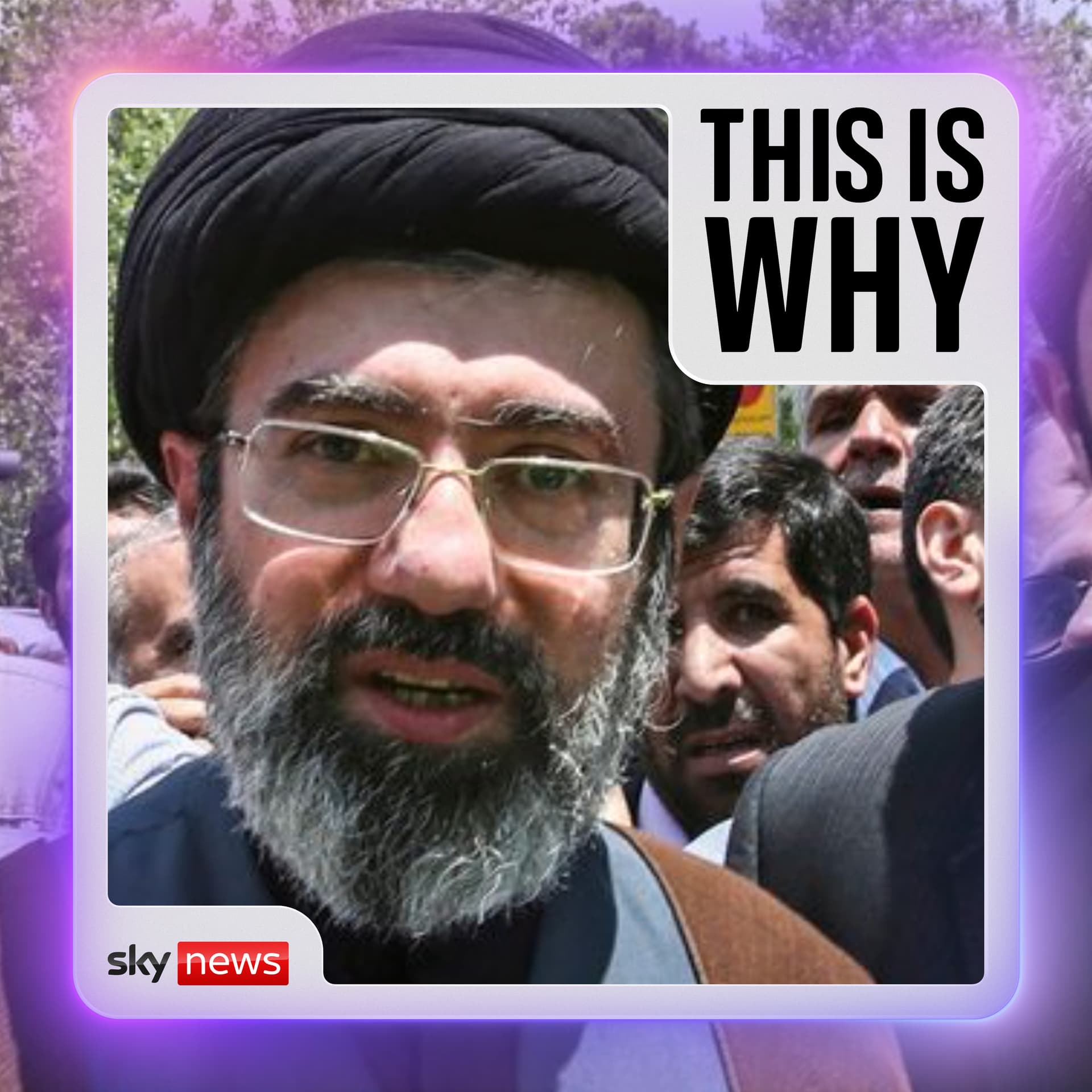
Iran’s new Supreme Leader, Mustafa Khomeini (Mujtaba Khomeini), replacing Ali Khamenei, and whether he could become a target in a US/Israel escalation tied to Donald Trump.
Guest backgrounds
Dr Louise Kettle, Assistant Professor of International Relations at the University of Nottingham, focused on British-Iranian relations.
Key claims
The Supreme Leader is Iran’s ultimate political and religious authority, with final say over the military and veto power over state decisions. Khomeini is a “continuity candidate,” aligned with security structures and likely close to the Islamic Revolutionary Guard Corps. His selection is unlikely to signal major policy change; hardliners and institutions like parliament and the IRGC supported him. Regime survival is explained by deep institutional entrenchment (religious, administrative, military), not just leadership turnover.
Notable examples
Assembly of Experts (88 jurists) elects the Supreme Leader; Israel/US rhetoric about “whack-a-mole” leadership targeting; comparison to Venezuela’s Maduro as a less entrenched regime.
Written by AI. May contain mistakes. Listen to the episode to check what was said.
Chapters
Tap a time to open that second in VOThe Aftermath of Khamenei's Death
0:48 to 1:55
Discussion on the reactions to the death of Ali Khamenei and the implications for Iran's leadership.
“The killing of Iran's supreme leader was met with grief and devastation by some.”
Who is Mujtaba Khamenei?
1:55 to 4:53
An exploration of the new supreme leader, Mujtaba Khamenei, and his background.
“So who is Iran's new supreme leader and what will this Ayatollah mean for the future of Iran and its people?”
The Process of Selecting an Ayatollah
4:53 to 6:56
Explanation of how an Ayatollah is elected in Iran and the role of the Assembly of Experts.
“I can't quite believe I'm about to say this, but isn't he the ultimate Nepo baby?”
Public Reception of Mujtaba Khamenei
6:56 to 9:48
Analyzing how different factions in Iran might respond to the new supreme leader.
“How do you think he's going to be received by the ordinary Iranian?”
The Challenges Ahead for Khamenei
9:48 to 12:55
Discussion on the challenges Mujtaba Khamenei faces as he assumes leadership amid external pressures.
“I think the conflation here is the removal of top-level leadership with regime change.”
Western Perspectives on the New Leader
12:55 to 14:03
Considering the West's viewpoint on the selection of Mujtaba Khamenei and its implications.
“They have been working against the Americans for a long time.”
Tadakhamenei's Priorities as Supreme Leader
14:03 to 15:33
Explore the immediate concerns and strategies of Iran's new leader.
“What do we think then, which Tadakhamenei's priorities will be now that he has taken on the post?”
Transcript
Automatic transcript. May contain errors.0:02Sky News. The full story first.
0:11Iran has a new supreme leader, Manchitaba Hamini. But this doesn't make the country's future any more secure. And this is why. How does a banana trigger a CIA-backed coup? Do AirPods herald the arrival of a new global order? What do LED lights say about the future of humanity? I'm Ed Conway, and in each episode of my new podcast, Stuff Matters, I take an object, crack it open, and reveal the world-shaping forces hidden inside. This is economics told through the things we think we understand. Search Stuff Matters on your podcast app to listen and follow.
1:05The killing of Iran's supreme leader was met with grief and devastation by some.
1:13Others, opposed to his harsh rule, celebrated Ali Khamenei's death. Some even thought his end could mean the end of the Iranian regime, so attention soon turned to who might come next. I guess the worst case would be we do this and then somebody takes over who's as bad as the previous person, right? That could happen. Could Donald Trump's worst case scenario be playing out? Now we've just got some breaking news that's just come into us. Iran has named the new supreme leader. It will be Mustafa Khamenei. The son of the previous Ayatollah, he's been described as the power behind the ropes. Though his lack of a public profile means not an awful lot is known about him.
1:55So who is Iran's new supreme leader and what will this Ayatollah mean for the future of Iran and its people? Dr Louise Kettle is Assistant Professor of International Relations at the University of Nottingham with a focus on British-Iranian relations. Louise, to those of us in the West, the largely democratic West, the idea of a supreme leader, an Ayatollah, a religious supreme leader, it's a bit of a confusing one. So can you explain what exactly is the post of Ayatollah? The Ayatollah is the supreme leader of Iran. They're ultimately the authority for everything that goes through the Iranian state.
2:32So there are several different power pockets within Iran, within the state itself. But the ultimate decision maker for all things is the supreme leader. The difference for them as a leader of an executive versus perhaps other executive leaders that you might be more aware of across the world is that they also have this religious authority behind them and upholds Sharia Islamic law as part of its state understanding of law and order. So he's also the ultimate religious authority. So who exactly runs Iran then? What can the Ayatollah do that, say, for example, the president cannot? So he has especially the final say over everything related to the military.
3:17So he's ultimately the commander-in-chief, not the president. He also is technically the leader of the executive. So there is a parliament, there is a president, but they exist and everything happens within the parameters set by the Supreme Leader. They have a veto power if they would want to. In many cases, the Supreme Leader does let the president have quite a lot of autonomy because there is an issue around elections and the people having their say. But should they wish to, he is the ultimate decision maker. What then do we know of Mujtaba Khomeini? I mean, he's not been the most prominent member of the Iranian regime, although to people interested in the region, obviously, you are aware of him.
3:59Yeah, so he's the second son of the supreme leader that was killed by the US-Israeli strikes. He is not very well known because he's never held public office and he's never given any formal speeches, for example. So we don't know a lot about his individual ideas and perspectives and opinions. What we do know is that he's worked for his father for a long time, since 1997. Think of him as a sort of chief of staff or a deputy chief of staff to his father. So we know that he is probably quite aligned with his father's ideas. He really is the continuity candidate for Iran. And the other thing that we know about him is that he is quite closely aligned with the security structures and powers within Iran.
4:44So he's supposed to have a very close relationship with the Islamic Revolutionary Guard Corps. And that's thought to have come out from his experience of having service within the IRGC during the Iran-Iraq war of the 1980s. I can't quite believe I'm about to say this, but isn't he the ultimate Nepo baby? I mean, I understand that the position of supreme leader isn't hereditary. On that basis, might there be criticism of him? I think that has always been one of the main concerns since he's been a contender for this position. I mean, ultimately, in 1979, one of the issues of the revolution was to overthrow the Shah and his legacy and that there was no longer going to be this kind of dynastic process of people in authority.
5:26Obviously, this completely counteracts that idea. So there is a concern about his authority from a religious perspective, a concern about his authority in terms of following a direct lineage from his father. and of course his father's supreme leader had earned his authority over a very long period of time. I mean he'd been supreme leader for almost 40 years so he's not going to instinctively have that same level of gravitas straight away. Why do we think that he didn't pursue a career in public office, a more political career? The thinking behind it is that this is quite a deliberate decision.
6:03He has always, for a long time actually, been seen as a potential candidate as a successor for his father. This isn't sort of new. And so the thought is that this has been a deliberate decision in order for him to maintain a little bit of mystery, so to be able to develop his ideas without being too explicit about what they are. Just explain the process then, Louise, if you can, of how an ayatollah is elected. I've got visions in my head of the film Conclave, you know, how we get a pope, lots of religious figures locked in a room in black smoke coming out a chimney at some point, the future. It's not entirely like that, is it?
6:35No, I mean, there is an assembly of experts that decides on the Supreme Leader. So there's 88 members of the assembly, jurists. There's a smaller panel that decides a kind of shortlist of possible candidates. And those 88 experts then actually do the final vote to decide who the next Supreme Leader is. How do you think he's going to be received by the ordinary Iranian? I think it will depend what faction you are in. You know, Iran is a very factionist society. We've got lots of different political ideas and parties and spectrums. So for those who are supportive of the regime, you know, we saw people coming out in the streets in celebration of his announcement.
7:14So it's a positive thing for them that the regime is still in place and strong. Obviously, we've also seen at the beginning of this year, a lot of protests against the regime. So for those people, this is not ideal. You know, they want to see some change, some difference in the approach. And that is not what is being signalled by picking the supreme leader's son. Is he sufficiently religious enough to be the supreme religious leader? By my understanding, I mean, he is at best a mid-ranking cleric. I think this is one of the concerns that's definitely come out. You know, he has had some religious training, but famously, yes, he's not released some of the papers that you would expect of a high-level cleric that explains their views on religious law and their interpretations of religious texts.
8:01However, before he was announced as supreme leader, it was put forward that he had been elevated to the title of Ayatollah, which means senior cleric. And he's been given this position in order that therefore he can be the supreme leader. So there is some debate there about his religious authority. However, having said that, his father went through exactly the same process. So his father was also not officially an Ayatollah before he was also a Supreme Leader. So there is precedent for this to happen. The continuity candidate, as you say, at least in terms of the fact he is following in his father's footsteps, I wonder though, do we get any indication that he might be willing to do things differently?
8:39At the moment, I would say no to that. He has been supporting his father for this whole time. I suspect the selection of him has been made by those hardliners in the Assembly of Experts, specifically for the reason that he is going to continue with what's being said. And I think the other thing to flag up is very quickly, perhaps not surprisingly, but the Parliament and the IRGC did come out and support his selection. So again, that kind of suggests that he's acceptable to all of them as a candidate, and therefore you're probably likely to see more of the same. I think the main priority for Khamenei, is going to be trying to reassure people that the regime is not collapsing.
9:21So as a result of that, you know, his priority will be to say, things are saying as they are, there is not a problem here, we are going to continue moving forward in the way that we have been. That is one of the things that I think many people have been watching the conflict, and notwithstanding the rhetoric from the United States and Israel, how on earth has the Iranian regime manage to stay in place, not topple, and seemingly keep control of the domestic population as well? I think the conflation here is the removal of top-level leadership with regime change. This is not the same as Venezuela and the Maduro regime, which does not have that kind of deep ingrained roots within society that the Islamic Republic has.
10:05What you have to remember is the islamic republic is the biggest employer in iran you know around eight million people are on the payroll of the islamic republic and that that does include retirees that does include dependents but around five million people are actually employed in some way through the kind of civil and administrative services by the islamic republic itself so it's not just the kind of politics that we're seeing in the leadership there's also the military structures obviously the parliamentary structures civil and administrative structures and fundamentally the big difference about Iran, of course, is the religious structures, the deep religious foundations, the clerical hierarchies, and these all interlink.
10:45So it's much more complicated to see a kind of regime change here than it would be, say, for example, in Venezuela. But still, I mean, how many will be as aware as anyone else that right now, Iranian leaders tend to have a pretty short shelf life and the Israelis are promising, in essence, to play whack-a-mole with them. When one pops up, they'll take it out and wait for the next one to come along. He will be mindful of that, won't he? You would assume so. I mean, Israel have made it quite clear that Moshe Bar-Harmony would be high on their list. And the US, you know, Donald Trump came out and said there was one candidate that would not be acceptable to him, and they have selected that candidate.
11:21So I think he's got a very difficult balance to strike at the moment in reassuring his population and his power base, running a war and staying safe. Look, it does feel that the aims, the end result that both the United States and Israel are looking for is a bit amorphous at the moment. I'm not entirely certain that they themselves have worked it out. And in those circumstances, this is a man who has lost his father, his wife, his sister, I believe as well, and his child. This isn't someone who's going to be party to a negotiated off-ramp, is he? It seems unlikely, doesn't it? I mean, as you say, the expectations have moved from regime change to sort of military degradation to complete surrender.
12:06And so the goalposts are constantly shifting. So we don't know really what the endgame looks like. There doesn't appear to be a kind of clear plan of how to get there at the moment. Donald Trump seems to be relying on the Iranian population to do some of the work, but how to go about that while they're being bombarded is very difficult to understand. But yeah, what we can think is that Khamenei, as I've said, is going to continue the kind of legacy of his father. He's unlikely to want to deal with Donald Trump because that's ultimately the regime has been fighting the United States since 1979 in one way or another.
12:45It's fundamentally part of its DNA now is that they are anti-Western and particularly anti-Israeli and anti-American. So the chances that they're going to turn around and suddenly want to do a deal are very, very slim. They have been working against the Americans for a long time. They've survived under extreme sanctioning by the US and by the West. Their motto really is to sort of double down and go hard against the United States when the United States goes hard against them. So retreating at this stage would be a real reverse of anything they've done before. Donald Trump says the wrong choice.
13:23This was not a name that he wanted to see installed in that post. But do you think that there is anyone that would have been palatable to, in inverted commas, the West, taking on the role of religious supreme leader? There probably is a couple of reformists who might have been a bit more palatable to the West. You know, we have seen, for example, President Rouhani, you know, that was the president under which the original nuclear deal was done. and had a better relationship with the West. So perhaps he might have been a candidate that Donald Trump might have considered to be appropriate, but he hasn't been clear about it, so we do not know.
14:03What do we think then, which Tadakhamenei's priorities will be now that he has taken on the post? What are his immediate concerns? And what can he do? Genuinely, what can he do in the face of such overwhelming military power? My suspicion is that he will continue to bombard his neighbours as a result of it and hope that the pressure there will translate to the allies putting pressure on the United States and Israel to stop. And at the moment, that seems to be the only plan of action. That or hoping that the United States sort of run out or run low of military equipment or interest and move on to something else.
14:44So they've got time, they're prepared to bide for time. So I think it's just really preparing for the long haul. Does the Ayatollah, does the Supreme Leader possess the capacity to keep the country united in the way in which the army, the IRGC do simply by dint of the fact that they're the ones with the guns? I think the protests at the beginning of the year already tell you no, you know, it's not a united country. There are many people who oppose this existing regime and will continue to do so. The problem that those people have is, as I say, one, that the regime is so entrenched and two, that there is no obvious natural successor.
15:24And so the future there for them is really, really uncertain because there isn't a clear pathway forward. Louise, great to talk to you. Thanks so much for your time. Thank you. Thanks very much for listening. Do remember to get in touch with your comments on today's episodes and your ideas for things we should be covering in future. You can email me why at sky.uk. And if you're not following the podcast yet, why not? Go on, do it for me. Just a click away. We're back again tomorrow.
16:02How does a banana trigger a CIA-backed coup? Do AirPods herald the arrival of a new global order? What do LED lights say about the future of humanity? I'm Ed Conway, and in each episode of my new podcast, Stuff Matters, I take an object, crack it open, and reveal the world-shaping forces hidden inside. This is economics told through the things we think we understand. Search Stuff Matters on your podcast app to listen and follow.
From the publisher
A "continuity candidate" or the ultimate "nepo baby"?
Iran’s new supreme leader is Mojtaba Khamenei, a 56-year-old cleric and son of the previous ayatollah.
Khamenei was once described as "the power behind the robes" in his father's regime - but very little is known about him.
So, who is Mojtaba Khamenei, and how was he chosen? What does his selection mean for the future of the Iranian regime and people?
And with few signs that the war with Israel and the US will abate any time soon, what difference will he make to the outcome of the conflict?
Niall is joined by Dr Louise Kettle, assistant professor of international relations at the University of Nottingham.
Have you got a question for Niall? Email the show – why@sky.uk