
In short
Sky News Daily debates whether COP30 in Brazil will deliver real progress on net zero, or just “hot air,” amid watered-down commitments, rising emissions, and absent top leaders.
Guests
Tom Clark, Sky News science editor, reporting from Brazil and recently visiting the Amazon.
Key claims
COP is a UN “consensus of parties” process that isn’t binding and rarely produces concrete outcomes, though it helps prevent a worse 4–5°C trajectory. The world is near 1.4–1.5°C warming and likely to reach ~2°C. The biggest polluters’ leaders (US, China, India) aren’t attending, reducing leverage. Forest protection and adaptation are the two main agenda priorities.
Notable examples
Amazon deforestation and visible fires; the Paris Agreement’s 5-year emission-reduction cycle; US wind farm shutdowns and Trump’s fossil-fuel push; China’s renewable investment surge despite coal use.
Written by AI. May contain mistakes. Listen to the episode to check what was said.
Chapters
Tap a time to open that second in VOThe State of Climate Commitments
0:17 to 1:15
Discussion on governments' weakening climate commitments and rising emissions.
“Hi all, welcome back to the Daily, where we are asking, is net zero dead?”
What is COP?
1:15 to 2:16
Explanation of the COP system and its historical context in climate discussions.
“Tom, look, just remind us, what exactly is COP?”
The Importance of the Amazon Rainforest
2:16 to 4:06
Insights into the Amazon's crucial role in climate and current issues facing it.
“And interesting, Tom, that for its 30th iteration, COP is being held in Brazil, of all places.”
Key Issues on COP30 Agenda
4:06 to 6:39
Overview of main topics, including forests and climate adaptation strategies.
“So I'm just wondering, how is the Amazon rainforest doing right now?”
UK's Role in Climate Leadership
6:39 to 7:59
Discussion on the UK's climate leadership despite domestic challenges.
“that the warming we're inevitably going to get now brings.”
US and China's Impact on Climate Action
7:59 to 10:23
Examination of the US and China's influence on global climate efforts.
“You know, many of our allies, and the EU included, which still has ambitious targets, they're finding the net zero message a very hard sell politically at the moment.”
Global Energy Transition and Challenges
10:23 to 14:00
Analysis of the global shift toward renewable energy and its economic implications.
“President Xi will not be showing up at this summit in exactly the same way that Donald Trump will not.”
Leaders Missing from COP30
14:00 to 15:54
Discussion on the significance of key leaders not attending COP30 and its implications.
“America needs everything right now, and because of ideology, he's taken something off the table.”
The Legacy of the Paris Agreement
15:54 to 17:47
An analysis of the progress and shortcomings of the Paris Agreement over the last decade.
“The Paris Agreement, all the member states of the UN process signed up to it.”
Future Prospects for COP30
17:47 to 18:53
Speculation on what tangible outcomes might emerge from the COP30 conference.
“I think that's not the best way to judge these things.”
Transcript
Automatic transcript. May contain errors.0:00Coming up on the Sky News Daily, as world leaders get on a plane and head to Brazil for the COP30 climate change conference, will any progress be made or should we expect another load of hot air?
0:17Hi all, welcome back to the Daily, where we are asking, is net zero dead? And look, it's certainly not an unfair question. Governments around the world are watering down their commitment to reducing our impact on the environment. At the same time, temperatures continue to rise, so do emissions. And global pollution has been receiving a bit of a boost over just the past couple of days. Politicians and delegates are flying into Brazil for COP30. That's the annual UN Climate Change Summit. The guest list includes our Prime Minister and the Prince of Wales not attending the leaders of the world's three biggest polluting nations.
0:54Of course, Donald Trump did tell the UN General Assembly recently that climate change is the greatest con job ever perpetrated on the world. So yeah, it would have been a bit of a surprise if he had pitched up in the Amazon. But after three decades, what have the COP summits actually achieved? And what hopes of anything emerging from this one? Tom Clark is Sky's science editor. He's out in Brazil for the summit. Tom, look, just remind us, what exactly is COP?
1:21Tom Clarke:So COP is this system of meetings that was instigated more than three decades ago to try and bring the world together to do something about global warming. And COP stands for consensus of parties. It's all of the member states of the United Nations who send delegations to come and hash out how to most fairly restrict their emissions, how to look after poorer countries who can't do their own, how to pay for this whole endeavour. And it's been a long and, as we know, not particularly fruitful process in terms of meeting the targets they've got. But yeah, a giant sort of roadshow of diplomats and delegates that meet up on an annual basis to try and get their governments to do more when it comes to cutting their emissions and helping the world adapt to the climate change we're seeing.
2:16And interesting, Tom, that for its 30th iteration, COP is being held in Brazil, of all places.
2:21Tom Clarke:There's a bit of symmetry to this in a way because the Earth Summit in Rio back in the 90s was the thing that set this whole endeavour going. It was the first time that the issue of climate change was raised at the UN level and this whole system of annual meetings started back then. Now the meeting in Belém, the city effectively on the mouth of the Amazon River, so it's the kind of connection to the Amazon. There's some symmetry to it. It's been three decades. What have we achieved how you know how much progress are we making and I think those questions really do come into sharp focus like they've never done before I think back in Brazil at a climate summit when we're now really feeling the consequences of that we're close to living in a one and a half degree world the trajectory of emissions growth is pretty clear we are going to get to two degrees there is it really isn't much we could do to avoid that as far as we can tell and the other interesting thing about this being Brazil.
3:17Tom Clarke:For the last few years, climate summits have been in petrostates, in oil-producing countries. And before that, there was one in Glasgow that you might remember, and other European cities. And there was often a kind of tokenistic gesture to net zero or green technology. But Brazil really does have a dog in this fight. That's the most fascinating thing to me. We just come back from the Amazon, the world's largest rainforest. It's the size of all 48 US states put together, absolutely vast. And it's an asset that Brazil knows plays a fundamental role in how warm the planet gets. For the years that I have been aware of environmentalism and the green movement, Brazil, the Amazon basin, the rainforest there has long been spoken of as singularly important to the future of the planet.
4:06So I'm just wondering, how is the Amazon rainforest doing right now?
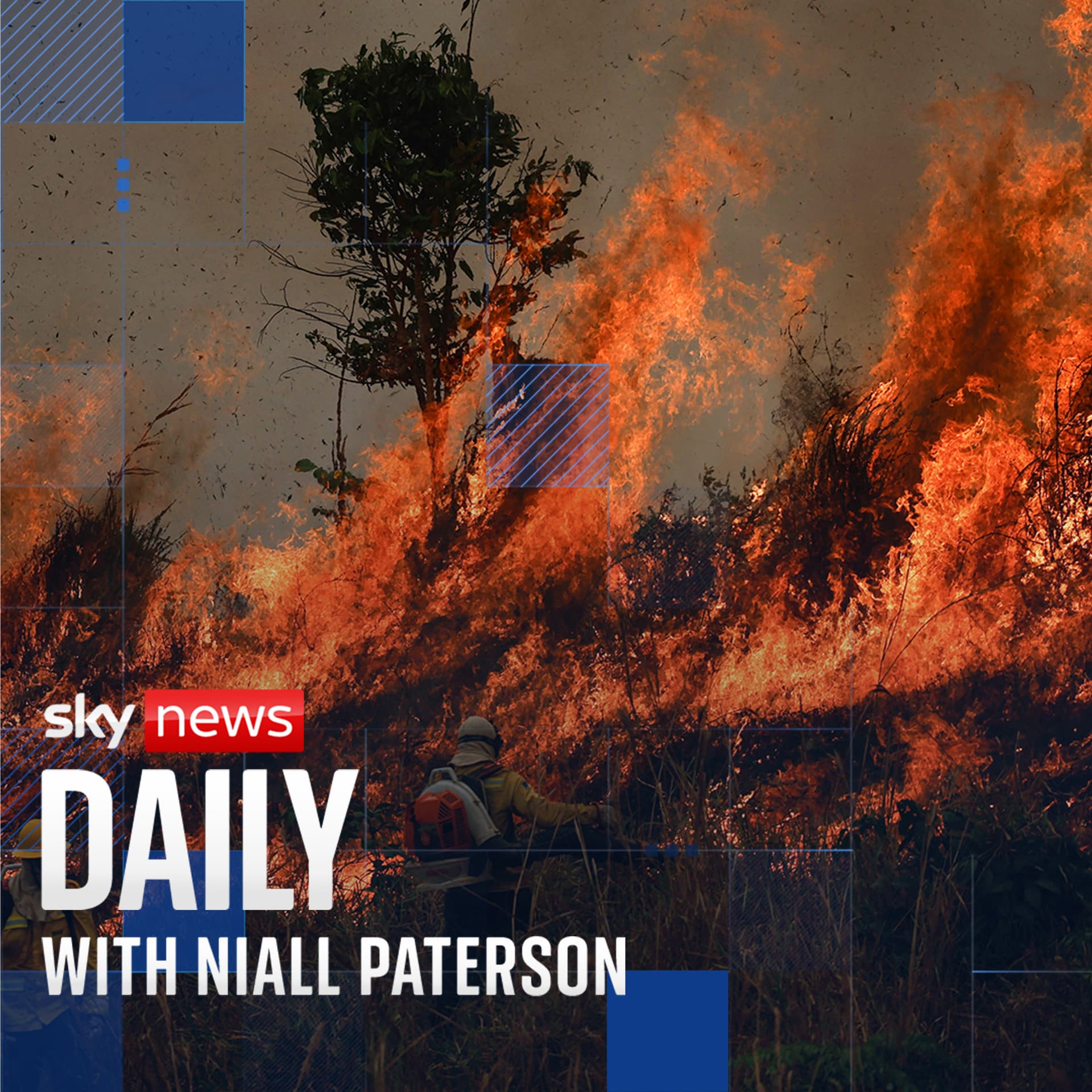
4:09Tom Clarke:I'd not visited the Brazilian Amazon before. I don't think anything could have prepared me for the scale of it the fact it's just heaving with with life and remarkable absolutely remarkable but what really struck me is when we leave when you come out of the rainforest again you suddenly see the world in a new light I mean I certainly did goodness look look at what how much of this is gone look at how much this has been eroded for hundreds and hundreds of miles as you drive east of the Amazon back towards Belém for example it's it's all gone. As we flew in last night, you could see fires burning in that forest as parts of it are being cleared, as the agricultural economy of Brazil further eats away at that forest.
4:54Tom Clarke:So I think that was the thing that really struck me, the fact that we had this component of the planet system, you know, a large forest that hoovers up the fossil fuels that we burn and put into the atmosphere and stores them away safely, if you like, to help keep global warming under control. yet we're gobbling away at it. It's pretty good framing for the sorts of things they've got to discuss and the issues they've got to work out at a thing like COP. How do you make the economics of leaving a forest standing compete with the cash you can make from cutting it down, putting cows on it and turning them into hamburgers?
5:31Tom Clarke:Because right now that sort of side of the economy is winning. No doubt the Brazilian government and the indigenous peoples who live in the Amazon basin would like to see some progress from COP30. So what's on the agenda? Two big things, I think, understandably, because we're in Brazil, it's about forests. Very relevant to Brazil, but also tropical rainforests in Africa and Southeast Asia, which face similar threats but play similar roles. I think there's going to be a real focus on that. The other thing, I think, is the whole piece about adaptation. It's a kind of bit of cop jargon, adaptation.
6:02Tom Clarke:How do we adapt to the warming that we've already got and that we're going to see going forward? Before it had always been sort of slightly off stage, the adaptation piece, because no one really wanted us to believe that we were going to have to adapt to it. It was all about, you know, let's get the emissions, cut emissions, let's keep below 1.5 degrees of warming, let's transform the world economy. It's now becoming clear we're not doing that fast enough, we are dealing with significant levels of warming already and it's only going to get hotter. So really now there's going to be a renewed focus on, okay, how are we going to help the world deal with, cope with and afford the challenges that the warming we're inevitably going to get now brings.
6:42Here in the United Kingdom, there has been, I don't know, perhaps a softening of the ambitions when it comes to net zero. But the UK delegation does include the Prime Minister, Sir Keir Starmer, and the first in line to the throne, Prince William. I mean, we are certainly signalling that we're taking this seriously.
6:59Tom Clarke:We've seen the bad headlines that the Prime Minister's facing and Ed Miliband, his energy secretary, when it comes to our bills are going up, this net zero, zero carbon energy thing, it's expensive, really can we afford it right now? Some have suspected maybe the UK would maybe keep a bit of a lower profile at this climate summit. But no, the prime minister has decided to come and stick to the UK leadership role in this. And I think it's one of the few areas in global diplomacy where Britain really does stand out and has done that for a very long time, we're one of the most ambitious countries in terms of at least setting targets and trying to get others to follow us when it comes to net zero.
7:42Tom Clarke:The palace has always pushed on the green agenda. And it's interesting to see that the UK, despite the tough political headwinds when it comes to the costs of clean energy back home, is still sticking to its kind of leadership role. But they are beginning to look increasingly like a bit of an outlier. You know, many of our allies, and the EU included, which still has ambitious targets, they're finding the net zero message a very hard sell politically at the moment. We've got, you know, Vladimir Putin with his finger on our gas supplies. You've got Donald Trump, who's decided the whole climate thing's a bust, trying to force American natural gas on you.
8:20Tom Clarke:It's going to be a chaotic picture in terms of how formerly sort of positive, pro-climate action countries come across at this COP and how it's going to proceed. But an interesting, I think, yes, signal, the fact the UK has decided at least we are going to come here and try and show that leadership in that direction. Which is a fair enough point to make, I suppose, Tom, but what does it matter if the United Kingdom is showing an inverted commas leadership, if the United States isn't going to do anything about it? I mean, you're just back from there. I mean, you've seen them shutting wind farms in the United States.
8:54Tom Clarke:It's important to remember the United States has always been a bit of a fence sitter on the whole climate piece until Joe Biden came in preceding Donald Trump and decided, no, it's time to really, really get behind this. Suddenly, America was going to play ball. And with America going down a cleaner route and China making more and more renewable technology, a few years ago, it really looked like we might do this. We might keep warming below two degrees if this direction of travel happens. Then Donald Trump comes back doing what we know he reliably has done all along, saying the whole thing's a hoax, it's a con.
9:30Tom Clarke:People were reasonably like, oh, don't worry about it. They did this before and it didn't have much of an impact. But this time it's different. You know, America is the world's largest oil and gas producer. Donald Trump is exploiting tariffs to try and get what he wants. He's leaning on places like the EU to buy American fossil fuels. He's doing that with other partners overseas. He's had a falling out with Modi in India about, you know, US oil. America's not just denying climate change is of not taking part in that you know taking their ball and going home this time they're actively trying to increase the consumption and production of fossil fuels around the world if you talk to a climate scientist or one of the delegates going to come it couldn't be happening at a worse time you know progress was being made but was slowing because of various pressures on economies back home now you've got america actively heading in the other direction not a good thing.
10:24What about China? President Xi will not be showing up at this summit in exactly the same way that Donald Trump will not. And whilst there has been this massive push in terms of renewables in China, I mean, they still consume quite a lot of fossil fuels.
10:39Tom Clarke:And they're still the world's largest emitter of fossil fuels by a significant margin. Effectively, big economies, developing economies like China, India, Indonesia, Brazil, depending on what it does with its forests, they're the ones who are going to dictate how much climate change we actually get. Because emissions even in the US, remarkably, because of efficiency and despite Donald Trump's best efforts, renewable technology, will probably continue to fall over time. So it's all about what happens in developing countries. But here's the interesting thing, where democracies have struggled with net zero there is debate and flip-flopping of policies there one government brings in an ambitious green rule the other one that bans it we're seeing that in America China's not really focusing on the environment it's just looking at what's the best way of you know driving our economy and making money they're using coal back home at the moment to power an economy that's giving us an acceleration of clean energy development like nobody forecast.
11:42Tom Clarke:I mean, the rate of increase, 70 % of energy investments now globally are in clean energy, not the other way around. And that is a radical and massive shift. And that's almost entirely thanks to China. They are changing the world, not because they want it to be greener, but because it's a good way to make money. And all of the forecasts and predictions are that because solar and wind, they are the cheapest form of energy now, the transition away from fossil fuels is inevitable, even in China. So although it's burning coal to get there, the amount of renewable energy it's throwing into the world will be forestalling emissions into the future.
12:31Tom Clarke:We are now on a trajectory away from fossil fuel energy globally. That green transition they've been talking about for decades now looks like an inevitability. It's unfortunate, though, just not happening in any way fast enough to avoid the dangerous levels of warming. In other words, sort of two degrees warmer than it was in pre-industrial times that the scientists say we need to avoid. I do think sometimes we can be a bit short sighted about this. And just because in the United Kingdom and in the United States, you know, net zero ambitions have definitely been at the very least watered down and diluted.
13:10But for much of the rest of the world, net zero remains an ambition and one that they're committed to.
13:15Tom Clarke:I think what's important to remember is a lot of that transition now, it's not being adopted by smaller developing countries because they want to be green. it's because it's the cheapest, easiest to deploy form of energy that you can buy. I think the important thing is it takes away the politics of climate change, whether it's an ideology or not, whether you're green or not. I think one thing that Donald Trump has done, by taking an ideological stance in the hope of propping up America's leadership role in fossil fuels and the money that makes for them, he's just taken off an important part of energy generation in America that's going to make it struggle to meet his AI targets and things like that, and industrial growth targets, because they're saying, you know, we're not going to allow you to build renewables.
14:01Tom Clarke:America needs everything right now, and because of ideology, he's taken something off the table. Take the politics out of it, the transition's going to just run and run and run. Given the fact that, you know, nothing much happens in American politics without the direct say-so of Donald Trump, he's not going to be there, the leader of China isn't going to be there, the leader of India isn't going to be there. How much can come out of COP30 when the leaders of the three biggest polluters aren't showing up? It's not the first COP that hasn't been attended by the US President, the PM of India, and China's Premier as well.
14:36Tom Clarke:But you usually have one big player there. And I think, yeah, it is significant that at this COP, the leaders of the most polluting countries aren't present. It's totally reasonable to ask, how much is this process really achieving? How much should we really expect to come of it, especially as interest and attention definitely seem to be focused elsewhere? At a time when we really should be ramping up and accelerating progress, 10 years after this year, the historic Paris Agreement, for example, we really need to be doing more. There's a real lack of enthusiasm, a real lack of sort of a pace you can detect ahead of this summit.
15:15it.
15:16Tom Clarke:But at the same time, I think it's important to remember, if we hadn't had this process, we hadn't been having these discussions, even though they've consumed huge amounts of energy and time and generated tons of hot air, we'd currently be looking at a four to five degree warmer future by the end of this century, remember, whereas we're now looking at somewhere north of two degrees, maybe touching three. I know that doesn't sound like a lot, but But in terms of what it means for our kids and grandkids, it's made a huge difference. Tom, I'm always very glad when you can play the glass half full to my miserable Scotsman.
15:53But you've already mentioned there the historic, in adverted commas, Paris Agreement. Where is that now?
15:59Tom Clarke:The Paris Agreement, all the member states of the UN process signed up to it. It committed countries to every five years making further reductions to the amount of fossil fuels they emit. with the ambition, that's the key word, yeah, the ambition, of keeping emissions below two degrees of warming compared to pre-industrial times, while working towards 1.5 degrees. I suppose what gives you the greatest insight into how the UN COP process works, they're still debating it. They're still arguing over how to implement the things that the Paris Agreement set out 10 years ago, When we were we're only at one degree warmer than pre-industrial times now We're at one and a half degrees which was the Paris target.
16:43Tom Clarke:We're not quite at one and a half degrees. I'm being unkind We're at 1.4 degrees. It's very easy to look at it and think what a Catastrophic failure to deliver on a promise that was seemed to have been sold as a kind of yeah It's a done deal. We know we're gonna get there to be fair to it though Paris was an aspiration. It was target setting most people knew cutting it even back then before we could see the trajectory of how much emissions were growing one and a half degrees was going to be basically impossible to get to however it's essential remember if that deal hadn't been done if the ambition hadn't been set we would definitely not have seen the progress that we have seen.
17:22Tom look I know you don't like to go out on a limb but if I had to force you to give an answer to whether or not we are going to see anything concrete come out of, not the first, not the second, the 30th COP summit, what would you say?
17:35Tom Clarke:I'll go on a limb. No, we're not. Nothing concrete really ever comes out of UN climate summits. They're not binding. No country has to do these things. There's always a fudge. There's always a way around. I think that's not the best way to judge these things. Just the fact that the process keeps going, I think is significant. But from this COP, there won't be anything significantly concrete there'll be little bits of progress here and there and we might just might and I'm really optimistic about that see something significant coming around the area of forests and how we protect forests that we've got on the planet with some kind of financial mechanism that recognizes the value they do for the whole planet in terms of absorbing carbon dioxide and ensuring they're not cut down for short-term gain this might be with Brazil's genuine interest in this might be the one that sees a significant step forward in that area.
18:32Tom Clarke:And that would be massive because those forests are, if you like, we know the planet's going to get hotter now. We know it's going to get probably quite dangerously hotter. They're an insurance policy. They can keep soaking up that carbon. They're your insurance policy against what we really don't know is going to happen as we start to cross scary tipping points as we get close to two degrees of warming. Tom, thanks very much. Head over to the website to see Tom's special reports with contributions from our correspondents in China and India. The Sky News Daily is back again tomorrow. Until then, take care.
19:11How does a banana trigger a CIA-backed coup? Do AirPods herald the arrival of a new global order? What do LED lights say about the future of humanity? I'm Ed Conway, and in each episode of my new podcast, Stuff Matters, I take an object, crack it open, and reveal the world-shaping forces hidden inside.
19:32Tom Clarke:This is economics told through the things we think we understand. Search Stuff Matters on your podcast app to listen and follow.
From the publisher
With the leaders of some of the world's most polluting countries - the US, China and India - set to skip it, is the COP climate conference irrelevant?
The event in Brazil next week marks three decades of target-setting and financial pledges - yet temperatures are still rising and so are emissions.
Were all those promises a load of hot air? Have dreams of net zero gone up in smoke?
Niall is joined by our science and technology editor Tom Clarke who is at the summit.
Producer: Araminta Parker
Editor: Mike Bovill